




Abstract
Despite the rise in female offending, we know little about how female offending patterns vary with age and how they compare to those of males. In this study, we used linked administrative data from a 1983 and 1984 Australian birth cohort (N = 83,362) to estimate offending trajectories separately for males and females and to examine how these patterns vary within and across sex. Results indicated that there was significant heterogeneity within sex, with five offending trajectories identified separately for both males and females. Males and females classified in chronic offending trajectories had the highest mean number of offenses than all other groups, and Indigenous females were more likely than non-Indigenous males to populate chronic and early adult-onset trajectory groups. The findings highlight the importance of recognizing the heterogeneity of female offending pathways to inform effective, targeted, and timely policies and interventions to reduce female offending.
Introduction
While females constitute a smaller proportion of the offending population than males, there has been a significant global increase in criminal justice system contact among females (Beichner et al., 2022; Steffensmeier et al., 2023). Over the past decade, the number of females in contact with the criminal justice system has increased by nearly 60% worldwide, while the corresponding increase for males was 22% (Fair & Walmsley, 2022). Despite this, we still know very little about the heterogeneous patterns and progression of female offending over the life-course. This makes it difficult to advance our theoretical understanding of the role of sex in shaping the initiation and progression of offending and hinders our ability to develop effective and developmentally appropriate policy and preventive initiatives. Our study uses data from an Australian birth cohort to model sex differences in the initiation and progression of offending. Our findings have implications for informing the timing and targets of intervention strategies, and promoting responses that are tailored to the unique needs of justice system-involved girls and women.
The Australian context offers a unique and important setting for studying these dynamics, particularly as they overlap with the overrepresentation of Aboriginal and Torres Strait Islander people in the criminal justice system (respectfully referred to as Indigenous Australians or Indigenous peoples herein). Such overrepresentation is intricately linked to the historical injustices, systemic inequalities, and socio-economic adversities faced by the Aboriginal and Torres Strait Islander communities (Cunneen, 2006; Gracey & King, 2009). A closer examination of the intersectionality of sex and Indigenous status is required, as this intersection plays a pivotal role in shaping different offending trajectories. As such, we also aim to detail how the initiation and progression of offending might vary within different male and female categories when we compare across Indigenous status.
Developmental and Life-Course Theories
Moffitt (1993) was among the first to theorize and identify heterogeneous patterns of offending within and across individuals that unfold over time. Her influential taxonomy theory (Moffitt, 1993) proposed that the age-crime curve is an aggregate pattern that masks two distinct groups with unique age-related offending patterns: life-course persistent (LCP) offending, which exhibits an early onset of offending that continues throughout the life-course and adolescent-limited (AL) offending, which is characterized by offending behavior that is restricted to adolescence. Moffitt (1994) asserted that, for both males and females, the AL pathway is the most common. However, males dominate the LCP pathway, with a male to female ratio of approximately 10:1 for childhood onset offending (Moffitt & Caspi, 2001).
Subsequent research has demonstrated that Moffitt’s dual taxonomy theory does not sufficiently explain the complexity and heterogeneity of offending trajectories (Sampson & Laub, 2003, 2005);, especially for females (D’Unger et al., 2002). Silverthorn and Frick (1999), for example, argue that girls are far less likely than boys to develop childhood-onset conduct disorder because of tighter controls on their childhood behavior. As a result, they suggest that conduct problems among girls do not present until adolescence but can still trigger chronic offending (Silverthorn & Frick, 1999). In addition to the recognition that the onset patterns may vary across sex, it is theoretically argued that the causes of onset and persistence also vary across sex. Building on Daly’s (1992) pioneering work, much research in the feminist pathways tradition, for example, implicates victimization as central to the onset and persistence of female offending. Building on the General Strain Theory, Broidy and Agnew (1997) suggest that females are more vulnerable than males to the strains associated with child maltreatment, domestic abuse, and other forms of interpersonal and family victimization, which increase their risk for offending. For girls, this offending often takes the form of survival crimes (i.e., truancy, running away, theft, and substance use) that often lead to a cycle of repeat system contact (Chesney-Lind & Pasko, 2012).
Given the sex differences in pathways to onset, is it not surprising that studies have shown that females and males exhibit offending trajectories that are similar in kind but vary in content. For example, chronic offending trajectories are evident in both female and male samples, but they are substantively distinct. Not only do males who fit a chronic offending trajectory offend with higher frequency (e.g., D’Unger et al., 2002; Fergusson & Horwood, 2002), but the types of offenses committed by males and females exhibiting a chronic offending trajectory differ in notable ways. Daly’s (1992) early work in the feminist pathways tradition highlighted that females who engage in chronic offending behavior typically commit less serious offenses, such as forgery, fraud, prostitution, and drug possession/use. Subsequent research reinforces this finding (Belknap, 2020; Chesney-Lind & Pasko, 2012; Wattanaporn & Holtfreter, 2014). In contrast, males who follow a chronic offending trajectory are more likely to commit more serious and violent crimes, such as aggravated assault, rape, and murder (Delisi, 2002). Research documenting differences in the frequency, nature, and timing of offenses that characterize life-course offending patterns across both males and females has expanded in recent years (e.g., Allard et al., 2020a; Broidy et al., 2015; Whitten et al., 2019), largely due to methodological advances in trajectory modeling.
Group-Based Trajectory Modeling
Group-based trajectory modeling is established as a useful methodology for examining longitudinal patterns of offending (Nagin & Odgers, 2010) and can be used to identify and understand how sex might influence life-course offending patterns. This methodology can identify similarities and differences in the number, shape, and nature of offending trajectories. It can also facilitate a close examination of the heterogeneous pathways that characterize the offending patterns among females, a population that is often overlooked in trajectory research. By modeling trajectories separately for females and males, more targeted and timely intervention strategies can be developed to address the diverse needs of justice system-involved females. Despite the growth in trajectory research, most of this research has concentrated on male offending patterns or has often been limited to very small samples of females (e.g., Cauffman et al., 2017; Chung et al., 2002; White & Piquero, 2004; Widom et al., 2018). Therefore, any differences between male and female offending patterns may have been overlooked or obscured. Moreover, few longitudinal studies have examined the development of female antisocial behavior past young adulthood (e.g., 21 years of age and older; Odgers et al., 2008; Salvatore & Markowitz, 2014), which has limited current understanding of the heterogeneous patterns and progression of female offending beyond this developmental period. Clearly, there is a need for methodologically rigorous research with large, longitudinal data that follow individuals beyond young adulthood to better understand female offending patterns.
Offending Trajectories and Sex
A small but growing body of longitudinal research has explored female offending trajectories, including how these trajectories compare with those of males (Aguilar et al., 2000; Andersson & Torstensson Levander, 2013; Broidy et al., 2015; Cauffman et al., 2015; Fergusson & Horwood, 2002; Moffitt & Caspi, 2001; Murphy et al., 2012; Odgers et al., 2008; Sivertsson, 2018; White & Piquero, 2004). Many studies have identified similarities in the overall number and shape of offending trajectories across sex (Ferrante, 2013; Fontaine et al., 2009), typically identifying between two and four trajectories, although some have reported as many as five trajectory groups for both males and females (Broidy & Thompson, 2019). Despite these similarities, male trajectories are typically characterized by higher frequencies of offending compared with female trajectories (Broidy & Thompson, 2019; Ferrante, 2013), and the proportion of individuals following each distinct trajectory often differs, with males more likely to populate high-rate offending trajectories than females (Ferrante, 2013). Although trajectory groups vary in size, form, and number across studies, research typically identifies four broad trajectory groups: persistent, adolescent-onset, low-rate, and adult-onset offending patterns (Broidy et al., 2015; Broidy & Thompson, 2019). We use these groups as an organizing framework for summarizing the existing literature, highlighting current understandings and areas that could be further developed.
Persistent Offending
The persistent offending trajectory is characterized by high rates of offending that typically (although not always) begin early in life and continue throughout the life-course (Piquero & Moffitt, 2014). Previous studies have found that both females and males can follow a persistent offending trajectory (Aguilar et al., 2000; Andersson et al., 2012; Block et al., 2010; Cauffman et al., 2017; Chung et al., 2002; McCarthy et al., 2022; Odgers et al., 2008; White & Piquero, 2004). Only a small proportion of males follow this trajectory, and an even smaller proportion of females (Cauffman et al., 2017; Fergusson & Horwood, 2002; Odgers et al., 2008). There may be some sex differences in how this pattern unfolds over time too. While research generally finds that persistent male offending patterns exhibit onset in childhood, and there is some evidence that females who follow this trajectory may begin antisocial behavior early and persist into adolescence (Cauffman, 2008; Odgers et al., 2008), other researchers suggest that females who exhibit persistent offending onset later (i.e., in adolescence, or in some cases beginning in adulthood; Andersson et al., 2012). Moreover, some studies have failed to identify the existence of persistent female offending patterns altogether (D’Unger et al., 2002; Sivertsson, 2018). However, the capacity to examine the characteristics of females who exhibit a chronic/persistent pattern of offending has been hindered by the relative lack of longitudinal offending information for samples with enough females to explore rare female offending patterns (D’Unger et al., 2002). Consequently, persistent female offending trajectories are still not well-understood. Sizable female samples are necessary to detect rare patterns and longer follow-up times are required if persistent female trajectories are characterized by later ages of onset.
Adolescent-Onset Offending Trajectory
An adolescent-onset offending trajectory is also commonly identified for both males and females. Unlike the persistent trajectory, adolescent-onset offending generally subsides in late adolescence or early adulthood (Broidy & Thompson, 2019; Kratzer & Hodgins, 1999). Many studies have found that females are more likely than males to follow the adolescent-onset offending trajectory (Broidy et al., 2015; D’Unger et al., 2002; Murphy et al., 2012; Odgers et al., 2008), but findings regarding the duration of this trajectory are mixed. For example, Sivertsson (2018) found that the duration of adolescent-onset female offending was shorter than adolescent-onset male offending, with adolescent-onset females significantly younger at their last offense. In contrast, other findings suggest that adolescent-onset females can have a longer duration of offending than males, with adolescent-onset females continuing their offending behavior into their mid-twenties, while their male counterparts desisted from offending in their early twenties (D’Unger et al., 2002). D’Unger et al. (2002) suggest that females in this trajectory group engage in more years of offending than males, and therefore, take on a more chronic trajectory shape/pattern more akin to persistent offending (Silverthorn & Frick, 1999). Despite some mixed findings regarding adolescent-onset offending across sex, males remain the core focus of adolescent-onset offending in trajectory research, and unfortunately, we are still limited to only a few studies that examine the duration of adolescent-onset female offending (e.g., Broidy et al., 2015; D’Unger et al., 2002; Sivertsson, 2018; Walker et al., 2019). Consequently, we have limited understanding of the duration of adolescent-onset female offending when compared with males.
Low-Rate Offending Trajectory
Low-rate offending is the most commonly identified trajectory for both males and females and is characterized by less frequent and/or sporadic offending behavior and thus accounts for a small proportion of all offenses (D’Unger et al., 2002; Ferrante, 2013). Compared with males, females are more likely to be classified in this group (Cauffman et al., 2015; Fergusson & Horwood, 2002; Ferrante, 2013; Odgers et al., 2008) and are significantly more likely than males to offend sporadically (e.g., 84% vs 69%; Block et al., 2010). Low-rate females, on average, begin offending at a slightly younger age, and compared with low-rate males, have a shorter span of offending, with females who exhibit a low-rate offending pattern typically evidencing a peak in offending between 10 and 17 years of age (Cauffman et al., 2015; D’Unger et al., 2002; Fergusson & Horwood, 2002; Lahey et al., 2007). This is not surprising, given findings indicating that females perpetrate fewer crimes than males as they transition into adulthood (Block et al., 2010). Overall, this trajectory is the least troublesome as it represents a population of individuals with a relatively low offending risk (Broidy & Thompson, 2019). However, we still have a limited understanding of the nature of low-rate female offending and how these offending patterns change over time compared with males.
Adult-Onset Offending Trajectory
While research on adult-onset offending is still in its infancy, there is some evidence that this trajectory is more common among females than males, and females are more likely to follow this trajectory than the chronic offending trajectory (Andersson et al., 2012). In addition, some evidence suggests that females who follow an adult-onset trajectory are more likely to commit sporadic and less serious offenses compared with males who follow a similar trajectory (Block et al., 2010; van Koppen, 2018), whereas other evidence suggests that females who commence offending in adulthood can follow a chronic/persistent pattern, with a span of offending lasting over 30 years (Blokland & van Os, 2010; Carlsson & Sivertsson, 2021). Despite the increasing interest in adult-onset offending, there is still a need to better understand the nature of this pattern of offending and how it differs across sex. The samples used in some studies are restricted in age range, which hinders their ability to examine offending patterns past late adolescence. Consequently, they fail to capture the full picture of adult-onset offending (e.g., Cauffman et al., 2015; Chung et al., 2002; Murphy et al., 2012).
The Importance of Considering the Intersection of Sex and Race/Ethnicity
In addition to exploring how sex is related to offending trajectories, some have also considered the important role of race/ethnicity and how sex and race/ethnicity intersect to shape offending trajectories (e.g., Broidy et al., 2015; Doherty & Ensminger, 2014; Matthews et al., 2022; Piquero & Buka, 2002). For example, Piquero and Buka (2002) found that African American females and males were more likely than their non-African American counterparts to populate the chronic/persistent offending trajectory. However, our understanding of this complex phenomenon remains limited, requiring further exploration and investigation.
In Australia, Indigenous Australians are the largest minority group, representing 3.8% of the total Australian population (Australian Bureau of Statistics [ABS], 2022a). While Australia is ethnically and culturally diverse, Indigenous Australians have been subjected to significant intergenerational trauma, discrimination, and systemic racism stemming from colonization (Cunneen, 2006). This history of violent conflict and oppression continues to affect many Indigenous people in Australia today. One of the consequences of this history is that Indigenous Australians are overrepresented in the criminal justice system (ABS, 2022b). Importantly, there are a myriad of contextual factors, such as poverty, unemployment, poor health/mental health issues, child maltreatment, and violence that characterize some Indigenous Australian communities (Gracey & King, 2009) and shape the experiences of offending and criminal justice system contact for Indigenous Australians. Given the overrepresentation of Indigenous Australians in the criminal justice system and the small population, it is important that large, representative data sets are used to examine how the nature and shape of the distinct trajectory groups vary based on an individual’s Indigenous status. Furthermore, the experiences of Indigenous Australians also vary for males and females, and it is important to examine how the experiences of Indigenous males and females might differ, including their experiences of criminal justice system contact across adolescence and early adulthood.
There is some evidence to suggest that the combined influence of sex and race/ethnicity shapes offending patterns in ways that depart from typical offending patterns. In Australia, these intersectional patterns reflect historical and ongoing systemic inequalities that befall to Indigenous Australians. While Indigenous males tend to have the highest frequency of offending, some Australian studies have found that, like Indigenous males, Indigenous females are more likely than even non-Indigenous males to populate chronic/persistent trajectory groups (Broidy et al., 2015; Matthews et al., 2022). This suggests that Indigenous Australians, particularly, Indigenous females, may face unique challenges and vulnerabilities that contribute to their involvement in chronic/persistent offending patterns uncommon among non-Indigenous females. Yet, little is known about how the types and severity of crimes vary within and across trajectories, particularly within chronic/persistent Indigenous and non-Indigenous female groups.
Current Study
Our aim in this study is to address the gaps in the existing trajectory research by examining whether the number, shape, and nature of distinct offending trajectories differ across male and female samples based on their officially recorded offending. Specifically, we aim to address the following research questions: How many female offending trajectories can be identified? What are the key characteristics that differentiate female offending trajectories? What are the similarities and differences between the male and female offending trajectories?
This research objective requires a longitudinal database with a large sample of females followed from childhood into young adulthood to identify the full range of life-course offending trajectories and to compare how these vary across females and males. To achieve this objective, we utilize a population-based, prospective, longitudinal, linked administrative data of Queensland individuals born in 1983 and 1984, with data through age 30. This large data set also allows us to apply Group-based trajectory modeling (GBTM) to create separate offending trajectories for females and males and examine how Indigenous status is related, which has not been extensively explored in previous trajectory studies. Furthermore, we will be able to examine similarities and differences between females and males across key characteristics of offending trajectories. This includes the examination of the number of offenses committed, age at first finalization, types of offenses committed, and seriousness of offenses.
Our study’s core strength is its ability to address the aforementioned data limitations of previous trajectory studies, allowing us to build upon the existing knowledge of female offending trajectories. By utilizing a large administrative data set with a relatively long follow-up, we can explore chronic/persistent female offending pathways. In addition, our novel approach by modeling separate trajectories for females and males allows us to identify sex-specific trends in offending and gain a deeper understanding of how the offending trajectories differ across sex and whether different trajectories lead to different offending outcomes in adulthood. Although our primary focus was on modeling trajectories disaggregated based on sex, we also examined how Indigenous status influences the distribution of males and females across distinct trajectory groups.
Data and Methods
Data Sources
This study used linked data from the Queensland Cross-sector Research Collaboration (QCRC) repository (A. Stewart et al., 2015, 2021), which contains population-based longitudinal administrative records of individuals born in Queensland (Australia) during 1983, 1984, and 1990. These administrative records are linked across multiple government agencies including data on births (including birth records of individuals into the cohort and their children), deaths and marriages (Queensland Registry of Births, Deaths and Marriages); child safety contacts (Department of Child Safety, Seniors and Disability Services); youth justice contacts (Department of Youth Justice, Employment, Small Business and Training); youth cautions and conferences (Queensland Police Service); youth and adult court appearances (Queensland Department of Justice and Attorney General); adult corrections orders (community and custodial; Queensland Corrective Services); community and emergency department mental health contacts; and hospital admissions (Queensland Health). These data were linked by the Queensland Government Statistician’s Office (QGSO) and Queensland Health using well-established probabilistic data linking techniques (A. Stewart et al., 2015). These data are de-identified and held in the Social Analytics Lab, which is a secure data facility at Griffith University (Allard et al., 2020b). Ethical clearance was approved by the Griffith University Human Research Ethics Committee (2021/356).
Participants
For this study, we used the following data from the QCRC repository: births, deaths, police diversions (youth cautions and conferences), and youth and adult court appearances. This study used a descriptive design to explore the characteristics of offending trajectory groups among people born in Queensland during 1983 and 1984 (N = 83,362), for whom offending data was available to age 30/31. Together, the two cohorts included 40,416 (48.5%) females and 42,946 males (51.5%). In addition, the cohorts included 4,821 (5.8%) Indigenous Australians, of whom 2,199 were Indigenous females (2.6% of the entire cohort) and 2,622 were Indigenous males (3.1% of the entire cohort). Given our focus on offending patterns, our sample is restricted to individuals who had at least one proven offense by 30 years of age, including 19,570 males (70.7%) and 8,120 females (29.3%). Among this sample, 1,425 Indigenous for females (17.5% of females with offenses) and 2,334 Indigenous males (11.9% of males with offenses) had at least one proven offense by 30 years of age. Total mean offense counts were substantially higher for males (M = 11.49; SD = 21.64) than females (M = 7.00; SD = 15.06). There were also variations at the intersection of sex and Indigenous status, whereby offense counts were highest for Indigenous males (M = 30.94, SD = 38.68), followed by Indigenous females (M = 15.30, SD = 25.00), then non-Indigenous males (M = 8.85, SD = 16.45), and non-Indigenous females (M = 5.22, SD = 11.12); a pattern that held across age (see Figure 1).
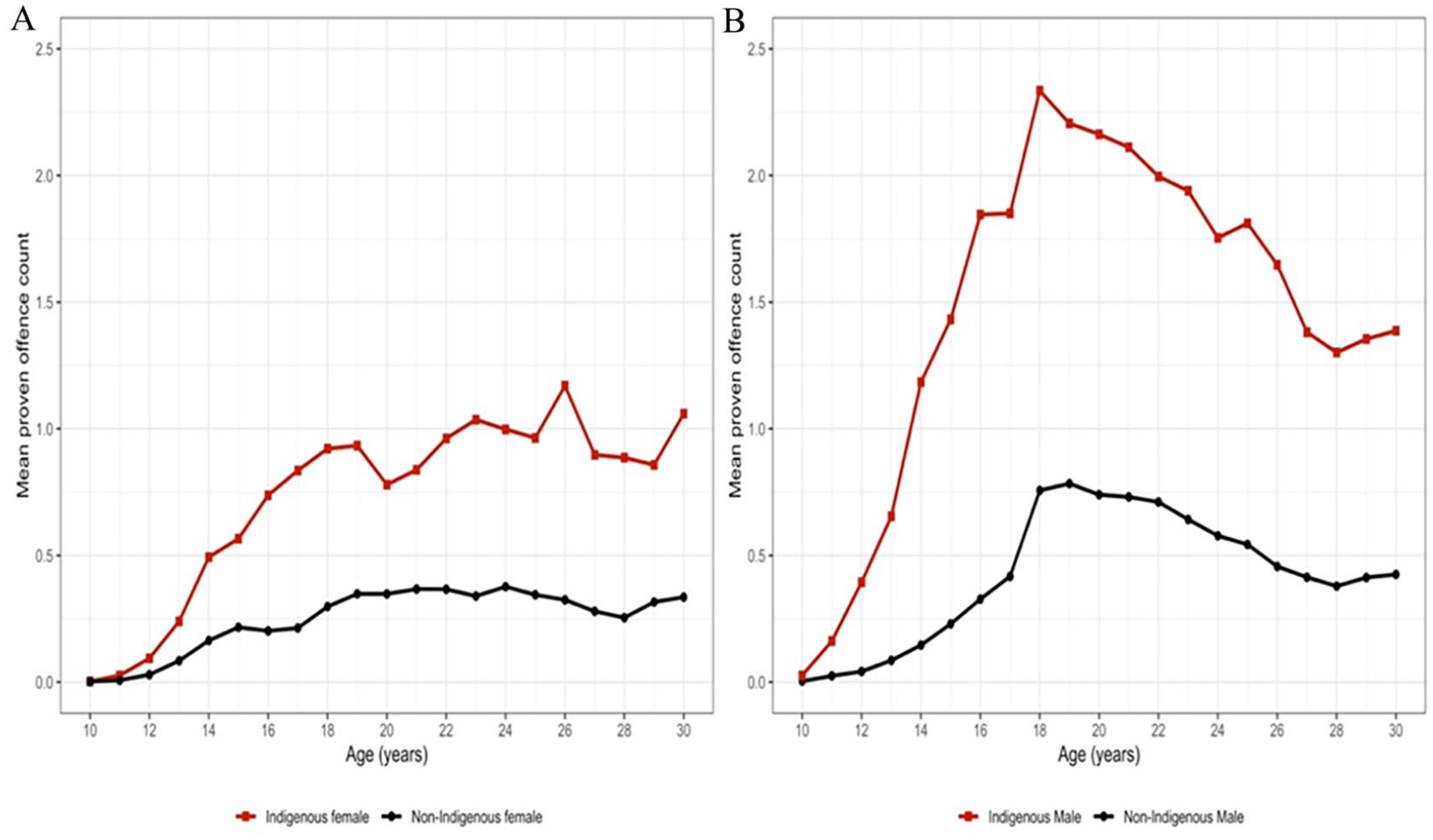
Mean Proven Offense Counts for (A) Females and (B) Males by Indigenous Status
Measures
Demographic Indicators
We classified the individual’s sex as either female or male based on the balance of probabilities for all QCRC databases. Given the overrepresentation of Indigenous Australians in the criminal justice system, which may be largely viewed as resulting from colonization, systemic racism, and discrimination, it is necessary that we examine the intersection of the female and male offending trajectories across Indigenous status. Indigenous status was assigned to an individual if they had ever self-identified or been identified by data custodians as Aboriginal and/or Torres Strait Islander in any of the QCRC databases.
Offending
We derived offending information from police diversions (youth cautions and conferences) and finalized youth and adult court outcomes. The information therefore covered all proven offenses for which a person pled or was found guilty from 10 years of age (i.e., age of criminal responsibility). Data are right-censored at 30 years of age to allow for comparable observation periods across two birth cohorts. We excluded all individuals who were found not guilty.
Exposure Time
A measure of exposure time in the community was included to control for time spent incarcerated. For each individual, we calculated exposure time by summing the number of days sentenced to incarceration at each distinct finalized court appearance for each year of observation (McCarthy et al., 2022). If the value exceeded 365 days in a year, we carried the excess value over to the following calendar year. We then converted days incarcerated per year to a proportion between 0 (i.e., incarcerated for a full year) and 1 (i.e., exposure to the community for the full year). This allows us to control for incarceration time and helps to minimize the risk of distorting the shape of the estimated offending trajectories. Moreover, this is an important measure to ensure that we construct an unbiased estimate of an individual’s rate of offending (Piquero et al., 2001).
Number of Offenses
We calculated the number of offenses based on the annual number of crimes known to authorities for each individual each year between the ages of 10 and 30 (combining both police diversions and court contacts).
Age at First Finalization
Age at first finalization refers to the age at which an individual either pleads guilty or is found guilty of an offense in the context of criminal court or police diversionary outcomes (Ogilvie et al., 2022). To be eligible for diversion, individuals must admit to the offense. We calculated the individual’s age at first finalization using the earliest offense date available and the individual’s date of birth. If the offense date was not available, we used the earliest alternative dates. For youth cautions and conferences data, the earliest alternative date can be calculated based on the date the offense was reported to the police. For court data, the earliest alternative date can be calculated using the date of lodgment or the earliest court appearance. We excluded offenses with not-guilty outcomes.
Types of Offenses
We used the Australian and New Zealand Standard Offense Classification to categorize offenses by type and key behavioral characteristics (ANZSOC; ABS, 2011). The 16 standard ANZSOC categories were collapsed into seven broader offense types used in previous research (A. Stewart et al., 2021): personal offense (e.g., homicide, sexual assault, abduction); property offense (e.g., unlawful entry with intent/burglary, break and enter, theft, fraud); drug offense (e.g., possess/use illicit drugs, import/export of illicit drugs, deal or traffic in illicit drugs, manufacture illicit drugs); public order offense (e.g., trespass, criminal intent, disorderly conduct, betting/gambling offenses); traffic offense (e.g., traffic and vehicle regulatory offenses); offense against justice (e.g., escape custody offenses, breach suspended sentence); and other offense (e.g., prohibited regulated weapons and explosives offenses, property damage, environmental pollution, miscellaneous offenses). Using the Australian Standard Offense Classification, Queensland Extension we also classified the seven broad offense types into a binary indicator (violent and nonviolent) to identify a recorded history of one or more violent offenses (see Supplementary Table S1, available in the online version of this article for detailed offense divisions, subdivisions, and associated codes).
Incarceration History
We included two proxy measures for incarceration history: whether the individual had ever been sentenced to youth detention (<17 years of age) and whether the individual had ever been sentenced to adult imprisonment (between 17 and 30 years of age).
Analytical Strategy
Analyses involved a two-step process (a) performing trajectory analyses separately for males and females and then (b) conducting a series of descriptive analyses to explore similarities and differences in the key characteristics of offending across these trajectory groups (e.g., age at first finalization, number of offenses, types of offenses, and incarceration history) as well as within and across group variation by Indigenous status.
Step 1: Offending Trajectory Groups
Group-based trajectory modeling (GBTM) is a powerful statistical technique used extensively in longitudinal research to identify distinct patterns of behavior (i.e., trajectories) among a population (Nagin, 1999). For this study, we used GBTM to identify the distinct trajectories that characterized female and male offending (i.e., one GBTM for female offending patterns and one GBTM for male offending patterns). Utilizing the GBTM, we determined if a similar number and pattern of trajectory groups were found among males and females in the sample.
We estimated offending trajectories using the FLXMRglm driver in the flexmix package (version 2.3-18; Gruen & Leisch, 2008) for R (version 4.2.0; R Core Team, 2022) using Poisson models with quadratic functions of age/time. Offense counts were positively skewed (see Supplementary Table S2, available in the online version of this article), therefore, we capped offense counts at a maximum of 100 offenses per year for each individual. Doing this minimizes the extent of the skew and the influence of outliers to facilitate model convergence. To determine the best-fitting models for male and female offense counts, we estimated a series of trajectory models separately for males and females, both ranging from one to six classes. To assist with selecting the best-fitting models, we estimated multiple goodness-of-fit and classification accuracy statistics separately for males and females (see Supplementary Table S3, available in the online version of this article). These statistics included log-likelihood, Akaike information criterion (AIC), Bayesian information criterion (BIC), entropy, the average posterior probability (AvePP) of group classification, and odds of correct classification (OCC). The best fitting model can be identified by low log- likelihood, AIC and BIC values, and entropy and AvePPs closest to one. AvePPs > 0.70 and OCCs > 5 for all groups are considered an adequate fit (Nagin, 2005).
Step 2: Descriptive Analyses Exploring Similarities and Differences of Offending Across Trajectory Groups
We used a range of descriptive statistics to examine any differences between the male and female trajectory groups based on age at first finalization, number of offenses, types of offenses, incarceration history, and by Indigenous status. In doing so, we explored heterogeneous patterns of offending within and across sex. We used Kruskal–Wallis tests for continuous variables (i.e., age at first finalization and number of offenses) and chi-square tests for categorical variables (i.e., Indigenous status, offense types, violence offense history, and incarceration history).
Results
Descriptive statistics for total offense counts across age for the 1983/84 cohorts demonstrated that offense counts were positively skewed as expected (see Supplementary Table S2). We calculated the mean counts of offenses after capping offense counts at 100. For both males and females, mean offense counts were below 1 at each age, including the peak age of offending. Consistent with other work (e.g., Andersson et al., 2012; Beckley et al., 2016; Jolliffe et al., 2017; van Koppen, 2018), the peak age of offending for females was around 24 years of age, which was considerably older than the peak age of offending for males at 18/19 years of age. Female offense counts remained relatively stable as age increased, whereas male offense counts gradually declined as age increased. While male offense counts were still higher at the end of the observation period, these patterns of offending demonstrate a narrowing gap between male and female offenders as the cohorts aged.
We provide goodness-of-fit and classification accuracy statistics for trajectory model selection separately for males and females in Supplementary Table S3. Log-likelihood, AIC, and BIC improved incrementally with the addition of groups, with no worsening of fit up to six groups. All models had an entropy > 0.8, average posterior probability (AvePP) > 0.7, and odds of correct classification (OCC) > 5. This means that the goodness-of-fit statistics remained adequate across all models. The five-group model for females had one group that contained 2.0% of the population, however, this is an acceptable class size (Jung & Wickrama, 2008). This was the only group of females who demonstrated a chronic pattern with the highest number of offenses, while the other female trajectory groups had much lower offense counts. For both males and females, there was a lack of parsimony in the six-group trajectory model, with two low male and female offending groups overlapping and too similar for any meaningful interpretation and analysis. Therefore, we selected the five-group trajectory model for both males and females as the best-fitting models for interpretability and to examine different patterns of offending (rootograms of posterior probabilities for the selected five-group models for males and females are provided in Supplementary Figures S1 and S2, available in the online version of this article, respectively).
Research Question 1: How Many Female Offending Trajectories Can Be Identified?
Fitted mean offense counts for the female five-group trajectory model are illustrated in Figure 2. The smallest group we identified is the one we labeled “chronic early adult peak” because their offending began in early adolescence and peaked around 23 years of age followed by a gradual decline through to age 30. This group represented 2.0% of all females in the sample. The largest group (42.7% of females) is one we labeled “adult-onset low” reflecting an offending pattern that began during the early 20s and remained consistently low through to age 30. We also identified an “early adult-onset escalating” group, made up of 6.2% of females in the sample. This group showed an onset of offending in early adulthood and offending continued to increase through to age 30 at which point exhibited similar levels of offenses to that of the “chronic early adult peak group.” A fourth group, which we called “adolescent-limited low,” demonstrated some offending in adolescence, with little or no indication of offending in adulthood. This group represents the second largest percentage of females (42.2%), but with just a 0.5% difference, it is nearly equally as large as the “adult-onset low” group. The final group, which we labeled “early onset young adult peak,” contained 6.9% of the female sample. Their offending appeared to begin around early adolescence, with a peak of offending at around 18 to 22 years of age followed by a gradual decrease into their late 20s and little to no offending by age 30.
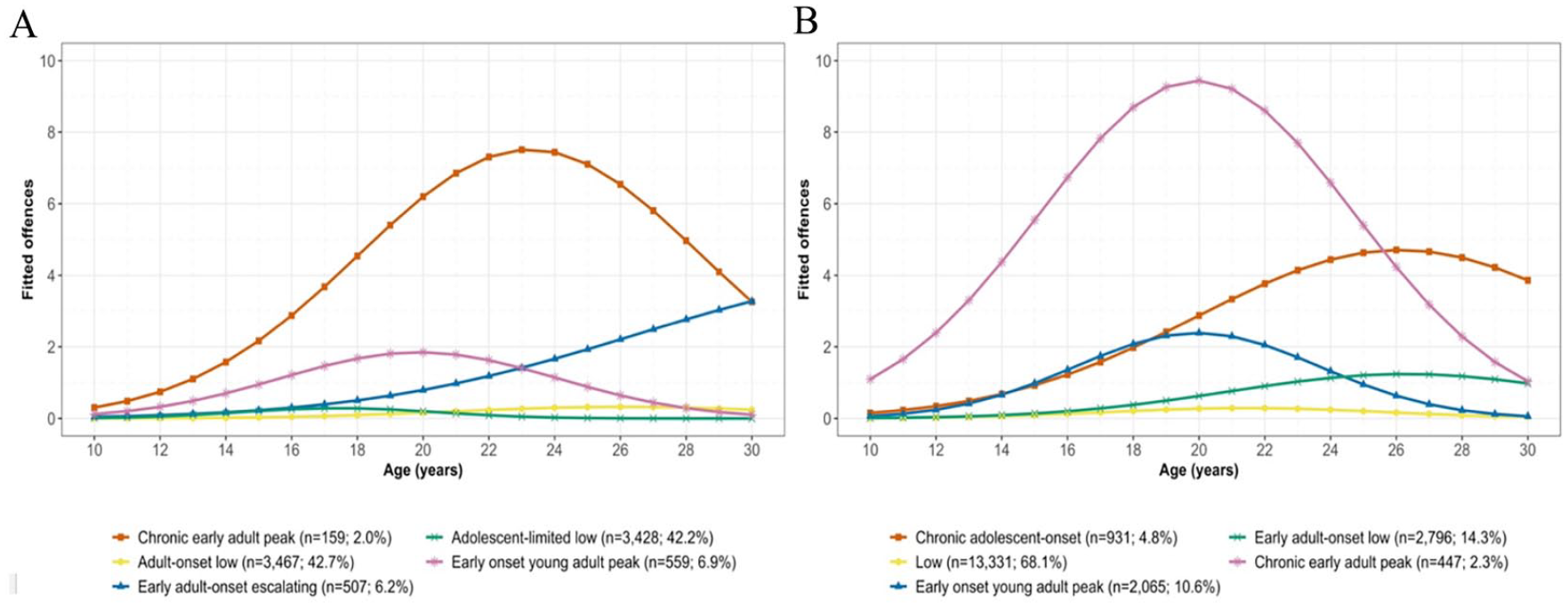
Fitted Mean Offense Counts Per Age for the (A) Female and (B) Male Five-Group Trajectory Model
Research Question 2: What Are the Key Characteristics That Differentiate Female Offending Trajectories?
Using the Kruskal–Wallis test, we found significant differences across the five trajectory groups in the mean total offenses per individual, H (4) = 3,827.4, p < .001. As illustrated in Table 1, the group exhibiting chronic early adult peak offending had the highest mean number of offenses per individual (M = 89.97, SD = 36.94), with the two low female offending groups having the lowest mean number of offenses per individual (i.e., 2.2 and 3.5 offenses on average). There was also a significant difference across the five trajectory groups in the age at first offense, F(4, 19,464) = 1,460, p < .001, η2 = .15. All group comparisons were significant using Tukey multiple comparisons of means adjustment. The chronic early adult peak female offending group (M = 15.21, SD = 2.56) was on average the youngest at their first offense, and the adult-onset low female offending group was on average the oldest at their first offense (M = 22.98, SD = 4.48).
Frequency and Nature of Female (n = 8,120) and Male (n = 19,570) Offending Trajectories
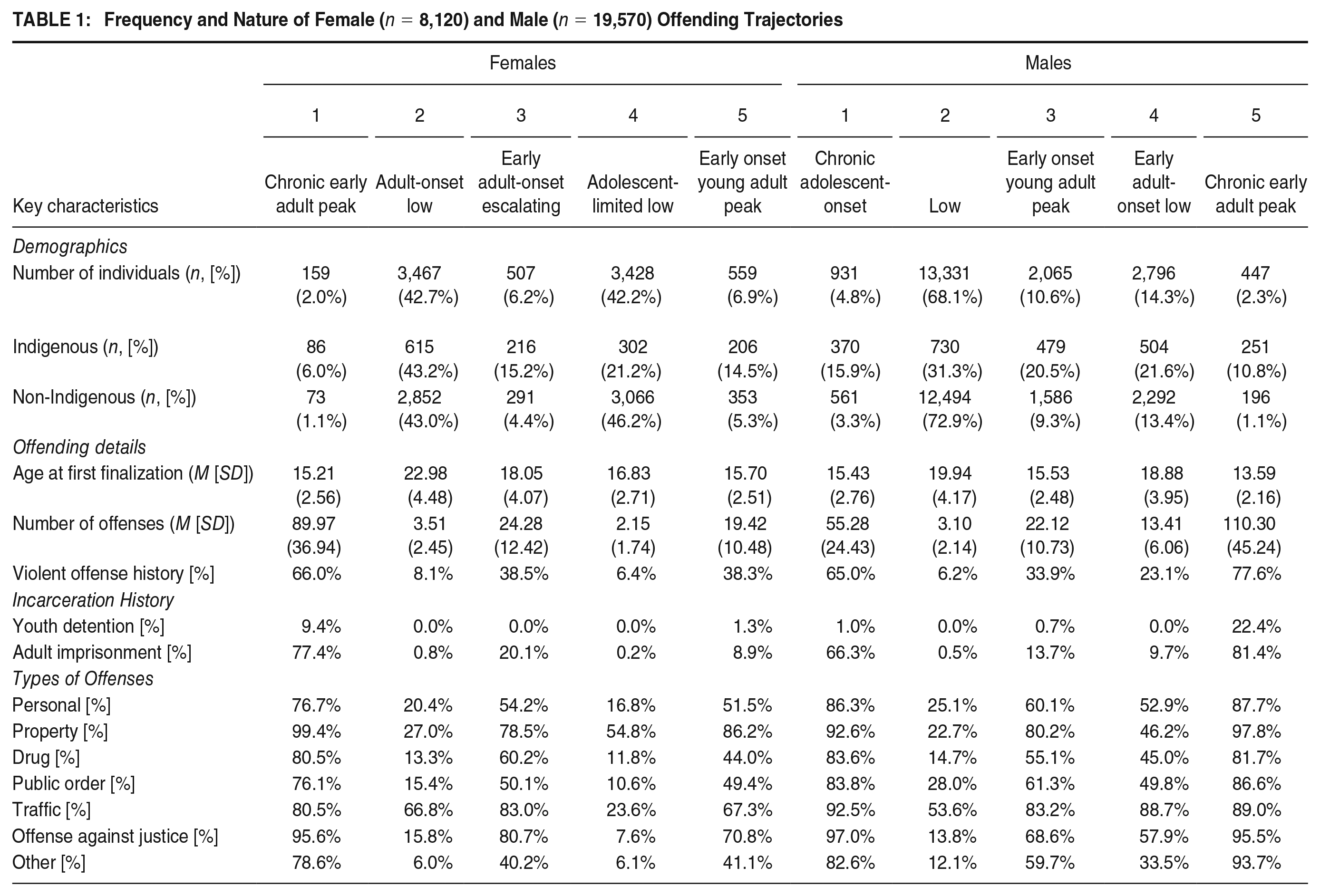
The proportion of females with a record of one or more violent offenses differed significantly across the trajectory groups, χ2 (4, N = 8,120) = 1,244.50, p < .001, φ c = .40), with the chronic early adult peak group (66.0%) having the highest proportion of females with a violent offense history. A very similar proportion of females had a violent offense history among those classified in the early adult-onset escalating (38.5%) and early onset young adult peak groups (38.3%). In contrast, few females classified in either of the low trajectory groups had a violent offense history (adult-onset = 8.1%; adolescent limited = 6.4%). Despite exhibiting the highest prevalence rates of violence, the most prevalent offense types among the chronic early adult peak group were property crimes (99.4%) and crimes against justice (95.6%). In other words, even among females with chronic offending patterns, violence is uncommon. Females in the early adult-onset escalating group were more likely than those in other groups to have committed traffic offenses (83.0%). While low offending females had the lowest prevalence rates across all offense types, those in the adolescent-limited low group were most likely to commit property crimes and those in the adult-onset low group were most likely to commit traffic crimes than any other type of offense.
As shown in Table 1, females in the chronic early adult peak group were more likely than those in the other trajectory groups to have ever experienced youth detention (9.4%) or to have been sentenced to adult prison (77.4%). Almost none of the females in the remaining four trajectory groups had experienced youth detention or had been sentenced to adult prison.
Chi-square analyses indicated that the proportion of females assigned to the five trajectory groups differed by Indigenous status, χ2 (4, N = 8,120) = 678.07, p < .001, φ c = .29). While similar proportions of Indigenous (43.2%) and non-Indigenous (43.0%) females were classified into the adult-onset offending group, there were considerable differences in assignment to the remaining offending trajectory groups. Among non-Indigenous females, 46.2% were classified in the adolescent-limited low group, whereas only 21.2% of Indigenous females fell into this same group. However, Indigenous females were far more likely than non-Indigenous females to fall into trajectory groups with high offense counts. For example, Indigenous females in the early onset young adult peak group had a mean offense count exceeding 19 offenses. While only 5.3% of non-Indigenous females constituted this group, the percentage of Indigenous females in this group was over twice as high (14.5%). Similarly, while less than 5% of non-Indigenous females populated the early adult-onset escalating group, the percentage of Indigenous females in this group was three times higher (15.2%). Interestingly, only 1.1% of non-Indigenous females were assigned to the chronic early adult peak group, whereas 6.0% of Indigenous females were classified in this offending group.
Offense composition also varied within trajectory groups according to their Indigenous status. There was a significant difference in the proportion of Indigenous and non-Indigenous females with one or more recorded violent offenses across trajectory groups, χ2 (4, N = 8,120) = 787.70, p < .001, φ c = .31, with Indigenous females being more likely to have one or more recorded violent offenses than non-Indigenous females across all trajectory groups (see Supplementary Table S4, available in the online version of this article). Chronic early adult peak Indigenous females had the highest proportion of individuals with one or more recorded violent offenses (81.4%). However, the Indigenous females classified into the chronic early adult peak group were also quite versatile in their offending, with 100% having committed a property offense and an offense against justice, and greater than 80% having committed each of the remaining offense types. Comparatively, non-Indigenous females in the chronic early adult peak groups were less likely to have one or more recorded violent offenses (47.9%), but still versatile in their offending with 98.6% having a property offense, 90.4% having an offense against justice, and close to 80% with drug and traffic offense histories. While Indigenous females in the chronic early adult peak group had the highest proportion of drug offenses (81.4%), non-Indigenous females in the early adult-onset escalating group were more likely than Indigenous females from the same group to have committed a drug offense (67.4% vs 50.5%). A small proportion of Indigenous females had experienced youth detention (all from the chronic and early onset trajectory groups), while none of the non-Indigenous females had histories of youth detention. Furthermore, across all trajectories, Indigenous females were more likely than non-Indigenous females to have been sentenced to prison at some point.
Research Question 3: What Are the Similarities and Differences Between the Male and Female Offending Trajectories?
While we identified the same number of offending trajectories for males as we did for females, there are some similarities and differences in the constitution and shape of these offending trajectories (see Figure 2). For both males and females, over 80% fall into the low-rate offending groups. While both males and females in the chronic trajectory groups had the highest mean number of offenses (55–110) compared with all other groups, they also represented the smallest percentage of offenders (2.0% to 5.0%; see Table 1). However, two chronic groups emerged for males, while only one chronic group was identified for females. The early adult-onset escalating group was an interesting pattern that emerged exclusively among females, indicating that for some females, offending increases during early adulthood and continues to increase through to age 30. In contrast, none of the male offender groups evidenced increased offending through early adulthood, rather their offending rates gradually decreased by the age of 30. Both males and females exhibited an adult-onset low offending group and an early onset young adult peak group. Table 1 suggests that males and females in the low offending groups have a similar age of onset at around 17/18 and 20/23 years of age. However, when we look at age-related offending patterns for the female and male trajectory groups with more consistent and higher rate patterns of offending, females begin offending at a considerably older age (i.e., around 15 to 20 years of age compared with 13 to 15.5 years of age for males), and their offending patterns remained relatively consistent or escalated during their mid-20s and through to 30 years of age. Conversely, the five-group trajectory model indicated that male offending patterns, especially among higher rate offending groups, onset at a younger age and gradually declined by age 30.
Our findings suggest that, irrespective of their Indigenous status, females and males, who exhibit chronic offending patterns were more likely than any other groups to have one or more recorded violent offenses, have experienced youth detention, and have been sentenced to adult prison (see Supplementary Tables S4 and S5, available in the online version of this article). However, there were also some intersectional differences across the groups. For example, Indigenous females and males exhibiting chronic early adult peak and early onset young adult peak offending patterns were more likely than non-Indigenous females and males from the same groups to have a record of more than one violent offense and have been incarcerated as an adult. Moreover, among the Indigenous females and males following a chronic offending trajectory, there was a high degree of versatility in the types of offenses committed, with prevalence rates exceeding 77.0% for all offense categories. Particularly noteworthy was the increased prevalence of violent offenses (primarily personal offenses) and public order offenses. Conversely, non-Indigenous females and males following low-rate trajectories were most likely to have a recorded history of non-violent offenses such as traffic offenses. While drug offenses were most prevalent among all individuals following a chronic offending trajectory, drug offenses were particularly high for females, both Indigenous and non-Indigenous, in the early adult-onset escalating trajectory group, which stands out as a unique pattern not observed among males (see Supplementary Table S4).
Discussion
Our study aimed to identify heterogeneity in age-related patterns of offending among females through early adulthood (to age 30), identifying the number of unique trajectories and describing variation across key trajectory characteristics. We also aimed to examine whether the number, shape, and key characteristics of the distinct offending trajectories differ across males and females with a history of recorded offending, while also considering Indigenous status. Our findings detail similarities and differences across females and between females and males in how offending trajectories unfold and suggest important variation when we consider the influence of Indigenous status.
Although a growing body of research demonstrates that females account for an increasing share of the overall offending population (e.g., Estrada et al., 2019), it is still not widely recognized that, like males, females exhibit heterogeneous patterns of offending. Moreover, these patterns in some way mirror those we see among samples of males, but also differ in notable ways. Our findings help to improve our understanding of female offending pathways and provide further insight into the varied pathways that characterize female offending and how these compare with the pathways that characterize male offending. Despite similarities in the number of trajectories, we identified important differences across key characteristics of the distinct offending trajectories for males and females that speak to the sex-based nature of offending and justice system contact.
Although a few previous studies have identified five offending trajectory groups for males and females combined (Broidy et al., 2015; Matthews et al., 2022), our study took a novel approach and identified five separate trajectory groups for females and males, which allowed us to gain a more comprehensive understanding of sex-based similarities and differences in offending patterns through early adulthood. The large female sample and wide age range (10 to 30 years of age), derived from the population-based, prospective, longitudinal, linked administrative data set, made it possible to achieve a more comprehensive analysis of how sex and Indigenous status intersect to shape offending trajectories. Furthermore, the female- specific trajectory model allows for a more nuanced understanding of female offending trajectories, especially for the rare chronic/persistent female offending groups. In addition to revealing a unique early adult-onset escalating pattern among female offenders, our trajectory model identified a low-rate adult-onset female offending group. Such adult-onset patterns are often overlooked or not identified due to the data limitations of many trajectory studies, however, nearly 50% of females followed adult-onset pathways in our study.
Consistent with other work (e.g., Beckley et al., 2016; van Koppen, 2018), females were considerably older at their first offense compared with males. This is also consistent with the delayed onset theory’s proposal that the adolescent-onset trajectory would confer greater risk among females than males (Silverthorn & Frick, 1999). As expected, males had higher offense counts and were more likely than females to populate offending trajectories that reflect chronic offending patterns. Despite this, both males and females in the chronic trajectory groups had the highest mean number of offenses compared with all other groups. Furthermore, with data through early adulthood, we show that male offending begins to decline at an earlier age than does female offending. This may reflect their earlier onset, but it may also reflect differences in the experiences of females exposed to criminal justice system contact into adulthood. These findings help to contribute to the limited knowledge of female offending pathways, particularly the rare chronic female offending pattern that is often understudied in trajectory research.
We also found significant differences within and across sex by Indigenous status. While Indigenous females were less likely to offend than Indigenous males, their offending patterns differ notably from those of non-Indigenous females and were more like those of non-Indigenous males, though in some ways were more serious. Consistent with Broidy’s et al. (2015) work, Indigenous females were more likely than non-Indigenous females and males to follow offending groups with high offense counts, including chronic and early adult-onset trajectory groups.
While the existing research often finds that chronic females typically engage in less serious offenses (e.g., Delisi, 2002), our findings suggest that chronic females were almost just as likely as their male counterparts to engage in very serious offenses. Moreover, irrespective of Indigenous status, chronic males and females were also more likely than any other group to have a violent offense history, have experienced youth detention, and have been sentenced to adult prison. Indigenous females and males from this group were most likely to have a violent offense recorded (primarily personal offenses), as well as public order offenses. Further exploration of offending trajectories at the intersection of sex and Indigenous status is essential for understanding and addressing issues associated with the overrepresentation of Indigenous Australians in the criminal justice system.
Implications for Policy and Practice
Understandings of the shape and form of offending pathways have important implications for sex-specific and sex-neutral assessment and prevention/intervention policies and strategies. Our findings demonstrate that the onset and peak of offending vary by sex, suggesting that peak intervention timing may also vary for females and males. For example, it was apparent across all trajectories that females were most likely to have their first finalization in late adolescence and early adulthood, while males were more likely to have their first finalization in early-mid adolescence. In addition to implementing preventive measures in childhood for both males and females, it is crucial to focus on high-risk females during early-mid adolescence through targeted prevention programs. Such intervention should address the specific needs of young females at high-risk of offending, as outlined in Daly’s (1992) framework, including young females with a history of trauma, substance abuse problems, and dysfunctional family backgrounds (Shepherd et al., 2019).
Our findings also suggest that early adulthood is a critical period for female offending, highlighting the need to invest in effective diversion and intervention programs that extend beyond adolescence and assist young adult females at risk of offending. Specifically, there is a need to provide the necessary support and resources to address the underlying factors that influence the onset and progression of offending behavior. This likely requires a multifaceted approach, for example, Broidy and Agnew’s (1997) gendered extension of General Strain Theory and other research suggests that female offending is associated with specific needs that differ from those of males, relating to mental health, parenting, family relations, substance abuse, and employment (Agnew, 1992; Broidy & Agnew, 1997; Cauffman, 2008; Sorbello et al., 2002). In addition, the feminist pathways literature links female strains and related offending to both early and contemporaneous victimization and trauma (Saxena & Messina, 2021; Wattanaporn & Holtfreter, 2014). While we acknowledge the ongoing efforts in this field (Gower et al., 2023), there is a need to actively build upon and expand the research that explores how these risk and protective factors (and thus potential intervention targets) vary across diverse female offending trajectories.
Importantly, female offenders are not homogeneous, and as our findings suggest, there are intersectional differences by sex and race/ethnicity across and within the offending trajectories. These intersectional differences highlight likely differences in the driving forces that lead females to offend (Cauffman, 2008) and that these may vary according to race/ethnicity. Future research should examine key risk and protective factors that influence diverse female offending pathways at the intersection of race/ethnicity, as delineated by Daly’s (1992) framework, which found significant racial/ethnic differences in women’s pathways to crime.
Given the overrepresentation of both Indigenous Australian males and females in the criminal justice system, especially among the more chronic offending trajectories, it is important to implement effective, culturally appropriate community support programs for young Indigenous people at risk of offending and for those who are already involved in the criminal justice system or at risk for chronic offending. Effective programs should address individual needs, provide support across multiple settings (e.g., the family, the school, peers, and the community), and address multiple risk factors that do not interfere with traditional social morals (Australian Institute of Health and Welfare [AIHW], 2013). Programs also need to address the unique needs of Indigenous females (e.g., childbearing, caregiving responsibilities, domestic violence, and sexual abuse victimization) compared with Indigenous males (e.g., unemployment and health issues). Furthermore, programs should be accessible and available in remote and regional areas, where at-risk Indigenous Australian youth are more likely to experience social exclusion and have limited access to support services (AIHW, 2018; Moreton-Robinson, 2013; J. Stewart et al., 2014).
While our study has identified important intersectional differences between sex and Indigenous status across and within offending trajectories based on offense counts, future research should consider exploring offense harm as an alternative approach for articulating life-course offending trajectories. Focusing on harm rather than offense counts frames trajectories in terms of seriousness and impacts rather than volume and persistence (e.g., McCarthy et al., 2022). Understanding differences in harm trajectories at the intersection between sex and race/ethnicity across the life-course would offer additional valuable information about where to divert scarce resources effectively to enhance community safety. This approach can inform targeted interventions and policies aimed at reducing the harm caused by offending behavior and improving the outcomes of individuals who have offended.
Strengths and Limitations
This study used population-based, longitudinal, prospective, administrative data which included a large sample of females and males and a long follow-up to age 30. These data enabled us to explore population-based offending patterns within and across sex, including examination of rare offending patterns and intersectional differences. However, the use of administrative data is not without limitations. Administrative data are limited to crime that comes to the attention of the criminal justice system (Piquero et al., 2014). Therefore, some offenses committed by those in the 1983 and 1984 cohorts will have been undetected.
In addition, our data cannot accurately account for the migration of individuals into and out of government jurisdictions (A. Stewart et al., 2015), limiting our ability to track offenders who have moved out of Queensland or their subsequent offending in other states or territories across Australia. Furthermore, our findings are derived from 1983 and 1984 birth cohorts, whereby systems and social contexts change over time. While we cannot generalize our findings to other birth cohorts, similarities with existing research on male trajectories provide confidence in our results not being entirely cohort-specific. However, more research documenting the key characteristics of female offending trajectories would provide an important comparative metric to help establish the generalizability of our findings to other female cohorts. In addition, our study focused on life-course offending patterns up to age 30, but some individuals may have committed their first offense after this age and others may have escalated in their offending pattern beyond age 30. Future research should continue to examine how offending patterns progress beyond early adulthood.
Moreover, intersectional differences by race could only be explored by comparing Indigenous and non-Indigenous Australians, as no information was available about other racial/ethnic groups. While our study used youth detention orders and adult imprisonment to measure incarceration history, it is essential to highlight that this measure may be influenced by extralegal factors, such as race/ethnicity. This may also be the case for discretionary decisions at other stages of the criminal justice system (e.g., arrest/charge) that impact data based on official records of offending. In the Australian context, disparities in the treatment of Indigenous and non-Indigenous individuals for similar offenses are well-documented (Daly, 1992; Papalia et al., 2019; Shepherd et al., 2016). This potential bias in our measurement should be considered when interpreting our findings. Despite these limitations, the large prospective cohorts contained in the administrative data held in the QCRC data repository allowed us to examine distinct offending trajectory groups separately for males and females, including among smaller yet important groups such as females following the chronic offending pattern.
Conclusions
In this study, we identified two distinct five-group trajectory models, one for males and one for females, allowing us to examine key characteristics of various offending trajectories and their differences by sex and Indigenous status. Our study highlights the value in modeling female offending trajectories separately to those of males, uncovering diverse patterns, including rare chronic and young adult-onset offending trajectories. It also highlights the overrepresentation of Indigenous Australians in the criminal justice system and the importance of considering the intersection of sex with race/ethnicity. Our findings are a call to researchers and policymakers to recognize the complex nature of female offending and associated implications for effective, targeted, and timely policies and interventions to address the needs of females involved in the criminal justice system.
Supplemental Material
sj-docx-1-cjb-10.1177_00938548241234373 – Supplemental material for Offending Trajectories in an Australian Birth Cohort: Differences and Similarities Across Sex
Supplemental material, sj-docx-1-cjb-10.1177_00938548241234373 for Offending Trajectories in an Australian Birth Cohort: Differences and Similarities Across Sex by Aydan Kuluk, Troy Allard, Carleen Thompson, James M. Ogilvie and Lisa Broidy in Criminal Justice and Behavior
Footnotes
Authors’ note:
The authors thank the Queensland Registry of Births, Deaths and Marriages, Department of Youth Justice, Employment, Small Business and Training, Department of Child Safety, Seniors and Disability Services, Queensland Police Service, and Queensland Department of Justice and Attorney General who provided the data for this project; and the Queensland Government Statistician’s Office for linking the data. The authors gratefully acknowledge the use of the services and facilities of the Griffith Criminology Institute’s Social Analytics Lab at Griffith University. The views expressed are not necessarily those of the departments or agencies, and any errors of omission or commission are the responsibility of the authors. The research leading to these results (creation of the QCRC linked database) received funding from the Australian Research Council grant no LP100200469. The industry partners on this grant were Queensland Health, Department of Premier and Cabinet, Office of Economic and Statistical Research (Queensland Treasury), Department of Communities, Queensland Police Service and Department of Justice and Attorney General.
Availability of Data and Materials
The data for this study are held in the Social Analytics Lab (SAL) at Griffith University and used with permission from the relevant data custodians. The QCRC linked administrative data is owned by the respective Queensland Government agencies and access is managed by the Queensland Government Statistician’s Office and cannot be made available to third parties by the authors. The data sets analyzed during the current study are not publicly available due to restrictions placed on the data sets by the data custodians but can be made available upon reasonable request and with permission of the relevant data custodians and the Queensland Government Statistician’s Office. Any researcher interested in accessing the data can submit an application to the SAL management committee (
Compliance With Ethical Standards
The research was approved by the Griffith University Human Research Ethics Committee 2021/356. The research relied on previously collected deidentified administrative data and clearance was provided to undertake the study.
IRB and Informed Consent
The data held by the authors are de-identified only and are stored under the Data Transfer and Use Agreement between Griffith University and The State of Queensland Acting through Queensland Treasury in the Social Analytics Lab, a secure data facility at Griffith University.

References
Supplementary Material
Please find the following supplemental material available below.
For Open Access articles published under a Creative Commons License, all supplemental material carries the same license as the article it is associated with.
For non-Open Access articles published, all supplemental material carries a non-exclusive license, and permission requests for re-use of supplemental material or any part of supplemental material shall be sent directly to the copyright owner as specified in the copyright notice associated with the article.
