




Abstract
Increasing imprisonment rates globally and in Australia have led to more individuals trapped in the cycles of incarceration, reinforcing disadvantage and criminal behavior. Although programs exist to support individuals during their transition post prison, there is limited knowledge about these programs, warranting further research. We conducted a narrative analysis of the program components via a systematic literature search, identifying similarities, differences, and limitations of such programs internationally, with focus on Australia. Findings suggest three main components of these programs: “what is offered,” “how they are delivered” and “when they are provided.” This highlights the need for a continuum of support offering appropriate programs from initial contact with the custodial system (“Pre-release”), continuing through “transition” and “post-release,” with tailored interventions based on the individual risk, needs, and responsivity. Results underscore the need for co-designed and evidence-based policies emphasizing the significance of early interventions and personalized approaches based on individual risk assessments.
Keywords
Introduction
Two years after the United Nations Office on Drugs and Crime (UNODC) adopted the Kyoto Declaration on Advancing Crime Prevention and Achieving Justice for the 2030 Agenda for the Sustainable Development Goals, (United Nations Office on Drugs and Crime, 2021) the global prison population has reached unprecedented levels. With more than 11.5 million people in prison systems globally, approximately 120 countries are currently operating their prison systems at 100% capacity, whereas 15 countries are operating at 250% capacity (Penal Reform International, 2023). This figure includes estimates for several countries where data is incomplete, under-reported or not available (Penal Reform International, 2023). The increase in the rate of incarceration since 2020 – 60% increase for women and 22% for men, is also particularly alarming, as given capacity issues, many prison systems are already struggling to meet even the basic human needs of those incarcerated (Penal Reform International, 2023; World Prison Brief, 2021a).
Global Imprisonment Rates
The United States has the highest reported imprisonment rate in the world, with 1.84 million people in prisons, equating to approximately 629 incarcerated people per 100,000 people (Penal Reform International, 2023). Following the United States, China has a prison population of 1.69 million, although the numbers of individuals in pre-trial detention or other forms of detention are not known (Penal Reform International, 2023). Brazil follows closely with 811,000 incarcerated people, whereas India and Russia have 478,000 and 471,000 incarcerated people, respectively (Penal Reform International, 2023).
Australia, with an imprisonment rate of 165 incarcerated people per 100,000 people for 2021–2022 (World Prison Brief, 2021a), reflects this global trend, and is the primary focus of the current study. While sentenced people make up the majority of the prison population, pre-trial detention is a major contributor to prison populations. In 2022–2023, 36% of people in Australian prisons were pre-trial detainees or people on remand, 7.5% were females, and 17% were foreign people in prisons (Penal Reform International, 2023). Notably, in 2021, the percentage of women in pre-trial detention in Victoria, Australia, reached 54% of the total female population in prisons, a significant rise from 22% in 2011 (Penal Reform International, 2023). Australia has 116 custodial facilities, including 89 government-operated prisons, nine privately operated prisons, four transition centers and various 24-hr detention centers and court cell complexes (Productivity Commission, 2023). Data shows an overall steep rise in the rate of imprisonments over the last few decades across all population groups in Australia from 20 per 100,000 national population in 2000 to 59 per 100,000 national population in 2021; an 18.5% increase in the prison population across two decades (World Prison Brief, 2021b).
Health, Economic and Social Impacts
Incarceration and recidivism 1 can lead to severe psychological distress, social isolation, and the deterioration of family relationships (Kury, 2021; López-Garza, 2016). In addition, the stigma associated with imprisonment often hinders reintegration into society, limiting access to employment, housing, and social services, which are crucial for successful rehabilitation (Shi et al., 2022). Apart from the cost to human health and well-being, repeated episodes of incarceration have multiple economic impacts, particularly concerning in the current economic landscape of ongoing inflation and the threat of a global recession (Penal Reform International, 2023; World Bank Group, 2022). The worsening global economic challenges likely mean that fewer resources are allocated to correctional systems, leading to substantial negative consequences for people in prisons (Penal Reform International, 2023; World Prison Brief, 2021a). This issue is exacerbated given the high rates of recidivism reported globally. Although recidivism rates vary across countries, it has been reported that, on average, 50% of people released from prisons return to the prison or corrective services, or continue to repeat the criminal activity within 2 years of release (Fazel & Wolf, 2015; World Population Review, 2023; Yukhnenko et al., 2019). These increasing rates of incarceration and recidivism also contribute to substantial growth in the operational expenses of prisons. For instance, the Productivity Commission, Australia, reported a notable increase in the real-term operating cost of prisons from 2013–2018, with an average annual growth rate of 6.7%, coinciding with increasing incarceration and recidivism (Productivity Commission, 2023).
In the context of increasing global and Australian prison populations, the vexed issue of recidivism, and the enormous costs associated with correctional systems (Penal Reform International, 2023), it is not surprising that recent years have seen greater discussions around, and implementation of initiatives to address this problem. These initiatives aim to support people while they are in prison and, upon release, to develop life skills necessary to successfully survive outside of prison. Globally, a wide array of programs and services are offered to people exiting custody to support their transition into the community. The “Prison to Work” (Department of Employment, 2017) report defines these programs (termed “through care” in this particular report) as follows: Prisoner through care projects provide comprehensive case management for a prisoner in the lead up to their release from prison and throughout their transition to life outside. Projects aim to make sure prisoners receive the services they need for successful rehabilitation into the community during the course of their transition from inside to out.
However, different terminologies are used in different parts of the world to describe these programs and services. For example, the post-release period when such programs are applied is referred to as “re-entry” or “reentry” in the United States, “reintegration” in Canada and “re-settlement” in the United Kingdom. In Australia, terms such as “throughcare,” “through care,” and “transitional support program” are used. In the absence of consistent terminology, potential fragmentation of services and programs may exist.
Program Components and Challenges
When reviewing the components of programs and services, it becomes evident that the timing and duration of these offerings can vary significantly with insufficient evidence available on what these services should focus on, how they should be delivered and how they should be evaluated (Anderson, 2020; Corrective Services Tasmania, 2016a; Day et al., 2017; Green et al., 2016; Haswell et al., 2014; Kendall et al., 2018; United Nations Office on Drugs and Crime, 2012). For instance, some programs focus more on individualized case plans, whereas others offer a set of generalized services for all participants. Some programs are only offered to a select eligible population, whereas others are open to all. Furthermore, the majority of the services and programs are not designed within a uniform structural framework encompassing a set of key components, while few are age and gender-informed, culturally sensitive, multidisciplinary or designed to address differing social, health and/or criminogenic needs.
Purpose of the Study
The purpose of this study is to review existing international and particularly Australian literature describing the complex and heterogeneous components of programs and services offered to people exiting custody in Australia and globally. It seeks to identify the key components of these programs and services—what is offered, how it is delivered, and when it is provided—focusing on the importance of interlinked stages of pre-release, transitional and post-release approaches to care provision and successful community reintegration.
Method
This review was conducted as part of a broader study in which we utilized a Modified Delphi approach to develop expert consensus on the nomenclature and best-practice principles of programs and services for people transitioning from prison into the community. Full details reporting the methods and scope of that study have previously been reported in a protocol paper (Majeed et al., 2023).
Search Strategy
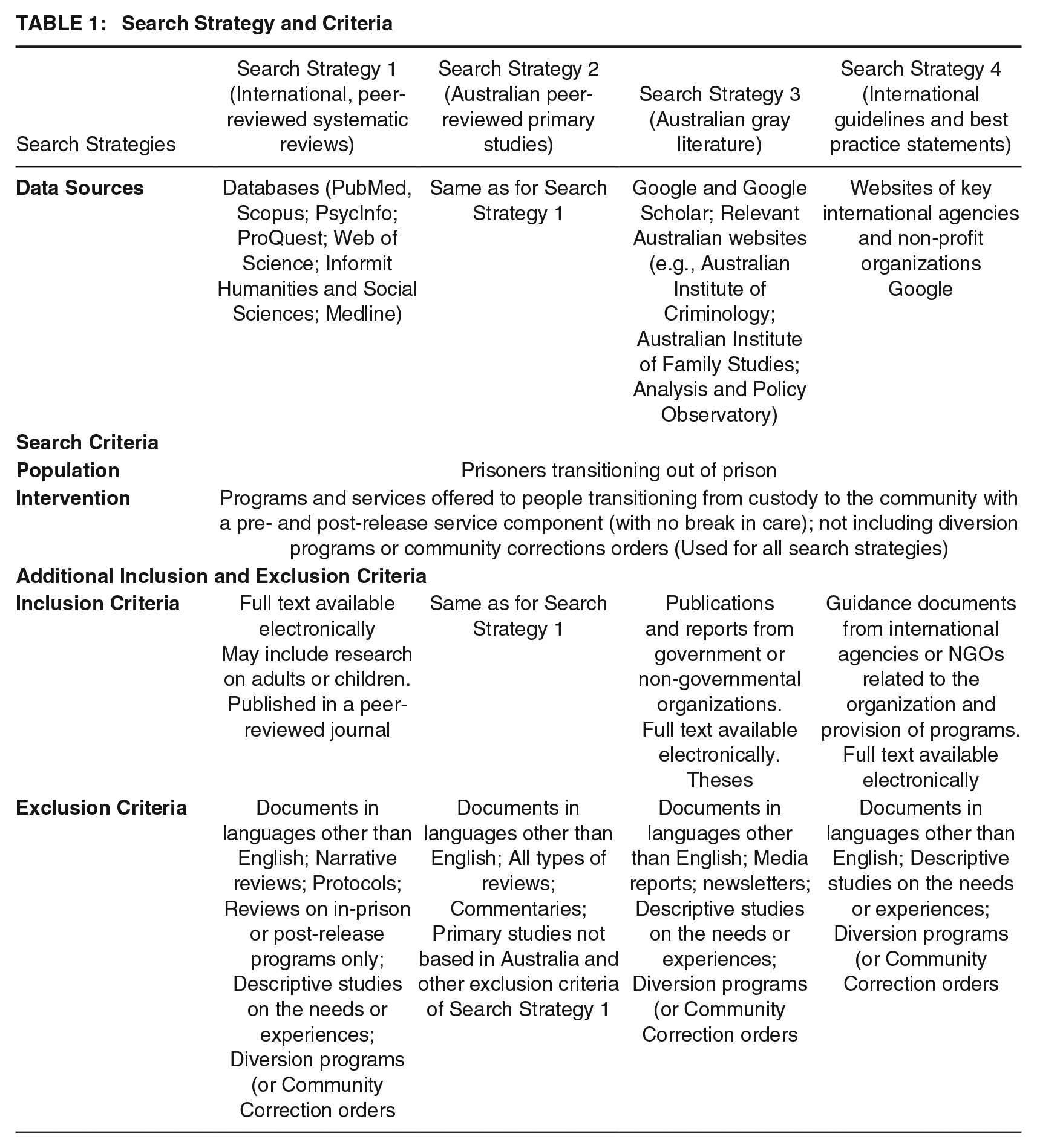
A systematic search was conducted to identify and retrieve published peer-reviewed and gray literature focusing on programs and services offered to people exiting custody. Four separate search strategies were used to identify a broad range of relevant Australian and international literature that fell into the following categories: (a) international systematic reviews of programs and services offered to people exiting custody; (b) peer-reviewed and published Australian primary studies relating to such programs and services; (c) gray literature 2 focussing on Australian programs and services for people exiting prison; and (d) international guidance and best practice statements on such programs and services produced by government and non-governmental organizations. Table 1 below presents an abbreviated version of the search strategy, while the full details of each of the four search strategies are provided in Supplementary material.
Search Strategy and Criteria
Synthesis of Relevant Literature
A total of 799 records were identified via database, online and hand searches. After title and abstract screening, 182 records progressed to full-text review. Six records initially retrieved from databases and 44 from other searches were included in the final review. Figure 1 presents the details of the search and review strategy using the Preferred Reporting Items for Systematic Reviews and Meta-Analyses (PRISMA) diagram.
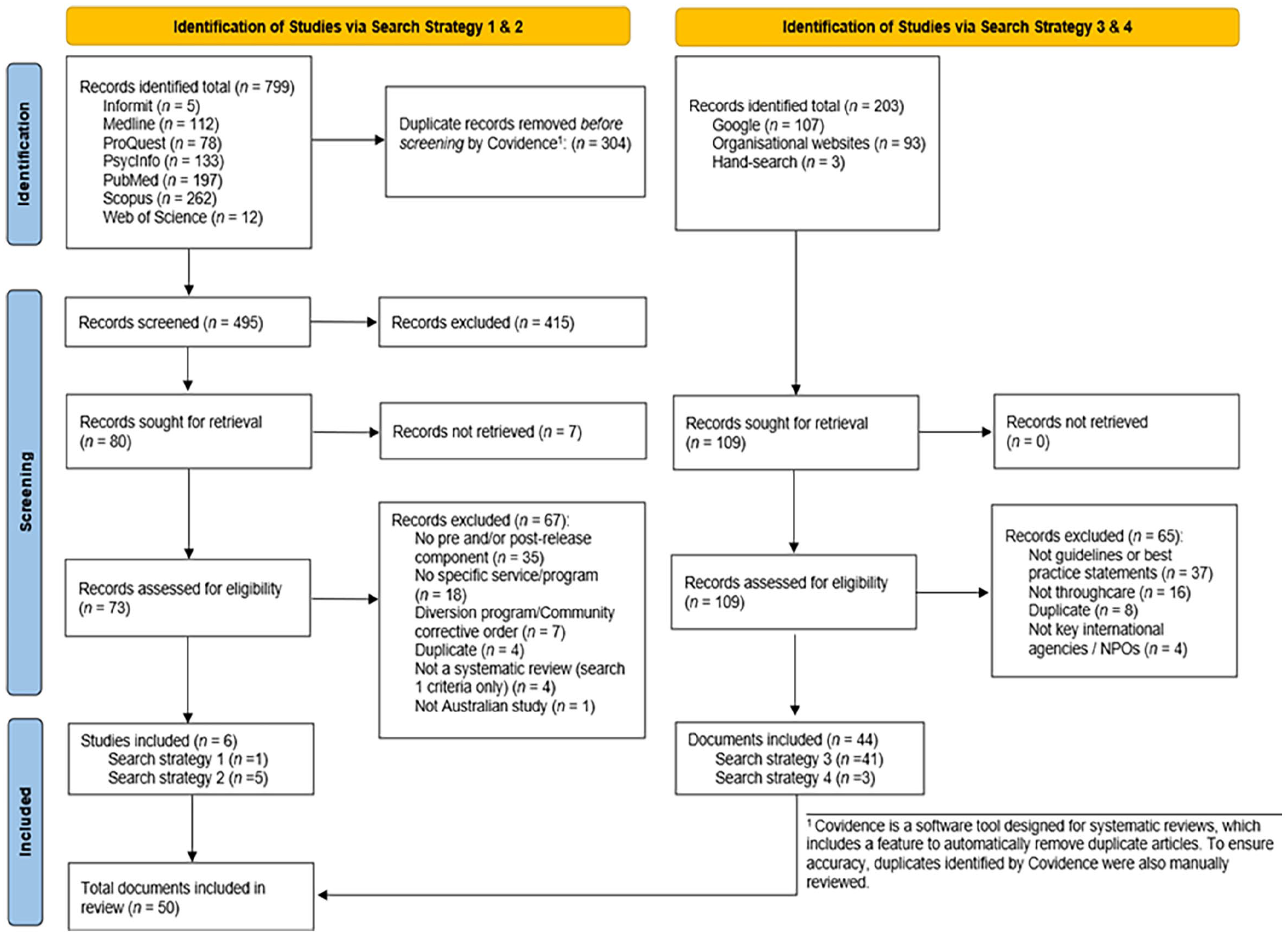
Preferred Reporting Items for Systematic Reviews and Meta-Analyses (PRISMA) Diagram for the Search and Review Strategy
The included records were imported to NVivo and coded via a framework synthesis (QRS International, 2011). NVivo is a qualitative data analysis software that allows users to systematically code data, facilitating the identification of themes and patterns. Our coding process involved multiple stages: (a) data import and organization based on search strategies; (b) initial coding by authors to identify and tag relevant segments of data with pre-defined descriptive codes guided by inductive and deductive approaches. This step simultaneously allows for pre-defined coding and the emergence of new themes; (c) focused coding to refine and categorize initial coding into broader themes and sub-themes. This step highlights significant patterns; (d) thematic analysis that compares and contrasts different codes and themes to draw meaningful insights.
The “best fit” framework synthesis approach directed us to develop an “a priori” framework which provided a deductive and structured pathway to organize and analyze eligible studies identified through the literature search and review process (Bonello & Meehan, 2019). The framework used for this review was based on specific questions that were designed for the authors’ modified Delphi study on the best practice principles for the programs and services offered to people exiting custodial settings (Majeed et al., 2023). For the purpose of this narrative review, we focused on three pre-defined themes based on existing literature. These themes included the “who” (target populations), “what” (program components), and “when” (timing of interventions) of services and programs offered and provided to people as they prepare for release and transition out of custody to the community. As an example of our coding and analysis strategy, see a snapshot of NVivo nodes on the timing of interventions in Supplementary Material (Figure 1 A). The complete codebook is available upon request. The full details of the methods have been published elsewhere (Majeed et al., 2023). To ensure consistency, multiple researchers (EB, TM, LE, MR) were involved in the coding and data synthesis process. Regular meetings were held to discuss and resolve any discrepancies or differences of opinion, ensuring a reliable and coherent coding framework and synthesis process.
Results—Findings From the Narrative Review
In this review, we present the results under the three main components: what services and programs are offered, how they are delivered, and when they are provided to people exiting custody.
What—What is Offered Within the Services and Programs?
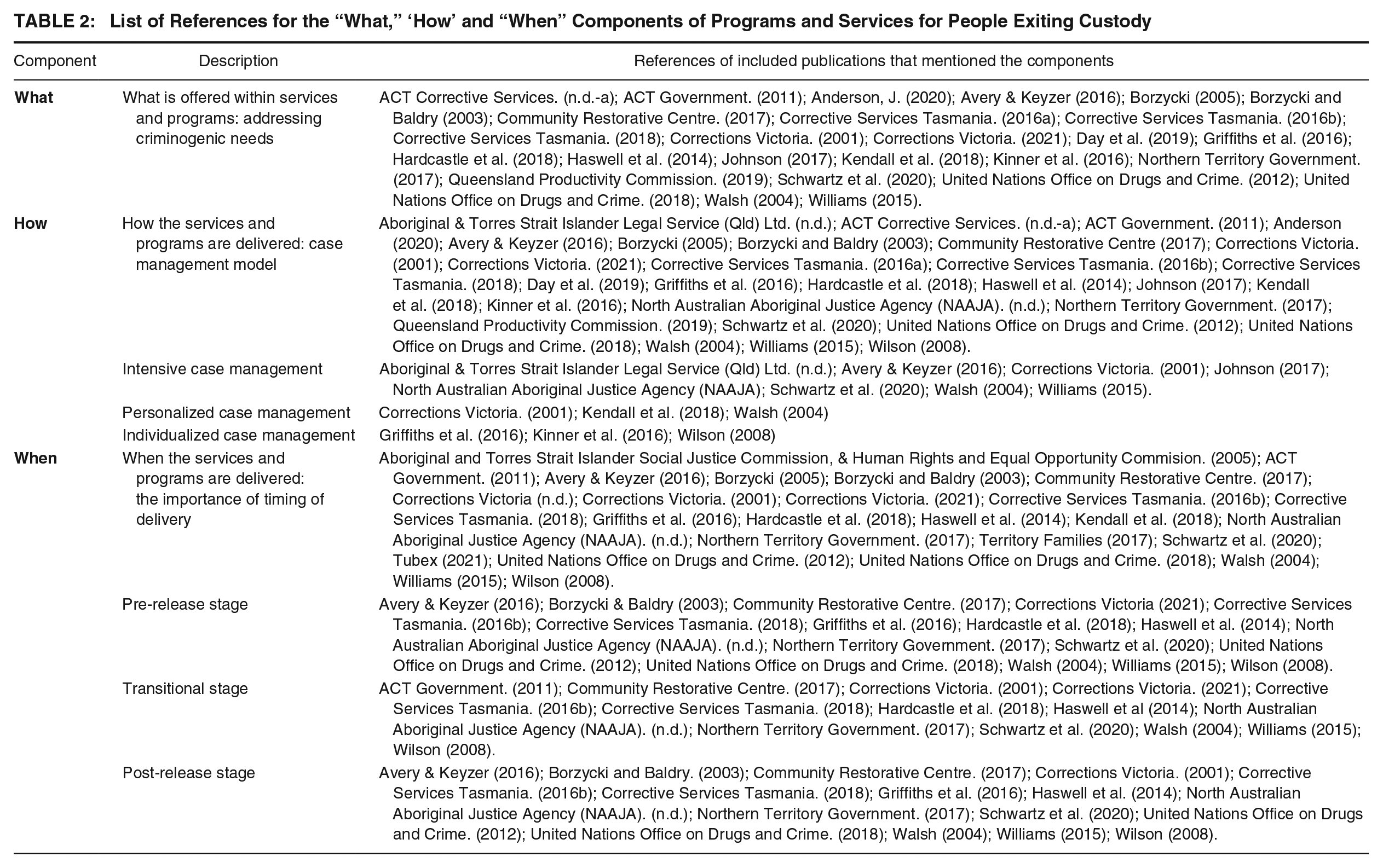
A key factor determining “what” is offered as part of programs and services for people exiting custody relates to best practice principles used to underpin these initiatives. A number of authors from the included studies suggest that these programs and services should be underpinned by the risk-need-responsivity (RNR) model (Corrective Services Tasmania, 2016a; Kendall et al., 2018; Queensland Productivity Commission, 2019). The RNR approach includes three principles (Bonta & Andrews, 2007): (a) The “Risk” principle refers to matching the level of service provision to the individual’s risk of reoffending such that those individuals with the highest risk of reoffending receive the most intensive level of intervention; (b) The “Need” principle refers to assessing the criminogenic needs of individuals and targeting these needs via specific treatment. Criminogenic needs, also known as dynamic risk factors, are modifiable attributes that, when addressed, have the potential to reduce recidivism. These include factors such as education, employment, and substance-use. Non-criminogenic needs, or static risk factors, are other attributes of a person that can be changed, but they have a lower effect on recidivism, such as self-esteem (Corrective Services Tasmania, 2016a; Haswell et al., 2014); and (c) The “Responsivity” principle refers to maximizing an individual’s ability to learn from a rehabilitative intervention by providing cognitive behavioral treatment and by tailoring interventions to the individual’s learning style, level of motivation, abilities and strengths (Corrective Services Tasmania, 2016a). Despite these studies suggesting RNR as an underpinning framework, it is critical to note that none of the included studies described whether and how the RNR approach was implemented across services and programs. This lack of detailed implementation information is itself a significant finding of our study, highlighting a gap between theoretical recommendations and practical application. While not discussed in detail, the majority of the included studies identified that programs and services offered to people as they exit prison must address criminogenic needs, suggesting that such a focus is a key component of these services and programs. See Table 2 for full list of studies that mentioned the “what” component of program or service delivery.
List of References for the “What,” ‘How’ and “When” Components of Programs and Services for People Exiting Custody
How—How the Services and Programs Are Delivered? The Method of Delivery
The second main component of the programs and services offered to people exiting custody relates to “how” these programs and services are delivered. Most authors of included studies agree that a core requirement for the success of a program or service model for people exiting prison is utilizing a case management approach throughout an individual’s prison journey. Generally, case management models aim to provide case-by-case tailored support and are reported to be central to program efficacy in terms of addressing specific needs and causes of ongoing offending (i.e., identifying and addressing criminogenic needs). A variety of different approaches to case management were described utilizing disparate terms, including “intensive,” “personalized” and “individualized” case management. Despite these differences in terminology, we were unable to identify how these approaches differ from one another in terms of delivery. Rather, the included literature suggested that all case management models aimed to provide case-by-case tailored support to their client(s), which was central to program efficacy in terms of addressing their specific needs and causes of ongoing offending that is, identifying and addressing criminogenic needs (Day et al., 2017; Hardcastle et al., 2018; Kendall et al., 2018).
In most cases, each client had a single case manager to oversee their support from custody to the community, while few reported that support was overseen by a case management team (Aboriginal and Torres Strait Islander Legal Service (Qld) Ltd, n.d.; Avery & Keyzer, 2016; Northern Territory Government, 2017; United Nations Office on Drugs and Crime, 2018). Regardless, a case manager’s main role is to work in conjunction with their client to understand and meet their individual health and well-being needs while in prison–pre-release stage (Community Restorative Centre, 2017; Wilson, 2008), prepare clients to exit prison–transitional stage (ACT Government, 2011; Kinner et al., 2016; Wilson, 2008), and link clients to the appropriate community-based resources to continue to address needs and reduce gaps of care from custody to the community (post-release stage) (Avery & Keyzer, 2016; Corrections Victoria, 2021; Griffiths et al., 2016; Kinner et al., 2016). One other key point to note is that the literature reviewed predominantly advocates for best practices, such as the RNR and case management model, without providing detail on “how” these are implemented in real-world settings. This points to the aspirational nature of the included literature, as they primarily focus on how these services should be provided or designed rather than describing how they are actually implemented. This is a significant finding of our article. See Table 2 for the full list of studies that mentioned the “how” component of services and programs.
When—When Are the Services and Programs Delivered? The Timing of Delivery
The third key component of programs and services for people exiting custody relates to “when” these programs or services are delivered. There is a specific timeframe for delivery that is critical to their success (Kendall et al., 2018). The key to effective delivery is ensuring continuity of care across the entire prison journey, rather than compartmentalizing the journey by only providing specific support at specific times for example, only during incarceration or only in the community (Aboriginal and Torres Strait Islander Social Justice Commission, & Human Rights and Equal Opportunity Commision, 2005; Borzycki, 2005). It is clear from the literature that a best practice model of service delivery for programs and services offered to people exiting custody must provide support over three interlinked stages of their prison journey: the “pre-release stage,” the “transitional stage,” and the “post-release stage” (see Figure 2).

The Three Interlinked Stages of the Prison Journey—A Best Practice Model of Service Delivery That Should Provide Continuous Support at All Stages
The “pre-release” stage refers to the period when a person is in custody (i.e., during incarceration, post-sentence, on remand, or in detention). The main aim during this phase is to constructively utilize the imprisonment time by providing appropriate support to address any health, social or criminogenic needs of the client (ACT Government, 2011; Haswell et al., 2014; United Nations Office on Drugs and Crime, 2018; Walsh, 2004). Most literature presents a range of recommended support timing, from the first point of contact with corrections systems to as short as 14 days before release. Included studies report that criminogenic/non-criminogenic needs are identified during this stage via a comprehensive assessment, which is used to develop individual case plans. These case plans then identify the specific areas of need for each person; for example, they may be provided with lists of available support services and, if necessary, with referrals to relevant mental health or substance-use services. Moreover, physical health conditions are addressed, job readiness is assessed, and referrals to vocational training are made, where available (Aboriginal and Torres Strait Islander Legal Service (Qld) Ltd, n.d.; Griffiths et al., 2016; Hardcastle et al., 2018; Tubex, 2021).
The “transitional” stage bridges pre- and post-release, focusing on preparing individuals to exit prison and transition to community. Although most studies did not specify the ideal timing for this stage, they did describe that it aims to improve the transition period with formal re-entry planning, reducing care gaps by linking to community resources and providing integrated care through partnerships with community agencies to support positive societal integration (Community Restorative Centre, 2017; Walsh, 2004). The re-entry plan, separate from the case plan, should reflect clients’ strengths, goals, and identified release needs, ensuring each participant has a plan before exiting custody. It should coordinate treatment needs and link clients to community resources, addressing physical needs like housing, income, and essential documents for example, health care cards and bank account forms (Wilson, 2008). Effective transitional preparation involves a person-centered approach and interagency cooperation between prisons, community corrections, housing providers, health and other rehabilitative services, government agencies, other community-based service providers, and family/social support networks to provide holistic support and reduce gaps between prison and community (Haswell et al., 2014; Williams, 2015).
The “post-release” stage refers to the period after a person has exited custody and resides in the community (also known as re-entry; reintegration; aftercare and resettlement). The primary aims during this stage are to ease an individual’s experience of the transition from prison to living in the community, to reduce the post-release risk of harm among people leaving prison, and to reduce recidivism by delaying and/or preventing further offending (Baldry, 2022; Schwartz et al., 2020). The literature shows a wide range of support durations, from as little as 30 days to more than 12 months or as long as needed after release (Griffiths et al., 2016; United Nations Office on Drugs and Crime, 2018). While the prison journey technically ends with the completion of a sentence or parole supervision, support must continue beyond release due to the multiple, complex, and ongoing needs of individuals. Release from prison is a critical transition point, especially for those with comorbid substance-use and mental health conditions, as they face significant barriers when accessing community support services. Case managers continue to assist formerly incarcerated people as they enter independent community living (Corrections Victoria, 2021; Hardcastle et al., 2018; Williams, 2015). They work closely with clients, their families, and community members and collaborate with government and non-government agencies, such as health and education services, faith-based and community organizations, and local businesses. Support is often based on the case management plan and may include introductions and referrals to agencies, assistance with housing and employment, and progress monitoring (Borzycki, 2005; Community Restorative Centre, 2017; Schwartz et al., 2020; United Nations Office on Drugs and Crime, 2018).
While the individual services and programs discussed in the included studies are targeted at disparate groups of people (e.g., people with histories of substance use; women in prison), they share the common objective: improve the integration of individuals into the community. For these programs and services to achieve this objective, each stage of the program or service should have its own set of aims and objectives while maintaining the continuum of support.
Discussion
Integrated Continuum of Support
Meeting the needs of people transitioning from prison to community is complex and spans pre-release, transitional and post-release stages. The findings from this narrative review underscore the importance of an integrated continuum of support for people exiting prisons and the role services and programs play. Our synthesis distills this further into three main components: “what,” “how” and “when” these services and programs are offered and delivered. Timing of the delivery is important, with best practice model suggesting that support should commence at the time of their reception into detention or custody–the “Pre-release stage” (Corrections Victoria, 2021; Corrective Services Tasmania, 2016b, 2018; Northern Territory Government, 2017; Williams, 2015), and continue through the “transitional” and “post-release” stages. This holistic approach ensures ongoing assistance and a seamless transition, recognizing the importance of sustained care for the overall well-being and successful rehabilitation of individuals within the criminal justice system.
To achieve this comprehensive continuum of support, the spectrum of programs and services offered during this time must be responsive and integrated to provide a more holistic response to a person’s needs (ACT Government, 2011). This requires interagency cooperation to ensure coordinated services between prisons, community corrections, legal, family and community services, housing providers, health and other rehabilitative services, government agencies, other community-based service providers, and with family/social support networks (Avery & Keyzer, 2016; Corrections Victoria, 2001; Corrective Services Tasmania, 2016a; Griffiths et al., 2016; Haswell et al., 2014; Johnson, 2017; Williams, 2015). Studies also noted that this much-needed interagency cooperation can only be effective if information sharing mechanisms are in place, and if a partnership approach is adopted, whereby agencies have shared responsibility to undertake multisectoral service planning and coordination for post-release care (Baldry, 2022; Borzycki & Baldry, 2003; Community Restorative Centre, 2017; Corrective Services Tasmania, 2016a, 2018; Haswell et al., 2014). Information sharing will be most beneficial when timely access to information across different systems is available, along with improved information quality and integrity of data for use by authorized people and organizations and improved collaboration between agencies (Corrective Services Tasmania, 2016b, 2018). When information is shared for the delivery of services between agencies, case management can be more efficient by avoiding duplication of information and combining resources (i.e., program delivery; reintegration functions and support roles) between agencies (Community Restorative Centre, 2017; Corrective Services Tasmania, 2016a; Hardcastle et al., 2018; Haswell et al., 2014; Johnson, 2017). Moreover, a partnership approach fosters goodwill among agencies, contributing to client centered, coordinated approaches that improve individual outcomes (Corrective Services Tasmania, 2016a).
In addition to a holistic model of care covering pre-release, transitional, and post-release periods, a comprehensive community outreach model of care is critical, particularly in the first 9 months post-release (Community Restorative Centre, 2017; United Nations Office on Drugs and Crime, 2012, 2018). During this time, people often have numerous engagements they must attend to facilitate their re-entry into community living (e.g., housing; treatment; interviews; Centrelink; Probation). However, many individuals have insufficient financial resources to meet their daily needs, including transportation to appointments. For this reason, a best-practice model should advocate for accessible community outreach services, with options for case managers to provide safe transportation to appointments and other services (Aboriginal and Torres Strait Islander Legal Service (Qld) Ltd, n.d.; Community Restorative Centre, 2017; Wilson, 2008). Community entry is often challenging for people exiting prison and this can negatively affect their well-being (Chui & Cheng, 2013; Dako-Gyeke & Baffour, 2016; Moore et al., 2016; Pérez-Ramírez et al., 2021). Feelings of stigmatization, social isolation, anxiety, and stress may arise in numerous situations, including when searching for employment and accommodation, attempting to restore previous relationships, and while complying with the conditions of official supervision (Chui & Cheng, 2013; Moore et al., 2016; Paat et al., 2017; Pérez-Ramírez et al., 2021; Ricciardelli & Mooney, 2018). In this context, the findings of this review highlight that the best practice post-release services need to include the optimal blend of support and supervision to achieve desired outcomes by drawing on informal social role models or mentors (such as positive family and other pro-social networks) in addition to the formal controls of the traditional criminal justice system (Borzycki & Baldry, 2003; Community Restorative Centre, 2017; United Nations Office on Drugs and Crime, 2012, 2018; Wilson, 2008). On the other hand, programs associated with lower rates of recidivism tend to focus on assisting formerly incarcerated people to develop a social identity outside of prison and gain employment or the capacity to earn a living and make a meaningful contribution to their community which can foster a sense of belonging and reciprocity (Borzycki, 2005; Community Restorative Centre, 2017; Day et al., 2017; United Nations Office on Drugs and Crime, 2012, 2018; Wilson, 2008). Frequently, people in prison are clear about what they would like their lives to look like when they exit prison. The community re-entry/ exit plans prepared during transitional / pre-release phase function as a metaphorical bridge between prison and the community and can use the case-work that occurs in the prison environment to guide planning on the outside (especially when moving from the structured institutional setting to the often chaotic world outside) (Community Restorative Centre, 2017; Corrective Services Tasmania, 2016b).
Models of Care and Tailored Referrals
The RNR model was commonly referred to in the included studies, yet there was a notable absence of detailed descriptions regarding its implementation and operationalization. This gap highlights a significant limitation and underscores the need for further exploration to understand the model’s implementation and effectiveness in various contexts, ensuring that interventions are both evidence-based and tailored to individual needs (Bonta & Andrews, 2007). The impact of this finding is multifaceted. The discrepancy between the theoretical endorsement of the RNR model and the lack of published evidence on its practical implementation and effectiveness suggests a substantial challenge in translating these principles into evidence-based, actionable strategies within programs and services as the practical application remains underexplored. This gap may hinder the effectiveness of interventions aimed at reducing recidivism. The absence of detailed implementation strategies calls for more comprehensive guidelines and frameworks that not only advocate for the RNR model but also provide clear, actionable steps for its application. This could inform future policy development and program design, ensuring interventions are both evidence-based and practically feasible. Moreover, this finding highlights an important area for future research, emphasizing the need for studies that evaluate the real-world implementation and outcomes of rehabilitation programs. By raising awareness among stakeholders, our study can drive efforts to develop robust implementation frameworks, ensuring the effective integration of the RNR model into rehabilitation programs.
Risk assessment is integral in identifying a person’s needs (both criminogenic needs and broader personal needs) so that treatment and service provision can be tailored (Department of Justice and Community Safety, 2024; Walsh, 2004). The importance of an effective and thorough risk assessment process was described in the majority of included studies. However, the nuances of risk assessments were missing in the included studies and must first be clearly understood. For instance, the potential of these assessments to lead to discriminatory sanctions based on background characteristics such as race, socio-economic status, place of residence and is currently not fully understood or explore (Woldgabreal et al., 2020). The consequence of this in practice may mean that a person’s needs are not met, with further negative impacts due to the additional stigma faced by these people (Woldgabreal et al., 2020; Zilka et al., 2023). Therefore, there is a need to explore and implement transparent and equitable assessments to avoid reinforcing existing biases.
The success of programs and services for people exiting prison relies heavily on a case management approach. Engaging with individuals prior to their release planning (i.e., transitional stage) allows the case managers to establish relationships during incarceration where there is greater access to people in prison who are in a reasonably stable accommodation inside the prisons (Anderson, 2020; Community Restorative Centre, 2017; Corrective Services Tasmania, 2016a, 2016b; Hardcastle et al., 2018; Haswell et al., 2014). By building a relationship of trust early during the pre-release stage, people were more likely to continue to utilize these services when they entered the community on release (Anderson, 2020; Corrections Victoria, (n.d.); Hardcastle et al., 2018). This model of care is contingent on well-trained case managers that have full knowledge of the programs and services available for people both within prison for pre-release linkage to services/programs and in the community for linkage prior to release from prison (Walsh, 2004).
Referrals to community-based services during the transitional stage was cited as an key component to a “continuum of care” approach by most of the included studies (Anderson, 2020; Avery & Keyzer, 2016; Corrections Victoria, 2021; Griffiths et al., 2017; Hardcastle et al., 2018; Johnson, 2017; Kendall et al., 2018; Kinner et al., 2016; Sotiri & Hyslop, 2017; Williams, 2015). These referrals expand on any referrals made by case managers during the pre-release stage, inking people to community-based programs/services to reduce gaps between prison and community. For example, case managers will review current in-prison service utilization and ensure that links with community treatment/services are established prior to release (Kendall et al., 2018; United Nations Office on Drugs and Crime, 2018). In addition, the re-entry/ exit plan might address new areas relevant to this stage such as: housing, income/financial assistance/rent assistance, transportation and help accessing government support payments (i.e., Centrelink) transportation (Johnson, 2017; Kendall et al., 2018).
Programs for People From Vulnerable and Diverse Communities
To ensure equitable and effective rehabilitation outcomes for all people exiting prisons, it is crucial to address the specific needs of diverse population groups. Despite this, a significant shortcoming revealed through our review is the relative scarcity of programs specifically designed for people from vulnerable communities such as First Nations populations, Culturally and Linguistically Diverse (CALD) communities, people from migrant backgrounds, women, and people with disabilities or mental health issues (Abbott et al., 2018; Aboriginal and Torres Strait Islander Legal Service (Qld) Ltd, n.d.; Schwartz et al., 2020; Tubex, 2021). Language barriers, limited access to culturally appropriate support services, difficulty in maintaining family connections, and unfamiliarity with the justice system create significant hurdles for the effective reintegration of people from these populations when exiting prison. Without targeted interventions and adequate support systems, individuals from vulnerable groups face increased risks of marginalization, recidivism, and reduced prospects for successful rehabilitation (United Nations Office on Drugs and Crime, 2018; Sotiri & Hyslop, 2017). Of particular concern is that First Nations Peoples, who are significantly overrepresented in global prison populations (Penal Reform International, 2023), lack specific programs and services that address their distinct cultural and spiritual needs (Abbott et al., 2018; Tubex, 2021). Therefore, key components of any best practice programs or services for people exiting prison would be the incorporation of gender-informed, culturally safe, appropriate, and sensitive elements. Moreover, the inclusion of a strength-based lens that can address specific risks, needs, and responsivity of these vulnerable groups while addressing barriers to successful integration in the community to reduce recidivism and reoffending is essential (Day et al., 2003, 2019; Department of Justice and Community Safety, 2024; Majeed et al., 2025; Tubex, 2021).
The role of private or for-profit correctional facilities in the context of rising operational costs also warrants attention. Private facilities may have financial incentives that conflict with the goals of re-entry programming aimed at reducing recidivism (Duwe & Clark, 2013; In the Public Interest, 2016). The potential to disincentivize re-entry programming highlights the need for policies that ensure private prisons are held accountable for providing adequate re-entry support, aligning their operational goals with broader public safety objectives.
Strengths and Limitations
While this narrative review provides valuable insights into re-entry programs, it is important to acknowledge several limitations. First, narrative reviews often rely on the author’s interpretation and synthesis of the literature, which can introduce bias or subjectivity. However, a major strength of this review is that we used a rigorous methodology conducted in a systematic manner to offset any potential risk of bias. This is evidenced by our use of pre-specified search strategies and inclusion/ exclusion criteria, coding of articles by multiple reviewers using framework synthesis in NVivo, and our use of PRISMA to report search results. Despite this comprehensive approach, there remains a possibility that relevant literature may have been missed.
Second, the exclusion of international primary studies may have impacted the scope of information about these programs. Although this was outside the scope of the larger project to which this narrative review belongs, the inclusion of broader studies will be considered for future research projects.
Finally, the included articles were not assessed for quality. Nevertheless, to our knowledge, this is the first review that provides a comprehensive synthesis of the evidence relating to key components of services and programs offered to people exiting custody. This review uses this synthesis as a basis to discuss an evidence-based best practice model of a staged approach (pre; post and transitional) for the delivery of such programs and services.
Conclusion
Best practice components of programs and services offered to people exiting prison can be characterized according to what is offered, how it is delivered and when it is provided. Any best practice model for such programs and services should focus on providing a continuum of care over the interlinked stages of the prison journey: pre-release, transitional, and post-release stages. Our findings suggest that to ensure the success and sustainability of the services and programs, critical factors underpinning these programs need to be addressed throughout the three stages. These programs and related policies should focus on the three principles of the Risk-Need and-Responsivity model as an underpinning theory of “what” programs and services are offered. In particular, close attention ought to be given to dynamic risk factors such as health, literacy, housing, and economic empowerment that predispose individuals to offending behavior and which, when addressed, have a higher potential to reduce recidivism. In addition, “how” these programs and services are delivered is also crucial. A case management model is the preferred mode of delivery, one that provides tailored support that addresses specific needs of people in prison, as well as the causes of offending/reoffending. It is also crucial that programs and services offered to people exiting custody commence “when” the person is still in custody, as soon as possible after reception into prison, and continue through the transitional and post-release stages With a growing global prison population, further research is required to identify whether the current models of program and service delivery for people exiting prison are effective for disparate vulnerable populations and the effects of contextual issues such as ethnicity, gender, age, and socioeconomic status. Further work is also required to rigorously evaluate efficiency, uptake and effectiveness of these services and programs, with a specific focus on RNR models, their operationalization and effectiveness for different population groups with varying needs.
Supplemental Material
sj-docx-1-cjb-10.1177_00938548251336796 – Supplemental material for A Better Future Beyond the Walls: Narrative Review of Best Practice Components of Services and Programs for People Exiting Custody
Supplemental material, sj-docx-1-cjb-10.1177_00938548251336796 for A Better Future Beyond the Walls: Narrative Review of Best Practice Components of Services and Programs for People Exiting Custody by Tazeen Majeed, Marc Remond, Jo Taylor, Layla Edwards, Caroline Nyongesa and Elizabeth Sullivan in Criminal Justice and Behavior
Footnotes
Author’s Note:
The authors declare that there is no conflict of interest. This was not a funded project and, therefore, no external body had any role in the study design, analysis or interpretation of data, in the writing of the manuscript, or the decision to submit the manuscript for publication. Authors extend their deepest gratitude to the authors of the articles that formed the foundation of our narrative review. Their invaluable research and insights have significantly contributed to our study. The authors also acknowledge the participants of these studies, whose experiences and perspectives provided critical data and understanding. Without their willingness to share their stories, this review would not have been possible.

Notes
References
Supplementary Material
Please find the following supplemental material available below.
For Open Access articles published under a Creative Commons License, all supplemental material carries the same license as the article it is associated with.
For non-Open Access articles published, all supplemental material carries a non-exclusive license, and permission requests for re-use of supplemental material or any part of supplemental material shall be sent directly to the copyright owner as specified in the copyright notice associated with the article.
