



Abstract
This article introduces an original theoretical model for understanding how the linguistic framing of political protest messages influences how blame spreads in social media. Our model of blame retweetability posits that the way in which the basis and focus of blame are linguistically construed affects people’s perception of the strength of criticism in the message and its likelihood to be reposted. Two online experiments provide empirical support for the model. We find that attacks on a person’s character are perceived as more critical than blaming focused on the negative outcomes of their actions, and that negative judgements of social sanction have a greater impact than those of social esteem. The study also uncovers a “retweetability paradox”—in contrast to earlier studies, we find that blame messages that are perceived as more critical are not more likely to be reposted.
Questions of who deserves blame and for what are at the heart of political struggles. For protesters, blaming is an essential form of “diagnostic framing” (Snow & Benford, 1988) that shapes public opinion and brings about policy change. In the contemporary political landscape, social media platforms have emerged as pivotal spaces for political activism (Bennett & Segerberg, 2013), providing a means for individuals to mobilize potentially large numbers of supporters behind a cause by crafting blaming messages that then can gain increased visibility as other users repost them. While researchers have addressed various forms of communicative attacks targeted at political elites, such as negative campaigning (Nai, 2020) and online incivility (Rossini, 2021, 2022), we still know little about what specific linguistic strategies ordinary individuals use to convey blame and how the wording of their blaming messages influences other people’s attitudes and behavior in social media. More importantly, we do not know what makes blaming messages more likely to be reposted in social media sites, which can significantly influence their visibility and, by extension, their ability to bring about change. To address this gap, we develop and test an original model of blame retweetability, which explains how linguistic choices in blaming social media posts affect people’s attitudes and likelihood to repost the message. Our model combines insights from political discourse analysis, research on blame, and protest studies. It offers a comprehensive, linguistically informed account of crucial communication mechanisms that shape political behavior and online influence.
The basic premise of our model is that political behavior—including blaming targeted at government officeholders—may be affected by subtle linguistic details of political messages. Linguistically informed experimental research has shown, for example, how grammatical forms used in descriptions of politicians’ actions affect their perceived electability: imperfective descriptions (“was VERB + ing”) of negative actions are more likely to lead people to think that the candidate had done a negative action than perfective (“VERB + ed”) descriptions (Fausey & Matlock, 2011). In media representations of violent political protests, the readers’ allocation of blame has been shown to be affected by whether journalists use regular transactive (“protesters attacked police officers”) or reciprocal (“protesters clashed with police officers”) form constructions in their reporting (Hart, 2018). In reporting of negative events, the use of active rather than passive voice makes an agent mentioned in the story more likely to be regarded as deserving blame for causing that event (Fannes & Claeys, 2022; Knobloch-Westerwick & Taylor, 2008). Previous research focusing specifically on the language of judgement and blame suggests that distinct strategies can be identified on the basis of how negative evaluation is expressed linguistically (Hansson et al., 2022). It has highlighted two key aspects of interest: where blame is directed, whether it focuses on a person’s character, actions, or the outcomes of their actions, and why blame is assigned, whether it is due to perceived incompetence or a breach of integrity. In this study, we use experimental methods to test these strategies and understand how they influence people’s attitudes. Specifically, we aim to determine which blaming strategies are seen as more critical of the target and which are more likely to be reposted.
Blaming and Retweeting: Literature and Hypotheses
Our model of blame retweetability draws on concepts from political discourse analysis, research on blame, and protest studies. These areas of inquiry share a core concern with the key question of how the negative interpretation of a person’s actions can be understood and put to particular ends. In this section, we discuss important theoretical assumptions and outline our experimental hypotheses before presenting the model.
Blaming
Much of the (experimental) research into blame phenomena has been done in the social-psychological tradition of Heider (1958) with an aim to understand the mental processes by which people attribute causality, responsibility, and blame in relation to human behavior. These studies show how attribution involves the processing of information about what caused a negative event, whether it was intended, whether the consequences could have been avoided, and so on, leading to a moral judgement (Malle et al., 2014; Shaver, 1985; Weiner, 2006). Attribution may also be guided by emotional reactions and identity concerns (Alicke, 2000; Schlenker et al., 1994). Attribution studies suggest that the cause of an actor’s behavior can be either internalized (e.g., attributed to her ability or effort) or externalized (attributed to situational factors, e.g., peer hindrance), and that people tend to make systematic errors when reasoning about the causes of behaviors. Probably the most widely known of these is called the fundamental attribution error—“the relative disregarding of situational causality or the over-allocation of dispositional ascriptions” (Weiner, 2006, p. xvii).
According to political science literature, the attribution of blame to certain actors affects public opinion and voting behavior (Hameleers et al., 2017; Hobolt & Tilley, 2014; Malhotra & Kuo, 2008; Marsh & Tilley, 2010; Weaver, 2018), the features of political news stories influence the citizens’ perceptions of who deserves blame for what (Iyengar, 1989; S. H. Kim, 2015), and the use of excuses and justifications by politicians may modify the degree of blame attributed to them (Hansson, 2018; McGraw, 1990). Social movement and protest studies indicate that public expressions of blame may be used strategically as part of social justice campaigns and acts of public protest that aim to stop policy makers from adopting or implementing policies that harm certain groups (Amenta et al., 2010; Benford & Snow, 2000; Jasper et al., 2020; Johannesson & Weinryb, 2021). Protesters wish to make their expressions of blame resonate with the audiences so the latter would join in criticizing and potentially ousting the transgressing politician. Increasingly, blaming takes place on social media networks in the form of “online firestorms,” driven by participants’ moral arousal that is “mostly affected by the perceived social appropriateness of attacking the denounced actor rather than by intrinsic moral values” (Johnen et al., 2018, p. 3155). What we do in this article complements the attribution-theoretical and protest literatures by showing how bystanders assess and engage with public utterances of blaming. Rather than asking who deserves blame or how much blame should be apportioned to them, we want to know how those who observe the blaming of a politician online evaluate the intensity of expressions of blame that differ in their linguistic realizations, and how these perceptions influence their decisions on whether to join the protest by reposting blaming messages. To improve our understanding of these expressions, a discourse-analytic approach is needed.
From a discourse-analytic perspective, blaming involves the use of evaluative language to express negative judgement. We have suggested in our previous work (Hansson et al., 2022) that the linguistic framework of Appraisal—an established approach for exploring how linguistic patterns construct evaluation proposed by Martin and White (2005)—could be used to distinguish conventionalized ways of expressing blame. Martin and White (2005) group the linguistic resources for evaluating people’s character and behavior into two general categories. Judgements of social sanction relate to ethics, including how sincere and honest someone is. Judgements of social esteem assess how highly a person is valued in a community, including how competent and dependable they are. These two categories map clearly onto key criteria against which citizens have been found to evaluate politicians. Surveys in political science and political communication indicate that people expect politicians to display integrity and keep their promises (e.g., Valgarðsson et al., 2021); failure to do so engenders public distrust and criticism (e.g., Arendt, 1972; Garland, 2021; Hansson & Kröger, 2021; Judge, 2022; Mercieca, 2020). Normative expectations towards political leaders also often relate to their capacity to address social problems and implement policies as intended (Green & Jennings, 2017; McConnell, 2015).
Previous research on trust offers insights into the relative importance people assign to social sanction and social esteem and can help us make predictions about the effects of blaming strategies targeting these two aspects. Experimental evidence suggests that people tend to regard negative information concerning violations of integrity (such as dishonesty) as a more relevant signal about the character of the violator than those concerning matters of competence (P. H. Kim et al., 2004, 2013; Kim & Harmon, 2014). Accordingly, we hypothesize the following:
At a micro-linguistic level, blaming can be expressed through negative judgement in different ways that focus on the target’s character (e.g., “you are a liar”), behavior (“you are lying”), or outcomes of their action (“this is a lie”). From a cognitive linguistic perspective, these expressions involve different “construals” (Croft & Cruse, 2004), whereby readers’ attention is directed at certain aspects of the situation/event while other aspects are backgrounded. Critical discourse analysts have long observed that certain construals could blur the link between agent and action (Hart, 2011; van Leeuwen, 2008). Accordingly, different foci of blaming are likely to carry different rhetorical import. If negative judgement focuses on someone’s character, it draws attention to the (presumably steady) mental or moral qualities of the person in question, leaving the specific potentially harmful outcomes of the person’s (in)action to the background. Behavior-focused negative judgements foreground action and link it to an agent. Outcome-focused negative judgements, on the other hand, background the agency of the actor responsible for that outcome and therefore blame may be seen as less personalized and permanent. We thus hypothesize the following:
Retweeting
Social media has become a key context for leveraging the persuasive potential of blaming to achieve political ends. One of the affordances of social networking sites such as Twitter is to rebroadcast posts written by third parties, that is, retweet them. Retweeting increases the visibility, attention and diffusion of the reposted content and is thus a powerful resource within political discourse (Bossetta, 2018). Indeed, for protesters, the frequency of retweets their posts receive from Twitter users—retweetability—may be seen as a quantitative measure of “tactical success” of their public communication efforts (Potts et al., 2014). For governmental figures, retweeting is also important for agenda setting, especially in the context of electoral campaigns (Trifiro et al., 2021).
Extant research has found that in political debate, incivil content is more likely to be retweeted than civil content (Groshek & Cutino, 2016), and in political campaigns, attack messages get more retweets than advocacy messages (Fine & Hunt, 2021; Lee & Xu, 2018; J. Stromer-Galley et al., 2018). There is also some evidence from sentiment-based studies to suggest that in political discourse “emotionally charged Twitter messages tend to be retweeted more often and more quickly compared to neutral ones” (Stieglitz & Dang-Xuan, 2013, p. 217). However, in other contexts, such as crisis communication, there may be a preference for reposting information-focused rather than affective messages (C. H. Lee & Yu, 2020) and, more generally, users may value “facts and evidence” above conflictual content in Twitter interaction (Walsh & Baker, 2022, p. 674).
Retweeting practices are also shaped by contextual factors. Reasons for retweeting may include the retweeter’s intention to publicly agree with someone, to validate others’ thoughts, or to express loyalty by drawing attention to their posts (boyd et al., 2010). Indeed, retweeting does not just convey information, but is also taken to infer the retweeter’s opinion towards the original post where the default interpretation appears to be one of endorsement (Scott, 2021). This default interpretation is why many Twitter users feel the need to put a disclaimer on their profile stating that “retweets are not endorsements.”
The existing literature on blaming and protest has not established the causal links between micro-level linguistic features of blame expressions (basis and focus of blaming) used in online protest messages and their perceived intensity and likelihood to get reposted. In our study, we address this theoretical gap by testing the following hypothesis:
The Model of Blame Retweetability
Figure 1 illustrates our theoretical model for understanding how linguistic choices influence how blame spreads on social media, based on the hypotheses outlined above. The model shows how the basis and focus of blame influence people’s perceptions of criticism strength in a post and its likelihood to be retweeted, as depicted by the arrows in the diagram. Basis and focus of blame are essential linguistic elements in social media posts used by protestors to shape the blame message, emphasizing the aspects they believe are the primary causes of the negative event or outcome. To fellow protestors who read these social media posts, these linguistic features serve as elements of a diagnostic frame (Snow & Benford, 1988); that is, they are regarded as crucial pieces of information that inform their comprehension and stance regarding the blame issue.
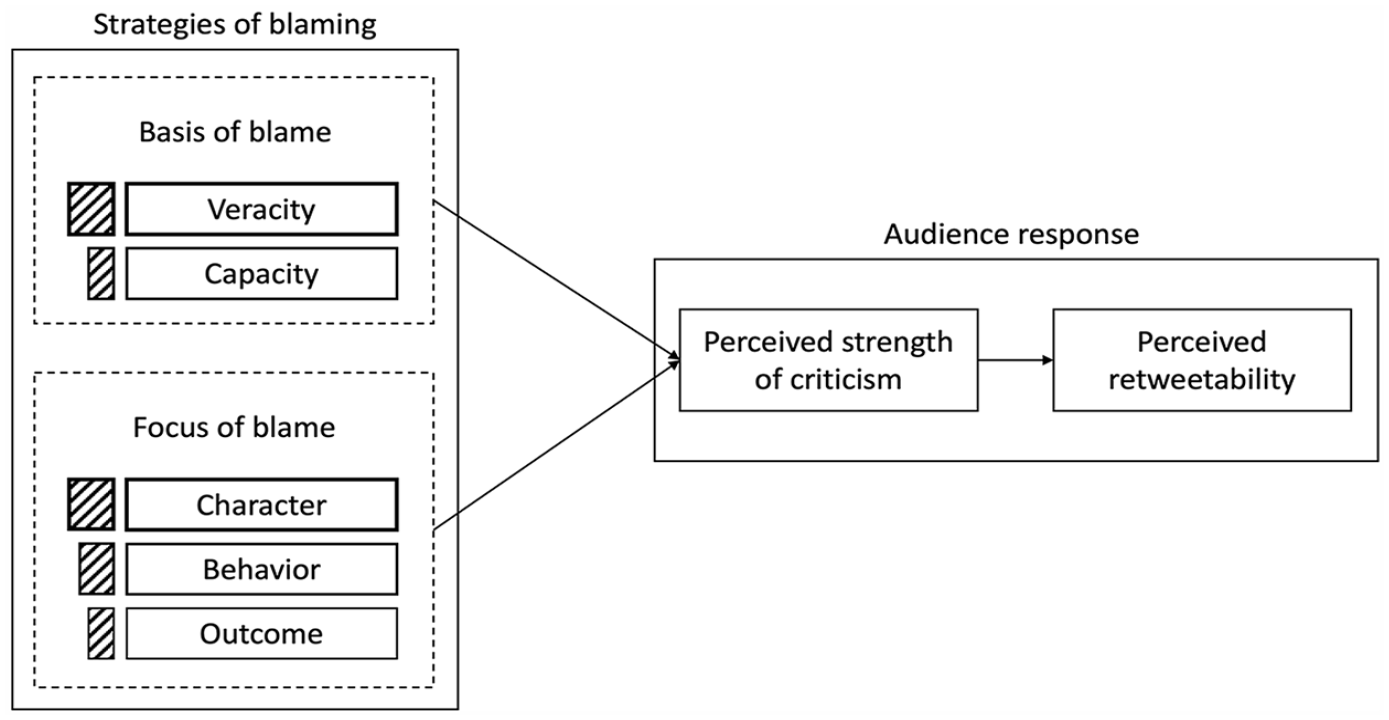
Theoretical model of blame retweetability.
Our model suggests that the linguistic choices made when framing the basis and focus of blame will affect readers’ attitudes in different ways, as indicated by the thickness of the box lines and the differing box sizes adjacent to them. Consistent with our hypotheses, construing the blameworthy act as a breach of integrity (e.g., lying) will be seen as more critical than presenting it as the result of incompetence. In addition, blaming an individual’s character will be perceived as more critical than focusing on their behavior or the outcomes of their actions. The perceived retweet potential of a blaming post hinges on the assessment of its perceived level of criticism. Our hypothesis posits a direct link between the perceived intensity of criticism and retweetability. In essence, posts employing blame strategies seen as more critical of a policymaker are expected to be considered more retweetable. In the following sections, we present two online experiments we carried out to validate our model.
Study 1: Focus of Blaming
Study 1 tests whether individuals respond to micro-level linguistic features that distinguish blaming focused on behavior, character, and outcome and whether these features influence their perceptions of how critical and retweetable the tweets are. To this aim, we developed a sorting task in which participants were shown a set of blaming tweets expressing the three foci of blame and were asked to organize them into groups based on how critical and retweetable they appeared. The experiment employs a within-subjects design where participants evaluate tweets representing all three foci of blaming, experiencing all experimental conditions, with each participant acting as their own baseline.
Experimental Task
The sorting task was administered online via the survey platform Qualtrics. Figure 2 illustrates the web interface for the task. Participants were given a set of nine fabricated tweets blaming a fictitious government official. The set contained an equal number of tweets for each of the three foci of blame, namely behavior, character and outcome. Participants were first asked to sort the tweets into four bins labelled “not critical,” “somewhat critical,” “critical” and “very critical.” In the next survey screen, they were instructed to group them into four bins labelled “not retweetable,” “somewhat retweetable,” “retweetable” and “very retweetable.” The tweets were presented in random order and there were no constraints on how many tweets participants could place in each of the bins. Following each task, participants were asked the following question: “what features of the replies made them seem more critical/retweetable to you than others?” This question aimed to gain insights into their conscious motivations for grouping the tweets.
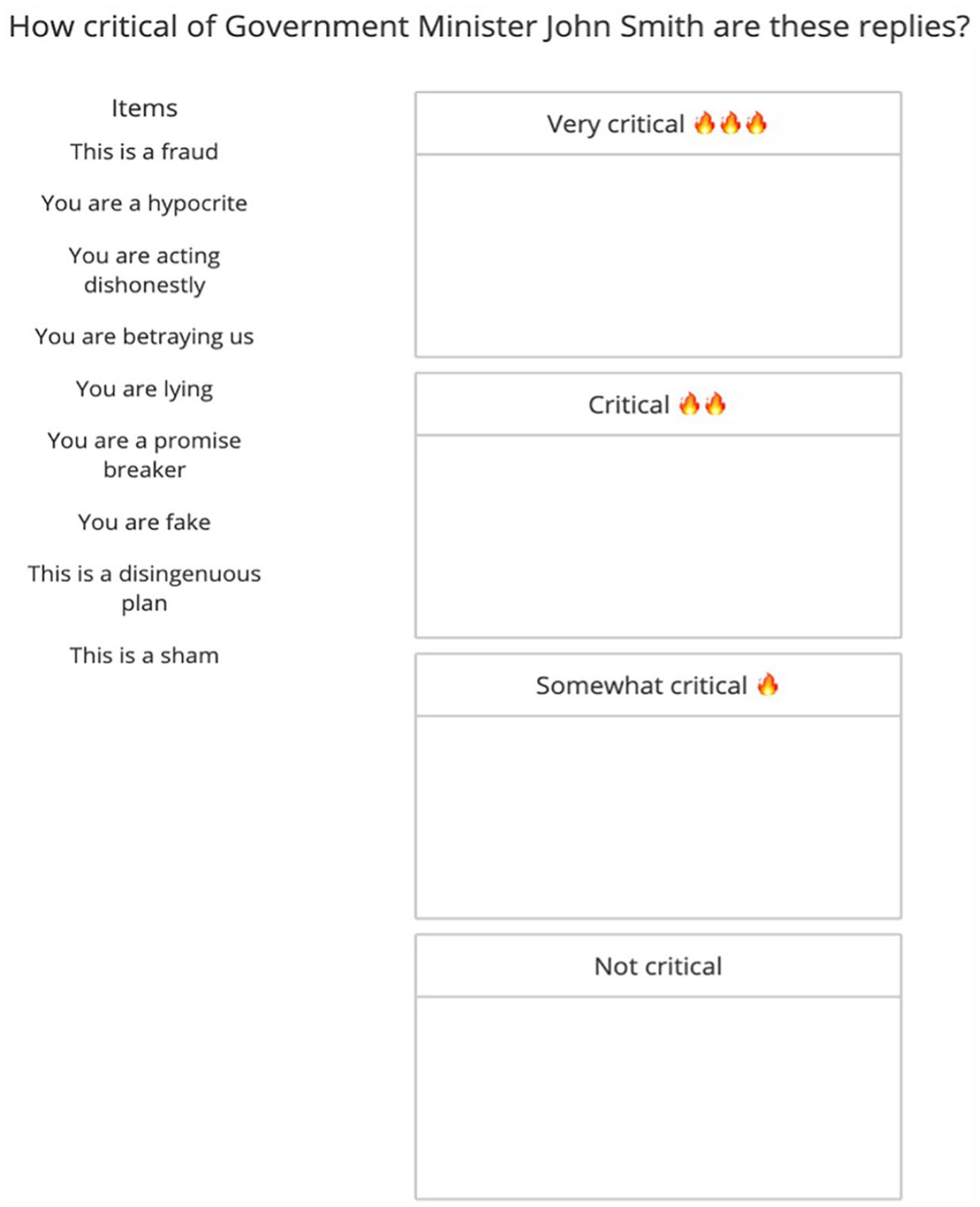
Web interface for the sorting task.
Before beginning the sorting task, participants were presented with a fictitious scenario providing context for the blaming tweets. The scenario was laid out over three consecutive screens. First, a short vignette reported the government’s decision to phase out its “Green Home Grant Scheme,” which offered subsidies to people for improving the insulation of their homes. According to the vignette, the scheme was ended just after 6 months since its launch due to administrative difficulties and an undeliverable timetable. After reading the vignette, participants were shown a fabricated tweet by fictitious government minister John Smith announcing the end of the scheme. Next, participants were told that the government’s decision had attracted criticism on Twitter and were shown an example of a critical reply to minister John Smith’s tweet (Figure 3). The scenario was modelled on an authentic news story about the UK Government’s decision to abandon a similar program in 2021 (Ambrose, 2021). This kind of scenario was chosen over more highly publicized and divisive policies such as Brexit to prevent participants’ preconceived attitudes and political leaning from influencing their responses.
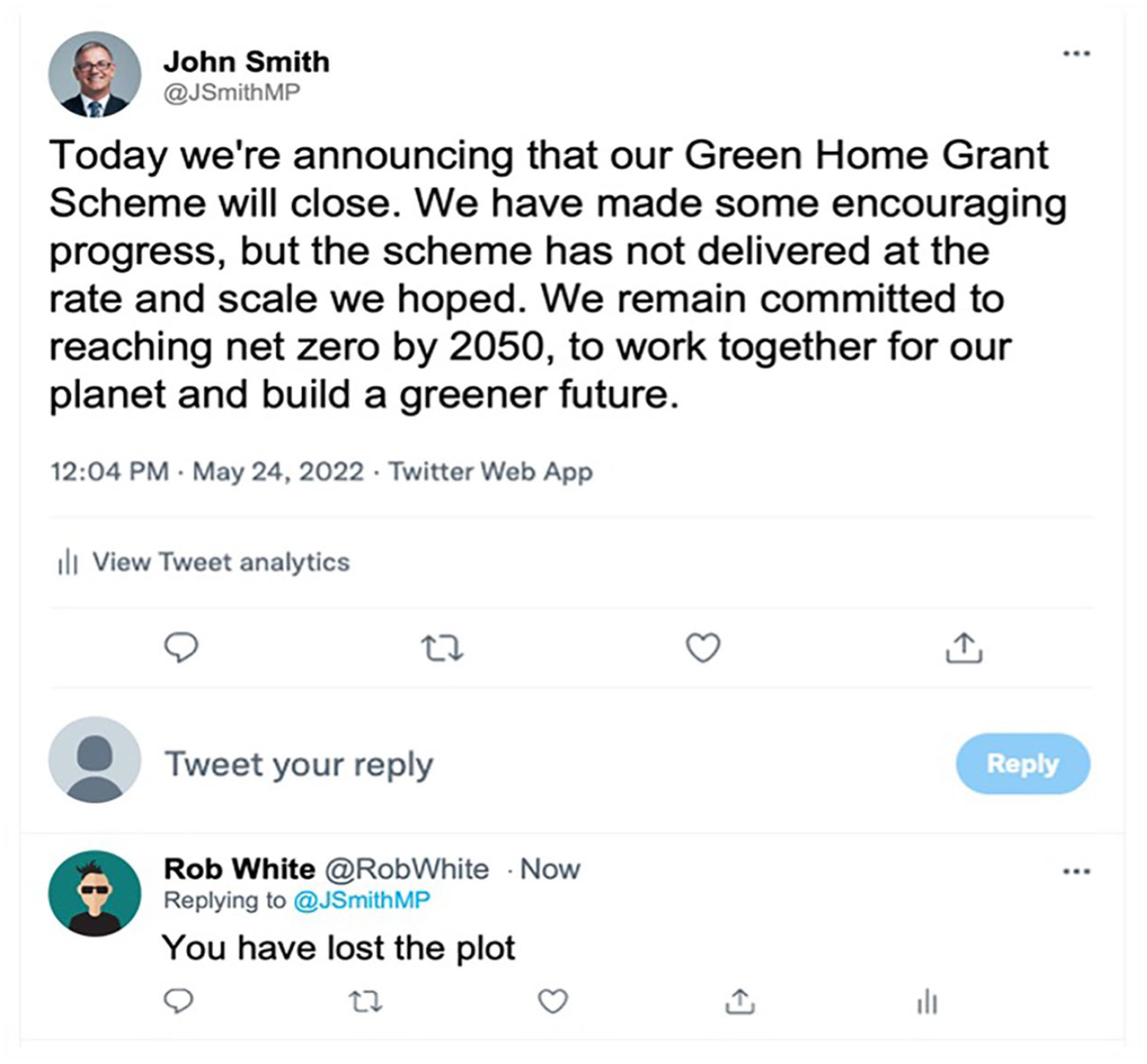
Fabricated tweet announcing the end of the “Green Home Grant Scheme” and example response by Twitter user.
Finally, participants were presented with a battery of questions measuring the following control variables: climate change concern, perceptions of government, frequency of Twitter use, main reason for Twitter use and political orientation. 1 The survey concluded with a series of demographic questions. The complete survey is provided in the Online Appendix.
Stimuli
The stimuli used in the sorting task were modelled on authentic tweets from a corpus compiled for a previous study of blaming discourse in the context of Brexit and Covid-19 (Hansson et al., 2022). From that corpus, we selected 18 representative examples, half of which contained blaming strategies based on negative judgements of social sanction (veracity) and half blaming strategies based on negative judgements of social esteem (capacity). We then created three versions of each tweet by manipulating the focus of blame. For example, the original tweet “you are a failure,” in which blame focuses on character, was reworded as “you are failing us” to represent blaming focused on behavior, and as “this is a failure” to represent blaming focused on outcome. We devised a set of explicit criteria to standardize items as much as possible in terms of their lexico-grammatical properties. For example, we established that the behavior items should all be in the progressive form and that the wording and evaluative intensity should be preserved as much as possible across versions of the same tweet. To disguise the purpose of the experiment and to avoid contrast and repetition priming effects, we created three counter-balanced presentation lists, each of which included only one version of the items. Participants were randomly assigned to one of the three lists. As Study 1 primarily addresses the effects of focus of blame, capacity-based blaming tweets were kept separate from veracity-based blaming tweets and participants were randomly assigned to only one of these two conditions. The full list of items and presentation lists are included in the Online Appendix.
Participants
Thirty participants were recruited via Prolific (Palan & Schitter, 2018) and were compensated at an average hourly rate of £15.12 for taking part in the study. We restricted participants to volunteers based in the United Kingdom, whose first language is English, who use Twitter as their main social media platform, and whose minimum approval rating was 95%. Of the sample, 63% was female and 37% male (no other genders were selected). The subjects’ average age was 36.3 (SD 14.2). Participants had a diverse educational background, with 53% having completed a Bachelor’s degree, 30% A Levels, Baccalaureate, or equivalent, 10% a Master’s degree and the remaining either a professional degree or a doctoral degree. A total of 50% of participants indicated their occupation as working full time, 20% as working part time, 13% as students, and the rest were either temporarily unemployed, permanently unemployed, or retired.
Results
Figure 4 shows how participants ranked the stimuli based on their perceived level of criticism and retweetability across the three foci of blame. These descriptive statistics suggest that, as expected, tweets blaming politicians for the outcome of their actions were generally perceived as less critical than those blaming politicians for their behavior or character. A different pattern can be observed in relation to retweetability. Blaming tweets focusing on character were categorized as “not retweetable” and “somewhat retweetable” less often compared to the other two types.
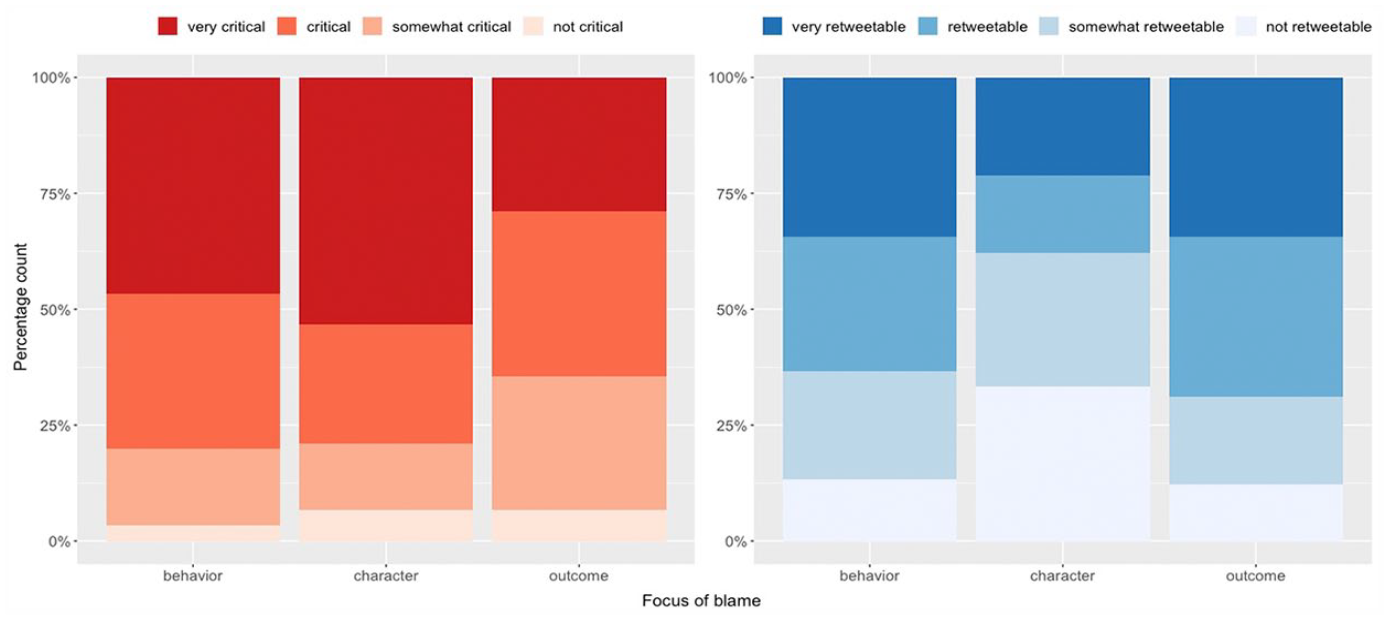
Distribution of items by focus of blaming across negative judgement and retweetability categories.
To assess whether the differences observed above are statistically reliable and test our hypotheses we used mixed-effects ordinal logistic regression (also known as “cumulative link mixed modelling”), as implemented in the R package ordinal (Christensen, 2015). This technique was chosen because the outcome variable is a set of ordered categories and because it allows estimation of random effects to accommodate non-independent observations. We fitted two models with criticism and retweetability ranking as the dependent variable, respectively. Both models included random intercepts for items and presentation lists as well as random intercepts and slopes for participants and experimental conditions. We specified focus of blame as the predictor variable and included basis of blame, climate change concern, perceptions of government, frequency of Twitter use, and political orientation as control variables. In the interest of transparency and reproducibility, the complete data and R statistical analysis scripts are available via the Open Science Framework repository at this URL: https://osf.io/az47w/?view_only=e09edbd2b57e4fc19dcccd037f0a473a.
The first model, shown in Table 1, estimates the effects of focus of blame on the perception of how critical an expression of blame is. For each variable, the table reports coefficient estimates, expressed in log-odds, and the corresponding Odds Ratios (OR). To facilitate interpretation of the results, Figure 5 shows the estimated probabilities for each ranking of criticism across focus of blame conditions. H2 predicted that messages containing blaming strategies focused on character or behavior will be perceived as more critical of government than those focused on outcomes. The results of the analysis provide strong support for this hypothesis. As predicted, both tweets containing blaming focused on character and blaming focused on behavior were significantly more likely to be categorized as more critical than tweets containing blaming focused on outcome (character vs. outcome: β = 1.25, p = .013, OR = 3.47; behavior vs. outcome: β = .97, p = .002, OR = 2.64). There was no significant difference between blaming focused on character and blaming focused on behavior (β = .28, p = .568, OR = 1.32). None of the control variables had a reliable effect on participants’ categorization choices.
Mixed-Effects Ordinal Logistic Regression Model Estimating the Effect of Focus of Blame on the Perceived Strength of Criticism.
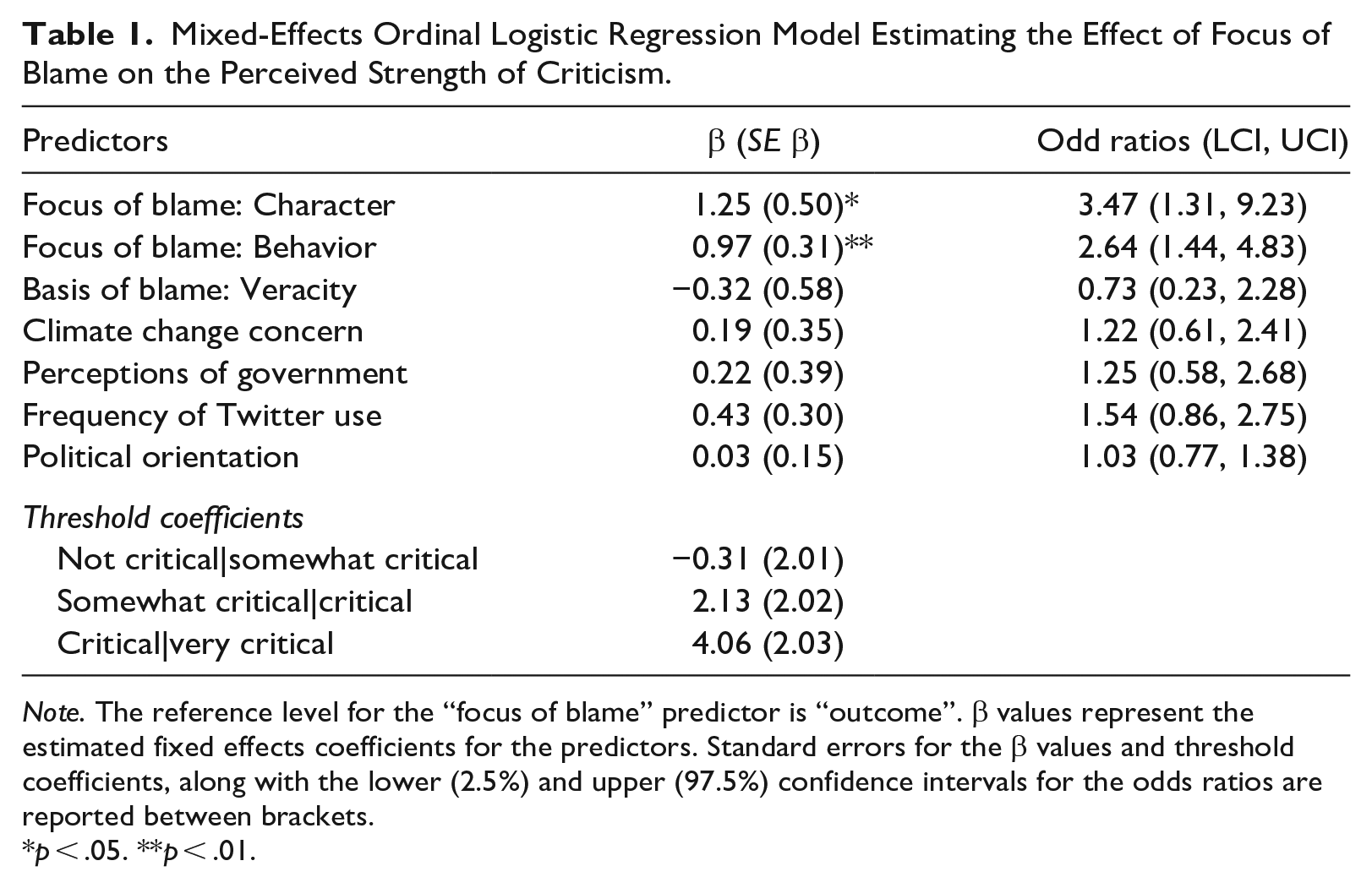
Note. The reference level for the “focus of blame” predictor is “outcome”. β values represent the estimated fixed effects coefficients for the predictors. Standard errors for the β values and threshold coefficients, along with the lower (2.5%) and upper (97.5%) confidence intervals for the odds ratios are reported between brackets.
p < .05. **p < .01.
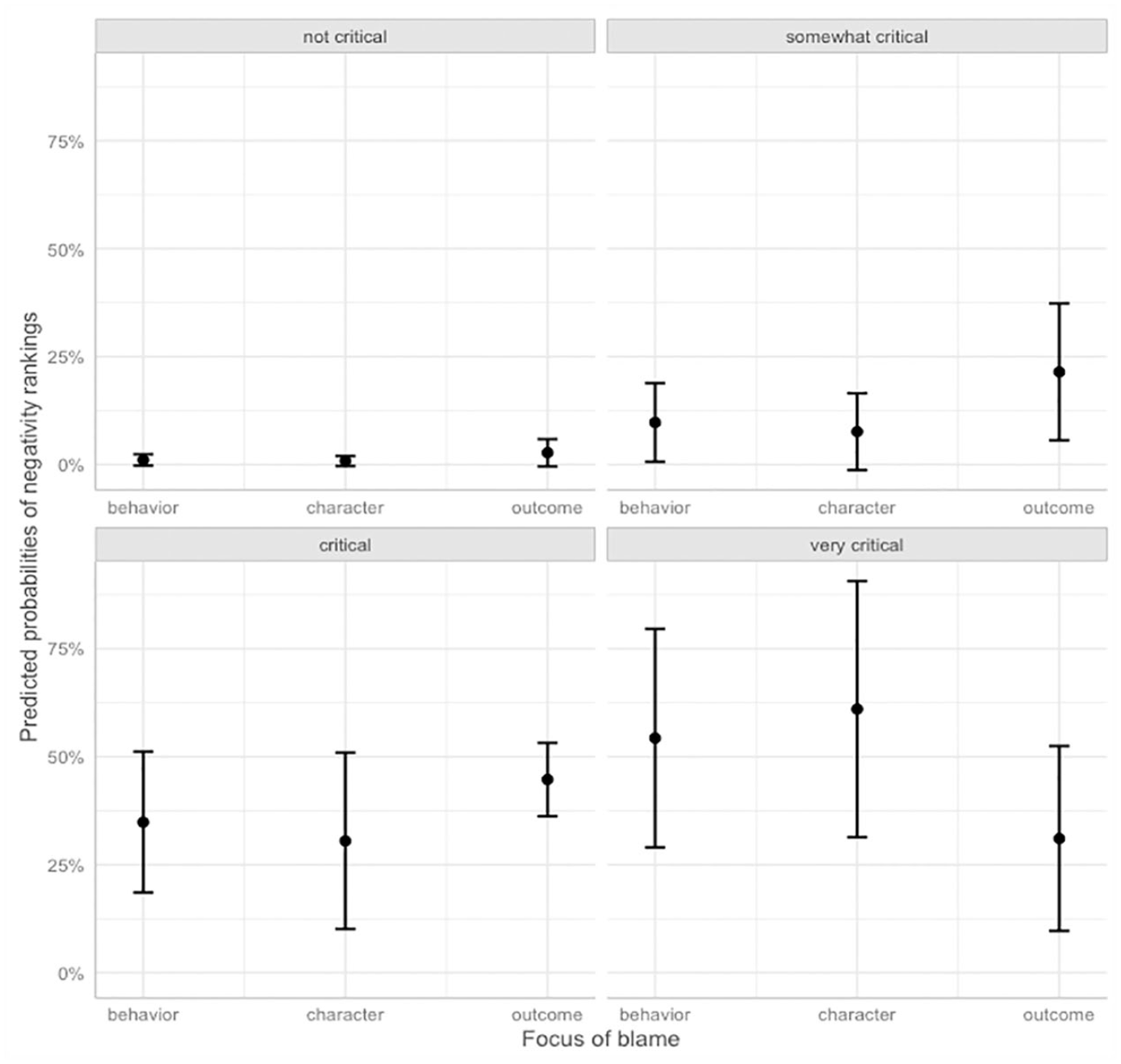
Predicted probabilities of choosing the criticism categories across experimental conditions.
The second model, shown in Table 2, estimates the effects of focus of blame on the choice of retweetability category. Figure 6 reports the corresponding estimated probabilities. H3 predicted that messages containing blaming strategies that are regarded as more critical of government are also regarded as more retweetable. The results of the analysis contradict this hypothesis, revealing a markedly different pattern in participants’ categorization choices. Tweets blaming politicians for their character, which the analysis presented above has shown to be perceived as the most critical, were significantly less likely to be categorized as more retweetable than the other two types (behavior vs. character: β = 1.43, p < .001, OR = 4.17; outcome vs. character: β = 1.69, p < .001, OR = 5.40). The difference between blaming focused on behavior and blaming focused on outcome was not statistically significant (β = .26, p = .46, OR = 1.30). As in the previous analysis, none of the control variables had a reliable effect on participants’ categorization choices.
Mixed-Effects Ordinal Logistic Regression Model Estimating the Effect of Focus of Blame on Choice of Retweetability Category.
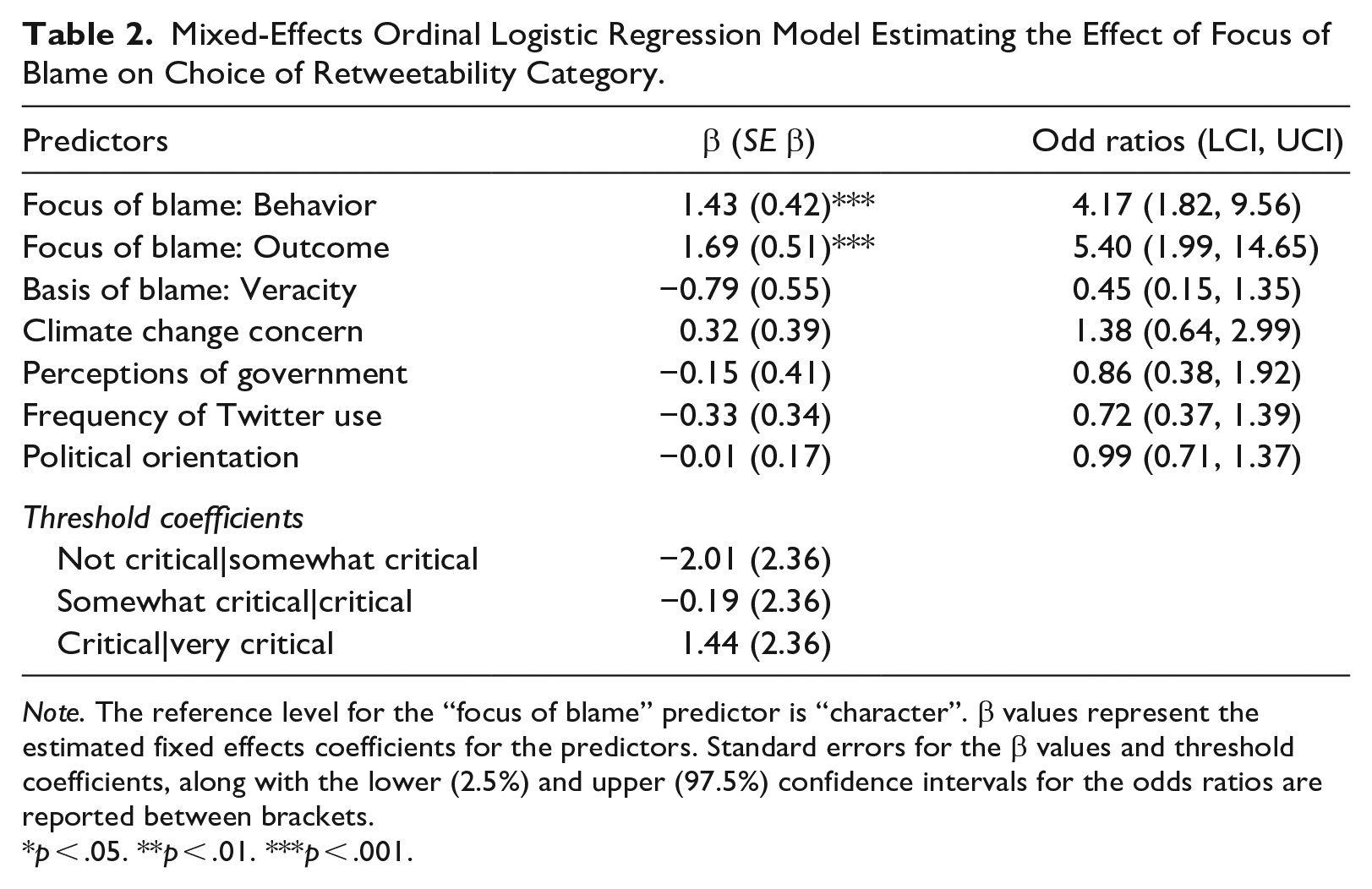
Note. The reference level for the “focus of blame” predictor is “character”. β values represent the estimated fixed effects coefficients for the predictors. Standard errors for the β values and threshold coefficients, along with the lower (2.5%) and upper (97.5%) confidence intervals for the odds ratios are reported between brackets.
p < .05. **p < .01. ***p < .001.
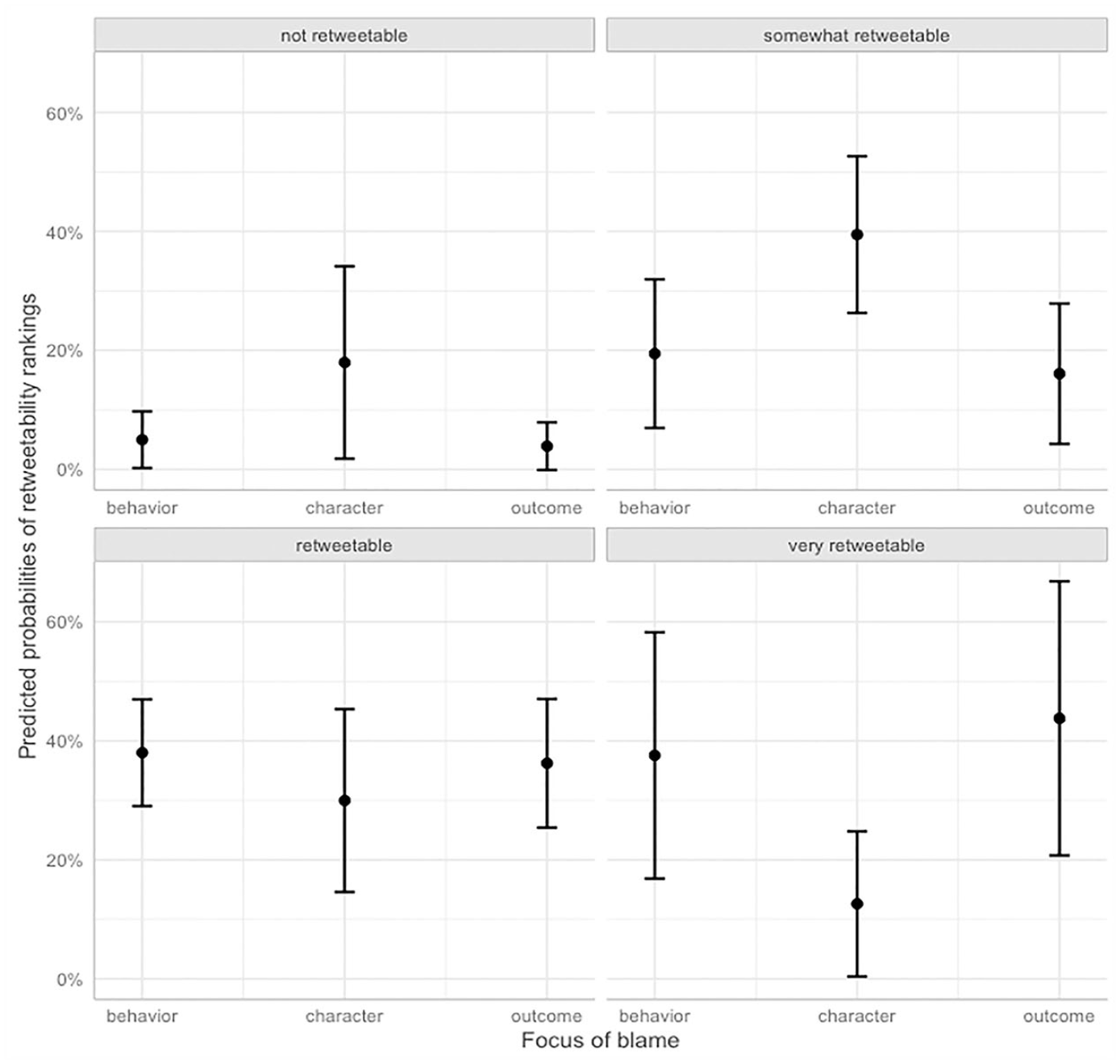
Predicted probabilities of choosing retweetability categories across experimental conditions.
Study 2: Interaction Between Focus and Basis of Blaming
Study 1 shows that individuals are responsive to micro-level lexico-grammatical features of blaming and that focus of blame influences their perceptions of how critical and retweetable the blaming tweets are. The experiment, however, was not equipped to identify the effects of basis of blaming or the possible interactions between focus and basis of blaming. Another limitation of Study 1 is that the tweets included in the sorting task were presented as text only, which potentially weakens the ecological validity of the results. To overcome these limitations and explore the effects of and interactions between focus and basis of blaming, we conducted a second experiment in which participants were asked to individually rate a series of tweets based on how critical and retweetable they appeared. Collecting independent ratings for each individual tweet, as opposed to forcing participants to compare and rank a set of tweets, enabled us to make direct comparisons across all experimental conditions. In this experiment, the visual layout of the tweets was retained to improve the ecological validity of the results. Study 2 uses a mixed experimental design, incorporating focus of blaming as a within-subjects factor and basis of blaming as a between-subjects factor.
Experimental Task
Study 2 was based on the same scenario and stimuli used in Study 1. However, the sorting task was replaced by a rating task. After the three initial screens presenting the scenario, which were identical to Study 1, participants were asked to rate six blaming tweets. Each tweet was embedded in a separate screen and was visually displayed as in Figure 3 above. Participants were asked to rate each tweet using a five-point bipolar scale presented immediately below the image of the tweet. Participants were first asked to rate how critical the tweets were (1 = “not critical at all”—5 = “very critical”) and then how retweetable (1 = “not retweetable at all”—5 = “very retweetable”). At the end of each of these two rating sub-tasks they were asked the same question as in Study 1 tapping into their reasons for rating tweets in a particular way. The stimuli were presented in random order. As in Study 1, upon completing the rating task, participants answered a series of questions designed to measure the control variables and demographic items. The control variable “main reason for Twitter use,” which was assessed via an open text-entry question in Study 1, was measured using a fixed set of six options derived from participants’ responses to simplify the task and enable us to include this variable in the statistical models.
Stimuli
For Study 2 we used a subset of the items used in Study 1. Specifically, we used six items derived from the first presentation list for both capacity and veracity. We decided to use a reduced set of items given the repetitive nature of the rating task. We did not use multiple presentation lists in this experiment as that would have substantially inflated the number of participants required, which was already substantially higher than Study 1 given that one of the variables was manipulated between subjects.
Participants
Between-subjects designs generally require a larger number of participants compared to within-subjects designs. This is because scores for each condition are collected from distinct groups of individuals, which can introduce high variability within and across groups, potentially obscuring or confounding the relationships of interest. To address these concerns and enhance the reliability of the findings in Study 1, a considerably larger participant pool was used in Study 2. 2 Two hundred and one subjects were recruited via Prolific (Palan & Schitter, 2018) and were compensated at an average hourly rate of £14.28 for taking part in the study. We restricted access to the task to volunteers based in the United Kingdom, whose first language is English, who use Twitter as their main social media platform and minimum approval rating was 95%. Participants who had taken part in Study 1 were not allowed to take part in this study. Of the sample, 57% was female and 41% male and 1% did not specify their gender. The subjects’ average age was 35.5 (SD 11.4). A total of 46% of the subjects completed a Bachelor’s degree, 22% A Levels, Baccalaureate, or equivalent, 16% a Master’s degree and the remaining either GCSEs, High School Diploma or equivalent, a professional degree or a doctoral degree. A total of 60% of participants indicated their occupation as working full time, 17% as working part time, 11% as students, and the rest were either temporarily unemployed, carer, permanently unemployed, or retired.
Results
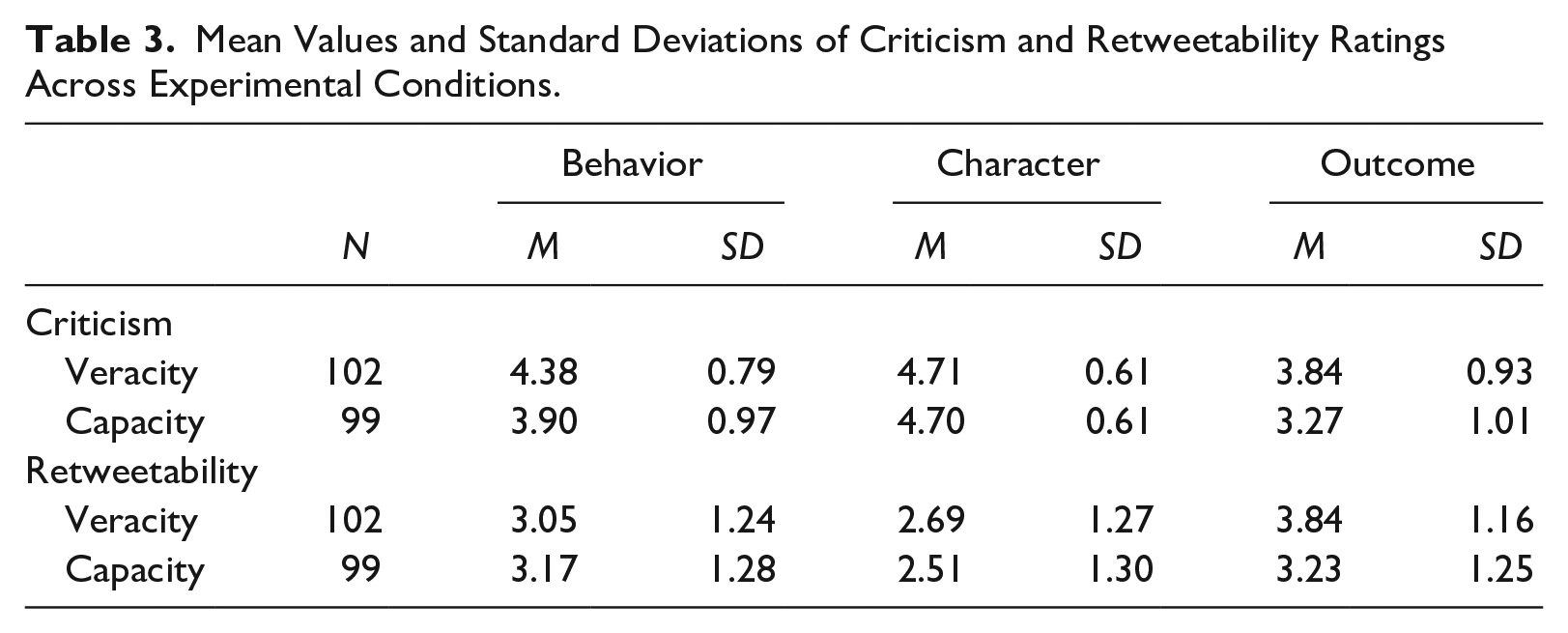
As for Study 1, the complete data and R statistical analysis scripts are available via the Open Science Framework repository at this URL: https://osf.io/az47w/?view_only=e09edbd2b57e4fc19dcccd037f0a473a. The mean values and standard deviations of criticism and retweetability ratings across experimental conditions are reported in Table 3 and represented visually in Figure 7 to facilitate interpretation. These results appear to be in line with those from Study 1. Tweets blaming politicians for their character received, on average, the highest criticism and the lowest retweetability ratings. Blaming focused on outcomes was rated as more retweetable than the other two types. The results also suggest that, on the whole, participants evaluated blaming based on veracity as both more critical and more retweetable than blaming based on capacity. However, this effect is not consistent across foci of blame, suggesting a possible interaction between the two predictors. In particular, two aspects stand out. First, mean criticism values for tweets blaming character were virtually identical between basis of blame conditions. Second, blaming based on veracity and focused on outcome yielded the highest retweetability scores, with a substantial gap between veracity and capacity. As discussed in more detail below, this seems consistent with insights from social psychological attribution studies in that this particular combination might be perceived as most “warranted”—that is, justified by the factual evidence—and hence most socially acceptable (Malle et al., 2022).
Mean Values and Standard Deviations of Criticism and Retweetability Ratings Across Experimental Conditions.
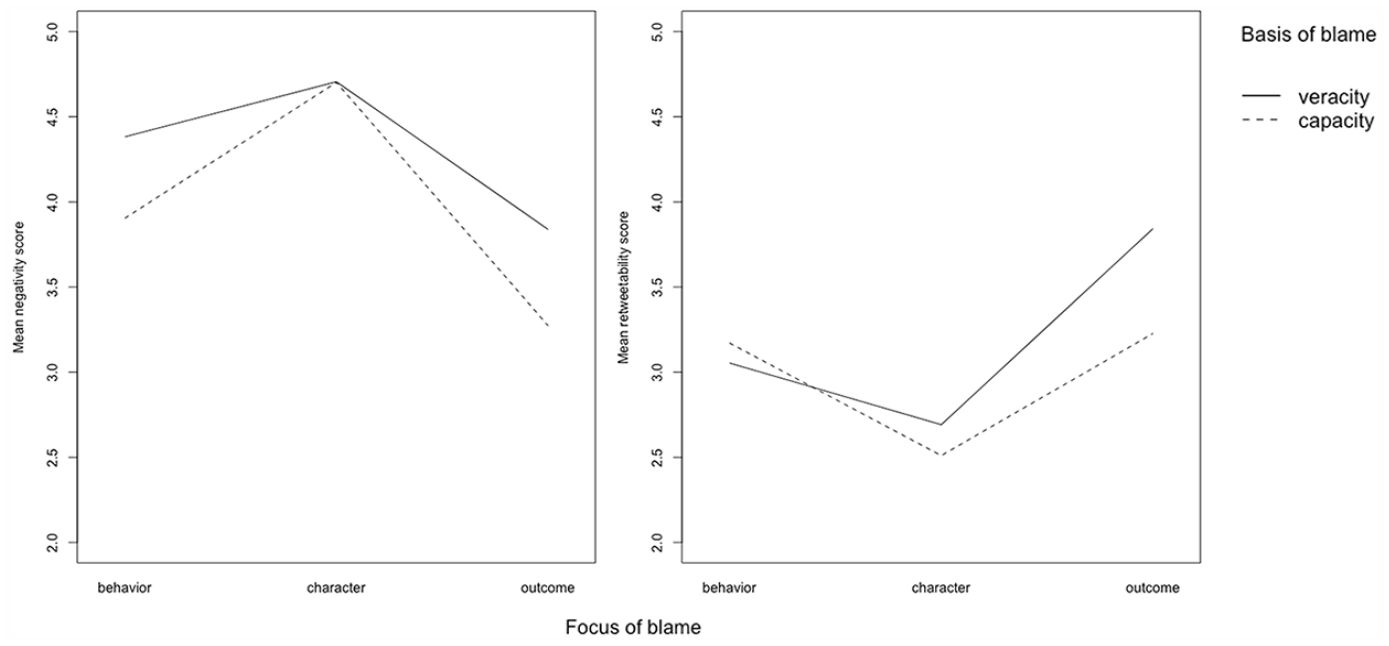
Interaction plot showing observed mean scores across focus of blame and basis of blame conditions.
We used mixed-effects linear regression, as implemented in the R package lme4 (Bates et al., 2015), to examine main effects and interactions between focus and basis of blame on how critical and retweetable the blaming tweets are perceived. Similar to the analysis in Study 1, we fitted two separate models, one with criticism and the other with retweetability scores as the dependent variable. Both models included random intercepts for items and participants. Climate change concern, perceptions of government, frequency of Twitter use, main reason for Twitter use, and political orientation were included as control variables.
Table 4 reports the results of the first model, which estimates the effect of focus and basis of blame on criticism ratings. The analysis shows that focus of blame had a significant main effect: blaming focused on character was perceived as significantly more critical than blaming focused on behavior (β = −.80, p = .034) or outcome (β = −1.43, p = .006). These results therefore confirm those of Study 1 and additionally suggest a “hierarchy of criticism” between the three foci of blaming with character at the top and outcome at the bottom. No significant main effect was observed for basis of blame. However, there was a significant interaction between basis and focus of blame. Blaming based on veracity was perceived as significantly more critical than blaming based on capacity when it focused on behavior (β = .47, p < .001) and outcome (β = .56, p < .001). Conversely, when the blaming focused on character this difference was not observed. These results provide both support and nuance to H1 and H2 by revealing a complex interaction between the focus and basis of blame. Messages containing blaming strategies based on negative judgements of social sanction are not consistently regarded as more critical of government than those based on negative judgements of social esteem. The effect of the basis of blame is contingent on its focus.
Mixed-Effects Linear Regression Model Estimating the Effect of Focus and Basis of Blame on the Perceived Strength of Criticism.
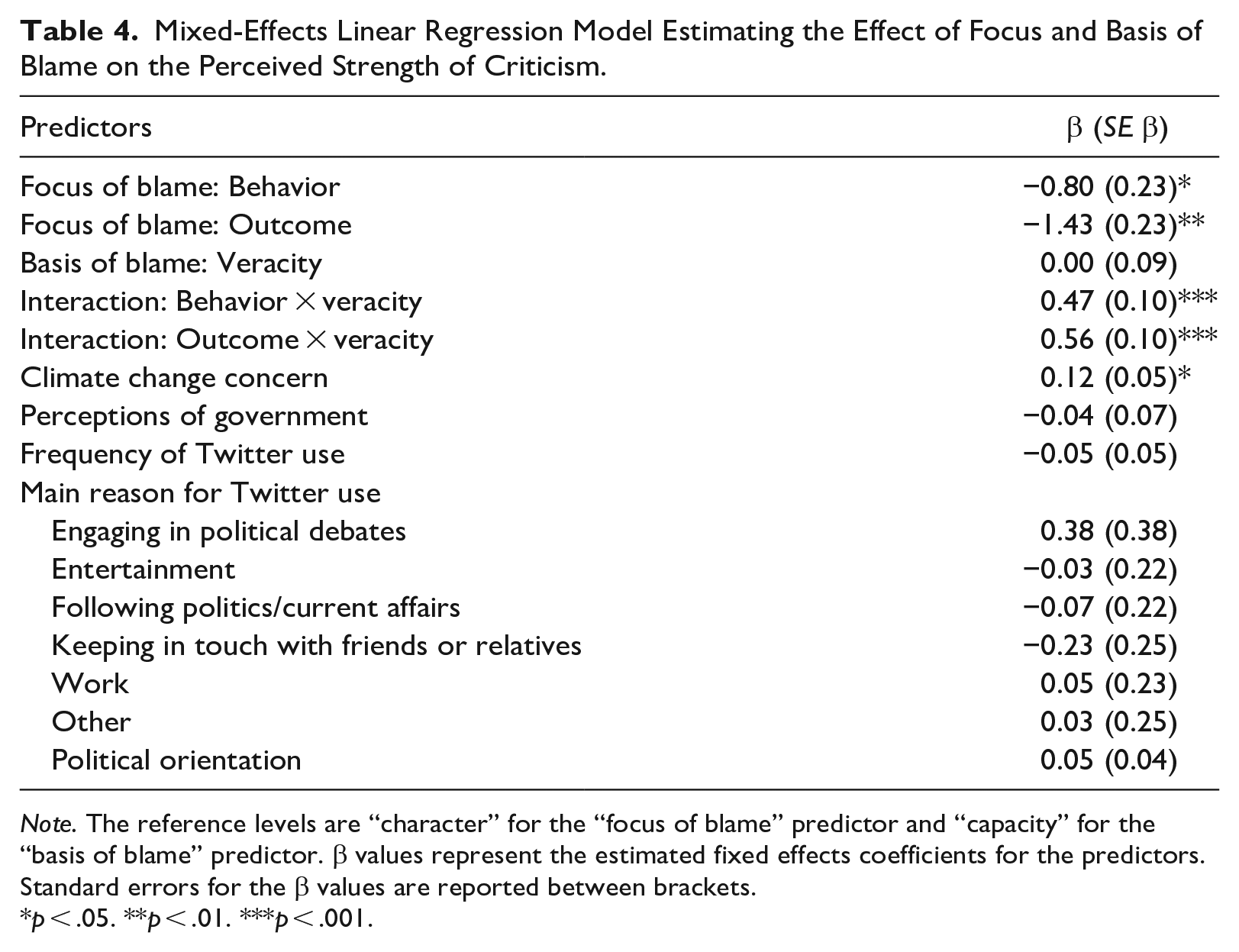
Note. The reference levels are “character” for the “focus of blame” predictor and “capacity” for the “basis of blame” predictor. β values represent the estimated fixed effects coefficients for the predictors. Standard errors for the β values are reported between brackets.
p < .05. **p < .01. ***p < .001.
The second regression model, which describes the effects of focus and basis of blame on retweetability ratings, is shown in Table 5. As far as focus of blame is concerned, the results confirm those of Study 1 by showing that blaming focused on character was rated as significantly less retweetable than the other two types (behavior vs. character: β = .66, p = .006; outcome vs. character: β = .72, p = .004). As with perceptions of criticism, there was a significant interaction between the two predictors. Veracity-based blaming was perceived as less retweetable when it focused on behavior (β = −.30, p = .026), but more retweetable when it focused on outcome (β = .43, p = .001). Based on these results, H3 is rejected. Messages that contain blaming strategies that are regarded as more critical of government are not also regarded as more retweetable. In fact, the opposite appears to be the case.
Mixed-Effects Linear Regression Model Estimating the Effect of Focus and Basis of Blame on Retweetability Rating.
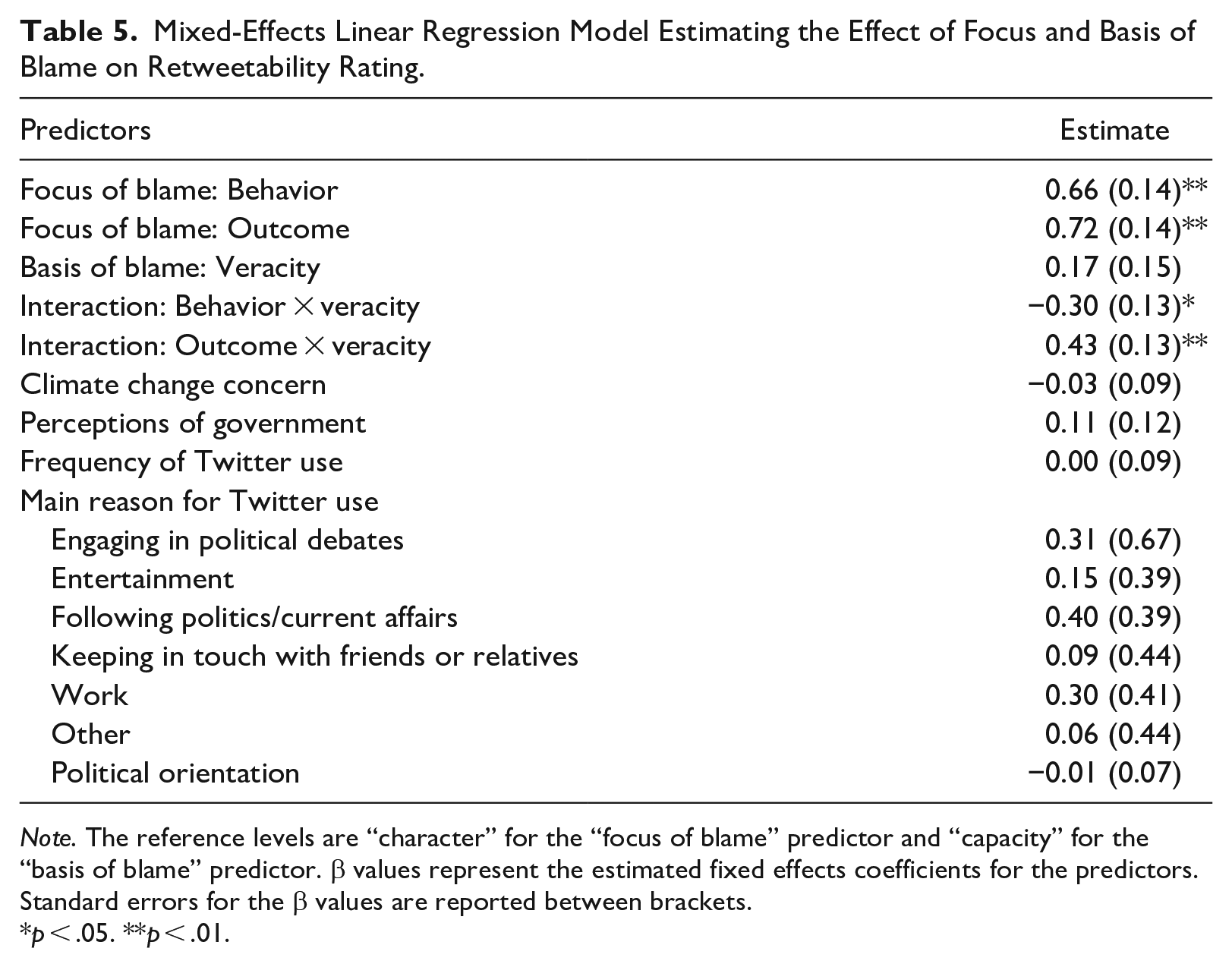
Note. The reference levels are “character” for the “focus of blame” predictor and “capacity” for the “basis of blame” predictor. β values represent the estimated fixed effects coefficients for the predictors. Standard errors for the β values are reported between brackets.
p < .05. **p < .01.
Discussion
Basis and Focus of Blaming
Our results showed that, in line with our model, veracity-based blaming was perceived as more critical than capacity-based blaming. This was also reflected in the responses to the open-ended questions included in our surveys. Several participants (n = 10) mentioned judgements of veracity as a feature that made them rank these as more critical than others. For instance, higher levels of criticism were explained by features such as “calling out them as a liar or breaking promises.”
These findings align with prior experimental studies on trust, demonstrating that individuals tend to place greater emphasis on positive information concerning competence while attaching more significance to negative information regarding integrity (P. H. Kim & Harmon, 2014; P. H. Kim et al., 2004, 2013). As a result, instances of poor performance are generally not interpreted as signs of lasting incompetence, whereas even a single act of dishonesty is often perceived as a strong indicator of low integrity. These results are also consistent with public perceptions of societal values in a particular political and cultural context. A public opinion survey in 2021 indicated that for voters in the United Kingdom, “being honest” was the most important characteristic politicians should have, while “getting things done” was far behind (Renwick et al., 2022). When respondents of the survey were asked to “imagine that a future Prime Minister has to choose between acting honestly and delivering the policy that most people want,” 71% chose honesty and only 16% delivery. Moreover, news media in the United Kingdom tend to emphasize broken election promises in their reporting (Müller, 2020) thereby possibly heightening the audience’s perception of the normative salience of promise-keeping.
Consistent with our model, the results showed that blaming strategies focused on character or behavior were regarded as more critical than those focused on outcomes. This finding resonates with discourse-analytic literature (e.g., Hart, 2011; van Leeuwen, 2008) that suggests that backgrounding a human actor in outcome-focused negative judgements may make a blame taker seem less involved in causing the outcome and therefore also less blameworthy. The responses to the question in our study which asked participants to explain why they regarded some responses as more critical than others clearly indicated widespread recognition of character-focused blame as highly negative. Participants often (n = 107) explained that they saw personal attacks as the most critical form of blaming, such as “specifically targeting the minister with an insult or comment on his abilities.”
In their responses, participants pointed to the use of the second person pronoun as a linguistic feature that led to the interpretation of the criticism as personal (e.g., “The second person ‘you’ compared to the situation ‘it’ is more of a personal critique”). This is in line with insights from critical discourse studies where a basic distinction is made between representational choices in which social actors are either included, such as referred to by personal pronouns, proper names, or nouns, or excluded, that is, there is no reference to the actor at all in the text or the actor is only mentioned somewhere else in the text so one can possibly infer who they are with a varying degree of certainty (van Leeuwen, 2008). Character-focused and behavior-focused blaming strategies in our experiment are similar in that both include direct mentions of the target of blaming: “you are” + noun or “you are” + present progressive verb, with “you” referring to the politician who posted the blame-triggering tweet. However, in the case of outcome-focused expressions of blame the actor is excluded and the reader can only infer from the interactional context that the blame maker is regarding the politician as the agent who caused the negative outcome. While blame can in principle be expressed explicitly (“I hereby blame you for X”), it is more commonly performed in many different ways—including by describing some bad outcome or simply by saying something like “What you did was bad”—with an aim of affecting the blame taker (Simion, 2021). Therefore, the speech act of blaming can in most instances be understood primarily via inference. What our results suggest, however, is that, at least in the context of social media interaction, the expressions of blame tend to be perceived as more critical when these do not require the reader to infer the causal connection between the blame taker and the described bad outcome of their (in)action.
The interaction between the focus and basis of blaming points to the pre-eminence of character judgement as a determining factor in perceptions of blame. When blame is focused on character alone, the basis of the blame (veracity or capacity) no longer matters. One explanation for this lies in research about public perceptions of online incivility where people tend to rate messages that contain name-calling as particularly uncivil (Kenski et al., 2020). The use of labels like “traitor,” “liar” and “failure” may be interpreted as name-calling and hence possibly regarded as more disrespectful towards the target of blame than speech acts that refer to their behavior or its outcomes.
While there are ongoing theoretical debates among some scholars as to whether someone can be blamed for bad character, 3 our results lend support to previous work that suggests that blame attribution in political life is intrinsically linked to characterization: we tend to think about political actors in terms of which of them is a metaphorical “Hero” exhibiting good traits or a “Villain” who is intrinsically bad (Jasper et al., 2020).
The greater moral weight attributed by participants to personal characteristics of policymakers may be seen as reflecting the overall personalization of politics—the long-observed trend of media coverage, election campaigns and voting behavior being more focused on the individual politicians’ competence, leadership, credibility, morality, etc. compared to political parties and institutions (Kriesi, 2012; Rahat & Kenig, 2018; Van Aelst et al., 2012). In addition, an institutional factor that could encourage person-focused blame generating in British government blame games is the principle of ministerial responsibility—the constitutional convention of the Westminster parliamentary system that each minister is personally responsible to the parliament for their own actions as well as those of their department (see, e.g., Hinterleitner & Sager, 2015).
Retweetability
Regarding perceptions of retweetability, the results of our experiments do not align with our initial hypothesis. Contrary to our expectations, our results showed that the blaming strategies regarded as the most critical of the target—those focused on character—were regarded as the least retweetable. Conversely, the blaming strategies regarded as the least critical of the policymaker—those focused on outcome—were regarded as the most retweetable. We call this the retweetability paradox.
The retweetability paradox is striking in the light of previous studies in political discourse which suggested that the more negative the content or harsher the attack, the more likely it would be retweeted. One explanation for this is that these earlier studies focus on “top-down” political campaigning by elite figures (Krzyżanowski & Tucker, 2018), and do not go far enough in differentiating strategies of blaming. The responses given by our participants to the open-ended questions in our study shed light on why certain kinds of blaming were considered more retweetable than others. The themes in the responses paint a nuanced picture of how the participants perceived negativity, describing it as a scalar property. The upper limits of negativity are shaped by perceptions of civility, with the need to avoid offense. For instance, one participant wrote: “You do not want to retweet something that can be seen as far too rude or inappropriate.”
In particular, personal attacks (i.e., character-focused blaming) were regarded by many participants (n = 64) as content that should not be retweeted (e.g., “I wouldn’t retweet something that was personally attacking someone”). The potential damage to the retweeter’s own reputation by retweeting a personal attack was additional motivation for deciding whether or not to retweet content (e.g., “Whether I’d want my name associated with the accusations”).
These responses contrast with earlier claims that political discourse on Twitter is characterized by incivility (Groshek & Cutino, 2016). Instead, the motivations for retweeting given by our participants are tempered by the awareness of “Twitter face” (Walsh & Baker, 2022), that is, in Goffman’s (1967, p. 5) terms, the need to manage the “positive social value a person claims for himself by the line others assume he has taken during a particular contact” as this is played out in relation to the affordances of Twitter.
The responses from a number of the participants in our study (n = 13) also indicate that they would repost content that was “more accurate,” “more factual,” “the truth” or “believable.” Their responses conflated high epistemic value with “information” and low epistemic value with “opinion.” For our participants, “information” was associated with content that provided context or evidence in support of the blame attribution, such as an explicit description of what had happened (outcome-focused blaming). In contrast, the statements of character-focused blaming were not considered informative. For example:
the tweet about a broken promise is more retweetable as it provides more reasoning/context—the others are just critical without a great deal of substance (e.g., just saying “you are a liar” isn’t very informative).
The preference for retweeting more “informative” expressions of blame which include references to the behavior or the outcome is in line with the earlier research where presentation of information/evidence is valued above other forms of content and is more generally regarded as a core aspect of retweeting (Boulianne et al., 2020; C. H. Lee & Yu, 2020; Scott, 2021). It also reflects the socially regulated nature of blame: blame makers may follow certain “standards of evidence” because “blaming unfairly is itself a blameworthy act” (Malle et al., 2022, p. 170).
The retweetability paradox arises because of the pragmatic constraints on retweeting, that is, avoiding personal attacks while promoting information about negative events thus shape decisions about reposting blame. In line with the literature from the study of trust, blaming for dishonesty as the more critical type of blaming is regarded as more retweetable, but in our data, this also required that this blame be expressed with reference to an outcome rather than merely bad character. While politicians may prefer to emphasize personality traits in their campaign communication (Fridkin & Kenney, 2011), our study suggests that outside the narrow context of campaigning, judgements concerning policy performance may be seen as important instruments for leveraging political protest and debate.
Conclusion
This article has introduced and empirically tested an original theoretical model for understanding how the linguistic framing of blaming messages influences how blame spreads in social media. Our model of blame retweetability posits that the linguistic choices made when framing the basis and focus of blame influence how readers perceive the strength of criticism in a post and its likelihood to be reposted. The results of two online experiments provide empirical support for our model by showing that the different bases and foci of blame expressions influence the perception of blame, and that these factors also shape the potential for the blaming messages to be reposted and therefore gain greater visibility on social media. The study therefore has important implications for research on political discourse in mediated contexts and for the study of blame and protest.
Our results show that an attack on a person’s character is seen as more critical than blaming them for causing a negative outcome, regardless of the basis of blame. The personal traits of a politician are thus her most vulnerable targets in online protest or debate. The results also suggested that negative judgements of social sanction outrank those of social esteem in terms of their rhetorical import, and that accusations of dishonest outcomes may be the most impactful tools for online blaming.
Additionally, our study has brought to light the retweetability paradox: namely, that it is not the harsher expressions of blame that are more likely to be reposted. Unlike previous claims that Twitter is characterized by incivility which reduces its potential to provide opportunities for democratic debate, our results show that laypersons prefer to avoid reposting personal attacks and regard critical evaluation of outcomes, such as events and policy decisions, as more useful content to rebroadcast to wider audiences. Our study thus provides a more nuanced account of the relationship between blaming and the mechanisms of disseminating criticism in the context of social media, showing how the pragmatic constraints on reposting may shape the way protestors choose to interact with social media posts.
While the increasing personalization in political rhetoric has characterized the discourse of elite figures and populist movements, the results show that in other contexts, policy decisions and political actions may be more influential as content likely to be retweeted than has previously been assumed. The responses in our study serve to remind us how social norms and practices shape mediated actions like retweeting. We should avoid deterministic claims and work towards a broader and more nuanced picture of how blaming operates in digital outcries of different kinds, both in the political and related domains, such as corporate and crisis communication.
There are inevitable limitations in the scope of our current study. Online experiments can only show what participants say they would retweet, not what they actually retweet. In practice, patterns of retweeting are also affected by contextual factors, such as the time of posting and the interactional context of the original post (e.g., the size of the follower list). Future work might explore the diffusion of tweets containing different blaming strategies, for example, using observational methods such as network analysis to model how blaming posts circulate over time. Actual retweeting practices might also benefit from ethnographic study, to understand further how the norms and face-sensitivity of retweeting might vary according to context.
Importantly, each media platform has particular affordances and perceived social norms around what kind of expression is deemed acceptable. Blaming and reposting practices may change due to changes in content moderation policies and the (un)blocking of accounts that create or share potentially objectionable content, including personal attacks and hate speech (Artime et al., 2020; Benton et al., 2022). In this study, we focused on replies within Twitter, but reposting is available in other social networks with varying mechanisms for directing the flow of these posts. Preferences for rebroadcasting content on other platforms where politicians and protestors are beginning to gain traction would be a valuable next step. In particular, highly visual forms of social media, such as Instagram and Tiktok, open up new avenues of inquiry that could investigate the perception of multimodal forms of blaming.
Likewise, future experimental studies could test blaming strategies based on other types of negative evaluation, such as judgements of politicians’ tenacity and propriety, and employ other kinds of blame scenarios. Building on previous work in discourse studies, experimental research could test the effects of blaming collective rather than individual actors. More broadly, the socially shaped nature of blaming and the role of self-presentation in acts of (online) blaming deserve further research. Our work only dealt with English language tweets in the United Kingdom. How far the patterns we observed hold true for the attribution of blame in other languages and across other cultural and political contexts remains to be seen.
Supplemental Material
sj-pdf-1-crx-10.1177_00936502231211363 – Supplemental material for Strategies of Blaming on Social Media: An Experimental Study of Linguistic Framing and Retweetability
Supplemental material, sj-pdf-1-crx-10.1177_00936502231211363 for Strategies of Blaming on Social Media: An Experimental Study of Linguistic Framing and Retweetability by Sten Hansson, Matteo Fuoli and Ruth Page in Communication Research
Supplemental Material
sj-pdf-2-crx-10.1177_00936502231211363 – Supplemental material for Strategies of Blaming on Social Media: An Experimental Study of Linguistic Framing and Retweetability
Supplemental material, sj-pdf-2-crx-10.1177_00936502231211363 for Strategies of Blaming on Social Media: An Experimental Study of Linguistic Framing and Retweetability by Sten Hansson, Matteo Fuoli and Ruth Page in Communication Research
Footnotes
Acknowledgements
We are grateful to Stephen Pihlaja, Gareth Carrol, Bodo Winter, Marcus Perlman, Susan Hunston, and Akira Murakami for their valuable feedback on our experimental design and statistical analysis.
Declaration of Conflicting Interests
The authors declared no potential conflicts of interest with respect to the research, authorship, and/or publication of this article.
Funding
The authors disclosed receipt of the following financial support for the research, authorship, and/or publication of this article: This project has received funding from the European Union’s Horizon 2020 research and innovation program under the Marie Skłodowska-Curie grant agreement No. 891933.

Supplemental Material
Supplemental material for this article is available online.
Notes
Author Biographies
References
Supplementary Material
Please find the following supplemental material available below.
For Open Access articles published under a Creative Commons License, all supplemental material carries the same license as the article it is associated with.
For non-Open Access articles published, all supplemental material carries a non-exclusive license, and permission requests for re-use of supplemental material or any part of supplemental material shall be sent directly to the copyright owner as specified in the copyright notice associated with the article.
