




Abstract
This study examined the relationship between perceptions of relational history, namely, past relational challenges, and everyday social interaction experiences. In efforts to build upon and extend previous research, hypotheses directed toward replication and extension were tested in two experience sampling datasets (N = 120 and 220). Consistent support was found for the idea that people with a history of relational difficulties tend to perceive less interaction partner responsiveness, lower well-being, and higher stress during social interactions. Support was also found in a sample of adults for a multilevel mediation model whereby negative relations with others negatively predicted partner responsiveness through stress and partner liking. Results are interpreted based on affection-, appraisal-, and resource-based theories and potential differences in relational experiences at unique life stages and phases of the COVID-19 pandemic.
Keywords
Relational difficulty over an extended period of time is linked to negative mental and physical health outcomes (Holt-Lunstad et al., 2015). Interpersonal communication and psychological theories suggest that the negative effects of long-term relational difficulty on people’s well-being are channeled through, and thus apparent in, their patterns of day-to-day interpersonal experience, social network composition, and perception tendencies (Afifi et al., 2016; Baumeister et al., 2008; J. T. Cacioppo & S. Cacioppo, 2018; Floyd, 2019; Hobfoll, 1998). Yet, research on the links between past relational difficulty, communication, and perception in the context of day-to-day life is limited. Diary and experience sampling studies that track individuals over time indicate that relational difficulty in the form of loneliness leads to more negatively- and less positively-valenced perceptions of self and other behavior during interaction (Gong & Nikitin, 2021; Hawley, 2003; van Roekel et al., 2014). To further communication theory development, more research is needed on the forms of everyday communication linked to past relational difficulty, including moderators and mediators of these associations.
A recent study by Merolla et al. (2022) identified specific communication and cognitive pathways (e.g., speech events, characteristics of interaction partners, and perceptions of partner behavior) through which a history of negative relationships potentially exacts a toll on mental health. Results suggested that past relational challenges beget future relational challenges by limiting reception and perception of positive communication in day-to-day interactions across relational types. But that study also offered a glimmer of hope: Although moments of positive communication were less likely to be reported by people with negative relational histories, these individuals experienced relatively steeper increases in affective well-being and steeper decreases in stress when they perceived higher-than-usual positivity in their interactions.
While intriguing, these findings necessitate further examination and extension for two reasons. First, the original findings emerged from a sample of approximately 120 adults. Continued theory development requires replications over time with additional and varying samples (Keating & Totzkay, 2019). The current study therefore addresses two key elements of replication research: direct (i.e., comparable research designs) and conceptual (e.g., improved operationalization of key variables) replication (Crandall & Sherman, 2016).
A second warrant for the current study concerns the need for theory-based extension of the original findings. Merolla et al. (2022) were unable to demonstrate through empirical tests why people with a history of negative relationships tend to experience less positive daily communication. To address this, the current study tests a multilevel mediation model that proposes interpersonal and cognitive variables linking negative relations with others to positive everyday interaction. We analyze two new experience sampling datasets (N = 120 undergraduate students; N = 220 adults), which were collected at different time points during the COVID-19 pandemic in the U.S. All hypotheses are tested and compared across the two samples.
Negative Relational Histories and Daily Communication
Based on one of the core dimensions of Ryff’s (1989) model of psychological functioning focused on relational quality, the central variable of interest in Merolla et al. (2022) was negative relations with others, which was defined as “long-standing difficulty and frustration in building and maintaining close relationships, along with perceived loneliness stemming from those challenges” (p. 840). The authors proposed that the nature of people’s past relational experiences is observable, and likely reified, in patterns and appraisals of everyday talk (Duck, 2002; Hall & Merolla, 2020). This includes everyday speech events (Goldsmith & Baxter, 1996) and perceptions of others’ communication (e.g., degree of expressed care, support, and understanding; Reis, 2012). 1
To further explain the logic underlying this perspective, the authors drew on four theoretical perspectives: Affection Exchange Theory (Floyd, 2019), Conservation of Resources Theory (Hobfoll, 1998), the Evolutionary Theory of Loneliness (J. T. Cacioppo & S. Cacioppo, 2018), and the Theory of Resilience and Relational Load (Afifi et al., 2016). Supporting aspects of each theory, results across seven hypotheses indicated that people with higher levels of negative relations with others (1) have a lower likelihood of having affectionate communication episodes relative to other episode types (e.g., work-related and routine talk) or time alone, (2) are less likely to positively appraise others’ communication (i.e., in the form of perceived partner responsiveness; Reis, 2012), (3) are less likely to interact with people in established relationships, and (4) experience lower perceived momentary relational connection, (5) higher momentary stress, and (6) lower momentary subjective well-being during social interactions.
Finally, (7) two competing predictions—the malabsorption and hyperabsorption hypotheses—were tested regarding the extent to which people with high versus low levels of negative relations with others benefit (in terms of well-being, connection, and stress reduction) from positive interaction (i.e., moments with high within-person responsiveness). These hypotheses drew upon conflicting ideas in the literature. In favor of malabsorption, researchers have argued that loneliness can lead individuals to devalue social interaction (Spitzberg & Canary, 1985). Experience sampling research conducted early in the COVID-19 pandemic exemplifies why, showing that lonely (relative to non-lonely) individuals, experience lower mood improvement following social interactions (Forbes et al., 2021). From a theoretical perspective, Affection Exchange Theory suggests that accumulated relational challenges can make warm and caring communication less rewarding by lowering people’s maximum tolerances for affectionate communication (Floyd, 2019). When this occurs, affectionate communicate can start to activate (rather than reduce) stress responses and negative appraisals (Floyd, 2019). Casting further light on appraisal-based processes, the Theory of Resilience and Relational Load suggests that past relational challenges can chronically suppress positive, and increase negative, appraisals of partner communication (Afifi et al., 2016). Consequently, even when responsiveness cues are perceived, any positive effects are blunted by negative attributions of co-occurring interaction cues (or the interaction partner).
Other work, however, favors hyperabsorption, suggesting that negative relations with others might actually intensify the reward value of responsive interactions. According to Gardner et al. (2005), when the need to belong is unmet, people can grow increasingly sensitive and drawn to positive social cues during interaction. This might make responsiveness more beneficial to well-being and stress reduction for people with high negative relations with others. van Roekel et al. (2014) reported evidence of a conceptually-similar effect among adolescents, finding that when lonely adolescents spent time with people that made them feel good, they reported steeper decreases in negative affect than did non-lonely adolescents. The opposite, however, was also found, such that when the lonely adolescents spent time with threatening or judgmental people, they showed steeper increases in negative affect and steeper decreases in positive affect. This suggests relational deficits and social exclusion might heighten sensitivity to positive and negative features of interaction (see also Baumeister et al., 2008). Overall, this body of work suggests that when people with heightened negative relations perceive higher-than-normal responsiveness during interaction, it might be particularly “nourishing” (Hall, 2018).
Merolla et al. (2022) found evidence consistent with the hyperabsorption hypothesis in tests for affective well-being and stress. People with high negative relations with others showed steeper positive and negative slopes for well-being and stress, respectively, following moments of interaction with higher-than-usual perceived responsiveness. A summary of findings for all seven hypotheses just reviewed can be found in Online Supplemental Table 1.
Replicating and Extending the Previous Findings
In the interest of further evaluating the validity of the aforementioned findings, and their implications for theory, the current study tests the same seven hypotheses regarding direct and moderated effects of negative relations with others in two new samples (see Online Supplemental Table 1). Comparable methods and operationalizations to the previous study are used in the current one, with some adjustments made to improve measurement of the key variables—namely, negative relations with others and perceived partner responsiveness.
Whereas the original study was conducted prior to the COVID-19 pandemic, the current study was conducted at two distinct phases of the COVID-19 pandemic (during the initial stay-at-home order and 1.5 years later at the onset of the Omicron BA.1 variant). We see two ways to think about replication in this context. On the one hand, we think it is reasonable to assume that the results from the current study should closely replicate those from the original study. The COVID-19 pandemic, despite disrupting people’s social routines, might not change basic processes described by Merolla et al. (2022). Indeed, people who lacked strong social connections (i.e., high negative relations with others) prior to the COVID-19 pandemic likely remained vulnerable to feelings of social isolation during it (Okabe-Miyamoto & Lyubomirsky, 2021). Thus, the same general processes should still be operative in this new context and comparable patterns of findings should be found.
On the other hand, research and theory also show why replication cannot be assumed. Meta-analytic research, for example, indicates that most people—that is, people with and without difficult relational histories—experienced decreased social connection, at least during the initial months of the COVID-19 pandemic (Buecker & Horstmann, 2021). Early on in the pandemic, then, feelings of increased social isolation became the norm. It is also plausible, albeit based on limited research, that people with high negative relations with others entering the pandemic backfilled previous support deficits. Luchetti et al. (2020), for instance, reported that individuals who were considered at-risk for heightened social disconnection during the early months of the pandemic tended to experience subtle increases in perceived social support. It is possible that people were checking on each other more often than usual. Taken together, the dual factors of (a) social isolation normalization and (b) backfilled support for previously-disconnected people, make it possible that the differences Merolla et al. (2022) found between people with high versus low negative relations with others will not be as apparent in the two new datasets (i.e., previously statistically-significant results become non-significant). In other words, a narrowing of social and relational experience transpired for people with and without high negative relations with others. Still, even if this the case, it might only have been temporary. As Buecker and Horstmann (2021) reported, reductions in social connection rebounded, while increases in social support waned, for many people as the first year of the pandemic wore on. This points to the value of comparing results from the spring 2020 and December 2021 samples.
Answering the “Why Question”
We turn now to theoretical extension, aiming to explain why negative relations with others leads to lower reports of partner responsiveness in everyday life. Testing explanatory mechanisms is vital for both theory and application. Interventions focused on social connection, for instance, have shown some success, but practitioners often lack clear guidance on which variables to target (e.g., social skills; conversation partners; and maladaptive cognition; S. Cacioppo et al., 2015; Holt-Lunstad, 2018). We test three explanatory processes in this study, which we term “bad options,” “insufficient choice,” and “biased processing.”
Bad Options
Based on a resource (in)sufficiency perspective, such as Conservation of Resources Theory (Hobfoll, 1998), which frames stress as a consequence of tangible resource loss, a history of negative relations likely manifests in people’s social network composition. In other words, individuals with heighted negative relations with others should have fewer personal resources available to them, such as ready access to supportive interaction partners (i.e., the very individuals most likely to furnish positive interaction; Reis, 2012). A history of negative relationships can therefore lead to “bad options” when seeking out interaction partners to provide positive communication. This does not mean that social network members are necessarily absent (quantity and quality of relationships are unique constructs; J. T. Cacioppo & S. Cacioppo, 2018). Therefore, even if someone has access to interaction partners, but does not particularly like interacting with them, deficits in positive everyday interaction can occur (S. Cacioppo et al., 2015). It stands to reason, then, that the effect of negative relations with others on partner responsiveness will be mediated by general degree of liking for interaction partners (H8a).
Insufficient Choice
Individuals with challenging relational histories can also feel lacking agency to seek out and create connections, irrespective of interaction partner availability or affinity (Spitzberg & Canary, 1985). Over time, they may come to perceive that they have little control over their daily interactions, undermining their engagement and well-being during interactions (Hall et al., 2021). It can be beneficial, for instance, for people to be able to seek out conversation when they are feeling lonely. Demonstrating the importance of control in everyday interaction, Uziel and Schmidt-Barad’s (2022) 10-day experience sampling study indicated that social interactions are most likely to enhance well-being, sense of meaning in life, and perceptions of mastery when they are chosen by the person (relative to when the interactions are not chosen). Thus, past relational struggles might promote future deficits in positive interaction due to perceptions of insufficient choice in social interactions (H8b).
Biased Processing
Past negative relational experience can also influence how people attend to and evaluate cues during social interaction. S. Cacioppo et al. (2015) contended that perceived social isolation “increases an implicit hypervigilance for social threats, which then can introduce attentional, confirmatory, and memory biases” (p. 243). Such vigilance for threats can make social interactions feel more stressful, which can bias how interaction is processed. Therefore, even when positive interaction does transpire, people with high negative relations with others might be less focused on it because they are preoccupied with a search for negative cues (Spithoven et al., 2017). Affection Exchange Theory also shows how interpersonal communication can become increasingly stressful when individuals anticipate aversive outcomes based on past communication experiences (Floyd, 2019). 2 In sum, the increased stress during social interaction caused by heightened negative relations with others can bias attention toward negative and away from positive behavior. For this reason, stress can serve as a proxy for biased processing. This leads to the prediction that stress mediates the link between negative relations with others and partner responsiveness (H8c).
The three proposed mediators are simultaneously assessed in a “2-1-1” model, where negative relations with others (measured at level 2, or the “person level”) predicts perceptions of responsiveness (measured at level 1, or the “interaction level”) through (a) liking (H8a), (b) choice (H8b), and (c) stress (H8c; all measured at level 1). Note, we labeled the mediation hypotheses H8a, H8b, and H8c because we conceptualized the first seven hypotheses from the original study (Merolla et al., 2022) as this study’s H1 to H7 (see Online Supplemental Table 1).
Method
Participants and Procedures
This study tested the hypotheses in two datasets, each of which was based on the experience sampling methodology (Hektner et al., 2007). The first dataset was collected in spring 2020 (i.e., between April and June) and the second dataset was collected in December 2021. Participants (N = 120) in the spring 2020 sample were undergraduate students at a west coast U.S. university recruited through email announcements. Participants who indicated that they were interested in the study had a phone/Zoom conversation with a research assistant and, after enrollment, downloaded a smartphone app (mEMA platform) to their Android or iOS devices. The surveys were collected through the app, which utilized the native notification systems on the participants’ phones. Participants were signaled seven times per day (randomly every few hours between 9:00 AM and 7:00 PM) over the course of 10 days. The first six survey signals asked about current and very recent experiences and the seventh survey was an evening diary survey. Participants also completed a presurvey and postsurvey. Participants’ average age was approximately 21 years (range = 19–23, M = 20.56, SD = 1.10). Approximately 81% identified as female, and 19% identified as male. Participants were able to report multiple races and ethnicities; 46% identified as Asian, 46% white, 18% Latina/o/x, 5% Black/African American, 5% Native American, 2% Native Hawaiian or Other Pacific Islander, and 1% other identity. Participants received up to a $40 e-gift card for full participation.
The December 2021 sample (N = 220) included adults from locations throughout the U.S. Participants had an average age of about 40 years (range 19–75, M = 40.45, SD = 12.61). Participants could identify with multiple gender identity categories and/or self-describe. Approximately 65% of participants identified as female (including 2% who identified as female and cisgender), 32% identified as male, and approximately 1% or less as each the following: non-binary/third gender, transgender, transgender and male, and detrans female. Participants reported the following racial/ethnic identities: 76% white, 12% Black/African American, 11% Asian, 6% Latina/o/x, 1% Native American, and 1% other identity. Participants were recruited through a panel maintained by SurveySignal (Hofmann & Patel, 2015). In terms of highest education received, 48% reported a four- or 2-year college degree, 33% an advanced degree, 10% some college, 8% high school degree/GED, and 1% less than high school. As for household income, 27% reported less than $40,000, 27% between $40,000 and $69,999, 25% between $70,000 and $99,000, and 22% reported $100,000 or more. Approximately 71% of participants were in a current romantic relationship. Further, approximately 43% of participants reported that they were never married, 42% married, 11.4% divorced, 2.3% widowed, and 1.4% separated.
For this sample, four surveys were sent each day, every few hours between 9:00 AM and 7:00 PM, for 7 days on participants’ smartphones via short message service (SMS). Participants also completed a presurvey. SMS links opened up to mobile Qualtrics surveys. Participants received up to $30 for full participation.
Measurement
The measures, which were the same in both datasets, are those collected on the presurvey and during the experience sampling surveys (i.e., surveys 1–6 each day in the spring 2020 sample and surveys 1–3 each day collected in the December 2021 sample). 3 The final survey collected each day (a diary survey) was not analyzed in this study.
Presurvey
Four items on the presurveys assessed negative relations with others. The measure is based on the relational dimension (i.e., “positive relations with others”) from Ryff’s (1989) model of psychological well-being. Three negatively-worded items based on Ryff’s work (see Suleman et al., 2018) were utilized: “Maintaining close relationships has been difficult and frustrating for me,” “I often feel lonely because I have few close friends with whom to share my concerns,” and “I have not experienced many warm and trusting relationships with others.” A fourth item was designed for this study to ensure the measure was tapping into long-term relational experience, especially those before the COVID-19 pandemic: “Throughout my life, I have had a lot of difficulties in my relationships.” Responses were on a five-point scale (1 = Strongly disagree and 5 = Strongly agree). Sufficiently-high reliability estimates were found in the spring 2020 (α = .72; M = 2.62, SD = .91) and December 2021 (α = .87; M = 2.65, SD = 1.07) datasets. Note, reliabilities were higher when the fourth item was included, relative to when it was deleted.
Experience Sampling Survey Items
Participants were asked to report on whether or not they had an interaction within 10 minutes of completing the survey. Each measure below pertains to the instances in which participants responded that they had a recent interaction. Items pertaining to specific experiences while alone were not used in this study.
To assess communication episode type, participants were asked to “Identify the type of social interaction you had.” Participants were presented with 12 categories and descriptions adapted from Goldsmith and Baxter (1996) based on Hall (2018), and asked to select one. The categories, with their respective frequencies in the spring 2020 and December 2021 samples, were as follows: joking around (19.7%, 12.4%), catching up (10.6%, 10.2%), making plans (10.5%, 11%), work or school talk (10.5%, 15.7%), small talk (10.4%, 7.4%), task talk (9.6%, 14.8%), gossip (7.5%, 5.8%), meaningful conversation (5.7%, 7.8%), expressing love/affection (5%, 6%), complaining/venting (2.4%, 2.2%), conflict/disagreement (2.1%, 1.7%), and other (6.1%, 5.1%).
Perceived partner responsiveness was measured with three items at the core of responsiveness (Reis, 2012). Participants were asked to report how much the interactant made them feel “respected, “cared for,” and “supported” (Mspring2020 = 3.69, SDspring2020 = 1.01, MDecember2021 = 3.52, SDDecember2021 = 1.02). 4 Response options were on a 5-point scale ranging from 1 (Not at all) to 5 (Extremely). Within- and between-person reliability was high (Spring 2020: ω within = .95; ω between = .99; December 2021: ω within = .88; ω between = .97).
Connection to others was assessed by asking, “At this moment, how close and connected do you feel to other people?” (Mspring2020 = 4.22, SDspring2020 = 1.73, MDecember2021 = 4.31, SDDecember2021 = 1.80). Responses ranged from 1 (No connection) to 7 (A great deal of connection).
To measure stress, participants were asked to report the degree to which they felt “stressed” during the interaction (Mspring2020 = 2.00, SDspring2020 = 1.06, MDecember2021 = 1.68, SDDecember2021 = .95). Responses ranged from 1 (Not at all) to 5 (Extremely).
Relationship establishment level was measured with the item, “Is the person you interacted with a stranger or someone you have an established relationship with?” (Mspring2020 = 6.49, SDspring2020 = 1.32, MDecember2021 = 5.78, SDDecember2021 = 1.98). Responses ranged from 1 (Stranger) to 7 (Established relationship).
Affective well-being was measured with the following item: “On a scale of 0 (very bad) to 100 (very good), how do you currently feel? Please input any number between 0 and 100.” Participants then used the keyboard on their device to input their numerical response (Mspring2020 = 73.64, SDspring2020 = 16.83, MDecember2021 = 73.44, SDDecember2021 = 20.46).
Liking was measured with the item, “How much do you like the person you interacted with?” (Mspring2020 = 6.34, SDspring2020 = 1.15, MDecember2021 = 5.96, SDDecember2021 = 1.40). Reponses ranged from 1 (Not at all) to 7 (A great deal).
Choice was measured with the item, “To what extent did you choose to engage in this interaction?” and responses ranged from 1 (Not my choice at all) to 7 (Completely my choice) (Mspring2020 = 5.37, SDspring2020 = 1.74, MDecember2021 = 5.37, SDDecember2021 = 1.74).
Results
Descriptive Statistics
Between- and within-person correlation matrices can be found in Online Supplemental Tables 2 and 3. For the spring 2020 sample, participants responded at least partially within time requirements to approximately 84.5% of the possible 7,200 survey instances (i.e., six surveys per day × 10 days × 120 participants). For the December 2021 sample, participants responded at least partially within time requirements to 83% of the possible 4,620 survey instances (i.e., three surveys per day × 7 days × 220 participants). Participants in both samples reported on recent social interactions (i.e., within the past 10 minutes) at similar rates (55.5% of completed surveys for the spring 2020 sample and 55.6% of completed surveys for the December 2021 sample). Data analysis only utilizes survey reports of interaction. Inspection of the data showed that one participant in the spring 2020 dataset and three participants in the December 2021 dataset did not report on any interactions when signaled (only experiences alone), which puts the samples sizes for the analyses of interaction in those datasets at 119 and 217, respectively.
Hypothesis Tests
Given that the experience sampling data is nested within persons, multilevel modeling was used to test the hypotheses. In preparation for analysis, within- and between-person versions of the variables collected on the experience sampling surveys were constructed in R using the bmlm package (version 1.3.11; Vuorre, 2017). Within-person estimates are beneficial because they capture momentary change from a participant’s typical level of a given variable, whereas between-person estimates reflect participants’ mean-level differences from one another for a given variable (averaged across all survey occasions). When possible, models contain within- and between-person estimates to provide information at both levels. We are typically most interested, however, in the within-person estimates that capture momentary experiences because they cast light on participants’ experiences from survey occasion to survey occasion. For this reason, interaction terms utilize within-person estimates. H2 through H7 were tested through multilevel modeling with random intercepts in R using the lme4 package (version 1.1-26; Bates et al., 2015). Unique models are constructed for H2 to H6. Tests for H7a and H7b, however, are embedded within the models constructed for the H2, H3, and H5. For any interaction terms and plots, we used the interactions package (version 1.1.3; Long, 2019). Multilevel reliability estimates (ω) were calculated using the multilevelTools package (Wiley, 2020). H1 was tested using a multilevel multinomial model in SPSS 27, while H8 was tested using MLmed (Hayes & Rockwood, 2020). Unless indicated otherwise, time (i.e., amount of time the participant was in the study) served as a covariate in the analysis. 5
H1 predicted that people with high negative relations with others have a lower likelihood of engaging in affectionate communication episodes relative to other communication episode types. Prior to analysis, the communication types were grouped into five categories as done in Merolla et al. (2022): positive communication (i.e., expressing love and affection, meaningful talk, catching up, and joking around), routine interaction (i.e., small talk, making plans, and gossip), task-related talk (i.e., task talk, work and school talk), difficult communication (i.e., conflict and disagreement, complaining, or venting), and alone (i.e., response of no social interaction occurring in the last 10 minutes). A multilevel multinomial analysis with the logit function was then conducted in each dataset with the aforementioned five categories entered as level-1 dependent variables and negative relations with others (at level 2) entered as the independent variable. Positive communication was treated as the reference category in the analyses. The model was non-significant in the spring 2020 dataset (F = 0.793, p = .503), but was significant in the December 2021 dataset (F = 2.547, p < .05). There was one significant difference in the December 2021 sample—people with higher negative relations with others were more likely to have routine talk than positive communication in their communication episodes (coefficient = .189, t = 2.668, p < .01, odds ratio = 1.208). This result provides partial support for H1, but not in the same way as the results reported by Merolla et al. (2022), which showed that participants were more likely to report being alone than engaged in positive communication.
H2 predicted that people with higher negative relations with others perceive less partner responsiveness in day-to-day interaction. To test this hypothesis, negative relations with others (grand mean centered) was entered into a multilevel model as an independent variable, while perceived partner responsiveness was entered as the dependent variable. In addition, given that responsiveness tends to be higher in established relationships, relationship establishment level (within and between) was entered into the model. An interaction term was also constructed between negative relations with others and within-person relationship establishment level to test if the effect of negative relations with others on responsiveness differed based on how well interactants knew one another. As shown in Table 1, negative relations with others was negatively associated with perceived partner responsiveness in both samples. Relationship establishment level (within and between) was also found to be positively associated with responsiveness. For the December 2021 sample, the interaction between negative relations with others and relationship establishment level was significant. The interaction indicated that the inverse association between negative relations with others and responsiveness was more robust in better-established relationships. The estimate, for instance, was −0.18 (p < .001) at −1 SD of relationship establishment level, −0.23 (p < .001) at the mean of relationship establishment level, and −0.27 (p < .001) at +1 SD of relationship establishment level. Thus, in the December 2021 sample, lower reports of responsiveness for people with higher negative relations with others were especially pronounced during interactions with well-known others.
Negative Relations with Others and Perceived Partner Responsiveness in Social Interaction (H2).
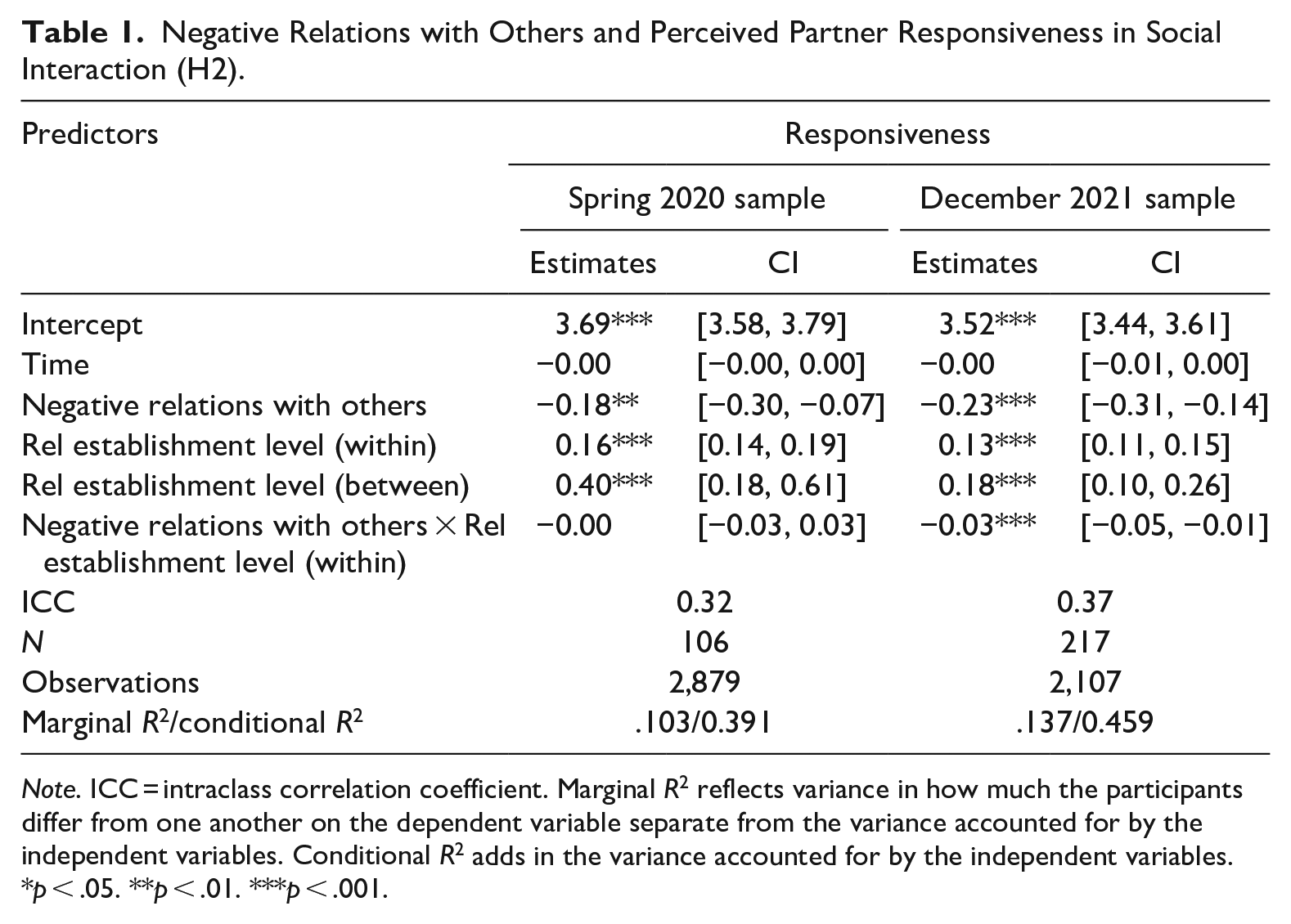
Note. ICC = intraclass correlation coefficient. Marginal R2 reflects variance in how much the participants differ from one another on the dependent variable separate from the variance accounted for by the independent variables. Conditional R2 adds in the variance accounted for by the independent variables.
p < .05. **p < .01. ***p < .001.
H3 predicted that people with higher negative relations with others experience less connection during interactions. To test H3, a multilevel model was constructed with connection as the dependent variable and negative relations with others as the independent variable. Relationship establishment level was also entered. The model also included interaction terms involving partner responsiveness so that this model could also test the competing hypotheses (mal- vs. hyperabsorption) proposed in H7a and H7b. 6 With regard to H3, negative relations with others was negatively associated with perceived connection in both samples, but that association was only statistically significant in the December 2021 sample (see Table 2). Thus, H3 was supported only in the December 2021 sample. For the adult sample only, then, people with higher negative relations with others reported lower connection during sampled interactions.
Negative Relations With Others and Perceived Connection During Social interaction (H3).
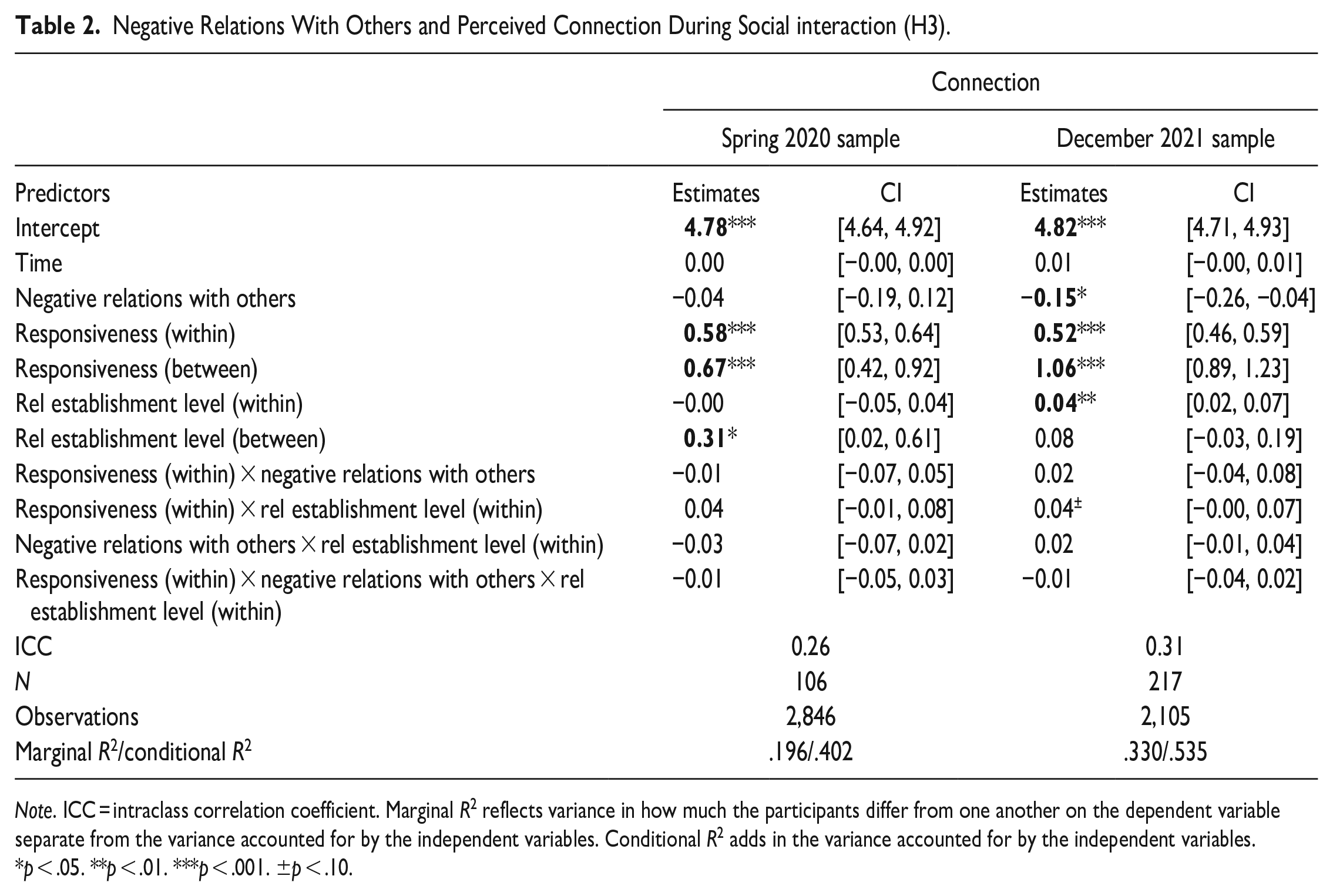
Note. ICC = intraclass correlation coefficient. Marginal R2 reflects variance in how much the participants differ from one another on the dependent variable separate from the variance accounted for by the independent variables. Conditional R2 adds in the variance accounted for by the independent variables.
p < .05. **p < .01. ***p < .001. ±p < .10.
H4 predicted that people with higher negative relations with others experience greater stress during interaction. The model for stress was set up identically to the one described above for connection. Results supported H4. In both samples, negative relations with others was significantly and positively associated with stress during interactions (see Table 3). It must be noted, however, that the statistically significant result in the spring 2020 sample is qualified by the fact when we tested the models without any interaction terms added, the p value changed from p = .041 to .057, which is above traditional levels of statistical significance. 7 Further, as we described momentarily with regard to H7a and H7b, there were significant interactions for stress involving responsiveness and relationship establishment level. These interactions should be considered when interpreting findings for stress.
Negative Relations With Others and Perceived Stress During Social Interaction (H4).
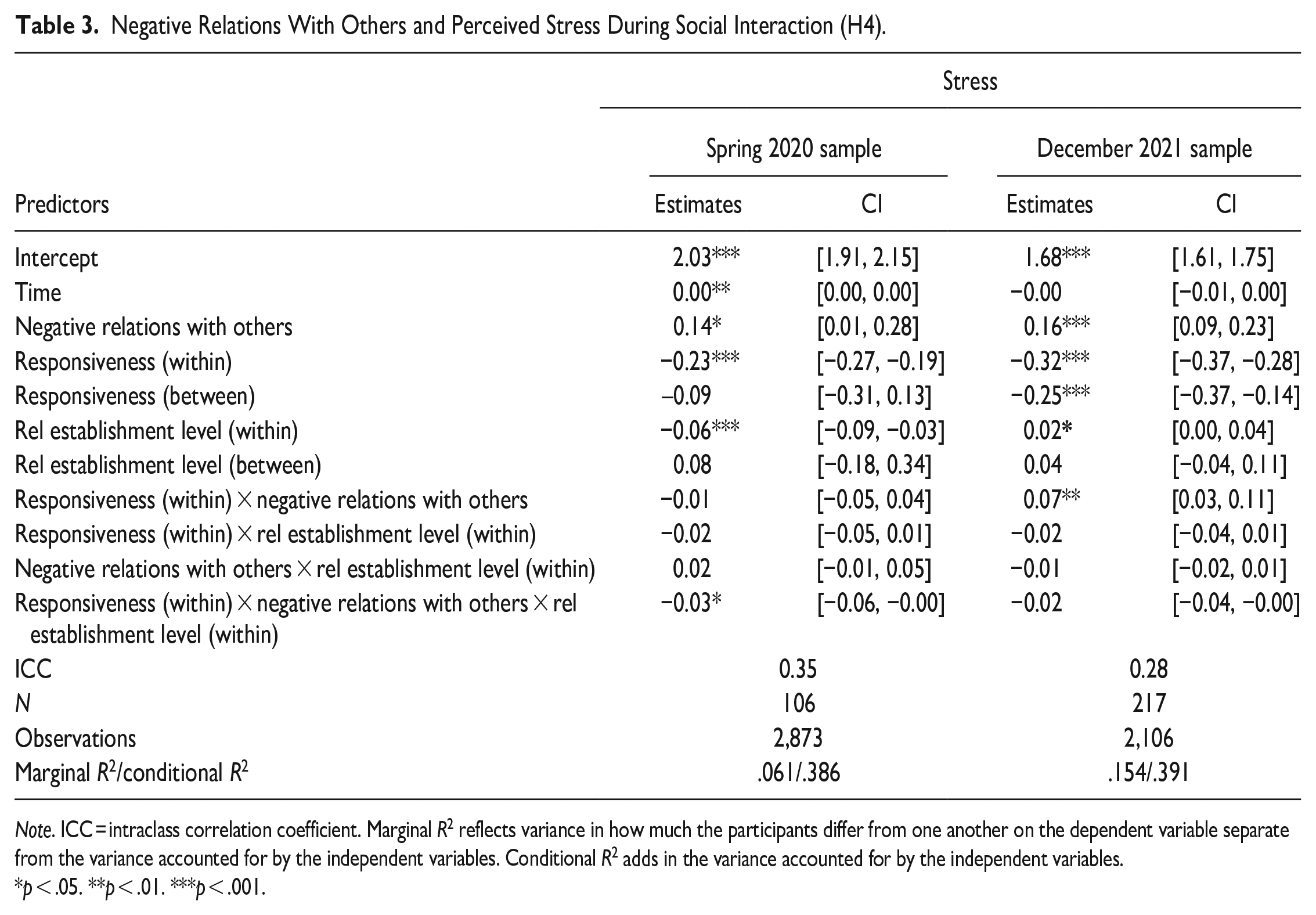
Note. ICC = intraclass correlation coefficient. Marginal R2 reflects variance in how much the participants differ from one another on the dependent variable separate from the variance accounted for by the independent variables. Conditional R2 adds in the variance accounted for by the independent variables.
p < .05. **p < .01. ***p < .001.
H5 predicted that people with higher negative relations with others communicated with people from less-established relationships. A multilevel model was constructed to test H5 wherein relationship establishment level was the dependent variable and negative relations with others was the independent variable. Although negative relations with others was inversely associated with relationship establishment level in both samples, the associations were not statistically significant (see Table 4). Thus, H5 was not supported in either sample.
Negative Relations With Others and Relationship Establishment Level of Interaction Partners in Social Interaction (H5).
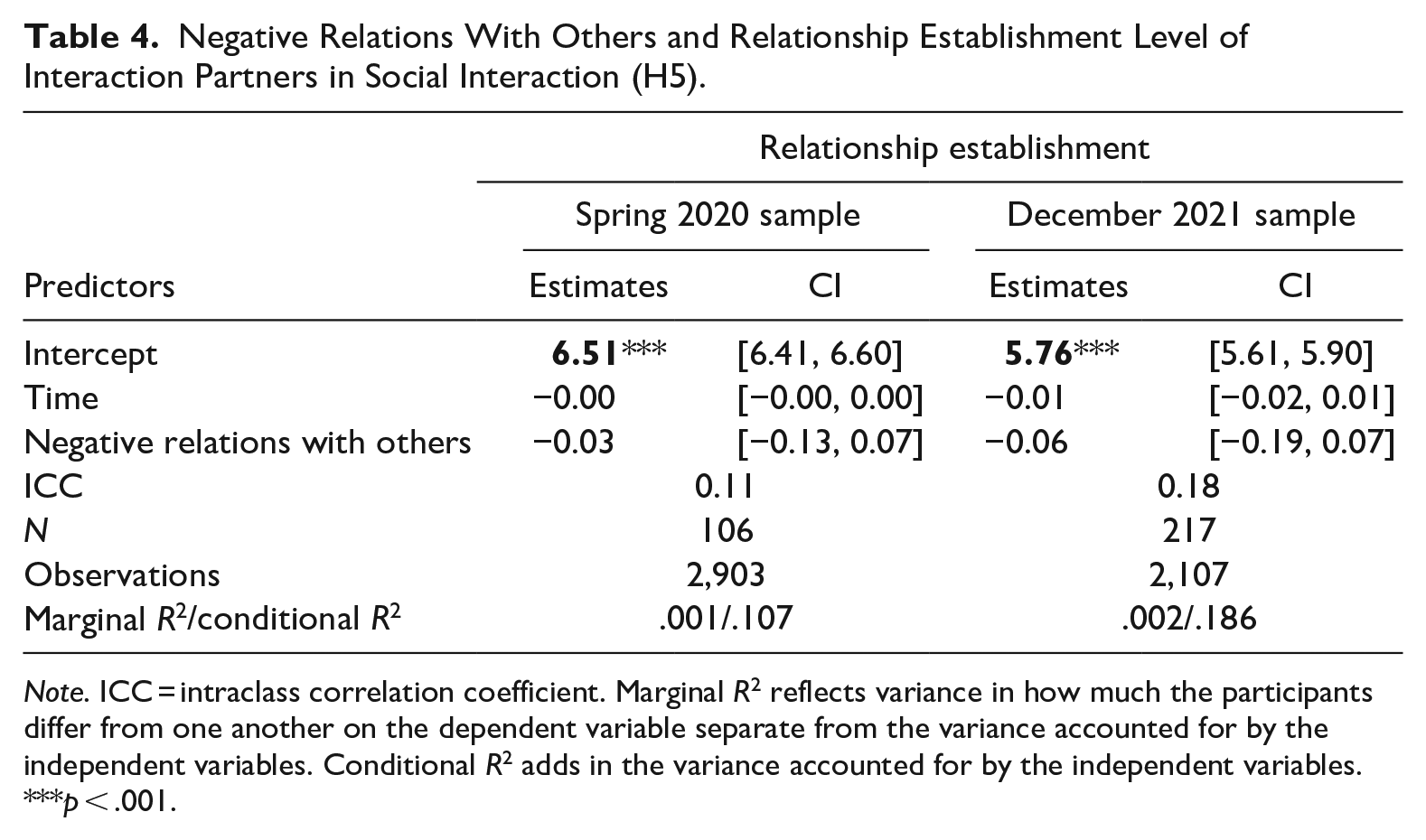
Note. ICC = intraclass correlation coefficient. Marginal R2 reflects variance in how much the participants differ from one another on the dependent variable separate from the variance accounted for by the independent variables. Conditional R2 adds in the variance accounted for by the independent variables.
p < .001.
H6 predicted that people with higher negative relations with others will report lower well-being during interactions. The models were set up in the same ways as the models that tested H3 and H4. In both samples, negative relations with others was significantly and negatively associated with well-being (see Table 5). These results supported H6.
Negative Relations with Others and Perceived Well-Being in Social Interaction (H6).
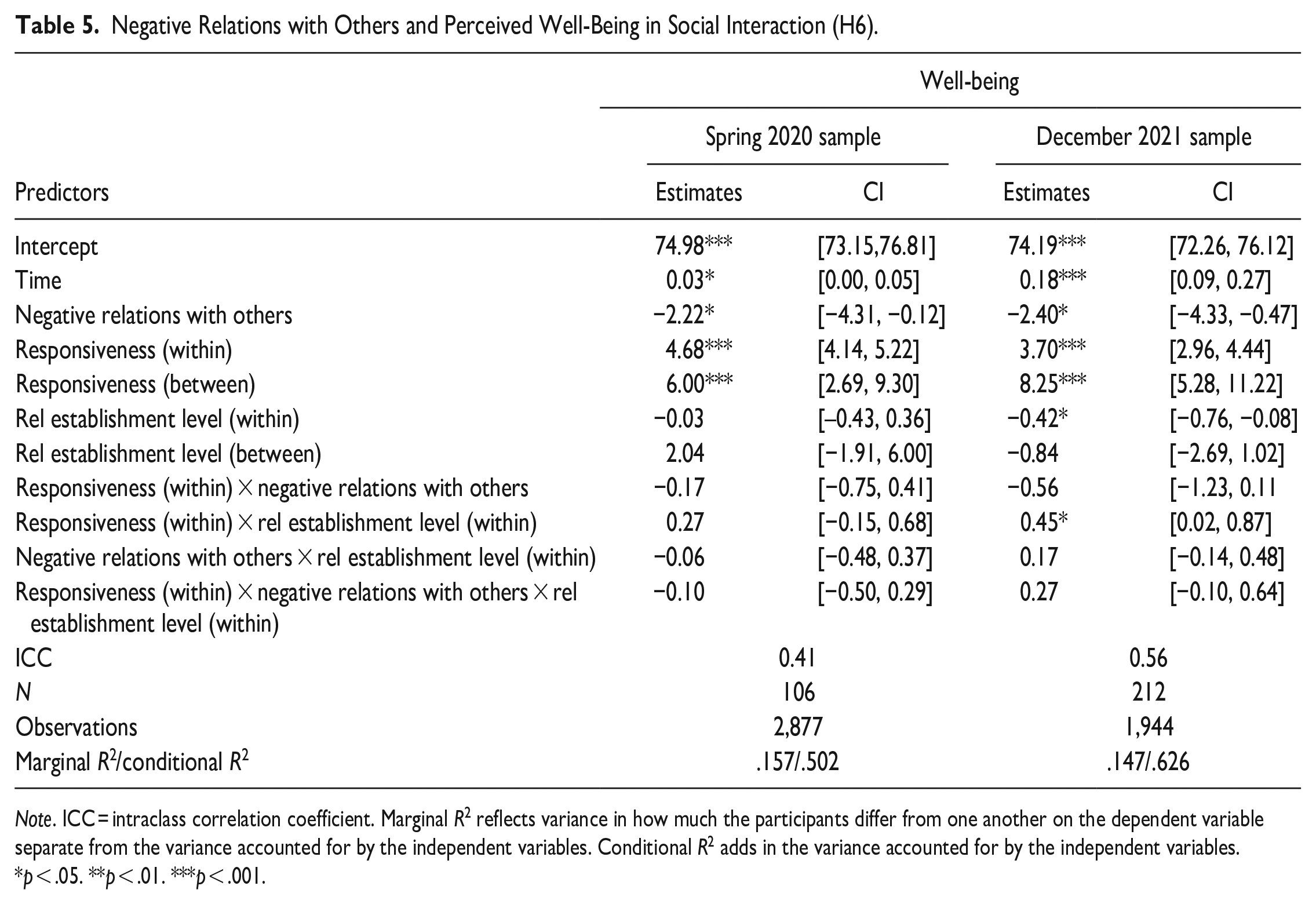
Note. ICC = intraclass correlation coefficient. Marginal R2 reflects variance in how much the participants differ from one another on the dependent variable separate from the variance accounted for by the independent variables. Conditional R2 adds in the variance accounted for by the independent variables.
p < .05. **p < .01. ***p < .001.
H7a and H7b proposed competing hypotheses. The malabsorption hypothesis (H7a) posited that responsiveness is a weaker positive predictor of connection and well-being and a weaker negative predictor of stress for people with high, relative to low, negative relations with others. The hyperabsorption hypothesis (H7b) predicted the opposite, such that heightened negative relations with others intensify the positive effects of responsiveness on connection and well-being and the negative effects of responsiveness on stress. Two-way and three-way interaction terms were included in the previously-reported models in order to test H7a and H7b. The two-way interaction is between negative relations with others and responsiveness. The three-way interaction term extends the two-way term by adding relationship establishment level; this tests the possibility that moderation effects differ across types of interaction partners.
The two-way and three-way interactions testing H7a and H7b were non-significant in the models for connection (see Table 2) and well-being (see Table 5). For stress, however, there were significant interactions (see Table 3). In the spring 2020 sample, there was a significant three-way interaction between responsiveness, negative relations with others, and relationship establishment level. This interaction is plotted in Figure 1. As shown in the plot, during social interaction with well-known individuals (i.e., relationship establishment level + 1 SD), the negative effect of responsiveness on stress was stronger for people with high negative relations with others (B = −0.30, p < .001) compared to people with moderate (B = −0.26, p < .001) or low (B = −0.22, p < .001) negative relations with others. This effect is indicative of hyperabsorption. In interactions with people who are not well-known, in contrast, the effect of responsiveness on stress was weaker for people with high (B = −0.18, p < .001), relative to moderate (B = −0.21, p < .001) or low (B = −0.24, p < .001) negative relations with others. This pattern is indicative of malabsorption. This provides support for both H7a and H7b in the spring 2020 dataset, such that hyperabsorption was present with regard to stress in interactions with well-known others, but malabsorption was present within interactions with less well-known others.
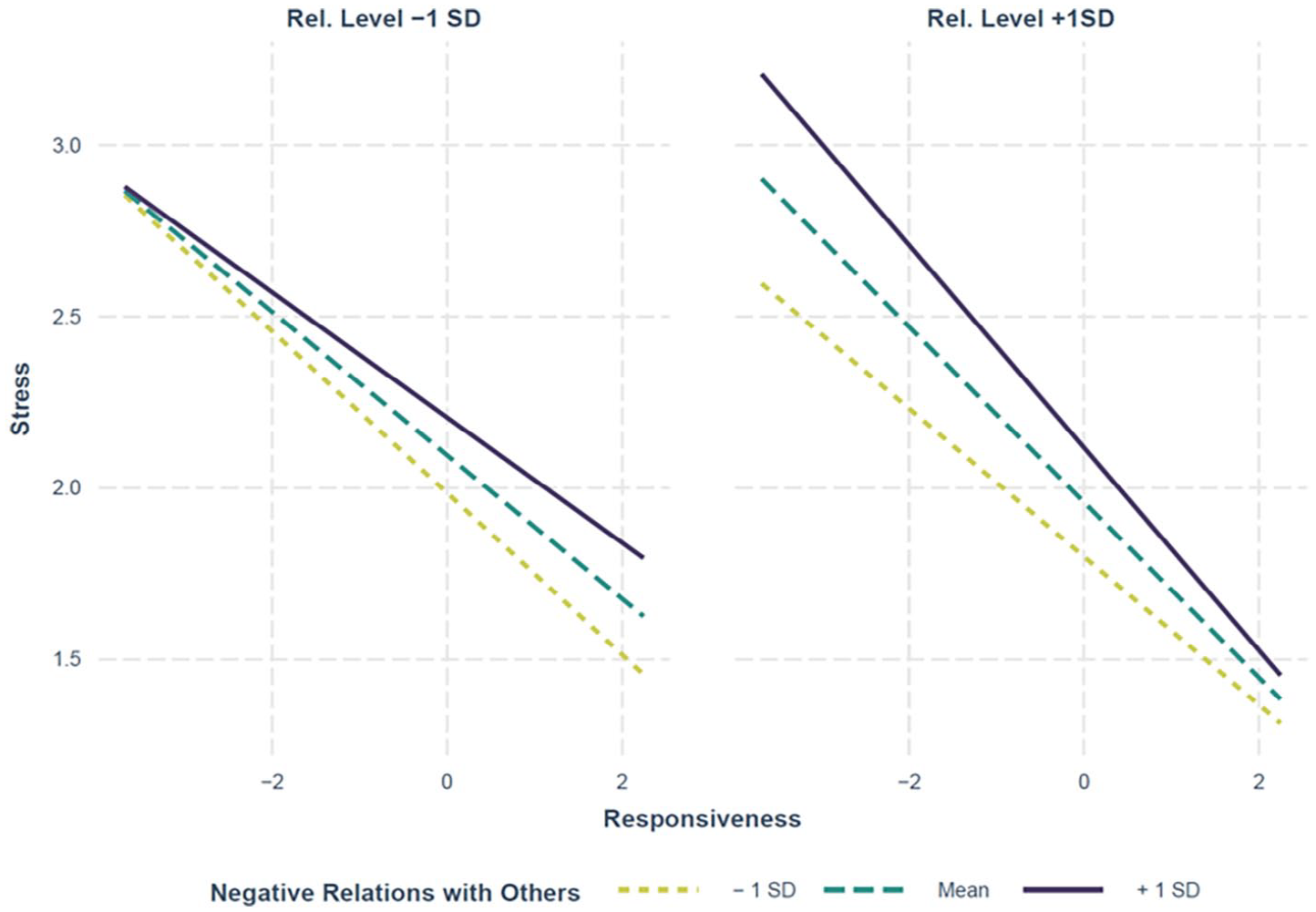
Three-way interaction plot for stress in the Spring 2020 sample.
In the December 2021 analyses, there was a significant two-way interaction for stress (see Table 3) between responsiveness and negative relations with others. This interaction (see Figure 2) indicates that the negative effect of responsiveness on stress was strongest for people with low (B = −0.40, p < .001) relative to moderate (B = −0.33, p < .001) or high (B = −0.26, p < .001) negative relations with others. This reflects malabsorption, thus supporting H7a (but not H7b).
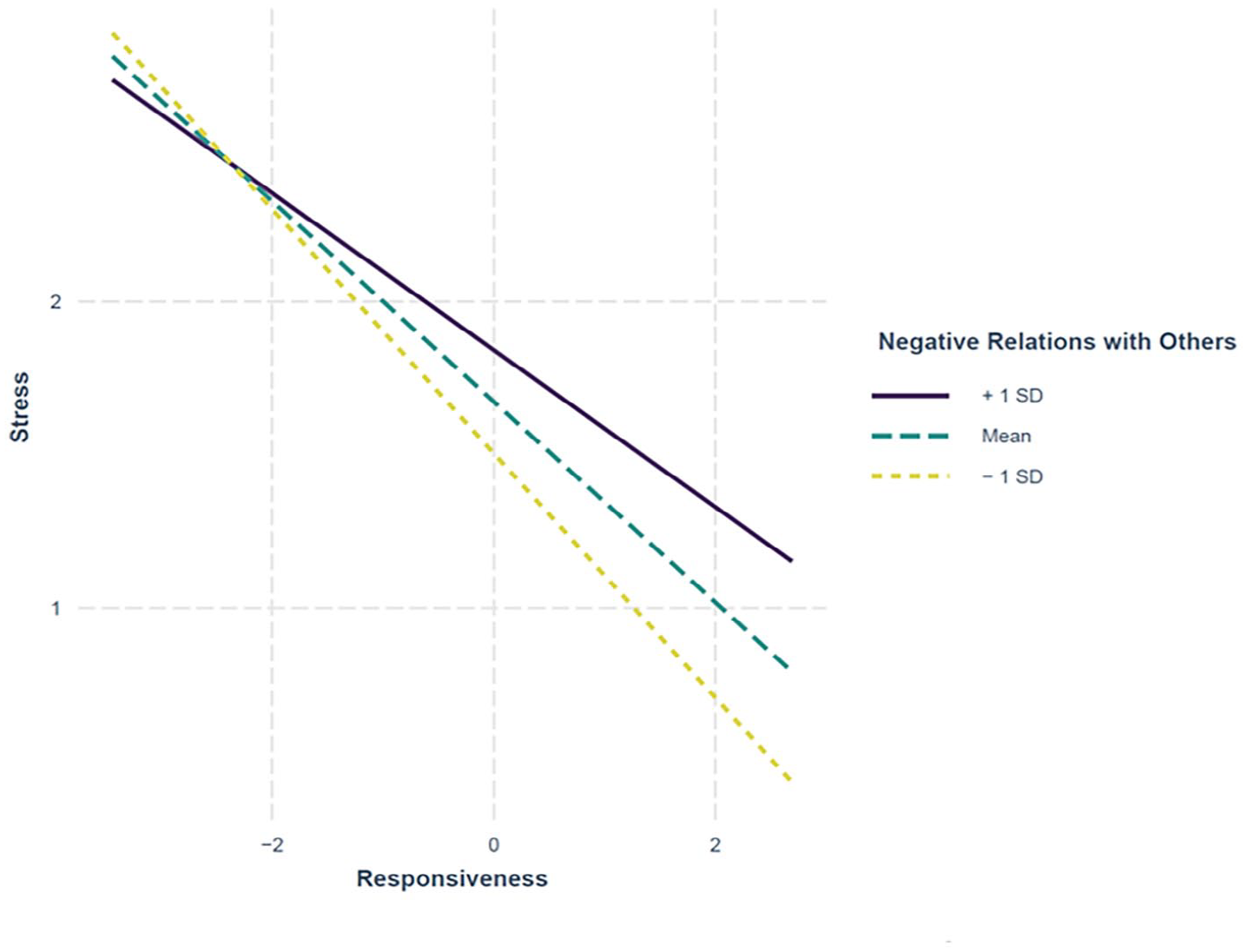
Two-way interaction plot for stress in the December 2021 sample.
H8 proposed a mediation model in which negative relations with others predicts perceived partner responsiveness through liking (H8a), choice (H8b), and stress (H8c). The proposed indirect associations were tested simultaneously as 2-1-1 multilevel mediation models. Importantly, even though the mediating and dependent variables are measured at level 1, the mediation paths are estimated at the between-person level (i.e., level 2). This is because there are no level-1 estimates for negative relations with others, as it was measured once (on the presurvey). The model results are presented in Figures 3 and 4. For the spring 2020 sample, the proposed paths were all in the expected directions, yet none of the three indirect effects reached statistical significance (see Figure 3). In the December 2021 sample, however, two of the three indirect effects were statistically significant (see Figure 4). Specifically, liking and stress were significant mediators between negative relations with others and responsiveness; choice was not a significant mediator. The interpretation of the significant effects in the December 2021 sample is that heightened negative relations with others is associated with (a) decreased liking of interaction partners and (b) increased stress during interactions, and that these person-level propensities for decreased liking and increased stress are associated with a tendency to perceive less responsiveness from interaction partners.
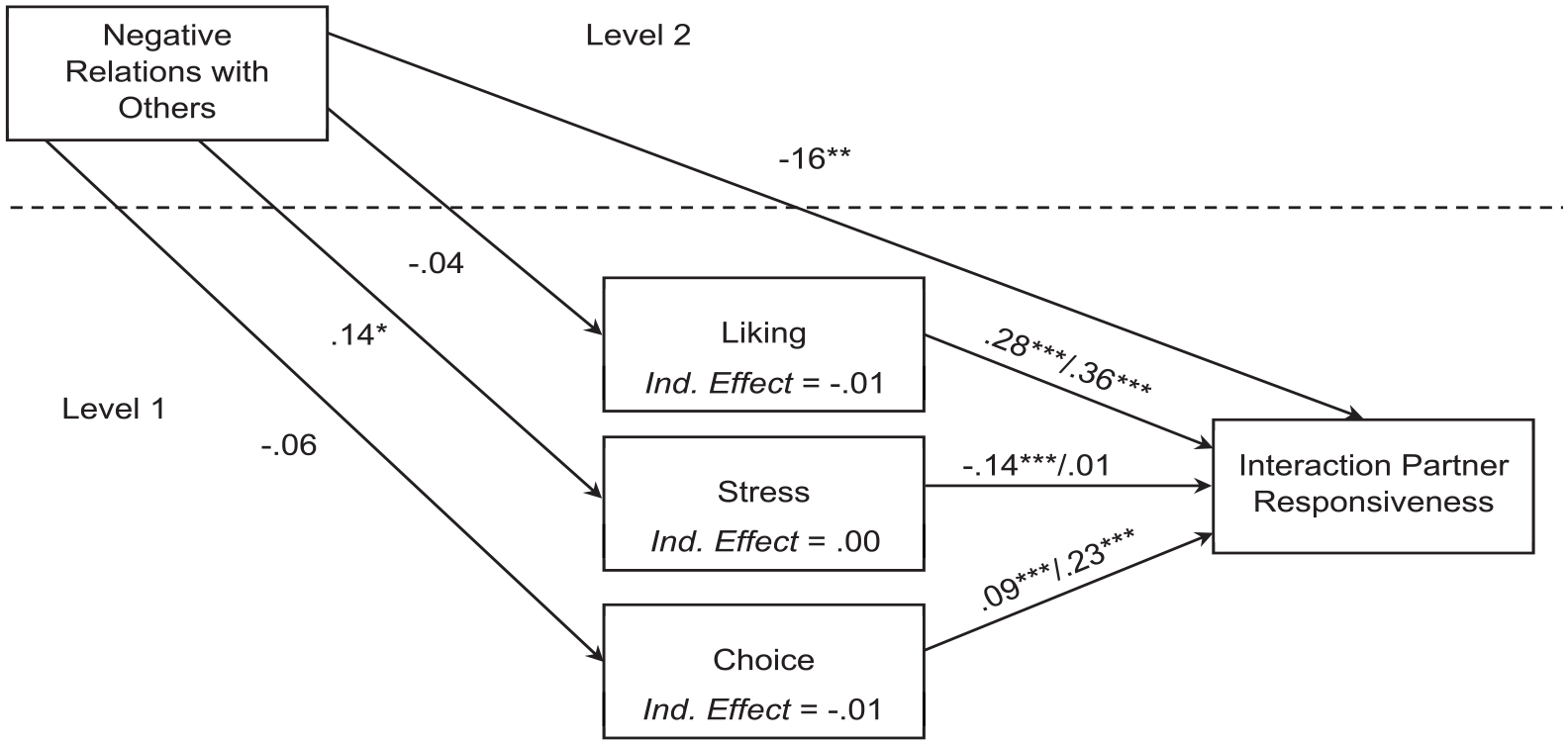
Mediation Model Results for the Spring 2020 Sample.
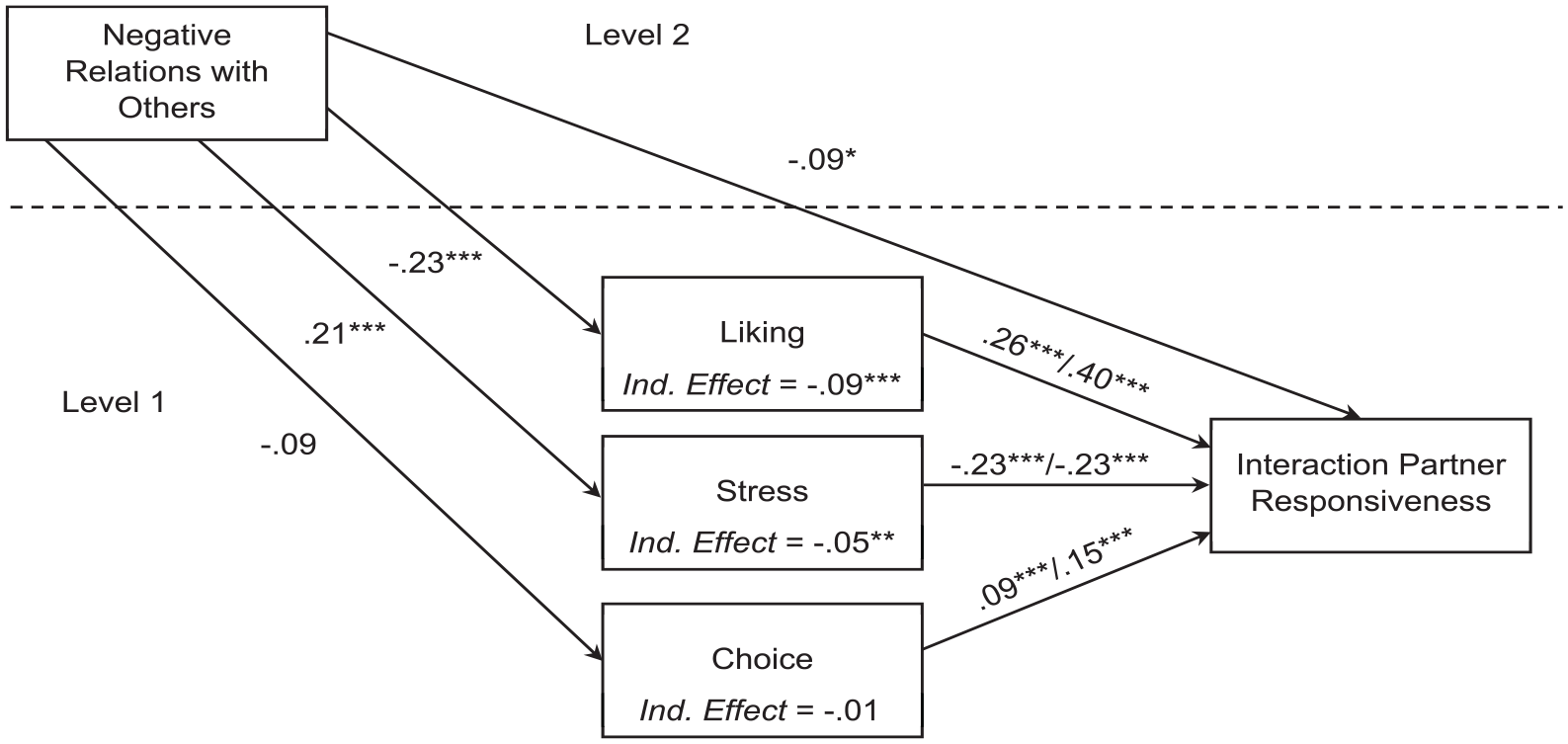
Mediation Model Results for the December 2021 Sample.
Summary of Findings
Support or partial support was found in at least one of the two samples for seven of the eight hypotheses (see Online Supplemental Table 1). Only three of the eight hypotheses (H2, H4, and H6) were supported in both samples. The most consistent support, then, was found for the ideas that people with high negative relations with others perceive less responsiveness (H2), higher stress (H4; but see footnote 6), and lower well-being (H6) during social interactions. Results for the moderation tests (H7a and H7b) indicated support for hyperabsorption and malabsorption effects for stress only. Finally, there was partial support for the mediation model (H8) in the December 2021 sample for the indirect associations of stress and liking.
Discussion
The findings from both datasets offer further evidence of links between relational history and day-to-day interpersonal communication and perception. Results replicated only some aspects of past work. The results that were not consistent with past research (or were discrepant across the current study’s samples) might point to potential differences attributable to unique phases of the COVID-19 pandemic (i.e., the initial months versus nearly 2 years in) and life stage (i.e., younger versus older adults). We begin, though, with the results’ theoretical implications for affection-, resource-, and attribution-based theories of relational life.
Theoretical Implications
One of the most consistent findings across the current and previous studies is that negative relations with others manifests in less positive day-to-day interaction (responsiveness, in particular). But this raises an intriguing theoretical question: Is the lower positivity reported by people with higher negative relations best understood as a perceptual bias, an objective resource insufficiency, or some combination of both? Whereas theories, such as the Theory of Relational Load and the Evolutionary Theory of Loneliness, suggest the inverse association between negative relations with others and positive interaction is best explained by negative attributional and perceptual biases, a resource perspective like Conservation of Resources theory (which emphasizes the importance of tangible resource gains and losses) suggests that it is likely due to objective deficits in positive interaction (e.g., due to social network composition). Affection Exchange Theory lays out a foundation for both possibilities, suggesting past relational difficulty can lead to objective deficits in rewarding interaction (less affectionate communication from partners overall), while also shaping perceptions and appraisals of interaction (altered reward thresholds). We suspect that the effects are both objective and perceptual, and perhaps reciprocal (Reis et al., 2004). This provides the foundation for the proposal and testing of a perception and social network-based reinforcement model of social interaction rewards. These types of effects—especially those concerning perceptions—can be examined through intensive longitudinal studies comparing interpretations of social interactions from multiple people engaged in the interactions (e.g., reciprocal one-with-many designs; see Brinberg et al., 2022).
Two Different Phases of the COVID-19 Pandemic
More broadly, the two samples employed in this study offer interesting descriptive insight regarding changes in interaction following the start of the COVID-19 pandemic. Consider the locations of interactions. In spring 2020, 86% of interactions occurred at home, whereas, in December 2021, only 54% of interactions were at home (with 25.9% at work and 13.7% in public). The lower rate of at-home interaction in December 2021 could reflect relaxed stay-at-home orders, changing workplace policies, and people’s greater comfort and/or desire to be in public spaces. Similarly, while most interactions occurred face-to-face for both samples (68% for spring 2020 and 72% for December 2021), the rate was slightly higher in December 2021.
Turning to the specific hypotheses, despite some consistency in the results between the two samples for three of the hypotheses (H2, H4, and H6), there was divergence. Individuals with high negative relations with others, contrary to predictions (H1), were not less likely to engage in positive communication episodes in spring 2020 sample. There were also differences in the level of perceived connection (H3) experienced during social interaction between the two datasets. Specifically, people with higher negative relations with others experienced significantly lower levels of connection during social interaction, but only in the December 2021 sample.
These differences could be attributable to differing public health conditions that shaped interaction patterns. Because the data from the spring 2020 sample were collected early on in the initial period of stay-at-home orders, participants might have been more likely than usual to be living with well-established relationship partners (e.g., parents, siblings, and close friends). Descriptive statistics and mean comparisons (see Online Supplemental Table 4) seem to support this idea, such that the mean for relationship establishment level of interaction partners was significantly higher in the spring 2020 sample (M = 6.49) than the December 2021 sample (M = 5.78). Similarly, the mean for interaction partner liking was also significantly higher in spring 2020 (M = 6.34) than it was in December 2021 (M = 5.96). During spring 2020, then, participants might have had higher-than-normal levels of interaction with personal relationship partners, which might help explain Luchetti et al.’s (2020) finding that many individuals received slight increases in social support at the onset of the pandemic. It might also suggest (consistent with the backfilled support idea we proposed earlier) that individuals with high negative relations were receiving increased affectionate communication during spring 2020 and thus felt less disconnected (i.e., relative to pre-pandemic times or later in the pandemic).
The shift in findings in December 2021—which was approaching 2 years into the pandemic—whereby participants with high negative relations with others had a lower likelihood of engaging in affectionate communication episodes (relative to routine episodes) and experienced lower levels of connection in social interaction, might have reflected a return to more typical patterns of relational interaction, as people were drawn (or required) to interact “more normally.” Indeed, these results for the December 2021 sample comport with past research on well-being and everyday social interaction (Mehl et al., 2010). Perhaps, then, participants in the December 2021 had already begun to resettle into their old (and, for some, lonelier) social routines. All of the ideas we have offered in this section are speculative considering that we are comparing results from two different samples composed of people with different life experiences. As we discuss later, structural factors (e.g., access to formal support) could also explain some of the differences in findings between the two samples. Nevertheless, the results across the samples potentially point to some of the ways in which interpersonal communication patterns shifted over the first 2 years of the COVID-19 pandemic.
The differing contexts between spring 2020 and December 2021 might also cast light on why the hypothesized mediation paths between negative relations with others and responsiveness were only significant in the December 2021 sample. Specifically, it was found in December 2021 sample, but not spring 2020, that negative relations with others negatively predicted responsiveness through liking and stress. It is noteworthy that average liking and stress levels were significantly higher (see Online Supplemental Table 4) in the spring 2020 sample (Ms = 6.34 and 2.00, respectively) than the December 2021 sample (Ms = 5.96 and 1.68, respectively). This potentially points to ceiling effects for liking and stress in the spring 2020 model. Overall, the significant mediation paths for liking and stress in the December 2021 model demonstrate plausible explanatory pathways linking past relational challenges and present everyday interpersonal experiences. The indirect associations also indicate, as discussed more later, that intervention work focused on people with difficult relational histories should focus on the composition of people’s social networks (the liking component) as well as the cognitive biases they might bring to their daily social interactions (the stress component). Still, that the indirect paths for liking and stress were only significant in the December 2021 sample suggests these explanatory mechanisms might only be operative when people are engaging in more normal patterns of interaction. Life stages of the participants, which we turn to next, might also have played a role.
Two Different Populations
Age was a notable difference across the two samples, with the spring 2020 sample composed of 4-year undergraduates and the December 2021 sample composed of a general adult population. Research points to key differences in these age groups. Younger adults, for instance, report higher levels of loneliness, anxiety, and depression, which might make them particularly prone or reactive to stress (Buecker et al., 2021; Cadigan et al., 2021). At the same time, undergraduate students, which are only a small, and likely non-representative, subset of the young adult population in the U.S. (Arnett, 2016), might have greater access to both informal (e.g., family members) and professional support. Even during remote learning, for example, it might have been easier for students to secure online therapy sessions through their university. These factors could have shaped the results of this study in ways we did not account for.
Interestingly, it was the young adult sample in spring 2020 where we observed the only evidence of hyperabsorption (i.e., with regard to stress reduction). But this effect was only found in interactions with well-known people. This result aligns with van Roekel et al.’s (2014) findings whereby the loneliest adolescents experienced the greatest reductions in negative affect when spending time with people they perceived as especially supportive of them. Undergraduate students might place particularly high value on building social connections (e.g., with friends), which might explain why this group was especially receptive to responsive interaction within established relationships. Responsiveness cues are signals that someone is open to connect, potentially rendering such interaction particularly rewarding (i.e., stress reducing) for young adults eagerly seeking strong relational bonds. This does not fully explain, though, why evidence for hyperabsorption emerged for stress in spring 2021, while evidence of malabsorption emerged stress in December 2021. 8 Clearly, more work is needed to understand the situational and personal parameters that make mal- versus hyperabsorption likely to occur.
Practical Applications, Future Research, and Limitations
We conclude with a consideration of practical applications, limitations, and future research. We focus on three potential applications of the current findings. First, in order to support and design interventions for those with high negative relations with others, it is helpful to understand why people have negative relations with others. Segrin and Taylor (2007) found that positive relationships with others mediates the link between interpersonal skills and well-being. Interventions focused on interpersonal skills might therefore help those with heightened negative relations better navigate the social world to place them in favorable situations to garner support.
Second, given that the relationship between negative relations with others and responsiveness was mediated by liking in the December 2021 sample, it seems important that individuals with high negative relations with others get increased access to supportive social networks and opportunities for positive interaction. Programs could build in purposefully-planned conversations (e.g., regular coffee with a friend, scheduled phone calls with family). Third, if young adults with negative relations with others are more sensitive to mal- and hyperabsorption effects depending on relational establishment level of interactants, families and friends should be encouraged to be more mindful of engaging in responsiveness behaviors (see Itzchakov et al., 2022) in everyday interaction to help reduce stress levels. Fourth, if perceptual biases are part of the reason past negative relational experiences lead to lower perceived responsiveness in day-to-day interaction, changing how people understand their relational pasts (e.g., through therapy), could help reduce tendencies toward (overly) negative appraisals.
There are several limitations to the current work that should also be considered in future research and interpretation of the current findings. First, although experience sampling enables near real-time data collection, it has various limitations. The multi-day study length, for example, can be fatiguing for participants. As such, it is possible that time influenced the responses in ways not sufficiently accounted for through the time covariate. Second, the spring 2020 dataset potentially better captured the full range of participants’ daily experiences given that it sampled participants six times per day (compared to three in the December 2021 dataset). Third, our measurement of interaction offered limited information regarding content. This is particularly true since participants selected only one episode category per interaction. Future research should collect more information on specific messages qualities and features of each interaction.
Fourth, to better understand how past relational experiences influence future behavior, more sophisticated designs with “measurement bursts” could be used that track participants over longer periods of time in multiple waves (Sliwinski, 2008). This would allow past relational experiences to be assessed for the same people over time rather than through retrospective reports. Fifth, when evaluating replication hypotheses, we based our interpretations on statistical significance. This represents one way to determine if effects replicate, but there are other recommended approaches (e.g., equivalence tests) for evaluating replication effects with greater precision that might better align with researchers’ goals (see Anderson & Maxwell, 2016).
Conclusion
The most consistent findings in this study across the samples were that those with negative relations with others experienced less partner responsiveness, more stress, and lower well-being in their everyday communication. The results also provide some context for when malabsorption versus hyperabsorption might transpire and suggest potential mediating variables between relational history and positive everyday communication. That said, given the different demographic characteristics and time periods in the two samples, numerous questions remain about links between past and future relational and communication experiences. The use of different samples at different time points, while in one sense a strength of this work, leaves us with more work to do to explain the sample-specific findings. Nevertheless, along with other researchers, we hope to offer clearer answers through continued exploration of the person-level factors (past and present) shaping people’s everyday communication and emotional experiences.
Supplemental Material
sj-docx-1-crx-10.1177_00936502231162232 – Supplemental material for Past Relational Experiences and Social Interaction: Direct, Moderated, and Mediated Associations Between Relational Difficulty, Communication, and Perception in Two Samples
Supplemental material, sj-docx-1-crx-10.1177_00936502231162232 for Past Relational Experiences and Social Interaction: Direct, Moderated, and Mediated Associations Between Relational Difficulty, Communication, and Perception in Two Samples by Andy J. Merolla, Christopher D. Otmar and Abdullah S. Salehuddin in Communication Research
Footnotes
Author Note
A version of this paper was presented at the 2022 convention of the National Communication Association, New Orleans, LA.
Declaration of Conflicting Interests
The authors declared no potential conflicts of interest with respect to the research, authorship, and/or publication of this article.
Funding
The authors disclosed receipt of the following financial support for the research, authorship, and/or publication of this article: This research was supported by two Faculty Senate grants from the University of California, Santa Barbara.

Supplemental Material
Supplemental material for this article is available online.
Notes
Author Biographies
References
Supplementary Material
Please find the following supplemental material available below.
For Open Access articles published under a Creative Commons License, all supplemental material carries the same license as the article it is associated with.
For non-Open Access articles published, all supplemental material carries a non-exclusive license, and permission requests for re-use of supplemental material or any part of supplemental material shall be sent directly to the copyright owner as specified in the copyright notice associated with the article.
