




Abstract
The conference theme, “Global Arts on Mission: Embedded, Embodied, and Empowered” explored the arts in mission for the first time in the 50-year history of the ASM. This article features the Presidential address from the annual meetings. Its purpose was to consider the dynamics of contextualized arts on mission over the last 45 years drawing from three case studies of my work as a missiologist-cum-ethnomusicologist. The theoretical concept of musicking provides a foundation for exegeting musical cultures, revealing the dialogical nature of shared musical performance. Not only does it point to how the nations around the world continue to discover their unique voices in raising songs of witness and worship to the Lord Jesus Christ, but it also presents longitudinal perspectives of the enduring impact of global arts on mission.
Keywords
Let the redeemed of the LORD tell their story (emphasis added) those he redeemed from the hand of the foe, Those he gathered from the lands (the nations) from east and west, from north and south. (Psalm 107: 1–3 (NIV))
The psalmist sets the vision 1
The vision of the psalmist as stated above was picked up in the late 19th century by a blind lyricist, Fanny Crosby, in her hymn “Blessed Assurance.” Indeed, throughout the past two centuries, the Church around the world has sung with great fervor: This is my story; this is my song. Praising my Savior all the day long.
2
What then is the vision of the psalmist? Our text speaks of those he redeemed from the hand of the foe and references the coming together of the nations. As a missiologist-cum-ethnomusicologist, I see God gathering a multi-cultural, multi-generational multitude of peoples telling their stories and singing God’s praise from within their unique cultural contexts and traditions. I offer here missiological reflections on what God is doing via the arts in our global world now and over the last 45+ years. When I left for Nairobi, Kenya in 1978, the arts were not an integrated strategy in mission. What God has shown me over this period is that a not-so-quiet revolution has been taking place in the midst of an emerging world mission movement.
Constellations of global contexts
A plethora of global arts exists within a multiplex of constellations of global contexts. Here, I reflect on the contribution of the arts in the life of the Church worldwide as it pursues making Christ known and worshipped among the nations. We will look at the arts in three distinctive contexts: (1) the cities of the world; (2) as partners in interfaith dialogue; and (3) the long-term presence and impact of the arts in local contexts. Over the last 45+ years, there has been an emerging recognition of the contribution and validity of global arts. They are not narrowly limited, but rather the arts are for everyone. This vast subject expands our horizons for doing mission. The arts have always been participating, hiding in plain sight and sound. We turn first to the global arts in the cities of the world.
The arts in the cities of the world: Zumba at LAFitness
Where and how can you engage with peoples in the city via the arts? What does an ethnomusicologist-cum-missiologist do to get acquainted with her local Southern California community? Saturday mornings find me dancing Zumba at LAFitness, a weekly fitness class that provides opportunities to encounter and engage with people I would not otherwise meet. The regular group involvement of the class potentially leads to further interactions outside of the gym, such as going for lunch afterwards. Although Zumba has its origins in Latin cultures, the room is not dominated by Latinos with only a couple of them present. Rather, mainly Asian-Americans who make up a large portion of the population in my part of Los Angeles overwhelmingly dominate, about 70% of the participants in the room. Anglos and African-Americans also make up a small minority of the class. Languages spoken include Filipino, Vietnamese, Mandarin, Thai, Korean, German, and English. Music played is predominantly in English and Spanish, often drawing from HipHop and Rock, including Elvis Presley. In sum, Zumba and its music create a “global soup” that welcomes all people to participate. [Watch video clip here: ZUMBA.]
Historically, Zumba came into being in the 1990s in Columbia when dancer and choreographer Alberto Perez was teaching an aerobics class and forgot his regular music. He reached into his backpack and pulled out tapes of salsa and merengue. Fast forward to today, Zumba is a world-wide phenomenon, boasting certified instructors in more than 125 countries around the world. 3 We observe in our video example above that not only are Asian-Americans, Latinos, African-Americans, and Anglos participating in a Latin-based hybrid dance, in this setting they are also embracing the American practice of Halloween by dressing up in the appropriate costumes. If that isn’t “planet soup,” I don’t know what is. What a global mix!
Musicking: Embedded and embodied
How can we think about global musics? Music is more than a noun; it is not merely a commodity to be plugged into an event. Rather, music is participatory, evoking images of people engaging with people. As meaningful and enjoyable as musical sound is in and of itself, there is more to music than meets the ear. While there is universality in music, there is also a particularity of contexts; that is, music is culturally embedded. Scholars (Small, 1998:10) argue that: the fundamental nature and meaning of music reside not in objects, not in musical works at all, but in action, in what people do with the music. It is only by understanding what people do as they take part in a musical act that we can hope to understand its nature and the function it fulfills.
Christopher Small argues that music is a verb, what he terms “musicking.” For him, musicking is an action, not an object. It serves as an action verb: “to music is to take part, in any capacity, in a musical performance” (Small, 1998: 10). Musicking includes the full range of activities surrounding music events, including Zumba fitness classes. Dancing to music as exercise meets the requirements of musicking. Meaning, impact, and import emerge from what people are doing as they participate in music events. Significantly, musicking is a form of human encounter and fosters the building of relationships, a critical element in the practice of mission.
The arts in interfaith dialogue: Transformative bridges in Muslim–Christian relations
With 9/11 came an ever-increasing need to find creative approaches and mission models to engage with Muslim neighbors. Studies have shown that musical performance can evoke transformative moments that enhance communication and restore broken relationships. In my Luce Grant-funded research (2008–13), I explored the intersection of music, peacebuilding, and interfaith dialogue in light of Muslim–Christian relations. I asked how music contributes to peacebuilding among peoples of differing faiths by investigating the roles music plays in promoting peace and living with the “other” in sustainable ways.
Research in music and interfaith dialogue took me to Beirut and Yogyakarta to investigate how music facilitates dialogue among religious peoples. [Listen here to Indonesian Audio Clip: Muslim Group.] Although for some people the place and impact of music in Islamic traditions are contested topics, Muslims and Christians historically share a plurality of musical and religious experiences as lived traditions, many still practiced in the 21st century (King and Tan, 2014). The major question addressed: what happens when peoples of differing faiths come together through shared music performances?
Convergences in troubled times
From the missiological perspective, we must recognize that troubled times provoke the setting of priorities to address specific needs and concerns. Heightened misunderstanding and conflict between peoples of differing faiths in the 21st century, particularly among Muslims and Christians, have moved peacebuilding and interfaith dialogue to the top of academic agendas. The quest for living at peace with one another includes theologians and missiologists seeking common theological ground, with a view to creating understanding and encouraging human encounters that foster respect and dignity for all peoples. A major challenge is creating spaces and means for “rubbing shoulders with diverse people in an increasingly pluralistic world.” Miroslav Volf (2005:6) Not only is there a call to “rub shoulders” with diverse peoples, but the call is to love our neighbors—our religious neighbors—in ways that push relational boundaries. Miroslav Volf (2005:12-13) argues that living with the “other” in peace is “an expression of our God given humanity. We are created not to isolate ourselves from others but to engage them, indeed to contribute to their flourishing, as we nurture our own identity and attend to our own well-being.” Musicking provides social space for engaging with one another, no matter their faith, in relation to interfaith dialogue.
Enter ethnomusicologists . . .
Known for their studies in the intersection of music and culture, ethnomusicologists in the last 15 to 20 years have begun addressing similar issues. They are fully engaging with questions of music’s role “in solving or exacerbating contemporary social, political, medical, and environmental problems” ((Rice, 2014:191). The major theme of music, war, and conflict is currently under investigation. Such studies are particularly well suited to drawing on rich, thick ethnographic descriptions of music-in-context in the midst of contemporary settings in regions where conflict and violence are taking place.
For example, we turn to world music festivals on the global stage. The Fez Festival of World Sacred Music offers the next window on global arts. The provision of social spaces for processing relationships is a major feature of the Fez Festival. Established in 1994, at the time of the first Gulf War, its purpose was to gather the great musical traditions drawn from sacred, spiritual, and world musics of the Arab world. The intention was to use this totally new concept of performing music of the Middle East side by side with western sacred music as a means of engaging with the world at large. The multiple festival venues, with audiences ranging in number from 200 to 2000, have annually brought transnational audiences into a local Moroccan arena where Christians, Muslims, and secularists participate in enjoying the music of each “other.” As the audiences participate in multiple performances over a period of 10 days, each interaction produces a growing sense of encountering the “other,” with perceptions shifting toward stronger views of a shared humanity. Such a venue welcomes people entering and engaging one another on an attitudinal continuum from exclusion to embrace (King, 2014).
East meets West on stage: Whirling dervishes and a Byzantine choir
The Al Kindi Ensemble with Sheikh Hamza Shakour representing the munshidin of the Damascus Mosque perform, sharing the stage with the Tropos Byzantine Choir of Athens Fabuleux watching as they perform. The contrast is striking. The Byzantine choral tradition is one of remaining immobile while singing with the focus on the profound sounds and texts. No instruments are involved. On the other hand, the Al Kindi Ensemble is composed of Middle Eastern instruments that set the musical stage for the whirling dervishes clad in long white circular skirts to publicly perform their desire to achieve communion with God as they whirl. Symbolically, they raise their arm to God in seeking unity with him and with their other arm they reach out to the world as a form of witness. The festival audience watches with mesmerized attention to what is displayed before them, with each group participating in the musicking taking place. [Watch video clip here: Interfaith Dialogue.]
Musical spaces of encounter and engagement
How does one begin to exegete what is taking place in the midst of shared performance? See Figure 1. The first stage at the top of the diagram assumes two contrasting groups that have not previously engaged with one another; it assumes a continuum from enmity to exclusion. Each group is looking away from the other. Stage 2 indicates an encounter, where turning toward each other occurs as they agree to perform on the same stage and access the performance area. Stage 3 points to the groups stepping on stage to engage with one another. Stage 4 shows embrace, indicating a willingness to perform for and listen to the other group. Finally, Stage 5 highlights a shared liminal experience of relating as neighbors during performance, brief and short lived. However, the possibility of living together via shared music performance produces hope for the future.
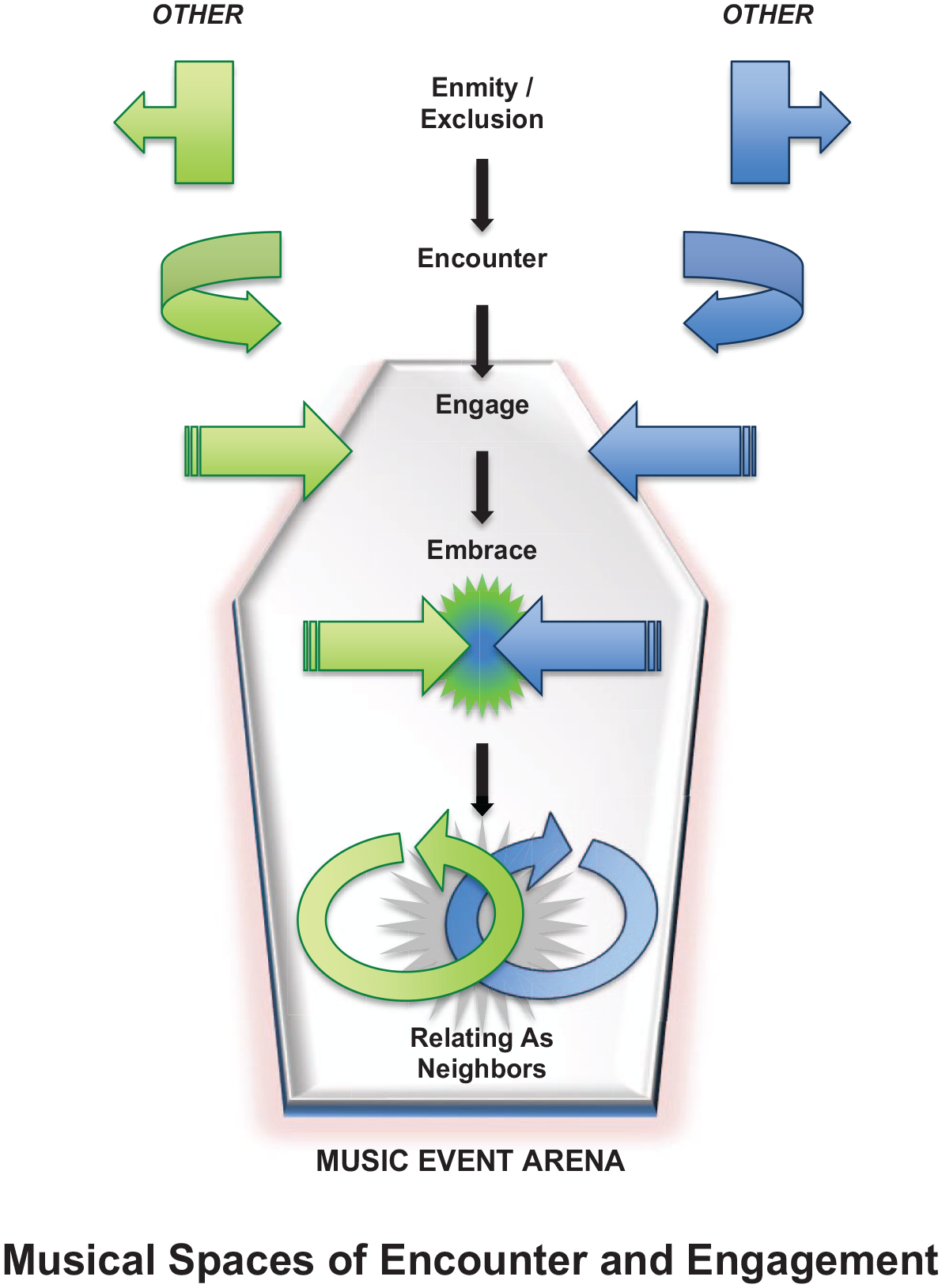
Adapted from Musical spaces of relating (King and Tan, 2014: 272).
The music event arena thus brings together an interface between musical sound and society, “a set of recognizable behaviors that link music to various broadening social and expressive spheres,” and can be viewed as transformative, particularly in the emotional domain. Furthermore, musical spaces of relating encourage participants to experience a freedom or escape from the routines of their daily life, from their normal locations, and from their prescribed social identities. They find themselves entering into musical spaces and, either consciously or unconsciously, interacting as equals as they turn their focus to nonintrusive elements such as the delight and pleasure of experiencing music. As participants increasingly move toward one another, the musical experience affords recognition of the other (even when hearing a music foreign to one’s own), gives new perspectives on each other’s common humanity, offers dignity and respect, and lays the groundwork for building trust. Major transformative components of peacebuilding thus arise as expressive cultural practices articulate “collective identities that are fundamental to forming and sustaining social groups, which are, in turn, basic to survival” (Racy, 2003: 11).
At the same time, music and the arts ignite the imagination, creating sensory, emotional and physical effects. Often caught off guard or surprised by one’s thoughts and feelings, people listening to music can envision possibilities within the realities of specific actualities—political exigencies, time periods, physical locations, and religious differences. A processing of one’s own life experiences, attitudes, and values often takes place, leading to “social integration that make us whole” (Turino, 2008: 15). Whether participating together in performance, listening intently to music, or helping to facilitate the production of music events, we find that a sense of community occurs where sonic synapses are forged. This interconnected sense of “sonic bonding” fosters the emergence of interconnected-participatory relationships capable of enduring beyond the music event itself. The possibility of peacefully living together is sparked in the midst of the actualities of life, momentarily creating a Turnerian sense (Turner, 1969) of musical communitas that bonds people together.
In sum, musical performance serves as a social resource that fosters broadened social engagement. Musicking, with music practiced as a verb, engenders arenas of relating and musical dialogues among religious people. When practiced with intentionality, music events provide social spaces wherein new webs of human connectivity occur. Transformative music communication evokes relational bridges for living together peacefully as neighbors as it initiates, nourishes, and replenishes communities in the midst of entangled realities of difference. Music’s contribution to peacebuilding among Muslims and Christians is the provision of “an array of processes, approaches, and stages needed to transform” attitudes, perceptions, and behavior, all of which can work powerfully toward “more sustainable, peaceful relationships” (Lederach, 2005: 5).
The dialogical nature of shared musical performance
While music events give rise to social spaces for nurturing affiliations, even if only on a momentary basis, they are unfortunately limited by time and space. However, in order to pursue sustainable peacebuilding, the music event simultaneously enfolds a set of dialogues that often continue beyond the event itself. As Bakhtin, the Russian philosopher, asserted; “My voice can mean but only with others, at times in chorus, but at the best of times in dialogue” (Clark and Holquist, 1984: 12). While music gathers people together in a unifying way, multi-vocal dialogical elements are inherent in transformative music communication. We have found that continuing dialogue between Muslims and Christians takes place via the performing arts in the following arenas. They are: (1) dialogues of musical collaboration; (2) spiritual experience; (3) theological exchange; (4) actions for peace and reconciliation; and (5) life events. These dialogues provide the essential fuel for establishing sustainable peacebuilding on multiple levels simultaneously.
Note that the typology of musical dialogues in Figure 2 builds on interfaith dialogue categories offered by missiological and theological scholars (see Bevans, 2004: 383–84; Kärkkäinen, 2010: 3–7). The addition of musical collaboration to the “Circle of Musical Dialogues” both deepens and expands the poly-vocal dialectic of shared musical performance.
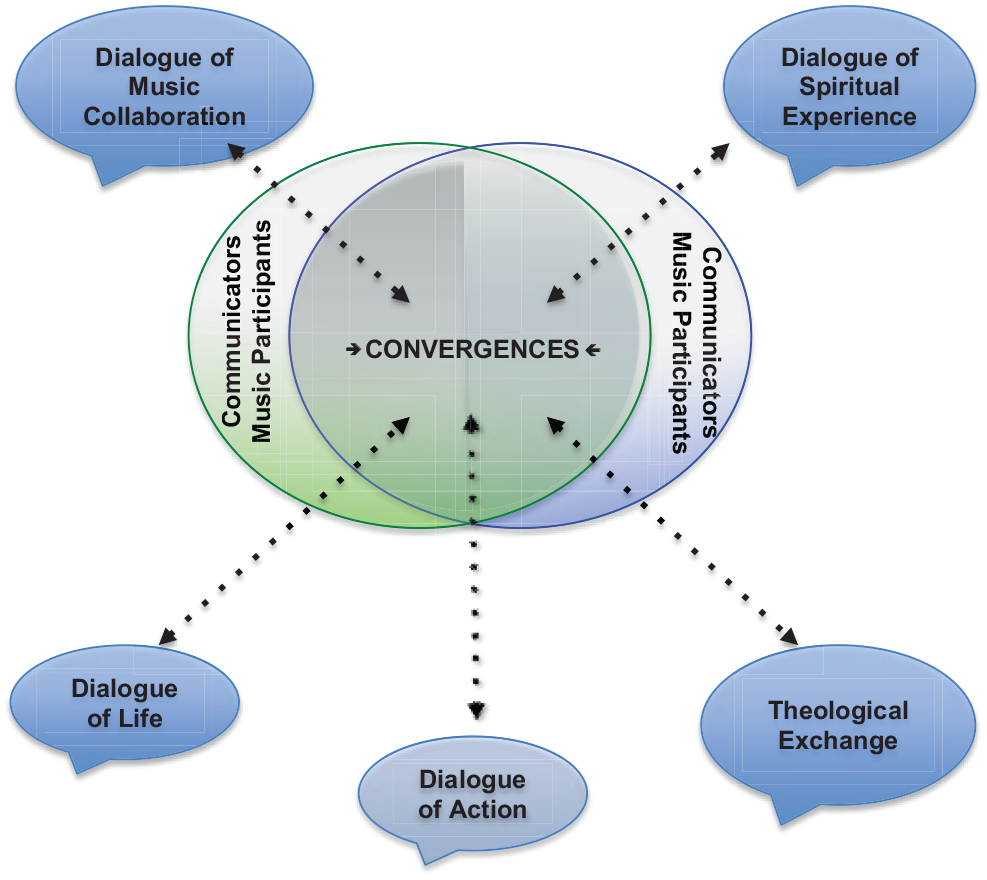
Circle of Musical Dialogues: Adapted from Musical dialogues for peace building (King and Tan, 20142: 286)..
Having reflected on the global arts in the cities of the world as well as the arts engaging in interfaith dialogue, we finally come to the continent of Africa. Our purpose is to reflect on sustaining the local in the midst of today’s ever-increasing global dynamics where dynamic tensions have always existed. Additionally, it is at this point that a longitudinal study reveals both the impact of the global arts over multiple decades and at the same time provides the classic missiological discourse on music and missions.
The global–local arts dialectic: On migration with the Maasai
The Christian faith arrived on the African continent with two books in hand: the Bible and the Hymnal. Ever since 1482, when the first Catholic masses were said in Portuguese in West Africa (Guinea and Ghana), external musical influences have formed mainstays within the Christian Church. Indeed, missionary hymns from both Europe and America are prolific in large portions of the Church in sub-Saharan Africa today. Sacred music and mission have always functioned hand in hand. Yet, historically many of the songs were received in Ghana as “Bread concealed in plastic wrappers” (King et al., 2008: 81–99), while Senufo believers in Côte d’Ivoire slept during the singing, considered a magical part of the Christian rite of worship.
East Africa offers a 21st-century setting where the global and local converge on the same stage. In 2018, the Global Consultation on Music and Mission 4 with attendees coming from more than 26 nations took place at the Brackenhurst conference hall—set in the highlands outside of Nairobi, Kenya. Hellen Mtawali, famed East African Gospel singer, processes in with her student group from Daystar University, Afrizo. 5 Her powerful voice leads out in contemporary Kenyan worship, intricately threading together global and local practices of African-inspired worship that include both western and local instruments from across Africa. Then, singing in English and Swahili, 6 Hellen and her team begin to bend their knees and move their heads as they transition into singing in a semi-Maasai-style with a repetitive “a-he-ya, a-hoo-ya, a-wimbo-eeh,” “a-he-ya, a-hoo-ya, a-wimbo-eeh” in classic Maasai ostinato. Moving from the stage, Hellen now processes down the aisle with her singers following behind. She explains in song: “Tonight the Maasai will sing. I hope this will bless your heart. We will worship in the Maasai way. Can you clap for the Maasai singers?”
Suddenly, the focus shifts. From the back of the room, Maasai men clad in their authentic red shukas 7 enter the room and process up the aisle toward the stage proclaiming their faith via their multifaceted cultural music tradition. The westernized-global audience is mesmerized; cameras and smart phones lifted high to capture the procession. With lots of smiles and growing excitement, the audience strains to catch a better glimpse of what is taking place in the center aisle. Amazement grows. Maasai believers were singing and dancing their faith as they engaged in “global worship” that recognizes who they are within the Christian community. [Watch video clip here: Global Worship and the Maasai.]
As the Afrizo singers from Daystar University process out, Maasai men, clad in red and blue plaid cloth with herding staffs, enter in traditional Maasai style, one by one in their unique way of moving. Followed by Maasai women who take over the lead singing as they come onto the stage, their round beaded discs with long strands—traditionally a part of the women’s wedding attire—dancing in their elegant way, adding to the dazzling display of cultural worship as it is offered up to the living God. The men, with piercing cries and famous high jumps, sing out in authentic Christian Maasai praise: Mesiaa, Mataranyaki Olaitoriani osinkolio sidai lenkisisa . . . aah (Messiah, let us sing to the Lord a beautiful praise song . . . aahh)
The room resounds with pure joy as the Maasai believers celebrate God’s goodness in their lives. While Bantu groups, that is, Lua, Luhyia, Kikuyu and Kenyan youth, lead out in worship, the consultation becomes more inclusive and diverse as the Maasai join in the offering of praise to the living God. For the global visitors, an “Ah ha!” moment takes place as they think to themselves, “Now that feels more like what one expects to hear in East Africa!” How did Maasai worship come about? And what is its relationship to mission?
The Maasai peoples are nomadic herders who migrate between southern Kenya and northern Tanzania on a regular annual cycle (Figure 3). Their nomadic pathways also extend into the neighboring archipelago of Zanzibar, a semi-autonomous territory in political union with Tanzania (Figure 4).
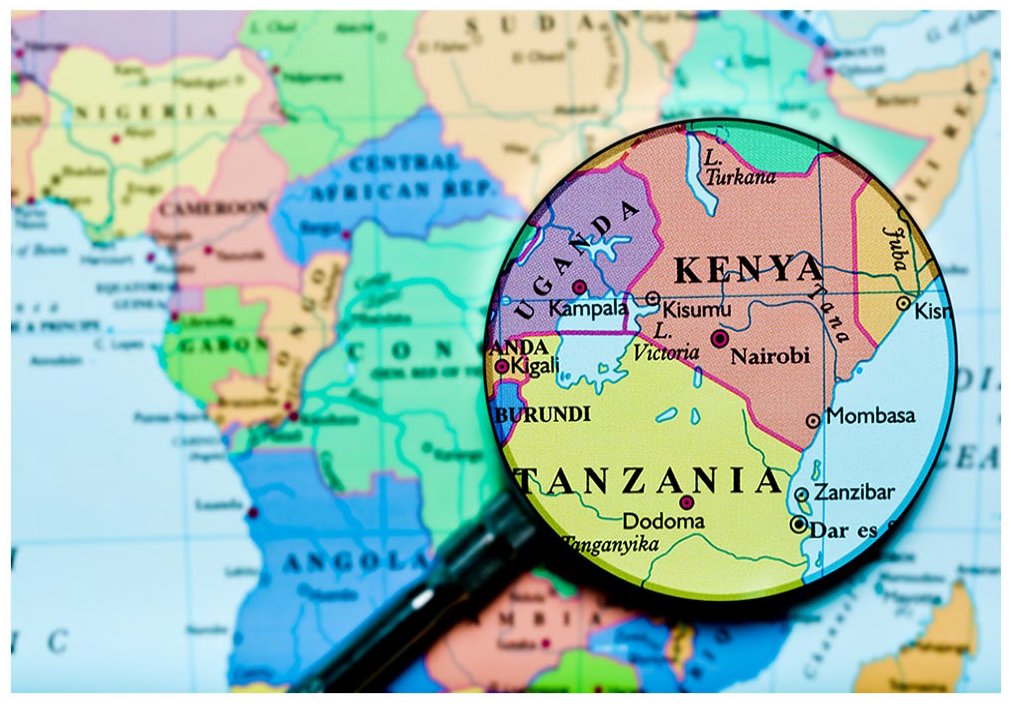
Map of Maasai land.
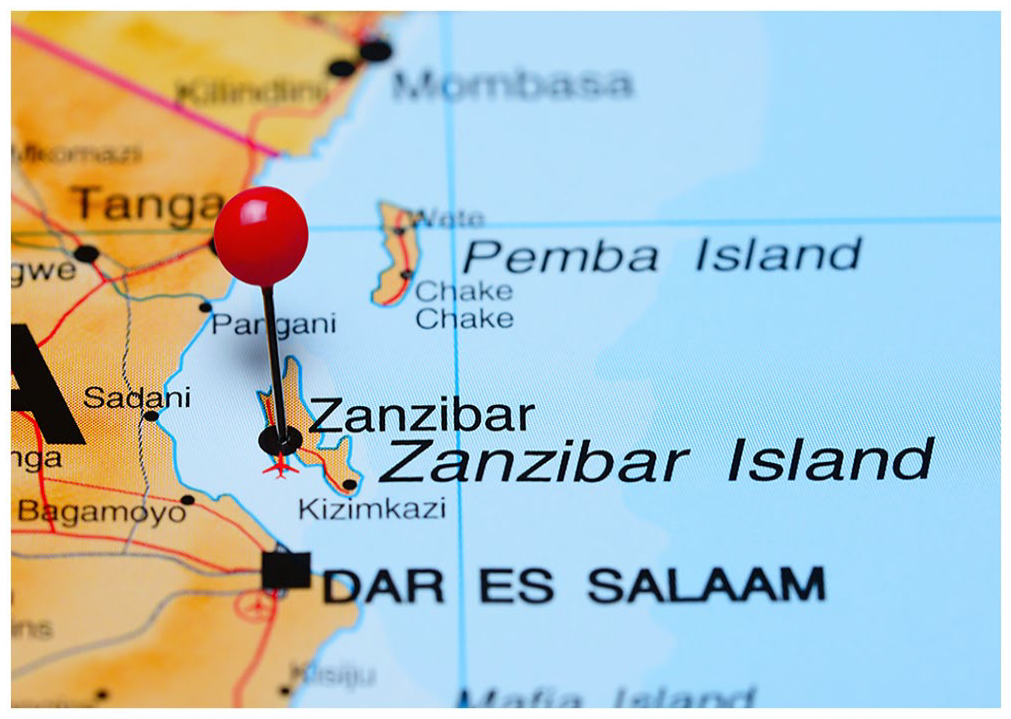
Map of Zanzibar (Tanzania).
The first seeds of singing faith among the Maasai: A new song workshop in 1999
It all started with an invitation to Ewaso Ng’iro to lead a new song workshop in 1999. Peter Russell, local missionary, explains: Our heart was to help the fledgling Maasai church develop their own hymnody. At that time, the Maasai church sang songs from the old yellow song book put together by African Inland Mission called Mesisi Enkai (“Let Us Praise God”). Some of the songs were great . . . most were western songs re-hashed in the Maasai language and sung in a Swahili-type style. It just felt to a number of us on the Maasai Regional Committee that our churches in Maasai were being held back in worship. It was like they were sincere and eager, but it didn’t seem like the songs they were singing were connecting with the Maasai heart. We called Roberta in the hope that she could help the Maasai Christians feel okay about singing songs in their own way and style. (Russell, 2022)
The first day of the workshop revealed the newly emerging group of Maasai believers’ expectations of Christian worship—an etic, colonial-style, lack-of-embodied-engagement of western hymn singing. They were trying, but had not yet been released to be themselves as Maasai singing their new found faith. [Watch video clip here: Maasai “Christian” Book Song.] They sang: Jesus is the enabler, He is Lord. May you receive praise and honour (sic) for you created the universe by your own will.
8
Note that the text is biblical, but full engagement is lacking, with some not even moving their lips, looking totally bored. A new song was then composed based on a Maasai traditional song tune. As one singer noted: “This sounds like a Christian song. Its only that they have started with a chorus that sounds like that of moran songs.”
9
It says: Jesus said as He ascended, “I am going but I will come back to take my chosen people.” I plead you, my sister, my brother, my uncle, my mother and father, Let’s be ready for His second coming. Peter narrates further: The seminar was a joyous time filled with song and fellowship. But on the third day, it all came unglued. Roberta had been talking about indigenous worship as something that pleased the God of the Nations giving examples from Scripture and her experience in West Africa. Then she asked if she might be able to hear some traditional Maasai songs. Initially, the Maasai worship leaders agreed. Tentatively one group, and then slowly others, came up to sing at the microphone that had been set up outside . . . Immediately, the difference from the Christian choruses they had been singing in church could be readily heard . . . A sound completely different from the sing-songy choruses of the bantu churches in Nairobi that they had been trying to imitate in their worship. They sang the Maasai smoothly and effortlessly. And yet, you could see they were uncomfortable and obviously upset. Some were literally packing their bags and heading to the bus station in Narok. (Russell, 2022) [Watch video clip here: Maasai Traditional Song.]
Reconciling the “mess” required active listening on our part to learn what was bothering them. In Maasai fashion a designated spokesman for the group came to the front. “Those songs are NOT Christian,” he said. “We sang them when we were in darkness before we came to the light of Jesus. They are dirty.” Others stood up to agree with him. “Why are you filming us singing those old songs?”
Somewhat intrepidly, I invited Roberta up to respond. “First of all, I want to apologize if we didn’t explain well why we are filming.” She started. “We are using these films for analysis and research as we compare what is going on here in East Africa with other parts of Africa as new churches begin to use their own languages and styles to worship Jesus.” And then she said something that I have never forgotten. She said, “We have come to see that culture is like a shirt that you wear. If your shirt becomes dirty you don’t throw it away, you wash it.” Slowly by slowly Roberta continued. Explaining in such a beautiful way the power of singing praise to Yahweh from our hearts and that each people group expresses those deep things in their own unique expressions of the heart. She talked about how xylophones in West Africa, which were once dedicated to ancestral spirits, were now being dedicated to the Lord Jesus and used in the churches for powerful worship and praise. How one day each tongue, tribe and nation will bring their expression of praise as a crown of glory to lay down at the foot of the King of kings in heaven. I watched in wonder as the whole atmosphere in the room began to change . . . lowered countenances began to lift and brighten. Roberta continued. “I challenge you now. Go out into the garden and pray. Ask the Father, . . . the One who is enthroned on our praises, for new words and new songs that sound Maasai. Songs that are a part of who you are as a people.” And they did. Not one person left. (Russell, 2022)
The workshop continued. They found new freedom in composing their praise to God, including full Maasai movement. They even introduced a new movement to indicate the depth of their joy in the Lord by bending over from side-to-side, exclaiming “Si-si!”
Psalm 34 became an especially moving song text for them as they sang out: Let’s praise our merciful Father Let’s praise our Lord Let’s testify of his goodness and his miraculous deeds in our lives. [Watch video clip here: Maasai Explore New Songs.]
On the final day of the workshop, we harvested the group of newly composed scripture songs by making a cassette recording that could be sold and taken with them. As Peter Russell (2022) notes: As they sang their faith in genuine, authentic ways, there was such purity of heart worship, that the missionaries in the circle found themselves weeping. We sensed the presence of God in a deeply profound way, similar to the theophanies in the Old Testament.
Creative contextualization, what was practiced in the workshop, ultimately was proven highly effective. It engages with the art forms found within any culture, not just the text. It seeks to work within cultural norms rather than imposing cultural forms from outside a people’s daily lived experiences. Both song form and text are bundled together, speaking into people’s lives as they are interpreted, reminiscent of classic missiological discussions of “form and meaning” (Kraft, 1979). Contextualization, including creative contextualization, is a way to foster making a message “at home” in diverse contexts, creating understanding of the seed of the Gospel message planted in particular contexts.
The workshop was pivotal; the songs spread like wildfire. One song in particular, Obo Olaitutumoni (“There Is Only One Who Reconciles”) seemed especially anointed. The cassette produced in Ewaso Ng’iro that day went to every corner of Maasailand . . . spreading like a wildfire all the way into Tanzania. Peter Russell (2022) notes further: It seemed we couldn’t take the Gospel anywhere in Maasailand where that song and the others on that cassette had not already reached . . . softening hearts to meet “The One Who Reconciles All Things.” Songs were quickly caught and robustly sung because they were Maasai; planting in Maasai hearts seeds of the ancient song of the Gospel.
Results of the workshop some 24 years later reveal a thriving, well-established Maasai Church. Not only are there 26+ Maasai churches established in Kenya, but 46 churches have emerged in Tanzania. In fact, Maasai missionaries are following their traditional nomadic pathways into Zanzibar where westerners are not welcome; the Maasai have caught the vision to share their faith.
Major take-aways from global arts on mission
Having considered three diverse contexts where the global arts are practiced as an integral part of culture, whether doing Zumba (a fitness dance), interfaith dialogue at a world music festival in Fez, Morocco, or practicing local witness in the midst of global dynamics among the Maasai, three key principles emerge. They underscore that: (1) musicking brings people/s together; (2) communitas occurs via sonic bonding; and (3) the planting of musical seeds provides an ongoing reproductive process over the long term with long-lasting results. In conclusion, we turn to the parable of the mustard seed (Luke 13:18–19), where Jesus likens the Kingdom of God to the growth of mustard seeds into expansive trees where birds perch in their branches. Similarly, global arts are like mustard seeds; they grow and provide branches for God’s people to find their unique voices to sing praise in witness to His goodness. The challenge now is to intentionally engage with and reflect on the integration of global arts on mission.
Footnotes
Funding
The author received no financial support for the research, authorship, and/or publication of this article.
