




Abstract
Sensory differences in autism can impact many areas of life, including engagement in church. Fewer autistic people attend church than non-autistic people, with qualitative studies finding that the sensory experience is one reason for this. To date, no quantitative studies have investigated the impact of sensory aspects of the church service on autistic people. In this study, 299 participants from a range of denominations (autistic = 82; self-diagnosed autistic = 61; non-autistic = 156; aged 18–82 years) completed an online questionnaire about their sensory experience within the church. A principal components analysis (PCA) was conducted on the questionnaire data, establishing four statistically derived components, which were then compared between diagnostic groups. We found that autistic people experienced significantly more sensory barriers in church services (“Barriers” Component 1), received/required more accommodations (“Accommodations” Component 3), and felt more connected to God when they felt in control of the sensory and social aspects of the service (“Control” Component 4) than non-autistic people. All participants experienced similar enjoyment of some sensory aspects of the service (“Facilitators” Component 2). We also found evidence that the sensory environment can make attending church difficult, or even limit attendance, in our autistic sample. Recommendations for supporting autistic attendance at, and engagement in, church are made.
Introduction
The sensory system enables us to engage with the world and with each other. Sense organs, such as the ears, receive information from the environment (e.g., a loud siren), which is then processed by the central nervous system (e.g., the spinal cord, brain). Signals are then sent to the body to perform a behavior or other bodily response to the environmental input (e.g., moving out of the way of the fast-moving police car). The sensory system is always working “behind the scenes” and can result in rapidly and subconsciously removing the hand from a boiling pan, as well as evoking memories of childhood holidays through just the sense of smell (Herz, 2011). This bodily system mediates the enriching gifts, and challenges, of embodied existence. It is, therefore, no wonder that the senses are considered important within a church service. The church service (also called “worship service”) is the gathering of a community to worship their God, and while church services can differ vastly in format and outlook (Barnard et al., 2014), they typically include corporate singing, the reading of a Bible passage, a sermon, and prayers (e.g., Lathrop, 2022). In many churches, the ritual of the Eucharist is performed where believers eat a piece of bread or wafer and sip wine or juice. Considering these aspects together, it is clear that church services are highly sensory events (e.g., singing, listening to a sermon, and engaging in different prayer postures). Throughout Christian history, the senses have been considered as constitutive of faith (Gosbell, 2019) and rituals, and indeed as “intrinsically formational, transformational and revelatory” (Williams, 2017, p. 381). Williams demonstrates this quality of the rituals by detailing how visual and auditory perception, as well as touch, smell, and taste, are heightened in the elaborate rite of initiation (i.e., from catechesis to taking the Eucharistic bread and wine for the first time immediately after baptism) in post-Constantinian Christianity, together with transforming and pointing beyond the material reality into a Divine one. Therefore, it is unsurprising that some churches curate a specific sensory experience to support “engagement” (e.g., one Texas megachurch described in Rakow, 2020). However, the sensory aspects of the service can also be a barrier to engagement, particularly for those whose sensory system works differently to the typical, as is the case in autism (e.g., Leekam et al., 2007).
Autism is characterized by differences in social communication, as well as sensory, and restricted and repetitive behaviors (American Psychiatric Association, 2013). Sensory differences are argued to be pivotal in understanding autism (Baum et al., 2015) and have been found to impact many areas of life (e.g., school, Jones et al., 2020; sleep, Mazurek & Petroski, 2015) including engagement in church (Van Ommen & Unwin, 2022). These sensory differences can be experienced across modalities including auditory, gustatory, olfactory, proprioceptive, vestibular, visual, tactile, and somatosensory. There are also three domains (i.e., categories) of sensory difference which include hyper-sensitivity (i.e., being overly sensitive to sensory input such as experiencing a quiet sound as painfully loud), hypo-sensitivity (i.e., being undersensitive to sensory input such as not turning to face a loud bang that occurs unexpectedly), and sensory seeking (i.e., seeking out sensory stimulation such as watching the light flicker through the fingers). Domain and modality differences vary between people, particularly autistic 1 people. For example, while one autistic person may experience a quiet sound as painfully loud, another autistic person may crave sounds and sit close to a loudspeaker.
Fewer autistic people attend church than non-autistic people (e.g., Lee et al., 2008; Whitehead, 2018), with qualitative evidence that this is not from a lack of interest (Carter, 2023; Carter et al., 2024) but from the sensory challenge that church services can present (Bustion, 2017; Carter et al., 2024). This is concerning as religious/church engagement has an established association with improved long-term physical and mental health (e.g., Koenig, 2015; Koenig et al., 1997, 1999; Levin & Chatters, 1998), as well as improved quality of life (WHOQOL SRPB Group, 2006). While sensory factors may stop some autistic people from attending church altogether, some attend despite these sensory challenges but find the experience difficult. Our earlier qualitative work, and the work by Carter et al. (2024), highlights some of the sensory barriers for autistic people in a church service, such as intense lighting or discordance between the volume of different speakers (Van Ommen & Unwin, 2022). These findings provide depth of insight but cannot be generalized beyond the small number of participants in each sample. Indeed, both studies employed an inductive analysis approach (i.e., bottom-up; data driven), meaning that the results represent what the participants chose to discuss about their sensory experience in their interviews, rather than a systematic investigation of all sensory modalities derived from the literature. Therefore, these qualitative studies were important stepping-stones to understanding the autistic sensory experience of church, but now a quantitative and systematic investigation across all sensory modalities is needed.
While the sensory aspects of the service may be problematic for some autistic people because of their inherent sensory differences, qualitative research has also found that the feeling of being “out of control” of the sensory aspects of the service can be equally problematic (Van Ommen & Unwin, 2022). Based on research in the broader autism literature, this is likely to be because of anxiety (e.g., Wigham et al., 2015) and brain differences (e.g., Lawson et al., 2017; Pellicano & Burr, 2012). For example, autistic people often experience high levels of anxiety which can be heightened by feelings of uncertainty about sensory experiences they may encounter (e.g., Wigham et al., 2015). This is relevant in a church context as sensory experiences are not always expected (e.g., the music group starts playing without introduction). Therefore, feeling out of control of the sensory aspects of the service would likely increase feelings of uncertainty, and thereby increase anxiety. Theoretically, this would make coming to, and engaging in, the church service difficult. Relatedly, brain differences in autism such as those outlined in Bayesian brain theory 2 (e.g., Pellicano & Burr, 2012) suggest that sensory experiences are generally less predictable for autistic people, and this leads them to seek control over their environment wherever possible. It follows that having control over sensory experiences serves as a compensatory mechanism for the brain struggling to predict sensory events. Considering this together, control/predictability of the sensory environment in the church service is likely to be an important factor in supporting participation, but this needs to be investigated empirically.
Understanding how control/predictability and the broader sensory aspects of the church service impact autistic people is important to inform recommendations for accommodations to support engagement. Grant Macaskill in his seminal book on autism and the church highlights the importance of removing sensory barriers to church services (Macaskill, 2019). In addition to removing sensory barriers, our previous qualitative research found that some sensory experiences can actually facilitate, not just be barriers to, worship for autistic people (Van Ommen & Unwin, 2022). Leidenhag (2022) reflects theologically on this topic writing that it would be a mistake to assume that the “sensory world is getting in the way of divine communication, rather than being the medium for it” (p. 217). Therefore, supporting autistic engagement is likely to involve the removal of some sensory barriers to worship but also increasing sensory facilitators to worship, alongside factors that impact these such as providing control/predictability of the sensory environment. Indeed, this is particularly important considering the wide heterogeneity in autism, with autistic people having differing needs from each other. However, specific research in this area is lacking so recommendations based on scientific evidence for supporting autistic engagement cannot be made.
More broadly, there are few studies investigating church participation of autistic adults (Carter, 2023), with most studies in this area conducted on children (e.g., Whitehead, 2018) who cannot attend services of their own volition, or wholly on elderly people. This field is also typified by qualitative studies, which provide rich insight into lived experience but limit the generalizability of findings. No empirical, quantitative study has investigated barriers and facilitators to worship for autistic people themselves and whether this impacts their church attendance. Therefore, we aimed to answer the following research questions using quantitative methodology, through the development of a new questionnaire:
Are there differences in the experience of the sensory aspects of the church service between autistic and non-autistic people?
Do autistic people report that the sensory aspects of the service make attending church difficult/reduce attendance?
Methods
Participants
The final sample consisted of 299 participants (age = 18–82 years; autistic = 82; self-diagnosed autistic = 61 3 ; non-autistic = 156, see participant characteristics in Table 1). Three hundred and twenty-four participants began the study, but 25 did not complete any questionnaires so were removed. Of the remaining 299 participants, four completed some of the questionnaires and were retained in the sample.
Participant Age and Gender by Diagnostic Group.
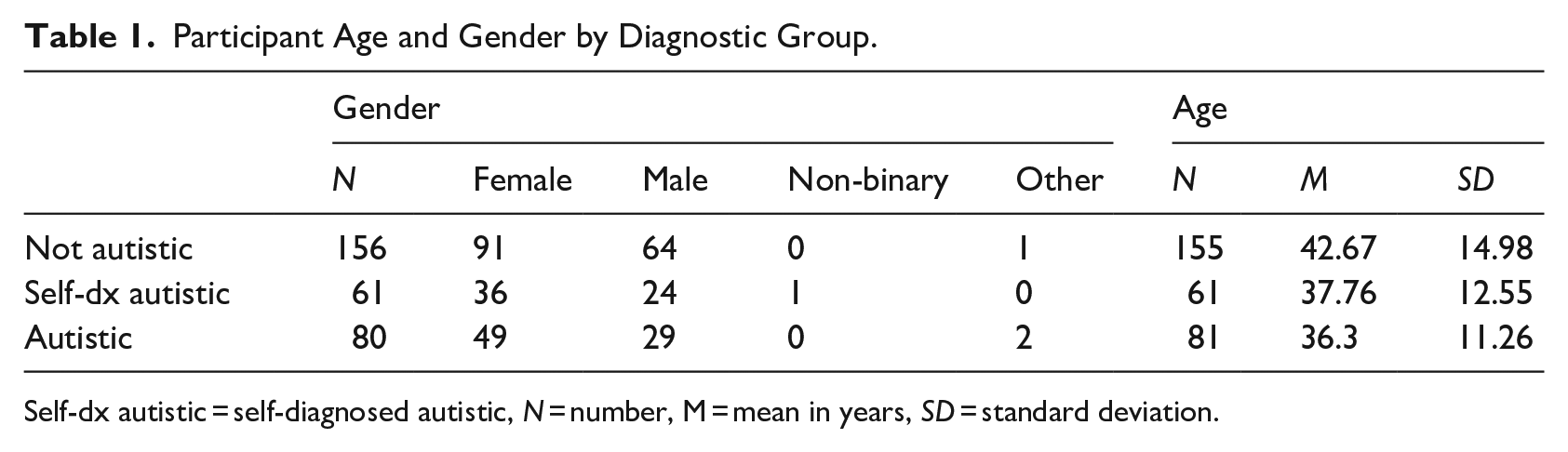
Self-dx autistic = self-diagnosed autistic, N = number, M = mean in years, SD = standard deviation.
Participants were recruited through Prolific Academic (Prolific, 2023) if they were (1) resident in the UK, Australia, or Singapore; (2) had an official, self-diagnosis, or no diagnosis of autism; (3) were fluent in English; (4) identified as a Christian; and (5) participated in regular religious activities, publicly or privately (i.e., so that they could report on their experiences). Filters on Prolific were used to ensure that the study was only available for those who met the inclusion criteria.
Participants were from a range of church denominations, with a majority attending in-person services, and had attended their current church for the last 12.3 years on average (Table 2).
The Church Denomination, Format, and Average Years of Attendance Across Diagnostic Groups.
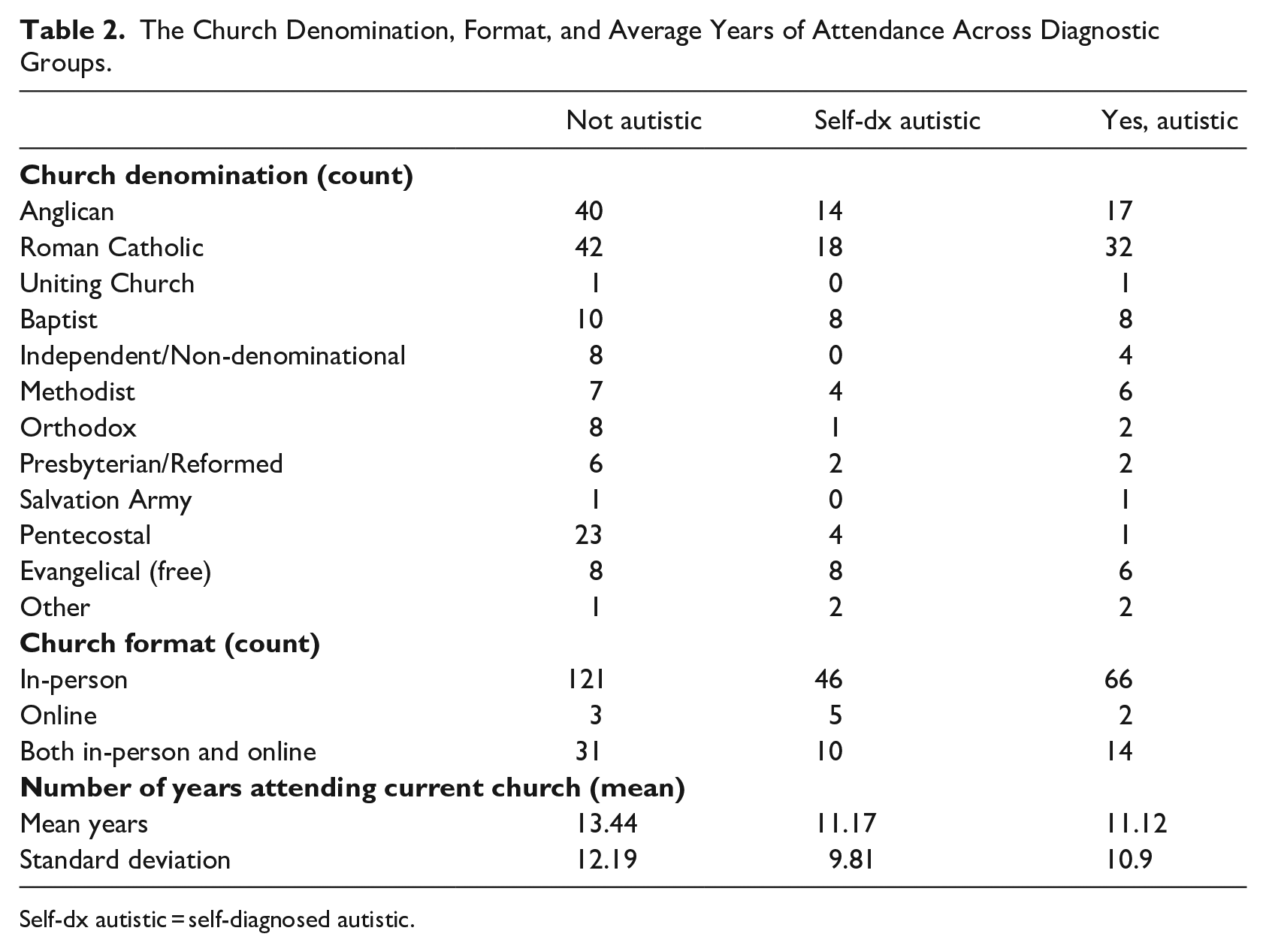
Self-dx autistic = self-diagnosed autistic.
All participants provided informed consent to participate, and the study received ethical approval from the University of Aberdeen ethics committee, with reciprocal approval from the La Trobe University ethics committee.
Materials and procedure
Once participants provided informed consent, they completed a battery of questionnaires as part of a wider project, hosted on REDCap (The REDCap Consortium, 2023), and were reimbursed at a rate of £13.33 per hour via Prolific Academic. Of relevance to this study, they completed a demographics questionnaire including questions about their age, gender, and church background, followed by a newly developed measure called the Sensory and Worship questionnaire (SAW; Unwin & van Ommen, 2023).
SAW (Unwin & van Ommen, 2023) comprises 44 statements about the sensory aspects of the church worship service (e.g., “I like loud music in church”) to which participants rate their level of agreement on a 5-point Likert-type scale from 1 “Strongly disagree” to 5 “Strongly agree.” A higher rating indicates more agreement. Thirteen items have a “Not applicable” option where the statement refers to a sensory element that may not be present in every church (e.g., Holy Communion/Eucharist). The items are theoretically grouped by modalities; sound, taste, smell, movement, touch, sight, and temperature. There are also questions categorized as “general” which encompass broader sensory experiences (e.g., “I feel connected to God through my senses in worship”). The scale was developed following our earlier qualitative work on the same topic (Van Ommen & Unwin, 2022) and underwent extensive rounds of revision following autistic consultation. The autistic consultation process involved providing drafts of the SAW to five autistic people to gather their feedback on the clarity and utility of the SAW items. Once amendments were made in line with their suggestions, further drafts were provided until no more changes were suggested. This consultation process was essential to ensuring that the SAW was clear and relevant to autistic people, aligning with current best practice in autism research. Within the current study, SAW demonstrated excellent internal consistency, α = .87. Statistical components within the scale are examined using a Principal Components Analysis (PCA).
Data preparation and analysis
Data were extracted from REDCap and cleaned by inspecting each record. To reduce the item set of SAW for analysis by diagnostic group, a PCA was conducted on SPSS (IBM Corporation, 2017). Following this, SAW component scores were calculated by summing the items in each respective component, with the two negatively loading items being reverse-scored (i.e., “I am satisfied with how I can cope with the sensory input in church” and “I like loud music in church”). Normality of the four components was assessed for each diagnostic group. There were no significant outliers in the data, as assessed by inspection of a boxplot for values greater than 1.5 box-lengths from the edge of the box. However, most of Shapiro-Wilk’s scores were significant, so a Kruskal-Wallis H test followed by Bonferroni-corrected pairwise comparisons was conducted to investigate group differences between the four components (Research Question 1). To investigate if autistic participants reported that the sensory aspects of the service made attending church difficult and/or reduced attendance (Research Question 2), two Kruskal-Wallis H tests with Bonferroni-corrected pairwise comparisons were also conducted.
Results
PCA on SAW items
A PCA was run on the 44-item SAW questionnaire measuring the sensory aspects of worship on 299 autistic, self-diagnosed autistic, and non-autistic people. The suitability of PCA was assessed and affirmed prior to analysis. Inspection of the correlation matrix demonstrated that two variables (items 20 and 25) did not have at least one correlation coefficient r > .3 so were removed. Multiple intercorrelations (i.e., r > .3) dictated that an oblique rotation method would be more accurate and reproducible (e.g., Costello & Osborne, 2005). Therefore, a PCA with a Direct Oblimin rotation was run on the remaining 42 items.
The overall Kaiser-Meyer-Olkin (KMO) measure was 0.875 with individual KMO measures all > 0.7, which are classified as “middling” to “meritorious” according to Kaiser (1974). Bartlett’s test of sphericity was statistically significant (p < .001), indicating that the data were likely factorizable.
The PCA revealed nine components that had eigenvalues greater than one, but the first five components explained most of the variance (cumulatively 49.04%; respectively, 25.78%, 8.83%, 5.30%, 4.96%, and 4.17%). Visual inspection of the scree plot indicated that five components should be retained (Cattell, 1966). In addition, a five-component solution met the interpretability criterion. However, component 5 included only two items and, therefore, was removed.
The four-component solution explained 44.9% of the total variance. The rotated solution (oblique; Direct Oblimin) exhibited a relatively “simple structure” (Thurstone, 1954). The interpretation of the data was consistent with the conceptual underpinnings of the questionnaire. Where an item loaded onto two components (n = 8), the larger loading dictated the component it remained with. Two items loaded negatively onto component one and were, therefore, reverse coded. Finally, the components were labeled; (1) “Barriers”—Barriers to worship across the senses, (2) “Facilitators”—Facilitators/enjoyment of the senses in worship, (3) “Accommodations”—Needing/receiving accommodations, and (4) “Control”—Control and connectedness to God. Component loadings of the rotated solution are presented in Table 3.
Principal Components Analysis (Oblique Rotation—Direct Oblimin) Factor Loadings of the Sensory and Worship Questionnaire Items onto the Final Four Extracted Components.
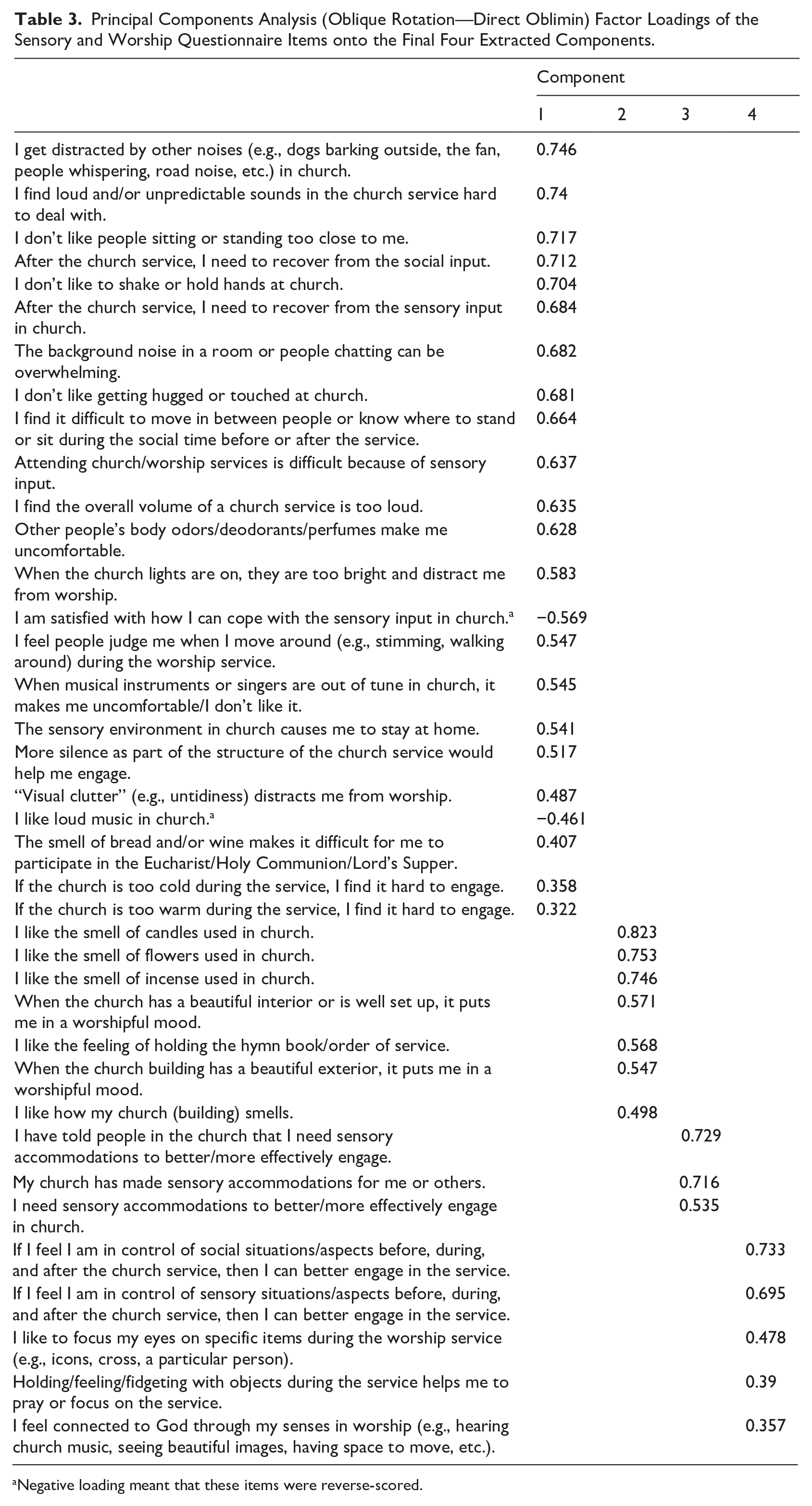
Negative loading meant that these items were reverse-scored.
Group differences in the experience of sensory aspects of worship
Descriptive statistics were calculated by diagnostic group (Table 4).
The Possible Range of Sensory and Worship Questionnaire Scores, Median, Minimum, and Maximum Scores for Each Component by Diagnostic Group.
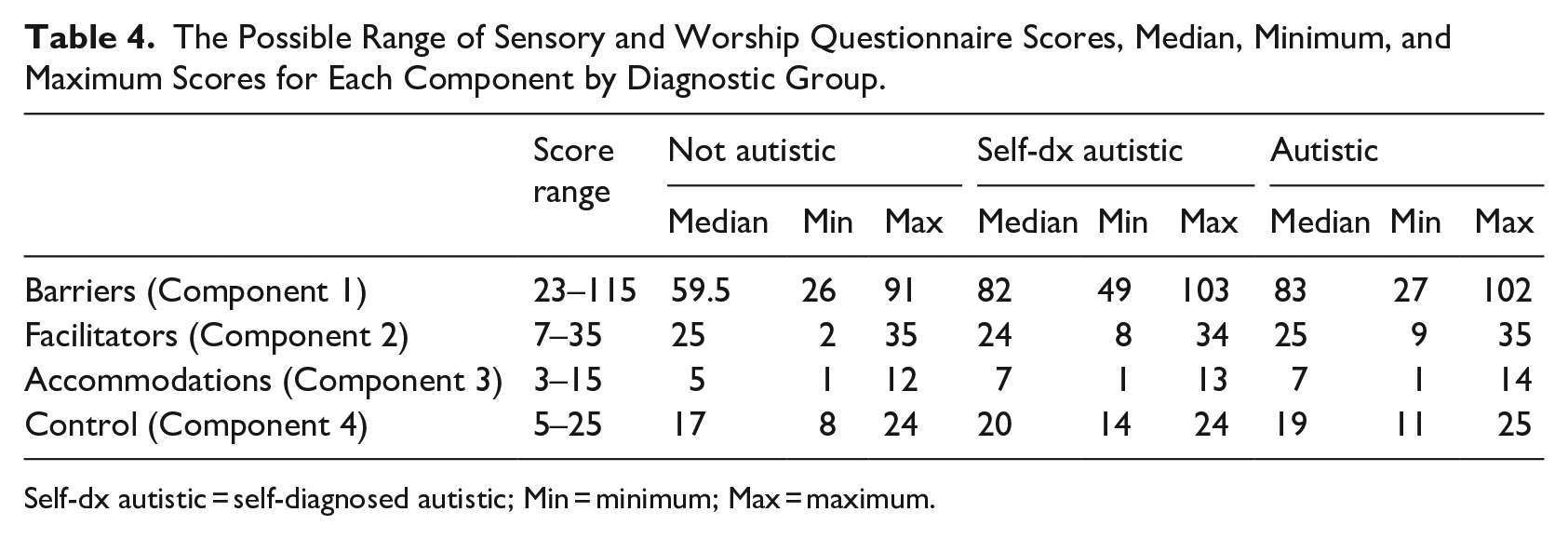
Self-dx autistic = self-diagnosed autistic; Min = minimum; Max = maximum.
Distributions of scores for each factor were similar for all groups, as assessed by visual inspection of a boxplot; therefore, the Kruskal-Wallis H test could be interpreted. Median SAW component scores were statistically significantly different between groups for Barriers (Component 1), χ2(2) = 139.27, p ⩽ .001; Accommodations (Component 3), χ2(2) = 40.42, p ⩽ .001; and Control (Component 4), χ2(2) = 49.88, p ⩽ .001; but not for Facilitators (Component 2), χ2(2) = .386, p = .82.
Pairwise comparisons were performed and adjusted using a Bonferroni correction for multiple tests. Adjusted p-values are presented in Table 5. Across all factors that demonstrated significant group differences, both the diagnosed autistic group and the self-diagnosed autistic group significantly differed from the non-autistic group, but did not significantly differ from each other (Figure 1).
Bonferroni-Corrected Pairwise Comparisons Between Diagnostic Group and Components from the Sensory and Worship Questionnaire.
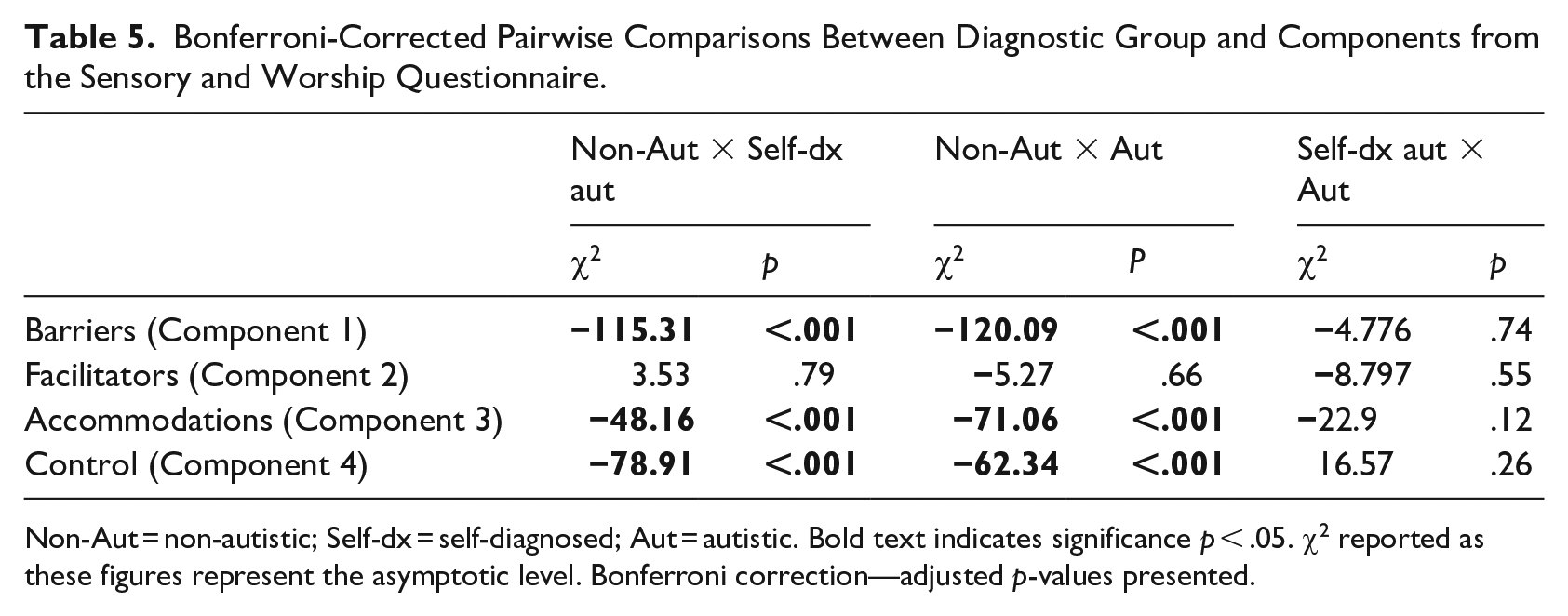
Non-Aut = non-autistic; Self-dx = self-diagnosed; Aut = autistic. Bold text indicates significance p < .05. χ2 reported as these figures represent the asymptotic level. Bonferroni correction—adjusted p-values presented.
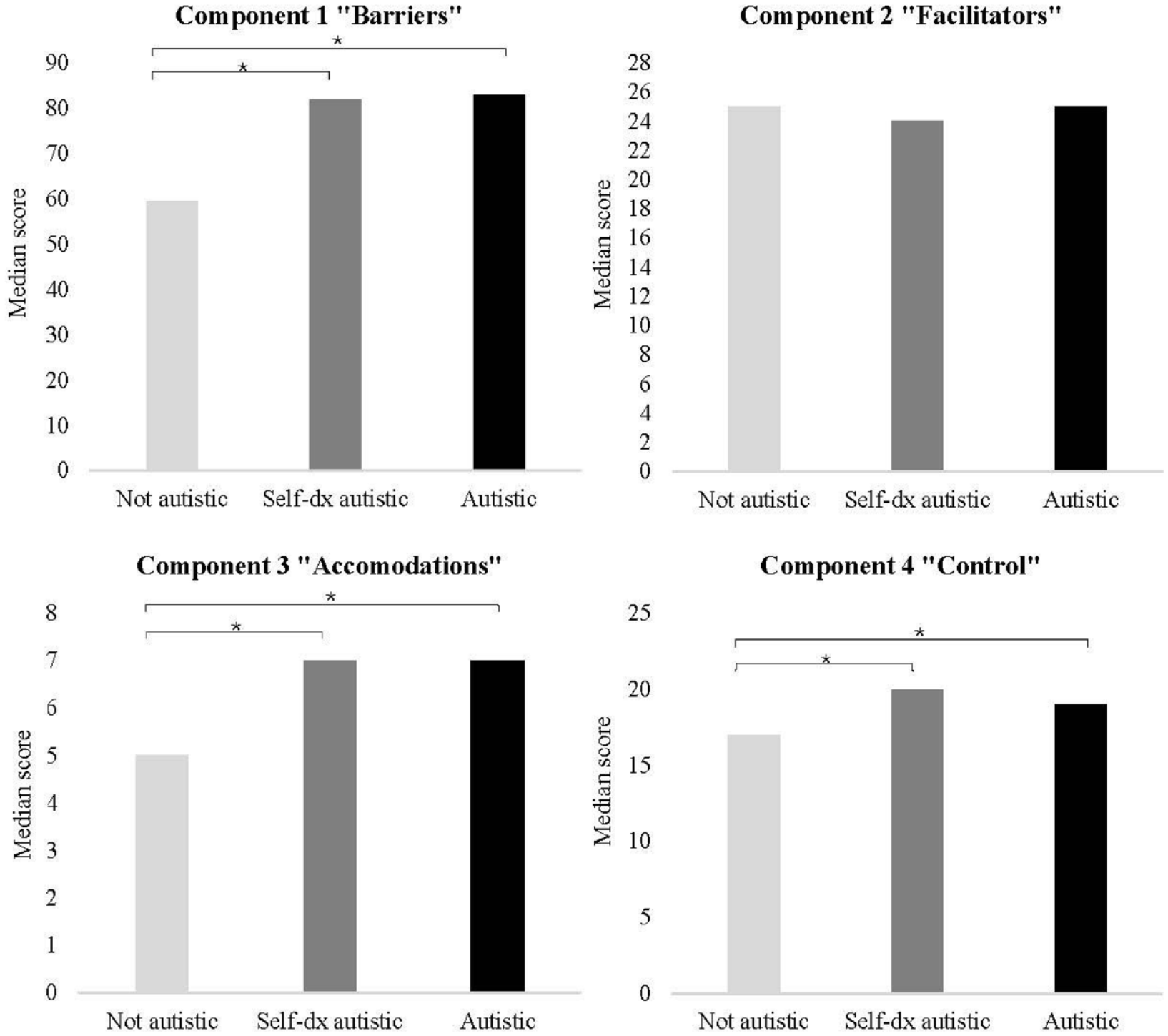
Differences between diagnostic group on the four components from the Sensory and Worship questionnaire. Self-dx = self-diagnosed autism.
The impact of sensory aspects of the church services by group
Autistic participants reported that the sensory aspects of the service made attending church difficult and/or reduced attendance (Figure 2), as examined through Kruskal-Wallis H tests with Bonferroni-corrected pairwise comparisons. Pairwise comparisons were performed and adjusted using Bonferroni correction for multiple tests. Adjusted p-values are presented. Both the diagnosed autistic group and the self-diagnosed autistic group significantly differed from the non-autistic group but did not significantly differ from each other (Table 6 and Figure 2).
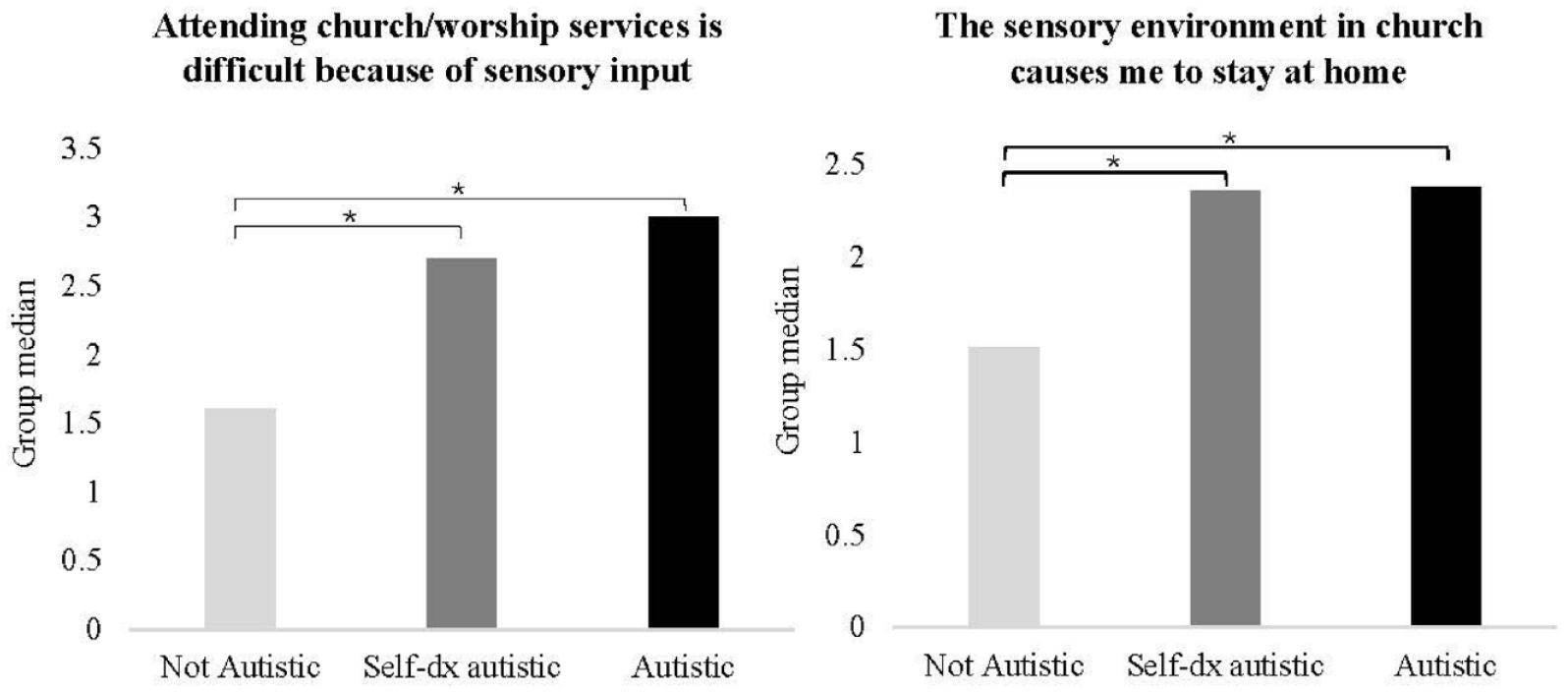
Differences between diagnostic group on the two impact items from the Sensory and Worship questionnaire.
Bonferroni-Corrected Pairwise Comparisons Between Diagnostic Group and the Two Impact Items from the Sensory and Worship Questionnaire.
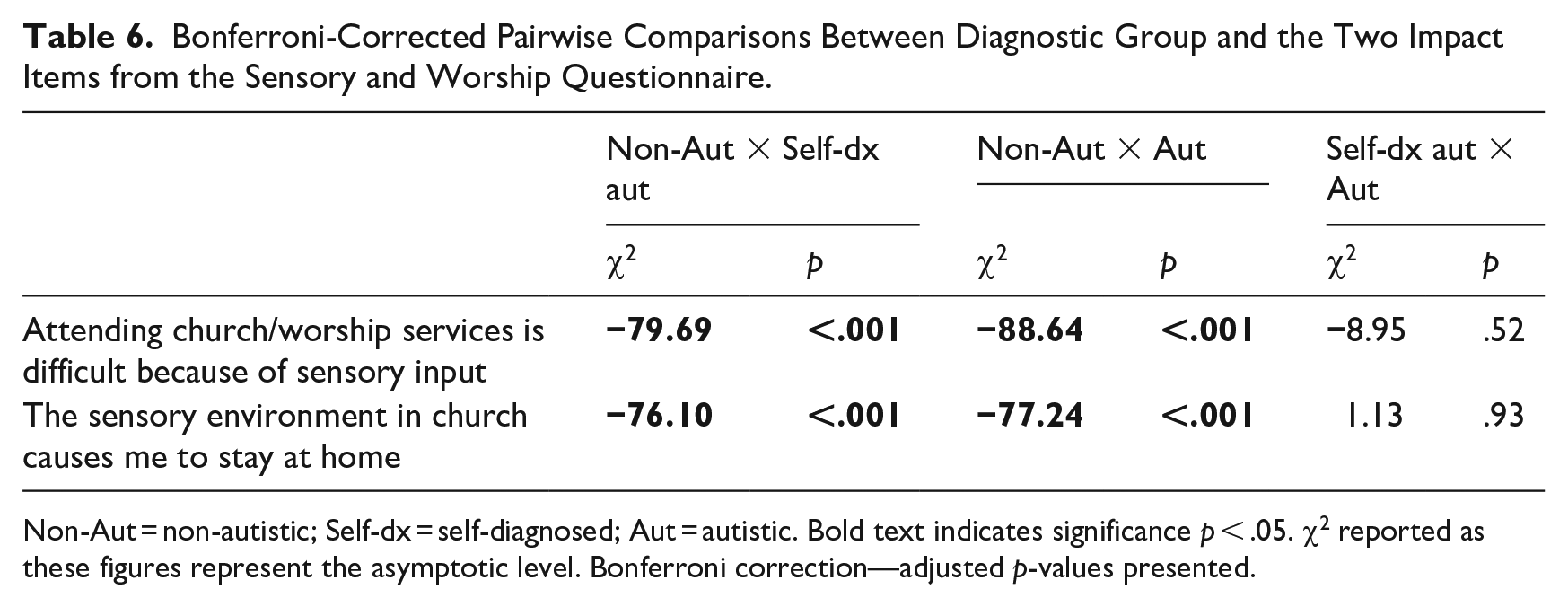
Non-Aut = non-autistic; Self-dx = self-diagnosed; Aut = autistic. Bold text indicates significance p < .05. χ2 reported as these figures represent the asymptotic level. Bonferroni correction—adjusted p-values presented.
Discussion
Compared to non-autistic people, self-diagnosed and officially diagnosed autistic people (hereafter “autistic people” 4 ) experienced significantly more sensory barriers in worship services (Component 1), received/required more accommodations (Component 3), and felt more connected to God when they felt in control of the sensory and social aspects of the service (Component 4). All participants experienced similar enjoyment of some sensory aspects of the service (Component 2), regardless of diagnosis. For the first time using quantitative methodology, we also found preliminary evidence that compared to non-autistic people, autistic people may not attend church, or find attending church difficult, because of the sensory environment.
Autistic people reported experiencing significantly more sensory barriers in church/worship services and rated that they may not attend church/find attending difficult because of the sensory environment. These findings align with previous qualitative studies (Bustion, 2017; Carter et al., 2024; Van Ommen & Unwin, 2022), but for the first time, they are more generalizable. However, we acknowledge that these findings require replication before further implications can be considered. Interestingly, the PCA demonstrated that barriers to church were across modalities, rather than being confined to the stereotypical modalities often discussed as impacted in autism (i.e., “autistic people don’t like loud music”). In fact, the statistical grouping of barriers across all modalities into one coherent component is evidence that all modalities need to be considered when examining whether a specific worship service is accessible for autistic people.
The statistically derived “Control” component from the PCA demonstrated an association between being in control of the sensory and social aspects of the service with the feeling of connectedness to God. We also found that autistic people rated feeling this significantly more than non-autistic people. It is fascinating that the connectedness to God was not statistically loading onto the “Barriers” component, such that specific sensory barriers to worship reduced feelings of connectedness to God. Instead, it seems that the much broader sense of control may be what was important to autistic people in feeling able to connect to God. This finding, while tentative, aligns with some qualitative work in this field (Van Ommen & Unwin, 2022) but also the broader autism literature. For the last decade, proponents of the Bayesian brain theories of autism have posited that autistic perception is typified by a mismatch between what is perceptually predicted to occur and what actually occurs, making the world seem unpredictable and creating a sense of being overwhelmed and anxious (e.g., Lawson et al., 2017; Pellicano & Burr, 2012). Indeed, there is preliminary behavioral evidence that control over the sensory environment may be beneficial for autistic children (Unwin et al., 2021). Our finding aligns with this, and for the first time, we suggest that this could relate to connectedness to God. Practically speaking, this finding indicates that benefit may be derived from enabling autistic churchgoers to have control over their sensory environment/experience. This may include providing noise-canceling headphones, a modification that in school settings has shown preliminary evidence of being beneficial (Ikuta et al., 2016). Providing a retreat space (e.g., a space with low sensory qualities such as being dark and or quiet, Lawson, 2023) may also give autistic people the control to retreat when necessary. However, more work is needed to theologically understand this finding, and what it may mean for the workings of the church.
The autistic people in our sample received/required more accommodations than non-autistic people which is unsurprising considering our other findings. If accommodations are necessary to support autistic engagement, as our findings seem to show, churches should think carefully about changes that can be made. We know that religious engagement can improve mental and physical heath (e.g., Koenig, 2015; Koenig et al., 1997, 1999; Levin & Chatters, 1998), as well as quality of life (WHOQOL SRPB Group, 2006), so supporting engagement is imperative. Waldock and Sango (2023) note how disempowering the church culture of “this is the way we do it” can be for autistic people. Indeed, across all analyses, there was no significant differences between officially diagnosed and self-diagnosed autistic people, suggesting that having an official diagnosis should not be necessary to access accommodations. Relatedly, most participants, regardless of diagnosis, rated reasonably high enjoyment of some sensory aspects of the service (Component 2), compared to the other components, suggesting that some sensory experiences within church can be enjoyed by autistic and non-autistic alike (N.B. a higher rating indicated more agreement). Together, we contend that this provides evidence for the implementation of “Universal Design” principles (Goldsmith, 2000), the premise that design decisions, or in our case, environment modifications, made to support the engagement of autistic people, could be of benefit to all (i.e., universally beneficial). As such, instead of considering accommodations as “just for autistic people,” we suggest a mindset that they may be beneficial across the congregation.
Within a church context, we contend that this issue of accommodations goes beyond a merely functional consideration of the senses to also considering the church space and architecture theologically (O’Loughlin, 2023). Leidenhag (2022) argues that the sensory world in church can be a medium for divine communication, rather than a barrier to it, with the senses being constitutive of the worship experience (e.g., Williams, 2017). Leidenhag (2022) therefore argues that sensory accommodations are “. . . a task of spiritual discernment as much as it is one of event management” (p. 217), as well as highlighting that this should happen in collaboration with autistic members of the congregation. We acknowledge that everyone is different, and instances will occur when specific accommodations are opposite for two people (i.e., one person requires louder music, the other quieter) or the necessary accommodations are simply not possible (e.g., warming an old church building). Therefore, we propose that consistently pursuing increasing inclusive practices, alongside community members, should be as much the goal as enacting every accommodation. In line with the recently published Inclusive Spaces Plan by the UK charity Autistica (2024), we also advocate for reducing barriers by educating the broader congretation about neurodiversity, and where accommodations cannot be made, providing information about the environment and the sensory events that will occur, to support autistic people prepare for attending church. Indeed, if churches are redesigning their space, we recommend that alongside theological considerations, they consult the British Standards Institution Publicly Available Specification (PAS 6463:2022; British Standards Institution, 2022) 5 to gain insights into common-practice design specifications for neurodiverse people. Overall, based on our findings, we recommend the pursuit of theologically considered accommodations for the mutual flourishing of all community members, autistic and non-autistic alike (van Ommen, 2023).
Limitations and future directions
We acknowledge that the use of a previously unvalidated measure may not be ideal and that Carter (2023) recommended reducing reliance on unvalidated measures within theological research. Even though we agree with Carter (2023) in principle, there are no validated measures on sensory aspects of worship in the literature. As such, we endeavored to create SAW in a rigorous manner following principles outlined in the literature (e.g., Boateng et al., 2018), and note that the psychometric properties that have been assessed suggest that it is both a reliable and valid measure of sensory aspects of worship. Specifically, the SAW items had excellent internal consistency, as well as the PCA demonstrating statistically derived components that are logical and informative. The valence of items aligned with the valence of the component, and with each other. For example, within the Barriers component, the item “I find overall volume too loud” was positively loaded, whereas the item “I like loud music in church” was negatively loaded onto the component. Furthermore, the SAW was created by drawing items from previous qualitative work (e.g., Van Ommen & Unwin, 2022), as well as undergoing a multi-stage review process by autistic people, all indicating the content validity of this measure. Finally, the consistent differences between autistic and non-autistic people suggest differentiation by known groups (construct validity). While further psychometric testing of SAW would be beneficial, we contend that the evidence gained from it is useful.
We acknowledge that the group differences in church attendance due to sensory aspects of the service were only tested using two items from SAW, and ideally, more items would have been used to measure this construct. Therefore, caution should be exercised when considering these findings. However, this is the first time that this finding has been demonstrated quantitatively, and now there is precedent for this to be investigated further.
The methodology we employed was likely to predominantly capture data from those with high levels of ability and self-insight, which may not have included those with intellectual disability/difficulties. This is a field-wide problem with Russell et al. (2019) estimating that only 6% of autistic research participants had an intellectual disability, despite around 50% of autistic people having an intellectual disability diagnosis (e.g., Charman et al., 2011; Loomes et al., 2017). The implicit and explicit exclusion of this population from previous research more broadly implies that there are significant gaps in knowledge within the field, and more inclusive research is needed.
We echo a recommendation from Carter (2023) that more, in-depth research on this topic is required, particularly using quantitative methods. This may involve interdisciplinary collaboration, as was the case with this current research, and we acknowledge that the meeting of researchers with different ontological views can be difficult. However, the benefit to the field far outweighs the challenges and so should be seriously considered.
Conclusion
For the first time using quantitative methodology, we found that autistic people experienced significantly more sensory barriers in worship services, received/required more accommodations, and felt more connected to God when they felt in control of the sensory and social aspects of the service than non-autistic people. We also found preliminary evidence that compared to non-autistic people, autistic people were significantly more likely to not attend church, or find attending church difficult, because of the sensory environment. These findings align with theological and broader autism literature providing evidence for the legitimacy and utility of these findings. Based on this evidence, we recommend some areas of accommodations but warn that they do not dictate the removal of all salient sensory experiences from church services. Overall, replication of these findings is recommended in this important and under-researched field to support autistic access to, and participation in, church.
Footnotes
Acknowledgements
We gratefully acknowledge the autistic consultants who supported the development of SAW and the participants who took part in the study.
Declaration of Conflicting Interests
The author(s) declared no potential conflicts of interest with respect to the research, authorship, and/or publication of this article.
Funding
The author(s) disclosed receipt of the following financial support for the research, authorship, and/or publication of this article: This research was funded through New Visions in Theological Anthropology (NViTA) by the John Templeton Foundation.
