




Abstract
This study investigates how U.S. federal employees responded to the January 2025 return-to-office (RTO) mandate, which abruptly ended widespread telework arrangements across executive branch agencies. Using qualitative data from three federal workforce surveys conducted between 2024 and 2025, this research examines employee perspectives on the transition back to in-person work. The analysis reveals that the RTO order disrupted established routines, reduced employees’ sense of control over their work environment, and introduced new emotional and logistical strains. These findings offer new insights into how rigid workforce mandates shape employee experience, motivation, and perceptions of fairness in the post-pandemic public sector workplace.
Keywords
Introduction
On its first day, the second Trump administration issued a Presidential Memorandum directing all executive branch agencies to “take all necessary steps to terminate remote work arrangements and require employees to return to work in-person at their respective duty stations on a full-time basis” (White House, 2025). Though a more sweeping approach than other political leaders, the Trump order is consistent with decisions by governments around the world that have issued similar return-to-office (RTO) decisions scaling back remote work options for their public service employees that spiked during and after the COVID-19 pandemic. For example, in early 2026, the Canadian government directed federal employees to return to the office part-time, ratcheting up to a minimum of 4 days per week, and similar rollbacks of telework intensity have been observed in the United Kingdom and Australia. The comparatively blanket RTO mandate in the United States marked a sharp departure from the previous trajectory of federal workforce policy, which has steadily embraced hybrid and remote work arrangements anchored in the Telework Enhancement Act of 2010 (which institutionalized telework in U.S. federal departments and agencies) and further accelerated with the onset of the pandemic to become a core feature of many agencies’ personnel strategies.
Many agencies allowed employees to work from home several days a week and others fully remotely, arrangements commonly framed as enhancing work-life balance, employee autonomy, and talent retention. Proponents have advanced arguments that flexible work options help recruit and retain skilled professionals, boost job satisfaction, and support environmental goals by reducing daily commutes (Sawyer & Hoffman, 2023). By offering flexible work arrangements after it was strictly necessary in the acute phase of the pandemic, governments were acknowledging the evolving expectations of the modern workforce, particularly in terms of autonomy and work satisfaction. Additionally, such work mode policies can increase inclusivity, enabling participation from individuals who may face barriers to traditional office environments, thereby fostering a more diverse and equitable public service (Gintova, 2024).
Work modes have various definitions, dynamics, and implications. Telework is defined as work arrangements in which employees perform their tasks outside the traditional office environment on a regular basis using information and communication technologies (Anderson et al., 2015; Harris, 2003; Mele et al., 2023). Hybrid work refers to a combination of telework and periodic in-person attendance at a designated workplace, while remote work denotes positions that are performed entirely outside a centralized office location (Carrasco-Garrido et al., 2023; Gintova, 2024). Flexible work arrangements represent a comprehensive category encompassing telework, hybrid schedules, and other forms of temporal or spatial flexibility (De Menezes & Kelliher, 2017; Kelliher & Anderson, 2010). The analysis focuses specifically on telework and hybrid arrangements within the U.S. federal public service, and on the transition toward mandatory full-time in-person work following a period of normalized telework and hybrid arrangements. These distinctions are significant because different forms of flexibility entail distinct expectations regarding autonomy, supervision, and organizational trust.
Telework was much less common prior to the pandemic, and the research that did exist revealed mixed effects: while some hybrid employees experienced higher autonomy and reduced commuting stress (Anderson et al., 2015; Fowler & Birdsall, 2025), others described negative consequences, such as blurred boundaries between work and personal life or social isolation (Harris, 2003; Lee & Hong, 2011). In this mixed vein, a recent systematic review by Booker et al. (2025) found that telework often improved self-reported productivity and satisfaction, but also introduced new challenges, including an “always-on” work culture and increased fatigue, which are factors that quantitative survey analysis struggles to capture. Similarly, extended remote work arrangements have been shown to exacerbate burnout when work-family conflict is high (Kalmanovich-Cohen & Stanton, 2025).
The COVID-19 pandemic dramatically expanded the scale and normalization of federal public service telework, first out of necessity and then as agencies recognized that it broadened recruitment reach and improved access to specialized talent. Following the acute phase of the COVID-19 pandemic, numerous institutions implemented hybrid work practices, combining remote work with partial office attendance. This transition, often improvised, generated varied outcomes within organizations (Temin, 2023). By mid-2024, over 200,000 U.S. federal employees were working fully remotely, and many more in hybrid arrangements, with clear data showing that flexible work arrangements indeed were drawing significantly more applicants than those requiring in-office presence (Government Accountability Office [GAO], 2025). Notably, telework adoption was not uniform across the U.S. federal government. Certain agencies and roles embraced extensive remote work while others offered limited flexibility, creating a “telework divide” among employees (J. Kim, 2024). Growing concerns about office underutilization, weakened organizational cohesion, and declines in managerial oversight (though not generally supported by productivity data), converged with the politicized impression that federal public servants were abusing remote or hybrid work arrangements (Reuters, 2025). These factors laid the groundwork for the dramatic policy reversal in 2025.
The Trump administration’s RTO memorandum (mandate) affected over 1 million executive branch employees (Allen et al., 2025) with only limited exceptions (e.g., for disability accommodations or unique operational roles). Despite the scope and impact of this policy shift—not just in the United States, but in other public service contexts subject to similar workforce policy reversals—empirical research on its consequences remains severely limited. While telework has been the subject of considerable study in both public and private sectors, the reverse transition, from hybrid or fully remote arrangements back to full-time office work, has received comparatively little attention (Fan & Moen, 2025). Much of the existing commentary consists of short-form essays or limited case studies, with few systematic investigations into the effects of RTO mandates on employee morale, productivity, or retention.
In this way, this study responds to a call suggesting that future research “should investigate the psychological impact of mandatory office presence on mental health, stress, and burnout, particularly for those who have previously benefited from flexible work” (Kalmanovich-Cohen, 2025, p. 290). There is a gap in understanding how public servants experience and make sense of this shift, particularly after years of adapting to flexible work environments that many report to have found beneficial. Preliminary evidence suggests that such imposed transitions may generate three interrelated types of employee responses: an affective crisis characterized by heightened frustration, anger, and stress; perceived performance impairment linked to disrupted work conditions; and a loss of control reflecting reduced autonomy and voice (Booker et al., 2025). These dimensions provide an organizing lens for examining how employees make sense of mandatory RTO policies following a prolonged period of telework.
The analysis does not assume uniform exposure to the RTO mandate across respondents but examines how federal employees perceived, interpreted, and reacted to the policy announcement and its early implementation under conditions of organizational and temporal heterogeneity. This study adopts a conceptual approach that views mandated RTO policies as an imposed organizational transition following a period of normalized telework (Allen et al., 2025; Reuters, 2025). Drawing on prior research on telework well-being, organizational trust, and psychological contracts, the analysis focuses on how federal employees interpret and experience this transition in affective, practical, and professional terms (Mullins et al., 2022). Accordingly, this study addresses the following question: How do public employees experience and react to a mandated return to the office after an extended period of telework?
This study addresses this gap by examining how U.S. federal employees themselves describe the RTO under the 2025 mandate by drawing on open-ended responses from three waves of nationwide surveys conducted in April 2024, January 2025, and March 2025. As such, this study makes a phenomenon-driven contribution by presenting “data on the experiences of employees in work contexts that are currently still quite rare, but may become mainstream in the future” (Dries et al., 2025, p. 1702). Moreover, although focused on the United States, the findings hold relevance for public agencies internationally, many of which face similar post-pandemic RTO dynamics. The large-scale qualitative evidence reveals a workforce contending with widespread frustration, stress, and a sense of lost autonomy under the new workforce policies. It signals clear warning signs that if leadership implements such mandates without regard to employee morale, it risks undermining the workforce’s ability to support policy development and service delivery.
Literature Review
Telework Benefits and Challenges
Research into telework exploded with the onset of the COVID-19 pandemic given the mass shift towards it during that period, though there was a core body of prior research into the justifications and effects of telework in organizations, public and private, prior to that. That literature, broadly speaking, yielded a mixed picture on the personal and organizational benefits of telework. Caillier (2017), for instance, found no conclusive evidence that telework policies alone improved recruitment or retention. By contrast, an earlier panel study by Caillier (2016) presented evidence that federal employees’ satisfaction with family-friendly flexible work programs was associated with lower turnover intentions, indicating potential retention benefits. S.-Y. Kim and Lee (2020) report increased job satisfaction and engagement from telework, but that it often hinges on the degree of employee control and job compatibility. Kossek et al.’s (2009) early insight that without clear boundary setting, telework can result in the erosion of psychological detachment from work, presaged a common refrain in the midst of the pandemic.
Still, several pre-pandemic studies emphasized telework’s potential benefits. Anderson et al. (2015) suggest that for many employees, flexible arrangements enhance mood and reduce stress due to the increase in perceived autonomy at work. These findings resonate with broader organizational behavior literature highlighting autonomy as a critical driver of job satisfaction and emotional well-being. De Menezes and Kelliher (2017) note that telework generally correlates with improved employee performance and satisfaction under conditions of voluntary participation and task suitability. A meta-analysis by Charalampous et al. (2019) concluded that remote work positively impacts well-being when employees feel supported and in control, but in the absence of managerial trust or clear role expectations, can heighten stress.
The academic research into telework that proliferated with the onset of the pandemic reinforced many of the claims of proponents of hybrid and remote work. Indeed, a bibliometric analysis has documented this rapid expansion in telework scholarship and highlighted key themes around hybrid work adaptation (Carrasco-Garrido et al., 2023). A 2023 systematic literature review found that of 120 articles on telework in the public sector, self-reported individual productivity, followed by work-life balance, lower turnover intentions, and increased job satisfaction were the effects most often reported (Mele et al., 2023). Fowler and Birdsall (2025), using post-pandemic survey data of U.S. federal employees found that working remotely can streamline role expectations and improve concentration by limiting workplace distractions. Beyond the United States, the European Foundation for the Improvement of Living and Working Conditions studied public sector employees across EU countries during the mandated telework era, and found high levels of productivity (self-reported) and job satisfaction, particularly where digital infrastructure and management culture support autonomy (Eurofound-ETF, 2022). Rather than theorizing these mechanisms further here, the next section mobilizes this body of work to construct a conceptual framework tailored to mandated RTO policies.
RTO Mandates: Emerging Evidence and Theoretical Perspectives
While a reasonably large corpus of literature on telework pre- and post-pandemic paints a nuanced picture of how work mode impacts productivity, job satisfaction, and emotional well-being, empirical work on the psychological and organizational effects of RTO mandates is far more limited. Existing insights from literature focusing on RTO mandates that require worker to leave remote work arrangements are scarce but suggest that returning to the office in this manner can increase job conflicts, reduce workers’ control, and strain well-being, particularly for those who had adapted to and benefited from the prior flexibility (Fan & Moen, 2025). Fan and Moen (2025) analyze longitudinal data from U.S. workers (not just in the public sector) between 2020 and 2022, and find that those who were forced to return to in-person work modes experienced significantly reduced schedule control, elevated time pressure, declines in perceptions of autonomy. Their qualitative data underscore the shift in perceived agency when the previous flexibility in work mode is withdrawn, relaying what the authors describe as a “squeeze” effect in which job demands intensify while employees’ ability to manage those demands shrinks.
A qualitative study of private sector IT workers in India by Pandita et al. (2024) identifies four primary consequences of RTO mandates: increased work-family conflict, emotional exhaustion, diminished motivation, and a rise in “presenteeism” (showing up without being engaged). Kalmanovich-Cohen (2025) further argues that these dynamics may be more pronounced in contexts in which employees had internalized work flexibility as a normative good. In other words, when RTO is imposed without consultation, deliberation, productivity analysis, and adequate support, the disruption in role expectations can trigger a sense of betrayal or institutional distrust. A critical essay on the directives for full-time return to in-person work for U.S. federal public servants contends that the possible effects for the coming years would be negative, principally for attracting and retaining qualified workers, and offering working conditions that are meaningfully accommodating to employees from minority backgrounds and identities (Allen et al., 2025)
Rather than reiterating these mechanisms descriptively, the following section integrates them into a unified conceptual framework designed to analyze RTO as an inverse organizational transition.
Conceptual Framework: Applying the Telework Well-Being Framework to Mandated RTO Policies
This study conceptualizes mandated RTO policies as an inverse transition relative to pandemic-induced telework, unfolding under conditions of sustained digital intensity but reduced spatial autonomy. Building on Booker et al.’s (2025) telework well-being framework, employee well-being is understood as shaped by three interrelated domains: information and communication technology (ICT) challenges, perceived work outcomes, and dimensions of well-being. Pre-pandemic telework research demonstrated that flexible work arrangements were not inherently beneficial but contingent on autonomy, task compatibility, and organizational trust (Anderson et al., 2015; Caillier, 2016, 2017; S.-Y. Kim & Lee, 2020). Boundary management emerged as a critical mechanism, with poor boundary control associated with emotional exhaustion and diminished psychological detachment, particularly in public sector contexts (Kelliher & Anderson, 2010; Kossek et al., 2009; Palumbo, 2020).
Pandemic-era research reinforced these insights while foregrounding the affective and normative dimensions of telework. Large-scale reviews documented persistent connectivity demands, fatigue, and emotional strain alongside stable or improved productivity (Booker et al., 2025; Mele et al., 2023). Evidence from U.S. federal employees showed a shift toward greater organizational trust over time, as supervisors adapted and employees demonstrated remote work effectiveness (Mullins et al., 2022). Despite the mandatory and unprepared nature of pandemic-induced telework (Carillo et al., 2021), social integration improved and outright isolation remained limited (Mullins et al., 2022).
RTO mandates represent a reversal of this trajectory. Spatial flexibility is withdrawn, yet digital communication and coordination demands remain high. Physical presence therefore does not replace mediated work but is layered onto it, producing a hybrid-digital condition rather than a return to pre-pandemic work arrangements (Booker et al., 2025). This reversal carries strong normative implications. Following a period of increased trust, the withdrawal of telework may be interpreted as a signal of mistrust rather than a neutral operational change. Concerns regarding managerial control and electronic surveillance, already salient during remote work, may be reactivated when physical presence is implicitly framed as a proxy for supervision (Mullins et al., 2022).
Social contract theory suggests that denying continued access to remote work after prolonged demonstrated effectiveness may be perceived as a breach of implicit expectations, with consequences for commitment and discretionary effort (Mullins et al., 2022; Rousseau, 1995). From a job demands-control perspective, mandated RTO simultaneously increases demands (commuting, rigid schedules) and reduces decision latitude, a combination expected to heighten stress and strain (Karasek, 1979). This framework positions mandated RTO as a normative and symbolic rupture rather than a purely operational adjustment. Employees are likely to interpret such policies as signals regarding organizational trust, legitimacy, and managerial priorities, with downstream effects on affective experience, perceived performance, and autonomy (Fan & Moen, 2025; Kalmanovich-Cohen, 2025).
The framework focuses on three interrelated dimensions derived from the telework well-being literature: ICT challenges, perceived work outcomes, and dimensions of well-being. ICT challenges encompass the technological and communication-related demands associated with digitally mediated, hence remote, work environments. Perceived work outcomes refer to employees’ assessments of their effectiveness, productivity, and capacity to perform their tasks under changing work arrangements. Dimensions of well-being capture reported affective and psychological responses, including stress, frustration, and emotional exhaustion (Charalampous et al., 2019). These dimensions are analytically distinct but empirically intertwined, as changes in ICT demands may shape perceived work outcomes, which in turn influence employee well-being.
Theoretical Expectations
Guided by this framework, mandated RTO policies are expected to be accompanied by a decline in perceived organizational trust, particularly among employees who experienced heightened trust and discretion during extended periods of telework (Mullins et al., 2022). Despite the reintroduction of physical presence, connectivity demands are unlikely to diminish and may even intensify, as information and communication technologies remain central to coordination and collaboration in distributed work settings (Booker et al., 2025). Communication-related strain and cognitive fatigue are also expected to increase when mediated interactions take place in shared office environments that limit employees’ control over noise, interruptions, and workspace configuration (Booker et al., 2025; Kelliher & Anderson, 2010). Perceived work outcomes may deteriorate when office-based infrastructures fail to support digitally intensive and concentration-dependent tasks, especially in comparison with prior telework arrangements that afforded greater environmental control (Anderson et al., 2015). More broadly, negative affective experiences, including frustration, anger, and emotional exhaustion, are expected to rise as discretion over work location is withdrawn, and implicit expectations regarding autonomy and trust are perceived to be breached (Palumbo, 2020; Rousseau, 1995). This framework directly informs the empirical analysis that follows, which applies Booker et al.’s (2025) three-domain model, ICT challenges, possible outcomes, and dimensions of well-being, to U.S. federal employees’ qualitative accounts of the 2025 RTO mandate.
Adapted from Booker et al. (2025), this figure conceptualizes mandated RTO policies as an inverse transition following prolonged telework. The framework illustrates how the withdrawal of spatial autonomy, combined with persistent digital mediation and renewed managerial control, produces immediate organizational outcomes that affect employees’ affective, cognitive, and professional well-being (Charalampous et al., 2019). Drawing on Mullins et al. (2022), the figure highlights the symbolic dimension of RTO mandates as moments in which the organizational “hand” becomes visible again, reasserting control and reshaping trust, autonomy, and psychological contracts.
Data and Analysis
This study draws upon qualitative data from three national surveys of U.S. federal employees conducted at different points in time. The data were obtained through a collaboration with Federal News Network (FNN) who collected the data via their Pulse Surveys initiative. The FNN Pulse Surveys are anonymous, cross-sectional surveys focusing on how federal employees are adjusting to policy changes and other matters of interest to the federal workforce, and include open-ended questions about work arrangements, well-being, and organizational changes (see Supplemental Appendix B). The full set of text responses was drawn from three waves of FNN surveys: the first wave (T1, April 2024) had 6,338 respondents and yielded 30,436 open-ended comments from 28 questions; the second wave (T2, January 2025) had 4,662 respondents and 2,598 comments from 1 question; the third wave (T3, March 2025) included 5,526 respondents and 6,754 comments (from 10 questions). In total, the data corpus comprises 39,788 comments contributed by 16,526 unique individuals. All responses were anonymous, and because the data were collected via FNN’s public platform without personal identifiers, human subject ethics review was not required. The April 2024 wave (T1) captures federal employees’ views during a period of widespread hybrid work under the previous (Biden) administration, before the RTO mandate. Although the T1 survey wave predates the January 2025 presidential memorandum, it was conducted in a context of growing policy debate and uncertainty surrounding the future of telework in the federal public service. The January 2025 wave (T2) was fielded immediately after the presidential memorandum, capturing employees’ initial reactions to the policy announcement and anticipated changes. The March 2025 wave (T3) reflects the organizational environment as agencies began preparing for and, in some cases, initiating implementation of the new in-person policies. Together, these data allow for tracing how federal employees felt and articulated the impact of RTO policies as events unfolded.
The sample of respondents in these three surveys reflects a self-selected subset of engaged federal employees who opted in online surveys from a third-party media with a full-time comprehensive coverage of the federal government. The study did not collect demographic data, limiting the ability to assess whether the sample represents the broader federal workforce. FNN, however, has a wide audience of federal workers, with millions of visitors to their web content monthly, such that it can reasonably be anticipated that those engaging with their surveys are a wide catchment of federal employees. Notably, each wave surveyed a different group of respondents rather than panel, and the analysis therefore treats the waves as independent cross-sectional snapshots. Any comparisons across time reflect aggregate shifts in sentiment, not changes in the same individual respondents.
To promote methodological transparency and reproducibility, the study followed a clearly specified and replicable analytical protocol, encompassing data preparation, AI-assisted coding, human validation, and thematic interpretation. Firstly, all open-ended responses were cleaned, standardized, and organized into structured datasets identifying survey wave, question, and comment-level text units. Given the scale of the corpus, manual coding alone would have been impractical. Computational support was therefore required to systematically analyze the data while maintaining interpretive rigor. Although no formal guidelines exist for determining target sample sizes in qualitative content analysis (Wutich et al., 2024), the analytical approach adhered to Krippendorff’s (2018) core principles of reliability, interpretive validity, and transparency. The analytical strategy was deductively informed by the conceptual framework and theoretical expectations outlined in the previous section. To operationalize the adapted Booker et al.’s (2025) framework to this assembled qualitative survey data, all 39,788 open-ended comments were imported into AILYZE Pro, a software program for AI-assisted qualitative coding. The software represents text segments as high-dimensional semantic embeddings derived from pretrained transformer models and identifies conceptual similarity across comments. Rather than relying on keyword matching, AILYZE identifies conceptual patterns based on contextual meaning, clustering related passages even when they do not share identical vocabulary. All AI-generated classifications functioned as analytical supports rather than final coding decisions and were systematically reviewed and refined by the research team.
Secondly, a systematic thematic coding procedure was implemented. The AILYZE tool was provided with a predefined thematic grid (Supplemental Appendix C) derived from the conceptual framework (Figure 1). Themes were organized hierarchically, with three top-level domains (ICT challenges, Outcomes, Well-being), associated subdomains (e.g., Connectivity, Communication, Capabilities), and analytically meaningful subthemes (e.g., reduced autonomy, work intensification, isolation, reduced performance). The software generated a binary coding matrix indicating the presence or absence of each theme at the comment level, along with exemplar excerpts. Consistent with best practices in AI-assisted qualitative research, extensive human oversight was maintained throughout the coding process, and the tool was treated as an analytical aid rather than an autonomous coder (Cameron, 2025; Jiang et al., 2025). Recent independent validation research provides formal evidence supporting the reliability and criterion validity of AILYZE-based coding. A large-scale evaluation comparing AI-generated codes with expert human coding reported substantial agreement, with Cohen’s Kappa values exceeding .60 in human comparability tests and .80 in ground-truth validation checks (Firetto et al., 2025). These results indicate that AI-generated codes capture theoretically meaningful constructs when guided by a clearly specified codebook. Reliability was achieved under conditions aligned with qualitative best practices, including predefined coding criteria, expert oversight, and systematic validation procedures (Firetto et al., 2025). The complete coding framework used in this study is provided in Supplemental Appendix C.
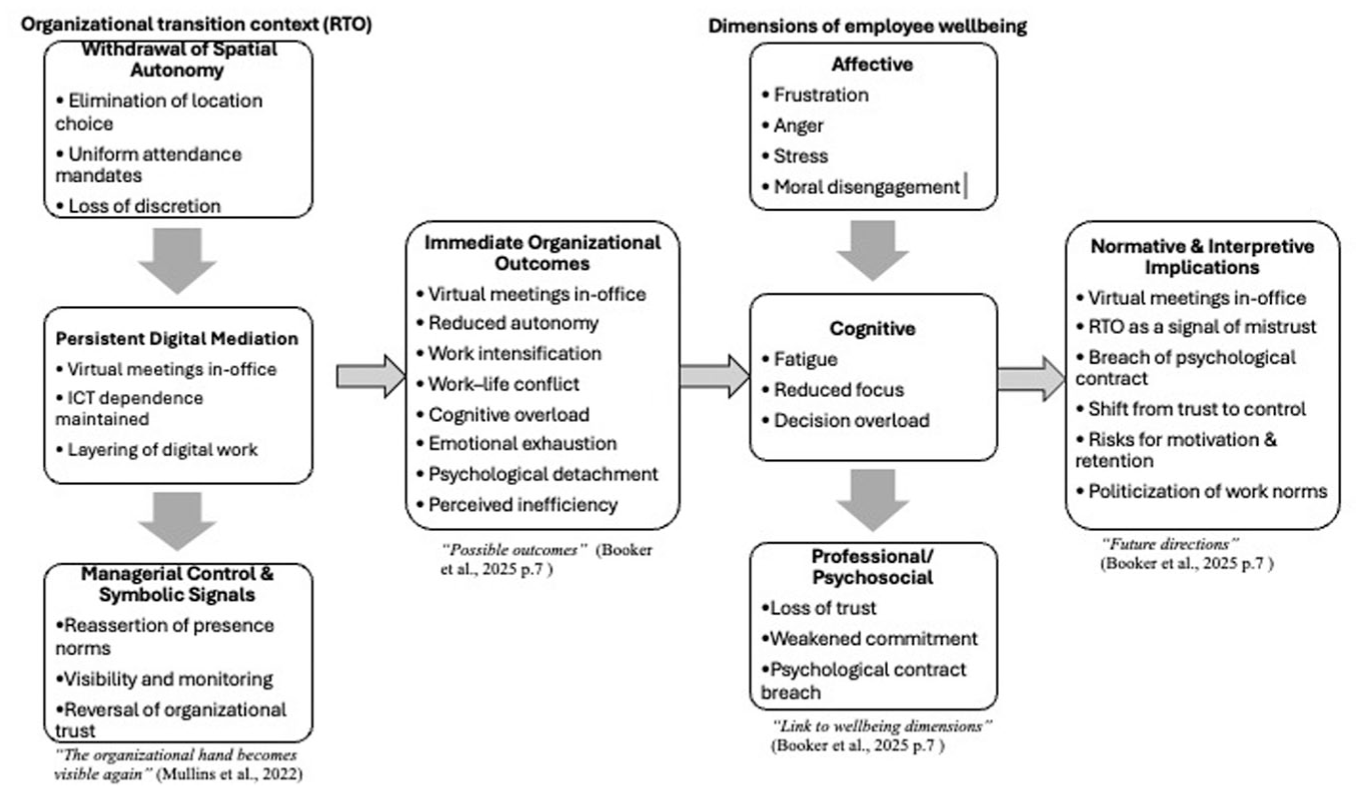
Mandated Return-to-Office as an Inverse Organizational Transition and Normative Shock.
Transparency was addressed through the generation of explicit text-level justifications accompanying each coding decision. Each coded excerpt included an explanation linking the assigned code to specific textual features, enabling auditing, contestation, and refinement. This design mitigates concerns regarding algorithmic opacity and supports methodological scrutiny (Firetto et al., 2025). The analytical protocol followed a human-in-the-loop design. The research team specified the conceptual framework, coding categories, and acceptance criteria prior to analysis. AI outputs were reviewed and subjected to manual verification checks before being retained. This design ensured that AI augmented rather than replaced expert qualitative judgment, limiting automation bias while preserving analytical rigor (Firetto et al., 2025). Reproducibility was supported through deterministic, version-locked inference. Identical data, codebooks, and model configurations yield identical outputs, reducing coder drift and fatigue commonly associated with large-scale manual coding (Firetto et al., 2025). The AI tool did not generate interpretations or theoretical claims; its function was restricted to organizing thematic material, which was subsequently interpreted through the conceptual framework and validated by the research team.
Thirdly, following the initial AI-assisted coding, manual verification checks were conducted on a random sample of 15% of coded excerpts (following Nicmanis & Spurrier, 2025). This process involved comparing assigned themes with the original comment text and refining the coding schema where necessary. No major misclassifications were identified once refinements were applied, and no inductive themes outside the predefined framework emerged. Aggregated theme frequencies were cross-checked against the raw coding matrix to verify quantitative summaries. A detailed log of these validation steps is available in Supplemental Appendix A. By combining AI-assisted processing with systematic human validation, the study balances scalability with interpretive validity while preserving analytical control (Krippendorff, 2018; Nicmanis & Spurrier, 2025).
Finally, the validated thematic patterns were interpreted analytically by situating them within the conceptual framework and theoretical expectations developed earlier, thereby moving from descriptive theme frequencies to an interpretive analysis of how federal employees made sense of the mandated RTO transition. The final dataset assigns each comment to zero, one, or multiple themes as appropriate, complicating the meaning of direct statistical comparisons of subthemes’ prevalence. Frequencies and proportions of themes by survey wave form the basis of the results, supplemented by representative excerpts to ground interpretations in respondents’ own language.
Results
The three themes identified in the analysis map onto the conceptual framework guided this study. Specifically, affective crisis corresponds primarily to dimensions of well-being, perceived performance impairment reflects perceived work outcomes, and loss of control captures both well-being and normative interpretations of autonomy. ICT-related challenges constitute a cross-cutting dimension that underpins all three themes, particularly in employees’ accounts of communication overload, persistent digital coordination, and workspace constraints in shared office environments.
Affective Crisis and Erosion of Organizational Trust
This first theme primarily reflects the well-being dimension of the conceptual framework. These affective responses were often linked to ICT-related challenges, including persistent digital communication demands and difficulties concentrating in shared, technology-mediated work environments. This theme captures how employees described the RTO mandate as an emotionally destabilizing organizational transition rather than a routine operational adjustment. Emotional distress was highly salient in all waves. Notably, the prevalence of frustration and anger surged after the RTO mandate from 11% of comments in the pre-mandate wave (T1) voicing such sentiments to 31% at T2 and remained elevated at 33% in T3. A steady proportion of comments also mentioned work-life conflict (about 15%) and social isolation (15%) alongside these affective codes. Across waves, respondents emphasized that the return was not a neutral adjustment but an emotionally charged rupture, often described as “destroying morale,” “eroding trust,” or “making me not want to work for these people anymore.” The content of these comments paints a clear picture: employees repeatedly described the offices to which they returned as toxic or demoralizing. Common complaints targeted the physical environment (“noisy,” “dirty,” “poorly equipped”) and managerial attitudes (indifference or even betrayal). For example, one respondent wrote, “It’s dirty and there are rodents in the office and the air quality is not good.” Another lamented “Managers are on conference calls all day long . . . it is very difficult to concentrate.” More strikingly, employees attributed their affective distress to leadership decisions they saw as arbitrary, dishonest, or hypocritical. Several invoked strong languages to express their sense of indignation: leadership was described as “cowards unable to stand up for their employees,” “old people who do not understand innovation,” or “tone-deaf and dishonest.” Others emphasized perceived hypocrisy, noting leaders who “work remotely themselves yet insist on butts in seats,” which fueled anger and resentment.
Many spoke of exhaustion and alienation, not adaptation. One comment captured this poignantly: “It’s a huge step backwards . . . [it] fostered incredible distrust with the administration.” Similarly, another wrote: “I am done. They tell us every month how great we are doing, but ignored everything we asked for.” Taken together, these narratives indicate that the mandated return was widely interpreted as a breach of organizational trust, intensifying negative affect and undermining employees’ emotional connection to their employer. The tone of these comments combining anger, frustration, and a profound sense of betrayal suggests that for many workers, the mandate constituted an affective crisis rather than an operational change.
Perceived Performance Impairment and Work Outcomes
This second theme corresponds to the perceived work outcomes dimension of the conceptual framework. These perceived performance declines were frequently attributed to ICT-related constraints, including ineffective digital coordination and the persistence of virtual work practices in physical office settings. The theme reflects employees’ interpretations of how the RTO mandate reshaped their ability to perform their work effectively. At T2, 33% of comments were coded under “Reduced Performance,” and 28% at T3 (up from roughly 10% in T1). Meanwhile, related codes for fatigue and cognitive overload persisted. Employees attributed the productivity decline not to lack of effort, but to new obstacles. They described everyday work in the office as fraught with distractions and inefficiencies: “Low-wall cubicles are terrible . . . lots of noise—impossible to wear earphones for eight hours,” and “On average, I tend to work fewer hours due to lengthy commuting times and office distractions.” Beyond these logistical frustrations, many respondents emphasized that RTO replaced productive time with performative presence. Several noted that they now spend hours commuting only to join the same virtual meetings they previously handled efficiently from home. One employee put it bluntly: “Doubling the in-person requirement has been extremely disruptive and unproductive. I can literally do my entire job remotely yet I’m spending 4 hrs/day commuting to sit in an unproductive office space on the same Teams calls.” Others echoed that “mandating that people come to the office does not mean more collaboration or increased productivity . . . people disappear from their cubes” or take long breaks, making the environment less not more conducive to focused work.
Several comments made the same point: telework had allowed them to accomplish more, whereas mandated office days simply added wasted time. Respondents consistently framed these perceived performance losses as structurally induced rather than individually driven, emphasizing a misalignment between the nature of their work and the imposed requirement of physical presence. One respondent sarcastically summarized the contrast: “I get to drive 45 minutes, sit in a cubicle, hold virtual meetings, and then drive 45 minutes home.” Another noted that “while management claims in-person work is more efficient, it is the opposite we get less actual work accomplished.” These remarks underline a common thread: many employees explicitly linked their declining output to commuting and poor office conditions. They also highlighted a deeper mismatch between the nature of the work often solitary, digital, or geographically distributed and the imposed requirement to be physically present. As one put it, “being in person takes a toll . . . and the amount of work waiting when you return is exhausting and demotivating.” In short, rather than motivating better performance, the RTO mandate often seemed to hamper it by introducing logistical burdens and dismantling the conditions under which employees previously maximized their productivity.
Loss of Control and Reduced Autonomy
This third theme relates to the well-being dimension of the conceptual framework, particularly in terms of autonomy and perceived control. These experiences also reflect ICT-related challenges, as employees remained embedded in digitally mediated workflows while losing control over their physical work environment. The theme captures employees’ interpretations of the RTO mandate as a loss of discretion, voice, and professional autonomy. This concern was virtually absent during the 2024 hybrid work period, but surfaced in 12% of comments by T2 and grew to 19% by T3 under the new mandate. Even when not explicitly stating the word “autonomy,” many comments conveyed a sense of having discretionary control taken away. Whereas prior hybrid policies had allowed employees to choose their work location, the new mandates imposed uniform attendance requirements and “one-size-fits-all” rules “with no consideration to individual positions or work requirements.” Respondents pointed to arbitrary or inequitable aspects of these policies. For example: “I have to go to the Washington office even though there is an office in my town 20 minutes away,” complained one person in a rural office. Another wrote, “No one cares about people like me who are struggling . . . we’re just supposed to suck it up and move on.” One employee described the new regime as “a pure and simple control issue . . . if they require in person employees,” while another summarized the shift as “all about control rather than trust . . . we have proven we are just as productive when working fully remotely.” Multiple comments lamented that agencies abandoned previously workable flexibilities: “A one-size-fits-all approach to telework doesn’t make sense,” as one employee put it. “Forced in person work feels punitive,” wrote one respondent, while another noted that “the ‘2 days in-office per week’ requirement was mandated across the board . . . with no consideration of individual work requirements.” Several described feeling treated less like professionals and more like objects to be managed: “The current policy treats us like children. It makes me feel untrusted and disrespected,” and “It makes me feel less like a professional and more like a replaceable seatwarmer.” Others highlighted the removal of choice as a core grievance: “They gave us no choice . . . we should be able to choose which days we work in person,” and “Bringing people into the office for no reason but to ‘see our faces’ is archaic.” Across these accounts, loss of control was framed not only as a practical inconvenience, but as a symbolic signal of diminished trust and professional recognition.
The underlying sentiment is that leadership has overridden individual judgment, eroding trust. As one respondent put it, “policy changes . . . feel like a punishment after 4 years of giving my all from home,” while another concluded that senior leaders “are not taking individual situations into consideration and are just insisting on following policy with no consideration given to unique situations.” These narratives occurred across agencies and time points, suggesting this theme is widespread. The persistence of such narratives across samples underscores the symbolic dimension of control in hybrid work debates. Many participants saw the RTO policy less as an operational adjustment rooted in evidence of organizational performance than as a signal of managerial dominance and a shift “from treating us as adults to treating us as bodies in seats.” In contrast, explicitly positive reactions to the RTO were rare. A small number of respondents mentioned enjoying the renewed in-person camaraderie or structure, but such sentiments were exceptional amid the overwhelmingly critical feedback. Some appreciated the calmer environment created by lower occupancy, noting that “it’s only better because there are fewer people in the office, making it less chaotic,” while others emphasized that the new workflows had eased earlier pressures: “Everything was rush, rush, rush. Today, with the structure we’ve built, it feels more manageable.” Several respondents also described in-person time as newly meaningful, explaining that “I appreciate the face-to-face interactions” or that “I enjoy the camaraderie when we are.” A few highlighted how adaptations made since the pandemic had reduced the stress of office days; as one put it, “the time in the office is less stressful because we’ve adapted and found better ways to collaborate.” Although exceptional amid the overwhelmingly critical feedback, these comments show that some employees experienced the RTO as an opportunity to reconnect, stabilize routines, or benefit from hybrid flexibility, with one person noting: “It’s nice to be back, though I hope we can keep some of our remote options.”
Together, these themes sketch a picture of a federal public workforce under strain. Figures 2 to 4 visualize how these issues interrelate, and Figure 2 vividly shows the parallel rises in stress and reports of reduced performance. 1 Viewed collectively, the three themes illustrate how affective distress, impaired work outcomes, and loss of autonomy mutually reinforced one another in employees’ interpretations of the RTO mandate. The figures depict a workforce experiencing enduring emotional tension, impaired efficiency, and limited control over its working conditions.

Teleworker ICT Challenges.

Possible Outcomes of RTO.
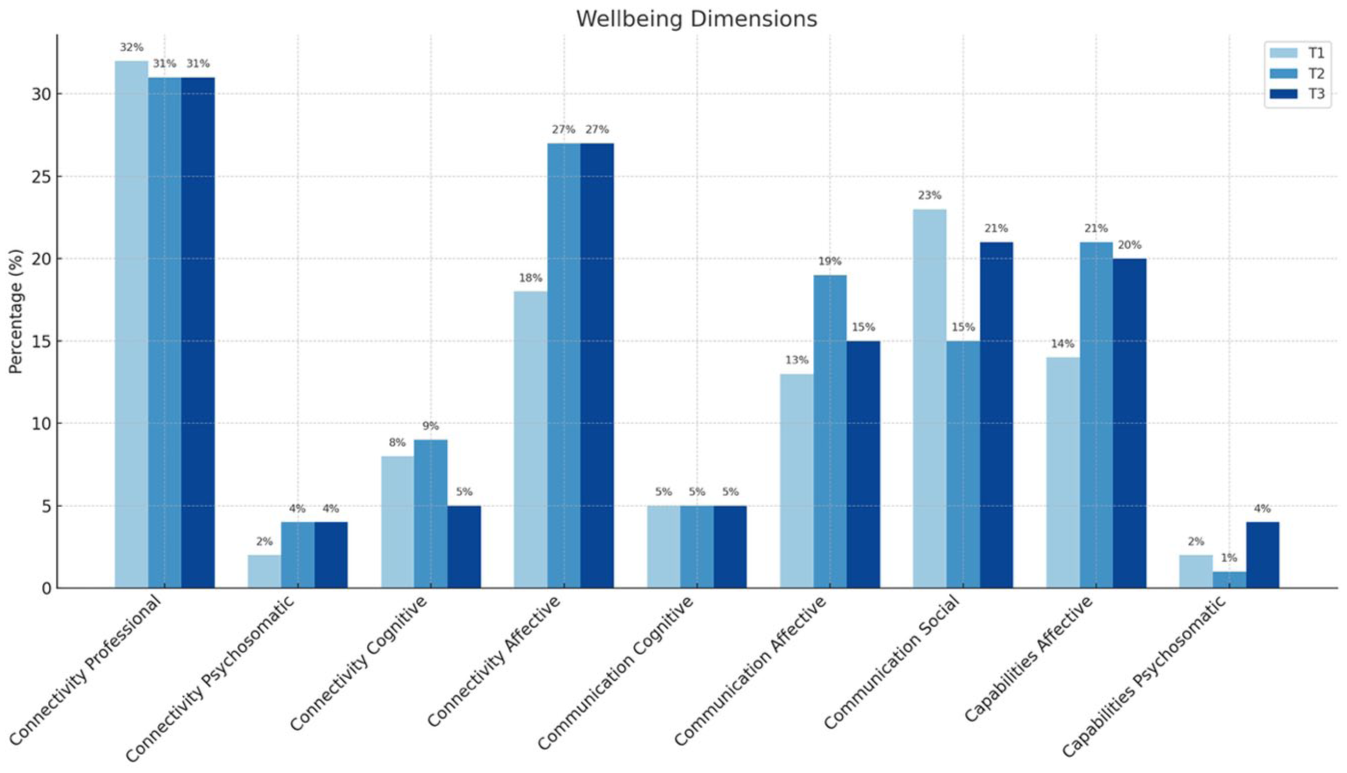
Wellbeing Dimensions before and during RTO.
The top-level takeaway from this data is that U.S. federal employees expressed frustration and emotional fatigue alongside practical hurdles to doing their work, all under inflexible policies. These results summarize aggregate sentiments in each wave (not changes over time for individuals), but they suggest that, rather than a smooth transition back to normalcy pre-pandemic, the RTO orders coincided with an “affective crisis” in the workforce: enduring stress and distrust, coupled with perceptions of thwarted productivity and autonomy.
Discussion
The findings should be interpreted in light of the broader political and organizational context in which the RTO mandate unfolded. The January to March 2025 period coincided with heightened institutional uncertainty within the federal public service, including leadership changes, fiscal pressures, and anticipated administrative restructuring. These overlapping dynamics likely shaped employees’ emotional states and perceptions independently of, and in interaction with, the RTO mandate. The affective responses documented in this study should not be interpreted as attributable solely to RTO policies, but rather as expressions of employee sensemaking within a period of compounded organizational disruption. This discussion interprets the findings through the conceptual lenses of telework well-being, organizational trust, and imposed organizational transitions.
Interpreted through the conceptual framework, these findings suggest that the mandated RTO operated as a normative shock that combined sustained digital demands with reduced autonomy and diminished perceptions of trust. The RTO mandate is thus best understood not as a routine operational adjustment, but as a reversal of a normalized work arrangement that employees had come to associate with professional effectiveness and well-being. Situating these findings within the broader RTO literature requires attention to sectoral context. While many of the affective and organizational responses documented here echo patterns observed in private sector and non-federal contexts, including heightened stress, reduced autonomy, and perceived declines in effectiveness following mandated returns (Fan & Moen, 2025; Pandita et al., 2024), the U.S. federal context introduces important specific dynamics.
First, federal employment is characterized by comparatively high job security, standardized pay structures, and strong procedural rules, which can reduce individual exit options and heighten the salience of voice, fairness, and trust when work conditions change (Rousseau, 1989). In such contexts, imposed policy reversals may be experienced less as negotiable managerial decisions and more as normative signals about organizational values and respect for professional discretion. That would be especially true when the reasons behind the change are not justified (Cascio, 2026). Second, federal agencies operate within highly institutionalized governance structures and political oversight, making workforce policies more visible, politicized, and symbolically charged than in many private organizations (Allen et al., 2025; J. Kim, 2024). The RTO mandate examined here unfolded alongside leadership changes and public narratives questioning federal worker legitimacy, which may have intensified affective responses relative to less politicized organizational settings. Third, the nature of federal work itself, often mission-driven, knowledge-intensive, and distributed across geographically dispersed teams, means that physical co-location does not necessarily translate into enhanced coordination or performance, a point echoed in public-sector telework research (Fowler & Birdsall, 2025; GAO, 2025; Mele et al., 2023). As a result, assumptions underlying RTO mandates may be particularly misaligned with how work is actually performed in national public service settings.
This study contributes to the literature by shifting the analytical focus from the adoption of telework to its reversal, a transition that remains underexplored in public administration research (Fan & Moen, 2025). By leveraging large-scale qualitative evidence, the analysis captures affective and interpretive dimensions of RTO mandates that are difficult to observe through quantitative survey-based designs alone (McNamara & Schleicher, 2024, pp. 1496–1497). The high levels of stress and frustration echo Fan and Moen’s (2025) analysis that RTO mandates tend to raise job demands while lowering job control. Fan and Moen argue that employees suddenly required to show up in person feel squeezed between rigid schedules and unchanged workloads, a dynamic clearly reflected in respondents’ narratives describing longer commutes, reduced flexibility, and limited managerial responsiveness. Similarly, the emotional exhaustion reported parallels Pandita et al.’s (2024) findings that mandated RTO can intensify work-family conflict and burnout. These findings reinforce the idea that autonomy functions as a critical buffer in hybrid work arrangements, and that its abrupt withdrawal can destabilize employee well-being.
The frustrations documented here also track the telework well-being literature, which finds that remote workers value the control and personal space of home-based work despite its connectivity demands (Anderson et al., 2015; Booker et al., 2025). The contrast observed here highlights how hybrid and remote arrangements had mitigated certain workplace stressors, while the return to shared office environments reintroduced them. This pattern aligns with research documenting telework’s benefits for work-life balance and job satisfaction (Fowler & Birdsall, 2025; Mele et al., 2023), while also acknowledging the risks of isolation and digital overload when flexibility is poorly structured (Booker et al., 2025; Harris, 2003). What distinguishes the present case is that these stressors re-emerged through a top-down policy reversal rather than through voluntary work design choices, amplifying their affective and symbolic impact.
The findings highlight the limitations of physical co-location as a strategy to enhance collaboration. Many respondents reported spending in-office days engaged in virtual meetings with geographically dispersed teams, suggesting that physical presence alone did not improve coordination or cohesion. This echoes Williamson et al.’s (2024) argument that hybrid arrangements are most effective when co-designed at the team level. Inflexible RTO policies appear ill-suited to digitally mediated and distributed forms of public sector work, thereby undermining the assumed benefits of co-location. Respondents also described uneven implementation of RTO policies across agencies and teams, generating perceptions of unfairness and reduced voice. While public service motivation was not directly measured, the erosion of trust and autonomy documented here suggests potential risks to intrinsic motivation and organizational commitment (Lovich et al., 2025). The observation that the relationship with leadership was “no longer based on trust and respect” illustrates how policy decisions can damage the psychological contract between public servants and their organizations (Rousseau, 1989). Several findings can also be interpreted through classic occupational stress theory. The Job Demands-Control model (Karasek, 1979) predicts strain when high demands coincide with low control. Respondents reported precisely this combination: increased demands associated with commuting and mandated presence, alongside reduced discretion over work conditions. The resulting stress and negative affect are therefore consistent with established theoretical expectations.
From an organizational perspective, perceptions of reduced performance are particularly salient. Employees overwhelmingly attributed perceived productivity losses to structural and environmental constraints rather than disengagement or reduced effort, challenging narratives that equate physical presence with effectiveness. This interpretation resonates with GAO findings that agencies met mission goals under remote and hybrid arrangements and that remote positions filled more quickly (GAO, 2025). Although these accounts reflect employee perceptions rather than objective performance metrics, they raise important questions about the organizational rationale underpinning universal RTO mandates in the absence of clear performance evidence.
The findings underscore the heterogeneity of employee experiences and the risks of one-size-fits-all policies in the public sector. A rule-based, uniform return policy may run counter to public service values of flexibility and equity (Allen et al., 2025), particularly when little evidence is provided to employees that hybrid work compromised organizational performance. Taken together, the findings demonstrate that mandated RTO policies function simultaneously as affective, organizational, and normative interventions, reshaping how employees interpret trust, autonomy, and professional recognition within public institutions.
Limitations
Several caveats regarding the design and execution of this study should be noted. First, as mentioned, the data are qualitative and drawn from self-selected survey respondents rather than from a randomized sample. The FNN survey readership likely skews toward more engaged or vocal federal employees, and respondents chose whether to provide open-ended feedback. As a result, the sentiments reported here may overrepresent the views of those most strongly affected by or opposed to RTO policies. Conversely, those who were indifferent or relatively satisfied may have been less likely to comment at length. Therefore, the percentages reported throughout the manuscript should not be interpreted as population estimates or as indicators of prevalence, but rather as signals of the relative salience of themes among respondents who chose to articulate their experiences.
Second, the comments are anonymous and lack demographic detail. This prevents assessment of how reactions vary by characteristics such as age, gender, caregiving responsibilities, occupational group, or agency affiliation. As a result, the analysis cannot identify subgroup-specific dynamics (for example, differences between employees with caregiving responsibilities and those without), as has been done in smaller or more targeted studies (Lovich et al., 2025). Third, because each survey wave represents an independent cross-section, the study cannot track changes in attitudes at the individual level. The observed differences between April 2024, January 2025, and March 2025 reflect aggregate patterns across distinct samples rather than longitudinal change within the same respondents. The analysis therefore deliberately avoids causal or developmental claims about individual trajectories. In addition, the analysis captures employees’ reported perceptions and interpretations, not objective indicators of productivity, performance, or turnover. Consequently, any implications regarding organizational outcomes remain inferential and should be interpreted with caution. This study does not establish a causal link between back-to-office requirements and their effects. The qualitative findings reflect how employees interpret and make sense of these policies within a broader organizational and political context. These results should be viewed as indicative of perceived experiences and interpretive processes, rather than as evidence of a direct causal link between RTO policies and the consequences for employees. The relatively short interval between the January and March 2025 waves further reinforces this limitation, as observed differences may partly reflect sample composition rather than evolving opinions.
Additionally, the analysis relies on an AI-assisted qualitative coding process. Although extensive human validation was conducted and the coding framework was carefully specified, automated text analysis is not immune to error. Nuances such as irony, sarcasm, or highly context-dependent expressions may be imperfectly classified. Nevertheless, the consistency of themes across waves, combined with the richness and convergence of illustrative excerpts, strengthens confidence in the robustness of the identified patterns. While these limitations caution against overgeneralization, they do not undermine the core contribution of the study: documenting how a substantial segment of federal employees made sense of a mandated RTO policy during a period of heightened organizational and political uncertainty. These limitations reinforce the importance of interpreting the findings as indicative of experienced stressors, affective responses, and interpretive patterns rather than as definitive evaluations of policy effectiveness or causal claims about organizational performance.
Conclusion
This study provides a window into how U.S. federal employees describe and interpret their experiences returning to the office after an extended period of remote and hybrid work. By focusing on the reversal of telework rather than on its initial adoption, the study advances understanding of how imposed organizational transitions shape employee well-being, trust, and perceived effectiveness in the public sector. The evidence reveals a workforce contending with widespread frustration, stress, and a sense of diminished autonomy under the new policies. Rather than restoring pre-pandemic norms, the RTO mandate appears to have reactivated stressors that hybrid arrangements had previously mitigated.
For public sector leaders, these findings suggest that RTO policies should not be evaluated solely in terms of symbolic presence, space utilization, or visibility, but in relation to employee well-being, organizational trust, and the conditions under which effective work is performed. Involving employees in the design of hybrid arrangements (Williamson et al., 2024) and maintaining flexibility where feasible may help preserve morale, sustain organizational capacity, and reduce the risk of disengagement.
For scholars, the study demonstrates the value of AI-assisted qualitative analysis for examining large-scale administrative phenomena while retaining interpretive depth. It also highlights the importance of conceptualizing hybrid work as a dynamic continuum rather than as a fixed state. Future research would benefit from linking employee perceptions to objective outcomes (such as turnover, absenteeism, or performance metrics), employing panel designs to capture individual-level change, and conducting comparative analyses across public-sector contexts and national settings.
Ultimately, the findings suggest that after an extended era of hybrid flexibility, many federal employees interpret a hard RTO mandate as detrimental to both their well-being and their capacity to work effectively. Understanding RTO policies as normative and affective interventions, rather than purely operational decisions, is therefore critical for sustaining a motivated, resilient, and effective public workforce. The expression “home is where the shared desk is” captures this broader insight: for many contemporary federal employees, the modern office, characterized by shared desks, distributed teams, and digitally mediated work, has become less a site of professional engagement than a symbolic checkpoint that erodes the perceived benefits of flexible work. Policymakers and managers who wish to maintain trust and effectiveness in the public service should take this perspective seriously.
Based on these conclusions, several practical implications emerge for public sector managers and policymakers. First, RTO policies should be assessed not only in terms of space utilization or symbolic presence but also in relation to employee morale, perceived effectiveness, and organizational trust. The data show that many respondents experienced diminished morale alongside perceptions of reduced productivity, driven by office distractions and commuting burdens. While these findings reflect employee perceptions rather than objective performance metrics, they nevertheless signal potential risks associated with rigid attendance mandates, particularly in the absence of evidence demonstrating performance gains. Second, the findings underscore the importance of involving employees in the design of hybrid and RTO arrangements. Consistent with Williamson et al. (2024), the results suggest that unilateral, top-down mandates tend to exacerbate frustration and erode trust, whereas participatory approaches may help align organizational objectives with employees’ lived work realities and preserve buy-in. Third, maintaining flexibility where operationally feasible appears particularly important for teams and roles that function effectively in digitally mediated environments. Many respondents emphasized that telework and hybrid arrangements had enabled focus, efficiency, and work-life balance, and that little was gained from physical presence beyond symbolic visibility. Gradual or differentiated approaches to RTO policies may therefore mitigate negative affective responses while preserving organizational capacity.
Supplemental Material
sj-docx-1-ppm-10.1177_00910260261444414 – Supplemental material for Mandated Return-to-Office Policies and Federal Employee Well-Being: Evidence From Three Waves of U.S. Survey Data
Supplemental material, sj-docx-1-ppm-10.1177_00910260261444414 for Mandated Return-to-Office Policies and Federal Employee Well-Being: Evidence From Three Waves of U.S. Survey Data by Geneviève Morin, Carey Doberstein and Étienne Charbonneau in Public Personnel Management
Supplemental Material
sj-docx-2-ppm-10.1177_00910260261444414 – Supplemental material for Mandated Return-to-Office Policies and Federal Employee Well-Being: Evidence From Three Waves of U.S. Survey Data
Supplemental material, sj-docx-2-ppm-10.1177_00910260261444414 for Mandated Return-to-Office Policies and Federal Employee Well-Being: Evidence From Three Waves of U.S. Survey Data by Geneviève Morin, Carey Doberstein and Étienne Charbonneau in Public Personnel Management
Supplemental Material
sj-docx-3-ppm-10.1177_00910260261444414 – Supplemental material for Mandated Return-to-Office Policies and Federal Employee Well-Being: Evidence From Three Waves of U.S. Survey Data
Supplemental material, sj-docx-3-ppm-10.1177_00910260261444414 for Mandated Return-to-Office Policies and Federal Employee Well-Being: Evidence From Three Waves of U.S. Survey Data by Geneviève Morin, Carey Doberstein and Étienne Charbonneau in Public Personnel Management
Footnotes
Acknowledgements
We thank Drew Friedman and Jason Miller, from the Federal News Network, for sharing the survey data with us.

Funding
The authors received no financial support for the research, authorship, and/or publication of this article.
Declaration of Conflicting Interests
The authors declared no potential conflicts of interest with respect to the research, authorship, and/or publication of this article.
Supplemental Material
Supplemental material for this article is available online.
Notes
Author Biographies
References
Supplementary Material
Please find the following supplemental material available below.
For Open Access articles published under a Creative Commons License, all supplemental material carries the same license as the article it is associated with.
For non-Open Access articles published, all supplemental material carries a non-exclusive license, and permission requests for re-use of supplemental material or any part of supplemental material shall be sent directly to the copyright owner as specified in the copyright notice associated with the article.
