




Abstract
The COVID-19 pandemic has accelerated the adoption of flexible work arrangements within the Italian public administration. While much of the existing research has focused on the drawbacks of such arrangements, there has been less exploration of their benefits. Cognitive demands related to the structure of work activities, planning of working hours, planning of workplaces, and coordination with others, under flexible working conditions, might be considered as job resources that act as challenging demands within the Job Demand-Resource (JD-R) model. This study aimed to explore how the “cognitive challenge of flexible work” (CCFW) impact job satisfaction through home-based performance, taking into account the role of weekly working hours on home-based performance. Furthermore, the potential moderating role of cognitive and physical job demands between CCFW and home-based performance was explored. Using structural equation modeling on data from 484 public employees, the findings confirmed the positive impact of the structure of work tasks and planning of working times on both job satisfaction and home-based performance. In addition, cognitive demands (i.e., perception of cognitive work overload) played a moderating role in the mediated relationship between coordinating with others on job satisfaction and the structure of working tasks on job satisfaction through home-based performance.
Keywords
Introduction
Flexible work refers to patterns and structures of work that are not rigid, including arrangements that allow for job execution without fixed time or place constraints, requiring a voluntary agreement between the employee and employer (Baadel et al., 2020; Dizaho et al., 2017; Saxena, 2018). Flexibility has long been acknowledged as an important aspect of the labor market. The concept has garnered global attention for its potential impacts on workers and policymakers (Brewster et al., 1997). This notion has been predominantly framed as a response to economic and technological pressures (Atkinson, 1985). Consequently, according to this definition, flexible work can be viewed as a resource since it allows adapting the work to individuals’ needs and facilitating the achievement of the professional aims. In Italy, the discussions on adopting flexible work arrangements in the public sector began over the past decade, focusing on two main goals: enhancing administrative productivity and improving employees’ work–life balance (Cellini et al., 2021; Graffi & Parravicini, 2022). Initially, these flexible arrangements were used experimentally in the public sector. However, the COVID-19 health emergency necessitated their broader adoption to maintain administrative and economic activities while protecting public health (Langè & Gastaldi, 2020; Niersbach, 2021; Tasrin et al., 2021). To mitigate the contagion spread, governments and public organizations were forced to implement social distancing and confinement measures, reorganizing their workforces into new forms (Cellini et al., 2021). In this context, flexible work became an instrument for the prevention and protection of worker safety. Nowadays, flexible work has become the “new normal” (Corpuz, 2021; Triyason et al., 2020) and has resumed its original function.
It is important to note that the experience of flexible work in public administration (PA) differs from that in the private sector. Public-sector workers have traditionally been classified as “bureaucrats” within a system characterized by a hierarchy of authority, clear divisions of labor, strict rules and procedures, and impersonal relationships (Weber, 1922). The transformation of PA began with the advent of new public management in the 1980s, involving reorganization according to typically private business models (Dunleavy & Hood, 1994), adopting a more results-oriented approach. In Italy, the process of civil service “privatization” implemented by Legislative Decree No. 29 of February 3, 1993 led to the unification of the rules with the private sector to improve and increase the competitiveness and productivity of PAs; flexibility became a tool to design new organizational models (Poti, 2002). The pandemic has acted as a powerful accelerator in changing work and organizational processes and practices, pushing toward a rapid reconfiguration of work processes and the blurring of traditional boundaries between work and private life (Barbieri et al., 2021). This sudden shift toward more intensive use of remote work, despite the testing of forms of flexible work in the Italian PAs, caught organizations and workers unprepared for this transition. Consequently, scholars, especially during the pandemic and up until 2021, have mainly focused on the negative effects of remote work on performance and wellbeing (De Carlo et al., 2022; Marino & Capone, 2021; Shin & Seo, 2022), and on the related demands (i.e., characteristics of the job that requires physical and cognitive effort associated with exhaustion) due to the cognitive flexibility required of the employees, such as, for example, organizing their work and coordinating with family members and colleagues from home. This attention on flexibility as job demands has grown given that most PAs lacked a formal smart working policy and were not prepared for a general shift to remote working. Since 2021, the Italian legislative framework has supported the PAs in redesigning their work organization (Decree-Law. No. 30 of March 13, 2021; Decree-Law No. 51 of May 7, 2021; Decree-Law No. 52 of May 22, 2021; Decree-Law No. 1 of January 7, 2022; Decree-Law No. 132 of October 10, 2022), encouraging and regulating flexible work. These 2 years have allowed the Italian PAs to build new managerial models, alternative directions, and policies to those that only provided for in-person work.
Prior studies have investigated the positive effect of the construct of “cognitive demand of flexible work” on positive outcomes like wellbeing (Uglanova & Dettmers, 2017) and job satisfaction (Uhlig et al., 2023).
Although previous studies have observed the positive aspects of flexible employment, current working conditions introduce new demands that can have detrimental effects (Prem et al., 2021). Consequently, the extent to which this construct contributes to positive outcomes is yet to be clarified. Despite acknowledging this duality and the potential negative implications of flexible work, this study focused on the potential benefits of flexible work. Accordingly, this research has conceptualized the “flexible work’s cognitive demands” as challenging demands (Crawford et al., 2010) that act as job resources (Prem et al., 2021).
Stressors are described as challenging when they potentially foster an employee’s personal growth and success (Podsakoff et al., 2007), aligning closely with the definition of job resources in the Job Demand-Resource (JD-R) model (Demerouti & Bakker, 2011). These demands can be perceived as rewarding work experiences that justify the discomfort they cause, thus categorizing them as “good” stressors. Given the increasing flexibility in when, where, and how work is conducted (Putnam et al., 2014), in these evolving work environments, challenging demands are often transformed into job resources. This transformation aligns with employees’ perceptions of improved performance, increased autonomy, greater responsibility for personal objectives, and, ultimately, a better work–family balance. Accordingly, this study will refer to these demands as “cognitive challenge of flexible work” (CCFW) from this point forward.
More specifically, using the JD-R theoretical framework (Bakker & Demerouti, 2007; Schaufeli & Bakker, 2004), this study investigates how challenges associated with “cognitive demands of flexible work”—like task structuring, work time planning, workplace planning, and coordination—impact job performance at home and job satisfaction, assessing the mediating role of home-based performance between those challenging demands and job satisfaction. Furthermore, given that cognitive challenges and home-based performance may not automatically enhance job satisfaction, certain conditions, such as cognitive ability and work overload for workers to manage their tasks and flexible scheduling independently, are critical. Thus, this study explores the moderating effects of work overload and cognitive demands constructs in the mediated relationship between “cognitive challenge of flexible work” and job satisfaction, through home-based performance, suggesting that cognitive demands and work overload constructs indirectly affect job satisfaction through home-based performance. A structural equation model (SEM) was tested on a sample of 484 public employees, encompassing the potential confounding effect of socio-demographic variables and work variables, such as age, gender, tenure in PA and hours worked per week on home-based performance and job satisfaction. The model is represented in Figure 1.
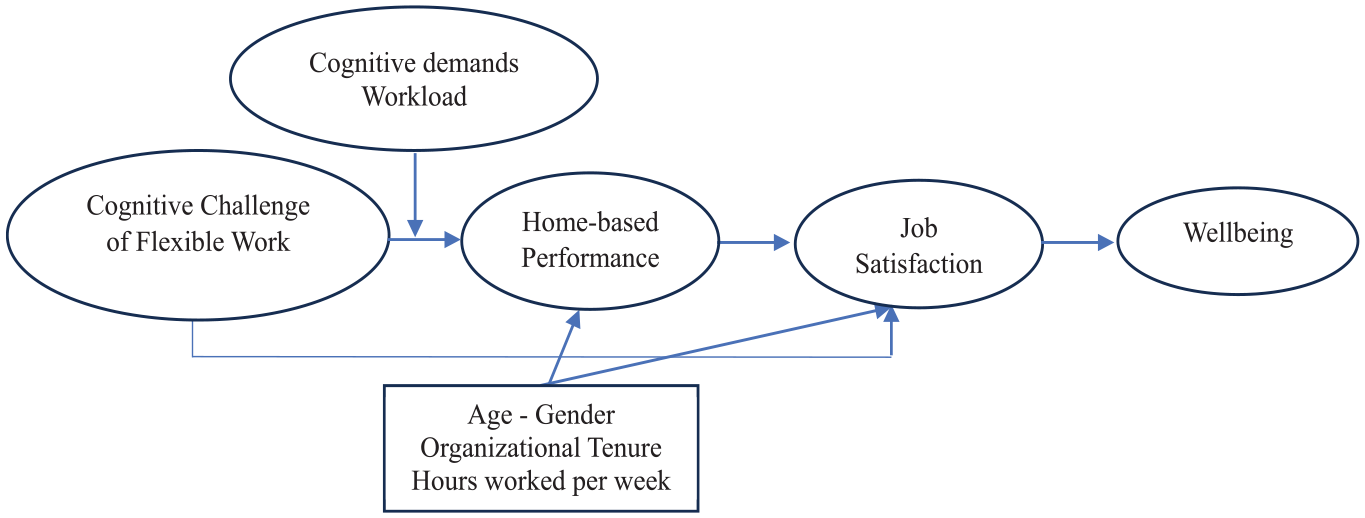
Research model.
Theoretical Background and Hypotheses Development
The JD-R model is an effective lens for examining the dynamic relationship between the “cognitive challenge of flexible work” and positive outcomes, such as job satisfaction and job performance (Bakker & Demerouti, 2007). Previous studies within the JD-R model that concerned the role of job resources in the prevention of exhaustion mainly emphasized their moderating potential in the model’s health impairment process (Bakker et al., 2005). Traditionally, job resources are considered essential for employees to complete their tasks effectively, keeping them motivated, and engaged in their work (Hakanen et al., 2006; Schaufeli & Bakker, 2004). Furthermore, recent research has shown that job demands and job resources are important predictors of employee wellbeing and organizational outcomes (Kaiser et al., 2020). The literature has demonstrated that job characteristics can profoundly influence employee wellbeing, suggesting that job resources may foster personal growth, learning, and development (Bakker & Demerouti, 2007). Furthermore, it has been well established that work organization and associated conditions evolve in response to societal and technological developments (Allvin & Movitz, 2017; Flecker et al., 2017). Over recent decades, factors, such as globalization, individualization, and digitalization, have transformed working life, leading to increasingly flexible work environments regarding when, where, and how work is conducted (Putnam et al., 2014).
In this context, new cognitive challenges and also novel stressors are placed on workers and managers. Employees, in particular, are required to possess typical managerial skills and, for self-employed workers, to plan their working time, coordinate with colleagues, and manage changes (Kauffeld et al., 2004). In addition, managerial strategies have transferred the responsibility for work regulation from management to employees (Allvin et al., 2011). In this scenario, autonomous planning, coordinating with colleagues, and managing change can be deemed as challenge demands (or a novel type of resource in the workplace) because they contribute to professional development by enhancing cognitive flexibility (Wang & Haggerty, 2011) through their motivating characteristics. More specifically, individuals coping with these demands can develop new competencies, learning how to change their environment (Bellini et al., 2023) with respect to their goals and needs. This can be seen as a motivational process capable of increasing work engagement (Ryan & Deci, 2017) and job satisfaction (Kattenbach et al., 2010). To examine the cognitive challenges associated with flexible work arrangements, this study draws upon the framework outlined by Allvin et al. (2011), which includes structuring work tasks, planning work time, arranging workspaces, and coordinating with colleagues. Flexible employment, characterized by deregulated work practices, introduces new mental demands on workers, necessitating the adoption of new cognitive strategies to cope with these changes (Prem et al., 2021), including in public services (Lee & Na, 2024). Such shifts can generate stress for employees. Research indicates that cognitive demands can have both beneficial and detrimental impacts on staff, potentially leading to either enrichment or conflict (Kubicek et al., 2021; Mondo et al., 2022). Among the positive aspects, the literature has highlighted the promotion of engagement, the facilitation of professional growth (Frese & Zapf, 1994; LePine et al., 2005), and wellbeing (Amri et al., 2022). Among stressors, some can be classified as challenges, which provide opportunities for learning and success, and others as obstacles, which hinder the achievement of goals (Crawford et al., 2010; LePine et al., 2005; O’Brien & Beehr, 2019).
Adapting to a flexible work setting requires a gradual enhancement of cognitive capabilities, specifically the ability to thrive in a dynamic milieu (Dennis & Vander Wal, 2010). Despite increasing cognitive load, autonomous planning, and task structuring, these activities may offer intellectual stimulation and enhance work engagement (Uhlig et al., 2023). Nevertheless, the necessity for ongoing decision-making adjustments and procedural planning within such an environment poses a risk of employee burnout (Bäcklander et al., 2018; Höge & Hornung, 2015; Pérez-Zapata et al., 2016; Schmitt et al., 2012; Väänänen et al., 2020). Various theories suggest that job demands can initiate personal development processes (e.g., Frese & Zapf’s, 1994 action regulation theory; Hackman & Oldham’s, 1976 job characteristics model; Karasek & Theorell’s, 1990 demand-control model; Zacher & Frese, 2018). Recent studies have demonstrated that, rather than acting as stressors, the “cognitive challenge of flexible work” can enhance cognitive flexibility and engagement, leading to favorable outcomes for both employees and management (Uhlig et al., 2023). Effective work scheduling and workspace planning are linked to increased cognitive flexibility. Proactive planning can decrease the number of incomplete tasks, thus mitigating job rumination and acting as a safeguard against it (Masicampo & Baumeister, 2011; Smit, 2016; Smit & Barber, 2016). Furthermore, coordination with colleagues is associated with greater work engagement and does not inevitably lead to burnout (Van den Broeck et al., 2008). On the contrary, the requirements of collaboration can be a continuous source of intellectual and social stimulation, offering opportunities to exchange information and satisfy interpersonal needs (Ryan & Deci, 2017; van de Brake et al., 2018). In a recent study, Irak and Mantler (2018) found that temporal flexibility was associated with job satisfaction. Azizah et al. (2023) demonstrated a significant impact of flexible work arrangements (i.e., working shift arrangements, duration of working time, start and finish time of work, compression of working hours) on job satisfaction. Furthermore, Buick et al. (2024), through a qualitative study, showed the critical role of managers’ skills, such as knowledge and self-efficacy, in supporting flexible work practices that in turn contribute to employees’ wellbeing in the public sector. Given that challenge demands are positively related to motivational and positive outcomes, whereas hindrance demands are negatively related (e.g., Crawford et al., 2010), this study builds on existing literature to explore how shifts in the “cognitive challenge of flexible work” influence employee outcomes.
Based on the above, the first hypothesis is the following:
In this study, it was hypothesized that home-based performance—defined as a context capable of improving performance and achieving individual and collective organizational—can be affected by flexible work (i.e., how work is organized). This encompasses both individual and collective dimensions, including colleague involvement and enhancing administrative productivity. Existing literature suggests that increasing productivity requires a qualitative redesign of activities rather than a quantitative restructuring (Knight & Parker, 2021). Thus, the focus should be on achieving goals rather than accumulating work hours. This aim can be achieved by fostering a positive, purpose-driven organizational culture that empowers workers. Empowered employees do not merely perform tasks, but they also understand, coordinate, plan, and innovate (Olivieri Pennesi, 2014). Organization for Economic Co-operation and Development (OECD) surveys indicate a positive correlation between higher productivity and the adoption of flexible work arrangements, as these arrangements foster new knowledge and enhance motivation (Graffi & Parravicini, 2022), which is a crucial element in work organization. Pro-socially motivated employees apply their skills to contribute to the organization’s efficient operation (Grant, 2008; Sheldon & Houser-Marko, 2001), including avoiding deviant behaviors, such as strategic absenteeism or feigned illness (Langan-Fox & Vranic, 2011). Therefore, flexibility is a valued asset for employees, something they seek, maintain, and invest in to fulfill their work needs and objectives (Kelly et al., 2020). Recent studies have explored the benefits of the “cognitive challenge of flexible work” (Baumgartner et al., 2024), specifically the impact of temporal flexibility of work on performance (Dettmers et al., 2020), and on the structure of working tasks on competence development at home (Prem et al., 2021). However, the impact of cognitive aspects in flexible work indirectly via home-based performance on job satisfaction has not been thoroughly investigated.
Based on these considerations, the second hypothesis is as follows:
Research indicates that assessment of flexible work has predominantly focused on space-time flexibility, overlooking the evolution of flexible work into deregulated work practices, diminished managerial oversight (Prem et al., 2021), and the transfer of traditional managerial responsibilities onto employees (Verburg et al., 2018). This shift demands that employees adopt a goal-oriented work approach (Höge & Hornung, 2015) and navigate new cognitive challenges, such as structuring work, planning work time and workplaces, as well as coordinating with others (Allvin et al., 2011). It also entails cognitive engagement with work during off-hours (Cropley & Zijlstra, 2011), fostering work reflection during personal time (Bennett et al., 2016; Dettmers & Bredehöft, 2020). In addition, research has emphasized that geographical separation exacerbates communication difficulties within groups by limiting informal interactions (Kiesler & Cummings, 2002), potentially disrupting the formation of a cohesive team identity, which is crucial for enhancing performance (Cummings, 2004).
Regarding job resources, an increase in intellectual demands is linked to heightened job satisfaction. In contrast, an uptick in specific job demands, such as time pressure, correlates with reduced satisfaction (Rantanen et al., 2021) and can lead to adverse health and wellbeing outcomes in high-pressure, low-autonomy jobs (Karasek, 1998; Karasek & Theorell, 1990; Schnall et al., 1994; Theorell & Karasek, 1996). Therefore, additional job demands (e.g., in term of perception of cognitive work overload) can interact with challenging demands, reducing their positive effect on performance. These patterns are substantiated by the action regulation theory (Hacker, 2003; Zacher & Frese, 2018), which posits that stressors amplify cognitive exertion and contribute to negative work-related consequences.
Thus, the theoretical background leads to the third hypothesis:
In the context of job demands and resources, research has shown that employees with high levels of commitment experience more pronounced effects arising from effort–reward imbalances compared with their less committed counterparts (De Jonge et al., 2000). Furthermore, it has been suggested that for employees facing work overload, the choice to work from home may decrease performance (Allan et al., 2007; Wallace, 1997). In addition, workload is emerging as a more significant predictor of work–life conflict than the number of hours worked (Geurts & Demerouti, 2003). High levels of workload can exert a dual influence, leading to increased working hours while also contributing to feelings of strain and exhaustion reducing job performance (Frone et al., 1997) and conditioning the positive effect of challenging demands on home-based performance. Based on the aforementioned evidence, the fourth hypothesis is as follows:
The literature emphasizes the impact of work life on individual wellbeing, and organizational effectiveness (Loscocco & Roschelle, 1991). Job satisfaction is shaped by both personal and structural elements (Sheppard, 1975). As a result, research on job satisfaction has bifurcated into two main perspectives: one focusing on individual needs fulfillment (Alderfer, 1972; Herzberg, 1966; Maslow, 1954; McClelland, 1961) and another emphasizing structural influences on worker attitudes (Herman et al., 1975; Herman & Hulin, 1972; Loscocco, 1990; Oldham & Hackman, 1981; O’Reilly & Roberts, 1975; Schlenker & Gutek, 1987). Furthermore, the trait theory of work indicates that job dimensions engender psychological states with beneficial personal and professional outcomes (Hackman & Oldham, 1975), suggesting that job enrichment may enhance work–life quality. Within flexible work arrangements, job satisfaction remains pivotal to personal wellbeing. Flexible work requires goal-oriented scheduling and less regulated environments (Allvin et al., 2011), reducing managerial oversight (Prem et al., 2021), which is crucial since control is integral to achieving personal and work-related objectives, including mental health and job performance (Bond & Bunce, 2003; Marmot et al., 1997; van Veldhoven et al., 2005).
Adapting to flexible work is particularly challenging for the public sector, which is traditionally procedural. The literature on public-sector management indicates that high-involvement practices emphasizing job control and social support are vital for fostering innovation (Gould-Williams, 2004; Ramanujam & Rousseau, 2006). Cross-sectional and longitudinal studies have demonstrated the positive relationship between job and individual satisfaction (Cerci & Dumludag, 2019; Sousa-Poza & Sousa-Poza, 2000). Based on these insights, the final hypothesis is the following:
Data and Methods
Sample Characteristics, Data Collection, and Control Variables
In preparation for the study, ethical approval was obtained from the Institutional Ethics Committee, assigned with the approval number 007669 on December 3, 2024. The sample consisted of 484 Italian employees in the field of PA who were selected in 2023 using a convenience sampling method (i.e., all employees in the sample work part of the time in flexible mode). The Ministerial Decree of October 8, 2021, permits employees in the Italian public sector to continue performing part of their work flexibly, provided that in-person work remains predominant on a weekly, monthly, or multi-monthly basis. Participants completed an anonymous questionnaire through an online survey encompassing the constructs, socio-demographic, and work context variables related to this study. They were informed about the study’s main aim and signed the informed consent. The sample comprised 269 men (55.6%) and 215 women (44.4%). The participants had an average age of 49.23 years (SD = 9.70). The duration of their employment was 15.5 years (SD = 11.1). On average, they worked 34.24 hours per week (SD = 8.55). This study took into account the potential effect of home-based performance and job satisfaction for socio-demographic and work variables, including participants’ age, gender, organizational tenure, and weekly working hours. Gender was categorized into two categories (1 = male; 2 = female), age into three categories (1 = 18-34; 2 = 35-54; 3 = > 55), frequency of the hours per week worked into three categories (1= 3-18; 2=19-34; = > 35), and organizational tenure into three categories (1= 0-14; 2 = 15-29; 3= 30).
Measures
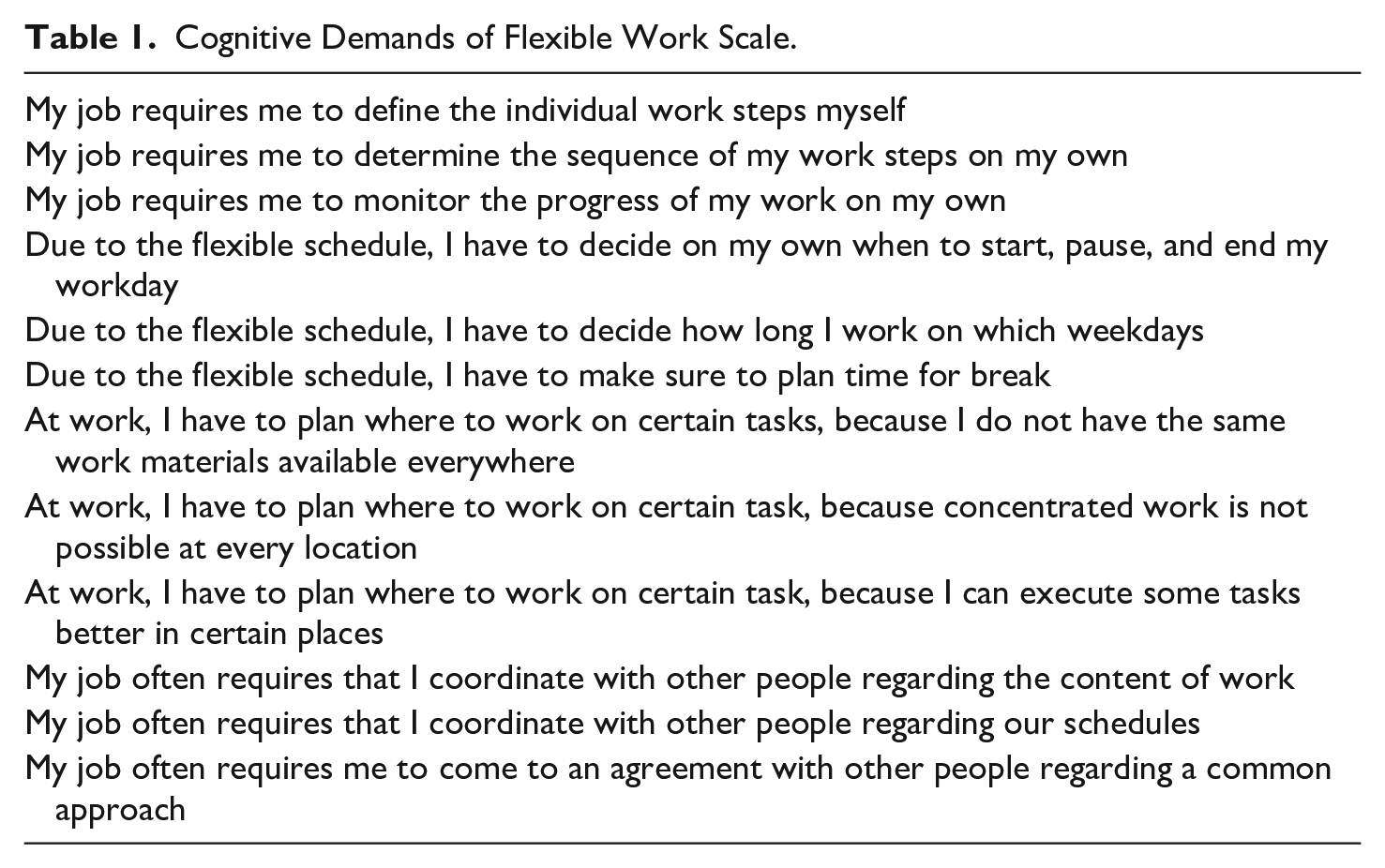
The following scales used in this study have been developed and validated in previous research. CCFW was assessed using the 12-item Cognitive Demands of Flexible Work Scale (CDFWS; Prem et al., 2021). The scale comprised four sub-dimensions, namely: structure of work tasks, planning working times, planning of working places, and coordinating with others. Cognitive demands of flexible work specifically pertain to flexibility of work related to individual choice at work. Respondents indicated their agreement on items on a 5-point Likert-type scale ranging from completely disagree (=1) to completely agree (=5). Item examples are: My job requires me to define the individual work steps myself (structure of work tasks); Due to the flexible schedule, I have to decide on my own when to start, pause, and end my workday (planning working times); At work, I have to plan where to work on certain tasks because I do not have the same work materials available everywhere (planning of working places); and My job often requires that I coordinate with other people regarding the content of work (coordinating with others). The full scale is reported in Table 1.
Cognitive Demands of Flexible Work Scale.
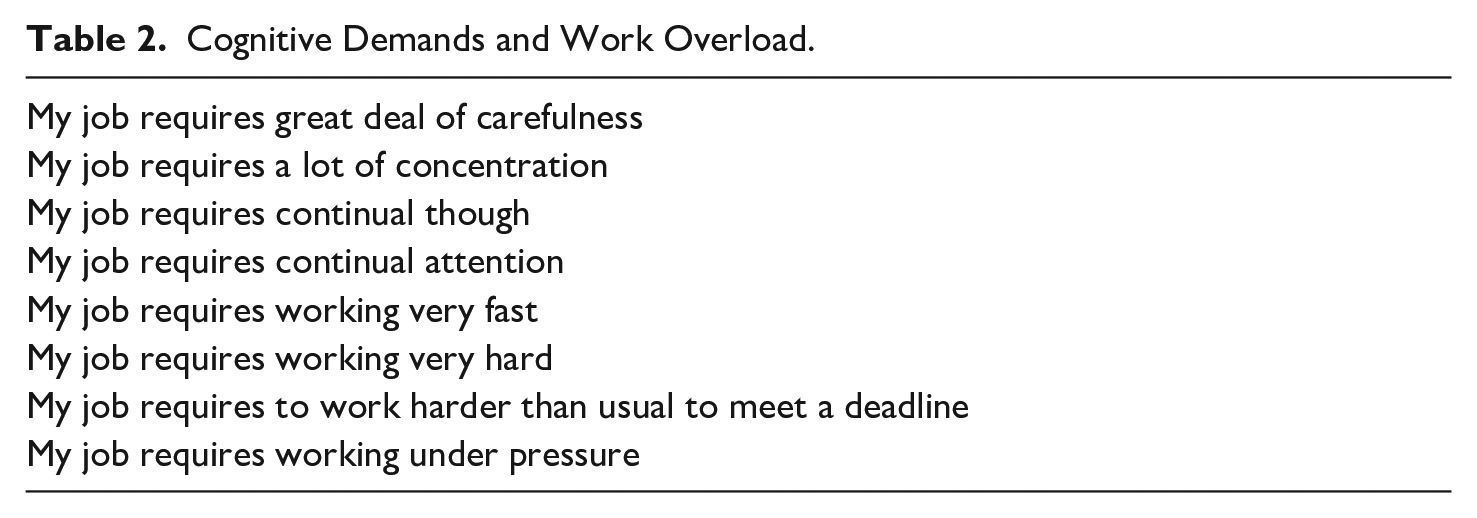
Cognitive demands and workload were evaluated with the eight-item Job Content Questionnaire (JCQ) developed by Bakker et al. (2003). The questionnaire includes four items addressing the quantitative, demanding characteristics of a job (e.g., time pressure, working hard), and four items that take into account demands that involve cognitive processes. The items for cognitive demands and work overload focus on demands and potential overload associated with work task. Examples of items are “I have too much work to do,” and “I consider my work mentally very intense.” Items were scored on a 5-point scale, from never (=1) to always (=5) (see full scales, Table 2).
Cognitive Demands and Work Overload.
Job satisfaction and Wellbeing were measured through the Work-Related Quality of Life scale (WRQLs), validated by Garzaro et al. (2020). The scale consisted of 13 items, comprising two sub-dimensions: general wellbeing (five items) and job satisfaction (eight items). Participants answered the items on a 5-point Likert-type scale, where 5 denoted complete agreement and 1 represented complete disagreement.
To assess home-based performance, four items derived from the Remote Working Questionnaire (RWQ) developed by Mascagna et al. (2019) were used. Employees provided ratings for each item on a 5-point Likert-type scale, ranging from completely disagree (=1) to completely agree (=5). The items are as follows: “The adoption of the home working method is useful to improve your performance within the company”; “The adoption of the home office is useful to increase company profits.” “The adoption of the home office is useful to improve the performance of everyone within the company”; and “The home office helps me achieve my business objectives more efficiently than working from the usual office.”
Data Analysis
Initially, the distribution of the data was checked and descriptive analyses were carried out. To examine the measurement model a confirmatory factor analysis (CFA) was performed with the entire variables presented in this study. Descriptive statistics were conducted. The measurement model was validated by exploring the convergent and discriminant validities of the constructs and the reliability of each measure used in this study. The convergent validity is acceptable when loadings are greater than 0.5 and average variance extracted (AVE) values for each construct are above 0.5. Variables’ reliability is good when composite reliability (CR) and Cronbach’s alpha (CA) values are greater than 0.7 whereas discriminant validity is adequate when the root of the AVE is greater than its correlation with the other constructs. Subsequently, to verify the study hypotheses, three SEMs were tested. The first model included the direct relationships (without any mediators or moderators) between sub-dimensions of challenge “cognitive demands of flexible work” and home-based performance, and job satisfaction, controlling for the potential impact of confounding variables, such as gender, age, organizational tenure, and weekly working hours on study outcomes (e.g., home-based performance, and job satisfaction). In the second model, the mediating effects on the relationship between sub-dimensions of “cognitive challenge of flexible work” and job satisfaction through home-based performance were considered. Finally, the third one analyzed the moderating effects of cognitive demands and work overload constructs. Furthermore, the possible effect of common method bias (CMB) due to self-report instruments was tested through Harman’s single-factor test. The test assumes that when a single factor, composed of all the variables used in the study, accounts for less than 50% of the total variance the CMB is not a concern. To analyze the mediating effect, 5,000 bootstraps resampled at a 95% CI were used. IBM SPSS 20 AMOS 20 and MPLUS 8.5 were employed for the data analysis.
Results
Measurement Model and the Reliability and Validity of the Scale
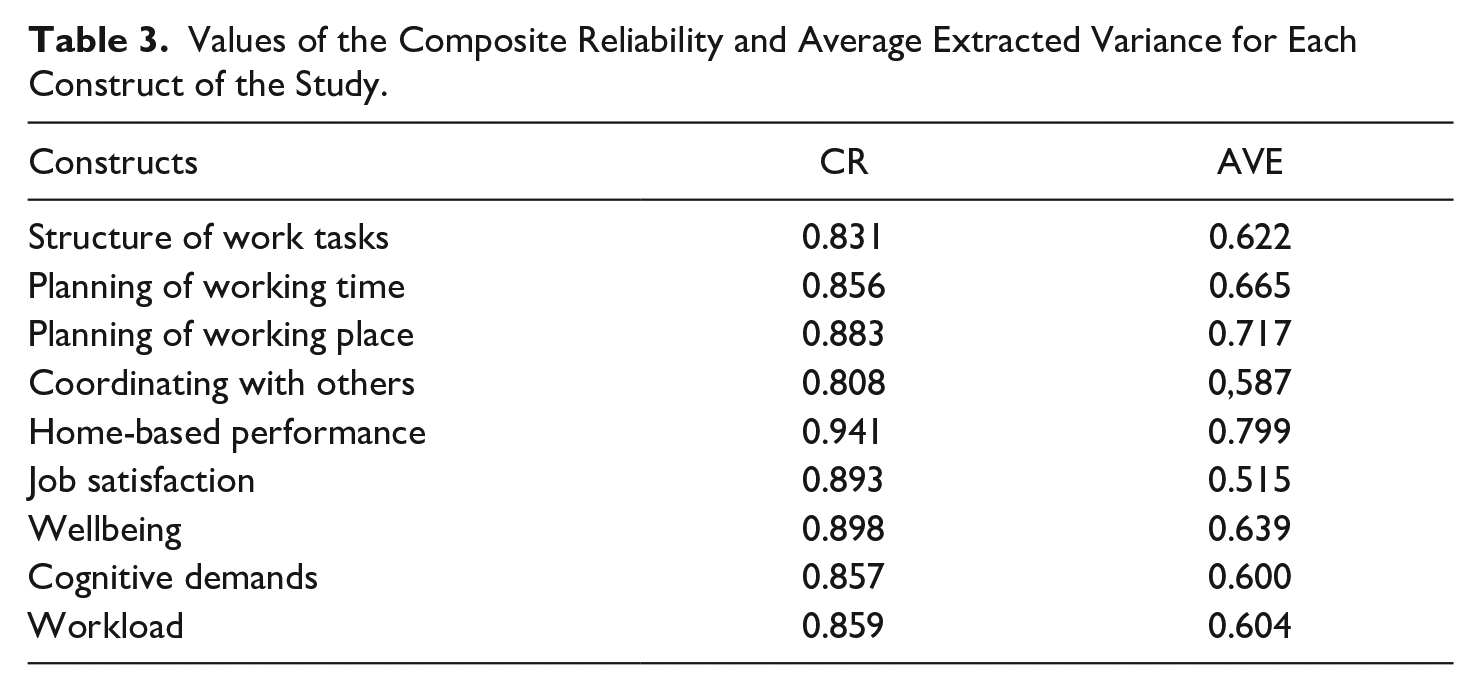
The measurement model fit the data adequately (χ2 = 1,197.633 df = 591, p =0.000, χ2/df =2.026; comparative fit index [CFI] =0.945; Tucker–Lewis index [TLI] = 0.938; root mean square error of approximation [RMSEA] = 0.046; standardized root mean squared residual [SRMR] = 0.047). As reported in Table 3, the CR values (Omega) for all the constructs were >0.7, varied from 0.808 to 0.941. The AVE values were above 0.50. Thus, the reliability and the validity of the constructs were demonstrated.
Values of the Composite Reliability and Average Extracted Variance for Each Construct of the Study.
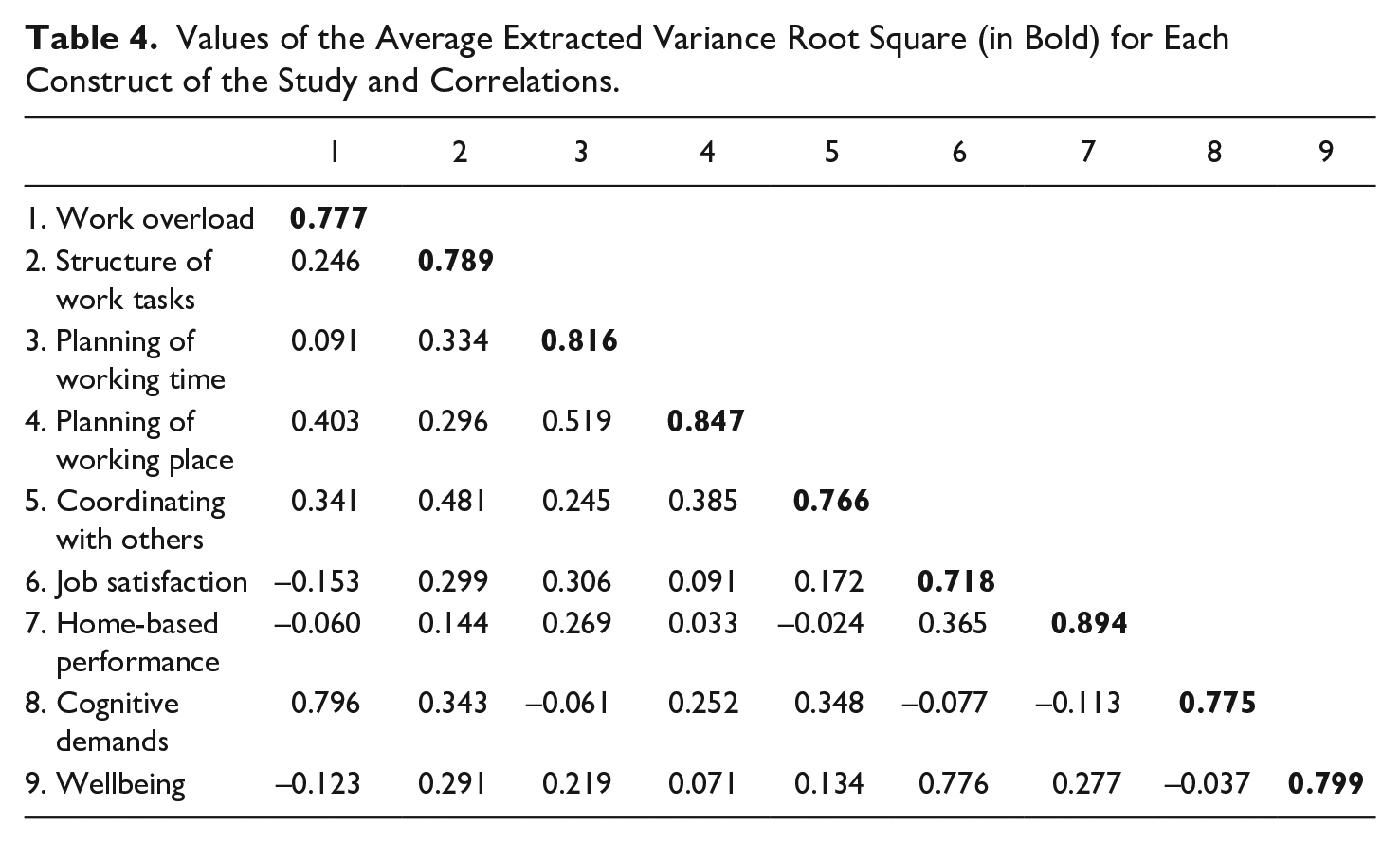
As shown in Table 4, by comparing the AVE root with the construct’s correlation, the AVE square was higher for the majority of the correlation constructs excluding work overload, cognitive demands, and job satisfaction. These results depend on the high correlations between cognitive demands and work overload and between job satisfaction and wellbeing. Given those correlations, the moderating mediated effect of work overload and cognitive demands between “cognitive challenge of flexible work” and job satisfaction independently through home-based performance in two different models was tested. Regarding the correlations of job satisfaction and wellbeing, observing the items meaning, we noted that they referred adequately to general wellbeing and job satisfaction, respectively. The bivariate correlations are presented in Table 5. Although the items theoretically distinguished the two concepts, to examine their statistical relationship, two different models were tested. The first model considered the direct effect of job satisfaction on wellbeing and the second model the direct effect of sub-dimensions of “cognitive challenge of flexible work” on wellbeing and job satisfaction without considering the direct effect between wellbeing and job satisfaction.
Values of the Average Extracted Variance Root Square (in Bold) for Each Construct of the Study and Correlations.
Study Variables: Descriptive Statistics and Bivariate Correlations (N = 484).
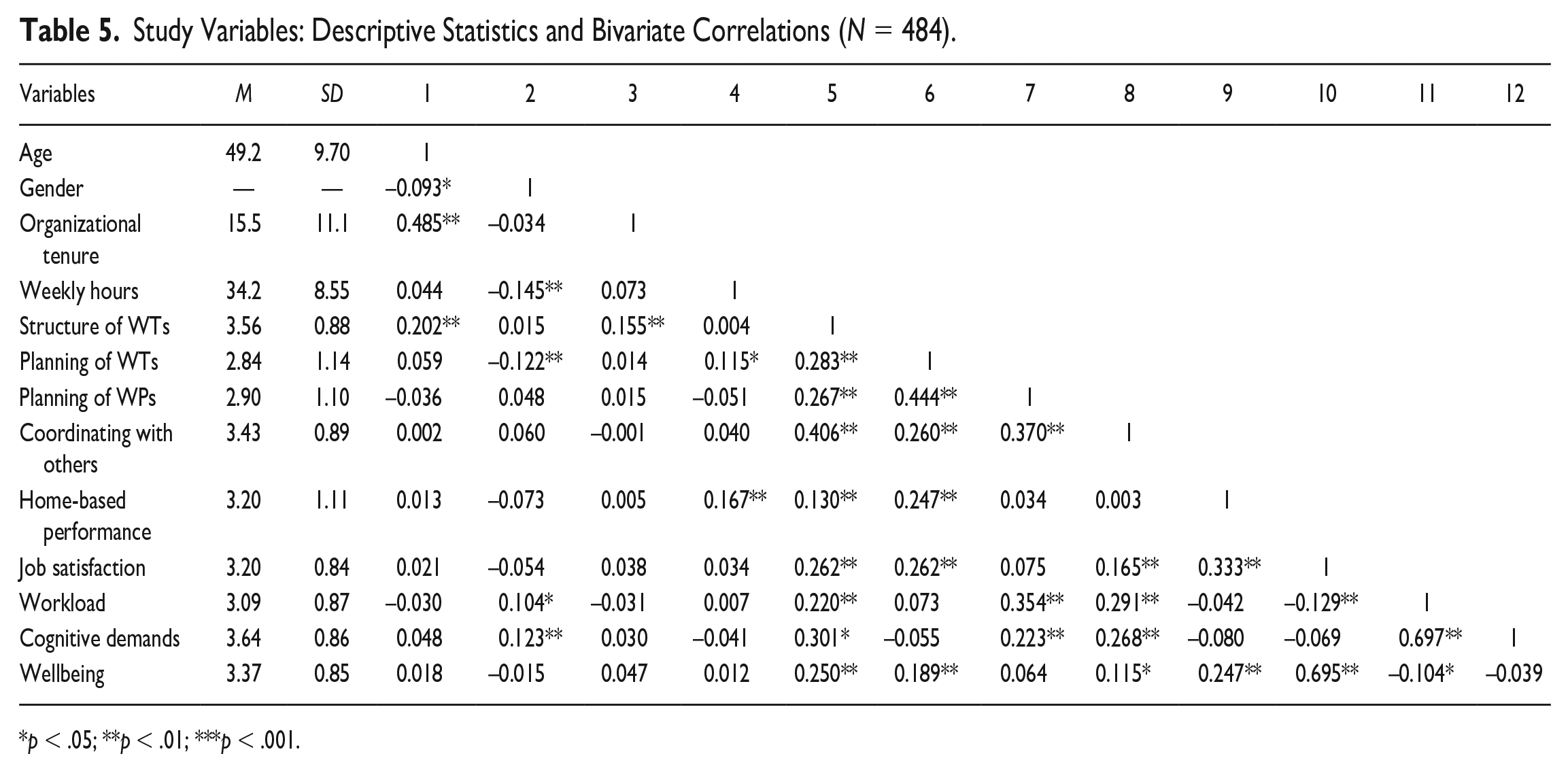
p < .05; **p < .01; ***p < .001.
Common Method Bias
The potential effect of CMB was explored using Harman’s single-factor technique. All the items were included in the exploratory factor analysis. The first factor accounted only for 22.54% of the variance. Two different models were compared. A CFA was performed in the first model including the nine latent factors. In the second model, a one-factor model with all observed variables on one factor was tested. The comparison between the two models showed that the first model (χ2 = 1,197.633; df = 591; p = .000; CFI = 945; TLI = 938; RMSEA = 0.045; SRMR = 0.047) fit the data better than the second model (χ2 = 2,007, 127; df = 626; p = .000; CFI = 0.876; TLI = 0.868; RMSEA 0.068; SRMR = 0.1477) with one factor (chi-square difference was 809,494; df = 35; p < .001).
Descriptive Statistics
The results revealed that weekly work hours per day significantly positively correlated with home-based performance. Furthermore, structure of working times and planning of working times were significantly positively correlated with home-based performance and job satisfaction. In addition, job satisfaction was positively correlated with coordinating with others. Furthermore, wellbeing was significantly positively related to home-based performance and job satisfaction. Correlations are presented in Table 3.
Hypothesis Test the Impact of Challenge CCFW on Job Satisfaction and Home-Based performance, With Socio-Demographic and Work Variables as Control Variables
As reported in Figure 2, the results indicated a positive significant effect of the structure of work tasks (β = 0.152; p < .05) and planning of working times (β = 0.289; p < .001) both on home-based performance and job satisfaction, respectively, β = 0.243; p < .001, and β = 0.297; p < .001. Furthermore, coordinating with others significantly negatively impact home-based performance, respectively, β = −0.131; p < .05. Similarly, planning of working place showed a significant negative impact on job satisfaction (β = −0.158; p < .05). However, the results did not show a significant relationship between coordinating with others and job satisfaction (p > .05). Finally, job satisfaction positively affected wellbeing (β = 0.777; p < .001). Regarding the control variables, weekly working hours had a significant positive effect on home-based performance (β = 0.124; p < .01). Conversely, gender, age, and organizational tenure did not significantly affect job satisfaction (p < .05) and home-based performance. R2 value for home-based performance was 0.121, for job satisfaction 0.160, and for wellbeing 0.604. The structural model provided an adequate fit for the two models, respectively, for cognitive challenging of flexible work on job satisfaction (χ2 = 698.743 df = 344, p = 0.000, χ2/df = 2.031; CFI = 0.948; TLI = 0.938; RMSEA = 0.053; SRMR = 0.042), and cognitive challenging of flexible work on home-based performance (χ2 = 256.200 df = 136, p = 0.000, χ2/df = 1.884; CFI = 0.977; TLI = 0.967; RMSEA = 0.043; SRMR = 0.042). H1 was partially confirmed.
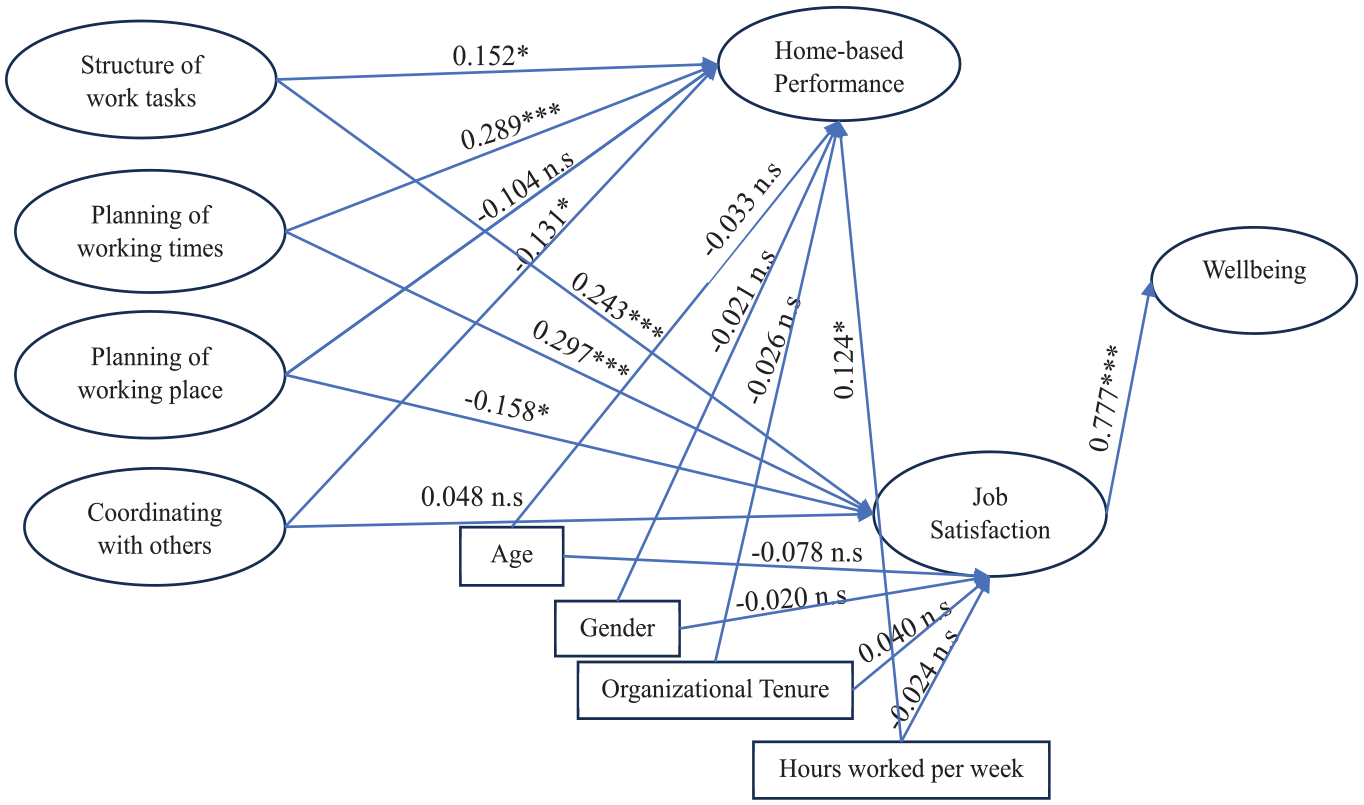
Results of direct effect between cognitive challenge of flexible work, home-based performance, job satisfaction, and wellbeing with age, gender, organizational tenure, and hours worked per week as control variables on home-based performance and job satisfaction.
The Mediating Role of Home-Based Performance With Socio-Demographic and Contextual Variables as Control Variable
As reported in Table 6, the results revealed significant indirect effects between the structure of work tasks and job satisfaction (β = 0.041; confidence interval [CI] = 0.002-0.096) and between the planning of working time and job satisfaction (β = 0.094; CI = 0.045-0.161) through home-based performance.
Direct and Indirect Effects of Cognitive Challenge of Flexible Work and Its Sub-Dimensions, Structure of Work Tasks (SW), Planning of Working Time (PT), Planning of Working Place (PP), and Coordinating With Others (CO) on Job Satisfaction (JS) Through Home-Based Performance (HBP), and Total Effects.
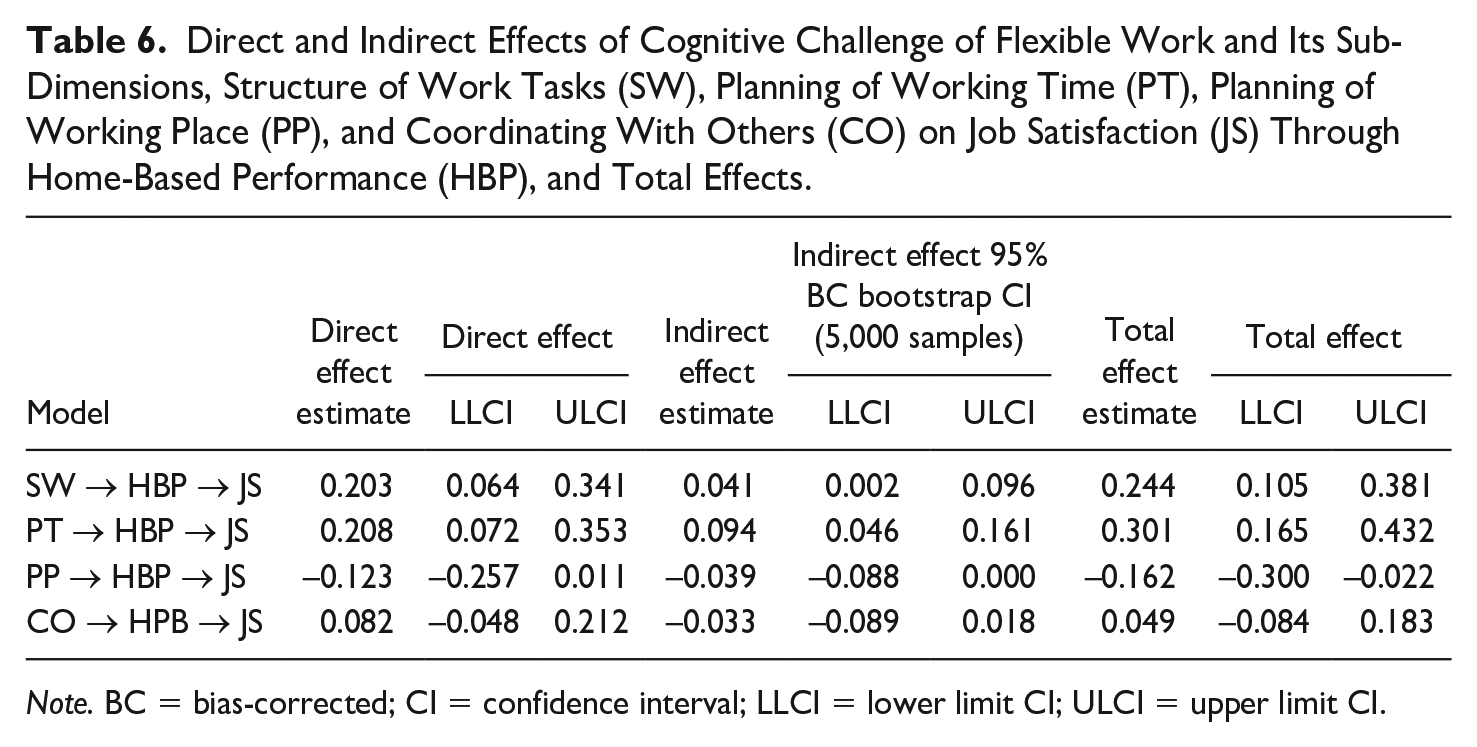
Note. BC = bias-corrected; CI = confidence interval; LLCI = lower limit CI; ULCI = upper limit CI.
Furthermore, the direct effect of structure of working time (β = 203; CI = 0.064-0.352) and planning of working time (β = 208; CI = 0.072-0.353) on job satisfaction was still significant also after the inclusion of the mediator, implying a partial mediation for this indirect effect. However, a significant indirect effect of planning working place and coordinating with others on job satisfaction through home-based performance was not found. R2 value for home-based performance was 0.122, for job satisfaction 0.230, and for wellbeing 0.603. H2 was partially confirmed. The mediating model adequately fit the data (χ2 = 879.522 df = 453, p = 0.000, χ2/df = 1.942; CFI = 0.952; TLI = 0.945; RMSEA = 0.044; SRMR = 0.043). H2 was partially confirmed.
The Moderated Mediated Role of Cognitive Demands and Workload Constructs With Socio-Demographic and Contextual Variables as Control Variable
The index of moderated mediation showed that the interaction between challenge “cognitive challenge of flexible work” (four sub-dimensions) and workload on job satisfaction through home-based performance was not significant (p < .05). Conversely, cognitive demands (i.e., the perception of cognitive work overload) were found to moderate the mediated significant relationship between challenge “cognitive challenge of flexible work” and job satisfaction through home-based performance for structure of work tasks (Index of moderated mediation = −0.039; CI = −0.072 to −0.007) and for coordinating with others (Index of moderated mediation = −0.043; CI = −0.083 to −0.003). Specifically, for higher levels of cognitive demands, and at mean level the indirect effect of structure of work task on performance was not significant, respectively, β = 0.013; CI = −0.064 to 0.091, β = 0.053; CI = −0.016 to 0.121; while the negative indirect effect of coordinating with others on performance was not significant at mean value of cognitive demands (β = −0.041; CI = −0.113 to 0.030) and for low lower level of cognitive demands (β = 0.002; CI = −0.074 to 0.078). The conditional indirect effects of structure of work tasks and coordinating with others at higher, lower, and mean levels of cognitive demands are shown in Figures 3 and 4. These figures indicate, respectively, that the strength of the indirect effects of structure of work tasks through home-based performance diminishes with an increase of cognitive demands, and the strength of the negative indirect effect of coordinating with others through home-based performance increases with an increase of cognitive demands. The overall model results are illustrated in Figures 5 and 6. Regarding the model results, R2 value for home-based performance was 0.127, for job satisfaction 0.230, and for wellbeing 0.603.
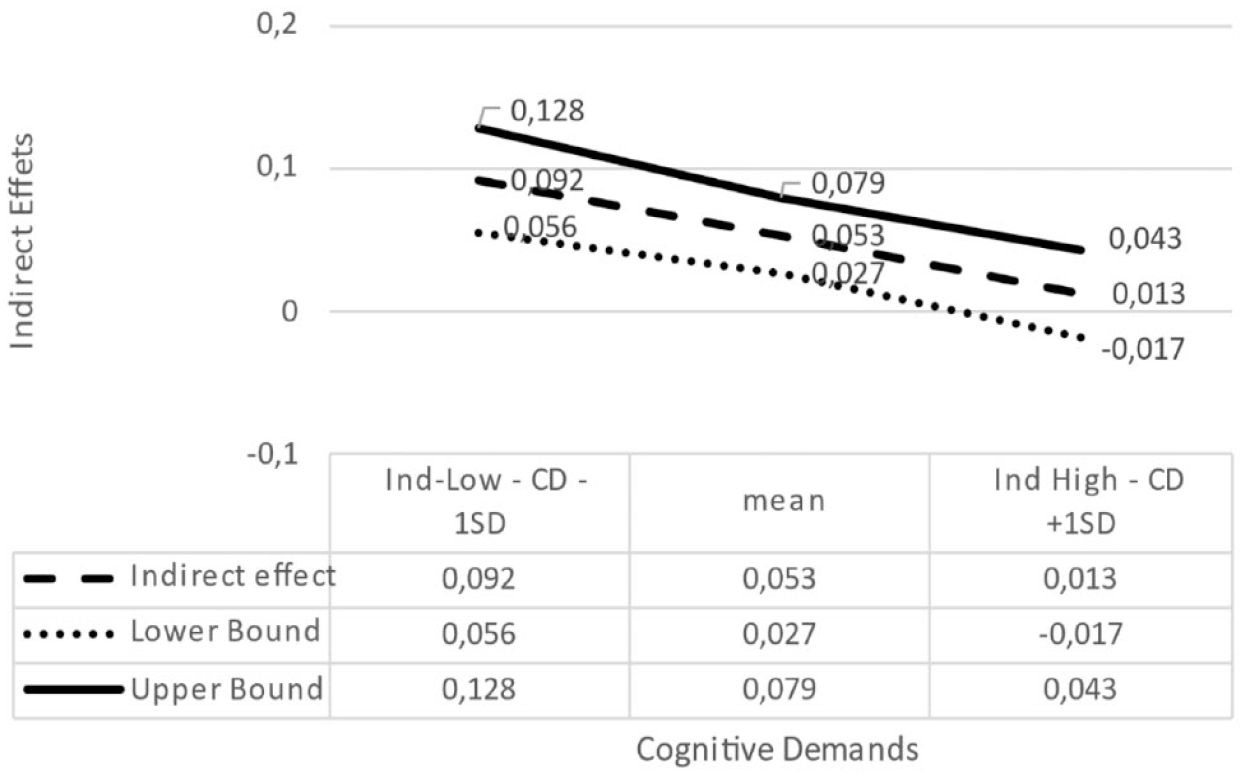
Conditional indirect effects at higher, lower, and mean levels of cognitive demands on the relationship between “structure of work tasks” and on home-based performance.
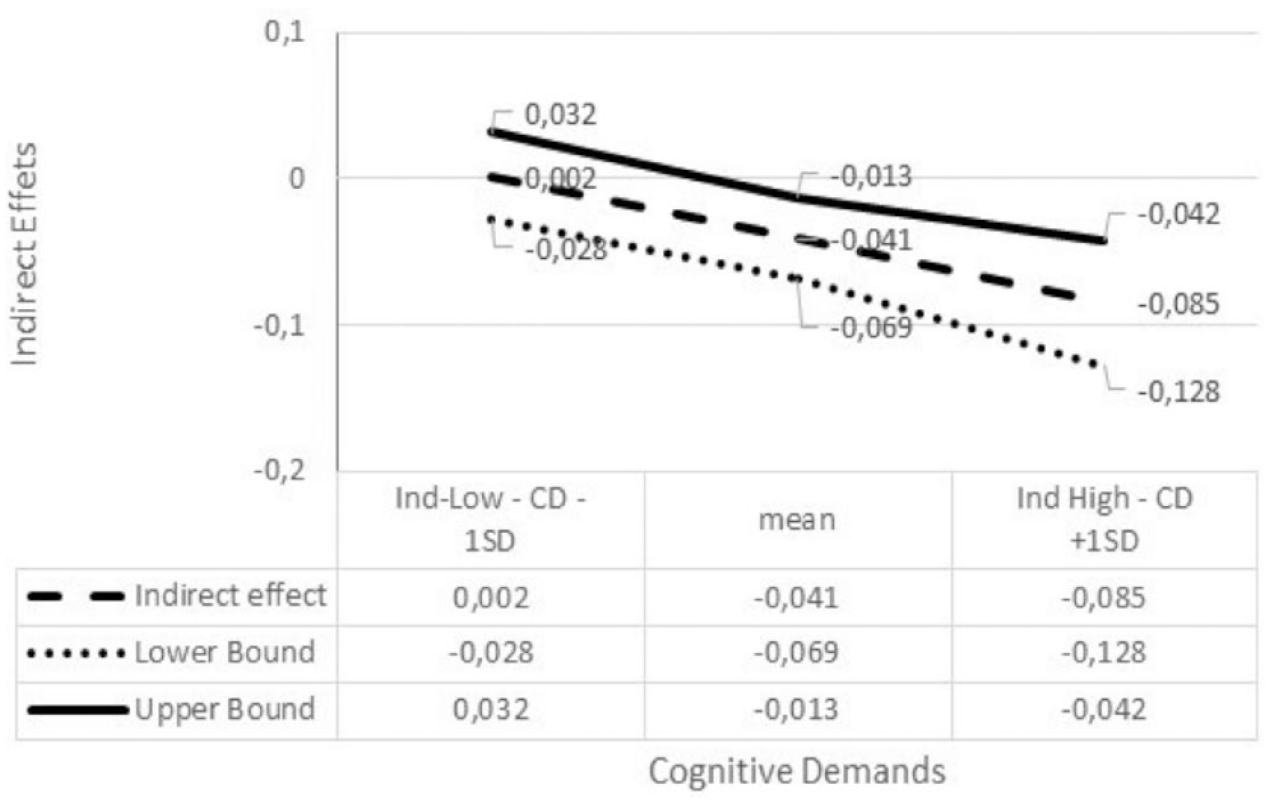
Conditional indirect effects at higher, lower, and mean levels of cognitive demands on the relationship between “coordinating with others” and on home-based performance.
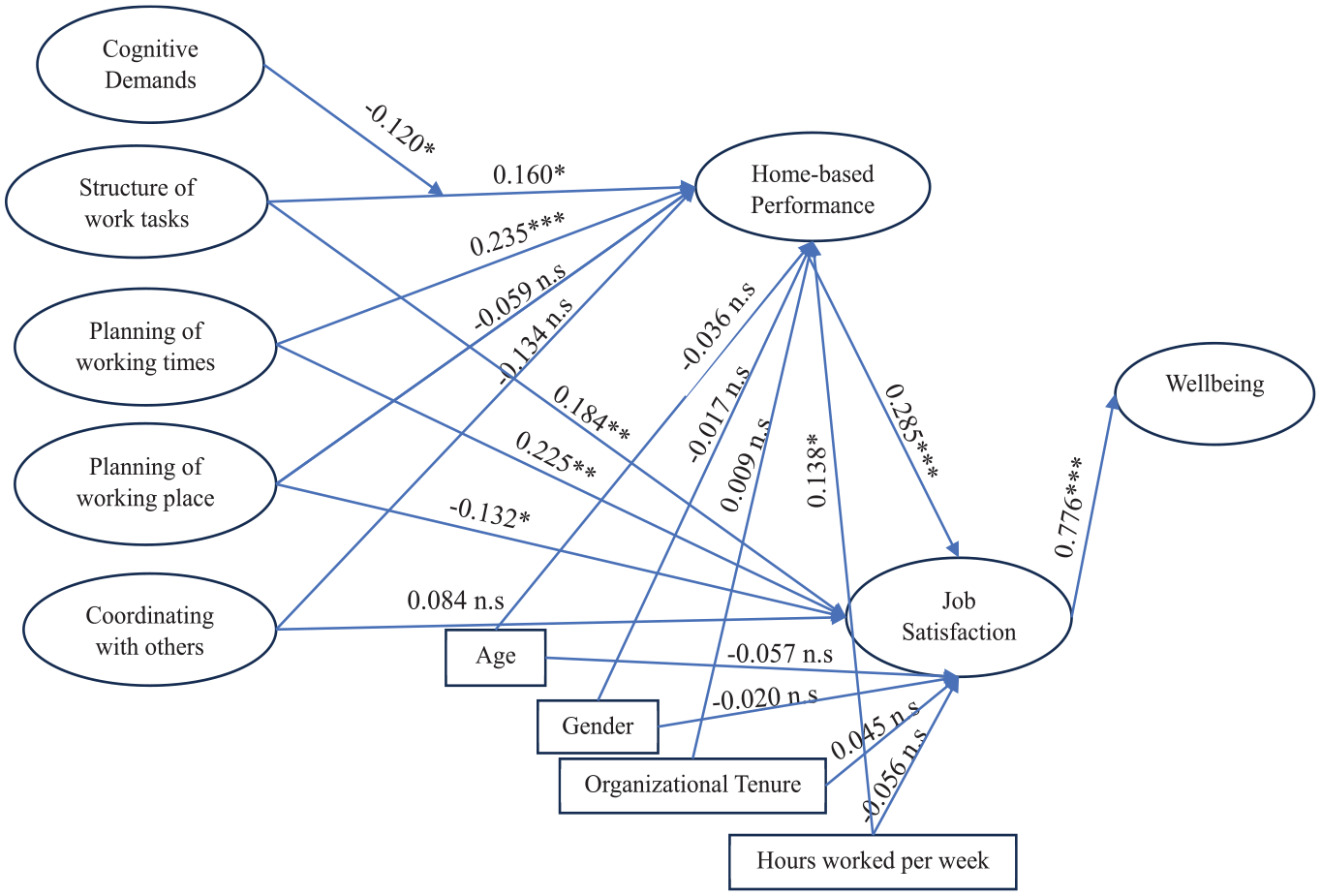
Results of the moderated role of cognitive demands into the mediated significant relationship between the structure of work tasks and job satisfaction, through home-based performance with age, gender, organizational tenure, and hours per week as control variables on home-based performance and job satisfaction.
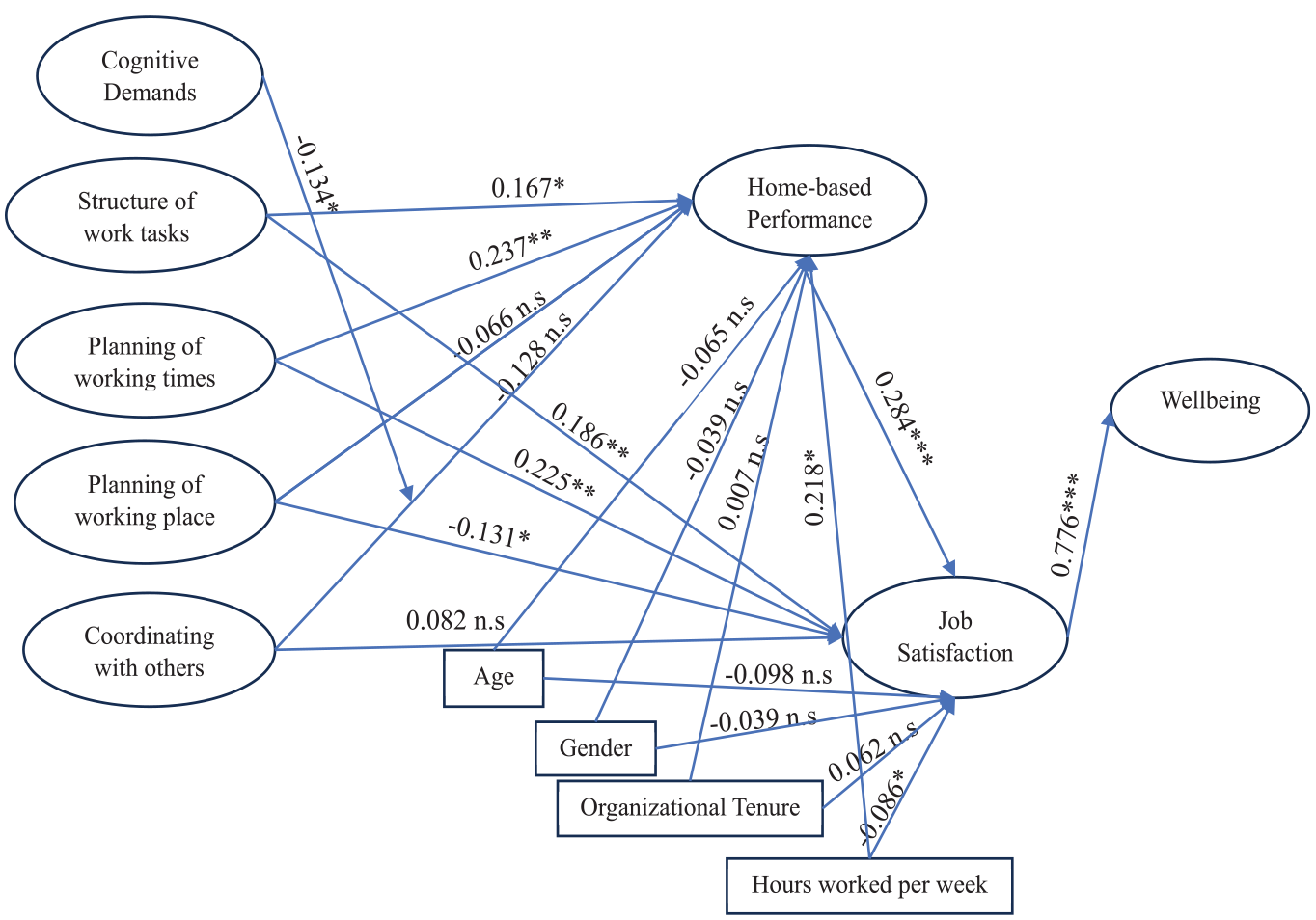
Results of the moderated role of cognitive demands into the mediated significant relationship between coordinating with others and job satisfaction, through home-based performance, with age, gender, organizational tenure, and hours per week as control variables on home-based performance and job satisfaction.
Discussion
The primary objective of this study was to deepen understanding of how specific job resources—namely the “cognitive challenge of flexible work” and its sub-dimensions (such as the structure of work tasks, planning of working times, selection of work locations, and coordinating with others)—influence positive outcomes like job satisfaction and performance at home among public-sector employees who are engaged in smart working. To enhance overall understanding, an SEM was tested. The model also considered the moderating effects of work overload and cognitive demand constructs on the relationship between the “cognitive challenge of flexible work” and job satisfaction. Socio-demographic and work variables were included in the model as control variables for home performance and job satisfaction to examine their potential influence between “cognitive challenge of flexible work” and dependent variables. The findings support the positive impact of the structure of work tasks and the planning of working times on both job satisfaction and home performance. It was particularly noteworthy that planning of work place had a negative effect on job satisfaction but did not on home-based performance, while coordinating with others had negative effect on home-based performance but did not significantly affect job satisfaction, partially confirming H1. Furthermore, the results showed that home performance serves as a partial mediator in the relationship between the positive effect of the structure of work tasks and planning of working times on job satisfaction. Generally, these findings are in line with the JD-R model (e.g., Bakker & Demerouti, 2007) and prior research, which suggests that the “cognitive challenge of flexible work” could act as job resources that foster positive outcomes, such as work engagement (Uhlig et al., 2023), job satisfaction (Uglanova & Dettmers, 2017), and organizational outcomes (Kaiser et al., 2020). In essence, the “cognitive challenge of flexible work” can be viewed as resources (LePine et al., 2005; O’Brien & Beehr, 2019), suggesting that the ability to structure work tasks and schedule work times enhances job satisfaction both directly and indirectly through home-based performance. This suggests that employees who experience high levels of “cognitive challenge of flexible work” feel a greater sense of autonomy and flexibility, which contributes to their professional growth (Lesener et al., 2019). Contrary to the hypotheses, coordinating with others showed a negative impact on home-based performance, and planning of working place was also negatively correlated with home-based performance. Thus, H2 was partially confirmed. These results highlight that under certain conditions, planning of working place and coordinating with others during smart working may act as a job demands (i.e., prevent the achievement of individual goals), adversely impacting home-based performance. This implies that work-related thought processes, specifically coordination of work with others at home, might extend beyond professional responsibilities. The need to connect with family at home can be draining when individuals lack adequate strategies to recover from work (Cropley & Zijlstra, 2011; Dettmers et al., 2020). Conversely, the structure of work tasks and planning of working times are directly related to an individual’s ability to manage work. Although employees can adapt their tasks and schedules, interference from family members and domestic distractions can disrupt the benefits of flexible work (Hodzic et al., 2021).
Furthermore, findings reveal that workload did not moderate the mediated relationship between the sub-dimensions of flexible work and job satisfaction through home-based performance. These results did not confirm H4. However, cognitive demands played a moderating role in the mediated relationship between coordinating with others and job satisfaction (by reducing the negative effect on the mediator home-based performance at lower and mean levels) and on the structure of working tasks and job satisfaction through home-based performance. For higher levels of cognitive demands, the structure of working tasks did not affect home-based performance positively. These findings partially confirmed H3. This result may be due to the “intrusion” of family and distraction while working from home, which diminishes the employees’ ability to achieve their professional goals and needs. To counter these negative effects and enhance performance, employees may feel compelled to increase the number of hours worked from home each week. It is crucial to note that in this study, an increase in performance was observed when the weekly working hours (used as a control variable) increased. Finally, consistent with previous studies and in alignment with study H5, it found a positive relationship between job satisfaction and wellbeing (Cerci & Dumludag, 2019; Sousa-Poza & Sousa-Poza, 2000).
Conclusion
The present study examines the implications of flexible working arrangements, particularly within the public sector, by exploring the intricate relationships between specific job resources, cognitive demands, and their consequent effects on job satisfaction and home-based performance. Through the lens of the JD-R model, this research not only corroborates existing theoretical frameworks but also extends overall understanding by delineating the dual roles of “cognitive challenge of flexible work”—acting as facilitators and barriers to achieving positive work outcomes. The findings provide empirical support for the JD-R model, confirming that cognitive demands inherent in flexible work arrangements—such as the structuring of work tasks and scheduling work times—act as significant job resources. These resources enhance job satisfaction and home-based performance, substantiating the model’s assertion that work environment characteristics can foster positive employee outcomes. Significantly, this research extends the JD-R model by offering a granular analysis of how different facets of cognitive demands function as either challenge or hindrance resources. This distinction is critical for understanding job resources’ multifaceted nature and disparate impacts on employee wellbeing and performance. A novel contribution of this study was identifying home-based performance as a pivotal mediator in the relationship between structured work arrangements and job satisfaction. This insight enriches the JD-R model by highlighting the importance of considering the domestic sphere as a significant context in which the benefits of job resources are realized. It suggests that the positive effects of well-organized work tasks and schedules extend beyond the workplace, influencing satisfaction through the quality of work–life integration.
Limitation and Future Research
Like other research, this study has certain limitations that offer opportunities to enhance future studies. First, the cross-sectional method used in this study does not allow for the observation of changes in flexible cognitive demands before and after the implementation of smart working, as well as the differences between working from home and working in an office environment. Therefore, future investigations should examine the impact of these changes on different outcomes through a longitudinal approach. Second, the convenience sample from Italy limits the generalizability of the findings to a broader context and different organizational cultures. It is crucial to consider whether employees in different organizational cultures perceive the sub-dimensions of “cognitive demands of flexible work” similarly. Third, while the sample size is adequate for conducting statistical analyses and drawing preliminary inferences, it remains relatively limited. The use of self-reported measures may be influenced by the social desirability bias and the presence of CMB. Although the results of the common method variance test seem to exclude this bias, subsequent studies should include objective measures of home performance and job satisfaction. Furthermore, it is important to highlight that home-based performance in this study was measured through respondents’ perceptions of how effectively working from home helps them achieve individual and organizational goals. Relying on data from a single source certainly represents a limitation of the study, which can introduce distortions and not fully represent the multifaceted nature of home-based performance. Despite this limitation, the methodology offers valuable preliminary information on the interaction between the “cognitive challenge of flexible work,” home-based performance and job satisfaction. Fourth, although this study focused on cognitive and workload demands as moderators, it would be relevant to consider additional moderators that could interact with the four sub-dimensions of the “cognitive challenge of flexible work” on home-based performance, such as family commitments and climate, and the context of work. Notably, the study does not account for the potential effect of physical characteristics of the environment on the “cognitive challenge of flexible work.” This aspect could be addressed by controlling for specific characteristics of the home or office where smart working is implemented. In addition, the study focused on employees with a high tenure (M = 15.5; SD = 11.1), suggesting a direction for future studies to explore the experience of younger employees. Understanding how the role of cognitive demands sub-dimensions varies with age and experience can provide new strategies for managing flexible work. Finally, while it is significant that this study was conducted within the PA sector, it did not consider different groups with distinct levels of cognitive demands and varying orientations toward flexible work. Including a sector variable in future studies could contribute to a more comprehensive understanding of these topics.
Practical Implication
From a practical standpoint, the findings highlight the necessity for public-sector organizations to thoughtfully design flexible work policies that prioritize structuring work tasks and planning working times. Such policies can leverage the positive outcomes of these job resources, enhancing job satisfaction and home performance among employees. In addition, the findings show that coordination with others can negatively impact home performance, pointing to a critical area for intervention. Public organizations must develop strategies to mitigate the adverse effects of coordination demands, possibly by adopting advanced communication technologies, establishing clear remote teamwork protocols, and providing training to enhance team cohesion and efficiency in a virtual environment. Given the moderating role of cognitive demands uncovered by this research, there is a clear imperative for public organizations to support their employees in managing these demands effectively. This support could include introducing cognitive-behavioral training programs, providing resources to enhance cognitive flexibility, and creating an organizational culture that acknowledges and addresses the cognitive challenges associated with flexible work arrangements. The interference in the context of smart working highlights the critical need for organizations to actively support their employees in achieving a harmonious work–life balance. This support could take various forms, such as promoting flexible scheduling practices, assisting in setting up conducive home office environments, and undertaking initiatives to educate employees on strategies for delineating work and personal life boundaries. Finally, the association between increased performance and extended working hours raises significant concerns about the potential for overwork and its detrimental effects on employee wellbeing. Organizations must monitor work hours and implement policies that encourage a healthy balance between productivity and personal wellbeing, thus avoiding the pitfalls of burnout and chronic stress. In conclusion, the study enriches the discussion on smart working in PAs by comprehensively analyzing the role of cognitive demands and work resources in shaping job satisfaction and home performance. By elucidating these complex relationships, the research aimed to provide theoretical insights and lay the groundwork for practical interventions designed to optimize the benefits of flexible working arrangements. As the nature of work continues to evolve, these findings offer critical guidance for public organizations seeking to address the challenges and opportunities presented by smart working, aiming to increasingly foster an environment that supports an improved work–life balance and enhanced productivity.
Footnotes
Declaration of Conflicting Interests
The author(s) declared no potential conflicts of interest with respect to the research, authorship, and/or publication of this article.
Funding
The author(s) disclosed receipt of the following financial support for the research, authorship, and/or publication of this article: The author received financial support for this paper by the Fondazione di Sardegna—Research Funding 2021—University of Cagliari. Title of the funded project “SEWED—Smart Engaging Work Environment Design”—CUP F73C22001370007.
