




Abstract
This study examines the impact of health-related assistance programs as a type of work–life balance policies on the organizational performance of U.S. federal agencies. Drawing on the Social Exchange Theory and using the Federal Employees Viewpoints Survey (FEVS) from 2011–2015, this study had anticipated that the two types of health-related assistance programs, namely, the Employees Assistance Program and wellness program, have a significant positive relationship with organizational performance in the U.S. federal agencies and that this relationship varies in the cases of feminine organizations (redistributive agencies) compared with masculine organizations (distributive, regulatory, and constituent agencies). The study also expected that leadership support has a significant positive moderating effect. The results show that only employee assistance programs have a significant positive impact on organizational performance and that leadership support has a significant positive moderation effect on the relationship between organizational performance and wellness programs in all U.S. federal agencies.
Keywords
Introduction
Today, all organizations operate in a dynamic world in which high performance is considered a necessary condition for organizational survival and prosperity; public organizations are no exception. Despite the debate over its definition, organizational performance, along with the factors that contribute to improving it, has received significant attention from public administration scholars (e.g., Amirkhanyan et al., 2014; Boyne et al., 2005; Brewer & Selden, 2000; Hijal-Moghrabi et al., 2017; Meier et al., 2007; Moynihan & Pandey, 2005; O’Toole & Meier, 2009; Rainey & Steinbauer, 1999; Selden & Sowa, 2004). Several policies and practices have been implemented in the past to improve organizational performance in the public sector. Some of them were successful, whereas others did not produce the expected outcomes (Hijal-Moghrabi et al., 2017).
Under the banner of these practices and policies, work–life balance policies (WLBP) are implemented as a way to help employees achieve a balance between work and personal responsibilities and improve organizational performance (Caillier, 2016; Durst, 1999; Ko et al., 2013; Lee & Hong, 2011). According to Caillier (2016), WLBP can be classified into three main categories: (a) dependent care programs that include child care and eldercare, (b) flexible work programs that include telework and alternative work schedules, and (c) health-related assistance, which includes employees’ assistance programs and wellness programs. Although WLBP have been extensively studied (Ko et al., 2013), insufficient attention has been paid to its impact on organizational performance although improving performance is one of the main goals for introducing these policies in the public sector. A review of public administration literature reveals that few studies recognize the linkage between WLBP and organizational performance (Bae & Goodman, 2014; Ko et al., 2013; Lee & Hong, 2011). In addition, among all WLBP, health-related assistance programs have not received much attention, and a clear understanding of their impact on organizational performance has almost been neglected by public administration scholars. Therefore, this study aims to bridge this research gap. From another perspective, it may be argued that scholars may not be neglecting the study of health-related assistance, but the research might remain unpublished because of the lack of support for null hypotheses, which many scholars erroneously consider unimportant (Landis et al., 2014). Indeed, there is a publication bias against null results in social sciences (Franco et al., 2014). If research continues to support null hypotheses, then it does indeed answer an important question about the relationship among the variables being tested (Landis et al., 2014).
As WLBP are considered to be among the most desirable benefits that organizations provide to their employees (Caillier, 2017), this study utilizes the Social Exchange Theory (SET) to examine the relationship between health-related assistance programs and perceived organizational performance in U.S. federal agencies. The study uses the Federal Employee Viewpoint Survey (FEVS) from the period between 2011 and 2015 because the measures of health-related assistance programs after 2015 are not available in the FEVS database, and the measures are consistent over this period. The study also assesses how leadership support moderates the relationship and if differences can be found in the effect of health-related assistance programs on organizational performance between organizations with a female majority and organizations with male majority.
The importance of this study lies in the fact that human resources are considered the most important resource in any organization because of its significant role in utilizing other essential organizational resources for productivity (Akpan, 2011). Investing in employees’ health and well-being can lead to positive returns for organizations because healthy employees are associated with enhanced productivity, less absenteeism, and a reduction in health care costs (Benavides & David, 2010). Therefore, providing empirical evidence that health-related assistance programs are important for organizational performance in federal agencies can help inform federal organizations and policymakers to consider the adoption of additional health-related assistance programs and policies. Moreover, U.S. federal government is considered as a model employer by other organizations in both the public and the private sectors (Ezra & Deckman, 1996). Hence, understanding the usefulness of these policies and their impact on an organization’s performance is essential for both the federal government and other organizations that follow in its steps (Bowman, 2017).
This study contributes to the existing literature in several ways: first, it sheds light on health-related assistance programs, the most ignored aspect in WLBP, and their relationship with organizational performance. Second, by utilizing the gendered institutional elements of Lowi’s typology, we examine how the relationship differs between feminine organizations (redistributive agencies) and masculine organizations (distributive, regulatory, and constituent agencies). Previous studies show that gender plays an important role in determining the most common clients and provides different conclusions (Brodziaski & Goyer, 1987; Johnson, 1985).
In addition, WLBP, in general, have essentially been initiated to support women and help them achieve a balance between their professional demands and non-work responsibilities (Bowman, 2017; Higgins et al., 1994; Raja & Stein, 2014). Third, unlike previous studies that utilize cross-sectional data to test the relationship between WLBP and organizational performance in U.S. public sector, this study uses panel data as a longitudinal panel approach to analyze FEVS data (Fernandez et al., 2015).
Theoretical Framework
This study employs SET to explain the relationship between employees’ health-related assistance programs and perceived organizational performance. SET was developed by George Homans in 1958. Homans focused on describing and explaining social behaviors as exchanges (Blau, 1964; Caillier, 2017) and stated that interactions between people involve the exchange of materials, such as money and goods, and non-materials, such as friendship (Homans, 1958; Lambe et al., 2001). Blau (1964) is also cited as a significant contributor to SET; he was the first to use the term “theory of social exchange” (Lambe et al., 2001). Blau (1964) focused on the rational evaluation of the benefits of social interactions and argued that these interactions are contingent on the actions each party plays (Layton, 2019).
This theory is based on the basic assumption that people engage in interdependent transactions that generate obligations when they benefit from others (Emerson, 1976). According to Caillier (2012), “Individuals are morally obligated to reciprocate after they are treated favorably and that the repayment of these benefits the reciprocation strengthens the bond in the interpersonal relationship” (p. 464). In short, when people receive favorable benefits, they feel that the giver cares about them and, thus, feel obligated to reciprocate. Therefore, SET helps in understanding the different situations in which two parties build a reciprocal relationship. This means that when one party provides services, the other party will develop a sense of obligation to positively reciprocate.
SET is extremely important to the field of organizational theory and behavior and supports our understanding of work-related behaviors, employees’ benefits, and leader–employee interaction (Bae, 2015; Cropanzano & Mitchell, 2005). This is because most tasks within organizations depend on exchange interactions between employers and employees (Caillier, 2017). SET also allows employees to engage in two reciprocal relationships: one with their organization and the other with their leaders (Eisenberger et al., 1986; Graen & Scandura, 1987). Therefore, public administration scholars have widely used SET to explain factors of positive work-related behaviors (see Caillier, 2013, 2016, 2017; Chordiya, 2019; Eisenberger et al., 1986; Gould-Williams & Davies, 2005; Graen & Scandura, 1987; Lee & Hong, 2011). Employees’ obligations to reciprocate after receiving favorable treatment can be explained by two main reasons: First, employees view benefits as signals that their organizations care about them and their well-being (Eisenberger et al., 1990). Second, returning the favor after receiving the organization’s benefits is part of social norms (Eisenberger et al., 2001). It “helps employees maintain the positive self-image of those who repay debts, avoid the social stigma associated with the reciprocity norm’s violation, and obtain favorable treatment from the organization” (Eisenberger et al., 2001, p. 42).
Following the logic of SET, this study assumes that health-related assistance programs, as a type of work–life balance policies, are one of the most desirable benefits that organizations provide to their employees. It boosts their health and helps them recover from serious non-work problems, such as addiction, alcoholism, and other important mental health and personal issues. Thus, when organizations offer and allow employees to benefit from health-related assistance programs, such as Employees Assistance Programs (EAP) and wellness programs, they are obligated to adopt positive work-related behaviors as a way to payback. Hence, organizational performance is eventually enhanced, either directly or indirectly. However, WLBP may include different levels of tangible and intangible exchanges between employees and organizations. Therefore, employees view the benefits of these policies differently, which, in turn, makes them reciprocate differently to each type (Ko et al., 2013; Nishii & Wright, 2008). Moreover, intangible exchanges might moderate the relationship between these policies and organizational performance (Ko et al., 2013). Thus, this study attempts to assess the impact of employees’ health-related assistance programs as a type of WLBP on perceived organizational performance, through the moderating impact of leadership support.
Health-Related Assistance Programs
Health-related assistance programs is one of the main categories of WLBP in U.S. federal agencies (Caillier, 2016). It includes both EAP and wellness programs. Each federal agency has an EAP which is “a voluntary, confidential program that helps employees (including management) work through various life challenges that may adversely affect job performance, health, and personal well-being to optimize an organization’s success” (OPM, n.d.-a). The scope of services offered by EAP has expanded over the years (Anema & Sligar, 2010; Benavides & David, 2010; Caillier, 2016). In the beginning, these programs exclusively targeted employees with alcoholism. The services were gradually expanded to include other health-related issues, such as drug addiction, substance abuse, stress, depression, and other mental-health problems (Anema & Sligar, 2010; Caillier, 2016; Harrington, 2007; Johnson & O’Neill, 1989; Kemp, 1985). Currently, EAP also provide other services such as family counseling, aging parents assistance, legal advice, assistance with financial planning, and other non-work problems that might affect work performance (Benavides & David, 2010).
Although the main goal of providing EAP is to help employees suffering from non-work problems, other reasons were also driving force for establishing these programs. First, reducing high costs and losses associated with affected employees due to absenteeism, lost productivity, damaged equipment, and increased health utilization which in turn will raise health insurance premiums (Johnson, 1985; Kemp, 1985; Maiden, 1988). The second reason for implementing EAPs is to improve individual and organizational performance (Benavides & David, 2010; Cooper, 1984; Johnson & O’Neill, 1989).
Wellness programs are another type of WLBP that aims to support employees’ health and well-being. These programs refer to the “on or off-site services sponsored by organizations which attempt to promote good health or to identify and correct potential health-related problems” (Wolfe et al., 1994 as cited by Parks & Steelman, 2008, p. 58). Unlike EAP, which are considered as reactive programs that target existing negativity, wellness programs have a proactive approach that aims to prevent health issues by helping employees change their lifestyle (Benavides & David, 2010).
According to the U.S. Office of Personnel Management, the services provided by wellness programs include, but are not limited to, “educational materials and events, physical activity opportunities, lifestyle counseling, screenings, assessments, and immunizations” (OPM, n.d.-b, p. 6). They address a wide range of health issues, such as tobacco use, weight management, diabetes, stress management, high blood pressure, stress, depression, and others (OPM, n.d.-b).
While improving workforce health is one of the main reasons that induced the federal government to introduce wellness programs, reducing health care costs and improving employee productivity and organizational performance are also the primary motives for the rise of wellness programs across the United States (Benavides & David, 2010; Caillier, 2016; OPM, n.d.-a; Sabharwal et al., 2019).
Typology of Government Organizations and Gendered Institutions
In the last few decades of the 20th century, Theodore J Lowi, (1964, 1972)) contributed to the literature on government organizational typology through his previous well-known works of public policy classification. He categorized agencies into four types: regulatory, distributive, redistributive, and constituent (Lowi, 1985). Each type has “its own characteristic political structure, political process, elites, and group relations” (Lowi, 1964, pp. 689–690).
According to Lowi (1985), regulatory agencies “are responsible for implementing the classic control policies of government, formulating or implementing rules, imposing obligations on individuals, and providing punishment for nonconformance” (p. 85). This type of agency tends to be highly formalized and bounded by rules and bureaucratic structures to regulate citizens and not deliver services to them. Thus, employees in regulatory agencies exhibit independency and assertiveness (Newman, 1994). Regulatory agencies rarely promote gender balance, have the tendency to recruit process and procedure specialists (lawyers) directly into top management levels, and these specialists are usually from outside male-dominated fields (Newman, 1994).
Distributive agencies are “responsible for policies that work directly on or through individuals, the relationship is one of patron and client rather than controller and controlled” (Lowi, 1985, p. 87). Unlike regulatory agencies, which tend to regulate citizens, distributive agencies support people’s interest through the provisions for benefits such as information, research services, grants, and subsidies (Kim, 2016; Song, 2016). These agencies are also less likely to be formalized or bounded by rules, and the coordination between the employees is based on professionalism, not rules (Kim, 2016; Lowi, 1985). Like regulatory agencies, most of the employees in distributive agencies are highly specialized employees who come from male-dominant careers, such as engineering and physical sciences (Johnson & Crum-Cano, 2011).
The third agency type is redistributive agencies “the rules for which they are responsible affect society on a larger scale than any others” (Lowi, 1985, p. 93). The mission of these agencies is to achieve social equity by reallocating wealth, resources, property, and rights among people (Lowi, 1985; Newman, 1994). Thus, redistributive agencies tend to tax rich groups to help poor groups (Kim, 2016; Song, 2016), and their clients are more likely to be women and minorities (Miller et al., 1999; Pink-Harper & Rauhaus, 2017). These organizations are highly formalized, their employees tend to implement the existing rules and regulations (Song, 2016), and are more likely to have a high percentage of female and minority workforce that is committed to affirmative action policies (Johnson & Crum-Cano, 2011).
Constituent agencies form the fourth typology, which was later added by Lowi (1972). Unlike the regulatory, distributive, and redistributive types, constituent agencies cause confusion and debate (Crouse, 2010). These agencies are administrative by mission (Kim, 2016), and their employees have “minimal responsibility for making or implementing rules that pertain directly to citizen conduct” (Lowi, 1985, p. 94). The employees’ duties typically include creating agencies, reorganizing departments, and administering personnel and budget policies (Kim, 2016). Therefore, they have authority over other agencies, either directly or indirectly (Lowi, 1985).
Another classification of public sector organization is based on gender. This approach was founded by Burton (1987) and Acker (1990) who argue that organizations are gendered institutions (Connell, 2005, 2006) Originally, the term gendered institutions means that “gender is present in the processes, practices, images and ideologies, and distributions of power in the various sectors of social life” (Acker, 1992, p. 567). With regard to the organizational context, gendered institutions mean that organizations create different gender divisions of labor and sustain the culture of feminine and masculine organizations (Connell, 2006).
With regard to Lowi’s typology of agencies, a considerable volume of gender segregation research has shown that female participation in public sector organizations varies based on organizational type and mission (e.g., Johnson & Crum-Cano, 2011; Kerr et al., 2002; Miller et al., 1999; Newman, 1994; Pink-Harper & Rauhaus, 2017; Sabharwal, 2015). Newman (1994) employs Lowi’s (1985) typology to suggest a linkage between agencies’ mission and gender segregation. She found that women are overrepresented in redistributive agencies and fill most mid- and upper-level positions in these agencies when compared with the other types (Newman, 1994). This could be attributed to the nature of the jobs that redistributive agencies have, which is more socially appropriate for women and requires feminine “soft skills,” such as care, emotional tactfulness, and patience (Guy & Newman, 2004; Meier et al., 2006; Stivers, 2002). The distinction between feminine (redistributive agencies) and masculine organizations (regulatory, distributive, and constituent agencies) has attracted a number of scholars, such as Guy and Newman (2004), Kelly and Newman (2001), Kerr et al. (2002), and Stivers (2002), and prompted them to study such differences.
Nevertheless, the direct relationship between work–life balance and organizational type has not received considerable attention. Although gender has been widely viewed as an important factor for policy implementation and work-related behaviors, females tend to experience more work–life conflict than males (Bowman, 2017). As the number of women in an agency can affect the availability and implementation of WLBPs (Bowman, 2017), it is expected that the usage of these policies may differ between redistributive organizations and other types of agencies.
Literature Review
Organizational Performance
Unlike the performance of market-oriented firms, organizational performance in the public sector is more difficult to measure or even define (Brewer & Selden, 2000; Hijal-Moghrabi et al., 2017). It is a broad concept usually viewed as a multidimensional phenomenon. Therefore, it has been defined in different ways based on the perspectives, measures, and indicators of an organization (Lee et al., 2019; Pellegrino, 2015; Pollanen et al., 2017; Song, 2016; Whitehead, 2011).
Despite the debate over its definition and measures, organizational performance and the factors that contribute to improving it have received significant attention from public administration scholars (e.g., Amirkhanyan et al., 2014; Boyne et al., 2005; Brewer & Selden, 2000; Hijal-Moghrabi et al., 2017; Meier et al., 2007; Moynihan & Pandey, 2005; Rainey & Steinbauer, 1999; Selden & Sowa, 2004). They have identified a wide variety of factors as predictors of organizational performance (Pellegrino, 2015). Hijal-Moghrabi et al. (2017) classified these studies into two categories: studies that focus on internal factors, such as teamwork, human capital, structure, leadership, strategy, and organizational culture (see Boyne, 2003; Brewer & Selden, 2000; Chun & Rainey, 2005; Meier et al., 2007; Meier & O’Toole, 2002; Moynihan & Pandey, 2005; Rainey & Steinbauer, 1999), and studies that shed light on external factors, such as stakeholders, political pressure, external regulations, and accountability demands (Amirkhanyan et al., 2014; Andrews et al., 2005; Moynihan & Pandey, 2005).
Other scholars have shed light on WLBP as an important factor influencing organizational performance (e.g., Bae & Goodman, 2014; Durst, 1999; Gonyea & Googins, 1992; Ko et al., 2013; Lee & Hong, 2011; Perry-Smith & Blum, 2000). However, of all these policies, health-related assistance programs have received little attention in the academic literature, and its impact on organizational performance has not been empirically tested.
EAP and Perceived Organizational Performance
As previously stated, improving productivity and work performance is one of the main goals of establishing EAP (Johnson & O’Neill, 1989). Nevertheless, no empirical research, to the best of our knowledge, has examined the direct relationship between these programs and organizational performance. Previous researchers have found that EAP can reduce work stress and turnover, increase employees’ morale, job satisfaction, and productivity, and improve work performance and the relationship between supervisors and employees (Benavides & David, 2010; Caillier, 2016; Masi & Jacobson, 2003; Saltzstein et al., 2001). Based on these findings and building on SET, this study expects that EAP will induce employees to reciprocate (Caillier, 2016). This is because EAPs are considered as voluntary benefits that are provided to help employees recovering from their non-work problems (Jacobson & Sacco, 2012). Therefore, employees will take EAP as a signal that organizations care about their well-being and treat them as humans, not just employees. As a result, employees will feel obligated to return the favor by adopting positive work-related behaviors that improve organizational performance. Therefore, this study hypothesizes that:
Wellness Programs and Perceived Organizational Performance
Despite the large and growing literature on workplace wellness programs (Sabharwal et al., 2019), the relationship between wellness programs and organizational performance has not received considerable attention, particularly in the public sector. In fact, most of the existing literature is either descriptive and focuses on the private sector (e.g., Gebhardt & Crump, 1990; Plump & Ketchen, 2013) or has been conducted outside the American context (see Mills et al., 2007; Mungania et al., 2016).
Nevertheless, a significant amount of empirical evidence shows that wellness programs promote performance benefits by reducing health care costs, absenteeism, and turnover, improving organizational commitment, job satisfaction, employee morale, and productivity (Aldana et al., 1993; Baicker et al., 2010; Benavides & David, 2010; Caillier, 2013; Chapman, 2002; Chiappetta, 2005; Mills et al., 2007; Pelletier, 2011). Sabharwal et al. (2019) noted that the benefits of wellness programs are essential for improving productivity and government performance. As wellness programs help employees in boosting their health status and reduce stress (Caillier, 2016), employees feel that their organizations care about their health and well-being. In other words, when an organization offers health care and wellness programs, it sends the message to the employees that it cares about their health and not about cost reduction (Kaspin et al., 2013). Thus, this study expect that wellness programs are consistent with SET and hypothesizes that:
Heath-Related Assistance Programs, Perceived Organizational Performance, and Gendered Institutions
Just like other WLBPs, health-related assistance programs are offered to benefit all employees, regardless of gender. This is because both male and female employees deserve an equal opportunity to participate in these programs to improve productivity and other positive organizational outcomes (Surujlal & Doorgapersad, 2015). However, previous studies have shown that gender plays an important role in determining the most common clients and provides different conclusions. For example, Johnson (1985) argues that men are more likely to suffer from alcohol and drug addiction, but women tend to have more mental health issues and personal problems. Johnson also found that although female workers are more likely to refer themselves to EAP than the male, they benefit less from these programs because supervisors are likely to refer more male workers to these programs. Johnson’s (1985) findings were confirmed by Brodziaski and Goyer (1987) who found that self-referral among women is higher than self-referral among men. They also confirmed that supervisors are likely to refer male employees to these programs more than the female ones.
On the contrary, Lightner and McConatha (1995) found no differences between male and female employees who have been referred to these programs. Their findings also show that female supervisors are more likely to identify affected employees and refer them compared with their male counterparts. Similarly, Coudrict et al. (1987) pointed out that both male and female employees are equal in requesting help for depression. This result contrasted with their hypothesis that more women suffer from depression than men. However, the authors also found that more female workers tend to request help with drug addiction than male employees. Interestingly, Prottas et al. (2011) analyzed the pattern of EAP utilization over a 10-year period and concluded that men are more likely to use EAP than women. They argued that the usage of EAP depends on the type of services provided. As alcohol and drug addiction treatment services are often associated with male employees and used to a greater extent compared with other EAP services, Prottas et al. (2011) found that men are the primary users of EAP. Based on these findings, the fact that men represent the majority at regulatory, distributive, and constituent agencies (Newman, 1994), and because supervisors in federal agencies tend to refer more men than women (Brodziaski & Goyer, 1987), this study hypothesizes that:
Regarding gender differences in using workplace wellness programs, Zoller (2004) found that women with children and other family responsibilities might be unable to use these programs because they may feel guilty about leaving their dependents who are not allowed at workplace wellness centers. Nevertheless, researchers agree that women are more likely to participate in wellness programs than men. Joslin et al. (2006) surveyed county government employees from a community in the midwestern United States and found that women older than 44 years of age represent the highest percentage among participants and men under 44 are less likely to participate in wellness programs. These findings are congruent with the results of another study which found that more women participate in these programs than their male counterparts (Aldana et al., 2005). Similarly, other researchers used data from a statewide survey to estimate workforce characteristics regarding participating in workplace wellness programs. They also found that more men are associated with nonparticipation in wellness programs compared with women (Hall et al., 2017).
Mattke et al. (2015) argue that organizations with a higher number of female employees are more likely to offer wellness programs and incentives to encourage employees to participate in these programs than those with predominantly male employees. Based on these findings, and the fact that women represent the majority of workplace wellness program clients and tend to work at redistributive agencies more than regulatory, distributive, or constituent agencies (Hall et al., 2017; Mattke et al., 2015; Newman, 1994), this study hypothesizes that:
The Moderating Effect of Leadership Support
The effectiveness of health-related assistance policies as a type of WLBPs may be prevented by some organizational barriers. According to Kim and Wiggins (2011), these barriers include traditional supervisors who oppose the usage of these policies and undermine their benefits and employees’ fear that the use of WLBPs is associated with negative career consequences. Previous researchers have theoretically suggested that supportive supervisors can influence employees’ perception of WLBPs and moderate its impact (Batt & Valcour, 2003; Thompson & Prottas, 2006). However, few studies have empirically examined the interactive effects of leadership support and WLBPs in improving organizational performance, particularly using panel data.
Leadership, in contemporary public organizations, plays an essential role in shaping employees’ behaviors (Kwon & Jeon, 2018), and leader support and workplace culture can affect employees’ perception, satisfaction, and behaviors toward a program or policy (Dull, 2009; Melkers & Willoughby, 2005; Miller & Whitford, 2007). Moreover, public sector programs and policies may fail due to the absence of leadership support, which affects the morale and satisfaction of employees participating in such programs (Fernandez et al., 2010; Fernandez & Pitts, 2011). According to Kwon and Jeon (2018), employees are more likely to cooperate and support a public program or policy when they see their leaders commit to these programs.
With regard to health-related assistance programs, several researchers have argued that these policies alone may not be adequate in making employees work effectively but should be combined with supportive supervisors and conducive organization culture (Allen, 2001; Batt & Valcour, 2003; Frye & Breaugh, 2004). Saltzstein et al. (2001) argue that although WLBPs, in general, are significant, the presence of supportive managers and organizational culture is sometimes more significant. The authors state that unsupportive management and workplace culture can prevent employees from using or even applying for these policies. They also point out that WLBPs are sometimes viewed as illegitimate human resource policies in unsupportive organizations. This, in return, might drive employees to avoid using these policies to protect their job advancement opportunities, fearing that their managers may view them as being less committed to the organization (Hall, 1990).
Thompson et al., (2004) conclude that offering WLBPs is not enough to make employees reciprocate with positive work-related behaviors if these employees do not perceive their organization as being supportive of their work-life balance needs. Similarly, Wang and Walumbwa (2007) found that WLBPs have a more positive impact on organizational commitment with transformational leaders who are supportive and inspiring. They also suggested integrating these policies into the organizational culture and increasing the awareness of the work-life balance issues by training managers to be more supportive. Based on this argument and since health-related assistance programs are a type of work WLBP, the usage of these policies requires the approval of supervisors (Swanberg, 2004). Thus, this study hypothesizes that:
Regarding gendered institutions, this study expects that leadership support will moderate the relation between health-related assistance programs and organizational performance between feminine organizations and masculine organizations. It builds this assumption based on several reasons. First, unlike the management in masculine organizations, management in feminine organizations is dominated by female employees (Newman, 1994) who are more likely to use and support these policies than their male counterparts (Bowman, 2017; Higgins et al., 1994; Ko et al., 2013). Second, female supervisors are more likely to identify affected employees and refer them to EAP compared with their male counterparts. Finally, unlike male employees, female employees tend to ask for support from their managers regarding their non-work concerns (Kim, 1998), and women are more likely to work in redistributive agencies (feminine organizations) than the other types of agencies (Newman, 1994). Therefore, this study hypothesizes that:
Data and Method
This study uses data from the Federal Employees Viewpoint Survey (FEVS) that covers the period between 2011 and 2015 for an agency level longitudinal panel analysis to test the relationship between health-related assistance programs and organizational performance. The survey is developed by the U.S. Office of Personnel Management to allow federal government employees to indicate their levels of agreement on a five-item Likert-type scale, with a range of 93 to 98 survey items; the survey contains 84 items focusing on various areas, including work experience, job satisfaction, leadership and organization, conditions of work, and other related aspects of work, in addition to demographic items that range between 9 and 14 questions.
The response rate of the FEVS and the number of respondents for the period of the study were as follows: In 2011, the response rate was 49.3% with more than 266,000 respondents. In 2012, the response rate was 46.1% with more than 687,000 participants. The response rate in 2013 was 48.2%, and the number of respondents was more than 376,500. In 2014, the response rate was 46.8% with more than 392,700 participants, and in 2015, the response rate was 49.7% and the number of respondents was more than 421,700. As the FEVS participation rate differs from one year to another, agencies are the unit of analysis in this study. As a response to the call made by Fernandez et al. (2015) to take the longitudinal panel approach for analyzing FEVS data, this study creates a panel dataset by aggregating the data at the agency level and clustering the mean responses, instead of using cross-sectional data.
Measures
Independent Variables: Health-Related Assistance Programs
The independent variables in this study are health-related assistance programs, which include EAP and health and wellness programs. EAP is measured using this item: “How satisfied are you with the Employee Assistance Program (EAP) in your agency?” The health and wellness program variable is measured using the question: “How satisfied are you with Health and Wellness Programs (for example, exercise, medical screening, quit smoking programs) in your agency?” Each of these items are measured on a five-point Likert-type scale, ranging from strongly disagree to strongly agree, with 1 representing “strongly disagree” and 5 representing “strongly agree.”
Dependent Variable: Perceived Organizational Performance
In this study, perceived organizational performance is treated as the main dependent variable. It is a subjective performance measure that reflects employees’ perceptions. Although measuring subjective performance can be a problem in public management (Meier & O’Toole, 2012), several studies in the public management field have used it (Brewer, 2005; Choi & Rainey, 2010; Ko et al., 2013; Ko & Smith-Walter, 2013; Lee & Hong, 2011; Pitts, 2009). PA scholars stated that objective and subjective measures of organizational performance are moderately or highly correlated (e.g., Bommer et al., 1995; Brewer, 2005; Delaney & Huselid, 1996; Walker & Boyne, 2004). Therefore, the measures of perceived organizational performance is developed based on the research of Choi and Rainey (2010), using the responses to the following four survey items: “The skill level in my work unit has improved in the past year.”; “How would you rate the overall quality of work done by your work unit?”; “The workforce has the job-relevant knowledge and skills necessary to accomplish organizational goals.”; and “Overall, how good a job do you feel is being done by your immediate supervisor/team leader?” In addition to these four items, this study adds the item: “My agency is successful at accomplishing its mission.” These items are measured on a five-point Likert-type scale, ranging from strongly disagree to strongly agree. An index for perceived organizational performance was created using the items listed above having Cronbach’s alpha of .93.
Moderating Variable
This study also tests the moderating effects of leadership support on the relationship between WLBPs and perceived organizational performance. Leadership support is measured using the item: “My supervisor supports my need to balance work and other life issues.” This item is measured on a 5-point Likert-type scale, ranging from strongly disagree to strongly agree, with 1 representing “strongly disagree” and 5 representing “strongly agree.”
Control Variables
The study uses minority status, gender, and age as controls due to their potential associations with the dependent variable—perceived organizational performance. All the control variables are dummies, and information on these can be found in demographic responses from the FEVS surveys. For example, minority status is coded as 1 for minorities and 0 for non-minorities, and gender is coded as 0 if the respondent is a female and 1 if the respondent is a male. Also, employees who fall under the age group category of 40 years and above are coded as 1 and 0 if otherwise.
Method
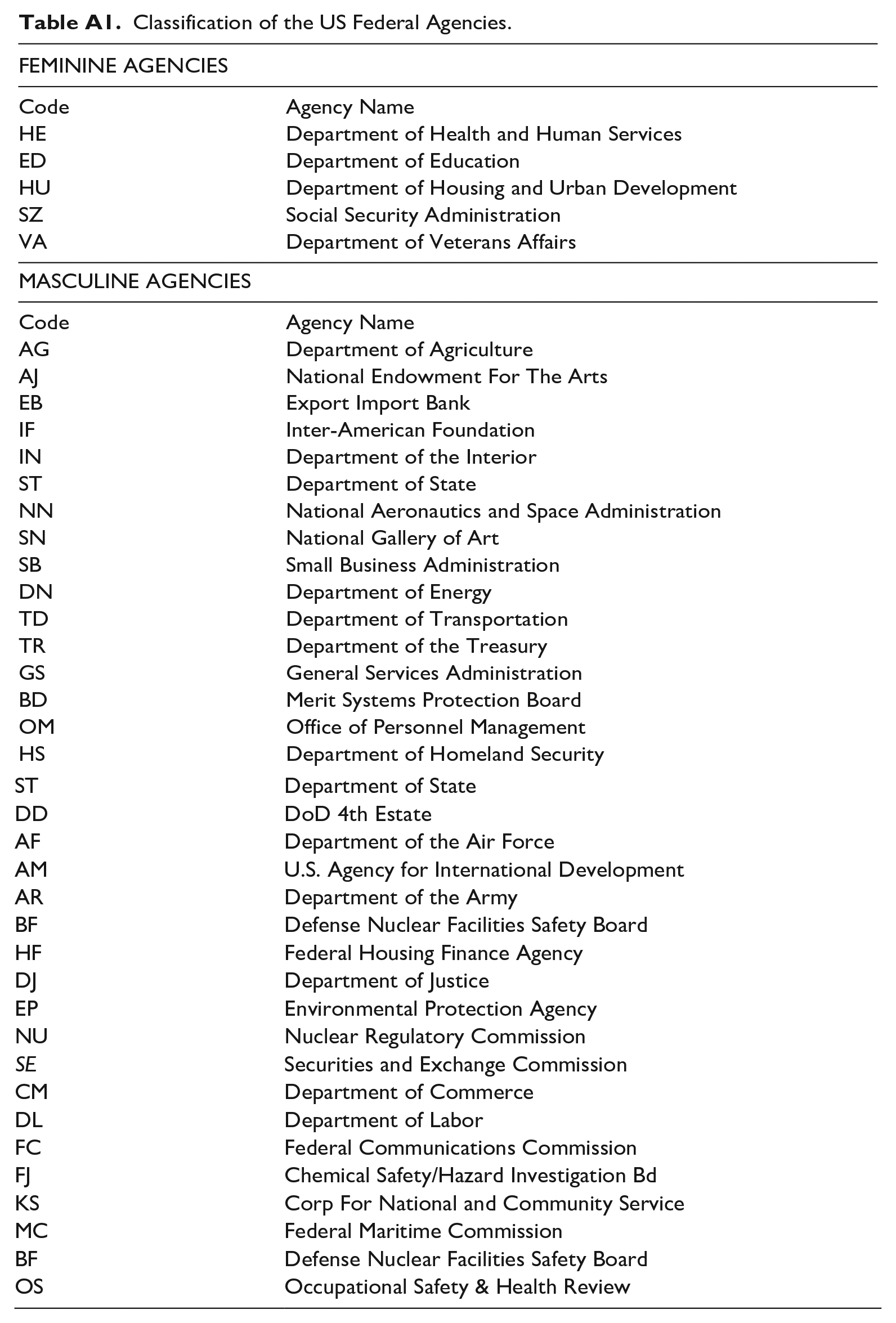
This study uses fixed effects regression model to assess the effects of health-related programs on perceived organizational performance with standard errors clustered at the agency level. In addition, it examined the possibility of the moderating effects of leadership support on health-related programs and perceived organizational performance. This study also breaks the results between feminine organizations (redistributive agencies) and masculine organizations (distributive, regulatory, and constituent agencies) by using Lowi’s typology and the gendered features of organizations. Individual items are used in the model to test the effects of the two types of health-related programs on perceived organizational performance in federal agencies in general and individually in feminine agencies and masculine agencies. The appendix shows how the federal agencies were classified. Figure 1 is a conceptual framework of how the various variables are connected based on the modeling understanding.
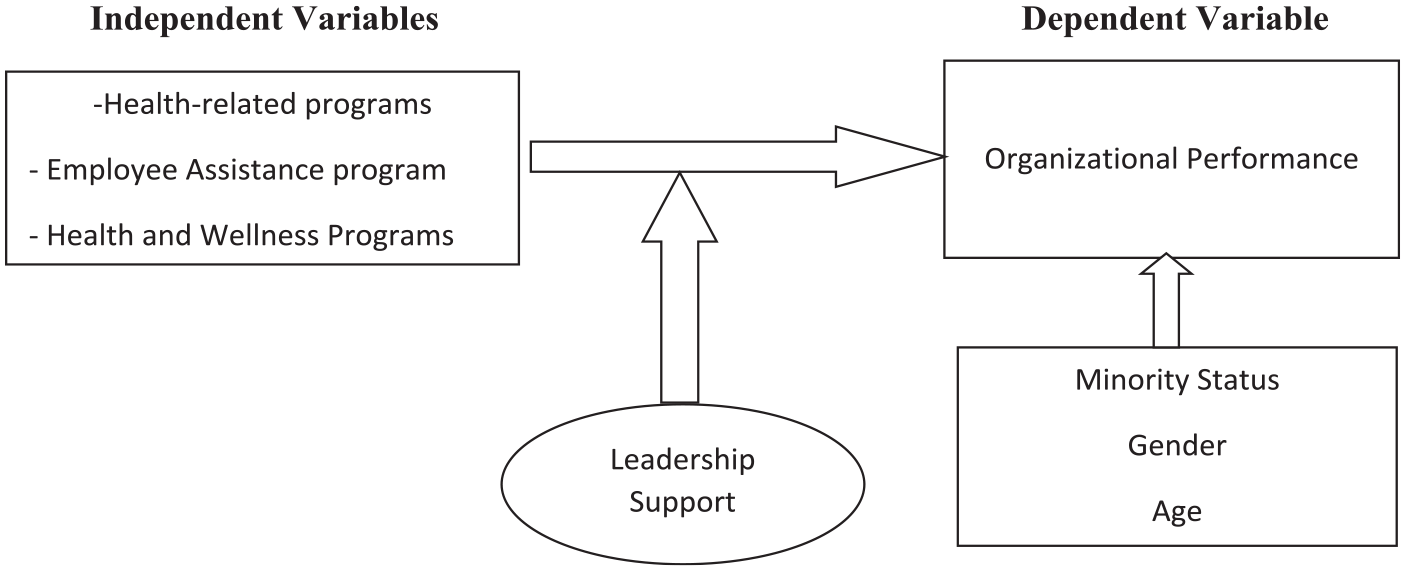
Conceptual Framework.
Results
Table 1 shows the summary statistics of the various measures used in this study. The total number of agencies from 2011 to 2015 is 260. However, the wellness program variable has 257 agencies. The mean value of the perceived organizational performance (OP) index is 3.899. Moreover, EAP mean is 3.852. The average value of a wellness program (WP) is 3.913. The leadership support (LS) mean value is 4.120. Minorities constitute about 21% of federal agency employees. Male respondents in our sample are approximately 31%. Respondents aged 40 years and above constitute about 48%.
Summary Statistics.
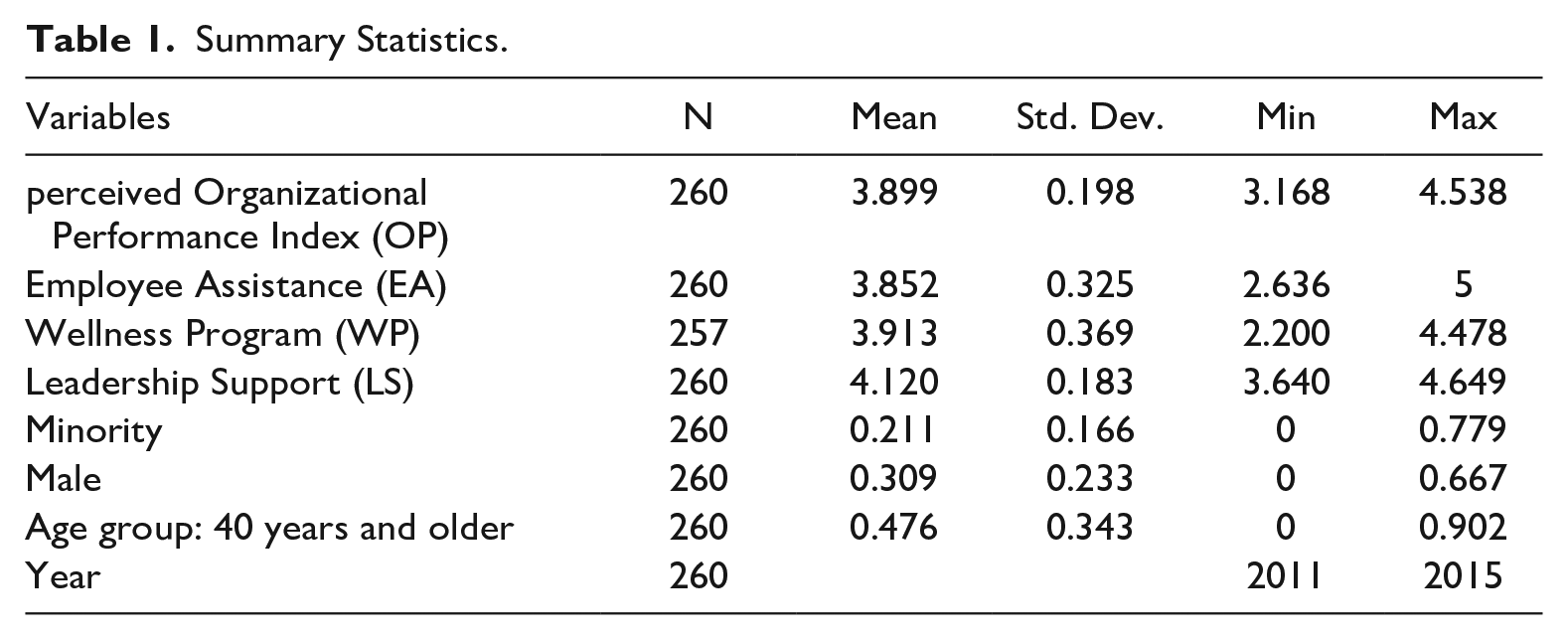
Table 2 shows the correlation between the independent variables and the dependent variable. We found that EAP and perceived organizational performance are positively correlated (0.161). Likewise, WP and perceived OP are positively correlated (0.220). Minority is negatively correlated with perceived OP (−0.185). Male and employees within the age group of 40 and above are negatively correlated with OP (−0.127 and −0.170, respectively).
Correlation Results.
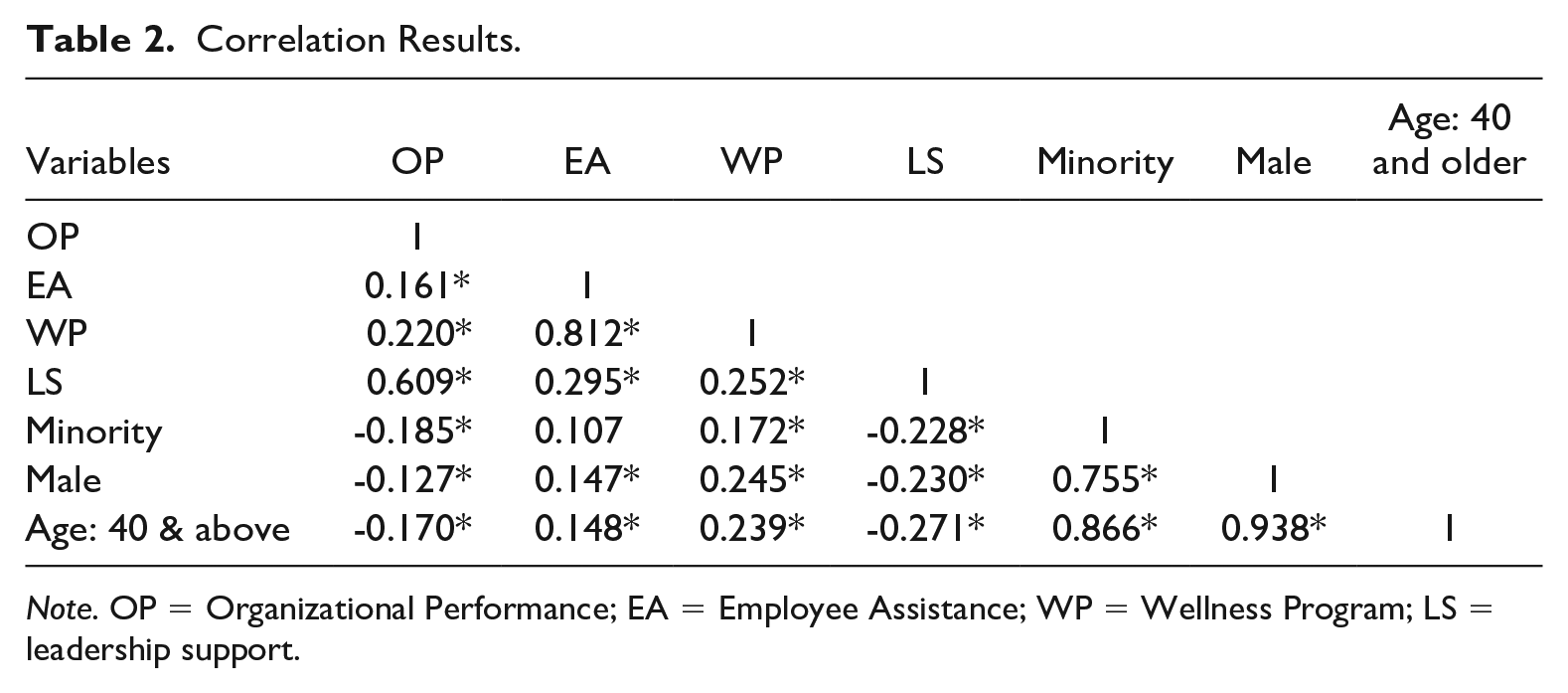
Note. OP = Organizational Performance; EA = Employee Assistance; WP = Wellness Program; LS = leadership support.
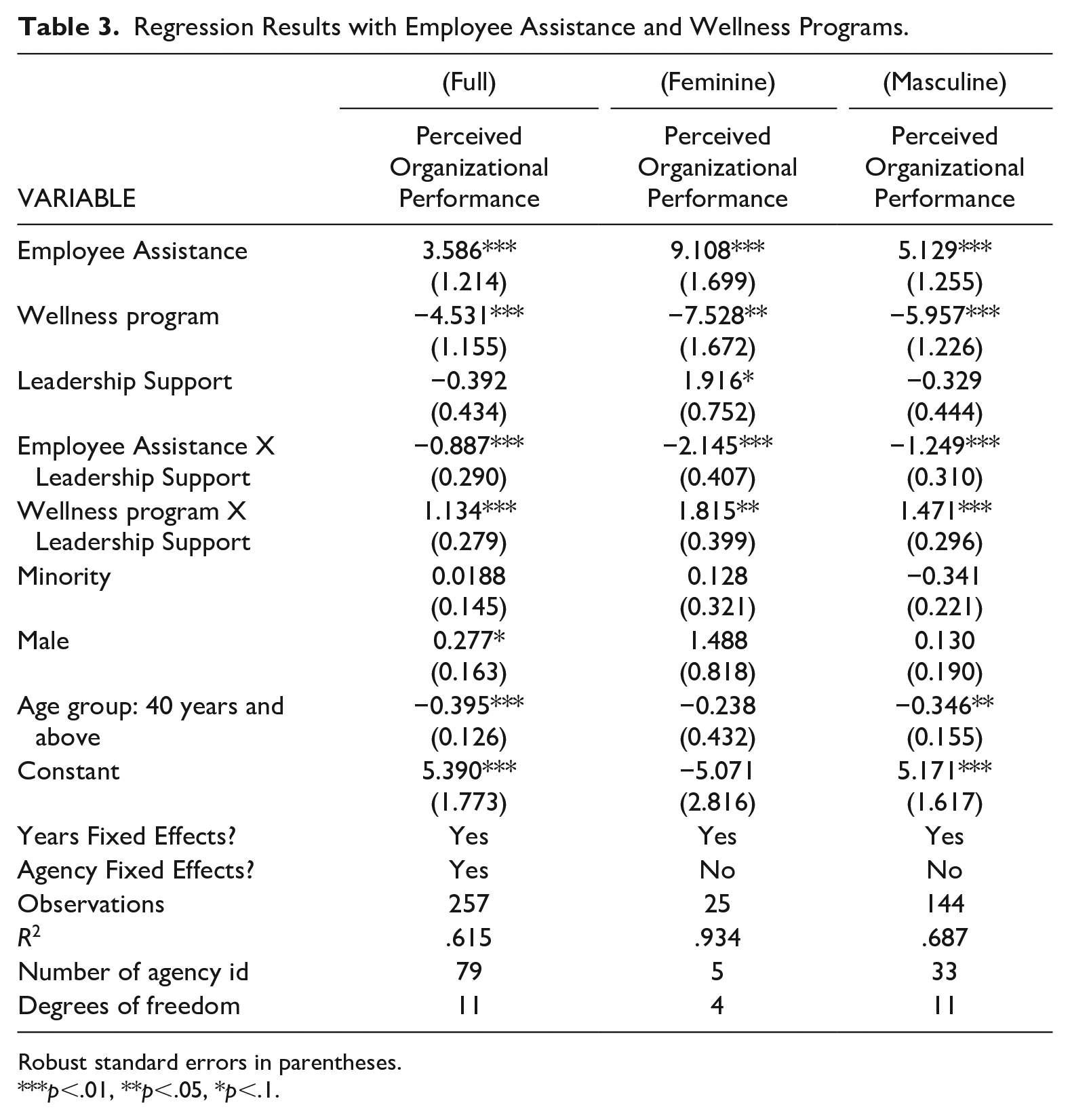
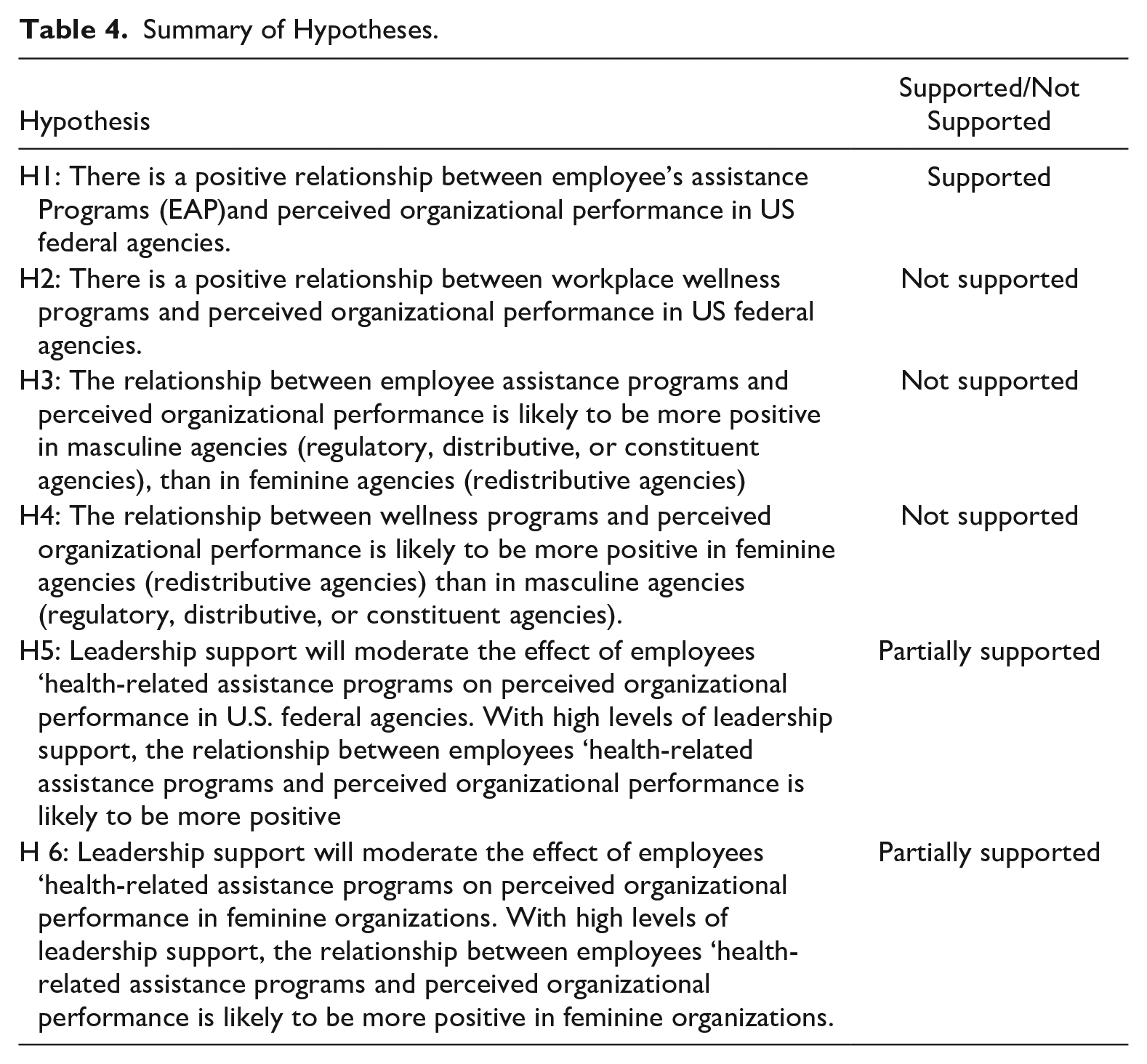
Table 3 shows the regression results of the two health-related assistance programs on perceived OP to assess which policy has the greatest impact on organizational performance as well as the contribution of leadership support as a moderator. Table 3 also shows that in the full sample (all agencies), EAP is significantly and positively associated with perceived organizational performance (3.586). This supports Hypothesis 1, which states that there is a positively significant relationship between EAP and perceived OP in U.S. federal agencies. Contrary to Hypothesis 2, WP has a negative and significant association with perceived OP (−4.531). Surprisingly, the moderating effect of leadership support on the relationship between EAP and perceived organizational performance is significantly negative (−0.887). The presence of leadership support, when there is the implementation of WP, is positively and significantly associated with perceived OP (1.134). Hypothesis 5 is partially supported as leadership support moderates only the effect of wellness program on perceived OP in U.S. federal agencies. The more male employees in an agency is positively and significantly associated with perceived OP (0.277). Older federal employees have a negative significant association with organization performance (−0.395).
Regression Results with Employee Assistance and Wellness Programs.
Robust standard errors in parentheses.
p<.01, ** p <.05, *p<.1.
For feminine agencies, there is a significant positive relationship between EAP and perceived OP (9.108). There is a negative significant association between WP and perceived OP in feminine agencies (−7.528). Leadership support has a positive and significant association with perceived OP (1.916). Surprisingly, the interaction between EAP and leadership support is negatively and significantly associated with perceived organizational performance (−2.145). The presence of leadership support, when there is the implementation of WP, is positively and significantly associated with perceived organizational performance (1.815). Hypothesis 6 is partially supported; leadership support moderates the association that exists between wellness programs and perceived organizational performance in feminine organizations.
As shown in Table 3, for masculine agencies there is a significant positive relationship between EAP and perceived OP (5.129). There is also a negative significant association between WP and perceived OP in masculine agencies (−5.957). The interaction between EAP and leadership support is negatively and significantly associated with perceived organizational performance (−1.249). The presence of leadership support, when there is the implementation of WP, is positively and significantly associated with perceived organizational performance (1.471). Federal employees aged 40 years and above have a negative and significant association with organization performance (−0.346).
Table 3 shows that comparing the association between EAP and wellness programs with perceived organizational performance in feminine agencies and masculine agencies indicates that feminine agencies reveal a stronger positive significant association between EAP and perceived organizational performance than masculine agencies (9.108 as compared with 5.129). Thus, Hypothesis 3 is not supported. In addition, there is no evidence that the relationship between wellness programs and perceived organizational performance is more positive in feminine organizations than in masculine organizations. Thus, Hypothesis 4 is not supported. Table 4 summarizes the hypotheses supported.
Summary of Hypotheses.
Discussion and Conclusion
The study assesses the nature of the relationship between perceived organizational performance in U.S. federal agencies and two health-related assistance programs, namely, employees’ assistance programs and wellness programs. The results show that EAP constitute the only policy that has a significant positive impact on perceived organizational performance in U.S. federal agencies, both feminine and masculine. This result is not surprising because EAP help employees recover from serious non-work problems, such as drug addiction, alcoholism, and other important mental-health and personal issues that negatively affect organizational performance (Jacobson & Sacco, 2012). This finding also supports the assertion of SET, which assumes that employees who are more likely to benefit from EAP feel that organizations care about them, and they will return the favor back to their organizations by adapting positive workplace behaviors that enhance organizational performance.
An unexpected result can be observed regarding wellness programs and their relationship with perceived organizational performance. Although improving performance is the primary goal of wellness programs (Sabharwal et al., 2019), this study shows that they are associated with a negative relationship with organizational programs at (0.01) level of significance. This could be due to the view that wellness programs may become a source of pressure for employees as they take time away from other personal responsibilities, and this can challenge the mitigation of work–life conflict (Dumond, 2012). In addition, voluntary participation in wellness programs may bias the result of the analysis (Sabharwal et al., 2019). This suggests that adopting more wellness programs in their current form of implementation is not enough to improve organizational performance in federal agencies.
Surprisingly, masculine organizations do not show an increased positive association between EAP and perceived organizational performance as compared with feminine agencies. This is probably due to the stigma associated with this policy, as it was originally implemented to benefit those who suffer from drug addiction, alcoholism, and mental-health issues (Benavides & David, 2010; Johnson, 1985). This stigma is the biggest barrier to using EAP for employees who need it (Benavides & David, 2010). This is because they fear that stigma would affect others’ perceptions of their job capabilities (Guimón, 2010). Unlike women, who are more likely to use self-referral sources (Brodziaski & Goyer, 1987), men might be stigmatized as they are more likely to be referred to assistance programs due to the added pressure of supervisors (Brodziaski & Goyer, 1987; Johnson & O’Neill, 1989).
Furthermore, the results do not indicate an increased positive relationship between wellness programs and perceived organizational performance in feminine agencies as compared with masculine agencies. As mentioned earlier, this program might be a source of pressure, particularly for women with children, as they may feel guilty for taking time away from their family responsibilities (Dumond, 2012; Zoller, 2004). Thus, wellness programs may worsen the perceived organizational performance of feminine agencies as compared with masculine organizations.
The results show that the moderating effect of supervisor support on the relationship between EAP and perceived organizational performance is significantly negative in U.S. federal agencies. This may be due to the problem of the lack of training among supervisors to deal with the sensitive issues associated with EAP (Gilbert, 1994; Johnson & O’Neill, 1989). In this case, untrained supervisors may add more pressure on affected employees, resulting in lower organizational performance.
The results also show that leadership support has a significant positive moderating effect on the relationship between wellness programs and perceived organizational performance in U.S. federal agencies, and this effect is stronger in feminine organizations. This is not surprising because women are more likely to participate in wellness programs (Aldana et al., 2005; Hall et al., 2017; Joslin et al., 2006), and employers are more likely to encourage female employees and provide them with incentives to participate in such programs (Batorsky et al., 2016; Mattke et al., 2015).
The findings of this study have several implications for policy makers and managers in public agencies. The results show that EAP has a significant and positive impact on perceived organizational performance in U.S. federal agencies in general. Thus, federal agencies should invest more in EAP and facilitate their use. They should also provide appropriate training to supervisors who are responsible for referring employees with these problems to benefit from the programs (Johnson & O’Neill, 1989).
The results also show that wellness programs have a negative association with perceived organizational performance. They may fail in achieving the expected results because employees’ children are often not allowed to participate in the activity centers, which, in turn, increases work–life conflict for employees, particularly female ones, as they feel that wellness programs infringe on the time meant for their children and family responsibilities (Zoller, 2004). This should encourage policy makers and public managers to allow employees’ children and other family members to participate in wellness programs to maximize their benefits.
With the exception to wellness programs, leadership support does not appear to positively moderate the relationship between EAP and perceived organizational performance. Previous researchers have suggested that supportive supervisors can influence employees’ perception of these policies and moderate their impact (e.g., Batt & Valcour, 2003; Thompson & Prottas, 2006). However, supervisors are occasionally not enough trained to provide support in the proper ways, and their behavior and approach can negatively impact employees’ work-attitudes. Thus, it is important for organizations to provide special training to supervisors. The study findings also show that EAP has more positive significant impact on feminine agencies than masculine agencies. Thus, feminine organizations seeking to improve their organizational performance must encourage the use of EAP among the employees.
It is important to mention that in light of the COVID-19 pandemic, remote work increased dramatically to contain the virus spread. As the vaccination rate increased, many employers asked their employees to return to on-site work (Coe et al., 2021). Nevertheless, many employees desire to permanently work remotely as this policy helps them to achieve a work-life balance. This policy provides them with needed flexibility and saves their commuting costs (Maurer, 2021). This contradiction, as a result, has caused a massive turnover or what is known as “Great Resignation” (Tessema et al., 2022). According to the 2022 Bureau Labor Statistics, employees in the United States, particularly women, voluntarily left their job in droves since 2021; the resignation rate among U.S public employees reached 1.1% in 2022 which is the biggest on record (The U.S. Bureau of Labor Statistics, 2022). The federal government saw higher quit rates during this period, but those rates were relatively low compared with other sectors (Gittleman, 2022). These post quit rates would require employers, including federal agencies, to consider different strategies to retain talent and preserve institutional level such as transition to hybrid work environment. The federal government should invest more in health and wellness programs because it can reduce turnover (Caillier, 2016) particularly among women as they are more likely to use these programs. Future studies should also consider the effectiveness of virtual wellness programs that emerged as a result of the pandemic and hybrid work environment.
Despite the practical implications, this study has several limitations. First, it uses subjective measures to assess organizational performance. Although subjective measures of performance are moderately or highly correlated with objective measures (Bommer et al., 1995; Brewer, 2005; Delaney & Huselid, 1996; Walker & Boyne, 2004), using actual measures of organizational performance may produce more accurate results. Future studies should use objective measures of organizational performance to increase the results’ accuracy. In addition, the study uses degrees of satisfaction with a program to measure health-related assistance programs; this may bias the study results as not all respondents may stand to benefit from these policies. To reduce the probability of bias, future studies should consider measuring participation in health-related assistance policies.
Another limitation of the study relates to the sample size. The study uses FEVS to create a panel dataset by aggregating the mean responses at the agency level. This, in turn, results in reducing the sample size. In addition, the measures of health-related assistance programs were not available in FEVS after 2015. Therefore, the study measured these programs over the period between 2011 and 2015 because the measures were consistent during this period.
Despite these limitations, the study contributes to the field of public administration in two ways. First, it sheds light on the rarely addressed WLBPs, such as EAP and wellness programs. Second, it provides empirical results regarding the relationship between these policies and organizational performance. In addition, this study examines the differential impact of each health-related assistance programs on perceived organizational performance to assess which policy has the greatest impact.
Footnotes
Appendix
Classification of the US Federal Agencies.
| FEMININE AGENCIES | |
|---|---|
| Code | Agency Name |
| HE | Department of Health and Human Services |
| ED | Department of Education |
| HU | Department of Housing and Urban Development |
| SZ | Social Security Administration |
| VA | Department of Veterans Affairs |
| MASCULINE AGENCIES | |
| Code | Agency Name |
| AG | Department of Agriculture |
| AJ | National Endowment For The Arts |
| EB | Export Import Bank |
| IF | Inter-American Foundation |
| IN | Department of the Interior |
| ST | Department of State |
| NN | National Aeronautics and Space Administration |
| SN | National Gallery of Art |
| SB | Small Business Administration |
| DN | Department of Energy |
| TD | Department of Transportation |
| TR | Department of the Treasury |
| GS | General Services Administration |
| BD | Merit Systems Protection Board |
| OM | Office of Personnel Management |
| HS | Department of Homeland Security |
| ST | Department of State |
| DD | DoD 4th Estate |
| AF | Department of the Air Force |
| AM | U.S. Agency for International Development |
| AR | Department of the Army |
| BF | Defense Nuclear Facilities Safety Board |
| HF | Federal Housing Finance Agency |
| DJ | Department of Justice |
| EP | Environmental Protection Agency |
| NU | Nuclear Regulatory Commission |
| SE | Securities and Exchange Commission |
| CM | Department of Commerce |
| DL | Department of Labor |
| FC | Federal Communications Commission |
| FJ | Chemical Safety/Hazard Investigation Bd |
| KS | Corp For National and Community Service |
| MC | Federal Maritime Commission |
| BF | Defense Nuclear Facilities Safety Board |
| OS | Occupational Safety & Health Review |
Declaration of Conflicting Interests
The author(s) declared no potential conflicts of interest with respect to the research, authorship, and/or publication of this article.
Funding
The author(s) received no financial support for the research, authorship, and/or publication of this article.
