




Abstract
This article focuses on feelings of anxiety among radical young Muslims, not just as a result of radicalism and terrorism but rather as an important cause of both. In contrast to many other publications which mainly deal with the radicalization of Muslim youths without taking into account their personal experience, the feelings of fear and anxiety expressed by radical young Muslims are central to this research. On the basis of an ongoing case study of 23 young Muslims who have participated in a lengthy de-radicalization program in Amsterdam since 2009, an attempt has been made to gain insight into the interaction between radicalization processes and feelings of anxiety among this target group. The case study suggests that the three forms of anxiety expressed by radical Muslim youths, namely, (1) fear of victimization, (2) fear caused by guilt feelings, and (3) fear of being controlled by hatred and revenge, are related to the three phases presented in the “staircase model to terrorism.” This research into the various forms of anxiety experienced by radical young Muslims provides a concrete starting point for the de-radicalization process.
Keywords
Introduction
In the last 4 years, a sense of anxiety and insecurity among citizens has received significant attention in societal and scientific debate. In most publications on radicalism and terrorism, terrorist attacks such as those in Paris, Brussels, and Nice are considered responsible for such feelings among citizens (Chenoweth et al., 2019). Feelings of fear and anxiety are indeed central to this article, but are here discussed as an important cause of radicalism and terrorism rather than as the result of external events.
Existing theories about Islamic radicalization provide various explanations for the existence and growth of radicalism and terrorism among Muslims. These views are broadly related to (1) economic, political, and social factors (Blain, 2009; Buechler, 2010; Esposito & Iner, 2019; Hudson, 1999; Steiner & Onnerfors, 2018); (2) the identity development of the persons concerned (Arena & Arrigo, 2006; Brown & Capozza, 2000; Gutton, 2015; McDonald, 2018); (3) the role of group dynamics (Alimi et al., 2015; Forsyth, 2006; Janis, 1972; Moghaddam, 2018; Tajfel, 1978); (4) the role of cognitive processes (Bélanger et al., 2019; Neumann, 2003; Norton & Ariely, 2009; Yeste, 2014); and (5) the emotional vulnerability of the persons concerned (Horgan, 2005; Koomen & Van Der Pligt, 2016; Victoroff & Kruglanski, 2009). The latter (5) will be further discussed in this article, namely through a psychological exploration of the experiences of fear and anxiety expressed by the 23 radical young Muslims of the case study and the influence of these experiences on their radicalization process. In contrast to many other publications that mainly write about radical Muslim youths without talking about their experiences, this research focuses on the actual concerns and anxieties of these young people. The group have taken part in a lengthy de-radicalization process, starting in 2009 and based in Amsterdam, and this article therefore refers to this case study as the Amsterdam case study. 1 The quotes from the Amsterdam case study are compared with recent statements from young radicalized Dutch Muslims after the attacks on two mosques in New Zealand in 2019.
In order to understand the background of the Amsterdam case study here, I will begin with a short description of Islam and Muslims in the West. Islam, the youngest Abrahamic religion, came into existence in Mecca, on the Arabic peninsula in 610 (Ljamai, 2015a). The Muslim population is over 1.5 billion around the world. According to statistics, approximately 13 million Muslim population currently belong to Western European countries (Sroka et al., 2017). In the Netherlands, there are nearly 1 million Muslims with Turkish, Moroccan, Surinamese, and other ethnical backgrounds. This population currently constitutes approximately 5% of the Dutch population. Following the arrival of Turkish and Moroccan “guestworkers” in the beginning of the 1960s of the 20th century, the Islam became one of the most important religions in the Netherlands.
Since 9/11, the interest in Islam and in Muslim communities in Western European countries has increased significantly. The tensions created by terrorist attacks in the West by Al-Qaeda and Islamic State (IS) have contributed to growing acceptance of the Islamophobic discourse of neo-conservative parties in several Western countries. Attention has especially been directed toward issues like human rights, justice, democracy, gender relationships, freedom of expression, and religious freedom (Israeli, 2017; Klausen, 2005; Laurence, 2012; Ljamai, 2015a; Mandaville, 2007).
In a polarized society, the contrast between “us” and “them” thinking is enhanced, and people will be more inclined to stigmatize “the other” (Koomen & Van Der Pligt, 2016; Riek et al., 2006). This background information could serve as a basis to gain a better understanding of the existence of our case study and its findings.
Complexity of the term “radicalism”
The research from various disciplines shows that no strict distinction is made between radicalism and terrorism, even though this is necessary (Moghaddam, 2018, p.6): “Psychologists have studied radicalization, but most of this research has been narrowly focused on terrorism” (Doosje et al., 2016; Van Stekelenburg & Klandermans, 2007). It is not my intention in this article to offer a systematic analysis of the strict differences between radicalism, fundamentalism, extremism, and terrorism, but I will be providing a short explanation of these concepts. This offers us the chance to explain how the term radicalism is related to the other three terms and why the emphasis is on the fundamentalist reading of the sacral text as a component in the clarification of the term radicalism. The four concepts are not separate from each other and could possibly influence each other (Scarcella et al., 2016). The main idea/concept in fundamentalism is anti-hermeneutic (Ozzano, 2009). Generally, religious fundamentalism is characterized by oppositionalism—in other words, the resistance against theological modernism, exclusivism, anti-individualism, and selectivity. Religious fundamentalism is thus an oppositional reaction; it is defensive and selective in comparison with the modernization process (Almond et al., 2003; Harrison, 2007; Koopmans, 2015; Zeidan, 2003). During the discussion on the complexity of the term radicalism, we will see that the fundamentalist reading of the sacral holds a central position in the stadium of radicalism.
Extremism could best be described as “vocal or active opposition to fundamental values” (Scarcella et al., 2016). Extremism involves certain ideologies which can be compared to right-wing extremism and left-wing extremism. The emphasis is continuously on operating outside of the borders of a democratic state. Extremism as a phenomenon is closely related to terrorism, especially when it comes to committing illegal actions (Christmann, 2012; Iannaconne & Berman, 2006; Khader et al., 2016; Richards, 2017).
In terrorism, one attempts to accomplish societal changes or influence political decision-making through violent actions (Juergensmeyer, 2000; Schmid, 2011; Smelser, 2007; Sroka et al., 2017).
Before discussing feelings of fear among radical young Muslims and how these feelings of fear and anxiety have influenced the radicalization process, it must be made clear what is understood in this article by the concept radicalization, and in particular the Islamic variant thereof.
Radicalization is a process of relative change in which the individual or a group undergoes an ideological transformation in order to achieve political goals. The pursuit of profound radical changes in society can lead to the rejection of democratic principles and possibly to the use of violence (Ashour, 2009; Kundnani, 2014; Wilner & Dubouloz, 2009). It is a process whereby confidence in the political system diminishes and people become increasingly isolated (Taarnby, 2005).
In the case of young Muslims, this radicalization process is linked to a fundamentalist interpretation of the Koran, thereby excluding the dynamic of the sacred text. By this, I mean that Koranic texts about jihad or about relations with non-Muslims receive an unambiguous and binding explanation (Appelby, 2000; Bakker, 2006; Nesser, 2011). Alienation from other people, violence, and even suicide (Borum, 2011; Ljamai, 2011) may be seen as risks associated with worshipping a sacred text and following an unequivocal approach to it. Such risk cannot be viewed separately from the role of the jihadist ideology which views the use of violence as a means of bringing about radical change in society. The ideology that contributes to the violent urge for change is not a static fact; it changes over time (Bandura, 1990; Coolsaet, 2008, 2016; Wagemakers, 2010). One of the most important concepts of jihadist ideology is the dogma of loyalty to Muslims and rejection of non-Muslims (al-wala’ wa-l-bara’) (Bin Ali, 2012; Iannaconne & Berman, 2006; Liebman, 1983; Ljamai, 2011). This concept nurtures radical ideas and determines how radical young people relate to society (Wagemakers, 2010, 2014).
Three components are thus visible in the conceptualization of Islamic radicalism: the first component is the exclusion of the possibility of reinterpreting the religious text within new contexts; the second component is the assumption of a jihadist ideology, and in particular its alienation of other people; the third component is the legitimization of violence with the aim of influencing political decision-making and thus causing harm to society.
When defining these three components of radicalism, the concept of identity has to be considered. This is because recent research shows that identity is considered to be a crucial aspect of notions of radicalism and extremism in Western societies (Richards, 2017). Kepel, Khosrokhavar, and Roy have argued that “the process whereby the individual seeks to re-establish a lost identity in a confusing world leads to radicalization” (Dalgaard-Nielsen, 2010).
The development of a positive identity is very important to people (Erikson, 1963; Turner, 1984). The manner in which their identities are shaped depends on the context and which interpersonal relationships of the individual are important to his or her identity formation. Seeing that identity plays an important role in the radicalization process, it can be established that radical Muslim youths limit themselves to the thoughts and ideologies of their radical group in their identity formation. This paradoxical attitude among this group comes from the fact that they are greatly appreciated by their radical allies (superiority complex) contrary to the inferiority complex they experience in society. In fact, this group experiences a conflict between its Islamic identity and its Western identity. This paradox makes this group more sensitive and could lead to an identity crisis (Abbas, 2007; Dalgaard-Nielsen, 2010).
A model which is frequently used to study the radicalization process in phases is the Staircase Model to Terrorism (Moghaddam, 2005). Three phases are central to this model: the first phase is characterized by “a sensitivity to a radical ideology”; in the second phase, the individual becomes “a member of a radical group”; in the third phase, the individual is “ready to act on the basis of the group’s ideology” (Doosje et al., 2016). Within these phases, a distinction can be made between micro, meso, and macro developments. For example, the “sensitivity” phase at the micro level consists of the need to matter to others and to the society. At the meso level, this phase shows the need to belong to a specific social group and a sensitivity to perceived injustice toward the group. Finally, the “sensitivity” phase embraces a sensitivity to societal developments, such as the threat posed by the dominance of the West in the eyes of radical Muslims. This takes place at the macro level. The second phase of “group membership” occurs largely at the meso level, since the bonds between the group and the individual are strengthened while the individual is isolated from other social networks. The third phase in which the radicalized individual is willing to take action spurred on by the experience of losing a neighbor, for example, is encouraged by writing a will and legitimized by the encouragement of authority figures (Doosje et al., 2016).
But why is the staircase model the best model to attempt to understand the Amsterdam case study discussed here, and why are other models less useful?
There are other similar models like the model of McCauley and Moskalenko that identify 12 mechanisms of political radicalization by depicting the pathways to terrorism in a pyramid model and specify the influence of group dynamics on individuals (McCauley & Moskalenko, 2008). The same goes for the model of Randy Borum, in which four stages of radicalization are identified (Borum, 2003). The reason for choosing Moghaddam’s model could be substantiated by the following two arguments:
The first concerns the essential role of psychological exploration regarding the understanding of radicalization processes, in which emotions and frustrations play a crucial part. This is in accordance with the key objective of our study which attempts to explain feelings of fear among radical Muslim youths using the existing literature.
The second reason has to do with the fact that the metaphor from Moghaddam’s model fits in with our theoretical formation in which the interaction between feelings of fear and radicalization processes is fundamental. A parallel sequence can be discovered between the staircase model toward terrorism and the feelings of fear of radical Muslim youths.
Methodology
Research design
This research is an exploratory and qualitative case study—a method that provides insight into how the participants in the radicalization process identify their experiences of fear and other emotions (Creswell, 2015). “A qualitative case study seeks to investigate a contemporary issue in depth and within a real setting, and this is effective in an area where little research has been conducted” (Yin, 2017). The background of this case study on anxiety among radical Muslim youths is outlined and the literature on modern psychology is explored in order to provide a rationale for choosing the case study as the research method. This form has been chosen because little is known about the feelings of fear among radical Muslim youths. The Amsterdam case study attempts to gain more insight into the interaction between radicalization processes and feelings of fear among this target group. The research has been conducted by means of participatory observation (during the de-radicalization process) and by open interviews with participants in this process.
Three groups in the world of radicals
According to McCauley and Moskalenko (2014), three categories of radicals can be distinguished: (1) justifiers, (2) radicals, and (3) terrorists. The researchers base their conclusions on the extent of radical beliefs and emotions, and the impact of those beliefs on behavior. For terrorists, the researchers analyze the behavior of the terrorists and what that behavior might mean in practice. The justifiers are described as a group whose ideological beliefs connect it with the other two groups. This group does indeed live with frustration and negative emotions, but they do not express this through physical violence (McCauley & Moskalenko, 2014). By contrast, terrorists reach a more intense level and can commit violence (Arena & Arrigo, 2006; McCauley & Moskalenko, 2014). It is known that radical young people support violent actions in addition to displaying aggressive behavior in most cases (King & Taylor, 2011). The influence of trigger factors means they can quickly end up in the world of terrorism (Christmann, 2012; McCauley & Moskalenko, 2008; Moghaddam, 2005).
This study deviates from this categorization of three groups of radicals since many questions were left open. For example, what do young people who are looking for their religious identity fall under, especially young people who unwittingly end up in face-to-face or social media interactions with jihadist spiritual leaders or jihadist networks? And how can we characterize the “hard core” among radical young people? They are not terrorists, but are one step further than radicals and dare to take action of some kind. For my Amsterdam case study, this categorization proved to be less useful and I have used different factors to classify Muslim youths, as I have explained in detail in an earlier work (Ljamai, 2011).
The qualitative method used throughout this article involves analysis of the research results which were established using induction. More specifically, the core methodological approach of our analyses involves the exploration of the levels of feelings of anxiety among the respondents based on their quotations (and experiences). This is helpful when answering the questions regarding the interaction between theory formation with regard to feelings of anxiety and radicalization processes.
The division of these youths into the previously mentioned groups can be explained by our empirical participating observations during the radicalization trajectories for the Amsterdam case study as well as for other case studies that we led and coached.
This result was mentioned not only in my article (Ljamai, 2011) but also in a private evaluation report for the client in the Netherlands regarding this initiative on the radicalization trajectory for the Amsterdam case study.
In this distribution, we use the term “category” to refer to a group of youths who are characterized not only during this trajectory—but also during several programs that we provided inside and outside the Netherlands—by profile aspects of youths who are looking for their religious identity and are living with an identity crisis, or youths who are extremely susceptible to radicalization, or hard-core members who are already a step further along compared to the other two categories that were mentioned. Hereby is an explanation of the three categories of the Amsterdam case study:
Group 1: This consists of five young people who are searching for their religious identity. They want clear answers to their questions and find it difficult to follow the differences among Muslim scholars. They focus on religious statements by spiritual leaders that touch them deeply. This gives them some satisfaction (Arena & Arrigo, 2006). They are affected by stereotypes and negative perceptions about Islam and, by contrast, delve into religious issues and try to defend their religious identity. According to Erikson’s (1963) theory, a lack of self-confidence plays an important role in shaping one’s own identity. Because of a lack of self-confidence and self-respect, the individual searches for ways to strengthen his identity (Erikson, 1963). Within a radical circle, the individual receives satisfaction and is seen as a “hero.” This strengthens his identity and also increases his loyalty to the leader (Feddes et al., 2013; Victoroff, 2005).
Group 2: This consists of six young people who are (very) susceptible to radicalization. According to Arts and Butter (2009), young people who find it difficult to connect with society are more susceptible to radicalization. Their susceptibility is a result of vulnerability on both an emotional and a mental level. The emotional intelligence of this group is very low; they get irritated quickly and cannot stand criticism. They feel drawn to conflicts outside the Netherlands such as the Israel–Palestine conflict and the wars in Syria, Yemen, Afghanistan, and Iraq. They seek bonding and recognition and are quickly influenced by extreme religious statements, and therefore they belong to high-risk groups. Risk factors such as recruitment and indoctrination by violent groups can even make otherwise resilient people vulnerable to radicalization (Doosje et al., 2016; Gottschalk & Gottschalk, 2004; Mann et al., 2015).
Group 3: The last category consists of 12 hard-core members with charismatic leadership. They are a step further along compared to groups 1 and 2. They construct for themselves a strong identity and a new self-image. They can easily influence other young people to whom they give assignments, the implementation of which they also participate in. They have direct contact with spiritual leaders and with terrorist networks. They adhere to radical ideas and emphasize in their message the lack of social and political justice (Buijs et al., 2006; Doosje et al., 2016; Moghaddam, 2005). The relevance of investigating feelings of anxiety in this category is high, because this can help us to gain insight into the emotional state of vulnerable people both in the literature and in the field. In fact, the third category is an influential group with a large network. Their fears therefore have an influence far beyond their individual behavior. Understanding their fears and how they act in response to this fear is therefore very important for the de-radicalization approach. I do emphasize here that, according to Rational Choice Theory and also based on the conversations we had as part of the Amsterdam case study, this group makes a rational choice to participate in jihadist networks (Pape, 2003).
The aim of the Amsterdam case study was to assist the 23 participants with de-radicalization to promote their reintegration into society and also to increase their resistance to extremist ideologies. The age of the target group (all male) varied between 19 and 33 years. The group was composed of three ethnicities: Moroccan, Egyptian, and Surinamese. Among the participants were takfiri (Muslims who accuse other Muslims of apostasy), former prisoners, jihadists, Muslim youths with a high likelihood of rapid radicalization, and vulnerable youngsters searching for their religious identity.
The level of education of the participants varied from highly educated to school-leavers. A third had a university background, a third had secondary vocational education, and a third had not completed any course of study. In relation to employment opportunities, five participants indicated that they had difficulty finding work due to their Islamic appearance.
Eighteen out of the 23 participants participated in the interviews.
In terms of the selection of the interviewees or generally pertaining to the research process, there were three selection criteria established:
The first concerns following a strong jihadist ideology, which came forward as a result of different conversations and debates, in particular among the hard-core members during the de-radicalization program.
The second criterion pertains to the charismatic and leadership character of the respondent, because this gives us an indication of how the selected youths (from the Amsterdam case study) can influence other youths ideologically.
The third selection criterion relates to the extent of psychological vulnerability. Respondents (from the Amsterdam case study) with a higher level of frustration are potentials for our study because their psychological and social frustrations offer more insights into the feelings of anxiety among this group.
The classification of the 18 interviewees is as follows: 12 belonged to the hard-core group, 4 were youths susceptible to radicalization, and 2 were young people searching for their religious identity. Semi-structured questionnaires were prepared for in-depth interviews (Evers, 2007). These in-depth interviews were conducted separately for each participant. The interviews took place at the chosen locations of the respondents. Each interview lasted between 1 and 1.5 h. The interviews were recorded, and at the request of the respondents, all interview recordings were deleted after analysis so as to guarantee the privacy and anonymity of the interviewees.
Data collection, data processing, and data analysis
Respondents were invited to express their feelings, thoughts, and experiences of fear. A topic list was drawn up for obtaining the data. This topic list was inspired by the three phases from the “staircase model.” The topic list contained questions that were important for identification of fear among these young people. The research results were achieved in an inductive manner. This inductive method of data collection fits in with the fact that little or no theory is available about fear forms among radical Muslim youths. By means of the inductive method, an attempt was made to have the qualitative case study and interviews contribute to new theory formation. The data were structured, analyzed, and coded according to the Grounded Theory approach (Glaser & Strauss, 1967).
The data provide a detailed insight into the complex dynamics of these feelings of anxiety among radical Muslim youths in the Netherlands. Little is known about feelings of anxiety among this group. This article fills this gap, providing a comprehensive study of this phenomenon. This offers the reader of this article the less-known comprehensive keys to understand this complex phenomenon. In fact, this article helps us to increase our understanding of the behavior of this Muslim youth group to gain more insights into the dynamics and processes of Islamic radicalization and use this to develop new strategies and initiatives against radicalism and terrorism.
The strength of the Amsterdam case study lies mainly in the fact that these youths get the opportunity to express their feelings and share their thoughts and experiences on anxiety in a safe environment. By analyzing and critically reflecting on these data, we can increase our understanding of the interaction between feelings of anxiety and radicalization processes.
The approach is illustrated with quotes of the Amsterdam case study within the Dutch context. The fundamental principles of the qualitative data analysis in this study are related to (1) summarizing, (2) describing, (3) interpreting, and (4) analyzing the data (Schurink et al., 2013).
The interpretation of the data had the goal to (1) provide insights regarding the feelings of anxiety among respondents, (2) look for interaction between feelings of anxiety and radicalization processes, and (3) use the results from the data as a basis for policymakers and academics to improve the existing de-radicalization programs (see recommendations) and pay more attention to this complex phenomenon.
Results
This section reports the findings of the Amsterdam case study and interviews concerning these feelings of anxiety.
Because the study of fear among radicalized youths is a young field, this article attempts to build a bridge from the experiences of radical Muslim youths—and specifically from the Amsterdam case study—to considerations of modern psychology in which attention is paid to fear as an emotional state of vulnerable people. The term “fear” is defined in modern psychology as a natural reaction of the body and of the mind to an imminent danger. Fear is in most cases based on specific experiences or incidents that one has undergone (McWilliams et al., 2007). The way in which the individual deals with his fear or anxiety varies depending on the character of the person, his personality formation, and his environment (Horgan, 2005). In this article, fear is defined as social disquiet, more specifically “a general climate of uncertainty and psychological unrest” (Horgan, 2005). Three forms of fear emerged from conversations with young Muslims from the Amsterdam case study: fear of victimization, fear of guilt, and fear of being dominated by feelings of revenge and hatred.
Fear of victimization
The fear of becoming a victim appeared to come mainly from hard-core Muslim youngsters. Let us start with the following quote from a vulnerable Muslim boy, a participant in the Amsterdam case −study, in 2009:
We pray in a mosque located next to the police station in Amsterdam West where a Muslim boy stabbed a police officer. Sometimes I think: what if a Nazi enters the mosque and shoots us all?
This quote can be clearly linked to vulnerability theory (Franklin et al., 2008). Killias (1990) and Franklin et al. (2008) describe in a more specific sense the characteristics of the vulnerability of the individual potential victim. Vulnerability means that the individual is exposed to risks and unknown dangers. It may be based on previous experience as a victim of crime and on the experience of having had little control over the situation that arose (Jackson, 2009; Killias, 1990; Perloff, 1983).
This hard-core boy is afraid of being unable to protect himself and fellow Muslims, and therefore feels vulnerable and powerless. He does not have the means to prevent an attack on a mosque, which evokes feelings of fear. It is striking that equivalent quotes were also made by radical Muslim youths between 2009 and 2016 and especially after the attacks in Paris and Brussels. Here are two such quotes:
When I go to the mosque, I am always alert. I get the feeling that we will be attacked by a racist during prayer. To be honest, I feel safer on the street than in the mosque. That is paradoxical but that is the reality. We are still a target in the mosque.
Perhaps this point can be related to opportunity theory (Wilcox et al., 2003; Wilcox Rountree, 1998). This theory consists of three components: the presence of and exposure to (possible) perpetrators, the presence of attractive targets, and the technical and social protection of the targets (Cohen & Felson, 1979; Wilcox et al., 2003; Wilcox Rountree, 1998). The lack of social control and opportunity structure can lead to feelings of insecurity within a social context (Bursik & Grasmick, 1993; Hale et al., 1994; Pantazis, 2000).
After all, this boy is afraid of forming an attractive target for people or groups of people (“racists”) who in his eyes have probably already committed attacks on visitors to mosques. In this quote, there is less of a sense of powerlessness than in the first quote. These feelings of threat from real or unreal risks have been confirmed by radical Muslim youths following the terrorist attacks on the two mosques in New Zealand (March 2019). A conversation with 14 vulnerable Muslim youths in Amsterdam, Eindhoven, and The Hague made clear how great the fear of victimization is among this group. The impact of this attack has been increased by the fact that the perpetrator filmed and broadcast the attack via social media. Here are two quotes given a week after the attack on mosques in New Zealand:
I saw this horrible attack on dear Muslims at the two mosques coming, but I never thought it could happen in New Zealand. I have been living for years with the feeling that right-wing extremists were seriously going to attack us.
This quote clearly shows emotional concern. It is about “dear Muslims” and a “horrible attack.” This boy feels himself a target and seems—in line with the theory of opportunity—to be afraid of being targeted by the right-wing extremists. The fact that he has had this feeling for years and saw the attack coming indicates that he is afraid of repetition and fears that the pattern of Muslim hatred of right-wing extremists will continue. This again corresponds to opportunity theory:
I’m going to pray with my brothers for Muslim victims in New Zealand. I am deeply saddened by the terrorist attacks on the two mosques in New Zealand. I am worried about my brothers and sisters in the Netherlands and I think it is important that mosque boards must be constantly alert to security risks. I would like to share my fear with my brothers.
This quote is in line with vulnerability theory. It is clear that this boy considers himself unable to protect the Muslim community in the Netherlands. There is a sense of despair in his words because he has had to put the protection of his brothers and sisters in the hands of mosque boards. He clearly sees risks for the community, but says he is praying to deal with that fear. It must be difficult for him not to be able to protect the community.
The comparison between the quotes from the Amsterdam case study and the quotes after the attack on the two mosques in New Zealand shows that these youngsters felt responsible for the crime committed by another young Muslim. They feel they might be victims of any revenge action that may possibly be carried out by others. Three fears can be distinguished in this regard:
The first feeling comes from the fear of terrorist attacks on Muslims in the mosque while praying. This is seen as a consequence of the terrorist attacks on civilians in various Western countries (Bakker, 2017; Ljamai, 2011).
The second feeling of fear is very strong and related to the feeling of oppression and discrimination. The victory of right-wing extremist movements everywhere in the West plays an important role in this (Feddes et al., 2015; Ljamai, 2015b).
The third feeling of fear arises from conspiracy theories which influence these young people to a great extent (Ljamai, 2011, 2017).
It can be concluded that among the 18 young people interviewed there is a feeling of fear of victimization. Because of this fear and other feelings of insecurity, these young people, consciously or unconsciously, will distance themselves from multiple facets of society (Schmid, 2016; Taarnby, 2005). Accordingly, the isolation among this group only gets stronger. This reinforces more specifically the sense of alienation from society (Taarnby, 2005).
The fear that emerges from these quotes—the fear that one’s group can become a victim or a target of an attack—is well understood from two theories of modern psychology, namely, vulnerability theory and opportunity theory. Two forms of vulnerability can be distinguished: physical and social vulnerability (Franklin et al., 2008; Skogan & Maxfi, 1981). Physical vulnerability is related to fear of crime and has been reported mainly among women and the elderly. These subjects are convinced that they are unable to cope with physical confrontation. Social vulnerability has to do with a lack of strong social basis and with the influence of social contacts on one’s experience of the fear of crime (Pleysier, 2009). Young radical people are vulnerable in both these ways. In the existing literature on vulnerability, it emerges that vulnerable people think that they are insufficiently able to defend themselves, and thus more likely to become a victim (Killias, 1990). In this context, risk sensitivity reinforces the fear of becoming a victim (Bilsky & Wetzels, 1997; Warr, 2000). The character of the person, his personality traits, and his previous experiences with victimization can also reinforce fear among these young people (Killias, 1990).
The fear of victimization depends strongly on the other two forms of fear: fear caused by feelings of guilt and fear of being dominated by hatred and revenge.
Fear caused by guilt
Another characteristic that was discussed in the Amsterdam case study is the fear related to guilt. This is evident from the following quote:
They (the Dutch) are harassing our women. They spit on our mothers, attack our girls, both verbally and non-verbally. What they do is much worse than what Muslims do in the Netherlands.
A sense of helplessness occurs, which creates fear in the speaker. He sees himself as strong, but his ego is put under pressure, which creates fear: if it continues, he is afraid that he cannot influence anyone in the future. This situation causes frustration and discomfort among this group. Fifteen out of the 18 interviewees indicated that their frustration due to feelings of helplessness and powerless was too high. Frustration refers to the emotional state of a person who is prevented from achieving his expectations, needs, or purpose. It is a severe irritation because one is disappointed at being unable to get what one wants (Irving, 1971). As people become less resilient, the chances of becoming frustrated increase.
The tension between the sense of uselessness among these young people and the image they create about themselves (in this case to protect Muslim women) is clearly addressed by Freud in his description of the unease in culture as: “fear of the external and fear of the internal authority” (Freud, 1984), or “the fear of loss of love and fear of the super-ego respectively” (Freud, 1984). The negative aspects of guilt among this group appear on three levels: guilt awareness (or cognition), guilt feelings (emotions), and guilty actions (behavior). The fear of guilt is therefore characterized by a complex interaction between cognition, emotion, and behaviors that deviates from a moral norm. This could be the source of feelings of guilt among these youngsters (Rothbaum et al., 1982).
Two quotes reflect the fear caused by guilt feelings among these young people.
First quote:
It hurts me when a Nazi attacks a Muslim woman on the street. The guilt feelings only get stronger. Frankly, I feel helpless.
This fear is closely associated with the fear of victimization—the fear that the Muslim community will fall victim to the “Nazis.” It may well be that these feelings trigger each other:
We are victims of the Nazis/Infidels (kuffar).
The kuffar deliberately target us in the Netherlands and in the Middle East.
I have to protect us.
I cannot protect us.
I don’t know what to do, I feel helpless.
I must take revenge (the last step, in particular, can lead to terrorism).
Second quote: The stories about the sexual abuse of our Muslim girls in Rotterdam create a feeling of guilt. I feel responsible for all Muslims in the Netherlands. Why? I have no answer to that!
These two quotes clearly show that these young men feel guilty because they cannot protect other Muslims. Powerlessness and helplessness create fear in them.
Guilt behavior among radical Muslim youths is mainly strengthened by two crucial factors: negative self-esteem and rejection by others. Both these factors combined with the idea of hopelessness can lead to an increase in the degree of fear of guilt among these young people (Rothbaum et al., 1982). On the basis of the earlier quotes, the second factor, rejection, appears to lead not only to fear of guilt but also to revenge and hatred. Indeed, one of the earlier quotes showed how the social rejection by Muslims and the rejection by his family led to feeling the need for revenge. Negative self-esteem can sabotage their will to live and contributes to strong feelings of guilt.
In emotion theory, guilt can be considered a special emotion that can play an important role in interaction with others and with the environment (Feddes et al., 2012; Freedman, 1970; Janis, 1971). This feeling can cause people to feel responsible for others. In this case, radical young Muslims feel that they are not doing their best to protect and defend the Muslim community. They feel responsible for not preventing attacks on Muslims or Muslim women (Schwartz, 1977). This social responsibility means that these young people can offer help to those who need it. They have a sense of obligation that focuses on personal norms and internalized values (Berkowitz, 1972; Schwartz, 1977).
The identification with the Muslim community is very strong among this group. Two theories about this identification seem relevant in this context, namely, the self-categorization theory (Turner, 1982, 1984) and the social identification theory (Ellemers et al., 1988, 2002). Both theories serve to explain how people define themselves through their group membership and as such derive positive self-esteem from their group identity.
As their feelings of guilt cannot contribute to helping or protecting others against an attack or an attack on Muslims, there is a good chance that these young people will feel insecure and put themselves under great pressure. These young people feel that they are failing to meet their own moral standards. This can be explained by the observation of Janis and Mann (1977), who argue that guilt as an unpleasant emotion in threatening situations can lead to psychological stress or tension (Janis & Mann, 1977). This leads to fear of guilt: they cannot fulfill their wishes to protect Muslim women against any attack.
The fear of being dominated by hatred and revenge
The literature shows that the victory of IS in Iraq and Syria in the period between 2014 and 2018 gave susceptible Muslim youths in the West the opportunity to delve into jihadist ideology and also participate in these terrorist networks (Canetti, 2017; Doosje et al., 2016; Killias, 1990). Various factors can strengthen the ideology of jihad among this group of young people, including emotional vulnerability (Corner et al., 2018), conspiracy theory, and victimization (Kruglanski et al., 2014). The hatred of these young people can be reinforced by the prevailing image of them, as the Amsterdam case study showed:
We are not welcome in the Netherlands anyway. If you read the newspapers you come to the conclusion that a Muslim cannot get a place in the Netherlands.”
This sense of hate is coupled with feelings of revenge:
We are in dar al-kufr (the house/land of apostasy) and the kuffar are our enemies. One must always be alert if one wants to do something for a Muslim. When I see the images of our Muslim children and women in Palestine or elsewhere, I want to take revenge. But how? This can be achieved by participating in the fight against the kuffar, which includes the Dutch. It does not matter. The kuffar do not want to see Islam grow in this country. We also have to respond hard, because my priority is faith and not the interests of Muslims in the Netherlands. Muslim womans are called names and harassed. If it were my mother I would certainly feel threatened. I will avenge my family anyway with all possible means at my disposal.
This individual seems to be already further in the radicalization process and has completely disconnected himself from everything connected to the Netherlands. Where other young people expressed their genuine concern for Muslims in the Netherlands, this young man is convinced that in the house/land of apostasy, the interests of Muslims in the Netherlands do not have priority. This quote comes from the fear of victimization, not of himself but of his mother. Although in the previous section the experience of being a victim among young people led to fear, it leads here to feelings of revenge. It therefore seems to have gone a step further than what was described in the previous section.
This corresponds to the “staircase model” that we described earlier: in the first instance, young people have observed that Muslims in the Netherlands are in a minority, that they sometimes have difficulties in the Netherlands, and that the kuffar do not seem to care much about that and even behave with hostility to Muslims by engaging in wars and by carrying out attacks on mosques. The second step would then be the idea that the kuffar should be hated and that their actions should be avenged. A third step emerges, namely, the willingness to use violence for this purpose and to act on this willingness.
Various factors undoubtedly play a role here, namely, the personality of this youth, the interaction with his environment, and the feeling of injustice (Gill, 2008; Wiktorowicz, 2004). Because these young people isolate themselves from society, a fear of everything that falls outside their “group” is created (Horgan, 2005). The 18 interviews with young people in Amsterdam show that 12 of them live with strong fears of being dominated by revenge and hate thoughts. This clearly indicates that these young people are aware of the consequences of hate and revenge thoughts on their private and social lives. The fact that they are afraid of being dominated by hatred and revenge gives a clear indication that they are struggling with paradoxical emotions: emotions of hatred toward Western society and fears that they will no longer be in control of themselves. This paradoxical attitude can literally change the lives of these young people, making them vulnerable to negative emotions.
This result could possibly contribute to further research on better examination of the links between awareness of domination by hatred and revenge, and de-radicalization processes among this group.
Radical Muslim youths therefore seem to be driven by hatred toward Western society (Doosje et al., 2016; Sternberg, 2003, 2005). Prejudice and social discrimination can be a precondition of hate (Dovidio et al., 2005). This also applies to the poor perception of Islam and Muslims that is promoted in the media daily, including the military actions by the United States and its Western allies in Syria and Iraq (Aaron, 2008; Masters & Deffenbaugh, 2007; Sageman, 2008). This can be confirmed by a quote from the Amsterdam case study:
On the way to Soesterberg I saw two planes on the American base. I was reminded of our Muslim brothers and sisters in Afghanistan and Pakistan, who are being bombed by the kuffar, including the Dutch.
This quote shows aspects of hatred and vulnerability: a feeling of powerlessness that this youth cannot do anything for his Muslim brothers and sisters and that the perpetrator is also omnipresent (namely in Dutch society). That he has no significance must cause him a feeling of despair. There is clearly a difference in tone compared to the quotes about victimization. This quote indeed outlines a threat, namely Dutchmen, but this threat is not directed against the person himself, but against his brothers and sisters in other countries.
The fear of being dominated by hatred and revenge is particularly apparent from the following three quotes.
First quote: When I am with brothers, I feel a little good, but when I am alone I constantly think about the kuffar that irritate me every day because of their attitude and contemptuous looks directed at me. I feel that the Dutch see me as a terrorist. I have experienced that on a daily basis on the street, in the shops, in the Postbank, etc. I am also not taken seriously in my family when it comes to important decisions. In their eyes I am someone who is working on jihad, or something else . . . I would like more knowledge about Islam, especially about themes that are sensitive to Dutch people.
This quote consists of various components:
The kuffar view him as a terrorist.
His family does not take him seriously
He wants knowledge about sensitive themes within Islam.
The first component sounds like a reason for hatred. In the “staircase model,” this sounds like the phase of sensitivity at the macro level: this youth wants to be taken seriously, but experiences that the Western world would turn against him.
The second component takes place more at the micro and meso level. At the micro level, this quote shows the youth’s desire to matter. At the meso level, this individual seems to be mentally distancing himself from his family. There is a great pain and a call for attention and acceptance from his family.
The third component is out of tune with the emotional charge of the first two components. What exactly this boy wants to do with the knowledge of Islam is unclear. It seems like an act of revenge: to get the Dutch back for their criticism of Islam by delving into it.
What appears throughout this quote is a lack of resilience. This youth craves acceptance and appreciation both from his family and from society as a whole. If he does not get that, his first reaction seems to be desire for revenge.
Second quote: I am irritated daily by the kuffar, but at the same time I am afraid that because of my hate and revenge thoughts I will not function normally in my private and social life. My mother tells me that repeatedly.
It seems as if this boy can no longer control his thoughts of hate and revenge. He seems to believe his mother’s assessment. This quote therefore shows a lack of control in two ways. First, this youth lacks control of his private and social competences due to his hate thoughts. But he also has no control over the assessment of his own private and social functions, and he needs his mother for that. If he loses his grip on his private and social domains and on his own assessment of them, then this boy could quickly become further radicalized.
Third quote: When I feel bad, I only think of the kuffar that Islam and Muslims in the West are fighting. I am aware of my hate thoughts towards non-Muslims, although I am sometimes gloomy about myself. I fear an anxiety disorder; that I will be inspired only by hatred and revenge. I’m really worried about my situation.
In the first sentence of this quote, the feelings of hatred seem to be a kind of escape from feeling bad. He indicates that he sometimes feels bad about himself, but that he focuses these feelings outward by thinking about the kuffar. There is a lack of resilience here in dealing with one’s own vulnerability and in finding a solution to hatred. He says he fears feeling only anxiety and hatred, but does not say what would happen if this were the case. As in the previous quote, a fear of losing control seems to be the case here. It sounds like this youth would once again become radicalized were he to give in to his feelings of hate. The second and third quotes in particular clearly show that these young people are aware of their passive and active hate thoughts (Sternberg, 2005; Sternberg & Sternberg, 2008).
They worry about the negativity and gloom in their lives. In fact, the youth in quote 3 fears that he might develop an anxiety disorder. This is a clear indication that there is also a feeling of fear among radical young Muslims that they will be dominated by hatred and thoughts of revenge. However, scientific research shows that hatred and fear are inextricably linked. People usually hate those they are afraid of (Gaylin, 2003; Sternberg, 2005). Hatred is coupled with anger as a way to feel safe from a threatening situation (Freyd, 2002; Sternberg, 2005). The feeling of hatred is described by Beck (2002) as a result of feeling threatened in certain situations or by the image of an evil person (Beck, 2002). Radical young people act out of anger and hate. In most cases, such hatred even lasts a lifetime (Royzman et al., 2005).
The earlier quotes about the fear of being dominated by hatred and revenge correspond to the Duplex Theory of Hate: “Hate is a compound negative emotional construct described more particularly as a long-term set of negative attitudes, motivations, emotion, and dispositions against a human or non-human target” (Sternberg, 2005). The duplex theory of hate developed by Sternberg consists of two components: (1) “hate, like love, has its origin in stories that characterize the target of the emotions”; (2) “the triangular structure generated by these stories” (Sternberg, 2003). Three elements can be distinguished in this triangulation structure: “negation of intimacy, passion, and commitment” (Sternberg, 2003, 2005):
The first one involves the seeking or distance and comprises repulsion and disgust to the hated. The second involves anger and fear as a reaction to a threat. The third involves the cognitions of devaluation and diminution through contempt for the targeted group. (Sternberg, 2005)
Two forms of hatred—which we have already found among these young people—can be distinguished: passive hatred including avoiding others, and active hatred as anger and condemnation “directed at the struggle with the hated target” (Sternberg, 2005; Sternberg & Sternberg, 2008).
Discussion
Vulnerability in relation to injustice
The results of this research are in line with the literature that states that radical Muslim youths face a high degree of frustration and vulnerability (Horgan, 2005; Moghaddam, 2005; Victoroff & Kruglanski, 2009). This literature shows that their perception of injustice is related to feelings of insecurity and vulnerability (Kruglanski et al., 2014; McCauley & Moskalenko, 2008; Moghaddam, 2005). At the micro level, the perception of unfair treatment by others is central (Tyler & Lind, 1992). Radical young people often refer to their experiences of injustice, such as rejection during a job interview because of their Islamic appearance or other forms of discrimination (Ljamai, 2011). At the macro level, the perception of injustice emerges in terms of unfair distribution of resources and the gap between rich and poor countries (Adams, 1965).
Experiences of vulnerability, injustice, and discrimination are trigger factors that strengthen the jihadist ideology among these young people (Rabasa et al., 2010) and which accelerate through the three phases of terrorism according to the “staircase model” (Doosje et al., 2016). These factors influence the resilience of young people (Gottschalk & Gottschalk, 2004) so that they offer less resistance to the propaganda of jihadist spiritual leaders (Mann et al., 2015).
From the quotes and experiences of the vulnerable young people of the Amsterdam case study, the fear of becoming a victim can come from real risk factors through risk perception (Jackson, 2006; Wilcox Rountree & Land, 1996). It can also occur on the basis both of concerns about the growth of Islamophobia and of the increase in extreme right-wing populist movements (Franklin et al., 2008; Oppelaar & Wittebrood, 2006; Wittebrood, 2000), as well as from cultural and social discomfort based on uncertainty and insecurity (Gray & Stockham, 2008; Hale, 1996; Warr, 2000). Feelings of insecurity in particular are very strong among this group. For example, a radical Muslim youth says, “I don’t feel safe in the Netherlands, not even in my home country.” These feelings of insecurity are always reflected in the Amsterdam case study, but also appear in the interviews with these young people. According to Ferraro and LaGrange (1987), two feelings of insecurity can be distinguished: feelings with a cognitive component and those with an affective component. The cognitive component is a cognitive process that can be transformed into an assessment of the risk of becoming a victim of crime or an attack (Ferraro & LaGrange, 1987). The second component is related to the feelings of fear of these young people, for example, of being shot by “a Nazi,” according to the aforementioned quote. The victim role is very strong in this idea and not only implies the fear of an attack on Muslims in the mosque, but also reflects the unrest among this group (Sageman, 2008).
Fear of victimization in radical Muslim youths and in the radical right-wing extremist movement
A simple comparison between the aforementioned quotes from the Amsterdam case study and the subsequent quotes (after an attack on the two mosques in New Zealand) clearly shows that the fear of victimization is related to three factors: the vulnerability of these young people; the idea that the mosques are targets and alertness to security risks (Franklin et al., 2008; Killias, 1990; Wilcox et al., 2003; Wilcox Rountree, 1998).
The fear of victimization found among radical Muslim youths can also be found in other radical groups such as the growing alt-right and right-wing extremist movements. Recent literature in which the globally growing alt-right and right-wing extremist movements are investigated also shows a parallel movement of fear and aversion. According to the alt-right groups and individuals, there is an imminent danger of the extinction of White people through a growing group of non-White people. According to various articles, the perpetrators of Charlottesville and Christchurch also belong to this growing alt-right group (Forscher & Kteily, 2020; Peters & Besley, 2017). These groups indicate that they increasingly feel themselves to be victims of, for example, violence against Muslims (Bevensee & Ross, 2018). Islamophobia has even become a basis for creating unity between extreme right-wing groups in Europe (Hafez, 2014). There are shared beliefs and patterns between radical Islamic ideas and radical alt-right ideas: their radicalization process is similar and their ideology also focuses on the society in which the groups are located (Bevensee & Ross, 2018; Doosje et al., 2016; Neiwert, 2017). Both radical Islamic groups and radical alt-right groups ultimately believe in the use of violence to achieve their goals (Doosje et al., 2016). The fear of the radical Muslim youths from the Amsterdam case study of violence by “a racist” thus seems not only a somewhat realistic fear, but also a mutual fear. In the case of radical Muslim youths, this fear sometimes focuses on stories and bad experiences of others in relation to discrimination, racism, or oppression (Borum, 2011). Social media has an enormous impact on these young people (Gill, 2008). This fear is exacerbated by circulating conspiracy theories and is thus continuously confirmed (Ljamai, 2011, 2017).
Theory formation: interaction between feelings of fear and radicalization processes 2
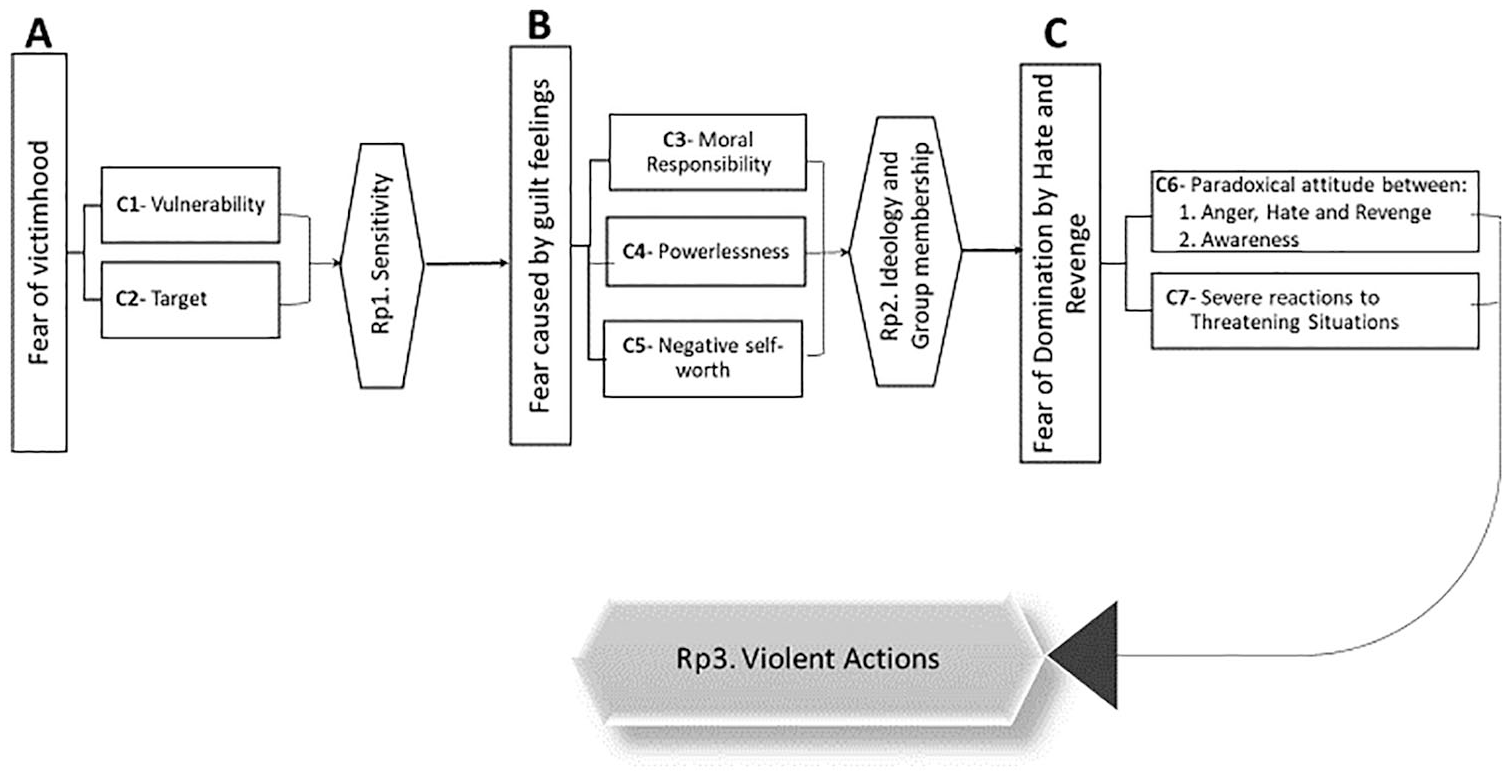
A parallel sequence can be discovered between the staircase model toward terrorism and the feelings of fear of radical Muslim youths. The first type of fear is that of uncertainty and vulnerability (Franklin et al., 2008; Horgan, 2005; Jackson, 2009). It is a fear based on the observation that the Muslim community is being attacked. That observation is then linked to the everyday life of the young people in question; they see the possibilities of attacks on their own mosques and on their own families (Cohen & Felson, 1979; Sageman, 2008; Wilcox Rountree, 1998). These observations lead to a state of alertness, which is also described as part of the first step in the radicalization process (Doosje et al., 2016). This first type of fear does not seem to go beyond observation and feeling. However, it can develop further, just as in the radicalization process as described in the staircase model. This further developed fear consists of stronger emotions and not just observations. These youths get frustrated and experience powerlessness because they cannot protect their kin in the Netherlands and abroad (Killias, 1990; Schwartz, 1977). They are unable to do so, which frustrates them. Not only are they afraid of violence and afraid of their own lack of options, but they are also angry with the kuffar that do this to them. A clear we/they dichotomy is an issue in this fear. This corresponds to the development in the staircase model in which the individual becomes closed off and strengthens his ties with group ideology. The last type of fear identified in this article was the fear of being dominated by feelings of hatred. This expresses a fear of losing control and thereby also losing one’s grip on functioning properly (Sternberg, 2005; Sternberg & Sternberg, 2008). For some, this is linked to feelings of revenge, which could open the way to the legitimization of violence—the final phase of the staircase model (Doosje et al., 2016). It is important to establish that—just as within the staircase model—this development does not necessarily take place with every young person. The quotes show that some young people still have control over their feelings of hate, while other young people who have already lost control are willing to put into practice their feelings of hatred and revenge.
Conclusion and recommendations
Conclusion
The main conclusions of this study can be summarized as follows: based on the Amsterdam case study and interviews with 18 participants, an attempt was made to provide insight into the fears of radical Muslim youths and the interaction with their radicalization process. The findings of this study show that anxiety among these young people has different stages: it starts with a normal fear of victimization as described under fear of crime in the existing criminology literature (Jackson, 2009; Killias, 1990; Perloff, 1983). However, later this fear develops a different variation: feelings of guilt that are related to social responsibility to protect Muslims. A failure to protect Muslims leads to powerlessness or helplessness among these young people. Due to the high degree of frustration and disappointment, a sense of guilt is created among these young people. There are no real risks up to this stage. But as soon as these guilt feelings are coupled with hatred and revenge, there is a good chance that these feelings will be transformed into violent actions. Here these young people reach the stage of terrorism. The three forms of anxiety among radical Muslim youths—(1) fear of victimization, (2) fear caused by guilt feelings, and (3) fear of being dominated by hatred and revenge—are then related to the three phases known from the staircase model: (1) a sensitivity to a radical ideology; (2) the individual becomes a member of a radical group; and (3) the individual is ready to act on behalf of the group’s ideology (Doosje et al., 2016). This psychological exploration has helped us to understand better the interaction between the radicalization process and forms of anxiety among the participants in the Amsterdam case study and has helped to provide tools for interviews which form part of de-radicalization processes. By linking different feelings of anxiety to different phases of radicalization, we now know better at what emotional level any interventions for de-radicalization must take place.
Seeing the complexity of the feelings of anxiety among radical Muslim youths, more qualitative and quantitative research across the dilemmas about feelings of anxiety and radicalization processes will have to be explored. In this respect, more studies are required that pay attention to the critical issues of de-radicalization programs in the West and their effectiveness to reduce the risk of terrorism and to develop valid measurement tools for de-radicalization initiatives. More work is required in the area of the consequences for de-radicalization initiatives if these initiatives do not have a realistic impact on thinking patterns and behaviors of radical Muslim youths.
Recommendations
A correct diagnosis of the forms of anxiety experienced by radical Muslim youths can greatly contribute to the effective impact of de-radicalization programs. Increasing the mental and emotional resilience among this target group through self-confrontation methodology and critical thinking skills can help these young people learn to cope with their fears. For any proper approach to de-radicalization in the Netherlands, trainers and professionals must be competent in such processes and given the opportunity (via “train-the-trainer”) to delve into the dilemmas surrounding the world of radical Muslim youths (including the forms of fear found in this group) before applying various learned tools and methods. This article also shows that self-awareness among radical young Muslims, and even their fear of being dominated by hatred and revenge, can offer good entry points into de-radicalization processes. How these processes can be made more responsive should be further investigated.
The feelings of fear and anxiety which these young people may experience as a consequence of potential threats or threatening signals from their environment (such as discrimination, unequal treatment, or threatening behavior) appear to lead to emotional reactions which can have extremely violent implications. In my view, the development of feelings of uneasiness among these citizens should be taken seriously. A definition of good practice should be adopted at policy level.
As I have mentioned previously, an effective manner in which to mobilize the self-confidence and positive force of this group is to promote programs aimed at developing resilience, offering these youths the option to explore their society from various perspectives. Moreover, the dissemination of a culture of tolerance in society and the restoration of trust between citizens and government could contribute to the channeling of disaffection and gut feelings among citizens in Dutch society. (Ljamai, 2011).
