



Abstract
Family affirmation is an important factor in the psychological adjustment and resilience of LGBTQ+ youth. However, owing to hetero-cisnormative discourses in most rural communities, Gender and sexually diverse youth thrive through the most devastating adversities while negotiating for their LGBTQ+ identity in families. To understand systemic factors within and beyond family that influence the capacity of families to affirm LGBTQ+ youth, this article draws on data from a PhD study. This article presents qualitative interpretive phenomenological results from research involving 12 participants identifying as LGBTQ+ youth from a rural community in the Free State province. Participants were selected using nonprobability purposive and snowball sampling methods. The article explores factors that influence families to affirm their children with gender and sexual diversities, thereby highlighting the utility of ecological interventions that extend beyond working with a nuclear family to champion its resilience. The article also explores tensions that shape affirmation and marginalisation within a family context. It also demonstrates how risk exposure in families is perpetuated by multiple intersecting variables, such as family religious beliefs and cultural ideals that encourage heterosexuality and cisgender expression. Moreover, it shows the family’s openness and adaptive role in fostering the resilience of LGBTQ+ youth despite the prevalent hetero-cisnormative discourses. Despite the influence of the identified systemic factors, some families still navigate the affirmation of gender and sexual diversity. To this end, the article gives useful insights for practice and future research.
Keywords
Owing to a colonial theorisation of sexual and gender diversity, LGBTQ+ youth continue to experience all forms of micro and macroaggressions in different community settings on the African continent (Gyamerah et al., 2019; Luvuno et al., 2019). Little is known about pre-colonial and indigenous perspectives on sexuality, owing to a lack of scholarship that reported the sexual identity of Africans during colonialism (Lopang, 2014). Some evidence suggests that family settings in traditional African communities were not always heterosexual; in some community settings, feminine men could be paid the bridal price, be married, and assume the duties of a wife (Epprecht, 1998, 2014; Murray & Roscoe, 1997; Tamale, 2014). However, currently, a narrative on African indigenous knowledge of sexuality underscores colonial and conservative Christian religious laws that view homosexuality as a sin (Matsúmunyane & Hlalele, 2019; McCormick, 2015).
LGBTQ+ youth face different forms of adversities related to their gender and sexual identities; however, despite various family- and community-related risks, they continue to demonstrate resilience (Govender et al., 2019; Gyamerah et al., 2019; Haffejee & Wiebesiek, 2021). The few studies that focused on LGBTQ+ resilience in the African context either did not employ the systems approach or were not conducted in rural areas (Govender et al., 2019; Gyamerah et al., 2019; Haffejee & Wiebesiek, 2021; Logie et al., 2018; Luvuno et al., 2019). However, the studies above demonstrate that the related systemic factors contribute to distributing risks and influencing resilience in a nuclear family.
Gender and sexuality in rural communities
As opposed to urban and metro areas, rural communities are typified by more violence and discrimination and less social support, including in the families of LGBTQ+ youth (Daniels et al., 2019; Haffejee & Wiebesiek, 2021; Matsúmunyane & Hlalele, 2019). Research suggests that rural spaces do not have adequate health, education, and social resources to support LGBTQ+ people (Francis, 2017; Mkhize & Maharaj, 2021). In most urban areas, as opposed to rural communities, LGBTQ+ youth have access to services such as mental health and gender reassignment surgery (Mkhize & Maharaj, 2021). The scarcity of resources in rural communities may result in the exclusion and marginalisation of LGBTQ+ people, which may threaten confidence in families to embrace gender and sexual diversity.
The community setting is important in normalising and legitimising LGBTQ+ identities. Such is accomplished by providing resources that benefit not only the individual LGBTQ+ youth but also their families (Haffejee & Wiebesiek, 2021; Nichols, 2021). Sexuality and gender in rural communities are policed by colonial heteronormative and cis-normative laws (Matsúmunyane & Hlalele, 2019). The anti-queer narrative underscores the violence and other shameful acts that violate the human rights of LGBTQ+ youth in an attempt by the community to eradicate, correct, or punish homosexual ‘sin’ (Francis, 2017; Mkhize & Maharaj, 2021).
Heteronormative masculinity and femininity are associated with pride and praise or some form of reward in many African communities. However, those who do not follow the heterosexual norm and script problematically experience discrimination, marginalisation, hatred, and violence from families, peers, and the community (Bhana & Mayeza, 2016; Francis, 2021).
South African studies such as Bhana and Mayeza (2016), Brown and Njoko (2019), Francis (2017, 2021), and Francis and Kuhl (2020) have exposed the prevalence of macro-level heteronormative systems as well as non-affirmative Christian discourses and cultural prescripts that work against the affirmation of LGBTQ+ youth. Gender and sexual diversity is a historical African phenomenon consistent with Indigenous culture and spirituality, yet it is deemed ‘un-African’ due to colonial imposition (Khuzwayo-Magwaza, 2021; Lopang, 2014; Montle, 2021). This anti-queer narrative discourages communities, including families, especially in rural contexts, from providing resilience-enabling resources to LGBTQ+ youth (Haffejee & Wiebesiek, 2021; Nichols, 2021). Moreover, previous general youth resilience research shows that resilience can be enabled by family, including uncles, aunts, extended family members and structural, institutional, cultural, and spiritual support systems (Theron & Theron, 2013; Van Breda & Theron, 2018).
Such research may not always apply to LGBTQ+ youth; thus, the multi-systemic resilience of LGBTQ+ youth in rural communities is also needed to uncover factors related to family resilience. LGBTQ+ research in South Africa helped uncover historical, political, and social forces working against the affirmation of LGBTQ+ youth in families as well as in the community at large (Francis, 2017; Gyamerah et al., 2019; Mkhize & Maharaj, 2021). Often, non-affirmation has a negative impact on the availability of relational, structural, and spiritual resources that will likely enable the resilience of LGBTQ+ youth (Haffejee & Wiebesiek, 2021). Despite the prevailing risks, some South African studies offer a paradigm shift and strongly suggest that LGBTQ+ youth can be resilient (Daniels et al., 2019; Haffejee & Wiebesiek, 2021; Rothmann, 2018). However, one must critically examine the role of culture, context, and positionality in determining and shaping resilience (Ungar, 2018).
The multi-systemic view of resilience
Over the years, there has been a change in how resilience researchers theorise resilience. The recent theorisation of resilience acknowledges that normative functioning is related to drawing on resources from multiple support systems, especially for young people exposed to significant stressors (Masten et al., 2021). This multisystemic approach to resilience considers situational and cultural aspects that shape a network of protective factors and processes. A network consists of different systems such as biological resources, psychological strengths, relational supports, institutional supports, and physical ecology (Theron et al., 2023). Systems that impact affirmation within a family context can be direct (i.e., other community relational supports, schools, or local health facilities) or indirect (i.e., affirmative policies and laws beyond rural community ecology). Thus, resilience is possible through a complex web of intersecting systems (Fouché et al., 2024). Also, the multisystemic perspective emphasises that when one system experiences resilience, it is likely to influence resilience in co-occurring systems (Ungar, 2021). This means that systems beyond the family hold the value of influencing resilience in nuclear families of LGBTQ+ youth. Hence, the prevalent hetero- and cis-normative discourses perpetuate risk factors for families and threaten the affirmation of LGBTQ+ youth (Gyamerah et al., 2019).
Family affirmation and LGBTQ+ youth resilience
Given the prevalent non-affirmative discourses that favour heterosexuality and cisgender expression, families often encounter systemic challenges affirming their LGBTQ+ children (Govender et al., 2019; Gyamerah et al., 2019; Haffejee & Wiebesiek, 2021). Thus, there is often rejection or denial in some families of the existence of gender and sexual diversity (Gyamerah et al., 2019). In some cases, families who aim to affirm their LGBTQ+ children are often discouraged by prominent norms and values in the community that favour heterosexuality (Matsúmunyane & Hlalele, 2019). Gyamerah et al. (2019) revealed that families have varying responses to gender and sexual diversity, including silence from family members, discriminatory acts, and contradicting acts and messages when children disclose their sexuality. Nichols (2021) indicates that families that have navigated acceptance of their children’s sexuality often have to deal with the shame that society projects onto them. Similarly, Matsuno et al. (2022) indicate that parents who affirm their child’s sexuality often fear that others will bully them.
The intersecting contextual challenges often lead to LGBTQ+ youth choosing not to disclose their sexuality to family members, as they fear rejection from significant family members (Epprecht & Mngoma, 2022; Mathobela et al., 2020; Mayeza, 2021).
In their study, Gyamerah et al. (2019) indicate that family affirmation came mostly from female figures who offered support as well as guidance on sexual matters such as condom usage. McCurdy et al. (2023) indicated that parental support of transgender children was often inconsistent. Parents would use correct pronouns in the absence of certain relatives but resort to incorrect pronouns when relatives are around. This study also revealed family financial and emotional support for the medical transitioning of transgender youth. Still, some families did not support the medical transitioning process, fearing that their child might take the treatment in the future. Research conducted by Gyamerah et al. (2019), Matsuno et al. (2022), and McCurdy et al. (2023) indicate that family attitudes towards LGBTQ+ identity are interlinked with prominent societal forces that shape rejection, denial, and affirmation within a family context.
Method
Research approach and paradigm
In this study, the subjective perspectives of LGBTQ+ youth in a rural context were examined using qualitative research (Creswell, 2014). As cultural and contextual knowledge is grounded in socio-constructivist theory (Creswell & Creswell, 2018), socio-constructivism and critical theory guided the research. We gained insight from critical theory tenets to understand how marginalised groups of people construct knowledge and discourses that reflect their positionality in oppressive social systems (Mertens, 2017). By adopting these paradigmatic perspectives, we aimed to hermeneutically interpret participants’ verbal and nonverbal intersubjective meanings of their daily experiences from interacting with their hetero-cisnormative social and physical ecologies (Creswell, 2014). Social constructivism and critical theory illustrate how social and cultural discourses around gender and sexuality perpetuate the marginalisation of LGBTQ+ youth while impacting family systems.
Research design
Interpretive phenomenology was employed to analyse the significance participants attribute to their daily experiences within oppressive systems (Creswell, 2014). Interpretive phenomenological research design entails an examination of personal or lived experiences, requiring the researcher to provide an in-depth description and interpretation of a phenomenon encountered by the study’s participants. It analyses the subjective interpretations of the research participants’ experiences conveyed through language, art, and drawings (Engward & Goldspink, 2020).
Research setting
Rural communities in the Free State Province face unemployment, poverty, HIV/AIDS, structural inequalities, and poor service delivery. The majority speak Sesotho, followed by Afrikaans and isiXhosa. Agriculture, mining, and manufacturing dominate the economy (Municipalities of South Africa, n.d.). As a researcher from Free State, Author 1 saw risk factors for LGBTQ+ youth in this community context, including family exclusion and marginalisation.
Study design and sample population
This research employed purposive and snowball sampling methods (Creswell, 2014). Purposive sampling denotes a nonprobability sampling technique wherein the principles of randomness do not govern participant selection. Snowball sampling is a technique by means of which initial participants recruit additional participants who fulfil the study’s selection criteria (Creswell & Creswell, 2018). The research participants selected for this study were required to fulfil the following criteria. They had to identify as lesbian, gay, bisexual, transgender, or queer (LGBTQ+), aged between 16 and 30 who were enrolled in Grades 11 to 12 or had completed Grade 12 and were either unemployed or engaged in higher education.
Research participants
To implement both purposive and snowball sampling techniques, a local non-profit organisation (NPO) serving the LGBTQ+ community facilitated the recruitment of the initial eight participants, who subsequently referred their acquaintances for participation in the study. The NPO published the study flyer on their Facebook page, allowing interested participants to contact them. Subsequently, it provided the first author with the contact information of interested participants to facilitate in-person interviews.
Consistent with phenomenological research design, a total of 12 participants ranging from 19 to 30 years of age were recruited for this study. All participants were from rural communities in the Free State. Table 1 reflects the details of the participants.
Participants biographical information.

Instruments and procedure
Data collection
Data were collected using face-to-face, in-depth, semistructured interviews. Drawings and researcher reflections were obtained from secondary data (Creswell, 2014). Participants were interviewed in comfortable settings. Two participants were interviewed at home, seven at local parks, one at a library, and two at work. The first author interviewed participants in Sesotho or English, depending on their preference. The first author is a Queer person from Free State province. He is also black, like all participants in this study, and fluent in both Sesotho and English. This may have helped participants to express themselves more freely. During the interview, participants were asked to draw people, places, and things in their community that helped them cope as gender and sexually diverse youth. After that, participants were asked: ‘Take me through a journey of discovering, working through or accepting your gender expression and sexuality’. Participants were then asked semi-structured interview questions. Drawings of the participants were used to elicit the conversation between the researcher and participants (Haffejee & Theron, 2018).
Data analysis
The data gathered from the research were analysed using interpretive phenomenological analysis (IPA). ATLAS.ti was used as an aid in the data analysis process (Engward & Goldspink, 2020). Following the data analysis, participants were asked to review the research findings. After that, they were asked to share their thoughts and comments on the accuracy of the findings and advise if anything needed to be removed from the data analysis.
Ethical considerations
The study received ethics clearance from the University of South Africa (UNISA) College of Education Research Ethics Committee (Reference number: 2023/07/05/55075924/28/AM). This research adhered to the ethical principles of anonymity, respect for the participants’ dignity, non-maleficence, beneficence, justice, and informed consent (Allan, 2011). Before the interviews, 11 participants and one parent signed informed consent forms, and one minor participant completed an informed assent form. Prior to the commencement of the interviews, the consent forms were read to participants and an explanation was given in a language they understood. The first author was cautious in conducting the interviews, so participants felt safe and secure given the prevailing risk factors faced by LGBTQ+ youth in rural communities (Daniels et al., 2019; Haffejee & Wiebesiek, 2021; Wike et al., 2022). In addition, participants’ names were replaced with their gender or sexual identity and other identifying information in the transcripts was masked.
Conceptual framework
The study was framed through the multisystemic resilience theory, which looks at complex, reciprocal relationships between the many systems that influence the capacity to thrive (Ungar, 2021). Situational and cultural dynamics shape how systems within and beyond the nuclear family interact to facilitate the resilience of LGBTQ+ youth. Also, when a family system faces stress, it is affected by other systems at different levels (Theron et al., 2023). Thus, family responses to gender and sexual diversity cannot be seen in isolation from historical and current attitudes, biases, and prejudices about LGBTQ+ youth. Such factors shape exposure to risk factors within a family system and create distinct pathways that families follow to enable resilience (Frost & Meyer, 2023). As a result, resilience becomes a product of systems beyond a nuclear family that influence reactions towards gender and sexual diversity. The analysis of risks is complex as it taps into aspects of culture and positionality, such as the black community’s post-colonial cultural ideals that seek to idealise heterosexuality and othering gender and sexual diversity (Chan & Howard, 2020).
Results
Within the multisystemic resilience framework, participants in this study reported an interplay of risk factors they encounter in their families and experiences of resilience-enabling support in most families, followed by reparative processes to affirm their sexuality.
Risk factors faced within a nuclear family context
The family often has cultural and religious expectations, which usually result in difficulty in affirming the gender expression and sexual orientation of their child. Most participants (P1, P3, P4, P5, P9, P11, and P12) in the research had challenges within their families owing to intolerance of their sexuality and a requirement to perform gender according to cultural scripts, which resulted in ill-treatment, negative statements, and being assaulted by family members.
P4 experienced harsh treatment from his father, which entailed physical and psychological abuse. He related: ‘Yoh, I’m being insulted daily. My Dad will want to hit me daily when he finds me doing dishes, cooking, or spring cleaning. He will call me to the garden and make the garden’ (P4
The above participant, who is now an orphan and a university dropout owing to the COVID-19 pandemic, suffered from the effects of internalised homophobia and would question why God created him as gay. This is because he could not perform according to the gendered expectations set for him by his father. However, following affirmation from his family, which was made possible after his mother addressed the maltreatment he received from both his father and male siblings, he appreciated this intervention, which may have boosted his self-esteem.
One of the major challenges is parents who ‘mourn’ their gendered expectations of their children, which often results in statements of disapproval and disappointment towards them, as highlighted in the following:
Ohh, my grandfather, yoh! Last year, when I was turning twenty, we had a conflict; he said you are my grandson; I am expecting grandchildren from you, and the next thing, you are gay. (P3-trans woman)
Throughout the past, gender and sexualities were performed with societal expectations of what being a man and a woman entails. Therefore, those who did not perform the gendered expectations were severely punished by families, including communities. In addition, non-affirmative religious ideologies often regard gender and sexual diversity as a sin, and LGBTQ+ youth are often seen as demon-possessed, which disempowers some families who wish to accept their LGBTQ+ child. The following excerpt indicates parents’ attitudes towards their children’s sexuality, with such attitudes shaped by religion.
My dad started taking me to church to be prayed for, and he used to feed me Christianity, demanding I read a bible he hoped would change me. (P6-nonbinary)
On top of the risk factors related to participants’ gender expression and sexuality, they were also faced with other typical risk factors found in their context, such as unemployment, poverty, and orphanhood, which placed some participants at double risk. The results of this study show the intersecting family-related risk factors, which are propelled mainly by conservative Christian norms and cultural belief systems that lack Indigenous perspectives on gender and sexuality. History has produced a notion that heterosexuality is the only accepted form of sexuality, and gender and sexuality diversity are othered.
Often, the risk factors that come with being a gender and sexually diverse person intersect with other identity markers such as being black or having a poor socio-economic background, orphanhood, and coming from a single-parent family, putting some participants at increased risk.
In keeping with previous research, such as research conducted by Gyamerah et al. (2019), Luvuno et al. (2019), and Matsúmunyane and Hlalele (2019), participants in this study were faced with intersecting experiences of family denial, non-affirmation, macro and micro-aggressions in families and from the community. Despite evidence that gender and sexual diversity existed in some indigenous African societies (Khuzwayo-Magwaza, 2021; Lopang, 2014; Matsúmunyane & Hlalele, 2019), society has internalised a non-affirming conservative Christian narrative that views this phenomenon as deviant, pathological, and demonic, which should be corrected.
Experiences of resilience affirmation within the nuclear family
Despite the prevalent hetero-cisnormative discourses in the community, which negatively impacts family affirmation, some participants related experiences of resilience-enabling support from their family. Participants were supported mostly by their female family members. Participants whose families affirmed them reported more psychological resilience qualities, such as confidence and high self-esteem, which they attributed to affirmation in their social environment. However, P6 and P11 were never affirmed by their families and presented with depressive symptoms. Thus, the psychological adjustment of these participants within rural communities seems to be strongly related to family affirmation.
Most participants seemed to have cherished their home environment; for example, P2, P3, P4, P5, P8, P11, and P12 drew pictures of their home environment as spaces that help them cope well amid adversity.
Some participants (i.e., P3, P5, P7, and P8) received support, intervention, and affirmation from social and institutional structures outside the family which contributed towards affirmation within the nuclear family. For example, P3’s grandmother and uncle accepted her gender expression after a transgender friend interacted with her. P5 described how her farm schoolteachers and local NPO helped her family accept and affirm her gender expression. P7 and P8 also reported school affirmation and support, with P8’s teacher informing his parents about his gender identity and how they need to respond affirmatively. Psychoeducation, emotional support, and affirmation from authority figures like teachers improved family resilience. P7 received emotional support from teachers before and after her biological mother died.
The participants drew pictures of their uncles, grandparents, cousins, and parents. Some of these pictures are depicted in Figures 1 and 2.
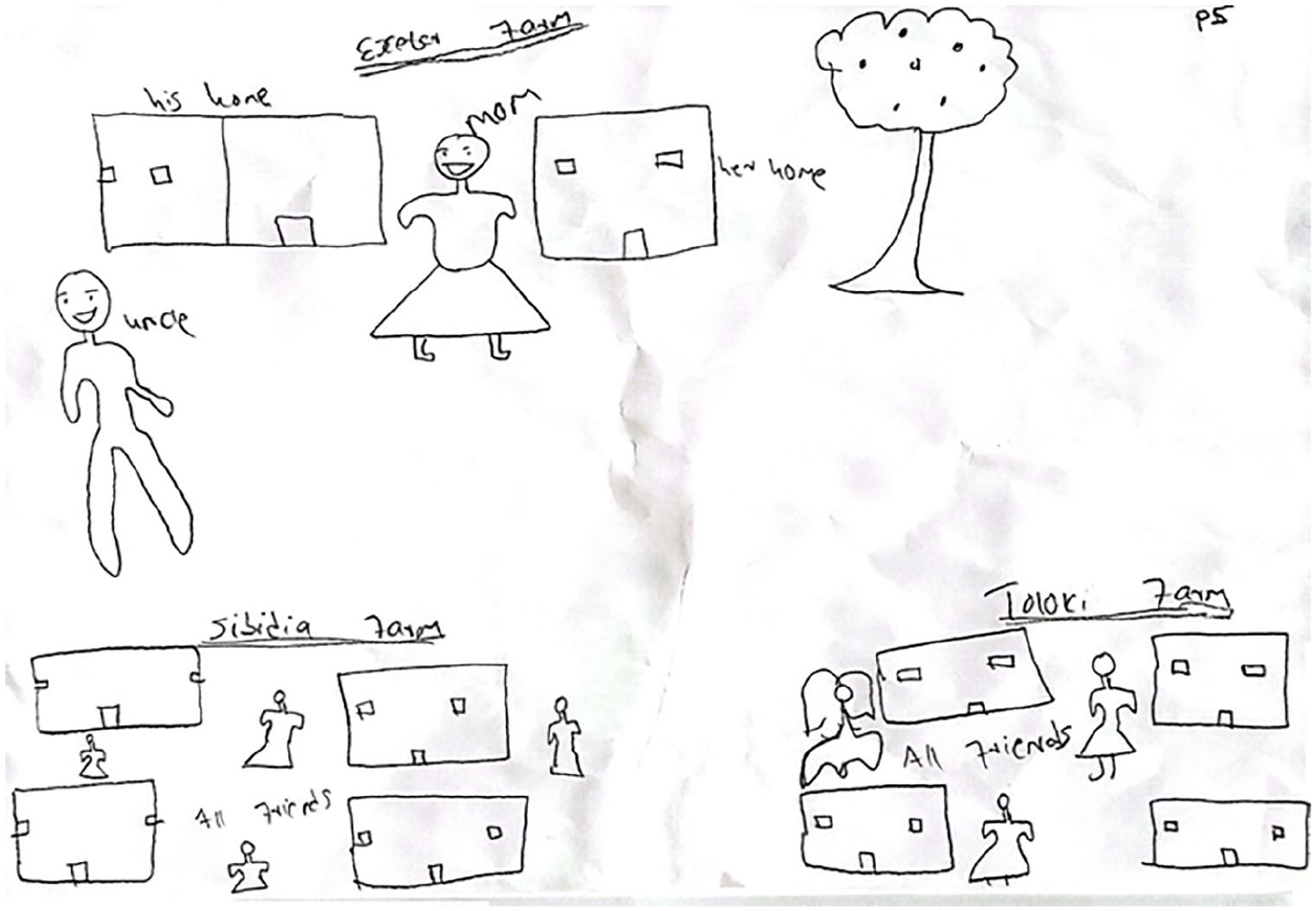
P5’s drawing.
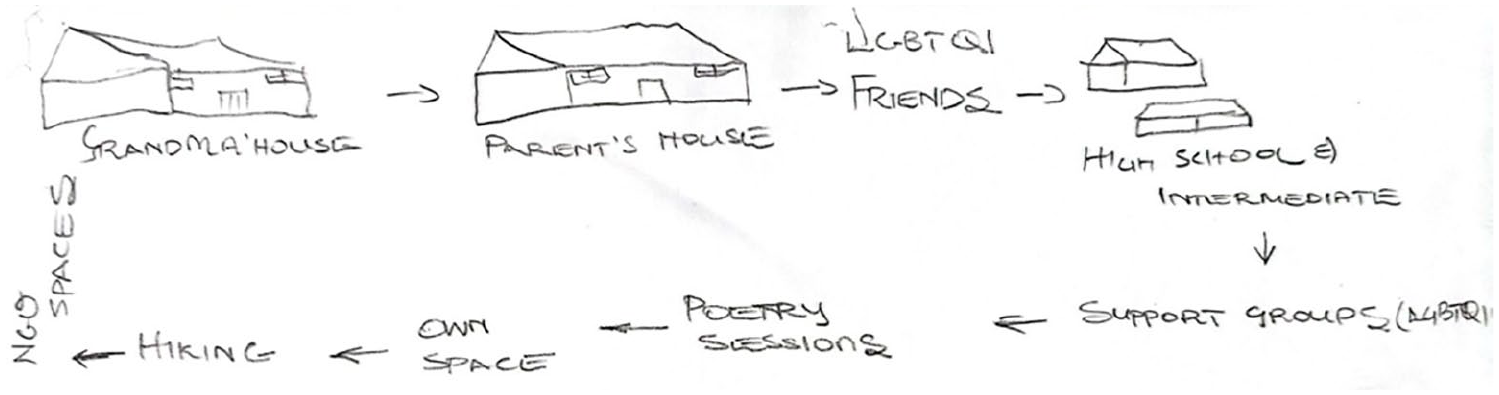
P8’s drawing.
P5 drew pictures of her uncle and grandmother, whom she described as resilience-enabling. This participant is a double orphan raised by her grandmother and uncle, whom she has internalised as her parents. Before the grandmother and uncle affirmed her, they used to believe that she was bewitched, and they would often wonder about the roots of her gender expression. This family started affirming her gender expression following an NPO intervention that worked with LGBTQ+ youth in the Free State province.
P8 has identified both his grandmother’s and parents’ homes. He related experiences of affirmation from his grandmother, who accepted his gender expression from the onset. He also related experiences of support from his mother and father, who supported him throughout the gender transitioning process. His parents were not supportive at first, but through teacher intervention, they became more open to his gender expression. They provided him with both emotional and financial support. This participant’s drawing points to other multisystemic supports beyond the nuclear family, such as school, environment, local NGOs as well as support groups.
P8 related experiences of emotional and material support from his family during the gender transitioning process and reported, ‘I remember when starting my transitioning, they would assist with transport money, like from Mma Napo Hospital (local hospital) to Universitas Hospital (Hospital at metropolitan area)’ (P8-trans man).
The other participant who related experiences of family material support as well as affirmative pronouns, which boosted her confidence, was P5, who related the following:
My mother supported me when I was old by buying me clothes, saying that I saw some heels at some place on special, why don’t you go buy them. Even on my birthday, she would buy me girlish gifts. She even started to call me Ausi [Sister] Neo; even my uncle is no longer calling me Tau [general Sesotho slang name used to refer to a male person.].
(P5-trans woman)
Other participants also reported emotional support. For example, P4 reported: ‘My Mom was a pillar of strength because she was the one who stood up for me at that moment when my father used to discriminate against me, even my brothers’ (P4-gay man).
Following being mugged and raped by three men, P2 had symptoms related to depression. He was suicidal; however, his family ensured that he received psychological assistance at a local private hospital, and they also offered him emotional support. He related: You know my Mom and my brother are there every day. He’d call me before I slept to make sure I was okay. He’s not in South Africa. He works overseas; we talk almost daily and check if I’m okay mentally. (P2-gay man)
Family affirmation does not happen in a vacuum, it is influenced by contextual factors such as rurality, religion, and culture. Families of LGBTQ+ youth in rural communities thrive despite compelling heterosexuality from the community when they have to affirm their children’s sexuality and gender expression. Such contexts bring about fear, discouragement, and hate, often evident in acts of non-affirmation or inconsistent affirmation. However, the data collected in this study suggests that some families eventually can affirm their child’s sexuality. Such affirmation is often possible through support beyond family, from intervention from teachers, friends, and NPOs.
Discussion
Rural communities are not safe spaces for sexual and gender-diverse youth. As opposed to urban and metro areas, rural communities are typified by more violence and discrimination and less social support for LGBTQ+ young people (Daniels et al., 2019; Haffejee & Wiebesiek, 2021; Matsúmunyane & Hlalele, 2019). Research suggests that rural spaces do not have adequate health, education, and social resources to support LGBTQ+ people (Francis, 2017; Mkhize & Maharaj, 2021). Discrimination, poorly trained practitioners, and lack of resources such as mental health and gender reassignment surgery in clinics are factors influencing the marginalisation of LGBTQ+ youth in the community (Mkhize & Maharaj, 2021). The lack of community structural resources and the application of affirmative policies can have a negative impact on families who want to affirm their LGBTQ+ children (Nichols, 2021).
Complex societal influences shape risk exposure and resilience of LGBTQ+ youth. For example, Bhana (2012) highlights how Christian views serve as an authoritative discourse in South Africa enforcing hetero morality, which creates a notion of gender and sexual diversity as deviant and a threat to religious values, gender, culture, and traditions. The history of colonialism in South Africa had an impact on how gender is performed and created sexual norms that marginalise LGBTQ+ people (Epprecht, 1998, 2014; Murray & Roscoe, 1997; Tamale, 2014).
Collectivist beliefs and cultural ideals often typify rural communities and conservative religious beliefs, Shared community norms and values can hinder the implementation of LGBTQ+ inclusion policies in schools and society (Matsúmunyane & Hlalele, 2019). Aspects of positionality, such as belonging to an ethnic group with its norms, cultural practices, and socio-economic status, have an impact on how LGBTQ+ youth negotiate their gender and sexuality (Chan & Howard, 2020). For example, Francis (2021) reveals that in school, youth who identify as gay and black are prone to more micro-aggressions from teachers. Non-affirmation within a wider community framework is also reflected in the scarcity of resources. For example, there is a lack of health resources for transgender people and other LGBTQ+ youth (Koch et al., 2019; Mkhize & Maharaj, 2021).
The above are factors beyond the nuclear family structure that influence its capacity to support the resilience of LGBTQ+ youth. However, the findings of this research suggest that there are families who can navigate towards affirmation of their children who identify as gender and sexually diverse. A family as a social system may have played a role in influencing resilience in the psychological system of participants. Those who were affirmed also reported confidence and high self-esteem. Studies such as those by Gyamerah et al. (2019), Matsuno et al. (2022), and McCurdy et al. (2023) also show that affirmation in a family setting is linked to psychological adjustment. A complex web of systems influencing resilience in a nuclear family influences other social systems (i.e., friends, teachers, neighbours, and community members) and structural and institutional supports such as local schools, clinics, and NPOs in the rural ecology.
This research highlighted how NPOs influenced resilience by offering psychoeducation to families in rural community contexts. However, Matsumunyane and Hlalele (2019) show that efforts to create community dialogue over LGBTQ+ matters are often discouraged by prevailing discourses that continues to marginalise LGBTQ+ people. This concern means that systemic factors that work against the inclusion and affirmation of LGBTQ+ youth call for interventions that go beyond family and community levels.
A heteronormative societal culture and lack of social support impact how the internalisation of homophobia can lead to the non-normative functioning of LGBTQ+ youth (Daniels et al., 2019). Some of the participants in this study used harmful coping methods, such as abusing alcohol and attempting to commit suicide, to ease the intra-psychic pain that comes with marginalisation, especially in the family context.
Consistent with South African research by Epprecht and Mngoma (2022), Mayeza (2021), and Mathobela et al. (2020), the results of this research also show that affirmation is shaped by the intersectionality of personal, family dynamics, and socio-cultural aspects such as the realities of disclosing sexuality. The results of this research show parents often have gendered expectations of their children which often may negatively impact affirmation process (Bhana & Mayeza, 2016). Some families were in shock after learning about the sexuality of their children, and other families went through a reparative process following the distress caused by reactions related to learning about their child’s sexuality. Some parents are still not prepared to hear about a child’s sexuality and are often disempowered by a prevailing hetero- and cis-normative discourses (Francis & McEwen, 2024; Mayeza, 2021).
To this end, this article shows the value of family affirmation to the mental health of LGBTQ+ youth. Similar to other research, such as Gyamerah et al. (2019), Luvuno et al. (2019), and Matsúmunyane and Hlalele (2019), it shows how prominent hetero- and cis-normative ideologies continue to marginalise LGBTQ+ youth in families as well as in the community at large. However, it furthers the research enquiry by showing how multiple systems beyond the nuclear family can strengthen resilience. It also highlights family-related resilience protective resources and processes of LGBTQ+ youth. An interplay of wider systemic influencing impacting resilience within a nuclear family is worth noting for mental health practitioners and policymakers. There is a need to advance the course of social justice, inclusivity, and human rights through psychoeducation on gender and sexual diversity and strengthening structural and institutional resilience supports that LGBTQ+ youth depend on (Haffejee & Wiebesiek, 2021; Mertens, 2017).
Study limitations
This study has limitations, given its sample size and the community context in which the study was conducted. The study is qualitative phenomenological research that included 12 youth who self-identified as LGBTQ+ in a rural community context in Free State province. The results of this study can, therefore, not be generalised to all populations of LGBTQ+ youth, but rather provide useful pointers for practitioners, researchers, and policymakers.
Implications and future research
Policy reform and implementation are needed to promote inclusivity in schools through curriculum, practices, and culture. This study has identified NPOs as a crucial community asset. Therefore, there is a need to bolster the NPO’s efforts. Despite this, the Christian sexuality doctrine strongly opposes affirmation (Matsúmunyane & Hlalele, 2019). An authoritative hetero- and cis-normative Christian discourse will greatly influence like-minded families (Francis & McEwen, 2024). Therefore, relying on social justice and working with structures that promote resilience in LGBTQ+ youth and their families is important.
Rural communities are typically risk-saturated and resource-constrained ecologies (Daniels et al., 2019; Haffejee & Wiebesiek, 2021; Wike et al., 2022). As a result, LGBTQ+ youth may have trouble getting professional mental health care in this community (Koch et al., 2019; Mkhize & Maharaj, 2021). LGBTQ+ youth and their families rely on social and structural support from schools and local NPOs.
There is a paucity of literature that focuses on the multisystemic resilience of LGBTQ+ youth (Govender et al., 2019; Gyamerah et al., 2019; Haffejee & Wiebesiek, 2021; Luvuno et al., 2019). Therefore, there is a need for more research. Families’ experiences, including those of parents and extended family members who affirm their children in a rural community context, need to be documented. Such research will help provide a more holistic framework for tailoring family-based interventions for LGBTQ+ youth living in rural communities.
Conclusion
Contextual factors that intersect to influence family affirmation and non-affirmation of LGBTQ+ youth is an issue of global concern, especially in risk-saturated ecologies such as rural communities. Francis and McEwen (2024) emphasised the need for research pointing to the positive impact of inclusive practices and creating inclusive social spaces. This article shows that family affirmation significantly contributes to the resilience of LGBTQ+ youth typified by using correct pronouns, advocacy for inclusion in other social spaces such as schools, as well as emotional and financial support. Also, it highlights wider systemic factors that influence such affirmation. This highlights the complex trade-offs from other social and structural systems, such as local NPOs, schools, neighbours, and teachers, in co-facilitating resilience in LGBTQ+ youth.
Footnotes
Acknowledgements
This paper emanates from a PhD study titled: The multi-systemic resilience of gender and sexually diverse youth in a rural community context in the Free State Province, conducted by Author 1.
Declaration of conflicting interests
The author(s) declared no potential conflicts of interest with respect to the research, authorship, and/or publication of this article.
Funding
The author(s) received no financial support for the research, authorship, and/or publication of this article.
