




Abstract
Causal decomposition analysis aims to identify risk factors (referred to as “mediators”) that contribute to social disparities in an outcome. Despite promising developments in causal decomposition analysis, current methods are limited to addressing a time-fixed mediator and outcome only, which has restricted our understanding of the causal mechanisms underlying social disparities. In particular, existing approaches largely overlook individual characteristics when designing (hypothetical) interventions to reduce disparities. To address this issue, we extend current longitudinal mediation approaches to the context of disparities research. Specifically, we develop a novel decomposition analysis method that addresses individual characteristics by (a) using optimal dynamic treatment regimes (DTRs) and (b) conditioning on a selective set of individual characteristics. Incorporating optimal DTRs into the design of interventions can be used to strike a balance between equity (reducing disparities) and excellence (improving individuals’ outcomes). We illustrate the proposed method using the High School Longitudinal Study data.
Keywords
Introduction
Recently, there have been considerable methodological developments on approaches to decompose social disparities within the causal inference literature (e.g., VanderWeele and Robinson 2014; Jackson and VanderWeele 2018; Jackson 2021; Lundberg 2020; Park, Qin, and Lee 2022; Park et al. 2023). These developments in causal decomposition analysis extend traditional approaches (e.g., difference-in-coefficients and Blinder Oaxaca decomposition) to settings with nonlinear relationships, and have clarified the assumptions (e.g., no omitted confounding) required to permit causal interpretation of the results. Moreover, recently developed sensitivity analyses (Park, Qin, and Lee 2022; Park et al. 2023) enable researchers to assess the robustness of findings against a reasonable amount of omitted confounding. As a result, stronger causal interpretations of the estimated effects can be made.
A successful application of causal decomposition and sensitivity analysis can be found in Lee, Park, and Boylan (2021), which examines interventions to reduce cardiovascular health disparities across race/ethnicity and gender categories. That study begins by presenting a directed acyclic graph (DAG; Pearl 2012), which encodes the authors’ understanding of the data-generating process. They used the DAG to determine which variables to control to eliminate confounding. The study concludes that approximately one-third of the cardiovascular health disparity between Black women and White men would be reduced if Black women’s socioeconomic status (SES) was equal to that of White men. This reduction remains robust even in scenarios where a reasonable amount of omitted confounding (as large as the existing covariates, e.g., family history of cardiometabolic conditions) is assumed to exist. Causal decomposition analysis allows us to rigorously evaluate the effect of modifying risk factors or resources on reducing disparities, even when using observational data. The risk factors or resources are referred to as “mediators,” since they are believed to lie in the path between social groups (exposure) and the outcome.
Despite these promising developments in causal decomposition analysis, the methods currently available are restricted to scenarios involving only time-fixed mediators and outcomes. Consequently, this has limited our understanding of the causal mechanisms underlying the observed disparities. However, it is important to highlight the existence of the relevant literature on time-varying exposures and mediators in the causal inference framework. Specifically, Bind et al. (2016) proposed employing a generalized linear mixed model to identify natural direct and indirect effects (Pearl 2001) in settings with time-varying exposures, mediators, and outcomes. Natural direct and indirect effects are not nonparametrically identified when exposure-induced confounders exist (VanderWeele and Tchetgen Tchetgen 2017); hence, the analysis hinges on a strong assumption of no exposure-induced confounding. To circumvent this issue, VanderWeele and Tchetgen Tchetgen (2017) and Zheng and van der Laan (2017) used interventional analogs of natural direct and indirect effects (hereafter, interventional effects), which are identified even in the presence of exposure-induced confounding. In disparities research, such confounding is likely, since a myriad of life course factors influenced by the exposure (social groups) affect disparities. For example, in the United States, Blacks are more likely to be born into low-income families, which can affect their education (mediator) and math achievement (outcome). In this scenario, the causal decomposition framework based on interventional effects can be used to evaluate the effect of modifying mediators in reducing social disparities. However, the literature on causal decomposition analysis has not yet formally examined time-varying mediators.
An additional limitation of the current literature on causal decomposition analysis is that it largely overlooks individual characteristics when modifying risk factors or resources. Therefore, its capacity to inform the design of an actual intervention has been limited. In causal decomposition analysis, we estimate the effect of hypothetically intervening to set the mediator to a predetermined value or the mediator distribution equal to that of a reference group. Setting the mediator to a predetermined value would imply giving the same intervention to every individual, which is often unrealistic or unethical in practice. Equalizing the mediator distribution between groups may be more realistic, yet this approach still does not take into account individual characteristics. For example, providing the same math course-taking plan to all high school students or assigning Black students to follow the same course-taking pattern as White students, regardless of their prior math achievement or motivation levels, may not be realistic or desirable.
The main goal of this paper is to (a) formally extend existing longitudinal mediation approaches to the context of disparities research and (b) propose a novel decomposition analysis that considers individual characteristics. The concept of individualized treatment is widely used in precision medicine, which aims to optimize treatments for each patient based on their unique genetic, environmental, and lifestyle factors, as opposed to a one-size-fits-all approach (Tsiatis et al. 2019). Dynamic treatment regimes (DTRs) are a set of decision rules that describe how treatments should be assigned in response to individual factors (Mahar et al. 2021). Optimal DTRs develop sequential decision rules that maximize an average outcome at the end of the time period (Murphy 2003). For example, optimal DTRs can be used to optimize the decision to take a series of math courses depending on each student’s prior math achievement or motivation levels at each time interval, such that the final math score is maximized. Reducing social disparities to achieve equity is an important goal in and of itself. At the same time, we aim to maximize the outcome, assuming that larger outcomes (e.g., academic achievement) are preferable. Incorporating optimal DTRs into the design of interventions aimed at reducing disparities can serve as a means to strike a balance between equity (reducing disparities) and excellence (maximizing the outcome). In our study, we provide a novel contribution to the causal decomposition literature by incorporating individual characteristics and considering both excellence and equity. We distinguish between different quantities of interest and provide important considerations for deciding between them. These considerations involve the extent to which individual characteristics need to be considered, the feasibility of the intervention, and whether maximizing the outcome is a priority. The overarching goal is to examine the effect of interventions that are both realistic and appropriate given individuals’ characteristics.
The article is organized as follows. We introduce a running example in the “Running Example” section, which is followed by extending existing longitudinal mediation approaches to disparities research in the “Extending Existing Longitudinal Mediation Approaches” section and a review of optimal DTRs in the “Review of Optimal DTRs” section. In the “Longitudinal Causal Decomposition Analysis (CDA) With Individualized Interventions” section, we propose a novel CDA that takes into account individual characteristics. In the “Recommendations for Empirical Researchers” section, we present key insights and recommendations for empirical researchers. Finally, we conclude with a discussion of the main contributions of the paper.
Running Example
Our motivating question is the following: “how much of the Black–White differential in math achievement would remain if we were to intervene on the courses they take?” Comparing other racial/ethnic groups might be of substantive interest, but we only focus on the Black–White differential in math scores in 11th grade for simplicity. The estimates we present here are based on data from the High School Longitudinal Study 2009 (HSLS:09).
Prior research suggests that the courses that students take in math have important consequences for a variety of educational and career outcomes (Attewell and Domina 2008; Kelly 2009). In particular, various studies have shown that taking advanced math courses affects students’ math achievement and college enrollment (Byun, Irvin, and Bell 2015; Long, Conger, and Iatarola 2012; McEachin, Domina, and Penner 2020). In addition, researchers have argued that minority underrepresentation in advanced math courses can be a key driver of educational inequality (Attewell and Domina 2008; Riegle-Crumb and Grodsky 2010). Based on this concern, a variety of educational policies and efforts have been developed to reduce inequitable access to advanced math courses (Byun, Irvin, and Bell 2015; Long, Conger, and Iatarola 2012).
Considering these initiatives, an important question that arises is whether all students benefit from taking advanced math courses. Prior research suggests that taking courses without adequate preparation can actually have unintended negative consequences, such as a decline in students’ motivation (Simzar, Domina, and Tran 2016a). A central question is, then, how to assign students to rigorous math courses (and thus increase access to educational opportunities), while making sure that students can succeed in these courses. This problem has motivated researchers to design effective course placement rules based on objective measures such as prior test scores (Dougherty et al. 2017).
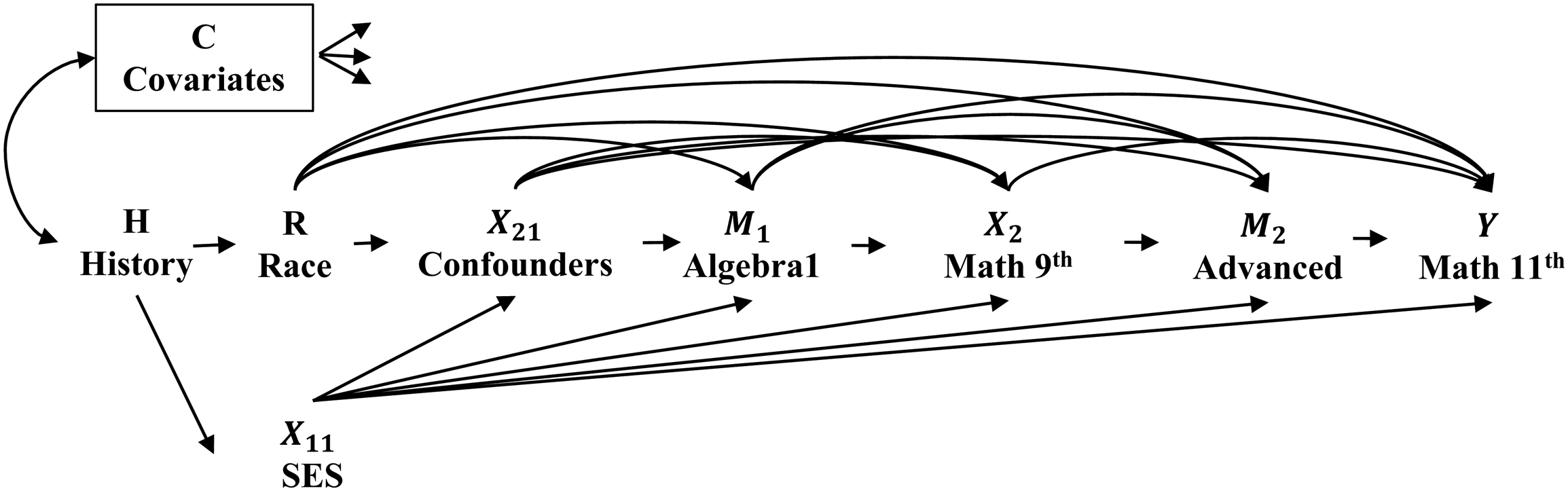
DAG showing the pathways to the racial disparity in math achievement in 11th grade. Note. DAG = directed acyclic graph; SES = socioeconomic status. (a) Baseline covariates (C) include gender and placing a box around C indicates conditioning on this variable. (b) The three arrows emanating from C indicate that they are confounders of all bivariate relations unless conditioned on, as visualized by the box around C. (c) Childhood SES (
The proposed DAG also includes baseline covariates and time-varying confounders. In the present example, the baseline covariates (C) include gender given that (a) the gender distribution varies in each racial group, and accounting for it addresses potential biases, and (b) gender is a source of outcome differences we do not consider in this study, making it an “allowable” covariate (Jackson 2021) when measuring Black–White differentials. In a different context, such as health outcomes, variables such as age or demographic status might fall under this category. In cases where these variables do not pertain to the study, one can specify “null” for the baseline covariates.
Time-varying confounders are the variables that are measured concurrently or after the group status and confound the mediator–outcome relationship. The first set of time-varying confounders includes childhood SES (
To ensure the validity of key identification assumptions, we carefully selected the set of intermediate confounders
Students’ course-taking decisions can also be influenced by their teachers, parents, peers, and other contextual factors (Byun, Irvin, and Bell 2015; Kelly 2009; Long, Conger, and Iatarola 2012; Riegle-Crumb and Grodsky 2010). At the family level, we controlled for household SES, parental occupation, and parents’ expectations and aspirations regarding their children. At the teacher level, we controlled for math teacher’s sex and math teacher’s emphasis on increasing students’ interest in math. At the peer level, we controlled the academic disposition of the closest friend. Finally, at the school level, we controlled for the school’s locale, school problems, and climate, the percentage of students in math courses that are unprepared, the science and math course requirements, and whether the school offers Science, Technology, Engineering, and Mathematics extracurricular activities.
It is worth noting, however, that this example is for illustrative purposes and should not be used to draw educational or policy conclusions. We defined
Extending Existing Longitudinal Mediation Approaches
Several approaches for addressing time-varying exposures and mediators within a causal inference framework have been proposed in the literature. In this section, we formally extend these existing methods in the context of disparities research.
To identify the disparity reduction and disparity remaining estimand (Jackson and VanderWeele 2018) with observational data, we assume the following:
All of these assumptions are strong, and their plausibility depends on the specific study. In the example provided, we have exercised caution in selecting baseline covariates and time-varying confounders based on the literature. However, the assumption of sequential ignorability (A1) may be compromised due to the presence of unobserved confounders. Furthermore, consistency may be violated if an individual student’s math score is influenced by the course-taking patterns of their peers. Although these are strong assumptions, for the purposes of this article, we will assume that these assumptions hold.
Controlled Direct Effects
One potential strategy for addressing Black–White disparities in math achievement scores is to implement a standardized course-taking pattern for all students. To evaluate the potential impact of this intervention, one can estimate the controlled direct effect (CDE) using observational data. The CDE is defined as the effect of an exposure (race) on an outcome of interest (math score) after setting the mediators (math course-taking pattern) to a specific value.
The CDE with time-varying exposures and mediators can be estimated using the identification result and estimation method provided by VanderWeele and Tchetgen Tchetgen (2017). However, in the case where race is not a time-varying exposure, this method may not be directly applicable. To address this limitation, an extension can be made by defining the disparity remaining at each value of

Under Assumptions A1 to A3, the disparity remaining at each value of

The estimation of CDEs depends on
In equation (2), we assume a differential effect of mediators by race (i.e.,
Interventional Marginal Effects
An important limitation of the CDE approach is that it may not be feasible or beneficial to require all students to take the same math courses. An alternative approach to address racial disparities in math achievement could be to ensure that Black students are randomly placed in Algebra 1 and advanced math classes at the same rate as White students within the same gender status (baseline covariates). We could estimate the potential impact of this intervention using interventional analogs of natural direct and indirect effects (VanderWeele Vansteelandt, and Robins 2014; Jackson and VanderWeele, 2018: interventional effects,) with observational data. The interventional direct effect is defined as the effect of an exposure on an outcome after intervening to equalize the distribution of the mediators (e.g., math course-taking pattern) between groups given baseline covariates.
VanderWeele and Tchetgen Tchetgen (2017) proposed an identification method and estimation technique for mediational effects in situations where exposures and mediators are time-varying. This approach is based on the mediational g-formula (Pearl 2001), which is a method of estimating mediation effects by fitting parametric models. However, this method can be computationally intensive, as it involves numerous integrations and requires correctly specifying models for intermediate confounders. As an alternative, the authors suggest using marginal structural models (MSMs) and inverse probability of treatment weighting (Robins, Hernan, and Brumback 2000). Again, given that race is not a time-varying exposure, we extend their method by defining the disparity reduction and disparity remaining as:

Given Assumptions A1 to A3, the disparity reduction and disparity remaining can be estimated by fitting the outcome model as in equation (2) and the following mediator model:



An Application to HSLS:09
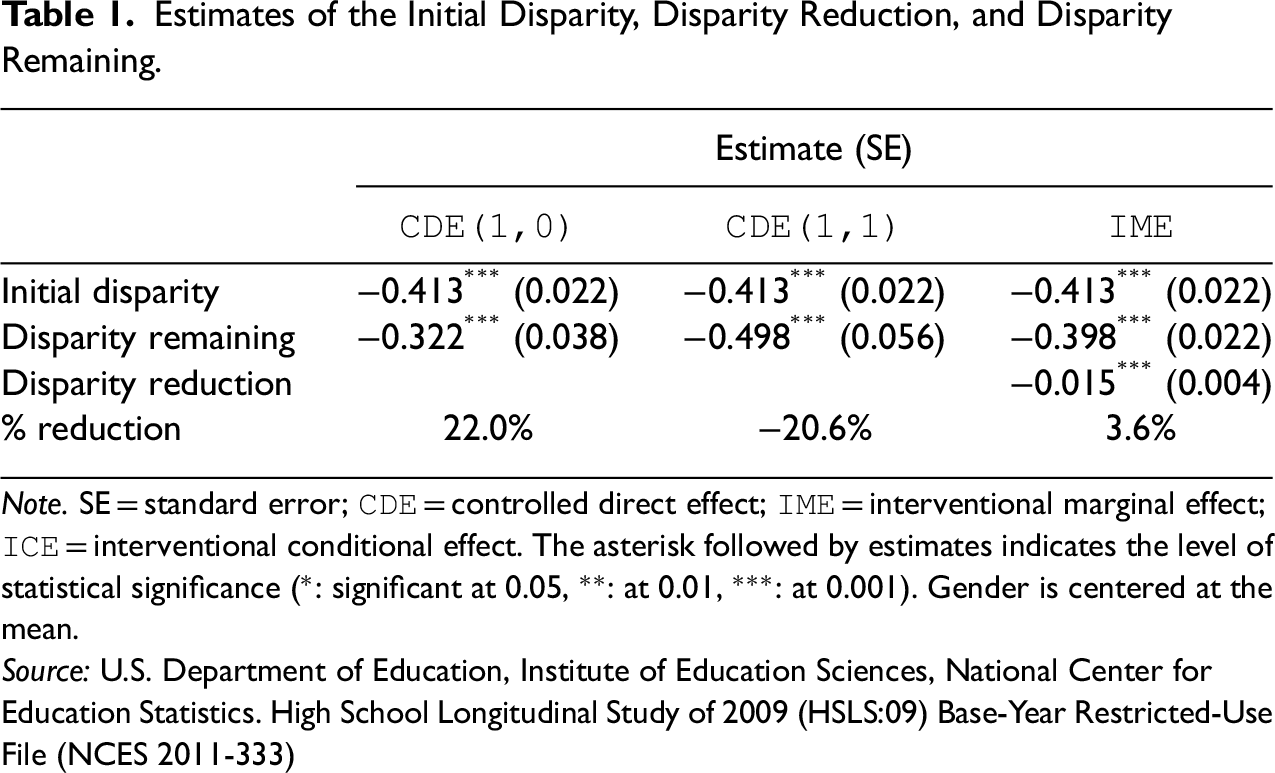
We estimated the initial disparity, disparity remaining, and disparity reduction with CDEs and interventional marginal effects (IMEs). Table 1 shows the estimated quantities of interest. For illustration purposes, the baseline covariate (gender) is centered at the mean 1 . The results are based on truncated weights at the first and 99th percentiles of the weight distribution. The initial disparity in math achievement in 11th grade between Black and White students is negative (−0.413 SD) and significant at the 95% confidence level, meaning that Black students have significantly lower math scores than White students within the same gender status.
Estimates of the Initial Disparity, Disparity Reduction, and Disparity Remaining.
Note. SE = standard error;
Source: U.S. Department of Education, Institute of Education Sciences, National Center for Education Statistics. High School Longitudinal Study of 2009 (HSLS:09) Base-Year Restricted-Use File (NCES 2011-333)
First, we estimated the disparity remaining using CDEs. In our study, we included a group status–mediator interaction effect in the MSM if it was found to be significant. In our data, we observed a lower return from taking advanced courses for Black students compared to White students (0.058 for Black students versus 0.231 for White students). In contrast, Black students benefit equally from taking Algebra 1 as White students (0.341). Thus, we included the interaction between group status and whether or not the students took advanced courses. Enforcing all students to enroll in Algebra 1 but not in advanced math courses results in a remaining disparity of
Second, we used interventional marginal indirect and direct effects to estimate disparity reduction and remaining, respectively. Compared to enforcing a standard math course pattern, intervening to equalize the proportion of students taking Algebra 1 and advanced courses between groups has a relatively smaller effect. Equalizing between groups within the same gender group results in a disparity reduction of
Implications for Existing Causal Decomposition Analysis
The implementation of CDEs sheds light on the potential consequences of setting the mediators to a pre-specified value for all students in reducing disparities. However, this static intervention may not be practical or advantageous. Implementing interventional marginal direct effects provides insights into the potential impact of equalizing the mediator distribution between the groups in reducing disparities. This stochastic intervention may be more realistic than fixing the mediator to a single value for all individuals.
However, equalizing the mediator distribution between the two groups has important limitations. First, not all subjects in the reference group may have optimal mediator values. White students are commonly used as a reference group and their mediator distribution is compared with that of Black students. The logic behind this is that the mediator distribution of the reference group may result in greater rewards in terms of the outcome. However, as shown in our case study in the “An Application to HSLS:09’ section’, there is no substantial difference in course-taking patterns between Black and White students, so the effect of the hypothetical intervention would be limited.
Second, even if we identify a reference group with a better mediator distribution, equalizing that distribution may not be suitable or desirable for another group with different individual characteristics. For example, equalizing access to math courses may not benefit students who lack motivation or are not ready to take the course. As noted before, previous literature has shown that placing average- and low-performing students in Algebra 1 in eighth grade could lower their motivation (Simzar, Domina, and Tran 2016b). How can we take into account individual characteristics, such as prior achievement scores or motivation, when designing interventions to reduce social disparities in an outcome?
Review of Optimal DTRs
In this section, we review optimal DTRs and discuss how they can be used in the context of our example.
Notation and Definition
Consider two decision points
Among all decision rules, our interest centers on identifying an optimal decision rule 
Identification Assumptions
To identify optimal DTRs, we need to make the same assumptions as longitudinal causal decomposition analysis, which are Assumptions A1 to A3. However, these assumptions are not sufficient for identifying optimal DTRs. The following additional assumption is needed:
This implies that the assumptions for identifying optimal DTRs are stronger than those for longitudinal mediation analysis introduced in the “Controlled Direct Effects” and “Interventional Marginal Effects” sections. For example, if there is omitted confounding between
Although these assumptions are strong, for the sake of this study, we assume that these assumptions are met. Given Assumptions A1 to A4, the optimal DTRs can be expressed in terms of the observed data.
Estimation
We review two common approaches to obtain the optimal DTRs, which are Q-learning and weighting.
Q-Learning
Here, we use backward induction to define optimal DTRs. The estimation begins at the second interval by identifying the optimal value for the second mediator
Q-learning is based on postulating the outcome regression model. The two Q-functions can be defined as


Weighting
To define optimal DTRs through weighting, we adopt the backward induction approach proposed by Zhao et al. (2015). This estimation method begins at the second interval, where the optimal value for 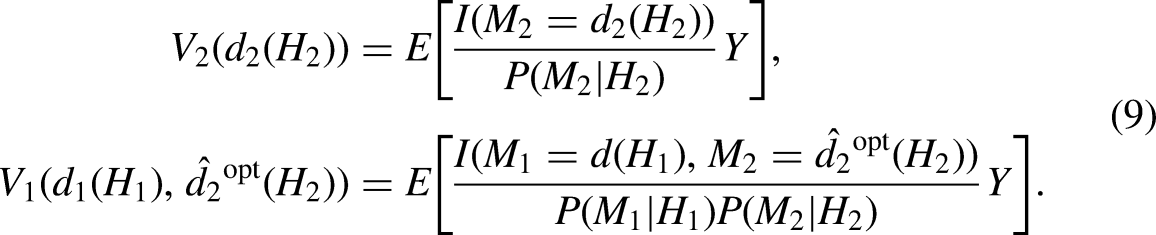

Recognizing the possibility of misspecifying the regression models, Zhang et al. (2012) considered an alternative approach of recasting the original problem of finding the optimal treatment regime as a weighted classification problem. Based on the estimated contrast function, the optimized value is obtained by minimizing a weighted classification error as
An Application to HSLS:09
Our two decision points are whether to take Algebra 1 (
Figure 2 summarizes the percentages of students recommended to receive Algebra 1 and advanced courses by each estimator. Both the Q-learning and weighting methods recommended that almost all the students (Q-learn: 100%, weighting: 97.9%) take Algebra 1. The weighting method recommended Algebra 1 for all students except for those with math efficacy scores lower than −1.71 SD.
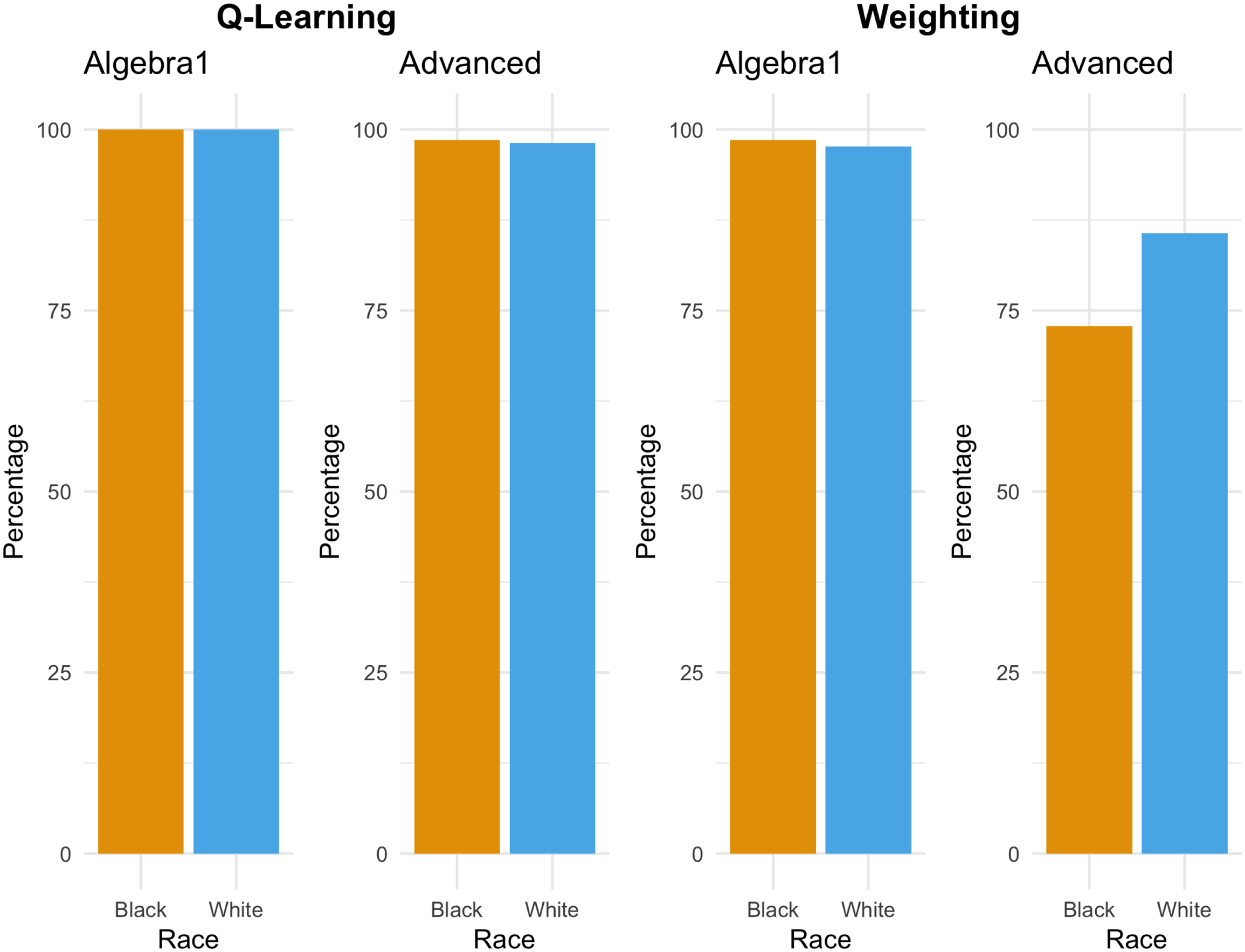
Percentage of Recommendation by Race. Source: U.S. Department of Education, Institute of Education Sciences, National Center for Education Statistics. High School Longitudinal Study of 2009 (HSLS:09) Base-Year Restricted-Use File (NCES 2011-333).
In contrast, the recommendation patterns for advanced courses between the methods were quite different. While Q-Learning recommended that more than 98% of students from both races receive advanced courses, the weighting method recommended advanced courses for 85.7% of White students and 72.8% of Black students. The weighting method did not recommend advanced courses for students with math achievement scores lower than −1.06 SD and Q-Learning did not recommend when
We also examined the proportion of students who complied with the recommendations by race (see Figure 3). For Algebra 1, there was no significant difference in the compliance rates between Black and White students for both the Q-learn and weighting methods (Q-learning: 79.3% and 83.0%; weighting: 78.8% and 82.1%; for Blacks and Whites, respectively). However, for advanced courses, the proportion of students who complied with the weighting method recommendation was slightly higher for both White and Black students compared to the Q-learn recommendation (Q-learning: 40.5% and 44.4%; weighting: 53.4% and 51.3%; for Blacks and Whites, respectively).
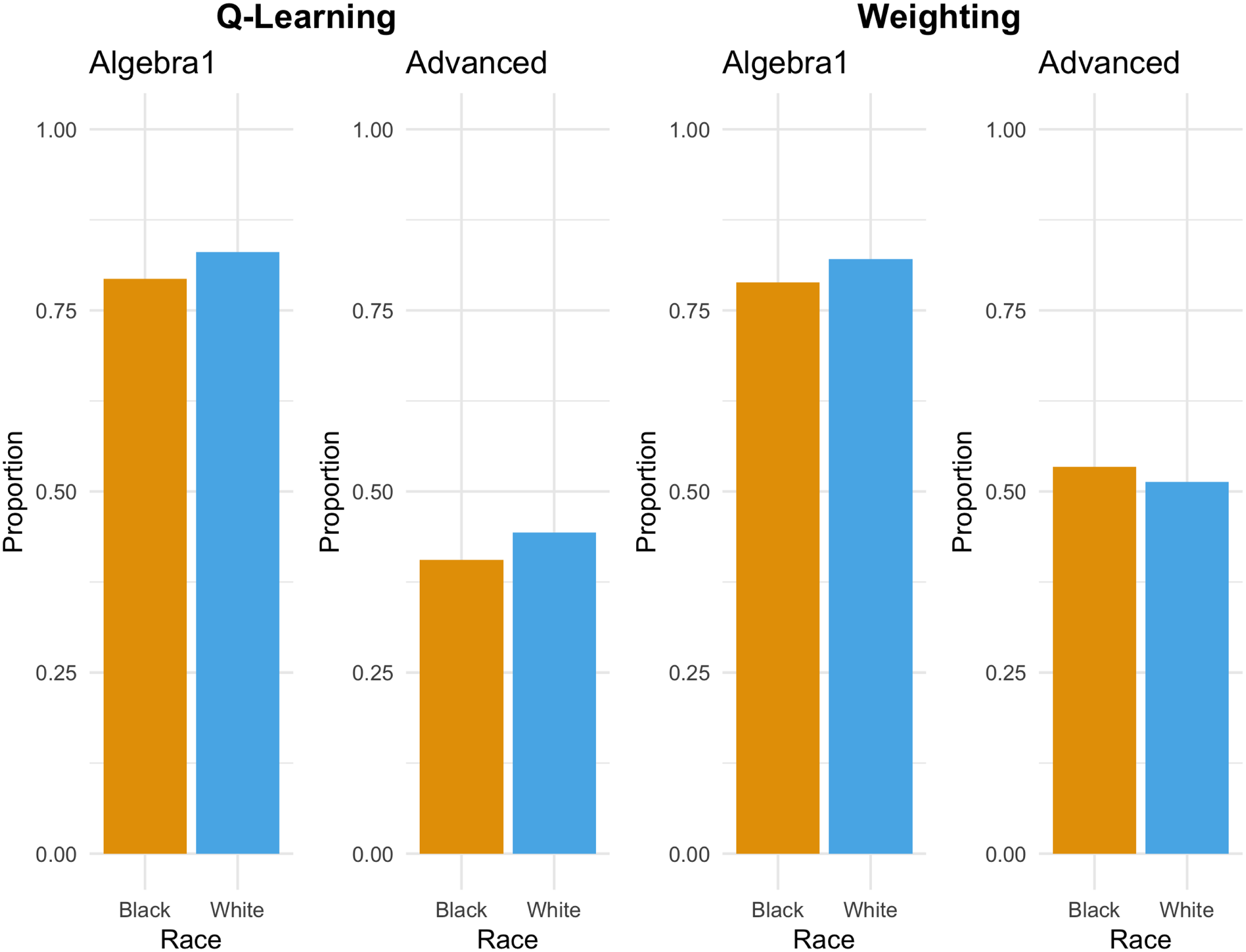
Proportion of Compliance by Race. Source: U.S. Department of Education, Institute of Education Sciences, National Center for Education Statistics. High School Longitudinal Study of 2009 (HSLS:09) Base-Year Restricted-Use File (NCES 2011-333).
Note that we use the term “compliance” to refer to instances where individuals’ math course-taking patterns align with the optimal rules (i.e.,
Longitudinal Causal Decomposition Analysis (CDA) With Individualized Interventions
In this section, we propose three strategies to reduce outcome disparities by tailoring interventions to individual characteristics. The first two strategies leverage optimal DTRs, which were introduced in the “Review of Optimal DTRs” section. The third strategy involves directly incorporating individual characteristics into the interventional effects.
Individualized Controlled Direct Effects
We propose a strategy for intervention wherein all students follow an optimal course-taking pattern based on their previous math achievement level and motivation. We use optimal DTRs as a reference to follow for each student and examine whether this would reduce the observed disparity in math achievement in 11th grade.
Using the optimal decision rules obtained from optimal DTRs, we define disparity remaining as
Given Assumption A1 to A4, 
One straightforward approach to estimate the disparity remaining after the individualized intervention is through an MSM. We fit the following model, where baseline covariates are centered at 


Individualized Interventional Effects
Optimal rules are not definitive and may not be suitable for every student. Hence, it is expected that not all students’ course-taking patterns are consistent with the optimal rules. However, if one racial group has a tendency for their course-taking patterns to be more inconsistent with the optimal rules than other groups, it may be problematic in terms of reducing disparities. In this case, we could consider an intervention to equalize the rate of being consistent with optimal rules across groups. Ideally, the reference group’s course-taking patterns should be more consistent with optimal rules. For illustrative purposes, we will use White students as the reference group although White students are not more compliant than Black students (see Figure 3).
Without loss of generality, let 
Given Assumptions 1 to 4, 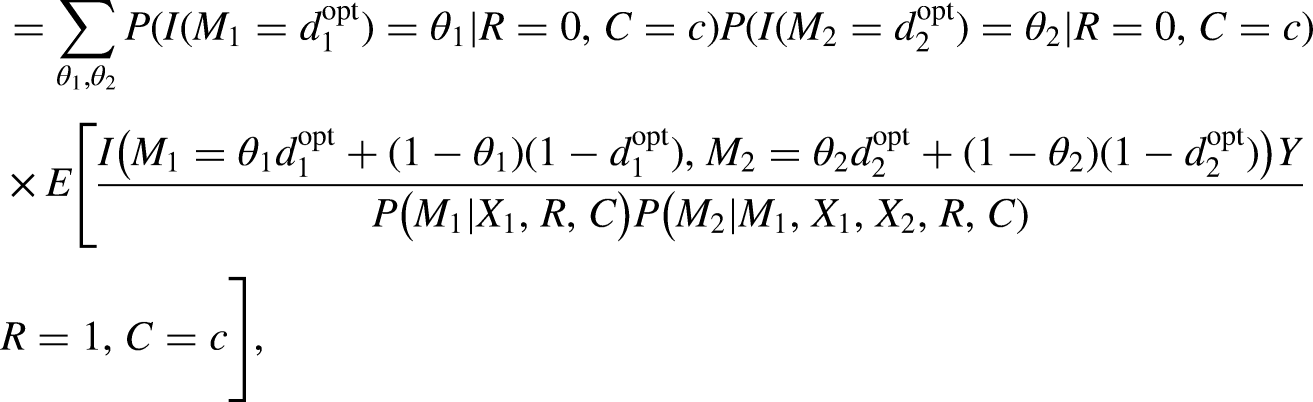
For estimation, we assume the following MSM (where baseline covariates are centered at 

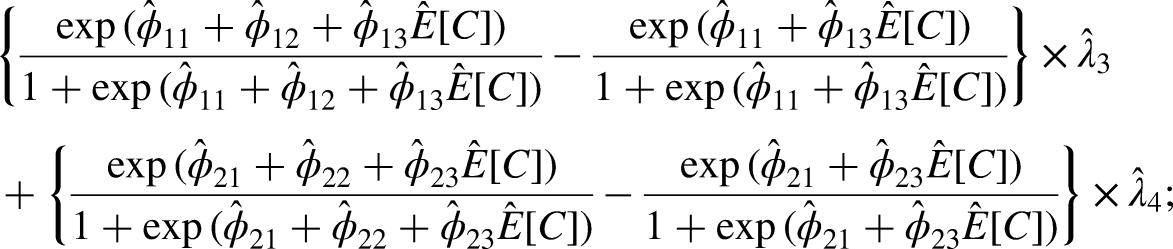
Alternatively, a weighting estimator for individualized interventional effect (IIE) can be employed using the following steps:

Individualized Conditional Effects
The last individualized intervention strategy we propose is to use interventional effects that incorporate individual characteristics. This strategy is similar to interventional conditional in/direct effects proposed by Zheng and van der Laan (2017). Interventional conditional direct effects estimate the potential effects of randomly assigning Black students to Algebra 1 and advanced math classes at a rate comparable to White students within the same level of all existing intermediate confounding variables (e.g., SES, parent career aspiration, math course availability at school, and prior math achievement). However, this approach has an important limitation. Taking into account SES or course availability at school when assigning students to mathematics courses carries the risk of reinforcing structural racism (McGee 2020; Jackson 2021), where Black students are more likely to be born into low SES families and attend schools with low quality that may not offer advanced mathematics courses.
In a sense, our proposed strategy resembles a time-varying version of Jackson (2021), as we assign math courses based on selective covariates driven by equity concerns. However, in addition to equity considerations, we suggest selecting covariates that modify the effect of taking math courses, allowing for a personalized intervention. The idea is to equalize the mediator distribution between the groups among those who would similarly benefit from the intervention, thus enabling tailored interventions based on their individual characteristics. Therefore, we propose here that we only condition on a subset of intermediate confounders, which were previously considered in obtaining optimal DTRs. As before, these variables are denoted as 
Given Assumptions A1 to A4, 
The weighting estimation steps of disparity reduction and remaining based on individualized conditional effects (ICEs) are as follows:
We do not present an MSM estimator for this ICE since it does not work when there are M–X interactions, as assumed in this study.
We conducted a simulation study to evaluate the performance of the proposed estimators for individualized effects when the outcome is continuous. The simulation settings and results are presented in Appendix D of the Supplemental Materials. Briefly, when the sample size is 2000 or more, most estimators demonstrate good performance in terms of bias and root-mean-squared errors. For sample sizes <2000, it is preferable to use the weighting estimators over the MSM estimators.
An Application to HSLS:09
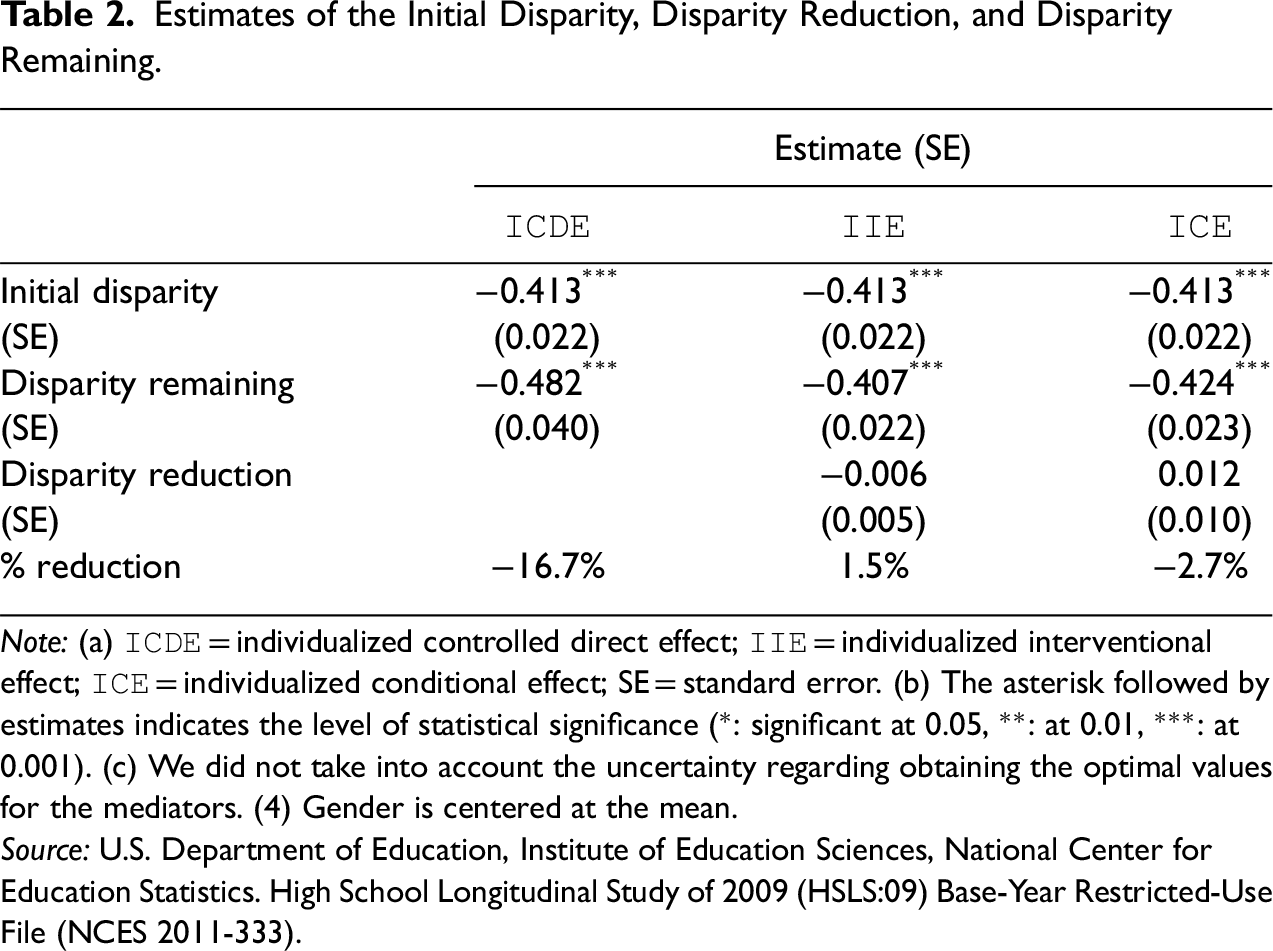
In this section, we present findings on disparity reduction and disparity remaining using the proposed individualized effects (i.e., ICDEs, individualized interventional in/direct effects, and individualized conditional in/direct effects). We used optimal decision rules obtained by the weighting method as Q-Learning resulted in very few students who were not recommended to take Algebra 1 or advanced courses, which posed a modeling issue. Given the sample size of 11,050, we expect both MSM and weighting estimators to perform equally well. For simplicity, we present results obtained by the MSM estimators in Table 2.
Estimates of the Initial Disparity, Disparity Reduction, and Disparity Remaining.
Note: (a)
Source: U.S. Department of Education, Institute of Education Sciences, National Center for Education Statistics. High School Longitudinal Study of 2009 (HSLS:09) Base-Year Restricted-Use File (NCES 2011-333).
First, we estimated the disparity remaining using ICDEs. Following the optimal course-taking rules results in a remaining disparity of
Next, we used IIEs to estimate the disparity reduction and disparity remaining. These effects estimate the potential effect of equalizing the compliance rate between groups within the same gender status. This intervention does not yield a significant reduction in initial disparity. The remaining disparity is
Lastly, we used ICEs to estimate disparity reduction and disparity remaining. These effects determine the potential effect of equalizing course-taking patterns between groups among students with similar motivation and prior achievement levels within the same gender status. The ICE does not yield a significant reduction in disparity, with the remaining disparity of
Overall, our findings suggest that following optimal course-taking rules does not necessarily reduce the initial disparity. Additionally, simply equalizing compliance rates across groups or aligning course-taking patterns between groups among students with similar motivation and prior achievement levels may not effectively reduce the initial disparity.
Recommendations for Empirical Researchers
To reduce social disparities in relevant outcomes, policymakers and practitioners can explore the potential effect of hypothetical interventions using approaches outlined in the “Extending Existing Longitudinal Mediation Approaches” and “Longitudinal CDA with Individualized Interventions” sections. To identify effective interventions in specific contexts, we propose three guiding questions for consideration. We illustrate the decision-making processes outlined in Figure 4.
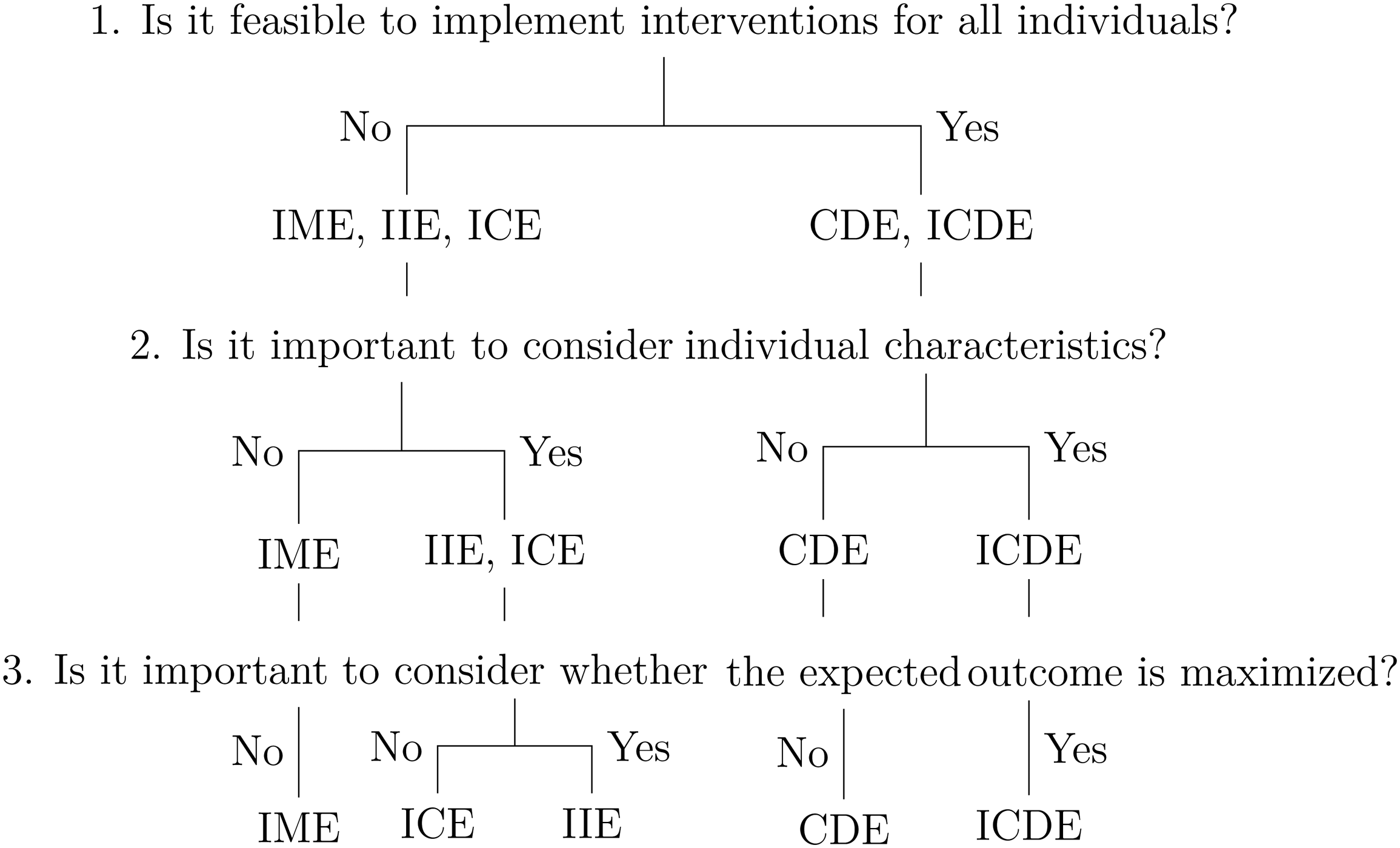
Tree diagram for optimal intervention decision-making.
The first question to consider is whether it is feasible or desirable to implement interventions for all individuals. For example, mandating that all students take Algebra 1 by the end of the nineth grade may be feasible and even desirable, as shown in Table 1. In this case, static interventions such as CDEs and ICDEs should be considered. If implementing interventions for all individuals is not feasible, stochastic interventions such as IMEs, IIEs, and ICEs become relevant options.
The second question is whether it is essential to consider individual characteristics when designing interventions. As demonstrated in our example, taking into account individual factors such as prior achievement and motivation is crucial in determining whether advanced courses are suitable for each student. In such cases, interventions that follow optimal treatment regimes (ICDE and IIE) or interventions to equalize the mediator distribution among those who have the same individual characteristics (ICE) should be chosen.
Lastly, one should ask whether maximizing each individual’s outcome is a priority. In our example, both maximizing the final math score and reducing racial disparities are important. In this case, interventions that follow optimal treatment regimes such as IIE and ICDE should be considered.
Another point of confusion arises when determining which variables to choose for different sets of confounders. It is crucial to distinguish between baseline covariates and intermediate confounders. Baseline covariates typically include demographic factors such as gender, home language status, or age. The remaining variables that confound the mediator–outcome relationships are intermediate confounders. When defining disparities in educational outcomes as well as risk factors for stochastic interventions, one should decide which variables to adjust based on whether the difference due to the variables is deemed allowable or fair (Jackson 2021). For example, it might be deemed unfair to remove differences attributable to SES when defining racial disparities in math achievement and math course-taking patterns.
In addition, in determining optimal regimes, it is necessary to select intermediate confounders
We use the same set of variables, represented as
Conclusion and Discussion
This paper contributes to the fast-growing literature on causal decomposition in three ways. First, we extend existing longitudinal mediation approaches to the context of disparities research. These approaches were previously developed for situations where exposures vary over time. However, in causal decomposition analysis, group status serves as the exposure, which rarely changes over time. We made a straightforward extension to the existing approaches by providing a formal definition, identification assumptions, and an illustrative example. Although the extension may seem methodologically trivial, it has practical implications by facilitating the investigation of contributing factors to social disparities that evolve over time.
Second, we combine the existing longitudinal mediation approaches with optimal DTRs that take into account individual characteristics. Simply applying the same intervention to all individuals or intervening to equalize the risk factors or resources between groups may be infeasible or not beneficial to individuals with different characteristics. Our new approach considers individual characteristics by using optimal DTRs, which were originally designed to maximize the average outcome. This new method represents a paradigm shift from existing causal decomposition methods that use a static or stochastic intervention by allowing interventions that are tailored to individual characteristics.
Third, we propose the individualized conditional in/direct effects by conditioning on a selected set of individual characteristics that modify the effect of risk factors. This approach allows researchers to equalize the distribution of risk factors between groups among those who similarly benefit from the interventions. Previously, the judgment on selecting conditioning variables for stochastic interventions has been solely based on equity considerations, that is, whether it is fair to remove the source of differences due to the conditioning variables (Jackson 2021). Our approach suggests another way of selecting conditioning variables based on individual characteristics that determine whether they benefit from the intervention or not.
It is important to acknowledge the limitations of our study. First, we did not consider the uncertainty involved in obtaining the optimal values for the mediators when combining causal decomposition analysis with optimal DTRs. This could potentially lead to smaller standard errors, resulting in an inflated Type I error rate. Second, the assumptions required to identify the effects of interest (disparity reduction and disparity remaining) are strong. Therefore, it is essential for future studies to develop sensitivity analysis techniques to examine the potential effect of violating the assumptions. Third, the proposed models are based on two time points and assume no nested structure of the data. Future studies can extend these models to more complex scenarios, such as cases with more than two time points or with multilevel models.
Supplemental Material
sj-pdf-1-smr-10.1177_00491241241264562 - Supplemental material for Causal Decomposition Analysis With Time-Varying Mediators: Designing Individualized Interventions to Reduce Social Disparities
Supplemental material, sj-pdf-1-smr-10.1177_00491241241264562 for Causal Decomposition Analysis With Time-Varying Mediators: Designing Individualized Interventions to Reduce Social Disparities by Soojin Park, Namhwa Lee and Rafael Quintana in Sociological Methods & Research
Footnotes
Data Availability
The HSLS:09 data utilized for the case study is accessible via NCES’s restricted-use License Program. Details can be found at https://nces.ed.gov/surveys/hsls09.asp. Additionally, the R codes for both the simulation study and case study presented in this article are available on the first author’s GitHub repository at  .
.
Declaration of Conflicting Interests
The authors declared no potential conflicts of interest with respect to the research, authorship, and/or publication of this article.
Funding
The author(s) disclosed receipt of the following financial support for the research, authorship, and/or publication of this article: Soojin Park gratefully acknowledges support from the National Science Foundation (NSF #2243119) and the American Educational Research Association Grants Program funded by the National Science Foundation (NSF-DRL #1749275).
Supplemental Material
The supplemental material for this article is available online.
Notes
Author Biographies
References
Supplementary Material
Please find the following supplemental material available below.
For Open Access articles published under a Creative Commons License, all supplemental material carries the same license as the article it is associated with.
For non-Open Access articles published, all supplemental material carries a non-exclusive license, and permission requests for re-use of supplemental material or any part of supplemental material shall be sent directly to the copyright owner as specified in the copyright notice associated with the article.
