




Abstract
Despite their complex and nonlinear relationship, reproductive rights and environmental sustainability likely have a synergistic relationship. Social movement theory suggests that reframing reproductive rights in this light can strengthen and benefit them by diversifying their moral appeal and support base. Yet despite increasing scientific evidence demonstrating ways in which population size, growth, and distribution tend to undermine various aspects of environmental sustainability, and increasing public awareness and concern for environmental degradation, linking these issues remains a contested and polarised enterprise. In this article, we explore the marginalisation processes at play surrounding this linkage and introduce the concept of population reductionism. We review advice and normative trends on communicating messages linking the fulfilment of reproductive rights with improved environmental sustainability. We elaborate a strategic communication roadmap to promote the operationalisation of the family planning and environmental sustainability linkage, centred on individual empowerment, and propose a global rallying cry—‘empowered, smaller families are better for the planet’.
Keywords
Introduction
Recent studies highlight that falling fertility rates may have multiple sustainability benefits (Mohan & Shellard, 2014; O’Neill et al., 2010; Wynes & Nicholas, 2017). While the relationship between family planning and fertility is complex, it is highly probable that the availability of family planning triggers lowered fertility levels (Angeles et al., 2005; Potts, 1997, 2014; Yavinsky et al., 2015). The fulfilment of reproductive rights, of which family planning is an integral part, would thus become positively related, through lowered fertility, to improved environmental sustainability. To define reproductive rights, we refer to the language of the Programme of Action of the International Conference on Population and Development (ICPD), centred on women empowerment, stating that they rest on the recognition of the basic right of all couples and individuals to decide freely and responsibly the number, spacing, and timing of their children and to have the information and means to do so (United Nations Population Fund, 1994). The ICPD definition also includes the right of all to make decisions concerning reproduction free of discrimination, coercion, and violence as expressed in human rights documents.
We abide by John Morelli’s definition of environmental sustainability as both ‘meeting the resource and services needs of current and future generations without compromising the health of the ecosystems that provide them’ (Morelli, 2011, p. 6). As such, climate change, the health of the seas and freshwater, soil fertility, food security, the maintenance of biological diversity, forests and fisheries, and more, are all indicators of environmental sustainability. While we acknowledge that population dynamics impact these indicators differently, we approach them as a whole. Capitalising on the causal linkage (hereafter ‘the linkage’) flowing from the fulfilment of reproductive rights and environmental sustainability presents opportunities to advance both reproductive rights and environmental sustainability. Yet the linkage remains largely understudied (Engelman et al., 2016; Murtaugh & Schlax, 2009; The Lancet, 2009). Many reasons explain this knowledge gap, starting with the nonlinear relationship between population and environmental degradation. Affluence, consumption, and technology have a more direct and easier-to-measure role in generating environmental impact and are widely perceived as their ‘true’ determinants (Bradshaw & Brook, 2014; Pearce, 2009). But other reasons also explain the reluctance to address the linkage. Exploring the relation between population size, human reproduction, and environmental sustainability raises difficult ethical dilemmas, as many human rights violations were, and continue to be, associated with pro and anti-natalist programmes whose overarching goals are to influence fertility levels, rather than to advance reproductive rights (Halfon, 2007). Such programmes led to human rights violations which instrumentalised women’s bodies and disproportionally affected certain groups, including people living with disabilities, people of colour, and people of low socio-economic status (Coole, 2021). These disadvantaged groups tend to have the highest proportion of unmet needs for family planning and the greatest vulnerability to environmental degradation (Ahinkorah et al., 2020; Bongaarts, 2020; Logan et al., 2007; Welborn, 2018). For this reason, efforts to strengthen reproductive rights for all and improve environmental sustainability are uniquely important, as they contribute to building a more equitable society.
The dominant contemporary framing of reproductive rights centres on individuals and couples, and is incompatible with larger environmental goals (Hamity et al., 2019; Hendrixson et al., 2019; Newman et al., 2014). Overall, addressing this issue remains difficult because it is delicate and polarising (van Dalen & Henkens, 2021; Wackernagel, 2020). The need for a sustained critical analysis of the questions surrounding the linkage, and for finding ways to frame them in a politically and ethically acceptable manner, is well established (Coole, 2021; Newman et al., 2014). In this article, we reflect on the marginalisation processes at play surrounding the linkage and present a roadmap for communicating on and framing this issue to increase its acceptability.
The Marginalisation of Population in the Anthropocene
The linkage is topical—the way in which we perceive the environmental changes caused by human activities is rapidly evolving and may contribute to shifting the ideological, discursive, and normative framework of the reproductive rights movement. Accompanying our increasing knowledge of the growing scale of Earth’s environmental degradation is a profound reframing of the relationship between human beings and the planet. Terminology such as the notion of ‘anthropocene’, referring to a new geological age triggered by the scale of human impact on the environment (Crutzen, 2006), and ‘Sustainable Development Goals’, where sustainability becomes the overarching framework for development; and the recent impetus to move from ‘environmental degradation’ and ‘climate change’ to a ‘climate crisis’ or ‘emergency’ (Carrington, 2019) bring this reframing into the light. Global human population size is a key factor to re-examine the relation between humans and their environment. As such, human reproduction—and, by extension, access to family planning— arise as central ethical issues (Rieder, 2016; Taylor, 2019).
Research suggests that stakeholders of the reproductive health and rights and environmental sustainability movements are largely supportive of reframing reproductive rights in a sustainable frame, but that the linkage could be characterised as ‘marginalised’ (Delacroix, 2022). As a result, presenting it in a manner that is acceptable and attractive to both movements is difficult. Using document analysis and our respective experiences in this field, we reflected on the different marginalisation processes surrounding the linkage and found that they took place at multiple and interrelated levels. Figure 1 provides a conceptual map of these processes, which we structured around three increasingly narrow levels—the conceptual, the focussed, and the personal.
At the conceptual level, we start by reviewing how each of the two key components that make up the linkage, reproductive health and rights and environmental sustainability, are individually marginalised. Rising populism combined with the distrust of experts and misinformation regarding the importance of climate change and environmental degradation contributes to marginalisation processes (Green, 2020). Arousell and Carlborn (2016) documented, in a study of culture and religious beliefs in relation to reproductive health, that religion is often all but inseparable from questions of sexuality and reproductive health. In turn, the sensitivity of reproductive health issues has led to the omission of rights language in relation to sexual and reproductive health in international agreements (Orza et al., 2017), and to the exclusion of population and family planning from most discussions of climate change, conservation, and food security (Potts, 2014).
The Authors’ Conceptualisation of the Marginalisation Processes Surrounding the Family Planning and Environmental Sustainability Linkage.
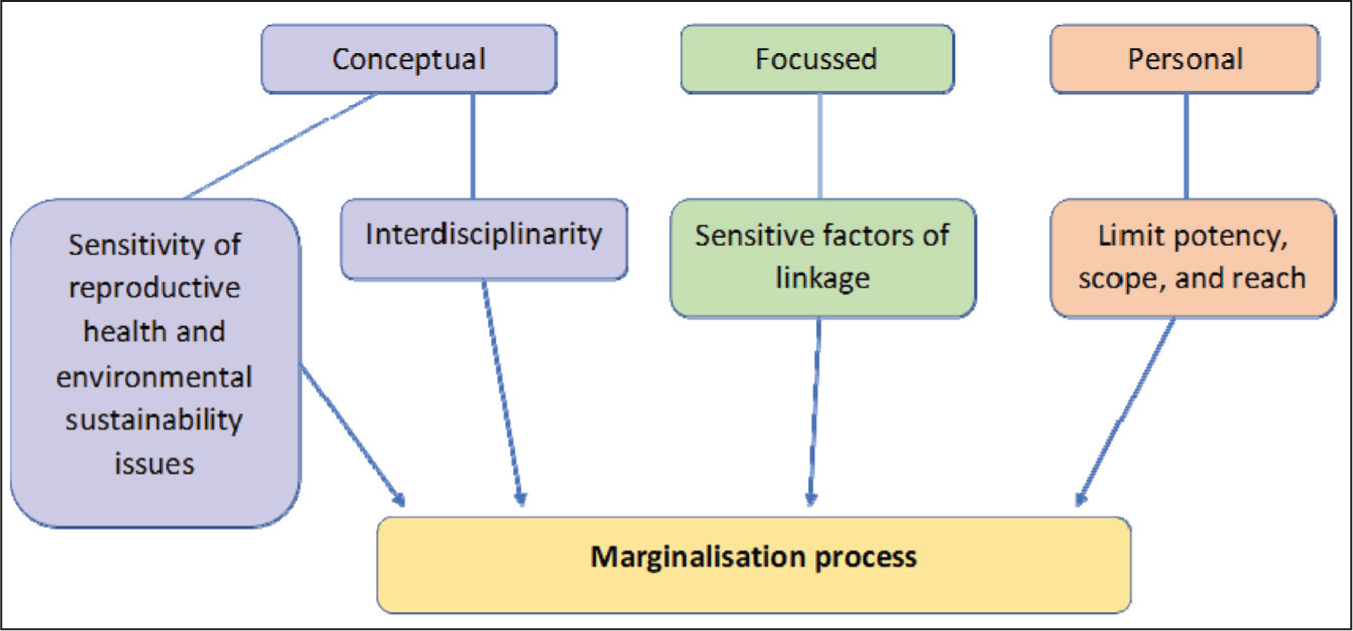
We also integrate how the interdisciplinary nature of the linkage contributes to its marginalisation. The reproductive health and rights and environmental fields have different origins and goals and operate in distinct, largely non-communicating spheres. The many barriers associated with working across established boundaries of scholarly communities are well documented, and range from the difficulty of finding a common acceptable language to finding funding and crossing organisational and subject matter ideological boundaries (Cooke et al., 2020). As a consequence, interdisciplinary research tends to remain at the academic margins (Bammer, 2013).
We characterised the next level of marginalisation as ‘focussed’ because it focuses on the interaction of the linkage’s subject matter components. Here, we note factors that make the linkage a sensitive issue, including gender dynamics and the human rights abuses that have sometimes occurred in the name of ‘population control’ (Coole, 2021; Halfon, 2007; Senderowicz, 2019); the discrimination and racism that were associated with some policies aiming to control individual fertility (Coole, 2021); the injustice implying to some that groups with high fertility and low environmental footprints are particularly to blame for environmental unsustainability (Bradshaw & Brook, 2014; Roberts, 2017); and the difficulty and uncertainty existing in conceptualising a sustainable and rights-based frame linking the linkage’s components (Dennings et al., 2022; Newman et al., 2014; O’Neill et al., 2010).
Last, we indicate that marginalisation processes also take place at the individual level. Research indicates that addressing the linkage gives rise to strong emotional responses, including feeling happy, relieved, angry, or anxious (Delacroix, 2022). Emotions play a distinct but integral role in shaping opinion, which scholars have associated with automatic as opposed to controlled decision-making processes (Lieberman, 2007; Stucki & Sager, 2018). The lack of integration of these automatic decision-making processes (such as emotions) in environmental sustainability and climate change responses may limit their potency, scope, and reach. In its report on behaviour change for nature, the Rare and the Behavioural Insights Team stresses the importance of integrating the role that emotions play to shape behaviour in nature conservation initiatives (2019).
Population Reductionism
The marginalisation processes described above contribute, at each level, to a mechanism that we call ‘population reductionism’. Population reductionism draws a parallel with Hulme’s (2011) concept of ‘climate reductionism’, a process that ‘reduces’—that is, simplifies—complex questions about the relationship between climate, society, and the future. We define ‘population reductionism’ as a mechanism whereby the complex ethical questions raised by the linkage between population dynamics and environmental sustainability are downplayed and/or avoided. While Hulme explains that climate reductionism stems from the epistemological authority of the natural sciences over the social ones to predict future human/environment relations, we explain population reductionism in two central ways. The first one is the authority in contemporary thinking of the discourse of individual (reproductive) rights over collective ones (our collective right to a sustainable environment). This moral hegemony can be traced back to the ideological shift formalised at the ICPD in 1994, which marked a departure from questions relating to the size of populations, and an early concretisation of the idea that women’s empowerment is a more important key to human development (Coole, 2016; Halfon, 2007). Since the endorsement of the Cairo Consensus at ICPD, the population size variable has been generally downplayed by agencies and organisations working on environmental and reproductive health and rights issues, in large part because it does not fit the dominant ideological framework of reproductive rights, considered as exclusively private. In this context, a reading of contemporary reproductive rights as being exclusively individual, or pertaining to the couple, acquires epistemological superiority over one that integrates environmental sustainability considerations.
The second mechanism triggering population reductionism stems from the perception that population size is a variable with little impact on environmental degradation and climate change. Coole explains that the reluctance to address population dynamics as a variable in environmental degradation comes from the fact that consumption, technology, and education are seen as more direct pathways for environmental sustainability and do not carry the complex ethical implications of population (2016). Ignoring the role of population size in generating environmental impact is a deliberate strategy employed to avoid conflict and focus on messages that may benefit from broader public endorsement. Environmental journalist David Roberts explains, for example, that he is reluctant to talk about population despite recognising it as a factor in generating environmental impact (2017). Like many others, he suggests that ‘the best ways to address population don’t necessarily involve talking about it at all’. Others go much further in their rejection of the population factor. Academic interest and research on the linkage are regularly denounced and vilified on the grounds that linking efforts to slow or reverse population growth, family planning and environmental sustainability is a form of patriarchal domination to restrict or blame women’s reproductive autonomy, and discriminate and contain groups in certain spaces of exclusion. For example, Hendrixson et al. (2019) issued a direct challenge to scholarship that links population reduction with climate change adaptation and mitigation and the survival of the planet, linking such endeavours with forms of ‘populationism’ or ideologies that attribute social and ecological ills to human numbers.
While this attitude towards the population factor is changing as increasing scientific evidence demonstrates the ways that population dynamics undermine environmental sustainability, population reductionism is still rife. Scholars in a multitude of academic fields have deplored the lack of attention to this issue (Bongaarts & O’Neill, 2018; McFarlane, 2014; Newman et al., 2014).
Framing the Linkage
Overall, the above-mentioned population reductionism and marginalisation processes contribute to keeping the linkage a taboo subject that few researchers and policymakers dare approach. Acknowledging this, we reflect on how to frame the linkage to make it more attractive and acceptable to policymakers, researchers, and the public at large. Elaborating a strategic roadmap to promote the operationalisation of the family planning and environmental sustainability linkage is long overdue, as voices are increasingly raised to stabilise or reduce global population size. In 2019 for example, over 11,000 scientists around the globe were signatories to a declaration of climate emergency that identified stabilising and reducing the population by providing voluntary family planning and supporting education and rights as one of six critical and interrelated steps that could be taken to lessen the worst effects of climate change (Ripple et al., 2020).
There is evidence that changing the framing of a social issue can reinforce its moral appeal and diversify its support base. The ‘framing ability’ of a social movement is the ability to convince those in power of the legitimacy of its claim for social change, requiring consistency with the audiences’ personal experiences as well as cultural resonance. Adding new frames to a movement thus has the potential to widen its appeal, as frames resonate differently with each individual, group, or organisation (Kimport, 2016). Kimport (2016) compared the divergent successes of the marriage equality and abortion rights movements and documented that framing marriage equality beyond a purely rights-based language helped make this movement successful. Her analysis finds that the marriage equality movement modified its social change message and diversified its organisational structure, enabling it to appeal to a wider and more heterogeneous audience, whilst the abortion rights movement largely stalled. Kimport argued that the abortion rights movement had the opportunity to learn from this process. We argue that this rationale fits the reproductive rights/environment nexus, as harnessing the linkage may indirectly benefit reproductive health and rights by diversifying the moral appeal of these rights. The linkage, just like the abortion and marriage equality movements, raises questions that contest normative constructions of sexuality as exclusively procreative and challenge deeply held social norms surrounding gender and sexuality. Promoting the message that the fulfilment of family planning has positive environmental benefits would alter the current exclusively rights-based framing of reproductive rights. Including environmental sustainability concerns in the rationale for the need to advance reproductive rights is a claim that could contribute to promoting reproductive rights, by enriching and adding new frames—and new support—to its ideological framework. Research indicates that stakeholders of both the environmental sustainability and reproductive rights movements are largely supportive of integrating reproductive rights in a wider sustainability frame (Delacroix, 2022).
So, how do we frame the linkage in a manner that can overcome population reductionism and the broader marginalisation processes at play on this issue? To guide us in this endeavour, we turn to review existing advice on how to talk about the population–environment connection. The reactions to an article by Wynes and Nicholas exploring which lifestyle choices had the greatest potential to limit greenhouse gas emissions provide useful insights on this matter. This article identified that having one fewer child was, by far, the most impactful action that could be undertaken at the individual level to limit greenhouse gas emissions (Wynes & Nicholas, 2017). This finding generated widespread discussion and controversy, and Pedersen and Lam (2018), in their response to this article, developed a set of recommendations for scholars addressing population as an environmental issue. They argued that Wynes and Nicholas’ recommendation to have one fewer child was done in a manner that lacked the ‘contextual information that such interdisciplinary topics require’, which led to widespread criticism, including that the article reinforced the suspicion of the political right that the threat of climate change was a cover for reducing people’s freedom, laid the responsibility of ecological collapse on the individual, and ignored the disparities in consumption between population groups (Pedersen & Lam, 2018, p. 2). They recommended to scholars addressing population as an environmental issue explicitly state their positions on three key points to avoid misunderstandings and polarisation. First, if focussing on the individual actions that can be undertaken to reduce environmental harm, scholars should also address the role of collective actions. Second, they must acknowledge that population size is not the only driver of climate change and that different lifestyles and consumption patterns also play a role. Third, they must clarify to which extent reproductive autonomy should be respected if reproduction is to be contextualised as a sustainability issue.
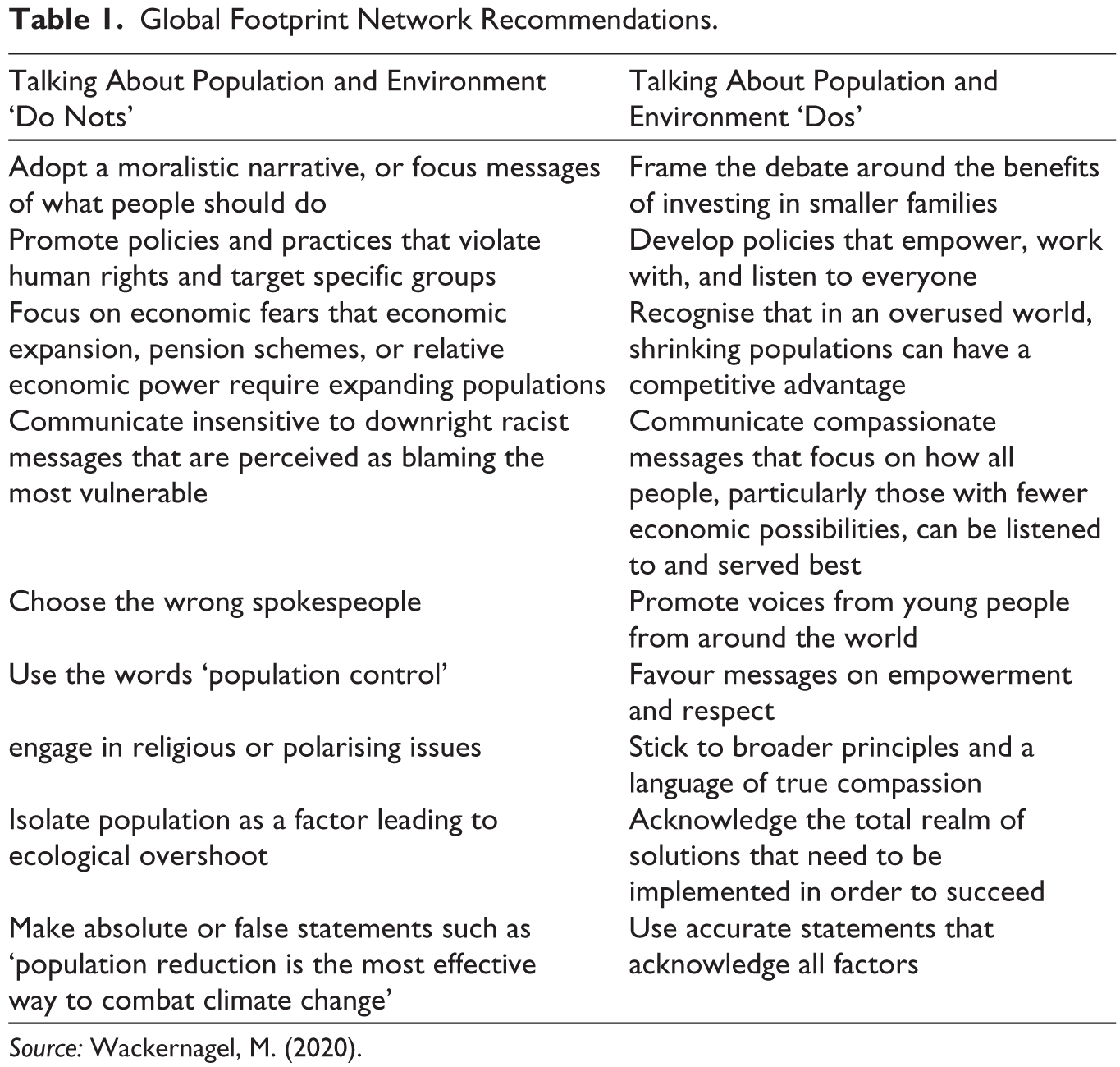
The Global Footprint Network also laid out tangible advice on how to talk about the population and environment connection in a manner that is ‘productive and compassionate’ (Wackernagel, 2020). It identifies factors that make the population conversation difficult and proposes alternative messages. Table 1 summarises the Network’s recommendations.
Global Footprint Network Recommendations.
Source: Wackernagel, M. (2020).
Developing a Common Language… What to Include
As these examples show, talking about population size in connection to the environment requires clarifying the values associated with that discourse. The same applies when addressing the connections between family planning and environmental sustainability because it is no doubt primarily through its influence on the size of a population that family planning impacts environmental sustainability (unconstrained access to family planning lowers fertility levels (Potts, 2014). To avoid polarisation and miscommunication, communicating on family planning, population and environmental sustainability linkage thus requires several explicit statements.
The choice to have children, however few or many, rests with the individual. Fulfilling reproductive rights is integral to harnessing that linkage. Reproductive rights, as defined at the 1994 ICPD, must be fulfilled, and respected for everyone—‘Reproductive rights rest on the recognition of the basic right of all couples and individuals to decide freely and responsibly the number, spacing and timing of their children and to have the information and means to do so, and the right to attain the highest standard of sexual and reproductive health’ (United Nations Population Fund, 1994). As such, acknowledging that family planning and environmental sustainability are related and can benefit each other does not threaten or compromise in any way the pursuit of the fulfilment of individuals’ reproductive rights. On the contrary, it constitutes an opportunity to advance these rights by strengthening women’s and men’s reproductive autonomy. Acknowledging that reproductive rights are individual rights does not mean, however, that collective rights to a healthy environment should not or cannot also be acknowledged.
The focus of connecting family planning with environmental sustainability is universal. Making this statement will avoid a misunderstanding often associated with the linkage, that promoting the linkage may result in singling out population groups with high fertility levels and blaming them for generating environmental impact. Despite different population groups having widely varying fertility levels, the linkage is universal, as it aims to fulfil everyone’s reproductive rights, irrespective of these fertility levels. This refers to one of the founding principles of human rights—universality and inalienability (UN General Assembly, 1948). The target audience for the operationalisation of the linkage is therefore not defined by the physical characteristics of individuals or groups, their income level, or their nationality, but is, rather, humanity as a whole. The FP2020 initiative was developed along the same line after the London Summit on Family Planning in 2012—its overall goal to enable 120 million additional women and girls to use contraceptives by 2020 was constructed as a global rallying cry, as opposed to a series of country-specific targets (Brown et al., 2014).
Population size is one of the variables that impact environmental sustainability, but hardly the only one. There is concern that addressing the linkage may divert attention from other important drivers of environmental impact (Bradshaw & Brook, 2014; Delacroix, 2022; Roberts, 2017). Focussing on the linkage could provide an opportunity for highly consuming nations, groups, and industries to divert their culpability for environmental degradation towards high fertility groups. Because high fertility groups tend to have lower footprints on a per capita basis, this displacement of responsibility would not only allow the industries, systems, and lifestyles of those with heavy footprints to continue with business as usual but would also exacerbate global injustices. For this reason, it is necessary when discussing the linkage to include a statement acknowledging that influencing global population size is one of many strategies to consider in order to improve global sustainability but is not the only one. Individuals can be empowered to take action to minimise their footprints, but it is also important not to place, or be perceived to place, the entire burden of environmental degradation on the shoulders of individuals. To achieve effective change, upstream practices associated with consumption in all its forms must be re-envisaged. Large-scale policy, economic, social, and technological changes are required to create a more sustainable society.
Developing a Common Language… What to Avoid
Because of its sensitive nature, the intersection between population dynamics, family planning, and the environment requires careful choice of language. Most importantly, the expression ‘population control’ must not be used in a positive sense, for example as a means to a beneficial end. The phrase population control broadly evokes a number of policies that were undertaken in the second half of the twentieth century, often aiming to reduce levels of fertility through the use of family planning. It is still used in this way by some people but should be avoided for two key reasons. One, it states an impossible objective, as the human population cannot really be controlled and should not be subject to attempted control by anyone. Two, it implies that someone—presumably governments—should attempt the impossible by restricting reproductive rights.
Another reason why the phrase ‘population control’ should be avoided is the concern that it could appear to support the idea that human rights violations may be permissible if the objective is slower population growth. There is a debate among many supporters of family planning and reproductive health and rights over how extensive such violations have been and how to communicate about them. This may depend upon whether a historical exploration is necessary or useful in specific contexts. In any case, human rights violations in the name of ‘population control’ should not be hidden. Moreover, these violations remind us to be vigilant in ensuring that policies promoting family planning and environmental sustainability should never be used again to restrict reproductive autonomy.
The semantics of the expression ‘population control’ is also problematic, as promoting the linkage in a rights-based way means striving to empower individuals to achieve their own reproductive goals, and empowerment is antithetical to external control. Accordingly, promoting the linkage cannot involve posing any judgement on the size of any individual family, however large or small. As such, the message that smaller families can be beneficial for the environment should be communicated as a broad, general principle, one that does not hamper the fact that reproductive choices are subjective, and ultimately rest with the individual. Education and informational dissemination on this linkage might lead to free decisions by individuals and couples to have fewer children than they otherwise might.
We have seen that it was useful to clarify assumptions underlying the linkage and that the phrase ‘population control’ should be rejected when referring to the positive implications of the fulfilment of reproductive rights on environmental sustainability. Adopting these guidelines will result in less polarisation around the linkage and higher chances that messages on the integration of reproductive rights and environmental sustainability will be accepted and endorsed. But several authors and policymakers have suggested that acknowledging the positive impact of family planning on environmental sustainability was unproductive because other, less charged messages also had the effect of lowering fertility levels (Roberts, 2017). While conflict-avoiding strategies can be productive, communication scholars stress that conflict can be a beneficial tool for communication, as it can stimulate interest and invoke change (Putnam, 2013). We argue that the time is right to discuss population issues more openly. Moreover, purposefully ignoring the message that slowing population growth is beneficial for the environment poses an ethical dilemma. As individuals become increasingly concerned with environmental degradation and climate change (Corner et al., 2020), it seems obvious that they should have the opportunity to be informed of the significance of their individual lifestyle and reproductive choices. The commonly promoted strategies to improve environmental sustainability (such as recycling, for example) often do not correspond to the lifestyle actions with the greatest potential to reduce emissions (Wynes & Nicholas, 2017). As such, individuals are often denied key information that could empower them to act towards a sustainable future. Withholding this information is, at the very least, unjust and paternalistic, and constitutes a form of contributory negligence towards achieving a sustainable balance with the environment.
Capitalising on the Linkage as a Message of Empowerment
We propose that the guiding principle for framing the linkage between family planning, population size, and environmental sustainability be one of empowerment.
Empowerment for Reproductive Rights
As we have seen above, linking family planning with environmental sustainability constitutes an opportunity to advance reproductive rights by both diversifying the moral appeal of these rights and by opening new funding and programmatic opportunities for the reproductive rights movement. Environmental concern grows fast across the population, and the reproductive rights movement can benefit from such a large endorsement. Not only do reproductive rights supporters gain a new motivation to strengthen their support and commitment to these rights, but new segments of the population, motivated by a desire to act for environmental sustainability could also emerge to support reproductive rights. Many feel unconcerned with family planning, perhaps because their reproductive needs are fully met or not a current concern in their lives, or for other, more complex reasons. But information on climate change and environmental degradation is pervasive and alarming, making it a difficult subject to avoid. As such, support for the acceptability, accessibility, and availability of quality family planning services may well come from those who have become concerned about environmental sustainability in recent years.
On the other hand, acknowledging the positive impact that family planning has on environmental sustainability via its impact on fertility levels allows for the integration of reproductive autonomy goals in environmental policies and programmes, thereby opening myriad opportunities—new partnerships, funding and programmatic opportunities, institutional capacity, and increased commitment for integrated approaches to a sustainable future. Stakeholders of the reproductive rights and the environmental sustainability movements appear in favour of integrating reproductive health and rights in a wider sustainability frame that would reflect environmental considerations (Delacroix, 2022). Integrating reproductive health and rights in a wider sustainability frame is an approach that is also consistent with population, health, and environment programmes, which aim to improve environmental and social outcomes and simultaneously prioritise family planning and reproductive health services with environmental objectives (Yavinsky et al., 2015). In 2017, the European Parliament Committee on Development (2017) urged the adoption of such programmes to provide integrated solutions to health, gender, and environmental challenges. The fulfilment of reproductive rights is thus already increasingly perceived and recognised as a valid pathway for climate change adaptation and mitigation strategies and to relieve human pressure on the environment. But concrete action is slow on this matter. Mutunga and Hardee (2010) pointed out that despite the explicit identification of population growth as a compounding factor for climate change and environmental degradation by some of the countries at most risk of suffering from climate change, National Adaptation Programs of Action (NAPA) funds did not prioritise this issue, resulting in a missed opportunity to advance reproductive health and family planning. NAPAs are submitted to the United Nations Framework Convention on Climate Change secretariat and ‘provide a process for Least Developed Countries to identify priority activities that respond to their urgent and immediate needs with regard to climate change—those needs for which further delay would increase vulnerability or lead to increased costs at a later stage’ (Sustainable Development Goals Knowledge Platform, 2016).
Empowerment for Happiness and Well-being
In their exploration of the mechanisms that drive fertility decisions, Tal and Kerret (2020) suggest that positive psychology can play a key role in promoting individual decisions to have fewer children. Going beyond the influence of societal norms encouraging individuals to have children and the different cultural norms driving reproductive decisions across the world, they acknowledge that ‘individual pregnancy decisions are frequently a reflection of a belief that a new child will produce happiness for the mother, couple and family’ (Tal & Kerret, 2020, p. 4). They explored related research and found otherwise—a negative correlation between the number of children and the well-being and happiness of both parents and children. Research on the link between the number of children and happiness is varied and complex, but many studies corroborate a negative association between immediate subjective happiness and becoming a parent, and this link appears stronger in relation to unintended pregnancies (Gipson et al., 2008; Margolis & Myrskylä, 2011). While broader contextual factors may play important roles in this question (Nomaguchi & Milkie, 2020; Umberson et al., 2010), research indicates that smaller families may be associated with better health, education, quality time, more privacy, and stronger marriages and careers (Shi, 2016; Tal & Kerret, 2020). Tal and Kerret (2020) propose to promote messages that communicate the benefits of investing in smaller families—improved individual happiness for children and parents, and improved societal benefits associated with a more sustainable future. This positive approach focusses not on the problem (the negative impact of a growing global population on the environment), but on ways to address it (promoting smaller families empowers individuals to live a happier life). The positive psychology approach to communicate the message that smaller families are beneficial for parents as well as children fits research on individual behaviour for climate change—whilst knowledge about climate change predicts intentions to act more sustainably, it does not translate into concrete actions (Hsu & Lin, 2015). It is well documented, however, that emotional processes play a significant role in determining the effectiveness of environmental communication for behaviour change and decision-making (Morris et al., 2019). As such, the message that empowered, smaller families are better for the planet fits this principle.
Communicating this message also constitutes an opportunity for individual self-improvement. The existential questions that arise through a critical reflection on climate change lead to an exploration of life, meaning, and interconnectedness—how do we relate to ourselves, other people, nature, societies, and the global community (Lehtonen et al., 2019, p. 364). The reluctance to consider the linkage between family planning and environmental sustainability is documented across many sectors (van Dalen & Henkens, 2021), signalling that such a critical reflection may be missing from our lives. Interconnectedness is also a message that resonates well with policymakers and researchers—many influential initiatives and concepts were developed on this notion of interconnectedness, such as the One Health approach, recognising that human health is closely connected to the health of animals and our shared environment, the rapidly growing Planetary Health movement, based on the idea that human health and the health of the planet are closely related and subject to integrated action, or ideas in environmental philosophy, such as Freya Mathews’ proposition of an ethic of bio-proportionality seeking to balance the populations of every species with an ecologically proportionate abundance of the populations of all other species (Mathews, 2016; Myers & Frumkin, 2020; Whitmee et al., 2015). These movements and concepts have gained wide-ranging acceptance and legitimacy, and have in common the acknowledgement of the interconnectedness of human health and their environment, carrying implications for human population size.
Global Citizen Empowerment
This encompasses both the intrinsic right to be informed of the relation between global population size and environmental impact, discussed above, and, flowing from this awareness, to be given the opportunity to make individual decisions that influence environmental sustainability. Climate change and environmental degradation awareness negatively impact emotional well-being, a phenomenon that is more prevalent in younger adults (Clayton & Karazsia, 2020). Feelings of hopelessness, anger, and anxiety are reported (Clayton, 2020; Williamson et al., 2018). Individual decisions to have smaller families will obviously not erase the threat of environmental degradation but may play a role in diffusing the negative feelings of hopelessness and anxiety that are experienced with them. Being empowered to make decisions that have the potential to improve the sustainability of the planet is a valid coping mechanism. Acting to minimise the impact of one’s environmental and carbon legacy by choosing to have fewer or no children may thus be a pathway to cope with climate anxiety and hopelessness, especially when knowing that making and implementing this decision is the most important high-impact action for individual behaviour to minimise CO2 emissions (Wynes & Nicholas, 2017). Research indicates that climate change and environmental degradation already influence fertility behaviours and outcomes (Relman & Hickey, 2019; Sellers & Gray, 2019). As such, the message that happy, smaller families are better for the planet allows for a more positive decision-making process that not only contributes to relieving a feeling of hopelessness in the face of environmental degradation but also creates a win-win situation where the perceived need to reduce fertility is compensated by the awareness that fewer offspring will likely bring parents and children significant benefits.
Conclusion
We mapped the marginalisation processes at play surrounding the family planning and environmental sustainability linkage and introduced the concept of population reductionism, a mechanism whereby the complex ethical questions raised by this linkage are downplayed and/or avoided. To overcome these marginalisation processes, we reflected on how to frame this issue to make it more attractive and acceptable to policymakers, researchers, and the public at large. We delved into social change movement studies to explore the role that framing could play to influence the success of a social issue and reviewed existing advice on how to communicate related messages. We elaborated a strategic communication roadmap to promote the operationalisation of the family planning and environmental sustainability linkage, centred on individual empowerment, and proposed a global rallying cry that reflects the public’s heightened concern for climate change and environmental degradation—‘empowered, smaller families are better for the planet’.
Footnotes
Declaration of Conflicting Interests
The authors declared no potential conflicts of interest with respect to the research, authorship and/or publication of this article.
Funding
The authors received no financial support for the research, authorship and/or publication of this article.