




Abstract
Despite having robust market influence, three-generational family tourists have received little academic attention. This paper focuses on mothers: they play diverse and central roles in these trips, often while having complex experiences. Due to its ability to explain how individuals achieve their valued states under pressure, conservation of resources theory was applied to investigate the interactions between stress, resources, satisfaction, and well-being. An exploratory sequential mixed methods approach involved in-depth interviews and a questionnaire survey with mothers in China. Parenting stress was found to negatively affect travel satisfaction and subjective well-being, while partner support and self-efficacy served as key protective factors. Theoretically, this research provides insights into mothers’ experiences during three-generational family tourism, particularly the stress–resource–well-being dynamics. The findings can inform the improvement of products, services, and facilities by travel operators to draw the growing market of multi-generational families.
Keywords
Introduction
Even as an onlooker, one can sometimes sense tension simmering within an otherwise happy family on a trip. From canceled flights and child meltdowns to spousal miscommunication, moments of discord are more than peripheral challenges; they are a main aspect of family tourism. Stress and conflict are indeed part and parcel of the multifaceted tourist experience (e.g., Kelly, 2022). Mothers generally face more nuance than other family members, as mothers’ intersecting roles shape the entire trip (Y. Wang & Li, 2021). Scholars have thus attended to mothers’ roles in family tourism (Y. Wang & Li, 2021). Their travel experiences have been extensively discussed in nuclear family settings as well (e.g., Kelly, 2022; S. Yang et al., 2025). Yet despite the growing prevalence of multigenerational travel, mothers’ perspectives remain underexplored in this context. Our research seeks to address that gap.
Adding a generation (e.g., aging parents) can greatly alter one’s travel experience. Doing so may introduce caregiving dynamics along with intergenerational expectations that complicate family members’ roles compared to nuclear family tourism. These prospects are especially relevant to mothers, whose experiences already tend to be more complex than others’. For example, in three-generational family trips, generational cohorts have unique travel preferences. Each generation’s decisions are also influenced by the other two (Ding et al., 2024). Mothers oversee a suite of tasks—from planning and assuming household duties to facilitating communication, caring for the elderly and children, and coordinating varied needs (X. Yao et al., 2025). Further, they face more complicated purchase processes given their roles as decision makers and implementers (Y. Wang & Li, 2021). These responsibilities naturally affect family dynamics. They especially reshape mothers’ experiences, hence the need to examine mothers’ views on this travel mode.
Mothers seek personal space and respite during family trips. However, they often struggle to enjoy themselves due to numerous obligations when traveling with their parents, partner, and children. In addition to invisible labor, different generations’ demands can easily trigger stress. These women are more likely than other family members to experience role overload. Their stress accordingly intensifies compared to what they might experience when traveling with the nuclear family. Fortunately, mothers usually derive satisfaction from multigenerational trips in spite of tension. They enjoy being with loved ones, observing their children’s development, and getting a break from daily life (Fu et al., 2014). Questions nonetheless persist: what kinds of stress do mothers experience during three-generational family travel? Do mothers receive support in coping with stressful situations? How do these stressors influence mothers’ travel satisfaction and subjective well-being?
Conservation of resources theory provides a powerful and cohesive framework for our research as it explains human reactions through the lens of resource management. The theory posits that stress arises from the threat or actual loss of valued resources such as time, autonomy, and energy (Hobfoll, 2011). To address the stressful situation, people try to gain supportive resources, including personal and social resources (Hobfoll, 2011). These efforts can temper reductions in satisfaction and well-being (Hobfoll et al., 1990). Drawing on the conservation of resources theory, this research aims to provide a clear picture of mothers’ experiences traveling with their parents, partner, and children, including the stress they experience, the supportive resources they receive, and the downstream effects on travel satisfaction and subjective well-being. We integrate our core constructs, modeling the dynamic interrelationships by proposing that mothers’ travel satisfaction and subjective well-being are ultimate outcomes determined by the collective influence of resource losses (i.e., stress) and gains (support).
Specifically, mothers expect to have access to the resources needed to cope with stress, such that they can maintain their travel satisfaction and subjective well-being during three-generational family trips (Ilska & Przybyła-Basista, 2020). Several exploratory research questions are considered here to fully understand the interactions among mothers’ stress, supportive resources, travel satisfaction, and subjective well-being:
What types of stress do mothers experience during three-generational family trips, and how does this stress affect their travel experiences?
What supportive resources do mothers gain in the context of three-generational family trips, and how do these resources influence their travel experiences?
How are stress, supportive resources, travel satisfaction, and subjective well-being interrelated in mothers’ experiences during three-generational family trips?
Three-generational family travel is becoming increasingly important given shifting societal values and family structures (Carr, 2011; Schänzel & Yeoman, 2014). For instance, grandchildren living with their grandparents constitute an emerging family arrangement (Zhang & Wu, 2020). Theoretically, our research enlarges the scope of work on multigenerational family tourism. Travel decision-making patterns (Ding et al., 2024), conflict resolution during decision making (M. Yang et al., 2020), and travel motivations regarding family reunions (Kluin & Lehto, 2012) have dominated much of the literature. We describe mothers’ experiences by shedding additional light on familial dynamics and emotional bonding during trips. The results could inspire further discussion of this segment to better comprehend participants’ experiences, behaviors, and familial role performance in multigenerational family tourism. Practically, the findings present a rich view of travel stress and mothers’ satisfaction. The tourism industry can refer to these outcomes to develop more effective marketing strategies and products targeting multigenerational families.
Literature Review
Mothers’ Role in Family Decision-Making
The crucial role of mothers in family decision-making has been revealed across different disciplines such as sociology, psychology, and gender studies (Agarwal, 1997; Herelle, 2025; Manser & Brown, 1980; Stone, 2007). Previous research shows that mothers are primarily responsible for the day-to-day arrangement and management of family life (Steenkamp & Freeks, 2025). This includes making key decisions about household expenses, meals, healthcare, education, and family activities—a dynamic that persists even in dual-parent households and reinforces the gendered expectation of maternal oversight (Herelle, 2025; Hoddinott & Haddad, 1995; Y. Wang & Li, 2021). In addition, maternal decision-making processes are usually characterized by a greater emphasis on thorough considerations, relational considerations, long-term consequences, and adaptive flexibility (Veeder, 1994). These socially cultivated characters position mothers as the central coordinators in family decision-making.
Similarly, mothers are typically framed as major players in family trips. Numerous studies have considered mothers’ roles in family travel decision-making (Y. Wang & Li, 2021). Travel decision-making is a complex, multi-stage cognitive and behavioral process (Jeng & Fesenmaier, 2002). Travel decision makers need to seek information to assess the quality of the destinations and facilities (e.g., checking online reviews for the destinations and hotels), make travel plans (e.g., reading blogs and travel guides), and budget (e.g., checking the price for flight tickets). Besides involving such rational analyses, the process also carries a socially oriented aspect, especially for group travel (Gitelson & Kerstetter, 1995). The travel decision-making process is more complicated in group traveling contexts, such as family or friend trips, where conflicting individual preferences require negotiation and compromise (Liao et al., 2022; X. Wang et al., 2024).
Grandparents, parents, and children engage in three-generational family travel. Such families represent an expanding consumer segment in the tourism market (Schänzel & Yeoman, 2014). Compared with nuclear family travel, multigenerational trips feature a more complex member composition, a wider range of demands, and varied (but often overlapping) travel goals (Ding et al., 2024). Besides relaxing and reinforcing family bonds, these trips frequently promote intergenerational interaction and fulfill familial responsibilities (e.g., filial duties toward older generations in certain cultures; A. Hu et al., 2023). Decision-making processes can be complicated: choices will ideally accommodate priorities, lifestyles, and consumption habits across generations. These characteristics make three-generational family travel distinct from other forms and influence individuals’ experiences. Mothers’ roles are particularly important in this case: apart from completing the tasks inherent to nuclear family tourism, mothers need to meet filial obligations for their parents (A. Hu et al., 2023). They serve as liaisons in family communication as well (e.g., mediating decisions between older and younger generations; M. Yang et al., 2020). As wives and mothers, they regularly interact with their partners who are planners, safety guardians, and essential participants in the decision-making process about family trips (Y. Wang & Li, 2021). Family holidays can exacerbate mothers’ stress as family tasks and irritations accumulate. To date, though, their experiences during three-generational family travel have not been thoroughly described.
Mothers’ Experiences in Family Travel
Family trips are clearly valuable to mothers: these experiences strengthen family cohesion, foster mutual understanding, expand family members’ horizons, and expose participants to novelty alongside close companions (Fu et al., 2014; Kelly, 2022). These trips can thus elevate mothers’ well-being (Miyakawa & Oguchi, 2022). But family trips involve more than positive moments, particularly for mothers: compared to fathers, they may find it more difficult to capitalize on leisure time (Fu et al., 2014). These women’s family travel experiences intertwine with their multiple family identities (e.g., budget holders, planners, caregivers, and implementers; Y. Wang & Li, 2021). Mothers may be prone to worry during family trips; they tend to put their children’s needs and preferences above their own while aiming to provide childcare as they would at home (S. Yang et al., 2025). At the same time, many mothers yearn to escape their mundane parenting tasks (Fountain et al., 2015)—they, too, desire time and space for themselves on family vacations. They might even grapple with such ambivalence (Gram et al., 2018). Although research on nuclear families’ travel has contributed to the family tourism literature, further investigation is necessary to clarify mothers’ experiences during other types of family trips.
Mothers’ variety of roles during three-generational family trips may subject them to pressure. Having limited time and energy to assume diverse duties can lead to stress (Wiley, 1991). Traveling with their parents, partner, and children presents mothers with numerous stressors. Tension may arise when interacting with their parents, making travel decisions, negotiating across generations, and caring for children. Intergenerational conflict can arise from travel schedules, uncivil parental behavior, and distinct living habits (Y. Yao et al., 2020). All these issues can influence adherence to filial duties. Women’s roles as family purchasers and decision-makers also evoke stress, such as when mothers’ values and consumption habits diverge from those of their aging parents (Y. Yao et al., 2020). The balance between engaging in sound parenting and pursuing leisure can be stressful, too (Fountain et al., 2015). Mothers face stress even as leisure travelers. Obstacles related to their physical condition, subpar environments, and poor service providers can diminish mothers’ hedonic experiences and generate pressure during travel (Zhu et al., 2020). Stress is known to affect people’s physical and mental health (Lazarus, 1993) while lowering travel satisfaction and subjective well-being—goals that family tourists pursue (Miyakawa & Oguchi, 2022). Many mothers are eager for support in managing stress so they can attain the experiences they want (Ilska & Przybyła-Basista, 2020). Studies in this vein have overlooked the stress and support that mothers experience during three-generational family trips. The mechanisms of how stress interacts with mothers’ satisfaction and well-being in this travel mode are similarly unclear.
Using Conservation of Resources Theory to Understand Mothers’ Travel Experiences
Conservation of resources theory is well-suited to elucidate mothers’ travel-related stress, as it addresses environmental and internal influences (Hobfoll, 2011). This theory is commonly used to explain individuals’ ability to withstand challenges and the extent to which they remain attentive, committed, and absorbed in tasks (Hobfoll, 2011). Conservation of resources theory posits that people aim to acquire and maintain resources when facing stress so as not to compromise valued states, such as personal well-being (Hobfoll, 1989). Resources are the products of a given situation; they are not individually determined (Hobfoll, 1989). They also take various forms: objects (e.g., cars and houses); conditions (e.g., employment and marriage); personal assets (e.g., skills and traits such as self-efficacy and self-esteem); energy (e.g., time and physical stamina); and social assets (e.g., social status and social support; Hobfoll, 2011). Resources’ value differs by person and is tied to one’s circumstances (Halbesleben et al., 2014). For example, although family tourists usually appreciate time with loved ones, it can reduce other resources in certain situations (e.g., abusive relationships damage one’s self-esteem; Halbesleben et al., 2014).
Conservation of resources theory has been applied in stress research within disciplines such as business management, education, and psychology (e.g., Bettini et al., 2020; Z. Liu et al., 2022); tourism is no exception (e.g., Meng et al., 2024). Mothers may encounter stress from resource threats, actual losses, or inadequate returns on investment during three-generational family travel. Unforeseen issues or family conflicts can imperil emotional assets; prolonged childcare can drain one’s leisure time and energy; and extensive planning may go unrewarded, such as if mothers do not receive their desired recognition due to intergenerational tension. Studies have lent support to several tenets of conservation of resources theory. The first principle suggests that resource loss is more salient than resource gain: in short, losses typically affect people more profoundly and quickly than gains (Hobfoll, 2011). Therefore, even when a trip involves positive experiences, frequent or intense resource losses (e.g., physical exhaustion or emotional fatigue) may dictate mothers’ feelings. Psychological stress occurs when the person–environment relationship is taxing or otherwise exceeds one’s resource capabilities (Lazarus & Folkman, 1984). Conservation of resources theory’s second principle is that people are willing to invest in easing stress, recovering from resource losses, and acquiring assets (Hobfoll, 2011). For instance, mothers may seek support from their parents or partners to alleviate stress during three-generational family trips. People with more assets are less vulnerable to resource loss while being primed for resource gain and vice versa (Hobfoll, 2011). Among mothers who have relatively few resources (e.g., based on long-term demands), traveling with three generations may further deplete their coping capacity, thereby reducing their travel satisfaction and subjective well-being.
Mothers may particularly favor travel satisfaction during these types of trips. Family togetherness, relaxation, and fun can significantly affect their subjective well-being (J. Hu et al., 2023). However, substantial stress can plunge mothers into a resource-loss spiral (Hobfoll, 2001). People facing resource loss often experience further losses and struggle to respond adequately to the situation. This spiral is detrimental to mothers’ travel experiences and well-being (Hobfoll, 1989). Mothers thus aim to bolster their resource reservoir in order to cope with diverse stressors throughout three-generational family trips. The resources they obtain help them achieve their travel goals.
In light of the preceding discussion, we built a framework to depict mothers’ experiences during three-generational family trips based on conservation of resources theory. It illustrates the types of stress mothers experience along with the resources they gain during travel. The framework further indicates how these assets relieve stress and assist mothers in reaching their goals (i.e., travel satisfaction and subjective well-being; Figure 1).
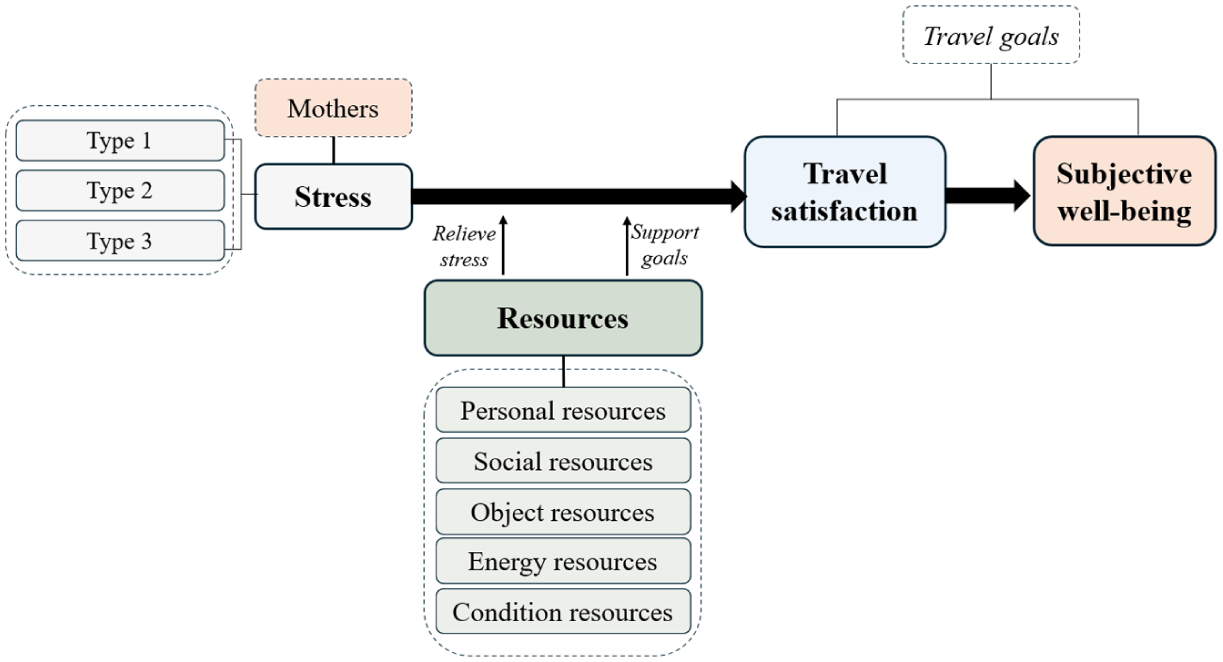
Research framework.
Methodology
Research Design
We adopted a mixed-methods approach to address the research questions. A quantitative phase that follows a qualitative one can lay a foundation for subsequent investigations and enhance findings’ value (Mason et al., 2010). Study 1 entailed in-depth interviews to gain insight into mothers’ stress and resources during three-generational family travel. Thematic analysis involved an inductive approach rooted in social constructivism to identify constituent factors and establish a theoretical framework. Study 2 included a follow-up questionnaire survey targeting a larger sample to discern the dynamics among mothers’ stress, resources, travel satisfaction, and subjective well-being during three-generational family trips. The results could thus be generalized to a broader population (Creswell et al., 2003). The knowledge acquired from Study 1, together with that gleaned from prior work, informed the research framework and facilitated quantitative results’ interpretation (Wu & Pearce, 2014). Figure 2 displays our overall research design.
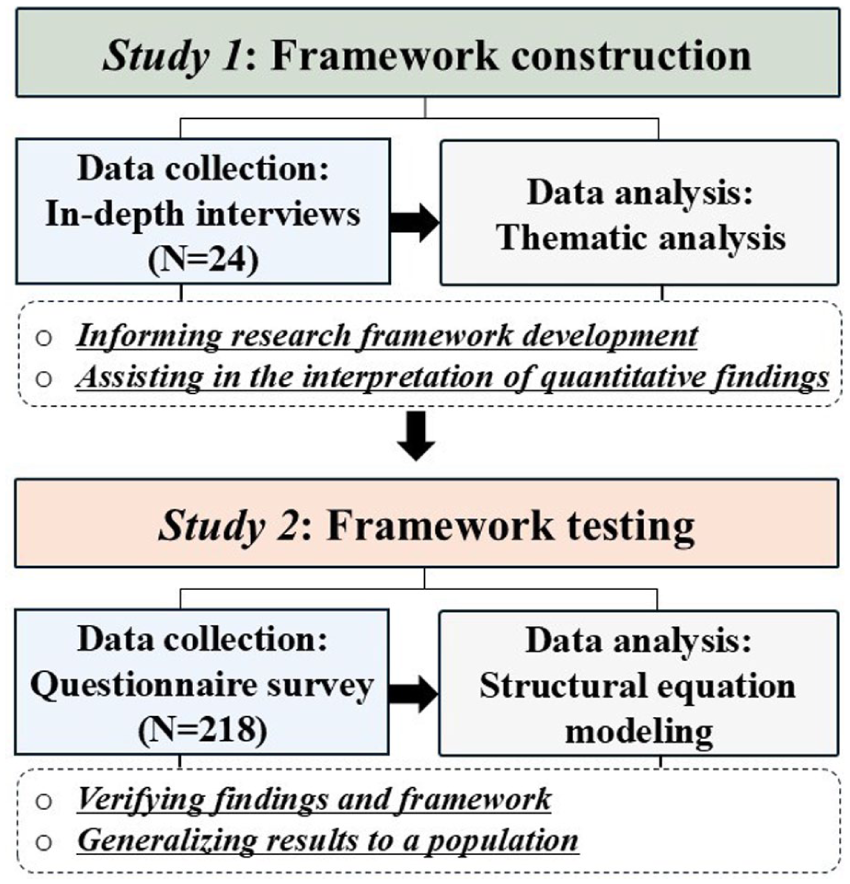
Research design.
Criteria for Respondents
Mothers were required to meet several criteria: to (1) be a mother in a three-generation family; (2) have children aged 4 to 12; and (3) have taken a three-generational family trip (with their own parents, partner, and children) in the past 12 months (i.e., April 2024–April 2025). The trip could include excursions, domestic or overseas travel, or any combination of one-day and multi-day trips. Mothers’ identities among their families of origin and parents-in-law were distinct, yielding different interaction patterns. We focused on mothers who had traveled with their own parents for simplicity.
Children’s preferred travel experiences vary across developmental stages (Carr, 2011), leading to unique effects on mothers’ behavior, decisions, and experiences. Safety and short journeys are priorities for preschoolers (Swarbrooke & Horner, 2007). Children younger than age 4 tend to enjoy sensory-oriented experiences (Li et al., 2020), whereas those older than 11 favor more independent activities (Li et al., 2023). The current research involved mothers whose children were between ages 4 and 12; children in this range usually appreciate similar travel experiences. This group also exerts considerable influence on travel planning while relying heavily on their mothers for emotional, logistical, and physical support throughout a trip (Chakrabarti & Joh, 2019; Nickerson & Jurowski, 2001).
Trustworthiness
The research team’s positionality was advantageous. Two of the investigators have conducted studies related to children’s psychology and family tourism. The others specialize in tourist behavior and mixed methods. Three members of the research team are also mothers; their children’s ages span 2 to 17. These mothers serve as their families’ primary decision makers on travel and have taken three-generational family trips. Their connections with family travel communities facilitated recruitment. Female participants and the researchers shared some background given their family roles, travel experiences, and gender. These commonalities promoted rapport, such that the mothers provided valuable input during interviews. The research team was well-trained in interviewing and coding, and all authors were proficient in English and Chinese. These qualifications ensured rich data collection and precise analysis.
The authors used various strategies to establish the trustworthiness of the qualitative findings. We applied investigator triangulation and member checking to enhance the validity and credibility of our study (Stahl & King, 2020). Two authors conducted cross-check coding of the same body of data. Analytical memoing was used throughout the data analysis process to improve the thorough understanding and examination of the data (Kalpokaite & Radivojevic, 2019). At the same time, one member of the research team reviewed the data analysis process and transcripts, thereby validating the plausibility of the interpretation (Decrop, 1999). The credibility of the findings was enhanced through continuous cross-comparison and iterative refinement (Nigg & Peters, 2022). Simultaneously, three participants were invited to read and provide feedback about our analysis to ensure the accuracy of findings from a native perspective (Adler, 2022). The credibility of this study was enhanced by thick description (Shenton, 2004). The investigators sought to provide a detailed description of mothers’ three-generational family travel experiences to convey the phenomenon they had examined. To ensure data interpretations align with the theoretical structure, the investigators continually discussed and reflected until there were no internal contradictions (Kakar et al., 2023). The findings’ confirmability was further strengthened by peer debriefing. Two scholars specializing in family tourism and psychology were asked to provide feedback on data collection, the coding framework, and results throughout the research process.
Although the investigators’ identities were important to consider, the team also recognized their roles’ potential impacts on participant interactions and discourse interpretation. Subjectivity could not be entirely avoided; however, the authors remained aware of the need to be neutral to minimize bias.
Study 1: Framework Construction
Data Collection
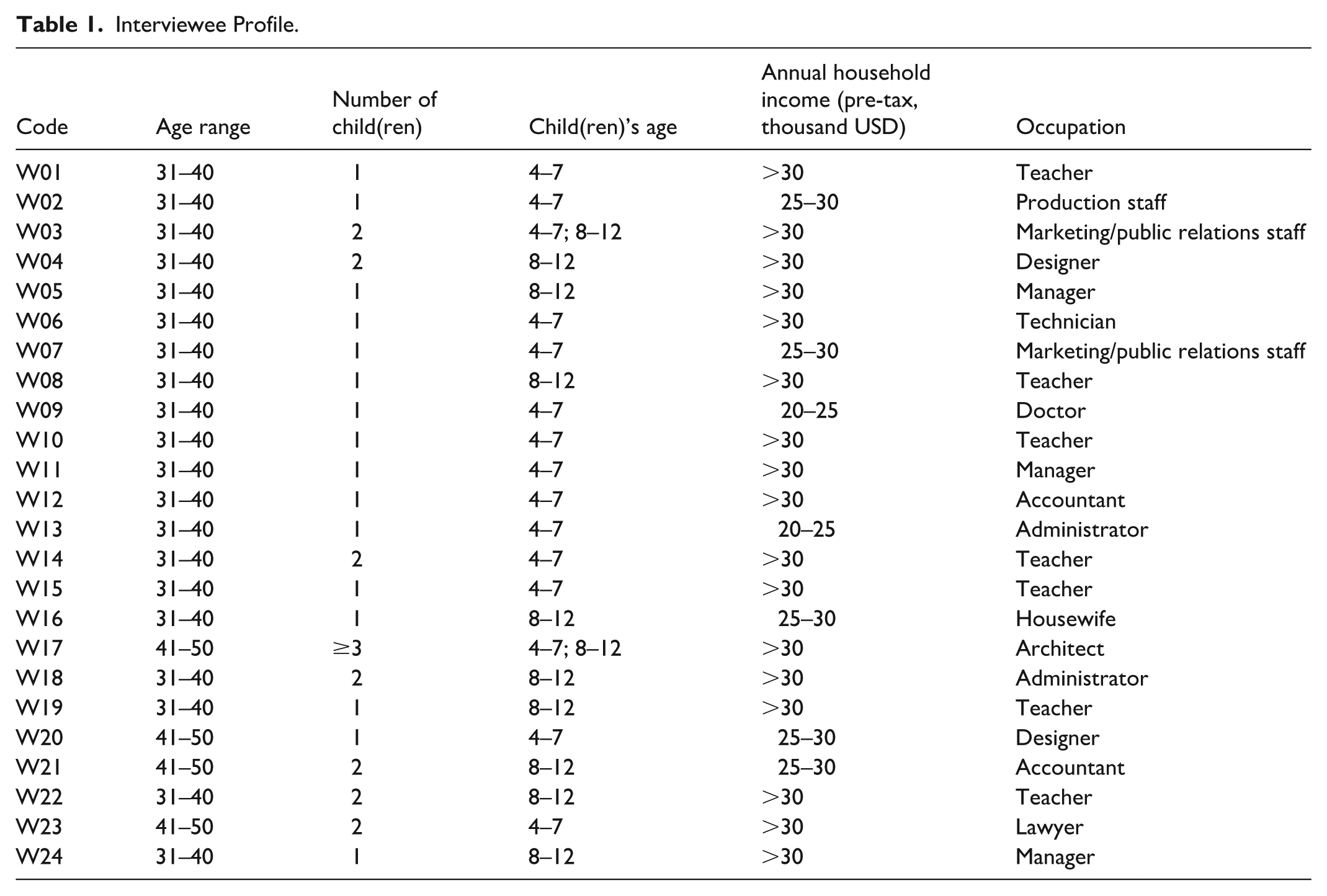
Semi-structured interviews using snowball sampling were performed from November 2024 to February 2025 to explore mothers’ three-generational family travel experiences. The interview protocol was based on the Castillo-Montoya’s (2016) framework in order to guarantee data quality. The protocol comprised multiple parts: (1) an introduction to the research (i.e., regarding its purpose, timing, recording, and consent); (2) demographic information (e.g., mothers’ occupations and children’s ages); (3) stress and its effects on travel experiences; (4) anticipated and actual resources gained during the trip; and (5) perceived travel satisfaction and subjective well-being. Data saturation, which affects studies’ quality and content validity, was determined to have been reached when (a) mothers’ responses were sufficiently rich and thick (Dibley, 2011) and (b) no new themes emerged from the interviews (Guest et al., 2006). Our sample included 24 mothers, and each interview lasted 35 to 60 min. Table 1 summarizes their profiles. The mothers’ child(ren) were 4 to 7 (50%) and 8 to 12 years old (50%). Most mothers were between 31 and 40 years old (83.3%); the remaining four were 41 to 50 (16.7%). About two-thirds of mothers (66.7%) had one child. The others mostly had two children (29.2%), though a few had three or more (4.2%). Participants’ annual household pre-tax income generally exceeded USD 30,000 (70.8%). The remaining 29.2% earned USD 20,000 to USD 30,000 per year.
Interviewee Profile.
Data Analysis
Voice recordings were transcribed verbatim. Participants’ narratives about their three-generational family travel experiences were analyzed using an inductive approach to thematic analysis. Thematic analysis is a practical means of understanding experiences, thoughts, or behaviors across a dataset (Kiger & Varpio, 2020). The coding process followed Kiger and Varpio’s (2020) guidelines. The investigators first read through the interview transcripts repeatedly to familiarize themselves with participants’ commentary. Next, initial codes (e.g., children’s behavior during trips) were extracted; this information provided essential clues about participants’ travel stress. Then, themes were generated (e.g., leisure stress) and categorized (e.g., support) based on codes’ attributes. All codes and themes were organized in line with the proposed framework. Data were coded manually. NVivo 15 software was used to assist with dataset management and code structure development. The transcripts were analyzed in their original languages, namely Chinese, before being translated into English. The researchers engaged in rigorous, constant discussion to ensure translation accuracy. Figure 3 presents an example of code development.
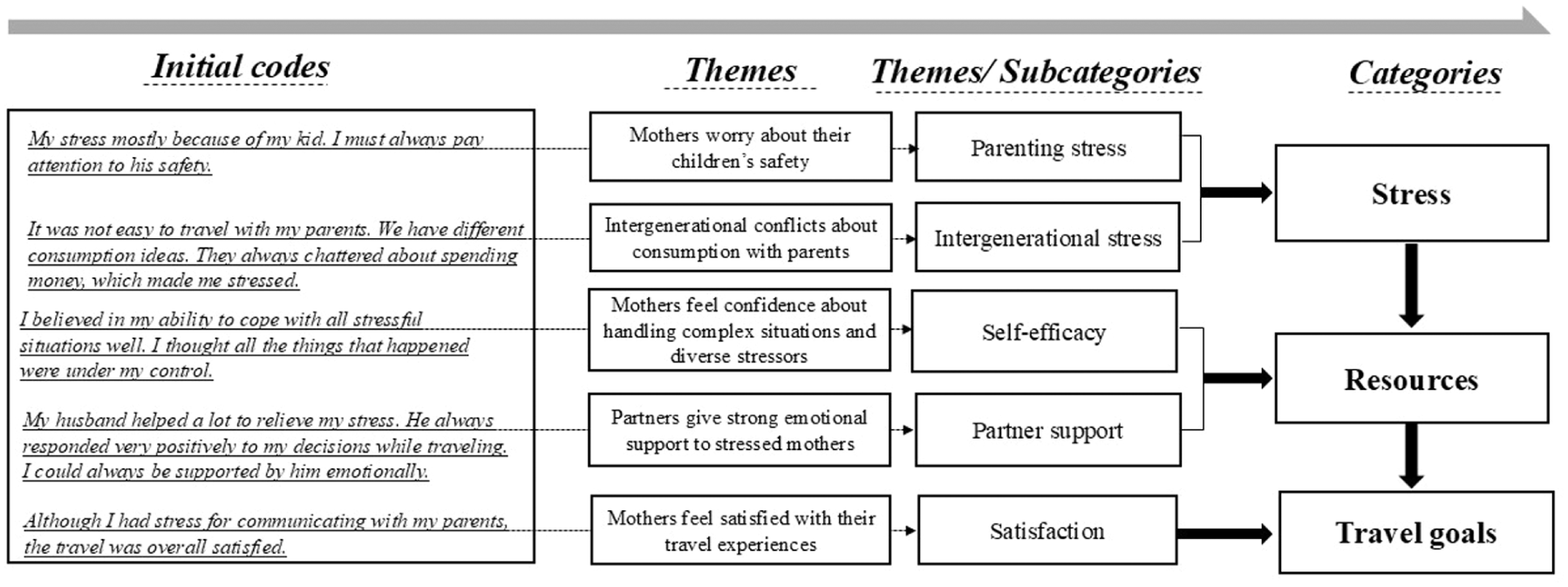
Example of data analysis process.
Findings
Stress That Mothers Experienced
Mothers broadly experienced parenting stress, intergenerational stress, and leisure stress during three-generational family trips. These types of stress mainly arose from childcare responsibilities, intergenerational communication, and the tourism environment. Negative emotions, poor physical condition, and partners’ communicational divergence could trigger mothers’ stress as well.
Parenting Stress
Childcare responsibilities constituted the mothers’ most significant stressor. Mothers were highly concerned with their children’s safety: “My stress is mostly because of my kid. I must always pay attention to his safety” (W03). Children’s physical conditions were also of interest: “[In three-generational family travel], the greatest stress still comes from my children. The thought that [my daughter] would get ill made me feel very stressed; I brought medicine and an ear thermometer” (W05). Mothers became stressed when their children did not behave as expected. Some mothers stated that their children would not abide by the trip itinerary: “[My kid] did not want to visit the Royal Palace. He said it was so hot that he only wanted to stay under the eaves. I felt so stressed because other family members wanted to visit the spot, but my son was so resistant” (W16).
Children’s negative moods easily sparked stress among these women: “He became very annoyed and did not want to play with anything when he found the destination was different from what he had expected. The very moody boy made me stressed” (W12); “[My kid] was very stubborn and did anything he wanted. He was unhappy and did not want to climb the mountain because he felt tired. This made me feel very pressured because I needed to change the plan” (W13). A lack of personal time could also be stressful for mothers who assumed most parenting duties on trips: “I had to make some self-sacrifices to meet the needs of my children; this brought me much stress” (W17).
Intergenerational Stress
Differing opinions and personality clashes among family members led mothers to experience intergenerational tension. Consumption-related conflicts were especially stressful: “It was not easy to travel with my parents. We have different consumption ideas. They always chattered about spending money, which made me stressed” (W07). Other stressors included travel schedules and parenting styles: “I was so worried every time I proposed the travel arrangements. Because [my parents] would say that they did not want to go there for some reason” (W01); “I always needed to spend a lot of time explaining to my parents why I did not meet all my son’s demands, such as eating too many snacks or asking to buy toys while traveling. I was so stressed about explaining it repeatedly” (W09).
Their parents’ thoughts on dining, accommodation, transportation, and itineraries aggravated mothers’ stress as well: “My stress came from my parents. They always judged that a place was not hygienic, and the food was not good. I was afraid that my arrangements would not meet their expectations” (W11); “[My spouse and I] would prefer a relaxing journey. Yet [my parents] always wanted to visit as many spots as possible. I felt exhausted and stressed trying to balance all the demands” (W09).
Reconciling family members’ opinions among was similarly difficult: “My parents had a lot of thoughts and opinions. It was very stressful to coordinate everyone’s needs and take care of their feelings. I felt that I would never travel with them again” (W17). Mothers also struggled to balance grandchild–grandparent relations: “It was so hard to avoid opinion-based conflicts between my kid and my parents. For example, sometimes my son wanted to participate in adventurous activities, but my parents couldn’t. I felt stressed coordinating the conflicts between them” (W05). Mothers who encountered personality clashes with their parents likewise faced pressure: “My mom is a very passive person and complained about nearly everything on the trip. I was very tired and stressed due to her special needs and taking care of her emotions” (W24). Some grandparents expressed negative emotions, such as anger and unhappiness: “Involving the elderly in this kind of trip was indeed very stressful. I must be cautious of [my parents’] emotions. They could always complain and be unhappy. Bad emotions could influence others” (W17).
Leisure Stress
Leisure stress was common on three-generational family trips. Mothers experienced stress over issues related to the travel environment and service providers, such as dining, accommodation, transportation, weather conditions, and safety; they worried that these aspects might compromise the family travel experience. Unexpected situations were especially taxing: “The most stressful thing was that when we arrived in Japan, [my husband and I] realized that our driver’s licenses had expired and we couldn’t rent a car. We suddenly didn’t know what to do. It felt like all our subsequent plans had been disrupted” (W15). Arranging transportation between destinations was another trigger: “[My stress] was mainly from transportation. Our trip took place during the Chinese holidays. So, I was worried about the traffic jam on the highway” (W12).
Unsatisfactory accommodation, shopping, and dining experiences also evoked stress. Several mothers commented on this point: “We only booked one room because my parents said they wouldn’t go at the beginning. And we couldn’t book a room for [my parents] later. Finally, we had to squeeze into one room. This indeed caused me some stress” (W12); “I was extremely stressed because the tour guide continually pressured me to buy goods. I had no choice but to buy something. It was a very terrible and stressful experience” (W04); “The only stressor during the trip was eating. I searched online for a restaurant. However, there were too many people as it was a holiday, and we had to wait for a very long time. I was very worried about how to deal with my family” (W11). Some mothers worried about inclement weather: “It was so hot in Beijing, making me very stressed because I was afraid that they [my parents and children] would get sick and we would need to change our travel schedules” (W22). Destination safety was an additional concern: “The city looked very backward. The infrastructure was very bad; people there seemed unfriendly to us. I felt it was very unsafe and was so stressed” (W11).
Several mothers also described stress from their partners, such as due to miscommunication: “I tended to take care of my parents’ needs, but [my husband] hoped to prioritize our children’s needs. The differences that arose . . . put some pressure on me. But the argument was generally fine because it did not affect our arrangements” (W23). Other issues included spouses’ health and negative emotions: “[My spouse] got sick during our trip, which made me a bit stressed. Because he needed to drive the car” (W24); “I felt a little stressed, and [my spouse] was the key reason. Because he was very impatient and could not accept anything unexpected” (W18). However, these aspects were excluded from our theoretical framework because they only slightly influenced these women’s experiences.
Resources That Mothers Gained
Several mothers lacked access to resources when facing stressful situations. However, most anticipated support from outside sources (e.g., hotel staff, friends, and family members, especially their partners). Mothers reported having had access to these resources as well as internal ones (e.g., self-efficacy) to relieve stress.
Partner Support
Mothers deemed their partners’ support as the most critical external asset for coping with stress. Spouses delivered emotional support in particular: “When I was under much pressure, I would complain to [my partner]. Then my husband comforted me and told me there was no need to worry so much. He provided me with emotional support” (W12); “My husband helped a lot in relieving my stress. He always responded very positively to my decisions while traveling. I could always rely on him for emotional support” (W18).
Partners provided support in ways other than emotional: by helping to resolve problems, addressing family members’ needs, communicating with children and the elderly, performing childcare, accommodating others’ schedules, and offering mothers suggestions. These positive behaviors greatly alleviated mothers’ stress. Mothers frequently stated that their partners spoke patiently with their misbehaving children and shouldered some of the caretaking load when the women were exhausted: “Sometimes my son did not cooperate with the itinerary. My husband would help me explain the plan to him, play with him, and actively talk with him. It really helped me relax and solve the problem” (W10); “I felt very sad waiting for a seat outside the restaurant alone with my two kids. Because I thought that I was under too much pressure. Fortunately, my husband realized the situation in time. He came over and helped me look after the two kids” (W03).
Partners also tried to understand family members’ demands and ensure smooth communication within the family: “[My partner] would observe [my parents’ and children’s] responses to my arrangements. For example, he would ask for their feedback on restaurants and activities and let me know so that I could improve the schedule” (W24). Others gave recommendations about activities and dining arrangements: “[My partner] was also positive and supportive of me. For example, when I was stressed about finding a restaurant to eat at or a place to have fun, he would give some suggestions. He made me feel relaxed when making any decisions” (W17).
Self-Efficacy
Mothers’ self-efficacy was a crucial internal tool for managing stress, with the exception of one participant who mentioned low self-efficacy: “I did not believe that I could handle stressful situations during travel. I could not control my emotions and communicate well with my misbehaving son without my family’s help” (W07). Most mothers appeared confident in their capacity to handle complicated situations and stressors: “I believed in my ability to cope with all stressful situations well. I thought all the things that happened were under my control” (W02); “I had the ability to predict some possible stressful situations and make plans. Even though there were some accidents that caused me stress, I believed that all the situations were under my control” (W15). Interestingly, mothers indicated that their partners’ support enhanced their own self-efficacy: “My husband’s emotional comfort to me strengthened my confidence to cope with my stress” (W17); “[My partner’s support] could be a motivation for me to cope with stressful situations. I felt that what I did was important and recognized by family members” (W16).
Additionally, effective communication and mutual understanding among family enabled mothers to handle stressful situations more effectively: “[My family members] were very supportive and cheerful; they rarely said anything negative about my arrangements. My parents especially helped me a lot, such as taking care of my kid” (W05). Other resources included children’s emotional support: “My kid respected every decision I made while traveling. He made me feel very supported and happy even though I had stress” (W09). Empathetic friends were similarly helpful: “I had shared with my friends what stress I experienced; I did not want to give the stress to my family” (W23). Even establishments such as hotels offered assistance that assuaged mothers’ worries: “[When my daughter got sick], the hotel provided a medicine box for us, which helped me a lot to relieve my stress” (W02).
Mothers’ Travel Satisfaction and Subjective Well-Being
Mothers were satisfied with their three-generational family trips. They found these experiences worthwhile; the women enjoyed making memories with their children, indulging in the local culture and food, bonding with family, and relaxing. Stress nonetheless had some adverse effects on their overall satisfaction: “[Stressful situations] somewhat influenced my travel experience. I thought that I would never bring my kid to a destination like this. And I hoped my husband could become more active in coordinating” (W13). Yet not all stress was persistent: “I thought that the negative influence of stress on my travel experience only existed at that moment. My stressful emotions did not last too long” (W16).
Traveling with their parents, spouses, and children enhanced mothers’ subjective well-being. In addition to time shared with family members, mothers relished a sense of achievement: “I fulfilled many familial duties during travel and made everyone happy; this was the real fulfillment” (W15); “I had intended to relax. I relaxed during the trip for several days. I felt very happy because I achieved my goal” (W18). Although mothers’ stress during trips somewhat compromised their subjective well-being, most cases were brief: “I felt very annoyed at that moment. However, I preferred to say that the influence of my stress from traveling on my subjective well-being was only temporary. I thought the influence was not so enormous” (W21).
Framework Construction
Informed by the qualitative findings, we established a theoretical framework (Figure 4) with seven dimensions to further investigate the dynamics of mothers’ stress, resources, travel satisfaction, and subjective well-being. Mothers’ stress included three defining features: intergenerational stress, parenting stress, and leisure stress. The “resource” dimension consisted of self-efficacy and partner support; mothers mentioned these aspects most and considered them primary resources. All forms of stress were negatively associated with travel satisfaction, whereas travel satisfaction promoted subjective well-being. Self-efficacy mediated the role of stress in mothers’ travel satisfaction. Partner support acted as a moderator between mothers’ stress and travel satisfaction.
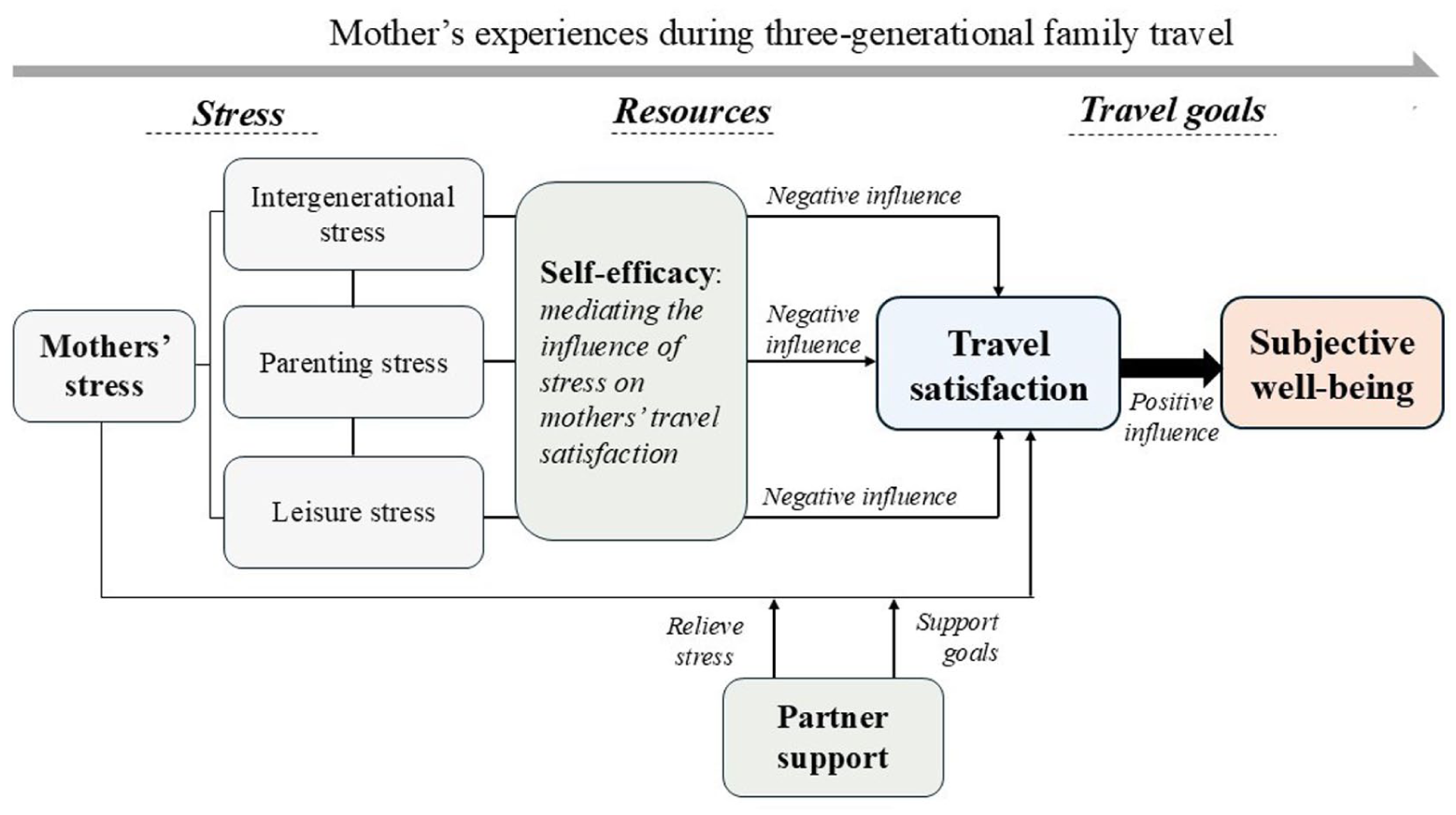
Theoretical framework based on qualitative findings.
Study 2: Framework Testing
Questionnaire Design
The questionnaire was designed through multiple steps. First, based on a systematic review of research on family relationships, psychology, and family tourism, relevant items were extracted to cover the seven variables identified in Study 1. Intergenerational stress, self-efficacy, travel satisfaction, and subjective well-being were measured with items from J. Hu et al.’s (2023) study of adult children traveling with their parents. Parenting stress was assessed via the Parenting Stress Index (Ríos et al., 2022), a well-established scale in psychology (Luo et al., 2019). Leisure stress was evaluated on the basis of Zhu et al.’s (2020) study; partner support was measured with items from Dehle et al. (2001). Supplemental (original) statements were derived from the results of Study 1. The research team next considered items’ face validity and phrasing (e.g., to address ambiguity). Forty-eight items were retained following three rounds of discussion. All items were adapted to the study’s context. Following Brislin’s (1970) suggestions, the instrument was assembled in English, translated into Chinese, and subsequently back-translated and re-translated until items’ meanings were consistent with the original English version.
Prior to the main study, a pre-test was conducted with an expert panel and 26 mothers, including participants from Study 1 and additional mothers recruited via convenience sampling. The pre-test was used to assess the clarity and comprehensibility of the questionnaire items. Feedback from these participants guided minor refinements to item wording and order, aiming to reduce measurement error and minimize respondent burden (Willis, 2016).
The full scale is provided in Table S1. The finalized questionnaire contained several parts: (1) three screening questions to recruit eligible respondents; (2) 48 items to measure mothers’ stress, resources, travel satisfaction, and subjective well-being during three-generational family trips; (3) demographic information (e.g., age, occupation, annual family income, number and ages of child[ren]). All items in the second section were scored on a 7-point Likert scale (1 = strongly disagree, 7 = strongly agree).
Data Collection
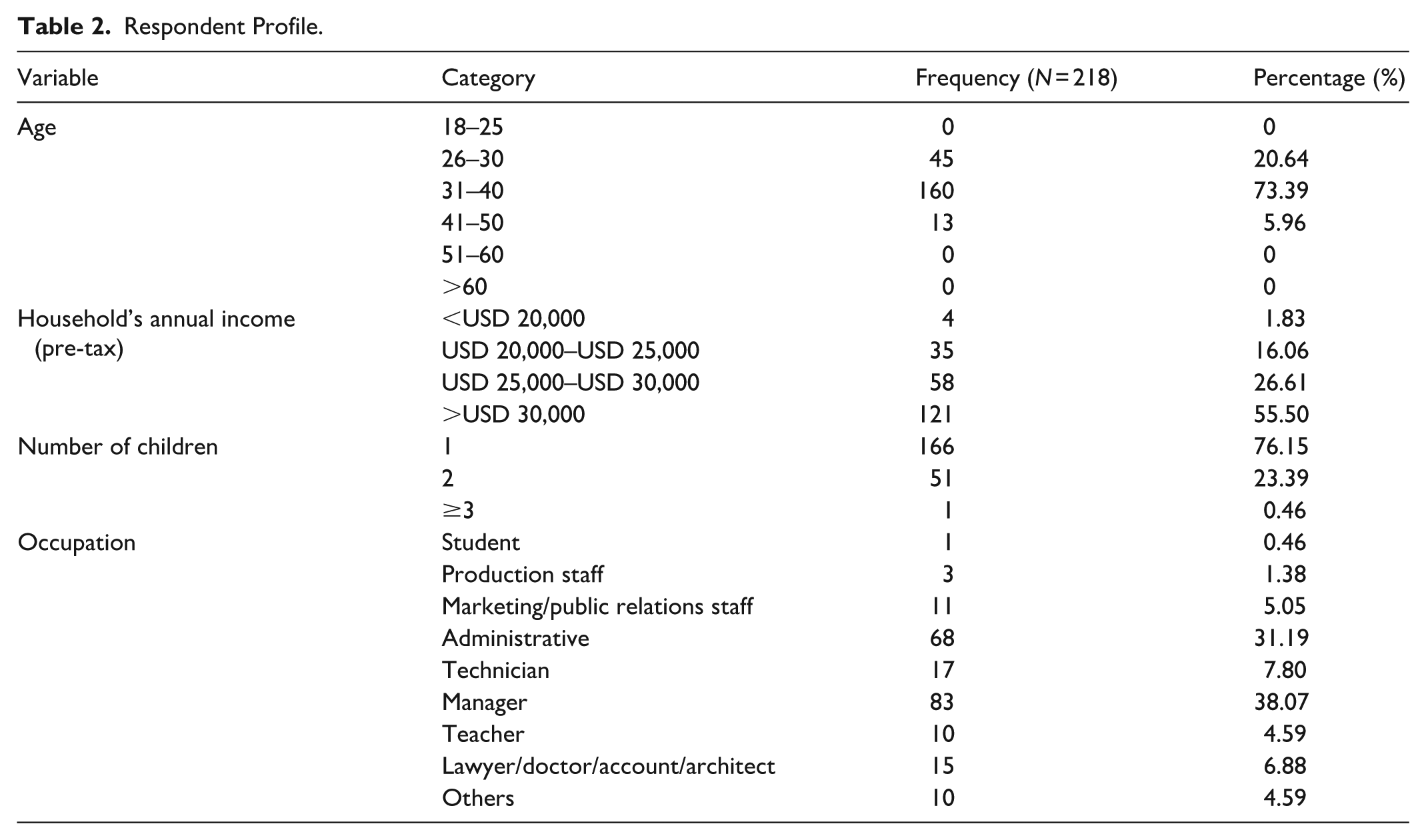
Questionnaires were distributed from April to May 2025 using purposeful sampling via Wenjuanxing (https://www.wenjuan.com/list/), a popular and professional questionnaire distribution platform in China. Of the 236 obtained responses, 218 were valid. Eighteen responses were excluded because they failed attention-check items (eight cases) or had extreme completion times (ten cases). No patterns of long sequences of identical responses (i.e., straight-line responding) were observed. The resulting effective response rate was 92.37%. Table 2 summarizes the sample’s demographics. Most mothers were between 31 and 40 years old (73.39%). More than half of the families reported an annual income of USD 30,000 or higher. Most mothers had one child, about 23% had two, and one mother had three or more. Approximately 38% of the mothers worked as managers, and about 31% held administrative positions.
Respondent Profile.
Results
Common Method Variance
Common method bias can arise from a study’s data collection methods, sample sources, or measurement instruments. We evaluated this potential issue by performing Harman’s single-factor test prior to conducting confirmatory factor analysis. The single-factor model explained 28.98% of the variance, well below the recommended threshold of 50% (Hair et al., 2013). Common method bias was thus not a major concern in this case.
Exploratory Factor Analysis
An exploratory factor analysis was conducted on the 48-item scale using the maximum variance orthogonal rotation method. We assessed the instrument’s reliability with the Kaiser–Meyer–Olkin measure of sampling adequacy (0.909) and Bartlett’s test of sphericity (χ2 = 5,548.265, p < .001). The data were deemed suitable for further analysis. Items on travel satisfaction and subjective well-being were not examined due to having been derived from established scales. Two factors with loadings below 0.45 were removed during this process. An additional four factors were excluded because they overlapped with other dimensions. The cumulative variance explained was 64.644%. Cronbach’s alpha values for the dimensions of travel satisfaction and subjective well-being ranged from .734 to .915 (all greater than .7), indicating good internal consistency for all variables (Nunnally & Bernstein, 1994). Table 3 presents the adjusted scale.
Rotated Component Matrix.
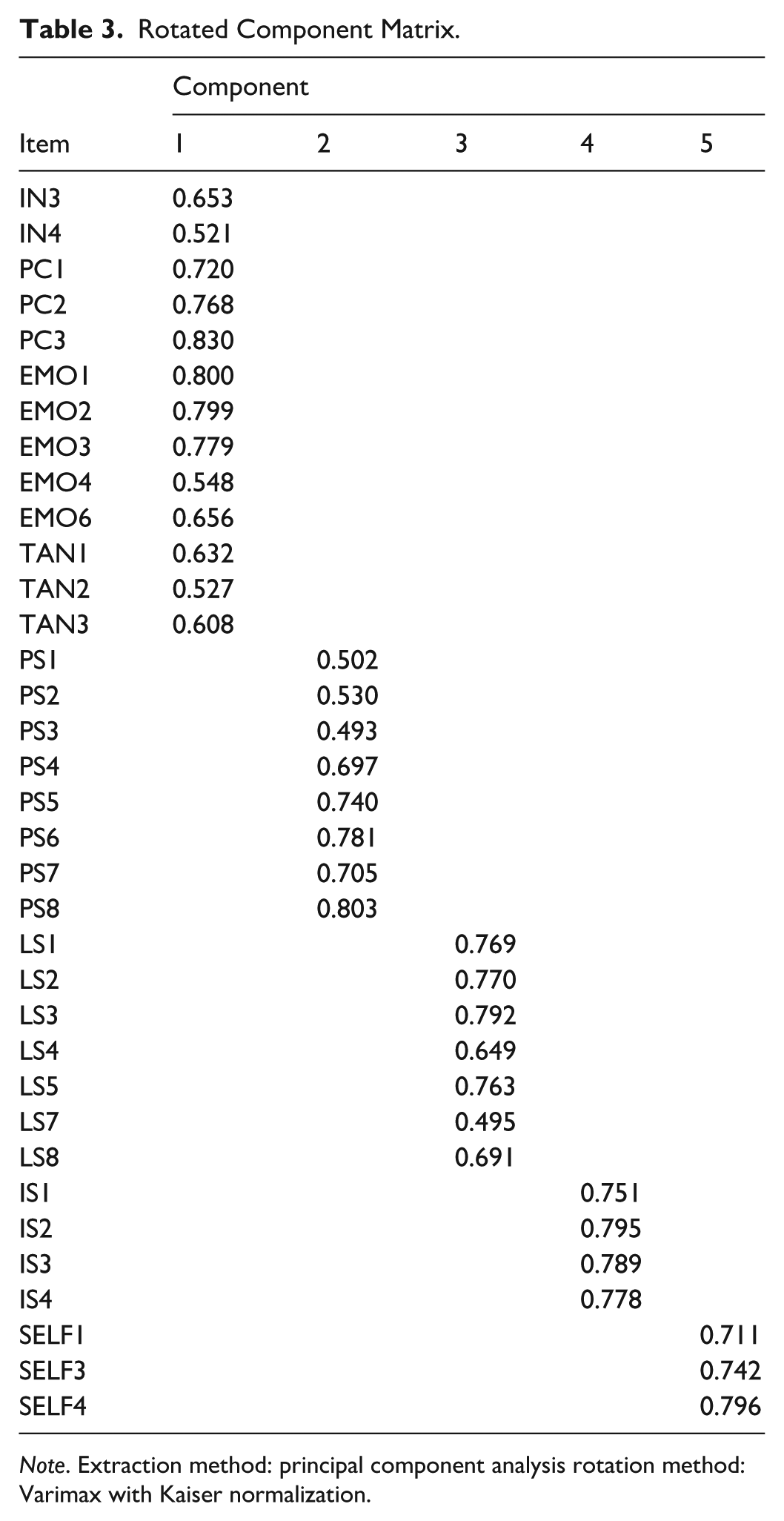
Note. Extraction method: principal component analysis rotation method: Varimax with Kaiser normalization.
Reliability and Validity
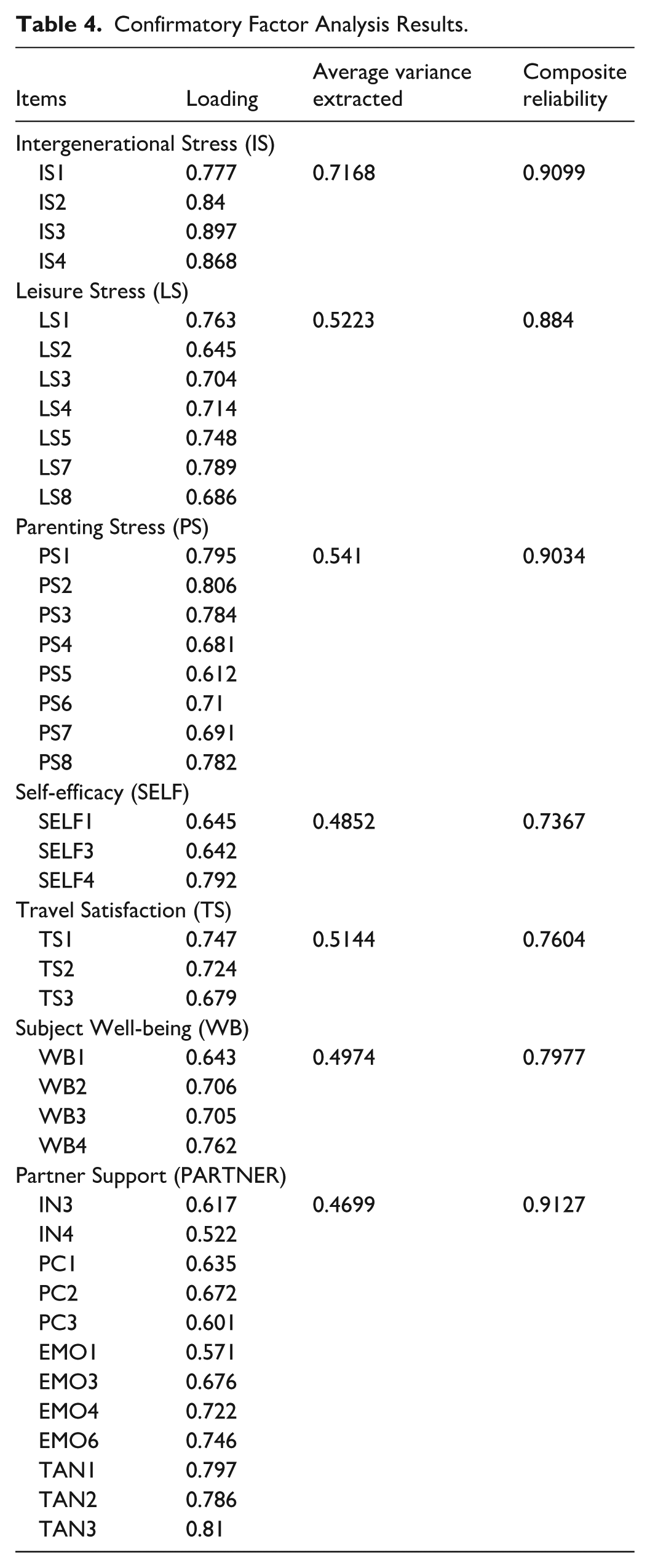
We performed confirmatory factor analysis in Amos 25 to determine key variables’ reliability and validity. This evaluation was based on outer loadings, composite reliability, average variance extracted, and discriminant validity. The measurement model fit the data well: Chi-square/Degrees of Freedom Ratio = 1.578, Comparative Fit Index = 0.910 (>0.90), Tucker-Lewis Index = 0.902 (>0.90), Incremental Fit Index = 0.911 (>0.90), Root Mean Square Error of Approximation = 0.052 (<0.08), Standardized Root Mean Square Residual = 0.0624 (<0.08). The items’ standardized loading estimates varied from 0.522 to 0.897 (Table 4). Most factor loadings were greater than 0.6, although those less than 0.6 were also deemed acceptable. One item related to partner support, EMO2, was deleted because its factor loading was lower than 0.5. We combined the average variance extracted and composite reliability values to discern the scale’s convergent validity. The average variance extracted values for intergenerational stress, parenting stress, leisure stress, and travel satisfaction surpassed 0.5, and their composite reliability values were above 0.7; these results are consistent with the requirements. Although the average variance extracted values for self-efficacy, subjective well-being, and partner support were lower than 0.5, they were still considered acceptable: Fornell and Larcker (1981) noted that an average variance extracted value of less than 0.5 is permissible if the composite reliability value exceeds 0.6. Overall, the model exhibited satisfactory internal consistency and convergent validity.
Confirmatory Factor Analysis Results.
We also assessed the scale’s discriminant validity by comparing the square roots of the average variance extracted values with the correlation coefficients between factors. Table 5 shows that all square roots (except for the highly correlated factors of tourism satisfaction and subjective well-being) were greater than the corresponding inter-factor correlations, suggesting strong discriminant validity.
Discriminant Validity Results.
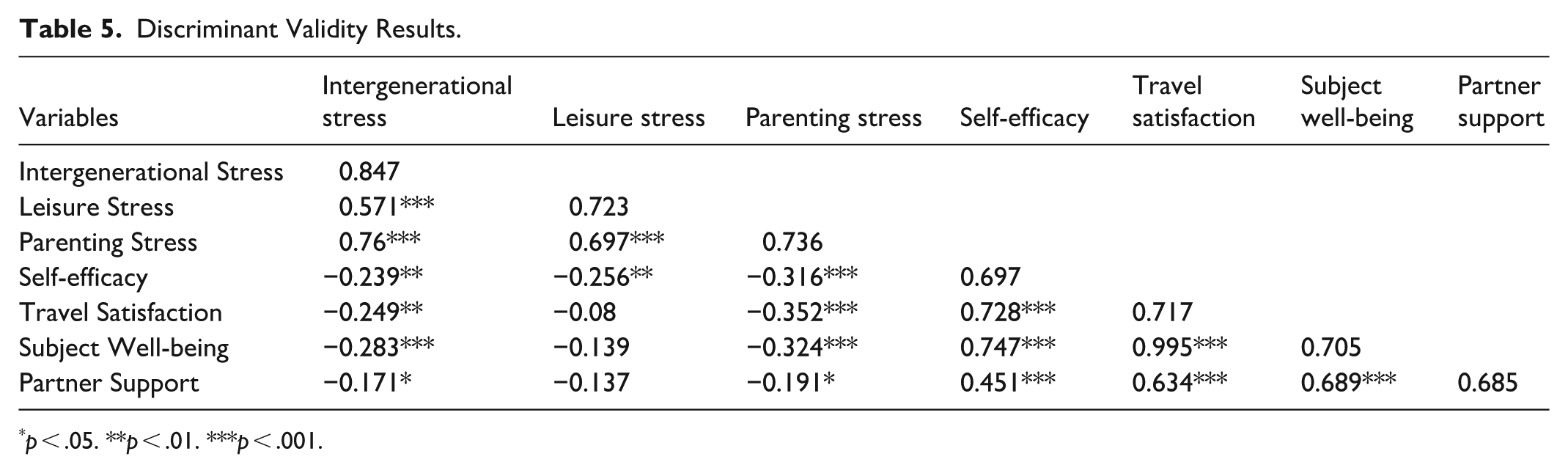
p < .05. **p < .01. ***p < .001.
Path Test
We subsequently developed a structural equation model based on the theoretical framework to examine (1) how intergenerational stress, leisure stress, and parenting stress influenced self-efficacy and (2) how self-efficacy in turn affected mothers’ travel satisfaction and subjective well-being (Table 6). The model fit was again acceptable: Chi-square/Degrees of Freedom Ratio = 1.753, Comparative Fit Index = 0.917 (>0.90), Tucker-Lewis Index = 0.909 (>0.90), Incremental Fit Index = 0.918 (>0.90), Root Mean Square Error of Approximation = 0.059 (<0.08), Standardized Root Mean Square Residual = 0.0556 (<0.08). Neither intergenerational stress nor parenting stress had significant direct effects on mothers’ travel satisfaction (p > .05). Leisure stress negatively influenced mothers’ travel satisfaction (β = −.282, p < .01). A significant positive relationship emerged between mothers’ travel satisfaction and subjective well-being (β = .992, p < .001). Parenting stress exerted a significant negative impact on mothers’ self-efficacy (β = −.343, p < .05), while intergenerational stress and leisure stress did not significantly affect this factor.
Path Analysis Results.
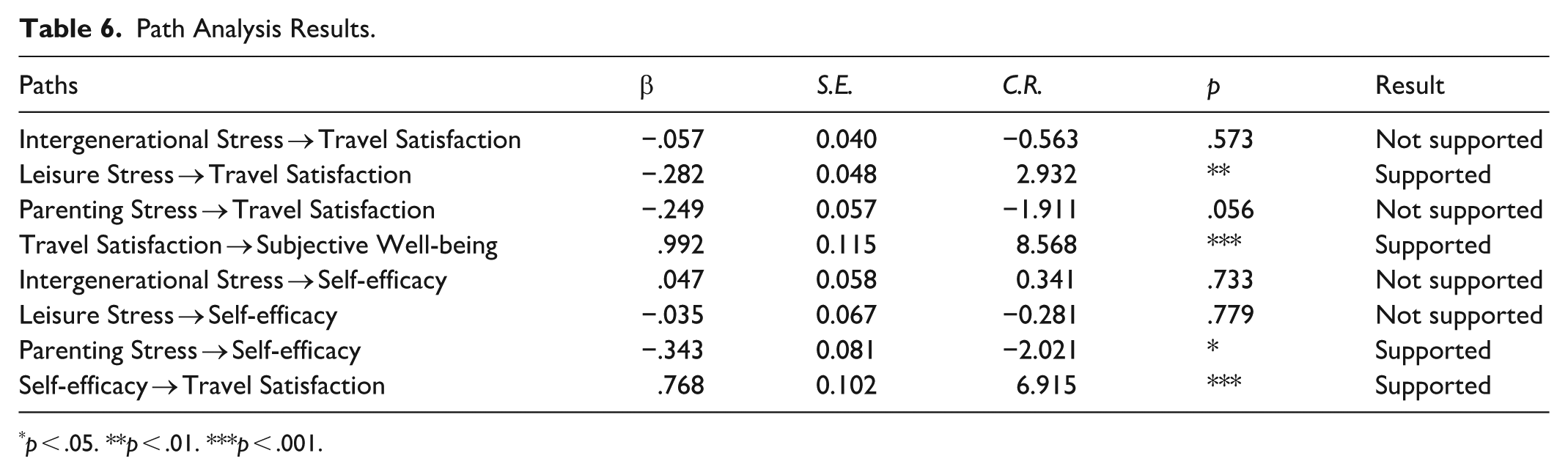
p < .05. **p < .01. ***p < .001.
We next employed the PROCESS macro in SPSS to examine the moderating role of partner support. Based on earlier findings showing a direct negative impact of leisure stress on travel satisfaction, we assessed partner support as a moderator using Model 1. This variable did not significantly moderate the negative relationship (t = −0.6052, p > .05).
Our previous path analysis revealed that parenting stress influenced mothers’ travel satisfaction through self-efficacy. We therefore built a new model to test partner support as a moderator in these direct and indirect relationships. A moderated mediation model included parenting stress as the independent variable, self-efficacy as the mediator, partner support as the moderator, and travel satisfaction as the dependent variable. We tested it using the PROCESS macro in SPSS (Model 8) with 5,000 bootstrap samples. Self-efficacy mediated the impact of parenting stress on travel satisfaction, while partner support moderated direct and indirect paths. The bootstrapping results indicated a significant mediating role of self-efficacy (indirect b = −0.0545, BootSE = 0.0194, 95% CI: [−0.0933, −0.0187]). The direct effect of parenting stress on travel satisfaction was significant as well (direct b = −0.0861, SE = 0.0297 [−0.1446, −0.0276]); that is, self-efficacy partially mediated the relationship between parenting stress and travel satisfaction. Self-efficacy also mediated 38.8% of the total effect. Partner support did not moderate the relationship between parenting stress and self-efficacy (b = 0.0298, SE = 0.0380, t = 0.78, p > .05 [−0.0452, 0.1047]) but did moderate the relationship between parenting stress and travel satisfaction (b = 0.0776, SE = 0.0315, t = 2.46, p < .05 [0.0155, 0.1396]).
Although parenting stress did not have a significant direct effect on travel satisfaction in the structural equation model, we observed a significant direct effect in the moderated mediation model. This discrepancy may be attributed to differences in model specifications. Whereas structural equation modeling accounted for the indirect pathway via self-efficacy, the PROCESS model isolated the direct effect by controlling self-efficacy separately. Any potential suppression or indirect mediation effect may attenuate the former model’s direct path.
In addition, we conducted a simple slope test (Table 7) to further clarify the moderation. The moderator, partner support, was divided into high and low levels based on the mean ± 1 SD. Parenting stress significantly influenced travel satisfaction in the low-partner-support group (b = −0.1524, SE = 0.0431, p < .001, 95% CI: [−0.2374, −0.0675]); its impact was not significant in the high-partner-support group (b = −0.0198, SE = 0.0368, p > .05 [−0.0924, 0.0528]). Put simply, partner support played a significant moderating role in the relationship between parenting stress and travel satisfaction. Figure 5 depicts the relationships between variables.
Simple Slope Test Results.

**p < .01. ***p < .001.
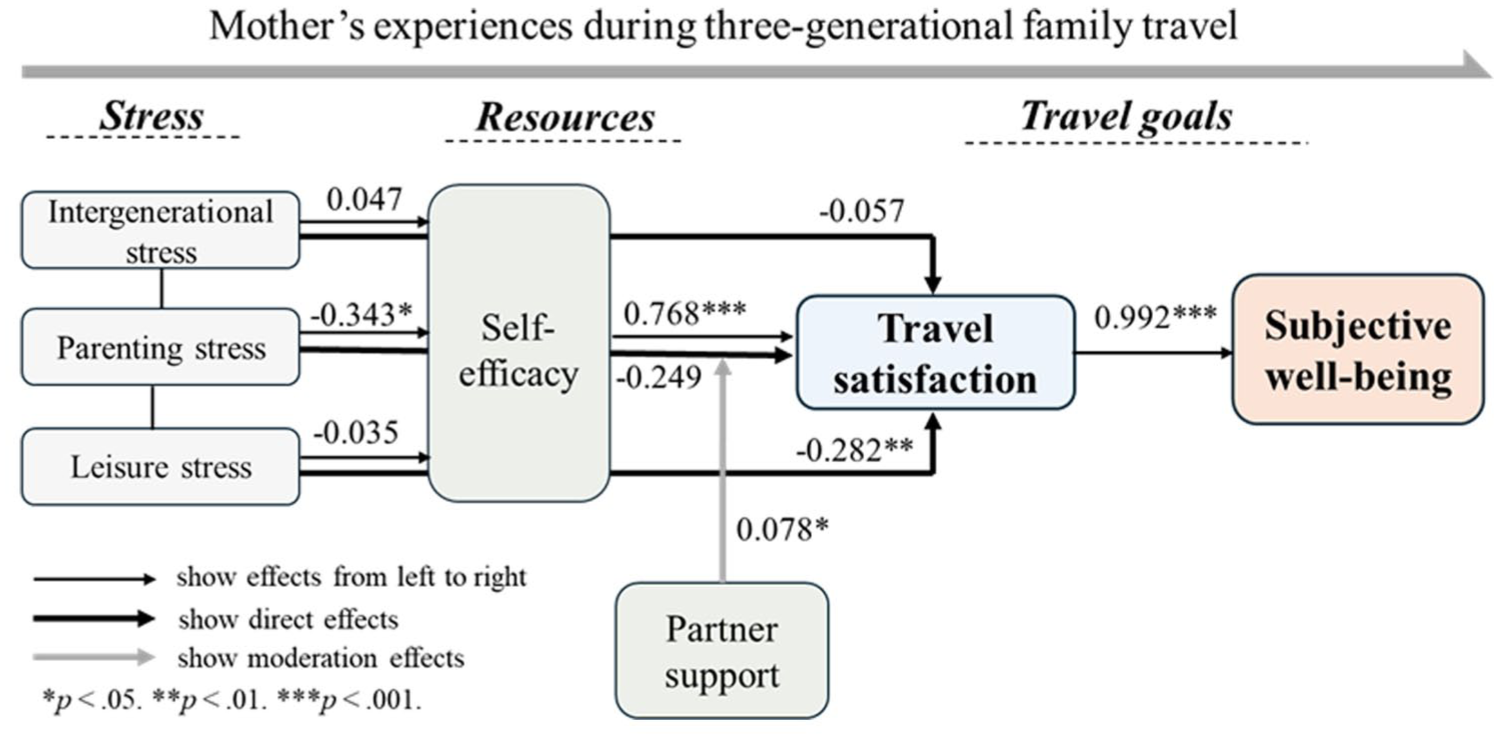
Relationships between variables.
Discussion
This research has investigated mothers’ experiences in three-generational family travel based on conservation of resources theory. We constructed a theoretical framework to elucidate the dynamics between mothers’ stress, resources, travel satisfaction, and subjective well-being. Earlier work outlined family conflict in this context (e.g., J. Hu et al., 2023; Y. Yao et al., 2020) but seldom addressed mothers’ stress specifically. Our findings highlighted intergenerational stress, leisure stress, and parenting stress as the main stressors that mothers experienced during these trips. The quantitative analysis also revealed the degree to which each type affects mothers’ self-efficacy and travel satisfaction. Mothers with self-efficacy appear better equipped to invest in and gain additional resources that help them prevent and recover from stress (Hobfoll, 2011) and tended to enjoy high-quality travel experiences. Mothers’ travel satisfaction then served as a significant antecedent for their subjective well-being, as has been documented elsewhere (J. Hu et al., 2023). Using an exploratory sequential mixed-methods design, our research further addresses mothers’ experiences in the following key aspects.
First, issues related to the travel environment and service providers provoked mothers’ leisure stress, detracting from their trip-related satisfaction. In addition to mothers, wives, and daughters, these women are leisure seekers; they also desire a break from performing childcare (Y. Wang & Li, 2021) and filial duties (Y. Yao et al., 2020). Therefore, mothers experienced various forms of leisure-related stress, such as bad weather, unexpected events, and being ripped off, during three-generational family travel (Zhu et al., 2020). Notably, when leisure stress occurs, mothers tend to experience negative emotions directly rather than rely on self-efficacy. This may be because they perceive leisure stress as primarily arising from external factors beyond their personal control. Mothers could experience stress in aiming to complete their expected tasks as mothers and daughters while realizing their own leisure-related desires (Y. Wang & Li, 2021). They seek to uphold their usual duties to ensure a pleasant trip and often view this responsibility as natural. Tourism, in this sense, becomes a daily practice that rejects the division between “home” and “away” (Cohen & Cohen, 2019); it is an ordinary activity in which mothers’ daily routines are extended.
Second, stress from filial duties did not significantly influence mothers’ travel satisfaction in our case, whereas parenting stress did. While the nuclear family is regarded as the most stable and ideal familial structure for overall well-being (Brown, 2010), extended families are common in the Chinese context. Due to factors such as working hours and social welfare, many married couples with children choose to live with their parents. Therefore, mothers in our study could have sufficient experience communicating with their parents, and their travel satisfaction was not significantly affected. Simultaneously, Chinese mothers, typically influenced by Confucian teachings, are described as having primary responsibility for childcare and daily chores (Chuang et al., 2018). Like nuclear-family travel, mothers’ three-generational family travel experiences are closely related to those of their children. During family trips, mothers often worry greatly that imperfect childcare can undermine their expectations of creating perfect experiences and memories for their children (S. Yang et al., 2025). Mothers’ parenting burden could also lead to their greater struggles as leisure pursuers, thereby reducing travel satisfaction. We found that parenting stress also influences mothers’ travel satisfaction through the mediating role of self-efficacy. Caring for children during travel requires mothers to constantly invest attentional, cognitive, and emotional resources, which directly undermines their self-efficacy. Moreover, because mothers’ childcare responsibilities are often perceived as taken-for-granted and non-negotiable (Chuang et al., 2018), difficulties in fulfilling parenting tasks during travel are more likely to be internalized. This internalization directly undermines mothers’ self-efficacy, thereby lowering travel satisfaction.
Third, we noted several forms of external support (e.g., from family members, friends, and hotels) as being associated with mothers’ self-efficacy. Mothers in our sample most frequently mentioned partner support and self-efficacy as vital for dealing with stress during three-generational family trips. Self-efficacy refers to one’s perception that they can adapt to challenges in a given environment (Bandura & Adams, 1977). During three-generational family travel, mothers’ self-efficacy relates to their confidence in being able to manage stressful situations and accomplish their goals (i.e., travel satisfaction and subjective well-being in this research). Social support acts as a reservoir for resources beyond those endowed to the self (e.g., self-efficacy) when one faces resource loss and stress (Hobfoll et al., 1990). This type of support can robustly affect resource acquisition as well (Hobfoll, 2011), including in terms of material support, instrumental support, and emotional support (Haber et al., 2007). In intimate relationships such as marriage, one’s spouse is a prime source of social support for people whose family lives are stressful (Ilska & Przybyła-Basista, 2020). Although some mothers reported the auxiliary support of their parents, its effect was weaker than that of partner support involving daily interaction and shared responsibilities. Fathers’ crucial roles have been highlighted in previous literature on nuclear-family travel (e.g., Y. Wang & Li, 2021; S. Yang et al., 2025). As the facilitators of mothers’ interests in family tourism (Schänzel et al., 2012; S. Yang et al., 2025), partners’ support in childcare, travel planning, decision-making, and family labor is highly valued by mothers (S. Yang et al., 2025). Our findings further demonstrated that partner support significantly moderated the relationship between parenting stress and travel satisfaction. We found that although mothers saw external resources as crucial, these women could also empower themselves to cope with stressors during three-generational family trips.
Conclusion
Theoretical Implications
This exploratory research sheds additional light on family tourists’ experiences, particularly regarding multigenerational trips and associated stress and satisfaction. Our work represents a novel attempt to detail the stressors that mothers encounter when traveling with their parents, partner, and children. A paradigm complementary to the popular social-psychological approach, which focuses on leisure travel’s benefits (Shaw, 1997), is needed to explore contradictions in family travel (e.g., Jia et al., 2023; Kelly, 2022) and other tourism settings. We have also offered insight into mothers’ roles and corresponding stressors during three-generational family trips. This paper therefore expands role-related knowledge in terms of family tourism. A family typifies a configuration of human practices, behaviors, and activities (Figueroa-Domecq et al., 2015); women continue to perform the majority of housework and childcare, although gender-based gaps are narrowing with time (Lachance-Grzela & Bouchard, 2010; X. Yao et al., 2025). Due to fulfilling multiple familial roles, various types of stress apply to mothers’ journeys. This research serves as a reminder of the much-needed attention to mothers’ satisfaction and subjective well-being. In our case, mothers’ partners valued and helped them in times of stress. This salience in mothers’ travel experiences suggests that the partner perspective is essential for understanding travel in relation to three-generational family dynamics. Acknowledging spouses’ contributions gives weight to their roles as supporters of mothers’ interests (Schänzel et al., 2012).
We referenced conservation of resources theory in investigating the mechanisms through which stress interacts with mothers’ travel satisfaction and subjective well-being during three-generational family trips. Mothers’ stress seems unavoidable during three-generational family trips. Our findings offer empirical evidence concerning how mothers’ personal and social resources help regulate the interplay between stress and resources, thereby shaping satisfaction and well-being in and beyond travel settings (Hobfoll, 2011). We affirmed that travel could mediate everyday stressors while triggering stress (Zhu et al., 2020). Scholars can apply our framework when examining tourists’ experiences in other contexts. Our discussion of the interactivity within family structures (including every family member) echoes Dann and Cohen’s (2013) advocacy for a micro-sociological approach to tourism studies. Furthermore, mothers’ complex emotional experiences during family travel imply that tourism research should transcend an activity-oriented viewpoint (Lee & Lee, 2021).
This article is one of the first to profile mothers’ experiences during three-generational family trips. The exploratory dimensions of family tourism, mothers’ roles in travel, and the meaning of travel for mothers will be further broadened. The findings bolster knowledge of family travel; previous work largely concerned either nuclear families or families with adult children and aging parents. Families spanning multiple generations encounter unique travel scenarios. We have underscored the need to account for evolving social values and family structures when studying family tourism (Carr, 2011; Schänzel & Yeoman, 2014). Apart from economic incentives, travel fortifies extended families’ mutual understanding and functioning. Digital transformation continues to reshape travel (El-Said & Aziz, 2021). Meanwhile, family time is increasingly scarce and valuable to a growing number of working couples. Travel enables families to spend time together. Enhancing these bonds, which are central in people’s lives (Schänzel & Yeoman, 2014), will engender personal and societal progress (Yeoman, 2008). We thus call for additional research on multigenerational family travel.
Practical Implications
This research offers insights based on which tourism destinations can refine their services and facilities for family tourists. First, destinations can enhance their public service provision to reduce leisure stress for these tourists, thereby attracting more visitors. We found that leisure stress lowers mothers’ travel satisfaction and subjective well-being. Tourist destinations should thus offer more convenient booking services, transportation facilities, and guided tours for families. Family-friendly accommodation and restaurants can attract more of these visitors and boost their satisfaction, potentially encouraging repeat visits. Creating a fair shopping environment and implementing emergency preparedness programs can also reduce leisure stress. Destinations should provide specialized facilities and care services for elderly patrons and children as well.
Second, tourism product providers can design child-oriented activities to alleviate family tourists’ parenting stress. Practitioners can also craft service packages for multigenerational families. We identified parenting stress as mothers’ most significant stressor on these trips. Destinations can attract family tourists by developing child-specific activities. For instance, mothers may enjoy their trips more fully when their children independently engage in entertainment activities. Mothers are the main decision-makers on family trips; achieving some respite in this way will afford them more time and energy to partake in their own leisure activities and other forms of consumption while traveling.
Finally, we encourage partners and society to provide mothers with more support so that these women may fully benefit from family trips. We saw that partner support significantly moderates the impact of parenting stress on mothers’ travel satisfaction. Mothers should therefore receive ample support—tangible, informational, emotional, and physical—from their partners to improve their overall tourism experience.
Limitations and Future Research
Despite numerous contributions, this research has several limitations that point to directions for future work. First, it pertained to Chinese participants; attending to a single perspective hinders cross-cultural knowledge transfer (Li, 2014). Scholars are encouraged to include participants from diverse backgrounds, such as the United States and Europe, to enhance results’ applicability.
Second, the findings were based on mothers’ opinions. Partners’ voices were not included, although fathers’ roles in family trips have been recognized. For example, fathers can facilitate mothers’ interests and be children’s entertainers (Schänzel et al., 2012). Although women have long been framed as consumers and decision makers in many societies (Figueroa-Domecq et al., 2015), adding a masculine view could yield deeper insights into family functioning.
Third, this research may have a recency effect. Self-report data were collected after mothers completed their trips. Stress is ephemeral, and recall can produce discrepancies between real-time and remembered experiences (W. Liu et al., 2016). Researchers could employ methods such as smartphone-based experience sampling (Chan et al., 2019), skin conductance responses (Laine et al., 2009), and participant observation to record timely data throughout families’ journeys.
Supplemental Material
sj-docx-1-jtr-10.1177_00472875261434191 – Supplemental material for Balancing Stress and Leisure: Mothers’ Experiences During Three-Generational Family Travel
Supplemental material, sj-docx-1-jtr-10.1177_00472875261434191 for Balancing Stress and Leisure: Mothers’ Experiences During Three-Generational Family Travel by Yan Wan, Jinyi Zhang, Anqi (Angie) Luo and Mimi Li in Journal of Travel Research
Footnotes

Ethical Considerations
This study was approved by the Departmental Research Committee of The Hong Kong Polytechnic University (Approval No. HSEARS20250313001).
Author Contributions
Yan Wan: Conceptualization, Data curation, Formal analysis, Investigation, Writing—original draft. Jinyi Zhang: Conceptualization, Data curation, Formal analysis, Investigation, Writing—original draft. Anqi (Angie) Luo: Conceptualization, Methodology, Writing—review & editing. Mimi Li: Conceptualization, Funding acquisition, Supervision, Writing—review & editing.
Funding
The authors disclosed receipt of the following financial support for the research, authorship, and/or publication of this article: This research is supported by the National Natural Science Foundation of China (No. 42271256).
Declaration of Conflicting Interests
The authors declared no potential conflicts of interest with respect to the research, authorship, and/or publication of this article.
Supplemental Material
Supplemental material for this article is available online.
Author Biographies
References
Supplementary Material
Please find the following supplemental material available below.
For Open Access articles published under a Creative Commons License, all supplemental material carries the same license as the article it is associated with.
For non-Open Access articles published, all supplemental material carries a non-exclusive license, and permission requests for re-use of supplemental material or any part of supplemental material shall be sent directly to the copyright owner as specified in the copyright notice associated with the article.
