




Abstract
This study explores how travel live streaming (TLS) influences people’s travel decisions by linking online engagement with real-world trips. Using the Theory of Planned Behaviour and affordance theory, it draws on qualitative interviews with Chinese TLS viewers to understand how attitudes, social influence, control, and emotional connection are shaped by streaming platforms. Through directed content analysis, the study reveals that TLS can spark interest in travel or even replace it, with real-time interaction and social feedback playing key roles. The research offers a new framework connecting platform features to travel behaviour and provides practical ideas for digital marketing and managing authenticity, trust, and sustainability in tourism. While limited by sample and context, it highlights the need for future cross-cultural and mixed-method studies. Overall, it sheds fresh light on how virtual experiences can shape where and why people travel.
Keywords
Introduction
Travel live streaming (TLS) has evolved from a niche phenomenon into a transformative force reshaping destination marketing and tourist decision-making (Deng et al., 2022; Zheng et al., 2023). Major platforms, such as Trip.com and Tourism Australia, leverage TLS’s immersive affordances (e.g., live chats, 360-degree videos, and co-creative interactions, to engage worldwide audiences and influence travel choices (Duan & Song, 2024). The COVID-19 pandemic accelerated TLS adoption as “nowness service” (Buhalis & Sinarta, 2019), and despite resumed global travel, TLS remains central to tourism strategies worldwide.
However, the scholarly response to TLS suffers from profound theoretical fragmentation. Disparate frameworks, such as Uses and gratifications Theory, Parasocial Interaction Theory, and Stimulus-Organism-Response, offer partial insights, but fail to account for how TLS’s interactive, real-time, affordance-intensive character differs from traditional media (Deng et al., 2021; Yung & Khoo-Lattimore, 2019). These models typically ignore how digital affordances restructure tourist cognition and action (Deng et al., 2022; Rather et al., 2024), yielding contradictory findings about TLS’s ability to motivate, substitute for, or impede physical tourism (Zhang et al., 2024). The central research problem is the lack of an integrative framework that bridges fragmented theoretical applications and empirical gaps, impeding cumulative understanding of how TLS’s unique technological and psychological dimensions shape tourist behaviour.
This fragmentation is particularly problematic against China’s digital backdrop. As the world’s largest live-streaming market with over 750 million users, China features platforms such as Douyin, Ctrip, Fliggy, and WeChat that uniquely integrate social interaction, e-commerce, and instant booking into “super-platform” ecosystems (Si, 2021; Statista, 2023). These environments embody distinctive cultural overlays like “swift guanxi” (rapidly established digital trust relationships), gamified engagement, and influencer validation (Zhang et al., 2022). Yet existing frameworks seldom critically integrate these affordances or adapt theories for digital tourism’s specific cultural and platform contexts.
Throughout this study, affordances are understood not as technological features but as relational possibilities enacted through user intentions, technological design, and contextual conditions (Faraj & Bijan, 2013; Gibson, 1979). An affordance exists in the relationship between user capacities and environmental possibilities. When we refer to ‘interactive affordances,’ we mean relational possibilities for real-time dialogue between viewers and hosts, actualised or latent depending on how participants engage with platforms and their travel motivations.
To address this fragmentation, we engage two foundational frameworks: the Theory of Planned Behaviour (TPB) (Ajzen, 1991, 2011) and affordance theory (Gibson, 1979), as closely interrelated perspectives. TLS technologies create affordance-rich environments where TPB’s psychological mechanisms (
This qualitative, theory-building study examines how integrating TPB and affordance theory better explains TLS’s impact on tourist decision-making in the Chinese context. By systematically reconceptualising core constructs, we examine why and how participants narrate the translation from virtual engagement to physical travel, and instances where virtual experience substitutes for or deters travel.
The study is guided by four research questions:
How does TLS shape tourists’
What role do
How does TLS-enhanced
To what extent does
This study’s focus on TSL and tourist decision-making is important for several reasons. It clarifies whether TLS sustains relevance in a recovering tourism market, a sector projected to generate $16 trillion U.S. dollars to GDP worldwide by 2032 (Statista, 2024). It also resolves methodological fragmentation in prior TLS research (Deng et al., 2021), offering a unified framework. Finally, this study offers valuable insights into optimising digital transformation strategies for sustainable tourism development. By illuminating how digital engagement can transform travel intentions into real-world journeys or inadvertently create new barriers, this research unlocks critical lessons for the future of tourism in a digitally mediated world.
Literature Review
Theoretical Fragmentation in TLS Research
While multiple disciplinary frameworks have been applied to TLS research, each offers only partial insight while sharing a fundamental limitation: they fail to account for how TLS’s interactive, real-time, affordance-intensive character differs from traditional media and how affordances reshape psychological processes (Deng et al., 2021; Yung & Khoo-Lattimore, 2019).
Uses and gratifications Theory (UGT) has documented the diverse needs viewers satisfy through TLS (Rather et al., 2024) but typically treats platforms as static channels rather than dynamic environments whose affordances co-constitute gratifications (Deng et al., 2022). UGT cannot easily capture how real-time interaction and co-creation possibilities are relational conditions that alter how viewers think and behave beyond a classic needs-gratifications logic (Deng et al., 2022).
Stimulus-Organism-Response (SOR) models draw attention to emotional mediators (Liu et al., 2023) but conceptualise “stimulus” as media attributes (e.g., vividness, interactivity, social presence) rather than affordances enacted through users’ situated practices (Li & Sung, 2021). This treats technology as an exogenous input to intra-psychic processes, underplaying how viewers actively configure platform possibilities. SOR’s linear causality sits uneasily with TLS’s iterative, feedback-driven dynamics.
Parasocial Interaction Theory (PSI) highlights trust and emotional bonding in shaping destination attitudes (Hoffner & Bond, 2022; Lu et al., 2023), showing how viewers rely on streamers as credible guides. Yet, technology often recedes into the background: parasocial ties are analysed as psychological phenomena that could occur in any mediated context, with limited attention to how TLS affordances (synchronous chat, donation mechanics) actively configure these relationships (Hoffner & Bond, 2022).
Empirically, this fragmentation yields inconsistent findings: some studies suggest TLS stimulates visitation (Deng et al., 2021), while others conclude it may substitute for or suppress physical travel (Zhang et al., 2023). Each perspective isolates different mechanisms but treats technology as a static backdrop rather than as a constellation of affordances enacted relationally. What is missing is an account of how these mechanisms interact within viewing episodes, and how specific TLS affordances become the means through which attitudes, norms, perceived control, and commitment are formed, contested, and reconfigured over time.
This fragmentation is compounded by a separation between “technical” and “psychological” analysis. Media-focused studies describe platform capabilities without theorising how they intersect with attitudes, norms, or perceived behavioural control. Psychology-oriented studies treat constructs as portable across contexts, with minimal adaptation to TLS’s affordance-intensive nature. Subjective norms are analysed without attention to comment threads and algorithmic visibility; control is considered apart from real-time guidance and commitment is discussed without attending to how repeated engagement intensifies or diffuses it (Deng et al., 2022; Kim et al., 2020; Liu et al., 2023).
Affordance Theory: From Gibson to Digital Tourism
Affordance theory, which originates in ecological psychology (Gibson, 1979) and further developed in information systems research (Faraj & Bijan, 2013; Markus & Silver, 2008; Norman, 1988), offers a complementary lens. Unlike theories treating technology as an exogenous stimulus, affordance theory foregrounds the relational character of technological possibilities (Gibson, 1979; Norman, 1988). Rather than viewing platforms as fixed features acting upon passive users, it emphasises how actors perceive and enact possibilities made available (or constrained) by their environment (Gibson, 1979).
In tourism contexts, immersive, interactive, co-creative, and mobile affordances enable new patterns of experience and emotion (Deng et al., 2021). Applied to TLS, features such as live commenting or streamer Q&A sessions are not simply “interactive capabilities” but relational possibilities that viewers and hosts enact differently depending on motivations, cultural contexts, and experiences (Kim & Hall, 2019). The same platform feature may afford social validation for one viewer, logistical guidance for another, and parasocial intimacy for a third (Faraj & Bijan, 2013).
However, affordance has been under-theorised in tourism applications. Some studies reduce affordances to simple feature lists, failing to trace how these are differentially enacted. When affordances are treated as inherent properties of technology ("this platform affords interactivity”), the approach collapses into technological determinism, obscuring user agency and outcome contingency (Gössling, 2021; Tussyadiah, 2020). Critical information systems research warns against reifying affordances as inherent in artefacts, instead urging scholars to consider the ongoing negotiation of meaning and use (Faraj & Bijan, 2013). The core challenge is grounding affordances within decision-making frameworks, showing how user-enacted possibilities actively reshape psychological mechanisms (Majchrzak & Malhotra, 2013).
Dialectical Tensions in TLS: Interconnected Challenges
TLS research is marked by three interconnected dialectical tensions, revealing how TLS simultaneously enables and constrains authentic, sustainable tourist engagement (Deng et al., 2022).
Tension 1: Engagement vs. Action
TLS fosters emotional connections via parasocial relationships that inspire travel intentions (Deng et al., 2022), yet this immersion can inhibit action when virtual experiences fully satisfy curiosity, resulting in substitution rather than stimulation (Qiu et al., 2021). Psychological commitment becomes pivotal: only when viewers’ emotions are persistently bound to destinations through authentic interaction does intention translate into travel behaviour.
Tension 2: Authenticity vs. Commercialisation
Viewers value unedited, "real" depictions that foster trust and positive attitudes (Liu et al., 2021; Prados-Castillo et al., 2024). Yet, as TLS matures into a vehicle for sponsorship, streams may become curated and promotional, eroding that very credibility (Deng et al., 2022). When commercial intent becomes visible, the affordance of authentic connection rapidly dissolves (Deng et al., 2022).
Tension 3: Sustainability vs. Growth
TLS can substitute virtual for physical travel, redistribute attention to less-visited places, and foster local empowerment (Gössling, 2021). However, these gains can be offset by energy-intensive streaming infrastructure, platform-driven overtourism and consent issues (Parncutt & Seither-Preisler, 2019). These tensions reveal that the same affordances enabling tourism promotion can simultaneously generate substitution, erode trust, or drive overtourism. What is required is a framework explicating how these operate dynamically within technological environments and decision-making episodes (Fecker et al., 2025; Wen et al., 2021).
Integrating TPB and Affordance Theory: Analytical Rationale and Reconceptualised Constructs
Integrating the theories ensures mutual enrichment. Alone, TPB risks abstracting psychological constructs from enactment contexts, while underdeveloped affordance theory devolves into atheoretical cataloguing. Integration captures how digital environments ‘amplify’ or mediate behaviour drivers (attitudes, norms, control) and how psychological processes shape technological use. Second, integration acknowledges recursive dynamics: affordances are enacted differently depending on user intentions, while psychological states reshape through repeated platform engagement (Leonardi, 2011). Third, integration enables methodological innovation: qualitative research traces how mechanisms, such as commitment and control, are enacted through technology use, illuminating gaps quantitative models cannot bridge (Assarroudi et al., 2018; Gössling, 2021; Milman & Pizam, 1995).
Reconceptualising Key Constructs
Informed by both dialectical tensions and the interplay of affordance theory and TPB, this study advances a reconceptualisation of four foundational constructs to better reflect the realities of digital tourism environments:
Attitudes and Intentions: Traditionally regarded as stable, unidirectional (Ajzen, 1991) evaluations in TPB, attitudes in TLS must be viewed as fluid and dual-sided, shaped not only by immersive digital affordances, inspiring positive emotions, but also by saturation and virtual substitution dampening intentions.
Social Norms: Rather than singular pressures, subjective norms in TLS are enacted through multilayered networks: real-time interactions with hosts, online community feedback, and peer validation, creating complex, simultaneous influences beyond TPB’s original scope (Lu et al., 2023).
Perceived Behavioural Control: In classic TPB, this relates to perceived ease of performing behaviour. In digitally mediated tourism, control becomes situational and relational, contingent on affordance-enabled information (like live Q&A, logistics demonstrations) as well as ethical and infrastructural barriers. Control is no longer solely internal but actively constructed through transparency affordances and real-time guidance (Kim & Hall, 2019).
Psychological Commitment: While not specified in TPB, psychological commitment is critical for bridging intention-behaviour gaps. Within TLS, it serves as a mediating ‘glue,’ arising from sustained emotion engagement and shaped by ongoing negotiation of authenticity and ethical trade-offs (Fecker et al., 2025).
Study Context: China as a Digital Laboratory
China provides an unparalleled context for examining TLS due to the unique fusion of technological leadership, massive digital adoption, and distinctive cultural practices. As the world’s largest live streaming market, with over 750 million users, China leads not only in digital tourism innovation but also in integrating TLS into super-app ecosystems (Hua et al., 2023; Statista, 2023). These platforms collapse live streaming, e-commerce, real-time previews, social validation, and instant booking into holistic digital journeys, enabling users to move fluidly from inspiration to transaction within single interfaces.
Cultural practices such as swift-guanxi (rapid trust establishment via digital interaction) are deeply embedded, making streamers potent social validators and elevating communal aspects of tourism planning. Gamified features and influencer-driven marketing further normalise live streaming as mainstream, emotionally engaging practice extending beyond information sharing to community-based, viral engagement (Deng et al., 2022; Leong et al., 2024). This convergence of super-platform architecture, embedded cultural norms, and market forces renders China indispensable for theorising how technological affordances, psychological processes, and social practices are dynamically intertwined in digital tourism contexts.
Research Design
This study is anchored in an interpretivist paradigm, recognising that tourism behaviours in technologically mediated environments, like TLS, are embedded with subjective meaning-making and social construction. Ontologically, multiple realities exist, shaped by participants’ experiences and broader cultural context. Epistemologically, knowledge is co-created between researcher and participant through reflective dialogue and iterative interpretation, making transparency and reflexivity central. Deductive-based directed codes served as sensitising concepts, providing initial scaffolding while remaining flexible to accommodate emergent meanings through qualitative analysis (Urcia, 2021). Methodological rigour was ensured through reflexivity: the lead researcher maintained a reflexive journal recording evolving assumptions and methodological choices, ensuring findings were genuinely co-constructed by participants.
Data Collection and Sampling
Data were collected via virtual, semi-structured interviews conducted on Zoom with 27 participants (aged 19-54) between August 1 and August 31 of 2024. Interview prompts explicitly highlighted both technological affordances and TPB constructs. For example, participants were asked “which features of the live stream platform enabled you to feel more confident about visiting?” (perceived control affordances); “How did interacting with other viewers or the host shape your decision to travel?” (social validation and subjective norms); “Were there particular moments when you felt emotionally connected to the destination?” (immersive affordances and attitudes). Questions also targeted subjective norms (“How did others’ reactions influence your travel plans?”) and perceived behavioural control (“What barriers did you encounter, and did the stream help you address them?”). Open-ended prompts invited unexpected themes around digital engagement, travel barriers, and platform features, with care taken to avoid leading questions and using neutral follow-ups like “Can you share an example?” to reduce social desirability bias and foster authentic responses. Assurances of anonymity and voluntary participation further encouraged openness. All interviews were audio-recorded, transcribed, and cross-checked for accuracy. Importantly, this study also incorporated platform analytics (e.g., session duration, likes, comments) to triangulate with participant reports and enrich contextual understanding.
Sampling Strategy
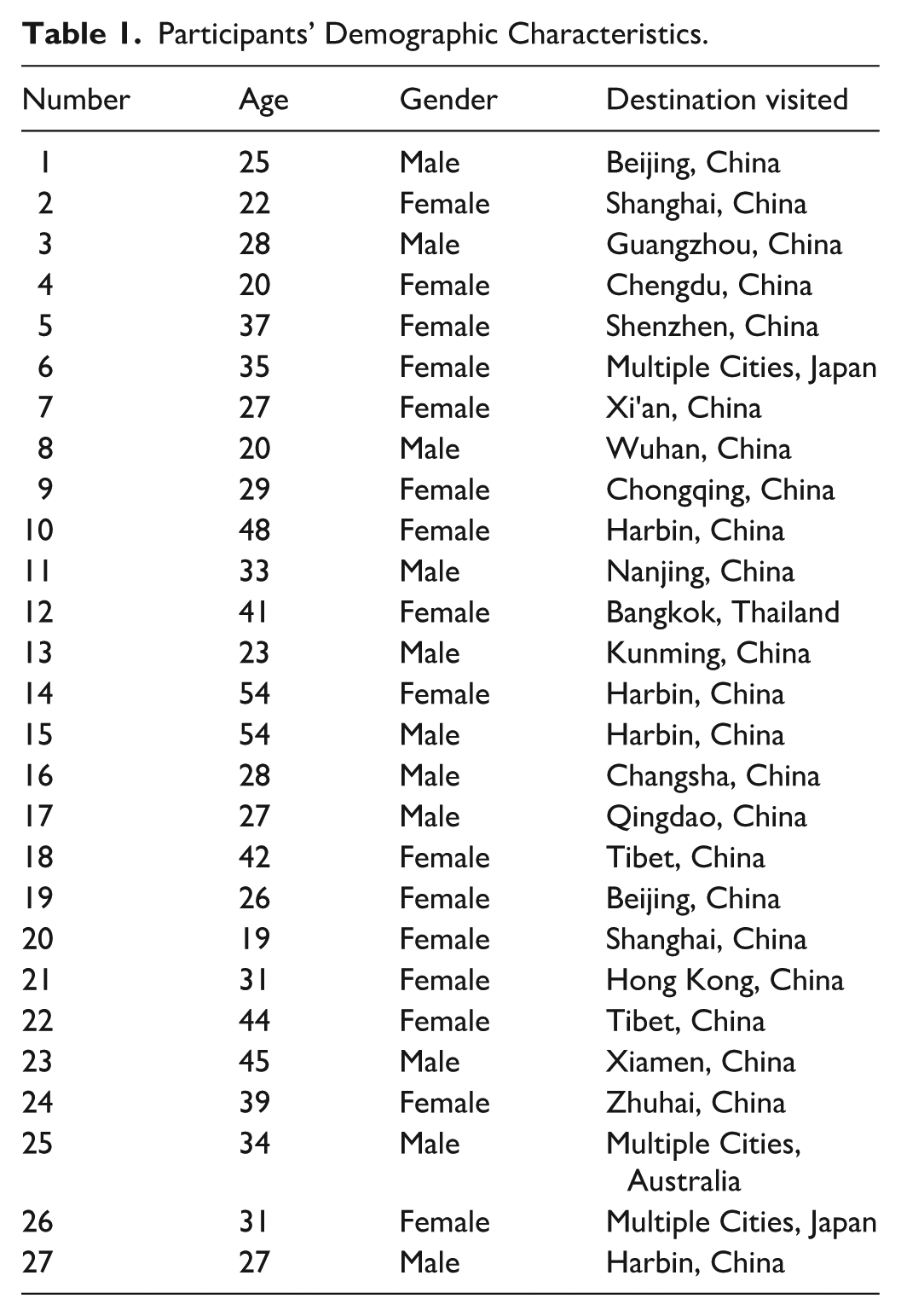
The study employed purposive sampling, supplemented by snowball recruitment, explicitly targeting individuals who had watched TLS content and subsequently chosen to visit featured destinations. This maximised the relevance of the sample to the core research questions, though it introduced limitations in terms of cultural specificity (the sample comprised predominantly Chinese users of domestic platforms like Ctrip and Douyin) and possible selection bias towards individuals with similar digital behaviours or socio-economic backgrounds (Xiang et al., 2015). Mitigation strategies included recruiting through diverse channels and ensuring gender balance (see Table 1). Nevertheless, the findings are interpreted within this contextual frame.
Participants’ Demographic Characteristics.
Establishing Trustworthiness and Ethical Considerations
Member checking was used to enhance credibility and confirmability. Preliminary findings and interpretations were shared with five participants to verify accuracy, ensure resonance with real experiences (Birt et al., 2016) and refine theme development. A comprehensive audit trail, including coding decision logs, theme evolution, and analytic memos, was kept, providing transparency and allowing for independent review by the research team (Wolf, 2003). Data and coding structures were collaboratively reviewed to further increase reliability. Ethically, informed consent was mandatory for all participants, transcripts were pseudonymised, and attention was paid to reduce power imbalances and promote cultural sensitivity (Sanjari et al., 2014) through both careful (back-) translation (from English to Mandarin Chinese and back to English) and adaptation of interview materials.
Data Analysis
Data analysis for this study was conducted using a directed content analysis approach purposefully designed to align with and extend the study’s core research questions concerning how TLS shapes tourist decision-making through the lenses of TPB and affordance theory. Guided initially by theory-informed codes based on TPB constructs (e.g., attitudes, subjective norms, and perceived behavioural control) as well as central concepts from affordance theory (e.g., object perception, interrelationships, potential actions), the analysis remained sensitive to the nuanced and context-specific experiences of participants. Unlike approaches that rigidly test existing theory, this process maintained analytic flexibility by integrating both deductive and inductive reasoning: while pre-established codes structured the initial stages of analysis, emergent codes and themes were allowed to surface from the data themselves (Assarroudi et al., 2018) particularly when participants described novel platform affordances or unanticipated psychological processes.
Operationalisation of TPB constructs was achieved by carefully interpreting narrative patterns within participants’ accounts. For example, “attitude” was identified through emotional responses to streamed destinations; “subjective norms” were revealed in descriptions of community influences, peer validation, and streamers’ roles; and “perceived behavioural control” appeared where participants recounted the impact of TLS features on their ability to overcome or perceive travel barriers. Affordance theory was not treated as an abstract add-on but became empirically salient through codes capturing how participants enacted or perceived specific platform possibilities, such as “real-time Q&A empowers planning” or “gamification enhances emotional attachment.” This approach enables the operationalisation of affordance theory in practice, ensuring technological affordances are observed as lived mechanisms (for action possibilities, relations with the environment, and perception of value-rich objects) within unique digital environments rather than as context-free theoretical categories.
A distinctive contribution of the qualitative analysis lies in clarifying the concept of mediation, specifically, how psychological commitment bridges the intention-behaviour gap, in this digital tourism context. Unlike quantitative approaches that test statistical mediation pathways, this qualitative study adopts a narrative, process-oriented approach. Analytical memos were used to trace how psychological commitment, expressed as emotional readiness, sense of personal obligation, or perceived duty to fulfil a ‘promise’ to visit, emerged in participants’ stories as the mechanism by which intentions (shaped via attitudes, norms, and control) were transformed into tangible travel behaviour. This mediation is understood not as a linear statistical pathway but as a lived, qualitative process described by participants themselves. As they repeatedly referenced fulfilling commitments, intensified “need to go” following engagement with authentic content, or personal investment in their travel plans, psychological commitment emerged inductively as a core theme linking intention to action. This approach differs fundamentally from TPB’s emphasis on planning strategies or rational calculation; instead, it highlights the emotional, relational, and embodied nature of intention-behaviour translation in digitally mediated contexts. Thus, mediation is empirically justified as a lived, subjective mechanism, not merely imposed at the level of theory.
Data Coding Process with Examples
The systematic coding process began with open coding mapped onto the theoretical framework for predetermined deductive codes. This allows continuous abstraction and refinement (Assarroudi et al., 2018). A key analytical innovation is the systematic operationalisation of affordance theory through coding. Rather than treating affordances as abstract theoretical concepts, we mapped them as concrete, lived experiences. Core open codes such as “visual realism / immersive experience”, “real-time interaction,” and “expectations too high/different from live stream” reflected not only the psychological constructs of TPB, but also directly operationalised affordance theory by capturing participants’ perceptions of what TLS platforms uniquely enabled or constrained in travel decision-making. As coding progressed, open codes were clustered into broader axial codes, such as “destination discovery,” “social network validation,” “managing expectations and real-world comparison.” Axial coding made explicit the interplay between technological affordances (e.g., immediacy, interactivity, gamification, emotional presence) and TPB elements (attitudes, subjective norms, perceived behavioural control), systematically linking user narratives with both frameworks. This integrating logic culminated in five key analytical themes addressing the research purpose and questions:
Promoting immersive experience and virtual exploration (attitudes and motivation vs. substitution).
Validating travel intentions (subjective norms and social affordances).
Embracing barriers, constraints (perceived behavioural control and enabling affordances).
Managing expectations (intention-behaviour gap and familiarisation affordances).
Navigating concerns and commercialisation (sustainability, authenticity, and ethical tensions).
Figure 1 illustrates this coding scheme, showing progression from open codes to axial codes to analytical themes.
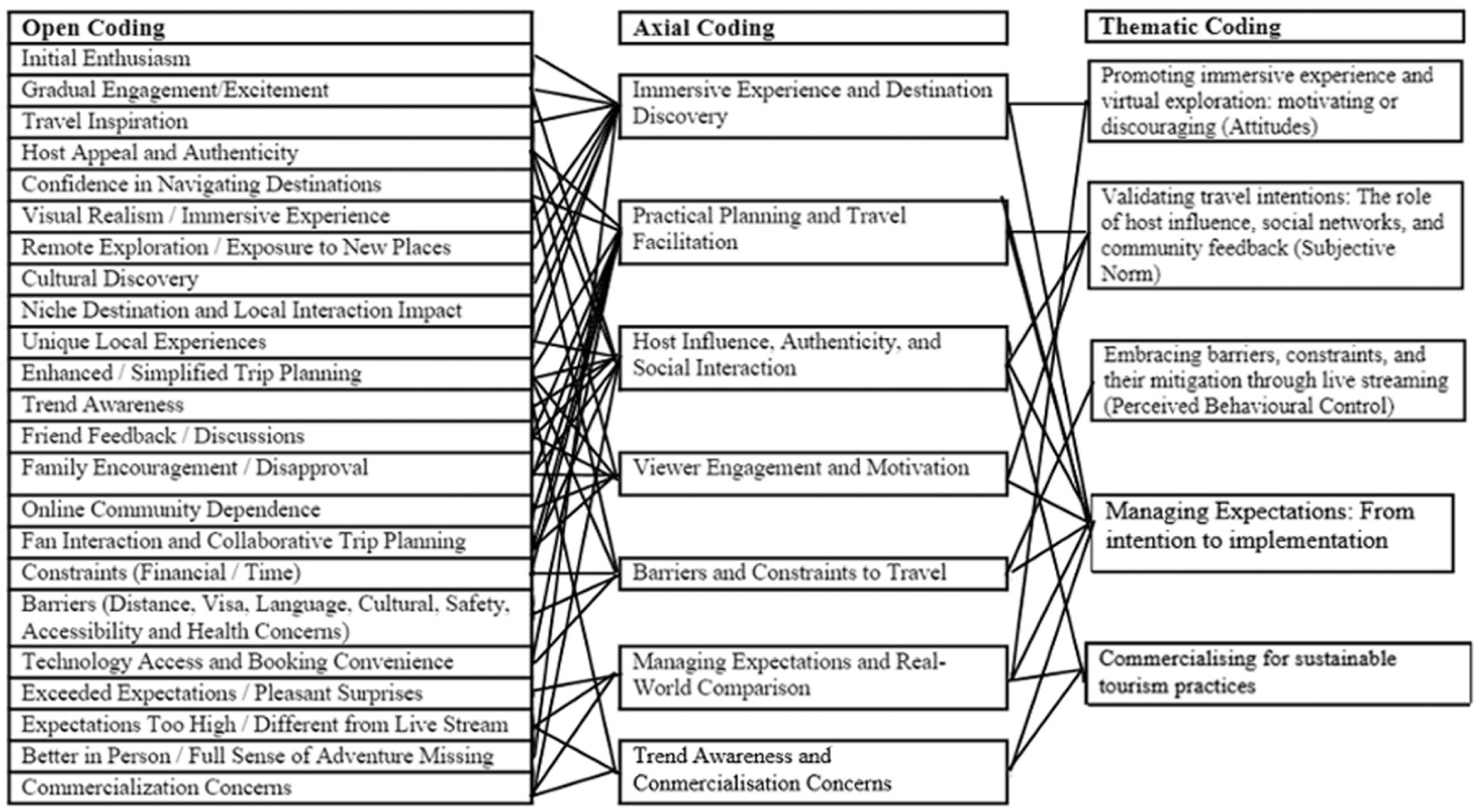
Coding scheme, processing from open codes (left), axial codes (middle) to analytical themes (right).
Two illustrative examples demonstrate this analytic process. When P14 described vivid livestream imagery alongside feelings of excitement, this was coded as both an affordance (“immersive visual realism”) and its psychological consequence (“emotional engagement shaping positive attitudes”), then tempered by “constraints (financial),” capturing the intersection of affordance activation and perceived behavioural control. When P7 discussed disappointment comparing livestreamed expectations to real-world experience, this was coded as an affordance-perception mismatch (“preview affordance creates anticipatory expectations; reality constraint reveals limitations to virtual representation”). This approach ensures affordances are not imposed top-down as theoretical categories but emerge inductively from how participants enact and perceive technological possibilities.
This structured, yet flexible, analytic strategy ensured each theme was grounded in lived narratives of participants while robustly mapped to both TPB and affordance theory, providing transparent evidence of how affordance theory was systematically operationalised throughout the analysis.
Findings and Discussion
Theme 1: Promoting Affording Environments for Virtual Exploration: Shaping Attitudes
This theme addresses the first research question about how live streaming shapes tourist attitudes toward destinations. TLS demonstrates capacity for generating immersive experiences that, in participants’ accounts, significantly reshape their feelings and attitudes toward destinations (Deng et al., 2021). Through the integrated lens of TPB and affordance theory, this theme reveals how technological affordances catalyse emotional engagement, a core antecedent of attitudinal change in TPB (Shamim et al., 2025). Specifically, the affordances of visual realism, real-time presence, emotional co-presence, and enhanced discovery serve not merely as background conditions, but as the very relational mechanisms through which attitudes are formed, intensified, or at times, constrained (Qiu et al., 2021). By tracing how participants enacted and perceived these affordances, we illuminate the active role of technology in psychological processes, revealing a fundamentally dual-edged dynamic where motivation, substitution, and saturation interact.
Enhancing Motivation
The affordance of livestream visual realism, instantiated through high-definition, multi-perspective streaming, enables participants to enact emotional presence, a psychological state that directly shapes travel intention (Qiu et al., 2021). As P7 described: “The visuals were so realistic, I cannot wait to get there. It made me excited to book the trip and experience it in person”. This emotional response reflects how affordances are not neutral features but relational possibilities that activate psychological processes (Shamim et al., 2025). The vivid, embodied preview affords participants an immersive anticipatory experience, translating into positive attitudes and travel intention. Beyond visual appeal, the affordance of cultural presence, enabled by live streaming of festivals and events, fosters what participants experienced as authentic connections that drive visitation. P21 elaborated: “Seeing the live streaming of the festival made me want to experience it in person. It looked like such an exciting celebration, and I wanted to be part of it”. Here, the affordance of participatory witnessing (being present, even virtually, to a cultural moment) shapes attitudes by affording emotional and cultural resonance.
Promoting Destination Diversity
The affordance of enhanced discovery, enabled by platform search, content personalisation, and algorithmic curation, affords participants access to previously unknown destinations and previously unseen dimensions of familiar places. This informational affordance directly shapes attitudes by expanding the range of places participants consider worthy of visitation. P1 explained these effects: “I had visited this destination many times, but the stream showed a hiking trail I didn’t know existed. I went back and explored it.” Here, the affordance of detailed, user-generated exploration feeds directly into attitudinal expansion and behavioural change, demonstrating how technological mediation actively reconstitutes what participants perceive and desire.
Emotional Engagement
Beyond cognitive impacts, the affordance of multisensory delivery, incorporating background music, ambient sound, and real-time atmospheric cues, enables participants to enact deep emotional engagement. These affective affordances reinforce attitude formation by creating psychological presence and emotional resonance. P2’s reflection illustrates this vividly: “The streamer added background music during the live streaming, and the sombre melody intensified the emotional atmosphere of visiting the war memorial. It deepened my sense of respect for the soldiers who sacrificed their lives, and I now feel compelled to visit the site in person to pay my respects.” In this account, the affordance of multisensory immersion shapes not just attitudes but personal obligation, a pathway for emotional engagement to travel intention that extends our understanding of how affective and cognitive factors interact in decision-making (Fan et al., 2022).
Substitution Effect
Critically, while TLS strengthens travel motivation for some, the very affordance enabling immersion, the capacity for detailed, repeated immersive content consumption, can paradoxically constrain travel behaviour by fully satisfying the curiosity that motivates visitation. This ‘virtual completeness’ affordance, whereby digital experiences fully satisfy participants’ travel interests, reveals a dual-edged mechanism. P17 observed: “The live stream showed me everything I wanted to see. After that, I didn’t feel the need to go in person. I had already experienced it.” Similarly, P14 described TLS as a "replacement of real holiday". This substitution effect reflects Zhang et al.’s (2023) identification of how virtual affordances are not univocally enabling; the same technological environment that affords immersion also affords closure, satisfaction, and the possibility of substitution. This finding extends TPB’s unidirectional attitude-intention linkage by showing that attitudes can form in ways that preclude rather than promote behaviour.
Overexposure and Saturation
Finally, the affordance enabling repeated immersion, unlimited access to streams on desired destinations, can paradoxically diminish motivation through media saturation (Zhang et al., 2024). As the same affordance that empowers attitude change (immersive exposure) is repeatedly activated, it can constrain desire by reducing novelty. P2 noted: “After watching the live stream, I felt like there was nothing left to surprise me. I lost interest in visiting because I already knew what to expect”. This finding illuminates affordance theory’s relational character: affordances are not static properties but context-dependent possibilities that shift in meaning and impact as they are repeatedly enacted. What first affords excitement (immersive preview) can, through overuse, afford boredom and constraint.
This first theme demonstrates that TLS’s influence on attitudes is not linear or uniform. Rather, TLS technologies create affordance-rich environments where motivation, substitution, and saturation dynamically interact to shape travel desire. The theoretical insight is that affordances (technological environments) are fundamentally double-edged: the same immersive technological environment that inspires travel can also saturate curiosity, create overly high expectations, or fully satisfy desire, outcomes that classical TPB, with its focus on stable attitudes, would be less likely to predict. This nuance extends both the TPB and affordance theory, demonstrating how digitally mediated environments require reconceptualising attitudes as fluid, ambivalent, and contingent on how affordances are enacted over time and context.
Theme 2: Validating Travel Intentions: The Role of Host Influence, Social Networks, and Community Feedback
The validation of travel intentions through live streaming represents a rich intersection of TPB’s subjective norms construct and the actionable affordances of digital environments (Ajzen, 1991). This theme speaks directly to the research question regarding how social and technological influences interact to shape and legitimise tourist intentions. Specifically, we trace how affordances for connectivity, interaction, and community, instantiated through live chat, comment threads, and host dialogue, enable participants to enact distributed forms of social validation that extend far beyond traditional subjective norm conceptualisations (Seong et al., 2021). These affordances transform subjective norms from static, unidirectional social pressures into dynamic, dialogically constructed processes operating across multiple sources simultaneously (Stylidis, 2022).
Social Networks as Validators
The affordance of asynchronous sharing (enabled by platform features for forwarding streams, tagging friends, and sharing reactions), affords participants the capacity to enact social validation through distributed networks. While one participant, P6, downplayed external influence, "I do not care what others think", the majority described significant sway from friends and acquaintances. P12 articulated this influence succinctly: "A friend of mine watched the same live streaming and told me it was worth going. That really influenced my decision." The affordance of shared viewing, watching together or discussing afterwards, enables participants to enact social negotiation around travel decisions, making subjective norms not unidirectional pressures but dialogically constructed, emergent agreements (Seong et al., 2021). P9 described: "I usually share streaming content with my friend, if she is interested, we may visit the destination together." This account reveals how the affordance of platform-mediated sharing actively restructures subjective norms from abstract social pressure to concrete, co-enacted plans.
Online Communities and Collective Validation
The affordance of asynchronous, threaded commentary, instantiated through comment sections and discussion forums, enables viewers to enact collective sense-making about destination appeal. Online groups function as digital crowdsourcing hubs for distributed decision-making (Rashidi et al., 2017). P10 explained how these communities shaped their travel horizons: “I hadn’t thought about visiting that town until someone in the group recommended it. Now I’m excited to go and see it for myself.” P18 further elaborated on the practical benefits: “I joined an online group where people shared their experiences with the same destination. Their advice helped me finalise my itinerary.” These testimonials demonstrate how community-based affordances of distributed social proof – the ability to observe many others’ positive evaluations – shape subjective norms through visibility rather than direct social pressure. This represents a significant expansion of TBP’s subjective norm construct, moving from “what important others think I should do” to “what visible others are observed doing”, which signals collective validation of the destination (Seong et al., 2021).
The Influence of Hosts on Travel Intention
The affordance of host curation and expertise, instantiated through streamer selection of content, explanation of local context, and positioning of credible guides, enables participants to enact trust in host recommendations (Stylidis, 2022). Unlike traditional word-of-mouth, which depends on prior relationships, the affordance of live, embodied host presence creates what participants experience as direct access to local knowledge. P3 reflected: "The host seemed knowledgeable and passionate about the place. It made me trust their recommendations, and I felt confident in adding the destination to my list." P11 and P14 both emphasised: “Unique local insights” available through host narration. These affordances deliver both informal and social validation functions that traditional marketing cannot match (Stylidis, 2022).
However, the affordance of host curation is contingent and fragile. When commercial intent or promotional bias of a streamer becomes apparent, the trust-building mechanism is attenuated (Luo et al., 2025). P8 commented: "When the stream felt like an advertisement, I lost interest. It made me wonder if the destination would really look that good in person." This reveals that affordances for authenticity are relationally enacted, as hosts maintain the affordance of authentic expertise only when perceived as unbiased (Luo et al., 2025). Once the commercial stakes become visible, the same platform feature (host narration) ceases to afford trust, underscoring that technological affordances embed both opportunities and constraints depending on how they are enacted. Figure 2 illustrates the validation of travel intentions, highlighting the interplay between host authenticity, social validation from networks, and real-time engagement, showing how these elements collectively influence travel decisions by fostering trust and social approval.
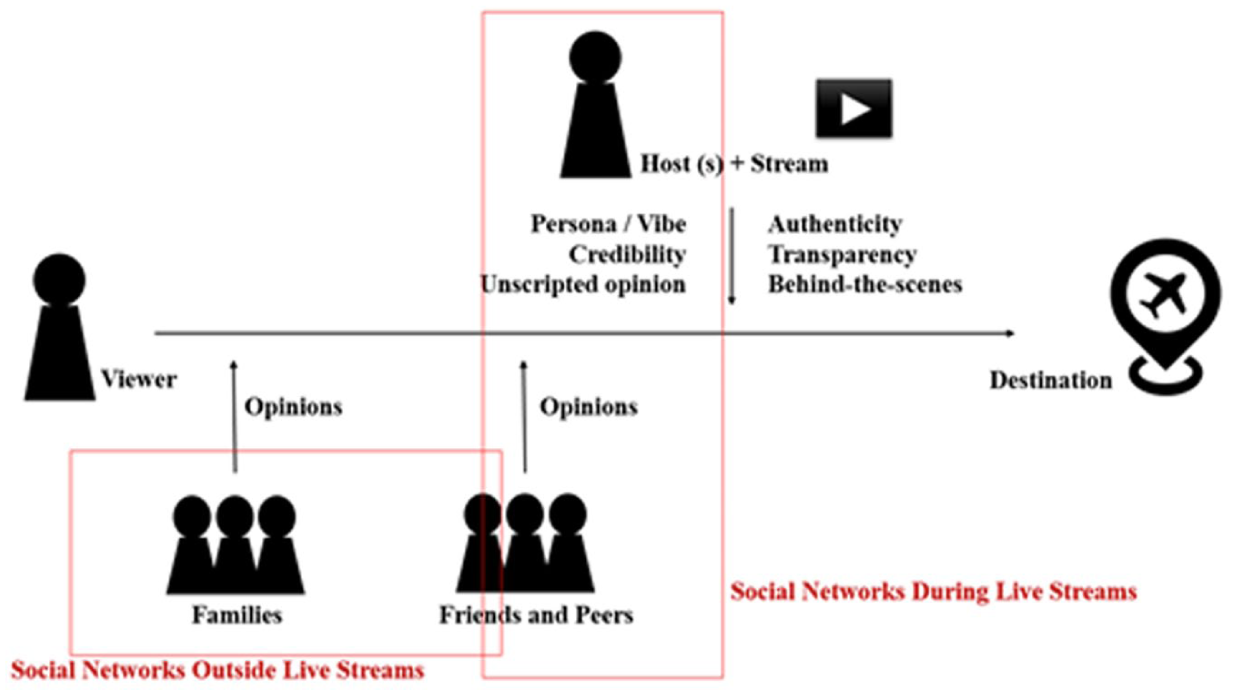
Validation of travel intentions under the impacts of host influence, social networks during and outside live streams.
Social Interaction During Live Streams
Real-time interaction is one of the most salient affordances of TLS, supporting synchronous validation and collaborative planning. P14 described this interactive benefit: "The host answered my question about the best time to visit, and it really helped me plan. It felt like I was already part of the experience." P20 added that: "I started chatting with someone during the stream, and we ended up planning to visit the same place," highlighting how the affordance of synchronous dialogue quickly translates into actual travel arrangements. This real-time, co-present interaction affords participants a sense of belonging to a travel-planning community. Unlike classical TPB, which conceives subjective norms as one-way or parallel influences (Ajzen, 1991), the affordance of live interaction enables participants to enact validation in an evolving, iterative way, with each exchange reinforcing intention.
Collectively, these findings reveal that live streaming platforms do not merely channel pre-existing subjective norms; they actively structure and amplify them through affordances for connectivity, visibility and interactions (Seong et al., 2021). The digital affordances of distributed commentary, host expertise, and synchronous dialogue radically expand the sources and depth of social validation available to travellers (Stylidis, 2022). This represents a significant extension of both TPB and affordance theory: subjective norms are no longer understood as stable social pressures but as dynamically emergent through the ongoing enactment of technological affordances that enable new forms of collective decision-making.
Theme 3: Embracing Barriers, Constraints, and Mitigation Through Live Streaming
This theme addresses how TLS affordances transform the landscape of travel barriers and directly reshape perceived behavioural control, a central construct of TPB (Moal, 2021). By operationalising affordance theory, this analysis demonstrates the distinctive ways TLS environments enable users to enact agency in overcoming financial, logistical, and safety constraints traditionally associated with tourism (Gössling, 2021). The core argument is that affordances for transparency, expert guidance, and real-time problem-solving do not simply provide information; they actively reconstruct participants’ sense of their own capacity to undertake travel. These affordances operate as relational mechanisms through which traditional barriers are either mitigated (enabling travel) or accommodated (through virtual substitution), revealing perceived behavioural control as actively constructed rather than merely assessed (Moal, 2021).
Financial Constraints and Cost-Effective Alternatives
The affordance of cost-free immersion, i.e., the ability to access detailed destination previews without expenditure, serves dual functions. For financially constrained participants, it affords vicarious satisfaction with travel interests, functioning as a substitute. P11 observed: “Travelling to that destination was far too expensive, but the live stream gave me the opportunity to explore it virtually. It felt like the next best thing”. Here, the affordance of low-cost access directly mitigates perceived behavioural control deficits (lack of financial resources) by enabling an alternative form of engagement (Moal, 2021). However, for other participants, TLS affords practical cost-reduction strategies. P7 explained: “Watching live streams allows me to discover cheaper options for transportation and accommodation, which I incorporated into my travel plans.” Similar experiences were shared by P2, P5, and P6. The same affordance (detailed, real-time content about destinations) enables two different enactments: satisfaction (substitution) or empowerment (cost-conscious enabling). This contingency is central to affordance theory, as affordances realise their potential only through user enactment in specific contexts.
Overcoming Logistical and Time Constraints
The affordance of real-time expert guidance, enabled through Q&A sessions, live problem-solving, and demonstration of logistical processes such as complex navigation and visa processes directly enhances participants’ perceived behavioural control by translating abstract uncertainty into actionable knowledge (Hannonen & Prokkola, 2022). TLS platforms illustrate affordance theory in practice by enabling real-time support, peer demonstration, and co-creative content, all of which directly enhance users’ confidence to overcome logistical hurdles. P25 recounted: "The streamer showed exactly how to navigate the visa application process, which made me feel much more confident about applying." Similarly, P26 noted that "Watching someone explain the paperwork made it seem much less intimidating." This affordance of observational learning – seeing someone else navigate a barrier successfully – enables participants to enact confidence in their own capacity. This reflects a distinctive advantage of live streaming over static information: the real-time, embodied demonstration affords not just information but a sense of accompaniment and possibility (Deng et al., 2022). P10 reported: “The live stream helped me avoid unattractive sites, ensuring I didn’t waste my limited vacation time." By reducing ambiguity and personalising guidance, the affordance of real-time customisation directly strengthens perceived control (in TPB terms) (Ajzen, 1991) but through the lens of affordance theory, we see how this occurs: participants enact agency by observing others and receiving immediate, contextual responses.
Managing Health and Safety Concerns
The affordance of real-time transparency, i.e., the ability to observe actual conditions, crowding, and safety measures through live video, enables participants to enact risk assessment (e.g., monitoring conditions such as crowding or cleanliness) dynamically (Škare et al., 2021), before committing to a trip. P14 noted: "The live streaming showed how crowded the area was, and I decided not to go because I didn’t want to deal with large crowds." Here, the affordance of observable conditions affords informed choice-making where previously uncertainty prevailed (Papadopoulou et al., 2023). Similarly, P9 shared: "I watched the live stream of the market instead of going in person, just to avoid the health risks." In this case, the same affordance (observing real conditions) enables a different enactment (choosing substitution rather than visitation). These findings illustrate how affordances are contextual: the capacity to observe conditions affords different outcomes depending on what those conditions reveal and what participants value. Through timely, contextual, and user-driven information, TLS enables travellers to make more informed and confident decisions, strengthening perceived behavioural control over health and safety (Škare et al., 2021).
In sum, this theme elucidates how the affordances of substitution, efficiency, transparency, and real-time interaction actively mitigate traditional travel barriers by directly enhancing perceived behavioural control (Moal, 2021). Unlike classical approaches that treat barriers as exogenous constraints, affordance theory reveals how technology reshapes participants’ sense of capacity to overcome constraints (Gössling, 2021). This extends TPB by demonstrating that perceived behavioural control is not merely internal (self-efficacy) but actively constructed through interaction with affordance-rich environments (Ajzen, 1991; Deng et al., 2022). Importantly, the same affordance can support different enactments and outcomes, depending on participant needs and interpretations. This contingency is fundamental to understanding how digital platforms both enable and constrain tourism behaviour.
Theme 4: Managing Expectations: From Intention to Implementation
This theme interrogates the pivotal transition from travel intention to actual behaviour, a transition that lies at the heart of the intention-behaviour gap conceptualised in TPB (Yuzhanin & Fisher, 2016). Integrating TPB and affordance theory, the analysis reveals how TLS platforms enact environments that foster familiarisation, emotional commitment, and expectation management, that is, those factors critical for bridging this gap (Fecker et al., 2025; Milman & Pizam, 1995). The core argument is that psychological commitment emerges as a qualitative mechanism through which participants transform abstract intentions into embodied travel behaviour, and that this emergence is enabled by specific affordances (Fecker et al., 2025). These affordances do not merely provide information; they enable participants to enact preparatory behaviours, emotional investment, and mentally rehearsed experiences that translate digital engagement into real-world action.
Emotional Readiness
A key affordance of TLS is its capacity to facilitate familiarisation through detailed, repeated virtual exploration (Milman & Pizam, 1995). P10 captured this preparatory effect: "Watching the live stream made me feel well-prepared for my trip. I knew what the streets looked like, where to eat, and what the crowds would be like." Likewise, P6 shared: "Travel live streaming made me feel familiar with the destination, which made me feel confident to go." The affordance of virtual pre-visitation, i.e., the ability to repeatedly explore a destination before physically arriving, affords what participants experience as emotional readiness. Unlike abstract information, which may not translate to confidence, the embodied, repeated enactment of virtual presence appears to enable psychological preparation. This finding reaffirms research that locates familiarity as a cornerstone of confident travel decision-making (Milman & Pizam, 1995), while simultaneously specifying the concrete affordance mechanism through which familiarity is constructed: detailed, user-controlled, repeatedly accessible virtual exploration fulfilling TPB’s assertion that perceived behavioural control is shaped by informational access and situational clarity (Ajzen, 1991).
Psychological Commitment to a Destination
Beyond cognitive reassurance, TLS platforms appear to cultivate affective bonds that we characterise as psychological commitment (Fecker et al., 2025). This emotional investment emerges as a lived mediating mechanism that links intention to behaviour, a process often under-theorised in traditional TPB models. We understand psychological commitment not as a psychological disposition or character trait, but as an affective state that emerges through sustained engagement with authentic, interactive content. This is illustrated in P11’s narrative: "Watching the memorial live stream gave me a sense of duty to honour those who sacrificed. It wasn’t just about seeing a place anymore - it became a personal pilgrimage I needed to make." In this account, the affordance of emotionally resonant, participatory witnessing transforms generic travel interest into personal obligation (Fecker et al., 2025). P19 adds a clear example of preparatory enactment: "After watching several streams, I spent hours researching local customs and phrases. I was investing in the experience before even booking my ticket." Here, the affordance of deep emotional connection enables participants to enact preparatory behaviours (researching, learning, committing, time) that signal and reinforce their intention. These pre-travel investments appear to function as commitment-strengthening mechanisms, translating digital engagement into behavioural activation (Fecker et al., 2025). Affordance theory helps articulate his dynamic: the environment does not merely afford information; it affords deeper investment on psychological and behavioural levels.
Alignment of Expectations
The affordance of detailed preview and expectation setting, through explicit host narration of what to expect and visual presentation of reality, works to align intention with eventual experience, supporting the likelihood of satisfaction and behavioural continuation (Phaosathianphan & Leelasantitham, 2021). P8 recounted: "The streamer helped me decide which areas to avoid and where to book my hotel. And everything is just like I expected." When experiences surpass expectations, outcomes include not only satisfaction, but advocacy and repetition: "I started to follow this streamer and will get inspiration for my next trip." Through this lens, TLS shapes the expectation-experience cycle, reducing misalignment and bolstering the intention-behaviour pipeline by enabling participants to enact mentally rehearsed, aligned experiences.
Limitations of Virtual Representations
However, the research also surfaces boundaries to these affordances, highlighting the situational and relational nature of technological mediation (Wen et al., 2021). The affordance of virtual representation, while enabling anticipation, also constrains perception: it affords particular vantage points, times, lighting conditions, and emotional atmospheres that may not align with actual experience. Discrepancies between virtual and real experiences underscore that affordances are not inherently enabling; they are contingent upon user perception and subsequent enactment. Positive surprises can occur. As P6 noted: "The place felt even better in person than I expected. It had a liveliness that the stream couldn’t capture." Such outcomes reinforce the value of travel. More problematically, negative mismatches can undermine satisfaction and damage destination loyalty: "The destination looked beautiful on the stream, but when I arrived, it was overcrowded, and the experience felt completely different" (P15); "The live stream made the place look peaceful, but it was full of tourists when I got there. It wasn’t the relaxing experience I had expected" (P12). These cases reveal that affordances are contingent: what is afforded by virtual representation (detailed visual preview) carries both enabling and constraining potential. When real experiences diverge from virtual expectations, the very affordance that enabled confidence can undermine subsequent satisfaction and generate negative word-of-mouth (Wen et al., 2021).
In short, this theme directly addresses the critical intention-behaviour gap in TPB by demonstrating that TLS-afforded environments appear to both enable and constrain the transition from digital interest to real-world travel (Yuzhanin & Fisher, 2016). Through facilitating emotional readiness, fostering psychological commitment, and aligning expectations, TLS affords an enhanced likelihood that intention will culminate in action (Fecker et al., 2025). Yet, the findings also affirm that affordances are inherently dynamic: they derive power from how users interpret, enact, and experience them in relation to real-world encounters. This nuance extends both TPB and affordance theory, making clear that bridging the intention-behaviour gap in contemporary tourism requires recognising the complex interplay between technology, psychological investment, and eventual user experience (Ajzen, 1991).
Theme 5: Navigating Concerns and Commercialisation in Sustainable Tourism
This final theme critically examines how TLS both enables and constrains sustainable tourism outcomes by shaping the curation of authenticity, exposure management, community benefit, and sustainability-oriented business models. Affordances for transparency, visibility, and monetisation are not neutral features; they become relational mechanisms that, depending on how participants enact them, either foster responsible tourism behaviour or erode it (Wang, 1999; Zhang et al., 2025). Integrating TPB and affordance theory, the analysis shows how these enacted affordances influence attitudes, subjective norms, and perceived behavioural control around sustainable and ethical travel (Ramstead et al., 2016).
Maintaining Authenticity in Content
The affordance of perceived authenticity occurs when live streams are unscripted, minimally edited, and not overtly promotional, enabling participants to experience destinations as “real” rather than staged (Wang, 1999). Participants actively seek out hosts and content that feel genuine and non-commercial. P16 stated, "I follow streamers who show the real side of travel, not just the glamorous parts sponsored by hotels," Signalling an active preference for authenticity over polish. P14 contrasted expectation and experience: "I visited a place I had seen in a live stream, but when I got there, it felt more like a tourist trap. The shops were full of souvenirs, and the local culture seemed staged," echoing Wang’s (1999) critique of staged authenticity. When authenticity is perceived as intact, participants report greater trust, more positive attitudes, and a stronger sense of control over making “good” travel choices. When commercial intent becomes too visible, the same affordance collapses: streams shift from trusted guidance to suspect advertising, eroding credibility, weakening intentions to support those destinations or streamers.
Balancing Exposure and Preservation
TLS’s visibility affordances, i.e., real-time broadcasting, algorithmic reach, and shareable links, enable destinations to be exposed rapidly and widely (Zhang et al., 2025). Participants enact this visibility in divergent ways. Some are drawn to newly discovered sites. P4 recalled: "I was drawn to a live-streamed waterfall in a remote area that appeared untouched and serene.” Others use visibility to avoid pressure points. P2 recounted, "The streamer explained this period in Beijing would be very busy, so I followed his decision, visited a more peaceful and relaxing city." The same exposure affordance can exacerbate or mitigate sustainability pressures. P4’s experience of arriving at the waterfall to find crowds, litter, and erosion illustrates how unmoderated visibility can contribute to overtourism and environmental degradation (Zhang et al., 2025). P2’s account shows how visibility, enacted as guidance toward alternative destinations or timings, can redistribute flows and support more sustainable patterns of visitation. These cases underscore participants’ attitudes toward “viral” sites as ambivalent: they value discovery but express concern about cumulative impacts, which can dampen intentions to visit heavily exposed locations.
Supporting Community Involvement
Localised visibility and participatory formats afford community-centred storytelling, allowing local actors to appear as co-present narrators rather than background scenery (Ramstead et al., 2016). Participants selectively endorse destinations where they perceive community benefit and less commodification. P18 shared, “I now avoid places that have become too commercialised,” while P22 emphasised, “I prefer to explore localised destinations that aren’t overrun by tourists.” These enactments show viewers using TLS to seek and reward streams that foreground local culture and less-saturated places. When participants perceive that communities are centred rather than exploited, subjective norms shift toward supporting less commercial, more local tourism options. TLS affordances thus help construct norms that value community benefit and cultural integrity, strengthening intentions to visit places that appear respectful and to avoid those seen as over-commercialised (Ramstead et al., 2016).
Innovative Revenue Models for Sustainability
Interactive monetisation, such as viewer subscriptions supporting ecological initiatives or charity-based bookings, and donations, affords linkages between viewer spending and local or environmentally sustainable initiatives (Gössling, 2021). Participants enact these affordances by choosing streamers and services that embed sustainability outcomes. For instance, P13 described: "Through my subscription, I got access to virtual tours of local farms and learned about sustainable farming practices. Part of my fee went to support these farms, which made me feel like I was helping in a small way." Similarly, P10 observed, "Among all streamers, I chose to book the hotel through this guy because for every booking we make, he will donate 1% revenue to local charity." These revenue models shift commercialisation from a purely extractive logic toward perceived co-benefit. Participants describe enhanced feelings of efficacy and moral satisfaction, reinforcing positive attitudes toward both destination and streamer and increased perceived behavioural control over ‘doing good’ while consuming tourism services (Gössling, 2021). Commercialisation, when enacted through transparent, cause-linked models, becomes a mechanism that supports, rather than undermines, sustainability goals.
This theme shows how TLS-afforded environments, by shaping authenticity, exposure, community involvement, and revenue flows, substantially influence tourists’ attitudes and perceived control around sustainable and ethical travel (Zhang et al., 2025). These findings reveal that the same affordances (authenticity cues, visibility, participatory storytelling, and monetisation) are fundamentally double-edged: they can either promote responsible, community-benefitting tourism or amplify commodification, overtourism, and distrust, depending on how participants and hosts enact them (Gössling, 2021; Ramstead et al., 2016). The findings also reinforce the need for deliberate governance and design of TLS environments so that relational affordances are steered toward authenticity, community voice, and sustainability, rather than purely short-term commercial gain.
Theoretical Synthesis: Extending TPB and Affordance Theory Through TLS
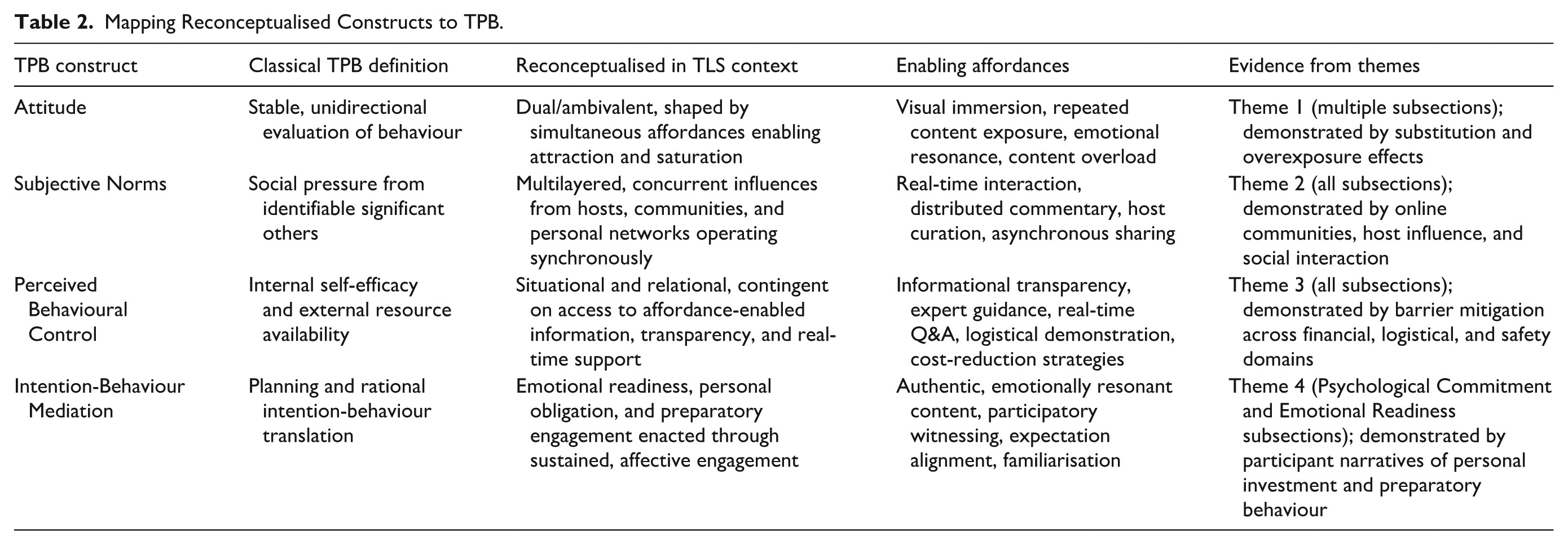
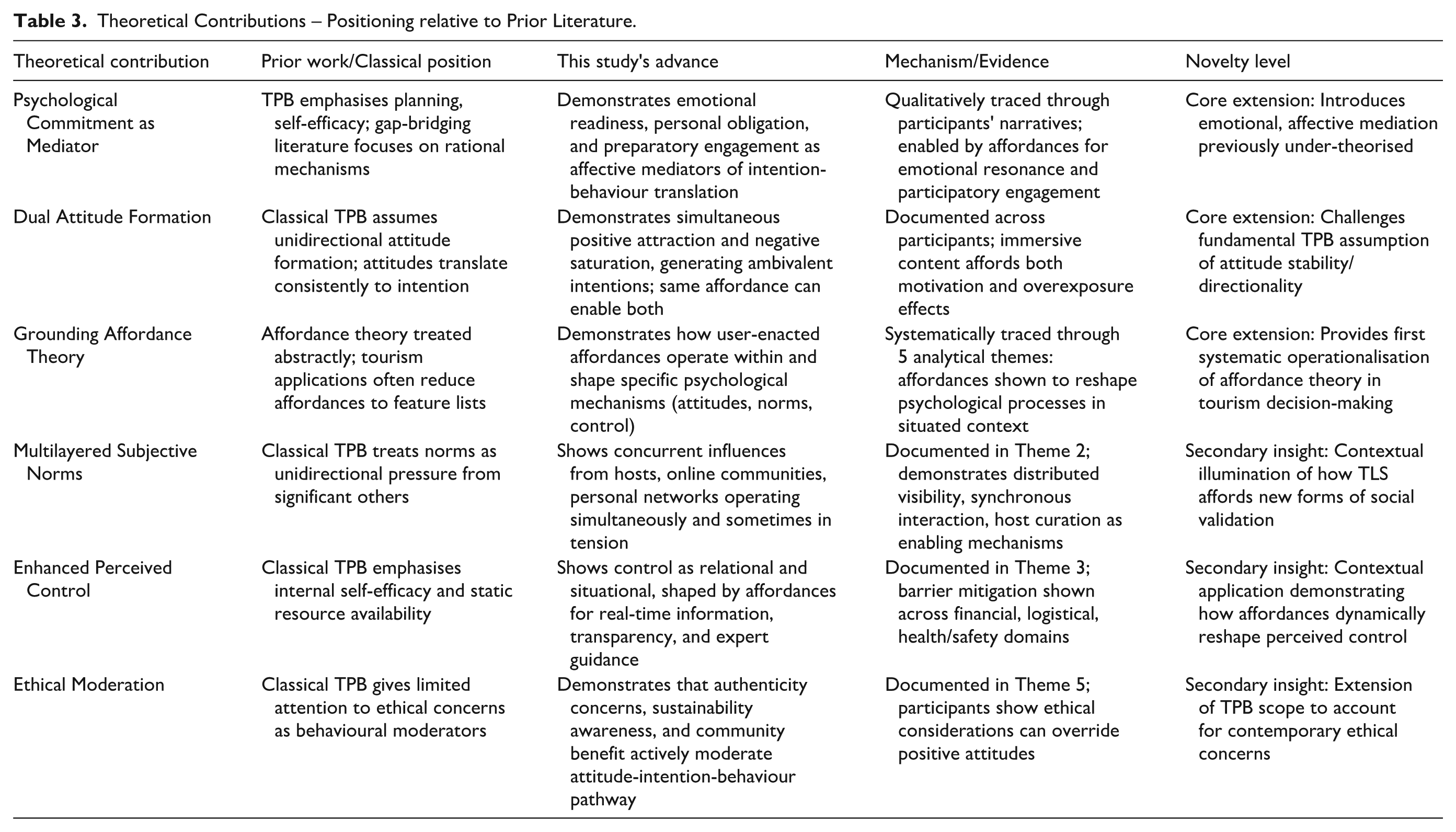
This study presents significant theoretical advances by extending and integrating TPB and affordance theory within the context of TLS. The synthesis draws attention to how TLS catalyses novel psychological and social dynamics, providing fresh analytical pathways for understanding technology-mediated tourism behaviour. Figure 3 illustrates the reconceptualised theoretical framework that shows the interplay between TLS affordances (immersion, interaction, co-creation, transparency) and the core TPB constructs. Table 2 systematically maps these reconceptualisations to original anchors, while Table 3 illustrates the following analysis that identifies three core theoretical extensions and three secondary insights or contextual illuminations of known mechanisms. For each core contribution, we provide explicit positioning relative to prior literature, clarifying what is genuinely new versus what is a contextual application of existing theories.
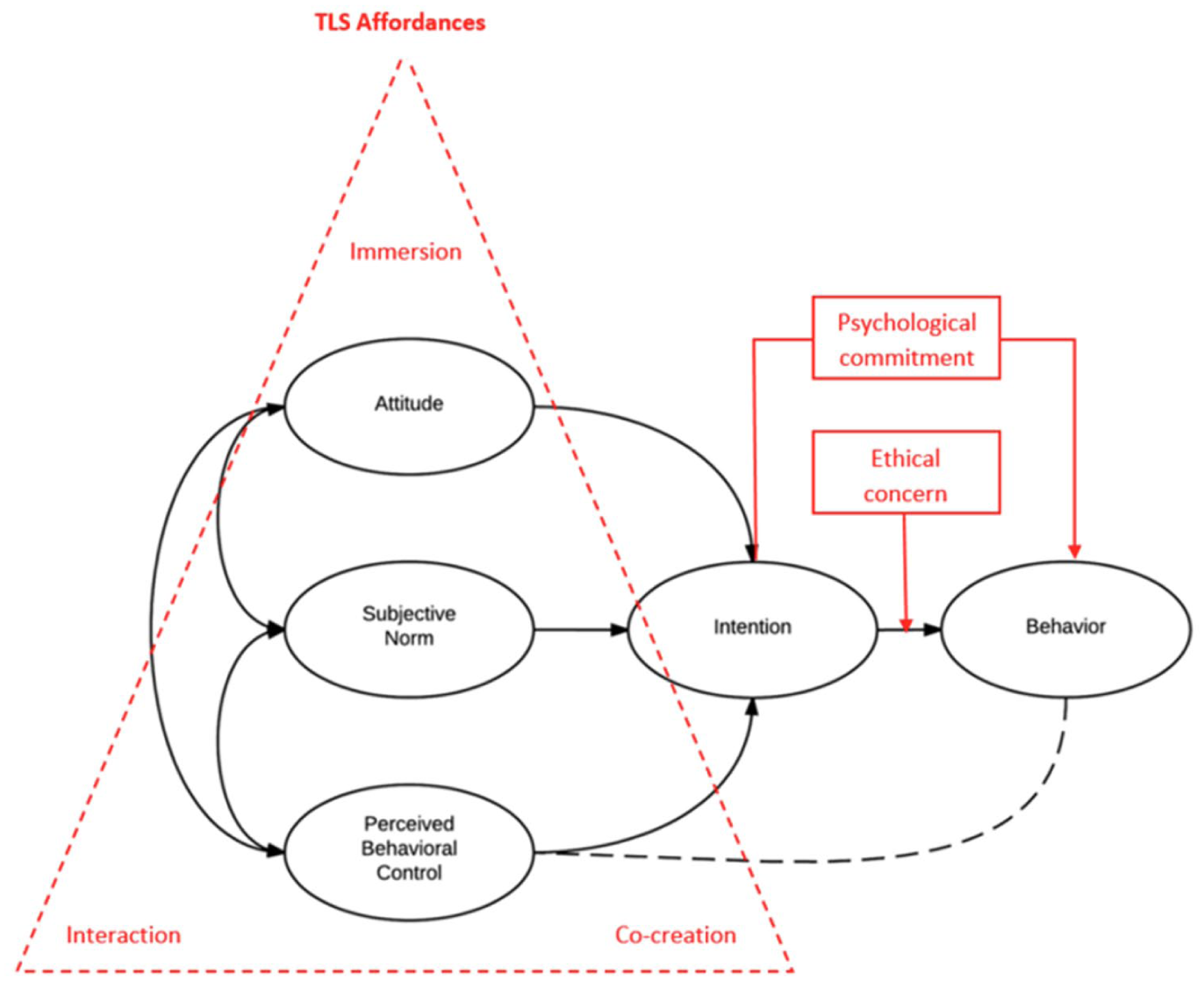
Integrated TPB and affordance frameworks in the context of TLS.
Mapping Reconceptualised Constructs to TPB.
Theoretical Contributions – Positioning relative to Prior Literature.
Psychological Commitment as Qualitative Mediator of Intention-Behaviour Translation
A major theoretical insight from this study involves the mediating role of psychological commitment in overcoming the intention-behaviour gap, a persistent challenge in TPB research (Hassan et al., 2016). While prior TPB research has emphasised planning and perceived control as gap-bridging mechanisms, this study identifies psychological commitment, understood as emotional readiness, personal obligation, and preparatory engagement, as a distinctive mediating mechanism. Importantly, this mediation emerges qualitatively through participants’ narratives rather than through statistical testing. Participants described how sustained engagement with authentic, interactive live streams fostered emotional bonds and a sense of personal duty that motivated pre-travel investment (researching, learning, planning) and ultimate travel enactment. This finding extends TPB by illuminating the emotional and affective dimensions of intention-behaviour translation, dimensions that classical TPB models (with a focus on rational planning) would be less likely to predict. The mechanism is activated through affordances: the affordance of emotionally resonant content (authentic storytelling, participatory witnessing) enables participants to enact commitment through repeated, deep engagement. Unlike TPB’s emphasis on extrinsic planning or self-efficacy, psychological commitment emerges as intrinsic emotional investment, shaped by interactions with affordance-rich TLS environments.
Unlike prior TPB research which emphasises planned behaviour and rational intention-behaviour translation, this study demonstrates that psychological commitment, which emerges through emotional readiness and social attachment enabled by TLS affordances, bridges the intention-behaviour gap through affective, embodied engagement. This extends TPB by incorporating the emotional, relational dimensions of behaviour change that have been under-theorised in previous applications.
Dual Attitude Formation: Beyond Unidirectional Attitude Change in Classical TPB
Traditionally, TPB assumes a unidirectional trajectory for attitude formation, perceiving it as stable and unidirectional (Conner & Armitage, 1998). Our findings from TLS contradict this assumption, revealing what we characterise as ‘dual attitude effects’ in which immersive and interactive TLS affordances evoke simultaneously positive and negative appraisals. Participants’ experiences show that TLS’s realism and emotional resonance build destination appeal and attachment, while oversaturation or perceived commercialisation generated scepticism, boredom, or deterrence. Rather than sequential attitude shifts (from negative to positive to behavioural intention), participants described oscillating, competing attitudes, such as excitement co-existing with saturation, attraction coexisting with concern about authenticity. This ambivalence, documented in consumer research (e.g., Priester & Petty, 1996) yet absent from conventional TPB models (Zhang et al., 2024), demonstrates that attitudes within TLS are inherently dynamic and context-sensitive. The mechanism is affordance-dependent: the same affordance (detailed visual preview) that generates positive attitudes can, through repeated activation, generate negative attitudes (saturation). This dual effect demonstrates that TLS reshapes not only the strength of attitudes but their structure, generating competing evaluations that classical TPB’s unidirectional model cannot fully capture. Unlike classical TPB, which assumes unidirectional attitude formation, this study demonstrates that TLS affords simultaneous positive attraction and content saturation, generating ambivalent intentions. This extends TPB by showing that attitudes in digital environments are fundamentally dynamic, shaped by affordances that enable both motivation and constraint.
Grounding Affordance Theory in Tourism Decision-Making: Operationalising User-Enacted Possibilities
This study provides a nuanced demonstration of how affordances, which are understood as relational possibilities enacted through user-technology interaction, operate within and actively shape the psychological mechanisms central to tourism decision-making. Rather than fundamentally extending or reconceptualising affordance theory, this work grounds affordance theory in specific decision-making contexts, illuminating how user-enacted possibilities acquire psychological and behavioural significance. The core finding is that affordances do not merely provide information or enable action in an abstract sense; they actively reshape how attitudes form (through immersive, emotional involvement), how social validation operates (through synchronous, distributed interaction), how perceived control is experienced (through transparency and real-time guidance), and how commitment emerges (through emotional engagement). By tracing how affordances are enacted and experienced in relation to these psychological processes, the study reveals the situated, relational character of affordance activation in digital tourism. Unlike earlier tourism applications of affordance theory that reduced affordances to feature lists (Gössling, 2021; Tussyadiah, 2020), this work demonstrates affordances as dynamic mechanisms whose impact depends on participant interpretation, repeated activation, and contextual alignment with participant needs. This represents not a fundamental reconceptualisation of affordance theory but a deepening of its application to tourism decision-making, showing how technological possibilities acquire psychological meaning through enactment. While empirical work does convincingly demonstrate how specific TLS affordances intersect with tourists’ decision processes, the current wording reads somewhat broader than what the study actually evidences. Rather than extending affordance theory fundamentally, this study demonstrates how user-enacted affordances operate within, and help to shape, key psychological mechanisms of tourism decision-making.
Multilayered Subjective Norms
In addition to these core extensions, the study illuminates how subjective norms in TLS are fundamentally multilayered and concurrent rather than monolithic. Conventionally, TPB treats social pressure as derived from identifiable “significant others” operating in isolation (Ajzen, 1991). Within TLS, normative influences include parasocial relationships with hosts (McLaughlin & Wohn, 2021), collective validation from digital communities, and reinforcement from personal networks function, all operating simultaneously, sometimes in tension. This finding represents a contextual illumination of how TLS environments afford new forms of social validation rather than a fundamental reconceptualisation of TPB’s norm construct. However, the mechanism is important: the affordances of distributed visibility, synchronous interaction, and host curation enable what participants experience as credible, multifaceted social validation, operating at scales and speeds impossible in pre-digital contexts.
Enhanced Perceived Behavioural Control Through Affordance-Enabled Transparency
Similarly, the study reveals that perceived behavioural control in TLS contexts is profoundly shaped by affordances for real-time information access, expert guidance, and logistical problem-solving. The mechanism is that these affordances do not merely increase available information but actively reshape participants’ sense of their own capacity to undertake travel. Unlike classical TPB’s emphasis on self-efficacy 9internal perception of capability), TLS environments afford situational, relational control, i.e., the capacity to overcome barriers through interaction with platform affordances. This extends TPB by showing that behavioural control is not solely internal but dynamically constructed through interaction with affordance-rich environments.
Ethical Dimensions as Moderators of Psychological – Behavioural Processes
Finally, the study reveals those ethical considerations (authenticity preservation, sustainability concerns, community benefit) function as moderators in the attitude-intention-behaviour pathway. Traditional TPB gives limited attention to how moral or ethical concerns might override positive attitudes or constrain behavioural intention. In the TLS context, participants demonstrated that awareness of overtourism, commercialisation, or privacy violations demonstrably reshaped travel intentions, sometimes leading to active avoidance despite positive attitudes toward destinations. This finding invites expansion of TPB’s scope to account for contemporary ethical concerns in digital tourism, recognising that behaviour is shaped not only by individual psychological factors but by broader moral and sustainability commitments.
Conclusions
This study examined how travel live streaming (TLS) relates to tourist decision-making and responsible tourism through an integrated lens of TPB and affordance theory. The analysis indicates that TLS shapes tourism in non-linear ways: it can both encourage and substitute for physical travel, reconfigure social influence, help users navigate practical barriers, and foster psychological commitment, while ethical concerns and saturation sometimes temper these effects. Across five themes, the study addressed its core questions as follows. TLS appears to shape attitudes through immersive and discovery affordances that let users enact vivid, emotionally charged, and repeatable virtual exploration, generating enthusiasm but also, at times, substitution and saturation. TLS restructures subjective norms by enabling multilayered social validation (through hosts, peer networks, and online communities) that participants actively co-create via sharing, commenting, and real-time interaction. TLS affordances for cost-free immersion, real-time guidance, and transparency help participants enact greater perceived behavioural control over financial, logistical, and safety barriers, and sometimes enable alternative forms of engagement when travel is not feasible. Psychological commitment emerges as an affective, emergent mechanism: sustained, emotionally resonant engagement with authentic streams appears to foster readiness, obligation, and preparatory behaviours that help some intentions carry through to action, while authenticity, sustainability, and community concerns sometimes moderate or override this trajectory. The findings offer several practice-oriented implications for tourism stakeholders, platforms, and policymakers. Prioritising authenticity, transparency, and community-centred storytelling can help build trust and harness immersive content without tipping into over-commercialisation. For sustainable tourism, TLS can be used to spotlight lesser-known sites and champion eco-friendly behaviours, provided exposure is calibrated to avoid overtourism and unrealistic expectations. Integrated digital strategies that combine immersive content with carefully designed e-commerce and interactive guidance may support both short-term conversion and longer-term loyalty.
For managers and policymakers, the results underline the importance of content guidelines and platform governance that protect privacy, signal sponsorship clearly, and encourage community benefit-sharing to align TLS practices with sustainable tourism goals. TLS can help reduce informational and social barriers for marginalised travellers and support more inclusive tourism, but care is needed to avoid reproducing inequities through overexposed destinations, exploitative representations, or uneven benefit distribution.
Study Limitations and Future Research
This research presents some limitations. First, generalisability is constrained by the cross-sectional, qualitative design, pointing to a need for longitudinal or quantitative work to examine the durability of effects. Second, the focus on Chinese digital ecosystems curtails transferability to other sociotechnical contexts, highlighting the need for studies in emerging and distinct markets. Third, participants were mainly successful converters of intention to action, potentially overlooking deterrents faced by non-travellers. Furthermore, the qualitative approach is well-suited to unpacking complex, situated processes, but the strength, direction, and prevalence of these patterns across populations remain to be examined through longitudinal and quantitative designs. Overall, these limitations direct fruitful future research toward comparative studies across cultures, the use of complementary mixed methods, the exploration of variables like personality or values in intention-behaviour gaps, and the impact of TLS on broader fields like information systems, digital cultures, and social justice-oriented tourism research.
Footnotes

Ethical Considerations
Ethical approval was obtained from the Australian National University Human Ethics Office (Approval No. H/2024/0633).
Author Contributions
Funding
The authors received no financial support for the research, authorship, and/or publication of this article.
Declaration of Conflicting Interests
The authors declared no potential conflicts of interest with respect to the research, authorship, and/or publication of this article.