




Abstract
Environmental, Social, and Governance (ESG) management has become essential for evaluating corporate sustainability, gaining international recognition as a global standard. Despite increasing implementation, research on ESG in hospitality and tourism remains underdeveloped, primarily focusing on financial outcomes while neglecting theoretical development. This research aims to provide a comprehensive analysis and critical review of ESG concept, practices, and theories. This study addresses several unresolved research questions, including the distinctions between ESG and related concepts, the unique characteristics of ESG in these industries, and the application of theories in tourism ESG research. Through an in-depth review of the existing literature, case studies, and theoretical analysis, the research identifies current limitations and proposes directions for future tourism research on ESG. For example, further research is needed to integrate micro-, meso-, and macro-level theories to develop frameworks that effectively manage ESG impacts across various stakeholder groups and businesses in the hospitality and tourism sector.
Introduction
ESG practices have evolved from the foundations of sustainable management, becoming essential in assessing corporate sustainability and responsible management today. Since the 2000s, ESG has gained international recognition as a global standard for evaluating corporate sustainability. The establishment of the United Nations Global Compact (UNGC) and United Nations Principles for Responsible Investment (UNPRI) played a crucial role in embedding ESG considerations into global financial markets. In the 2010s, the Paris Agreement and Sustainable Development Goals (SDGs) underscored the significance of ESG principles. The standardization of ESG reporting and management—particularly within the financial sector—has significantly improved corporate transparency and accountability (Gillan et al., 2021). This trend is now spreading to the hospitality and tourism industries.
A growing number of hospitality and tourism corporations are voluntarily disclosing detailed ESG reports that encompass various critical aspects such as carbon emissions, waste management, workforce diversity, customer responsibility, board diversity, and anti-corruption efforts, thereby reinforcing transparency and accountability regarding sustainability (Alareeni & Hamdan, 2020). This trend reflects a heightened commitment to transparency and accountability in how businesses address sustainability challenges. Many hotels and airlines are proactively integrating low-carbon technologies and eco-friendly products into their operations to mitigate environmental concerns. Additionally, these companies are adopting socially responsible management strategies that aim to improve employees’ well-being, enhance customer satisfaction, and contribute positively to local communities. These efforts can include fair labor practices, community engagement, and ethical sourcing of products (Chen et al., 2022b; Lin et al., 2023). This shift signals a growing recognition that sustainable business models are integral to future success, particularly in tourism, where environmental and social impacts are directly intertwined with business operations (Lin et al., 2023; Su & Chen, 2020).
With the continued progression of industrial development, academic interest in ESG issues has steadily expanded (Sabirali, 2024). In the realm of business research, most research focuses on examining ESG practices from the standpoint of corporations or investors. These studies have primarily aimed to assess the effectiveness of ESG management, often linking corporate ESG disclosures to financial performance. A substantial body of research has consistently identified a positive relationship between a company’s commitment to ESG practices and its financial outcomes, including profitability, firm value, and stronger market positioning (Alareeni & Hamdan, 2020). In parallel, a growing body of research in the hospitality and tourism sectors have also examined the financial ramifications of ESG practices. Studies in these fields have explored how hotels, airlines, and other tourism-related businesses are impacted by their ESG commitments, often finding that sustainability initiatives can lead to improved financial performance, enhanced brand loyalty, and greater customer satisfaction (e.g., Chen et al., 2022b; Ionescu et al., 2019).
Despite the increasing focus on ESG in broader business and management fields, research on ESG within the hospitality and tourism sectors has remained comparatively underdeveloped (Su & Chen, 2020). While considerable progress has been made in understanding the financial benefits of sustainability practices in tourism, much remains to be explored in other critical areas, such as operational efficiency, employee engagement, and long-term competitiveness. Although ESG initiatives are adopted by hospitality and tourism businesses, existing research in these sectors has tended to examine ESG from a narrow perspective (Gürlek & Tuna, 2019). For example, Back (2024) explored conceptual issues about ESG and proposed future directions for tourism studies. However, the analysis lacked depth in addressing ESG from both theoretical and practical angles. Similarly, Legendre et al. (2024) conducted a bibliometric study focusing mainly on corporate social responsibility (CSR) rather than ESG. As a result, the theoretical foundation in the ESG area remains underdeveloped, highlighting the need for a thorough and critical review of ESG concepts, practices, and theories that bridge both theoretical and practical perspectives.
Further academic exploration is needed to deepen the integration of ESG into the broader hospitality and tourism research framework. Several key research questions remain unresolved, offering rich avenues for investigation. These include (a) what are the conceptual distinctions between ESG and related concepts such as CSR, creating shared value (CSV), and the principles for responsible investment (PRI)? (b) what are the unique characteristics of ESG practices within the hospitality and tourism industries? (c) how has research on ESG within hospitality and tourism evolved over time? (d) what theoretical frameworks have been applied to ESG research in these sectors, and how effectively have they been utilized? (e) what future directions should ESG research in hospitality and tourism pursue to advance theoretical development? Addressing these questions could significantly enhance both the practical and theoretical understanding of ESG in tourism and hospitality contexts.
This research aims to conduct a comprehensive analysis and critical review of ESG concept, practices, and theories as they apply to the hospitality and tourism sectors. Specifically, the study delves into key conceptual issues surrounding ESG, reviews the existing body of literature on ESG within these industries, analyzes practical challenges and cases, and explores theoretical considerations in ESG. By expanding the application of ESG theory in these fields, the study does not only contribute to a deeper understanding of the theoretical and practical development of ESG in hospitality and tourism, but it also provides a roadmap for future research aimed at advancing theoretical frameworks in this area.
ESG Definition and Characteristics
ESG refers to the evaluation of a company’s ESG practices by investors when building their investment portfolios (Matos, 2020). From a corporate standpoint, ESG encompasses how these environmental, social, and governance factors are embedded within business models. In essence, ESG functions as a framework for both companies and investors to assess sustainable practices through the lens of ESG considerations.
The concept of ESG is deeply rooted in the broader notion of “Sustainable Development,” introduced in the 1987 Brundtland Report, Our Common Future (WCED, 1987). The term ESG itself was first introduced in the 2004 report Who Cares Wins, published by the UNGC at the behest of then-UN Secretary-General Kofi Annan, with input from 20 major financial institutions (UN, 2004). Building on this foundation, the UN established the principles for responsible investment (PRI) in 2006, urging investors worldwide to integrate ESG considerations into their decision-making processes. In 2019, ESG gained considerable attention during the Business Roundtable’s annual meeting, where a new corporate purpose focused on stakeholder value was declared. By 2020, the World Economic Forum (WEF) underscored the importance of sustainability and stakeholder engagement, fueling discussions around stakeholder capitalism and ESG. Today, ESG issues have become a critical focus at both corporate and governmental levels, driven by the evolving demands of investors and consumers (see Figure 1).
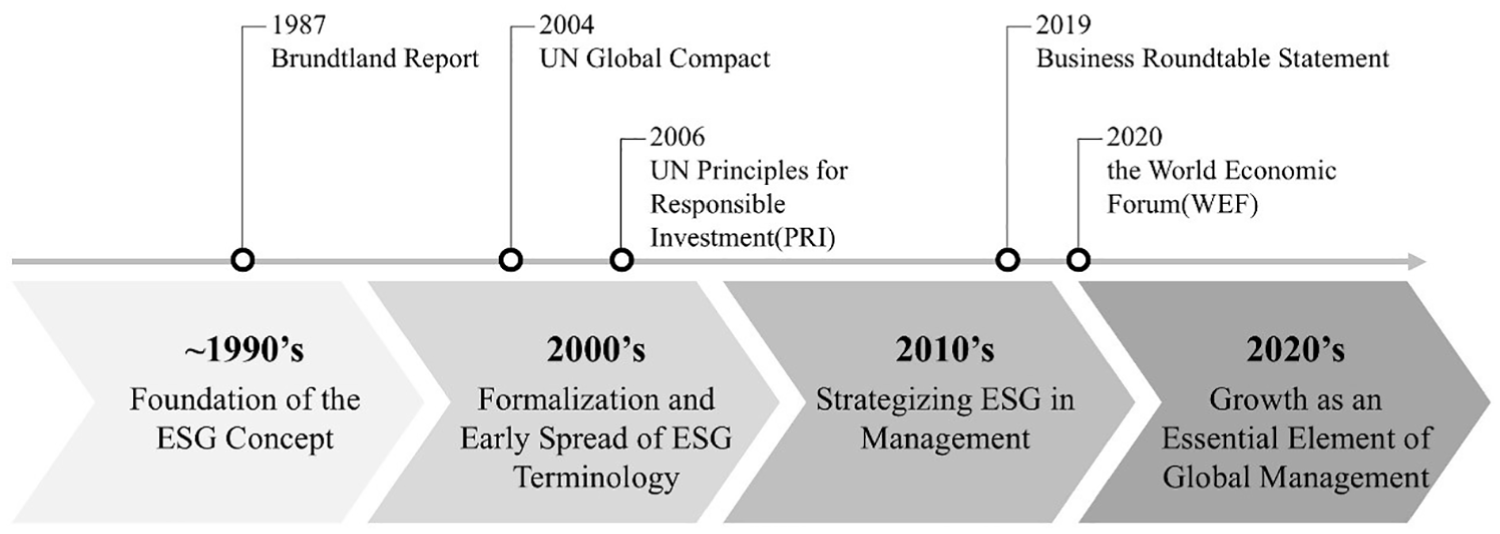
The evolution of the ESG concept.
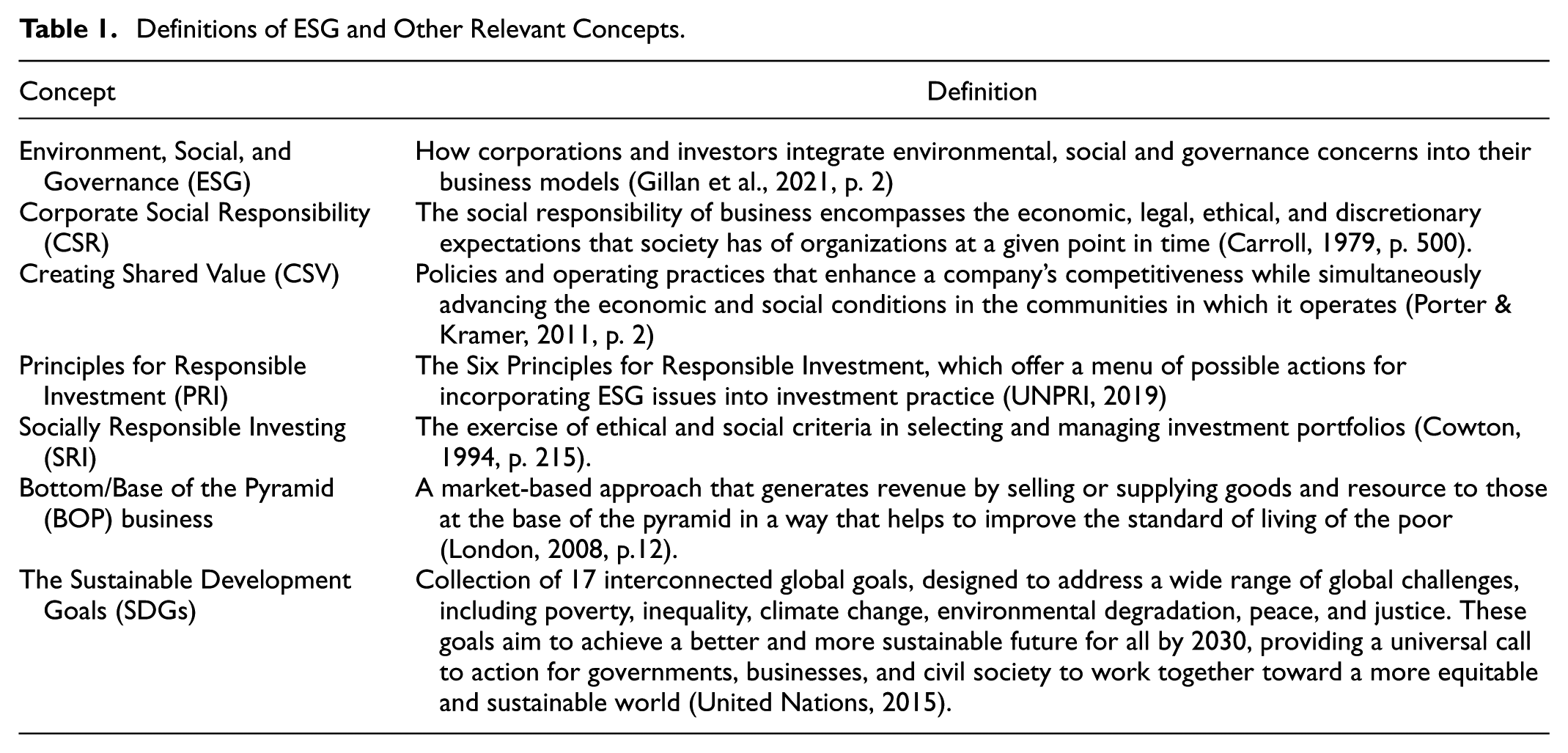
ESG is often interchanged with various sustainability-related concepts, such as CSR, creating shared value (CSV), principles for responsible investment (PRI), socially responsible investing (SRI), bottom of the pyramid (BOP), and SDGs. Importantly, ESG is an expanded concept derived from CSR, creating shared value (CSV), and socially responsible investing (SRI) (Back, 2024; Chen & Xie, 2022). To clarify these distinctions, the key concepts frequently associated with ESG are described below (see Table 1). CSR refers to philanthropic activities driven by external pressures, which are often not directly related to a company’s core business and tend to be abstract and disconnected from profitability (Khurshid & Snell, 2022; Rahardja, 2024). Creating Shared Value (CSV) offers a more concrete strategy in whereby companies address social issues through their core business activities, such as product and market redesign, value chain restructuring, and cluster development (Rahardja, 2024; Yoo & Kim, 2019).
Definitions of ESG and Other Relevant Concepts.
While CSR, socially responsible investing (SRI), principles for responsible investment (PRI), and SDGs aim to promote sustainability through non-financial values and broad development goals, ESG focuses on managing non-financial factors that support corporate sustainability. It facilitates the quantification and evaluation of corporate responsibility through specific performance indicators (Eccles et al., 2020; Gupta, 2021; Revelli, 2017; Von Wallis & Klein, 2015). As a result, ESG is incorporated into financial analysis, serving as a tool for investors to evaluate both performance (with a focus on long-term sustainability) and risk (Chen et al., 2022b; Legendre et al., 2024). However, unlike profit-oriented models such as creating shared value (CSV) and bottom of the pyramid (BOP), ESG does not include financial information, which makes its primary goal distinct from profit generation (Kim et al., 2024a). Furthermore, ESG provides a comprehensive approach that includes governance issues. Although the CSR framework addresses corporate social responsibilities, it falls short in effectively managing governance issues, which limits its practical implementation (Legendre et al., 2024; Shin et al., 2021). Corporate governance plays the most substantial role among ESG factors in determining credit ratings (Kiesel & Lücke, 2019) and is increasingly recognized as a crucial tool for maintaining financial stability (Aevoae et al., 2023). Therefore, ESG also distinctly includes governance issues, positioning itself as a comprehensive framework. Figure 2 illustrates the emergence of ESG and other sustainability-related concepts, their primary value orientations, and the frameworks used for their evaluation.
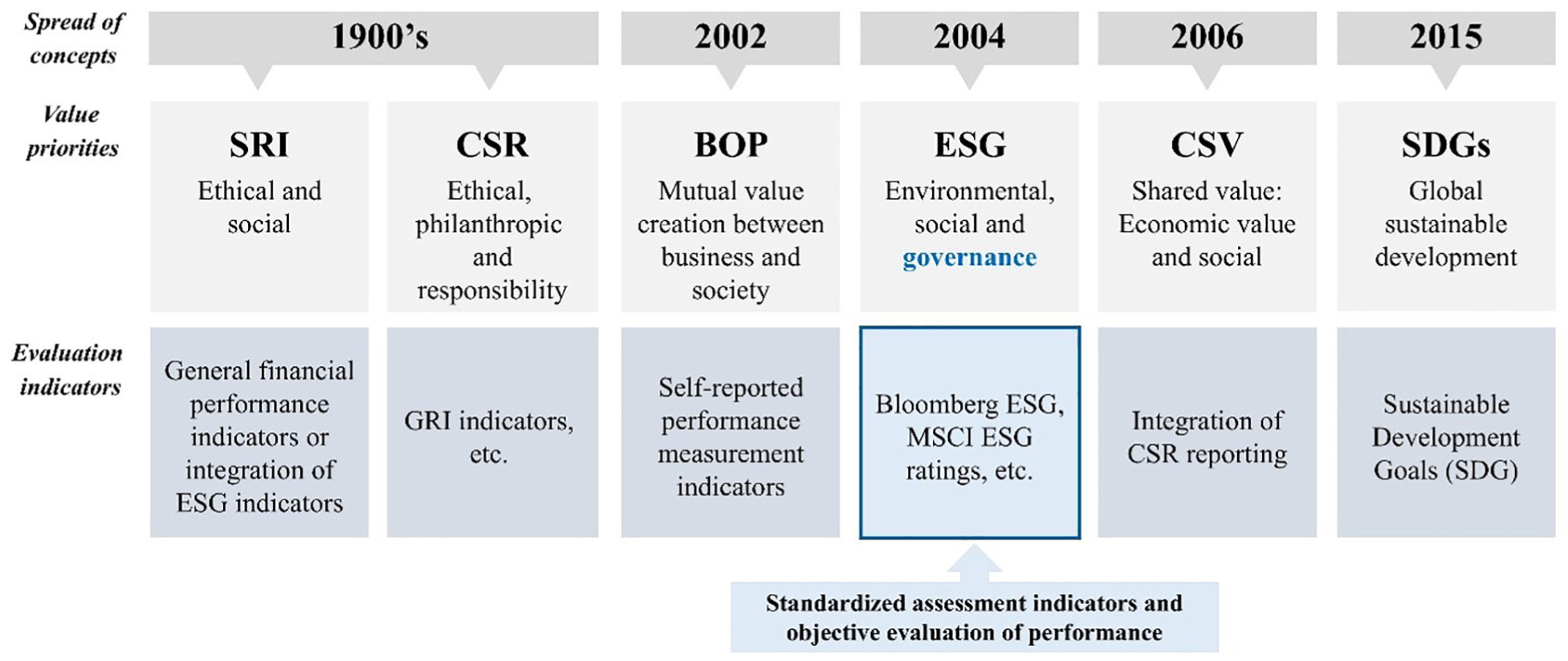
Characteristics of ESG and Other Related Concepts.
ESG goes beyond the traditional goal of maximizing shareholder value, requiring companies to consider the interests of a diverse group of stakeholders, including investors, consumers, suppliers, and communities. Porter and Kramer (2011) argued that corporations are not the only entities capable of delivering profitable solutions to social problems. Initially emerging from an investment perspective, ESG has since broadened its scope owing to interactions among investors, corporations, rating agencies, consumers, and governments. Although ESG discussions have mainly focused on private companies and financial institutions, they are increasingly permeating government and public-sector entities as well (Liu et al., 2024). In recent years, governments and international organizations have introduced regulations and policies to promote ESG. For instance, some governments have mandated ESG information disclosure requirements for private companies to encourage ESG management practices (Krueger et al., 2024). Therefore, the definition and conceptual characteristics of ESG may evolve to align with emerging social and industry trends surrounding its adoption.
Although ESG has become increasingly emphasized in mainstream policy and corporate management, its theoretical and practical foundations remain deeply embedded in the ontological and epistemological limitations of modern economics. This entanglement constitutes a structural constraint that prevents ESG from functioning as a fundamental response to socio-ecological crises, as it anchors ESG to a paradigm that marginalizes non-economic values and systemic transformation. As Fuchs (2023) argues, modern economics, grounded in Cartesian mechanistic thinking, tends to reduce complex social and environmental realities to quantifiable and calculable variables. This paradigm, under the guise of value neutrality, defines problems primarily through the lens of economic growth and proposes solutions accordingly (Fuchs, 2023). As a result, ESG-related research often conceptualizes human actors as passive entities (e.g., He et al., 2024; Inoue & Lee, 2011; Nicolau, 2008; Kennedy Nyahunzvi, 2013; Tamajón & Aulet, 2013). Such approaches marginalize non-market values—such as care, community, and ecological balance—and exclude them in the name of scientific objectivity. The prevailing emphasis on measurable indicators and financial stability in ESG practices reveals a structural narrowing of the sustainability concept. To serve as a genuine instrument for sustainability, ESG must undergo a fundamental ontological reconfiguration.
For instance, degrowth advocates for an equitable downscaling of production and consumption aimed at restoring ecological balance (Schneider et al., 2010), while the care economy emphasizes relational responsibility and ecological interdependence (Eisler, 2008). Sufficiency promotes long-term sustainability through the moderation of resource use (Jungell-Michelsson & Heikkurinen, 2022), and the circular economy seeks to restructure resource flows toward regenerative systems (Velenturf & Purnell, 2021). The commons and community economies, respectively, propose collective transitions in resource governance and systems of production and distribution (Ostrom et al., 1994; Schlager, 2002). These frameworks offer a theoretical foundation for ESG to move beyond market-centric paradigms and orient itself toward socio-ecological justice.
Ultimately, if ESG frameworks remain grounded in growth-oriented economic theories, there is a risk that sustainability becomes instrumentalized and subordinated to short-term profit imperatives In contrast, alternative paradigms such as degrowth, the care economy, sufficiency, the circular economy, the community economy, and the commons offer new normative frameworks grounded in interdependence, ecological ethics, and relational value systems—challenging the conventional view of humans as self-interested and autonomous economic actors. These paradigms make it possible to reconceptualize ESG as a more ethical and integrated value framework. The future of ESG, therefore, lies not in technical optimization or governance reform alone, but in a more fundamental transformation of the ontological and ethical assumptions embedded in modern economics. Such a reorientation is essential if ESG is to function as a robust framework capable of addressing the root causes of socio-ecological crises and advancing the substantive realization of sustainability.
Recent ESG Practical Issues in the Hospitality and Tourism
Historically, the tourism industry has faced criticism for its negative environmental and social impacts, including climate change, ecosystem disruption, waste generation, commercialization, and cultural conflicts. These concerns have prompted persistent calls for sustainable development (De Grosbois, 2012). Recently, ESG practices have emerged as essential tools for enhancing the resilience of hospitality and tourism businesses, ensuring continuity and providing comprehensive value assessments. Various stakeholders, such as governments, corporations, and tourist destinations, are adopting ESG practices to mitigate tourism’s negative impacts and provide transparent information to consumers.
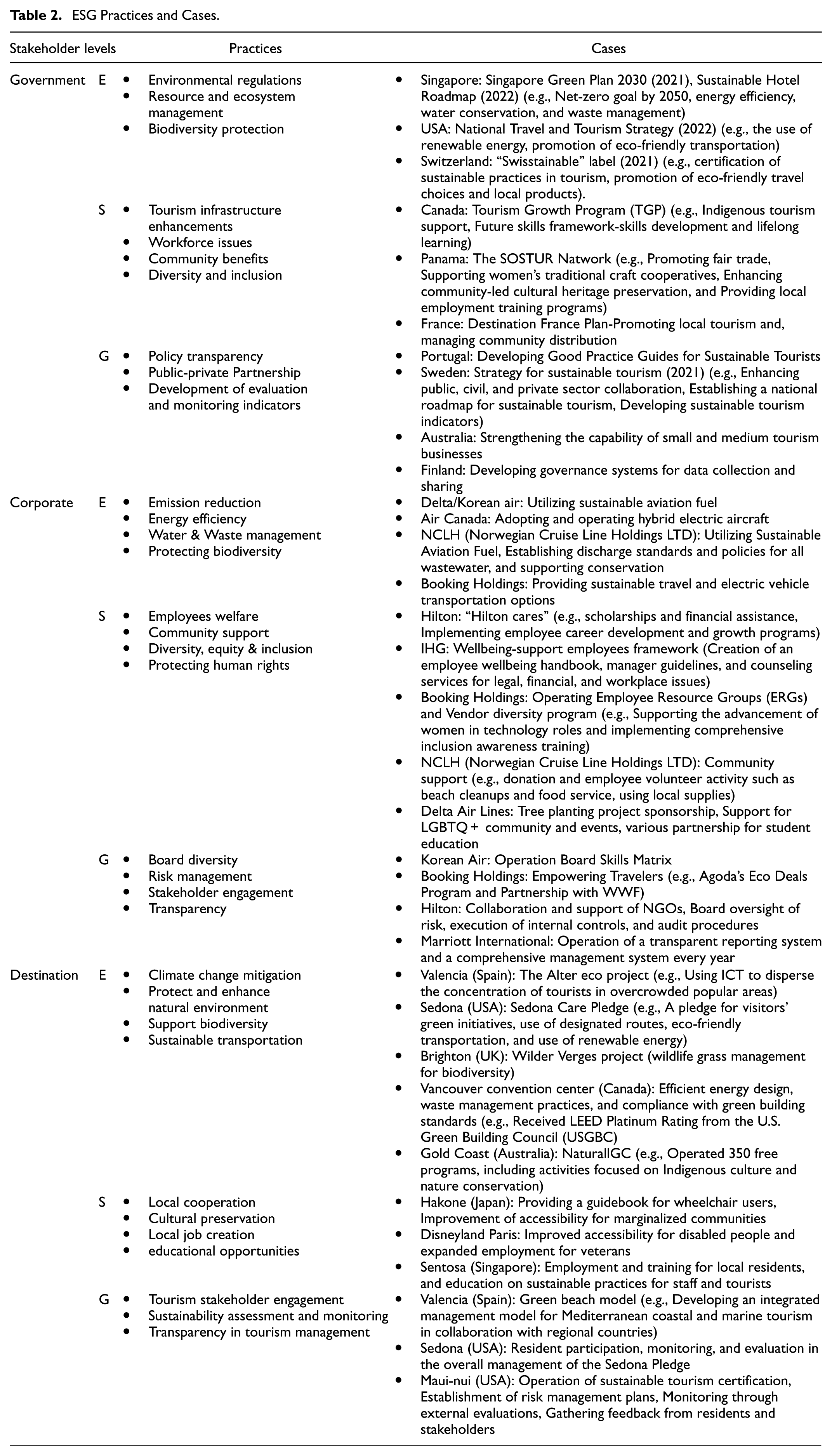
This study examines these trends by reviewing ESG practices implemented at the government, corporate, and destination levels (see Table 2). Governments are setting the overall direction for the industry through policies and support systems, while corporations are advancing ESG goals in areas such as carbon reduction, employee welfare, and supply chain ethics. At the destination level, ESG practices are being carried out in collaboration with local residents and stakeholders, reflecting the unique characteristics of each region.
ESG Practices and Cases.
However, these efforts are primarily concentrated on environmental sustainability and are often presented through quantifiable indicators and tangible activities. Except for a few major corporations, the social and governance aspects of ESG tend to be treated as secondary, with limited information disclosure and often no measurable outcomes to substantiate them (De Grosbois, 2016). Furthermore, the complex structure of the tourism industry, comprising a diverse range of business sizes and stakeholders and deeply embedded within environmental and social contexts, is frequently overlooked in these implementations (Aldebert et al., 2011; Beritelli, 2011; Dogru et al., 2022; Haiying et al., 2018).
As a result, the tourism industry faces increasingly complex challenges regarding ESG implementation. One major concern is the growing demand for authenticity in ESG efforts. When eco-friendly measures reduce consumer convenience, skepticism about the sincerity of sustainability initiatives may arise. For example, hotel programs with minimal environmental impact can provoke criticism of greenwashing (Papagiannakis et al., 2024). This issue stems not only from institutional weaknesses but also from a calculative mindset that treats ESG as a strategic tool rather than a moral obligation (Becker, 2012). Such an approach neglects ESG’s ethical core, specifically the responsibility to consider the effects of organizational actions on others, communities, and the environment (Fennell, 2019).
This ethical problem is also rooted in the structural characteristics of the tourism industry. Tourism has evolved within an ethically asymmetrical context where the pursuit of individual pleasure often outweighs ecological or collective values. Additionally, tourism continues to be shaped by a frontier ethic that justifies unlimited development and fosters anthropocentric views, reducing nature to a manageable resource. These shortcomings diminish ESG to a strategic choice, undermining shared moral responsibility and ethical reflection within the sector (Macbeth, 2005). Achieving authentic ESG in tourism requires redefining it as an ethical commitment rooted in a reconfigured human–nature relationship.
Furthermore, ESG implementation demands not only global cooperation but also context-specific strategies that uphold ethical accountability. Global initiatives such as the UN Global Compact, UNPRI, the Paris Agreement, and the SDGs have advanced ESG adoption. In tourism, the UNWTO has promoted standardized reporting frameworks. However, the industry’s fragmented structure, comprising transport, accommodation, food and beverage, attractions, and support services, makes uniform guidelines difficult to apply (Back, 2024; Lin et al., 2023). ESG strategies that fail to reflect local contexts risk diffusing responsibility and weakening ethical obligations among stakeholders. Consequently, efforts often lack coherence and fail to achieve transformative outcomes. Bäckstrand (2006) similarly warned that poorly structured multi-stakeholder partnerships undermine both institutional effectiveness and ethical legitimacy. Therefore, ESG approaches must combine feasibility with fair accountability and be anchored in a community-based ethical foundation.
The complexity of governance structures also poses a critical challenge to ESG coordination in tourism. Unlike other industries, tourism relies heavily on government agencies and local public bodies such as Destination Management Organizations (DMO), which play central roles in policymaking (Song et al., 2013). Given the industry’s dependence on regional resources and SMEs, public support through funding, infrastructure, and clear guidelines is vital for ESG participation and sustainable development (Handoyo & Anas, 2024). At the destination level, ESG success hinges on collaboration between public and private sectors, with public–private partnerships serving as key mechanisms. However, structural coordination alone is insufficient without ethical deliberation. ESG must be understood not merely as strategic planning, but as an ethical practice that requires multilevel cooperation and shared accountability across all stakeholders.
Ultimately, tourism must implement ESG amid structural complexity, anthropocentrism, ethical deficiencies, and diffused responsibility. These conditions indicate that ESG should be pursued not as a tactical approach but as a multidimensional process grounded in ethical enactment and shared values. Its environmental, social, and governance pillars must reflect the sector’s multilayered structure and stakeholder dynamics. As ESG practices evolve amid regulatory pressure, technological change, and rising expectations (Khamisu et al., 2024; Serafeim, 2020), a robust research foundation is needed to address the industry’s varied contexts and sub-sectors. Figure 3 outlines these ESG challenges and maps key stakeholder roles. Ongoing academic attention is essential to ensure these issues are adequately addressed.
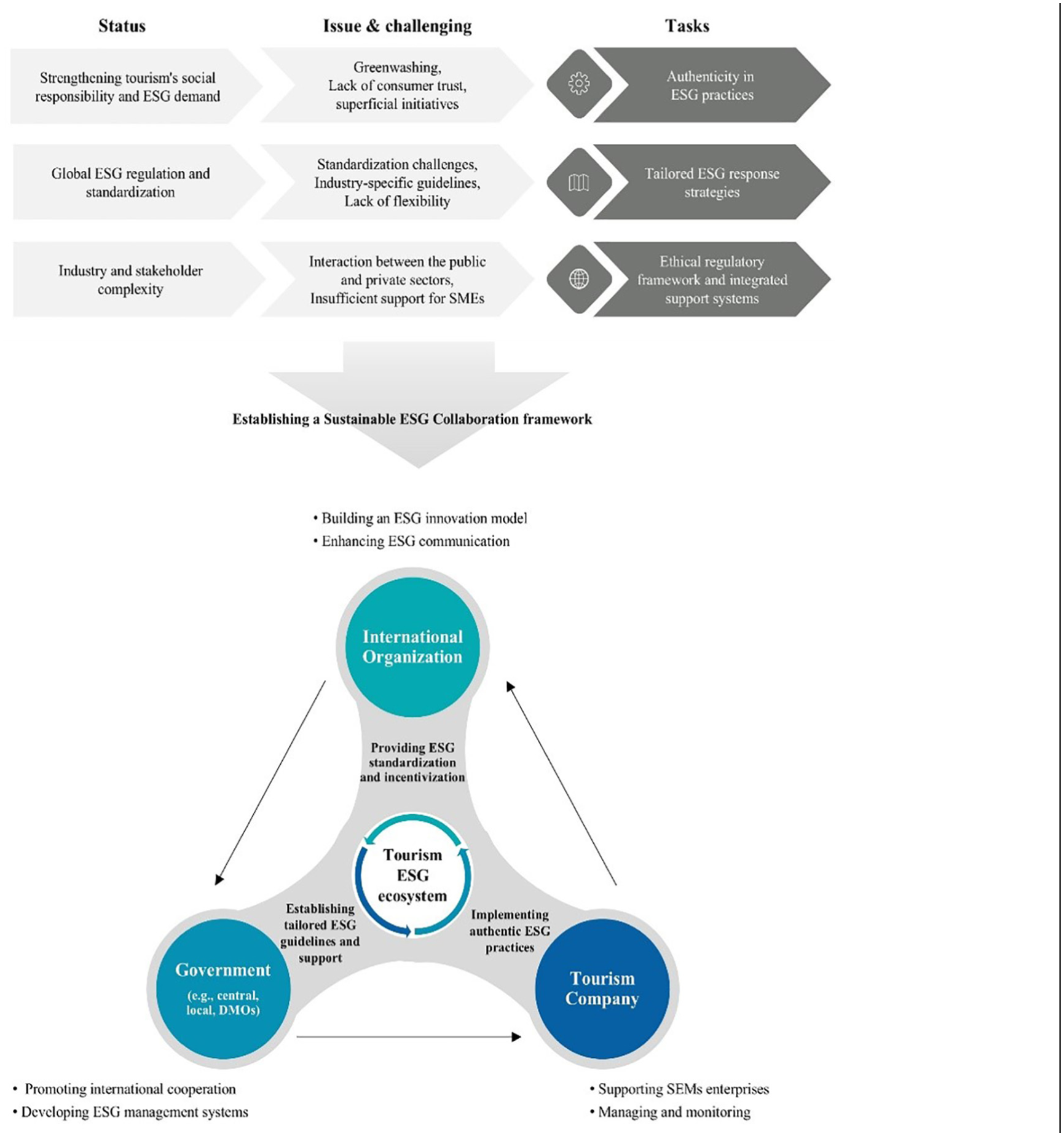
Implementation Challenges of ESG and Sustainable Collaboration Frameworks 4. ESG in Hospitality and Tourism.
Recent research on ESG in hospitality and tourism has grown significantly into various subfields including restaurants (Kim & Lee, 2020; Lee et al., 2024; Shin et al., 2024), hotels (Chen et al., 2022a; He et al., 2024; Park & Shin, 2024), and airlines (Sim & Kim, 2024). ESG is not merely a managerial strategy; is also closely tied to issues of social responsibility, ethical judgment, and value orientation in tourism, all of which require rigorous theoretical approaches. To examine current trends in ESG research within the hospitality and tourism domain, a systematic review was conducted.
The databases Scopus, Web of Science, and SAGE Publications were searched using the keywords “Environmental, Social, Governance” and “ESG.” The search was restricted to titles, abstracts, and keywords to ensure relevance. The search and selection process adhered to the PRISMA (Preferred Reporting Items for Systematic Reviews and Meta-Analyses) guidelines (Moher et al., 2009), a widely recognized framework for systematically identifying, synthesizing, evaluating, and integrating existing research. This process initially yielded 560 studies, which refine to 41 peer-reviewed Q1 journals articles in English after excluding those related to CSR and Socially Responsible Investing (SRI; see Figure 4).
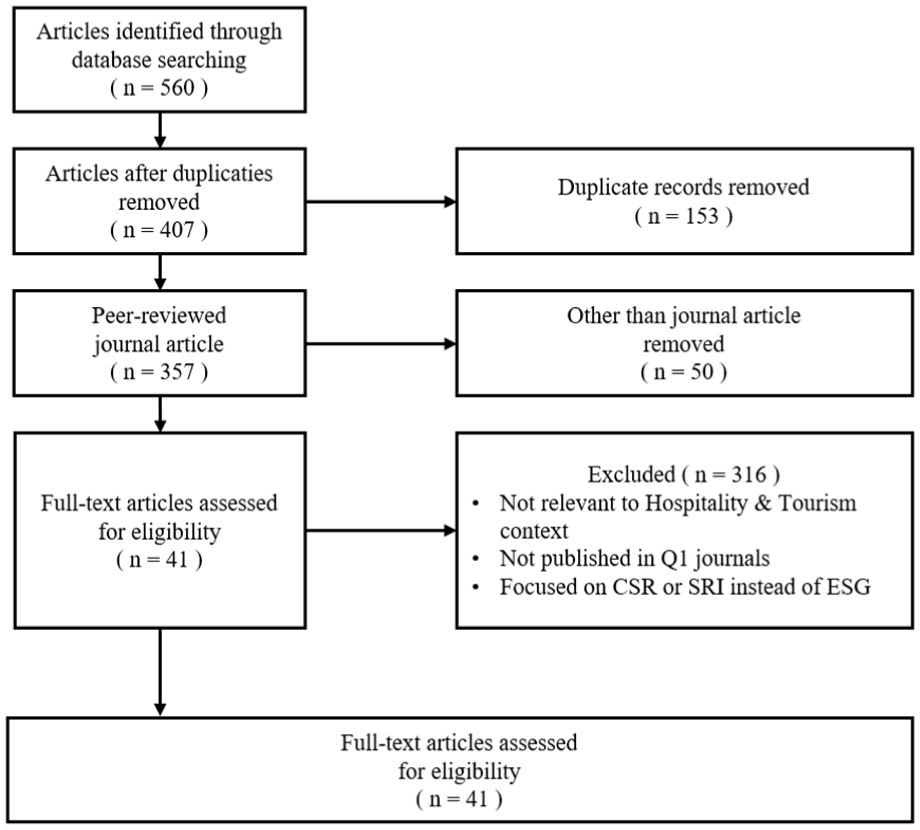
The PRISMA flowchart.
The systematic review reveals that ESG research in the tourism predominantly focuses on management and financial performance (43.9%). Specifically, a significant portion of the literature examines the impact of ESG practices on the managerial or financial performance (Arici et al., 2024; Bodhanwala & Bodhanwala, 2022; Chen et al., 2022a; Ionescu et al., 2019; Kim & Lee, 2020; Lin et al., 2024b; Shin et al., 2024) or their influence on firm value (e.g., Da Hyun et al., 2024; Dogru et al., 2022; Shin et al., 2024). Other key areas of focus include organizational and corporate strategies (24.4%), tourist and consumer behavior (19.5%), ESG indicator development (7.3%), and miscellaneous topics (4.9%).
Alongside the existing CSR literature, ESG research in the tourism sector remains largely confined to theoretical frameworks that conceptualize human and physical resources, as well as surrounding stakeholders, as tools for achieving financial objectives (e.g., instrumental stakeholder theory, resource-based theory, agency theory). De Grosbois and Fennell (2022) similarly criticized CSR reporting in tourism as serving more as a strategic communication tool than as a driver of substantive change. While the potential for ESG activities to generate positive financial performance remains a significant concern for policymakers, investors, and stakeholders (Bofinger et al., 2022), assessing economic sustainability continues to be a valid line of inquiry.
However, the discourse on sustainability within ESG extends beyond economic considerations. When interpreted through alternative economic lenses, such as degrowth, the care economy, or the circular economy, ESG can be framed to emphasize the mutual reinforcement of financial outcomes and non-financial value creation (Xie et al., 2019). ESG disclosures, in this context, can function as signals of an organization’s ethical legitimacy to stakeholders, thereby facilitating a virtuous cycle of environmental and social sustainability (Dögl & Holtbrügge, 2014; Lee et al., 2022). In this way, ESG calls for corporations to act as responsible agents within the socio-ecological system. Future research should therefore pursue integrative analyses of both financial and non-financial outcomes generated by ESG initiatives.
Several studies have explored the role of ESG in shaping tourist behavior and decision-making (Choi & Choi, 2024; Hassan & Meyer, 2022; Kim et al., 2023; Kim et al., 2024b; Park & Shin, 2024; Sim & Kim, 2024) and how employees respond to ESG initiatives and related organizational changes (Kim et al., 2024a). Emerging areas of interest highlight leadership (Zheng et al., 2025), branding (Yu et al., 2025), and employee perceptions (Li et al., 2025), underscoring the growing importance of strategic ESG adoption by managers.
Additionally, some studies delve into the specific components of ESG and their contextual applications. For example, Camilleri (2025) developed standardized ESG component lists tailored for the restaurant industry, while Wang and Zhang (2024) examined the relationship between digital innovation and ESG performance from the perspective of SMEs. In terms of methodologies, quantitative approaches dominate the field, accounting for 78% of studies. By contrast, qualitative approaches make up only 4.9%, and mixed-method studies remain underutilized. (See Table 3.)
Major Research on ESG in Tourism and Hospitality.
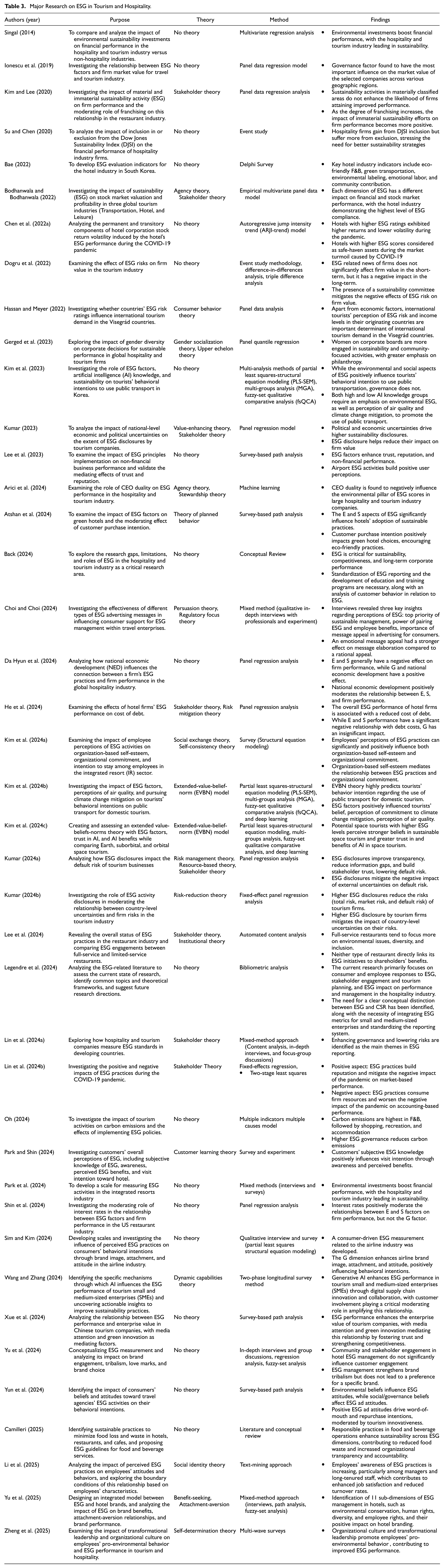
Despite its growing prominence, ESG research in the tourism industry faces several limitations. One of the most critical issues is the lack of theoretical foundations in existing studies. Among the selected studies, half (50.0%) were conducted without a specific theoretical framework, which limits their academic rigor and contribution. Furthermore, existing critical review research on ESG in tourism and hospitality often adopts narrow, non-theoretical perspectives. For example, Back (2024) explored conceptual issues related to ESG and proposed directions for future research in tourism studies. However, this work did not comprehensively address ESG issues from both theoretical and practical perspectives. Similarly, Legendre et al. (2024) conducted a bibliometric analysis of CSR and ESG research within the hotel and tourism sectors, but their focus leaned heavily on CSR rather than ESG. Both studies lack a substantive focus on theoretical development for ESG, offering only limited contributions to theory building and advancement.
This underdevelopment of theoretical foundations underscores the need for a more thorough and critical review of ESG research that bridges theoretical and practical perspectives. Such a review should address the gaps in existing methodologies, explore key theoretical issues, and provide actionable insights to guide future research agendas. By integrating these dimensions, a comprehensive review could advance both theoretical understanding and practical applications in ESG research within the tourism industry.
A Review of Theories Adopted in ESG Research and Future Research Directions
Understanding ESG requires conducting in-depth analyses through systematic theoretical approaches. Despite the growing volume of ESG research, its theoretical foundations remain relatively underdeveloped (Back, 2024). While various theories provide a foundation for understanding and advancing ESG research, no consensus has emerged on the most suitable theoretical framework as classifications often vary by research objectives (Frynas & Yamahaki, 2016). This study aims to adopt a reflective perspective on existing ESG discourse particularly that which is grounded in the growth-oriented values of traditional economics, and to offer a critical review of current ESG theories alongside alternative paradigms. The tourism and hospitality sector, where individual hedonistic tendencies are especially pronounced, presents a unique context in which ascetic discipline is not readily applicable. Tourism practices frequently prioritize the hedonistic goals and values of tourists while neglecting value orientations more conducive to sustainable choices, such as altruistic and biocentric values (Steg et al., 2014).
Therefore, this study highlights the importance of analyzing sustainability in the tourism and hospitality industries through a broadened ESG framework grounded in ethical and ecocentric values. To support this objective, the study adopts the theoretical framework proposed by Tomassini et al. (2024), which operates across micro, meso, and macro levels. This framework addresses sustainability challenges, including the circular economy, and contributes to fostering systemic change in the tourism and hospitality sectors (Cavagnaro & Curiel, 2022; Vanhamäki et al., 2020). At the micro level, practice theory provides a sociological framework to understand the “micro” practices of tourists’ behaviors, their origins, and their evolution (de Souza Bispo, 2016; Lamers et al., 2017; Sundqvist, 2023). At the meso level, network theory offers insights into the structure of supply chains and the flow of information, enabling a deeper understanding of the tourism industry as a dynamic, interactive process (Baggio & Fuchs, 2018). At the macro level, complexity theory explains the tourism industry as a complex adaptive systems shaped by interactions with broader socio-ecological forces and external pressures (Tomassini et al., 2024).
Tomassini et al. (2024) thus offer a holistic analytical and theoretical framework for achieving circular tourism development. Grounded in ecocentric and ecological perspectives, this approach conceptualizes ESG issues as dynamic systems embedded in social contexts, thereby facilitating a shift away from short-term, growth-oriented perspectives (Corvellec et al., 2020; Schröder et al., 2019; Tomassini & Cavagnaro, 2022). It helps identify diverse sustainability pathways within the nonlinear systems of tourism (Farsari et al., 2011).
Building on a reflexive stance toward growth-oriented economic perspectives and the approach proposed by Tomassini et al. (2024), this study aims to critically analyze existing ESG-related theories and propose research agendas across multiple levels of analysis. In particular, by disaggregating stakeholder-level ESG practices at the micro level, specifically among travelers, employees, and local residents, this research seeks to explore how diverse actors both contribute to and are affected by ESG initiatives. Through this approach, the study endeavors to strengthen the theoretical foundations of ESG research and expand its practical relevance within the tourism and hospitality sectors.
Micro-level analysis—Travelers’ perspectives
At the micro level, previous studies have primarily focused on understanding the psychological foundations and behaviors related to ESG practices, highlighting the theoretical and research needs to facilitate changes in tourism practices. These changes affect the behaviors of tourists, employees, and local residents. The exploration of micro-level theories particularly offers valuable insights into how the dominant pleasure-driven tourism practices can be coupled with deeper, reflective, and systematic transformations, thus guiding their evolution.
Traditionally, the theory of planned behavior (TPB) and value-belief-norm (VBN) theory widely recognized frameworks for explaining travelers’ pro-environmental or responsible behaviors (e.g., Megeirhi et al., 2020). In the context of ESG/CSR studies, the theory of planned behavior has been employed to understand how green management in hospitality and tourism businesses influence customer behavioral intentions (e.g., Lee et al., 2010; Luong, 2023). Conversely, the value-belief-norm theory applied in sustainable tourism to predict tourists’ sustainable behaviors, including mobility choices and eco-friendly accommodations selection (Han, 2015; Landon et al., 2018; Lind et al., 2015). More recently, Kim et al. (2024b) extended the value-belief-norm model to demonstrate how tourists’ perceived ESG influence their use of public transportation. Another study by Kim et al. (2024b) investigated how perceived ESG influences potential space tourists’ sustainable behaviors within the value-belief-norm model. Meanwhile, Park and Shin (2024) explored how consumers’ perceptions of ESG influence benefit recognition and visit intentions to ESG-oriented hotels, using customer learning theory.
However, most theories applied in research on tourists and ESG issues primarily focus on how tourists perceive ESG and how these perceptions affect their behavior, which is insufficient for fully explaining the external influences on tourists’ ESG-related behaviors. For instance, communication plays a crucial role as tourists form their perceptions of companies based on ESG/CSR communication practices. Academic research is increasingly exploring ESG/CSR communication from the tourists’ perspective, utilizing theories such as persuasion and regulatory focus to analyze the effects of CSR or ESG messaging. Persuasion theory explains how effectively corporate messages can influence recipients, providing insights into optimizing message content and delivery (Choi & Choi, 2024). However, this theory has limitations as motivations and attitudes can change over time, even if the message is initially effective. To address this, Park and Shin (2024) applied regulatory focus theory, demonstrating that the persuasiveness of corporate messages varies based on individuals’ goal-pursuit orientations.
Tourists, in the context of tourism, seek pleasurable stimulation and exhibit decision-making behaviors distinct from those in their everyday. This tendency acts as a barrier to conveying ESG values or encouraging ESG behavior at tourist destinations (MacInnes et al., 2022). The failure of personal norms and values (e.g., TPB, VBN), which predict environmentally friendly behaviors in everyday life, to explain such behaviors in the hedonic context of tourism further supports this claim (e.g., Barr et al., 2010; Becken, 2007; Dolnicar et al., 2017; Ramchurjee & Suresha, 2015). As a result, several studies have emphasized the role of habit in promoting environmentally friendly behavior at tourist destinations (e.g., Bilynets & Cvelbar, 2022; MacInnes et al., 2022), referring to the internalization or reinforcement of social norms and ethical behaviors through repetition (MacInnes et al., 2022). When tourists actively engage in practices considering environmental or social awareness, the likelihood of achieving the sustainability goals of the destination increases. Thus, tourist participation in ESG behavior is essential for the implementation of ESG management in tourism (Bordian et al., 2023; Shin et al., 2025). Therefore, beyond habit, it is necessary to identify ways to disrupt tourists’ hedonistic tendencies at destinations, internalize ethical and social norms, and investigate whether this influences the prediction of ESG behaviors in these contexts.
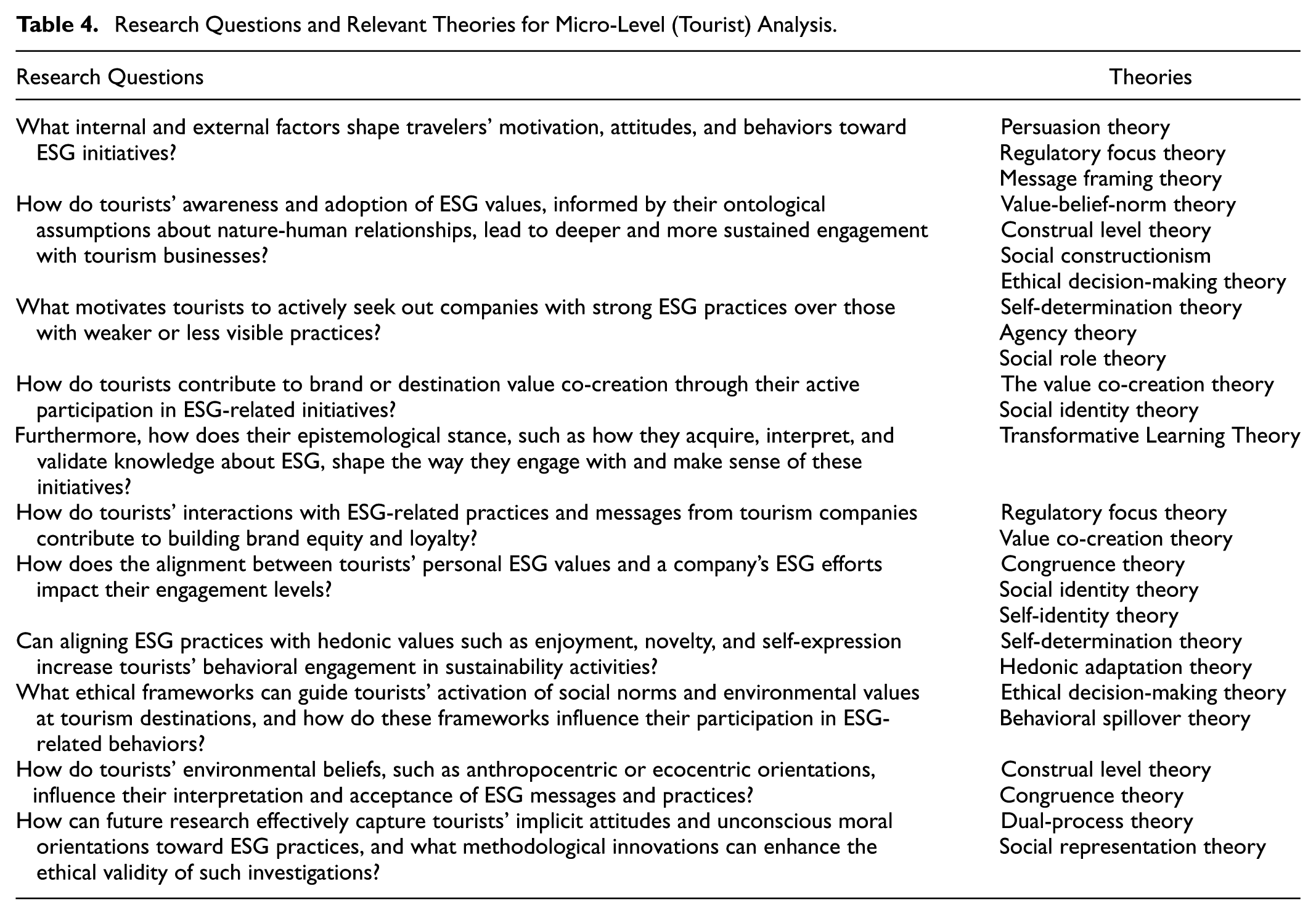
Additionally, investigating how ESG-informed behaviors foster deeper engagement with tourism companies or destinations is crucial. Moreover, traditional communication and persuasion theories, such as construal level theory, often portray tourists as passive recipients (Park & Shin, 2024; Tao et al., 2024). To advance beyond these conventional models, exploring how tourists, as active stakeholders, contribute to brand or destination value creation through their engagement in ESG initiatives is important. Consumers assess brands based on their perceptions of ESG activities, and through this interaction, brand value is co-created (Lee et al., 2022). A considerable gap exists in the tourism sector concerning the exploration of this co-creation process in the context of ESG (Shin & Perdue, 2022b). Future research in hospitality and tourism should focus on understanding the dynamic interactions between companies and consumers within ESG frameworks, specifically examining how these collaborations contribute to value co-creation. Further studies should also investigate consumer responses to tourism companies’ ESG practices and associated messages and assess how this engagement enhances brand equity. Tao et al. (2024) found that aligning regulatory focus with message framing enhances the persuasiveness of ESG communication, encouraging hotel guests to participate in climate change initiatives. This integrated approach highlights the importance of considering both the content and framing of ESG messages, as well as the psychological orientation of the target audience, to effectively influence tourists’ ESG-related behaviors (See Table 4).
Research Questions and Relevant Theories for Micro-Level (Tourist) Analysis.
Micro-level Analysis—Employees’ Perspectives
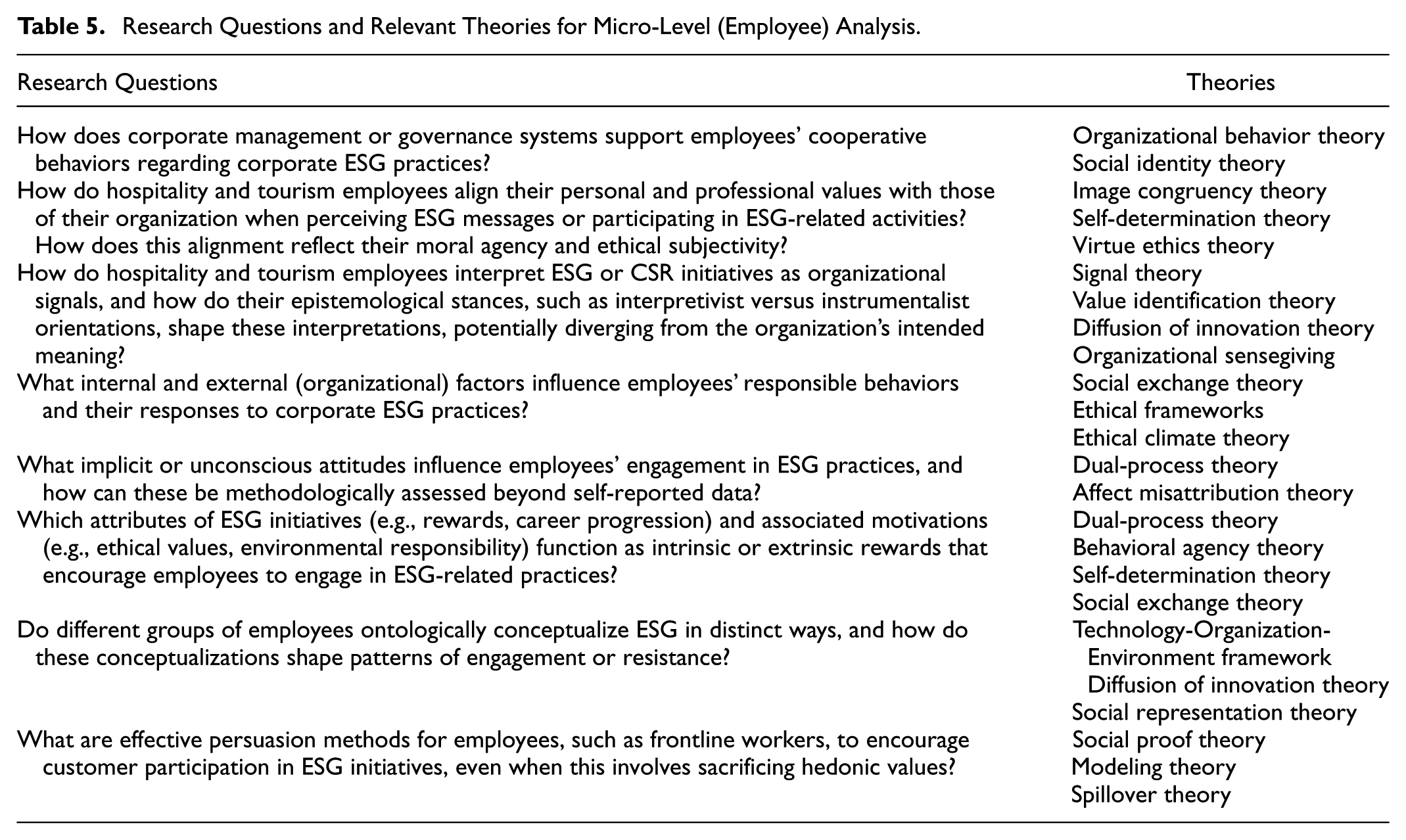
Most existing ESG research on employees has focused on employee perception and behaviors toward corporate CSR strategies. Gürlek and Tuna (2019) demonstrated CSR’s positive impact on employee engagement, while Kim et al. (2024a) emphasized the role of ESG perception in garnering company support. Several organizational behavior theories applied to investigate employee sustainable behaviors or attitudes toward sustainable practices. For example, agency theory used to analyze employees’ or managers’ CSR attitudes and its impacts on organization attachment and value perception (Chi et al., 2019; Wright & Ferris, 1997). Additionally, the conservation of resources (COR) theory views CSR as a source of resources acquired by employees (Flammer, 2015; Sun & Price, 2016). Tuan et al. (2019) observed that employees engage in customer-oriented organizational citizenship behaviors as a way to maintain the pool of resources, such as customer-oriented values (Swanson, 2014), pride and self-esteem in being its member (Chaudhary, 2017), which they acquire through CSR initiatives. Meanwhile, Mao et al. (2021) underscored the significance of resource loss, exploring how CSR influences employees’ psychological capital during the COVID-19 crisis. However, these theories have limitations in fully capturing the complexity of organizational dynamics around ESG management. Therefore, other theories such as social exchange, social identity, and ethical frameworks theories, must be integrated to gain a deeper understanding of employees’ responsible behaviors and their responses to corporate ESG practices (Cropanzano & Mitchell, 2005; Frynas & Yamahaki, 2016).
Specifically, social identity theory posits that individuals derive their sense of self from group affiliations (Tajfel, 2010). As ESG performance plays a crucial role in motivating employees (Chi et al., 2019; Tuan et al., 2019), Tuan et al. (2019) found that CSR initiatives in Vietnamese tourism firms positively influence both employee and tourist behaviors by enhancing the organization’s status and values, thereby contributing to a favorable self-image and social identity. Additionally, value identification theory, an extension of social identity theory, asserts that individuals increasingly align their values with those of the organization over time (Umphress et al., 2010). Chi et al. (2019) further observed that tourism managers’ CSR attitudes are shaped by their identification with the values of heritage sites—a concept supported by value identification theory. Moreover, self-determination theory offers insight into hospitality employees’ motivation for ESG involvement by addressing their psychological needs. For instance, Hu et al. (2020) suggested that CSR activities fulfill employees’ needs for autonomy, relatedness, and competence, while Kim et al. (2020) found that CSR efforts positively influence employee well-being and job satisfaction. Last, signal theory is relevant to ESG as employees interpret ESG and CSR initiatives as organizational signals, which help them navigate the company’s uncertainty and shape their perceptions (Greening & Turban, 2000; Luce et al., 2001). While these theories have been employed to analyze organizational ESG/CSR issues, they require adaptation and expansion to more effectively capture ESG from the employees’ perspectives.
Second, as employees are key internal stakeholders, further research is needed to comprehensively analyze both internal and external factors that influence their involvement in ESG practices (Kang et al., 2024; Lamm et al., 2015). Existing theories explaining employee participation in ESG/CSR have tended to focus primarily on the individual level. Many studies have interpreted ESG practices as a means of achieving personal goals through agency theory (Wright & Ferris, 1997), described them as reciprocal behaviors through social exchange theory (González-De-la-Rosa et al., 2023; Gürlek & Tuna, 2019), or framed them as being driven by identity and need fulfillment through social identity and self-determination theory (Chi et al., 2019; Tuan et al., 2019). Pepper and Gore (2015) introduced behavioral agency theory to address the limitations of traditional agency theory by integrating both intrinsic and extrinsic motivations. This framework can be applied to analyze employee engagement with ESG in the tourism sector. When considering employees’ attitudes and motivations toward ESG activities, behavioral agency theory provides valuable insights into how they balance intrinsic motivations (e.g., ethical values, environmental responsibility) with extrinsic motivations (e.g., rewards, career progression). This balanced perspective offers practical guidance for designing more effective incentive structures that encourage active employee participation in ESG initiatives. In the long run, fostering this collaboration between employees and the organization will enhance the successful implementation of ESG goals, contributing to the overall sustainability and responsibility efforts within the industry.
Importantly, previous research in hospitality and tourism has not fully addressed the interplay of motivations, social dynamics, individual empowerment, and organizational reward systems that influence employee participation in ESG activities. These factors are critical in shaping how employees engage with ESG initiatives and align with broader organizational practices. Additionally, incorporating contextual elements such as organizational culture into models can offer a more nuanced understanding of the complex interactions between ESG practices and employee behavior in this industry. To advance the field, researchers need to develop more comprehensive frameworks that account for these complexities, offering actionable insights for fostering meaningful employee participation and achieving long-term sustainability goals. Future research should focus on examining the full spectrum of employee engagement in ESG management within hospitality and tourism, ultimately contributing to improved organizational ESG performance (See Table 5).
Research Questions and Relevant Theories for Micro-Level (Employee) Analysis
Micro-level Analysis—Residents’ Perspectives
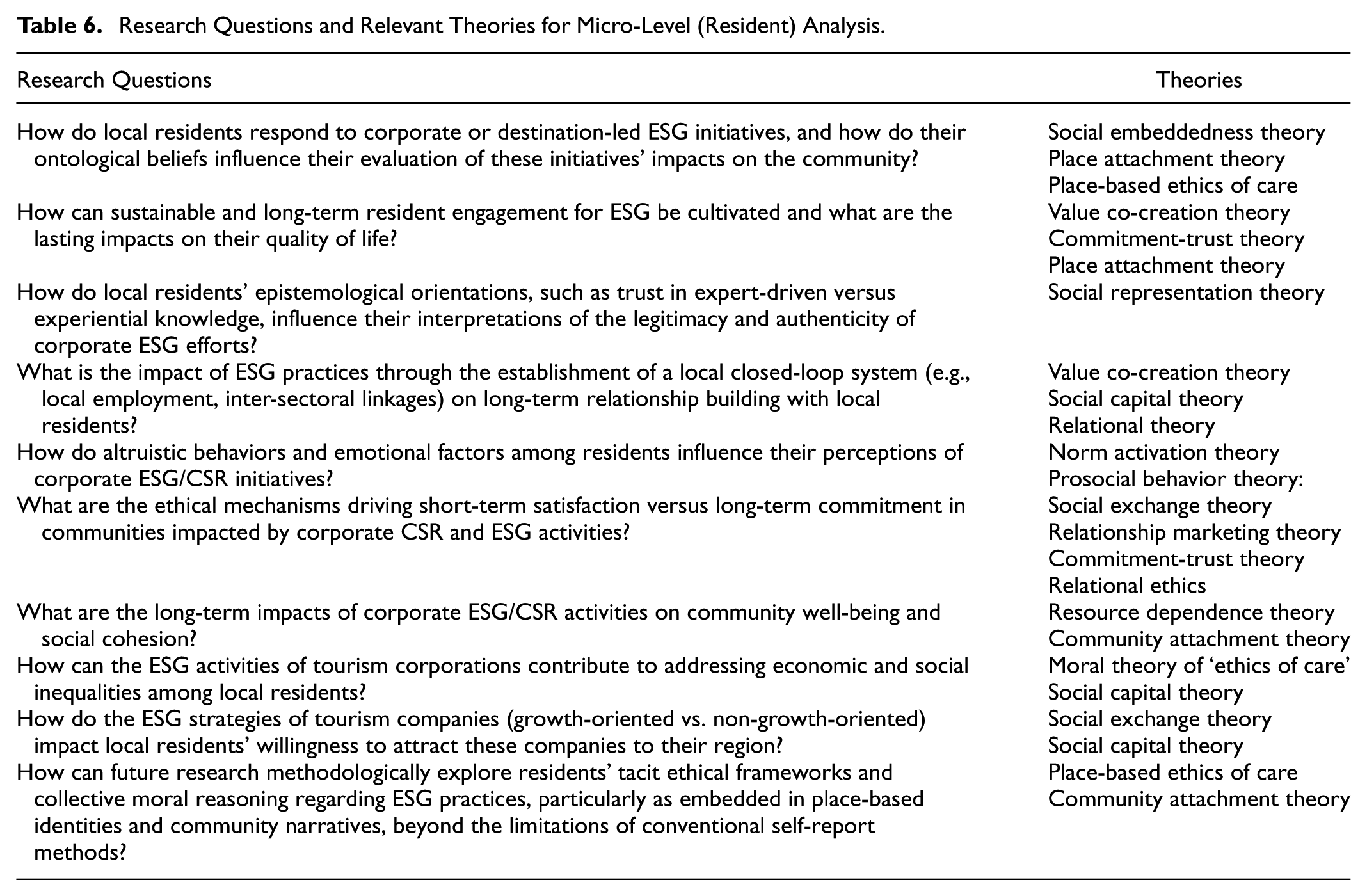
The current ESG/CSR literature has focused on tourists and employees, with relatively less attention given to other stakeholders, such as local residents. Social exchange theory has been extensively employed to evaluate residents’ perceptions and involvement in sustainable management practices (e.g., Kaplanidou et al., 2013). Gursoy et al. (2019) utilized this framework to assess the effects of hotel CSR activities on residents’ satisfaction and community commitment. This research aligns with previous studies by Lee et al. (2018) and Su et al. (2017), which demonstrated that CSR initiatives by destination resorts and casino companies improved local residents’ perceptions toward the organizations. This outcome reflects a core principle of social exchange theory, which frames the effectiveness of CSR through a subjective cost-benefit analysis (Homans, 1958). Previous studies have highlighted the crucial role of economic and emotional benefits as mediating factors in shaping residents’ attitudes toward tourism companies’ CSR or ESG activities (Gursoy et al., 2019; Lee et al., 2018). However, further research is needed to examine how residents perceive the benefits and costs of corporate ESG practices and how these perceptions influence their support for business activities.
Additionally, a more nuanced and personalized approach is essential—one that accounts for individual residents’ altruistic behaviors, emotional factors, and the development of long-term relationships (Gursoy et al., 2019). Although tourism studies have analyzed the impacts of CSR or responsible corporate activities on communities, they have not addressed the long-term impacts of such activities. Distinguishing between the mechanisms driving short-term satisfaction and those fostering long-term relationships is essential as this distinction is critical for accurately evaluating the effectiveness of ESG/CSR initiatives. Gursoy et al. (2019) illustrated this distinction: while hotel CSR activities were positively associated with community satisfaction-indicative of a relatively short-term response, only social responsibility had a direct positive impact on community commitment. In contrast, economic and environmental responsibilities did not demonstrate a significant relationship with community commitment. These findings reveal the limitations of social exchange theory, which is grounded in rationalism and conceptualizes exchanges primarily through reciprocity without accounting for the complexities of sustained relationships (Cropanzano et al., 2017; Gouldner, 1960).
To better capture the dynamics of long-term community commitment, it may be necessary to integrate alternative theoretical frameworks that emphasize not only mutual benefits but also trust, community spirit, and non-rational norms between local tourism businesses and residents. These elements are crucial for understanding the sustained connection between local tourism organizations and community members. For example, as part of ESG practices, efforts by local tourism organizations to collaborate and interact with residents to promote the local circular economy through local employment, job multipliers, and inter-sectoral linkages, can illustrate how these activities shape collective consciousness and communal values over time. Therefore, future tourism research should focus on explaining the mechanisms through which ESG initiatives cultivate sustainable, long-term resident engagement, providing a more comprehensive perspective on their effectiveness. Table 6 shows a set of research questions and relevant theories for micro-level analysis of hospitality and tourism ESG research.
Research Questions and Relevant Theories for Micro-Level (Resident) Analysis.
Meso-Level Analysis
Tomassini et al. (2024) applied network theory at the meso level, offering a framework that considers the circularity of the tourism industry by analyzing relationships within tourism supply chains from a holistic perspective. Considering regional circularity at the supply chain level helps to explain the dynamic responses to internal and external influences, as well as the complex interactions among various tourism stakeholders. This approach highlights the socio-economic and ecological benefits and sustainable outcomes generated within the environments where these interactions occur (Tomassini et al., 2024). However, much of the hospitality and tourism literature has focused primarily on analyzing the CSR performance of individual organizations rather than fully addressing ESG from this broader meso-level perspective (e.g., Uyar et al., 2020). For instance, upper echelons theory (Hambrick & Mason, 1984) is a theoretical framework that explains ESG performance based on internal organizational factors (Crace & Gehman, 2023). It emphasizes the influence of top management characteristics and the board’s capital on corporate CSR performance and strategy. While this theory has been utilized to examine corporate initiatives related to ESG and their impact on management performance (Hambrick & Mason, 1984; Harjoto et al., 2019), it remains rooted in the CSR perspective, focusing primarily on how corporate decision-making around CSR practices is shaped within the hospitality and tourism industry (Kim et al., 2018).
Additionally, slack resource theory is often employed to explain the virtuous cycle between ESG/CSR initiatives and corporate financial performance (e.g., Chollet & Sandwidi, 2018). Moneva et al. (2020) hypothesized that improved financial performance in tourism companies would lead to enhanced CSR performance, based on the premise of slack resource theory. However, their findings revealed an unexpected result: as a company’s financial success increased, its CSR performance actually decreased. Additionally, Qureshi et al. (2021) argued, through agency and trade-off theory, that a company’s sole responsibility is to maximize shareholder value and that investments in ESG practices could lead to increased operating costs, resulting in negative performance for the company (Da Hyun et al., 2024), which has been corroborated by several empirical studies (e.g., Barnea & Rubin, 2010; Brown et al., 2006). These conflicting empirical findings (e.g., Garay & Font, 2012; Kang et al., 2010; Theodoulidis et al., 2017; Youn et al., 2015) sharply contrast with global trends in other industries, where a positive correlation between financial performance and CSR activities is typically observed (Moneva et al., 2020). This discrepancy underscores the pressing need for developing a robust theoretical framework based on slack resource, stakeholder, and legitimacy theories and capable of elucidating the relationship between ESG and corporate performance within the hospitality and tourism context. Such research would provide more robust support for slack resource theory and contribute to a deeper understanding of how financial success influences ESG/CSR practices in this sector.
Currently, the literature on ESG/CSR at the organizational level in hospitality and tourism reveals limitations in two key areas. The first limitation is the narrow scope of research subjects. The inability to identify dynamically responsive tourism networks based on socio-economic and ecological environments, along with the focus on analyzing ESG performance within single industries or companies, restricts the scope of meso-level tourism ESG research. The tourism industry’s supply chain, with its diverse units such as hotels, restaurants, travel agencies, and various stakeholders, forms a more complex global network than any other industry. Especially in the wake of crises like COVID-19, there has been growing consensus in the tourism sector regarding the need for sustainable supply chain management (Gruchmann et al., 2022; Shin et al., 2022c). Therefore, research is needed to explore how ESG management spreads throughout the value chain within the tourism service supply chain, rather than focusing solely on individual companies. It is also important to investigate the potential for local circular effects of the supply chain that generate benefits for society as a whole (Tomassini et al., 2024).
In particular, most studies have focused primarily on the corporate level, particularly within the hotel industry (e.g., Farmaki, 2019; Font et al., 2012). As noted by Halkos and Skouloudis (2016), research on CSR or ESG reporting has tended to emphasize individual and organizational levels, while giving insufficient attention to destinations or national institutions. De Grosbois (2016), in the case of the cruise industry, highlighted the structural heterogeneity and practical constraints across tourism subsectors, emphasizing that CSR reporting in tourism should reflect the diversity of stakeholders and inter-industry differences. This perspective suggests that a firm–centric approach alone is insufficient to fully capture the sustainability challenges faced by the tourism sector as a whole. Furthermore, as the shift from CSR to ESG continues, the scope of corporate responsibilities has expanded—from philanthropic efforts to addressing broader issues impacting local communities and national institutions (Knudsen, 2018). Therefore, beyond company-centered ESG analysis, it is essential to explore ESG at multiple levels within the tourism sector. This includes incorporating various stakeholders from businesses and supply chains at destinations to better capture the complexity of ESG management decision-making and implementation.
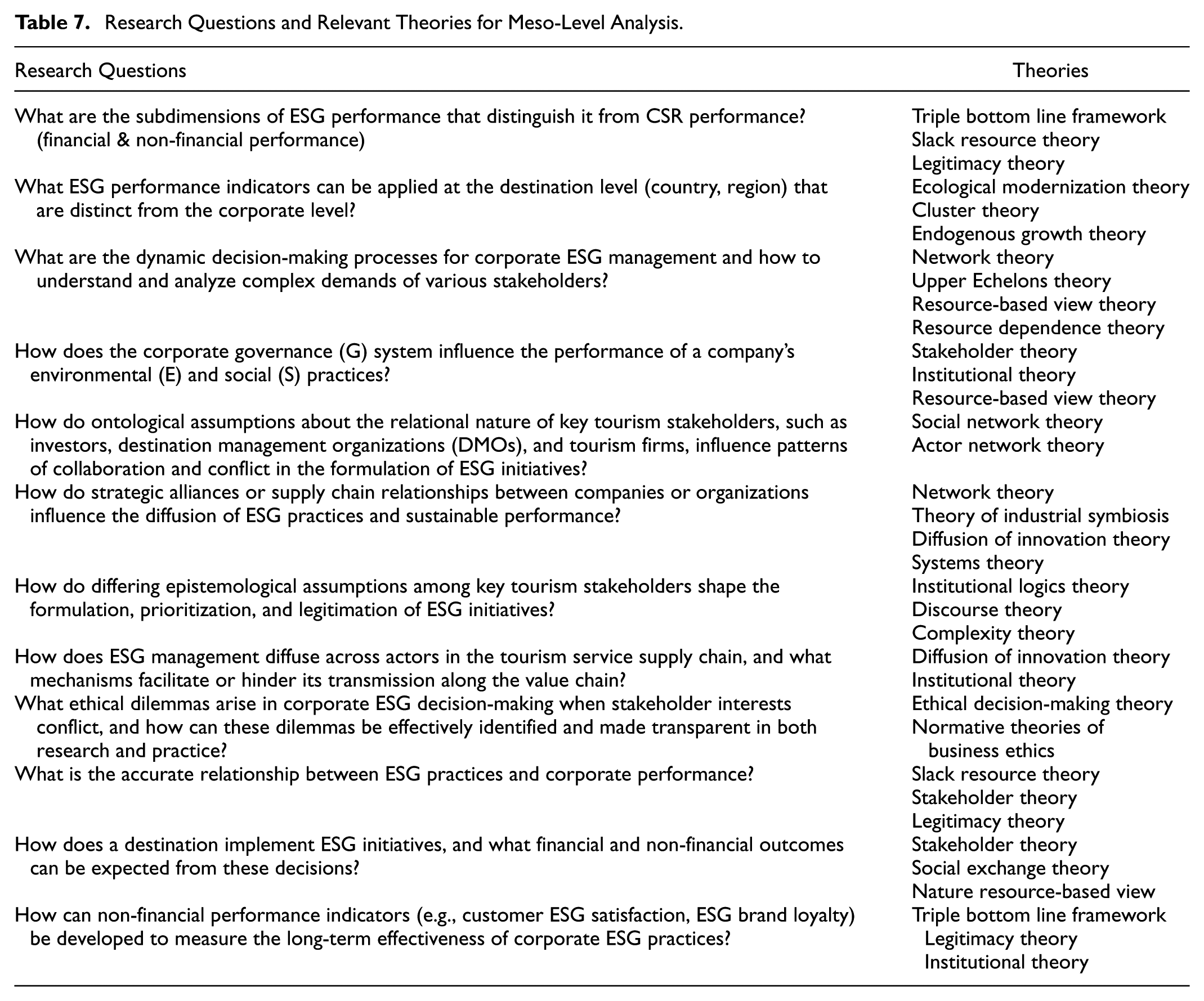
The second limitation is the narrow perspective in explaining the ESG decision-making process and performances. Theories such as upper echelons have emphasized the role of top management in ESG decision-making, but they have often failed to account for the diverse and complex demands of various stakeholders in the ESG context. While theories resource-based view (RBV) and resource dependence (RDT) theories have offered a broader explanation by considering the external environment in ESG decision-making, they have not been widely applied in ESG research. Moreover, much of the existing research has evaluated the impact of ESG activities through profit-oriented CSR models, focusing primarily on financial performance indicators (e.g., Garay & Font, 2012; Kang et al., 2010; Moneva et al., 2020; Theodoulidis et al., 2017; Youn et al., 2015). Unlike models such as creating shared value (CSV) or bottom of the pyramid (BOP) businesses, ESG initiatives are not primarily designed to generate immediate profits (Kim et al., 2024a). Instead, ESG emphasizes long-term sustainability, prioritizing stakeholder value over short-term financial gains. Therefore, the need to develop new, measurable non-financial performance indicator models that align with the specific objectives of ESG activities is critical. These models should reflect the long-term goals of sustainability and stakeholder engagement, distinguishing ESG from traditional CSR or creating shared value (CSV) concepts. By establishing such frameworks, researchers and practitioners can more accurately assess the success of ESG initiatives in hospitality and tourism, beyond mere financial metrics, contributing to a deeper understanding of how ESG fosters corporate resilience and stakeholder trust in the industry. Table 7 provides research questions and associated theories from meso-level analysis of hospitality and tourism ESG research.
Research Questions and Relevant Theories for Meso-Level Analysis.
Macro-level Analysis
At the macro level, studies analyze ESG theories and literature related to the political, economic, and social macro systems surrounding the tourism industry. They primarily examine the structural characteristics of entire systems, such as communities or governments, through the interactions between meso-level units (Dopfer et al., 2004). For instance, stakeholder theory posits that companies must prioritize the values and interests of various external stakeholders to achieve success and sustainability in their ESG practices (Fernando & Lawrence, 2014; Tsang et al., 2023). This theory is particularly relevant in the hospitality industry, where the diverse range of external stakeholder groups, such as customers, local communities, and suppliers, makes it crucial to consider their varying needs and expectations (He et al., 2024). Stakeholder theory acknowledges a company’s moral responsibility to a broader range of stakeholders beyond just shareholders, emphasizing a more inclusive and ethically grounded approach to corporate governance (McWilliams & Siegel, 2001). However, stakeholder theory also highlights the challenges companies face in balancing these diverse interests, especially given limited resources and the often conflicting needs of different stakeholders, which can significantly influence strategic resource allocation (Farmaki & Farmakis, 2018; Neville & Menguc, 2006).
Furthermore, criticisms of stakeholder theory often arise from its premise of equal prioritization of all stakeholders, which can be seen as unrealistic or impractical (Freeman & McVea, 2005, cited in Pedersen, 2010). Stakeholder salience theory can address this limitation by explaining how stakeholder priorities are determined based on three key attributes: power, legitimacy, and urgency (Mitchell et al., 1997). This approach helps clarify why certain stakeholders may be given precedence over others in corporate decision-making processes. Instrumental stakeholder theory further emphasizes the strategic management of relationships with external stakeholder groups, focusing on how these relationships impact the achievement of a company’s sustainability goals (Moneva et al., 2020; Wagner Mainardes et al., 2012). However, prioritizing stakeholder relationships does not always lead to positive managerial outcomes (Moneva et al., 2020), which suggests that the effectiveness of stakeholder management may depend on other contextual factors.
Additionally, while stakeholder theory highlights the importance of maintaining strong relationships with various stakeholders (Fernando & Lawrence, 2014), legitimacy theory underscores the necessity of a social contract between organizations and society (Deegan, 2006). In the hospitality and tourism sector, stakeholder concerns about social and environmental issues resulting from tourism activities have amplified the responsibility of companies to engage in ESG practices. This heightened responsibility has driven companies to adopt non-financial information disclosure strategies as a means to secure legitimacy and respond to these social demands (Serra-Cantallops et al., 2018). Both stakeholder and legitimacy theory provide evidence that companies with high ESG disclosures have a competitive advantage compared to those with low ESG disclosures (Xie et al., 2019), forming a theoretical basis for explaining the relationship between ESG and corporate performances (Saini et al., 2023).
Institutional theory posits that companies shape their strategies in response to macro pressures and external influences, such as social norms, global agreements, and legal frameworks; this leads them to adopt ESG practices to align with societal expectations (Cassely et al., 2021; Fernando & Lawrence, 2014; Galbreath, 2013). This theory, much like legitimacy theory, highlights how external factors drive corporate behavior in ESG adoption (Ertuna et al., 2019; Rahmawati et al., 2018). However, legitimacy theory also raises concerns about the potential for corporate information manipulation as companies may seek to present their activities as more sustainable than they actually are to align with social standards (Archel et al., 2009). Both institutional theory and legitimacy theory have limitations, particularly in their lack of consideration for a company’s internal conditions or the rapidly changing external environment, as during crises such as COVID-19. This indicates a need for developing more dynamic theoretical frameworks, such as models of dynamic institutionalization, that can better account for the evolving internal and external conditions companies face. Such frameworks would enable a more nuanced understanding of how companies can adapt their ESG strategies in response to both ongoing internal developments and shifting external pressures.
However, existing macro theories explaining the ESG/CSR practices of tourism organizations have limitations in fully reflecting the interconnectedness and dynamic characteristics of the hospitality and tourism industry. Tomassini et al. (2024) view the tourism industry as a complex adaptive system and emphasize that ESG practices result from interactions among various actors and institutions, extending beyond the scope of a single organization. Consequently, ESG strategies should be understood not merely as the adoption of norms, but as a complex adaptive process that continuously evolves amid social pressures, technological changes, and institutional contradictions. While the importance of national, legal, and cultural contexts has been well established in hospitality and tourism research, scholarly attention to these areas has been insufficient (Welford, 2005).
Existing institutional theory and legitimacy theory explain ESG practices as responses to social norms, legal institutions, and societal standards surrounding the company. However, these theories do not account for dynamic external environments, such as unexpected crises such as COVID-19, institutional diversity of multinational corporations, and technological changes (Krajnović, 2018). Particularly in the hospitality industry, which features multiple ownership forms and various geographic contexts, institutions, and national environments (Rhou & Singal, 2020), dynamic institutionalization models can complement the concept of isomorphism within the same institution. This would enhance the explanation of how changes in macro-institutions and technological innovations surrounding the hospitality and tourism industry impact corporate or destination ESG strategy adoption. For instance, examining the effects of technological innovations such as AI and robotic services on workforce reduction, as well as the impact of industry innovations such as the sharing economy on consumer privacy concerns (Rhou & Singal, 2020; Shin, 2022; Shin & Perdue, 2022a), could contribute to the diversity of research topics by addressing changes occurring in the hospitality and tourism sector from an ESG perspective.
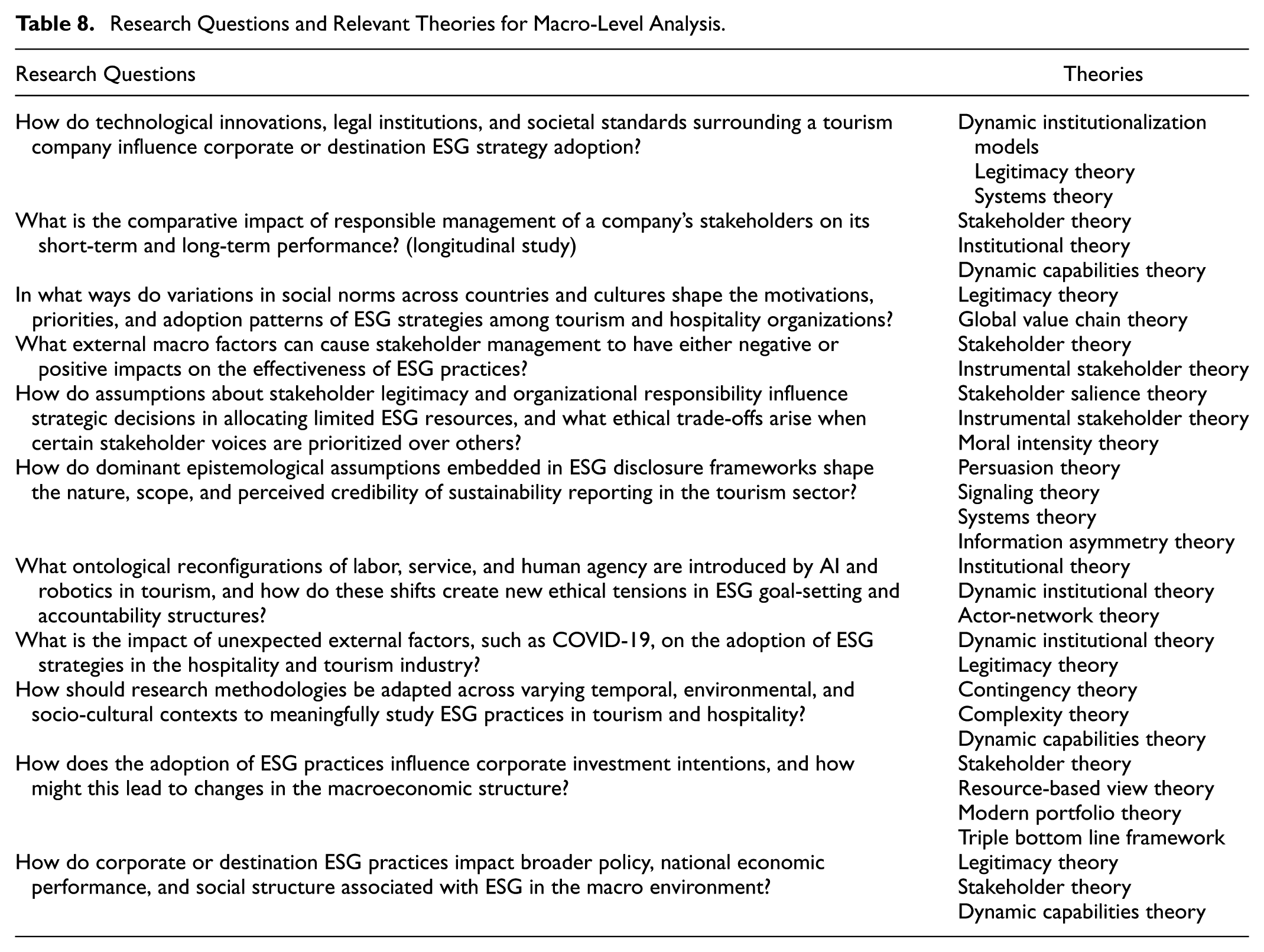
Additionally, further research is needed to investigate how ESG practices impact the macro environment as most studies have focused on how macro-environmental changes affect ESG (Back, 2024). However, firm-level environmental and governance performance can also lead to changes in policy, economic structure, and social structure associated with ESG. Zhou et al. (2020) demonstrated that corporate ESG performance can enhance productivity and strengthen corporate competitiveness, ultimately improving per capita Gross domestic product (GDP) and national economic performance. Furthermore, the positive impact of ESG practices on investment intentions beyond corporate financial performance could lead to changes in the economic structure. In fact, research by Nazir et al. (2022) established a positive relationship between ESG performance and capital costs, indicating that investors do not perceive ESG performance as an additional financial burden or value-added element. Consequently, companies that comply with ESG are likely to find it easier to secure funding. These findings suggest a shift in investment patterns toward companies practicing ESG management, which may lead to changes in the macroeconomic structure. Therefore, exploring the impact of ESG adoption at the organizational and national levels on the economy, environment, and policy will contribute to understanding the tourism and hospitality industry through the perspectives of path dependence, nonlinearity of circularity (Korhonen, 2020), and the interconnectedness of actors (Zwiers et al., 2020; see Table 8).
Research Questions and Relevant Theories for Macro-Level Analysis.
Conclusion
This study, recognizing the growing importance of ESG principles in the sustainable development of the hospitality and tourism industry, undertakes a comprehensive conceptual, practical, and theoretical analyses of ESG. It examines ESG case studies within these sectors and reviews the existing knowledge framework of ESG-related research. Additionally, ESG-related theories are categorized and analyzed across three levels—micro, meso, and macro—offering a multi-layered understanding of how ESG is applied and studied. Based on these analyses, the study proposes key research agendas that aim to establish a theoretical foundation and promote further development of ESG research within the hospitality and tourism fields. The ultimate goal is to provide a structured and detailed basis for advancing ESG-based practices and strategies, which are expected to play an increasingly critical role in the future growth and sustainability of the hospitality and tourism industry.
A critical analysis of the theoretical aspects of ESG research revealed several potential directions to strengthen the field’s theoretical foundations. For instance, further research is needed to integrate micro-, meso-, and macro-level theories to develop frameworks that effectively manage ESG impacts across various stakeholder groups and businesses in the hospitality and tourism sector (e.g., Frynas & Yamahaki, 2016). Additionally, future theoretical advancements should focus on analyzing stakeholder expectations and responses to provide a more comprehensive macro-level understanding of ESG management. Moreover, current institution-centric theories, which often emphasize external institutional pressures, demonstrate limitations in explaining corporate ESG practices (De Grosbois, 2012) and fail to fully capture the complexities of real-world ESG phenomena. To improve the explanatory power of ESG theories, a stronger integration of empirical data with theoretical models is essential. This may lead to developing new theoretical approaches and advancements in tourism ESG research.
Nevertheless, this study acknowledges certain limitations. First, owing to the relatively limited volume of existing research on ESG within hospitality and tourism, a direct review and analysis of available studies was conducted. As the body of ESG research continues to grow, applying more systematic methodologies, such as bibliometric co-citation analytics, to achieve a more objective and scientific analysis of the ESG knowledge framework will be essential. Second, although this study classifies and analyzes ESG theories according to the micro, meso, and macro levels, future research should explore and apply a broader range of criteria for theory analysis. Expanding the scope of analysis could lead to deeper insights and a more refined understanding of ESG in the hospitality and tourism sectors.
Footnotes
Acknowledgements
None.
Author Contributions
Declaration of Conflicting Interests
The author(s) declared no potential conflicts of interest with respect to the research, authorship, and/or publication of this article.
Funding
The author(s) disclosed receipt of the following financial support for the research, authorship, and/or publication of this article: This work was supported by the Ministry of Education of the Republic of Korea and the National Research Foundation of Korea (NRF 2024S1A5A2A03037588).
