




Abstract
This study explores how factor endowment, digital transformation, and institutional quality influence high-quality tourism economic development through the lens of endogenous growth theory. Using data from 30 Chinese provinces (2010–2019), it applies panel regression and fuzzy-set Qualitative Comparative Analysis (fsQCA) to identify key drivers. Findings reveal three distinct pathways to high-quality tourism economic development, with digital transformation emerging as a universal driver, even in regions with weak institutional support. Challenging conventional institutional perspectives, we demonstrate that institutional quality’s impact is not uniformly positive but context-dependent. Strong digital capabilities or abundant resources can effectively compensate for institutional weaknesses. The study extends endogenous growth theory to tourism and offers valuable guidance for policymakers to optimize resource allocation, accelerate digital transformation, strengthen institutional frameworks, and promote region-specific tourism strategies while fostering regional integration to ensure sustainable and high-quality tourism economic development.
Keywords
Introduction
Tourism is an important pillar industry in many countries and regions, promoting economic advancement, generating job opportunities, and upgrading overall living conditions (Dogru & Bulut, 2018; Song et al., 2023). However, as the tourism sector experiences steady growth and the increasing complexity of the tourism economic system, the traditional extensive development model that relies on resource consumption and scale expansion is unsustainable (Dogru et al., 2020; Pan et al., 2018). Many tourism destinations are facing challenges such as resource depletion, environmental degradation (Dogru et al., 2020), and declining service quality (Shyju et al., 2023), which hamper the long-term sustainable development of the tourism economy (Calero & Turner, 2020; He et al., 2023). Therefore, promoting the transformation of the tourism industry from scale expansion to high-quality development has become an urgent task for many tourism destinations around the world.
High-quality tourism development is defined as a holistic and sustainable approach that integrates economic efficiency, social equity, environmental sustainability, and cultural preservation while leveraging innovation to enhance tourism supply and demand (Tang, 2022; Zhang et al., 2022). It prioritizes stable growth, improved industry structure, high service quality, and sustainable resource utilization to ensure equitable benefits for all stakeholders (Hu, 2021). Economically, it shifts from resource-intensive to efficiency-driven, innovation-led growth, fostering long-term viability and competitiveness (E. K. Y. Chen, 1997; Zheng et al., 2023). Structurally, it optimizes industry composition, balances supply and demand, and diversifies tourism products to enhance adaptability
To understand the drivers of high-quality tourism development, this study draws on endogenous growth theory (Lucas, 1988; Romer, 1986, 1993), which emphasizes internal factors like knowledge creation, innovation, and human capital development. Factor endowment—comprising human, financial, and physical resources (Felipe & Vernengo, 2002; X. Li, 2012; Maneschi, 1992)—becomes more productive through knowledge accumulation and technological advancement, enabling sustainable growth via optimized capital-labor ratios and scenic resources. Digital transformation enhances service quality, resource allocation, and business models (Adeola & Evans, 2020; Buhalis, 2020), reshaping tourist experiences and overcoming traditional limitations (Gutierriz et al., 2025; Xiang & Gretzel, 2010). Additionally, a high-quality institutional environment, characterized by efficient governance, fair competition, and sound legal systems, fosters tourism investment, innovation, and industrial upgrading, with studies highlighting the role of policy support, public services, and environmental governance in tourism development (Li et al., 2018). However, existing research has predominantly examined these factor in isolation, neglecting their interconnectedness and the potential for multiple, nonlinear pathways to high-quality tourism development. Moreover, conventional linear methodologies, such as regression analysis, further limit understanding by failing to capture the complex, configurational nature of these relationships.
To fill these research gaps, this study aims to investigate the impact of factor endowment changes, digital transformation, and institutional factors on the quality of tourism economic development in China from a configurational perspective. The Chinese government has also placed high-quality development at the core of its economic work, emphasizing the need to shift from a focus on speed to a focus on quality and efficiency (Shao et al., 2021). As an important component of modern service industries, the tourism industry is also undergoing a transformation toward high-quality development. This involves optimizing the structure of tourism factors, the efficiency of resource allocation, and the integration of tourism with other industries, and enhancing the overall competitiveness and sustainability of the tourism economy.
We employed a combination of regression analysis and fsQCA to uncover the causal relationships among these factors and identify the different configurations that can lead to high-quality tourism economic development under various regional contexts. This study employs panel data from 30 provinces in China’s mainland (except Xizang) from 2010 to 2019, collected from various sources. The findings are expected to provide new insights into the driving mechanisms of high-quality tourism economic growth and offer valuable implications for policy-making and destination management. First, the study identify the key drivers of high-quality tourism economic development and their interaction; Second, the study challenges the conventional linear thinking in tourism research through the application of fsQCA, demonstrating its value in uncovering causal relationships and multiple pathways to high-quality tourism economic development. Third, the study integrates insights from multiple theoretical perspectives and develops an integrated framework for understanding the quality of tourism economic development.
Literature Review and Hypotheses
Defining High-Quality Tourism Development
High-quality tourism development can be defined as a comprehensive and sustainable approach that integrates economic efficiency, social equity, environmental sustainability, and cultural preservation, while leveraging innovation to enhance both tourism supply and demand (Tang, 2022; Zhang et al., 2022). Emerging as a response to the limitations of traditional, quantity-focused growth models, this concept emphasizes a multidimensional framework that balances economic progress with social and environmental well-being. Initially, economic development studies focused on productivity and efficiency, but later expanded to include product quality, environmental quality, and industrial growth modes (X. Chen & Huang, 2006).
Recent advancements have further refined the concept, incorporating social, ecological, and consumer perspectives (He et al., 2023; Irfan et al., 2023). Economically, it shifts from resource-intensive growth to efficiency-driven, innovation-led development (E. K. Y. Chen, 1997; Zheng et al., 2023), focusing on stable growth, improved production efficiency, and value creation. Structurally, it optimizes industry composition, balances supply and demand, and diversifies tourism products and services, fostering a more dynamic and competitive sector (X. Yang et al., 2021; C. Yang et al., 2024). Environmentally, high-quality tourism development prioritizes resource conservation, ecological protection, and the harmonious coexistence of tourism activities with natural environments (Pimonenko et al., 2021). By adhering to environmental carrying capacity and promoting sustainable practices, it ensures long-term viability and minimizes negative ecological impacts. Socially, the concept emphasizes equitable benefit distribution, community participation, poverty alleviation through tourism, and cultural heritage preservation (Ramkissoon, 2023). These efforts enhance quality of life, foster social well-being, and contribute to broader societal progress, ensuring that tourism development benefits all stakeholders.
To support these dimensions, effective governance and innovation play vital roles. Institutional frameworks, policy coordination, and regulatory systems guide tourism development, ensuring sustainability and responsible resource management (Dossou et al., 2023; Prasad, 2003). Innovation, through advancements in technology, business models, and management practices, enhances resource efficiency, upgrades factor endowments, and facilitates structural transformation (Beugelsdijk et al., 2018; Umurzakov et al., 2023). Together, these elements create a comprehensive framework for high-quality tourism development, fostering a resilient, sustainable, and inclusive tourism sector that balances economic growth with social and environmental well-being.
High-quality tourism development differs from conventional approaches by prioritizing qualitative improvements over quantitative growth and aligning with sustainable development goals. High-quality tourism development aligns with several UN Sustainable Development Goals (SDGs), particularly SDG 8 (Decent Work and Economic Growth), SDG 11 (Sustainable Cities and Communities), SDG 12 (Responsible Consumption and Production), and SDG 13 (Climate Action), reinforcing its role in promoting sustainability, cultural preservation, and equitable tourism benefits (Zhang, 2021). In essence, it represents a holistic, balanced approach that integrates economic, environmental, social, and cultural dimensions, fostering resilience and long-term viability in the tourism sector. Achieving high-quality tourism development requires an understanding of its key drivers and mechanisms, and endogenous growth theory provides a valuable theoretical foundation for this purpose.
Endogenous Growth Theory
Endogenous growth theory, pioneered by Romer (1986, 1990) and Lucas (1988), posits that economic growth stems from intentional investments in knowledge, human capital, and innovation, rather than external forces like market size or resource constraints. Unlike exogenous models, which focus on static inputs such as labor and capital, endogenous growth theory emphasizes the role of human decisions in generating, diffusing, and applying new ideas and technologies to enhance productivity and create value (Lucas, 1988; Romer, 1986). Solow’s (1956) work revealed that traditional inputs explained only part of growth, with the remainder attributed to technological progress, a concept further expanded by endogenous models that view knowledge accumulation as a key driver of long-term growth.
Endogenous growth models can be categorized based on their theoretical emphases. Some, like Jones and Manuelli (1990) and Rebelo (1991), propose constant or increasing returns to production assets, relevant to sectors like tourism where efficient allocation of capital, labor, and resources enhances returns. Others focus on knowledge and human capital accumulation, with Romer (1986, 1990) and Lucas (1988) highlighting human capital investment, and Romer (1990), Grossman and Helpman (1991), and Aghion and Howitt (1992) emphasizing R&D as a growth driver. These insights are particularly applicable to digital transformation in tourism, where technology and knowledge management improve service delivery and operational efficiency.
While early endogenous growth models did not emphasize institutional quality, the theory evolved to integrate institutional factors as key drivers of growth. Barro (1997) identifies the significance of institutional quality in driving economic development, pointing to the rule of law and the protection of property rights as fundamental elements that boost growth potential. His empirical work demonstrates that institutional factors—including legal frameworks, regulatory quality, and governance structures—play a crucial role in fostering innovation, encouraging investment, and ensuring efficient resource allocation (Barro, 1997).
Hypothesis Development
Drawing upon endogenous growth theory to tourism development, we argue that optimizing factor endowment, advancing technology, and strengthening institutions collectively create the conditions for long-term viability and qualitative growth in the tourism sector.
Factor Endowment
Factor endowment refers to the availability and allocation of basic economic resources—land, labor, and capital—which shape a region’s comparative advantage and economic development (Felipe & Vernengo, 2002; X. Li, 2012; Maneschi, 1992). Drawing on endogenous growth theory, which emphasizes the role of knowledge, innovation, and efficient resource use in driving growth (Lucas, 1988; Romer, 1986), upgrading factor endowment—shifting from labor- and resource-intensive models to capital- and technology-intensive ones—is a key driver of industrial upgrading and high-quality economic growth (Z. Li & Liu, 2022). In tourism, upgrading factor endowment enhances development quality through several mechanisms.
First, increased high-tech capital and high-quality labor stimulate technological innovation, service upgrades, and product differentiation, boosting tourism competitiveness and added value (Z. Li & Liu, 2022). Investments in modern infrastructure, transportation networks, and advanced facilities improve destination accessibility, comfort, and convenience. Second, upgraded factor endowment enhances resource allocation efficiency, reduces waste, and promotes sustainable resource utilization (Khan et al., 2020), addressing the tourism industry’s traditional reliance on natural resources and labor. Third, it facilitates tourism’s integration with other industries, such as culture, sports, and health care, extending the industry chain and creating new growth points (Y. Li et al., 2024). Digital platforms, data analytics, and smart tourism solutions further optimize resource allocation, improve service quality, and enable personalized visitor experiences (X. Yang et al., 2023).
However, the impact of factor endowment on tourism economic development quality may vary across areas due to resource endowment differences, economic foundations, and institutional environments (Ouyang et al., 2019). Developed regions with abundant capital, advanced technologies, and skilled labor may benefit more from factor endowment upgrade, while less developed regions may face constraints in attracting high-quality production factors and realizing efficient resource allocation (Adedoyin et al., 2022). Therefore, we propose the following hypothesis:
Digital Transformation
Digital transformation in tourism reflects the principles of endogenous growth theory, which highlights the role of innovation, knowledge accumulation, and efficient resource use in driving economic growth (Lucas, 1988; Romer, 1986). It refers to the adoption and integration of digital technologies to enhance service quality, optimize resource allocation, and create innovative business models (Adeola & Evans, 2020; Buhalis, 2020). By enabling personalized and immersive tourist experiences, fostering smart tourism ecosystems, and driving economic advancement through new revenue streams and investment opportunities, digital transformation has become a cornerstone of high-quality tourism economic development (Wei & Ullah, 2022).
Digital technologies have reshaped tourist behavior, business models, and destination management, becoming central to the industry’s evolution (Buhalis & Law, 2008; D. Wang et al., 2014; Xiang & Gretzel, 2010). Their impact is multifaceted, enhancing consumer benefits, tourism firm competitiveness, and industry-wide efficiency while promoting digital well-being (Stankov & Gretzel, 2021). Furthermore, digital transformation aligns with sustainable development goals, fostering smart sustainable destinations that balance economic, social, and environmental sustainability (Rodrigues et al., 2023).
Several mechanisms explain how digital transformation improves tourism economic development quality. First, digital tools enable tourism enterprises to collect and analyze data on tourist behavior, preferences, and feedback, improving service quality and personalizing offerings (Xiang, 2018). Second, digital platforms and online travel agencies reduce information asymmetry, lower transaction costs, and align tourism offerings with visitor needs, enhancing efficiency and satisfaction. Third, integrating digital technology with traditional tourism resources creates new attractions, such as smart tourism, virtual tours, and live-streaming tourism, attracting more visitors and generating new revenue streams. Fourth, digital solutions, such as contactless services and virtual tours, have proven critical during crises like the COVID-19 pandemic, demonstrating their role in building resilience (Sharma et al., 2021). Additionally, digital tools support environmental monitoring, resource management, and visitor flow control, promoting sustainable tourism practices (Traskevich & Fontanari, 2023). Thus,
Institutional Environment
The institutional environment, which includes formal rules, regulations, and governance systems, as well as informal norms, values, and cultural practices, influences economic activities and outcomes (North, 1990). According to endogenous growth theory, a supportive institutional environment is essential for long-term economic success (Barro, 2000). In the tourism industry, such an environment can create favorable conditions for investment, innovation, and sustainable development, thereby contributing to the high-quality growth of the tourism economy (Umurzakov et al., 2023).
First, a well-functioning legal system that protects property rights, enforces contracts, and ensures fair competition reduces transaction costs and encourages long-term investment and entrepreneurship in tourism (Muslıja et al., 2017). Second, efficient and transparent governance, characterized by streamlined administrative procedures and effective policy coordination, enhances destination competitiveness and creates a conducive environment for businesses (Nunkoo et al., 2020). Third, institutions that promote sustainable practices, such as eco-labeling, green certification, and community involvement, help tourism enterprises balance economic, social, and environmental goals (Piñeiro-Chousa et al., 2020). However, the effectiveness of institutional environments varies across regions due to differences in economic, social, and cultural contexts (Adedoyin et al., 2022). Regions with stronger economies, higher human capital, and robust civil societies tend to have more mature institutions that better support tourism innovation and sustainability (Muslıja et al., 2017). Thus,
Interactions Among Factor Endowment, Digital Transformation, and Institutional Environment
While factor endowment, digital transformation, and institutional environment each have direct impacts on the quality of tourism economic development, they may also interact with each other to create synergistic or complementary effects. The interactions among these factors can provide a more comprehensive understanding of the driving mechanisms behind high-quality tourism growth.
First, digital transformation can enhance the impact of factor endowment on tourism economic development quality by enabling more efficient utilization and allocation of production factors. For example, big data analytics can help tourism enterprises optimize labor scheduling, inventory management, and resource distribution based on real-time demand forecasting (Masseno & Santos, 2018). Digital technologies can enrich tourism products and services, creating new opportunities for capital investment and talent attraction (Yung & Khoo-Lattimore, 2019). Thus,
Second, the institutional environment can moderate the impacts of factor endowment and digital transformation on tourism economic development quality by creating favorable conditions for resource allocation, technological adoption, and industrial upgrading. A supportive institutional quality with clear regulations, efficient administration, and strong intellectual property protection can encourage tourism enterprises to invest in human capital, adopt advanced technologies, and engage in product and service innovation. Moreover, a well-functioning institutional framework can facilitate the flow of capital, labor, and technology across regions and industries, promoting the optimal allocation of tourism production factors (Andrades & Dimanche, 2017). In contrast, an unfavorable institutional environment with excessive bureaucracy, policy uncertainty, and weak contract enforcement may hinder the efficiency of factor markets and the diffusion of digital technologies (Muslıja et al., 2017). Thus,
Figure 1. presents the conceptual framework based on the proposed hypotheses.
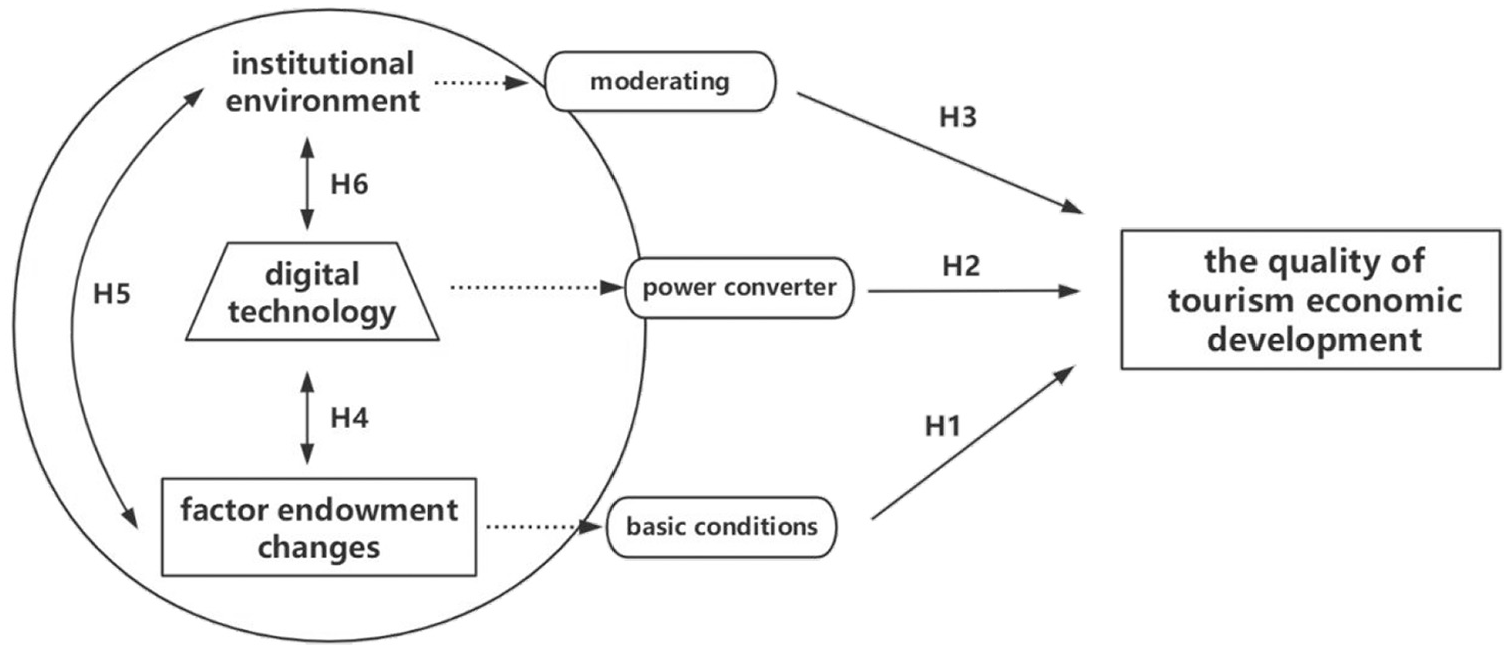
The conceptual framework of this study based on the proposed hypotheses.
Research Methodology
To test our hypotheses, we use an integrated approach combining regression analysis and fuzzy-set Qualitative Comparative Analysis (fsQCA). This approach leverages the strengths of both quantitative and qualitative techniques. Regression analysis enables us to quantify relationships between key variables, while fsQCA uncovers helps to uncover causal configurations and multiple pathways to high-quality tourism economic development.
Data Sources and Sample Selection
This study draws on official statistics from the National Bureau of Statistics and tourism departments, China Marketization Index Database, China Statistical Yearbook, and the EPS database. Our sample includes data from 30 Chinese provinces (excluding Hong Kong, Macao, Taiwan, and Tibet) for the period 2010–2019, offering a comprehensive view of China’s tourism industry. The selection criteria account for variations in tourism development (developed, moderately developed, and underdeveloped regions), geographical distribution (eastern, central, and western regions), and tourism resource types (world natural and cultural heritage sites, national historical and cultural cities, national key scenic spots, national nature reserves, and national forest parks). This diverse sample ensures the study captures different scenarios of how factor endowment, digital transformation, and institutional quality shape tourism economic development quality, enhancing the representativeness and applicability of the findings.
Variables and Measurement
Dependent Variable
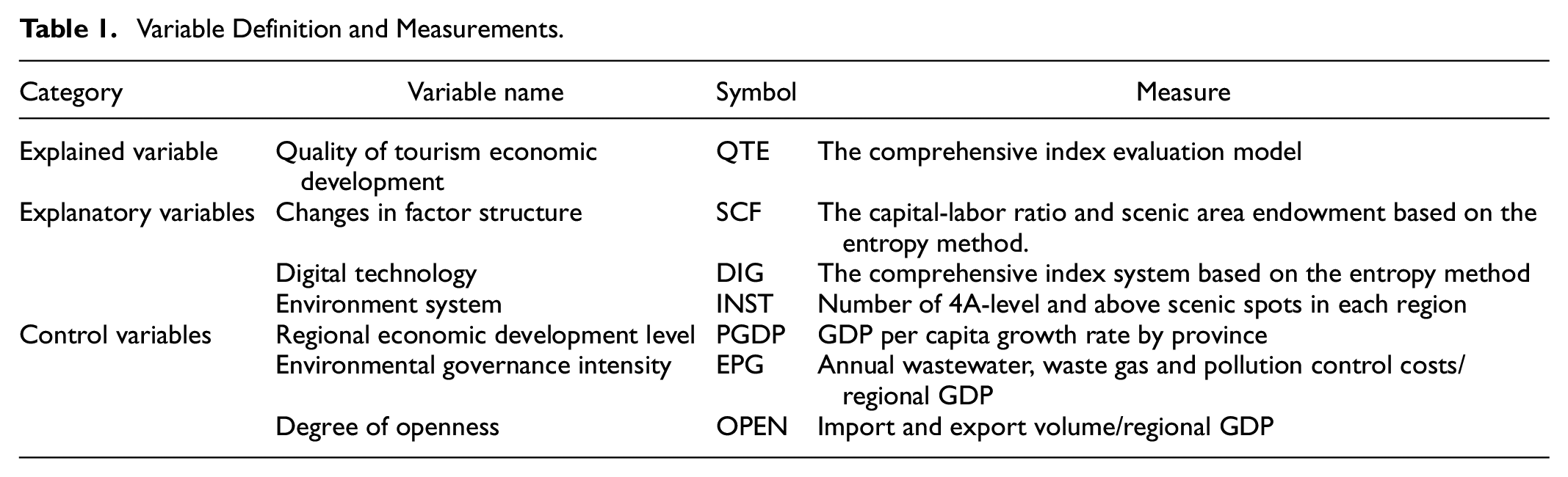
The quality of tourism economic development (QTE) is measured using a comprehensive indicator system based on three dimensions: economic efficiency, industrial structure, and environmental quality. This system is grounded in new economic growth theory and sustainable development theory. And the final QTE score is calculated using the entropy method and multi-objective linear weighted function. Detailed methodology and results are provided in the Supplemental Appendix Tables A1 and A2.
Explanatory Variables
To examine the upgrade of factor endowment, we focus on two key variables. The first is the capital-labor input ratio, where capital input is measured using the stock of fixed assets in each province, adjusted by the ratio of total tourism revenue to regional GDP. Labor input is represented by the number of employees in the tertiary industry, adjusted by the ratio of total tourism revenue to tertiary industry output. The second variable is scenic area endowment, which is based on the national standard “Classification and Evaluation of Tourism Scenic Area Quality.” We use the number of 4A and above scenic areas in each region as a proxy for scenic area endowment, reflecting the quantity and quality of tourism resources.
To measure digital transformation, we construct a comprehensive indicator system considering digital basic resources and digital interconnection (detailed in Supplemental Appendix Table A3).
For institutional quality (INST), we use the marketization process index, which covers government-market relations, non-state-owned economy development, market and factor market development, market intermediary organizations, and the legal system. This index quantitatively evaluates marketization progress, reflecting institutional quality and effectiveness.
Control Variables
The quality of tourism economic development is also influenced by regional economic development, environmental pollution control, and openness to the outside world. We include these as control variables:
Regional economic development level (PGDP): Measured by per capita GDP growth rate (%).
Environmental governance intensity (EPG): Calculated as the ratio of annual pollution control costs to regional GDP (%).
Degree of openness (OPEN): Represented by the proportion of imports and exports to GDP.
Table 1 presents all variable definitions and measurements in the model.
Variable Definition and Measurements.
Regression Analysis
We developed an econometric model to analyze how the upgrade of factor endowment, digital transformation, and institutional quality affect the quality of China’s tourism economic development.
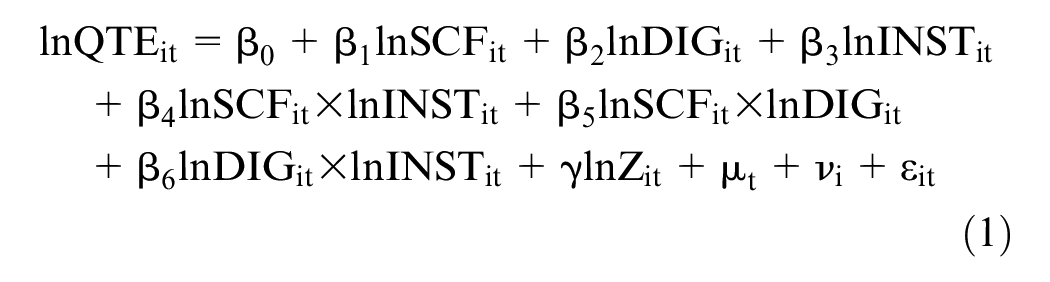
In the above equation,
The regression analysis follows these steps: First, we preprocess the data through cleaning, outlier handling, and missing value treatment to ensure quality and reliability. Second, we conduct descriptive statistics to summarize key characteristics (mean, standard deviation, maximum, and minimum values). We present the correlation coefficient matrix of variables in Supplemental Appendix Table A4. Significant correlations between explanatory variables (factor structure changes, digital technology, institutional environment) and the dependent variable (QTE) are observed. Third, we check for multicollinearity using Variance Inflation Factor (VIF) tests. Variance Inflation Factor (VIF) values for variables after logarithmic transformation are shown in Supplemental Appendix Table A5. All VIF values are below 10 (1/VIF >0.1), indicating no severe multicollinearity. Fourth, based on the Hausman test results, we adopt a fixed-effects model with the least squares method. Finally, we Separate regressions for eastern, central, and western regions, and interpret the regression results, including coefficient significance, significance levels, and model fit (R-squared), to assess the explanatory power of the model.
Fuzzy-Set Qualitative Comparative Analysis (fsQCA)
Unlike symmetrical approaches, fsQCA identifies data patterns across cases, allowing for generalization to an entire population (Agag et al., 2024; Farmaki et al., 2021). This method offers several advantages, including handling multiple causal paths, conditional effects, and identifying factor configurations most likely to lead to specific outcomes (Kumar et al., 2022; Vis, 2012). It is particularly useful for understanding complex causality and uncovering multiple pathways to high-quality tourism economic development under different institutional and technical conditions.
The first step of fsQCA is data calibration raw data are calibrated into fuzzy-set scores (ranging from 0 to 1) using direct calibration (Andrews et al., 2016; Ragin, 2008). The second step is necessity analysis. Consistency scores (≥0.9 threshold) are calculated to assess whether a condition (or its negation) is necessary for the outcome. The third step is sufficiency analysis. It involves constructing a truth table that maps all possible combinations of conditions to observed outcomes. Boolean minimization is then applied to reduce these combinations into minimal causal paths. Each path is assessed using two metrics: coverage, which quantifies the proportion of outcomes explained by the path, and consistency, which measures the stability of outcomes under the path (Geremew et al., 2024; Pappas & Woodside, 2021). Finally, an in-depth interpretation of the causal paths is conducted, examining the role of each condition and how different configurations lead to the observed outcome.
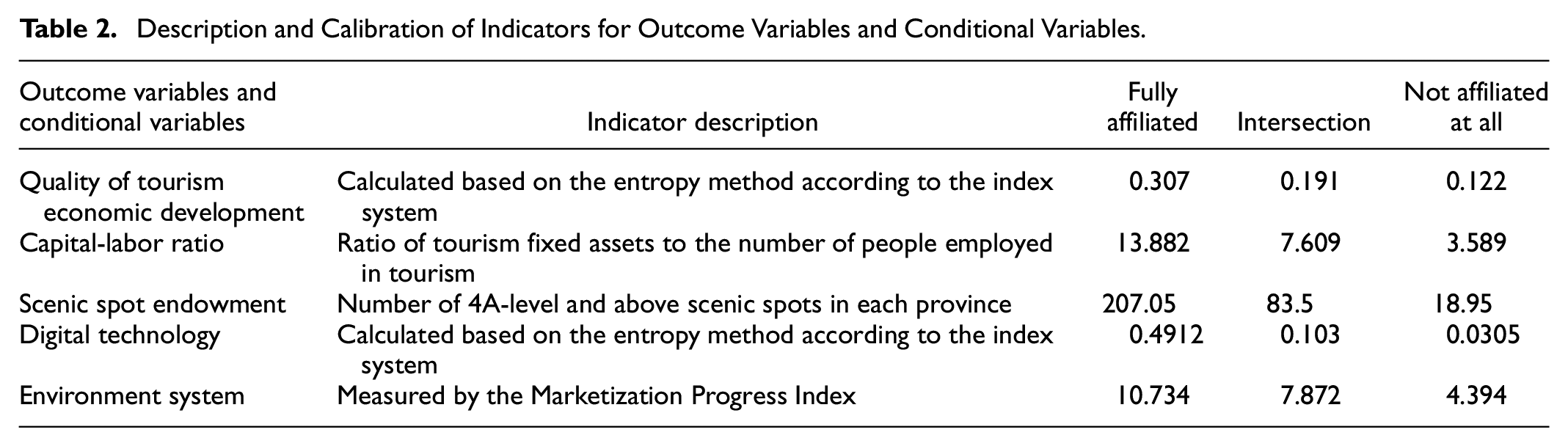
We selected capital-labor ratio, scenic area endowment, digital transformation, and institutional quality as conditional variables, with the quality of tourism economic development as the outcome variable. Direct calibration was used for all variables (Ragin, 2008). The 95%, 50%, and 5% quantiles of the sample data determined membership levels for each conditional variable (Andrews et al., 2016). This calibration process converted variable values into fuzzy set membership scores within the [0,1] interval, representing the degree to which cases belong to each condition set. For example, for the capital-labor ratio, based on industry standards and data characteristics, values above the 95th percentile were calibrated to approach 1, indicating high membership in the high capital-labor ratio condition; values below the fifth percentile were calibrated to approach 0, indicating low membership in this condition. Table 2 shows the indicator description and calibration for each variable. Analysis was conducted using fsQCA3.0 software.
Description and Calibration of Indicators for Outcome Variables and Conditional Variables.
Empirical Results
Results of Regression Analysis
Overall Results
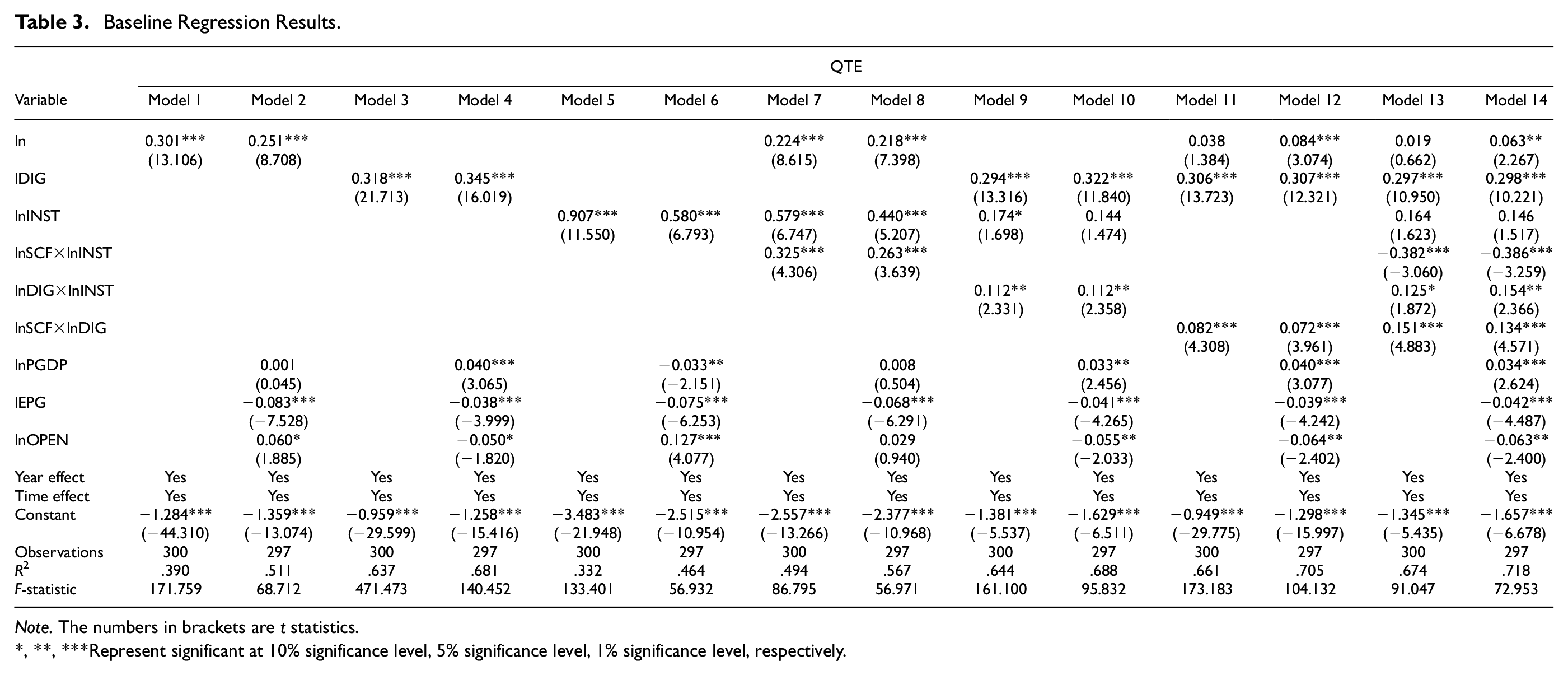
On the basis of preliminary checks (i.e., correlation and multicollinearity analysis), this study employs a fixed-effect model based on the Hausman test results, utilizing least squares regression analysis via Stata16 software. The results are presented in Table 3.
Baseline Regression Results.
Note. The numbers in brackets are t statistics.
, **, ***Represent significant at 10% significance level, 5% significance level, 1% significance level, respectively.
The analysis reveals that upgrades in factor endowment, digital transformation advancements, and institutional quality all significantly and positively influence tourism economic development quality, as demonstrated in Models 1–6. This highlights the importance of efficient resource integration, technological progress, and a supportive institutional framework in enhancing tourism development.
Models 7–8 show that institutional quality not only directly improves tourism economic development quality but also amplifies the positive impact of factor endowment. However, Models 13–14 reveal a counterintuitive finding: the introduction of digital transformation negatively impacts the interaction between factor endowment and institutional quality. This may stem from institutional quality’s difficulty in adapting to rapid technological innovation (Skiter et al., 2021) or a mismatch between digital transformation and traditional tourism industry adjustments (Pang et al., 2022).
In Models 9–10, the interaction between digital transformation and institutional quality is positive and statistically significant at the 5% level, indicating a bidirectional moderating effect. Digital transformation enhances institutional quality’s effectiveness, while institutional quality strengthens digital transformation’s impact on tourism economic development. Additionally, Models 11–12 show that the interaction between factor endowment and digital transformation significantly improves tourism economic development quality, as digital transformation enhances resource allocation efficiency and innovation capabilities.
Regarding control variables, GDP per capita positively correlates with tourism economic development quality at 5% and 1% significance levels, aligning with theoretical expectations. Environmental governance intensity, however, has a counterintuitive negative impact, potentially due to short-term operational cost increases or restrictions on tourism activities. The degree of openness exhibits mixed effects: it is positive in Models 2 and 6 but turns negative when digital transformation variables are introduced (Models 4, 10, 12, and 14), suggesting that while openness brings opportunities, it may also intensify competition or create over-reliance on international markets during rapid digital transformation.
Regression Results by Region
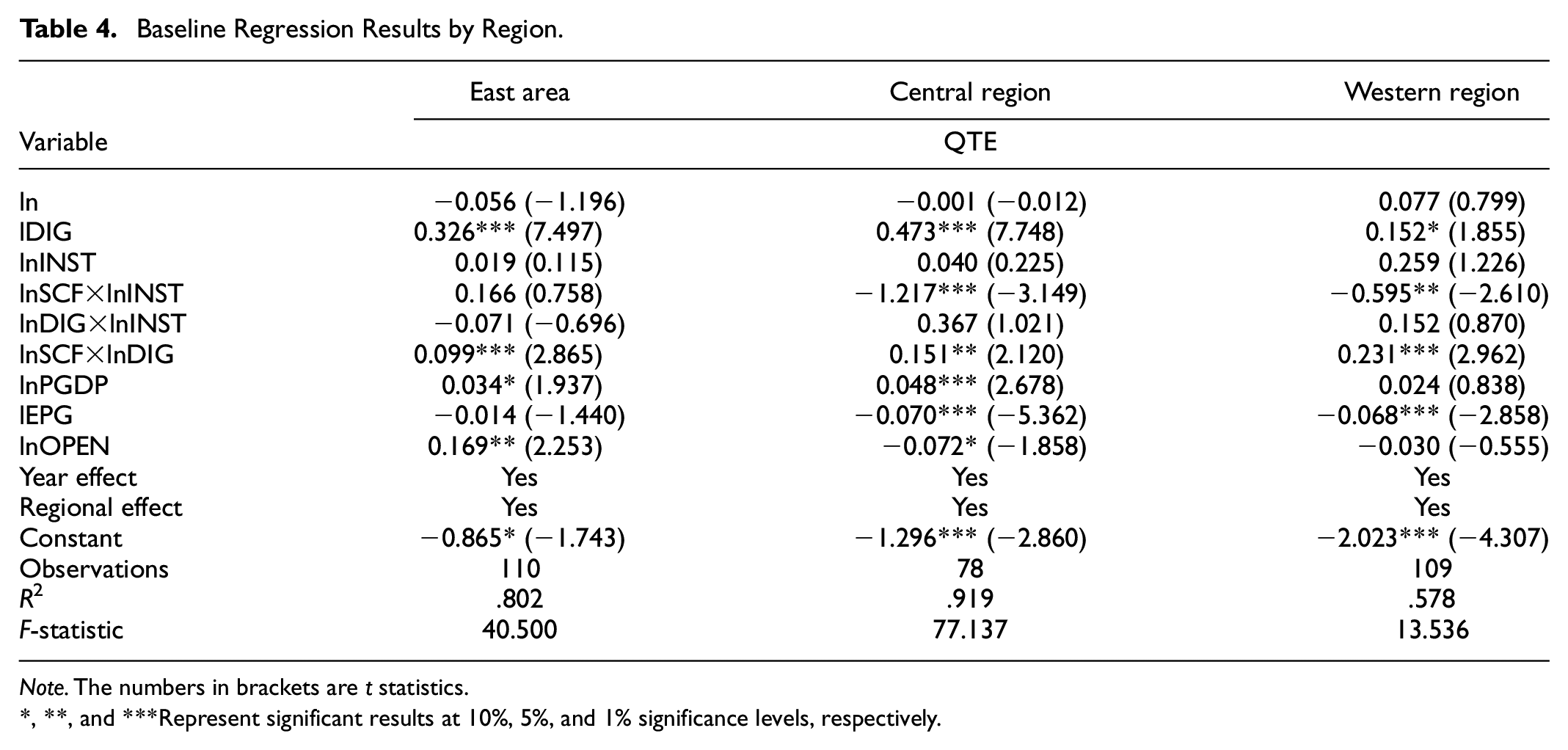
Provinces were categorized into eastern, central, and western regions to examine regional heterogeneity (as shown in Table 4). Digital transformation significantly enhances tourism economic development quality across all regions, demonstrating its broad applicability. It also positively moderates the effects of factor endowment, improving resource allocation and innovation. However, factor endowment alone shows no significant impact, with negative coefficients in eastern and central regions, likely due to diminishing marginal returns in mature industries. In contrast, the western region prioritizes resource exploitation over structural upgrades, reflecting its developmental stage.
Baseline Regression Results by Region.
Note. The numbers in brackets are t statistics.
, **, and ***Represent significant results at 10%, 5%, and 1% significance levels, respectively.
The interaction between factor endowment and institutional quality is insignificant in the east but negatively significant in central and western regions, highlighting weaker institutional adaptability in less-developed areas. Institutional quality itself shows no direct significance nationwide, suggesting either uniform maturity or insufficient variation. Its interaction with digital transformation yields mixed results: negative in the east but positive in central and western regions, indicating context-dependent effects tied to regional digital adoption stages.
These findings indicate that institutional quality, while necessary, is insufficient alone to drive tourism development. Further verification is provided in the subsequent configuration analysis.
Endogeneity Test
Potential endogeneity was addressed using instrumental variables (IVs) and two-stage least squares (2SLS). For digital transformation, the IV was constructed as the interaction between the 1984 provincial post office count and lagged national internet users. Lagged values of factor endowment and institutional quality served as additional IVs. The results are presented in Supplemental Appendix Table A6. First-stage results confirm strong IV relevance (Supplemental Appendix Table A6). Second-stage estimates reaffirm positive impacts of factor endowment, digital transformation, and institutional quality on tourism economic development (p < .05). Robust identification (Kleibergen-Paap LM/Wald F > 10) and exogeneity (Hansen J p > .1) validate the IV approach.
Robustness Test
Three strategies were employed:
Outlier Treatment. All variables underwent bilateral 5% winsorization to minimize the impact of outliers and non-randomness on the measurement results. The results are shown in Supplemental Appendix Table A7. Although the coefficients of some variables changed, the directions of most key variables remained unchanged, verifying the stability of the original regression results.
Time Restriction. The time dimension was shortened to 2012–2019, and the regression analysis was re-run. The results are presented in Supplemental Appendix Table A8. The significance and direction of the main variables are mostly consistent, which further confirms the robustness of the research results.
Variable Substitution. Following the research of Sun et al. (2023), the proxy variable for scenic spot endowment was replaced with 5A scenic spots. The results are shown in Supplemental Appendix Table A9. Most core variables remain significant, which additionally confirms the robustness of the research findings.
Results of fsQCA Analysis
Necessary Conditions Analysis
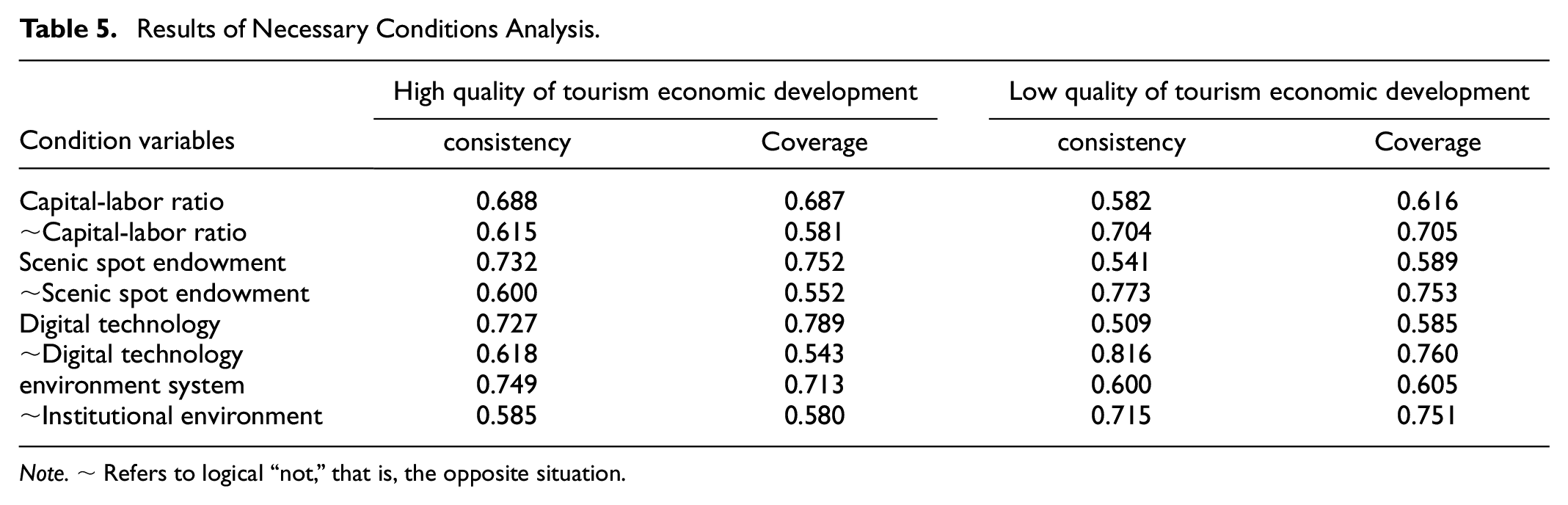
Prior to configuration analysis, we conducted a necessary condition analysis to identify fundamental factors impacting outcomes (Ragin, 2008). A condition or combination of conditions is considered “necessary” if its consistency score exceeds the threshold of 0.9 (Schneider et al., 2010). Coverage, which measures the relevance of a necessary condition, is also evaluated (Ragin, 2006). If both consistency and coverage fall below 0.9, the variables cannot fully explain the outcome alone, necessitating further analysis of condition configurations (Xie & Wang, 2020). Table 5 presents the results of this analysis.
Results of Necessary Conditions Analysis.
Note.∼ Refers to logical “not,” that is, the opposite situation.
For the outcome “high tourism economic development quality,” no single variable met the necessary condition criteria. The highest consistency score was for “scenic spot endowment” at 0.732, below the 0.9 threshold. This suggests that improving tourism economic development quality is a complex process requiring the interplay of multiple factors, including capital-labor ratio, scenic spot endowment, digital transformation, and institutional quality. Since no single variable emerged as a necessary condition, further configuration analysis is required to understand how these factors combine to influence high-quality tourism economic development.
Sufficiency Analysis
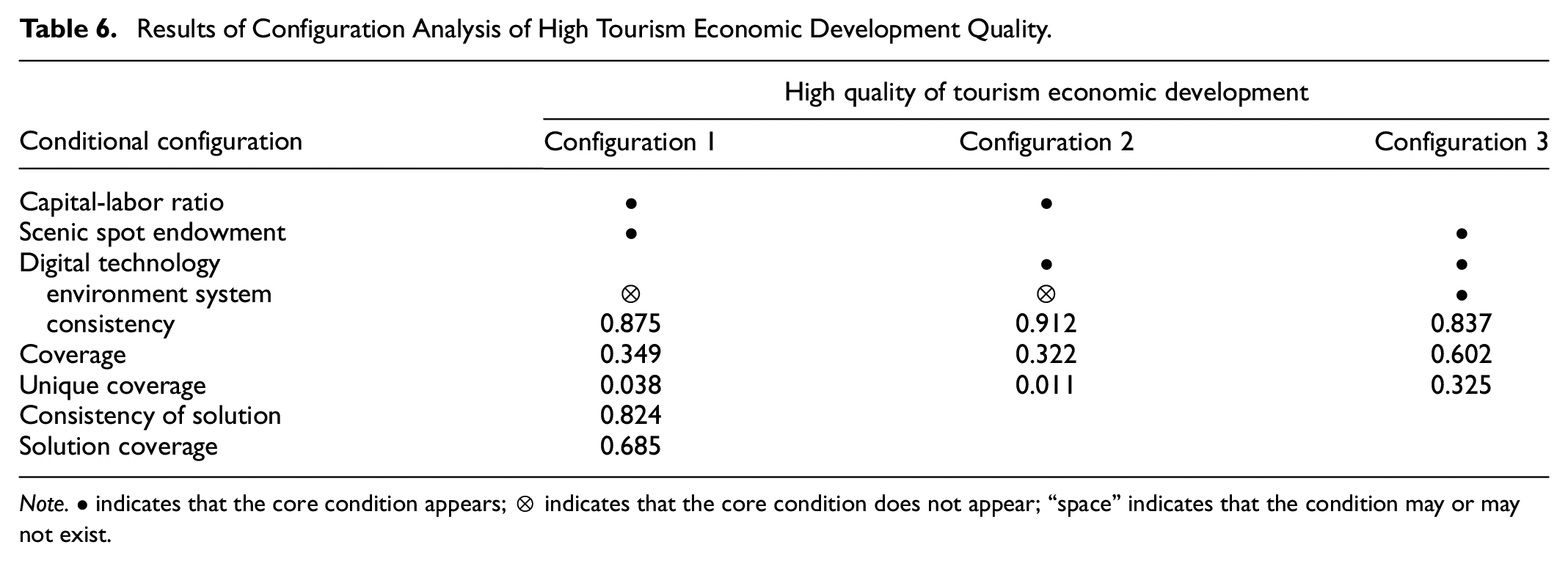
The sufficiency analysis identifies three causal configurations for high tourism economic development quality (Table 6). Solution consistency (0.824) and coverage (0.685) exceed established thresholds (consistency ≥0.80, coverage ≥0.45), confirming robust explanatory power (Fiss, 2011; Wu et al., 2014). A frequency threshold of 1 and PRI score ≥0.65 were applied to ensure analytical rigor (Pappas & Woodside, 2021; C. Q. Schneider & Wagemann, 2012).
Results of Configuration Analysis of High Tourism Economic Development Quality.
Note.• indicates that the core condition appears; ⊗ indicates that the core condition does not appear; “space” indicates that the condition may or may not exist.
Configuration Path 1: Factor Resource Configuration (capital-labor ratio * scenic area endowment * ∼institutional quality). This path explains 34.9% of cases (3.8% unique), showing that optimized capital-labor allocation and abundant scenic resources can compensate for weak institutional frameworks. Strategic resource prioritization—enhancing capital efficiency, labor skills, and leveraging natural/cultural assets—enables high-quality tourism despite institutional gaps.
Configuration Path 2: Technology-Driven Factor Configuration (capital-labor ratio * digital transformation * ∼institutional quality). Accounting for 32.2% of cases (1.1% unique), this path highlights how digital innovation (e.g., smart tourism platforms) and balanced capital-labor inputs mitigate institutional deficiencies. Guizhou Province exemplifies this, achieving significant tourism growth through digital interventions despite underdeveloped institutional frameworks.
Configuration Path 3: Comprehensive Advantage Configuration (scenic spot endowment * digital transformation * institutional quality). This synergistic configuration explains 60.2% of cases (32.5% unique), emphasizing the interdependence of resource quality, technological advancement, and supportive institutions. Regions like Zhejiang and Jiangsu exemplify this path, combining scenic assets (e.g., heritage sites), digital adoption (e.g., e-commerce integration), and institutional support (e.g., market-friendly policies) to achieve balanced outcomes.
As shown in Table 7, these configurations reveal distinct pathways to high-quality tourism economic development under varying conditions. High-quality development typically relies on complementary combinations of favorable conditions, while low-quality development often results from overlapping unfavorable conditions that limit the industry’s potential.
Results of Comparative Analysis Results of Fuzzy Sets of Different Tourism Economic Development Qualities.
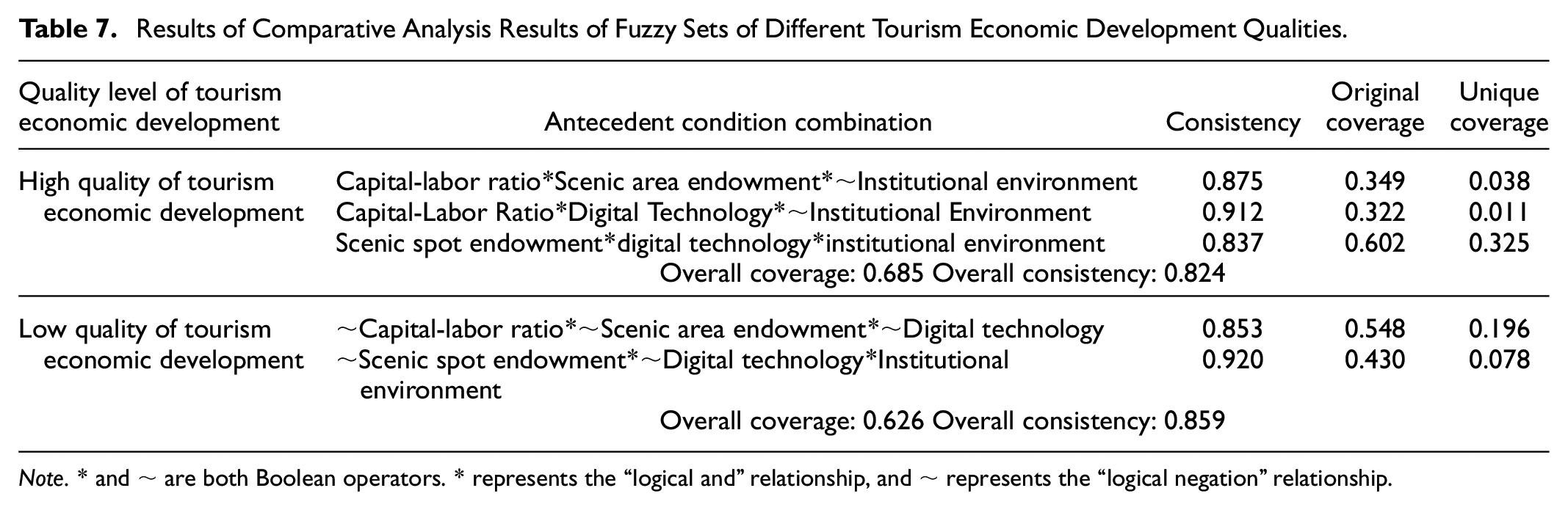
Note.* and ∼ are both Boolean operators. * represents the “logical and” relationship, and ∼ represents the “logical negation” relationship.
The Dual Moderating Role of Institutional Quality
The study identifies a dual moderating role of institutional quality in tourism economic development. First, when complementary conditions (e.g., capital investment, digital transformation) are robust, strong institutional quality amplifies tourism development through policy support, regulatory frameworks, and infrastructure enhancement. Second, abundant capital or scenic resources can partially substitute for weak institutional quality. However, in contexts with severe resource or technological deficits, institutional quality exerts limited moderating effects. These findings highlight that institutional quality’s positive impact is contingent on baseline resource and technological capacities, emphasizing its conditional efficacy in driving sustainable tourism development.
Substitution Relations Between Conditions
The analysis reveals substitution dynamics among the three configurations. Both the Factor Resource and Technology-Driven configurations compensate for weak institutional quality by optimizing capital-labor ratios, scenic resources, or digital transformation, demonstrating substitutability under institutional constraints. Conversely, the Comprehensive Advantage configuration—synergizing scenic resources, digital transformation, and strong institutions—achieves optimal outcomes but can be substituted by the other two when institutions underperform.
These substitution relationships show that high-quality tourism development is attainable through multiple pathways, even amid unfavorable conditions. When institutional quality is deficient, strategic prioritization of complementary factors (e.g., resource optimization, digital adoption) can offset limitations, underscoring the importance of adaptive resource allocation in diverse institutional environments.
Discussion and Conclusions
This study investigates the effects of factor endowment, digital transformation, and institutional quality on the quality of tourism economic development in China. Regression results confirm the positive influence of these three key factors on tourism economic development quality individually. However, factor endowment does not exhibit a significant direct impact across regions, whereas digital transformation remains consistently significant. The fsQCA results further reveal configurational pathways that explain these findings. For instance, the influence of factor endowment is conditional on its combination with other factors, as seen in Configuration Path 1 (Factor Resource Configuration), where the capital-labor ratio and scenic area endowment compensate for weak institutional quality—a relationship undetected in the regression analysis. Digital transformation’s universal significance, evident in two of the three fsQCA configurations (Configurations 2 and 3), aligns with its consistently positive effects in the regression models.
Interaction analysis in the regression models indicates that institutional quality positively moderates the impacts of factor endowment (H5) and digital transformation (H6). Additionally, the interaction between factor endowment and digital transformation (H4) is also positive. However, the three-way interaction yields a counterintuitive negative effect, reflecting complex non-linear relationships. fsQCA clarifies this complexity: institutional quality is negatively associated with high-quality tourism economic development in Configurations 1 and 2 but positively associated in Configuration 3. Regional regression results further support these findings, showing a negative interaction between factor endowment and institutional quality in central and western regions, but no significant interaction in eastern regions. Eastern provinces often follow Configuration Path 3 (Comprehensive Advantage), where institutional quality is a positive contributor, whereas central and western regions align with Configurations 1 and 2, where institutional quality is negatively associated.
Theoretical Implications
Our findings provide several important theoretical contributions to the existing literature on economic growth and tourism development:
First, our study contributes to endogenous growth literature by empirically demonstrating how its key mechanisms operate in the tourism context. Endogenous growth perspectives emphasize that economic growth stems from internal factors such as knowledge accumulation, technological progress, and human capital development (Lucas, 1988; Romer, 1986). Our findings extend this theoretical perspective by showing that in tourism, these endogenous factors operate through complex combinations rather than in isolation. The varying impacts of factor endowment across different regions and configurations suggest that the tourism sector’s growth mechanisms align with endogenous growth theory’s emphasis on knowledge and innovation, but with important contextual variations. This addresses the call by tourism economists (Song et al., 2023; Zheng et al., 2023) for more nuanced applications of growth theories to tourism’s unique characteristics.
Second, our findings challenge conventional institutional economics as applied to tourism development. Traditional institutional perspectives posit that stronger institutions invariably lead to better economic outcomes (North, 1990). However, our results reveal that institutional quality’s impact on tourism economic development is contingent on other factors rather than universally positive. In regions with abundant resources or strong digital capabilities (Configurations 1 and 2), weak institutional quality does not impede high-quality development. This finding contradicts the institutional primacy assumption prevalent in tourism literature (Muslıja et al., 2017; Rigelský et al., 2021) and suggests a need to reframe institutional influence as contextual rather than deterministic in tourism settings. The negative interaction between factor endowment and institutional quality in less developed regions further supports this conclusion, suggesting that rigid institutional frameworks might actually constrain optimal resource utilization in certain tourism contexts.
Third, our study enhances understanding of resource-based economic development in tourism by demonstrating the conditional nature of factor endowment effects. Classical economic perspectives suggest that resource endowments determine comparative advantage (Maneschi, 1992), and tourism literature has often emphasized the importance of natural and cultural resources for destination competitiveness (Priskin, 2001). Our findings add important nuance by showing that factor endowment’s impact depends on its combination with other conditions. The fsQCA results reveal that similar resource endowments can lead to different outcomes depending on the accompanying technological and institutional conditions. This extends resource-based economic thinking by highlighting the complementarities and substitution effects among different types of resources in tourism development, particularly how technological capabilities can enhance or compensate for traditional resource advantages.
Fourth, our findings contribute to the growing literature on regional economic disparities in tourism development. Previous studies have identified significant variations in tourism development patterns across regions (Shao et al., 2020; Y. Yang et al., 2018), but have not fully explained the underlying mechanisms. Our identification of three distinct pathways to high-quality tourism economic development provides a theoretical framework for understanding these disparities. The varying effectiveness of different factor combinations across regions suggests that development disparities stem not merely from resource inequalities but from complex interactions between resources, technologies, and institutions. This offers a more sophisticated basis for analyzing regional tourism economic development patterns than conventional approaches focusing solely on resource distribution or policy differences.
Fifth, our study advances the integration of technological change into tourism economic growth models. While previous research has established the importance of digital technologies for tourism competitiveness (Buhalis & Law, 2008; Xiang & Gretzel, 2010), our findings provide a more nuanced understanding of how technological advancement interacts with other economic factors. The consistent significance of digital transformation across all regression models and its presence in multiple fsQCA configurations suggests that technological progress functions as both a direct driver and an enabling factor that enhances the effectiveness of other inputs. This aligns with endogenous growth theory’s emphasis on technological change as a key growth driver, while extending it by demonstrating how digital technologies specifically contribute to tourism economic development quality through multiple causal pathways.
Policy Implications
The findings of this study offer several significant policy implications. Based on our study findings, we propose an approach to policy development that addresses four major dimensions: optimizing factor endowment and resource allocation, accelerating digital transformation, strengthening institutional quality, and promoting regional differentiation and integration.
First, the efficient allocation of resources emerges as a key foundation for high-quality tourism development. Policymakers should prioritize the upgrade of human, capital, and natural resources within the tourism sector. This involves implementing strategies to enhance human capital through targeted education and training programs that align with the evolving needs of the industry. Such programs should focus on developing skills that are not only relevant to current tourism operations but also adaptable to future trends and technological advancements. Additionally, policies should encourage strategic capital investment in high-potential tourism projects and infrastructure development. This could include incentives for private sector investment in sustainable tourism initiatives or public-private partnerships for large-scale tourism infrastructure projects. Equally important is the promotion of sustainable use of natural and cultural resources, ensuring their preservation while maximizing their economic potential. By fine-tuning the factor endowment, policymakers can create a solid foundation for sustainable growth and increased productivity in the tourism sector.
Second, digital transformation has emerged as a key driver of tourism development, and its importance is likely to grow in the coming years. Policymakers should create a supportive environment for the widespread adoption of digital technologies across the tourism value chain (Perelygina et al., 2022). Policies should focus on developing digital infrastructure, such as high-speed internet connectivity in tourist destinations, and promoting digital literacy among tourism stakeholders. Support for innovation in tourism-related technologies, perhaps through grants or tax incentives for R&D in tourism technologies, could foster the development of locally relevant solutions. However, it’s essential to address the potential short-term disruptions caused by rapid digitalization, particularly in terms of employment. Implementing reskilling programs and supporting the transition to digital-oriented roles can help mitigate these challenges while fostering a more resilient and competitive tourism industry.
Third, institutional quality plays a critical role in shaping the quality of tourism development, and strengthening this environment should be a key focus for policymakers (Ahmad et al., 2021). This involves creating and refining legal frameworks, regulations, and governance structures that support sustainable tourism growth. Developing clear guidelines for tourism development, streamlining bureaucratic processes, and ensuring fair competition within the industry are essential steps. Policies should also address issues of environmental protection, cultural preservation, and community engagement in tourism development. This might involve implementing stricter environmental regulations for tourism businesses, creating mechanisms for local community input in tourism planning, or developing programs to support the preservation of cultural heritage sites. Furthermore, fostering collaboration between government bodies, private sector entities, and local communities can create a more robust and supportive institutional framework for the tourism industry.
Finally, recognizing the diverse nature of tourism resources and development levels across different regions, policymakers should adopt a differentiated approach to tourism development while also promoting regional integration. This involves tailoring strategies to leverage the unique strengths and address the specific challenges of each region. For areas rich in natural resources but lacking in infrastructure, policies might focus on sustainable eco-tourism development. Regions with a strong cultural heritage might benefit from policies promoting cultural tourism and preservation. Furthermore, there’s a need for policies that promote regional integration and cooperation in tourism development. This could involve creating tourism corridors, facilitating cross-regional marketing initiatives, and developing integrated transportation networks to enhance overall tourism competitiveness.
Limitations and Future Research
While this study significantly enhances our understanding of high-quality tourism development, it has several limitations and opportunities for future research. First, the study focuses on China, which may restrict the study’s generalizability. Future research could extend the analysis to other countries or conduct comparative studies to test the robustness of the findings and explore the influence of national-level factors such as political systems and economic structures. Second, the reliance on secondary data may affect comprehensiveness. Important variables such as tourism service quality and environmental impact are not directly measured. Future research could collect primary data to gain deeper insights. Third, the study focuses on factor endowment, digital transformation, and institutional quality but overlooks other factors like human capital, social networks, and cultural resources. Future research could incorporate these variables to provide a more comprehensive understanding of high-quality tourism growth.
Supplemental Material
sj-docx-1-jtr-10.1177_00472875251349238 – Supplemental material for Pathways to High-Quality Tourism Development: An Integrated Analysis of Factor Endowment, Digital Transformation, and Institutional Quality
Supplemental material, sj-docx-1-jtr-10.1177_00472875251349238 for Pathways to High-Quality Tourism Development: An Integrated Analysis of Factor Endowment, Digital Transformation, and Institutional Quality by Jianlan Zhong, Huimin Xie and Zhibin Lin in Journal of Travel Research
Supplemental Material
sj-docx-2-jtr-10.1177_00472875251349238 – Supplemental material for Pathways to High-Quality Tourism Development: An Integrated Analysis of Factor Endowment, Digital Transformation, and Institutional Quality
Supplemental material, sj-docx-2-jtr-10.1177_00472875251349238 for Pathways to High-Quality Tourism Development: An Integrated Analysis of Factor Endowment, Digital Transformation, and Institutional Quality by Jianlan Zhong, Huimin Xie and Zhibin Lin in Journal of Travel Research
Footnotes
Author Contributions
Jianlan Zhong: Conceptualization; Data curation; Funding acquisition; Investigation; Methodology; Project administration; Validation; Visualization; Writing—original draft. Huimin Xie: Data curation; Formal analysis; Validation; Visualization; Writing—original draft. Zhibin Lin: Conceptualization; Project administration; Resources; Writing—review & editing.
Funding
The author(s) disclosed receipt of the following financial support for the research, authorship, and/or publication of this article: This work has been supported by the Humanities and Social Sciences Planning Fund of the Ministry of Education (24YJA630141), the Major Projects of Fujian Social Science Base (No. FJ2022JDZ036).

Supplemental Material
Supplemental material for this article is available online.
Author Biographies
References
Supplementary Material
Please find the following supplemental material available below.
For Open Access articles published under a Creative Commons License, all supplemental material carries the same license as the article it is associated with.
For non-Open Access articles published, all supplemental material carries a non-exclusive license, and permission requests for re-use of supplemental material or any part of supplemental material shall be sent directly to the copyright owner as specified in the copyright notice associated with the article.
