




Abstract
The existing literature has largely overlooked the effects of foreign aid on tourism demand in developing countries, and the channels through which this relationship operates. This study fills this gap by examining the direct and indirect effects of aid on tourism demand using data from 96 developing countries spanning the period 1995 to 2020. We reveal the existence of an inverted U-shaped relationship where aid negatively affects tourism demand beyond a specific threshold. Our findings also suggest that institutional quality and political stability are crucial for maximizing the impact of aid, while human development and economic growth serve as key mediating channels. These results imply that to boost tourism demand, recipient countries should prioritize strengthening governance and institutional frameworks, while donors should target aid toward human development and infrastructure projects supporting the tourism sector. Focusing on these areas can help both donors and recipients reduce poverty and enhance economic resilience.
Introduction
Tourism is widely recognized as a significant driver of economic growth and a major source of employment, particularly in developing countries (Akamavi et al., 2023; I. T. Christie, 2002; Ogbuabor et al., 2024; United Nations Conference on Trade and Development, 2017). By attracting foreign exchange, enhancing infrastructure, and fostering cultural preservation, tourism contributes to poverty alleviation and creates inclusive opportunities for local communities (I. T. Christie, 2002; Ehigiamusoe et al., 2023; Fang, 2020; Nguyen, 2021; Ogbuabor et al., 2024). These benefits highlight the sector’s potential to serve as a catalyst for sustainable development in low- and middle-income countries. However, the realization of this potential is often constrained by institutional weaknesses, governance challenges, and aid dependency, which can limit the extent to which tourism translates into meaningful economic gains (Barkat, Alsamara, & Mimouni, 2024; Fang, 2020; Moss et al., 2006).
Despite its promise, the tourism sector in many developing countries faces significant barriers to growth. Inadequate infrastructure, workforce skill gaps, political instability, and limited access to financial services hinder the sector’s ability to thrive and compete on a global scale (I. Christie et al., 2014; Nguyen, 2021; Ogbuabor et al., 2024). These challenges highlight the need for targeted interventions to address structural bottlenecks and unlock the full potential of tourism as a development tool. In this context, Official Development Assistance, a form of foreign aid, emerges as a critical resource for supporting tourism development. This aid can provide financial and technical assistance for infrastructure projects, capacity-building initiatives, and investment programs, thereby enhancing the competitiveness and appeal of tourism destinations in developing countries. Empirical evidence suggests that foreign aid has been instrumental in promoting public investment in transport and communication sectors (Donaubauer et al., 2016; Feyzioglu et al., 1998). Additionally, foreign aid can support education and training programs, equipping local communities with the skills necessary to participate in the tourism industry (Riddell & Niño-Zarazúa, 2016), and facilitate technology transfer, which boost human and capital productivity (Askarov & Doucouliagos, 2015), thereby contributing to tourism growth.
The growing importance of Official Development Assistance is evident in its remarkable expansion over the past few decades, with net Official Development Assistance per capita increasing by 200% from $12.33 in 1995 to $36.98 in 2022 (World Development Indicators (WDI), 2023). However, the effectiveness of foreign aid in fostering sustainable tourism development is not guaranteed. It hinges on a country’s absorptive capacity which is often constrained by structural and institutional limitations. Once these limits are reached, additional aid may become counterproductive or yield negligible benefits. Despite its critical importance, the concept of absorptive capacity remains underexplored in the context of tourism development, leaving a significant gap in understanding how aid can be optimized to support this sector.
While the broader effects of foreign aid on economic growth have been extensively examined (Arndt et al., 2015; Askarov & Doucouliagos, 2015; Barkat, Alsamara, & Mimouni, 2024; Chauvet & Ehrhart, 2018; M. A. Clemens et al., 2012; Minoiu & Reddy, 2010; Rajan & Subramanian, 2008; Younger, 1992), its specific role in tourism development has received limited attention. Existing research has primarily focused on other external financial flows, such as Foreign Direct Investment (FDI) and remittances, and their influence on tourism demand (Hasan et al., 2022; Mora-Rivera & García-Mora, 2021; Ogbuabor et al., 2024). The direct impact of Official Development Assistance on tourism, particularly in relation to absorptive capacity and institutional factors, remains largely unexplored. This gap in the literature is specifically concerning given the centrality of tourism in the development strategies of many low- and middle-income countries.
This study aims to address this gap by investigating the nonlinear relationship between Official Development Assistance and tourism demand in developing countries. Specifically, we examine whether the effectiveness of aid in stimulating tourism diminishes beyond a certain threshold, implying that additional aid may yield diminishing or even negative returns. Furthermore, we explore how institutional quality and political stability mediate the effectiveness of aid in driving tourism development. Our study provides new insights to the literature by examining the interaction between Official Development Assistance and these institutional factors.
To achieve these objectives, we employ the dynamic panel threshold approach developed by Seo and Shin (2016) on data from 96 developing countries over a 25-year period (1995–2020). This methodology accounts for potential endogeneity issues and enables a robust analysis of the nonlinear effects of aid on tourism demand. Additionally, we identify three key channels: economic growth, human development, and governance quality through which foreign aid may influence tourism demand. Our analysis also considers the heterogeneity among developing countries, taking into account differences in their levels of development, governance contexts, and institutional frameworks. By doing so, this study provides a detailed understanding of how foreign aid affects tourism demand across diverse contexts, offering tailored policy recommendations to foster sustainable growth in the tourism sector.
The remainder of this paper is structured as follows: Section 2 presents a literature review on aid effectiveness; Section 3 explores the potential direct and indirect channels through which aid influences tourism demand. Section 4 outlines the model, methodology, and data used in this study. Section 5 presents an analysis of the results, while Section 6 further discusses our empirical findings. Finally, Section 7 concludes the study and offers policy recommendations.
Literature review
The effectiveness of foreign aid in stimulating economic growth in developing countries has been the subject of extensive debate, with scholars offering contrasting perspectives. On one side, “aid optimists” argue that foreign aid plays a pivotal role in overcoming critical constraints and driving growth. They contend that aid addresses domestic savings deficiencies (H. Hansen & Tarp, 2000; Radelet et al., 2005), promotes public investment in infrastructure (Feyzioglu et al., 1998), and fosters improvements in human capital (Mishra & Newhouse, 2009; Riddell & Niño-Zarazúa, 2016). In addition, aid can drive technological advancements and promote better governance, contributing to greater economic freedom (Heckelman & Knack, 2009; Morrissey, 2001). Several studies suggest that aid’s effectiveness depends on specific contextual conditions. For instance, Burnside and Dollar (2000) argue that aid fosters growth only in countries with sound policy environments, while H. Hansen and Tarp (2001) maintain that aid remains effective regardless of policy conditions, though with diminishing returns. Guillaumont and Chauvet (2001) add that aid’s success depends more on a country’s vulnerability to external shocks than on the quality of its policies.
Furthermore, certain types of aid have been shown to yield stronger growth effects. M. Clemens and Radelet (2003) reveal the importance of early-impact aid in spurring growth, while Doucouliagos and Paldam’s (2011) meta-analysis highlights a positive relationship between short-term project aid and growth, suggesting that aid is most effective when targeted toward immediate needs.
In contrast, “aid pessimists” argue that foreign aid often fails to catalyze economic growth and, in many cases, may even hinder it. They point to issues such as aid fungibility, where funds are redirected from investment to consumption, thus failing to contribute to long-term development (Boone, 1996; Rajan & Subramanian, 2008). Additionally, aid may foster institutional dependency, weakening governance and accountability structures (Knack, 2001). Corruption, particularly in ethnically diverse countries, has also been linked to the influx of foreign aid (Svensson, 2000), and dependence on external assistance can undermine essential reforms, encouraging rent-seeking behavior instead (Easterly, 2003; Svensson, 2000).
Regardless of the standpoint, there is a growing consensus that the relationship between foreign aid and economic growth in recipient countries is nonlinear, indicating the presence of diminishing returns and absorptive capacity constraints (M. A. Clemens et al., 2004; M. Clemens & Radelet, 2003; Feeny & de Silva, 2012). Accordingly, excessive aid inflows may become progressively less productive once a country’s ability to absorb and utilize aid is exceeded.
The concept of absorptive capacity has been central to the debate on aid effectiveness (Amprou & Chauvet, 2004; M. A. Clemens et al., 2012; Dalgaard et al., 2004; H. Hansen & Tarp, 2001). It posits that a country’s capacity to effectively utilize aid is constrained by various structural and institutional factors. Once these limits are surpassed, the additional aid may be ineffective or even harmful, creating diminishing marginal returns.
Specifically, macroeconomic constraints, such as the risk of Dutch disease, are a major concern in countries receiving large inflows of aid. When aid leads to an appreciation of the real exchange rate, exports become less competitive, undermining long-term economic sustainability (Amprou & Chauvet, 2004; Feeny & de Silva, 2012; Kang, 2010). Moreover, the behavior of donors plays a significant role in shaping aid effectiveness. The proliferation of donors often leads to fragmented efforts, inefficiencies, and coordination challenges (M. Clemens & Radelet, 2003; Feeny & de Silva, 2012). Donor fragmentation can create overlapping projects, contradictory policy directions, and administrative burdens that undermine recipient governments’ ability to implement long-term, coherent development strategies.
Institutional quality is another crucial determinant of aid effectiveness. Weak governance, corruption, and inefficiency significantly hinder the effective use of aid (M. Clemens & Radelet, 2003). In countries with strong institutions, transparent governance, and sound policy frameworks, aid is more likely to achieve positive outcomes before reaching the point of diminishing returns (H. Hansen & Tarp, 2001; Radelet et al., 2005). A significant improvement in institutional quality can substantially enhance both the effectiveness of aid and the country’s overall capacity to absorb it (Feeny & McGillivray, 2009).
Infrastructural deficiencies further constrain the effectiveness of aid. Many developing countries lack essential infrastructure, including reliable transportation networks, energy supplies, and digital connectivity, all of which are necessary for the successful implementation and scalability of aid-funded projects (Briceño-Garmendia & Estache, 2004; Feeny & de Silva, 2012). Without robust infrastructure, aid investments may fail to translate into sustainable economic growth. Additionally, human capital shortages, such as low levels of education and inadequate healthcare systems, can compromise the ability of countries to effectively implement aid programs (Radelet et al., 2005). The “brain drain” phenomenon, wherein educated individuals migrate abroad, exacerbates these challenges, limiting the availability of skilled labor needed for the effective absorption of aid (Feeny & de Silva, 2012).
Sociocultural factors, such as local resistance to externally-driven projects or cultural misalignment, can also impede the successful implementation of aid programs. Aid initiatives that fail to align with local priorities or lack community involvement often face resistance, diminishing their overall impact (Feeny & de Silva, 2012). Ensuring that aid programs are culturally sensitive, locally supported, and driven by community ownership is essential for maximizing their effectiveness.
Scholars have rigorously tested the diminishing returns to aid hypothesis by incorporating squared aid terms into growth models to capture the nonlinear relationship. Studies by Hadjimichael et al. (1995), M. A. Clemens et al. (2012), and H. Hansen and Tarp (2001) identify the threshold for diminishing returns at around 25% to 30% of the Gross Domestic Product. Lensink and White (2001) further refine this, suggesting that aid becomes detrimental beyond 40% to 50% of the Gross National Product. These findings suggest that absorptive capacity constraints are only a significant issue for a limited number of countries. Elbadawi (1999) supports this view, showing that aid can hinder exports once it surpasses a certain threshold, aligning with the diminishing returns hypothesis.
These findings highlight the complexity of assessing aid’s macroeconomic effects, leading to a shift toward sectoral analyses. Evidence increasingly points to aid’s significant impact on specific sectors. For example, foreign aid has been shown to reduce carbon dioxide emissions (Barkat, Alsamara, & Mimouni, 2024; Ikegami & Wang, 2021), improve access to water and sanitation in Africa (Ndikumana & Pickbourn, 2017), and increase agricultural productivity (Barkat & Alsamara, 2019). In the health sector, numerous studies confirm a positive relationship between aid and improved health outcomes (Barkat et al., 2016; Feeny & Ouattara, 2013; Leunig et al., 2024).
To the best of our knowledge, no study has yet examined the effect of official development assistance on tourism demand across a broad range of developing countries. Hence, our paper seeks to contribute to the growing body of literature on aid effectiveness by extending the analysis to the tourism sector. Additionally, this study will explore potential nonlinearities and threshold effects in the aid–tourism relationship, building on the frameworks developed in previous studies.
Conceptual framework: Foreign aid’s direct and indirect effects on tourism in developing countries
This section examines how foreign aid influences tourism demand in developing countries, highlighting both direct and indirect effects.
The direct effect operates through three mechanisms. First, project aid supports the development of infrastructure networks which are critical for promoting tourism in developing countries. Governments may use a fraction of the Official Development Assistance to construct/maintain roads, bridges, airports, and other transportation systems that are essential for tourism success. Khadaroo and Seetanah (2008) find that the development of transport infrastructure is a key aspect of the attractiveness of travel destinations. Accordingly, improving travel convenience can increase the number of tourists visiting a country. Aid can also support the development of basic infrastructure such as water and sanitation systems (Ndikumana & Pickbourn, 2017), enhancing tourists’ quality of stay and making their experience more pleasant. Moreover, foreign aid can be used to support sustainable tourism initiatives such as eco-tourism and community-based tourism, which make some destinations more appealing to responsible travelers. Combined, these actions can lead to a long-term sustained increase in tourism demand. Second, technical assistance provided through the Official Development Assistance program may help developing countries improve their tourism industry. This assistance can improve tourism policies and regulations, contribute to tourism product development, and create employment opportunities. Third, budgetary support represents another avenue in which foreign aid can foster tourism in developing countries. This is achieved by directly providing financial aid to the government of a developing country to support national budget initiatives focused on tourism. These budget initiatives include, for example, marketing and promotion campaigns, investments in tourism facilities, and the development of convenient modern financial services.
Beyond these direct effects, foreign aid can indirectly shape tourism demand through improvements in human development, institutional quality, and economic growth. The first indirect channel is human development. A substantial body of empirical research shows that foreign aid enhances human development by improving education, healthcare, and access to clean water and sanitation (Bendavid & Bhattacharya, 2014; Mishra & Newhouse, 2009; Ndikumana & Pickbourn, 2017; Riddell & Niño-Zarazúa, 2016). These advances in living standards and human capital can boost tourism arrivals in several ways. First, skilled and knowledgeable workers offer high-quality services, generating positive reviews and word-of-mouth recommendations that attract more tourists. Second, better human capital drives innovation, resulting in new tourism-related activities tailored to diverse interests. Finally, enhanced language skills help facilitate communication with visitors from different countries. Indeed, multiple studies indicate that a nation’s education level and healthcare quality positively correlate with international tourist arrivals (Ejiofor & Elechi, 2012; Gani & Clemes, 2017; Konstantakopoulou, 2022). Therefore, we investigate this indirect channel by first assessing the effect of aid on human development, then examining whether the resulting improvements subsequently drive increased tourism demand.
The second indirect effect relates to institutional quality, which significantly influences the business environment. Well-functioning institutions that uphold rules and laws create secure and stable working conditions for tourism operators, attracting increased investment in the sector and enhancing the quality of tourism services (Ghalia et al., 2019). Moreover, institutional quality affects how a country is perceived as a safe and reliable destination for tourists. Political instability and corruption can deter visitors, while strong institutions typically foster a positive perception of security (Tang, 2018).
Despite its potential positive externalities for tourism, the net effect of aid on tourism arrivals through the institutional quality channel remains unclear, as the first leg in this relationship (i.e., the impact of aid on institutional quality) can be either positive or negative. Some studies suggest that aid can enhance institutional quality by reducing corruption and promoting democracy and political institutions (Goldsmith, 2001; Jones & Tarp, 2016; Okada & Samreth, 2012; Tavares, 2003). In contrast, other research indicates that aid may weaken local institutions (Asongu & Nwachukwu, 2016; Easterly, 2006).
Therefore, if foreign aid strengthens institutional capacity, tourist arrivals are likely to increase; however, if aid undermines institutions, the number of tourists may decline. Given these mixed findings, we re-evaluate whether aid enhances institutional quality to validate the second channel whereby aid supports tourism growth.
The third indirect effect of aid on tourism is economic growth. Growing economies may allocate large resources to investment in tourism facilities and infrastructure such as airports, roads, and hotels. This leads to improved access to tourist attractions and a wider range of accommodation and lodging options for tourists. Moreover, economic growth can create new tourism opportunities. As economies expand, new entrepreneurial initiatives, tourism products, and services emerge including cultural tours, adventure tourism, and eco-tourism experiences. These offerings cater to a broader range of tourists, thereby increasing tourists’ arrivals (Pulido-Fernández & Cárdenas-García, 2021; Rasool et al., 2021). Additionally, fast growing economies tend to improve their financial systems and communication networks to cover more remote areas which is very convenient for tourists. Several studies have explored the relationship between economic growth and tourism arrivals and have found a positive correlation between economic growth and the number of international tourists visiting a country (Eugenio-Martin et al., 2008; Isik et al., 2018; Payne & Mervar, 2010). However, the development of tourism demand through this channel is contingent upon the impact of foreign aid on economic growth. The empirical literature documents that this effect remains ambiguous with some studies showing a positive impact (Arndt et al., 2015; Barkat, Alsamara, & Mimouni, 2024; Chauvet & Ehrhart, 2018; M. A. Clemens et al., 2012; Minoiu & Reddy, 2010), and others revealing a negative impact (Rajan & Subramanian, 2008; Younger, 1992).
Given the divergent results regarding the impact of aid on economic growth, we re-examine these relationships to validate the third hypothesis which stipulates that foreign aid promotes tourism demand through the economic growth channel.
Figure 1 summarizes our conceptual framework, illustrating the direct and indirect mechanisms through which aid may influence the tourism sector in developing countries. Figure 1 assumes that aid positively impacts tourism through three main transmission channels: economic growth, institutional quality, and human development. Additionally, Figure 1 highlights how tourism development contributes to achieving the Sustainable Development Goals. For instance, tourism plays a vital role in advancing the Sustainable Development Goals by fueling economic growth, reducing poverty, promoting gender equality, and fostering environmental sustainability (Buhalis et al., 2023; United Nations Development Programme [UNDP], 2018). As a key contributor to Sustainable Development Goal 8 (Decent Work and Economic Growth) and Sustainable Development Goal 12 (Responsible Consumption and Production), tourism generates employment across various sectors, stimulates local economies, and supports infrastructure development (United Nations Development Programme, 2018).
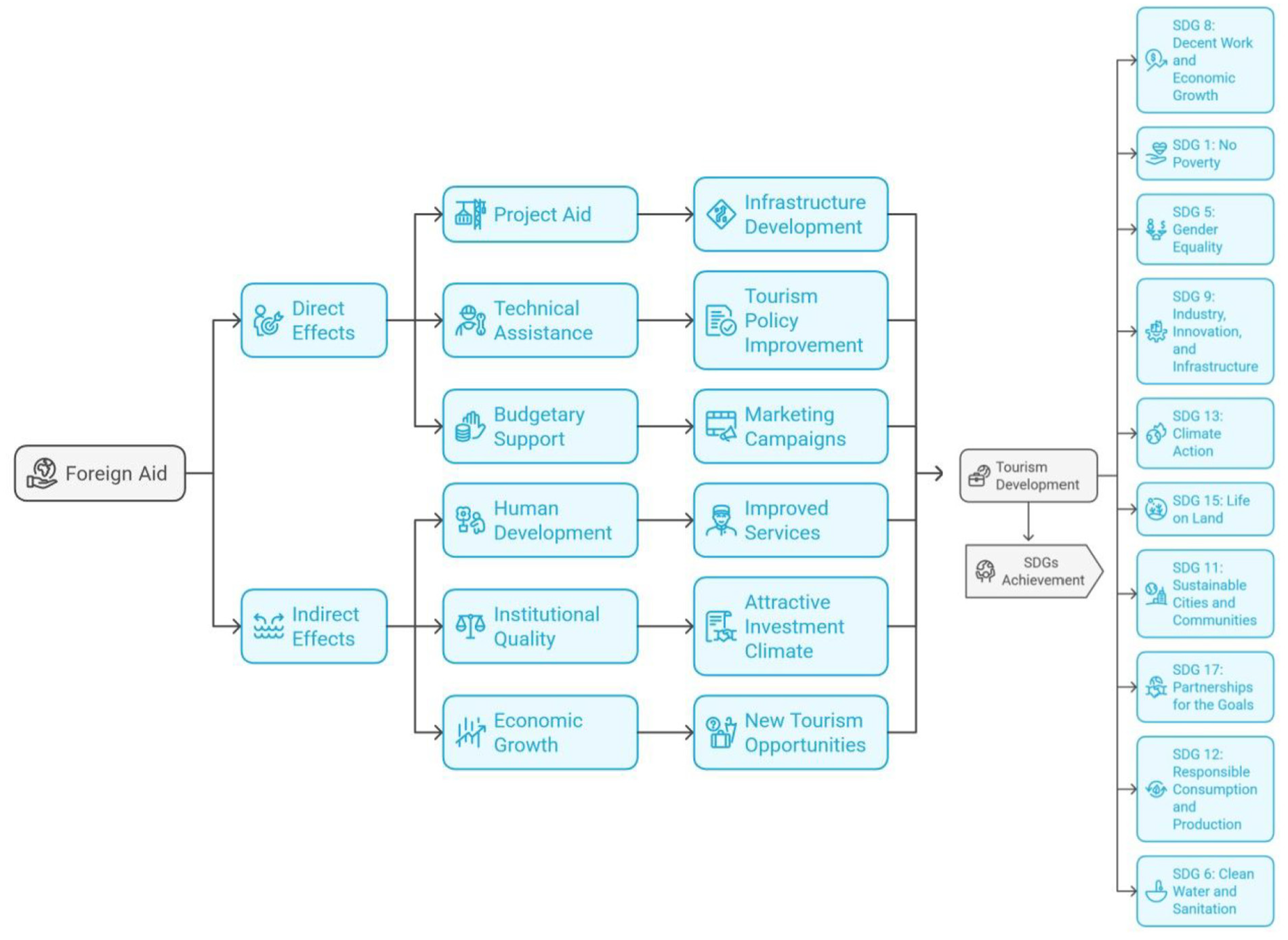
Conceptual framework.
Moreover, tourism plays a pivotal role in advancing several other Sustainable Development Goals, particularly those related to poverty alleviation, gender equality, and infrastructure development. Sustainable Development Goal 1 (No Poverty) benefits significantly from tourism-driven income opportunities, especially in rural communities where ecotourism and handicraft initiatives provide sustainable livelihoods (Birendra et al., 2021). Similarly, the sector contributes to Sustainable Development Goal 5 (Gender Equality) by fostering financial independence and inclusion through job creation and entrepreneurship opportunities for women (Buhalis et al., 2023; United Nations Development Programme, 2018). Furthermore, tourism investments directly support Sustainable Development Goal 9 (Industry, Innovation, and Infrastructure) by enhancing transportation networks, upgrading public utilities, and expanding digital connectivity, benefiting both tourists and local populations (Buhalis et al., 2023).
Beyond its economic contributions, tourism advances environmental and cultural sustainability by promoting responsible travel and funding conservation initiatives through ecotourism revenues. In doing so, it significantly supports Sustainable Development Goal 13 (Climate Action), Sustainable Development Goal 14 (Life Below Water), and Sustainable Development Goal 15 (Life on Land) through efficient waste management, integration of renewable energy, and preservation of the biodiversity (Birendra et al., 2021; Buhalis et al., 2023). Moreover, Sustainable Development Goal 11 (Sustainable Cities and Communities) benefits from heritage tourism, which preserves historical sites, highlights cultural traditions, and strengthens community identity and resilience (Fan, 2023; Gao & Wu, 2017).
Data and Methodology
Data and Sources
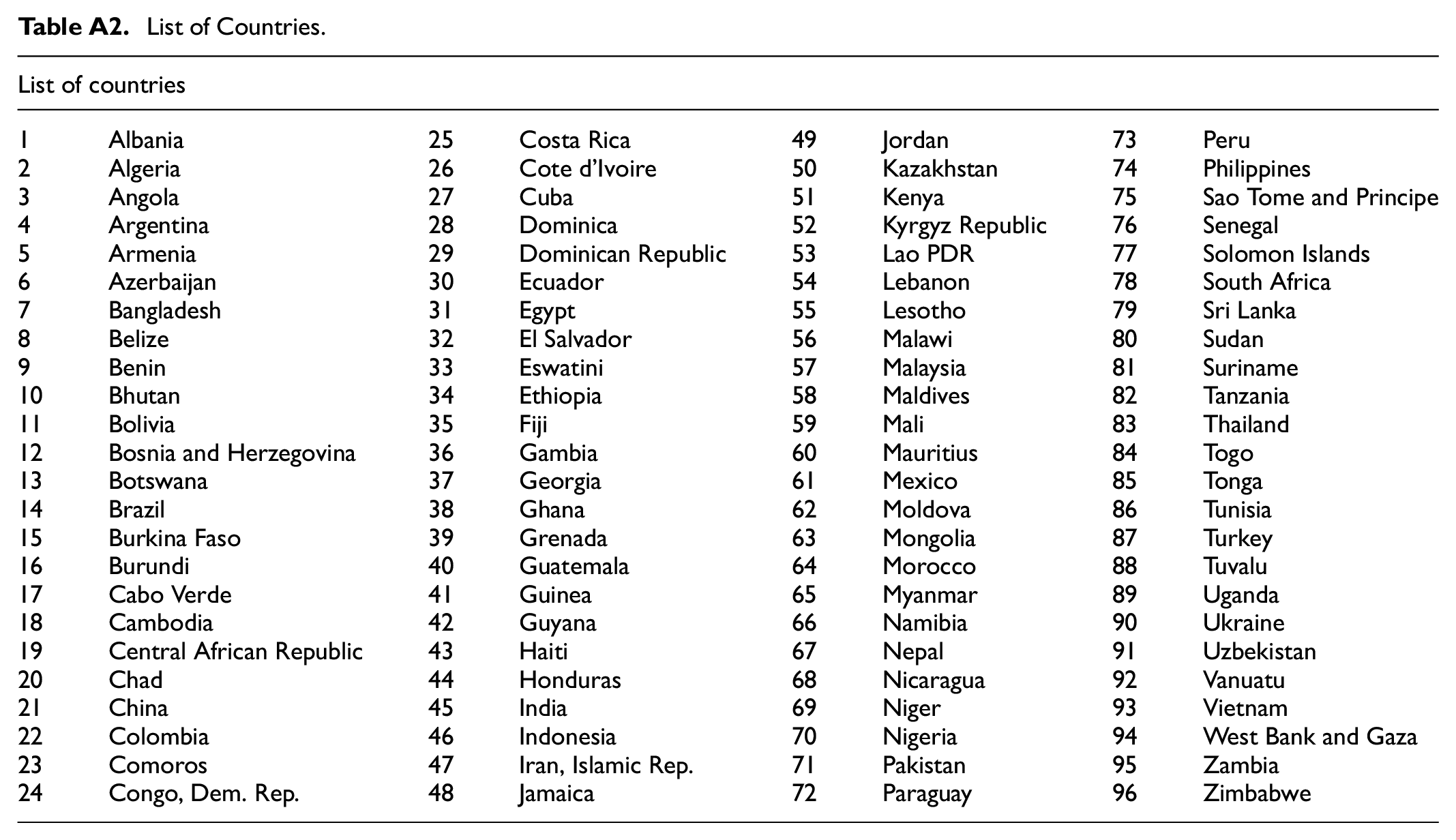
We use annual data of 96 developing countries over the 1995 to 2020 period. 1 The dependent variable (tourist arrivals) and the independent variables (per capita Gross Domestic Product, trade openness, exchange rate, inflation, and population size) are obtained from the World Development Indicators (World Development Indicators (WDI), 2023) available in the World Bank database. The governance variables including control of corruption, political stability and absence of violence are extracted from the Worldwide Governance Indicators (Kaufmann & Kraay, 2023) of the World Bank. We provide below the definition and justification for the choice of these variables. 2
Official Development Assistance is granted by donor countries through the Development Assistance Committee of the Organisation for Economic Co-operation and Development to eligible beneficiary countries. Its primary objective is to promote economic development and improve living standards in developing countries. However, we acknowledge that in politically unstable countries, project failures, disruptions, or cancelations may prevent aid commitments from being fully realized. While our measure of net disbursements accounts for repayments, it does not directly capture unfulfilled commitments or aid that was allocated but never disbursed due to implementation challenges. Despite this limitation, the use of disbursement-based Official Development Assistance per capita remains a widely accepted approach in the literature, as it provides a more accurate representation of the actual financial resources received by recipient countries (Barkat, Alsamara, & Mimouni, 2024).
Many studies have consistently shown that destinations characterized by political stability (Asongu et al., 2019; Elshaer & Saad, 2017; Liu & Pratt, 2017; Tang & Lau, 2021) and strong institutional quality, including effective control of corruption (Banengaï-Koyama et al., 2021; Kim et al., 2017; Lv & Xu, 2017; Maria et al., 2022; Saha & Yap, 2015; Su & Lin, 2014), are more appealing to tourists. These studies highlight the positive correlation between political stability and institutional quality and the attractiveness of a tourist destination. Visitors are often drawn to places that offer a sense of security, peace, and social order. Destinations with stable political environments create an atmosphere of trust and confidence, reassuring tourists about their safety and enhancing their overall travel experience (Asongu et al., 2019; Elshaer & Saad, 2017; Liu & Pratt, 2017; Tang & Lau, 2021).
In addition to political stability, the quality of institutions—particularly their effectiveness in controlling corruption—plays a significant role in attracting tourists. On average, visitors are drawn to destinations that offer a sense of security, peace, and social order, as these factors are crucial to tourism demand. However, certain niche markets, such as dark tourism, challenge this general trend by attracting visitors to sites associated with historical conflicts, disasters, or tragedies, including war memorials, former concentration camps, and disaster-stricken areas. Several studies have highlighted the growing number of tourists interested in visiting places associated with death, disaster, and suffering (Light, 2017; Martini & Buda, 2020). While these destinations appeal to tourists for their historical, educational, or commemorative significance (Farmaki, 2013; Lewis et al., 2022), the broader tourism industry continues to prioritize stability and safety as key determinants of visitor attraction.
Moreover, travelers seek destinations where they can enjoy a transparent and fair experience, free from concerns about bribery, fraud, or unethical practices. Countries with strong institutional frameworks to mitigate corruption build trust among tourists, leading to a more favorable perception of the destination (Banengaï-Koyama et al., 2021; Kim et al., 2017; Lv & Xu, 2017; Maria et al., 2022; Saha & Yap, 2015; Su & Lin, 2014).
For estimation convenience, we have rescaled the control of corruption and political stability variables to a range of 0 to 10, where the lowest value indicates a high level of corruption and political instability, and the highest value indicates the opposite. This allows us to use the squared terms of these variables in our model to investigate potential nonlinear relationships.
Finally, we incorporate two interactive terms in our estimations: the first is the interaction between political stability and foreign aid, while the second is the interaction between control of corruption and foreign aid. These interactive variables are included to examine whether foreign aid is more effective in generating greater tourism demand when a country is politically stable and less corrupt.
Model Specification
In panel data comprising a relatively large number of countries (96 in our sample 3 ) over a short to medium time span (25 years), the issue of endogeneity must be addressed. Ignoring potential endogeneity between foreign aid and tourism demand may lead to inconsistent estimators and spurious results. Therefore, we estimate specification 1 below using the approach developed by Arellano and Bover (1995) and Blundell and Bond (1998), which effectively addresses the endogeneity issues:
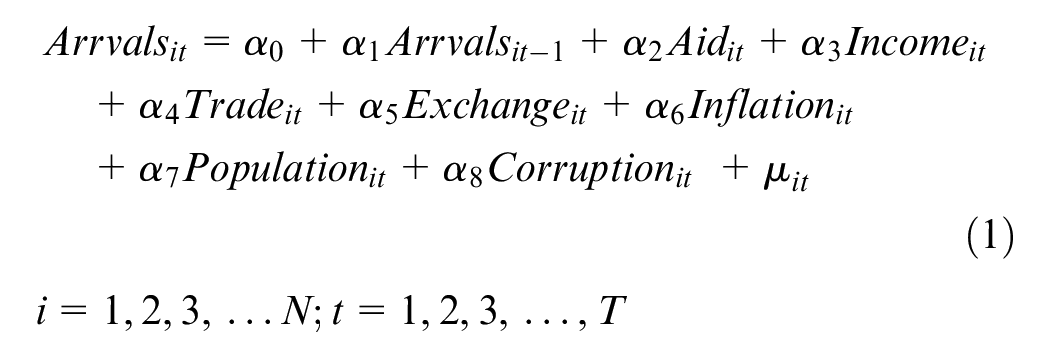
Where Arrivals is the tourist arrivals, Aid is our variable of interest and represents foreign aid per capita, Income is the per capita Gross Domestic Product, Trade is a proxy for trade openness measured as the share of the sum of exports and imports of goods and services in the Gross Domestic Product, Exchange is the exchange rate, Inflation refers to the rate of inflation in the country, and Population indicates total population, Corruption refers to the control of corruption. All variables, except corruption, are expressed in logarithm.
Specification 1 is then augmented by introducing Aid squared
Specifications 2, 3, and 4 are reported below:

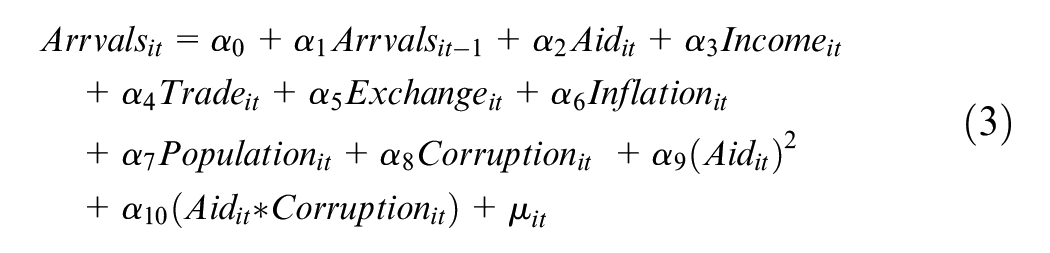
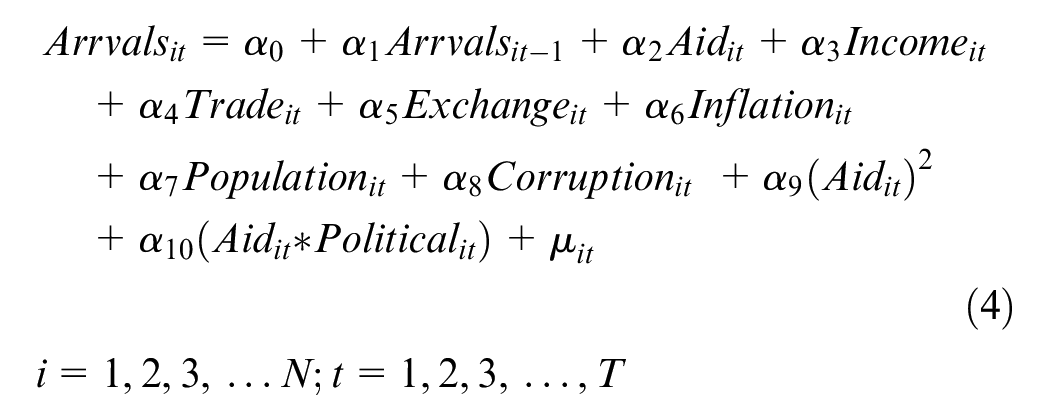
In addition to the System Generalized Method of Moments approach, which is used to uncover potential nonlinearity, we employ the Dynamic Panel Threshold Model introduced by Seo and Shin (2016) to enhance the robustness of our results.
It is important to note that traditional linear methods, such as Ordinary Least Squares, Generalized Method of Moments, and fixed or random effects estimators, have been widely used in the aid effectiveness literature, particularly in empirical studies investigating the diminishing returns of aid (Barkat, Alsamara, & Mimouni, 2024; M. A. Clemens et al., 2012; Dalgaard et al., 2004; Feeny & de Silva, 2012; Feeny & McGillivray, 2009; H. Hansen & Tarp, 2001). While these methods have provided some insights, they may overlook critical nonlinear dynamics and regime-dependent effects in the relationship between aid and economic outcomes.
To address these limitations and ensure robust empirical findings, we adopt the Dynamic Panel Threshold Model, which offers several key advantages. First, one major advantage of the Dynamic Panel Threshold Model is its ability to account for endogeneity in both the threshold variable and regressors. Traditional panel threshold models, such as the static panel threshold model introduced by B. E. Hansen (1999), assume that the threshold variable is strictly exogenous, meaning that it is unaffected by other factors in the model. However, in many economic and policy studies, this assumption is unrealistic. For example, in our context, institutional quality, which serves as a potential threshold variable, is not only a determinant of aid effectiveness but can also be influenced by aid flows themselves. Recognizing the existence of potential endogeneity issues in economic settings, Seo and Shin (2016) extend the threshold framework to allow for endogenous threshold variables, thus reducing bias and improving the reliability of causal inferences.
A second key improvement is the estimation strategy employed by the Dynamic Panel Threshold Model, which relies on First-Difference Generalized Method of Moments to address omitted variable bias, simultaneity, and measurement error. Unlike earlier models that estimate thresholds based on fixed-effects panel regressions (B. E. Hansen, 1999) or instrumental variable approaches for endogenous regressors (Caner & Hansen, 2004), the Dynamic Panel Threshold Model applies a more robust estimation technique that does not require strong instrumental variable assumptions. By using the First-Difference Generalized Method of Moments, the Dynamic Panel Threshold Model controls for time-invariant country-specific effects, ensuring that our estimates reflect the true relationship between aid and tourism demand while mitigating potential interfering influences such as political stability and macroeconomic shocks.
A third advantage of the Dynamic Panel Threshold Model is its ability to identify regime-dependent effects, a crucial feature when analyzing heterogeneous policy impacts. Unlike standard econometric models, which assume a single uniform effect across all observations, the Dynamic Panel Threshold Model allows for data-driven threshold estimation, meaning that it endogenously determines the point at which aid effectiveness changes based on institutional quality or governance conditions. This extends the work of Kremer et al. (2013), who introduced a hybrid dynamic panel threshold model but did not fully address the endogeneity of the threshold variable. The Dynamic Panel Threshold Model allows us to quantify the differential impact of aid on tourism demand across governance regimes by capturing regime shifts, which provides more refined policy guidance compared to static models that assume a fixed threshold effect.
A fourth major contribution of the Dynamic Panel Threshold Model is its ability to capture dynamic threshold effects. Earlier models, such as those developed by B. E. Hansen (1999) and Caner and Hansen (2004), assume that the threshold remains constant over time. This assumption may be unrealistic, particularly in developing economies where institutional reforms, governance structures, and donor policies evolve. Unlike these static approaches, Seo and Shin (2016) introduce a dynamic framework that allows the threshold effect to adjust over time, making it better suited for analyzing economies undergoing structural transformations. This feature is particularly valuable in our study, where changes in governance quality may influence aid effectiveness in different periods.
In our Dynamic Panel Threshold Model approach, we hypothesize that there may be a threshold level of foreign aid above which the marginal effect of aid on tourism demand becomes negative. Additionally, we evaluate the existence of thresholds for other explanatory variables to assess whether the impact of foreign aid on tourism demand varies with levels of institutional quality and political stability. Hence, specification 1 is re-estimated using the threshold regression technique proposed by Seo and Shin (2016) as follows:
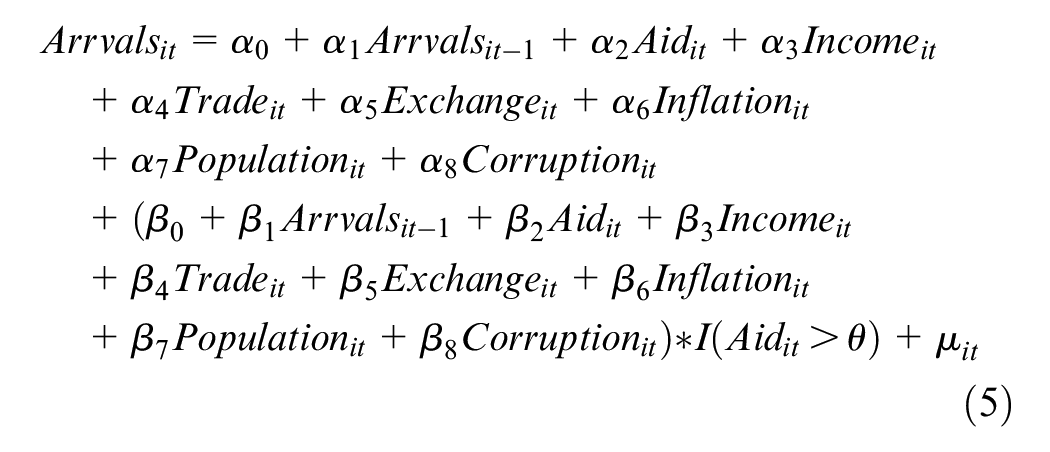

Where the indicator function I(.) is a regime determining function taking a value of 1 when the condition in parentheses is met and 0 otherwise. θ is the threshold parameter. αm and βm (m = 1, 2…8) are the estimated parameters of the regressors and
We also re-estimate Specification 5 by replacing the threshold variable with governance quality indicators (i.e., levels of corruption and political stability) to determine whether these indicators exhibit a threshold effect similar to that of the Aid variable. We hypothesize that higher levels of corruption and lower levels of political stability may hinder aid effectiveness in promoting tourism demand.
Empirical Results
This section proceeds as follows. First, we present an overview of the characteristics of the data used in this study. Next, we provide and discuss the estimation results obtained using the System Generalized Method of Moments developed by Arellano and Bover (1995) and Blundell and Bond (1998). We then apply the dynamic panel threshold model introduced by Seo and Shin (2016), which has not been previously utilized in this context, to explore the relationship between aid and tourism demand. Finally, we empirically analyze the potential channels through which aid influences tourist arrivals.
Summary Statistics and Correlation Analysis
Table 1 reports the descriptive statistics for the data used in this study. Table 1 shows that the average per capita Gross Domestic Product in our sample is around $3,230. This is higher than the median value of $2,424, suggesting that the distribution of income is slightly skewed to the right. Additionally, the distribution of per capita Gross Domestic Product presents large variations as can be seen by the difference between the minimum value and the maximum value in Table 1. Specifically, Myanmar recorded the lowest per capita Gross Domestic Product of $232 in 1995, whereas Argentina achieved the highest per capita Gross Domestic Product of $14,200 in 2011.
Descriptive Statistics.
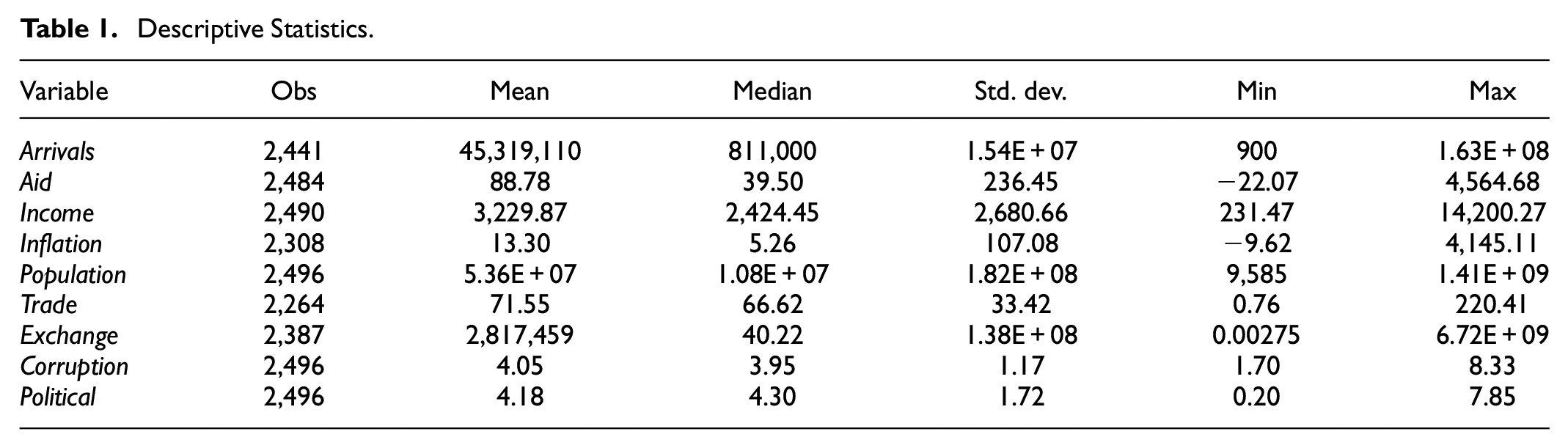
For the dependent variable, which measures tourist arrivals, the average number of visitors between 1995 and 2020 was 4,531,110. The lowest value was recorded in 1995 with 900 visitors for Tuvalu, while China hosted over 162 million visitors in 2019.
Regarding the Aid variable, developing countries in our sample received an average of $88.77 in foreign aid per capita during 1995 to 2020 with relatively high standard deviation suggesting large disparities in the amounts of aid received. This is a stylized fact in aid data where some countries and regions tend to receive more support than others for several reasons related to climate, diseases, poverty rates, conflicts, and historical ties with donors.
When examining institutional quality, the average corruption level (Corruption) was 4.05, surpassing the median of 3.94. This suggests a relatively right-skewed distribution for this variable. Thus, most developing countries have corruption levels below the mean, indicating the widespread prevalence of corruption in these nations. The lowest corruption score of 1.7 was observed in the Democratic Republic of Congo in 1996, while the highest score of 8.32 was recorded in Bhutan in 2020.
The political stability and absence of violence (Political) variable has a mean value of 4.17 which is smaller than the median of 4.30, indicating a left-skewed distribution. Accordingly, most countries in our sample tend to be politically stable.
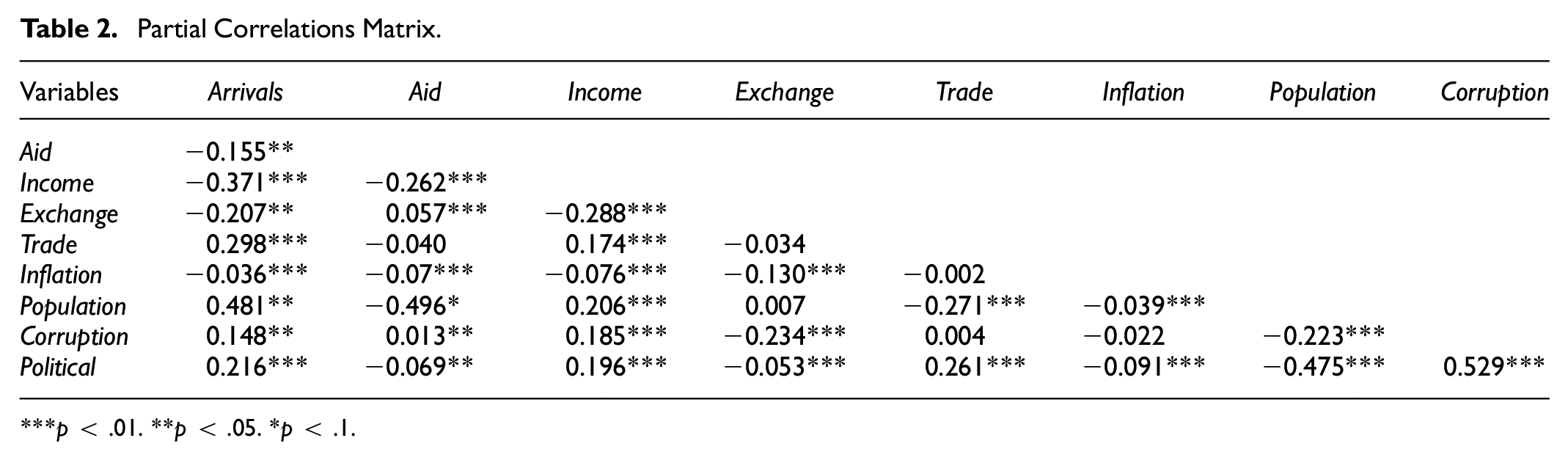
Table 2 includes the partial correlation analysis for the variables used in this study. The results indicate that most coefficients in the correlation matrix are relatively low, except for the correlation between the control of corruption and political stability and absence of violence variables, where the coefficient exceeds 50%. This suggests that including both corruption and political stability in the same model may lead to inconsistent results. Hence, we ensure to add these variables to our estimations one at a time.
Partial Correlations Matrix.
p < .01. **p < .05. *p < .1.
Overall, the correlation matrix in Table 2 suggests that the problems of multicollinearity are not severe in our sample and will not impact our estimation results.
Generalized Method of Moments Estimation Results
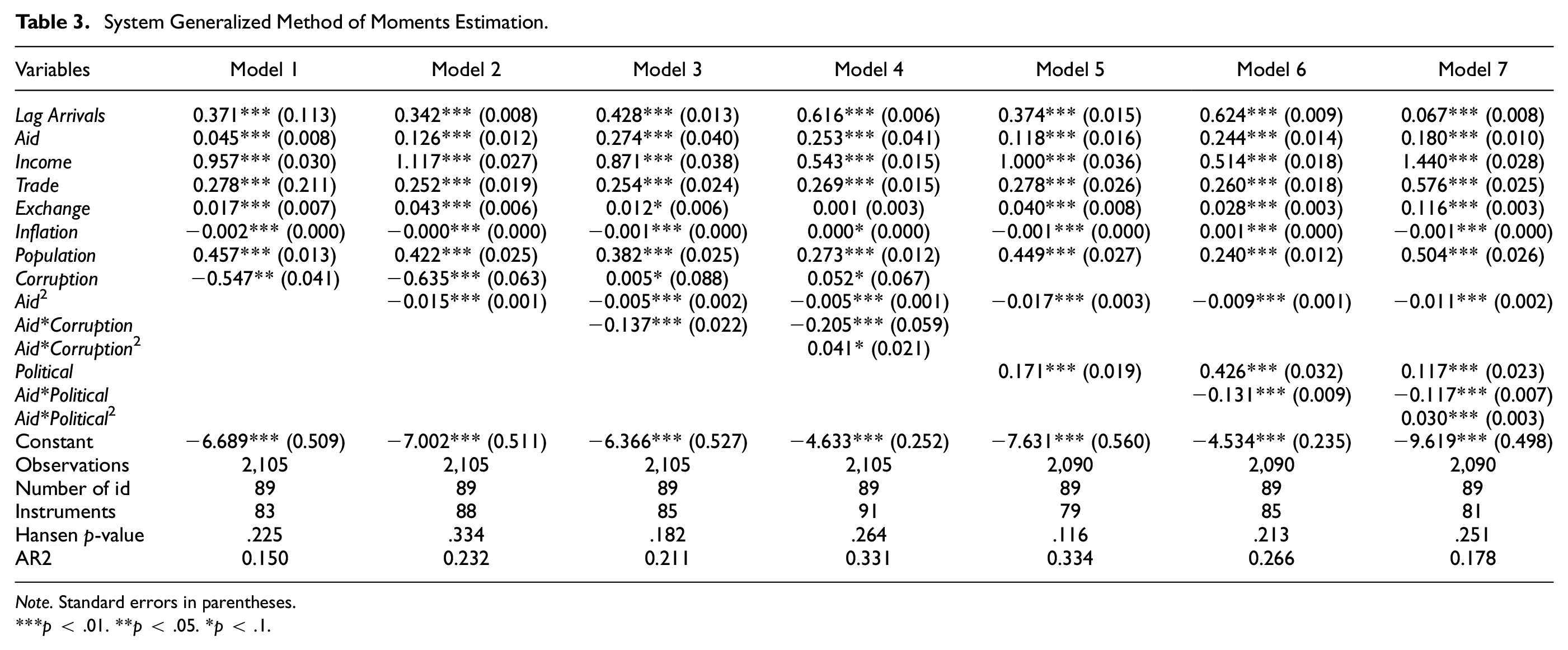
The estimation results using the System Generalized Method of Moments are presented in Table 3. Column 1 of Table 3 indicates a positive and statistically significant effect of foreign aid on tourism demand. Specifically, a 1% increase in aid corresponds to a 0.045% increase in tourism demand in developing countries. Thus, aid appears to spur the tourism sector in developing countries.
System Generalized Method of Moments Estimation.
Note. Standard errors in parentheses.
p < .01. **p < .05. *p < .1.
The coefficients of the other control variables: per capita Gross Domestic Product, trade openness, exchange rate, and population size are also positive and highly significant implying that an increase in any of these variables will result in more tourism demand. In contrast, the coefficients of inflation and control of corruption reveal a negative impact. It is important to note that while all the explanatory variables have the expected sign, the control of corruption variable shows an unexpected sign which can be attributed to the potential nonlinear nature of the relationship between corruption and tourism demand, as suggested by previous studies (Maria et al., 2022; Saha & Yap, 2015; Shah, 2023).
To further explore the relationship between foreign aid and tourism demand, we augment specification 1 in Column 1 by including the squared term of aid. This allows us to examine whether the relationship is nonlinear and to confirm the potential presence of diminishing returns. The findings in Column 2 indicate a negative and statistically significant coefficient for the squared term of aid, while the coefficient for the level of Aid remains positive. These results suggest an inverted U-shaped relationship between foreign aid and tourism demand, supporting the presence of diminishing returns. The estimated turning point, which represents the level of aid at which the effect on tourism demand starts to decrease, is found to be 4.20 ($66.7) as shown in Figure 2. It is noteworthy to mention that this turning point falls within the range of the dataset but exceeds the sample mean of Aid, which is approximately 3.44 ($31.18). Accordingly, the diminishing effects occur at high levels of aid in our sample. A careful inspection of the data reveals that only 26 out of 96 (27%) developing countries in our sample have exceeded this turning point. Consequently, in 70 developing countries, the effect of aid on tourism demand remains positive. For the 26 countries experiencing negative effects, actions aimed at increasing their aid absorptive capacity are essential to counterbalance the adverse impact of large aid inflows.
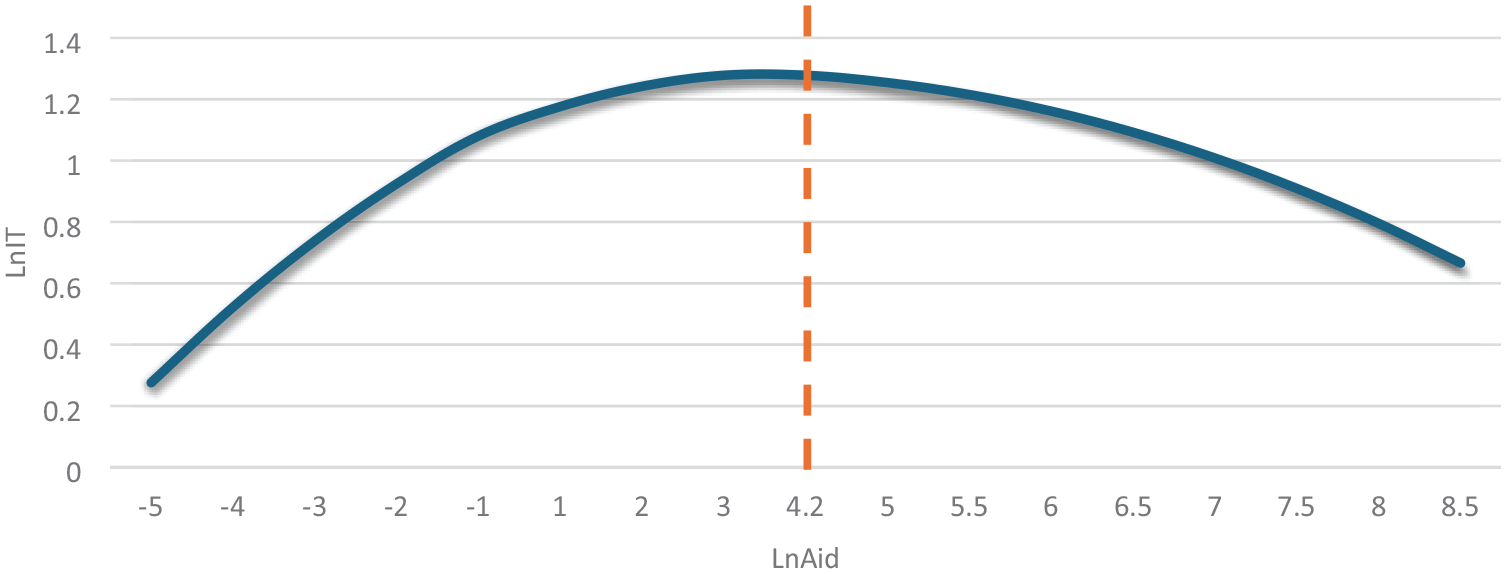
Incremental impact of foreign aid on tourism arrivals.
Overall, our findings in Column 2 confirm that at lower levels of aid, an increase in aid leads to a higher demand for tourism. This can be attributed to the fact that when a country begins receiving aid, it can efficiently utilize these additional resources to enhance its infrastructure, financial services, communication networks, and other factors that positively influence tourism demand. However, at higher levels of aid, we observe a diminishing marginal effect, and the relationship between aid and tourism demand becomes negative. This suggests that an excessive amount of international assistance may signal economic difficulties, making the country less appealing to potential tourists. Additionally, large inflows of aid can increase the risk of misallocation of resources, especially if governance structures are weak. Instead of being directed to tourism-promoting projects, resources may be diverted, leading to underdevelopment in areas critical for attracting tourists, such as infrastructure and safety.
In Column 3 of Table 3, we introduce the interactive term between aid and corruption to assess the effectiveness of aid within different institutional environments. Our findings indicate that corruption has a positive effect on aid. However, the result is statistically significant only at the 10% level. Unexpectedly, the interactive term between aid and corruption is negative and highly significant, suggesting that, as governance quality improves, aid will have a negative impact on tourism demand. This unexpected negative relationship points to potential nonlinearity in the relationship. To explore this evidence further, we include the interactive term between Aid and the squared term of corruption in specification 4 (Column 4). The results show that the interactive term between Aid and corruption remains negative and significant, while the interactive term between aid and squared corruption has a positive and significant coefficient. This indicates the presence of a threshold effect, where above a specific level of corruption, aid will have a positive effect on tourism demand.
In Column 5 of Table 3, we introduce the variable of political stability and absence of violence to examine its direct impact on tourism demand, while we include the interactive term between Aid and political stability in Column 6, as political stability factors are suspected to influence aid effectiveness. The results show that political stability has a positive and statistically significant direct effect on tourism demand, aligning with previous empirical findings (Banengaï-Koyama et al., 2021; Tang, 2018; Tang & Lau, 2021). Hence, more stable countries attract more visitors. The interactive term between Aid and political stability in Column 6 is negative and significant. Thus, surprisingly, aid will have a negative impact on tourism demand when a country experiences more political stability. As with corruption, this finding may suggest a nonlinear relationship. To further explore this potential nonlinearity, we introduce the interactive term between Aid and squared political stability in the last specification of Table 3 (Column 7). The results confirm a U-shaped relationship, indicating a threshold effect to political stability, above which aid has a positive contribution to tourism demand.
Overall, our results indicate that high corruption or/and political instability increase risks for tourists, making destinations less attractive. This diminishes the effectiveness of aid, which, instead of promoting tourism, may fail to offset these negative perceptions.
It is important to note that the other explanatory variables (income, population, exchange rate, and inflation) maintain the same signs and remain statistically significant across all specifications. These results confirm the findings of previous studies in the literature (Eugenio-Martin et al., 2008; Isik et al., 2018; Payne & Mervar, 2010; Saha & Yap, 2015; Shah, 2023; Tang & Lau, 2021).
To assess the validity of our results, we report in Table 3 the p-values for both the AR2 test (Arellano-Bond test for second-order autocorrelation) and the Hansen J-test. The AR2 test indicates no significant correlation between the error term and the lagged dependent variable. Additionally, the Hansen test confirms the absence of over-identification problems within all specifications.
Results From the Threshold Estimation
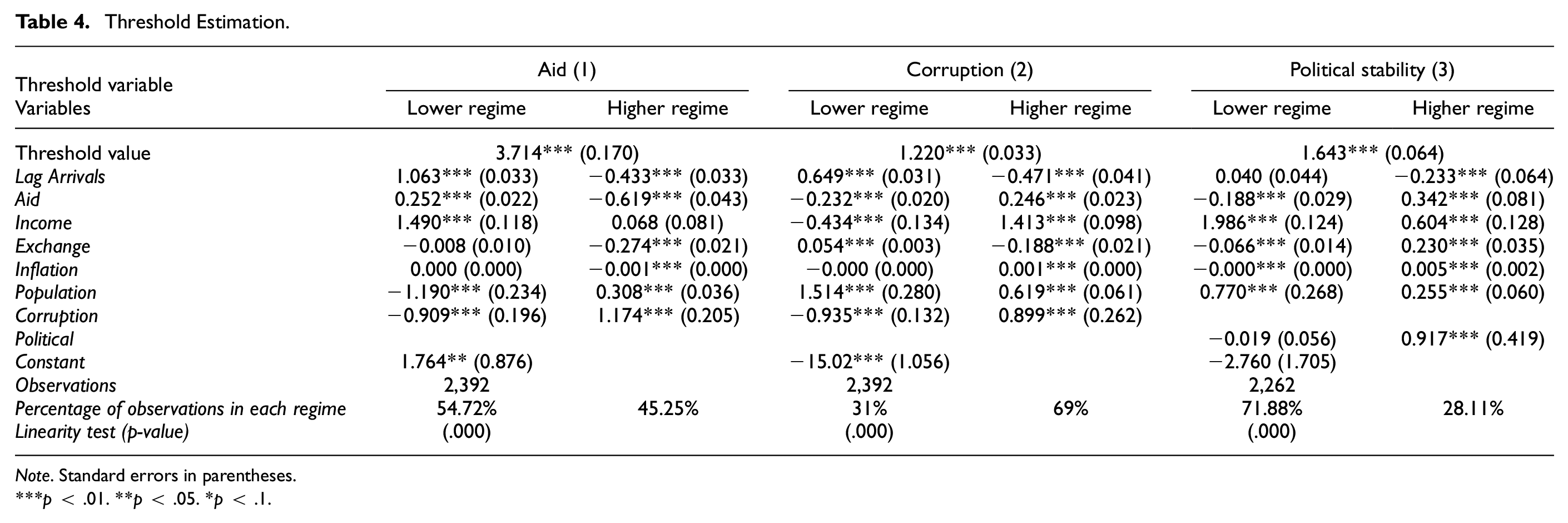
Table 4 presents the estimation results using the threshold estimator by Seo and Shin (2016), where we examine the threshold relationship between foreign aid and tourism demand.
Threshold Estimation.
Note. Standard errors in parentheses.
p < .01. **p < .05. *p < .1
In Column 1 of Table 4, we consider foreign aid as the threshold variable. The estimated threshold value of Aid is 3.71 ($40.85) beyond which aid will have a negative effect on tourism demand. The bootstrap linearity test, reported at the bottom of Table 4, confirms the presence of a threshold effect. Accordingly, there is a significant difference in the impact of foreign aid on tourism demand between the lower and upper regimes. Specifically, foreign aid has a statistically positive and significant effect on tourism demand in the lower aid regime, but a negative and significant effect on tourism demand in the upper aid regime confirming the existence of a nonlinear relationship between foreign aid and tourism arrivals (i.e., inverted U-shaped). These results confirm our findings in Table 3 using the Generalized Method of Moments estimator. Although the estimated turning point obtained from the threshold model (3.71) is slightly lower than that from the Generalized Method of Moments model (4.20), both values are above the average aid level of our sample (3.44). This implies that, in our sample, aid tends to have a positive effect on tourism demand, as most countries in the sample have not yet reached the estimated threshold value. As shown in Table 4, approximately 55% of the observations in our sample fall within the lower regime, where aid positively impacts tourism demand, while 45% fall within the upper regime, where aid negatively impacts tourism demand.
To explore the relationship between foreign aid and tourism demand in different institutional and political stability contexts, we introduce the control of corruption and political stability and absence of violence as threshold variables. This choice is motivated by previous empirical studies highlighting the nonlinear nature of the relationship between corruption/political stability and tourism demand (Maria et al., 2022; Saha & Yap, 2015; Shah, 2023), and by our Generalized Method of Moments estimation results (Columns 4 and 7 of Table 3). The results are reported in Columns 2 and 3 of Table 4.
The results in Columns 2 and 3 of Table 4 reveal that the estimated threshold values for the control of corruption and political stability and absence of violence are 1.22 and 1.64, respectively. Additionally, the linearity test statistics are significant revealing the existence of a nonlinear relationship. In the lower regime of control of corruption and political stability, the coefficient of Aid is negative and highly significant, while it becomes positive in the upper regime of these two variables. This implies that aid is more effective in promoting tourism demand in developing countries with high levels of political stability and strong control of corruption.
It is crucial to observe that the distribution of observations in our sample differs between the lower and upper regimes for the two variables. For the control of corruption, approximately 31% of the observations in our sample fall in the lower regime, while around 69% of the observations belong to the upper regime. In contrast, for political stability, only 28% of observations fall in the upper regime, while and the remaining 72% are in the lower regime.
The above findings highlight the importance of considering institutional and political contexts when examining the relationship between foreign aid and tourism demand. Indeed, our results indicate that developing countries with higher political stability and better control of corruption are more likely to benefit from aid in stimulating tourism demand.
Channels Analysis
Having assessed the direct impact of aid on tourism demand, this subsection empirically examines the mechanisms discussed in Section 2 through which foreign aid may indirectly influence tourism arrivals in developing countries. These channels include economic growth (measured by the growth rate of per capita Gross Domestic Product), human capital (measured by the human development index developed by the United Nations Development Program, UNDP), and institutional quality (measured by the ICRG_GOV index from the International Country Risk Guide). To explore the role of these channels, we employ a two-staged estimation widely used in the economic literature to study potential mediators between two variables (Barkat et al., 2023; Barkat, Mimouni et al., 2024; Churchill et al., 2022; Munyanyi & Awaworyi Churchill, 2022).
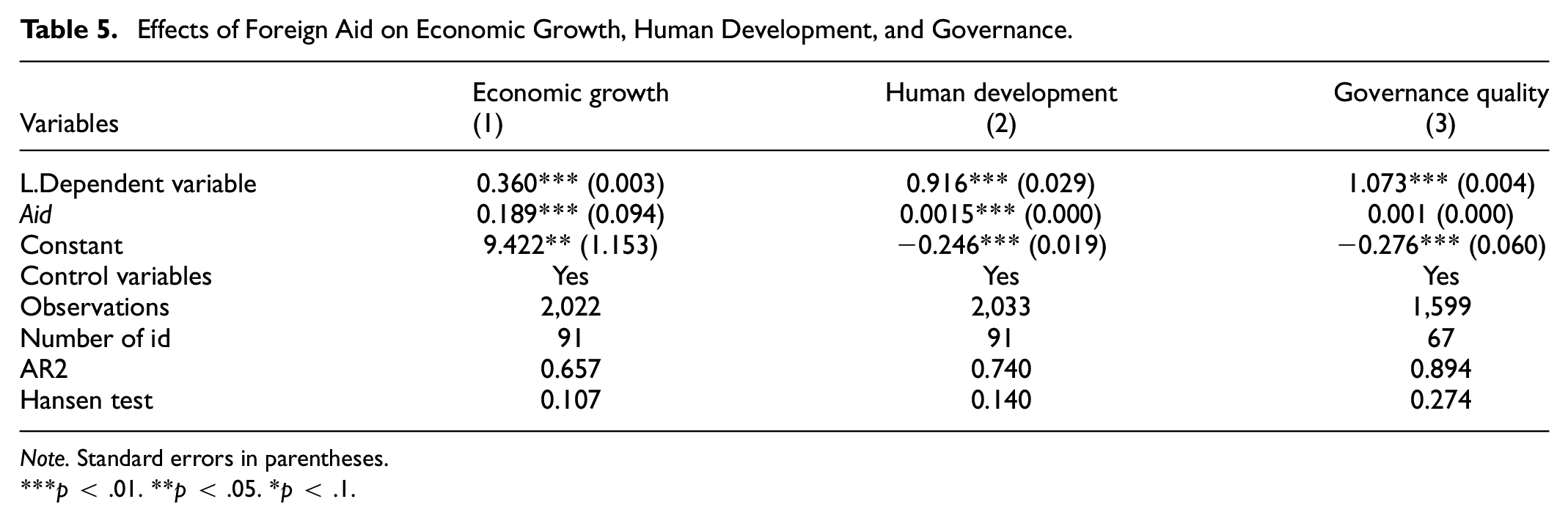
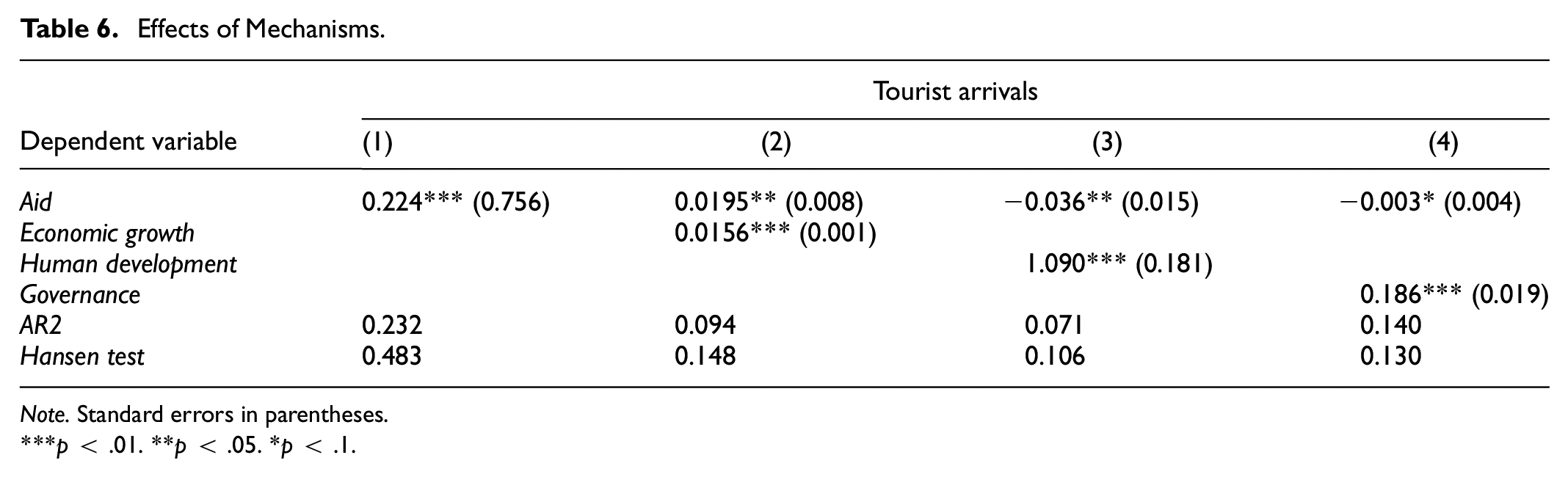
The two-staged estimation consists of two sequential steps. First, we evaluate the correlation between Aid and the mediating variables that represent the three channels (see Table 5). Once this correlation is validated, we proceed to the next step, which entails using a benchmark model that estimates the impact of foreign aid on tourists’ arrivals. We then incorporate each mediator as an additional covariate to the benchmark model (see Table 6). If the inclusion of a mediator results in a decrease in the coefficient of the foreign aid variable of the benchmark model or renders it statistically insignificant, then the respective channel is validated as a potential channel through which aid influences tourism demand. We discuss below the two steps results in detail.
Effects of Foreign Aid on Economic Growth, Human Development, and Governance.
Note. Standard errors in parentheses.
p < .01. **p < .05. *p < .1
Effects of Mechanisms.
Note. Standard errors in parentheses.
p < .01. **p < .05. *p < .1.
Table 5 reports the results of the first step of the two-staged approach, where we examine the relationship between the three channels (economic growth, human capital, and institutional quality) and foreign aid. The findings in Table 5 confirm that foreign aid has a positive and significant effect on per capita Gross Domestic Product and human development. However, the coefficient for governance quality variable is positive but statistically insignificant, indicating limited impact of foreign aid on institutional quality. These results suggest that foreign aid stimulates economic growth and human development, but its effect on strengthening institutional quality is minimal. Therefore, economic growth and human development can be considered as potential channels through which aid influences tourism demand, and they will be further confirmed in the second step of the two-staged estimation.
In the second step of the two-staged approach, we incorporate the three covariates into our model. The results of the estimations are reported in Table 6. In Column 1 of Table 6, we consider foreign aid as the sole explanatory variable of tourist arrivals, which serves as a benchmark to examine the impact of adding a mediator to the regression. If the inclusion of a mediator reduces the benchmark coefficient or alters its significance level, then it can be considered as an important mediating channel; otherwise, the mediating effect is weak.
The results in Table 6 reveal that per capita Gross Domestic Product, human development, and institutional quality 4 (Columns 2, 3, and 4) all have a positive and highly significant effect on tourism demand. Furthermore, when these mediators are included as additional covariates, the coefficient and statistical significance of Aid compared to the benchmark model (Column 1) decrease highlighting the important mediating effect of these variables.
Based on the findings from Tables 4 and 5, we can conclude that economic growth and human development serve as important channels through which foreign aid influences tourism demand. The inclusion of these mediating variables in the regression model attenuates the direct effect of foreign aid, indicating that part of the impact of aid on tourism demand is channeled through economic growth and human development.
The mediation occurs because foreign aid often supports infrastructure, health, education, and economic initiatives, which strengthen a country’s overall environment and make it more attractive to tourists. Economic growth can lead to better infrastructure, such as roads, airports, and hotels, while improvements in human development enhance healthcare, safety, and service quality. These changes create a more appealing, accessible, and safer destination for visitors. Therefore, much of the aid’s influence on tourism demand is funneled through these broad improvements rather than directly stimulating tourism.
Further Discussion of the Results
The careful inspection of Tables 3 to 5 provides three important economic implications of our study. First, our results reveal a nonlinear relationship between foreign aid and tourism demand, characterized by an inverted U-shaped pattern, which confirms the presence of diminishing returns. Some earlier empirical studies have also emphasized this pattern where aid displays diminishing effects (Baliamoune-Lutz, 2012; M. A. Clemens et al., 2012; Gyimah-Brempong et al., 2012). Accordingly, the absorptive capacity of recipient countries plays a key role in the aid–tourism relationship, with some countries demonstrating a higher capacity to absorb larger amounts of aid compared to others. Moreover, several studies point out that absorptive capacity is influenced by the quality of governance, infrastructure capacity, human development and sociocultural factors in the recipient country (Bourguignon & Sundberg, 2006; M. A. Clemens et al., 2012; Feeny & de Silva, 2012; Kang, 2010; Radelet et al., 2004). Stronger institutions contribute to larger positive effects of aid on the economy, allowing for a higher level of aid absorption before reaching a turning point. Thus, recipient countries can reduce the diminishing returns of aid on tourism demand by enhancing their absorptive capacity through improved governance, capital investments, and advancements in human development.
Second, our analysis highlights the presence of a threshold effect of corruption and political stability in relation to tourism demand, aligning with previous findings of Maria et al. (2022), Saha and Yap (2015), and Lv and Xu (2017). Specifically, in the lower regime of control of corruption and political stability, aid exhibits negative effects on tourism demand, while in the upper regime of these variables, aid exerts a positive effect. Indeed, the presence of widespread corruption in certain countries may lead to high transaction costs and potential diversion of aid by corrupt officials, diminishing its impact on tourism infrastructure development. Additionally, the lack of political stability results in unstable political environments with frequent government changes and shifts in policy priorities, hindering coordination efforts among aid donors. These challenges in aid delivery create difficulties in promoting tourism and achieving sustainable development outcomes. Hence, policymakers should monitor and address corruption issues and ensure social peace in their countries.
Finally, our study identifies two channels in which foreign aid influences tourism: economic growth and human development. Economic growth significantly affects tourism demand, as demonstrated by Antonakakis et al. (2015), who find that decreased economic growth due to financial and debt crises negatively impact the tourism sectors of Cyprus, Greece, and Portugal. Slower economic growth exacerbates public deficits and government debt, leading to reduced investment in the tourism sector, particularly in infrastructure development. Moreover, the human development channel plays a critical role in enhancing the quality of tourism services in developing countries as it improves the skills and knowledge of local communities, promotes cultural preservation, and ensures environmental sustainability. These findings confirm the results of previous studies by Mushtaq et al. (2021), Konstantakopoulou (2022), and Ejiofor and Elechi (2012), which emphasized the positive effects on tourism demand of the human development index, health quality, and education in the host country. Our study reveals that it is imperative to improve the role of these channels through policies aimed at enhancing human development and stimulating economic growth.
The above findings shed light on the utmost importance of aid in fostering tourism in developing countries. This industry plays a crucial role in generating foreign currencies, employment opportunities, and international visibility. Our results highlight various direct effects of aid on tourism demand that should be consistently enhanced to prevent diminishing returns. Additionally, our study identifies latent channels that could contribute to the prosperity of this essential industry if given sufficient priority.
Conclusion and Limitations of the Study
Summary of Findings
This study investigates the complex relationship between foreign aid and tourism demand in developing countries, revealing several important findings that challenge traditional understandings of aid effectiveness. The first key finding is that the relationship between foreign aid and tourism demand is nonlinear, characterized by an inverted U-shaped curve. This suggests that while moderate amounts of aid contribute positively to tourism by enhancing infrastructure, services, and overall destination attractiveness, excessive aid may lead to diminishing returns. This pattern supports the idea that the effectiveness of foreign aid is not unlimited, and there is an optimal level of aid that maximizes benefits to tourism. Moreover, our study emphasizes the importance of recipient countries’ absorptive capacity, as the effectiveness of aid depends significantly on their ability to integrate and utilize foreign assistance. Countries with stronger institutional frameworks and human capital are better able to absorb higher levels of aid, preventing diminishing returns. Second, our findings highlight the importance of institutional factors, particularly governance quality and political stability, in determining how aid influences tourism demand. We find that in countries with low control of corruption and political instability, the impact of aid on tourism is negative, while in more stable environments, aid has a positive effect. This shows the need for targeted policy interventions aimed at improving governance and political stability in recipient countries to maximize the positive impacts of aid. Finally, our study uncovers two critical channels through which foreign aid influences tourism demand: economic growth and human development. Economic growth plays a vital role in stimulating tourism by improving infrastructure and creating an environment conducive to investment in the tourism sector. At the same time, human development contributes to enhancing the quality of tourism services, improving the skill set of local communities, and promoting sustainable tourism practices. The findings of this study provide a comprehensive understanding of the complex dynamics between foreign aid and tourism demand, highlighting both the direct and indirect impacts of aid on the tourism sector.
Theoretical Contributions
From a theoretical perspective, this study makes several important contributions to the literature on foreign aid and tourism. First, it introduces a nonlinear framework to examine the relationship between foreign aid and tourism demand, which represents a significant advancement over prior studies that have largely focused on linear relationships. This nonlinear perspective provides a better understanding of aid effectiveness, demonstrating that the impact of aid on tourism is not constant and that diminishing returns occur at higher levels of aid. The integration of threshold effects offers a theoretical refinement to existing models of foreign aid impact, suggesting that the effectiveness of foreign aid is not just a function of the amount of aid, but also of the institutional and governance context within which it is delivered. Furthermore, our research situates tourism demand within the broader aid-growth nexus, highlighting that tourism is a distinct and important economic channel that can be influenced by foreign aid. This theoretical contribution expands the scope of aid studies by introducing tourism as a sector-specific outcome, offering new pathways for future research on how aid interacts with different sectors of an economy. Examining tourism in this context does not only deepen our understanding of the broader economic impacts of foreign aid but also provides a framework for future scholars to explore the sectoral dynamics of aid effectiveness in various contexts.
Methodological Contributions
In terms of methodology, our study employs dynamic panel threshold estimation, which represents a significant improvement over traditional regression techniques in assessing the impact of foreign aid on tourism demand. The use of this advanced econometric method allows us to address potential endogeneity concerns, such as reverse causality and omitted variable bias, by modeling the relationship between aid and tourism demand more accurately. This methodological approach reveals nonlinearities in the aid-tourism relationship that are often overlooked in standard regression models, providing a clearer picture of how different levels of foreign aid influence tourism outcomes. The identification of threshold effects shows that the impact of aid on tourism is not uniform across countries, but varies depending on the governance environment and institutional capacity. This highlights the importance of considering country-specific factors when assessing the effectiveness of foreign aid. The dynamic panel threshold estimation also enables us to capture the time-varying nature of the aid-tourism relationship, accounting for the lagged effects of aid on tourism demand. Our approach not only strengthens the robustness of our findings but also serves as a foundation for future research that seeks to apply advanced econometric techniques to the study of development aid and its sectoral impacts.
Economic Implications
Our study offers several important economic implications that have significant policy and practical relevance for both donors and recipient countries. The first implication is the identification of a nonlinear relationship between foreign aid and tourism demand, which highlights the importance of optimizing aid levels. While foreign aid can positively contribute to tourism demand, the diminishing returns observed at higher aid levels suggest that aid should be targeted carefully. Policymakers should ensure that aid is allocated to areas where it can have the most significant impact, such as infrastructure development and capacity building, rather than relying on large inflows of aid that may not lead to proportional benefits. Furthermore, the study shows the crucial role of governance in maximizing the positive effects of foreign aid on tourism. In countries with poor governance, aid may be wasted or misdirected, failing to generate the desired impacts. Therefore, donor countries and international organizations must consider the governance quality of recipient countries when designing aid programs. Aid should be accompanied by efforts to strengthen institutions, reduce corruption, and promote political stability. Finally, our study demonstrates that aid’s impact on tourism extends beyond immediate infrastructure improvements to include long-term economic growth and human development. Hence, investing in human capital and promoting inclusive economic growth will allow foreign aid to create a more conducive environment for sustainable tourism development. Therefore, policies aimed at fostering both economic growth and human development should be central to aid programs targeting the tourism sector. These economic implications reveal the need for a more strategic and tailored approach to foreign aid, focusing on governance, institutional capacity, and long-term development objectives.
Limitations and Future Research Directions
While this study provides important insights into the relationship between foreign aid and tourism demand, it also has some limitations that future research could address. First, our analysis focuses on aggregate foreign aid, but there may be significant differences in the impact of various types of aid. Future studies may explore how different forms of aid, such as project-based aid versus budgetary support, affect tourism demand in different contexts. Examining the differential impacts of aid types can provide a deeper understanding of how to tailor aid programs to maximize benefits for the tourism sector. Second, our study does not account for regional or local variations in the effectiveness of aid. While our analysis includes a broad panel of developing countries, there may be significant differences in how aid affects tourism at the regional or local level. Future research could explore these variations to identify regional patterns and more precise strategies for enhancing the effectiveness of foreign aid. Third, the dataset used in this study spans only up to 2020, which means that recent global shocks, such as the COVID-19 pandemic, are not accounted for. Given the significant impact of the pandemic on global tourism, future research should explore how aid dynamics may have changed in response to these disruptions. Finally, while our methodology is robust, it is based on certain assumptions regarding data quality and stationarity, which may limit the generalizability of our findings to highly volatile or smaller datasets. Future studies could address these limitations by employing alternative methodological approaches, such as panel quantile regressions or machine learning techniques, which could capture heterogeneities in aid effectiveness more accurately. Overall, the findings of this study open new avenues for research into the complex relationship between foreign aid and tourism demand, offering a foundation for future studies that explore the role of aid in fostering sustainable tourism development in different contexts.
Footnotes
Appendix
List of Countries.
| List of countries | |||||||
|---|---|---|---|---|---|---|---|
| 1 | Albania | 25 | Costa Rica | 49 | Jordan | 73 | Peru |
| 2 | Algeria | 26 | Cote d’Ivoire | 50 | Kazakhstan | 74 | Philippines |
| 3 | Angola | 27 | Cuba | 51 | Kenya | 75 | Sao Tome and Principe |
| 4 | Argentina | 28 | Dominica | 52 | Kyrgyz Republic | 76 | Senegal |
| 5 | Armenia | 29 | Dominican Republic | 53 | Lao PDR | 77 | Solomon Islands |
| 6 | Azerbaijan | 30 | Ecuador | 54 | Lebanon | 78 | South Africa |
| 7 | Bangladesh | 31 | Egypt | 55 | Lesotho | 79 | Sri Lanka |
| 8 | Belize | 32 | El Salvador | 56 | Malawi | 80 | Sudan |
| 9 | Benin | 33 | Eswatini | 57 | Malaysia | 81 | Suriname |
| 10 | Bhutan | 34 | Ethiopia | 58 | Maldives | 82 | Tanzania |
| 11 | Bolivia | 35 | Fiji | 59 | Mali | 83 | Thailand |
| 12 | Bosnia and Herzegovina | 36 | Gambia | 60 | Mauritius | 84 | Togo |
| 13 | Botswana | 37 | Georgia | 61 | Mexico | 85 | Tonga |
| 14 | Brazil | 38 | Ghana | 62 | Moldova | 86 | Tunisia |
| 15 | Burkina Faso | 39 | Grenada | 63 | Mongolia | 87 | Turkey |
| 16 | Burundi | 40 | Guatemala | 64 | Morocco | 88 | Tuvalu |
| 17 | Cabo Verde | 41 | Guinea | 65 | Myanmar | 89 | Uganda |
| 18 | Cambodia | 42 | Guyana | 66 | Namibia | 90 | Ukraine |
| 19 | Central African Republic | 43 | Haiti | 67 | Nepal | 91 | Uzbekistan |
| 20 | Chad | 44 | Honduras | 68 | Nicaragua | 92 | Vanuatu |
| 21 | China | 45 | India | 69 | Niger | 93 | Vietnam |
| 22 | Colombia | 46 | Indonesia | 70 | Nigeria | 94 | West Bank and Gaza |
| 23 | Comoros | 47 | Iran, Islamic Rep. | 71 | Pakistan | 95 | Zambia |
| 24 | Congo, Dem. Rep. | 48 | Jamaica | 72 | Paraguay | 96 | Zimbabwe |
Author Contributions
Karim Barkat: Conceptualization; Data curation; Formal analysis; Funding acquisition; Investigation; Methodology; Project administration; Resources; Software; Visualization; Writing—original draft; Writing—review & editing. Karim Mimouni: Conceptualization; Data curation; Formal analysis; Funding acquisition; Investigation; Methodology; Validation; Visualization; Writing—original draft; Writing—review & editing. Mouyad Alsamara: Conceptualization; Data curation; Formal analysis; Funding acquisition; Investigation; Methodology; Validation; Visualization. Youcef Maouchi: Conceptualization; Data curation; Formal analysis; Funding acquisition; Investigation; Visualization.
Declaration of Conflicting Interests
The author(s) declared no potential conflicts of interest with respect to the research, authorship, and/or publication of this article.
Funding
The author(s) received no financial support for the research, authorship, and/or publication of this article.
