




Abstract
Advancements in augmented reality (AR) enable declining areas to boost tourism and the local economy by engaging visitors through AR-based travel games. However, the effectiveness of this innovative tourism approach has not been fully examined in declining areas. This research focuses on the influence of AR gamification experience using the tri-component attitude model. Study 1 qualitatively identified the three primary consequences as place attachment, destination knowledge, and behavioral intentions, respectively. Building on these results, a research model was developed and quantitatively tested in Study 2. Both online and field surveys were administered to first time visitors who participated in AR-based tourism games. The results demonstrate that gamification of AR-based tourism content has a positive impact on place attachment and destination knowledge, which positively affect both replaying and revisit intentions. This study highlights the role of AR technologies in revitalizing lesser-known destinations by analyzing the cognitive, affective, and behavioral effects.
Keywords
Introduction
Numerous countries face economic repercussions from declining small cities (Döringer et al., 2020; Wirth et al., 2016). These effects are driven by factors such as low birth rates, aging populations, and interregional migration. In this context, tourism has emerged as a critical driver of regional development, addressing challenges in multiple countries like Japan, South Korea, and Germany (Carrascal Incera & Fernández, 2015; Döringer et al., 2020). These challenges include an aging population in rural areas (K. W. Kim & Kim, 2020; Roh & Kim, 2022); uneven economic development concentrated in a few major cities (Kang et al., 2020; Sato & Fukushige, 2009); and inadequate development in transportation, communication, and education systems (Byun & Kim, 2010; Roh & Kim, 2022). To address these issues, local governments have promoted tourism projects to stimulate economic growth, attract young workers, and increase local incomes (Brida et al., 2020; W. Kim & Kim, 2013; Nunkoo et al., 2020).
Digital technologies such as AR and VR have been increasingly utilized to enhance tourism experiences (W. Wei, 2019). AR overlays computer-generated images onto the real world (K. Zhang et al., 2024) whereas VR creates computer-simulated environments (Jung et al., 2021). Mobile AR applications have become increasingly popular for delivering engaging and educational tourism experiences (Tom Dieck et al., 2018). For example, the Smartify app was developed in 2017 for museum-goers and was deployed in several destination locations such as the San Donato Museum in Italy, the Reina Sofia Museum in Spain, and the J. Paul Getty Museum in Los Angeles. When users scan artworks with their mobile devices using this app, it promptly presents pertinent information related to the artwork. Importantly, AR and VR can reduce the negative environmental impacts of physical tourism development by providing alternative content-based tourism development opportunities (Marasco et al., 2018).
The integration of gamification into AR-based tourism has gained attention (Xu et al., 2016). Gamification, defined as the application of game design elements in non-game contexts (Deterding, Dixon, et al., 2011, Deterding, Sicart, et al., 2011), enhances user engagement, cooperation, and behavior change (Seaborn & Fels, 2015). It has been applied in industries such as finance, health, education, and tourism (Schroeter et al., 2014). In tourism, gamification makes travel more interactive and engaging, encouraging tourists to explore destinations more thoroughly through rewards and challenges (Xu et al., 2017). There is a growing trend of integrating gamification into AR-based tourism games to attract tourists to local areas. Studies have explored the impact of this integration (e.g., Eleftheria et al., 2013; Guo et al., 2021). Since AR can create interactive travel experiences by blending real and virtual worlds (Noor et al., 2015), it also has the potential to be used in local destinations to offer game-like mixed experiences with real and virtual objects during travel. However, most tourism research on gamification has focused on urban attractions or specific contexts like e-commerce and festivals (García-Jurado et al., 2021; Y. J. Lee, 2022), leaving gaps in understanding its effects on local destinations. Further research is needed to examine the direct and indirect impacts of AR gamification on these areas (Guo et al., 2021; Noor et al., 2015).
Efforts have been made to understand the impact of AR gamification on tourist destinations. For example, Oleksy and Wnuk (2017) demonstrated that satisfaction with AR games influences place attachment, showing that gamification within AR technology offers a unique opportunity to make travel more interactive, thereby enhancing the appeal and engagement of local tourist destinations. However, there is also the possibility that this sense of achievement may result in only short-term emotional responses. Additionally, Chung et al. (2018) found that satisfaction with AR affects attitudes toward AR, which in turn influences visit intentions. They applied balance theory, suggesting that for attitudes toward AR to lead to behavioral intentions toward a destination, a positive balance must exist between various elements. However, the process by which AR game experiences shape emotional or behavioral attitudes toward a destination remains unclear. The assumption in Chung et al.′s study that attitudes toward AR games directly lead to revisit intentions has limitations from the perspective of balance theory. Most of all, there is still a lack of a theoretical framework for AR gamification that captures the diverse factors driving user behavior.
This study aims to address the limitations of previous research by using the tri-component attitude model to examine how emotional responses triggered by AR games influence tourists’ attitudes toward destinations. In particular, previous studies have limitations in theoretically explaining how the experience of AR games leads to the intention to revisit a destination. This study aims to describe the process through which this intention is formed. According to the tri-component attitude model, attitude consists of cognition, emotion, and behavior (Breckler, 1984; Rosenberg et al., 1960; Shin et al., 2020). The study hypothesizes that game participants form attitudes through cognitive and emotional evaluations based on their game experience, which then manifest in behavior. As tourists progress in the game, they learn about the destination, shaping both cognitive, and emotional evaluations. Positive emotional responses generated by the game are expected to lead to positive attitudes toward the place. This approach will shed light on the mechanisms linking gamified experiences to tourist revisit intentions.
To achieve this research purpose, this study employs an exploratory sequential design, combining qualitative research with quantitative research (Creswell, 2009). Study 1 qualitatively investigates the cognitive, emotional, and behavioral outcomes of gamified AR travel experiences. Findings from Study 1 inform Study 2, which examines the impact of gamification on place attachment (emotional), destination knowledge (cognitive), and behavioral intentions to replay the AR game and revisit the destination. This approach is necessary due to the limited research on key outcomes of gamified tourism content. Previous studies have primarily focused on the relationship between attitudes toward the game and revisit intentions, without fully exploring the underlying mechanisms (e.g., Chung et al., 2018). Moreover, internal cognitive and emotional evaluations, which are difficult to observe directly, require qualitative exploration for a deeper understanding of participants’ experiences in gamified tourism. While these components can potentially be inferred through quantitative measures, a qualitative phase is essential to deeply understand the experiences of the participants and attitudes in the context of gamified tourism. In this regard, the qualitative phase of Study 1 plays a critical role in identifying the key cognitive, emotional, and behavioral outcomes and understanding how these variables interact.
Literature Review
Promotion of Local Tourism Through Digital Technologies
The use of information and communication technologies (ICTs) has greatly contributed to the tourism industry (Gretzel et al., 2015). With the Fourth Industrial Revolution (Industry 4.0), technologies such as the Internet of Things (IoT), big data, artificial intelligence (AI), VR, and AR have been integrated into tourism, evolving it into Tourism 4.0 (Peceny et al., 2019). Concurrently, the concept of Society 5.0 aims to create a human-centered society through advanced technologies, further promoting personalized tourism services. Scholars have explored the potential of these technologies in enhancing tourism by integrating and managing data, virtual tourism, social media, and gamification (Ali & Frew, 2014). Technologies like VR and AR merge physical and digital worlds, boosting a destination’s attractiveness and competitiveness (Buhalis & Law, 2008).
Technologies have recently emerged as a crucial tool for tourism development. Destinations are increasingly leveraging their unique environmental, physical, and socio-cultural attributes to create tourism products that attract visitors (Benur & Bramwell, 2015). Efforts are underway to enhance the tourist experience through the collaboration of technology, making innovative tourism products increasingly remarkable. Di Pietro et al. (2014) advocated for the active promotion of technology use in cultural heritage tourism, proposing the cultural technology districts (CTD) model. Marques and Borba (2017) confirmed that digital technology makes interactions between tangible and intangible culture more interactive and playful, involving various stakeholders in the co-creation process. These studies provide insights into the synergy created by integrating technology with tourism products, although empirical evidence from quantitative studies involving stakeholders is lacking.
Recently, there has been significant research on AR technology. Thirumaran et al. (2021) introduced an AR mobile application featuring virtual pets, demonstrating that emotional connections with virtual companions can boost travel intention. However, the impact of such technology-mediated experiences on destinations remains underexplored. In particular, the study suggests that the gamification element of reward experience directly influences revisit intention. Yet, according to their findings, the absence of rewards could decrease travel intention, potentially limiting the prospects for sustainable tourism development and long-term engagement. Similarly, the iFilmAR-Tour-APP in Macau engages tourists with film-related AR content, maximizing local film resources (Wu & Lai, 2021). However, this study also lacks an in-depth understanding of how technology-mediated experiences influence destinations. Thus, it is essential to explore what tourists learn and feel about a destination through AR experiences in greater depth.
Although studies like Chung et al. (2018) have shown that AR satisfaction leads to a positive attitude toward a destination, it remains unclear what specific aspects of a destination tourists perceive and experience through AR and how these experiences contribute to attitude formation. For instance, the visual and informational richness provided by AR technology may have different effects on cognitive and affective attitudes toward a destination. To better understand the impact of AR experiences on destination attitudes, systematic research is needed to investigate the psychological processes through which tourists develop attitudes toward destinations. Furthermore, while previous studies have underscored the positive impacts of AR in popular destinations (e.g., Chung et al., 2018; J. B. Kim & Park, 2011), there is limited research on AR’s effects in lesser-known local destinations. To bridge these gaps, further research is necessary to analyze the impacts of AR-based tourism in local contexts, particularly focusing on how these technologies can enhance visibility and resource utilization in underrepresented areas.
Gamification in Tourism
Gamification refers to the use of game design elements in non-game contexts (Deterding, 2011). Early research on gamification in tourism was primarily conceptual. For example, Xu et al. (2013 and 2017) outlined the potential benefits and applications of gamification in tourism. Following this, scholars began to explore the motivational aspects of gamification. Negruşa et al. (2015) suggested that gamification could motivate tourists to engage in sustainable behaviors. These initial studies laid the foundation for promoting gamification in the tourism industry. Subsequently, research expanded into online platforms. Sigala (2015) found that gamification on platforms like TripAdvisor could influence user behavior. Liang et al. (2017) demonstrated that Airbnb’s “Superhost” badges influenced both the quantity and quality of reviews, with badge holders receiving higher ratings and payments. Bravo et al. (2021) confirmed that gamification could incentivize content creation on tourism and hospitality review platforms. Similarly, Shi et al. (2022) found that gamification on online travel agency (OTA) platforms impacted customer perceptions and purchase intentions. Although these studies provided quantitative evidence of gamification’s effects in tourism, they were largely confined to online environments.
Further studies sought to establish unique concepts of gamification within specific tourism contexts. C. R. Liu et al. (2019) developed a gamification scale for festivals using self-determination theory, while Aebli (2019) explored tourists’ fundamental motivations through gamification mechanisms. Shen et al. (2020) utilized Q methodology to examine tourists’ motivations for engaging in gamified travel. Later, quantitative validations of gamification effects became more common, with research addressing various contexts and purposes, including festivals (Y. J. Lee, 2022), destination sustainability (Frías-Jamilena et al., 2022), tourists’ travel time and distance (Xin et al., 2023), hotel rewards (W. Lee et al., 2024), and corporate social responsibility (CSR) initiatives (Alibakhshi et al., 2024).
Notably, early research explored technology-mediated travel experiences as ways to actively engage tourists and enhance their experiences (Xu et al., 2013, 2017). Particularly, the integration of AR and VR technologies with gamification, referred to as “gamified AR” and “gamified VR,” has garnered significant attention (Haoming & Wei, 2024). Gamified AR technologies play a significant role in co-creating immersive tourist experiences (Neuhofer et al., 2012), and many destinations have already adopted these technologies. However, research on gamified AR travel experiences remains relatively limited. Consequently, understanding the mechanisms connecting cognitive, emotional, and behavioral attitudes toward a place resulting from gamified AR travel experiences is challenging. To better understand the effectiveness of such travel experiences, it is crucial to assess how AR technology can enhance visibility and engagement in underrepresented and less accessible locations.
While existing AR studies provide valuable insights into various aspects of gamification in tourism, they reveal significant gaps that the present study aims to address. Many of the studies focus on conceptual frameworks (e.g., Aebli, 2019; C. R. Liu et al., 2019) or online applications (e.g., Bravo et al., 2021; Shi et al., 2022), without substantial real-world data on how gamification is experienced in physical destinations. Additionally, while recent studies on VR- and AR-mediated gamification (e.g., Jang & Kim, 2022, 2023) offer promising avenues, they have not fully explored the emotional bonds that tourists form with destinations or the context-specific experiences that these technologies facilitate.
Furthermore, previous research has largely focused on motivations, intentions, and perceptions (e.g., Y. J. Lee, 2022; Shen et al., 2020), often measuring surface-level outcomes such as satisfaction or perceived enjoyment. However, there remains a lack of studies that address the integrated relationship between cognition, emotion, and behavior in the context of gamified tourism. An integrated approach, considering how cognitive, emotional, and behavioral outcomes intersect and influence revisitation intention, is notably underexplored in the current literature. Furthermore, there is a lack of research utilizing theoretical frameworks that can capture a wide range of antecedents, allowing for a comprehensive understanding of the factors influencing revisitation intention from multiple perspectives. This gap is critical, as understanding how these dimensions interrelate is necessary for a more comprehensive view of the mechanisms that drive revisitation.
Qualitative Approach - Study 1
This study employs a mixed-method research design, combining qualitative and quantitative approaches. It is hypothesized that participants will form attitudes toward a place through interactions facilitated by AR travel games. Based on the tri-component model, these attitudes are expected to consist of cognitive, affective, and behavioral components. A qualitative approach is initially employed to understand the internal cognitive and affective domains and experiences that are difficult to capture through observation or quantitative measures, particularly in the context of regions experiencing regional decline. Existing research in these areas is scarce, making it essential to explore how AR travel games can influence attitudes in such underrepresented contexts. Subsequently, quantitative methods are used to verify the findings of the qualitative study and to examine the relationships between the variables.
The legitimacy of a mixed-method research design, which integrates qualitative and quantitative methods, is supported by numerous scholars. One key advantage is triangulation, which enhances validity through convergence and corroboration (Bryman, 2006). This study follows an exploratory sequential design: qualitative research is conducted first, followed by quantitative research. This sequence allows qualitative findings to be verified, confirmed, and generalized through quantitative results (Creswell et al., 2003, p. 227; Shin et al., 2024). Beginning with qualitative research provides a contextual understanding that enriches the interpretation of subsequent quantitative data (Bryman, 2006).
Samples and Data Analysis
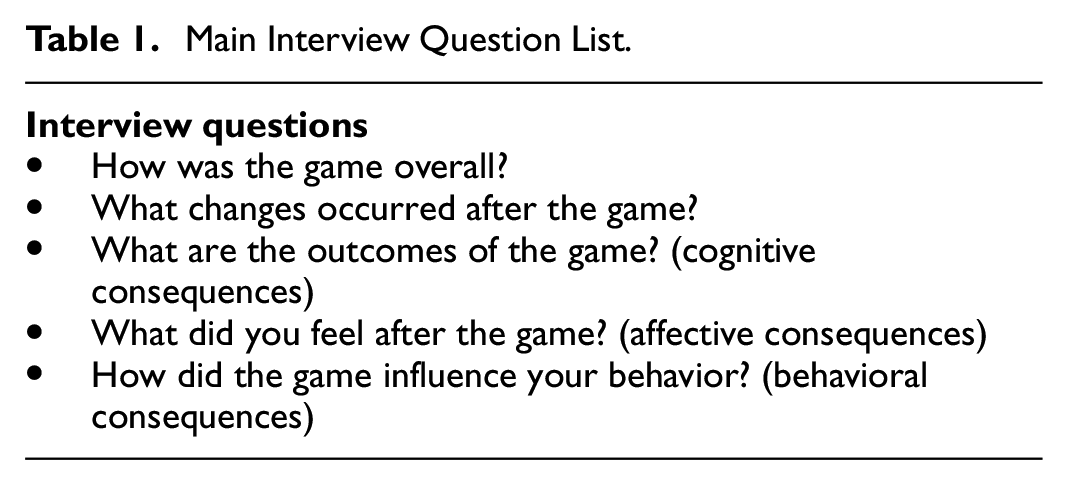
In Study 1, semi-structured qualitative interviews were conducted to verify the key outcomes of gamification. Following the responses to the interview questions, additional questions were posed to elicit further details from the respondents. The interview questions were designed to explore the cognitive, emotional, and behavioral outcomes associated with AR gamification travel experiences, consistent with the tri-component attitude model (Breckler, 1984; Rosenberg et al., 1960). This model aims to explore the cognitive, emotional, and behavioral outcomes of participants’ interactions with the gamified travel content.
Table 1 lists the specific interview questions used. These questions were broad enough to allow participants to express their experiences freely while still targeting specific aspects of their cognitive, emotional, and behavioral responses. For instance, the question “What did you feel after the game?” was intended to elicit affective consequences related to destination experiences. To mitigate potential ambiguity—such as responses focusing on physical states—follow-up questions were used to guide participants toward discussing their experiences with the destination itself.
Main Interview Question List.
To better evaluate the impact of AR travel experiences, this study targets less popular areas like Jungang-dong in Wonju City, South Korea, which thrived in the 1960s to 1980s but has declined due to new urban centers. The area’s population has steadily declined since 2010, now representing only 0.8% of the city’s population, with 37.8% being elderly (see Figures 1 and 2). Various initiatives, including festivals and events, have been undertaken to revitalize the area. The Korean government has also supported projects like the “Cultural Tourism Market Development Project” due to the district’s historical and cultural significance.
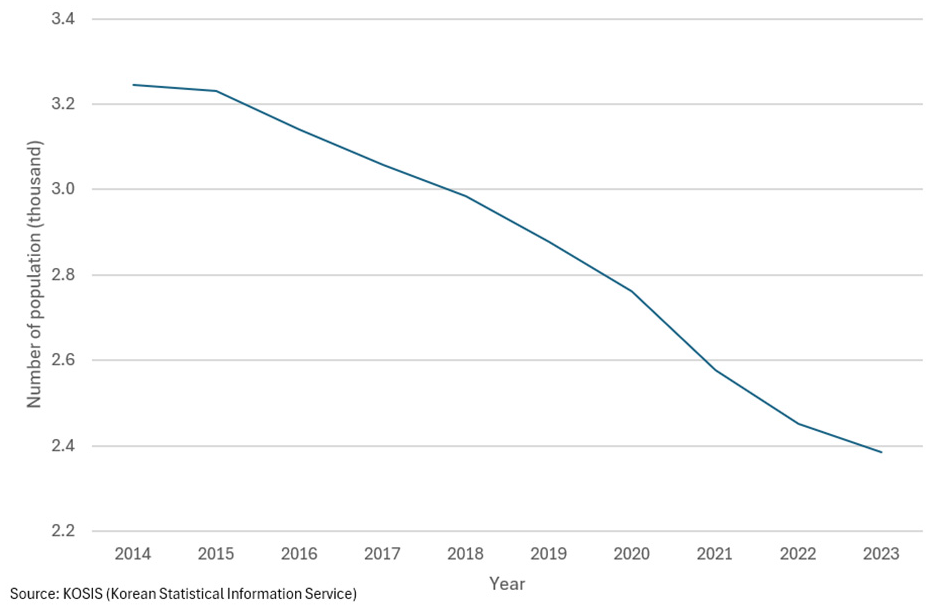
Population decline in Jungang-dong.
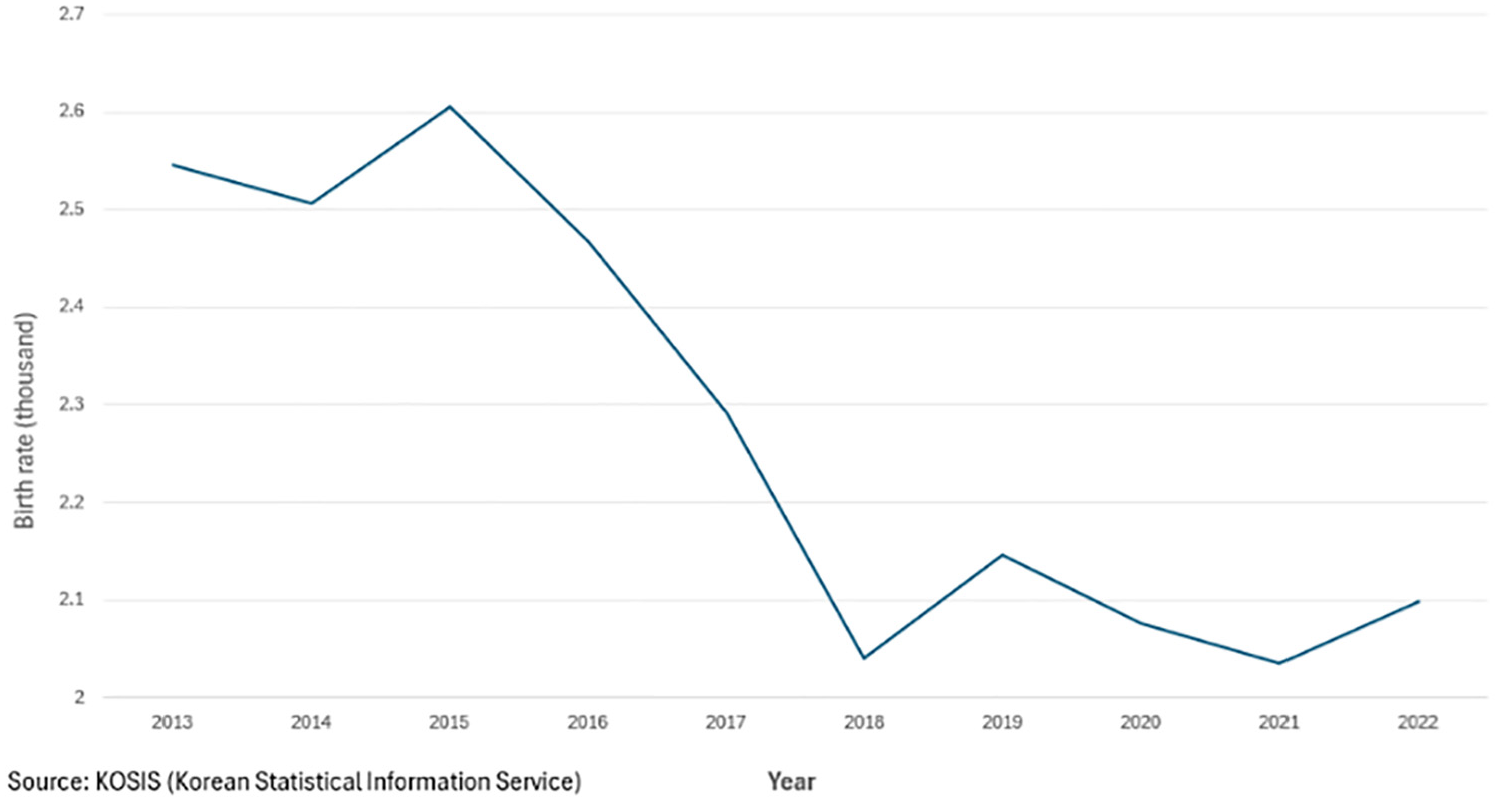
Birth rate changes in Wonju-si (including Jungang-dong).
As a component of the project, an interactive AR-based tourism game named “Legend of Doremi” was developed. The game, designed for use within a “Real World” environment, facilitates the creation and management of experiential mission games in real-world environments, incorporating technologies such as GPS, AR, 360VR, and phone communication. It features various elements of gamification such as competence, relatedness, fun, mastery, and narratives. Players or visitors who had not previously visited Jungang-dong were recruited to complete several missions, using the smartphone application in six distinct locations within Jungang-dong, including the Modern Cultural Heritage Site, Wondong Cathedral, and the Academy Theater, with a total game time of roughly 2 to 3 hours (See Figure 3).
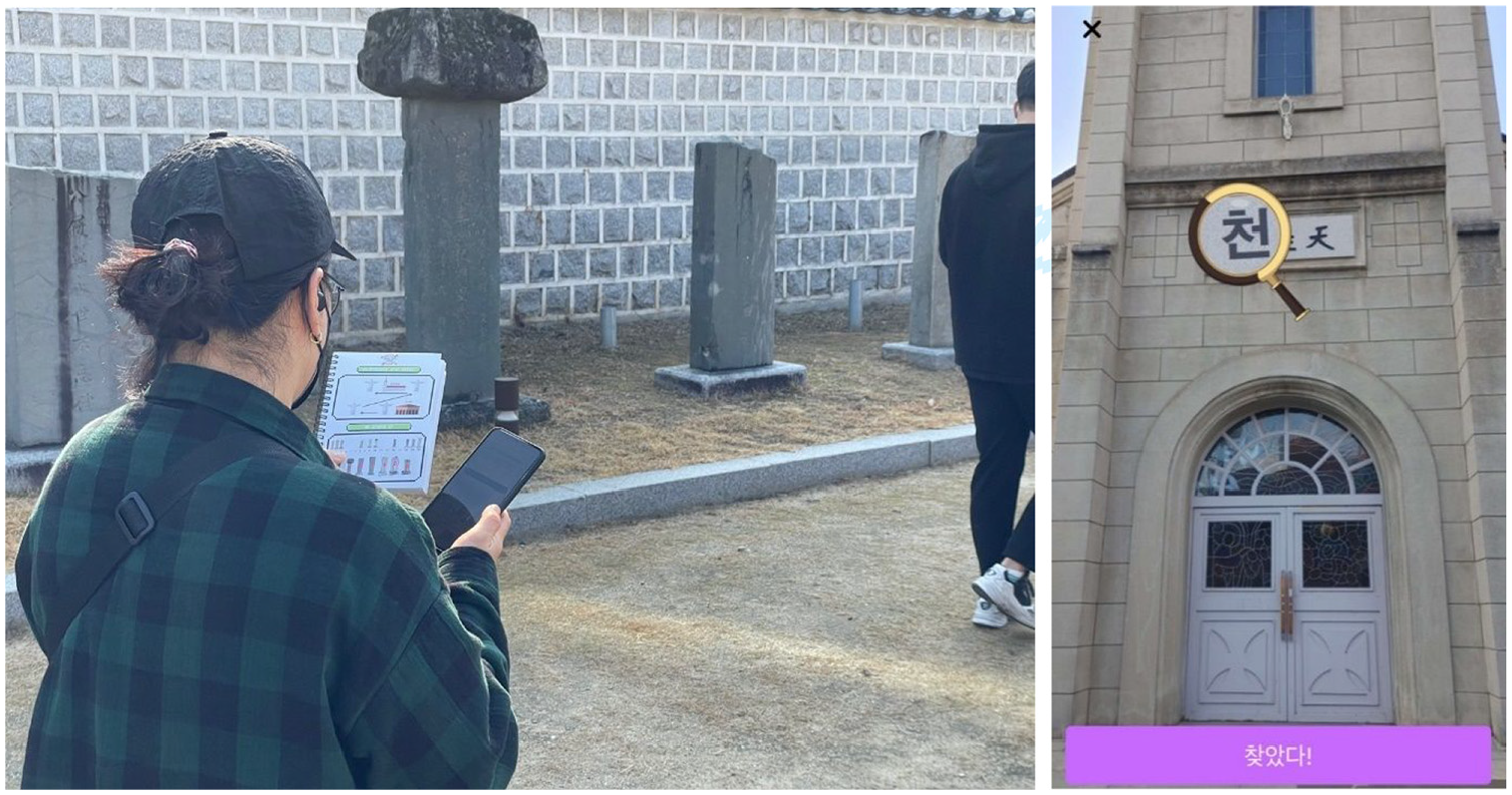
Legend of Doremi AR travel game.
Participants begin the game at Won-dong Cathedral, where they complete the final mission by obtaining seven numerical codes. These codes unlock the next location: Gangwon Gamyeong, the administrative center of Gangwon Province during the Joseon Dynasty, established in 1395. Upon arrival, their mobile devices display: “Decipher the door code.” Participants scan 17 unique memorials, and the AR system reveals letters corresponding to the sequence dictated by the numerical codes, forming the word “HISTORY.” Solving this puzzle activates an AR feature, providing historical details and audio narration. The next challenge asks: “Who was the female prisoner during the 1839 Gihae persecution?” Participants search informational texts around the prison cells to answer. Each location offers 2 to 8 missions.
Interview candidates were participants in the “Legend of Doremi” AR travel game played in September 2022. The authors collaborated with the game’s project team from the planning stages, enabling them to view the participant’s post-tests. From 31 initial participants who brought along friends and family for a total of 45 testers, messages were sent to recruit interviewees. A total of 11 participants responded, with nine agreeing to face-to-face interviews. Additionally, a second contact attempt via email to the 20 non-respondents resulted in nine agreeing to email interviews due to time constraints.
Due to COVID-19, there was a societal reluctance toward face-to-face interactions. The outdoor mask mandate ended on September 26, 2022, but indoor requirements continued. This led to some interviews being conducted via email. A total of nine face-to-face and nine email responses were collected (see Table 2). For email interviews, established semi-structured online interview methodologies were followed (Al Balushi, 2016; Hawkins, 2018). Semi-structured questions and follow-up queries were sent via email to elicit more detailed responses. Ethical considerations, including the study’s purpose, methods, data management, disposal, and anonymity were communicated, and only consenting participants were included.
List of Interview Participants.
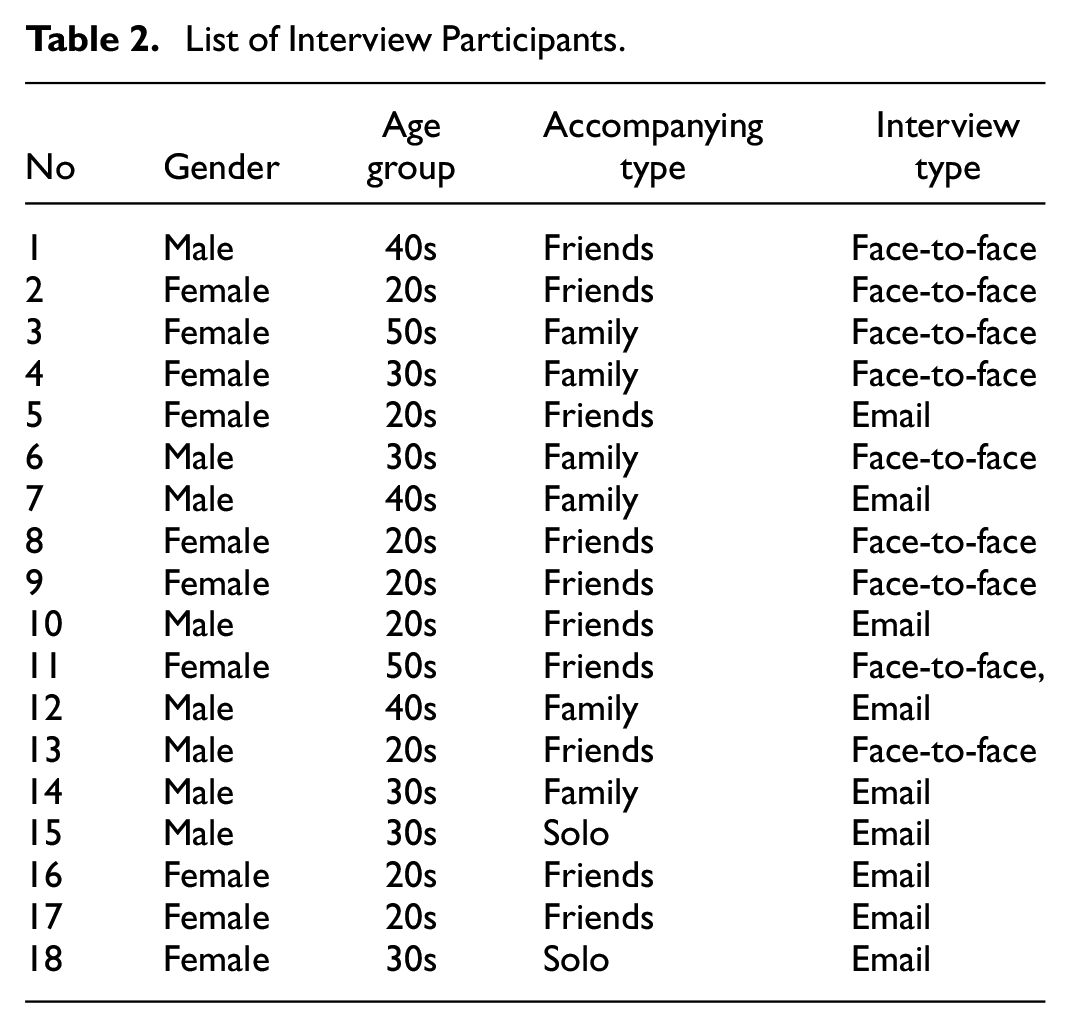
The first phase of analysis involved examining the interview data from the initial 10 participants, followed by a secondary analysis of data from the subsequent four interviews. Conceptual saturation was reached as no new insights emerged from the additional interviews. The qualitative data were analyzed using thematic analysis, a method for identifying and analyzing themes within a data set (Braun & Clarke, 2006). This involved grouping important phrases and keywords to derive themes related to the outcomes of the AR travel games.
Specifically, we followed Colaizzi’s phenomenological method and drew upon methodologies used in previous qualitative research (Morrow et al., 2015; Sojasi Qeidari et al., 2024). We took several steps. First, we thoroughly read all participant accounts multiple times to familiarize ourselves with the data. Second, the researchers identified statements directly relevant to the phenomenon being investigated. Third, the researchers examined these significant statements to identify relevant meanings while reflexively bracketing personal assumptions. Fourth, the researchers clustered these identified meanings into common themes across all accounts. Fifth, the researcher wrote a comprehensive description of the phenomenon, incorporating all identified themes. Sixth, this exhaustive description was condensed into a concise statement capturing the phenomenon’s essential aspects. Seventh, the researcher verified this statement with participants and made revisions based on their feedback. Moreover, the original qualitative data were written in Korean, and the translation of the coded content into English was undertaken by bilingual speakers.
To ensure the reliability and validity of our data analysis, we employed inter-rater reliability tools (Thomas & Magilvy, 2011) and triangulation methods including cross-checks with fellow researchers (Belotto, 2018). Investigator triangulation involved multiple researchers interpreting the same data to confirm its reliability (Decrop, 1999). Following recommendations to involve multiple independent coders (e.g., Campbell et al., 2013; Creswell, 2009), two independent researchers with knowledge and intention coded the transcripts from the first participant and compared their interpretations. We calculated the reliability using the proportion agreement method (Campbell et al., 2013). For example, if 15 text units were coded with “attachment,” and both coders agreed on 12 units, the inter-coder reliability would be 80% (12/15 = 0.8). During this process, two coders and one auditor participated to maintain objectivity. Discrepancies were identified, adjustments documented, and an auditor reviewed the process to ensure consistency (Decrop, 1999; Lincoln & Guba, 1985).
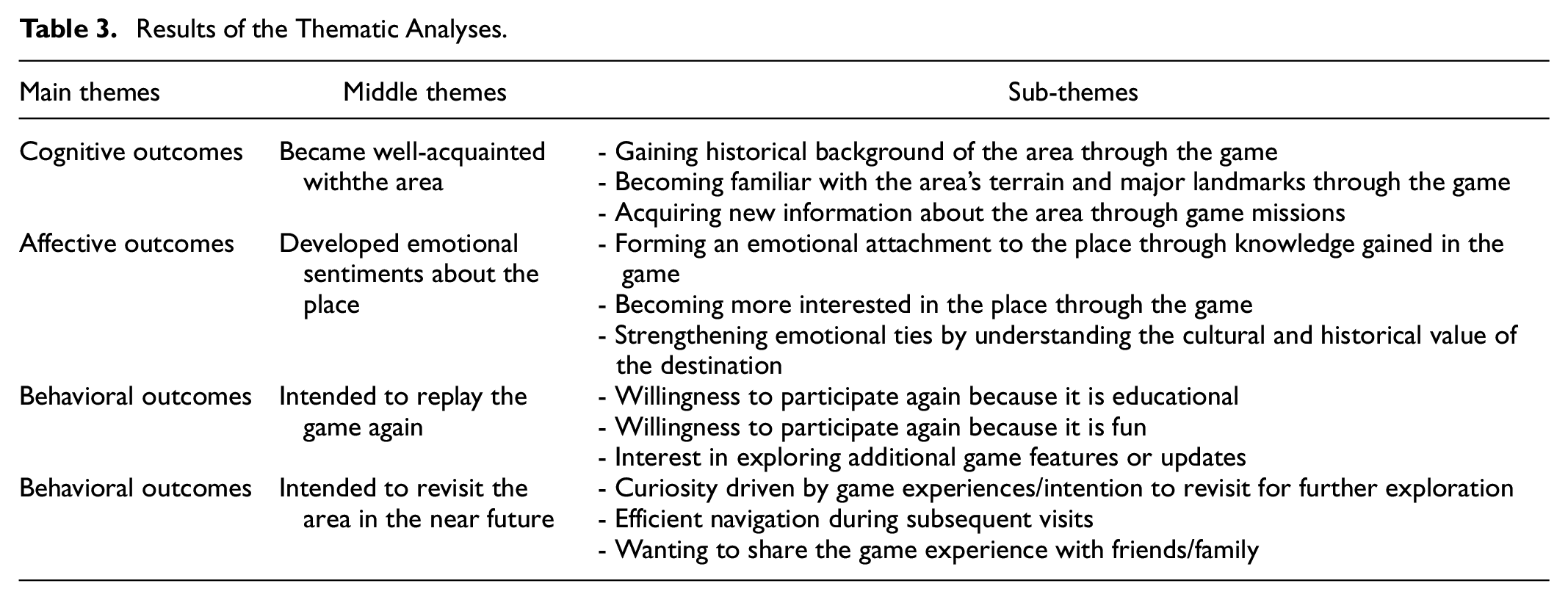
The initial broad themes were further analyzed and broken down into more specific sub-themes. For example, we coded participants’ meaningful descriptions to discovered sub-themes such as “Developing an attachment to the place,” “Forming intimacy with the place,” and “Establishing a sense of belonging.” These sub-themes were categorized under the overarching theme of “Feeling attachment to the place.” In this manner, cognitive outcomes were reduced from an initial set of seven sub-themes to three, affective outcomes from six initial sub-themes to two, and behavioral outcomes related to “Intend to replay the game again” decreased from five initial sub-themes to two, while those related to “Intend to revisit the area in the near future” decreased from six initial sub-themes to three. While acknowledging the potential impact of researchers’ subjectivity on data analysis, we enhanced the credibility through measures such as inter-coder reliability checks and validation of findings with participants.
Additionally, agreement was reached by comparing the data among the data analysts and cross-referencing derived themes to ensure consistency and accuracy. To maintain neutrality, potential biases related to the research topic were actively identified and excluded from the analysis process. Each analyst documented their individual understanding and assumptions separately in the research notes, providing a transparent record of personal perspectives. Ongoing discussions among analysts played a crucial role in this process, as they continuously reviewed and challenged each other’s interpretations. This collaborative approach ensured that personal feelings and opinions did not influence the research results, thereby strengthening the integrity and objectivity of the study.
Results
The thematic analysis resulted in a total of four middle-themes and 10 sub-themes for cognitive, affective, and behavioral outcomes. Table 3 shows the main, middle, and sub-theme structures.
Results of the Thematic Analyses.
Cognitive Outcomes
Participants who experienced AR gamification exhibited the following three sub-themes that emerged as cognitive outcomes. The respondents commonly reported that they became well-acquainted with the area. The results of the interview are supported by previous studies that have validated the educational effects of gamification (King et al., 2023; Putz et al., 2020). The findings of this study are particularly significant as they confirm the educational impact of gamification in local destination contexts. The specific effects can be explained through the following sub-themes:
Through the game, I was able to learn about historical periods dating back several centuries to the Joseon era, relatively modern history, and even events from my own generation … I learned a lot and my children found it interesting that things like the persecution and democratization (Informant #12).
Jungang-dong used to make me confused. There are A Street, B Street, and C Street. I feel like it got clearer after playing the game … (Informant #3).
Thinking about it … after playing the game is discovering the unknown stories and places in Jungang-dong … I had no idea that such fascinating stories were hidden there (Informant #9).
Affective Outcomes
Gamification can cause not only cognitive outcomes but also affective outcomes (Dolan, 2002; Krath et al., 2021; Mullins & Sabherwal, 2020). Previous studies have investigated affective outcomes of gamification such as satisfaction (Yin et al., 2022), enjoyment (Gerdenitsch et al., 2020), and positive emotion (Y. J. Lee, 2022; Mullins & Sabherwal, 2020). Supporting this, this research also identified three sub-themes that emerged as affective outcomes.
The place became dear to me … through the information from the game, I have developed an attachment with a sense of meaning to this very place … So, the significance of going to Joongang-dong will be different in the future. (Informant #12)
Additionally, four respondents described that the places they visited during the game became distinct and special compared to other places.
The strongest feeling I had was that Joongang-dong became special… through this game … It feels like it has become a special place to me, more so than other areas. (Informant #18)
The Academy Theater I visited through the game was actually in the news. The city plans to demolish it… Normally, I might not have cared about it, but because it’s a place I visited through the game … I feel even more attentive. (Informant #3)
By understanding the historical events of this area through the game, I began to see it not just as a simple travel destination, but as a place with a deep history … I learned that efforts were made for the independence movement at Wondong Cathedral, and this knowledge made me feel a stronger emotional connection to the location. (Informant #11)
Behavioral Outcomes
A total of 15 respondents mentioned their behavioral intentions such as the intention to replay the game and intention to revisit the place. Specifically, respondents expressed their intention to participate in the game again because they found the experience educational and fun. Furthermore, some individuals developed interest through the AR game, prompting them to seek related experiences during their next visit.
I’d like to attend again. It was a new experience … When you go somewhere, you often just read the guidebook and say, “Oh, I see,” but as time passes, those memories tend to fade. However … history I learned through this game will stay with me, and I won’t forget them. (Informant #3)
I tried it for the first time, and it was more fun than I expected. If I get the chance, I’d like to try it again. (Informant #1)
While playing the game, I felt it would be great to have additional content or updates that allow me to explore more historical stories of this area. If new missions or locations to explore were added, I would definitely want to play the game again. (Informant #1)
I’m planning to come and experience things I couldn’t fully grasp in the game … I’ve heard that during the festival period, there are traditional games and various experiences to enjoy. Playing the game has sparked my curiosity, and I really want to visit again. (Informant #10)
Knowing the location better will help me move more efficiently, so when I come to Wonju, I’ll probably head to Jungang-dong. (Informant #12)
I want to bring my friends and family along, explain the game to them, and share the experience together. I believe the challenges we face together will be more memorable. By playing together, we can have a more enjoyable and exciting experience. (Informant #4)
Quantitative Approach - Study 2
Building on the results of Study 1, Study 2 aims to quantitatively examine the impact of AR travel on place attachment as an affective consequence, destination knowledge as a cognitive consequence, and behavioral intentions (e.g., replaying intention and revisit intention) as behavioral consequences in a local destination context. Alongside the results of Study 1, we established hypotheses based on theories and conceptual knowledge as follows.
Hypotheses Development
Gamification and Destination Knowledge
Gamification has been used in education, therapy, and training due to its potential to educate and inform (Friedrich et al., 2020). Ahmed and Sutton (2017) suggested that game-based learning (GBL) can foster personal growth and knowledge acquisition by promoting an attitude of embracing challenges and motivating achievement through participants’ commitments. Gamified environments make the learning process enjoyable or fun, reducing psychological stress and enabling intense learning (Abou Kamar et al., 2024).
In the tourism sector, gamification has been recognized for increasing awareness, familiarity, and knowledge (Pasca et al., 2021; Shen et al., 2020). Abou-Shouk and Soliman (2021) demonstrated that gamification in travel agencies enhances brand awareness. Additionally, Frías-Jamilena et al. (2022) confirmed that gamified environments are more effective in enhancing environmental knowledge, and Abou Kamar et al. (2024) found that eco-games significantly enrich users’ sustainability knowledge. These studies collectively showed that gamification positively impacts knowledge. Findings from Study 1 also support these insights, with participants highlighting how AR gamification enhanced their destination knowledge. For example, participants noted that they gained historical knowledge and became more familiar with the terrain, demonstrating how gamification can deepen understanding of a destination. Based on these insights, this study proposes the following hypotheses.
Gamification and Place Attachment
Place attachment refers to an individual’s emotional connection to a specific environment (Hummon, 1992). Location-based AR games offer unique opportunities to explore and connect with places (Oleksy & Wnuk, 2017). According to place attachment theory, spatial exploration can enhance emotional attachment to a place, fostering positive emotions (Kyle et al., 2005; Williams & Vaske, 2003). Mullins and Sabherwal (2020) explained how game mechanics can elicit emotions by applying the theory of the cognitive structure of emotions. Specifically, the theory explains that game design elements interact with emotions and cognition, influencing user experiences.
Many scholars have emphasized the emotional aspects of individuals, such as fun and enjoyment, in the use of game mechanics (Y. N. Kim et al., 2021; C. R. Liu et al., 2019). A growing number of studies have investigated emotional responses to objects or places such as attachment in the context of gamification. Yang et al. (2022) found that intrinsic motivations like relatedness, autonomy, and competence foster brand attachment. Oleksy and Wnuk (2017) also found that the location-based AR game Pokémon Go facilitates place attachment through social connections. Engaging in enjoyable activities at a location can have a strong impact on place attachment. This can be interpreted through various aspects of gamification. The hedonic dimension of gamification serves as a strong predictor of place attachment (Oleksy & Wnuk, 2017), while the practical aspects related to the educational effects of the game can increase satisfaction with the place and enhance place attachment (Lewicka, 2011).
The interview results of Study 1 further demonstrate that AR gamification fosters place attachment. Participants reported that the places they visited during the game became more meaningful and special, with some even experiencing heightened emotional connections. For example, Informant 12 expressed the feeling that the game location increased personal value, while Informant 18 noted that it felt more special compared to other places. Informant 11 emphasized that the game transformed their perception of the region, viewing it not merely as a travel destination but as a place imbued with deep historical significance. These findings suggest that AR gamification can cultivate emotional bonds with a location, leading to place attachment. Consequently, this study posits that gamification enhances travelers’ place attachment as an affective outcome.
Destination Knowledge and Place Attachment
Oliver (1993) posited that emotions resulting from evaluations determine individual responses, indicating that cognition and affection jointly shape these responses. Del Bosque and Martín (2008) explained tourists’ psychology using the cognitive-affective model. Cognition involves beliefs formed from external information (Pike & Ryan, 2004), and affection is the emotion resulting from these beliefs (J. S. Chen & Uysal, 2002). Similarly, Mullins and Sabherwal (2020) confirmed that gamification interacts with both cognition and affection.
The relationship between cognition and affection in the tourism context has been well-documented, indicating individuals attribute meaning to spaces based on personal experiences (Rubinstein & Parmelee, 1992). Williams and Vaske (2003) noted that familiarity with a place through experiences enhances place attachment. Yuksel et al. (2010) suggested that the symbolic meaning of a destination strengthens place attachment. According to Hunt (2003), knowledge enables individuals to interpret sensory data and respond to needs, implying knowledge is a prerequisite for forming cognitive familiarity and increasing the meaning of a place.
The interview results also support the theoretical argument concerning the relationship between the variables. Participants described how knowledge of cultural and historical aspects deepened their sense of place attachment. For instance, Informant 11 emphasized that their emotional connection to the game location strengthened as they learned historical facts during the game, while Informant 12 stated that the information acquired through the game gave the place greater meaning and fostered attachment. These insights suggest that destination knowledge derived from AR gamification enhances meaningful connections to a location, underscoring the role of cultural and historical learning in cultivating place attachment. Thus, this study proposes that destination knowledge positively influences place attachment.
Place Attachment and Behavioral Intentions
Place attachment, the emotional bond between individuals and a place, is based on theories like interdependence theory (J. L. Davis et al., 2009; Kelley & Thibaut, 1978), which examines how human-environment relationships influence behavior over time. According to interdependence theory and place attachment theory (Morgan, 2010), this study hypothesizes that tourists engaging in gamified travel develop stronger emotional attachments, leading to revisit intention. Affective aspects such as enjoyment (H. Y. Wang et al., 2024; Wu & Lai, 2022) and emotional involvement (Hosany et al., 2017; Wu & Lai, 2022) impact revisit intentions. More specifically, previous studies have supported the impact of place attachment on behaviors (e.g., Alexandris et al., 2006; Hosany et al., 2017) with studies showing that attachment influences interactions and service quality at ski resorts (Alexandris et al., 2006) and intentions to recommend places (Hosany et al., 2017). As verified in previous studies, this research also expects that place attachment formed through AR tourism experiences will induce revisit intentions.
Exploring the continuous usage intention of AR games holds significant implications for regional development strategies, especially in the context of regional decline. Continuous usage intention refers to the user’s willingness to engage with a specific technology or service over an extended period, which is closely related to tourism development strategies.
The continuous usage intention of online and mobile games is generally explained through uses and gratifications theory (Jang & Liu, 2020). This theory suggests that the various psychological and social needs fulfilled during the media usage process determine the user’s continuous engagement. In other words, people seek to satisfy various motivations such as acquiring information, enjoying entertainment, and engaging in social interactions through games. The more these needs are met, the higher the likelihood of continued game usage (Faqih, 2022).
Jang and Liu (2020) identified four key factors influencing continuous usage intention in their study of AR mobile game Pokémon Go players: content, process, game knowledge, and achievement. Furthermore, Faqih (2022) found that enjoyment and inspiration significantly impacted the adoption intention of AR games based on uses and gratifications theory. On the other hand, Hung et al. (2021) demonstrated that users’ attitudes affected the continuous usage intention of AR mobile applications.
In summary, emotional factors such as achievement, enjoyment, inspiration, and attitude are likely to be key variables in determining the continuous usage intention of games. However, research on gamified tourism content, particularly AR-based tourism games, remains limited. Therefore, based on existing research, it is necessary to expand the study of AR games’ continuous usage intention into the field of tourism and conduct an in-depth analysis of how AR-based tourism games influence reply intentions.
Destination Knowledge and Behavioral Intentions
Knowledge drives behavioral change. Scholars emphasize information intervention strategies to influence consumer behavior (e.g., Nemati & Penn, 2020). An example of such a strategy can be seen in public service announcements, which aim to promote environmentally friendly behavior through information dissemination by highlighting the severity of global warming, Information dissemination can also be applied to tourism destinations. Keller’s “associative network memory model” proposes that brand knowledge consists of brand awareness and brand image (Keller, 2003). In destination branding, destination knowledge is viewed as part of brand knowledge, which reflects the perception of a place based on its image and association retained in memory (Li et al., 2008). The cognitive aspect of knowledge influences behavioral intentions (Éthier et al., 2008; Faisal et al., 2020). Specifically, familiarity, often mentioned alongside knowledge, is related to information processing and is a crucial antecedent in decision-making (Horng et al., 2012; G. Lee & Tussyadiah, 2012; Prentice, 2004). Thus, this research proposes that destination knowledge will positively impact revisit intentions.
Technology-mediated tourism experience can enhance positive behavioral intentions not only toward the destination but also toward the technology by fostering a deeper understanding of the destination characteristics. Specifically, Rather et al. (2024) found that cognitive engagement in VR-based experiences influences the sharing of these experiences with others. T. Zhang et al. (2025) suggested that consumers are more likely to adopt the technology if the live streaming tourism content provides useful information. This indicates that technology-mediated tourism experiences that deepen the understanding of a destination can encourage positive behavioral intentions not only toward the destination but also toward the technology itself.
Additionally, several informants mentioned that the knowledge gained from the game remained memorable and had a lasting impact, emphasizing the educational benefits of the gamified AR experience in Study 1. Informant 3 stated that the experiences, facts, and history learned through the program would not be forgotten, while Informant 12 directly mentioned that the AR game helped them learn about the place in an enjoyable and engaging way, making them want to participate again. These responses suggest that the cognitive outcomes of the gamified experience generate intentions to revisit. Based on these theoretical arguments and interview results, this study proposes that greater destination knowledge derived from the gamified AR travel experience increases replay intentions.
Sample and Data Collection
This study collected data from participants involved in two different games conducted in Wonju and Gangneung. Like Jungang-dong of Wonju, Gangneung has experienced a gradual population decline since 2014, with a current total population of 207,988 as of 2024. The game was held at Ojuk Hanok Village, located in Jukheon-dong, which administratively belongs to Gyeongpo-dong. Gyeongpo-dong consists of eight small administrative areas, with a population of 11,267 as of October 2024, and Jukheon-dong has 349 residents as of November 2024 (Figures 4 and 5).
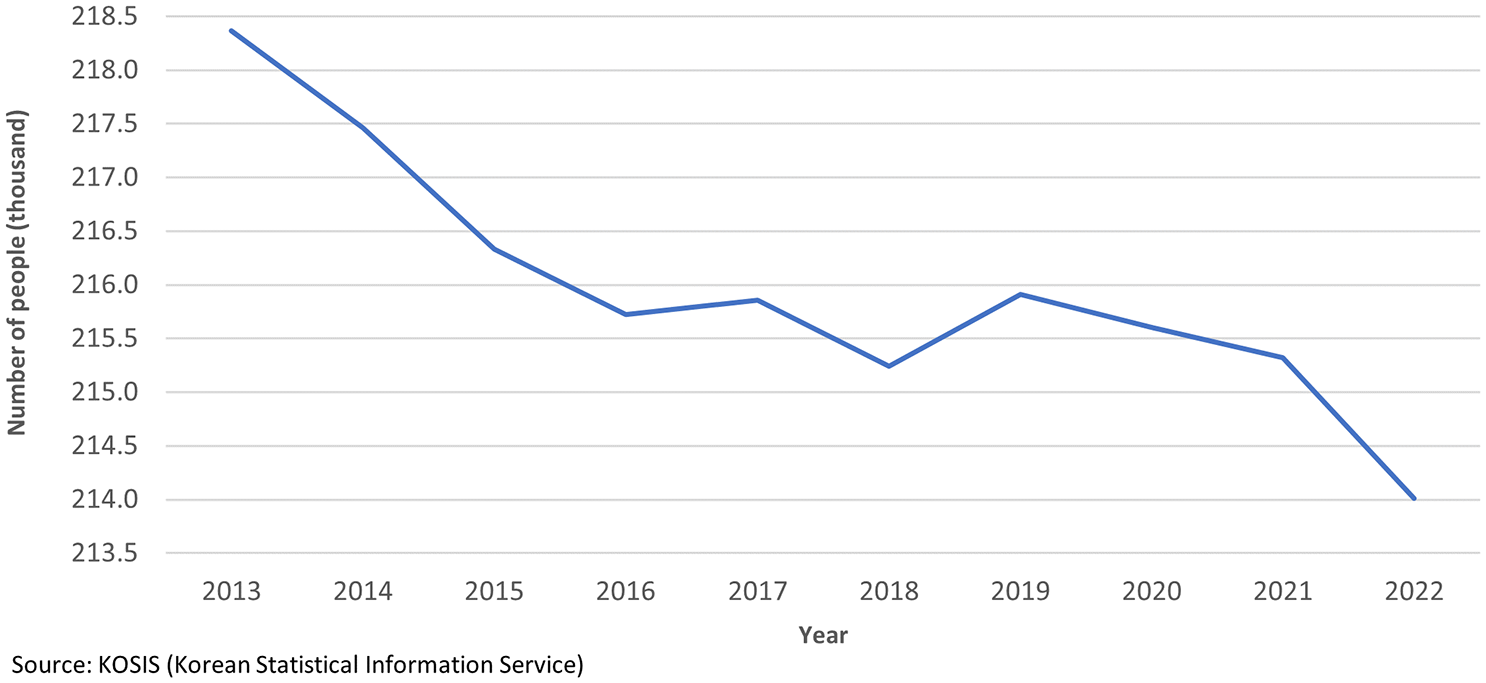
Population decline in Gangneung-si (Including Gyeongpo-dong).
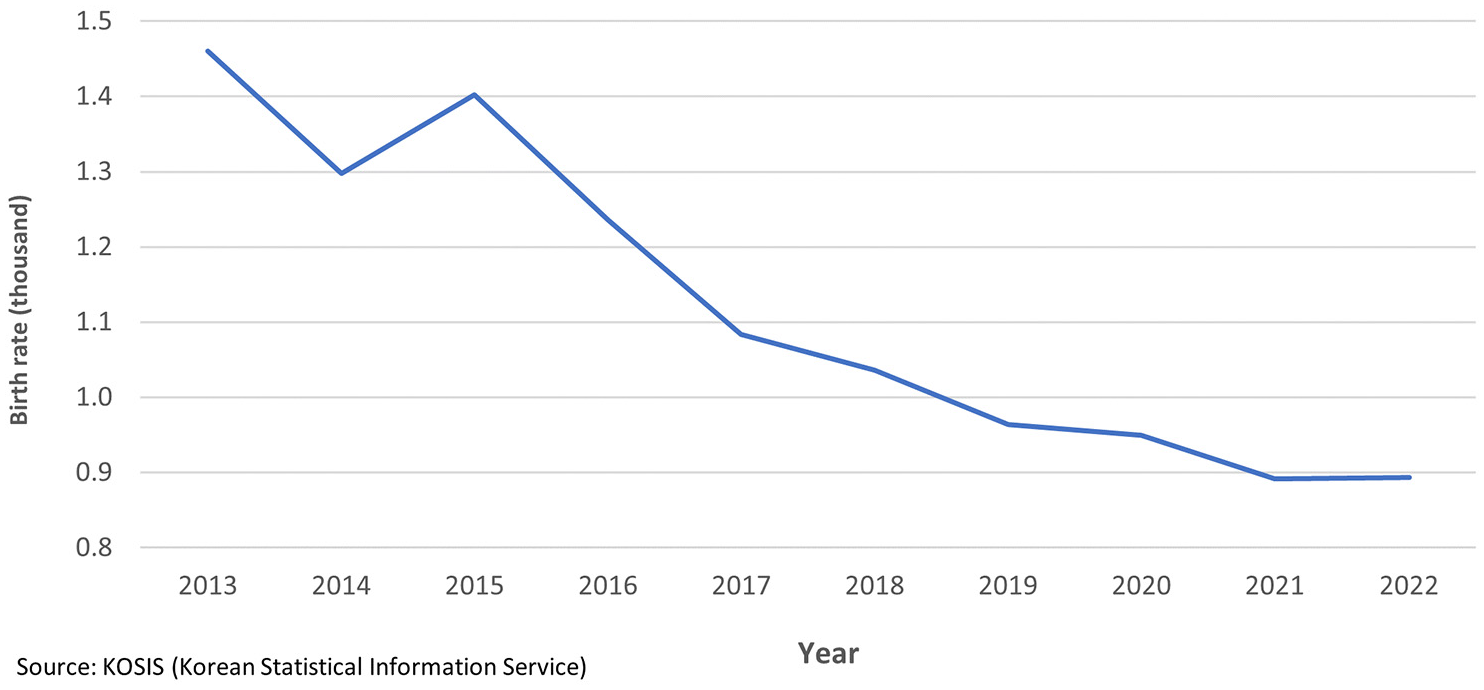
Birth rate in Gangneung-si (including Gyeongpo-dong).
All participants confirmed through an open-ended question that they had never visited the game site before. The game played in Wonju was identical to the “Legend of Doremi” used in Study 1. The researchers collaborated with the project team to obtain a participant list of individuals who consented to using online data. In December 2022, one author sent an online survey invitation to those who played the game in November, receiving 252 responses. After excluding 53 Inattentive responses, 199 valid responses were analyzed. Personal data was discarded after collection. Inattentive responses were identified via two attention-check questions (“Enter number 3 below” and “Answer YES to the question below”). Participants who failed either check were excluded. This ensured high data quality and reliability. While online surveys allow participants to respond flexibly, they can lead to distractions. Thus, strict measures ensured only reliable responses were included.
Following the project team’s operational period, further collaboration was not feasible, so researchers directly recruited participants online and conducted a field survey after the AR travel experience. From January to February 2023, the authors collected 85 responses during field surveys. To address potential differences between online and field data collection, a comparative analysis confirmed no significant structural differences in means or standard deviations. Ultimately, 284 responses were collected, with valid responses used after excluding inattentive entries. Most participants were in their 30s (36.7%), and 59.7% were female.
To increase the sample size, additional data were collected from participants in the “Beyond the Boundaries of Dimensions” game, operated by the Gangneung Tourism Development Corporation, starting on November 27, 2024. This game, similar to the “Legend of Doremi” game in Wonju, was offered through the RealWorld application, with survey cooperation from RealWorld Inc. The game was available daily from 6 p.m. to 9 p.m. and followed a similar format to “Legend of Doremi,” where participants explored Hanok Village and solved challenges using AR and QR scan technology (see Figure 6). Participants had the option to rent traditional hanbok at a location called “Samuljae” within the village, which also served as the main area for game explanations. Most participants began the game at Samuljae. The survey collection period took place from November 29 to December 15, 2024. To encourage participation, the researcher posted a survey participation poster at Samuljae and visited the site on weekends. After engaging in the game for approximately 40 to 50 minutes, participants returned the hanbok, after which the researcher explained the purpose of the study and invited them to complete the survey.
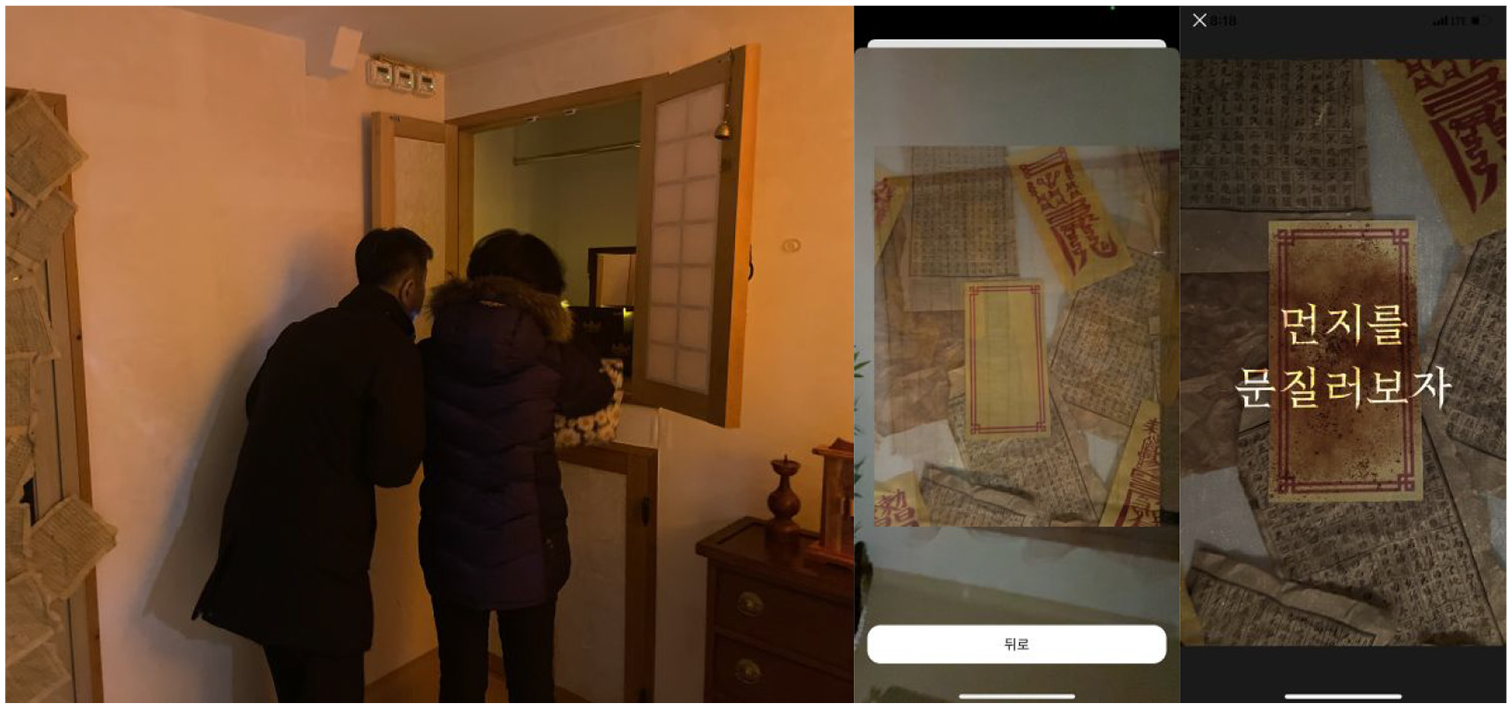
“Beyond the Boundaries of Dimensions” AR travel game.
A total of 310 survey responses were collected through these efforts. After excluding 13 inattentive responses, 297 valid responses were analyzed. Most respondents were in their 20s (37.7%), and 62.3% were female, reflecting the trend that AR games are more popular among younger individuals. To ensure accurate and truthful responses, participants were provided with a $4 gift card as a token of appreciation. The total analysis included 581 responses: 284 from Wonju’s “Legend of Doremi” and 297 from Gangneung’s “Beyond the Boundaries of Dimensions.”
To compare the “Legend of Doremi” and “Beyond the Boundaries of Dimensions” datasets, a one-way ANOVA was conducted, examining differences across three datasets: the online survey for “Legend of Doremi,” the field survey for “Legend of Doremi,” and the field survey for “Beyond the Boundaries of Dimensions.” The ANOVA results revealed no significant differences between the three groups on all variables (p-values ranging from 0.231 to 0.594), indicating that survey methods did not significantly impact the data (Table 4).
Results of the ANOVA.
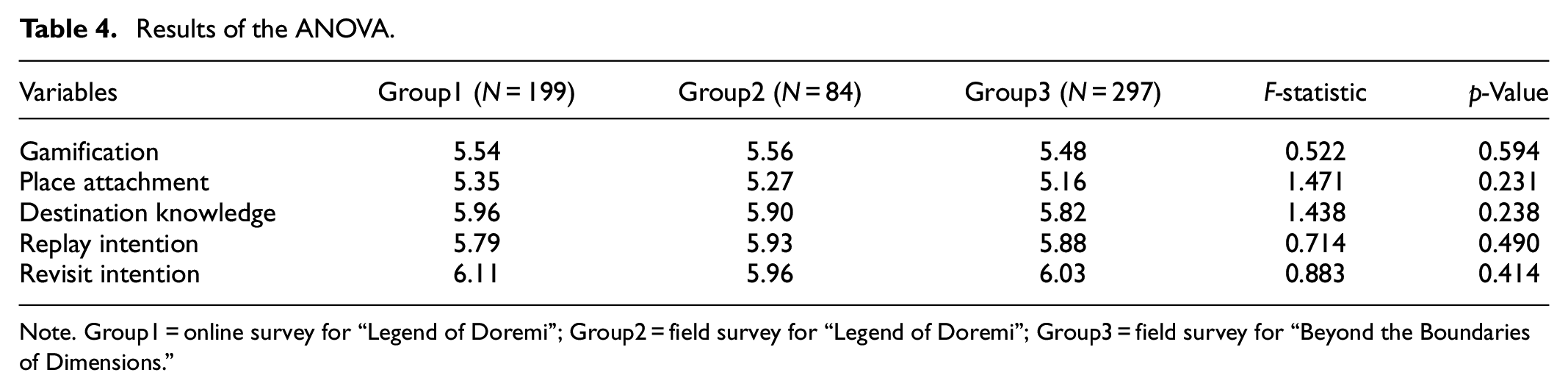
Note. Group1 = online survey for “Legend of Doremi”; Group2 = field survey for “Legend of Doremi”; Group3 = field survey for “Beyond the Boundaries of Dimensions.”
In accordance with prior research conducted by Darvishmotevali and Ali (2020) and Karatepe et al. (2020), various procedural methods were implemented to address potential common method bias during the data collection process. First, the data were collected in multiple waves, with a time gap of 1 week between waves. Second, to reduce respondent fatigue and confusion, the survey length was minimized by including only the measurement items relevant to hypothesis testing. This approach ensured the accuracy of responses. Third, to prevent respondents from guessing the questions or patterns of answers, the order of measurement items was counterbalanced. Finally, a pilot study was conducted among 10 Ph.D. researchers to ensure the simplicity, conciseness, and specificity of each measurement item.
To address potential method bias arising from the mix of online and field surveys, several procedural measures were implemented to ensure consistent response conditions. Both surveys shared identical content and format, presenting the same questions in the same manner. Clear instructions were provided to field respondents to prevent confusion, while online respondents received identical explanations before beginning the survey to ensure clarity. These steps aimed to prevent discrepancies between the survey methods from affecting the results. Additionally, to address the issue of the time gap between game experience and online survey responses, this study restricted participants to respond to the online survey within 1 month after their game experience. This approach was implemented to minimize potential biases caused by the time gap and reduce the impact of the game experience on the responses.
Survey Instrument
Scales based on a review of previous research were used, with some items modified to fit the research context. All scales used a 7-point Likert scale response format with values ranging from 1 (strongly disagree) to 7 (strongly agree).
First, we measured gamification by adapting Y. J. Lee (2022) and C. R. Liu et al. (2019). A total of 15 gamification items incorporating relatedness (three items), mastery (three items), competence (three items), fun (three items), and narratives (three items) was used. Most scholars describe place attachment as a concept characterizing the bond between individuals and their meaningful places (Eisenhauer et al., 2000; Hidalgo & Hernández, 2001). Some scholars define “sense of place” as an overarching concept encompassing sub-concepts such as place identity, place attachment, and place dependence (Dwyer et al., 2019). In this study, we adopted three items to measure place attachment (Y. Liu et al., 2020). This aligns with the concept of “emotional attachment to place” derived from the qualitative research. Destination knowledge was measured by adapting three items from Awasthy et al. (2012) and Lacey et al. (2010). Re-playing and revisit intention were measured with two items each using the measurement tools of Loi et al. (2017) and Um et al. (2006). Participants were asked to report any difficulties or skip unclear items, but no significant issues were reported.
Results
For data analysis, a two-step method, proposed by Anderson and Gerbing (1988), was utilized. Initially, confirmatory factor analysis (CFA) was employed to assess the model fit indices and factor structure. Subsequently, structural equation modeling (SEM) was applied to examine the hypotheses.
Pre-analysis
Prior to CFA, several pre-analyses were conducted to ensure the quality and distribution of the data. Normality was confirmed with skewness and kurtosis values within the −2 to 2 range, indicating normal distribution of the data (Hair et al., 2022, p. 66). Cronbach’s alpha was used to assess the internal consistency of the constructs, and all constructs exceeded .7, indicating acceptable levels of reliability (Gamification: Relatedness = .81, Mastery = .88, Competence = .90, Fun = .92, Narratives = .86, Place attachment = .91, Destination knowledge = .85, Replaying intention = .92, Revisit intention = .92). Additionally, Harman’s single-factor analysis was conducted to test common method bias. An exploratory factor analysis revealed that a single factor explained only 45.99% of the total variance, which was less than the recommended threshold of 50%, indicating an absence of common method bias (Chang et al., 2010).
Testing the Structural Model
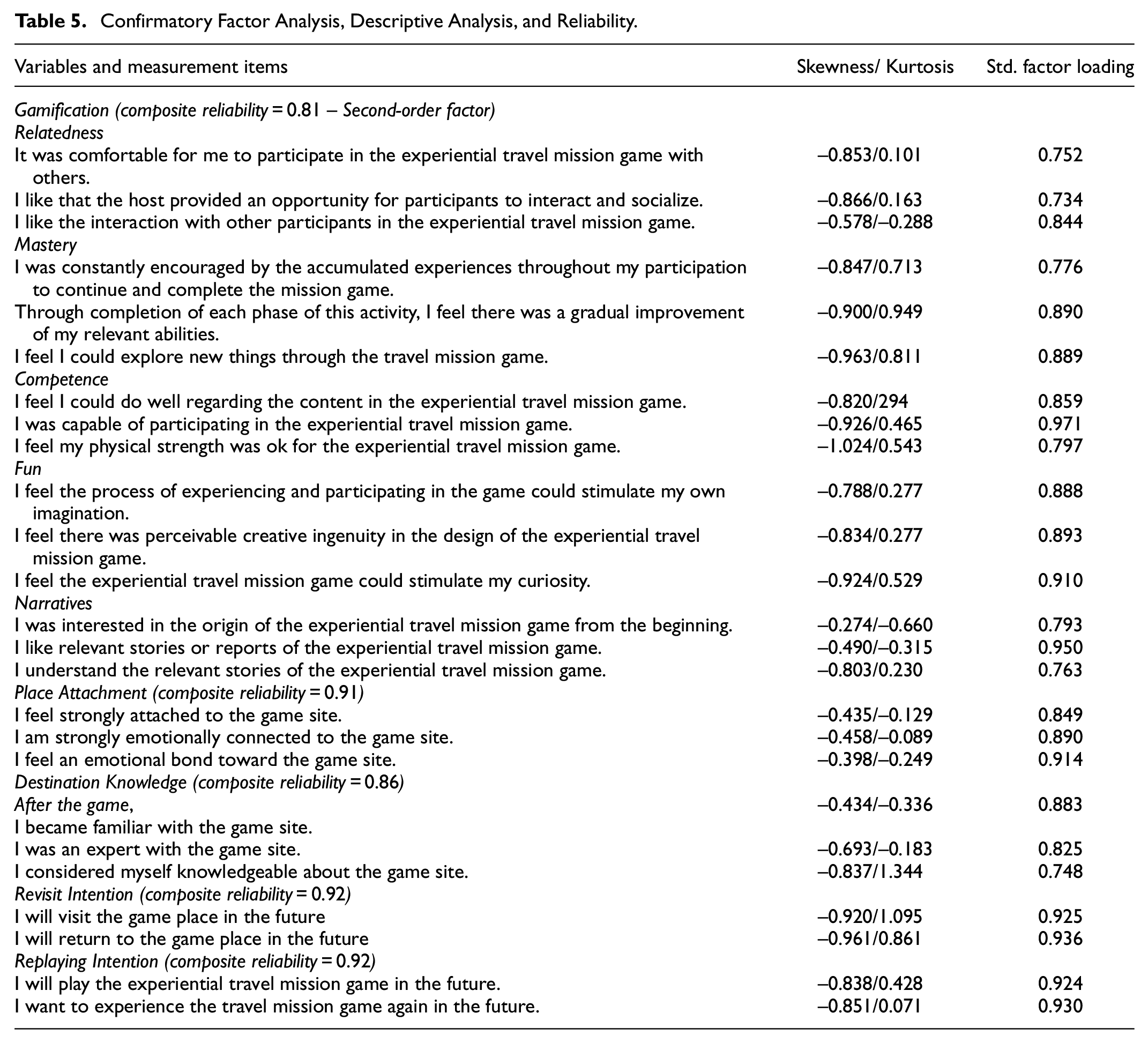
To evaluate the unidimensionality of the proposed measurement model, a confirmatory factor analysis (CFA) was performed. The model fit was acceptable, with a chi-square value of 623.143 and a p-value less than .001, normed chi-square (CMIN/DF) of 2.463 (p < .001), comparative fit index (CFI) of 0.967, Tucker-Lewis index (TLI) of 0.960, incremental fit index (IFI) of 0.977, and root mean square error of approximation (RMSEA) of 0.051, as recommended by Schumacker and Lomax (2004) and Turner and Reisinger (2001). All items showed standardized factor loadings greater than 0.6, with critical ratio values ranging from 10.25 to 32.00 (p < .001).
Convergent and discriminant validity were also assessed. Composite reliability (CR) and average variance extracted (AVE) values were calculated to evaluate convergent validity. All three measures exhibited a CR ranging from 0.81 to 0.92, which exceeded the acceptable level of 0.60 suggested by Fornell and Larcker (1981). The AVE values for all constructs were greater than 0.5 (gamification [second-order factor] = 0.56, place attachment = 0.78, destination knowledge = 0.67, revisit intention = 0.86, replay intention = 0.85), indicating acceptable convergent validity. To evaluate the discriminant validity, the AVE value of each construct was compared with the squared correlation between all the pairs of constructs. The AVE values for each construct were higher than the squared correlation, suggesting an acceptable level of discriminant validity (Tables 5 and 6; Bagozzi et al., 1998).
Confirmatory Factor Analysis, Descriptive Analysis, and Reliability.
Squared Correlation Matrix and Average Variance Extracted.
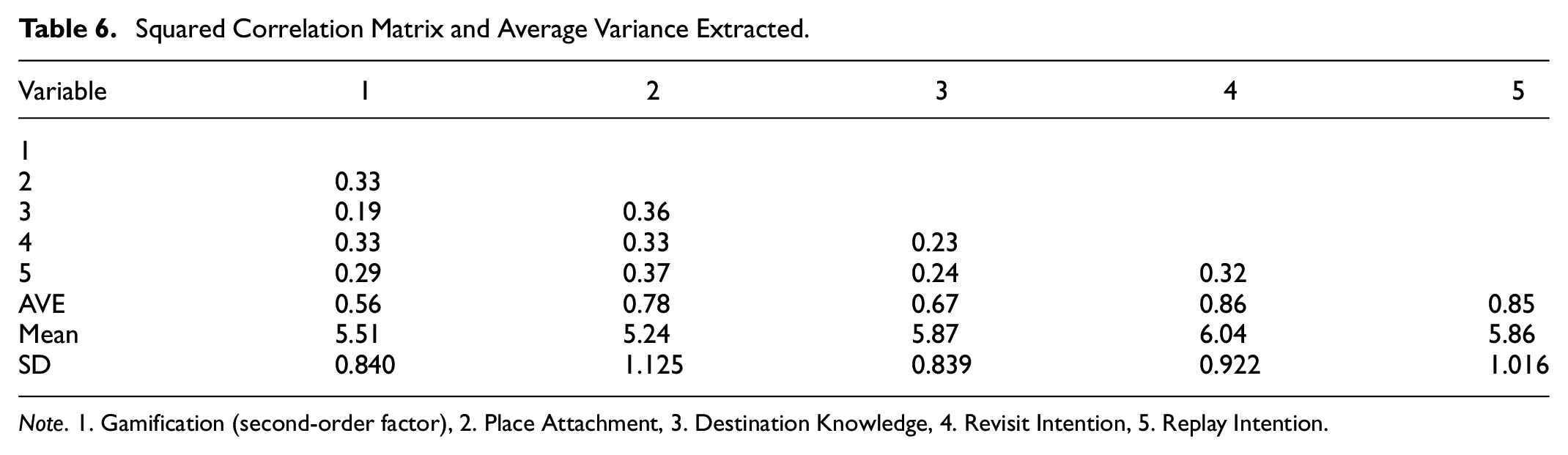
Note. 1. Gamification (second-order factor), 2. Place Attachment, 3. Destination Knowledge, 4. Revisit Intention, 5. Replay Intention.
The experience of AR games is hypothesized to vary depending on the technological acceptance abilities of individuals, leading to the inclusion of gender, age, and prior gaming experience as control variables (Quazi & Talukder, 2011). The present study utilized Structural Equational Modeling (SEM) to test the hypotheses, and the model fit indices indicated an acceptable fit: χ2 = 911.622, p < .001, Normed χ2 (CMIN/DF) = 2.738 (p < .001); GFI = 0.900, CFI = 0.948, IFI = 0.956, TLI = 0.937, RMSEA = 0.056 (Schumacker & Lomax, 2004; Turner & Reisinger, 2001). The hypothesized relationships between the variables were examined, and gamification had a positive and significant effect on place attachment. The correlations among the control variables—gender, age, and prior gaming experience—ranged from 0.028 to 0.064, indicating that there were no issues with discriminant validity. Among the control variables, only age exhibited a significant negative effect on the level of gamification experience (t = −3.112, p < .05), suggesting that older participants reported lower levels of engagement with gamification experiences.
The hypothesized relationships between the variables were examined, and gamification had a positive and significant effect on place attachment (t = 5.394, p < .001) and destination knowledge (t = 11.386, p < .001). Furthermore, destination knowledge had a positive and significant impact on place attachment (t = 4.236, p < .05). Destination knowledge also positively influenced replaying intention (t = 8.488, p < .001) and revisit intention (t = 8.876, p < .001). Lastly, place attachment had a positive and significant impact on replay intention (t = 3.027, p < .01) and revisit intention (t = 3.068, p < .01). Therefore, the study findings support Hypotheses 1 to 7 (refer to Table 7 and Figure 7 for detailed results).
Standardized Regression Weights for the Structural Model.
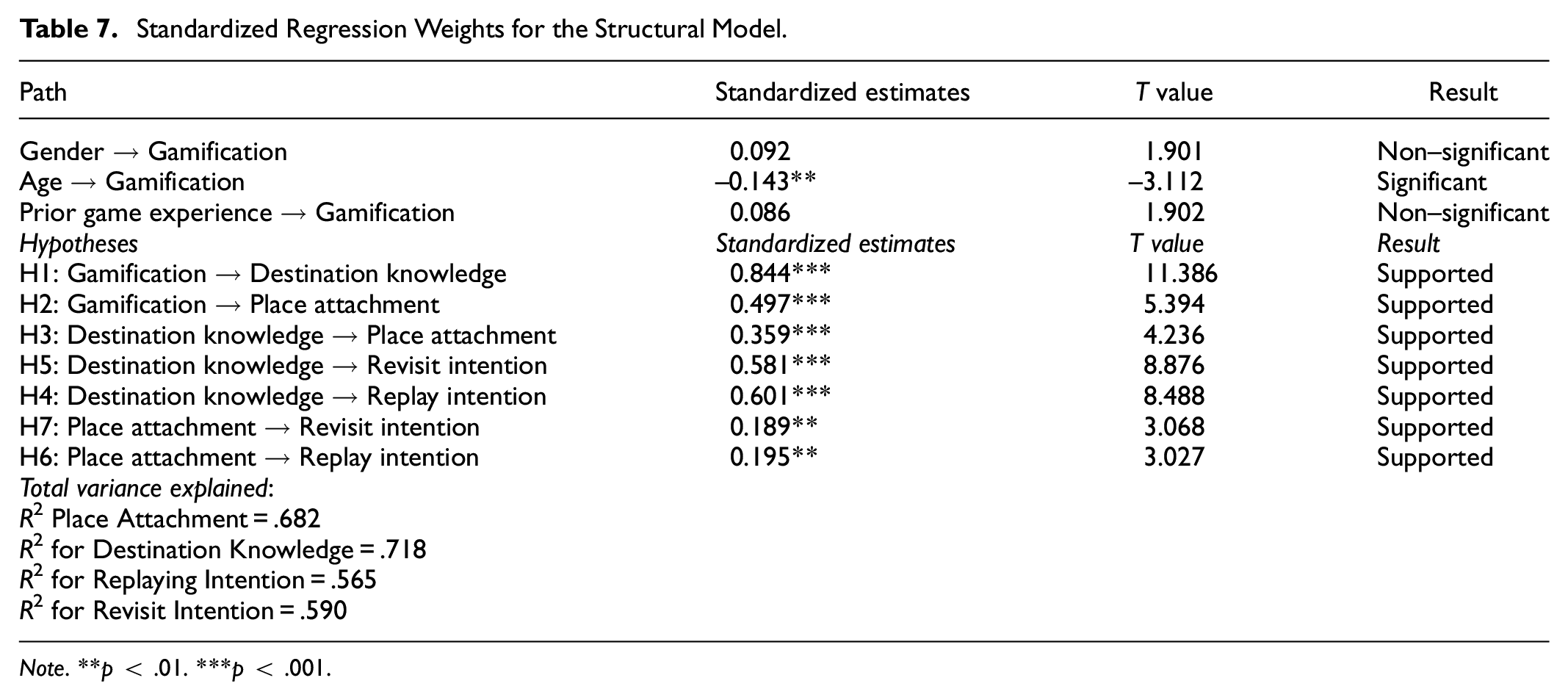
Note. **p < .01. ***p < .001.

Results of the path analysis.
Mediation Analysis
The mediating effects of destination knowledge and place attachment on the relationship between gamification and behavioral intention were examined using the three-step mediation regression analysis proposed by Baron and Kenny (1986) and the Sobel test.
The analysis showed that gamification significantly affected place attachment (47.6% variance explained, F = 125.774, p < .05) and replaying intention (45.6% variance explained, F = 116.055, p < .05). Both variables had significant positive effects, and place attachment partially mediated the relationship between gamification and replaying intention (Sobel test, indirect effect = 0.187, p < .001). However, place attachment did not mediate revisit intention (Table 8). For destination knowledge, gamification was a significant influenced (45.2% variance explained, F = 114.181, p < .05), and it partially mediated the relationship between gamification and both replaying intention (indirect effect = 0.208, p < .05) and revisit intention (indirect effect = 0.306, p < .001; See Tables 9 and 10).
Mediation Analysis of Place Attachment (Gamification → Replaying Intention).
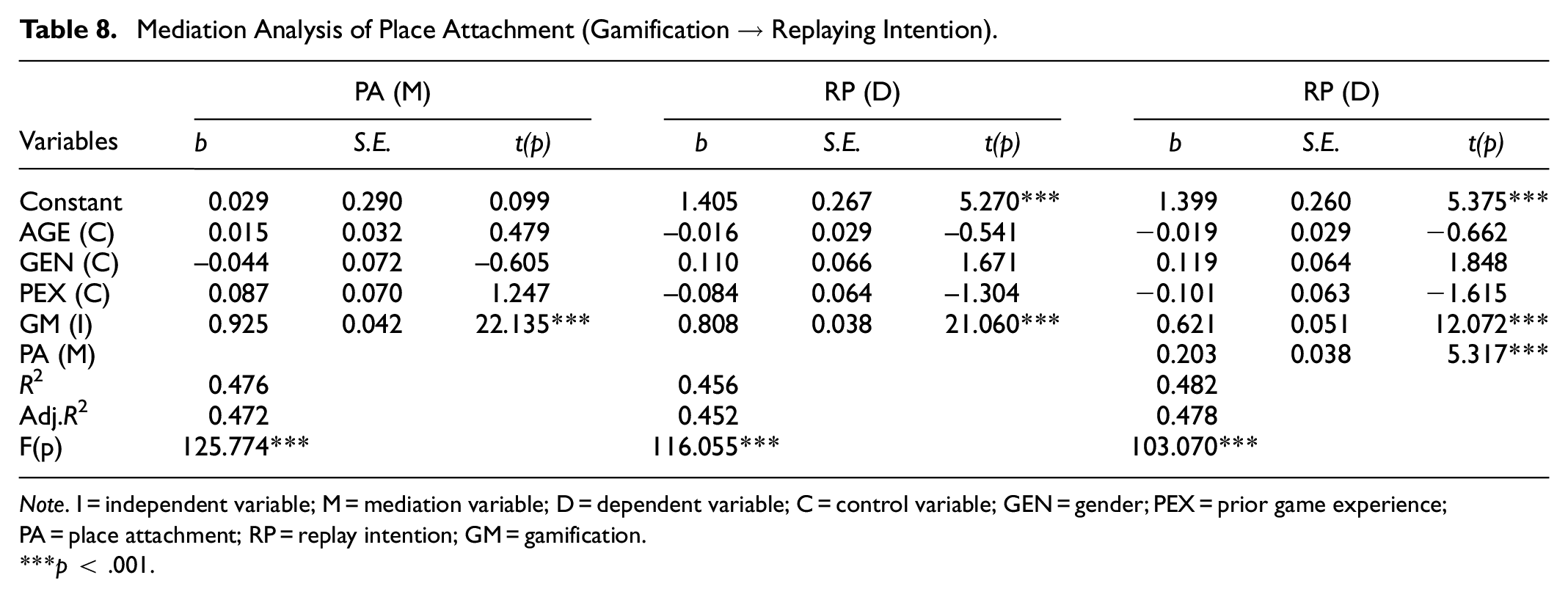
Note. I = independent variable; M = mediation variable; D = dependent variable; C = control variable; GEN = gender; PEX = prior game experience; PA = place attachment; RP = replay intention; GM = gamification.
p < .001.
Mediation Analysis of Destination Knowledge (Gamification → Replay Intention).
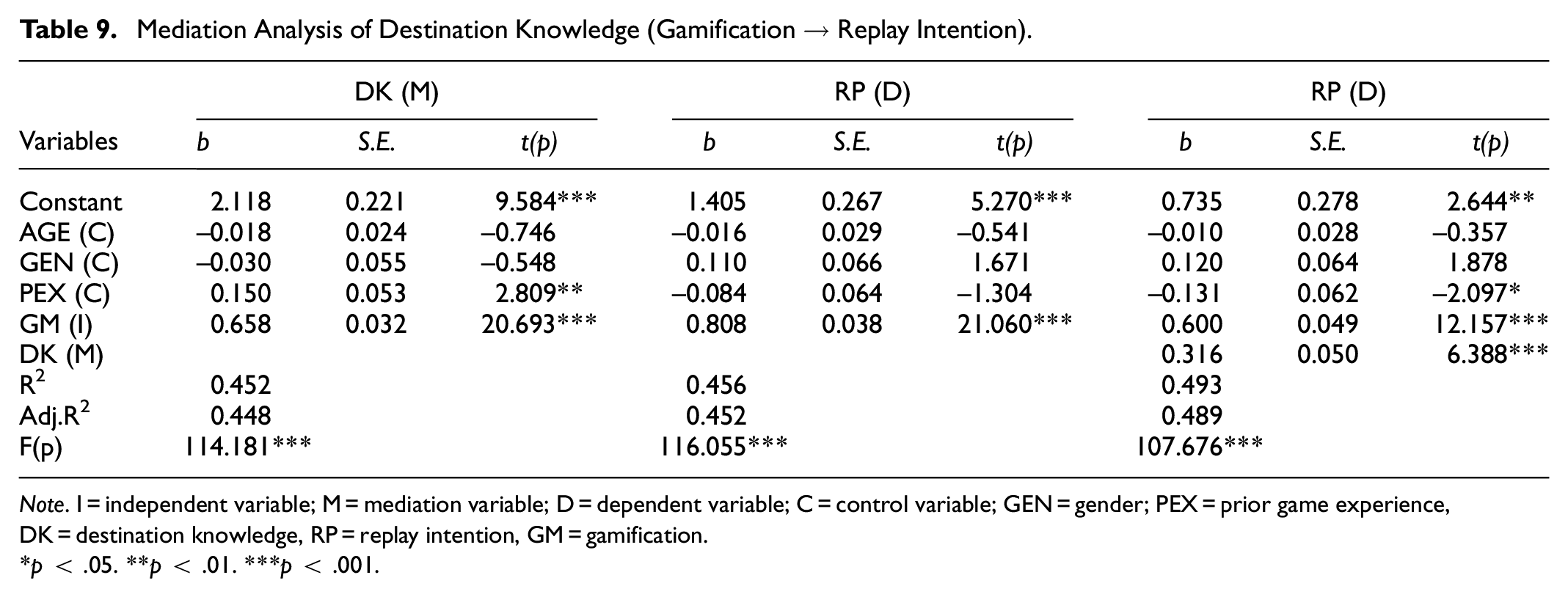
Note. I = independent variable; M = mediation variable; D = dependent variable; C = control variable; GEN = gender; PEX = prior game experience, DK = destination knowledge, RP = replay intention, GM = gamification.
p < .05. **p < .01. ***p < .001.
Mediation Analysis of Destination Knowledge (Gamification → Revisit Intention).
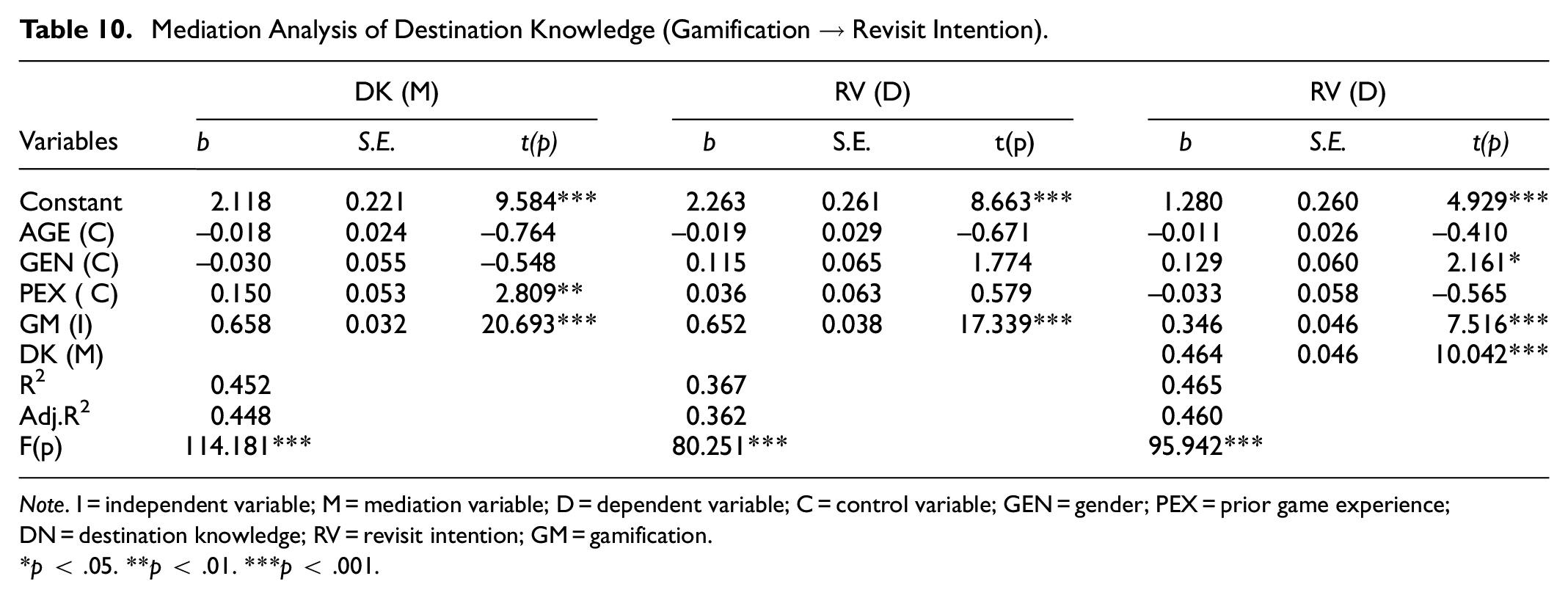
Note. I = independent variable; M = mediation variable; D = dependent variable; C = control variable; GEN = gender; PEX = prior game experience; DN = destination knowledge; RV = revisit intention; GM = gamification.
p < .05. **p < .01. ***p < .001.
The mediation analysis showed that both place attachment and destination knowledge partially mediate the relationship between gamification and behavioral intentions. Gamification directly influences behavioral intentions, with both mediators amplifying this effect. Place attachment mainly mediates the relationship with replay intention, while destination knowledge affects both replay and revisit intentions. This suggests that stronger place attachment and more destination knowledge increase the likelihood of replaying the game and revisiting the location.
Conclusion
Declining birth rates and rapid urbanization are major challenges in countries like Korea, Japan, China, and several European nations (Hyun Yoo, 2023). In Korea, small- to medium-sized cities outside Seoul face economic stagnation and population decline, while Japan’s rural areas experience “kaso” (depopulation), and China sees underpopulated cities due to urban migration (Hattori et al., 2017; L. Wang & Mesman, 2015). Similarly, European countries like Italy and Spain struggle with rural depopulation (Navarro Valverde, 2019).
In this context, revitalizing local tourism, especially through technology-based content like gamification and AR, offers a potential solution by increasing tourist engagement and combating depopulation. However, the effectiveness of such technologies has not yet been systematically evaluated. This study fills that gap by using the tri-component attitude model to examine the cognitive, emotional, and behavioral effects of gamification on local tourism. Findings from Study 1 (qualitative) and Study 2 (quantitative) are synthesized in Figure 8, illustrating the relationship between gamification components and visitor engagement.
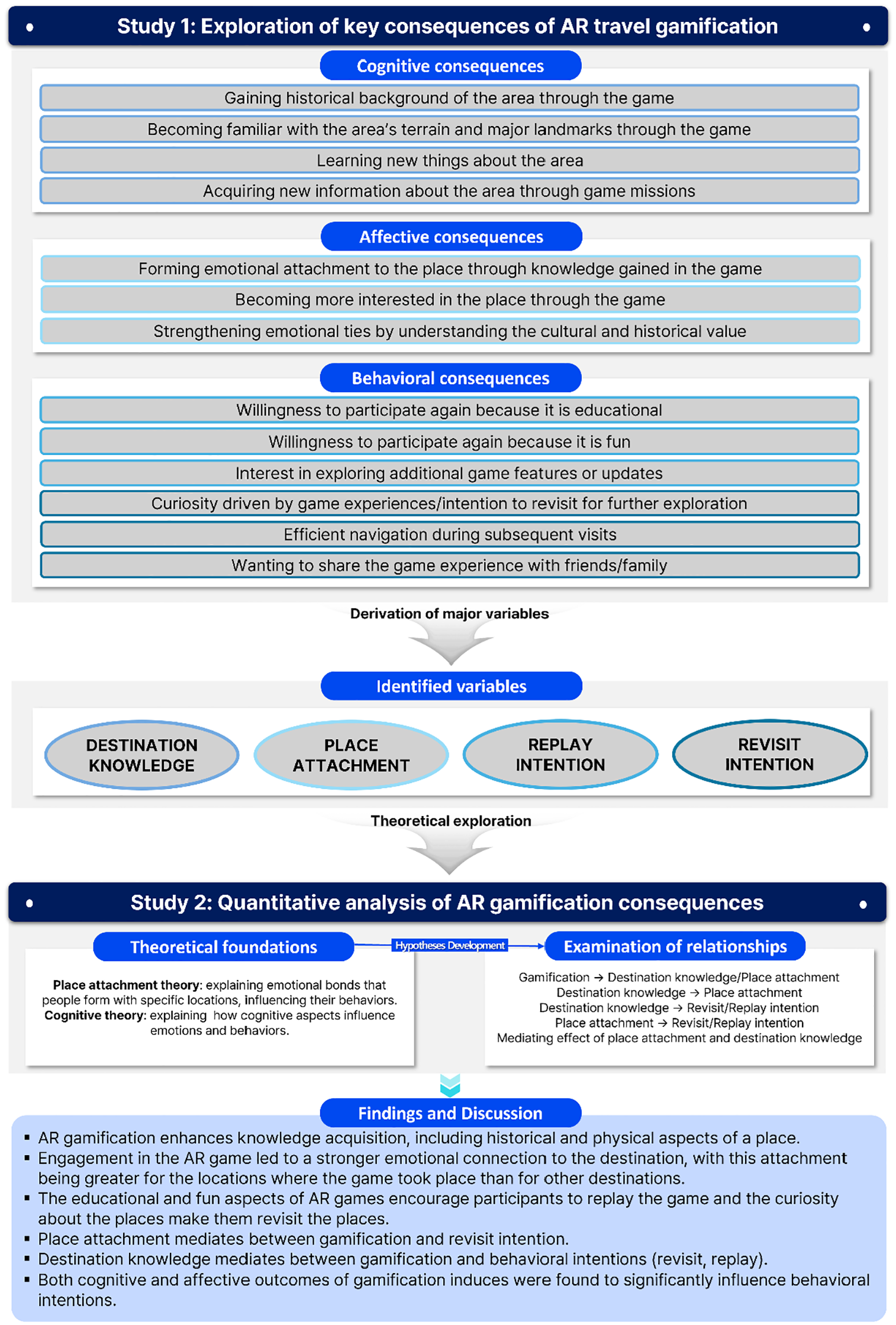
Results of Study 1 and Study 2.
Theoretical Implications
This study makes several significant contributions to the theoretical and empirical knowledge of gamification’s impact. First, it expands the scope of previous research on gamification in tourism by investigating the effects of AR-based tourism content on local destinations (Bravo et al., 2021; Jang & Kim, 2023; Y. J. Lee, 2022). Specifically, it goes beyond existing research on AR-based tourism information acquisition or guide experiences (e.g., Chung et al., 2018; Thirumaran et al., 2021) to apply it to the context of gamified tourism content, where tourists actively participate in creating experiences and co-creating experiential value. While previous studies aimed to enhance tourist experiences by integrating digital technology and gamification (Huang & Soman, 2013; W. Lee et al., 2024; Shin et al., 2025; Yovcheva et al., 2014), most of these studies focused on well-known landmarks or major cities (e.g., Chung et al., 2018; Y. N. Kim et al., 2021; Wu & Lai, 2021). This study bridges this gap by demonstrating the positive impact of AR-based gamification on revitalizing declining regions. Oleksy and Wnuk (2017) found that AR-induced satisfaction primarily leads to short-term emotional responses. In contrast, this study demonstrates that gamified AR travel contents foster long-term engagement and revisit intentions in underappreciated destinations through the interaction of cognitive learning and emotional attachment. Gamification theory should not only focus on experiential values such as enhancing tourists’ experiences (Y. J. Lee, 2022; Signoretti et al., 2015; Xin et al., 2023) and promoting engagement (Jang & Kim, 2022; Liang et al., 2017; Xu et al., 2013, 2017) but also consider the broader socio-economic impact of gamification theories. This study suggests a new direction for exploring the applicability and effects of gamification theory in various socio-economic contexts.
Secondly, previous gamification research in tourism tried to understand tourists’ attitudes and behaviors in the context of gamification (e.g., Y. J. Lee, 2022; Shen et al., 2020; Sigala, 2015; Thirumaran et al., 2021; Xu et al., 2013), but the studies did not adopt an integrative approach. This study attempted to understand the outcomes of the gamification tourism experience from an integrated perspective. Previous research had limitations in comprehensively considering the attitudes toward destinations formed through tourists’ AR experiences, including cognitive, emotional, and behavioral attitudes (e.g., Chung et al., 2018) or focusing on cognitive or emotional aspects (e.g., Oleksy & Wnuk, 2017; Yang et al., 2022). For example, Chung et al. (2018) assumed that AR satisfaction directly leads to revisit intention through attitudes toward AR. However, their reliance on balance theory failed to identify the subtle processes in which cognitive (e.g., destination knowledge) and emotional (e.g., place attachment) evaluations mediate this relationship. By demonstrating that AR gamification triggers a sequential process in which understanding the cognitive aspect enhances emotional bonds, which in turn drives behavioral intentions, this study overcomes these limitations with a more robust explanation. In contrast, this study’s finding supports the tri-component model (e.g., Breckler, 1984; Rosenberg et al., 1960), suggesting that attitude consists of cognition (belief and thoughts), affect (emotions), and behavior. This study analyzed the impacts of AR gamification through both qualitative and quantitative analyses, which allowed it to capture and understand how these three components are formed.
Third, the results confirmed the outcomes of location-based AR mobile gaming applications in the tourism industry. As AR necessitates interaction between the real environment and virtual elements, it can effectively guide tourists to specific physical locations. Additionally, location-based AR mobile games can enhance tourist experiences and can be effectively integrated into the tourism industry (Guo et al., 2021). This study finds that gamification in AR-based travel games can enhance destination knowledge among travelers, which supports the effectiveness of game-based learning in facilitating knowledge acquisition (Ahmed & Sutton, 2017). Specifically, the results of Study 1 indicate that AR games are effective in acquiring both historical and physical knowledge of local destinations. Furthermore, the study reveals the affective value of gamified travel experiences by demonstrating the significant impact of gamification on place attachment. Specifically, game participants mentioned feeling that the places where they played games were more special than other travel destinations and showed increased interest in social issues related to those places.
Fourth, this study validated the role of cognitive processes in influencing affective domains in tourism gamification contexts. While the relationship between cognition and emotion is widely acknowledged in psychology, the priority between the two remains a fundamental topic of ongoing debate (Martingano & Konrath, 2022). In this research, participants engaging in gamified tourism content were found to initially acquire knowledge about the destination, leading to interest and attachment to the area. By confirming the relationship between these two domains, the study established that cognition serves as the foundation for emotion. Specifically, qualitative research in this study indicated that participants learned the meaning of places through AR tourism experiences, thereby forming attachments. These results support previous studies suggesting that people can form connections with places, such as proximate familiarity, through information processing (Milman & Pizam, 1995; Sharifpour et al., 2014). These findings provide evidence supporting the appraisal theory of Lazarus (1999) and the framework of Ortony et al. (2022), suggesting that cognition serves as the basis for emotion.
Fifth, this study identified the significant role of place attachment and destination knowledge in predicting behavioral intentions. This corresponds to findings in previous studies that cognitive and affective factors trigger behavioral outcomes (Del Bosque & Martín, 2008; Enrique Bigné et al., 2008; Ross & Harrison, 2016). Specifically, the results are consistent with the predictions of place attachment theory (Anton & Lawrence, 2016) and Keller’s associative network memory model (Éthier et al., 2008; Faisal et al., 2020). Furthermore, the result shows that destination knowledge can influence tourists’ behavior and can be enhanced through AR games that maximize players’ experiences related to specific destinations (Sharma et al., 2023). Specifically, Study 1 revealed that participants formed not only behavioral attitudes toward places but also toward the games. Specifically, they formed a replay intention due to the educational and fun nature of the game and expressed a desire to revisit places to further satisfy their curiosity. This study provides a deeper understanding of what behaviors the affective and cognitive outcomes of gamification induce.
Sixth, this study confirms the significant role of destination knowledge and place attachment as partial mediators between gamification and behavioral intentions. Specifically, place attachment partially mediates replay intention by fostering positive emotions toward a specific experience or place. This finding aligns with previous studies suggesting that emotional value plays a critical role in shaping behavioral intentions (J. S. Lee et al., 2011). Positive experiences evoke emotional satisfaction, which in turn fosters a desire to repeat the experience. Furthermore, the study highlights that the emotional value induced by activities at a tourist destination can partially mediate participants’ intention to reengage. Additionally, destination knowledge proves essential in visitation and participation decisions, underscoring the importance of gamification strategies that enhance destination knowledge and cognitive engagement (A. Chen et al., 2017; Hamari & Koivisto, 2015). These elements are pivotal in effectively boosting both revisit and replay intentions.
Practical Implications
Applying AR gamification to regions at risk of economic decline can serve as a vital strategy not just for innovating tourism content, but also for revitalizing these areas and stimulating the local economy. For regions lacking resources or human capital, AR-based gamification can help overcome these limitations. The results of this study show that AR gamification effectively enhances participants’ knowledge of the destination and communicates this knowledge in an engaging and educational way. The information participants gained from the game had a lasting impact and influenced their intentions to revisit and replay the game. Additionally, gamified experiences provide tourists with unique local narratives and experiences, fostering strong emotional attachment. This attachment can lead to more frequent visits and the establishment of a positive image of the region. This approach not only encourages repeat visits but also offers new opportunities for areas facing economic challenges. AR technology goes beyond being merely a tool for tourism content; it can serve as a significant tool for highlighting the unique appeal of a region. Based on the findings of this study, the following practical applications are suggested.
Firstly, integrating historical facts with engaging narratives is essential when developing AR-based tourism content. This study confirms that gamification mechanisms allow visitors to naturally acquire information about the destination. By offering both educational and entertaining content, tourists are encouraged to explore further. The study shows that knowledge about the location enhances place attachment and behavioral intentions, such as revisiting and replaying. Interview respondents also expressed interest in participating again, citing the game’s blend of fun and education. This emphasizes the importance of providing knowledge about the destination. AR-powered interactive experiences allow visitors to gather more information, increasing their intention to revisit. Thus, collaborating with destinations to design games that provide such insights can be a powerful strategy.
Secondly, the study also examined the effects of AR-based location-based mobile games in the tourism industry. These games can encourage actual visits to the tourist destination and enhance the overall tourism experience. The results indicate that AR games connecting multiple landmarks within a city can lead tourists to naturally explore the area. In Study 1’s interviews, participants indicated that they would be interested in revisiting places they had missed during their initial visit due to the game experience. Therefore, when designing these games, it is important to incorporate compelling stories or curiosity-driven narratives and then plan for subsequent games that can encourage continued participation.
Interactive AR content at tourist destinations can effectively deepen visitors’ understanding of the region and encourage more frequent visits. Moreover, these games can play a crucial role in revitalizing local economies and injecting new life into tourist destinations. By offering both educational and entertaining experiences, AR gamification can have a positive impact on the local economy and the tourism industry. The application of AR technology in tourism is poised to become an important strategy in the future.
Limitations and Future Research Opportunities
This study has several limitations. First, additional data collection is necessary to better assess the impact of gamification and improve the model fit. Future studies should enhance generalizability by including more diverse data, contexts, and cultural or urban settings beyond South Korea. Second, further research is needed to examine the affective, cognitive, and behavioral outcomes of AR travel games more comprehensively. The influence of attitudes toward societal issues, such as the aging population and low birth rate, on these outcomes could also be explored. Third, analyzing various moderating variables would deepen the understanding of gamification outcomes and provide insights into improving tourist experiences. Specific game design elements, such as relatedness, competence, and narratives, should also be studied to determine their impact on gamification results. This study did not sufficiently address how design choices influenced outcomes, and future research should fill this gap. Finally, demographic limitations in the sample should be addressed by including more diverse participants, especially older generations, to improve generalizability and to better understand how age influences gamified travel experiences. Future studies should also revisit and refine the research model, as some fit indices (e.g., RMSEA) were acceptable but not optimal.
Footnotes
Acknowledgements
None
Declaration of Conflicting Interests
The author(s) declared no potential conflicts of interest with respect to the research, authorship, and/or publication of this article.
Funding
The author(s) disclosed receipt of the following financial support for the research, authorship, and/or publication of this article: This work was supported by the Ministry of Education of the Republic of Korea and the National Research Foundation of Korea (NRF-2024S1A5A2A03037588).
