




Abstract
This study examines tourists’ use of public transportation through the lens of hierarchical leisure constraints theory. Drawing on data collected in 10 European capitals among 5,220 tourists, it aims to provide evidence supporting the relevance of the theory in this research domain, thereby deepening our understanding of the mechanisms underlying tourists’ use of public transportation. Except for the relationship between constraints and negotiation, all hypothesized relationships were statistically significant and aligned with the underlying theory. The multi-group analysis revealed, inter alia, a significant difference between cities with a high public transportation modal split and those with a low modal split in terms of the relationship between constraints and negotiation. Our research suggests that municipal authorities should proactively advocate for and invest in public transportation infrastructure. By prioritizing these modes of transportation, they contribute to a more responsible tourism landscape, preserving the authenticity and cultural richness of destinations for future generations.
Introduction
Protecting the environment, including addressing the pressing issue of climate change, stands as one of the most significant challenges humanity faces in the 21st century (Gills & Morgan, 2020). Tackling this challenge requires both the expansion of renewable energy sources for electricity generation and the electrification of residential heating and transportation. This can be achieved by increasing the adoption of electric vehicles and, crucially, promoting sustainable mobility, including walking, cycling, and public transportation.
Tourism has a vital role to play in advancing environmental sustainability. This is because, as one of the world’s largest industries, tourism has a significant impact on natural resources and ecosystems. Indeed, it is “a human activity that is both dependent on natural resources and contributes to their depletion” (Rutty et al., 2015, p. 43). From a certain point of view, therefore, it is possible to frame tourism activity in terms of ethics since ethical behavior is conceived as impacting on other people (Taylor, 2003). Consequently, much has been made of sustainable tourism, defined as “tourism that takes full account of its current and future economic, social and environmental impacts, addressing the needs of visitors, the industry, the environment and host communities” (UNEP and UNWTO, 2005, pp. 11–12).
Progress toward achieving truly sustainable tourist activity necessitates collaboration among governments, tourism companies, travelers, and holidaymakers. This collaboration becomes even more critical in the aftermath of the pandemic, which greatly influenced tourists’ attitudes and behaviors (Miao et al., 2022). During the period of lockdowns, people were confined indoors, with hotels closed and planes grounded, effectively bringing tourist activity to a halt. However, as pandemic restrictions were lifted in 2022, many individuals enthusiastically rediscovered the joy of traveling and vacationing. The challenge lies in the fact that tourists often tend to diminish their commitment to environmentally friendly practices when transitioning from their home environment to the vacation setting (Dolnicar, 2015). This phenomenon, known as the environmental values-behavior gap, may have been aggravated by the pandemic. After enduring numerous hardships in 2020 and 2021, many individuals are now inclined toward engaging in post-lockdown “revenge” tourism, exhibiting fewer concerns about air travel to distant destinations and displaying less responsible behavior once they reach their destinations.
However, their transportation decisions in cities may be influenced by memories of the not-so-distant past (Miao et al., 2022). Given the increased concern about the risk of contracting airborne diseases in confined spaces, some visitors may choose to avoid using public transportation. Others might be put off by the complexity of public transportation systems, overcrowding, uncleanliness, safety and security concerns, as well as high fares (Ingvardson & Nielsen, 2019). This is important because each mode of transportation has varying impacts on the environment and the quality of life of local residents (Hall et al., 2017). Walking, cycling, and using public transportation or other personal transportation devices are considered the most environmentally friendly modes (Gross & Grimm, 2018). By contrast, the use of private vehicles, rented cars, car-sharing schemes, or ride-hailing services tends to contribute to traffic congestion, noise, and air pollution.
Hence, the post-pandemic reality offers a unique opportunity to explore the mechanism underlying tourists’ use of public transportation in cities. The present study is based on the premise that hierarchical leisure constraints theory, which holds that individuals form preferences for leisure activities based on their motivations and constraints, can be “applicable to a variety of human behaviors” (Godbey et al., 2010, p. 111). Thus, we propose adopting this theory as a lens through which to examine tourists’ public transportation use at the destination. The study draws on data collected via a questionnaire survey conducted in 10 European capitals (Amsterdam, Berlin, Brussels, London, Madrid, Paris, Prague, Rome, Stockholm, and Warsaw) among 5,220 tourists in August 2022. It aims to provide empirical support for the applicability of constraints theory to this particular research area and, consequently, to deepen our understanding of why tourists decide to use public transportation in large cities.
Considering that various external and internal factors influence constraints and negotiation processes (Karl et al., 2022), we assumed—in line with insights from existing literature (e.g., Lee et al., 2022; Romão & Bi, 2021; Zamparini & Vergori, 2021)—that variables such as accommodation location (city center vs. outside the city center), length of stay (short stay vs. long stay), nationality (domestic vs. foreign), and a city’s modal split may shape a tourist’s decision-making regarding public transportation use, thereby impacting the relationships within our model. Consequently, the study also aims to ascertain, through multi-group analysis, potential differences between identified groups concerning the relationships under examination.
Given these objectives, this work fills the following research gaps. Firstly, to the best of our knowledge, it is the first to apply constraints theory to exploring tourists’ use of public transportation. In so doing, we test a model that aligns with the core principles of constraints theory, aiming to examine the interplay between motivation, negotiation and constraints on visitors’ behavior regarding their use of public transportation. While this theory has been used to explain participation in leisure, recreation, and travel (e.g., Karl et al., 2022; Xie & Ritchie, 2019), little remains known about the applicability and explanatory power of the theory when it comes to visitors’ transportation behavior at the destination. Secondly, in contradistinction to relevant studies that rely on data collected from a single location and respondents representing similar populations (e.g., Delclòs-Alió et al., 2022; Maltese & Zamparini, 2023), this paper draws on an extensive dataset comprising domestic and foreign visitors who completed a questionnaire during their visits to European capitals. Such an approach allows for the examination and comparison of evidence across various locations, thereby uncovering certain effects that would have otherwise been difficult to observe in alternative scenarios. For instance, the multi-group analysis we performed revealed significant differences in terms of the hypothesized relationships between cities with a high public transportation modal split and those with a low modal split, as well as between individuals who stayed near the city center and those who opted for more distant accommodations.
This research work contributes to the body of literature on the factors affecting—and mechanisms underlying—tourists’ public transportation use and non-use (e.g., Bieland et al., 2017; Le-Klähn et al., 2015; Maltese & Zamparini, 2023; Miravet et al., 2021). In particular, it advances our knowledge of the complex micro-level processes that, mutatis mutandis, facilitate the sustainable management of urban tourism growth, thereby contributing to the achievement of some of the UN Sustainable Development Goals. In this sense, the present study enriches the stream of research on sustainable tourism (Scott, 2011).
The paper is organized as follows. The next section provides the theoretical background of the research. Subsequently, our research method is presented. This is followed by a discussion of the study’s findings. Finally, we conclude by highlighting theoretical contributions and practical implications, as well as limitations and potential avenues for future research.
Theoretical Background
The Significance of Tourists’ Transportation Choices
The significance of sustainable tourism cannot be overstated. As one of the world’s largest industries, tourism has a significant impact on natural resources and ecosystems. By promoting sustainable practices, such as eco-friendly accommodations (Chou, 2014) and responsible tour operations, tourism can help conserve biodiversity and protect fragile environments, thereby reducing its ecological footprint. At the same time, sustainable tourism practices can raise awareness among travelers, fostering a deeper understanding and appreciation for the environment (Rutty et al., 2015).
Given this line of argumentation, it is reasonable to claim that the choices tourists make regarding their mode of transportation carry ethical implications and involve values-based judgments. This is because issues of ethics are conceptualized as having effects on others (Taylor, 2003) and values represent individuals’ fundamental beliefs about what is right or wrong (Schwartz, 1996). At issue, therefore, are individual ethical dilemmas, which “include what to buy (or not), where to invest, whether to drive or to walk, and whether to help or engage with issues such as reducing carbon footprints and helping the global poor” (Hindley & Font, 2017, p. 1686). These quandaries influence broader social ethical dilemmas, wherein personal interests are often at variance with collective interests. This means that actions taken in pursuit of self-interest can potentially harm the well-being of others. There are echoes in this of deterrence theory, which “envisions people as rational maximizers of self-interest, responsive to the personal costs and benefits of their choices, yet indifferent to the moral legitimacy of those choices” (Paine, 1994, p. 110).
Arguably, the issue of tourists’ transportation behavior provides a compelling example of the inherent contradictions at play between values, ethical dilemmas, and pragmatic decision-making. There is strong evidence to suggest that even environmentally conscious tourists—or those who hew to green values—are reluctant both to voluntarily alter travel patterns or opt for alternative transportation methods instead of flying (Hergesell, 2017). Although the concept of flygskam, or “flight shame,” has gained some momentum, particularly in Scandinavia, it has yet to gain widespread acceptance as a socially responsible behavior, which refers to “a broad category of acts that are defined by some significant segment of society and/or one’s social group as generally beneficial to other people” (Penner et al., 2005, p. 366). Thus, it may well be problematic to count on it to have a noticeable effect on how tourists travel to the destination in the years to come. The implication is that it might be particularly instructive to study how tourists move around once they arrive at the destination.
Factors Affecting Tourists’ Public Transportation Use at the Destination
Upon arrival at the destination, tourists are presented with a range of transportation options such as walking, cycling, using public transportation, taxis, car-sharing or ride-hailing services, or driving their own vehicle or a rented car. Some factors that shape the mobility decisions of tourists are similar to those of residents (Gross & Grimm, 2018). Romão and Bi (2021) found that younger and middle-aged visitors were more inclined to use public transportation. Research also suggests that men have a higher tendency to use cars (Zamparini et al., 2022). Some studies have shown that those with a university degree are more inclined to use trains and subways (Gutiérrez & Miravet, 2016).
The influence of a visitor’s country of origin is also a significant factor (although findings regarding public transportation use tendencies among specific nationalities are inconsistent; Gutiérrez & Miravet, 2016). Conversely, other research has indicated that the country of origin does not play a significant role in public transportation use (Le-Klähn et al., 2015). Accordingly, there is no conclusive evidence indicating which individuals are more inclined to use public transportation, possibly due to different types of international travelers visiting diverse destinations. However, Masiero and Zoltan (2013) discovered a higher prevalence of public transportation use among foreign tourists compared to domestic ones.
Other variables pertain to travel-related factors. Gross and Grimm (2018) emphasized the importance of the mode of transportation used for arrival. Individuals who reach their destination by train or plane (as opposed to by car) are more likely to use public transportation (Miravet et al., 2021; Zamparini et al., 2022). Other studies have highlighted the significance of the number of travelers (Zamparini & Vergori, 2021). In fact, one study found single tourists to be less inclined to use public transportation (Le-Klähn et al., 2015). However, Romão and Bi (2021) discovered that couples and individuals were more likely to use public transportation compared to larger groups or families with children. The authors argued, too, that the purpose of the trip and its duration may have a greater impact on determining the likelihood of using public transportation than a visitor’s socioeconomic characteristics. Indeed, it turned out that those visiting Barcelona for business and staying for over 7 days exhibited a higher frequency of public transportation use.
The lack of consensus can be attributed to the diverse range of research conducted across various destinations, involving different groups of tourists and employing various methodologies (Table 1). Accordingly, there is a compelling rationale for investigating this issue further.
Determinants of Public Transportation Use by Tourists in City Destinations.
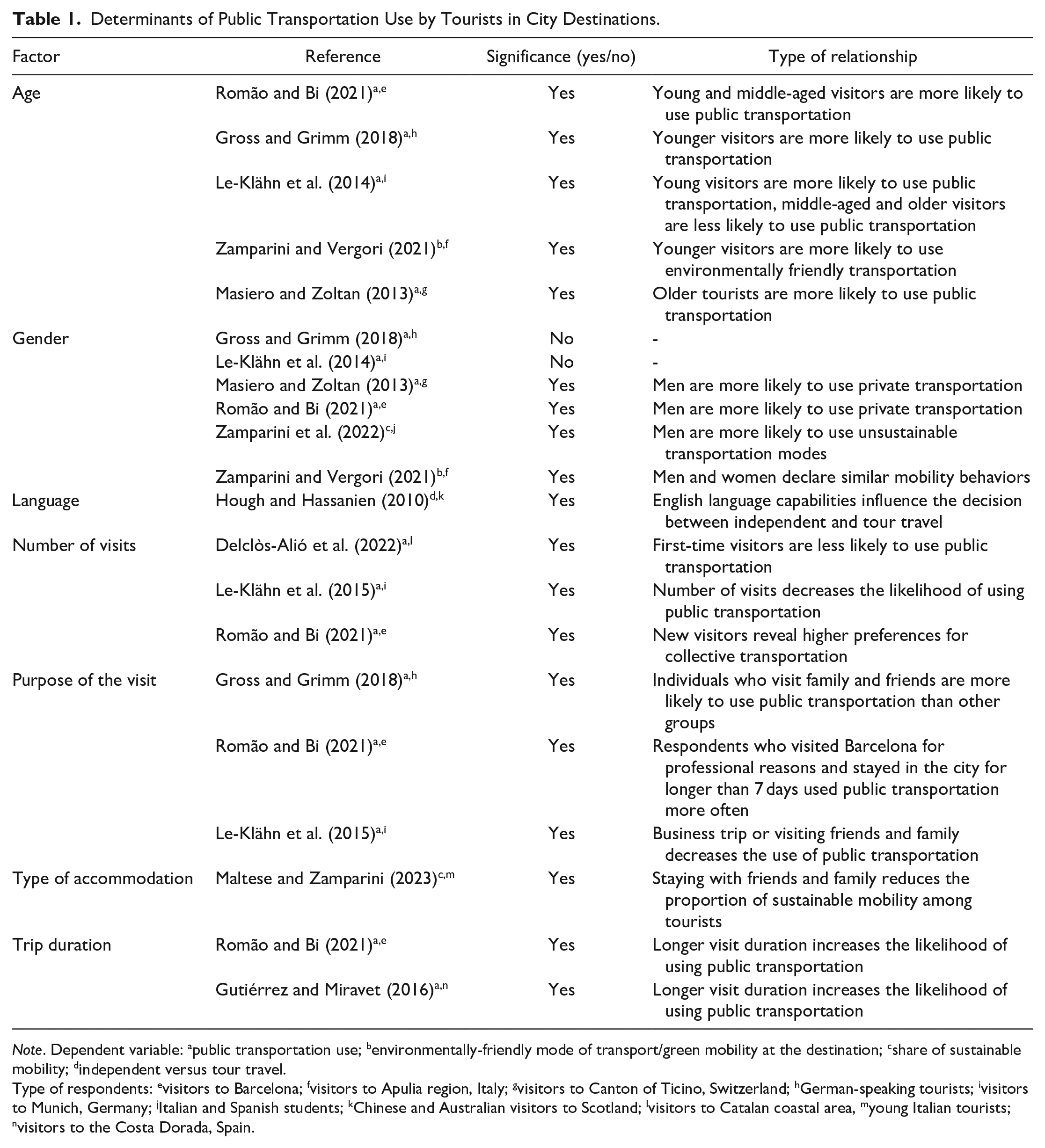
Note. Dependent variable: apublic transportation use; benvironmentally-friendly mode of transport/green mobility at the destination; cshare of sustainable mobility; dindependent versus tour travel.
Type of respondents: evisitors to Barcelona; fvisitors to Apulia region, Italy; gvisitors to Canton of Ticino, Switzerland; hGerman-speaking tourists; ivisitors to Munich, Germany; jItalian and Spanish students; kChinese and Australian visitors to Scotland; lvisitors to Catalan coastal area, myoung Italian tourists; nvisitors to the Costa Dorada, Spain.
The Premises and Applications of Hierarchical Leisure Constraints Theory
This paper is premised on the idea that hierarchical leisure constraints theory can be used as a lens through which to explore the mechanism underlying tourists’ use of public transportation. Specifically, it holds that people form preferences for participation in leisure and recreation on the basis of motivations and constraints (Crawford & Godbey, 1987). Despite being a subject of some debate (Naor et al., 2013), the theory has found extensive application in research, encompassing not only leisure and recreation but also travel and tourism. A comprehensive review of these studies reveals a predominant focus on various types of leisure activities, with some noteworthy examples in the realm of sporting events. Rizvandi et al. (2019) analyzed the factors influencing the attendance of sport spectators in the national basketball and volleyball leagues, while Koronios et al. (2020) explored the impact of motivations and constraints on individuals’ sport media consumption intentions. Importantly, Hung et al. (2020) enhanced the constraints theory through a multi-dimensional triangulation approach, testing the robustness of measurement scales in a longitudinal study across two countries. Unique perspectives emerged in such studies as Hao et al. (2020), analyzing household demand for customized student routes, and Karl et al.’s (2022) discovery of the significant role of cognitive constraint negotiation. Considerable focus has also been directed toward understanding the interplay between motivations and constraints through sociological and psychological factors. This is evident in Dale and Ritchie’s (2020) study, which delves into the impact of socio-demographics on excursion travel behavior, and Jeon and Casper’s (2021) exploration of the psychological aspects influencing participation behavior and constraints.
The second group of studies focuses on travel constraints faced by specific groups of people. Davras et al. (2019), for example, explored differences in holiday tourism constraints between mono- and bicultural individuals, while Cheng and Fountain (2021) investigated how constraints on revisiting Tibet are negotiated by Mainland Chinese Generation Y tourists. Specific constraints have been scrutinized for particular groups, such as vegetarians, travelers with pets, senior tourists, people with mobility impairments, older Chinese females, international students, solo travelers, and young women travelers. Research has also delved into constraints faced by vulnerable tourist groups, including LGBT travelers (Usai et al., 2022) and Cannabis tourists (Wen et al., 2023).
Since 2020, a significant body of research has emerged examining how the pandemic became a pivotal element in travel constraints. Notably, scholars analyzed tourists’ motivations, perceived constraints, and negotiation strategies for participating in travel and outdoor recreation trips within the context of covid-19. Additionally, there is emerging research on how the limitations imposed by the pandemic—and hypothetical future pandemics—may influence perceived opportunities for the development of alternative forms of recreation, as seen in studies like Schiopu et al.’s (2022) exploration of the influence of travel constraints on perceptions about VR use in tourism.
The Justification for Employing Hierarchical Leisure Constraints Theory
As noted in the introduction, it is argued that hierarchical leisure constraints theory can be used to explain a diverse range of human behaviors (Godbey et al., 2010). While theories such as self-efficacy theory, rational choice theory, and social cognitive theory have proven insightful in understanding various aspects of human behavior, they seem to be less suitable for our study. Self-efficacy theory, while valuable in assessing an individual’s belief in their capability to perform behaviors (Bandura, 1977), may not comprehensively capture the hierarchical nature of constraints that tourists face in navigating unfamiliar public transportation systems. Rational choice theory, emphasizing rational decision-making aligned with personal objectives (Becker, 1976), might oversimplify the intricate psychological decision-making processes influenced by a wide range of constraints in urban transportation. Likewise, social cognitive theory, highlighting continuous reciprocal interaction between cognitive factors, the environment, and individual behavior (Bandura, 1986), might redirect attention toward structural (i.e., exogenous) factors. In this way, it may fall short in explicitly addressing the tiered constraints unique to tourists’ use of public transportation. In contrast, hierarchical leisure constraints theory appears well-suited for examining visitors’ transportation choices as it captures the nuanced challenges tourists face.
It should be stressed that a frequently used theoretical framework in the context of public transportation use is the theory of planned behavior (TPB). It posits that individual behavior is driven by behavioral intentions, which, in turn, are influenced by attitudes toward the behavior, subjective norms, and perceived behavioral control (Ajzen, 1991). The theory has been widely recognized for its ability to predict a range of human behaviors across various domains. Indeed, the TPB has been utilized to examine the behaviors of transportation users, as well as their intentions to use public transportation. For instance, Zhao et al. (2017) integrated the TPB with the customer satisfaction theory to understand factors influencing public transportation use. Likewise, Zou et al. (2013) focused on the role of attitudes, as conceptualized by the TPB, in explaining public transportation use. Furthermore, a study conducted in Kanazawa, Japan, applied extensions of the TPB to understand behavioral intentions to use public transportation (Ali et al., 2023).
While we recognize the versatility and relevance of the TPB in comprehending and forecasting public transportation behaviors, we suggest employing hierarchical leisure constraints theory for this purpose. To reiterate, this theory not only encapsulates the intricate challenges encountered by tourists, providing a more tailored framework for our study but also introduces novelty, as no prior research has applied it for this specific objective.
It is important to emphasize in this context that “the 1991 hierarchical model extended the initial theory by linking the three constraints factors hierarchically, the factors being arrayed from most proximal (intrapersonal) to most distal (structural) [. . . ]. The 1993 model suggested that eventual leisure behavior was dependent upon the successful negotiation of these constraints levels in a sequential manner [. . .]” (Godbey et al., 2010, pp. 112–113). Consequently, participation is the outcome of the negotiation process across each constraint level. Indeed, to address the impact of constraints and ultimately surpass them, individuals employ behavioral negotiation and cognitive negotiation strategies (Jackson et al., 1993).
The Reasoning Behind Selecting the Constraint-Effects-Mitigation Model
In essence, four models of leisure constraint negotiation were initially proposed. These include the independence model, the negotiation-buffer model, the perceived-constraint-reduction model, and the constraint-effects-mitigation (CEM) model. Upon thorough examination, Hubbard and Mannell (2001) identified robust empirical support for the constraint-effects-mitigation (CEM) model. Apart from this fact, compelling reasons exist in favor of prioritizing the CEM in the specific context of this study.
The independence model posits a disconnected relationship between motivation, constraint, negotiation, and participation, suggesting that each factor operates independently without influencing one another. However, applying this model to explaining tourists’ choices of public transportation in big cities may prove unsuitable. Urban transportation decisions are inherently intricate, influenced by several factors such as logistical challenges, unfamiliarity with local systems, and environmental considerations. Disregarding the potential interplay and mutual influence of motivation, constraint, and negotiation in this context oversimplifies the decision-making process. The model’s failure to acknowledge the dynamic interactions between these constructs overlooks crucial nuances inherent in tourists’ transportation choices within an urban setting, thereby rendering it ill-suited for a comprehensive understanding of the intricacies involved.
The negotiation-buffer model, premised on the idea that negotiation moderates the relationship between constraint and participation while remaining unaffected by constraint itself, may be equally less apt for elucidating tourists’ choices of public transportation in big cities. As just noted, in the dynamic urban landscape, tourists often encounter multifaceted constraints related to transportation, ranging from unfamiliar routes to language barriers (Evans & Gagnon, 2019). Assuming that negotiation does not directly affect participation, independently moderating the impact of constraints on participation, this model oversimplifies the intricate decision-making processes tourists face. Constraints can significantly influence negotiation strategies, and the model’s assumption that the former do not affect the latter may not align with the complex reality of tourists navigating unfamiliar transportation systems. Consequently, we ruled out the negotiation-buffer model.
Still in a similar vein, the perceived-constraint-reduction model, hinging on the idea that negotiation negatively influences constraints, thus leading to a perception of reduced constraints, may present challenges when applied to explaining tourists’ choices of public transportation in big cities. Assuming that (previous) negotiation efforts inherently diminish constraints somehow oversimplifies the intricate decision-making processes involved in navigating unfamiliar transportation systems. Constraints in urban transportation are often deeply rooted and may not be easily mitigated solely through prior negotiation. Relatedly, the model’s focus on the unilateral influence of negotiation on constraint reduction overlooks the dynamic interplay between these factors and might not capture the nuanced realities of tourists’ experiences in navigating the complexities of public transportation in bustling metropolises.
By contrast, the CEM model—which takes as its premise that, when constraints are encountered, there is an inhibitory impact on participation directly attributable to the constraints, alongside a facilitative influence stemming from the ensuing negotiation efforts—aligns with the intricate dynamics of decision-making in a complex urban environment. By acknowledging the key role of negotiation in alleviating constraints, this model allows for a nuanced exploration of how motivations, constraints, and negotiation interconnect to shape tourists’ preferences and engagement with public transportation in metropolitan settings. In sum, considering the diverse and challenging constraints associated with public transportation, this model seems to provide a robust framework to explore the mechanism underlying tourists’ choice of public transportation in big cities. This is all the more so given that a number of studies in the fields of leisure and travel have employed the CEM model (e.g., Chun et al., 2022). We, therefore, decided to adopt it for our research, meaning that our hypotheses align with the proposed pathways outlined in this model (of which more below).
Hypothesized Relationships in the Context of Public Transportation Use
In the context of this study, motivation can be conceived as factors that encourage tourists to opt for trains or subways due to their convenience and affordability (Le-Klähn et al., 2014). Simultaneously, visitors may also hew to green values that discourage them from using personal cars, taxis, rented cars, or ride-hailing services. It is important to note that research on leisure and travel has suggested that, while motivation generally has a positive impact, its statistical significance may vary across studies (Bizen & Ninomiya, 2022; Evans & Gagnon, 2019; Mueller et al., 2019).
Constraints, by definition, inhibit individuals from engaging in particular activities. In the context of leisure, intrapersonal constraints refer to personal factors (e.g., stress), interpersonal constraints to social factors (e.g., the unavailability of a partner), and structural constraints are external to an individual (Evans & Gagnon, 2019; Huang et al., 2019). In this study, intrapersonal constraints may include factors that contribute to individuals’ reluctance to use public transportation. These encompass safety and security concerns, stress associated with the risk of getting lost, and discomfort in confined and overcrowded spaces (Ingvardson & Nielsen, 2019). Regarding interpersonal constraints, some visitors may travel with companions who make transportation decisions on their behalf (or are unwilling to use public transportation), or may travel with children (Le-Klähn et al., 2014). Lastly, structural constraints refer to factors such as the user-unfriendliness and complexity of a city’s public transportation system. Edwards and Griffin (2013) found, for instance, that limited knowledge about ticket purchase dissuaded tourists visiting Melbourne and Sydney from using public transportation, consequently, impeding their exploration of the cities.
By and large, the literature on leisure and travel supports these theoretical considerations (Huang et al., 2019; Son et al., 2008; White, 2008). While most authors agree on the negative effect of constraints on participation, some studies reveal a non-significant relationship between the two constructs (Bizen & Ninomiya, 2022; Chen et al., 2018; Cheng & Fountain, 2021; Moghimehfar & Halpenny, 2016). Lyu and Oh (2014) found, for example, that only structural constraints had a significant negative effect on participation. Xie and Ritchie (2019) suggest that these differences may arise from the characteristics of the study population, a viewpoint supported by the findings of other researchers (Chun et al., 2022).
Negotiation as such refers to “active attempts to work out a compromise between the priorities of the individual and the constraints of the situation” (Skinner et al., 2003, p. 242). In addition, the negotiation process is facilitated by negotiation effectiveness. In the context of this study, the negotiation process may involve a tourist taking actions such as attempting to beforehand understand how the public transportation system operates in a particular city, traveling with individuals who are knowledgeable about public transportation or drawing upon past experience of using public transportation in other cities.
Crucially, the effects of constraints on negotiation vary depending on the research. Several studies in the fields of leisure and travel have shown a positive relationship between these variables (e.g., Son et al., 2008). However, other research has suggested that different dimensions of constraints may have varying effects on negotiation strategies. According to Xie and Ritchie (2019), for example, the effect of intrapersonal constraints on intention to travel is stronger than that of interpersonal and structural constraints. Another study conducted among people with disabilities found that only structural constraints had a positive effect on negotiation, while other constraints were non-significant (Lyu & Lee, 2016). Tellingly, Lyu and Oh (2014) found that intrapersonal and interpersonal constraints negatively affected cognitive and behavioral negotiation strategies, while structural constraints had a positive effect on them. On the other hand, some studies discovered an opposite, negative effect of constraints on negotiations (Chun et al., 2022) or a non-significant relationship between these variables (Bizen & Ninomiya, 2022). Finally, several studies provided empirical support for a positive relationship between motivation and negotiation (Bizen & Ninomiya, 2022; Evans & Gagnon, 2019; Moghimehfar & Halpenny, 2016; White, 2008; Xie & Ritchie, 2019).
Based on the existing body of research within the leisure and travel context and considering the specific focus of this study, we propose the following hypotheses:
As noted earlier, all the hypothesized relationships between the variables in our conceptual model align with the principles of the CEM model (Figure 1).
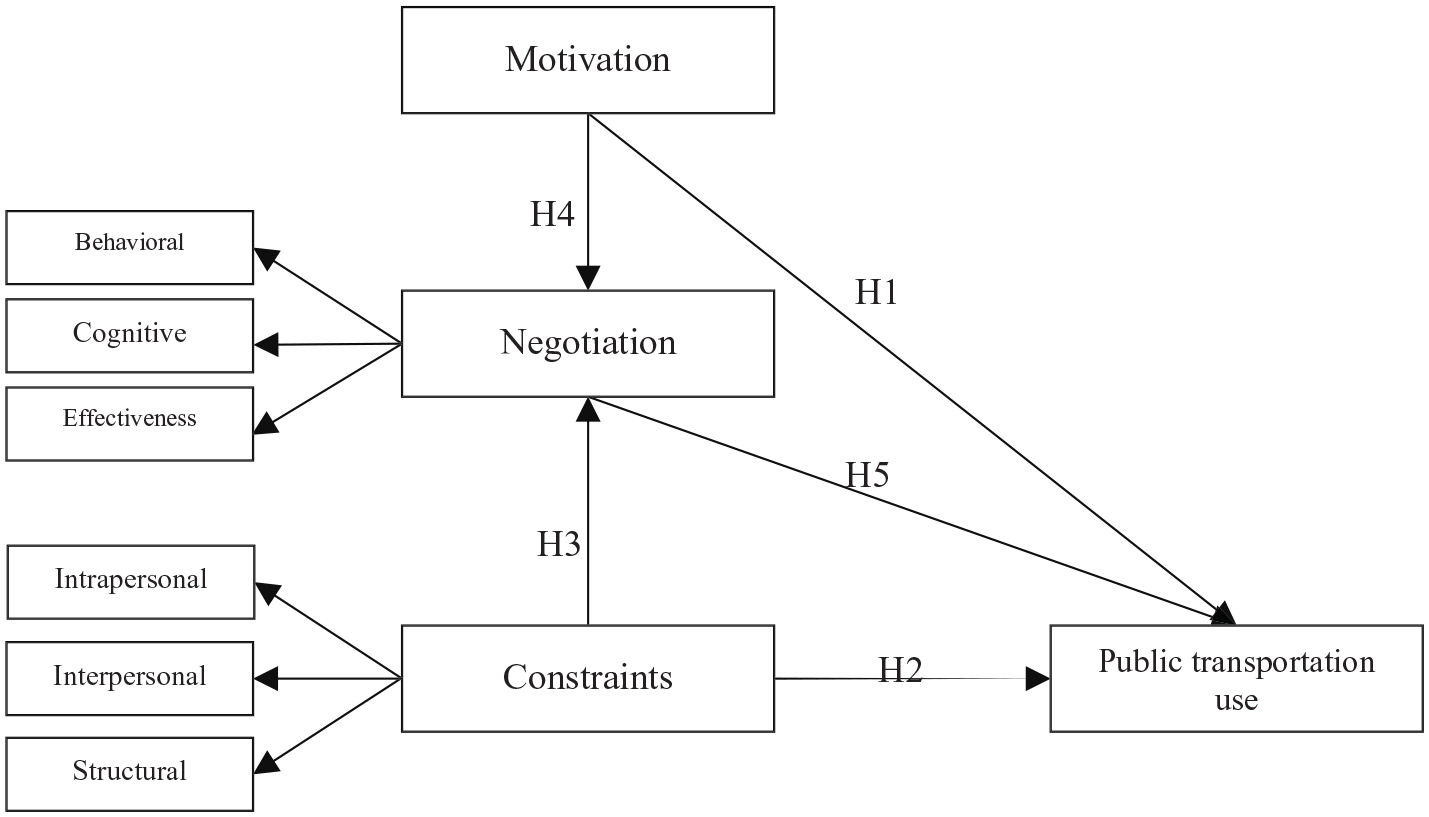
The adjusted constraint-effects-mitigation model.
The Rationale Behind Grouping of Tourists and Cities
Before delving into our research methodology, it is crucial to emphasize that the diverse external and internal factors influencing constraints and negotiation processes (Karl et al., 2022) led us to propose that a city’s modal split (indicating the percentage of travelers using a specific mode of transportation relative to the total number of trips), one’s nationality (domestic vs. foreign), accommodation location (city center vs. outside the city center), and length of stay (one or two nights, “short stay” vs. three nights or more, “long stay”) may shape a tourist’s decision-making regarding public transportation use, consequently impacting the relationships within our model. Building on this premise, we opted to employ multi-group analysis to categorize cities and tourists into distinct groups.
This categorization finds support in existing literature. Studies reveal that one’s familiarity with a country’s nuances and language—which is, by definition, typical of domestic tourists—may shape their decision-making on public transportation use, aiding in overcoming common constraints like navigating transportation systems (Dabelko-Schoeny et al., 2021; Le-Klähn & Hall, 2015; Masiero & Zoltan, 2013). Similarly, moving around a city with a high modal split might influence a visitor’s constraints and negotiation processes, potentially encouraging them to opt for public transportation (Martin & Shaheen, 2014). The modal split, which is an indicator for assessing transportation behavior, illustrates the percentage of travelers utilizing a specific mode of transportation relative to the total number of trips made (a higher modal split for public transportation users suggests a city with a greater emphasis on sustainability) (Lee et al., 2022). Additionally, choosing accommodation outside the city center could impact the negotiation process as tourists might lack viable or cheap alternatives to public transportation (Miravet et al., 2021). A more extended stay (Romão & Bi, 2021; Zamparini & Vergori, 2021) might intensify a tourist’s experience of constraints related to public transportation, making them more prominent in decision-making processes. In sum, there are valid reasons to believe that these factors can indeed influence constraints and negotiation processes, and, by extension, the relationships within our model.
Research Method
Research Instrument Development
We compiled an item list by using existing items, adapting some items from the literature or creating new ones. We then held a meeting (by video link) with five scholars specializing in the field for the purpose of assessing the list. The selection of the scholars was based on a review of their academic contributions and expertise in the specific domain of our study. The specific criteria included publication record (i.e., scholars with a significant publication record in the area of tourists’ mobility) and relevance to the study focus (i.e., scholars whose work directly addressed topics related to tourists’ use of public transportation and the application of theoretical models).
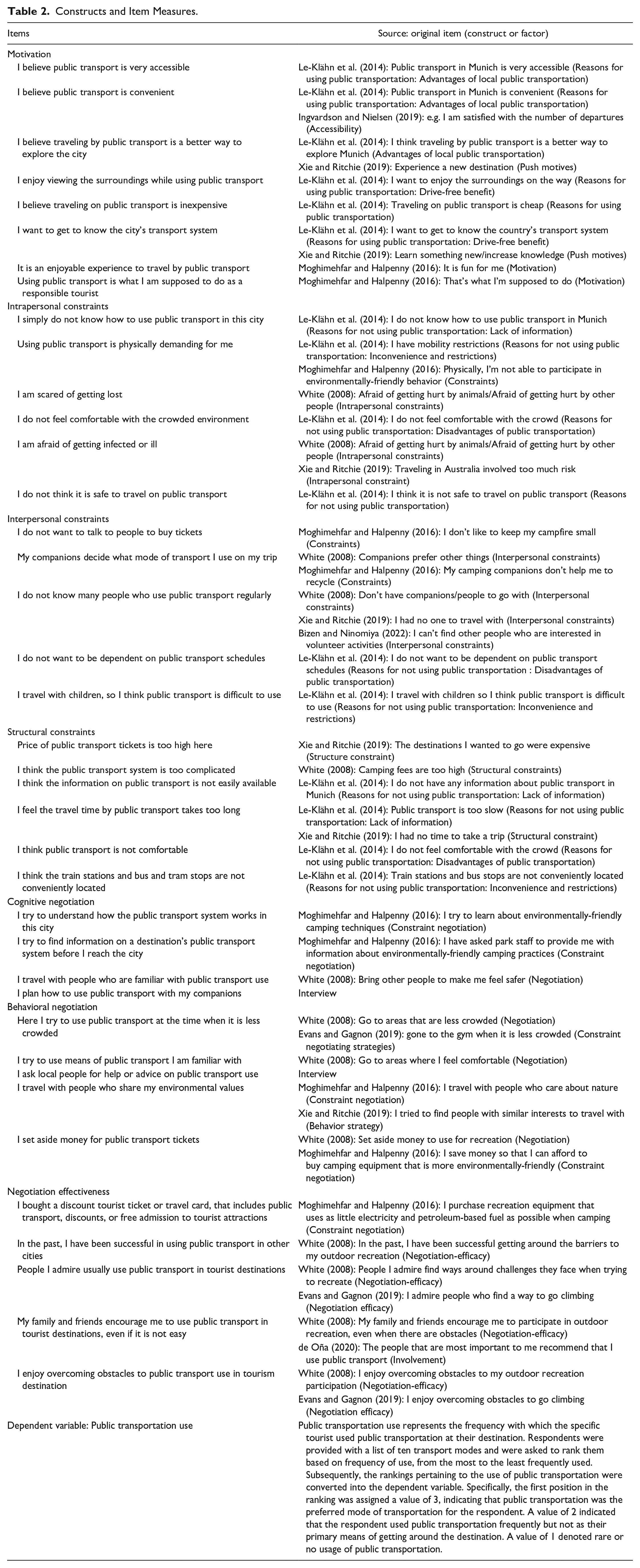
In particular, we asked our interlocutors to evaluate each item in terms of suitability, relevancy and representativeness, and to suggest (if necessary) other items and appropriate wording. The experts did not report any problems understanding the items, but suggested we include two statements. We acted accordingly. Next, we employed the focus group method (Bohnsack, 2004), which involves bringing together groups of individuals (in our case, university students) to answer questions in a moderated setting, to enhance the face and content validity of our measures (specifically, we asked them if the items were clear and understandable). Table 2 shows the final list of items along with the operationalization details for the dependent variable, namely public transportation use.
Constructs and Item Measures.
We continued with a content adequacy assessment through a pilot study (N = 350) conducted among both domestic and foreign tourists visiting a major European city. We utilized a random intercept method to choose participants (Le-Klähn et al., 2014). In particular, professional tourist guides, acting as survey assistants, approached tourists at popular tourist locations and kindly asked them to complete the questionnaire. Since the reflective and formative constructs had acceptable values, only minor changes were made before carrying out the main study.
Data Collection and Respondent Profile
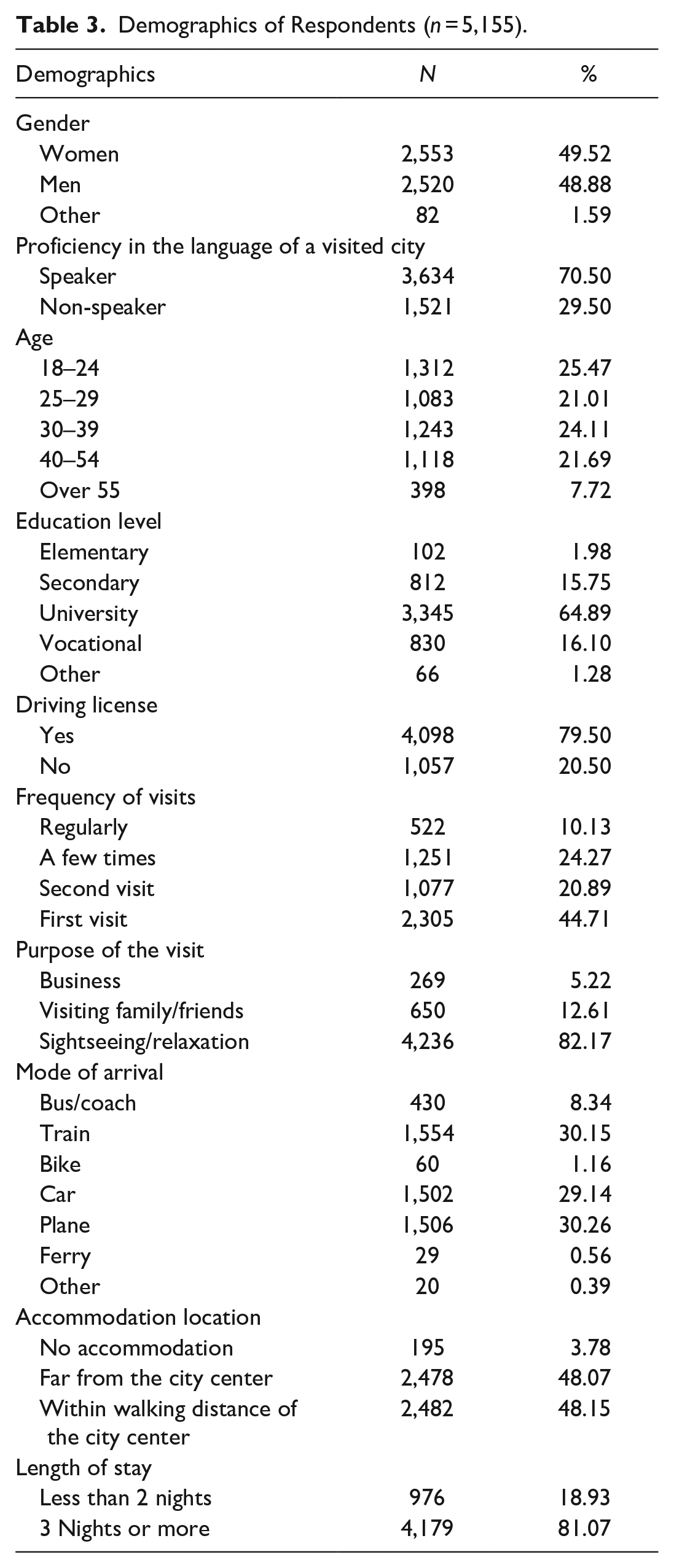
Subsequently, we commissioned a specialized company to conduct the survey on our behalf in 10 European capitals (the survey was translated into local languages and then edited by native speakers). The company also utilized a random intercept method to recruit participants. Its staff served as survey assistants who approached visitors (near the entrance to tourist attractions) with questionnaire forms (in electronic format) and requested their participation. We used a filter question to check whether a person was an independent tourist or formed part of an organized group trip. Only the former were asked to continue the survey. A total of 5,220 responses were collected, with 2,603 from domestic tourists and 2,617 from foreign tourists. After meticulously analyzing and cleaning the dataset, 65 cases were removed due to incomplete or self-contradictory answers, resulting in a total of 5,155 valid responses (a valid survey response rate of 98.8%). Table 3 shows the demographics of respondents.
Demographics of Respondents (n = 5,155).
Data Analysis
The use of partial least squares structural equation modeling (PLS-SEM) was deemed the most suitable method to examine tourists’ behavior regarding their use of public transportation. First of all, PLS-SEM is known to be well-suited for exploratory research aimed at theory development, as well as confirmatory and explanatory research (Hair et al., 2022). Second, it is effective in handling complex models containing categorical items in a hierarchical component model. Finally, PLS-SEM lends itself well to conducting multi-group analysis (MGA) (Hair et al., 2022). All analyses were conducted using SmartPLS4 (Ringle et al., 2022).
It should be emphasized that, unlike traditional regression analysis, SEM allows for the simultaneous examination of multiple dependent and independent variables, enabling a more comprehensive exploration of the complex interplay among various factors. Given our focus on tourists’ transportation choices, SEM constitutes a holistic framework to model both observed and latent variables (Hair et al., 2022). Its capacity to incorporate measurement error and capture latent constructs (such as tourists’ motivations) makes it particularly apt for unraveling the dynamics at play. Moreover, SEM facilitates the testing of complex hypotheses about the direct and indirect relationships among variables, offering a nuanced perspective that alternative methods may struggle to achieve. Therefore, SEM stands out as the method of choice, providing a robust and nuanced approach to dissecting the complex web of factors influencing tourists’ decisions regarding their use of public transportation.
That said, while SEM serves as a powerful tool for symmetric-based (or variance-based) analysis, it is not, admittedly, without its limitations. These drawbacks might find potential remedies in asymmetric approaches like fuzzy-set Qualitative Comparative Analysis (fsQCA). Broadly speaking, variance-based methods analyze variables within a competitive framework, calculating the net effect among variables in a model. In contrast, fsQCA prioritizes intricate and asymmetric relations between the desired outcome and its antecedents (Pappas & Woodside, 2021). In other words, it recognizes that outcomes can stem from various combinations, with each combination making an independent contribution to the overall result. While recognizing these advantages, we, as just noted, opted for SEM due to its strategic alignment with our study’s specific goals and the need for a robust statistical modeling approach (see also the section dedicated to the study’s limitations).
For our measurement specification, we employed a combined formative-reflective and reflective-reflective hierarchical component model (HCM). We employed the repeated indicator and a two-stage approach. Firstly, the repeated indicator approach was utilized through confirmatory composite analysis (CCA) to assess the measurement model. Subsequently, the two-stage approach was applied to evaluate the measurement models of the higher-order constructs. To assess the hierarchical structural model, we employed PLS bootstrapping with 5,000 resamples. The permutation test and the PLS-MGA non-parametric significance test for the difference of group-specific results were employed (Henseler et al., 2009).
Considering the nature of the study, we also took measures to address the potential issue of common method bias (CMB). To assess the presence of CMB, we employed Harman’s single-factor test. The single-factor model was able to explain a proportion of the total variance, specifically 18.82%, which was below the recommended threshold of 50% (Podsakoff et al., 2003).
Results
Measurement Model Assessment
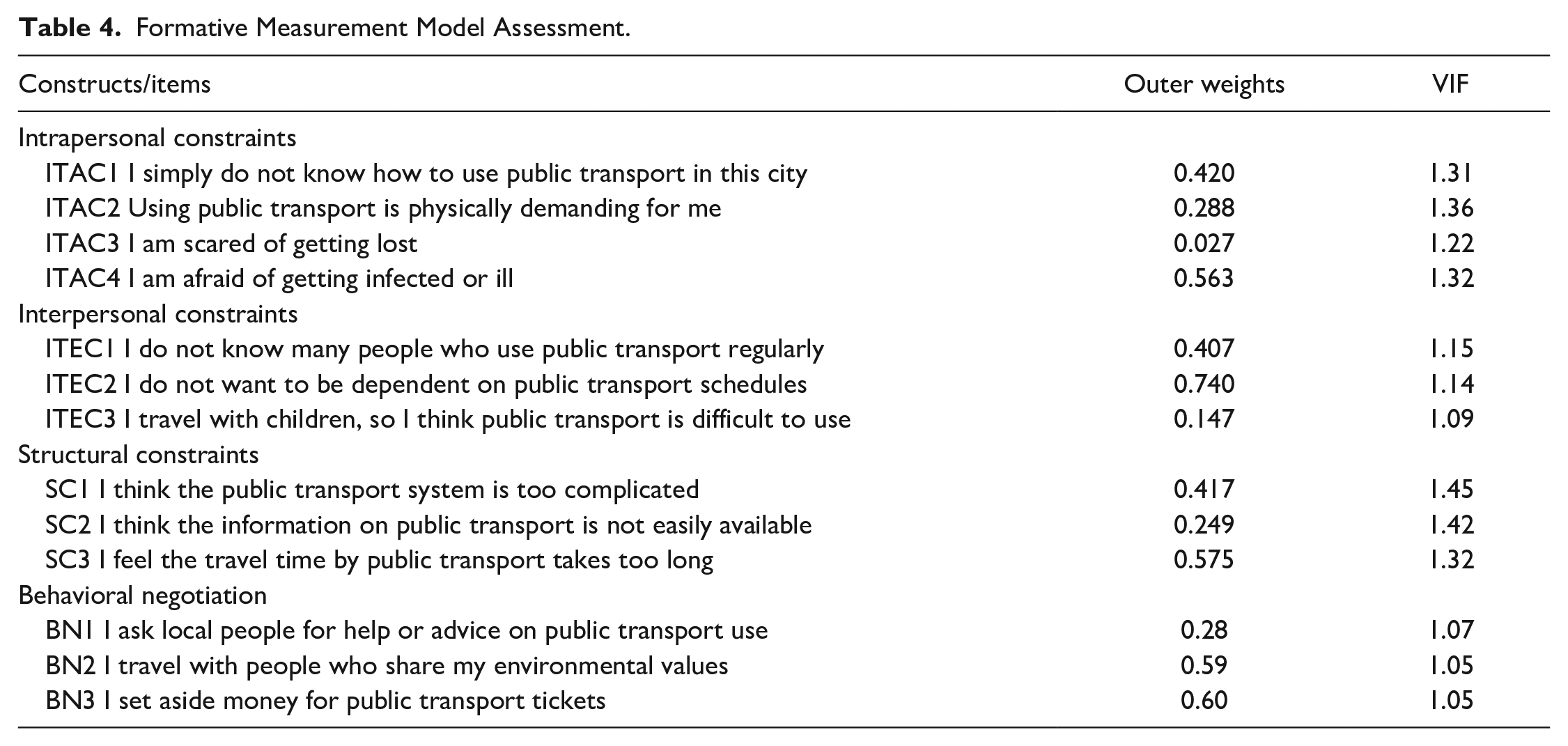
The confirmatory tetrad analysis (CTA) to distinguish between formative and reflective models (Gudergan et al., 2008) backed up the theory-driven specification of items (Karl et al., 2022). Structural, intrapersonal and interpersonal constraints, as well as behavioral negotiation were assessed as formative lower-order constructs. The items forming the formative constructs were evaluated based on their outer weights (>0.1, significant at p ≤ .05). Items that did not meet these criteria were excluded from the formative constructs. In the final model 13 items met the criteria for the formative constructs (Table 4). A collinearity check of the measurement model using the variance inflation factor (VIF < 3) demonstrated no multicollinearity issues (Hair et al., 2022).
Formative Measurement Model Assessment.
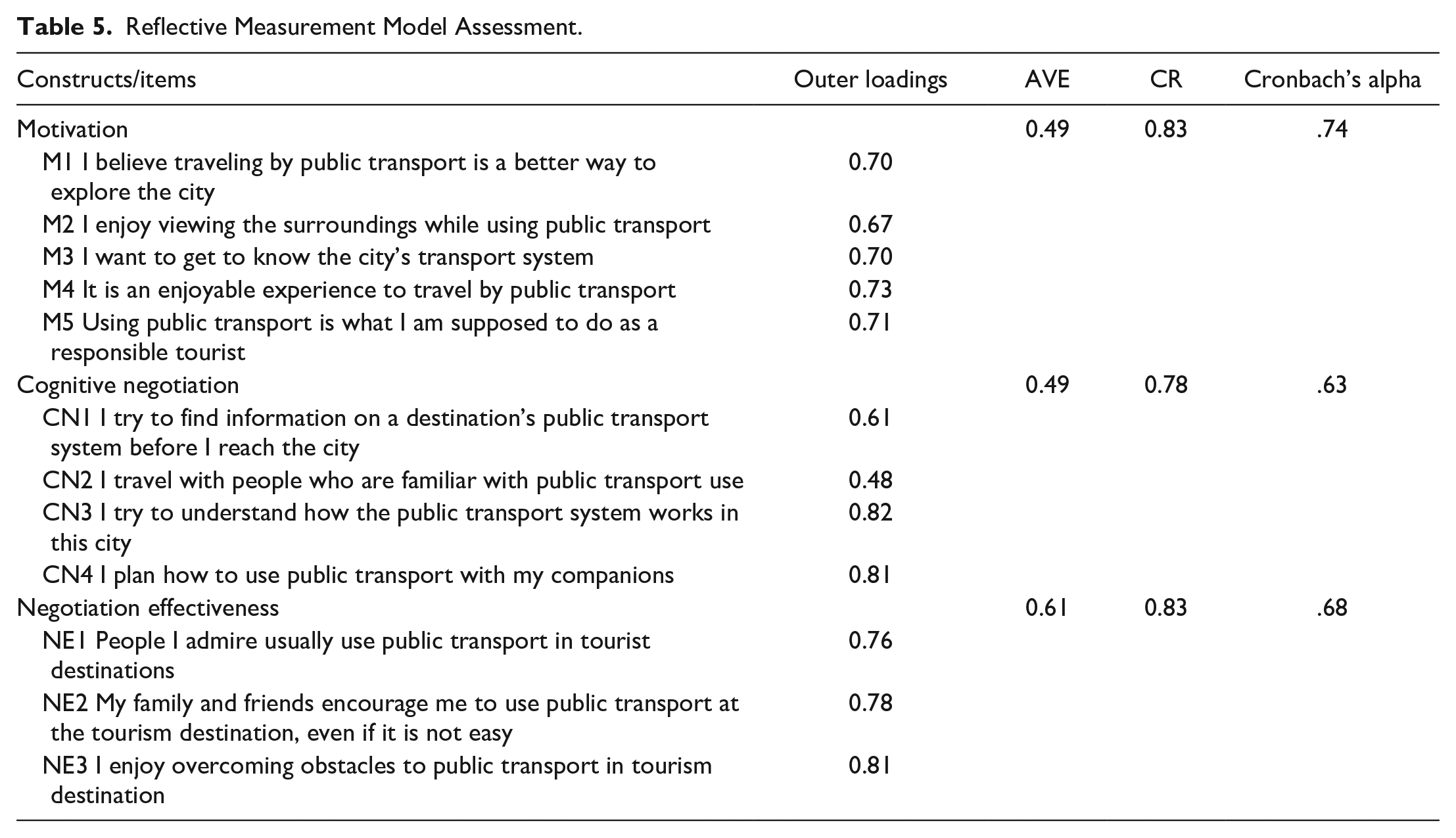
Motivation, cognitive negotiation, and negotiation effectiveness were measured as reflective constructs. The latent constructs in the reflective models were evaluated in line with Hair et al.’s (2022) recommendation. Item loadings for all constructs were significant and for most of them were well above the 0.6 threshold, commonly considered to be satisfactory for reliability (Hair et al., 2022). We conducted a thorough examination of all items in the study, considering their loadings in the factor analysis. Any items with loadings below 0.7 were evaluated and subsequently removed. However, we made an exception for some items that had standardized loadings between 0.5 and 0.6. These items were retained based on the criterion that the composite reliability for the latent variables surpassed the threshold of 0.7 (Bagozzi & Yi, 1988). The final model included 11 items that met the criteria for reflective constructs, ensuring their suitability for the analysis and interpretation of the study results.
Furthermore, all constructs exhibited a Cronbach’s alpha value exceeding .6 and a composite reliability (CR) above .7. The average variance extracted (AVE) for negotiation effectiveness surpassed the recommended threshold of 0.5. For motivation and cognitive negotiation, the AVE fell below 0.5 (Table 5). Nevertheless, due to the composite reliability surpassing 0.6, the convergent validity of these constructs was still considered satisfactory (Fornell & Larcker, 1981).
Reflective Measurement Model Assessment.
Crucially, the assessment of discriminant validity employed the Heterotrait and Monotrait (HTMT) ratio of correction technique (Henseler et al., 2015) as well as Fornell-Larcker criterium. The square root value of the AVE of each construct was higher than its correlation with any other construct (Table 6). Furthermore, each HTMT ratio was lower than the 0.85 threshold. Thus, discriminant validity was confirmed.
Assessment of Discriminant Validity.

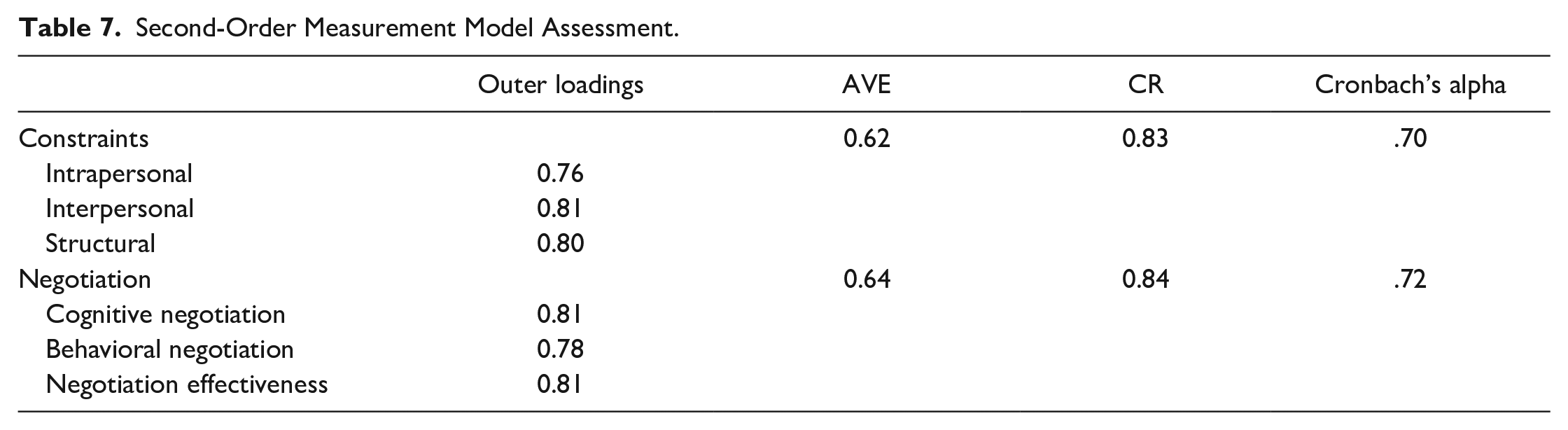
The second-order constructs were modeled as reflective. The outer loading values of the lower-order construct were above the threshold of 0.7. Reliability and validity were confirmed with satisfactory values for AVE, composite reliability and Cronbach’s alpha (Table 7).
Second-Order Measurement Model Assessment.
Again, the assessment of discriminant validity employed the HTMT ratio and Fornell-Larcker criterium. The square root value of the AVE of each construct was higher than its correlation with any other construct (Table 8). Furthermore, each HTMT ratio was lower than the 0.85 threshold. Thus, discriminant validity was confirmed.
Assessment of Discriminant Validity.

Structural Model Assessment
Before evaluating the structural models, we assessed collinearity variance inflation factors (VIF) to identify any multicollinearity concerns. The VIF scores for each construct were below the threshold value of 3.3, indicating that collinearity is not a significant issue. To determine the significance of the path coefficient, we employed the bootstrapping method. Standardized Root Mean Square Residual (SRMR) was used as a goodness-of-fit measure for PLS-SEM. The value of 0.061 indicated that data satisfied the requirements (Henseler & Sarstedt, 2013).
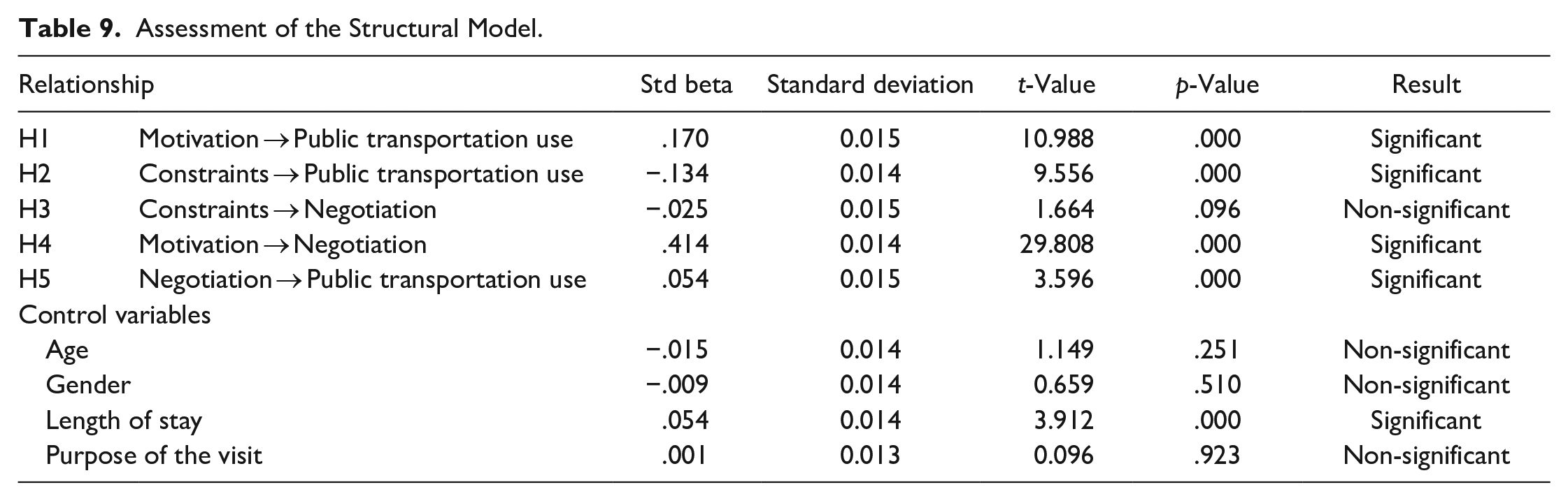
The findings reveal a positive association between motivation and the use of public transportation (t = 10.988), as well as between motivation and negotiation (t = 29.808), providing support for H1 and H4, respectively. Additionally, there is a significant negative relationship between constraints and the use of public transportation (t = 9.556), and a significant positive relationship between negotiation and the use of public transportation (t = 3.596), supporting H2 and H5. Unexpectedly, the relationship between constraints and negotiation (H3) was found to be non-significant (t = 1.664). In accordance with extant research, we also controlled for age, gender, length of stay and purpose of the visit. Out of these variables, only length of stay turned out to be statistically significant (t = 3.912) (Table 9).
Assessment of the Structural Model.
Multi-Group Analysis
As previously mentioned, we decided to divide all cities into two groups based on the modal split (Lee et al., 2022). To that end, we utilized data gathered from reports on mobility and public transportation usage issued by ministries and authorities in the respective cities under consideration. We established a threshold of 25% as the primary criterion. As a result, Group 1 (i.e., “high public transportation use” cities) consisted of Warsaw (47%), Prague (42%), London (36%), Stockholm (29%), and Berlin (27%) (N = 2,575), while Group 2 (i.e., “low public transportation use” cities) included Brussels (24%), Madrid (24%), Paris (22%), Rome (21%), and Amsterdam (17%) (N = 2,580).
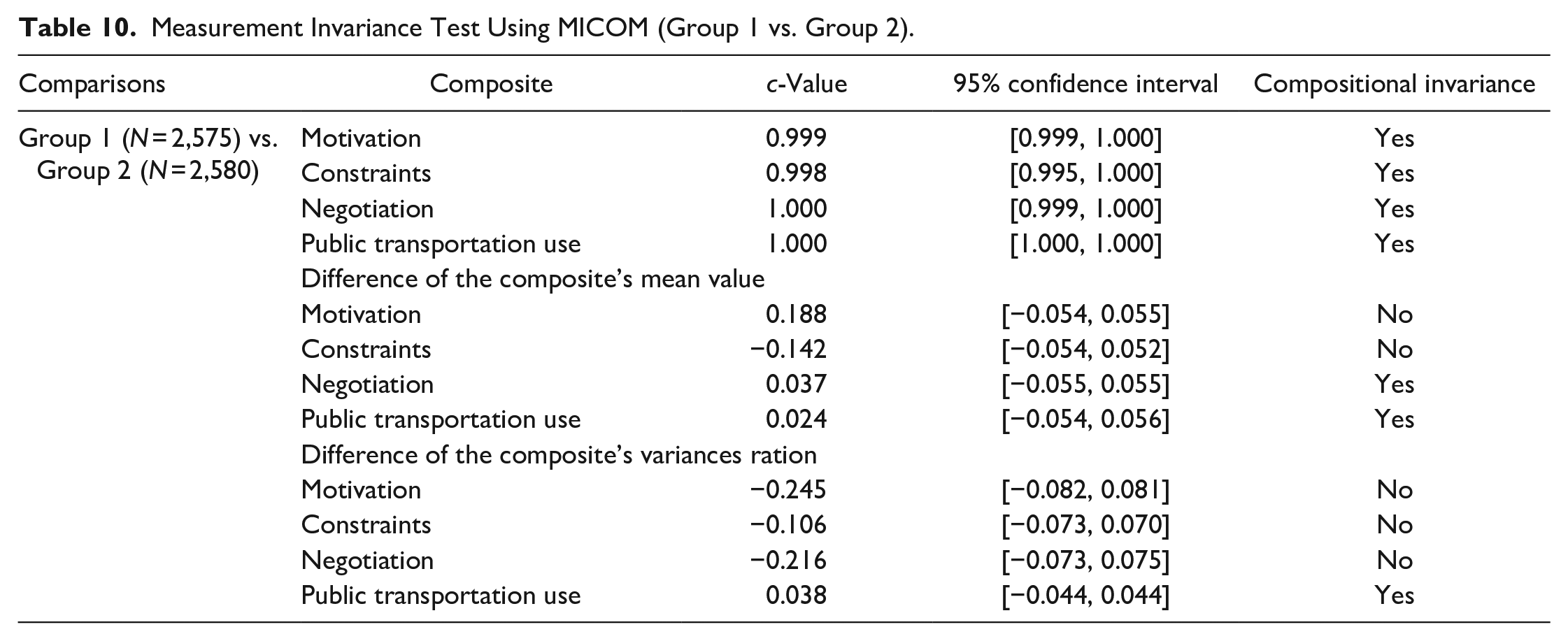
In the final measurement models for both datasets, the items met the criteria for both formative and reflective constructs (first and second-order). Before conducting the MGA, an invariance test was performed to assess whether the construct measurements were similarly understood across the selected groups. The MICOM (measurement invariance of composite models) procedure was utilized (Henseler et al., 2016). A permutation test indicates that there are no significant differences among any of the c values, establishing compositional invariance in the research model. When comparing the mean values and variances of the composites across the groups in selected comparisons, no statistically non-significant differences were found. Therefore, the study establishes partial measurement invariance (Table 10).
Measurement Invariance Test Using MICOM (Group 1 vs. Group 2).
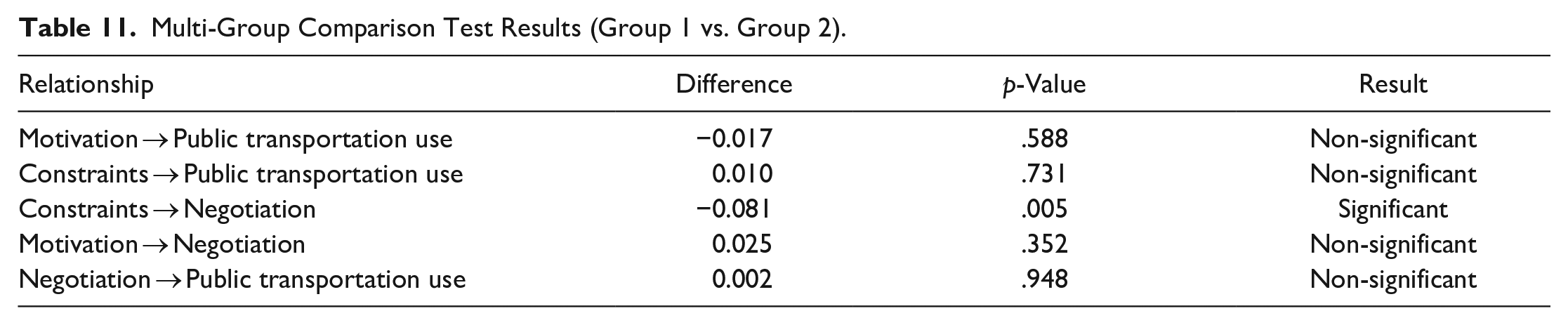
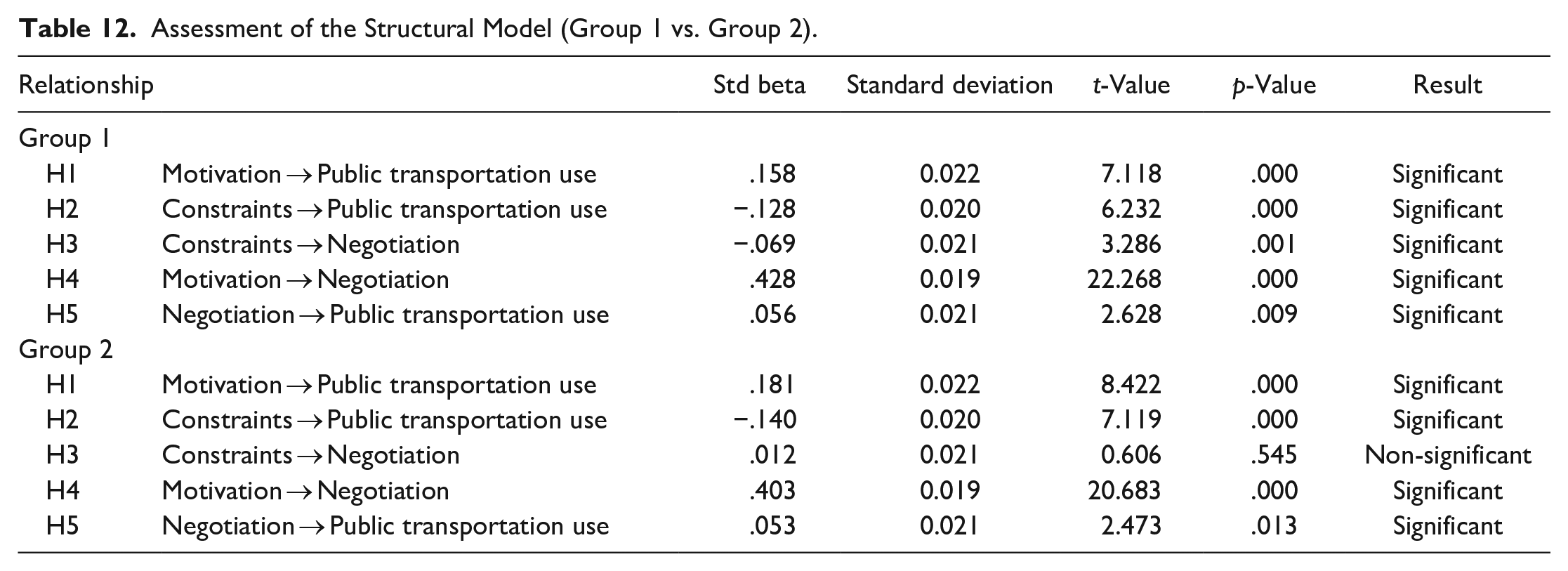
Based on the PLS-MGA method, we found that there was a significant difference between Group 1 and Group 2 cities in terms of H3 (p = .005) (Table 11). Specifically, this relationship was statistically significant for the former (t = 3.286) and insignificant for the latter (t = 0.606) (Table 12). Moreover, the multigroup analysis revealed that there was no significant difference between Group 1 and Group 2 cities in terms of other hypotheses.
Multi-Group Comparison Test Results (Group 1 vs. Group 2).
Assessment of the Structural Model (Group 1 vs. Group 2).
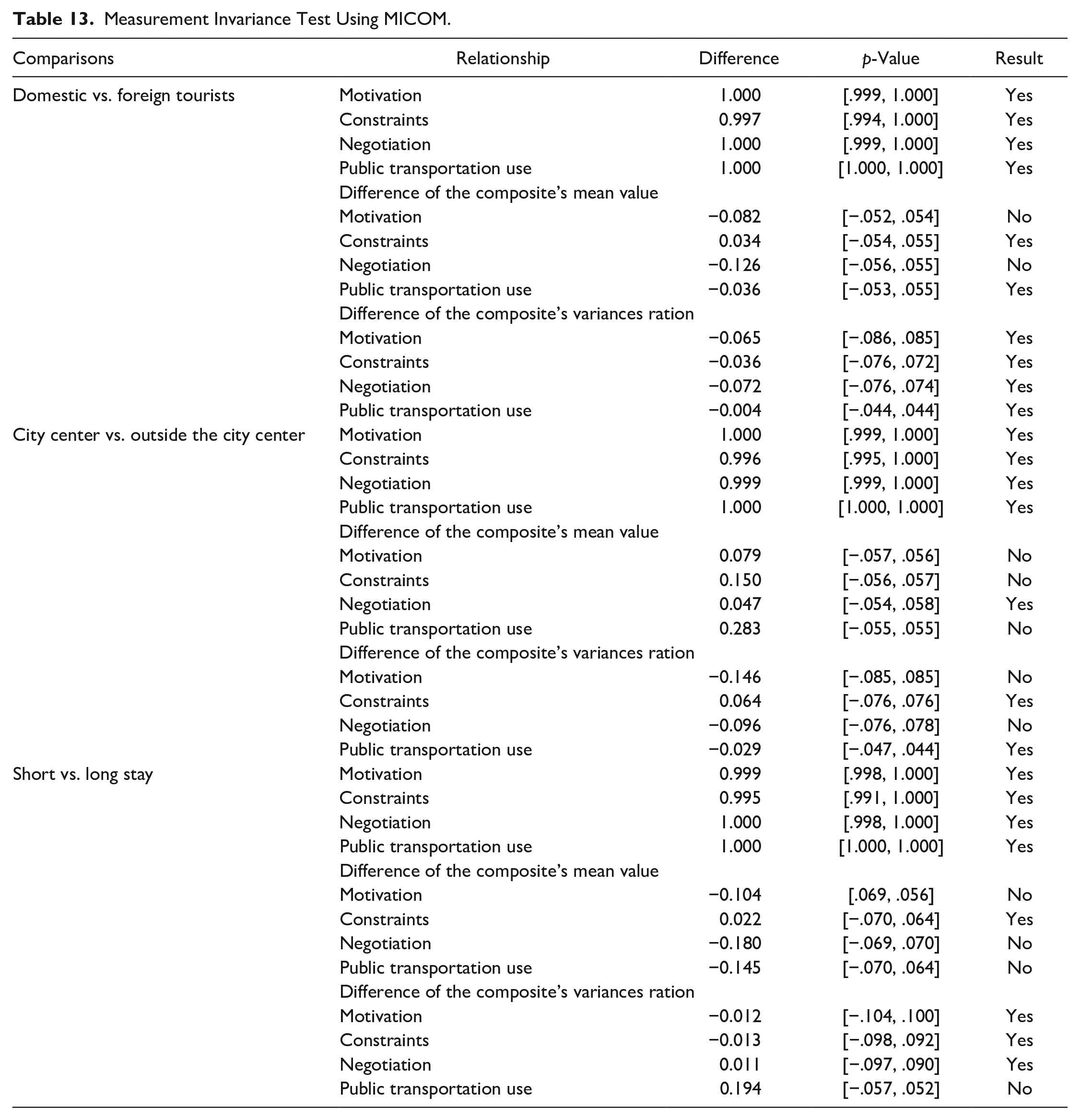
Additionally, we performed a multigroup analysis to examine the effects of tourists’ nationality, accommodation location, and length of stay on the relationships within the model. Again, the measurement models were evaluated using split datasets for each distinct group, following the procedure described above. The results of the measurement invariance assessment again indicated partial invariance (Table 13).
Measurement Invariance Test Using MICOM.
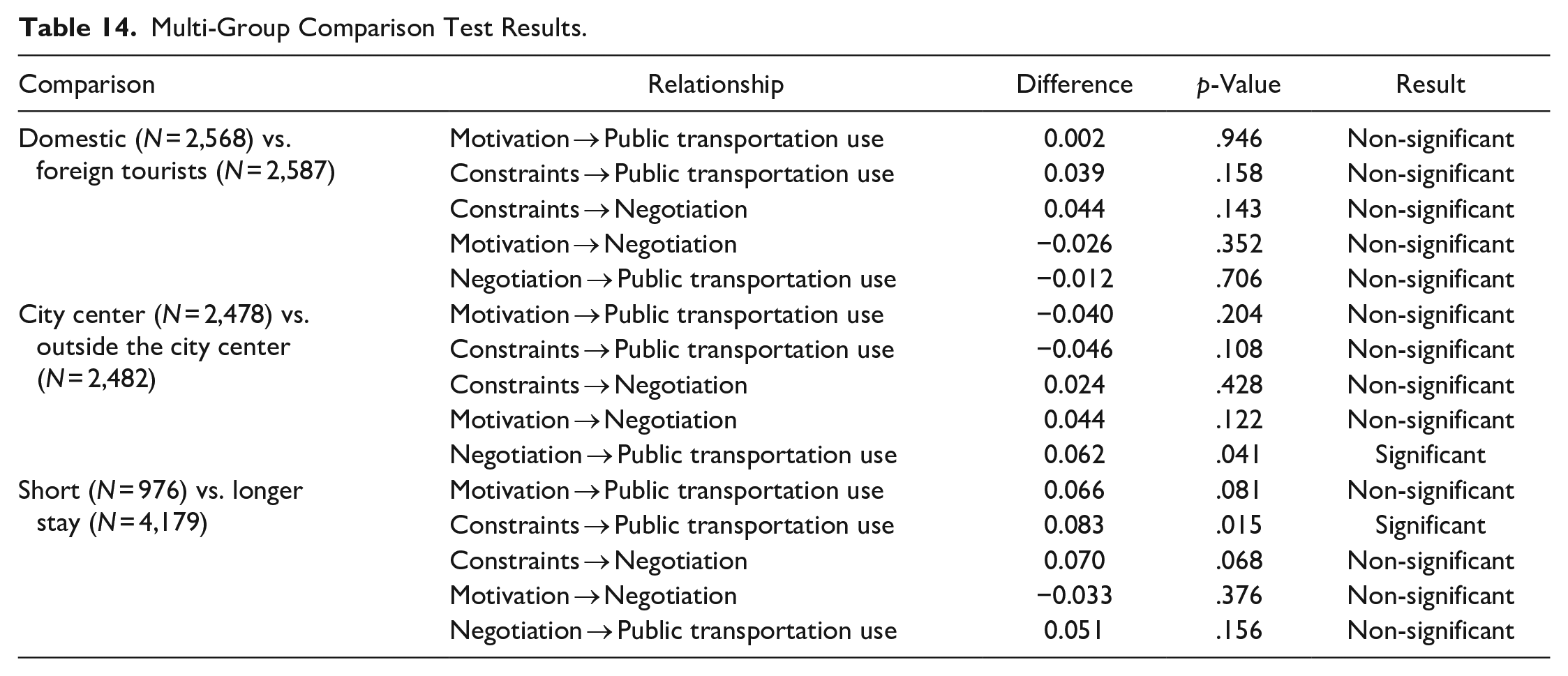
Overall, no statistically significant differences were observed between domestic and foreign tourists (Table 14). However, among foreign tourists, there was a significant relationship between constraints and negotiation (Table 15). Our analysis indicated significant differences in terms of accommodation location and length of stay. Consequently, there were significant differences in the relationship between negotiation and public transportation use between individuals who stayed near the city center and those who opted for more distant accommodations. Specifically, this relationship was significant for the former group but not for the latter. Additionally, while the MGA did not demonstrate statistically significant differences for H3, the relationship between constraints and negotiation was insignificant for those staying in the city center but significant for those staying outside (Table 15).
Multi-Group Comparison Test Results.
Assessment of the Structural Models.
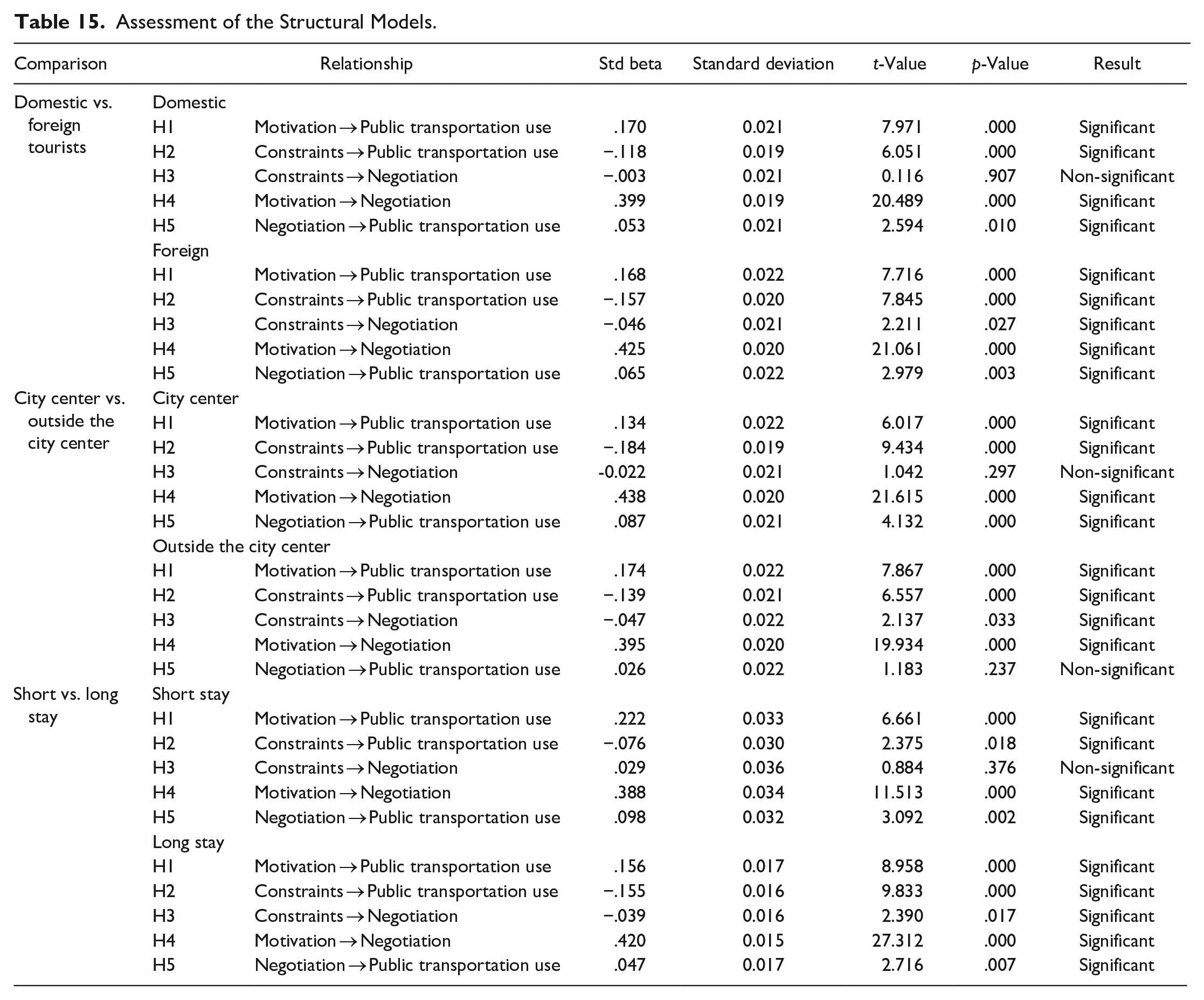
The MGA results highlighted significant differences in terms of the relationship between constraints and public transportation use based on the length of stay. Notably, this relationship was significant for both short and long stays, with a higher path coefficient observed for longer stays. This indicates that constraints exerted more substantial effects on public transportation use among tourists who stayed for extended periods. Once again, the MGA did not indicate statistically significant differences for H3. However, the relationship between constraints and negotiation was insignificant for short stays but significant for longer stays (Table 15).
Discussion of the Findings
Our findings indicate that, except for the relationship between constraints and negotiation, all hypothesized relationships were statistically significant and aligned with the underlying theory. This finding aligns with some studies in the field of leisure and travel research, indicating that the relationship under consideration may not be significant (Bizen & Ninomiya, 2022) or that only some types of constraints may be significantly correlated with negotiation (Chun et al., 2022; Lyu & Lee, 2016). As regards this study, part of the explanation is that the theory was originally applied to understand leisure participation, where the choice between participation and non-participation is typically binary. In contrast, the decision between using or not using public transportation is more complex due to the availability of numerous alternative transportation options (e.g., taxis or rental cars). It follows that the presence of so many alternatives to public transportation may somehow affect tourists’ behavioral reactions, thereby influencing the relationship in question. Accordingly, the course of action represented by this relationship may remain “inactive” (i.e., insignificant), although, as the comparison between Group 1 and Group 2 cities shows, it becomes significant in cities with high public transportation use.
Indeed, in cities with a high modal split for public transportation the constraints faced by individuals using public transportation have a substantial impact on their negotiation process. This suggests that negotiating strategies, such as figuring out beforehand how to use public transportation, become more relevant in cities where a significant portion of travelers rely on public transportation. The emphasis on sustainability and the availability of public transportation systems may contribute to the need for active engagement in negotiation to optimize public transportation use. Conversely, in cities with a low modal split for public transportation, the constraints tourists face in using public transportation may not have an effect on their negotiation strategies. Other factors may play a more prominent role, diminishing the significance of negotiation in public transportation use decisions. Generally, the differences in the relationship at hand between the two groups of cities could stem from the availability and quality of public transportation, urban design, and accessibility to alternative transportation modes. These factors shape the transportation landscape and influence the importance of negotiation strategies in public transportation use decisions.
Another comparison—the one between domestic and foreign tourists – showed no statistically significant differences between the former and the latter in terms of the hypothesized relationships. This is surprising as one might assume that at least the relationship between constraints (some of them are city-specific) and the use of public transportation could be less strong for domestic visitors relative to foreign tourists (Masiero & Zoltan, 2013). This suggests that one’s familiarity with a given country’s idiosyncrasies and language (Dabelko-Schoeny et al., 2021) did not influence the relationships within the model. One explanation is that the survey was carried out in major cities, where the realities are more similar to one another rather than reflecting the unique aspects of a particular country.
Further, there were significant differences in the relationship between negotiation and public transportation use between individuals who stayed near the city center and those who opted for more distant accommodations (this relationship was significant for the former group but not for the latter). In other words, for visitors staying near the city center, negotiation strategies may have a significant influence on their public transportation use. These individuals might have a greater variety of transportation options available to them, and by employing negotiation strategies, they can make informed choices to optimize their public transportation use. For instance, they may research different public transportation options, plan their routes in advance, and compare ticket prices to make cost-effective decisions (see also Ingvardson & Nielsen, 2019). By contrast, for tourists staying in more distant accommodations, the relationship between negotiation and public transportation use was not significant. This suggests that negotiation strategies might have less impact on public transportation use for this group. It could be because their options for transportation are relatively limited, and negotiation strategies may not play a substantial role in their decision-making process. They may rely more heavily on public transportation due to the lack of viable alternatives, regardless of any negotiation efforts.
Another finding suggests that the relationship between constraints and public transportation use, as indicated by the path coefficient, varies depending on the length of stay among tourists. For both short-term and long-term stays, there is a significant relationship between constraints and public transportation use. This means that the constraints influence the decision of tourists to use public transportation regardless of the duration of their stay. However, the finding also reveals that the path coefficient, which represents the strength of the relationship, is higher for tourists who stay for longer periods. The implication is that constraints have a more substantial impact on public transportation use among tourists who stay for extended periods (Romão & Bi, 2021; Zamparini & Vergori, 2021). The higher path coefficient for longer stays could be attributed to several factors. First, tourists staying for a longer duration are more likely to experience the constraints associated with the repeated use of public transportation. This repetitive exposure to constraints may intensify their influence and make them more salient in decision-making processes. Additionally, tourists with longer stays may have a greater need for transportation options throughout their extended visit. They may rely on public transportation more frequently due to the necessity of commuting to various attractions and fulfilling their daily needs. Consequently, the constraints they encounter are more likely to affect their public transportation use decisions, resulting in a higher path coefficient.
Similarly to the disparities observed in the relationship between constraints and negotiation based on modal split (Group 1 vs. Group 2), our findings indicate that although the overall relationship between these variables was not significant in the complete dataset, further analysis using split datasets revealed intriguing patterns. Specifically, when examining specific subgroups, namely foreign tourists, those who stayed outside the city center, and those with longer stays, the relationship between constraints and negotiation became significant. This suggests that the impact of constraints on negotiation strategies differs depending on the characteristics of the tourists. In the complete dataset, where all tourists were considered together, there was no significant relationship between constraints and negotiation. However, to repeat, when exploring the data by specific subgroups, the significant relationship between these variables emerged.
For foreign tourists, constraints seem to have a significant effect on their negotiation process. This could be due to factors such as unfamiliarity with the local transportation system or cultural differences that impose additional constraints on their ability to navigate public transportation systems. In response to these constraints, foreigners may actively engage in negotiation to overcome barriers and make the most of available transportation options (Masiero & Zoltan, 2013). Likewise, tourists who chose accommodations outside the city center experienced a significant relationship between constraints and negotiation. Staying outside the city center could introduce additional challenges such as longer commuting distances or limited access to public transportation. These constraints might prompt these tourists to employ negotiation strategies to find alternative transportation options.
Furthermore, for tourists with longer stays, the relationship between constraints and negotiation also became significant. This suggests that as tourists stay for extended periods, they become more familiar with the constraints associated with using public transportation (Romão & Bi, 2021). They may activate the negotiation process to manage these constraints effectively, leading to a significant relationship between constraints and negotiation.
All this has important practical implications. Since we have observed a significant positive relationship between motivation and public transportation use, it is fair to say that the former variable plays an important role in shaping the behavior of domestic and foreign tourists regarding the use of public transportation. Considering the nature of the survey items employed to assess this construct, it seems worthwhile to double down on awareness campaigns that highlight the advantages of public transportation. The objective would be to influence individuals’ perceptions of public transportation and to enhance their motivation to use trains and subways.
Given the key role of negotiation within the CEM model, as well as the statistically significant positive association between negotiation and public transportation use, it is crucial to pay special attention to the negotiation process. Although negotiation occurs in the minds of individual tourists, city authorities can assist this process by facilitating cognitive and behavioral negotiations. One way to achieve this is by creating and sharing clear, well-designed promotional material online that provides practical information on how to use public transportation. This will help visitors understand and navigate the system in advance. Collaborating with local hoteliers to offer visitors special cards or discounted tickets for public transportation usage is another interesting strategy (it would also be helpful to increase the presence of “can-I-help-you” assistants at train or subway stations who could aid tourists when purchasing tickets or locating the correct platform). Such measures might incentivize tourists to engage in the negotiation process, ultimately leading them to be more receptive to using public transportation (which does not alter the fact that walking, the most sustainable transportation mode, should also be encouraged).
Furthermore, considering the significant negative relationship between constraints and the use of public transportation, it is vital to prioritize the continual improvement of public transportation systems. One approach to achieve this is by enhancing their user-friendliness, such as placing greater emphasis on cleanliness and the interiors of public transportation vehicles (Ingvardson & Nielsen, 2019). These efforts can improve the overall quality of the subway or bus travel experience. Reducing ticket prices could help address certain barriers to public transportation use, too. This is particularly important for tourists from middle- and low-income countries who tend to find such barriers discouraging.
Conclusions
Theoretical Contributions and Practical Implications
Our study’s theoretical contributions are twofold. First, the empirical support for the application of constraints theory, particularly the CEM model, in explaining tourists’ behavior regarding public transportation extends the theoretical boundaries of this framework. Traditionally associated with leisure, recreation, and travel contexts (Godbey et al., 2010), this expansion broadens the scope of constraints theory, highlighting its versatility and applicability in understanding mobility choices in urban environments. The CEM model, which seems to align with the intricate dynamics of decision-making in a complex urban environment, emerges as particularly relevant and suitable for understanding how tourists navigate the constraints associated with the use of public transportation. This contributes to the existing literature by enriching our understanding of the complex interplay between motivations and constraints in decision-making processes,
Second, our study reinforces the interconnectedness between sustainable tourism and hierarchical leisure constraints theory. By applying this theory to the domain of public transportation use, we underscore the importance of considering sustainability as a central component of theoretical frameworks adopted in tourism research. In other words, the theoretical implications highlight the need for a holistic understanding of tourists’ behavior that integrates environmental, sociopsychological, and ethical aspects. This approach is in line with contemporary discourse on sustainable tourism, emphasizing the necessity of incorporating ethical considerations into analyses to address the challenges posed by urban tourism growth.
This takes on special significance in view of the challenges of overtourism and the subsequent anti-tourism backlash seen in certain European cities (notably Venice and Barcelona), which has, in turn, intensified calls for a reduction in tourism activity (see also Hall, 2009). Given the anticipated surge in visitor numbers in many European metropolises, fueled by the post-pandemic trend of “revenge tourism”, the notion of “de-growth” appears impractical in reality. The implication is that large cities will grapple with a variety of tourism-related challenges, spanning from heightened carbon dioxide emissions and increased resource usage, particularly water, to the impact on the local environment (visible in scattered footprints) and the disruption experienced by local residents. It follows that the broader question of conservation and preservation of the natural environment is fundamental to sustainable tourism practices.
Thus, there is a compelling argument for prompting a shift in visitor behavior. Interestingly, Hall (2013, p. 1098) argues for a nudging approach, aiming to guide “citizens toward making positive decisions as individuals and for society while preserving individual choice.” Accordingly, municipal authorities should actively encourage walking and cycling, the most environmentally-friendly modes of transportation, by, among other things, creating pedestrian-friendly spaces and bike-sharing programs. At the same time, in alignment with the practical insights from our study, local authorities should advocate for and invest in public transportation infrastructure. Recognizing it as a viable and convenient option necessitates a proactive stance, and this involves crafting well-designed promotional materials, providing accessible information, and offering tangible assistance, especially at key transportation hubs like metro and railway stations. These tools play a crucial role in enhancing tourists’ utilization of public transportation, streamlining their experience and influencing both cognitive and behavioral decision-making processes. The adoption of such an approach, while contributing to the sustainable management of urban tourism growth, ensures a more seamless experience for visitors.
Moreover, the practical implications extend beyond mere convenience. A robust public transportation system, as endorsed by our study, can significantly alleviate the strain on urban infrastructure caused by surges in tourist activity. By actively promoting and investing in public transportation, local authorities not only address environmental concerns such as dioxide carbon emissions but also tackle issues of traffic congestion and over-reliance on private transportation. This shift toward sustainable and efficient mobility options not only benefits tourists but also enhances the overall livability of the city for residents. Additionally, it opens up avenues for economic growth, as a well-functioning public transportation system can, arguably, attract more visitors, and encourage extended stays, leading to increased spending in local businesses. Thus, the practical implications of prioritizing public transportation go beyond individual tourist experiences, positively impacting the urban ecosystem and fostering long-term socio-economic sustainability. This aligns with the broader global agenda of achieving the UN Development Sustainable Goals, as it actively supports the preservation of the beauty and uniqueness of these destinations for future generations of travelers.
In sum, our study not only advances theoretical understanding by expanding the application of constraints theory but also offers practical insights for sustainable tourism practices, thereby contributing to a holistic understanding of tourists’ public transportation choices in the context of sustainability.
Limitations and Future Research Directions
However, the study has a number of limitations, which ought to be acknowledged. Firstly, it focuses on 10 European capitals, which may limit the generalizability of the findings to other regions or cities (although this particular focus sets it apart from the majority of relevant studies in the field). The sample may not fully represent the diverse range of tourists and transportation behaviors across different cultural contexts and geographical areas (such as Asia). Secondly, this research work relies on self-reported data obtained through a questionnaire survey. This method is subject to respondent biases, such as social desirability bias, which could affect the accuracy and reliability of the data collected. Thirdly, the study adopts a cross-sectional design, capturing data at a single point in time. This limits the ability to establish causal relationships or capture changes in behavior over time. Therefore, a longitudinal design could provide more robust insights into the dynamic nature of tourists’ transportation behaviors. Fourth, the operationalization of variables, such as constraints and negotiation, could be further refined.
Future researchers might consider conducting similar studies in a broader range of cities or regions, including non-European destinations. That, in turn, would help in establishing a more comprehensive understanding of the relationships at hand. Furthermore, it could be instructive to adopt qualitative methods, such as interviews or focus groups. This could provide deeper insights into the mechanisms underlying tourists’ choices regarding public transportation use and non-use. Relatedly, complexity theory and asymmetric approaches, such as fsQCA, offer avenues for exploration. Complexity theory recognizes the intricate web of factors influencing individuals’ decisions, highlighting the non-linear and interconnected nature of these dynamics. Considering the multifaceted aspects that shape tourists’ transportation choices, it can provide a nuanced framework to capture the emergent patterns and interactions. FsQCA, with its focus on qualitative comparative analysis and the consideration of different pathways leading to an outcome, aligns with the diverse and context-dependent nature of tourists’ preferences. Applying these approaches could offer a more contextually rich perspective.
Likewise, conducting longitudinal studies would allow for the exploration of changes in tourists’ transportation behaviors over time and the identification of potential causal relationships between motivation, constraints, negotiation, and public transportation use. It would, too, be valuable to explore a synergistic approach by integrating elements from various theories. This combined framework could provide a more comprehensive understanding of the factors influencing tourists’ decision-making processes. Finally, researchers could develop an index to assess the sustainability-centric nature of urban transportation systems. It would provide a quantitative measure that captures key aspects of public transportation systems, including affordability and reliability. Such an index would contribute to evaluating the effectiveness of public transportation systems across different cities, facilitating comparisons and identifying areas for improvement.
Footnotes
Acknowledgements
The authors would like to express their gratitude to three anonymous reviewers for their constructive comments and insightful suggestions, which played an important role in refining and enhancing the quality of this scientific paper. Special thanks are also due to Dr. Joanna Adamska-Mieruszewska for her insightful suggestions.
Declaration of Conflicting Interests
The author(s) declared no potential conflicts of interest with respect to the research, authorship, and/or publication of this article.
Funding
The author(s) disclosed receipt of the following financial support for the research, authorship, and/or publication of this article: This research was funded in whole by the National Science Centre, Poland (grant number: UMO-2021/41/B/HS4/00123). For the purpose of Open Access, the authors have applied a CC-BY public copyright license to any Author Accepted Manuscript (AAM) version arising from this submission.
