




Abstract
A values-based approach embedded in the transformative tourism research paradigm is used to examine dementia-friendly outdoor and nature-based experiences. Interview and site audits were conducted to explore the visitor economy-nature-well-being nexus. Using thematic analysis, researchers set out to understand how organizational change can improve the visitor journey through values and actions that create an accessible visitor experience for people suffering from dementia. The findings show that while the current practice of providing events and tailored sessions for the local community is a good start, further development is needed; this paper offers selected pathways to becoming a dementia-friendly business, including the importance of an organizational champion and an accessible site and a nature-based experience or event that appeals to a wide audience. Theoretically, this work operationalizes transformative tourism and provides a framework for future work.
Introduction
The transformative tourism research paradigm (see Farmaki & Pappas, 2022; Nandasena et al., 2022; Reisinger, 2013, 2015) positions research as part of a process to create a better world through interactions and experiences in the wider visitor economy. In this paper, we seek to address a current limitation of transformative research theory by embracing an applied approach that explores the theory-practice nexus in relation to creating an inclusive approach to dementia-related visitation. Focusing on dementia as a global health challenge, the paper uses a transformative approach to demonstrate the conceptual and practical application for tourism businesses and organizations. This can be achieved through an inclusive approach toward services and experiences, labeled as dementia-friendly (DF), as an emergent area of business practice. Such practices are being promoted by different stakeholders in the visitor economy to galvanize action and are at the leading edge of innovation in tourism research (Connell et al., 2017; Page et al., 2015). DF refers to initiatives that recognize people’s experiences with dementia and provide “assistance for the person to remain engaged in everyday life in a meaningful way” (Davis et al., 2009, p. 187). These practices frequently involve a “change” agenda within organizations to embed inclusivity as an accessibility philosophy.
At the heart of this “change” agenda is a philosophy based on values that emphasize compassion, hope, accessibility and inclusivity. Philosophically, developments in positive psychology (Filep & Pearce, 2013) have conceptualized the visitor economy as possessing the potential to create positive well-being through engagement with tourism and leisure activity (Pritchard & Morgan, 2013), particularly in the outdoors. At the heart of transformative research theory, as Mertens (2008, p. 3) advocated, is a three-fold rationale that focuses on “(a) ongoing challenges in the (b) the need to acknowledge that addressing issues of power, oppression and discrimination can play a key role in addressing inequities, and (c) supporting evidence from illustrative studies of the potential for social change when researchers and evaluators operate within the assumptions of the transformative paradigm.” These three strands emerge when considering people living with dementia (PLWD), as the opportunities to benefit from the well-being effects of tourism and leisure services remains a critical issue of supply and demand, expressed in terms of access to such services. In the UK, Natural England’s (2022) monthly survey of green and natural spaces found 61% of people regularly used such provision, especially in urban areas, but this drops to 22% for people with health conditions/long-term illnesses such as dementia, illustrating the limitations for such groups. Outdoor and nature-based businesses and organizations have the potential to harness the well-being benefits of nature-based experiences to enhance mental health (Buckley, 2023) and similar studies demonstrate the positive value of nature to help PLWD live well 1 with dementia (Mapes et al., 2016). However, the development and delivery of DF practices are influenced by a range of drivers and challenges. These factors need to be identified and understood if the transformative well-being effects of nature for PLWD are to be better captured, managed, sustained, and cascaded to other businesses. For example, underlying visitor anxiety among PLWD and their carers about accessing visitor services and infrastructure, related to safety, unfamiliar surroundings and the visitor experience (see Innes et al., 2016) requires an organizational approach to understand how to facilitate access that will help overcome these barriers.
To advance our understanding of these issues that will contribute to the wider global challenge of helping people to live well with dementia, this paper develops the nascent literature on transformative tourism and its philosophical potential to address this issue, using the example of businesses and organizations operating in the outdoor and nature-based sector. Various theoretical critiques point to the explanation that “transformative thinking” represents a paradigm shift in social science, illustrating how capitalism is evolving to address societal issues at a macro scale. These approaches range from Porter and Kramer’s (2011) shared value concept to those labeled compassionate capitalism (Benioff & Southwick, 2004), based on business and societal engagement around key themes that confront society. Such perspectives highlight deeper engagement between businesses and their customers, emphasizing a values-based model of organizational behavior. This paper develops the values-based approach, embedded in a transformative tourism paradigm, with an applied management focus. It operationalizes the transformative element through exploration of the visitor economy-nature-well-being nexus with a focus on developing a more DF orientation in outdoor and nature-based visitor attraction settings. It recognizes that organizational change can improve the visitor journey 2 through values and actions that create an accessible visitor experience. 3
This values-based approach is developed from the findings of an investigation of outdoor visitor economy services and experiences, examined from a supply perspective, to explore transformative elements (i.e., what they are, how they arise, how they are operationalized and what blocks them) in the context of becoming DF. The paper draws on two datasets: (1) 40 qualitative interviews with site managers and owners of visitor attractions and experience-led businesses in outdoor and nature-based settings, at various stages of delivering DF support, to explore attitudes, motivations and experiences to either becoming DF or expanding existing DF practice; and (2) on-site audits of outdoor visitor sites to explore approaches to site management and applied practice in enhancing provision and unlocking potential. Results are triangulated on a complementarity basis, and the transformative process is mapped through a series of critical stages within a business context, from motivation to delivery. The paper contributes to knowledge by bridging the theory-practice gap, moving from academic analysis and commentary on social problem-based narratives within a transformative tourism paradigm, which we adopt as a central framework, to the application in practice. It builds on existing research to explore how and why tourism businesses foster DF approaches and reviews the outcomes and implications for management through an analysis of the interconnection of businesses to PLWD and their carers. The context of this research is the UK, but the findings have global applicability given the issue of improving well-being through nature for PLWD. It also has implications for tourism businesses and organizations in embracing the changes which dementia poses to their operations. The rationale for examining the UK is that, according to Alzheimer’s Europe (2017), England was benchmarked as the second most DF country in Europe (after Finland) but there is no comparative information on how this relates to the visitor economy. In fact, little national or sector-wide resource has been directed toward making the visitor economy DF and so this paper begins by redressing this imbalance in relation to one theme—outdoor nature and visitor attractions. This imbalance is surprising given the visitor economy is estimated to be worth £106 billion to the British economy and supports 2.6 million jobs, and the visitor economy has an aging visitor profile (Visit Britain, 2023). It is that aging demographic within which many PLWD are located (although dementia also impacts younger age groups but in much smaller numbers). To help address this imbalance in attention, the research objectives of the paper are:
To explore how approaches to becoming DF are developed and embedded in visitor attractions and experience-led businesses in outdoor and nature-based settings to facilitate access.
To identify the motivations of site managers and business owners in adopting DF practices and the challenges they encounter in transforming business practices and provision.
To assess how the process of transformative tourism is framed and operationalized through the lens of applied management perspectives and put into practice to address a global challenge in relation to people living with dementia.
This paper makes a sustained contribution to the literature on tourism by connecting the interdisciplinary body of knowledge on the therapeutic benefits of visiting the outdoors for PLWD with transformative processes in business practices. It also examines nascent thinking on the potential of a well-being economy (see Llena-Nozal et al., 2019) articulated through DF practices, which has yet to be debated in the tourism literature. There is also significant value in conceptualizing how business might harness well-being in a more holistic and transformative way that has not previously been recognized, where inclusivity and well-being are normalized, rather than viewed as a specialized niche activity. The paper commences with a critical review of the interdisciplinary and disciplinary literatures that inform transformational tourism thinking as a philosophical stance associated with changing business practices to enhance the wider public good.
Literature Review
The Theory-Practice Gap in Tourism Research: The Value of Transformative Tourism as a Paradigm
Tourism research has attracted criticism for failing to impact policy and thereby business practice (Phillips et al., 2020), reflecting wider criticisms of the ability to influence national and international agendas, such as healthy aging and helping people to live well with dementia. These criticisms are not new (e.g., Thomas, 2018), and reflect wider criticisms of business research (e.g., Irwin, 2019). These reviews debate the theoretical rigor arguments versus the applied and relevance focus of academic research with contrasting emphases on theoretical rigor and applied relevance. Part of this debate is about how research connects with organizations and businesses in addressing problems and the extent to which research can impact these issues and help to transform inequalities such as poor access and exclusion among different groups. This has been framed within business research as a theory-practice gap and remains a fluid debate within business research and many other disciplines. Different approaches toward overcoming the theory-practice gap have been advocated and there is a growing research interest in transformative tourism as one approach. For example, it may help to improve advocacy for, and practice of DF practices in visitor economy businesses. The extant literature on transformative tourism has largely focused on its conceptualization (e.g., Kirillova et al., 2017; J. M. Pung et al., 2020; Reisinger, 2015), including its potential value as a learning tool to transform behavior (Bueddefeld & Duerden, 2022), arguing that it has a latent potential. Yet the literature to date has been highly theoretical, pointing to its potential as academic analysis looking at the real world problems of society but not applying the ideas in practice.
The weakness of many existing studies is that they do not have the active engagement with businesses to establish the problems to address and then help co-create the solutions ranging from enhanced advocacy to helping promote innovation. Various models of academic analysis have been promoted from acting as public intellectuals (Dallyn et al., 2015) to other forms of public engagement (Page et al., 2017). What is evident in business research, as Bartunek and Rynes (2014) indicate, is that the academic as practitioner is a challenging role with a gap existing between businesses and the academic as practitioner, often because of the lack of understanding of the nuances of the local situation, context, internal politics, and complex roles that organizational leads have. In addition, a valid criticism is that being both an erudite scholar and then turning to become a practice-based researcher requires a skillset that many academics do not possess or have a desire to pursue, mainly because of the different language, culture and attitudes toward research (e.g., businesses look for pragmatic solutions as opposed to theoretical advances or major contributions to knowledge). This was expressed by Bartunek and Rynes (2014, p. 1181) as a theory-practice gap that resulted from “differing logics, time dimensions, communication styles, rigor and relevance, and interests and incentives.” Therefore, we should not simply adopt models such as transformative tourism without a critical understanding of the problems of academics working with organizations. As Brannick and Coghlan (2006) conclude, one valid approach is a collaborative model, which we argue needs to be embedded in a co-creation model of knowledge development to help with problem-resolution so there is a win-win in the relationship to bridge the theory-practice gap. In addition, critiques of transformative tourism have highlighted the importance of applying this approach rather than how they have helped businesses implement such changes, further reinforcing the theory-practice gap, with one notable exception (Soulard et al., 2019). We argue that the value of attitudes and beliefs that prioritize collaboration over competition acknowledge employees as agents of change. But a major conceptual weakness in the literature on transformative tourism is an assumption that it is about developing memorable experiences that an individual creates in a moment in time and curates, drawing upon this resource in retrospect to create meaning and happiness. That is highly problematic when dealing with PLWD, given the issues of impaired memory leading to difficulties with recall and inability to consistently access those memories (see Keady et al., 2022). What is more appropriate, as Keady et al. (2022) indicated, is the development of moments in time (which in the visitor studies literature is the visitor moment—Packer & Ballantyne, 2016). For PLWD to enjoy that juncture in time, the underpinning arguments are derived from the expanding literature on mindfulness (Leary & Tate, 2007) where PLWD can dwell at a specific place in nature in their own time for whatever personal reason they have (e.g., to rekindle a past memory, to enjoy a view, or a connection with nature). For the PLWD this may potentially be transformative to living well with dementia in stimulating hedonistic feelings of enjoyment and eudaimonia as the experience may generate meaning and self-realization (Hartwell et al., 2018). But for transformative tourism to be meaningful for PLWD, we must begin by removing the well-known barriers and obstacles to participation (e.g., Innes et al., 2016). The focus needs to be on creating and designing a more accessible visitor journey, premised upon creating and facilitating access; enhancing the immediate well-being of the participants; and transforming the experience to one of the visitor moment (Packer & Ballantyne, 2016), often achieved through tailored events, trails or opportunities to gaze at the environment in a highly personalized manner. The transformative element, from a supply perspective, occurs when business applies its values and advocacy for DF experiences that enable the visitor to feel empowered and derive immediate meaning from the interaction with the natural environment. Yet, there is little understanding of how businesses embark on the DF visitor journey to make sites and experiences accessible, or how they might plan to do so as part of a future agenda.
Transformative tourism is a plausible concept but has not connected research findings to change practice in long-standing agendas in business research. Some studies (see Teoh et al., 2021) are using this as the latest trend to reorient consumer research toward deeper meanings of tourism experiences. This is in response to the emergence of the experience economy 3.0 (see Richardson & Insch, 2023) as opposed to the intent in transformative theory as outlined by Mertens (2008), such as creating an accessible civil society (Edwards, 2020). Similar criticisms can also be applied to the transformative services research paradigm with its parallel focus on co-creation, improving well-being, the needs of vulnerable consumers, service design and systems to improve the human condition (Anderson & Ostrom, 2015). The ideas and motivation for such research agendas are laudable as such agendas are premised on equity, to address social inequality, including rights to the city (Lefebvre, 1968; Rawls, 1971). But the evidence of this working in changing practice is sparse in the services literature to demonstrate the step change that is inherent in the term “transformative.” Instead, a preferable term to apply in this context is enabling research, as outlined by Steinfeld and Danford (1999), that is also implicit in much of the age-friendly literature (Page & Connell, 2023) in making urban environments accessible to enable wider community use. Within dementia research, new research directions, such as gerontechnology (Fozard et al., 2000), that examines how technology can enable aging populations to access services and resources, is framed within an enabling context, with its focus on making small changes whereas transformative implicitly challenges the inherent inequality and seeks to remove it working toward normalization.
The philosophical roots of transformative tourism research lack deeper connection to such debates on equity and civil society objectives, and historical antecedents such as philosophical treatises (e.g., Green’s, 1883 common good theory and Hobhouse’s, 1911 Liberalism). The latter established the principles of governance needed to create a more equitable and just society that challenged thinking about the inequitable effects of capitalism upon those less able to participate in society. Transformative tourism is not particularly new ideologically, as these ideals were reframed in the 1970s around the rights of marginalized groups based on gender, race, and disability (Watson & Vehmas, 2019). Such debates have been belatedly rediscovered in tourism in relation to the accessibility debate but they do potentially help move the academy forward in the theory-practice divide if applied to addressing problems, such as becoming a DF organization. For this reason, attention now focuses on dementia as a public health challenge to explain why it is a relevant focus for transformative tourism.
Dementia as a Global Public Health Challenge: Helping People Live Well With Dementia
In the context of dementia, one philosophical argument focuses on normalizing the experience of PLWD and transforming societal attitudes to the way PLWD are perceived and treated (see Figure 1) through time. Figure 1 posits that, through time, transformative interventions to create a more DF society will be unnecessary as dementia becomes a normalized experience without barriers and obstacles to accessibility, with full participation in society. Accessibility, as Hall (2020) argued, is a prerequisite for full, competent citizenship, where reasonable adjustments are made for those with disabilities and other constraints created by aging or conditions such as dementia.
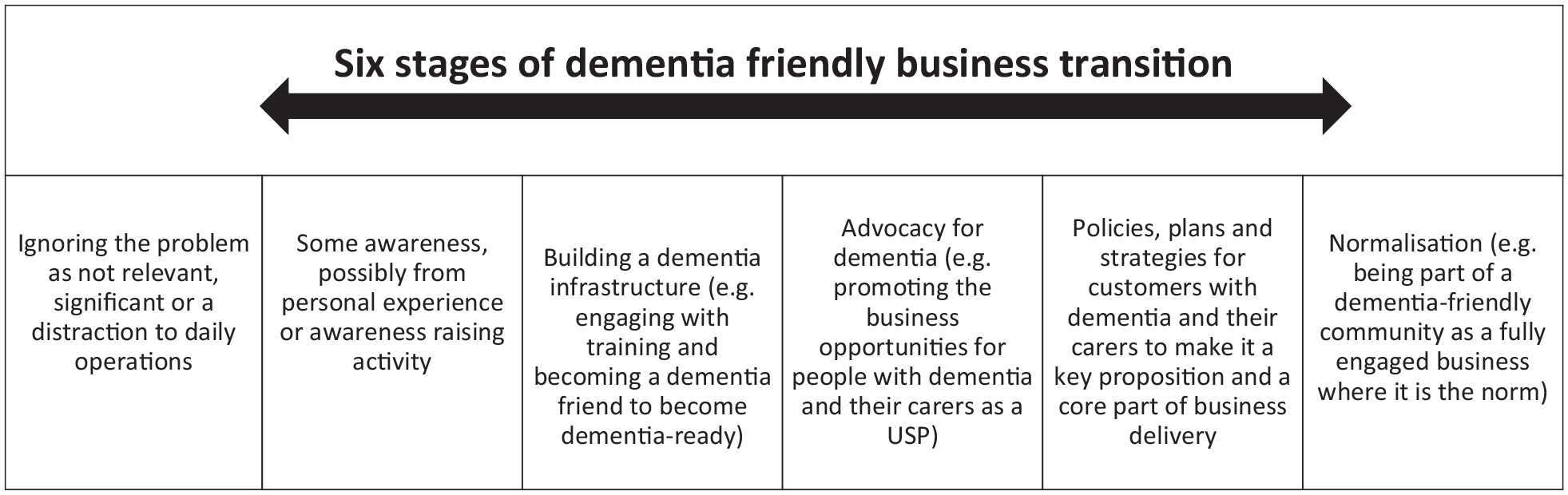
The six stages of dementia friendly business transition.
As a global challenge, dementia has seen an exponential growth in health and social science research with almost 10,000 outputs listed on Scopus. The scale of outputs poses a challenge for researchers in digesting progress in the field, compounded by a burgeoning international gray literature on practice. The emergent literature on enriching the lives of PLWD emphasizes the key contribution that engagement with outdoor activity and nature can make (e.g., Gonzalez & Kirkevold, 2014; McCracken et al., 2021; Smith & D'Amico, 2020; Whear et al., 2014). As Figure 2 shows, the benefits are emotional, social and psychological (see Whear et al., 2014). For these benefits to be realized, visitor attractions or sites that operate in natural environments may need to adapt facilities to assist access. Work on creating age-friendly infrastructure has occurred in many urban settings running in parallel with DF activity (Page & Connell, 2023). In particular, public policy and landowning bodies have sought to transform access to the outdoors, especially in urban parks and greenspaces. To promote more DF approaches, some visitor economy businesses have begun to work toward adapting their provision for PLWD. Such efforts have been supported by policy and practical guidance from organizations like Alzheimer’s Society (2017), and communities of interest that promote DF best practice (Historic Royal Palaces, 2017) to help businesses move beyond simple access compliance to meet legal requirements. The Covid pandemic and restrictions on indoor mixing following periods of lockdown also pushed many attractions to offer and promote more outdoor activity and reconnection with natural elements of sites. However, a lacuna in knowledge remains about the deeper motivations and organizational approaches that business adopt that combine profit-focused activity with community-oriented and social agendas like improving access for PLWD.
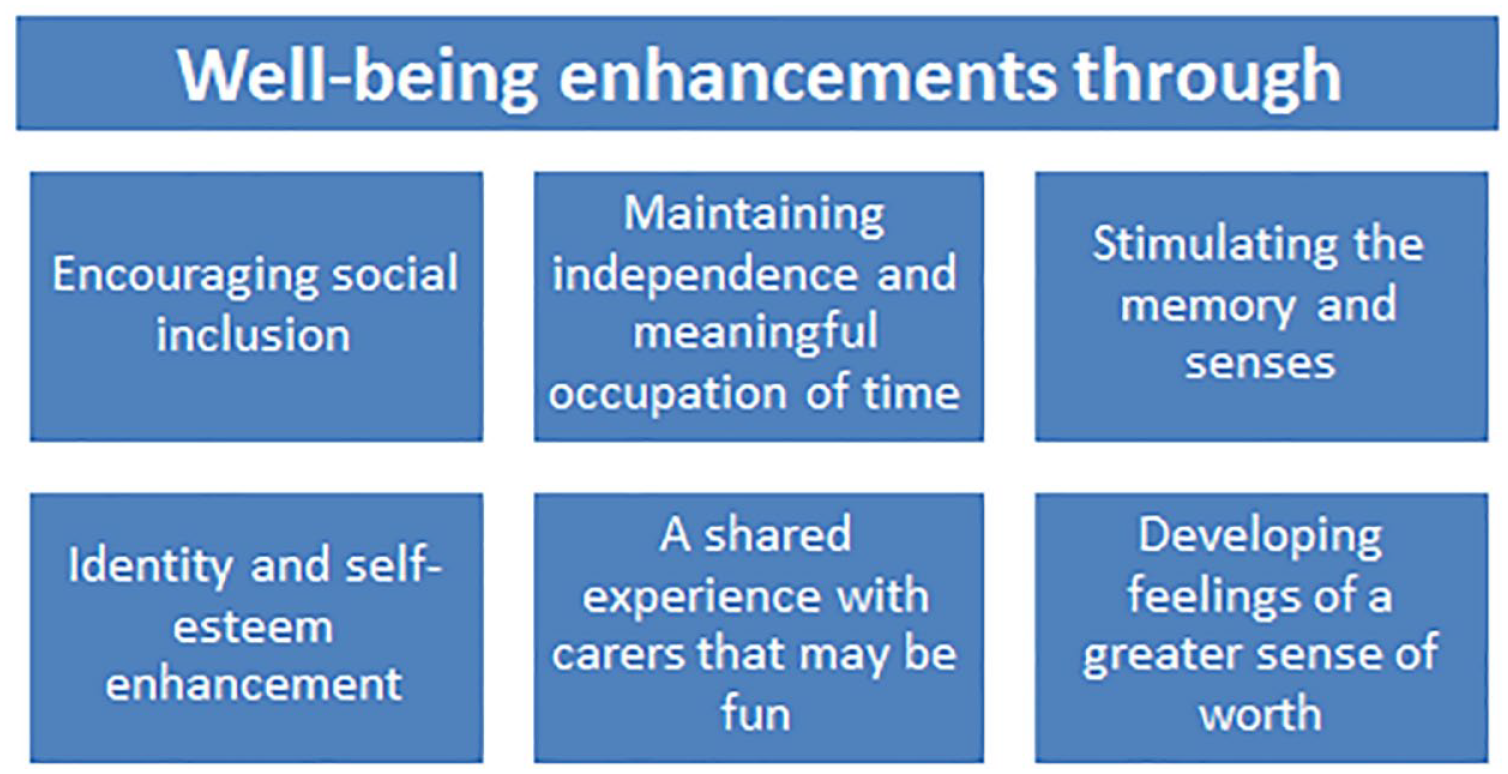
Therapeutic benefits of outdoor activity and nature for people living with dementia.
Visitor Economy Businesses and Embedding a Dementia Focus
This gap in knowledge signals an important and timely opportunity to examine how businesses with tourism audiences in the visitor economy are embracing well-being and changing their practices to advance social well-being (see Corey Lee, 1998). Social well-being is defined as developing, sharing and meaningful experiences with others that create a sense of social connectedness as well as belonging as a basis for achieving a sense of happiness and to negate feelings of social isolation. These attributes are particularly important for PLWD and their carers by increasing moments as DF experiences that enrich their social well-being in helping them to live well with dementia (Keady et al., 2022). Understanding how businesses in the visitor economy help to facilitate visits is important so that knowledge of attitudes, levers and underlying philosophical stances adopted by organizations might be rolled out to help move society nearer to the normalization outcome (see Figure 1). For this reason, a degree of understanding of the processes of change management embraced by businesses in creating DF sites and outdoor experiences helps explain how to advocate further DF development. Indeed, the emergent literature around the notion of a well-being economy (Diener & Seligman, 2009; Fioramonti, 2017) and well-being policy studies (e.g., Cylus & Smith, 2020; Seaford et al., 2012) have argued that the pursuit of subjective well-being (Hartwell et al., 2018), particularly happiness (Frey, 2011), contributes toward creating a more inclusive civil society. Much of the research has approached the well-being economy as an economic development path at a macro scale although some studies (e.g., Lang & Marsden, 2018) have highlighted the research gap in connecting wider well-being policies and strategies to individual localities and sites to drive local economic growth around well-being (Hartwell et al., 2018). Despite this, only a limited number of examples show evidence of this idea in practice (Page et al., 2017).
Within a dementia setting, culture change is one key element of organizational management that has been applied to care settings (e.g., Brooke & Semlyen, 2019) to improve the well-being of PLWD. To date, no studies have examined how and why organizations have developed measures to become DF that can extend previous research on the limited progress in the visitor economy (Connell et al., 2017; Connell & Page, 2019; Page & Connell, 2022). As Banerjee (2012) indicates, with dementia set to be the biggest single ticket item for government health and social care budgets, connecting businesses to the well-being economy may help PLWD stay active and live at home longer. Not only is this a social and economic policy imperative, but it may be important in terms of social prescribing, 4 as a therapeutic intervention with both the participant and business benefiting as a shared value (Porter & Kramer, 2011). Action is necessary as the escalating scale of dementia (see Table 1) appears to be outstripping the ability of societies to innovate through strategies to help PLWD live well. This may be an issue of scale as there is no national program connecting PLWD in the UK with a portfolio of options to stay active and engage with nature and the outdoors, as health priorities are less concerned with preventative outcomes. To enact a transformative pathway for PLWD, a key question that arises is what type of research methods are appropriate to further knowledge in this area?
A Summary of the Dimensions of Dementia as a Global Societal Challenge.
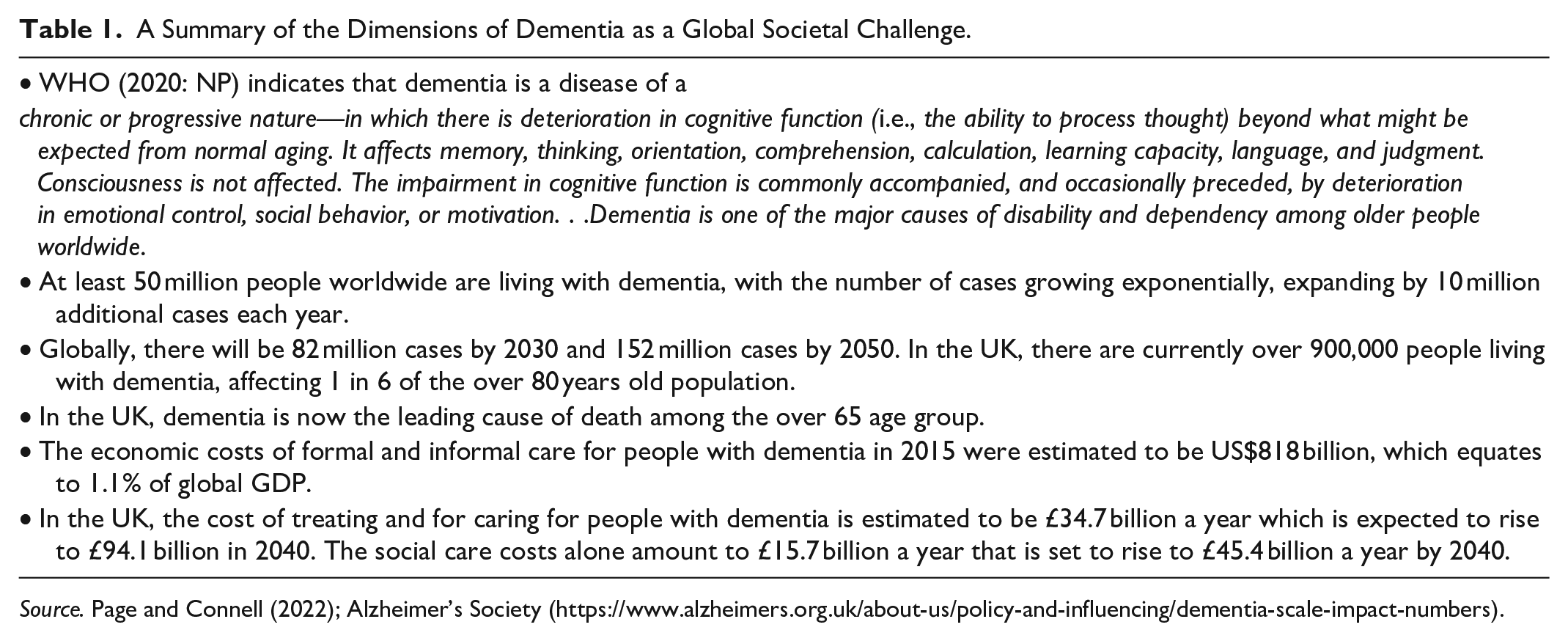
Source. Page and Connell (2022); Alzheimer’s Society (https://www.alzheimers.org.uk/about-us/policy-and-influencing/dementia-scale-impact-numbers).
The Transformative Research Paradigm and Research Methods to Deploy
A transformative research paradigm, as Mertens (2008) set out, seeks to challenge and promote changes to the beliefs about and experiences of marginalized groups and communities to initiate social change and this has a major bearing on the methods selected. Such a broad purpose as “transformative” was depicted by Mertens as a metaphysical umbrella, capable of including different approaches to research with a common cause—to challenge exclusion in society. Transformative research methods are diverse given the scope of the agendas it tackles, building on a rich tradition of social science multi-method research, often from a qualitative research perspective. Exclusion is a complex multi-faceted issue that no one single methodology can claim as the panacea to address the root causes, making multi-methods a suitable choice to explore the interconnections between people, environment, economy and society and the challenges in these relationships (see Tashakkori & Teddlie, 2003; Teddlie & Tashakkori, 2009).
As Pritchard and Morgan (2013) outlined, transformative tourism demonstrates several distinctive features in how the research process is approached, with its focus on societal agendas, an epistemological orientation toward value-mediated and co-produced knowledge, and a respect for human dignity. The use of action-oriented and more participatory methodologies is advocated to understand how to co-transform situations through self-reflexivity research methods that give voice to the research participants. This approach also promotes partnership working, co-creation and improvements to well-being, which is well suited as an approach to the marginalization experienced by PLWD and their carers (Innes et al., 2004). In this study, we approach the issue of transformative tourism from a business perspective (see Crockett et al., 2013) to understand how organizations operationalize concepts and connect with visitor well-being through their DF ambitions and activities. This includes the business approach to co-creation and inviting participation at the planning stages of their initiatives. This study is part of a much larger research program examining dementia and the visitor economy, so the perspective of PLWD and their carers is a separate strand of research not reported here but participatory methods are applied in other areas of our work. The relative absence of applied transformative tourism research makes this study pertinent and novel because it moves from theory to illustrate how becoming DF is occurring in practice. It also creates a knowledge base with potential for applications for businesses looking to scale up DF provision and cascade their learning and knowledge to other businesses as part of an advocacy agenda, with examples of best practice of international relevance.
Methodology
Multi-Methods and Transformative Research
This study embraces a multi-methods approach, common where two or more research strands are undertaken and then brought together (Lewis-Beck et al., 2004; Tashakkori & Teddlie, 2003; Brewer & Hunter, 2006; Johnson and Turner, 2003), as existing studies of becoming a DF business have highlighted a range of complexities in pursuing this journey (Connell et al., 2017; Page & Connell, 2022). Multi-methods was deployed because it is well-suited to situations where there is a limited understanding of the phenomenon in question (see Khoo-Lattimore et al., 2019), namely creating DF outdoor experiences and the management pathways pursued. Multi-methods involves a process of triangulating different data sources (see Campbell & Fiske, 1959; Morgan, 2019) to understand and corroborate the findings from different directions to add a multi-layered dimension to the research problem. The intellectual rationale for multi-methods is that it can yield a deeper understanding of research issues, without being constrained by one specific and arguably constraining methodology. It adopts the philosophical underpinning of pragmatism to get to the root causes of the research problem from different directions acknowledging the importance of plurality in research endeavors in tourism (Pearce & Pearce, 2017).
The Research Process and the Research Studies
The research commenced with the identification of sites with a nature-based element to their experience who were already working in the field of DF, as identified through a scoping activity at the beginning of the project through our research networks and a systematic internet search of the nature and outdoor experience sector offering DF experiences. This process allowed us to draw up a purposive sample of businesses and organizations, designed to generate rich, in-depth insights from managers and operators with sufficient knowledge and experience to participate in a meaningful way (Creswell et al., 2011). The process yielded 131 attractions and businesses offering or interested in developing DF activities. This embraced not only visitor attractions, but a range of SMEs who were also using outdoor sites to develop DF experiences.
The first stage of the study adopted a qualitative, inductive approach based on semi-structured interviews in view of the need for exploratory data to identify key themes in a new area of inquiry. Representatives from a sample of 40 businesses were interviewed between January 2022 and May 2022 using the schedule set out in Appendix 1. The second stage was familiarization with site operations, services and facilities through on-site observation using a site audit approach. This was undertaken using a sub-set of 11 selected businesses representing different types of visitor sites to understand the scope of their activities, the physical aspects of sites and the extent of DF provision during the visitor journey including major touchpoints. The scope of the site audit is set out in Appendix 2.
Study 1: Interviews With Businesses
In Study 1, a semi-structured interview technique was selected as the most suitable research tool to address the research objectives through exploration of a priori and emergent issues with managers or owners of visitor attractions, sites and businesses in the natural environment. Semi-structured interviews allowed for the development of an interview schedule based around the research objectives but with the capacity for diversionary topics of importance to specific sites or deeper insights around key themes of importance to the participant. Interviews were designed in such a way as to not lead or bias responses, allowing participants to talk in a free flow manner (Connell & Lowe, 1997) to explain and reflect on the DF process in terms of what, when, why and their thoughts. The selection of potential respondents used non-probability purposive sampling, where key informants would be able to share their aspirations, motivations, knowledge and experience of developing DF practices in their respective businesses and organizations. This was critical given the operational novelty and limitations across the visitor economy in terms of locating widespread practice through probability sampling. This process was applied in a multi-layered way given the nature of the sample, which spanned a range of business sizes, types, and structures in order to establish a broad spectrum of sites and organizations. Participants included those who had access to a wide range of knowledge about their organization or the community on DF issues, managers or employees who held a position in their organization with direct responsibility for accessibility or community engagement, and site managers or owner operators with direct responsibility for business operations in the case of micro and small-medium enterprises. Participants were largely managers or senior operations executives within their organization, empowered to discuss dementia and accessibility and their characteristics, as shown in Table 2.
Organizations Interviewed.
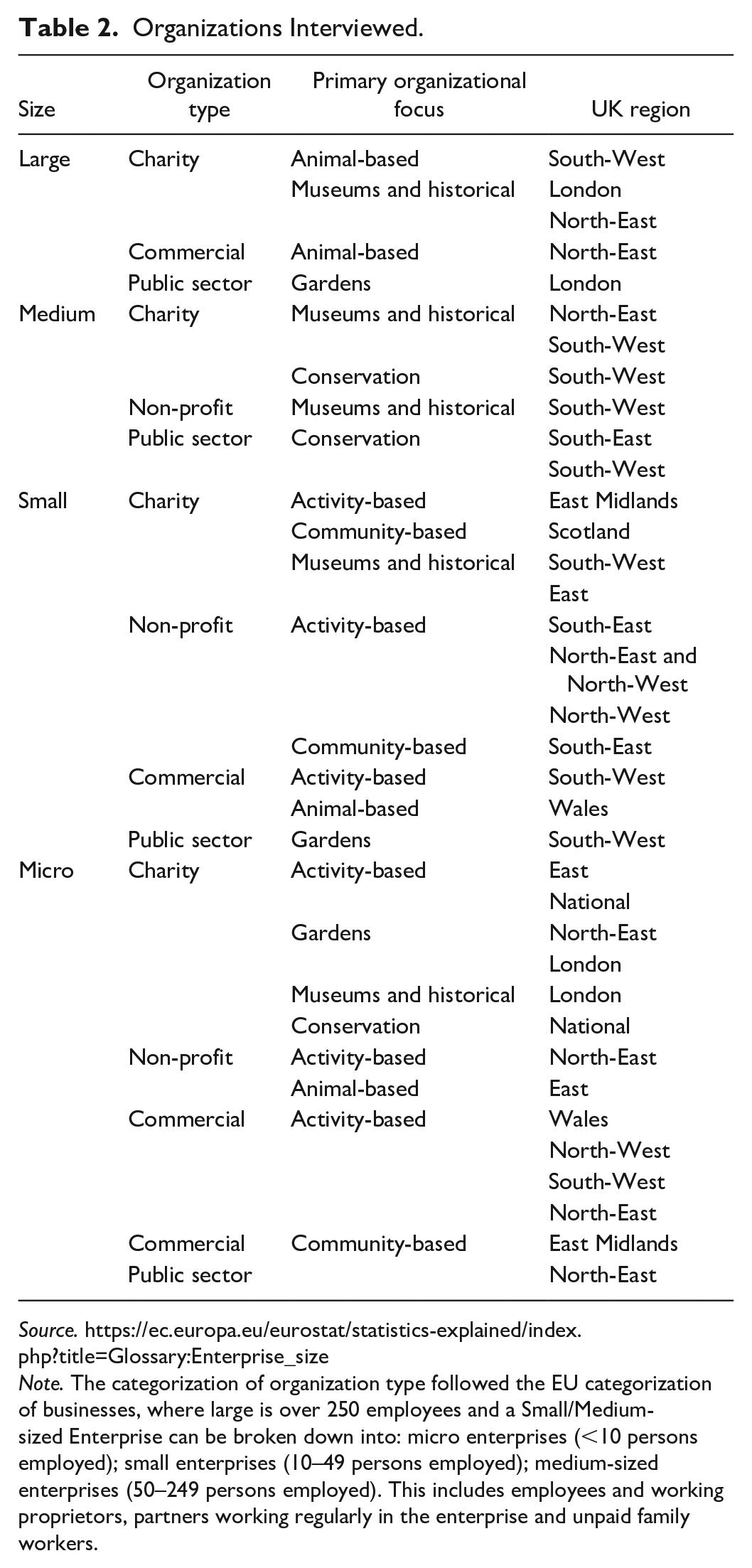
Note. The categorization of organization type followed the EU categorization of businesses, where large is over 250 employees and a Small/Medium-sized Enterprise can be broken down into: micro enterprises (<10 persons employed); small enterprises (10–49 persons employed); medium-sized enterprises (50–249 persons employed). This includes employees and working proprietors, partners working regularly in the enterprise and unpaid family workers.
The median length of interviews was 55 min, with a range between 21 and 91 min. Shorter interviews occurred with smaller organizations whose current activities and future ideas or intentions in relation to dementia-friendliness were limited. The interviews were mainly conducted via online video-call due to geographical distance as well as Covid restrictions. All interviews were audio recorded and transcribed. Transcripts were entered into NVivo to support a process of thematic coding (Braun & Clarke, 2022). To ensure a high degree of quality assurance in the data analysis stage, multiple coders examined the transcripts independently to identify the range of codes that might be identified to depict the themes in the data. The stages in thematic analysis identified by (Braun & Clarke, 2021) (familiarization with the data, coding, generating initial themes, reviewing themes, defining and naming themes, and writing up) were followed as the analytical framework for the study. The coding process commenced with two researchers undertaking several in-depth readings of each transcript and grouping key issues, as advocated by Ritchie and Lewis (2003). Transcripts were subject to open coding based on emergent themes. Axial coding to refine groupings of issues in relation to interview narratives and confirm relationships between categories was then applied to highlight the primary issues. Selective coding was then applied to look for patterns in the data and possible connections between responses (see Strauss & Corbin, 2004). Short quotes from interviews were embedded within the text to provide supporting evidence of the themes and to represent a range of views. This follows the approach suggested by Creswell (2013) and Merriam (2009). Where possible, data is presented in tabulated form to assist with a more granular analysis of the characteristics of the respondents and their views.
Study 2: Observations and Site Audits
Study 2 sought to evidence the extent of DF accessibility and development in a selection of sites, since site studies have become an integral methodology to understand the DF aspects of communities (Kan et al., 2020). Site audits perform a key role in broader issues of accessibility, and Diaz et al. (2022) outlined the diversity of tools used as site audits which informed our construction of an audit schedule to use at each site, creating data that would be subject to content analysis. Checklists are widely used in site or community audits as they establish a set of common standards (Handler, 2014), but they are self-limiting in relation to a preoccupation with minimum levels of compliance around physical access to ensure locales or settings are easy to access and are safe. To address this weakness, we combined qualitative and quantitative measurements at each site. This was to develop a pragmatic assessment that was synthetic and meaningful beyond simply ticking off compliance issues. The audit tool was also based on previous research aligned to the visitor attraction sector, developing prior scoping research on this issue (Connell et al., 2017) and drawing from established criteria for heritage sites (Historic Royal Palaces, 2017), and tourism businesses (Visit England, 2019). The checklist approach and observational techniques, including being taken on a guided tour of the site, meant that each researcher had to use their five senses to make observations in relation to sight, smell, touch, taste, and hearing as well as an embodied element 5 that was also important for mobility and physical accessibility, with listening to the narrated tour and forming judgments. The data gathered from this exercise was inductively generated alongside the key respondent within the natural environment setting. As an observational descriptive study, Manterola and Otzen (2017) suggest that there is no consensus on how such data should be analyzed. The process was designed as both an information gathering exercise and a mechanism by which to scope out the range of experiences as seen through the eyes of site managers. We did not set out to use scores or assign any scales to the small number of organizations in our sample. It was primarily designed as a familiarization tool to identify how features and experiences were delivered spatially (Gan & Trivic, 2021) and their suitability for DF activities using established DF criteria (e.g., Historic Royal Palaces, 2017; Mitchell & Burton, 2006) and elements of the visitor journey concept, widely used in tourism studies (see e.g., Følstad & Kvale, 2018; Packer & Ballantyne, 2016).
Findings
Site Audits, the Visitor Journey and the Visitor Experience for PLWD
We commence our discussion of the findings by focusing on Study 2 as it is a useful starting point to recognize what makes an outdoor site DF prior to examining the in-depth interviews about each business and their operation. It provides observational data and recognizes that, as Hebert and Scales (2019) indicated, innovations in environmental design, awareness raising and education are critical components for making any locale DF. We utilized Mitchell et al.’s (2003) design principles developed for nature and the outdoors (Mitchell & Burton, 2006). These grouped around six principles that underpinned DF design: familiarity, legibility, distinctiveness, accessibility, comfort, and safety. Pozo Menéndez and Higueras García (2022) highlighted innovations in design at a destination level where several outdoors DF projects coalesced, such as in Bruges, that was central to becoming DF. As Mitchell and Burton (2006) highlighted, open spaces need to be welcoming, accessible, have simple layouts, uncomplicated design, several key landmarks and limited signage that is plain with large black text. Study 2 drew upon this knowledge base to interpret the findings so Mitchell and Burton’s (2006) criteria on site design were used in framing overall assessments. As Table 3 shows, a wide selection of attraction types were chosen to audit, starting with their websites on the visitor journey. It is evident from Table 3 that most sites had accessible websites with suitable layouts that displayed pre-trip information along with accessibility issues including any specific challenges. However, despite programs of dementia training at many of the sites, none publicly displayed this feature often because it was not completed for all staff. Several sites did have accessibility information and statements on what visitors could expect as well as services (e.g., wheelchairs) they could use and visual guides to help decide if the site/experience was suitable for them.
Summary of Site Audits: Dementia-friendly Attributes and Site Accessibility at a Sample of Outdoor Visitor Sites.
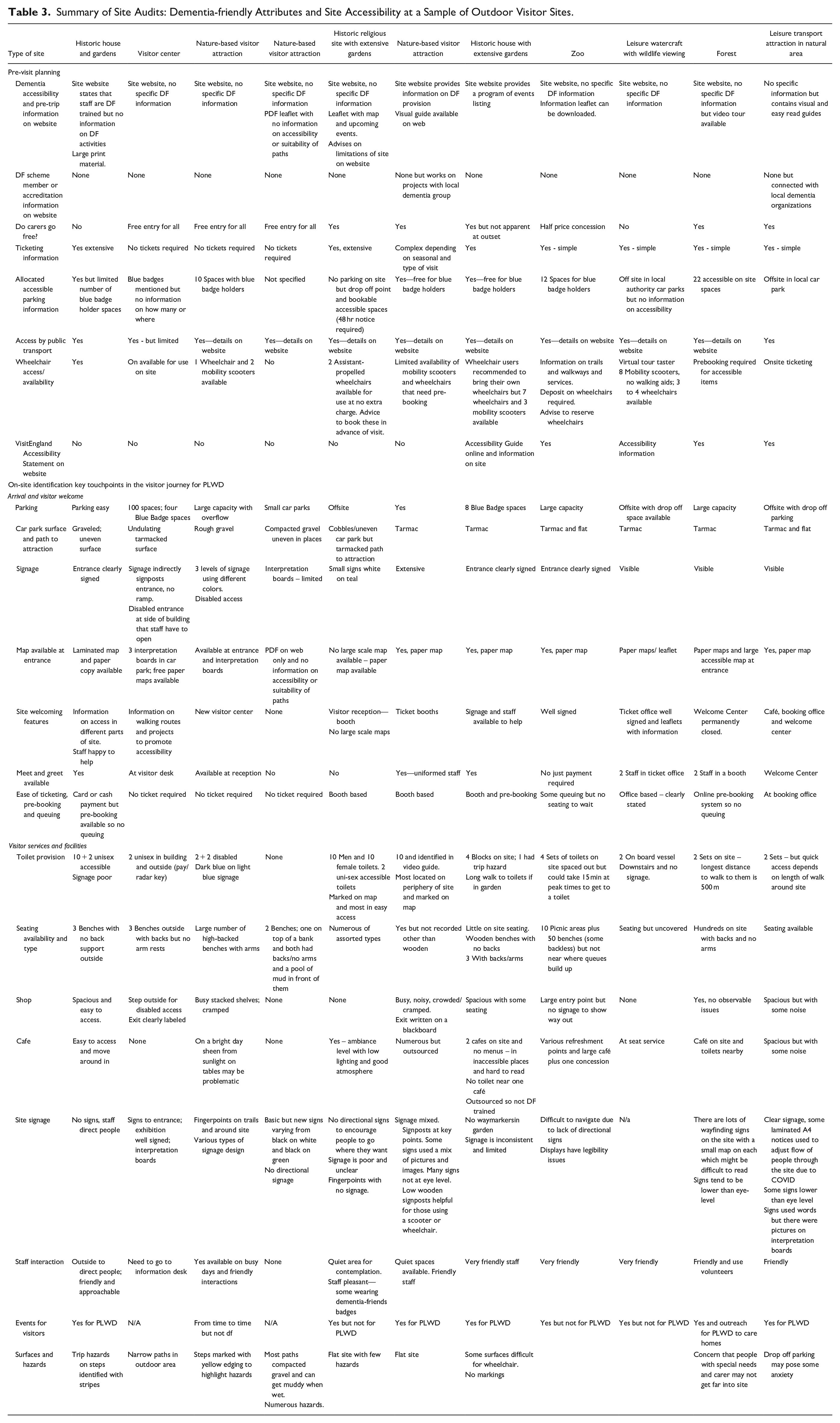
A key determinant of the decision to visit is information and incentives (e.g., a carer goes free) and suitable access such as accessible car parking (see Gibson et al., 2017; Van Schaik et al., 2008). This varied by site, but the majority offered free or concessionary charges. Welcoming features, such as visible signage, meet and greet as a way to provide a calm experience (see Alzheimer’s Association, 2019) and wheelchair availability, were visible in most instances. Site services and infrastructure demonstrated that most sites had a range of facilities to encourage social engagement such as a shop or café and interpretive services, as well as toilet provision, which is essential to mitigate the impact of dementia due to a frequent need to urinate. At some sites, signage remained a problem for businesses as this had grown through time and combined various styles, or there was no overall philosophy on provision. Audits on site observed very friendly customer-staff interactions with a caring attitude and special events for PLWD. In terms of familiarity, sites have provided pre-planning material to enable informed decisions to be made on planning a trip so the visitor develops a degree of pre-visit familiarity. Potential problems emerge in sign legibility, thus reducing the coherence of a spatial layout that can be navigated easily. Signposting to simplify wayfinding in a manner PLWD can understand with carers is potentially a weakness at some sites, which was compounded by a lack of comfort and accessibility where seating was not available or of a suitable form (with an easy rise level with arm rests). The physical attributes of each site were unique in their offer, with a distinctive repeat visit proposition based on a changing seasonal offer. A number of small safety issues were noted in some cases, usually around floor surfaces. The audits were then used as a context for each site to derive a range of generalizations around the examples of good practice and areas for further improvement prior to analyzing the interview data. The audits were also used to triangulate the interview data in terms of the wider accessibility issues as a number of the themes in the audit data are revisited below.
Business Interviews
Turning to the results from Stage 1 (the business interviews), from the thematic analysis following broad themes were identified: nature and the outdoors; transformative actions; transformative practice and barriers and challenges.
Nature and the Outdoors
Participants were asked about their connection to nature and the outdoors to capture their awareness of the emergent value of the well-being economy and the organizational recognition of this for business development (Table 4) as well as the therapeutic and transformative role of nature in visitor experiences (Table 5). The connection to well-being in experience design was inherent in many responses implicitly and explicitly as summarized by Participant 26 as “well-being is basically at the top of our agenda now,” recognizing the health benefits for PLWD that are widely accepted (see Meijering et al., 2017; Mossabir, 2019).
Organizational Rationale for Providing Outdoor and Nature Experiences.
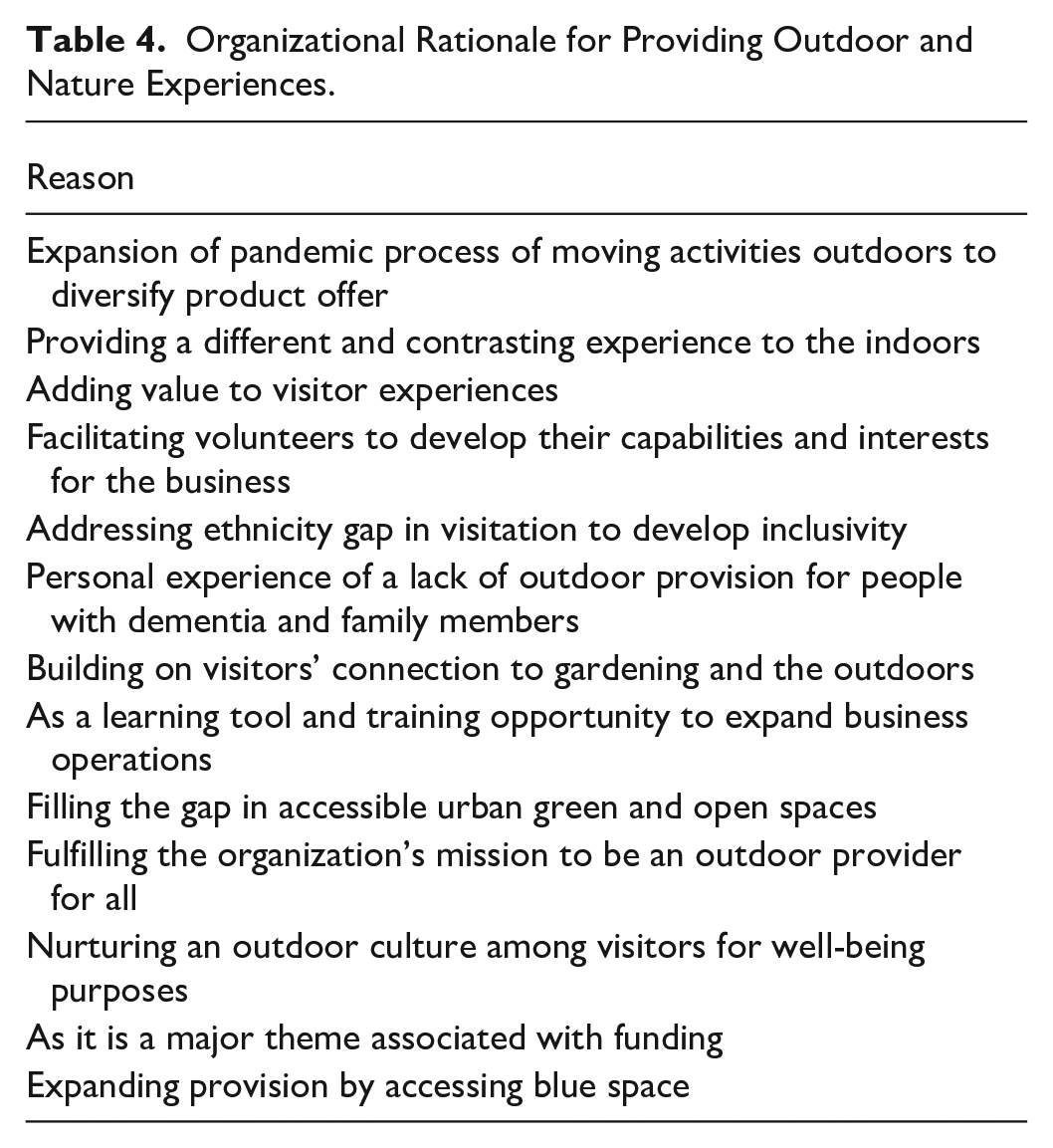
Participants’ Interpretation of the Well-being/Nature Relationship: Themes and Illustrative Quotations.
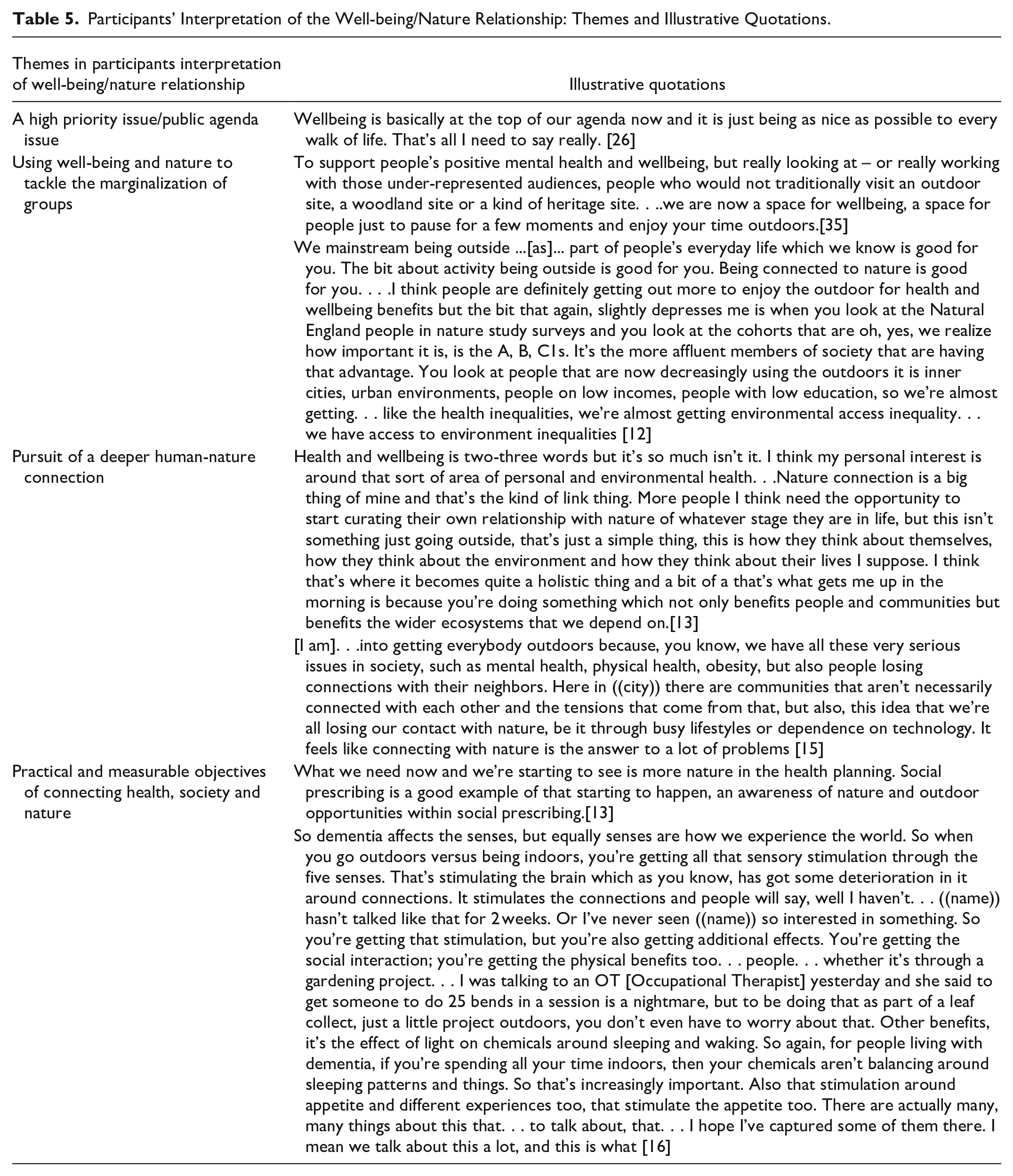
Among the common themes that emerged from the discussion, using nature to foster greater inclusivity in visitor markets, making improvements to mental health and well-being and providing a setting for enhancing social connectedness to address loneliness and social isolation were particularly prominent, to help overcome restraining influences on behaviour (Lewin, 1947). These varied reasons demonstrate the potentially transformative value of nature when a more strategic and societal orientation is applied to visitor settings. The findings have considerable salience given the time-space compression noted with dementia (Marsh et al., 2018) where the sensory stimulation value of nature can be lost. Exploring these themes further, we were interested in how these values were put into practice to transform lives.
Transformative Action
In terms of transformative action, Austin et al. (2006) posed three questions to ask individuals within organizations with a social focus: why they act, how they act and what happens when they act? Using this framework, we initially probed participants’ motivations to look for surrogate measures of individual and organizational transformative levers in their behaviors. This was informed by the classic literature on the sociology of collaboration and transformative leadership. In terms of collaboration, Lazarsfeld and Merton (1954) highlighted homophily as a concept to explain how individuals with common values and approaches will move toward each other and act in complementary ways, especially in organizations. This offers a deeper understanding of collaboration and partnership working, which Bass (1985) reaffirmed in terms of transformative leadership that was characterized by a caring attitude, principles of equality and collaboration. Over half of those interviewed highlighted their championing motives illustrated thus: “I’m always interested in championing from a personal point of view” [P33]. Walton and Huey (1996) argued that when these values are embodied in transformational leadership, four key features emerge (also known as the “four I’s”): idealized influence (being a role model), inspirational motivation (encourages colleagues to work to mission of organization), intellectual stimulation (encouragement of innovation and creativity), and individual consideration (encourages colleagues to achieve their goals). These motivations were identified in the key phrases and terms used such as equity, community-focused, being a champion of the area, being inspiring and team-focused and an ability to reframe problems and find solutions. Key words, such as engagement, illustrate the desire to achieve their mission and a desire to connect with multiple stakeholders able to also drive the agenda illustrated by one participant where “. . .part of my job is very much to engage with people, so not only do I see and speak to a lot of people but I do a lot of networking with. . .a lot of tourism bodies. . .” [P26].
The importance attached to specific attributes and the approach to expanding access to different groups varied in terms of the organizational orientation. Among those with a social mission (e.g., social enterprises and some micro businesses), the focus was closely aligned to very specific objectives around their aims (e.g.,“is a social enterprise, on a mission to help people engage with nature, to feel better in mind and body” [P19]). As Austin et al. (2006) argued, the motives of social entrepreneurs tend to focus on both commercial/profit issues and a social mission motivated by social values. Even serendipity played a part where a chance encounter with “this dementia group [who] come in and it was an oral history project I think was actually the key part to it, they were trying to capture peoples’ stories and share it, that was really the motivation.” Shaw and Carter (2007) highlight the creativity inherent in the socially-focused mission of organizations, focused on those marginalized in society, using social innovation to make a difference to the daily lives of people. These themes emerge in the interviews in terms of organizational motives and the receptiveness to adopt DF initiatives and developments as illustrated in Table 6. Table 6 shows that a wide range of motives were cited ranging from highly personalized ones (e.g., a manager or champion has a personal experience of a family member living with dementia) to more business specific motives that combined accessibility with growing visitor reach and engagement and competitive pressures from the wider visitor economy including commercial pressures as “in terms of our price model, it’s basically everybody pay, we don’t offer freebies” [P8].
Organizational Motives for Becoming Dementia-Friendly.
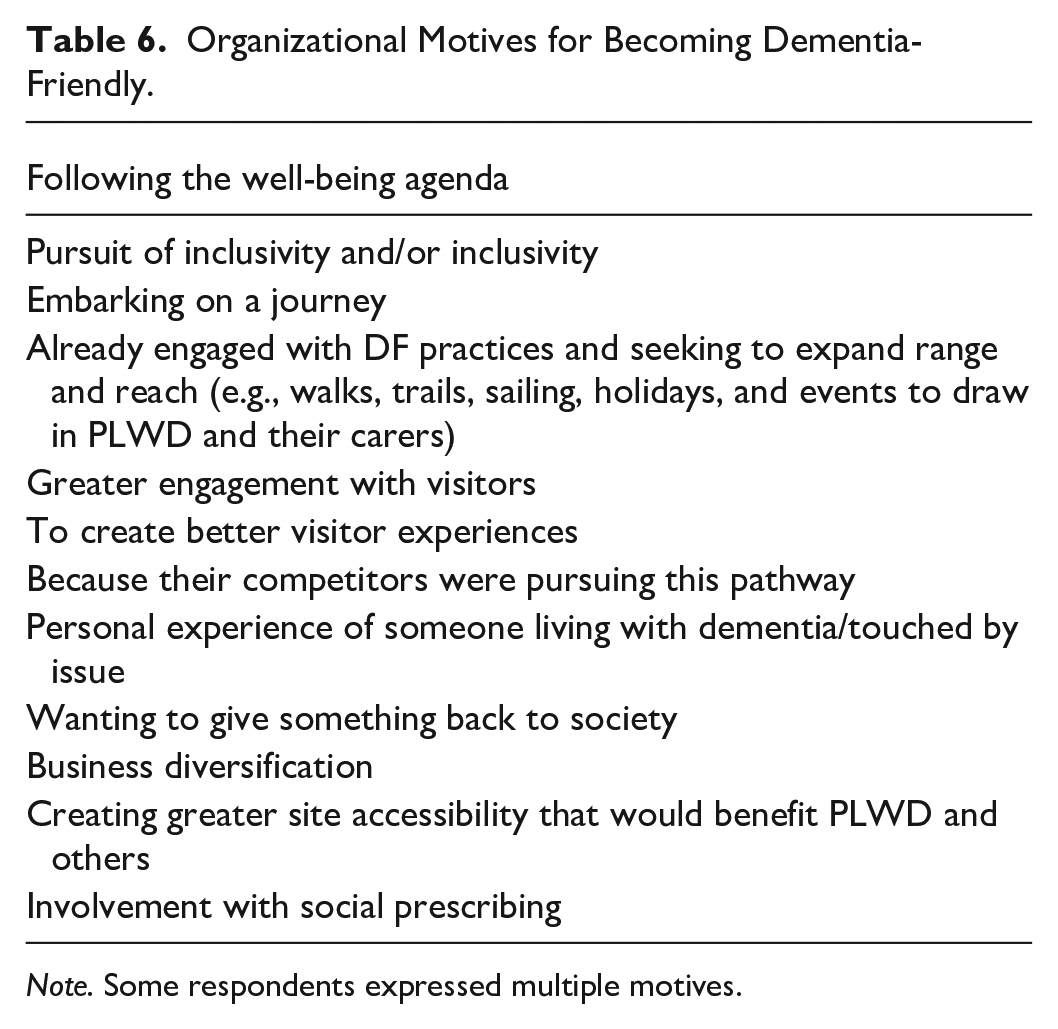
Note. Some respondents expressed multiple motives.
Businesses and organizations with a mainstream commercial focus had built accessibility into their mission, either because of a requirement due to public sector funding or for growing their diversity of visitor audiences. What emerges from the interviews are a series of unique organizational pathways toward wanting to develop or enhance existing DF provision (Figure 3). Each pathway is motivated by institutional and personal factors, potentially with a philosophical position relating to their role and degree of involvement toward transforming provision. The plurality of experiences (see Gilmore and Smith, 2006) represents what Ely (2021) describes as a series of controlled transitions, carefully managed both strategically and operationally, to address a specific problem or issue. The plurality of experiences also groups into a potential community of practice as organizations all appear to recognize “That’s a journey we’re on. . .we have to get everyone connected, [as] we were doing dementia friends” sessions, we were advocating for people with dementia, getting more aware of people with dementia. . .Until it touches your life you’re not necessarily aware of that’ [P19]. Even so, around a third of businesses were new to DF issues and at an early point on their journey, meaning that the sample captured a diversity of organizations at different stages of developing a DF offer. That diversity also yielded a range of practices that used nature to develop a DF offer.
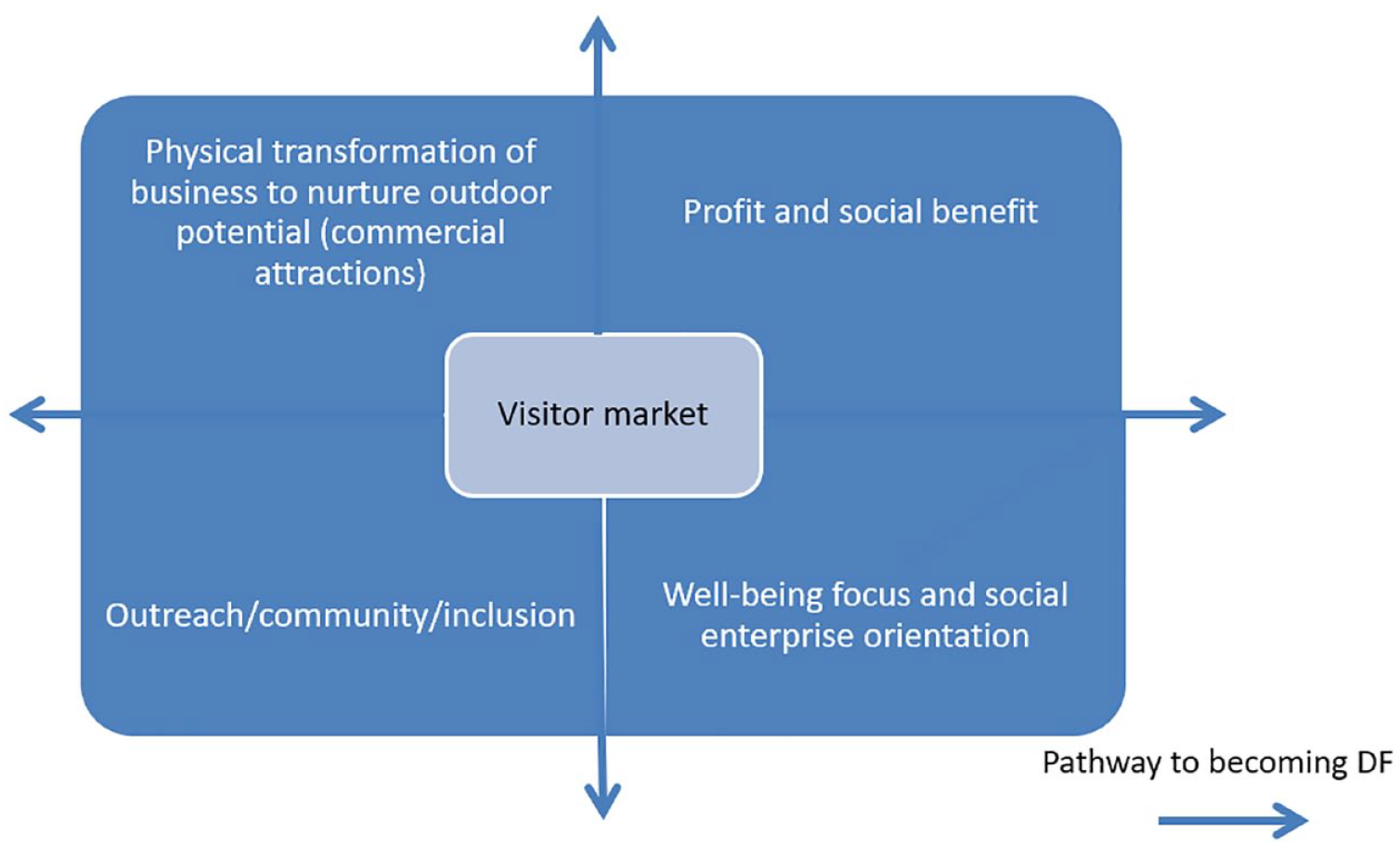
Selected pathways to becoming dementia-friendly (DF) businesses.
Transformative Practice
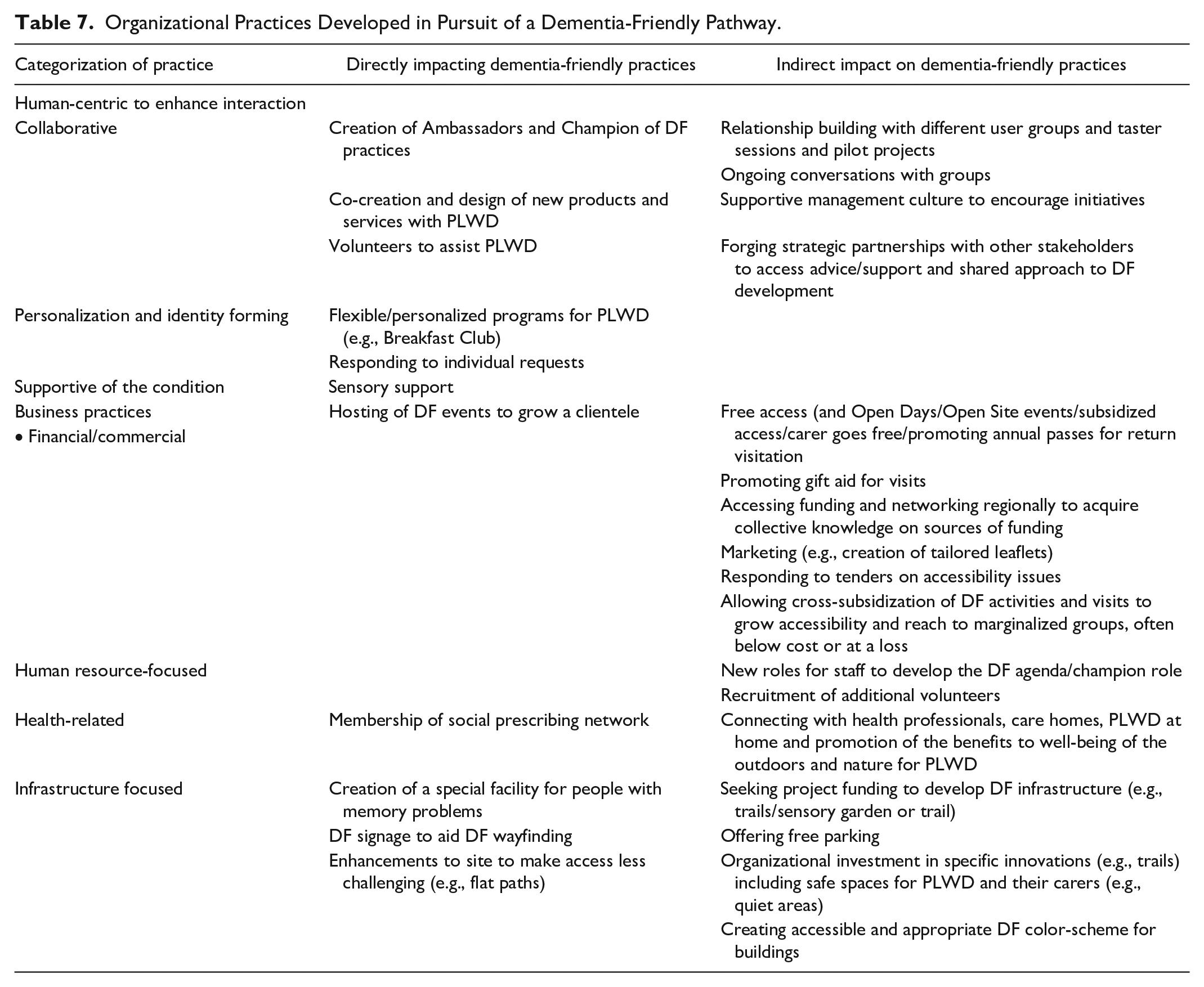
Hendriks et al. (2016) demonstrated the value of using nature as a basis for creating DF experiences for PLWD so that they can derive enhanced quality of life from a greater sense of freedom as well as an ability to relax and pursue their preferred active through to passive encounters with a strong focus on enjoying the social connectedness such visits facilitate. Hendriks et al. (2016) advocated a people-centric approach when using design principles to make a setting more DF. In terms of organizational practices introduced to become more DF, Martí (2018) indicated that three key attributes need to be participatory, caring and multi-vocal (capable of representing different voices), reiterating the call by Hendriks et al. (2016) for a people-centric approach. Dorado and Ventresca (2013) also highlighted the way entrepreneurs and organizations needed to be stirred to create social (as opposed to economic) value in terms of crescive conditions. Table 7 shows that the practices developed adopt many of these principles in varying degrees, spanning a number of interconnected domains. We classified these into those that connect directly with shifting toward a more DF provision to those with a less direct and immediate impact, that will underpin practices and may be a slower burn. The people-centric focus was demonstrated in many of the interviews but most aptly embodied by one participant: “the biggest thing. . .it’s all about putting people at the heart of everything you do” [P14]. To achieve this often requires a more comprehensive service blueprinting process, where the processes and site are reviewed, ideally by PLWD to identify points of service failure (Shostack, 1984). The notion of making improvements and challenge was indicated by one business: [I] did a session in-house for them on dementia-friendly and accessible design. A lot of the buildings here were built in the 70s [and] 80s, physical access wasn’t even a priority then, unfortunately, let alone cognitive access. So, we’ve had to do the best we can. But the new buildings are a good opportunity to get things right from the start. [P34]
Organizational Practices Developed in Pursuit of a Dementia-Friendly Pathway.
Another participant acknowledged the wider benefits for business operations and the key role of design and engagement with PLWD to address obstacles: If you get things right for people living with dementia then it will be right for so many other people. . . we need to work with people. . . to understand what the barriers are and what might be the barriers and work with us to at that early stage design things out [P12].
Yet businesses also faced a range of barriers and challenges in the DF journey.
Barriers and Challenges
In terms of barriers and challenges, two perspectives emerge. Theoretical approaches assist in the understanding of the nature of barriers for PLWD in terms of their leisure time and how their engagement may be restricted, including barriers which organizations can help address. There are also specific obstacles in relation to nature and the outdoors. For PLWD, Crawford and Godbey (1987) identified three principal barriers to leisure which are categorized as: intrapersonal (i.e., those associated with one’s psychological state); interpersonal (i.e., associated with the social setting such as family/carer) and structural constraints (i.e., outside of the control of the individual). Godbey et al. (2010) confirmed the ongoing validity of these propositions. In terms of dementia, Mapes et al. (2016: vii) identified a divergence of views on these constraints to accessing nature as “only 20% of the people living with dementia considered that their condition was a barrier to using outdoor spaces, whereas 83% of carers believed that dementia limited the person’s ability and lack of confidence.” These findings illustrate the wider intrapersonal and interpersonal barriers to accessing outdoor recreation observed by Godbey et al. (2010). Exploring this further, Mapes et al. (2016) found that potential barriers (i.e., structural and intrapersonal barriers) to accessing nature and the outdoors included fears and safety concerns, absence of transport, insufficient information about what places have to offer and their suitability for visitors with dementia, lack of support to get to locations, to use facilities, and to participate in outdoor activities. As one organization summed up: “people[s]. . . lives are. . .often disconnected from nature because of their circumstance. Perhaps they’ve become housebound, perhaps they’re in a home, perhaps they haven’t got anyone to take them out. That’s the area we want to develop and we fully embrace the fact that some of those people will have dementia or the older people’s illnesses” [15] reinforcing the time-space compression problem. Organizations may address the perception of barriers through promotion of a new DF offer to overcome intrapersonal, interpersonal and structural barriers by communicating with PLWD and carers. Many of the structural constraints are typically site specific or associated with the visitor journey (transport to the site) and can be designed into specific programs to expand access. 6
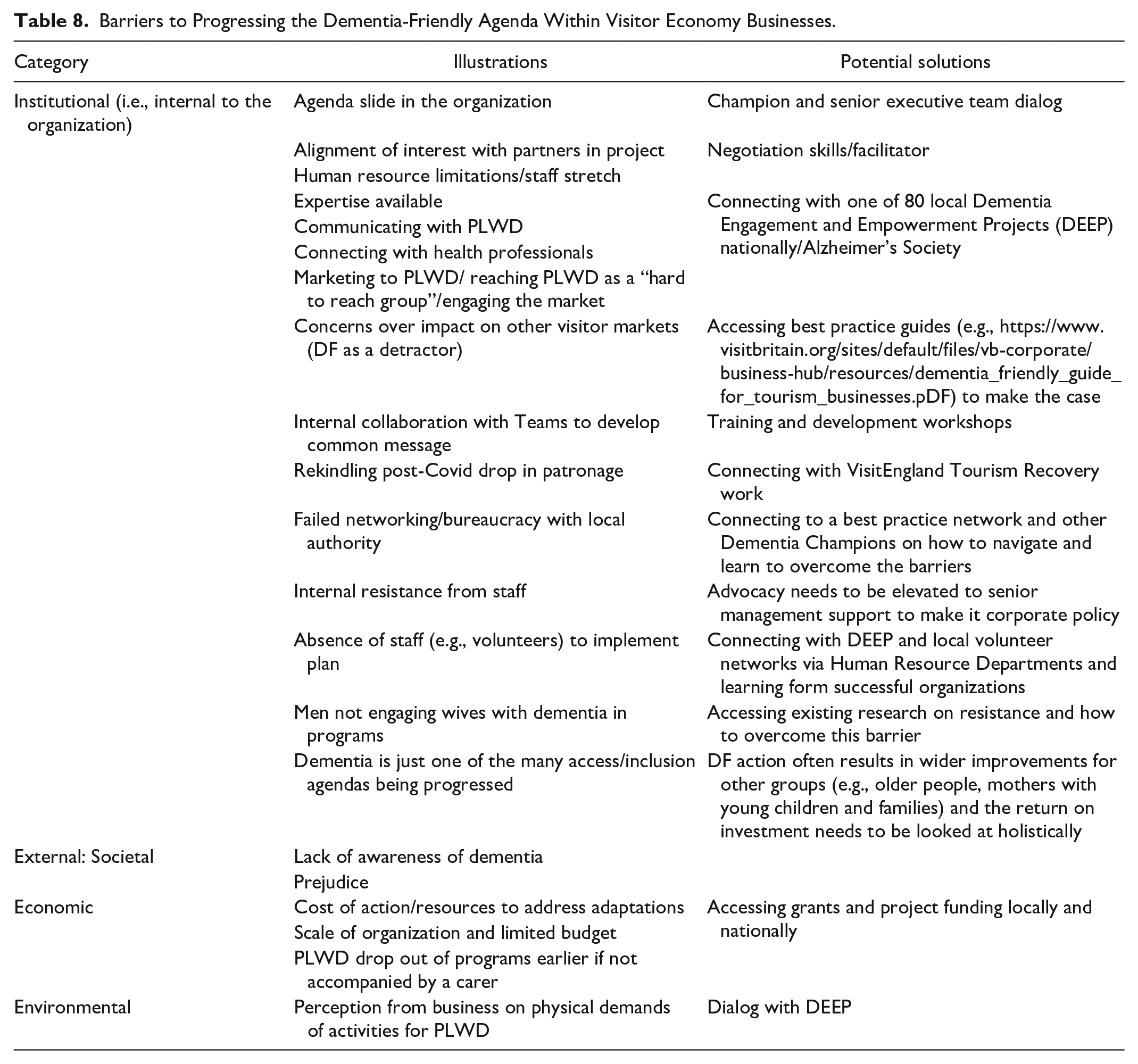
As Table 8 shows, organizations identified a wide range of barriers in terms of their ambition to become, develop or expand DF provision that span a range of domains, but most relate to institutional factors. The results also show that a degree of organizational culture change toward becoming a more inclusive and accessible business activity was evident with annual plans, operational plans or actions at a senior leadership level needed to make a step change in some cases. Potentially, the greatest challenge is perception of the challenges of integrating DF into daily activities (i.e., the process of normalization), as the following quotations suggest: I think what is really easy to end up with, particularly in places that are tourist destinations, is to almost create divisionism. And almost by the act of including particular people, you exclude other people. [8] it might be challenging to mix people with dementia in with the general public. . .I don’t know if this is still the case but a lot of people used to worry about people with dementia scaring off other people as well[22].
Barriers to Progressing the Dementia-Friendly Agenda Within Visitor Economy Businesses.
These negative views underline why actions such as Visit England’s (2019) Best Practice Guide seek to make a positive business case for becoming DF. Where an organization had a well-developed DF program, plans to expand its reach were apparent: we know that people like the sessions and those take a lot of planning and implementation to do and then the broadening out the offer for day visitor becomes harder to find the time to be able to do because you’re so busy doing this other side of it [19] In some cases what organizations were seeking was “a little bit of experience would be really helpful I think to help inform our work, on what they need to become more Dementia Friendly so I think that expertise and knowledge is probably one area.” [20].
Even so, organizations did not see barriers as insurmountable and several were committed to rolling out further innovations in the near future including digital content, accessing expertise, seeking a community of practice to help build knowledge from collaborative learning, creating a development plan for PLWD, enhancing accessibility as well as plans to expand the diversity dimension of PLWD accessing their offer and the capacity to accommodate more PLWD. One frequently reported issue was training, as the following participant highlighted: “I think a big part of it is training because I think people are scared of it [dementia]. . .Until you’ve had a parent, or a relative that’s had dementia most people don’t understand what it is. Also, how many different types there are and how varied it is. I think that a big challenge for us is that training aspect and that’s something that we would have to look at. Getting everybody trained, not just one or two people and then we’re dementia friendly” [11]
Conclusion
Transforming the position of the visitor economy to become more DF through the auspices of nature and the outdoors has been trialed by numerous organizations (see Howarth et al., 2021) using ad hoc projects and initiatives as intended in our first research objective. This resulted in a synthesis of the transformative effects of different DF actions (existing and planned) to make a contribution to the well-being of PLWD. In terms of research objectives, the findings illustrated that organizations in this study, in most cases, seek to address the marginalization of PLWD using the outdoors as a liberating and emancipatory tool to transform their lives (Pung & Chiappa, 2020). This overlaps with research objective three where the multi-sensory stimulation outdoor and nature experiences offer in terms of smell, taste, feel, hearing and sight (Agapito et al., 2014) contribute to emotional well-being and enjoyment including a greater focus on embodiment experiences. Yet promoting DF practices in the visitor economy is built upon the motivations and drive of individual champions, and based on diverse approaches toward embedding through to under-development of experiences for PLWD at specific sites, often adopted for commercial or social reasons. Committing to become DF is resource-intensive and tends to be based on small group or individual interactional experiences or achieved through specially developed trails, activities, events and experiences. The motivation might appear to be simple: compliance in terms of accessibility and the requirements of the Equality Act (2010), and other equivalent legislation internationally, to make sites accessible for all. But in the interview transcripts, the passion and social commitment of participants to make a difference to the lives of PLWD is a constant theme running throughout their narratives. The champions of PLWD embrace the transformational paradigm because it describes how they want to engage with becoming DF. These findings have international significance for other countries embarking on a DF journey in their visitor economies, as some pioneers in this study have had over a decade of experience in the delivery of programs to PLWD. This has also inspired a range of newcomer organizations to join the DF journey.
The study has a number of limitations that have to be recognized. First, we do not know how representative our businesses are as a cross-section because we did not sample from the entire range of visitor economy businesses, and some of the businesses were already known to us so may have had more connection with the topic. Second, we interviewed one representative from each business, and especially in the larger organizations other staff might have presented a different perspective. However, we did interview people from 40 businesses giving a large sample and a rich dataset. Third, the audits were done with only a sub-set of 11 businesses, so we may not have captured all the relevant contextual issues, but in mitigation, the audits highlighted critical issues that re-emerged in the interviews and so helped triangulate our findings. Fourth, with the interview data, as interviews were conducted prior to analysis, we did not stop data collection on the basis of reaching saturation, but instead focused on achieving our target number, which was a priori deemed likely to be sufficient. This was confirmed during the analysis phase. We did not include a specific member checking phase with interviewees but instead discussed observations and findings with business representatives in an online knowledge exchange forum to check credibility. However, we have subsequently co-created business projects with a number of the interviewees and will gather evidence to understand how the process of DF innovation is applied in practice.
Theoretically, the paper highlights that the transformative paradigm has a number of weaknesses that need rethinking. First, the absence of practice-based studies mean that the idealism of transformative as a paradigm has not adequately developed constructs or measures of what it means to be transformative. Consequently, this paper identifies some of the transformative characteristics using primary data as a preliminary stage of a multi-phase research program. Second, the transformative paradigm pays little attention to the timing and duration of change, particularly with regards to normalization of experiences to reduce marginalization. Accepting that change will be evolutionary and piecemeal, it will need constant innovation and adaptation to maintain momentum to implement transformative change. There is a potential flaw in current thinking that sharing best practice will be the solution to drive change, when the normalization timeframe is likely to be measured in decades, if addressing societal disablism, racism and sexism is anything to go by. What these “isms” illustrate is that underlying some of barriers PLWD face are issues of power and interpersonal relationships in organizations that may inhibit social inclusion.
While training is frequently flagged as the weakness in understanding dementia, it is one that can easily be addressed with organizational help (e.g., schemes such as Dementia Friends) and access to sources of advice to help PLWD achieve greater agency, empowering them to access and engage with nature (see Zeilig et al., 2019). Strategically, the experiences of the organizations and businesses in this study represent the wider visitor economy in the acknowledgment that becoming DF must accelerate as aging societies force more businesses to adapt to aging visitor market needs at a global scale. It is evident that the visitor economy has only recently started to grapple with this issue, but it will need a transformative process to expand the provision for PLWD. The major contribution of this study can be summarized as follows. First, it constitutes an awareness-raising process for the visitor economy to showcase what best practice exists. Second, it highlights the challenges that need to be addressed within the visitor economy. Third, it emphasizes the significant position of the outdoor visitor economy to spearhead transformative tourism in practice through the well-being benefits for PLWD. The next stage of research flowing from this study is co-production with businesses and PLWD to scale up DF provision, with demonstration projects to facilitate access and engage more visitors. This represents the final piece of the transformative research jigsaw by putting research into practice to help PLWD live well with the condition. The knowledge exchange process which will underpin this process will start to provide a range of visitor-focused experiences that continue the journey to normalizing the way dementia is managed by organizations. This is both an exciting and rewarding use of academic expertise to make a societal difference by blending theory, practice, and action to transform lives.
Supplemental Material
sj-docx-1-jtr-10.1177_00472875231217735 – Supplemental material for Operationalizing Transformative Tourism: Creating Dementia-Friendly Outdoor and Nature-Based Visitor Experiences
Supplemental material, sj-docx-1-jtr-10.1177_00472875231217735 for Operationalizing Transformative Tourism: Creating Dementia-Friendly Outdoor and Nature-Based Visitor Experiences by Stephen J. Page, Joanne Connell, Stephan Price, Steven Owen, Katie Ledingham and Linda Clare in Journal of Travel Research
Supplemental Material
sj-docx-2-jtr-10.1177_00472875231217735 – Supplemental material for Operationalizing Transformative Tourism: Creating Dementia-Friendly Outdoor and Nature-Based Visitor Experiences
Supplemental material, sj-docx-2-jtr-10.1177_00472875231217735 for Operationalizing Transformative Tourism: Creating Dementia-Friendly Outdoor and Nature-Based Visitor Experiences by Stephen J. Page, Joanne Connell, Stephan Price, Steven Owen, Katie Ledingham and Linda Clare in Journal of Travel Research
Footnotes
Declaration of Conflicting Interests
The author(s) declared no potential conflicts of interest with respect to the research, authorship, and/or publication of this article.
Funding
The author(s) disclosed receipt of the following financial support for the research, authorship, and/or publication of this article: Extending active life for older people with cognitive impairment and their families through innovation in the visitor economy of the natural environment’ (ENLIVEN) is funded by the UK Research and Innovation (UKRI) Healthy Ageing Challenge and UKRI/Economic and Social Research Council (ESRC) through Grant ES/V016172/1. Investigators: L. Clare, R. Collins, J. Connell, M. Gillard, S. Milton, C. Opdebeeck, S. Page, C. Quinn, J. Stoneham, S. Tamblin, C. Victor. The views expressed are those of the author(s) and not necessarily those of the ESRC, UKRI, NIHR, the Department of Health and Social Care, or the National Health Service. L. Clare also acknowledges support from NIHR Applied Research Collaboration South-West Peninsula. The Team also wishes to thank the Advisory Group who helped with the co-creation of the research project and the businesses who collaborated with us on the project.
Supplemental Material
Supplemental material for this article is available online.
Notes
Author Biographies
References
Supplementary Material
Please find the following supplemental material available below.
For Open Access articles published under a Creative Commons License, all supplemental material carries the same license as the article it is associated with.
For non-Open Access articles published, all supplemental material carries a non-exclusive license, and permission requests for re-use of supplemental material or any part of supplemental material shall be sent directly to the copyright owner as specified in the copyright notice associated with the article.
