




Abstract
Drawing on the authentic happiness theory, the aims of this article are three-fold: first, to propose a refined measurement scale for tourists’ sense of well-being; second, to investigate the impact of four categories of tourist experience on tourists’ sense of well-being; and third, to explore the effect of the sense of well-being on tourists’ satisfaction and loyalty. Data were collected from tourists spending their holidays in the Algarve, Portugal. To address the lack of an integrated measurement scale for assessing tourists’ sense of well-being, an exploratory factor analysis was initially conducted. Subsequently, the data were analyzed using structural equation modeling in WarpPLS 8.0. The findings reveal a three-dimensional scale for tourists’ sense of well-being, consisting of meaningfulness, active pleasure, and release. The results also show a significant positive impact of the four realms of tourists’ experiences on the sense of well-being. Finally, positive relationships between well-being, tourist satisfaction and loyalty are confirmed. The theoretical and practical implications, limitations, and potential directions for future research are discussed.
Keywords
Introduction
Well-being is a classical concept from ancient Greek times (Su et al., 2020) and is relevant to almost every aspect of human daily life and activity (Kay Smith & Diekmann, 2017). According to Alexandrova (2012), the phenomenon is one of the most popular areas for research in the psychological literature. Furthermore, the concept has been extended to the fields of philosophy, sociology, public health, economics, and policy (Pyke et al., 2016). Well-being has generally been described as an optimistic assessment of life (Diener & Seligman, 2004), a response to experiences (Nawijn et al., 2013), or a feeling of fulfilment and contribution to the community (Pyke et al., 2016). Compared with the happiness concept, which mainly focuses on hedonism and pleasurable experiences, well-being is a state of sustainable happiness whereby individuals experience positive emotions alongside a sense of purpose, engagement, and self-development (Ruggeri et al., 2020). Historically, most research on well-being has separated the concept into two philosophical approaches: hedonic and eudaimonic (W. Lee & Jeong, 2020; Rahmani et al., 2018; Voigt et al., 2010). However, regarding the latest movements in the well-being area and the emergence of the theories of the orientation of happiness (Anić & Tončić, 2013) and authentic happiness (Filep, 2014), Seligman (2011) proposed a third element, called “engagement,” which has been added to the concept of individual happiness in a new approach to well-being. Although these three conceptions of well-being might overlap in some situations, hedonic well-being involves pleasure, enjoyment, and comfort, the eudaimonic aspect relates to the meaning of life and self-development (Kay Smith & Diekmann, 2017; Pyke et al., 2016), and the engagement state is linked to involvement and fulfilment (Filep & Deery, 2010).
Since the sense of well-being is one of the most important non-economic outcomes of tourism (Gretzel & Stankov, 2021; Sirgy & Uysal, 2016), “tourism studies have become more focused on well-being in the last few decades” (Kay Smith & Diekmann, 2017, p. 1; see also Uysal et al., 2016). As recently confirmed by McCabe and Johnson (2013), tourism and leisure activities contribute significantly to the quality of life. The positive psychology paradigm, which was developed in tourism for the first time by Pearce in 2000 (W. Lee & Jeong, 2020), focuses on the importance of two aspects of well-being (hedonic and eudemonic) in tourist motivation and experience (Vada et al., 2019). However, Filep (2014) emphasized the necessity of adopting a new alternative, namely the authentic happiness theory, to conceptualize tourist happiness. Authentic happiness is defined as experiencing relatively few negative emotions and a greater degree of positive emotions (Fu & Wang, 2021). According to the theory, individual happiness is conceptualized based on three elements (Filep & Deery, 2010): positive emotions (hedonia), meaning (eudaimonia), and engagement. Despite the growing interest in studies of tourism and well-being, this area is still in its relative infancy (Kay Smith & Diekmann, 2017), and the three understandings of authentic happiness have not been studied as an integrated construct in a conceptual framework of tourism research. As Fu and Wang (2021) noted, there remains a dearth of research on authentic happiness in the tourism and hospitality context.
In sum, the prior research in the general area of tourism and well-being can be divided into two categories: measuring and clarifying well-being as a potential benefit of tourism experience (e.g., Filep, 2014; Fu & Wang, 2021; W. Lee & Jeong, 2020; Pyke et al., 2016; Rahmani et al., 2018); and assessing the consequences of well-being for destinations, including satisfaction and behavioral intentions (e.g., Hosany et al., 2017; Park & Ahn, 2022; Tsai, 2021). To date, researchers have not explored the relationship between tourist experience, different aspects of tourist well-being, and tourist satisfaction and loyalty. To fill this gap in the literature, this paper proposes that well-being results from the tourist experience and is an antecedent of satisfaction and loyalty.
Despite the importance of the nexus between tourism and well-being, to the best of the authors’ knowledge, the measurement of tourist well-being has displayed notable inconsistencies in previous studies, casting doubt on the inclusiveness, reliability, and comparability of the findings (e.g., Fu & Wang, 2021; W. Lee & Jeong, 2020; Vada et al., 2019). Additionally, in tourism research, measures of well-being are restricted to a limited range of items, even though it is a multidimensional construct (Ruggeri et al., 2020). Therefore, the specific aims of this study are: (1) to propose a refined scale for measuring tourist well-being from the perspective of authentic happiness theory; (2) to examine the effect of the four dimensions of the tourist experience on tourist well-being; and (3) to evaluate the impact of well-being on tourist satisfaction and loyalty. These assessments are significant because the sense of well-being arising from the tourism experience is very likely to influence tourists’ satisfaction and behavioral intentions in the future (Vada et al., 2019), as well as their loyalty, which is the central concern for sustaining a tourism destination and keeping it competitive.
In sum, the findings of this study can contribute to well-being studies, especially concerning the orientation of the happiness and authentic happiness theories in the tourism literature, by shedding light on the relationships between the two main lines of this research (tourist experience and well-being) and three constructs that are well known to tourism scholars (tourist experience, satisfaction, and loyalty).
This study also offers a conceptual contribution by proposing a refined measurement scale for the tourist well-being construct. By refining the existing measurement framework, our study further aims to provide a more comprehensive and accurate representation of the various facets of tourist well-being. In practical terms, the research findings support the idea that travel is a means for individuals to experience well-being in their lives (Filep, 2014). Conversely, the results will help destination practitioners and marketers to be aware of the importance of experience design, a primary focus within the experience economy paradigm. Furthermore, it emphasizes the pivotal role of tourists’ sense of well-being in enhancing their satisfaction and loyalty.
Literature Review and Hypotheses Development
Tourist Experience
Tourism, a pioneering example of the experience economy (Agapito et al., 2013; Quan & Wang, 2004), is associated with the experiences of visiting, learning, seeking, feeling, and being in an ordinary or extraordinary place (Oh et al., 2007). In fact, experiences are a focal point of the tourism industry (Bigne et al., 2020). Larsen (2007) noted that “a tourist experience is a past personal travel-related event strong enough to have entered long-term memory” (p. 15). Therefore, it is not surprising that more and more tourism businesses are focusing on designing and managing experiences (Walls et al., 2011), and a large body of tourism literature is dedicated to the tourist experience (Bigne et al., 2020). Achieving divergent results and classifications, many researchers (e.g., Agapito et al., 2013; Walls et al., 2011) have explored the tourist experience dimensions from different perspectives, yet there is a consensus on the complexity and multifaceted nature of this concept (Bigne et al., 2020; Volo, 2009).
Among the various models, this study adopts the measurement scale developed by Oh et al. (2007). Inspired by the experience economy theory (Pine & Gilmore, 1999), Oh et al. (2007) proposed and validated four dimensions that are applicable to the measurement of tourist experience at the destination level. They also asserted that the suggested measurement model is a parsimonious scale with “a high level of both explanatory and predictive power” (Oh et al., 2007, p. 122).
Therefore, this model uses the four independent and unique measurement dimensions of the tourist experience: education, esthetics, entertainment, and escapism. Educational experiences provide learning opportunities and increased knowledge (Chang, 2022; Mehmetoglu & Engen, 2011), as well as active participation and high absorption for visitors (W. Lee & Jeong, 2020; Pine & Gilmore, 1999). Conversely, esthetic experiences, which are subjective (Genc & Gulertekin Genc, 2023), can be stimulated by passively offering a unique and attractive environment (Mehmetoglu & Engen, 2011), such as a unique artwork or sights to visit. Bujisic et al. (2015) noted that this realm is a salient factor for evaluating a destination. Similarly, the entertainment aspect represents fun experiences in which visitors participate passively (Chang, 2022), without immersion in the esthetics (Mehmetoglu & Engen, 2011). Finally, escapism refers to experiences in which tourists “do not just embark from, but also voyage to a specific place and participate in activities worthy of their time” (Oh et al., 2007, p. 121), being engaged in the environment but actively participating in what is happening as a new self (W. Lee & Jeong, 2020). To summarize, entertainment is about feeling; education describes learning; esthetics means presence; and escapism refers to engagement (Mehmetoglu & Engen, 2011).
Tourist Experience and Well-Being
Tourism activities and experiences are associated with an individual’s physical health, happiness, and well-being (Baldwin et al., 2021). Therefore, many studies have examined the relationship between tourist experience and well-being (Ahn et al., 2019). Most of these studies have explored the connection between tourist experience and well-being through the lens of positive psychology. For instance, Rahmani et al. (2018) studied the influence of the semantic dimensions of tourists’ experiences on their hedonic or eudaimonic well-being. Most previous approaches to well-being, including studies of subjective, occasion-specific, and chronic subjective well-being (Su et al., 2020), have measured well-being by focusing on the hedonic aspect. While the hedonic approach emphasizes pleasure-producing activities and satisfaction (Li & Chan, 2017), the eudaimonic perspective highlights the “experiences that are objectively good for the person” (McMahan & Estes, 2011, p. 4). The self-development and purpose in life theories are among the psychological theories with which Sirgy and Uysal (2016) explained eudaimonic well-being in tourism activities.
Kay Smith and Diekmann (2017) described a spectrum of different holiday experiences that can impact on the different aspects of tourists’ well-being. Su et al. (2020) indicated that tourist well-being changes throughout a holiday and that the type of tourism activity moderates the change pattern. Vada et al. (2019) proposed a model based on the top-down and bottom-up theories of well-being. Although they ignored the engagement state in their measurement model, their work has contributed to the progress of research into well-being and tourism experience. More precisely, Liu et al. (2023) showed the significant positive impact of entertainment, esthetics, and escape experiences of wellness tourism on Chinese tourists’ well-being. In addition, in rural tourism, Loureiro et al. (2019) concluded that educational and esthetic experiences provide greater enjoyment and fulfilment for tourists than entertainment and escapism. According to Turner (1973), tourists might desire to escape their familiar environments to suspend their adherence to the norms and values governing their daily lives or contemplate life from a different perspective. As a result, tourism escapism experiences are related to different dimensions of tourist well-being. Esthetic experiences are developed to enhance the power of interpretation and a feeling of perceptual sophistication and excitement in tourists (Liu et al., 2023; Oh et al., 2007). In educational experiences, the emphasis is placed on the self-development and skills of the tourists through the education of their minds and/or their bodies while they are mentally engaged (Liu et al., 2023; Oh et al., 2007). Finally, entertainment experiences are related to passively enjoying and catching tourists’ attention (Hosany & Witham, 2010).
As regards the dimensions and conceptualization of well-being, despite the popularity and usefulness of the concept of subjective well-being (SWB) in the tourism literature, Filep (2014) and Filep and Deery (2010) argued that this predominant concept is not sufficient to conceptualize tourist happiness because it has difficulty in explaining both meaningful holidays and engaging on-site experiences. Therefore, Filep (2014) critically highlighted the concept of authentic happiness as an alternative to SWB in the tourism field. Originally, the idea of authentic happiness was raised by Seligman in discussions on the orientation of happiness theory (Durayappah, 2011). In line with this theory, well-being is not a one-dimensional construct (Yilmaz et al., 2022), but includes three orientations: positive emotion and pleasure (hedonic), engagement state, and meaningful experience (eudemonic) (Durón-Ramos & Vázquez, 2018; Kay Smith & Diekmann, 2017). In the only empirical piece of tourism and hospitality research using authentic happiness theory, Fu and Wang (2021) found that the experiential value of accommodation has a positive impact on customer happiness.
As mentioned earlier, despite the considerable importance of tourist engagement to tourist experience (Zhou & Yu, 2022) and tourist happiness (Filep, 2014), surprisingly little tourism-related research has applied the concept of engagement state as a variety of tourist well-being. Peterson et al. (2005) asserted that previous researchers had initially equated the engagement state with the eudaimonic state but stated that they had ultimately found that engagement is an “amalgam” of hedonic and eudaimonic well-being. Similarly, acknowledging the multidimensional nature of well-being, Ruggeri et al. (2020) echoed the importance of the engagement state as a dimension of individuals’ well-being. However, in recent tourism studies (e.g., W. Lee & Jeong, 2020), engagement and eudaimonic well-being have been measured as one aspect of tourist well-being. In this study, the engagement state refers to the psychological state of involvement or engagement of tourists in on-site experiences (Filep & Deery, 2010). Therefore, the engagement state is neither emotional (hedonia) nor arguably conscious (eudaemonia) (Peterson et al., 2005).
Rather (2020) suggested three dimensions for engaging experiences: the cognitive aspect, which refers to the tourist’s attention to and thinking of the destination; the affective aspect, which means the positive destination-related affect; and the behavioral dimension, which refers to the tourist’s level of energy, effort, and time spent on the destination. Tourism engagement experiences are described as invigorating and intrinsically enjoyable (Silva, 2020). Specifically, Hosany and Witham (2010) believed that educational and escapism experiences promote tourists’ active participation and mental engagement.
Therefore, the present research proposes positive associations between different aspects of tourist experience and well-being:
H1: Educational experience positively influences tourist well-being.
H2: Esthetic experience positively influences tourist well-being.
H3: Entertaining experience positively influences tourist well-being.
H4: Escapism experience positively influences tourist well-being.
Tourist Well-Being, Satisfaction, and Loyalty
The orientation of happiness theory highlights three paths to well-being (pleasure, meaning, and engagement), which are distinguishable but not incompatible and can accompany a satisfying life (Peterson et al., 2005). In the tourism literature, a rich body of research has validated the linkage between tourists’ (positive or negative) emotion and their satisfaction (Faullant et al., 2011; Hosany et al., 2021) and after-trip behavior (Prayag et al., 2017; Yüksel & Yüksel, 2007). It is not an exaggeration to say that “emotions and psychological states are core to the tourism experience” (Hosany et al., 2021, p. 1). Al-Msallam (2020) discovered that different emotions affect tourists’ loyalty and satisfaction. The tourism literature has provided various definitions of tourist satisfaction. The current study defines the concept as tourists’ cumulative assessment of their latest experience with a tourism service (Eid et al., 2019).
Filep et al. (2022) noted that well-being perception is crucial for tourist satisfaction and that various aspects of well-being must be considered when assessing satisfaction in tourism (Filep, 2014; Filep & Deery, 2010). Saayman et al. (2018) believe that studying the relationship between experience, well-being, and tourist satisfaction is a newly developed direction for research. Consistent with this assertion, Kim et al. (2016) and Park and Ahn (2022) concluded that perceptions of well-being positively influence satisfaction among US airline travelers and Korean tourists, respectively.
In addition to investigating the relationship between tourists’ sense of well-being and their satisfaction, in most of the current background studies, tourists’ loyalty and revisit and recommendation intention have been examined as the other consequences of tourists’ sense of well-being. For instance, Han et al. (2019) and Tsai (2021) confirmed that tourists’ satisfaction amplifies the positive impacts of well-being on their loyalty. Vada et al. (2019) and Vittersø et al. (2017) also showed that visitors’ sense of well-being predicted their recommendation and revisit intentions.
It is well understood by both practitioners and academics that consumer loyalty and satisfaction are inextricably linked (S. Lee et al., 2011). In this sense, many tourism researchers have considered tourist satisfaction as a central antecedent variable of tourist loyalty (e.g., Prayag et al., 2013; Žabkar et al., 2010). Hultman et al. (2015) believed that “satisfied tourists may speak favorably of a visited destination to their social circle upon return.”
Accordingly, we propose the following relationships between tourists’ well-being and their satisfaction and loyalty:
H5: Tourist well-being positively affects tourist satisfaction.
H6: Tourist well-being positively affects tourist loyalty.
H7: Tourist satisfaction positively affects tourist loyalty.
Figure 1 shows the conceptual model and hypotheses of the study.
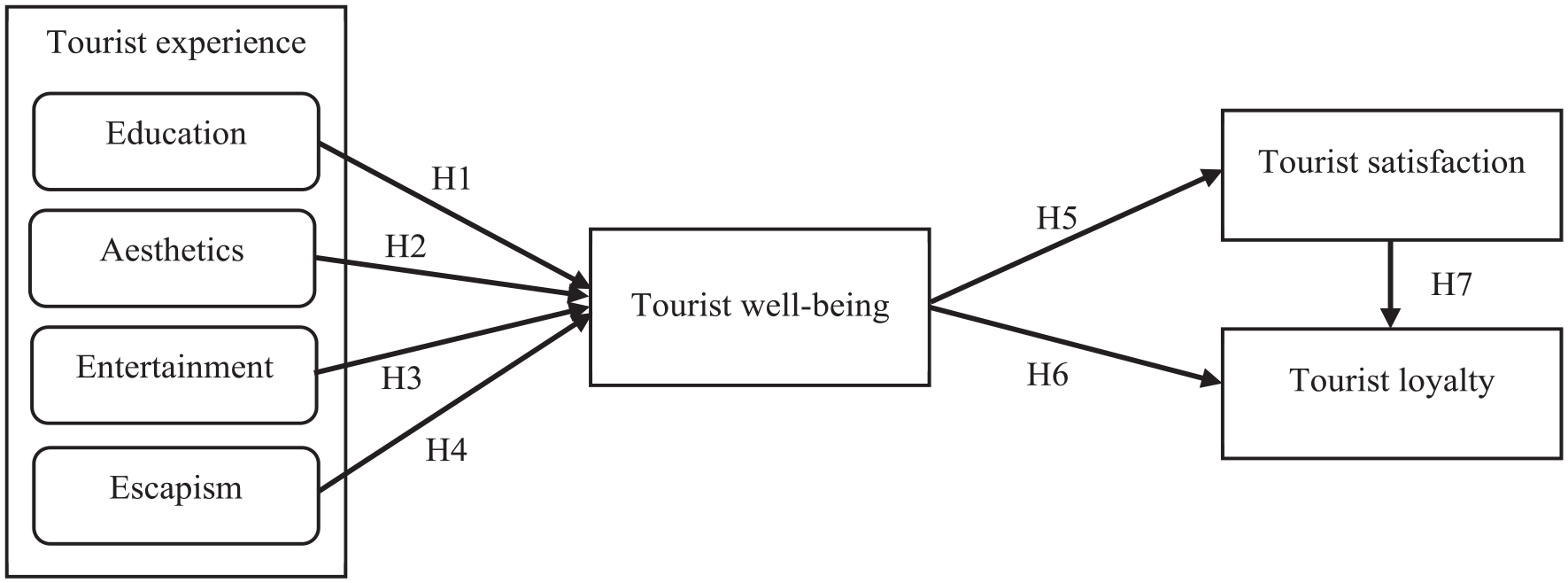
Conceptual model.
Methodology
Study Context
The Algarve, the southern point of Portugal, was selected as an appropriate case for studying the research topic because the first three authors of this research are Portugal-based scholars with extensive tourism industry experience and familiarity with the study area. The Algarve is also considered a leading tourist destination nationally and internationally (The World Travel Awards, 2022). The World Travel Awards has recognized the excellence of tourism in the Algarve on several occasions, namely with awards for The World’s Leading Luxury Leisure Resort in 2018 and 2021, Europe’s Leading Beach Destination in 2021, and The World’s Leading Beach Destination (The World Travel Awards, 2022; Turismo de Portugal, 2022a). In 2019, before the COVID-19 pandemic, the Algarve recorded a historically high demand, with 4.5 million arrivals at Faro International Airport, contributing to 20.9 million overnight stays (Turismo de Portugal, 2022b). Considering the above discussion, the results of this study may be helpful for the destination’s managers and marketers in promoting its competitiveness.
Measurement
This study adopted a quantitative approach to assess the proposed conceptual framework and hypotheses. Building on previous studies, a self-administered questionnaire covering seven constructs and consisting of 41 items was developed. The four dimensions (education, esthetics, entertainment, and escapism), suggested and validated by Oh et al. (2007), measured the tourist experience construct (16 items). These authors believed that all these four dimensions form an optimal tourist experience; that is, each dimension makes a unique contribution to the formation of the destination experience. Based on the previous studies (including Garrod & Dowell, 2020; Molina-Gómez et al., 2021; Xue et al., 2022) and to achieve the current research’s objective, the four dimensions of the tourist experience construct were considered as reflective variables. Moreover, the 19-item tourist well-being scale measured the three dimensions of happiness developed based on the research of W. Lee and Jeong (2020), Rather (2020), Tsai (2021), and Vada et al. (2019). In fact, as mentioned in the literature review, since the engagement state is an amalgam of both hedonic and eudaimonic well-being, an exploratory factor analysis (EFA) was conducted to identify the underlying dimensions of tourist well-being based on the authentic theory and to reduce the possible overlap problem. As the conceptual model of the study includes the variable “loyalty,” the researchers excluded the “behavioral” dimension of engagement, which refers to a tourist’s loyalty to the destination. Finally, the constructs of tourist satisfaction (three items) and tourist loyalty (three items) were evaluated based on the works of B. Lee et al. (2014), Martín-Santana et al. (2017), and Tsai (2021). Table 2 shows the operational definitions and items of the constructs.
Data Collection and Sampling
The empirical data for this research were collected from tourists spending their summer holidays in the Algarve, Portugal, between July and September 2021. The questionnaire was validated by seven academics and experts in marketing and tourism and six representatives of public and private entities working in the tourism industry. In developing the questionnaire, a five-point Likert scale (strongly disagree = 1 to strongly agree = 5) was used to measure the research constructs. Furthermore, the questionnaire was first prepared in English and then translated into Portuguese, French, German, and Spanish. In order to increase its readability, it was also revised by bilingual native speakers according to the back-translation process (Brislin, 1976). In line with the proportional stratified sample guidelines, the sample size was estimated with regard to representative segments of tourists in the Algarve: from Portugal, the UK, France, Germany, Spain, Ireland, and the Netherlands. Finally, a pre-test was conducted with 12 tourists in the area under study, and the results confirmed the ease, clarity, and correctness of the measurements and scales.
To calculate the sample size, following Kock and Hadaya’s (2018) recommendation, the two new methods were used in WarpPLS 8.0, namely the inverse square root method and the gamma exponential method. These methods suggested a minimum sample size of1,673 and1,691, respectively, at a power level of 0.950. The data collection process occurred mainly at Faro International Airport, in the departures area, while tourists were waiting to board a plane. The interviewers (between 8 and 10 recruited and formed by the team of senior researchers and duly supervised in the field) invited everyone present in each area to participate in the study, briefly explaining the objective of the work, clarifying doubts, and collecting the complete questionnaires. Data were also collected at the most popular touristic spots (such as Vilamoura, Monte Gordo, Quarteira, Armação de Pera, Praia Verde, and Praia da Galé) from both Portuguese and Spanish tourists to ensure that these two nationalities would be properly represented in the sample. Throughout the data collection process, different times of the day, week, and month were chosen to integrate different profiles of respondents. Finally, 1,909 questionnaires were validated for analysis.
Data Analysis
Initially, a common method bias assessment was conducted based on a full collinearity test (Kock, 2014) in WarpPLS 8.0 software. The full collinearity variance inflation factor (VIF) of all the constructs was <3.3, indicating that neither vertical nor lateral collinearity was present in the data (Table 2). Additionally, as all variables in the study were measured using a five-point Likert scale, an EFA was conducted using IBM SPSS, considering all items loaded on a common factor to identify any potential common method variance (CMV). Harman’s test determines the CMV when an EFA has a total explained variance for a single factor above 50%. Our result shows that the total explained variance for the common factor solution is 36.6%, which is below the 50% cut-off suggested by Harman (1967).
To analyze the data; first, we adopted EFA to identify the underlying factors of tourist well-being items and develop an integrated measurement scale for the construct. Then, the partial least square structural equation modeling (PLS-SEM) method was used to evaluate the relationship between the study’s variables. Many disciplines, including tourism, have explored the advantages of the PLS-SEM method (Avkiran, 2018). In particular, when the conceptual model is relatively complex and consists of reflective and formative latent variables (LVs), PLS-SEM has no competitor PLS-SEM (Bagheri et al., 2022; Wold, 2006). Furthermore, the method supports data that are not normally distributed (Hair et al., 2011). In this case, using the SPSS software, the Kolmogorov–Smirnov (K–S) and Shapiro–Wilk tests (Ryan, 2020) were applied to all the measurement items, and the results show significance levels of less than .05 (sig. <.05), indicating a lack of normality.
The WarpPLS 8.0 software was used for this research because, as Kock (2010), pp. 2–3) explained, “since most relationships between numeric variables are nonlinear, one could argue that WarpPLS finds the real relationships between LVs in an SEM analysis.” Additionally, to assess the structural model, WarpPLS 8.0’s warp3 algorithm was used for the inner model testing.
The analysis of PLS-SEM outputs is a two-step process, including measurement model and structural model assessment (Chin, 2010; Hair et al., 2011). The first step provides validity and reliability criteria for the items for both first-order and second-order variables, and the following step evaluates the relationships between the constructs. Finally, a multi-group analysis was performed to examine the effect of the respondents’ characteristics on the hypotheses and the stability of the coefficients. As such, we adopted the following variables to establish the groups: gender (female/male), age (≤ 35 (median); >35), and trip duration (≤ 7 (days)/ > 7). Furthermore, we did not include nationality as a factor in the multigroup analysis due to significant variation between the numbers of tourists based on nationality (512 Portuguese versus 1,397 foreign tourists). “In multi-group analyses normally path coefficients are compared” (Kock, 2022, p. 31).
Results
Sample Characteristics
In this study, 60.3% of the respondents were female, 68.8% were aged between 25 and 65, and 50% were married. As regards nationalities, 38.6% of the respondents were Portuguese, followed by British (24.4%), French (8.6%), German (8.3%), Spanish (7.2%), Irish (6%), Dutch (5.7%), and Swiss (5.1%) respondents and respondents originating from other countries (7.9%). Moreover, 42.2% of the respondents reported traveling between 1 and 7 days, and 37.8% spent 8 to 14 days in the Algarve.
Exploratory Factor Analysis of Tourist Well-Being
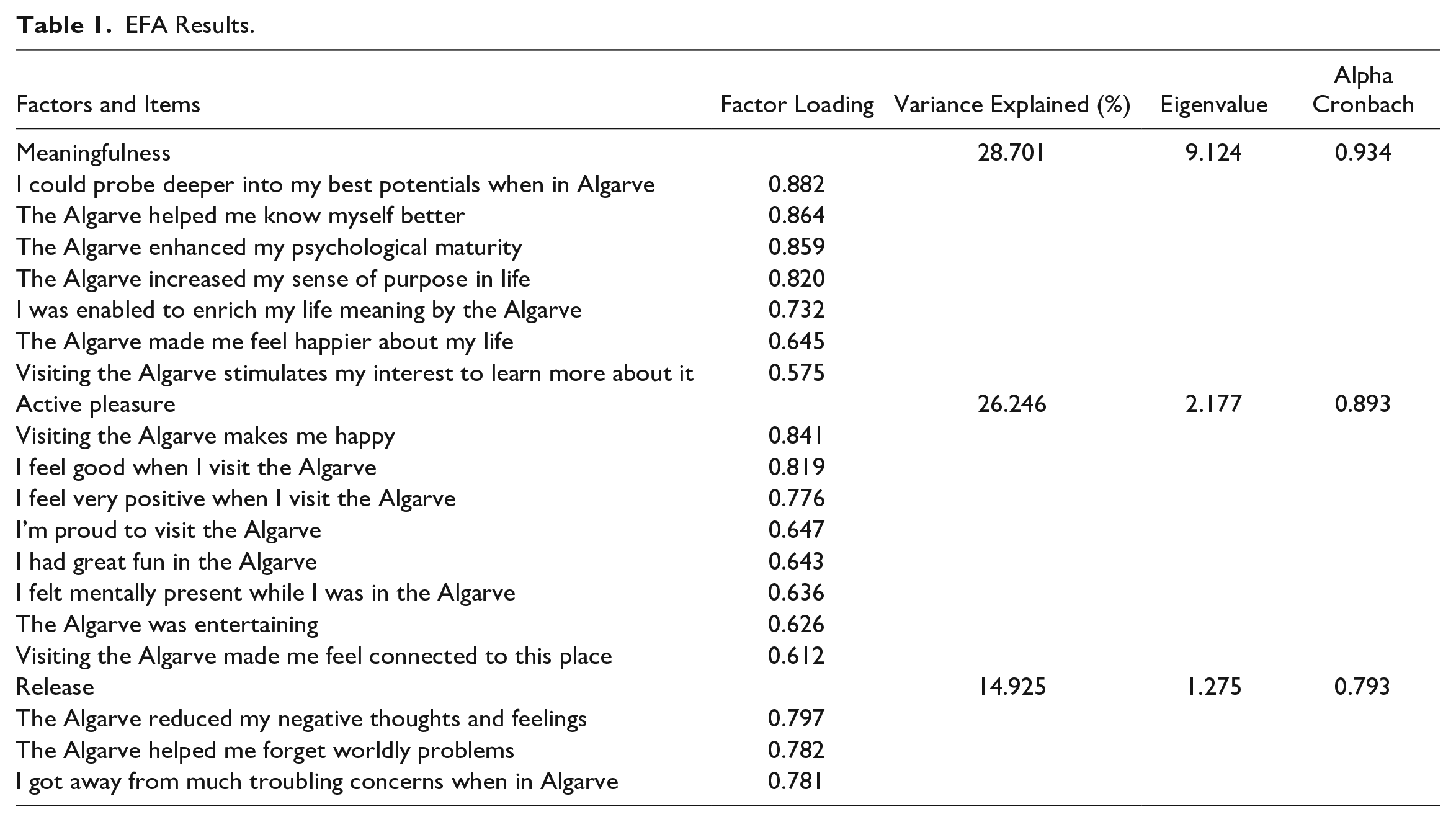
Hair et al. (2019) recommended the following threshold values to evaluate the EFA results: Kaiser–Meyer–Olkin (KMO) values above 0.60, eigenvalues more than 1.0, communalities >0.50, and factor loadings >0.40 or cross-loadings <0.40. As such, the KMO measure of sampling adequacy (0.941) and Bartlett’s test of sphericity (χ2 = 24996.519, df = 153, p < .001) showed the adequacy of the data for EFA. In addition, all the communalities were more than 0.50, and only one item (The Algarve made me joyful) was removed due to the cross-loading issue. Table 1 shows that all the other items have a loading >0.5 and explain 69.38% of the variation in the variable. Most importantly, Varimax rotation categorized the remaining 18 items into three factors: meaningfulness, the first and the most important factor, includes seven items related to improving tourists’ perception of self, destination, and life. The second factor, consisting of eight items, was termed active pleasure because it reflects tourists’ feeling of enjoyment. Finally, the release factor contains three items and is associated with forgetting concerns and negative thoughts. Therefore, the research proceeded with the three-dimensional construct of tourist well-being.
EFA Results.
Measurement Model
The measurement model of this study was assessed on the basis of the various reliability and validity criteria suggested by Hair et al. (2019). In the first step, the loading values of each item should be above 0.70 to provide acceptable item reliability. Due to the loading being <0.70, three items were eliminated (TEAe3: The setting was pretty bland; TEEs4: I completely escaped from reality; TWM8: Visiting the Algarve stimulates my interest to learn more about it). Table 2 shows the acceptable loadings for other items associated with each construct. Next, to assess the internal consistency reliability, a CR (composite reliability) value of 0.60 is regarded as an acceptable minimum. The CR for each construct exceeded 0.60, thus indicating acceptable construct reliability. The third step is to evaluate the convergent validity of the constructs. For convergent validity to be considered acceptable, minimum value of the average variance extracted (AVE) metric should be 0.5, indicating that the construct explains 50% or more of the variance of the items that constitute it. As Table 2 indicates, this value is more than the minimum for all the constructs. Therefore, the convergent validity of the measurement model is acceptable.
Assessment of Convergent Validity, Reliability, and Full Collinearity.
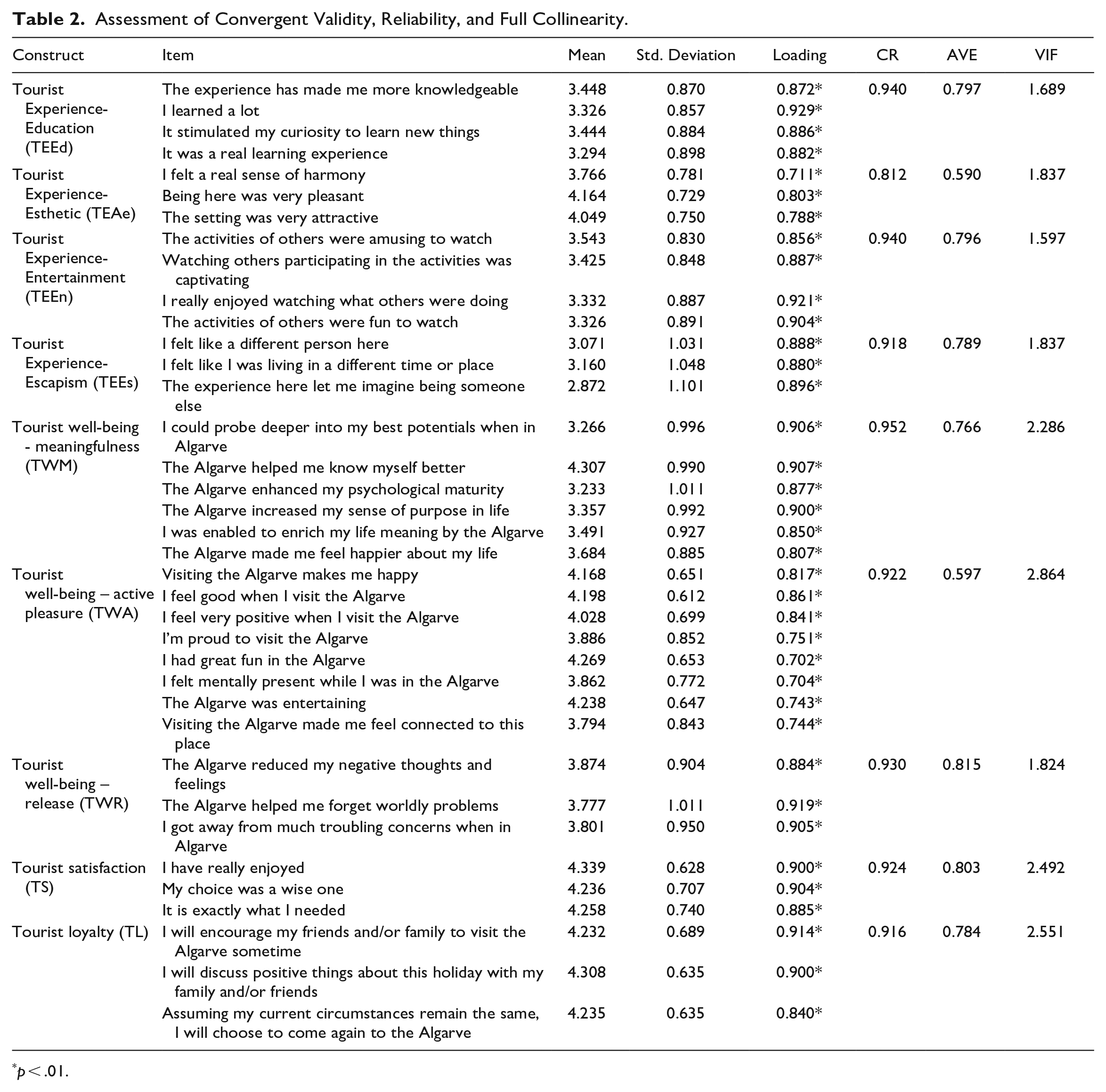
p < .01.
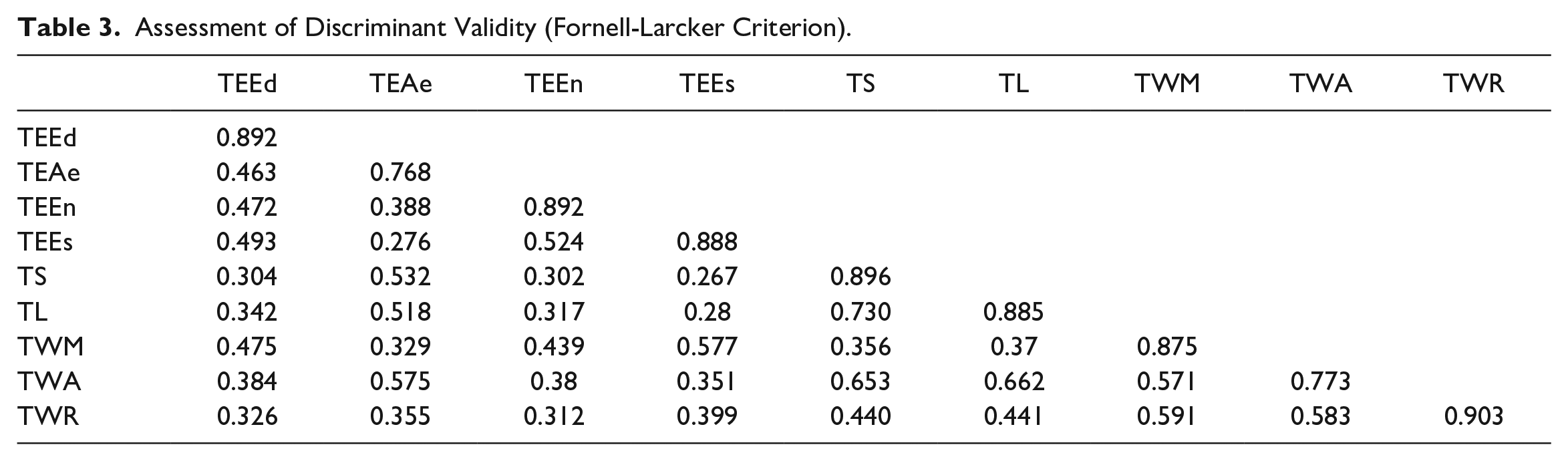
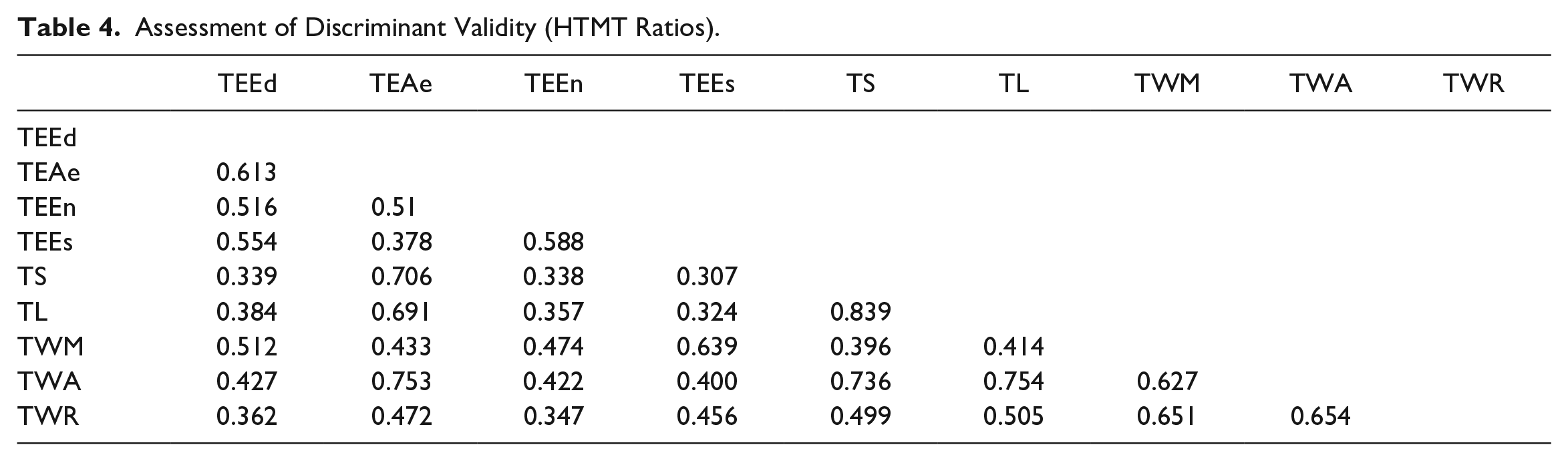
Finally, the discriminant validity must be evaluated to confirm the distinction between the constructs (Chin, 2010). As can be seen in Table 3, the square root of the AVE (the Fornell & Larcker criterion) for each construct is higher than the correlation with any other construct and the heterotrait–monotrait (HTMT) ratio is <.85 or .9 in Table 4. Therefore, the measurement model for this research also possesses acceptable discriminant validity.
Assessment of Discriminant Validity (Fornell-Larcker Criterion).
Assessment of Discriminant Validity (HTMT Ratios).
Measuring Tourist Well-Being as a Second-Order Construct
To assess the formatively measured construct; that is, tourist well-being (TW), Hair et al. (2019) suggested five criteria: reliability, weight, indicator effect size (IES), indicator weight-loading sign (WLS), and VIF. In our case, as Table 5 shows, the reliability values are >0.7, and all the weights are significantly different from 0 at the 1% significance level. The recommended effect size values are 0.02, 0.15, and 0.35, representing weak, medium, and strong, respectively. In this case, all the effect size values meet the threshold for this criterion. The WLS should be positive for all the formative variables. Finally, according to Kock (2022), “capping VIFs to 2.5 for indicators used in formative measurement leads to improved stability of estimates” (p. 94). In our study, the VIF scores are <2.5 for all the dimensions of the formative construct.
Assessment of the Second-Order Construct.

p < .01.
Structural Model and Hypothesis Testing
To evaluate the structural model, we consider the coefficient of determination (R2), the blindfolding-based cross-validated redundancy measure Q2, the statistical significance and relevance of the path coefficients (β), and the effect size (f 2) (Hair et al., 2019). In measuring the explanatory power of the model, R2 values of .75, .50, and .25 can be considered substantial, moderate, and weak (Hair et al., 2011). Significant path coefficients and an F2 >0.02, 0.15, and 0.35 indicate small, moderate, and large effect sizes, respectively (Rasoolimanesh et al., 2019). Finally, for Q2, as another means of assessing the predictive accuracy of the PLS path model, values above 0, 0.25, and 0.50 represent small, medium, and large predictive relevance of the PLS path model, respectively (Hair et al., 2019).
The R2 for “tourist well-being” is .418, which means that a moderate proportion of tourist well-being variance is explained by the different types of “tourist experience.” Furthermore, the coefficient for “tourist satisfaction” and “tourist loyalty” equals .325 and .575, respectively. The f 2 (effect size) was also calculated to supplement the observation of the R2. All the f 2 scores are above the threshold value of 0.02. More specifically, the f2 values for the paths “esthetic experience → tourist well-being” and “escapism experience → tourist well-being” are much higher than those of the other types of experience, being 0.150 and 0.170, respectively. The f 2 value of the paths “educational experience → tourist well-being” and “entertaining experience → tourist well-being” are 0.053 and 0.045. Additionally, the f 2 scores for the paths “tourist well-being → tourist satisfaction” and “tourist well-being → tourist loyalty” are, respectively, 0.325 and 0.137. Finally, the highest f 2 value, which stands at 0.438, is associated with the relationship between “tourist satisfaction” and “tourist loyalty.” Furthermore, the Stone–Geisser Q2 scores for all the endogenous variables, specifically tourist well-being, tourist satisfaction, and tourist loyalty, are calculated as 0.417, 0.574, and 0.325.
Figure 2 displays the connections between the constructs and the values, enabling the testing of research hypotheses. From this figure, it can be seen that entertainment experience (TEEn) has a positive, significant effect on tourist well-being (TW) (β = .11, t = 4.793, p < .01).
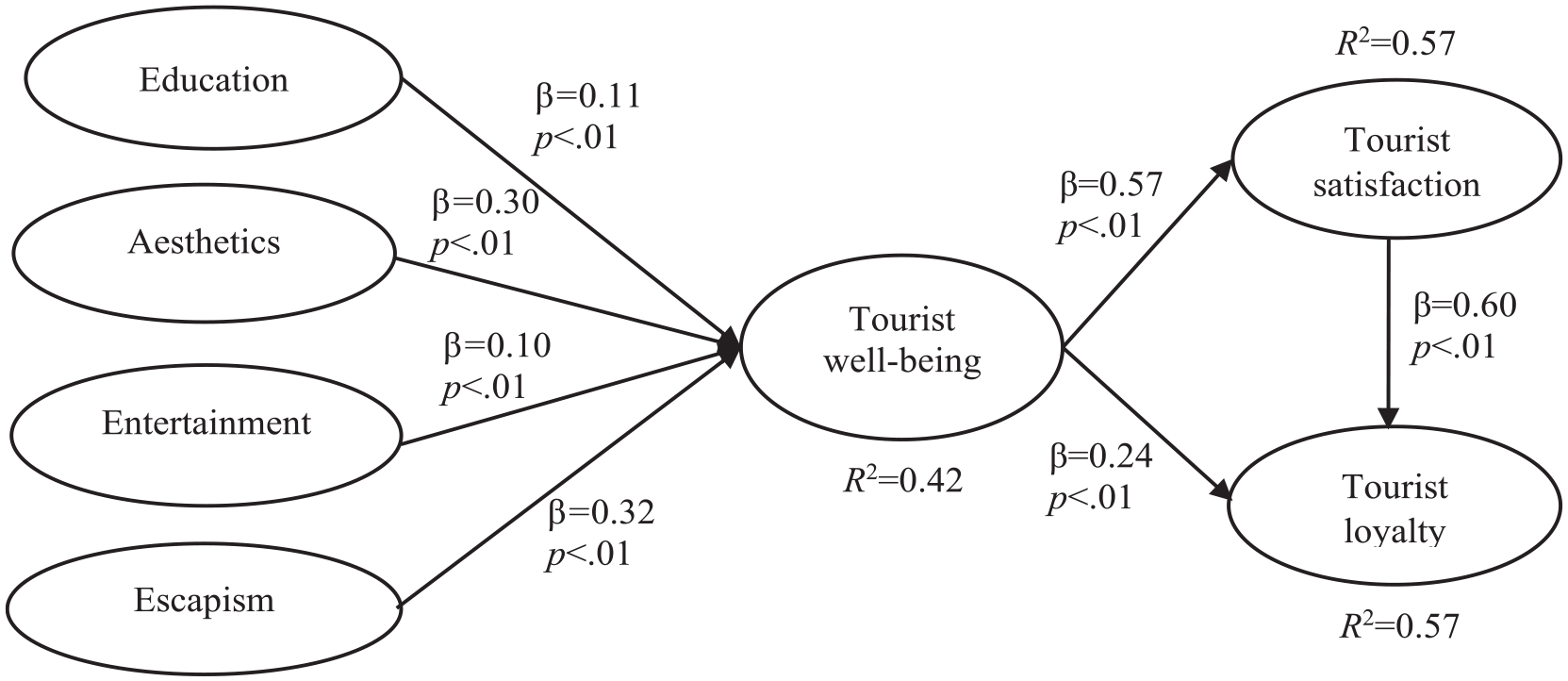
Structural model.
Accordingly, H1 is confirmed. A similar finding can be made regarding the nexus between esthetic experience (TEAe) and TW (β = .30, t = 13.142, p < .01). Thus, H2 is also strongly supported. Concerning H3 and H4, the results confirm positive and significant relationships between entertaining experience (TEEn) and TW (β = .10, t = 4.266, p < .01) and between escapism experience (TEEs) and TW (β = .32, t = 14.175, p < .01). Hence, both these hypotheses are also supported. Regarding the relationship between TW and tourist satisfaction (TS) and tourist loyalty (TL), the results provide robust evidence for both H5 (β = .57, t = 25.801, p < .01) and H6 (β = .24, t = 10.477, p < .01). Finally, there is also substantial support for H7; that is, TS has a positive and significant impact on TL (β = 60, t = 27.103, p < .01).
Model Fit and Quality Indices
The six fit indices (Kock, 2014) reveal that the model–data fit is acceptable: average path coefficient (APC) = 0.318, p < .001; average R2 (ARS) =.439, p < .001; average adjusted R2 (AARS) = .438, p < .001; average block variance inflation factor (AVIF) = 1.601 (acceptable if ≤ 5, ideally ≤ 3.3); average full collinearity variance inflation factor (AFVIF) = 1.953 (acceptable if ≤ 5, ideally ≤ 3.3); and Tenenhaus goodness of fit (GoF) =0.575 (small ≥ 0.1, medium ≥ 0.25, large ≥ 0.36).
Structural Invariance
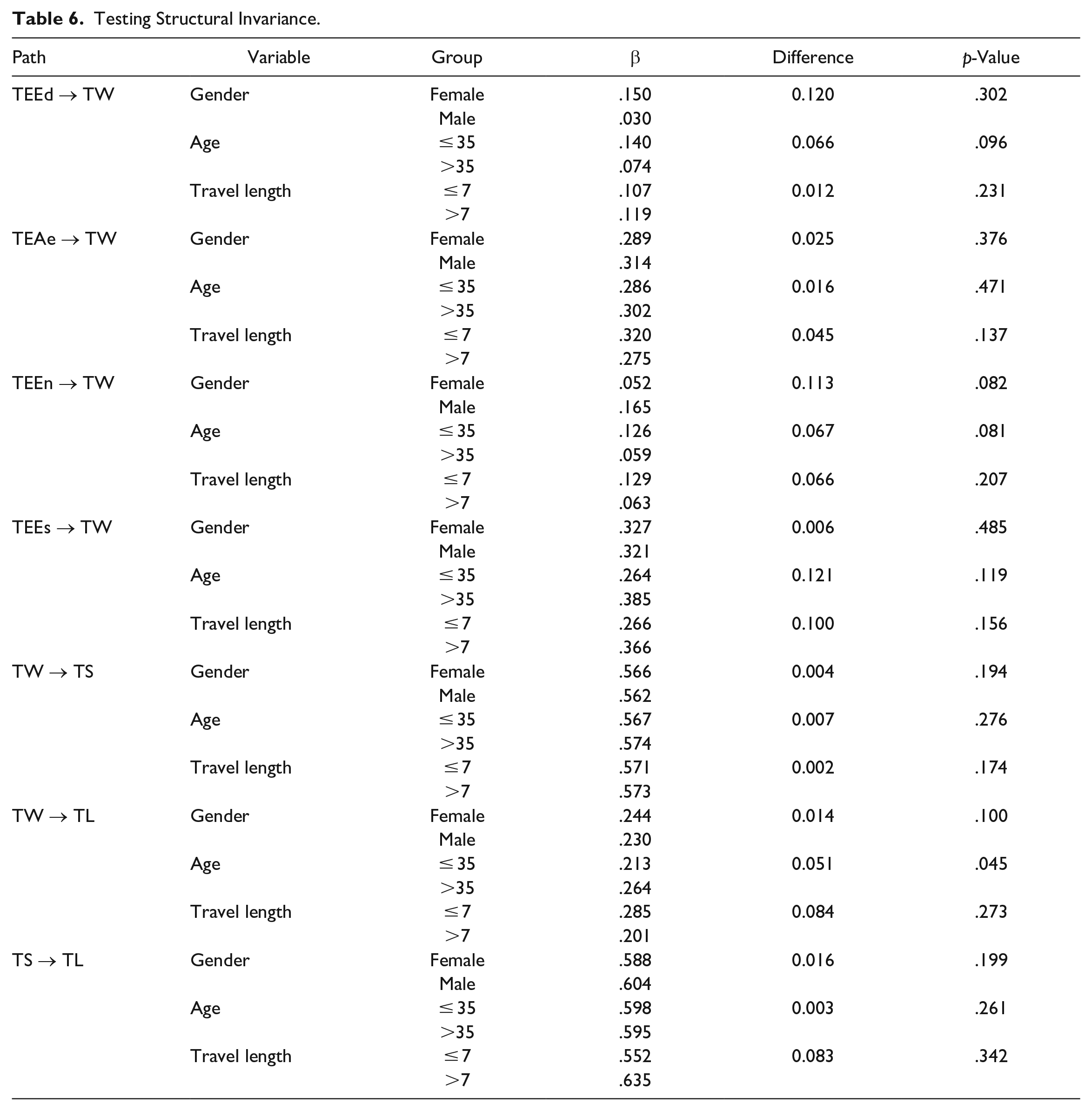
Table 6 displays the test carried out to investigate whether the relationships between the four types of experiences and TW (H1–H4), TW and TS (H5), TW and TL (H6), and TS and TL (H7) are influenced by the respondents’ demographics (gender and age) as well as their travel length. The comparison between the path coefficients of the groups’ pairs shows that validation of H1, H2, H3, H4, and H5 does not differ between tourists with different genders, travel lengths, and ages (all p > .01, most >.05).
Testing Structural Invariance.
Discussion and Conclusion
Theoretical Implications
The overall purpose of this study was to explore the consequence of four tourist experience dimensions, namely education, escapism, entertainment, and esthetics, in terms of tourists’ sense of well-being. Furthermore, it investigated how the sense of well-being influences tourists’ satisfaction with the destination and their loyalty. To this end, an exploratory factor analysis (EFA) was first carried out to explore the factor structure of the tourist well-being concept, following the theory of authentic happiness. Despite Filep’s (2014) emphasis on the superiority of the theory, to the best of the authors’ knowledge, except for Fu and Wang’s (2021) work on the accommodation experience of tourists, there is no empirical research concerning the engagement state as an aspect of tourists’ well-being. Next, a conceptual framework incorporating the four aspects of tourist experience, tourist well-being, tourist satisfaction, and loyalty was developed (Figure 1). Then, the proposed conceptual model was tested using data collected in the Algarve, Portugal.
According to the results of the EFA, the current study found a three-factor structure for the tourist well-being construct. The first factor was named “meaningfulness” and includes seven items. This factor has a strong correlation with eudaimonic well-being, which involves engaging in activities that are both personally meaningful and frequently challenging (Jenkins et al., 2022). In line with this, Li and Chan (2017), Sirgy and Uysal (2016), and Vada et al. (2019) described the feeling of eudaimonic well-being using different words, particularly “self-enhancement,” “meaning,” and “purpose in life,” and argued the positive effect of tourism experiences in different contexts. W. Lee and Jeong (2020) named volunteer tourism, nostalgia tourism, and dark tourism as contexts to inspire a sense of meaningfulness for travelers. Despite the factor having the largest proportion in reflecting the tourist well-being construct, W. Lee and Jeong (2020) confirmed “the philosophical assumption that hedonia is a necessary condition of eudaimonia in the context of tourist experiences” (p. 1). The second and third factors, active pleasure and release, focus primarily on the pursuit of the hedonic side and subjective well-being (Diener et al., 1999). We posit that, although eudaimonia has received considerable attention in recent tourism research, hedonia, which involves pleasurable emotions, comfort, and relief from worries, should not be overlooked as it remains the fundamental basis of people’s inclinations to tourism and their sense of well-being. As W. Lee and Jeong (2021) stated, “some hedonic emotions are must factors of tourist satisfaction” and “If tourists do not attain a satisfactory level of hedonic experience, their satisfaction is likely to be diminished” (p. 67).
According to the results of the PLS-SEM analysis, various aspects of the tourism experience positively affect tourist well-being. Generally speaking, this result is consistent with previous studies, such as those by Rahmani et al. (2018), Kay Smith and Diekmann (2017), and Su et al. (2020), which discussed the positive impact of tourism on people’s quality of life and feelings of well-being. However, the current study identified that, out of the four realms of tourism experiences, the importance of escape experience is more considerable in fostering a sense of well-being. That is most likely because tourists diverge to a new self and seek a more authentic life. Obviously, visitors must experience genuine performances or happenings in real or virtual surroundings to have an escapism experience (Oh et al., 2007). A similar result was reported by Liu et al. (2023), who confirmed the significant positive impact of escape experiences on the hedonic and eudaimonic well-being perception of tourists. Esthetic experiences, by which tourists enjoy the uniqueness and attractiveness of what they watch, also play a considerable role in their well-being. Loureiro et al. (2019) confirmed the great importance of this type of tourism experiences in providing a pleasant feeling for tourists. Furthermore, educational and learning experiences, through creating self-development, that is, improving the intellectual capacity and self-identity, expanding the life perspective, and acquiring new skills (Chandralal & Valenzuela, 2013), specifically affected the feeling of eudaimonic well-being and the engagement state in individuals.
Today, there are a number of ways in which destinations can provide educational experiences for tourists (Hosany & Witham, 2010). The most concrete example of tourism for skill development could be creative tourism, which promotes individuals’ engagement in their trip, thereby contributing to their well-being (Tan et al., 2013). As mentioned earlier, although eudaimonia, which provides meaning and self-development (Sirgy & Uysal, 2016), has attracted much attention recently, hedonia, which provides pleasure and freedom from care, should not be ignored (W. Lee & Jeong, 2020). This aligns with the current study’s findings concerning the positive impact of experiences with the nature of entertainment on tourists’ sense of well-being.
The results also demonstrated the crucial influence of tourist well-being on tourist satisfaction and loyalty, separately. We can argue that a feeling of well-being in tourists can positively affect their satisfaction with the destination and their loyalty (Fu & Wang, 2021; W. Lee & Jeong, 2020; Tsai, 2021). Therefore, generally, tourists’ positive feelings (authentic happiness) about what they experience are more likely to enhance their satisfaction and behavioral intentions, such as revisit and positive word-of-mouth intentions (Reitsamer & Brunner-Sperdin, 2017).
The first theoretical implication of the study lies in the application of the theory of authentic happiness to conceptualize tourist well-being as a holistic three-dimensional concept. Within the framework of tourist behavior research, the second contribution of this study is to evaluate the impact of four types of experiences on tourists’ state of well-being. In addition, this research demonstrated the positive effects of tourists’ educational, entertainment, esthetic and escapist experiences on their feelings of meaningfulness, active enjoyment and release, and made a significant theoretical contribution to the literature on tourism from a psychological point of view. Finally, the results demonstrated that all well-being dimensions are significant factors influencing the satisfaction and loyalty of tourists, and thus this research contributed to consumer behavior theory.
Practical Implications
This study has several practical implications with specific reference to tourism marketing and destination management. As attested by this research, the tourism experience, composed of different aspects, strongly affects the feeling of well-being in individuals. Therefore, based on the experience economy paradigm, tourism marketers and destination managers should develop various memorable services and products (Oh et al., 2007) to meet the needs of different target groups. Since all types of tourists’ feelings of well-being are important, tourism marketers and destination managers should develop creative and interesting experiences that can enable tourists to generate feelings about a meaningful life naturally while also enhancing their emotional connections with the destination and indulging in the joys of being engaged in the destination. In other words, as the pursuit of well-being has become one of the most desirable goals of contemporary society, recognizing the significance of tourism and travel in fostering this sense is of the utmost importance for professionals in the tourism and hospitality industry. Therefore, destination managers can increase tourists’ level of satisfaction as well as the possibility of their revisit and recommendation, which are the ultimate goals of marketing programs. Finally, although most researchers have emphasized the eudaimonic aspects of tourists’ well-being in recent years, this study’s results indicate that pleasure and positive emotions still have a greater impact on their satisfaction and loyalty and that providing hedonic experiences should remain a priority for destination managers.
Limitations and Future Research
It is important to acknowledge that this study has its own set of limitations. First, the data-gathering phase of this research was mainly performed at the exit from the destination, and the data were analyzed using a quantitative method. However, future studies could conduct a qualitative longitudinal study by interviewing visitors upon their return and later, which might provide more insights into how their experiences contributed to an enhanced or different sense of well-being, especially eudaimonic well-being, which is more challenging to measure. Furthermore, given the ephemeral nature of individuals’ well-being during travel, it is recommended that future researchers investigate the lasting effects of tourism on individuals’ well-being and overall quality of life. This can be achieved through an experimental analysis of their perceptions before and after the trip.
Supplemental Material
sj-pdf-1-jtr-10.1177_00472875231201509 – Supplemental material for From Tourist Experience to Satisfaction and Loyalty: Exploring the Role of a Sense of Well-Being
Supplemental material, sj-pdf-1-jtr-10.1177_00472875231201509 for From Tourist Experience to Satisfaction and Loyalty: Exploring the Role of a Sense of Well-Being by Fatemeh Bagheri, Manuela Guerreiro, Patrícia Pinto and Zahed Ghaderi in Journal of Travel Research
Footnotes
Declaration of Conflicting Interests
The author(s) declared no potential conflicts of interest with respect to the research, authorship, and/or publication of this article.
Funding
The author(s) disclosed receipt of the following financial support for the research, authorship, and/or publication of this article: This study was financed by National Funds provided by the Foundation for Science and Technology through project UIDB/04020/2020 and funds provided by the European Regional Development Fund by CRESC Algarve 2020 through the project SSAICT-ALG/39588/2018.

Supplemental material
Supplemental material for this article is available online.
Author Biographies
References
Supplementary Material
Please find the following supplemental material available below.
For Open Access articles published under a Creative Commons License, all supplemental material carries the same license as the article it is associated with.
For non-Open Access articles published, all supplemental material carries a non-exclusive license, and permission requests for re-use of supplemental material or any part of supplemental material shall be sent directly to the copyright owner as specified in the copyright notice associated with the article.
