




Abstract
Drawing on the theory of sociology of trust and risk, this study proposes and empirically tests a conceptual model of tourists’ new destination visit intentions. The model links tourists’ subjective knowledge to trust and risk perceptions and explores the moderating effects of social media influencers (human vs. virtual) and tourists’ psychographic factors in this context. Data were collected from two studies: Study 1, through a survey distributed to participants in Malaysia (n = 493 valid responses); and Study 2, through a between-subjects design experiment with another sample of participants in Malaysia (n = 470 valid responses). The findings expand knowledge in tourism research by showing that destination trust mediates how subjective knowledge influences perceived risk. Optimism and life satisfaction have significant moderating effects in this context. Furthermore, the relationship between destination trust and visit intention is moderated by human and virtual influencers, according to whether their message is positive or negative.
Introduction
Tourists’ decision making is a central concern of tourism literature, and previous research has widely examined the process of choosing a destination and proposed various models for tourists’ decision making (Cao et al., 2020; Crompton & Paul, 1993; Dai et al., 2022; Fakeye & Crompton, 1992). Tourism research has emphasized the significant effects of tourists’ perceptions of risk as a key factor in determining travel intentions (Chien et al., 2017; Karl, 2018). Furthermore, previous studies have highlighted that consumer knowledge, otherwise referred to as “a consumer’s perception of the amount of information they have stored in their memory” (Flynn & Goldsmith, 1999, p. 59), plays an important role in shaping tourism behavior. A tourist’s subjective knowledge, which is defined as how much individuals think they know, usually indicates their expertise in a destination (Brucks, 1985; Sharifpour et al., 2014; Shen et al., 2022; Tassiello & Tillotson, 2020) and can significantly affect the tourist’s perceptions of various types of risks, including the psychological, physical, and performance risks (Sharifpour et al., 2014). Subjective knowledge has been found to affect destination trust (Shen et al., 2022). Despite the growing research on tourists’ perceptions of risk, there is a gap in terms of understanding how developing destination trust mediates the effects of tourists’ subjective knowledge on their perception of risk.
There is also a gap in our knowledge of how the type of social media influencer (human vs. virtual) and the type of message content (positive vs. negative) about a destination impacts the relationship between tourists’ subjective knowledge and both trust and perceived risk (Ameen et al., 2023). Subjective knowledge is linked to tourists’ use of various types of information sources (Sharifpour et al., 2014). Previous research shows that diagnostic cues (pieces of information that are relevant for making a decision) are significant in the very early stages of a tourist’s decision-making process (Tassiello & Tillotson, 2020). The preferred sources of information sought can be those perceived to be more credible and those that offer new learning (Dodd et al., 2005). Electronic word of mouth (eWOM) and social media influencer marketing have significant effects on tourists’ decision making (J. Liu et al., 2023; Mainolfi et al., 2022; S. Park & Tussyadiah, 2017; Whalen & Belarmino, 2022; Yılmazdoğan et al., 2021). Social media enables users to develop stronger, better quality relationships with influencers, which allows for a better assessment of various information sources (Hudson et al., 2016). Alongside the numerous human influencers on social media, a new type of opinion leader—the virtual influencer—has entered the stage, with early examples dating from 2016. Virtual influencers are computer-generated characters or avatars, designed and maintained by experts and digital agencies, which help brands reach and appeal to desirable target groups effectively through their digital personalities (Audrezet & Koles, 2023). Virtual influencers are expected to have a major impact on tourism decision making (Xie-Carson et al., 2021). Despite their potential impact, little is known about how this type of influencer, or the type of content they communicate, affects tourists’ decision making.
Furthermore, although research has highlighted the significance of life satisfaction (Chen, Petrick, & Shahvali, 2016; Yu et al., 2021) and optimism (Garcês et al., 2018) in tourism, in general, it has ignored how these two traits may affect tourists’ decision making and their perceptions of trust and risk. The existing research recognizes that psychographic traits play a significant role in tourists’ decision making (e.g., Litvin & Guttentag, 2023; Tasci et al., 2022). For example, belief in fate risk taking, sensation seeking, convenience seeking, and customer innovativeness have been used to study tourists’ decision making (Litvin & Guttentag, 2023; Mahrous & Hassan, 2017). Life satisfaction and optimism are valuable traits in tourism and may even help travelers to handle unexpected events (Filep & Pearce, 2014).
The purpose of this study is to propose and empirically test a conceptual model of tourists’ intention to visit new destinations. In doing so, it links tourists’ subjective knowledge to their perceptions of trust and risk and explores the moderating effects of tourists’ psychographic factors and social media influencers (human vs. virtual) as information sources in this context. The proposed model draws on the theory of sociology of trust and risk, which focuses on familiarity, trust, and risk (Luhmann, 1979, 1988, 2000). According to the theory, “Familiarity is an unavoidable fact of life; trust is a solution for specific problems of risk” (Luhmann, 2000, p. 94). The theory states that “trust is only possible within a familiar world” (Luhmann, 1979, p. 20). The presence of many familiar elements in an interaction context positively influences an actor’s ability to confer or deny trust (Luhmann, 1988). The model proposed in this article posits that the type of social media influencer (human vs. virtual), their message content (positive or negative), and tourists’ psychographic factors all shape how tourists’ subjective knowledge (about a destination they have not visited before) impacts their perceptions of trust and risk regarding the destination.
This research contributes to the existing literature in three ways. First, earlier research focusing on subjective knowledge in the context of tourism (e.g., Sharifpour et al., 2014; Shen et al., 2022) found that subjective knowledge reduces tourists’ travel intentions (Tassiello & Tillotson, 2020). This is because it impregnates the destination with a sense of familiarity that curbs the intention to travel (Tassiello & Tillotson, 2020). To the best of our knowledge, our research is the first to provide empirical evidence of the indirect effect of subjective knowledge on risk perception through trust perception. More specifically, this research supports the assertion that tourists’ subjective knowledge activates their destination trust which reduces their perceptions of risk. Traditionally, knowledge has been treated as a unidimensional construct, most often referred to as product familiarity or prior knowledge (Alba & Hutchinson, 1987; Gursoy & McCleary, 2004a); that is, it has been assumed that consumers have some amount of experience with information about particular products (Alba & Hutchinson, 1987).
Second, to the best of our knowledge, our study is among the first to show that when subjective knowledge is developed on the basis of information obtained from social media influencers (human or virtual), the type of content (positive or negative) can affect individuals’ trust and risk perceptions, which in turn affects individuals’ intentions to visit new destinations. Our study compares how human influencers and virtual influencers (as information sources) and their (positive or negative) content about destinations affect the relationship between tourists’ subjective knowledge and their perceptions of trust and risk. This research answers calls made by scholars such as Sharifpour et al. (2014) and Tassiello and Tillotson (2020) by considering what intervening factors, besides tourist knowledge, are likely to influence perceptions of risk. Specifically, our study considers virtual influencers, which, despite their rapid rise, have not yet been explored in the context of perceived risk, trust; and intention to visit new destination in prior research.
Third, we show the fundamental influence of optimism and life satisfaction on tourists’ travel decisions. To the best of our knowledge, this is the first research to examine the moderating effects of optimism and life satisfaction on the relationship between (1) tourists’ perceptions of trust and their intention to visit new destinations, and (2) tourists’ perceptions of risk and their intention to visit new destinations. Thus, we extend the findings of previous tourism research focusing on these two traits (e.g., Chen, Petrick, & Shahvali, 2016; Garcês et al., 2018; Yu et al., 2021).
Literature Review
Subjective Knowledge, Trust, and Risk
The theory of sociology of trust and risk proposed by Luhmann (1979, 1988, 2000) is the theoretical foundation of this research. The theory puts forward that familiarity plays a critical role in building trust (Luhmann, 1979). Drawn from this theory, subjective knowledge is considered to be the base of mode of familiarity; therefore, the two are linked. An overload of information creates the psychological feeling of familiarity; hence, people assess which cues (or how many cues) are important in their own decision making, which results in subjective knowledge (Tassiello & Tillotson, 2020). Indeed, familiarity is sometimes referred to as the concept of subjective knowledge (Alba & Hutchinson, 1987; Gursoy & McCleary, 2004a). In tourism marketing, there is a long tradition of conceptual and empirical examinations of how tourists gain knowledge (Chen & Gursoy, 2000; Fodness & Murray, 1999; Gursoy & McCleary, 2004b; Kerstetter & Cho, 2004; Vogt & Fesenmaier, 1998). Tourists value the destination-related information they acquire, because it enables them to reduce the amount of uncertainty when planning a vacation (Gursoy & McCleary, 2004a). The information gathered by a tourist about a desired destination may focus on transport, types of accommodation available, climate, restaurants and food, and attractions, among other things (Tassiello & Tillotson, 2020).
Furthermore, tourists’ subjective knowledge about the COVID-19 pandemic has been found to affect their trust in destinations (Shen et al., 2022). As explained in tourism research, Luhmann’s (1979) sociological theory considers that future expectations can be articulated in terms of familiarity, confidence, or trust, all of which are required when there are high levels of risk and uncertainty (Nunkoo & So, 2016; Williams & Baláž, 2021). Trust is defined as individuals’ belief in the altruism of another party, or the expectation that the other will perform an important action despite uncertain circumstances (Mayer et al., 1995). The tourism literature has identified that various types of trust are associated with the decision about which destination to visit. For example, an individual’s level of trust in government, media, and other tourists affect their perceptions of fear, threat severity, and threat susceptibility as well as influencing travel avoidance (Zheng et al., 2022). Destination trust is a key determinant of a tourist’s intention to visit a destination (Su et al., 2020). Based on the sociological theory of trust and risk, researchers have proposed relationships between brand knowledge, brand image, and brand trust (Luhmann, 1979).
Tourists’ feelings of uncertainty and risk are persistent in tourism settings (Chien et al., 2017; Karl, 2018; Wong & Yeh, 2009). Perceived risk is a multidimensional construct comprised of various primary risks: physical, financial, satisfaction, social, destination, travel, and psychological (Kaplan et al., 1974). Research has confirmed that perceptions of risk and safety can directly influence a tourist’s destination choice, as well as their propensity to visit or avoid certain destinations, especially those in risky areas (Sönmez & Graefe, 1998). Research has also shown that tourists’ perceptions of risk are affected by their subjective knowledge (Sharifpour et al., 2014). In addition, subjective knowledge has been found to affect destination trust (Shen et al., 2022). What remains unknown is how tourists’ subjective knowledge affects their perceptions of risk through trust perceptions when planning visits to new destinations. Furthermore, although recent tourism research has shown the impact of travel on life satisfaction (Chen, Huang, & Petrick, 2016) and the impact of optimism on tourism (Koç et al., 2022; Rittichainuwat et al., 2018), it remains unknown how tourists’ optimism and life satisfaction affect how their perception of risk and trust affect their destination visit intention.
Human and Virtual Influencers
First-time visitors to a destination are more active travel planners than repeat visitors (Rather et al., 2022). In general, compared with repeat visitors, first-time visitors have less destination-related information (Fakeye & Crompton, 1992) and weaker destination-related ties (Morais & Lin, 2010). When there is a lack of direct experience, tourists rely on information available from various online and offline sources (Sharifpour et al., 2014). Social media influencers have been identified as a powerful source of information that can shape tourists’ knowledge about destinations (Femenia-Serra et al., 2022; Kapoor et al., 2022; Schroeder & Pennington-Gray, 2015).
Instagram has been highlighted as a key potential online data site for tourism because it is relevant to influencer marketing and it has been found to influence tourists’ decision making (Cohen et al., 2022; Femenia-Serra et al., 2022; He et al., 2022; Yılmaz et al., 2020). It is claimed that a holiday destination’s perceived ‘Instagrammability’ is now one of the most important factors in a tourist’s decision about where to visit, and a key reason for Instagram’s appeal is its value as a ‘travel accouterment’ (Ameen et al., 2022; Cohen et al., 2022). Influencers are independent third-party users who shape public behavior by using communication channels provided by social media (Freberg et al., 2011). They display the characteristics of an opinion leader in their method of influencing social media users. By posting information and sharing either positive or negative experiences of destinations, influencers can affect individuals’ travel decision making (Kapoor et al., 2022).
The effectiveness of human influencer marketing is well documented in the tourism literature (Cohen et al., 2022; Jang et al., 2021; Leung et al., 2022; Schroeder & Pennington-Gray, 2015), but virtual influencers have some advantages over human influencers. From a management standpoint, virtual influencers are always available, easily controllable (Drenten & Brooks, 2020), and associated with reduced public relations (PR) risks and less risk of scandal (Duffy & Hund, 2019). Moreover, virtual influencers offer new opportunities for brands because of their greater adaptability and customization options (Robinson, 2020) and their unlimited storytelling (Moustakas et al., 2020). Furthermore, virtual influencers do not age (unless their creators choose otherwise), and they are often associated with reduced follower fatigue, especially among younger consumers (Audrezet & Koles, 2023). Some prominent examples of virtual influencers are Lil Miquela (with around eight million followers) and Livi Lu do Magalu (with more than 30 million followers across social media platforms), both of whom post about vacation trips on Instagram (see examples in Figure 1).
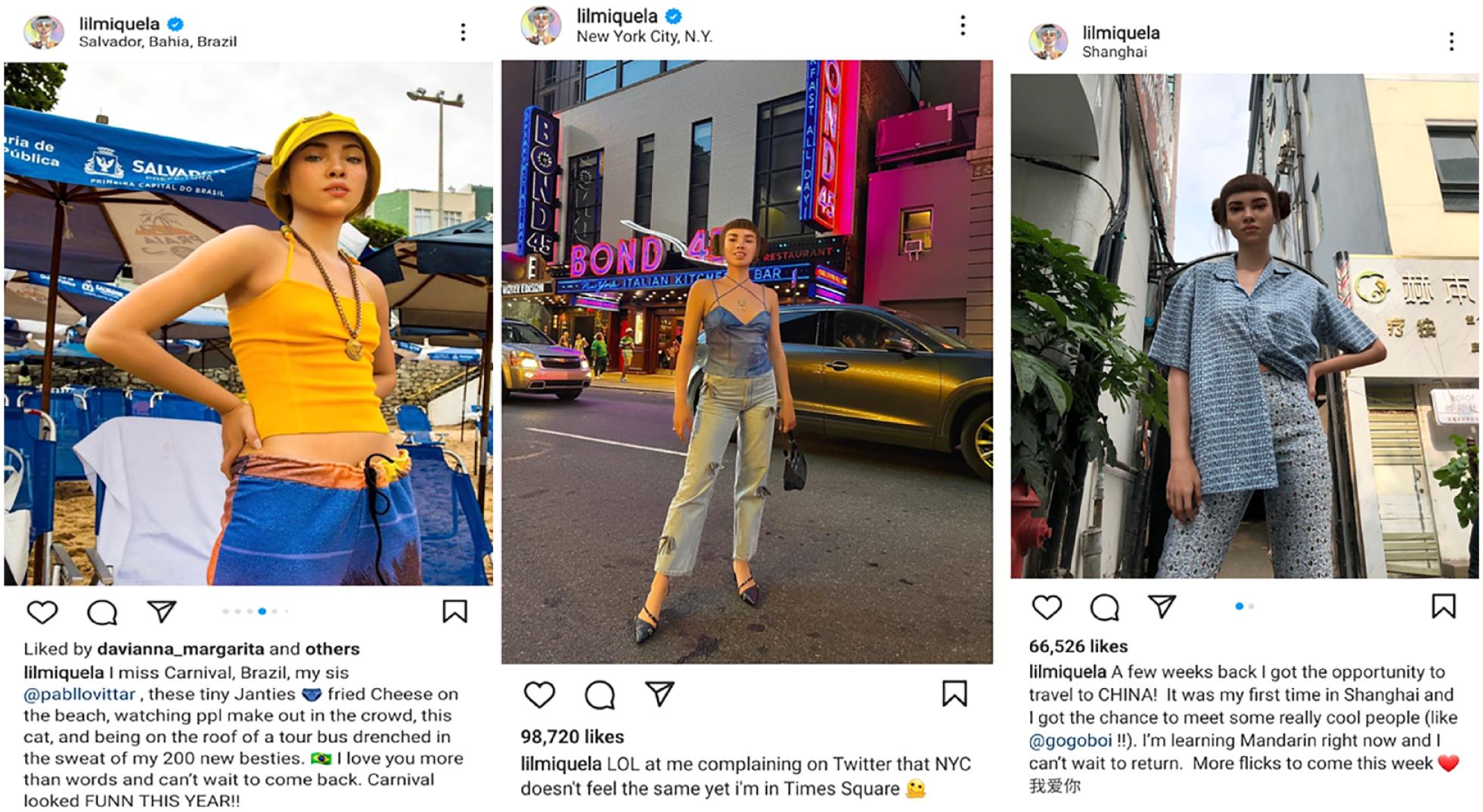
Examples of travel posts by virtual influencers.
Similar to human influencers, virtual influencers create and disseminate content that is meant to portray their everyday lives, travel experiences, and opinions. They maintain active relationships and regularly respond to and interact with followers (Leung et al., 2022). Some virtual influencers are given fully developed fictional lives and elaborate personalities, and they display human emotions, such as heartbreak and affection, on social media (Franke et al., 2023). Consumers are not always clear about the origin of the created content, in particular, whether it is controlled by human or machine intelligence (da Silva Oliveira & Chimenti, 2021). Experts predict a significant rise in the prominence of virtual influencers in the coming years (Appel et al., 2020). There have been recent calls for research that compares consumer perceptions of messages from virtual influencers and human influencers and examines the influence of virtual influencers on consumer knowledge (Leung et al., 2022). Although tourism literature has acknowledged the role of human influencers in tourists decision making, yet only limited attempts have been made to understand the influence of virtual influencers in this context (Lou et al., 2022).
Conceptual Model and Hypotheses Development
The conceptual model proposed in this research is depicted in Figure 2. Drawing on the theory of sociology of trust and risk, which focuses on familiarity, trust, and risk (Luhmann, 1979, 1988, 2000), we contend that tourists’ subjective knowledge can affect (1) destination trust and (2) various types of perceived risk, both directly and indirectly (through its effect on destination trust). These relationships are moderated by the type of social media influencer (human or virtual) and the type of content they post about destinations (positive or negative). Furthermore, we propose that tourists’ psychographic factors (optimism and life satisfaction) have significant moderating effects on the relationships between perceived risk, destination trust and intention to visit a new destination.
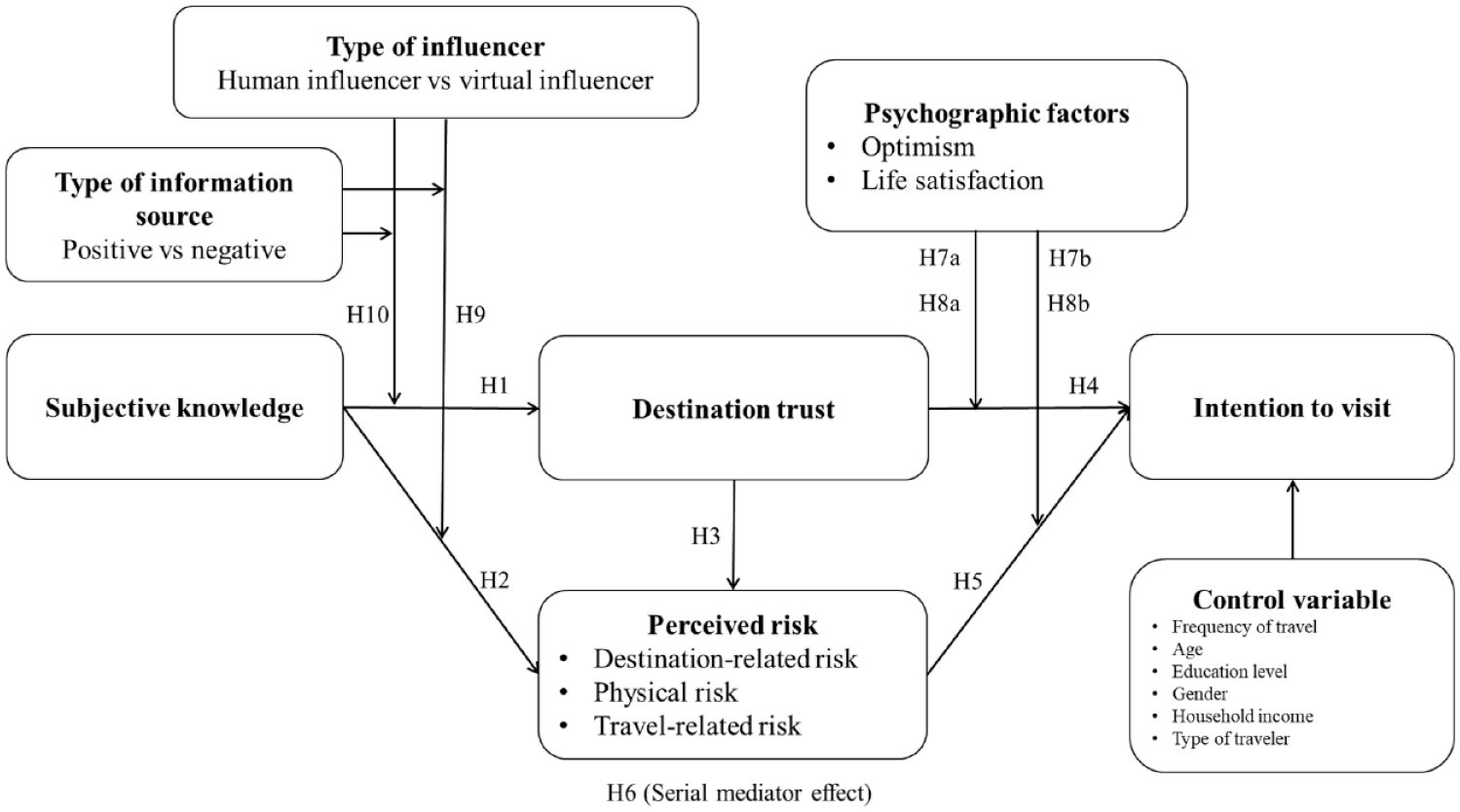
Proposed model.
Subjective Knowledge
Traditionally, knowledge has been treated as a unidimensional construct and referred to as product familiarity or prior knowledge (Alba & Hutchinson, 1987; Luhmann, 1979; Wong & Yeh, 2009). When tourists collect a wide range of initial information and cues on tourism destinations, these often build subjective knowledge (Sharifpour et al., 2014; Tassiello & Tillotson, 2020). The positive relationship between a consumer’s familiarity with a product or service and their intention to make a purchase has often been supported by the incorporation of both perceived risk and trust (Alba & Hutchinson, 1987; Sharifpour et al., 2014). For first-time visitors, information is especially important for enabling them to develop initial trust in an unknown destination (Li et al., 2008). To develop their knowledge about a destination, a tourist’s first pre-trip activity is usually to search for publicly available information about the destination (Zou & Yu, 2022). First-time tourists often rely solely on external information before deciding to travel to an unknown destination (Rather et al., 2022; Zou & Yu, 2022).
Tourists’ subjective knowledge about a destination is an important factor in the early decision-making phase as they accumulate new information cues, and exposure to different degrees of subjective knowledge can make them feel more familiar with the destination and reduce the possibility of surprise (Horng et al., 2012; Tassiello & Tillotson, 2020). When a destination becomes popular in the minds of a tourist because of how much knowledge he or she has about it, it will naturally link to an array of benefits and positive expectations about quality, reliability, and trust (Horng et al., 2012). Tourism studies conceptualize destination trust as a multidimensional construct, which can refer to local residents and public and private institutions being perceived as honest, benevolent, and competent (Marinao et al., 2012) or tourists’ confidence and certainty toward tourism services or offerings (Al-Ansi & Han, 2019). According to the theory of sociology of trust and risk proposed by Luhmann (1979, 1988, 2000), familiarity affects trust. Previous studies explain that it is important to offer first-time tourists destination-related information to establish their trust (Hollebeek & Macky, 2019; Rather et al., 2022). Subjective knowledge about destinations can affect tourists’ perceived destination trust (Shen et al., 2022). Therefore, when tourists have a high level of subjective knowledge about a destination, they are more likely to trust it. Hence, we propose the following hypothesis:
Risk refers to assessments of possibilities that certain (negative) events will occur (Weber & Bottom, 1989). Tourism is highly sensitive to catastrophes, whether they are caused by humans or natural disasters (Çakar, 2021; Villacé-Molinero et al., 2021). Hence, choosing a destination involves evaluating the risks associated with going there (Li, Luo et al., 2021). Becoming more familiar with a destination by searching for information can reduce the perceived risks when making a travel decision (Karl, 2018). Subjective knowledge about a destination reduces the level of perceived risk (Sharifpour et al., 2014). There are differences among first-time and repeat visitors in relation to the types of risks they perceive (Fuchs & Reichel, 2011). First-time visitors are often more hesitant to visit new destinations, and they are keen to find information to help them identify the possible risks and threats and how to mitigate them (Wong & Yeh, 2009). Therefore, tourists’ subjective knowledge can modify their perception of risk (Sharifpour et al., 2014; Wong & Yeh, 2009). Perceived risk is a multidimensional construct comprising a number of primary risk facets (Kaplan et al., 1974). Sharifpour et al. (2014) explain that tourists’ subjective knowledge can mitigate their perceptions of three main risk types: (1) destination-related risks, (2) physical risks, and (3) travel-related risks. This is because information cues help tourists develop their familiarity with a destination and their awareness of the various risks associated with traveling there (Karl, 2018; Villacé-Molinero et al., 2021). Therefore, tourists can be expected to search for information from a range of sources to develop their subjective knowledge in order to reduce perceived risk. Hence, we propose the following hypothesis:
Perceived Trust
In tourism, building trust between travelers and destinations has been regarded as a critical factor for promoting travel and successfully attracting visitors to destinations (Chen & Phou, 2013; Shin et al., 2022; Su et al., 2020; Zheng et al., 2022). Tourism scholars have suggested that trust is a mechanism for reducing the complexity of human behavior in a situation that involves risk and uncertainty (Choi et al., 2016; Kim & Liu, 2022). Trust is an effective approach to minimizing the perception of uncertainty and risk (Han & Hyun, 2013; Pavlou et al., 2007). Tourists’ trust in destinations, at the meso level, has been found to influence their perceptions of various types of risks (Shin et al., 2022; Zheng et al., 2022). Therefore, tourists believe a trustworthy destination can provide transparent, reliable services and experiences that are less risky and involve less hassle (Shin et al., 2022). When travelers have trust in the capability of a destination to provide the functions advertised (Martínez & Rodríguez del Bosque, 2013), they also trust the safety management procedures at the destination. This is likely to influence their perception of risk at the destination, and in turn impact subsequent decision-making behaviors (Shin et al., 2022). Previous research shows that even when service providers fail to provide quality service, they can still reduce customers’ perceptions of risk if they respond in a way that builds customer trust (DeWitt et al., 2008; Wang et al., 2014). In the context of tourism, while purchasing a destination service entails particular risks for travelers (i.e., uncertainty and experience), trust can alleviate these risks (Kim & Kim, 2020). Hence, we propose the following hypothesis:
According to Ajzen (1991, p. 181), “intentions are assumed to capture the motivational factors that influence a person’s behavior.” Hence, if a tourist has a stronger intention to travel, he or she is more likely to travel (Kim & Kim, 2020). The stronger one’s intention to visit a destination, the more likely one is to visit the place (Lu et al., 2016). Therefore, it is critical to investigate visit intention and understand its impact on tourists’ behavior (Lu et al., 2016; Su et al., 2019). Research has shown that the greater a person’s subjective knowledge about a destination, the more trust they will have and the better decisions they will make, leading to an increased intention to travel (Artigas et al., 2017). Travelers’ trust in the destination can change their attitude toward it and increase their intention to visit it (Shen et al., 2022). Tourists are more likely to have a positive attitude toward—and visit—a destination that they deem dependable and trustworthy (Ekinci & Hosany, 2006; Han & Hyun, 2013; Roodurmun & Juwaheer, 2010). Hence, we propose the following hypothesis:
Perceived Risk
The theoretical support for perception of risk among tourists stems from information integration theory (Anderson, 1981) and protection motivation theory (Rogers, 1975). Previous research has provided empirical evidence that risk perception influences tourists’ hesitation in making decisions about a destination and reduces their intention to travel (Chan & Gohary, 2023; Fuchs et al., 2013; Sönmez & Graefe, 1998; Wong & Yeh, 2009). From a behavioral perspective, the perception of risk is both individual and situational; it is characterized in the literature by type (Jonas et al., 2011). Traveling is traditionally associated with various types of risks, including, among others, having a disappointing experience that is not value for money, experiencing hostility from local residents, having difficulties in communicating, being affected by a terrorist act, being affected by political turmoil in the destination country, being a victim of crime, contracting a contagious disease (such as COVID-19), being a victim of a natural disaster, and having to pay unexpected additional expenses (Chien et al., 2017; Karl, 2018; Kim et al., 2022; Mansfeld et al., 2016; Sharifpour et al., 2014). These risks can reduce tourists’ intention to visit new destinations, especially those they would be visiting for the first time. Accordingly, we propose the following hypothesis:
The Serial Mediation Effect
According to the tourism literature (e.g., Chang et al., 2022; Rivera et al., 2019), travelers’ behavior is often complex because it involves a system of logical connectors that link to perceptions, emotions, and decisions to travel to a new destination. On the basis of their subjective knowledge, travelers may build trust in a destination, and that trust may be the most important factor in making a travel decision (Shen et al., 2022). Subjective knowledge was found to have a significant direct effect on destination trust (Shen et al., 2022). Subsequently, this trust can then directly reduce the perceived risks associated with traveling to the destination, which includes (1) destination-related risk, (2) physical risk, and (3) travel-related risk (Sharifpour et al., 2014). Therefore, it follows that destination trust can mitigate perceived risk (Han & Hyun, 2013; Pavlou et al., 2007), thus increasing the likelihood of travelers’ intention to visit a new destination. Hence, when a traveler perceives that a certain destination could be less risky (i.e., in terms of problems associated with terrorism, crime, natural disasters, disease, food safety, finances, health, equipment failure, weather, or political or cultural barriers), this perception may lead to a positive behavioral decision, where the traveler considers the new destination to be a place with travel potential (i.e., the traveler develops the intention to visit) (Sánchez-Cañizares et al., 2021). Therefore, we argue that destination trust and perceived risk can have a crucial serial mediation effect that influences the relationship between subjective knowledge and intention to visit.
When a tourist gathers a range of initial information and cues about a new destination, this builds the individual’s subjective knowledge, which affects their destination trust and, in turn, modifies their perception of risk; that perception of risk will then influence their intention to travel to the destination. An individual with greater subjective knowledge will have more trust in a destination, which will reduce the perceived risks involved and subsequently enhance their intention to visit. Hence, exploring this serial mediation may provide a more precise explanation of (1) the logic underpinning the link between subjective knowledge and intention to visit, and (2) the mediators (destination trust and perceived risk) in the chain. This would refine the inconclusive basic explanation of mediation (i.e., subjective knowledge has an impact on destination trust, which in turn affects perceived risk). Thus, we propose the following hypothesis:
The Moderating Effects of Psychographic Factors
In addition to the direct and serial mediation effects, we explore the moderating effects of psychographic factors—namely, optimism and life satisfaction—on the relationships that exist between tourists’ perceived destination trust, risk, and intention to visit. Optimism is defined as “an individual difference variable that reflects the extent to which people hold generalized favorable expectancies for their future” (Carver et al., 2010, p. 879). Although optimism is a valuable trait in tourism, and may even help travelers to handle unexpected events (Filep & Pearce, 2014), tourism research has tended to ignore this concept (Baby et al., 2023; Garcês et al., 2018).
Previous research found that various segments of tourists (extremely optimistic, optimistic, and moderately optimistic) may manifest different tourism behavior and perceptions toward destinations (Penagos-Londoño et al., 2021). Individuals with a high level of optimism are more likely to develop trust quickly; on the other hand, individuals with a low level of optimism are less likely to trust others (Jovančević & Milićević, 2020). These less optimistic individuals are also less trustful, because they believe that bad things are more likely to happen to them (Jovančević & Milićević, 2020). Accordingly, we argue that highly optimistic individuals would perceive destination trust as a significant factor in determining their future tourism intentions. Tourists with a higher level of optimism tend to perceive risk in a more positive way, which can also affect their intentions (Baby et al., 2023). According to the theory of optimistic bias (Weinstein, 1984), when compared with the general population, optimistic individuals tend to underestimate the likelihood of a risk they are exposed to actually occurring. Optimism bias tends to be related to risks of low probability of a negative outcome (Chapin & Coleman, 2009; Rittichainuwat et al., 2018; Weinstein, 1984). Therefore, we propose:
An individual’s overall level of satisfaction with life is defined as “a global assessment of a person’s quality of life according to his chosen criteria” (Shin & Johnson, 1978, p. 478). Recent tourism research highlights the importance of life satisfaction in tourism (Yu et al., 2021). Tourism research explains that traveling influences life satisfaction (e.g., Chen, Petrick, & Shahvali, 2016; Lin et al., 2017; Woo et al., 2015). The moderating effects of life satisfaction on the relationships between destination trust, perceived risk, and destination visit intentions have not yet been explored. Life satisfaction is commonly determined by evaluating individually defined life concerns (Sirgy et al., 2011). In general, people who are happier with their day-to-day life tend to be more extroverted, energetic, lively, sociable, interested in exploring new things, and engaged in social interactions (Lin et al., 2017; Lyubomirsky et al., 2005). Individuals who are more satisfied with life tend to be more trustful than those who are less satisfied in life. When individuals feel miserable and perceive that things cannot get any worse for them, they rebel (Graafland & Lous, 2019). Individuals who are less satisfied with their life find it harder to build trust. Low generalized trust has been associated with transitioning into low satisfaction with life, poor physical functioning, poor mental health, and poor self-rated health (Temple et al., 2020). Individuals who are less satisfied with life may be more concerned about the risks related to traveling because they worry about adverse incidents. As explained by Diener (1994, p. 107), “a person who has pleasant emotional experiences is more likely to perceive his or her life as being desirable and positive.” That person, therefore, has a lower perception of risk and its impact on their intentions than is the case for a person who is less satisfied with life. Hence, we propose:
The Moderating Effects of Social Media Influencers (Human vs. Virtual) and Their Content Type
When gathering subjective knowledge, individuals accumulate new information cues (Tassiello & Tillotson, 2020). People actively seek information and details about topics of interest to them. In tourism, when tourists collect initial information and cues about a destination, these often enable subjective knowledge about the destination (i.e., a tourist’s perception of how much they know about a place) (Sharifpour et al., 2014). Furthermore, this knowledge can depend on the type of content or message obtained from the information source (i.e., a positive or negative message about traveling to a destination). Previous research has explained that subjective knowledge is linked to different ways of looking for information, including internal and external searches (e.g., Gursoy & McCleary, 2004a; Sharifpour et al., 2014). Tourists may look for a wide range of initial information and collect a large number of cues (Tassiello & Tillotson, 2020). More attention needs to be paid to the psychological organization of information in a tourist’s early decision-making process and how it affects the relationships between subjective knowledge and other factors (Tassiello & Tillotson, 2020). We argue that while various information sources enable tourists’ subjective knowledge, the type of information source and the message content can affect how that subjective knowledge influences tourists’ level of destination trust and perceptions of risk.
Travel decisions can strongly be influenced by information from social media (Gössling et al., 2021; Villacé-Molinero et al., 2021). Kemperman et al. (2003) suggest that the use of different information sources may contribute to different behavioral patterns or decisions. Tourist information search strategies involve various types of information sources (Fodness & Murray, 1999; Tassiello & Tillotson, 2020). Various information channels (online and offline) and information sources are identified in the tourism literature, including TV, radio, websites, mobile applications, and social media (Gursoy & McCleary, 2004b; Sharifpour et al., 2014). The literature also acknowledges the influence of social media influencers and eWOM as powerful sources of information for tourists, especially on Instagram (Cohen et al., 2022; Jang et al., 2021; Leung et al., 2022; Schroeder & Pennington-Gray, 2015). The popularity of human influencer marketing, which involves using travel influencers, has increased in the tourism industry because they have been proven to influence consumers’ travel decisions (Jang et al., 2021). However, the emergence of virtual influencers as information sources enabled by the integration of various technologies may have a significant influence an individual’s travel decision making. Virtual influencers are not limited by logistical restrictions, so they can “travel” everywhere (at least in the virtual world); thus, they make the perfect travel endorsers (Franke et al., 2023). Given the newness of virtual influencers and their potential in tourism, it is important to research and compare their impact with that of human influencers in the context of tourists’ subjective knowledge, trust, and risk. The type of social media influencer, whether human or non-human, and the content of their message, may affect the level of tourists’ trust in a destination and their perceptions of various types of risks).
Recent research has highlighted some of the main differences between human and virtual influencers, which include issues related to the lack of authenticity, “realness” and trust in virtual influencers (Franke et al., 2023). Some followers may consider virtual influencers’ crafted narratives authentically fake; hence, consumers may not consider a virtual influencer to be an “authentic source of information”—in terms of perceived credibility, accessibility, similarity, and relatability—that they can draw on to support their construction of an identity (Lou et al., 2022, p.2). The Uncanny Valley hypothesis (Mori, 1970; Mori et al., 2012) argues that as non-human entities (such as avatars or robots) become more human-like, they may reach a point where they elicit a negative reaction from users due to their uncanny resemblance to humans (Kätsyri et al., 2017). When an agent looks almost human, the affinity with it decreases because the imperfections in the resemblance make people feel uncomfortable (Arsenyan & Mirowska, 2021). Information from social media influencers can shape tourists’ subjective knowledge; hence, our research compares the influence of human versus virtual influencers as sources of information that can affect the relationships between tourists’ subjective knowledge, trust, and risk perceptions. Given the authenticity of human influencers and tourists’ familiarity with them, we expect that human influencers will have a stronger influence on these relationships than virtual influencers. Furthermore, we compare the influence of the type of content (positive or negative) in messages about travel to destinations. Accordingly, we propose the following hypotheses:
Research Context
This research was conducted with individuals from Malaysia who have not traveled to China before. As the number of COVID-19 cases worldwide started to diminish and controls on people’s movement were relaxed, Malaysian tourists became more eager to travel (Bae & Chang, 2021; Hanafiah et al., 2021). During the post-pandemic period, travel abroad has started to regain momentum in Malaysia, but with limited demand for travel to countries like China. According to the South China Morning Post (2023), Malaysians are still fearful of the situation in China because the number of cases of COVID-19 has surged since the Chinese government relaxed its “zero-COVID” rules and opened up for tourism. The decision to travel to China as a new destination entails risk for Malaysians because of the lack of certainty about the conditions they will encounter at the destination; the resulting cautiousness has resulted in demand remaining low.
In line with the notion described above, previous research has suggested that an individual’s risk perceptions can be affected by the context in which events are described, and that the relationship between risk perceptions and behavior can be situation-specific (Dowling, 1986; Roehl & Fesenmaier, 1992; Sharifpour et al., 2014). As the first country to be affected by COVID-19, China’s government adopted strict coping strategies to control the spread of the disease. China was considered a high-risk country by the international community due to the high rate of confirmed cases and suspected cases at the start of COVID-19 pandemic (Qiao et al., 2022). The number of visitors declined due to travel bans and social distancing rules introduced by the Chinese government, resulting in voluntary or enforced cancelations of travel plans and hotel reservations (Qiao et al., 2022). Being the first epicenter of the pandemic might have negatively affected China’s image as a tourist destination and some tourists may be afraid of visiting, which could take China a long time to rebound from (Barnes, 2020). The harm to China’s destination image and reputation might have been led by potentially misleading news coverage associated with COVID-19 (Q. Lu & Atadil, 2021; Wen et al., 2020). News media organizations play a salient part in shaping destination image perceptions among tourists (Stepchenkova & Eales, 2011; Wang et al., 2015). Although it is expected that tourism in China will experience a rebound in 2023 (Campbell, 2023), travelers around the world are still cautious about certain risks, which affect their travel decision making. Some travelers may be reluctant to travel to China for other reasons, such as a lack of familiarity, cultural differences, visa requirements, and long flight times (Li, Gong et al., 2021). Notably, perceived risks related to air quality have a significant negative impact on China’s destination image and people’s intention to visit China (Lu & Atadil, 2021).
Overview of the Research Studies
We conducted two research studies to empirically test the hypotheses in our proposed model (H1–H10). In Study 1 we tested H1 to H8 through a survey distributed to individuals in Malaysia who had not traveled to China before. In Study 2 we conducted an experiment to empirically examine the moderating effects proposed in H9 and H10: specifically, the moderating effects of types of influencers (human vs. virtual) in disseminating different types of content (positive and negative).
Method for Study 1
Instruments
A questionnaire was developed with items measuring the demographic and research variables. In this study, frequency of travel, age, gender, level of education, monthly household income, and type of traveler were used as control variables on intention to visit to avoid spurious explanations in our proposed hypotheses (Figure 1). It is noted in the tourism literature that (1) from a young age, female and highly educated individuals are often more interested in traveling (Yang et al., 2022) and (2) those who travel for leisure are making a bigger financial commitment and frequent travelers, so they are likely to have more intention to visit a new destination (Shin et al., 2022). The items for perceived risk, which was specified as a reflective-formative second-order construct and captured three dimensions (i.e., destination risk, physical risk, and travel-related risk), and the items for subjective knowledge were adapted from the scale developed by Sharifpour et al. (2014). The items for destination trust were adapted from the scale suggested by Kim and Kim (2020). The items for intention to visit were adapted from Hosany et al.’s (2020) scale. The items used in Grewal et al.’s (2004) study were used to measure optimism, while the items suggested by Chen, Petrick, & Shah (2016) were used to assess life satisfaction. Overall, these items were adapted and rated on a seven-point Likert scale, with a higher value indicating stronger agreement (Appendix A).
Ethics Clearance, Pre-test, and Pilot Studies
The university’s ethics committee approved the questionnaire and sampling procedures prior to data collection. To minimize errors in the survey responses, the questionnaire was pre-tested by a panel of experts, thereby establishing content validity. Following that, a pre-test was carried out with ten hospitality and tourism professors in Malaysia to confirm the validity of the measures. Feedback received at the pre-test stage was used to refine some of the items for greater clarity. The revised questionnaire was then pilot-tested on 50 target respondents (i.e., Malaysian travelers). The result of the reliability analysis showed that all constructs had acceptable reliability.
Sampling and Data Collection
In Study 1, purposive sampling was used for the data collection. The target participants for this study were (1) in the digital-savvy segment (i.e., aged between 20 and 40 years old), and (2) Malaysian travelers who had never traveled to China. To ensure a smooth process of data collection, the respondents could access the questionnaire by scanning a QR code generated by the online survey platform. A token of appreciation worth 20 Malaysian ringgit was credited to each respondent’s Touch 'n Go eWallet account after they completed the questionnaire.
Initially, 600 respondents who met the criteria were invited to complete the survey. The respondents were informed that their participation would be anonymous and voluntary, and that they could exit the survey at any time without consequences. The data were collected over 1 month (from January 1, 2023 to January 31, 2023) and the average time taken to complete the survey was 15 min. A total of 543 respondents completed the online survey, but 50 respondents were removed from the data due to straight-lining and outlier issues. On the basis of the remaining 493 valid responses, a response rate of 82.17% was achieved. The observations from the final data met the optimum sample size criteria suggested by the post hoc power analysis with an effect size of 0.15 and a power level of 80% (Fink, 2017). In terms of the respondents’ characteristics, more than half of them were female (59.43%) and just over half were between 20 and 30 years old (51.93%). with a monthly income of between RM5,001 and RM6,000 (24.54%), had a bachelor’s degree (44.22%), often traveled three or more times a year (37.93%), and preferred to travel for leisure (57.61%). Furthermore, all respondents (100%) had started to travel again after the pandemic, and none of them had visited China (Table 1).
Demographic Profile of Respondents.
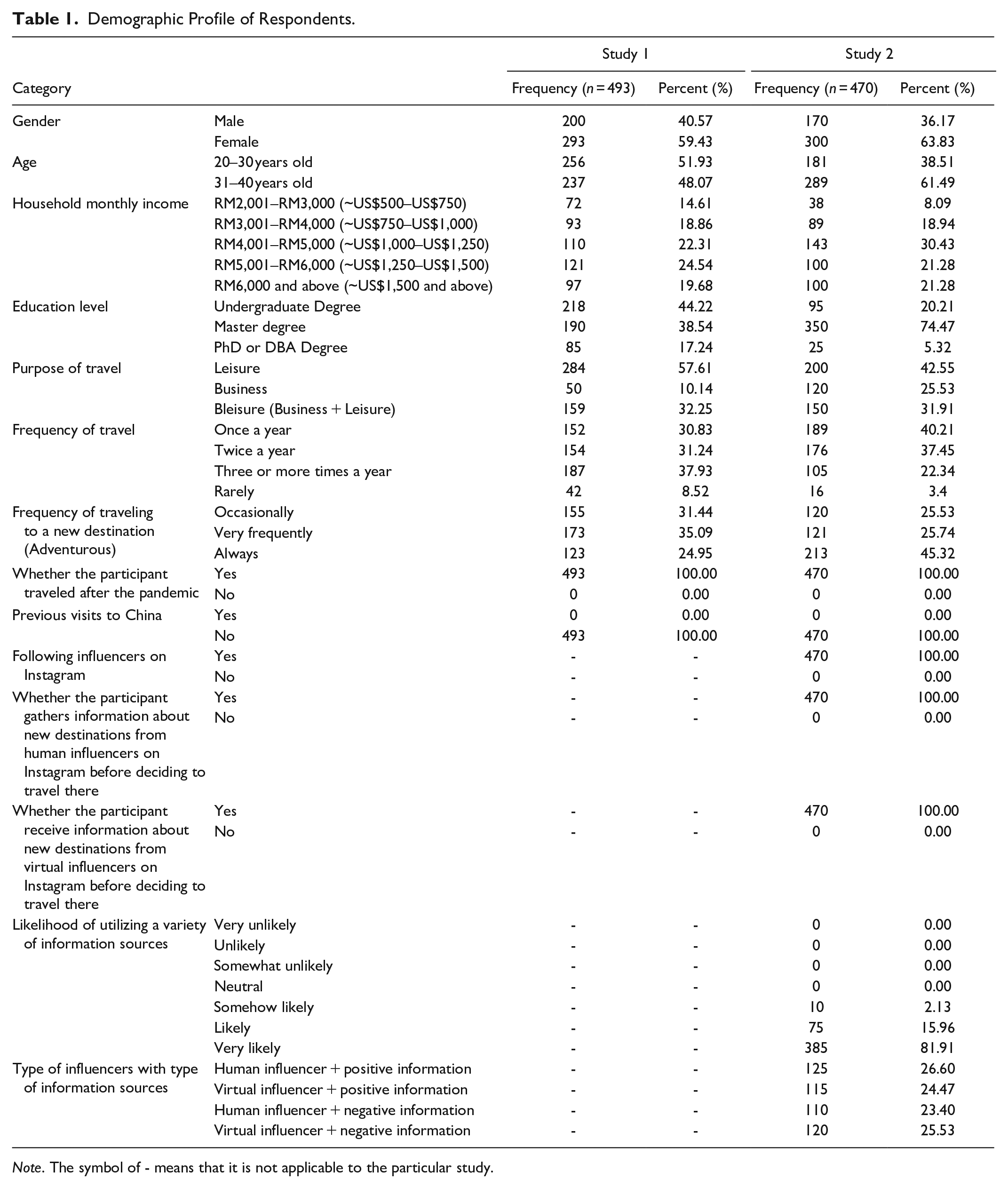
Note. The symbol of - means that it is not applicable to the particular study.
Results
In Study 1, the data was first analyzed using SPSS to assess the demographic profiles and the common method bias. Subsequently, the analysis of the hypotheses was drawn from the partial least square structural equation modeling (PLS-SEM) technique using SmartPLS (Hair et al., 2022). PLS-SEM is recognized as a multivariate data analysis method in tourism and hospitality research (Ali et al., 2018). It is useful for evaluating complex relationships among different latent variables (e.g., mediation and moderation effects) while simultaneously maximizing explained variance (Becker et al., 2023; Hair et al., 2022). PLS-SEM outperforms other methods when the research goal is prediction-oriented or when the research is exploratory in nature (Hair et al., 2022), which was the case for Study 1.
Evaluating Common Method Bias
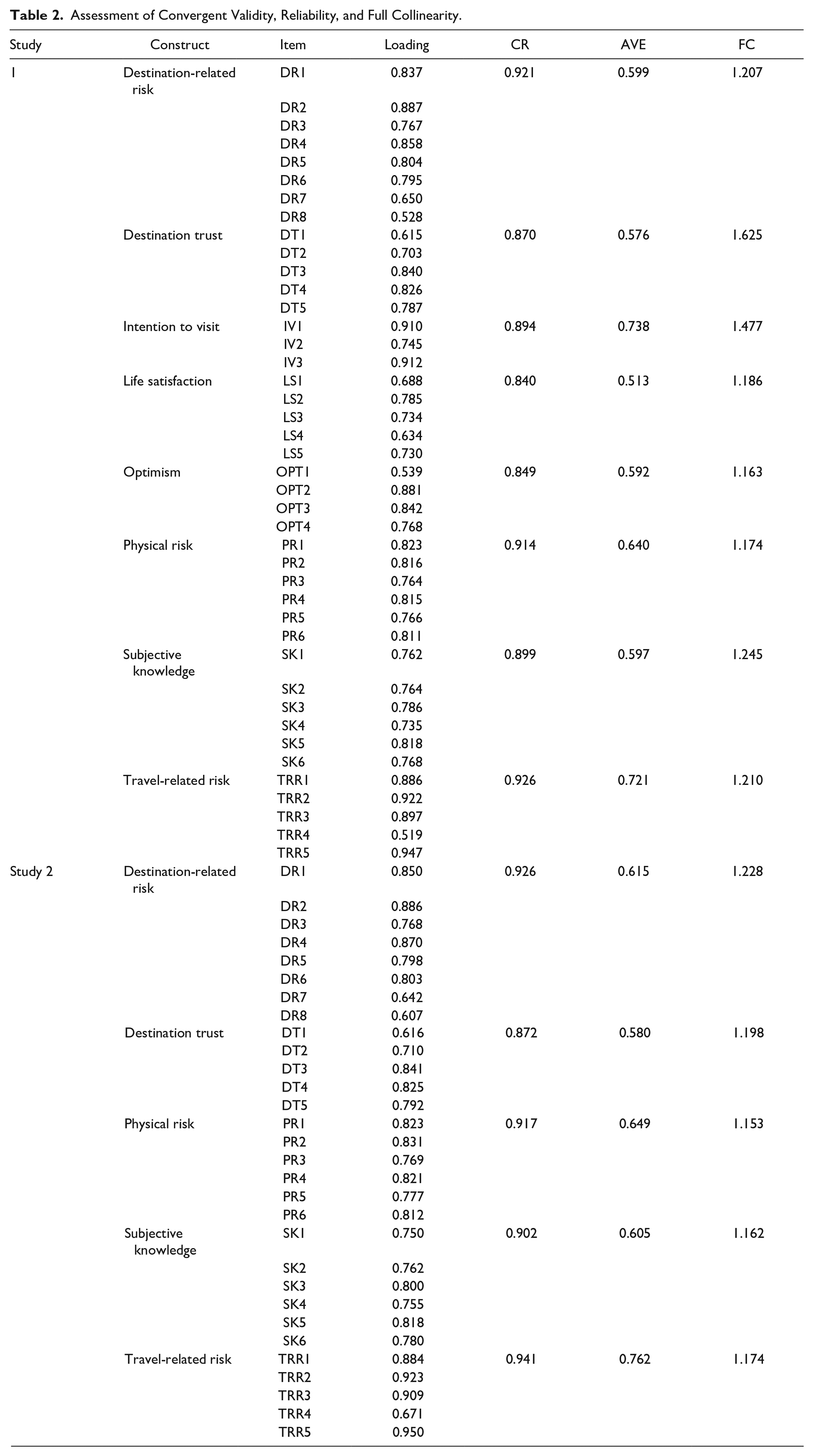
To ensure robustness in the assessment for Study 1, two types of statistical assessments for common method bias were incorporated: Harman’s single-factor test (MacKenzie & Podsakoff, 2012) and the full collinearity test (Kock, 2015). The result of Harman’s single-factor test indicated that the variance explained by the first factor was 19.577%, below the maximum threshold of 40%. The results of the full collinearity test showed that the variance inflation factors were between 1.163 and 1.625 (Table 2), below the maximum threshold of 3.3, which suggested that common method bias was not a severe issue for this study (Kock, 2015). Overall, both results confirmed that common method bias was not a concern.
Assessment of Convergent Validity, Reliability, and Full Collinearity.
Evaluating the Measurement Model
To evaluate the measurement model, all constructs for Study 1 were examined through loading, composite reliability, and average variance extracted (Hair et al., 2022). As shown in Table 2, all items achieved loadings above the minimum threshold of 0.5 (Hair et al., 2022). As a result, average variance extracted and composite reliability were established, achieving thresholds of 0.70 and 0.50 (Hair et al., 2022). Notably, some of the outer loading values in Study 1 were below 0.708; therefore, these items were kept for the purpose of content validation (Hair et al., 2022). In this regard, Hair et al. (2022) suggest that if a construct achieves satisfactory average variance extracted values above 0.50 and composite reliability above 0.70, the researcher can still retain an item with an outer loading greater than 0.50 for the purpose of content validity. Subsequently, discriminant validity was evaluated using the Heterotrait-Monotrait (HTMT) ratio correlation (Table 3). The HTMT results for all constructs were below the maximum threshold of 0.85 (Hair et al., 2022).
Assessment of Discriminant Validity.
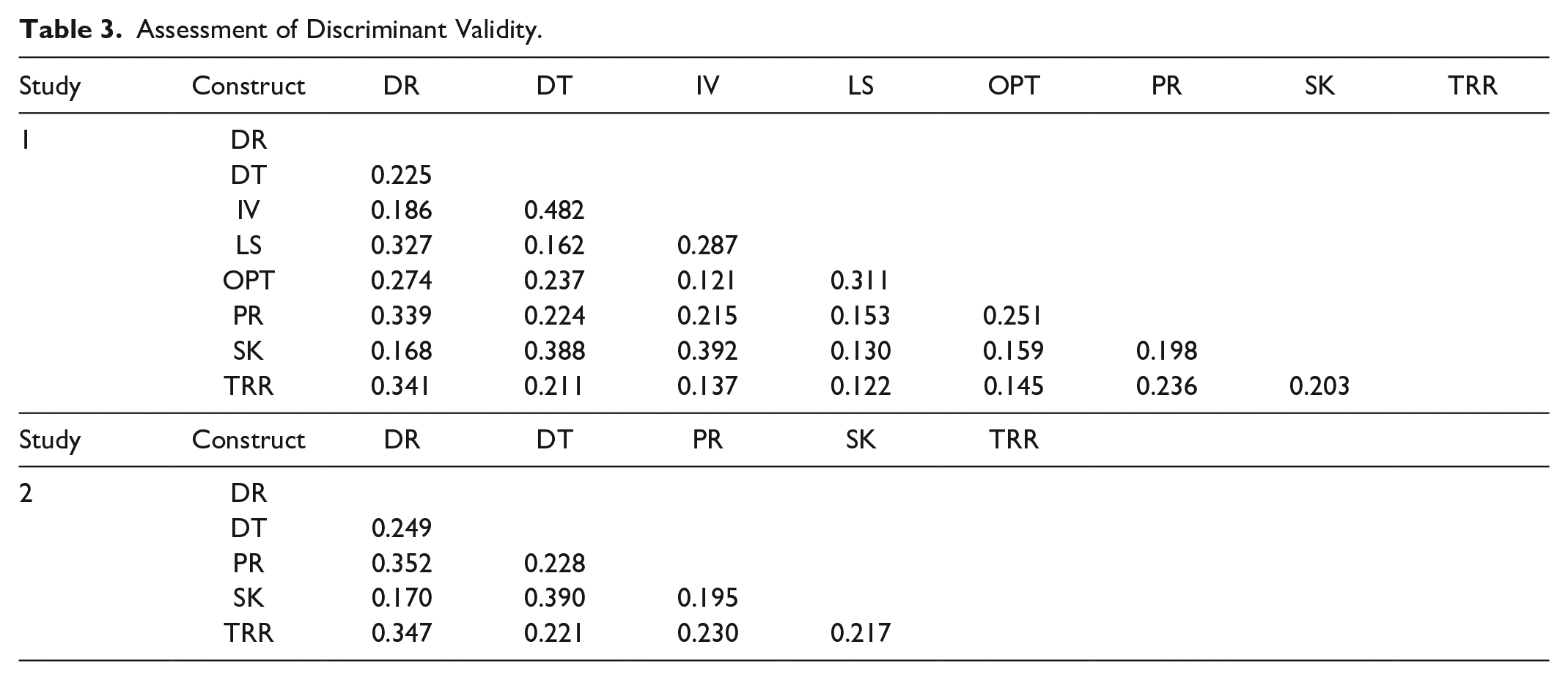
Finally, the higher-order construct of perceived risk was specified as Type 2 reflective-formative and assessed using the procedures outlined by Becker et al. (2023). First, a global item (i.e., “Traveling to a new destination is risky right now”) was developed and assessed. The redundancy analysis result achieved a path coefficient value of 0.789, above the minimum threshold of 0.70 (Cheah et al., 2018), which confirmed convergent validity. The variance inflation factors results were below the maximum threshold of 3.3 (Table 4), which showed that the dimensions (destination-related risk, physical risk, and travel-related risk) were distinct. In the final step, the statistical significance of all the dimensions of perceived risk was confirmed (p < .01) (Table 4).
Assessment of Higher-Order Construct.
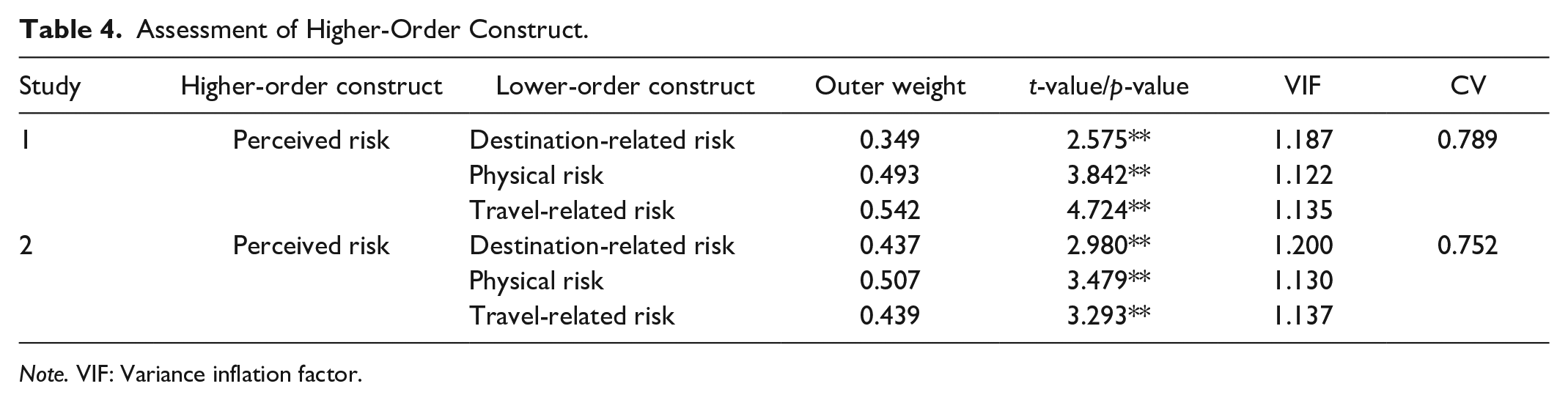
Note. VIF: Variance inflation factor.
Evaluating the Structural Model
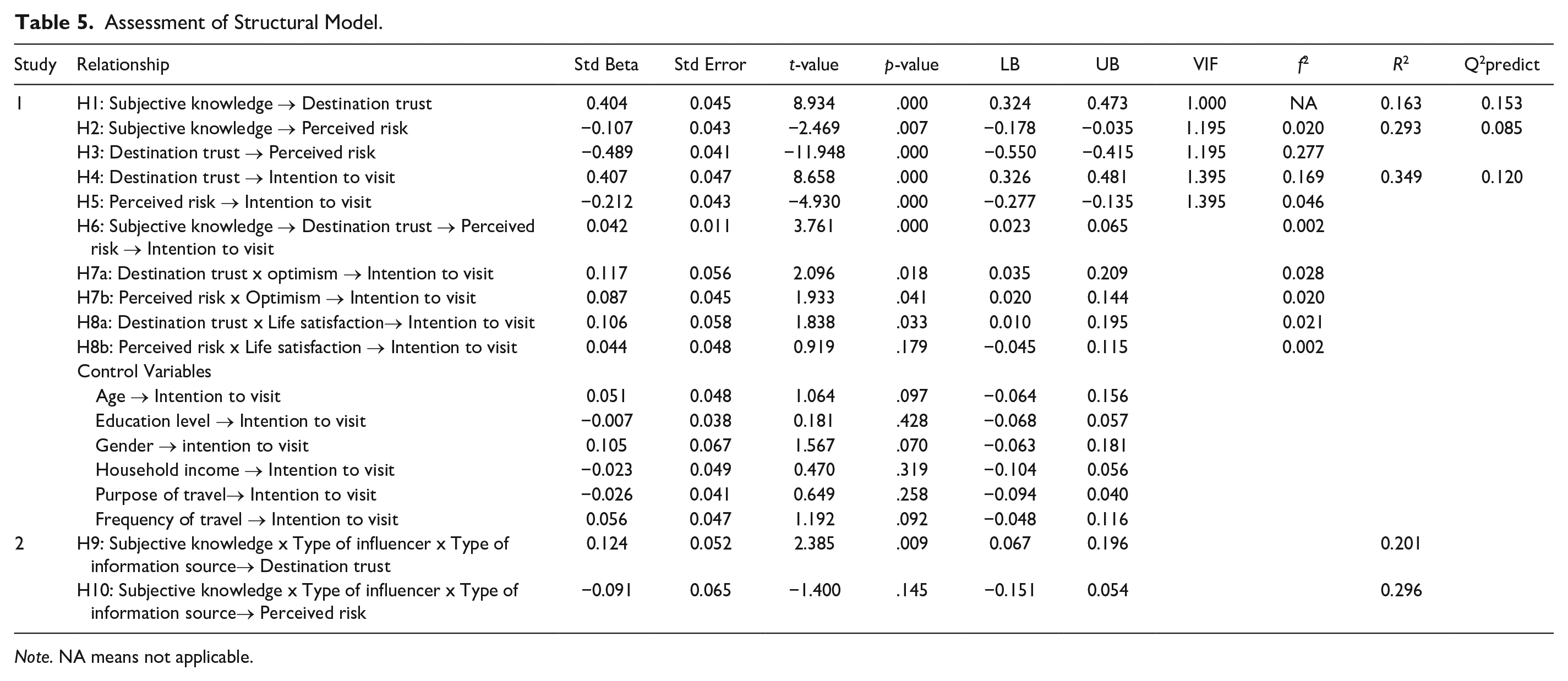
Next, the structural model was assessed by evaluating the proposed hypotheses (Table 5). The variance inflation factor values for all combination paths ranged from 1.000 to 1.395 (<3.33) (Table 4; Hair et al., 2022), which indicated that collinearity was not an issue in predicting our endogenous variable. The direct relationship results revealed that subjective knowledge positively influenced destination trust (H1a: β = .404, p-value < .01). Thus, H1 was supported with an explanatory power of 16.3%.
Assessment of Structural Model.
Note. NA means not applicable.
Furthermore, subjective knowledge (H2: β = −.107, p-value < .01, f2 = 0.020) was found to negatively influence perceived risk, with a small effect size. Destination trust (H3: β = −.489, p-value > .01, f 2 = 0.277) was found to negatively influence perceived risk, with a medium effect size. Thus, H2 and H3 were supported. Overall, these relationships explained 29.3% of the variance in perceived risk.
Moreover, destination trust (H4: β = .407, p-value < .01, f2 = 0.169) was found to positively influence intention to visit, while perceived risk (H5: β = −.212, p-value < .01, f2 = 0.046) was found to negatively influence intention to visit, especially after controlling the effects of age, education level, gender, monthly household income, purpose of travel, and frequency of travel that were not significant (p > .05). It was also noted that destination trust produced a medium effect on intention to visit (compared with the small effect size from perceived risk). Overall, these relationships explained 34.9% of the variance in intention to visit and provided significant support to both H4 and H5. Subsequently, the results of the serial mediating effect assessment were summarized. Destination trust and perceived risk were, indeed, found to mediate the effect of subjective knowledge and intention to visit (β = .042, p < .01), which H6 (Table 5).
As for the moderation analysis, a two-stage approach was utilized (Becker et al., 2023). Optimism was found to moderate the association of both destination trust (β = .117, p < .05) and perceived risk (β = .087, p < .05) with intention to visit (Table 5), despite its relatively small effect (f2 = 0.028 and 0.020). The interaction plot for destination trust and visit intention (Figure 3; Panel A) shows a steeper gradient in the line for travelers with high (vs. low) optimism, indicating that for optimistic travelers, the relationship between destination trust and intention to visit is stronger. In contrast, the interaction plot for perceived risk and visit intention (Figure 3; Panel B) shows a flatter gradient for travelers displaying high (vs. low) optimism, indicating that the relationship between perceived risk and intention to visit a new destination is weaker for more optimistic travelers.
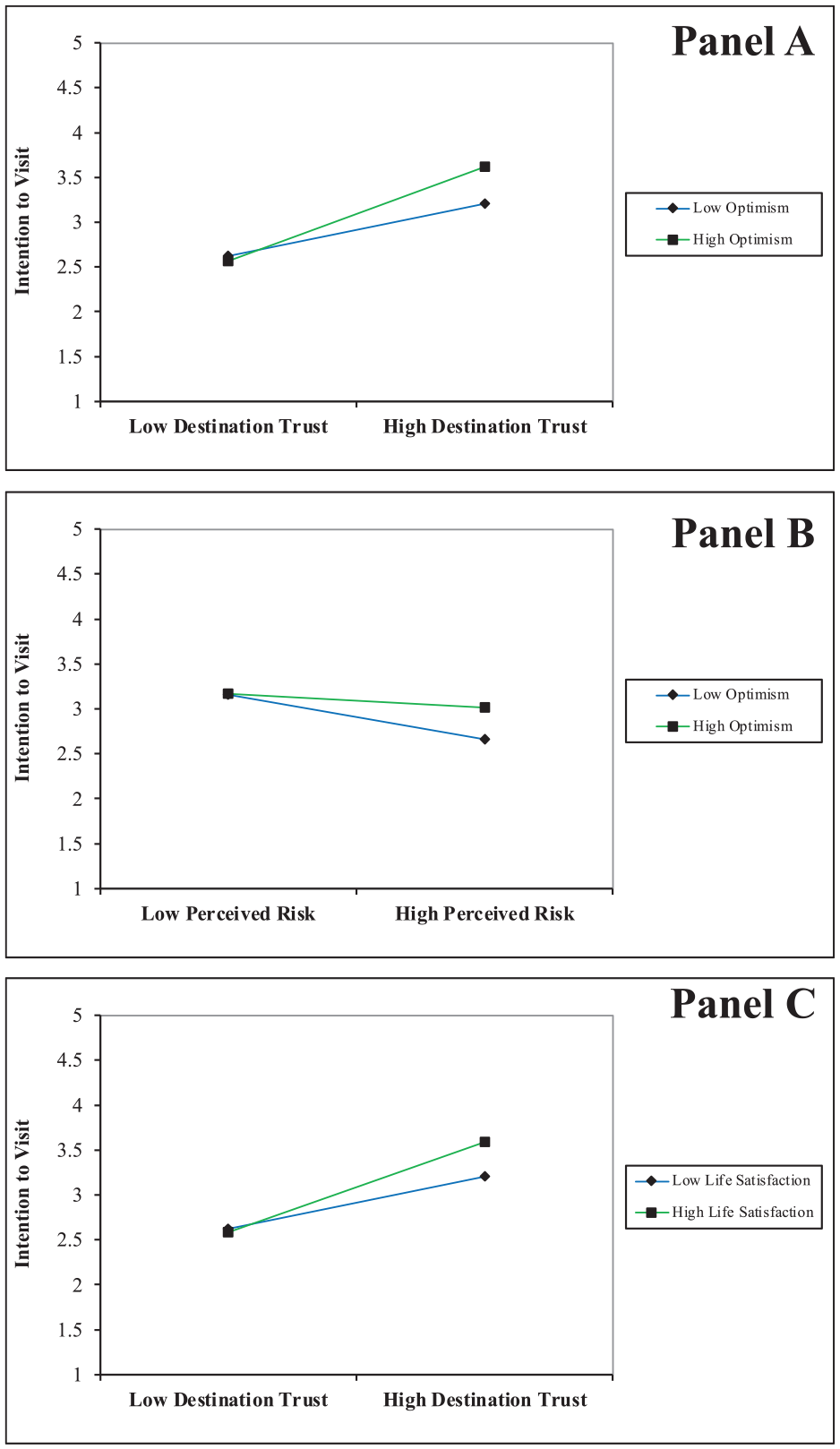
Interaction plot for study 1 (Panel A, Panel B, Panel C).
Subsequently, life satisfaction was found to moderate only the association between destination trust and intention to visit (β = .106, p < .05) (Table 5), and with only a small effect (f2 = 0.021). It did not moderate the association between perceived risk and intention to visit. The interaction plot for life satisfaction (Figure 3; Panel C) shows that the line for travelers displaying high (vs. low) life satisfaction has a steeper gradient, indicating that when travelers are more satisfied with life, the relationship between destination trust and intention to visit a destination is stronger.
To conclude our findings in Study 1, PLSpredict was also used to assess the predictive relevance of the structural model. The Q2predict values for destination trust (0.153), perceived risk (0.085), and intention to visit (0.120) were greater than zero, demonstrating the predictive relevance of the model (Shmueli et al., 2019).
Method for Study 2
Participants and Procedure
For the experiment in this part of the research, a 2 (type of influencer: human vs. virtual) × 2 (type of information source: positive vs. negative) between-subject design was adopted. At the end of February 2023, a sample of 500 adults in Malaysia was invited to participate in a controlled environment (university research lab). Before individuals volunteered to participate in the study, a meeting was held at the research lab to discuss the goal of our investigation and obtain the consent of potential participants (e.g., assurance of anonymity). Participants were asked to join only if they had: (1) resumed traveling after the pandemic, (2) followed influencers on Instagram, regardless of whether they were human or virtual influencers, (3) experienced in gathering information about new destinations from these influencers, and (4) never visited China. These screening criteria were evaluated by asking potential participants to respond to items at the beginning of the invitation. After excluding those participants who did not meet the criteria, a 100% response rate was achieved (Table 1).
The participants attended two different sessions on the same day to minimize the risk of common method bias (MacKenzie & Podsakoff, 2012). In the morning session, the participants were asked to answer questions about their demographic characteristics (Table 1) and to complete an attention check. In the afternoon session, the participants who passed the attention check were invited to take part in the experiment sessions. These participants were then randomly assigned to one of four conditions: (1) human influencer sharing positive content about the destination (i.e., China), (2) virtual influencer sharing positive content, (3) human influencer sharing negative content, and (4) virtual influencer sharing negative content (Appendix B). We then employed forced exposure by displaying the conditions for 1 min to ensure that the participants were able to comprehensively understand the conditions of the experiment before answering several questions about the manipulation check and the measurement items used in the study.
Measures
The measures of subjective knowledge, destination trust, destination-related risk, physical risk, and travel-related risk were the same items used in Study 1 (see Appendix 1). Importantly, two attention check questions were asked during the random assignment of participants to the four conditions. These were (1) “What do you perceive about this influencer?” and (2) “What do you perceive about this information?” The respondents had to choose a correct binary answer according to the random assignment: the influencer was either human or virtual, and the content was perceived as either positive or negative. After the attention checks completed, the participants were asked to respond to statements to measure the extent to which they perceived the influencer to be human or virtual and providing either positive or negative information. These four statements were (1) “This information is provided by a human influencer and it sounds positive to me,” (2) “This information is provided by a virtual influencer and it sounds positive to me,” (3) “This information is provided by a human influencer and it sounds negative to me,” and (4) “This information is provided by a virtual influencer and it sounds negative to me..” These manipulation check questions were measured using a 7-point Likert scale, ranging from 1 (strongly disagree) to 7 (strongly agree).
Evaluating the Attention and Manipulation Checks
Based on the attention check, thirty responses were discarded in the study as they were unable to correctly answer the attention check questions based on the given random assignment of the four conditions. As a result, a total of 470 usable responses were included, with the following proportions by condition: human influencer with positive information (26.60%), virtual influencer with negative information (25.53%), virtual influencer with positive information (24.47%), and human influencer with negative information (23.40%) (Table 1). Table 1 also presents the demographic information (e.g., age, gender, monthly household income, education level, purpose of travel) of the participants in Study 2. Subsequently, the proposed manipulation checks worked as anticipated. In particular, the result of the analysis of variance (ANOVA) shows a statistically significant difference for the four questions asked in the manipulation check [F(3, 466) = (Q1) 5.739; (Q2) 5.393; (Q3) 5.468, and (Q4) 5.101, all with p-value < .001]. Importantly, when participants were assigned to the correct condition, the mean result was a higher value than those for the incorrect conditions (Appendix C). Thus, these findings showed that the participants were able to identify the four conditions correctly according to their random assignment.
Evaluating the Measurement Model
Following the standard evaluation of the reflective measurement model in PLS-SEM, the loading, convergent validity, internal reliability, and discriminant validity were established. The evaluation criteria of the formative measurement were established when assessing the higher-order construct of perceived risk (Tables 2–4). Importantly, common method bias was not an issue in Study 2 because Harman’s single-factor test showed a value of 20.325% (below the maximum threshold of 40%) and the full collinearity test was between 1.153 and 1.228 (below the maximum threshold of 3.3; Table 2).
Evaluating the Moderating Effects of Influencer and Information Type
To examine H9 and H10, we examined a moderated-moderation model using Hayes’ (2018) PROCESS Model 3 with 10,000 bootstrapped samples. A three-way moderating effect of subjective knowledge × type of influencer × type of information was found to be significant on destination trust (H9: β = .124, p < .01) with an increase of R2 from 16.4% to 20.1%; however, the effect on the perceived risk was not significant, with a trivial change in R2. Figure 4 illustrates the results of the interaction plot. In particular, the interaction plot suggests that the gradient is less steep for positive information from a human influencer (vs. a virtual influencer). This indicates that when a human influencer provides positive information to the traveler, the effect of subjective knowledge on destination trust is weaker than when the information is provided by a virtual influencer. In contrast, the interaction plot suggests that negative information from a human influencer (vs. a virtual influencer) results in a steeper gradient of the respective line. This indicates that when a human influencer provides negative information to a traveler, there is a stronger positive relationship between subjective knowledge and destination trust than when the information is provided by a virtual influencer. Overall, H9 was not supported due to the contradictory outcomes of the interaction plot, while H10 was not supported due to the insignificant statistical result.
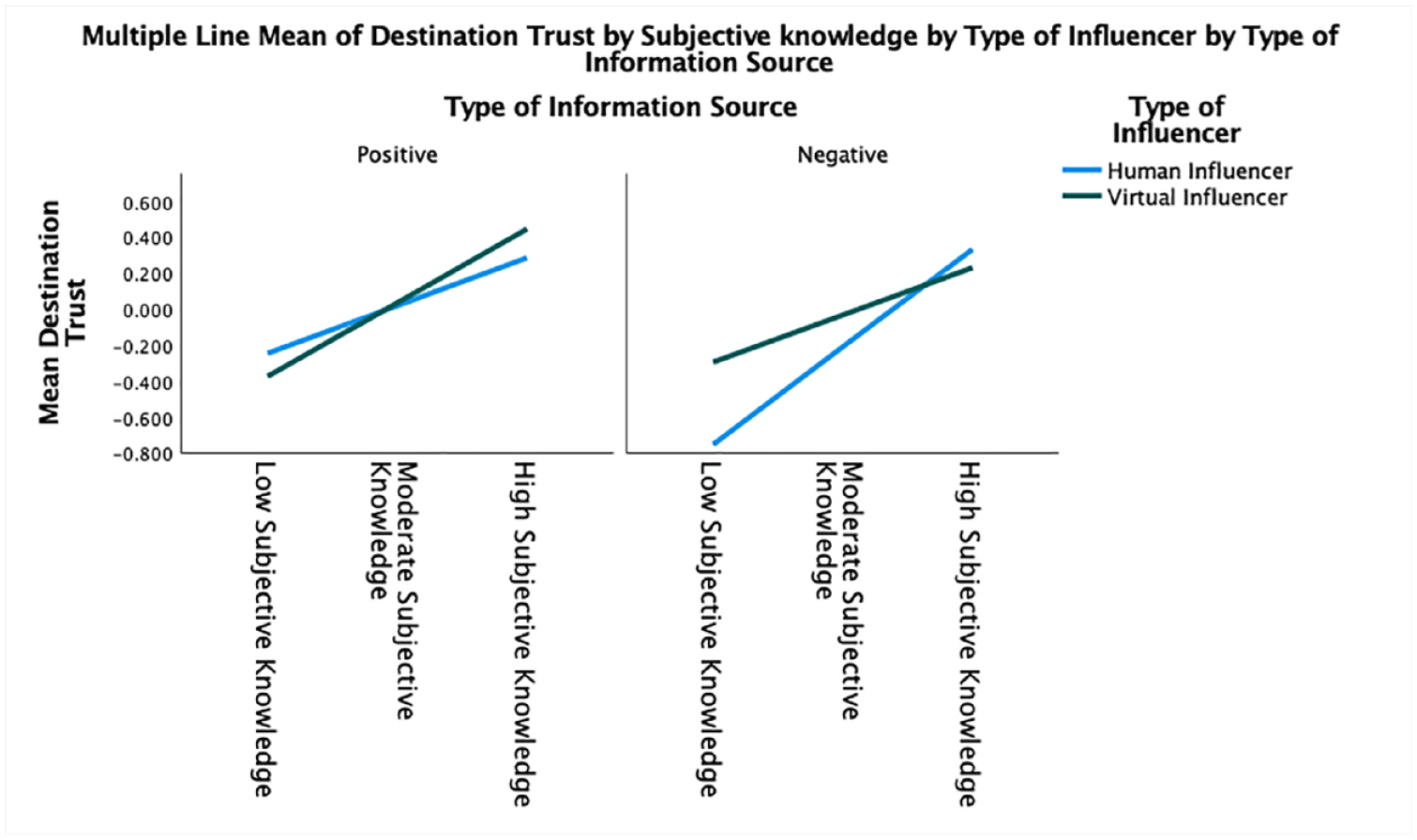
Interaction plot for study 2.
Discussion and Theoretical Contributions
The aim of this research was to propose and empirically test a conceptual model for predicting tourists’ intention to visit new destinations by connecting tourists’ subjective knowledge to trust and perceived risk and by analyzing the moderating effects of social media influencers (human vs. virtual) and tourists’ psychographic factors in this context. Our proposed model draws on the theory of sociology of trust and risk, which focuses on familiarity, trust, and risk (Luhmann, 1979, 1988, 2000). To achieve the research aim, data were collected through two studies (Study 1: survey; Study 2: experiment) with individuals in Malaysia who had never traveled to China. Overall, the results support the proposed model and the hypothesized mediation and moderation effects, and the research offers new insights and findings that make several contributions to tourism research.
First, we advance current knowledge on tourists’ subjective knowledge by uncovering the mediating effects of destination trust on the relationship between subjective knowledge and different types of perceived risk (destination risk, physical risk, and travel-related risk). Subjective knowledge has already been explored in tourism research (e.g., Sharifpour et al., 2014; Tassiello & Tillotson, 2020). In previous research, it was found that subjective knowledge has a direct effect on perceived risk (Sharifpour et al., 2014). Previous research found that subjective knowledge affects destination trust (Shen et al., 2022). Drawing on the theory of sociology of trust and risk (Luhmann, 1979, 1988, 2000), we have demonstrated that tourists’ destination trust serves as an enabler that strengthens the connection between how much individuals think they know, which is usually an indication of their expertise in the destination (Brucks, 1985; Sharifpour et al., 2014; Shen et al., 2022; Tassiello & Tillotson, 2020), and their perceptions of various types of risks. Our findings show the serial mediation effects; that is, a higher level of positive subjective knowledge will tend to increase destination trust among travelers, which, in turn, will reduce the effect of perceived risk and enhance travelers’ intention to visit a new destination. Our findings also confirm that tourists’ destination trust reduces perceived risk (e.g., Kim & Kim, 2020).
Second, our findings uncover new insights into the underexplored moderating effects of tourists’ optimism and life satisfaction on the relationships between destination trust, perceived risk, and intention to visit a new destination. Our findings show that the effect of destination trust on intention to visit a new destination is stronger among more optimistic travelers. In contrast, for this group of travelers, there is a weaker relationship between perceived risk and intention to visit a destination. Overall, our findings regarding the significant moderating role of optimism address a gap in tourism research, which, in general, has ignored this concept (Baby et al., 2023; Garcês et al., 2018), and contribute to the findings of previous studies regarding the role of positivism (Chapin & Coleman, 2009; Rittichainuwat et al., 2018; Weinstein, 1984). Although previous research has highlighted the significant impact of tourism on satisfaction with life (e.g., Chen, Petrick, & Shahvali, 2016; Lin et al., 2017; Woo et al., 2015), we show that when tourists are more satisfied with life, their trust of a new destination has a more significant effect on their intention to visit it. Surprisingly, our findings also show that tourists’ satisfaction with life does not affect their perception of risk or how that perception affects their intention to visit a new destination.
Third, our research is among the first to compare the effects of human and virtual influencers and their message content type (positive vs. negative) in the context of tourists’ decision making. Our research in this regard contributes to previous investigations of tourism and social media influencers (e.g., Femenia-Serra et al., 2022; Kapoor et al., 2022; Schroeder & Pennington-Gray, 2015). Despite the expectation that the rise of virtual influencers will have a major impact on tourism (Xie-Carson et al., 2021), research in this area is still lacking. Previous research has shown that overall, human influencers are more effective than virtual influencers in influencing public perceptions (Franke et al., 2023; Lou et al., 2022). Our findings show that when a human influencer provides positive information about a destination to a traveler, the impact of the traveler’s subjective knowledge on their destination trust is weaker than it would be if the content had been delivered by a virtual influencer. In contrast, when a human influencer provides negative information about a destination, the impact of the traveler’s subjective knowledge on their destination trust is stronger than had the information been provided by a virtual influencer. This shows that virtual influencers can be more effective than human influencers when providing positive information about destinations, while human influencers are more effective than virtual influencers when providing negative information about destinations. This is possibly linked to some of the issues associated with virtual influencers, such as the lack of authenticity, lack of “realness,” and lack of trust in virtual influencers (Franke et al., 2023). Our findings show that there are no significant differences between human and virtual influencers (whether the information they provide is positive or negative) in their influence on the relationship between travelers’ subjective knowledge and perceived risk. Overall, our results extend the findings of recent research on virtual influencers in marketing (e.g., Audrezet & Koles, 2023; Drenten & Brooks, 2020; Duffy & Hund, 2019).
Managerial Implications
This study offers important implications for destination marketing organizations. It is important to focus on increasing first-time travelers’ trust in new destinations, especially destinations that are associated with higher risks, by providing information about these destinations. Travel marketers should also recognize that first-time travelers’ subjective knowledge about a destination can affect their trust in the destination; in turn, this can mitigate their perceptions of various types of risks, such as having a disappointing experience, eating unsafe food, getting caught up in political unrest, experiencing hostility from local residents, having difficulties communicating, having an accident, not receiving holiday benefits, being a victim of crime, or catching a contagious disease such as COVID-19.
In particular, our findings show that human and virtual influencers are both effective in providing messages about new destinations on social media to influence first-time travelers. It is important to understand the context in which each of these two types of influencers is more effective. Virtual influencers are more effective in influencing others when the message about a destination is positive, but human influencers are more effective when the message about a destination is negative. This is because each of these two combinations strengthens the impact of tourists’ subjective knowledge on their destination trust. These findings should be taken into consideration by the marketing practitioners and teams behind virtual influencers. In relation to the specific context of this study, Malaysian first-time travelers to China who plan to travel to China should gather and make use of several pieces of information (positive and negative) from human and virtual influencers before making any travel decision. They should compare and verify both positive information from virtual influencers and negative information from human influencers rather than trusting one side’s source of information at face value.
Furthermore, our findings indicate that, for tourists, optimism has a favorable influence on the relationships between their perceived risk, their trust perceptions, and their intention to visit a new destination. Life satisfaction influences the effect of tourists’ destination trust on their intention to visit. Hence, tourism marketing strategies should address the psychographic traits of various segments of tourists and the impact of these traits on tourists’ destination trust and risk perceptions.
Limitations and Directions for Future Research
Despite the significant contributions of this research, there are a number of limitations, which we encourage researchers to address in future studies. For example, the findings of our study are limited to destinations that tourists have not visited before (i.e., the research is limited to first-time visitors). Future research can consider repeat visitors and compare the findings. In addition, our study analyzed the effects of optimism and life satisfaction only; future studies can explore the impact of other factors, such as political engagement. In future, researchers should explore the potential of virtual influencers in tourism and their impacts on travel decision making and destination image. Future research can also explore the impact of virtual influencers on tourists’ subjective knowledge, trust, and risk perceptions by considering the type of virtual influencers and how they can affect various types of trust and perceived risk. Researchers can also explore the impact of tourists’ feelings of loneliness, which have been increasingly highlighted in the literature recently (e.g., Farmaki & Stergiou, 2019) on how they are influenced by virtual influencers. Finally, future research can conduct longitudinal studies to explore how subjective knowledge prior to traveling is converted into objective knowledge after traveling, and how this alters tourists’ perceptions of trust and risk.
Footnotes
Appendix
Declaration of Conflicting Interests
The author(s) declared no potential conflicts of interest with respect to the research, authorship, and/or publication of this article.
Funding
The author(s) received no financial support for the research, authorship, and/or publication of this article.
