



Abstract
This article addresses how core tourism research has influenced other cognate research disciplines through the diffusion of its knowledge structure and when, in the future, this diffused knowledge structure might evolve in terms of research expansion and contraction. Study 1 analyses 4,753 tourism research articles, revealing seven core clusters that represent the tourism discipline. The study then determines how this core influences other cognate research disciplines by identifying 14 clusters from 38,657 articles representing the diffused knowledge structure of tourism research. Diffusion is assessed within and among core and diffused knowledge structures. Study 2 forecasts when and to what extent citation patterns—in the form of research expansion and contraction—are likely to change.
Introduction
What was once regarded as a fragmented, eclectic field of study (Benckendorff & Zehrer, 2013) has developed into a maturing body of core knowledge, with potential for significant influence on other cognate research disciplines and allied research areas (Koseoglu et al., 2016). Through this maturation of tourism research, a vast corpus of research themes also has arisen, making it somewhat opaque to identify the discipline’s core knowledge structure or trace how it might diffuse to other research disciplines (Pahlevan-Sharif et al., 2019). Most efforts to do so rely on systematic literature reviews (Le et al., 2019; Nunkoo et al., 2019), content analyses (W. J. Chang & Katrichis, 2016; de la Hoz-Correa et al., 2018), or bibliometric studies (Comerio & Strozzi, 2019; Koseoglu et al., 2016). The knowledge structures that extant studies have identified tend be broad in the scope of topic areas derived and partial in terms of sample (e.g., Xiao and Smith (2006) or focused topic areas but generated from judgmental assessment by raters (e.g., Tribe & Xiao, 2011). We interpret and discuss the knowledge structures derived by others later in this article. Nonetheless, these relatively coarse-grained explorations tend to be limited in their rigor, scope, and explanatory power. For example, systematic literature reviews provide meaningful insights but limited analytical depth or objectivity (Pahlevan-Sharif et al., 2019), because they summarize a specific area (e.g., psychology topics in tourism; Barrios et al., 2008) rather than the overall knowledge structure of the tourism research discipline. The few available bibliometric studies similarly are limited in scope as they tend to focus on a certain aspect of the tourism literature, such as the economic impact of tourism (Comerio & Strozzi, 2019), emerging countries in tourism research (Köseoglu et al., 2015), sustainable tourism (Ruhanen et al., 2015), or to assess evaluation of journal quality (C. L. Chang & McAleer, 2012; Hall, 2011). While these studies are influential, they are partial given the search parameters that limit the sample of studies that are investigated. Also other bibliometric approaches have exhibited limited scope, depth, rigor, and explanatory power in uncovering the field’s core knowledge structure (Comerio & Strozzi, 2019; Koseoglu et al., 2016; Pahlevan-Sharif et al., 2019). Typical examples describe research by means of determining journal importance, geographical spread of authors, co-citations, and single articles responsible for citations (e.g., Benckendorff & Zehrer, 2013; Cunill et al., 2019; Hall, 2011). On the other end of the review spectrum lie the systematic literature reviews that summarize one specific sub-domain of tourism (e.g., psychology topics in tourism; Barrios et al., 2008), rather than considering the knowledge structure of generic tourism research.
To address these knowledge, scope, and methodological rigor limitations, this article maps the intellectual pillars of tourism research according to direct citations, and thereby to identify diffused, and future knowledge structures of tourism research. Specifically, the following questions are addressed:
How has tourism research influenced other cognate research disciplines through its diffused knowledge structure?
When, in the future, might the diffused knowledge structure of tourism research evolve, in terms of research expansion and contraction?
In answering these questions, this article contributes to tourism literature in four key ways. First, employing bibliometric and scientometric techniques, seven core research themes are identified, representing the core knowledge structure of tourism research. Second, it is demonstrated how core knowledge, as represented in prior tourism research, has diffused into 14 diffuse research themes that in turn have influenced wider research disciplines across the social sciences. Third, this article maps the diffusion timeline of the knowledge structure, identifying relative influence oscillations of the 14 diffused research themes from 1983 to date. Fourth, the present article forecasts the influence of these 14 diffused research themes on the social sciences across different time horizons to predict what lies ahead for the evolution of tourism research. This framework also supports explorations of how thematic research themes evolve (lifecycle evolution) and are likely to develop in the future (polynomial forecasting).
Bibliometric Analysis
In methodological terms, bibliometric studies refer to a repertoire of approaches, from simple counting (e.g., percentage of articles that do not use triangulation for their methodological approach; Koc & Boz, 2014) to sophisticated global citation scores (Comerio & Strozzi, 2019) or network analyses (Benckendorff & Zehrer, 2013). There are two fundamental approaches to bibliometric studies that correspond to distinct research questions: evaluative and relational. Evaluative techniques assess the impact of published sources from one referent or group to another (Benckendorff & Zehrer, 2013). Such insights are useful but very specific in focus. In contrast, relational techniques test relationships among research disciplines, often using some combination of the following methods: co-citation analysis, co-word analysis, co-authorship analysis, or bibliographic coupling (Koseoglu et al., 2016).
Bibliometric studies using relational techniques accordingly can explore the relatedness and knowledge structure of a research discipline based on past developments and rely on measures of research links to identify themes, patterns, and interdependencies within a literature stream (Samiee et al., 2015). With data generated from research publication databases, researchers can identify the underlying pillars of the discipline (Zupic & Čater, 2015), then use these indicators to understand the knowledge structure of a research discipline (Barrios et al., 2008). In a sense, the indicators represent the genetic code that determines how individual elements (e.g., journal articles) relate to one another.
The value of bibliometric studies for tourism research has been heralded by Benckendorff and Zehrer (2013, p. 125), who contend that a “bibliometric approach also provides newcomers who may struggle to make sense of the tourism field with insights into important authors and works.” Most bibliometric studies focus on a certain aspect, such as the economic impact of tourism (Comerio & Strozzi, 2019), emerging countries in tourism research (Köseoglu et al., 2015), sustainable tourism (Ruhanen et al., 2015), or evaluations of journal quality (C. L. Chang & McAleer, 2012). These studies are influential but also partial, purposefully constrained by the search parameters that define the scope. Other bibliometric studies similarly offer limited scope, depth, rigor, or explanatory power in relation to the discipline’s core knowledge structure (Comerio & Strozzi, 2019; Pahlevan-Sharif et al., 2019), because they rely on specific factors, such as journal importance, geographical spread of authors, co-citations, or single articles responsible for citations (Benckendorff & Zehrer, 2013).
By applying relational bibliometric techniques, this study seeks to widen both scope and depth and undertake a broad census of the tourism research discipline. A two-study framework is employed, in which specific research questions are addressed. Study 1 identifies the dimensions underlying the core knowledge structure of tourism research and subsequently examines how tourism research has influenced other cognate research disciplines through its diffused knowledge structure. Then Study 2 considers when, in the future, the diffused knowledge structure might evolve in terms of research expansion and contraction.
Study 1
Purpose
For the first research question, this study first needs to identify how core tourism research has coalesced into a dominant knowledge structure. To that end, the present study defines the primary data source, scope, and boundaries of core knowledge in tourism research. This stage uncovers the core knowledge structure using direct citations as a primary measure of relatedness across different research themes. It then proceeds to explore how tourism research has influenced other cognate research disciplines, accomplished by shifting from the core knowledge structure within tourism research literature to consider both the intra-knowledge structure of published tourism research and extra-knowledge structures. Tourism research remains the focus, but the effect is amplified by examining the wider context of its contribution to social science research. Thus, the boundaries and scope of generated data are circumscribed before offering analysis of the knowledge structure, using diffused clusters.
Data and Methods
In disciplinary research, appropriate samples are imperative, and sampling from leading journals offers a relevant means to discriminate among research outputs, because such journals provide a coherent stock of knowledge (Jappe, 2020). However, citation impact and journal prestige do not always correlate which determined that two further criteria were adopted to determine sampling (Jappe, 2020). First, all tourism-based journals included in the Social Science Citation Index (SSCI 2019 Edition) were identified to establish the corresponding population. Second, for sample prestige, the present study used three different popular journal rankings for the field of tourism and hospitality, namely the Academic Journal Guide 2021 (AJG), the ABDC Journal Quality List 2019, as well as Scimago Journal & Country Rank (SJR).
Six journals were identified as joint leading journals from ABDC and SJR. Two journals (namely, the International Journal of Hospitality Management and the Journal of Sustainable Tourism), were not taken into the further analysis as not all ranking algorithms agreed on their status (e.g., AJG: 3), and because they represent more specialized topic-journals (which could have skewed the analysis to overestimate certain topics). Finally, the Journal of Service Research was excluded, as it also contains a large proportion of non-tourism or hospitality articles. Thus, only three tourism research journals satisfy the criteria as being generally accepted top journals with a generic view on tourism research and these are, in alphabetical order: Annals of Tourism Research, Journal of Travel Research, and Tourism Management.
The primary data generation and extraction source for the present study is the Web of Science SCI-Expanded Index, a multidisciplinary database that offers some advantages over alternative databases (Waltman, 2016). Scopus was also considered and evaluated as an alternative data generation source (Martín-Martín et al., 2018), but a number reported concerns regarding its citation accuracy, incorrect references, and records duplication (Sánchez et al., 2017; Valderrama-Zurián et al., 2015) led to the decision that Web of Science was more suitable for the purposes of the present study (Zhu & Liu, 2020). Through this data generation effort, a population of 4,753 published, peer-reviewed articles was obtained (spanning up to the end of 2018), comprising the core tourism research (Figure 1). Hierarchical clustering was employed leading to the identification of core research themes, using the quality function recommended by Newman and Girvan (2004). Four to 10 clusters were subsequently analyzed to find the optimal number of clusters, based on coherence and convergence of content. Employing VOS viewer, the number of core research themes was identified using the following cluster analysis algorithm from van Eck and Waltman (2017):

where
n: number of publications,
aij: relatedness of publications,
xi: cluster to which publication i is assigned.


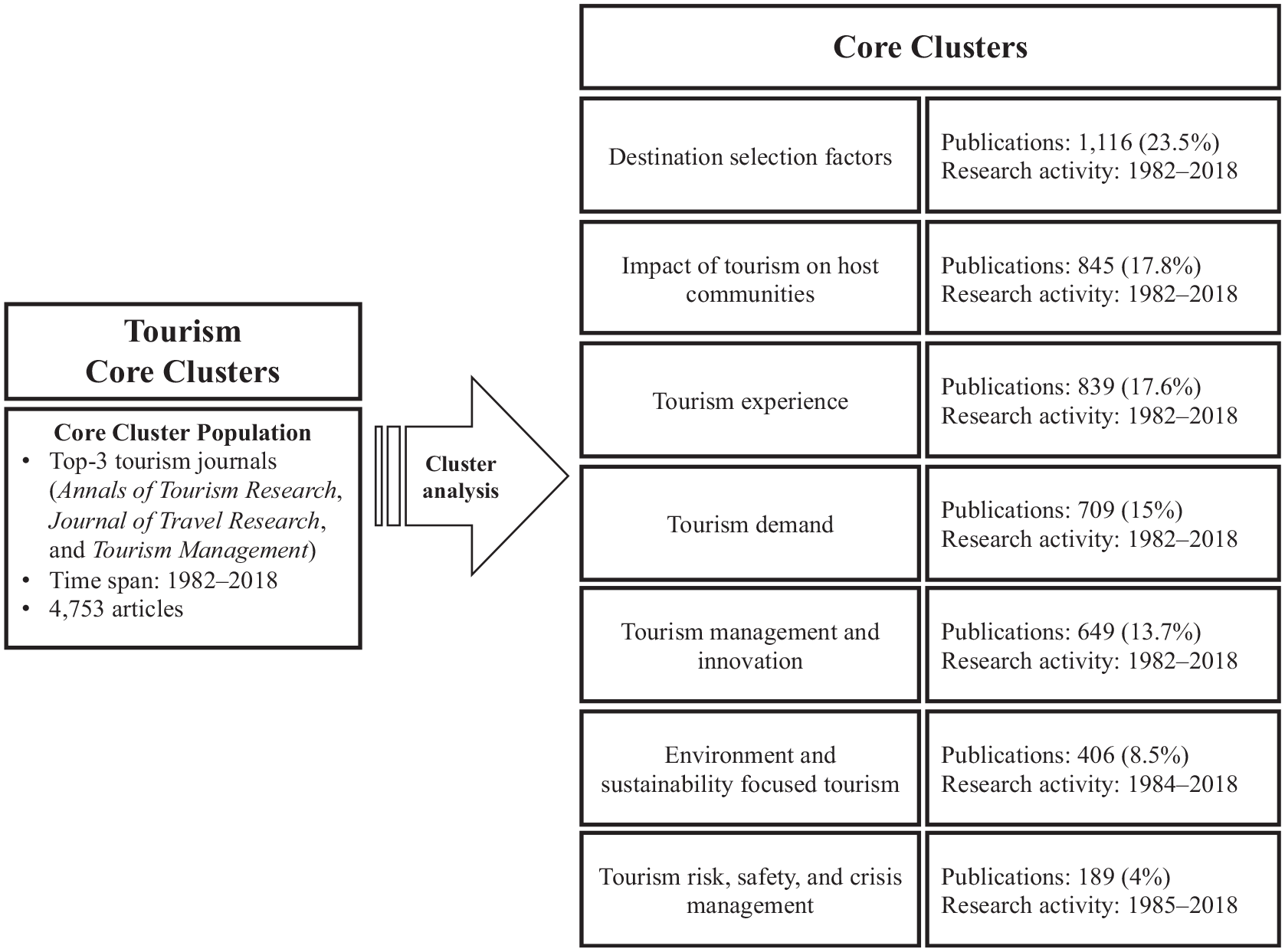
Overview of the study identification process (core literature).
In order to address the main goal of Study 1, a broader data scope was needed encompassing both the core tourism research and potentially diffused knowledge influences, operationalized as all peer-reviewed, published articles (as of the end of 2019) that directly cited at least one published article within the core tourism research corpus (from the top three tourism journals). We allow for a 1-year differential between Study 1 and 2. Study 1 spans articles published to the end of 2018; Study 2 includes articles published up to 1 year later (2019). This gap increases the chances that we can capture recent citations. The greater scope then encompasses core tourism articles, as well as wider literature citing them, so that the diffused knowledge structure of tourism research can be identified. By applying the same hierarchical clustering technique (Newman & Girvan, 2004; van Eck & Waltman, 2017) to the expanded set of 38,657 articles, this time six to 16 clusters were subsequently analyzed to find the optimal number of clusters, based on coherence and convergence of content, resulting the best solution with 14 diffused clusters in this case.
To interpret the 14 diffused clusters, a two-step procedure was used. First, all authors independently described the diffused clusters, then jointly agreed on meaningful label descriptors. Second, three independent tourism research specialists were engaged, identified as experts, to reevaluate the label descriptors, to gage their agreement and make modifications if necessary. They indicated agreement (“To what extent does the descriptor reflect the diffused cluster theme?”) on a scale from 1 (“not at all”) to 7 (“fully fits”). In 11 cases, the independent tourism research specialists agreed with our original description (coder agreement >5.5). In two cases, small adjustments were needed (i.e., Diffused Cluster 4: meta-level and Diffused Cluster 14: methods [especially tracking tourist movement]; coder agreement = 5.0 and 4.6, respectively). In one cluster (Diffused Cluster 2: tourist satisfaction and recommendations; coder agreement = 3.6), we needed a fuller revision. In all cases, the labeling suggestions of the three independent specialists were adopted and followed.
The analysis evaluates the evolution timeline of diffused clusters and performance thresholds. In support of the present article’s primary goal of determining how tourism research has influenced other cognate research disciplines, through its diffused knowledge structure, it was necessary to establish the research influence of each core cluster on each diffused cluster. Greater diffusion indicates that the diffused cluster contains a significant core cluster component. In contrast, clusters with low levels of diffusion indicate minor or no direct contributions by a core cluster.
Results and Discussion
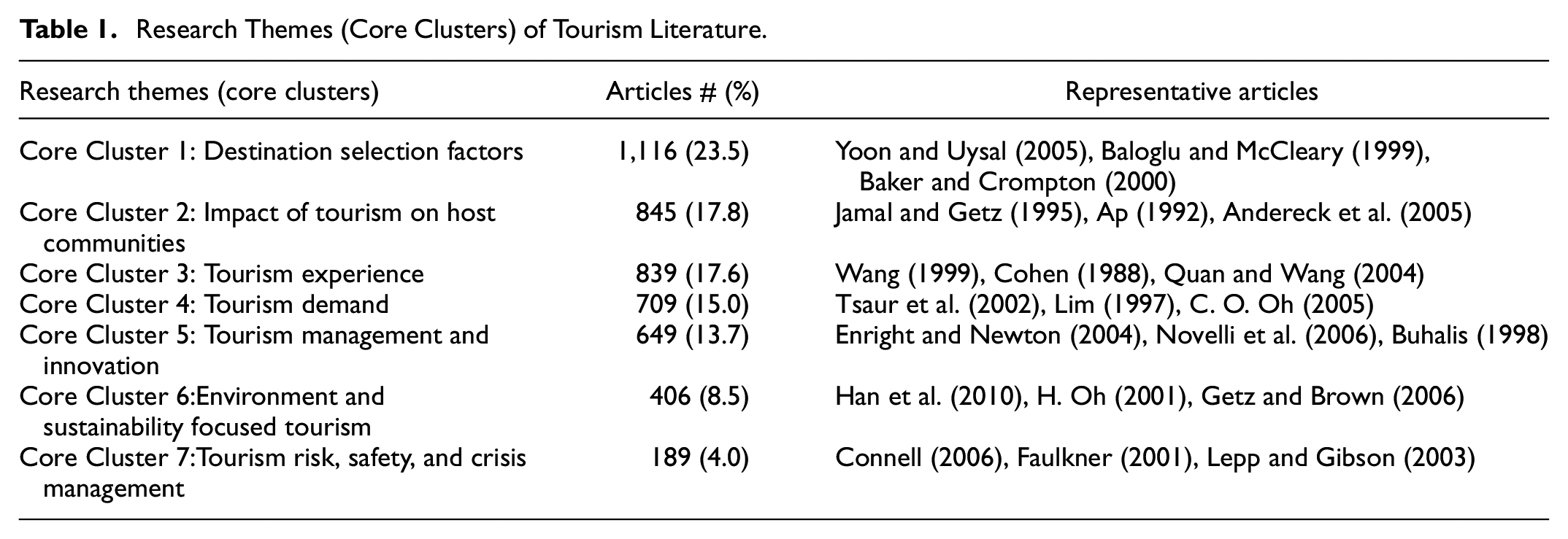
The analysis identifies seven core clusters of tourism research that differ in magnitude, such that each cluster represents a varying percentage of the total sample. Table 1 presents the core clusters, their characteristics, and some exemplar articles that represent widely cited illustrations of each. The core clusters identified derive from patterns of citations and relational ties, reflecting the scientific behavior and arguments of scholars, not ex post boundaries that reflect traditional conventions regarding topic areas.
Research Themes (Core Clusters) of Tourism Literature.
Tourism research is often described as highly fragmented and interdisciplinary (Benckendorff & Zehrer, 2013). Some scholars even question if tourism research is a discipline at all (Tribe, 2010) and propose that instead it constitutes a combination of different disciplinary views, applied to examine a specific industry. Extending this logic, scholars in tourism research might draw exclusively from like-minded in-groups of scholars with common interests (Okumus et al., 2018). However, previous studies tried as well identifying the knowledge structure of tourism. For instance, Tribe (1997), building on the work of Jafari (1991), argues that we approach the categorization of knowledge in the field rather with a disciplinary focus (thus dividing between marketing of tourism—coming from the marketing field or tourism motivation, rooted in psychology). Xiao and Smith (2006), on the other hand, identified 27 major subject areas within Annals of Tourism Research alone (with two meta-categories, namely a “methodology and theory,” and a “development and impacts” cluster).
Later, Tribe and Xiao (2011) were qualitatively analyzing topics published in this journal, highlighting the following categories: (1) reflections on tourism research and knowledge production; (2) development, impact, and community studies; (3) authenticity and tourist experience; (4) typologies of tourists; (5) destinations and attractions; (6) motivation, behavior and decision-making; (7) culture, heritage and culture change; (8) representation, identity, and image; and (9) other subjects.
The core knowledge structure identified in this study, clearly demarcates research publication themes that exhibit homogeneity within clusters and heterogeneity across them. Tourism thus emerges as an interdisciplinary research approach that incorporates different views (Benckendorff & Zehrer, 2013) into specific, core clusters that constitute its knowledge structure.
This research (Table 1) also illustrates clear demand-side and supply-side distinctions. In the former set, Core Cluster 1, Core Cluster 3, and Core Cluster 4 are explicitly tourist focused, together representing 56.1% of all tourism articles. This high percentage echoes the affinity between tourism and marketing, both of which are fundamentally customer focused (i.e., outside-in perspective) and complemented by supply-side considerations of marketing organizations and processes (i.e., inside-out perspective) (Rust, 2020). On that supply side, other stakeholder constituencies, actors, and regulators appear in a more fragmented cohort of tourism literature. For example, in Core Cluster 2, 17.8% of articles examine consequences of demand- and supply-side factors, in the form of tourism externalities. Then Core Cluster 5 pertains to supply-side research into how the frontier of both new and more meaningful experiences gets generated for tourists.
Sustainable tourism (economic, ecological, and social aspects) straddles two nodes of research, with the environment focus on the one side (Core Cluster 6) and the social aspect on the other (Core Cluster 2). In combination, the two clusters reflect more than one-quarter (26.3%) of the core tourism research discipline, indicating the profound impact of sustainable tourism on this research discipline. Despite a common perspective on this theme as a consolidated, coherent, single stream, the underlying citation patterns reveal two distinctive foci. Boström (2012, p. 3) asserts that “when policy makers endorse sustainable development, the social dimension garners less attention,” but data in the present study reveal that the social dimension is a strong research focus. The core knowledge structure also shows that the two core clusters are fundamentally siloed; articles examine either ecological (Core Cluster 6) or social sustainability (Core Cluster 2), suggesting that a more holistic sustainability approach might provide a relevant bridge for future tourism research. The smallest core cluster (Core Cluster 7) represents a nice topic (Ritchie & Jiang, 2019), with many research gaps and great growth potential. As the COVID-19 pandemic has revealed, it also has potentially devastating impacts, with vast implications within and outside tourism literature.
In turn, core clusters of tourism research influence other research disciplines thereby assimilating and diffusing ideas across permeable barriers of academic silos. This stage focuses on how tourism research has diffused to other research disciplines and how this broader knowledge is structured. Figure 2 and Table 2 depict the 14 diffused clusters of this stage. Analyses of each resulted in some general patterns: The majority of diffused clusters center on a specific topic, method, school of thought, or line of argumentation.
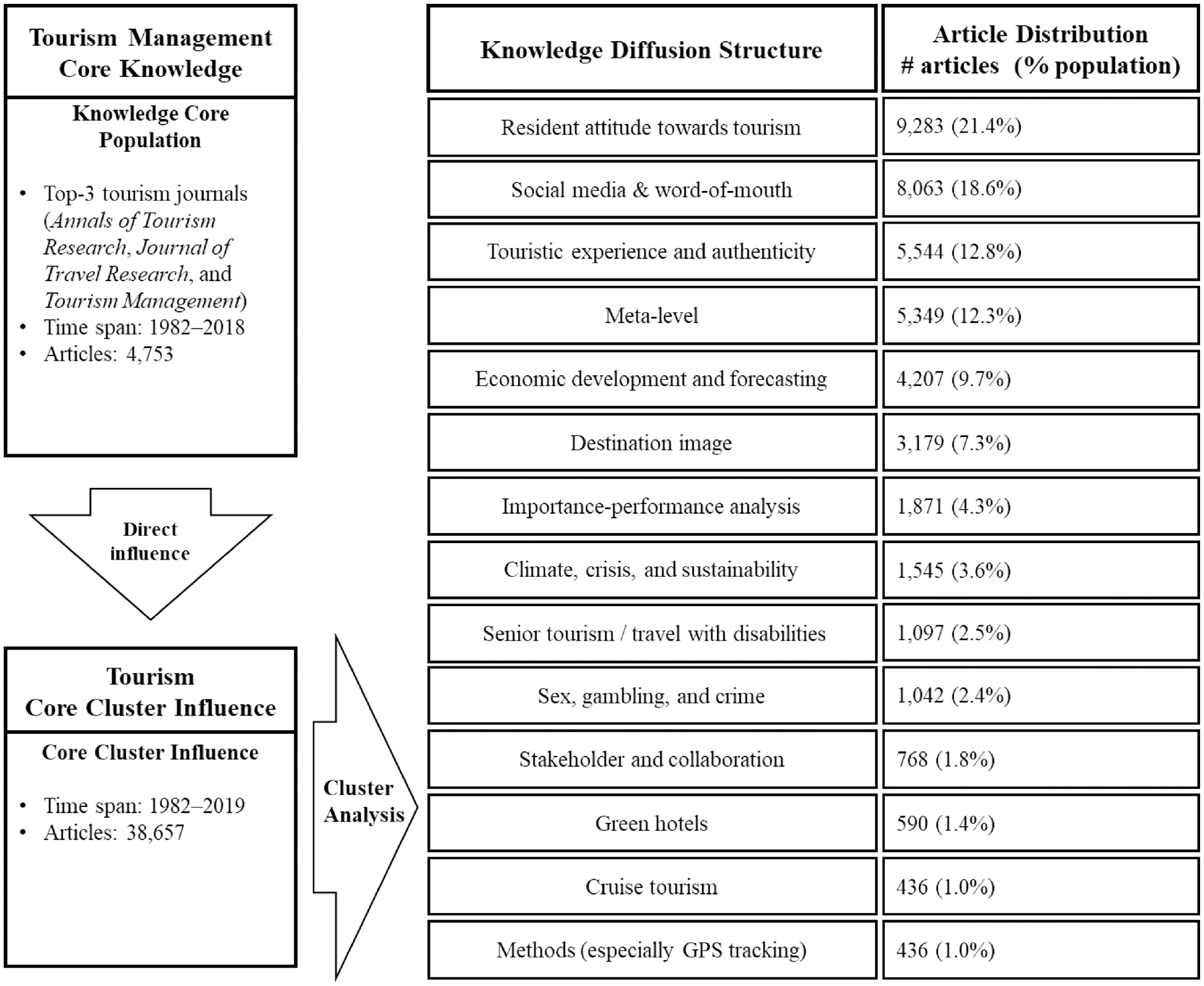
Overview of study identification process (Core + Diffused literature).
Research Themes (Diffused Clusters) of Tourism Literature.
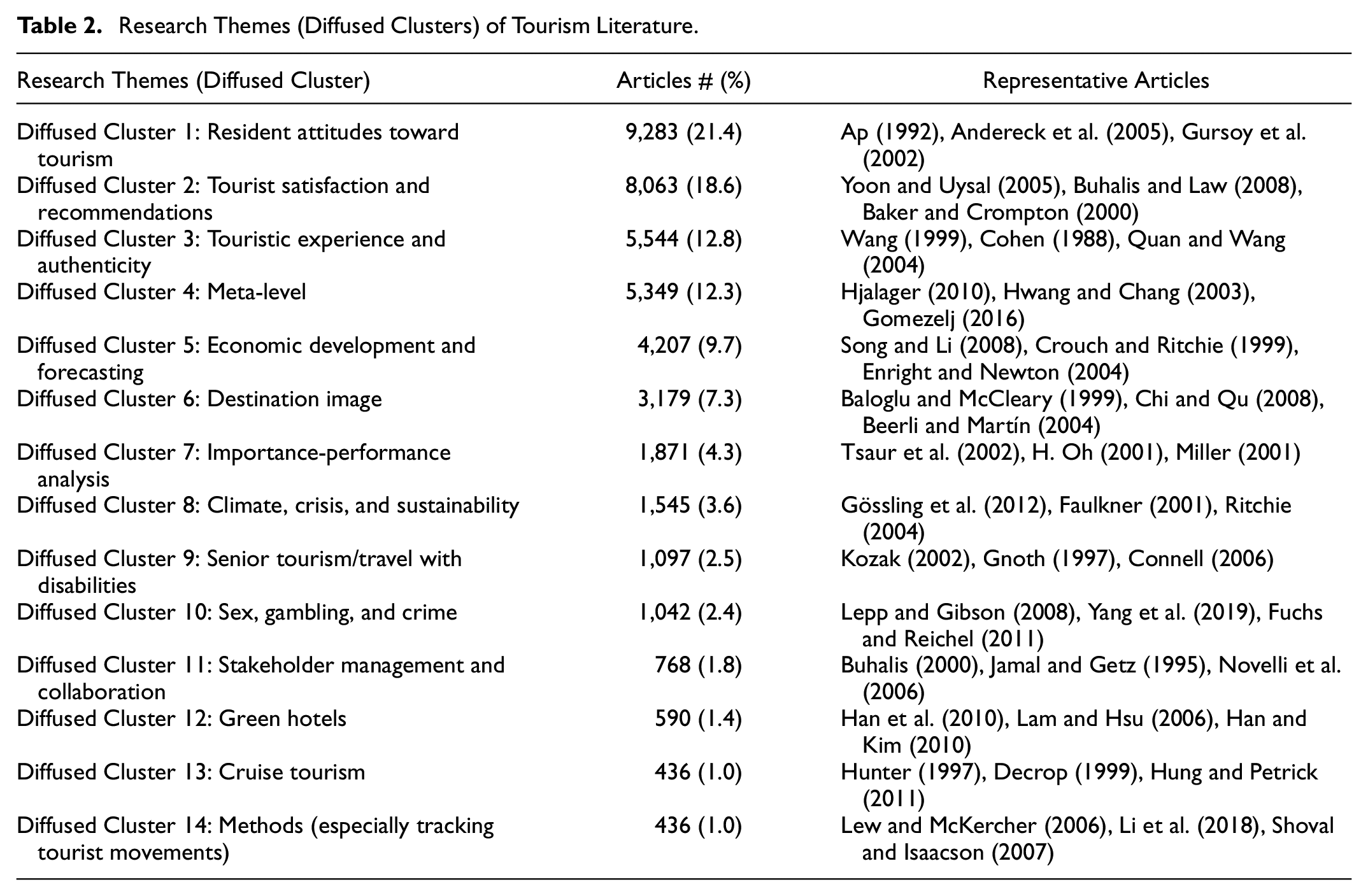
By far the most diffused cluster is resident attitudes toward tourism (Diffused Cluster 1), representing 21.4% of total article volume. Here the representing papers are commonly used in other fields (e.g., from other disciplines) to support their own argumentation. For example, insights from Andereck et al. (2005), Ap (1992), and Gursoy et al. (2002) about residents’ perceptions of the impact of tourism appear in related research examining event studies (Fredline & Faulkner, 2001) and public governance (Müller, 2012). Also the impact of tourism, including for residents, is a prominent point of discussion beyond tourism research (Eshuis et al., 2013; Köbis et al., 2021; Zenker & Petersen, 2014).
More moderately diffused clusters include economic development and forecasting (Diffused Cluster 5), which represents 9.7% of total article volume and pertains to questions of competitiveness (Crouch & Ritchie, 1999; Enright & Newton, 2004) and forecasts of economic impacts (Song & Li, 2008). Evidently, the economic development of the tourism sector provides a starting point for other research disciplines to focus their investigations, within the tourism industry (Dekimpe et al., 2016). Destination image (Diffused Cluster 6) represents 7.3% of total article volume; it is exemplified by entries such as Baloglu and McCleary (1999), Beerli and Martín (2004), and Chi and Qu (2008). Branding destinations have transcended tourism to inform research into how to brand places in general (Eshuis et al., 2013; Kavaratzis & Kalandides, 2015; Zenker et al., 2014), including in applications of branding research from marketing (Swaminathan et al., 2020).
Finally, two niche diffused clusters are notable. Tourism-related stakeholder management and collaboration (Diffused Cluster 11; 1.8% of total article volume) includes articles by Buhalis (2000), Jamal and Getz (1995), and Novelli et al. (2006). In other research disciplines, these references inform discussions of place branding (Alexander & Hamilton, 2016; Braun et al., 2013), place management (Lee et al., 2015), and business studies (Ruzzier & De Chernatony, 2013). This finding also highlights that tourism research employs theories from other research disciplines (Inkpen & Tsang, 2005), rather than creating its own, in a form of theoretical arbitrage that is common within social sciences and clearly reflects the permeable boundaries of tourism research with other cognate research disciplines.
The smallest cluster, tracking tourist movement (Diffused Cluster 14: methods–especially tracking tourist movement; 1% of article volume), features Lew and McKercher (2006) and Li et al. (2018) as widely cited representative examples. In particular, GPS methods for tourist tracking have become a favored topic (Shoval & Isaacson, 2007), and they similarly appear in other research disciplines that cite tourism research to justify the method or as an application example (Shoval et al., 2015; Walden-Schreiner et al., 2018). Because this diffused cluster is so small though, no definitive conclusions can be drawn about its potential impact, which might be profound. This issue is revisited in the subsequent threshold analysis.
Figure 3 depicts diffused cluster citation growth over time. The thresholds on the vertical axis indicate the year that articles in each diffused cluster reached average citation levels of 10, 20, and 50 citations each. Thus, the threshold (and year) signals the momentum gained by each diffused cluster theme and accommodates different citation levels for individual articles within each cluster, which means it can indicate relative points of academic maturity for diffused clusters. Notably, the first topic to achieve the highest citation performance threshold was destination image (Diffused Cluster 6); it reached the first (>10 citations on average per article) threshold in 1996 and then the highest threshold (>50 citations on average per article) by 2008. More recently, resident attitudes toward tourism (Diffused Cluster 1; 2018) and economic development and forecasting (Diffused Cluster 5; 2018) have attained the highest threshold. Economic development and forecasting (Diffused Cluster 5) is one of the newest themes and reached the first threshold only in 2008; tracking tourist movement (Diffused Cluster 14: methods, especially tracking tourist movement), which emerged in 2004, has yet to achieve the highest citation performance threshold though.
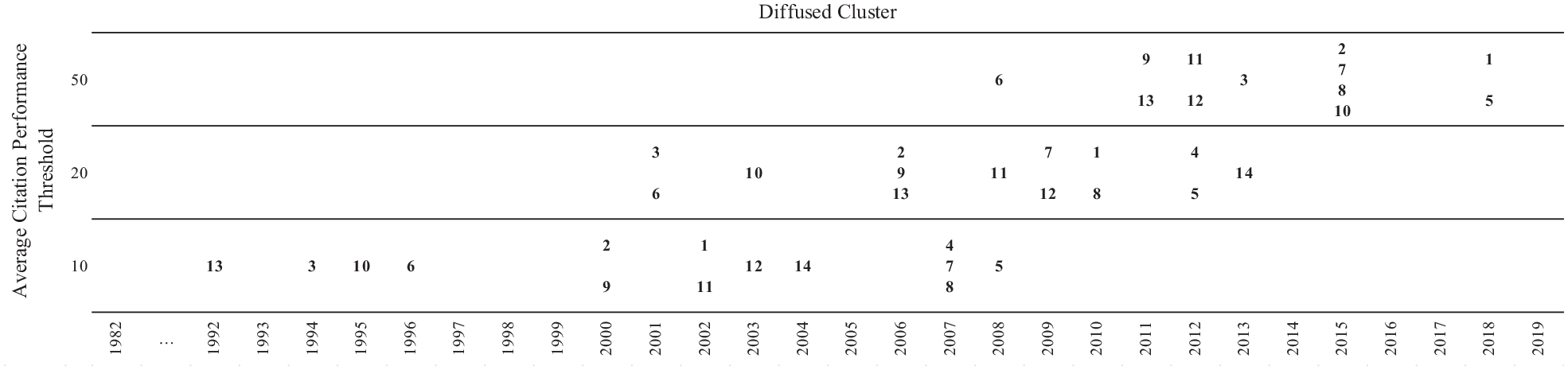
Evolution and relative impact of the diffused clusters.
Considering how core clusters migrated to diffused clusters (Table 3), it is worth noting that articles in Diffused Cluster 1 (resident attitudes toward tourism) share citations with Core Cluster 2 (52.5%) and Core Cluster 6 (46.6%). This finding reflects the current discussions of tourism beyond the focal research discipline, which often recognize the combined impacts of tourism on residents and the environment (Kulusjärvi, 2020), according to a sustainability research theme.
Core Cluster Research Themes Linked to Diffused Cluster Research Themes (Core Cluster to Diffused Cluster).
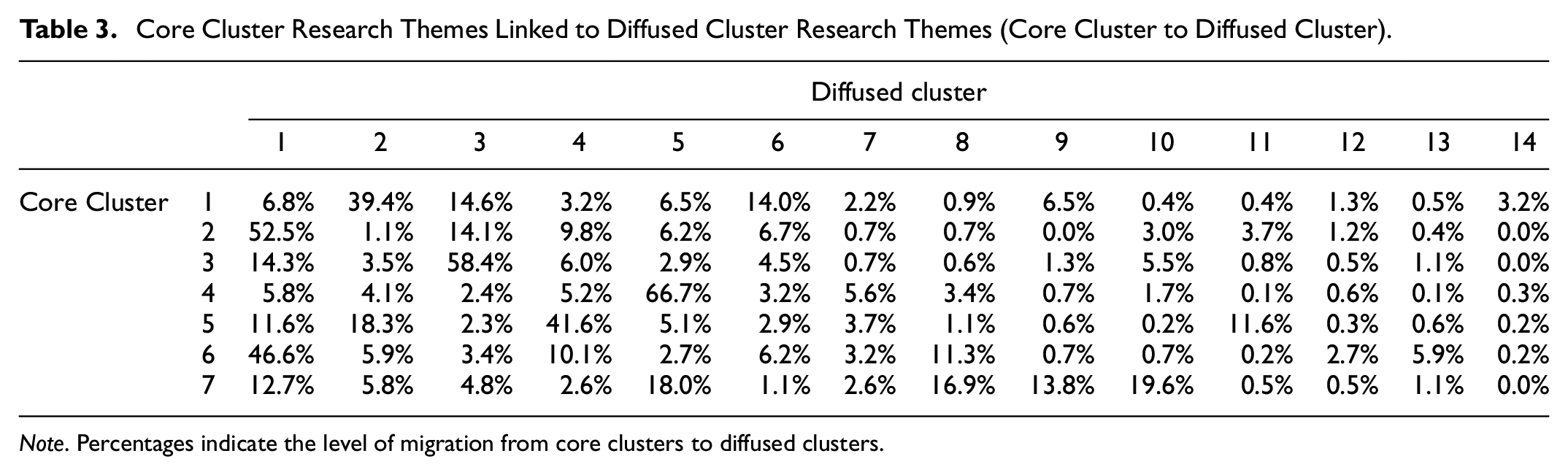
Note. Percentages indicate the level of migration from core clusters to diffused clusters.
In addition, Diffused Cluster 5 (economic development and forecasting) overlaps significantly with Core Cluster 4 (66.7%) and also more moderately with Core Cluster 7 (18.0%). Especially in light of the COVID-19 pandemic, links of forecasting, risk, safety, and crisis management remain highly relevant (Karl et al., 2021). Although Diffused Cluster 6 (destination image) has no clear overlap with the core clusters, it shares many citations with them, especially Core Cluster 1 (14.0%). In contrast, Diffused Cluster 11 (stakeholder management and collaboration) is clearly independent, with only a small (11.6%) overlap with Core Cluster 5. Finally, four diffused clusters (Diffused Cluster 7, Diffused Cluster 12, DiffusedCluster 13, and Diffused Cluster 14) are relatively unrelated, without a notable proportion of shared citations with any core clusters. This interesting finding indicates that beyond tourism research per se, certain aspects of tourism (e.g., methods used, Diffused Cluster 14) are relevant.
Study 2
Purpose
For the second research question, a forecast of future developments for the diffused clusters was developed and estimated. Specifically, the influence of each of the 14 diffused research themes throughout the social sciences was forecasted across different time horizons in order to gage the growth of diffused tourism research.
Data and Methods
Each diffusion cluster was initially split into two parts: an in-sample component that accounts for the majority of published articles (34-year period, 1982–2016) and the remaining out-of-sample component (2016–2019). The determination of the best fitting functional form relies on the in-sample; it reveals that the polynomial, rather than exponential, function provides the best fit with minimal errors. This selected function was tested using the out-of-sample component and checked for predictive validity, which enables the identification of the polynomial order that results in the lowest sample predictive error. Subsequently, a general predictive model was specified with research theme y as an nth degree polynomial:

where
n: polynomial order,
y: cumulative average citations per article at publication year
x: publication year.
With this selected model, the annual growth rate for each diffused cluster was forecasted, based on the cumulative average citations per article. The forecasted growth rates were compared against actual growth rates for 2016 to 2019 to determine the annual average change in the future forecasted citation patterns for each diffused cluster.
Results and Discussion
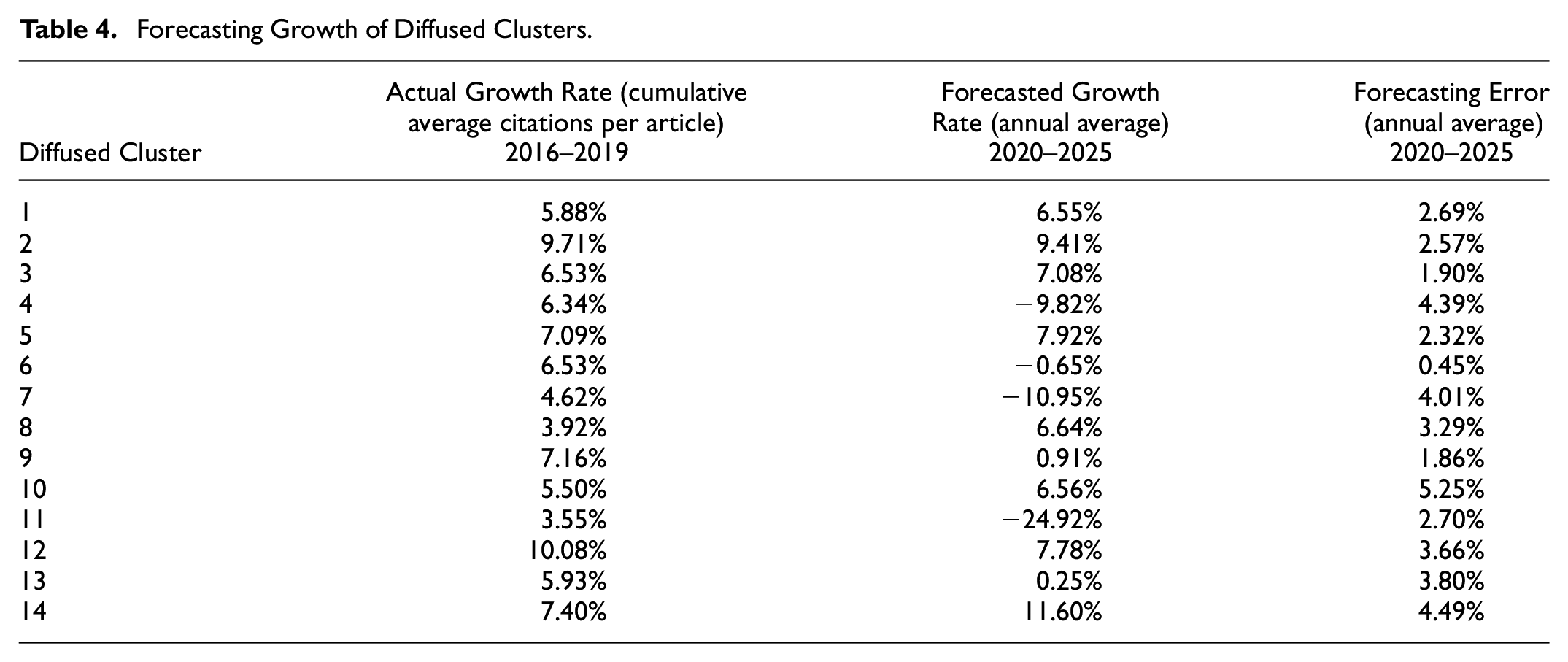
Study 2 primarily focused on how the diffused clusters might change in the future, that is, how tourism research is likely to be used (cited) outside of the core discipline. Table 4 and Figure 4 show the previous growth of each diffused cluster (2016–2019) and the forecasted growth for 2020 to 2025 (including forecasting error).
Forecasting Growth of Diffused Clusters.
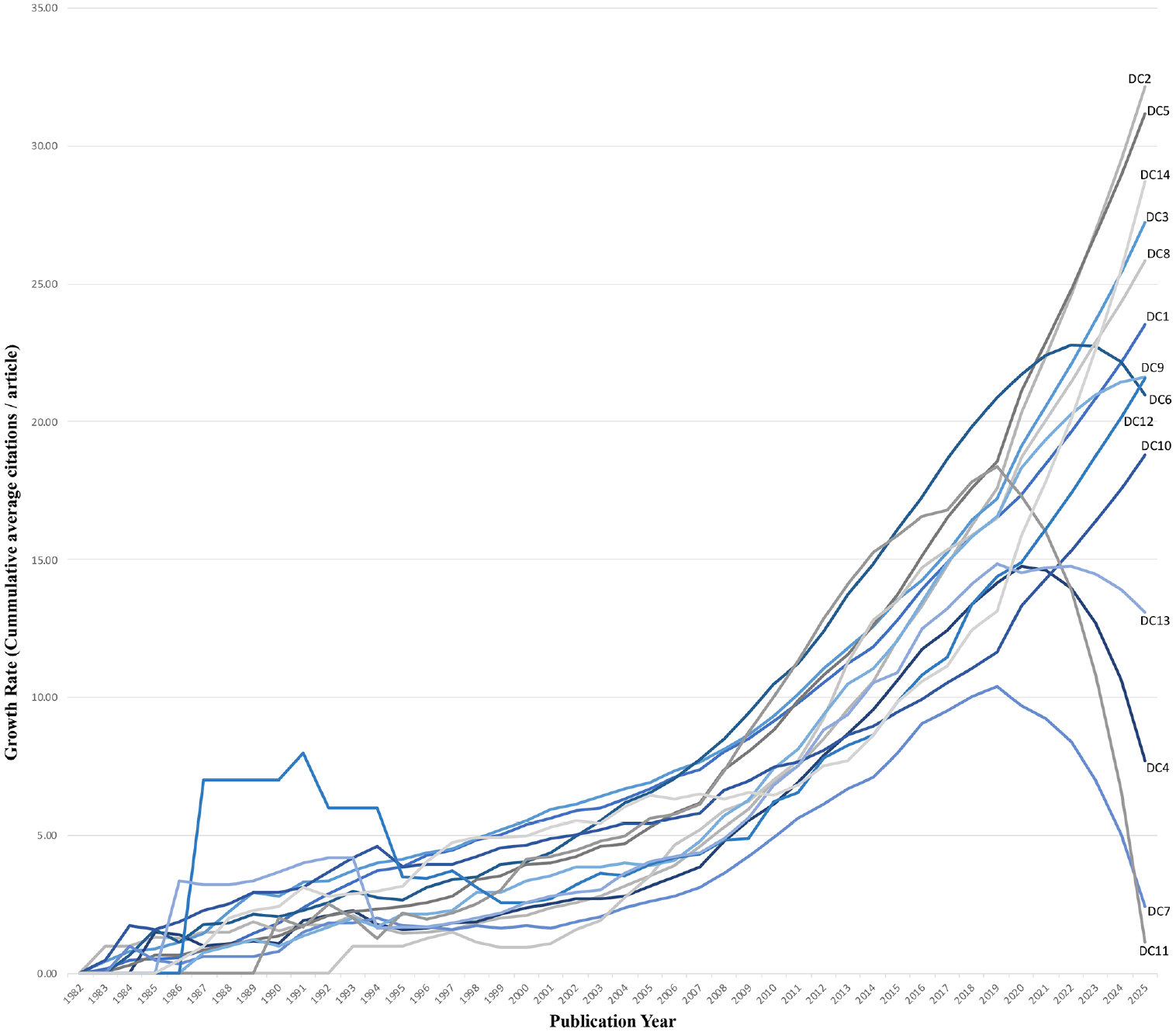
Forecasting growth of diffused clusters.
The largest diffused cluster in terms of publication volume (Diffused Cluster 1: resident attitudes toward tourism) reveals a relatively strong growth rate (5.88%); forecasting suggests that it will grow at an even faster rate (6.55%) over the next 5 years. Studies outside of the tourism research discipline are likely to continue to employ evidence about residents’ support for tourism to explain findings in their own discipline. A similar pattern appears for Diffused Cluster 5 (economic development and forecasting), namely, a strong previous growth rate (7.09%) and even more promising future growth (7.92%).
In contrast, Diffused Cluster 4 (meta-level) is in strong decline. Previously, meta-analyses, state-of-the-art reviews, and meta-discussions have been strongly cited (growth rate 6.34%), but this growth is unlikely to continue (−9.82%, forecasting error of 4.39%). The reasons for this shift could be manifold: This research topic might have reached maturity; it could be a declining trend; or perhaps research disciplines (outside tourism research) do not need tourism examples anymore, because the topic has gained sufficient persuasive power across other fields.
We also note the particular interest of DiffusedCluster6 (destination image). As one of the first tourism topics with exceptionally high citations outside the tourism research discipline (Figure 3) and strong growth in recent years (6.53%), it appears likely to experience a decline of citations (−.65% with forecasting error of 0.45%, remarkably low). Destinations as brands have been used frequently as examples of a broadened branding approach, but this practice has been assimilated as the boundary conditions of branding have become more established in other disciplines (Eshuis et al., 2013; Swaminathan et al., 2020). Therefore, other research disciplines do not default, as was once common, to tourism but instead rely on their own theories-in-use (Braun et al., 2013), which may explain the forecasted low growth rate.
Similar reasoning may hold for Diffused Cluster 11 (stakeholder management and collaboration), which reveals the largest negative impact in forecasted growth (−24.92%, forecasting error 2.70%). It is expected that even if many future articles in other domains cover this topic, they might not cite tourism research. Public administration, for example, has become more self-focused and appears likely to continue to refer to its own published research, even when discussing tourism research topics (Van der Wal, 2020). This development pattern has precedent in other business sectors, such as service research, where authors focus increasingly on their own disciplinary journals and gather less from other research disciplines (Lin et al., 2019). In addition, the forecasted growth rate decline is a relative measure and should be interpreted as such. This point is not to suggest diminishing significance of this research theme but rather that the crescendo of initial interest or “emerging excitement” (Hirsch & Levin, 1999) has peaked. The research theme of stakeholder management and collaboration remains important but has reached maturity. Other examples of clusters that decline (Diffused Cluster 7: importance-performance analysis; forecasted growth rate −10.95%) also might indicate that the research topic has reached a certain level of maturity and thus is no longer as dynamic as it was.
Several positive further developments also emerge from analysis (Diffused Cluster 5: economic development and forecasting, forecasted growth rate 7.92%; Diffused Cluster 8: climate, crisis, and sustainability, forecasted growth rate 6.64%; Diffused Cluster 10: sex, gambling, and crime, forecasted growth rate 6.56%). The highest forecasted growth rate for citations notably is the least diffused cluster (Diffused Cluster 14: methods, especially tracking tourist movement, forecasted growth rate of 11.60%, forecasting error 4.49%). This finding suggests the importance of tourism research as a discipline that develops and applies novel, rigorous methods. A cursory examination of a journal such as Organization Research Methods indicates increasing methodological sophistication in recent years; the nature, proliferation, and scale of tourism data also has enabled these methods to be accelerated with new and novel insights. Furthermore, this finding indicates the strong potential for further impacts of tourism research, beyond the top three tourism journals.
Forecasting techniques of any kind are predicated on error, which reflects uncertainty around the forecast. For example, Diffused Cluster 8 is highly correlated with a sense of urgency and stimuli for change. Climate and sustainability transcend many research disciplines, but some of their aspects strongly depend on perceptions and experiences of external shocks that stimulate research themes, as the COVID-19 pandemic shows. Tourism research provides a basis for contextual arguments posed in many research disciplines, such as macroeconomics studies that investigate the gross domestic product of tourism-dependent nations or public health scholars considering transmissions of the disease. It is thus reasonable to anticipate significant, additional stimuli for the research output already provided in special journal issues through the future legacy effects of the COVID-19 pandemic. However, based on the present article’s data scope, it is not feasible to forecast in a modeling sense how this impact will spread through published research. Previously designated a niche topic (Jiang et al., 2019; Ritchie & Jiang, 2019), Diffused Cluster 8 has the potential to outperform other diffused clusters in coming years. More generally though, the forecasts in the present article illustrate that tourism has diffused widely to other research disciplines, and will continue to do so, such that tourism scholars contribute strongly to research disciplines other than their own.
Study Limitations and Implications
Implications
Previous bibliometric studies consider how other cognate research disciplines have contributed to tourism research (Crouch & Perdue, 2015); the present article adopts the opposite perspective and considers how tourism research has contributed to other cognate research disciplines. Specifically, this article identifies what dimensions underlie the core knowledge structure of tourism research, how tourism research has influenced other cognate research disciplines through its diffused knowledge structure (Study 1), and when this diffused knowledge structure of tourism research is likely to change in terms of research expansion and contraction (Study 2).
The findings suggest the continued relevance of the tourism research discipline. For most diffused clusters, the corresponding forecast highlights a consistent growth rate in citations. Eight of the 14 diffused clusters, which together constitute more than two-thirds (70.9%) of the expanded set of articles by volume (38,657 articles), prompt forecasted growth rates ranging 6.55% to 11.60%, which indicates that in the future, citations to these diffused cluster (and the tourism research discipline in general) will increase even more. Two diffused clusters, accounting for 3.5% of the expanded set of articles by volume, appear likely to display steady growth (Diffused Cluster 9: senior tourism/travel with disabilities, forecasted growth rate 0.91%; Diffused Cluster 13: cruise tourism, forecasted growth rate 0.25%). The remaining four diffused clusters, or just more than one-quarter of the expanded set of articles (25.7%), seem likely to experience negative growth rates though, ranging from −0.65% to −24.92%: Diffused Cluster 4 (meta-level), DiffusedCluster6 (destination image), Diffused Cluster 7 (importance-performance analysis), and Diffused Cluster 11 (stakeholder management and collaboration).
Using these forecasts as indicative of the scope, relevance, and reach of the tourism discipline, this article finds that a selection of core clusters exhibits a high level of migration to one or more of the diffused clusters. The core clusters in turn have the potential to exert impacts on research disciplines beyond tourism. For example, Core Cluster 7 reveals high levels of migration (between 12.7% and 19.6%) to five diffused clusters: DiffusedCluster1 (resident attitudes toward tourism), DiffusedCluster5 (economic development and forecasting), Diffused Cluster 8 (climate, crisis, and sustainability), Diffused Cluster 9 (senior tourism/ travel with disabilities), and Diffused Cluster 10 (sex, gambling, and crime). Four diffused clusters are forecasted to display robust growth rates (6.55%–7.92%); the fifth (Diffused Cluster 9) has a forecasted growth rate of 0.92%. Fundamentally, an article from Core Cluster 7 has a relatively higher chance of being cited in future than at present.
In contrast, an article in Core Cluster 5 appears most likely to migrate to Diffused Cluster 1 (resident attitudes toward tourism) or Diffused Cluster 2 (tourist satisfaction and recommendations) (29.9% total) but also to Diffused Cluster 4 (meta-level) or Diffused Cluster 11 (stakeholder management and collaboration) (53.2% total). Forecasted growth rates for the former diffused clusters are 6.55% and 9.41%, respectively, but −9.82% and −24.92% for the latter. An article from Core Cluster 5 thus has a relatively lower chance of being cited in the future than is presently the case. This finding should not be taken to imply that scholars should refrain from undertaking research on tourism management and innovation though. Articles in this research theme still can make an impact in the tourism research field, as well as in other cognate research disciplines.
Tourism authors also need to pay attention to the current size of diffused clusters. For example, DiffusedCluster 1 (resident attitudes toward tourism) constitutes 21.4% of the expanded set of articles by volume, and even though its articles are likely to be cited (forecasted growth rate 6.55%), tourism researchers might find it challenging to attract more citations, due to the sheer volume of articles in this diffused cluster. Citations are not equally distributed, and the majority of cluster citations tend to refer to a fraction of articles. Smaller diffused clusters with robust or strong forecasted growth rates thus might be preferable for early-career scholars attempting to develop a tourism research profile that appeals to other cognate research disciplines. For example, Diffused Cluster 12 (green hotels; 1.4% of expanded set), Diffused Cluster 13 (cruise tourism, 1.0% of expanded set), and Diffused Cluster 14 (methods, especially tracking tourist movement, 1.0% of expanded set) offer strong possibilities.
Limitations and Future Research
Several methodological limitations inform the findings of the studies developed in this article. In particular, citation performance is measured based on the Web of Science database, which is more accurate but also covers less available published research than the Scopus database. In choosing the Web of Science database, citation accuracy, validity of references, and record duplication limitation were prioritized. Enhanced data quality or purification efforts might recommend different database choices in the future, in which case the three studies developed in this article could be replicated using Scopus data.
A second limitation pertains to the potential citation bias; researchers are considered more likely to cite published articles that have established a high citation performance. To mitigate this concern, at least partially, a long-term perspective and wide research scope were adopted (Study 1) when exploring the knowledge structure diffusion. Additional research also might integrate alternative methods, such as keyword analysis or theme modeling, to ascertain the quality of a cited article’s contribution.
A third limitation is related directly to cut-off time selected for our sample data generation. An inherent element of our methodology is the use of direct citations as a proxy measure for article influence. A publication’s influence becomes apparent (and can be measured) when it is cited by subsequently published articles. At least 1 year post publication is needed for meaningful conclusions to be drawn based on citations by subsequent works. We recognize that this cut-off time introduces a limit to the population time span and may exclude publications that are yet to manifest influence.
The core cluster population boundaries also prompted the selection of the top three tourism journals, which might exclude some other influential publications. Based on this approach, the present article explores the diffusion of the core knowledge structure, and integrates a much wider scope of research, which should mitigate this potential limitation. An expanded research population likely can “capture” any missing, influential publications, but continued research also might adopt other approaches to validate this claim. A first step toward this investigation was taken by conducting an additional study, focusing on core tourism research population generated from a different set of three specialized journals: International Journal of Hospitality Management (ABCD: A*; SJR: rank 5; AJG: 3), Journal of Sustainable Tourism (ABCD: A*; SJR: rank 6; AJG: 3) and International Journal of Contemporary Hospitality Management. Results from this study produced different Core Cluster themes than in the original Study 1. Based on the selection of journals, analysis produced a general and different focus on the management aspect of the hospitality industry. On the other hand, connections were also found to some Core Cluster themes and especially the diffusion cluster themes in Study 1.
Finally, the purpose of this study was not to identify or justify the top-scholars, universities, or journals of the field, but to draw the light on the different tourism topics that show impact within and foremost beyond the tourism discipline. Thus, this study does not create any scholar or university ranking—as is typically done in other bibliometric studies (e.g., Benckendorff & Zehrer, 2013; Koseoglu et al., 2016)—because this would require different methods (e.g., network analysis) and focus on a different meaning to the data processed here. However, identifying especially universities as hubs and facilitators of certain research topics, or networks of scholars driving a certain topic into other research disciplines, could be very promising goals for future research using the results presented here.
Conclusions
This study aims to overcome siloed thinking within the tourism research discipline. Core research themes and their influences on other cognate research disciplines are identified. Thus, multidisciplinary (scholars from different research disciplines working together) and interdisciplinary (drawing from one research discipline to inform another) research should be acknowledged as important implications of tourism research.
The 14 diffused research themes indicate where tourism research has impacts outside its own discipline. Devising original and creative ideas is paramount in developing impactful research in tourism, within and outside the tourism research discipline (Kock et al., 2020). Bridging two or more disciplines can shed new light; in particular, challenging research problems often require input from multiple research disciplines.
This modus operandi aligns with the contract between the academic community and surrounding society: Universities need to produce excellent research, but highly ranked journal articles and their citations no longer suffice. Scholars also must engage in activities to deliver societal value (Lindgreen et al., 2021; Phillips et al., 2020). For tourism research, such activities could include informing tourism policies and businesses (Brauer et al., 2019). Ideally, the goals of achieving excellent research and impactful research should go hand-in-hand. As this study shows, tourism research is well on its way to achieve just that beneficial status.
Footnotes
Declaration of Conflicting Interests
The author(s) declared no potential conflicts of interest with respect to the research, authorship, and/or publication of this article.
Funding
The author(s) received no financial support for the research, authorship, and/or publication of this article.
