




Abstract
Since the COVID-19 pandemic has significantly increased the use of personal vehicles in travel, adoption of self-driving autonomous vehicles can radically transform the travel industry. Thus, this study develops and tests a conceptual autonomous vehicle acceptance model that identifies hedonic motivation, trust in autonomous vehicles and social influence as critical determinants of performance expectancy, perceived risk and emotions, which determine travelers’ intentions to use autonomous vehicles (AVs) utilizing the Cognitive Appraisal Theory and the Artificially Intelligent Device Use Acceptance model as conceptual frameworks. Findings indicate that trust is the most powerful determinant of performance expectancy and essential to decrease risk perceptions. Furthermore, performance expectancy and hedonic motivation are critical determinants of travelers’ positive emotions, which in turn determines the acceptance of AVs. Contribution to theoretical knowledge and implications for practice are provided, and limitations and recommendations for future studies are discussed.
Introduction
Because of the COVID-19 pandemic, both the travel industry and society at large are going through a history-making era of immense proportions. The COVID-19 pandemic has significantly altered travel behavior and travel experience expectations (Gursoy and Chi 2020). While it is not clear at the moment what will the long-term impacts of the COVID-19 pandemic be on travel industry, there is no question that since the beginning of the COVID-19 pandemic, travel industry and the society at large has been going through an immense transformation because of being in such a pivotal moment in human history (Higgins-Desbiolles 2020). How we travel, and our travel expectations have significantly changed (Farzanegan et al. 2020; Gössling, Scott, and Hall 2020). Before the pandemic, social interactions with other travelers were considered as a critical component of the travel experience (Lin et al. 2019). However, because of social distancing expectations and fear of getting infected with the coronavirus, individuals are seeking for travel experiences that minimize social contact with others such road trips through scenic countryside, beach or lakeside getaways or hiking and biking experiences. Furthermore, an increasing number of travelers are traveling by their personal vehicles rather than taking other forms of transportation such as air travel, taking the train, etc. to ensure social distancing and minimize the possibility of getting infected with the coronavirus (Gursoy, Chi, and Chi 2020).
As a result, an increasing number of travelers are choosing to travel to destinations that are close to home because of driving distance limitations. However, recent developments in self-driving autonomous vehicle technologies (AVs) powered by artificial intelligence (AI) may change the distance travelers are willing to drive in their personal vehicles to visit destinations that are far from home. While many consumers are still sceptical and cautious about the viability of self-driving AVs powered by AI (Tussyadiah, Zach, and Wang 2017), those AVs are slowly becoming an important part of our daily life. An increasing number of automobile manufacturers are offering self-driving feature as an additional feature or even as a basic one. There is no question that self-driving AVs powered by AI are going to revolutionize how we travel in the near future (Cohen and Hopkins 2019; Tussyadiah, Zach, and Wang 2017), and it will dramatically change the paradigm of future mobility. The introduction of AVs will be both technologically and socially disruptive, which will result in significant changes in how we travel, how far we travel, increase efficiency and safety, reduce congestion and pollution, lower emissions, and ultimately reshape mobility and sustainability (Prideaux and Yin 2019). While AVs will increase travel efficiency and mobility, decrease traffic congestion, accidents, and optimize traffic flow, AVs also have the potential to revolutionize the travel industry. Thus, use of AVs will raise important issues for the travel industry in terms of future regulations, tourism planning and new travel experience offerings.
Availability of self-driving AVs will have significant impact on the travel and tourism industry, especially in the COVID-19 era and afterwards, since a large portion of tourists heavily rely on personal vehicles for traveling to a destination and for activities they participate while in that destination. AVs are deemed to increase traveler’s mobility by revolutionizing their personal vehicle use behaviors. Thus, AVs are likely to disrupt all industries that heavily rely on transportation, including travel and tourism industry (Cohen and Hopkins 2019). The question is whether tourists will use AVs powered by artificial intelligence and what factors will determine their acceptance/rejection of the use of those vehicles. As suggested by the theory of reasoned action (Fishbein and Ajzen 1975), intentions and willingness are the main determinants of customers’ actual behavior (Cronan, Mullins, and Douglas 2015). Yet, understanding the significant determinants that predict customer willingness is a complex issue but paramount to understand the success or failure of the introduction of AVs. In trying to understand customer acceptance of new technologies, past studies proposed several determinants of customers’ willingness to use AI devices. However, understanding customer willingness to use AVs in tourism context has not received much attention. The discussion surrounding AVs in tourism is limited to Cohen and Hopkins (2019), Prideaux and Yin (2019), and Tussyadiah, Zach, and Wang (2017, 2020). Except for Tussyadiah, Zach, and Wang (2017, 2020), the other studies are conceptual and did not discuss or propose any conceptual framework that can help us understand travelers’ adoption of AVs for travel and tourism purposes.
Several studies have examined the determinants of customers intentions to adopt or reject the use of new technology devices, such as ease-to-use and perceived usefulness (Davis, Bagozzi, and Warshaw 1989; Ozturk et al. 2016), effort and performance expectancy (Gursoy et al. 2019; Lin, Chi, and Gursoy 2019), cognition and influence of social norms (Venkatesh and Davis 2000; Venkatesh and Morris 2000), previous experience (Morgan-Thomas and Veloutsou 2013), hedonic motivation (Lin et al. 2020; Venkatesh, Thong, and Xu 2012), anthropomorphism (H. Y. Kim et al. 2018; Qiu et al. 2019), and emotions (Gursoy et al. 2019). Nevertheless, most of these studies that investigated consumers’ willingness to adopt or reject artificial intelligence devices (with exception to Gursoy et al. 2019; Lin et al. 2020) have been descriptive or used existing technology acceptance models that are thought to be insufficient for explaining the artificial intelligence device use acceptance and adoption (Lu, Cai, and Gursoy 2019; Tussyadiah and Park 2018).
Even though several of the constructs included in the Technology Acceptance Model (TAM) are predictors of users’ intention to use technology (Gursoy et al. 2019), some of these factors of TAM, such ease of use and anthropomorphism may not be appropriate in the context of travelers’ acceptance or objection to AVs powered by AI since those factors put emphasis on individuals’ learning of new technologies and human like features. In the context of AVs, travelers would be more interested in determining whether AVs can have the same or better performance than the performance of traditional human-driven cars (Cohen and Hopkins 2019; Kellerman 2018). The outcome of this evaluation heavily depends on travelers’ trust and their perceived risk toward AVs as shown in studies that examined determinants of acceptance levels of AI devices (Park 2020; Ozturk et al. 2016; Tussyadiah, Zach, and Wang 2020). Thus, trust and perceived risk of using AVs should also be considered as important determinants that can influence intention to use AVs while traveling. In the same vein, emotions play a critical role in predicting willingness to use AI devices (Gursoy et al. 2019; Lin et al. 2020), which is also likely to influence travelers’ intention to use AVs for travel purposes. As suggested by the Cognitive Appraisal Theory (CAT), elicitations of emotions are due to individuals’ evaluations of a stimulus, which further determines behavioral responses (Lazarus 1991a, 1991b; Ma et al. 2013; Watson and Spence 2007). As per CAT framework, travelers’ decision to use AVs for travel and tourism purposes is likely to depend on their emotions resulting from a multistage and complex evaluation process (Gursoy et al. 2019; Lin et al. 2020).
Thus, using the CAT (Lazarus 1991a, 1991b) as the theoretical framework, this study proposes an autonomous vehicle acceptance model (AVAM) that shows the multistep decision-making process travelers likely to go through in determining whether they are willing to use AVs for travel and tourism purposes. This study advances the AV adoption literature by extending the theoretical AIDUA framework (Gursoy et al. 2019) to predict individuals’ intensions to use AVs during their tourism experiences by incorporating trust and perceived risks, hyphening that trust is an antecedent of the perceived risk of using AVs. Moreover, this study examines the magnitude and the strength of the relationships included in the proposed conceptual model. Results of the empirical testing of the proposed model are likely to provide important insights to travel and tourism industry, AV manufacturers and researchers in understating the factors that can determine travelers’ use of AVs powered by AI for travel and tourism purposes. These findings can assist destination planners and managers, AV manufacturers, policy makers, and travel and tourism businesses to develop AV development and adoption strategies. Beyond the contribution to theory and practice, these findings will also provide important insights to social science researchers who study the effects disruptive technologies in everyday use on society by identifying the critical factors that can influence individuals’ attitudes and behaviors toward the use of AVs at each stage of their cognitive appraisal process they use during their decision-making process.
Theoretical Background and Hypotheses Development
Studies that investigated travel experiences before the COVID-19 pandemic have argued that social interactions with others play critical roles in shaping travelers’ experiences and their evaluations of those experiences (Shonk and Chelladurai 2008; Sipe and Testa 2018). Social interactions among traveler during organized tours (Holloway 1981), backpacking tours (Sørensen 2003), cruises (Yarnal, Kerstetter, and Yen 2005), and conferences (Wei et al. 2017) have been reported to result in development of a level of social closeness and friendship, in some cases, between travelers during their travel experiences, which can have significant influences on their travel experiences (Lin et al. 2019). However, since the beginning of the COVID-19 pandemic, individuals travel behaviors and how they view social interactions with other travelers have been going through a significant transformation (Higgins-Desbiolles 2020) because of social distancing rules and the fear of getting infected with the coronavirus (Farzanegan et al. 2020; Gössling, Scott, and Hall 2020). Because of health-related fears and worries, travelers have been choosing experiences and mode of transportations that minimize interactions with other travelers (Gursoy and Chi 2020). As a result, an increasing number of travelers are using their personal vehicles to ensure social distancing and minimize the possibility of getting infected with the coronavirus and traveling to destinations that are close to home (Gursoy, Chi, and Chi 2020). While the long-term effects of the COVID-19 pandemic on the travel industry are not clear, recent changes in individuals travel behaviors suggest that use of personnel vehicles will continue to be an important component of future travel experiences. Since the current technologies available in personal vehicles limit how far most travelers are willing to drive to visit a destination, availability of self-driving AVs powered by AI may have significant impact of how far travelers will be willing to drive in their personal vehicles, which may enable them to visit destinations that are far from home. However, we do not know much about whether travelers will embrace the use of self-driving AVs and the factors that may influence their adoption of self-driving AVs.
Tourists’ Adoption or Rejection of AVs Powered by AI
This study employs the CAT (Lazarus 1991a) and the AIDUA framework (Gursoy et al. 2019), and several other relevant determinants of acceptance of artificial intelligence devices (Gursoy et al. 2019; Hubert et al. 2019; Kaur and Rampersad 2018; D. J. Kim, Ferrin, and Rao 2008; Lu, Cai, and Gursoy 2019; Zhang et al. 2019) to examine travelers’ likelihood of accepting or objecting to the use of AVs for travel and tourism purposes. However, factors such as anthropomorphism and perceived effort expectancy that are included in previous studies (i.e., Chi, Gursoy, and Chi 2020; Gursoy et al. 2019; Lin et al. 2020; Lu, Cai, and Gursoy 2019; Shi, Gong, and Gursoy 2020) were not considered for this study because of the specificity of AVs. In line with the CAT and the AIDUA framework, travelers will decide whether to use AVs after going through as many stages of evaluations as being necessary, including assessing the importance (primary appraisal), analyzing benefits and costs (secondary appraisal), and then forming their emotions toward the AV use for travel and tourism purposes, which will determine their behavioral intentions.
Rooted in the CAT (Lazarus 1991a) and the AIDUA theory (Gursoy et al. 2019), this study proposes that travelers’ intention to use AVs for travel and tourism purposes can be analyzed through three stages of cognitive appraisals: primary appraisal, secondary appraisal, and outcome stage. During the primary appraisal stage, travelers analyze the significance and importance of using AVs for travel and tourism purposes by considering three dimensions as presented in Figure 1: trust, hedonic motivation, and social influence. After determining the relevance and importance of using AVs for travel and tourism purposes, travelers will move to the secondary appraisal stage where they will conduct a careful and systematic appraisal of the costs and benefits of using AVs based on perceived risks and expected performance of AVs, which in turn will elicit emotions toward AVs (Chi, Gursoy, and Chi 2020; Jiang 2020; Lazarus 1991a). These emotions will determine travelers’ intention to use AVs for travel and tourism purposes. The components and process of cognitive appraisal will be examined in the following section, by offering an outline of CAT.
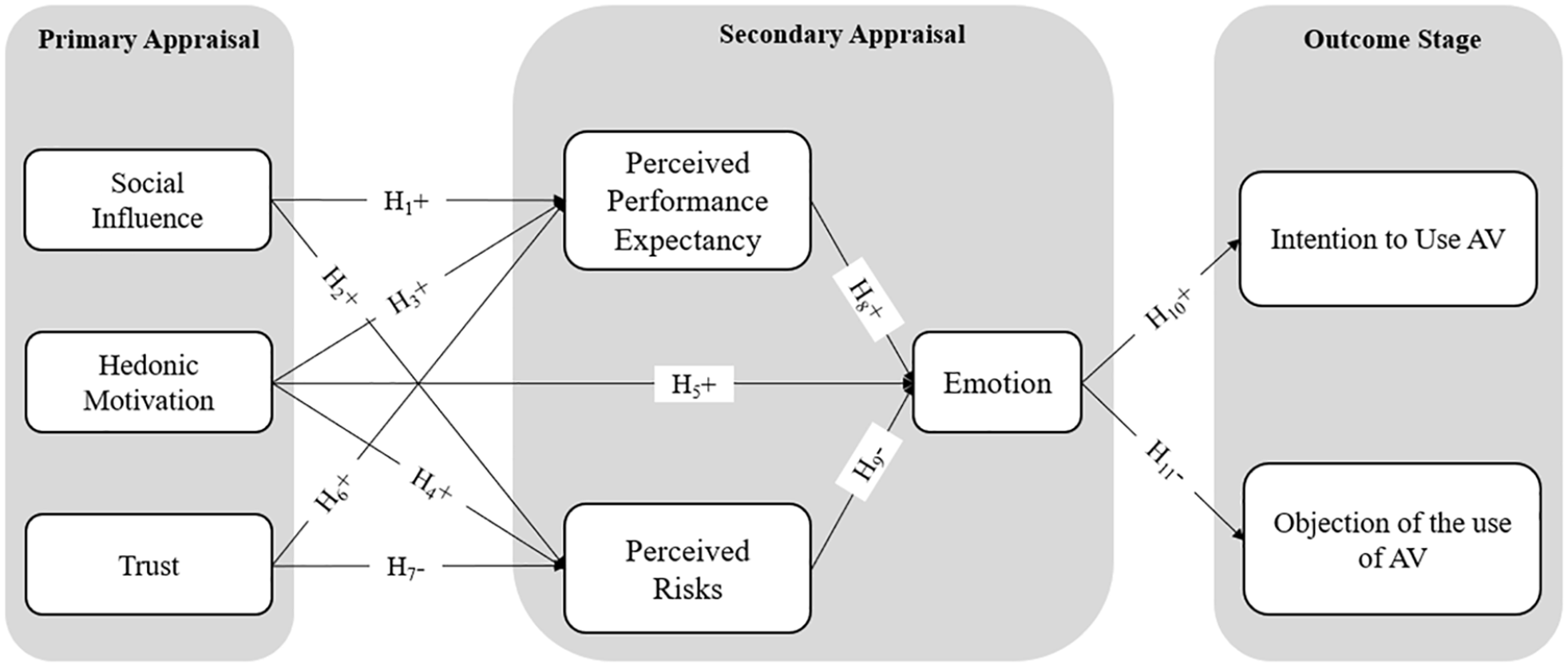
Proposed Autonomous Vehicles Acceptance Model (AVAM).
Hypotheses Development
Primary Appraisal
According to Lazarus (1991a), before determining the use of AVs for travel and tourism purposes, individuals will first assess the relevance and the congruence of the use of AVs to themselves and to the social norms. Relevance refers to motivational relevance (Lazarus 1991a; Meuleman et al. 2019) or importance (Ellsworth and Smith 1988), which is determined by the evaluation of the congruence and relevance of the stimulus for travelers’ goals or needs. Congruence and relevance determine the extent to which the stimulus generated in a particular experience is consistent with individuals’ goal attainment (Ruth, Brunel, and Otnes 2002). Stimulus elicits emotion; however, emotion will be generated only if the stimulus is relevant and congruent with a person’s expectations. Adapted from the AIDUA model proposed by Gursoy et al. (2019), social influence, hedonic motivation (Chi, Gursoy, and Chi 2020; Gursoy et al. 2019; Venkatesh, Thong, and Xu 2012), and trust in AVs (Gefen, Karahanna, and Straub 2003; D. J. Kim, Ferrin, and Rao 2008; Xu et al. 2018; Zhang et al. 2019) are proposed as important determinants of the outcome of the primary evaluation of AV use for travel and tourism purposes. If their primary appraisal demonstrates that the use of AVs for travel and tourism purposes is congruent with travelers’ expectations and their network’s norms, they will move to the secondary appraisal stage where they will perform an intentional, systematic, and proper evaluation of benefits and costs of AV use for travel and tourism purposes (Gursoy et al. 2019; Lazarus 1991a).
Social influence is, according to Venkatesh, Thong, and Xu (2012, p. 159), “the extent to which consumers perceive that important others (e.g., family and friends) believe they should use a particular technology.” As for AVs, social influence refers to the degree to which an individual’s social groups (e.g., friends, coworkers, family, social networks, and opinionated leaders) believes that using AVs for travel and tourism purposes (e.g., driverless taxi, driverless sightseeing coaches, and driverless cars) is relevant and congruent to their group norms. Based on the AIDUA theory, social influence is proposed as an important factor that is likely to play a critical role during the primary evaluation of AV use for travel and tourism purposes since attitudes and behaviors of users are frequently affected by the presence, behaviors, and expectations of their social networks. Existing literature found that social norms or beliefs regarding what is perceived as socially appropriate and acceptable in a given context can play an influential role on customer willingness to adopt AVs (Bansal and Kockelman 2018; Zhang et al. 2020). Thus, social influence, as a key determinant of performance expectancy, should play a critical role on users’ evaluation of and proclivity to use AVs (Acheampong and Cugurullo 2019; Kapser and Abdelrahman 2020; Zhang et al. 2019). If social norms suggest that the use of AVs is likely to make traveling more efficient and fun, then individual travelers are more likely to view AVs more positively. Thus, the following hypotheses are proposed:
Hypothesis 1: Social influence has a direct impact on performance expectancy of AVs.
In addition, we hypothesize that social influence is among the factors that can influence individuals’ perception of risk toward the use of AVs. Because social influence and perceived risk have been conceptualized as central constructs in some of the previous research conducted in the context of AVs (Hubert et al. 2019), travelers’ level of adherence to group norms can influence the way they evaluate both the benefits and risks of using AVs. For example, if travelers’ friends or family hold negative opinions about the use of AVs for travel and tourism purposes by insinuating that it generates some risk, then travelers are likely to evaluate AV use as risky. Thus, the following hypothesis is proposed:
Hypothesis 2: Social influence has a direct impact on perceived risks of AVs.
Hedonic motivation or perceived enjoyment is conceptualized as “fun, pleasure or cheerfulness acquired from the use of technology” (Venkatesh, Thong, and Xu 2012, p. 161) without any specific extra benefits (Davis, Bagozzi, and Warshaw 1992). In the context of this study, hedonic motivation denotes the perceived fun or pleasure an individual expects to experience while using AVs. Several scholars (Merhi, Hone, and Tarhini 2019; Salimon, Yusoff, and Mokhtar 2017) postulated that the enjoyable experience, amusement, fun, or pleasure ascribe and motivate customers to use technology frequently. In the AV context, prior studies demonstrated that hedonic motivation is a key predictor of users’ adoption behavior and intentions to use AVs (Nordhoff et al. 2019; Panagiotopoulos and Dimitrakopoulos 2018). Furthermore, the AIDUA model (Gursoy et al. 2019; Lin et al. 2020) points out that hedonic motivation increases customers’ performance expectancy from artificial intelligence devices. Thus, if travelers perceive that using AVs for travel and tourism purposes will increase their fun and enjoyment, their evaluation of the AV will be positive and motivational. As a result, they will place more importance on the benefits offered by using AVs. Based on the preceding discussion, the following hypothesis is proposed:
Hypothesis 3: Hedonic motivation has a direct positive impact on performance expectancy of AVs.
As suggested by the CAT theory (Lazarus 1991a), affective states are the outcome of an appraisal process where individuals evaluate whether events represent a potential threat or benefit. The term “threat” in the CAT generally refers to the risks associated with the subject, item, or product being evaluated. In the context of AVs, there is a presence of uncertainty due to its novelty. In this sense, travelers who are motivated by hedonic and novelty aspects of AVs are likely to view the use of AVs as a low-risk activity, which ultimately decreases their perception of risk and increases their perception of fun, enjoyment, and entertainment associated with the use of AVs (Lee et al. 2019; Zhang et al. 2019). Based on the above discussion, we propose that travelers with high hedonic motivation are less likely to perceive that using AVs for travel and tourism purposes will be risky. Therefore, we proposed the following hypothesis:
Hypothesis 4: Hedonic motivation has a direct negative impact on the perceived risk of using AVs.
The importance of hedonism has been acknowledged especially with fun, enjoyment, and emotion elicited when users experience new technology. Prior studies (Lin et al. 2019; Salimon, Yusoff, and Mokhtar 2017) suggest that early adaptors of new technologies are not only highly involved, have technology affinity, and pursue new experiences but also value the hedonic benefits of using a new technology (Arruda-Filho, Simões, and Muylder 2019; Lin et al. 2020). As suggested by previous studies, hedonic benefits of using a new technology is likely to trigger positive emotions among artificial intelligence device users (Lin et al. 2020; Salimon, Yusoff, and Mokhtar 2017). Thus, hedonic motivation is also expected to trigger positive emotions among travelers who use AVs for travel and tourism purposes since their evaluation of hedonic benefits of using AVs for travel and tourism purposes will determine the type of emotions they will express (Lin et al. 2020). Based on the above discussion, we propose the following:
Hypothesis 5: Hedonic motivation increases travelers’ positive emotions toward the use of AVs for travel and tourism purposes.
Since AVs can drive without human intervention, trust has been identified as a catalyst that influences human–automation interaction (Lee and See 2004). According to Lee and See (2004, p. 54), trust is “the attitude that an agent will help achieve an individual’s goals in a situation characterized by uncertainty and vulnerability.” Trust is a social emotion that mediates the interaction between human and automation (Ghazizadeh, Lee, and Boyle 2011; Xu et al. 2018). When it comes to a trust-oriented perspective for an emerging technology such as AVs, where uncertainty is present (M. J. Kim, Lee, and Jung 2020; Pavlou 2003), the role of initial trust in AVs is an important component of primary assessment and a critical determinant of travelers’ intention or objection toward the use of AVs for travel and tourism purposes. Thus, the level of trust is a critical predictor of performance expectancy and perceived risk (e.g., Ghazizadeh, Lee, and Boyle 2011; Xu et al. 2018; Zhang et al. 2019).
Despite its critical importance, trust was not initially considered in the AIDUA model (Gursoy et al. 2019). However, several recent studies (Ghazizadeh, Lee, and Boyle 2011; Hengstler, Enkel, and Duelli 2016; Pavlou 2003; Xu et al. 2018) argue that incorporating trust as a critical determinant of performance expectancy within technology acceptance models is paramount, particularly in examining technologies that might be viewed as high-risk. Thus, integrating trust in AVs into the model is especially important since uncertainty and risks are some of most critical inhibitors of AV adoption due to the scarce and the presence of unreliable information about the reliability of AVs powered by artificial intelligence (Pavlou 2003).
Potential users’ level of trust in AVs can have significant impact on their performance expectancy and perceptions of risk associated with the AV use (Nordhoff et al. 2019). The level of trust will determine the level of perceived risk associated with AV use and consequently whether travelers would adopt AVs or not (Xu et al. 2018). Thus, trust plays a decisive role to overcoming uncertainty and risk perceptions (Nunkoo and Ramkissoon 2012; Rousseau et al. 1998) and it is particularly critical to the success of creating favorable attitudes that eventually determine the use or objection toward AVs (Shi, Gong, and Gursoy 2020). In other words, if individuals do not have enough confidence in AVs, they are unlikely to take advantage of them. Thus, we propose that:
Hypothesis 6: Trust has a direct positive impact on performance expectancy of AVs.
Hypothesis 7: Trust has a direct negative impact on perceived risks of using AVs.
Secondary Appraisal
During this stage travelers will perform a thoughtful evaluation of the costs and benefits of AV use for travel and tourism purposes by evaluating the expected performance and risks associated with the use of AVs (Cohen and Hopkins 2019; Nordhoff et al. 2019) and then form their emotions toward AVs. This study adds perception of risk of using AVs to the AIDUA framework and proposes that during the secondary appraisal process, perception of risks and expected performance are two critical determinants to be used by travelers to assess the costs and benefits of using AVs for travel and tourism purposes. Similar to Venkatesh et al. (2003), performance expectancy refers to the extent to which a travelers believes that using AVs for travel and tourism purposes will increase his or her satisfaction with the travel and tourism experience while risk perceptions refers to the uncertainty associated with the use of AV for travel and tourism purposes. Deliberate assessment of the costs (e.g., perceived risk) and benefits (e.g., performance expectancy) of using AVs during the secondary appraisal process will elicit emotions toward using AVs for travel and tourism purposes. Based on this reasoning, we suggest that the perception of benefits (performance expectancy) is positively correlated and the perception of risks is negatively correlated with positive emotions toward using AVs for travel and tourism purposes. Thus, the following hypotheses are proposed:
Hypothesis 8: Performance expectancy positively influences travelers’ emotions toward the use of AVs for travel and tourism purposes.
Hypothesis 9: Perceived risk negatively influences travelers’ emotions toward the use of AVs for travel and tourism purposes.
Outcome Stage
In line with the appraisal patterns outlined in the CAT and the AIDUA model, emotions toward the use of AVs for travel and tourism purposes will result in users’ behavioral intentions toward the use of AVs for travel and tourism purposes (Gursoy et al. 2019). Based on the AIDUA model, willingness to use AVs denotes users’ intention to use AVs for travel and tourism purposes while objection refers to their unwillingness to use AVs for travel and tourism purposes because of their preference for human drivers and social interactions that cannot be provided by driverless vehicles (Lin et al. 2020; Zhang et al. 2019). Although AVs offer numerous advantages, travelers may have several doubts and concerns about the safety and viability of their usage. Prior studies suggest that one of the major challenges of adoption of AVs is related to safety concerns and perceived reliability of the technology used in AVs (Raue et al. 2019). While travelers may be willing to try AVs (e.g., taxi and sightseeing coach) during their travel experiences because of their novelty, comfort, social distancing, and cost saving features, they may also oppose to its use because of potential risks and loss of social interactions during tourism experiences (Raue et al. 2019; Tussyadiah 2020). As per the CAT suggestion, users with positive emotions toward AVs will demonstrate a higher willingness to use AVs and are more likely to accept this option of mobility for travel and tourism purposes and have less objection. Taken together, we propose the following hypotheses:
Hypothesis 10: Emotion is positively related to travelers’ willingness to accept the use of AVs for travel and tourism purposes.
Hypothesis 11: Emotion is negatively related to travelers’ objection to accept the use of AV for travel and tourism purposes.
Methods
Sample, Data Collection, and Instruments
The proposed travelers’ autonomous vehicle acceptance model (AVAM) (Figure 1) was examined by using data that were collected from potential AV users for travel and tourism purposes in the United States. Responses were gathered from an online panel recruited through Amazon Mechanical-Turk during June–July 2019. This online survey platform is frequently used by other technology acceptance studies and has been proven to provide acceptable data reliability to test behavioral intention of using technology products (Buhrmester, Talaifar, and Gosling 2018; Gursoy et al. 2019).
A questionnaire that consisted of three sections was presented to survey participants. In the first section, respondents were asked to provide their disagreement/agreement with statements that measured hedonic motivations (five items), trust (five items), social influence perceptions (six items), perceived performance expectancy (four items), perceived risk (eight items), and emotions (five items) toward the use of AVs for travel and tourism purposes. Next, respondents were asked to rate their intention to use (five items) and objection (three items) to the use of AVs for travel and tourism purposes. All items were measured using a five-point Likert-type scale (1 = strongly disagree, 5 = strongly agree). The items that were used to measure trust and perceived risks were adopted from Gefen, Karahanna, and Straub (2003), Hubert et al. (2019), and D. J. Kim, Ferrin, and Rao (2008), and the items that were used to measure the rest of the constructs were borrowed from the original AIDUA framework (Gursoy et al. 2019). In the last section, respondents were requested to provide their demographic information such as gender, age, marital status, occupation, education, and annual income. The survey questionnaire also included three attention check questions that were located at the beginning, in the middle, and at the end of the questionnaire to further improve the data quality by filtering out the participants who filled out the questionnaire inattentively. The participants who completed the questionnaire and passed all attention checks received a small amount of monetary incentive for completing the survey questionnaire, and their responses were recorded in the final data set.
Data Analysis
To explore whether the theoretical AVAM model and the proposed hypotheses are supported by the empirical data, the model was tested through a two-stage SEM approach (Anderson and Gerbing 1988), using Mplus 8.4 (Muthén and Muthén 1998–2017). First, the normality of the data, validity, and reliability of the measurement model were examined to ensure the proper functioning of the measurement model. In the second stage, following Sarstedt et al.’s (2016) suggestions, the global model fit of the structural model was investigated using a covariance-based structural equation modeling analysis (CB-SEM) with maximum likelihood (ML) estimation. This method is considered to be appropriate when testing a theoretical model (Hair et al. 2019).
Since we used a single instrument for data collection in this study, common methods bias may represent a threat to the data. To avoid such bias in our data, both procedural and statistical strategies were used to minimize common methods bias (CMB). We specifically developed our survey and included a random-ordered sequence of scale items and did not imply any preferred response in the statements (Galbreath and Shum 2012; Steenkamp and Maydeu-Olivares 2021). Also, we ensured that the independent and dependent variables in the survey were clearly separated (Galbreath and Shum 2012; Jordan and Troth 2020), with the objective of minimizing common methods bias (CMB). After data collection, first Harman’s one-factor test was used to reduce concerns over the impact of common methods variance (CMV) (Podsakoff et al. 2003) in our result. All 41 items were entered onto a single factor without rotation. Results indicated that the largest percentage of variance explained was 45.48% among our variables. Second, to strengthen this finding, we used unmeasured common latent test included in the structural equation model to further assess for common method variance (CMV) (Fuller et al. 2016; Jordan and Troth 2020). The CFA model with all items entered onto a single construct indicated that the chi-square changed significantly (Δχ2 = 3797.141, Δdf = 27, p < 0.05), while the Tucker–Lewis index (TLI), comparative fit index (CFI), root mean square error of approximation (RMSEA), and standardized root mean square residual (SRMR) also deteriorated, indicating that the proposed eight-factor measurement model fits meaningfully better than the model with the common factor model (Fuller et al. 2016; Ribeiro et al. 2018). Taken together, these results demonstrated that CMB is not an issue in this study.
Results
Sociodemographic Profile of Respondents
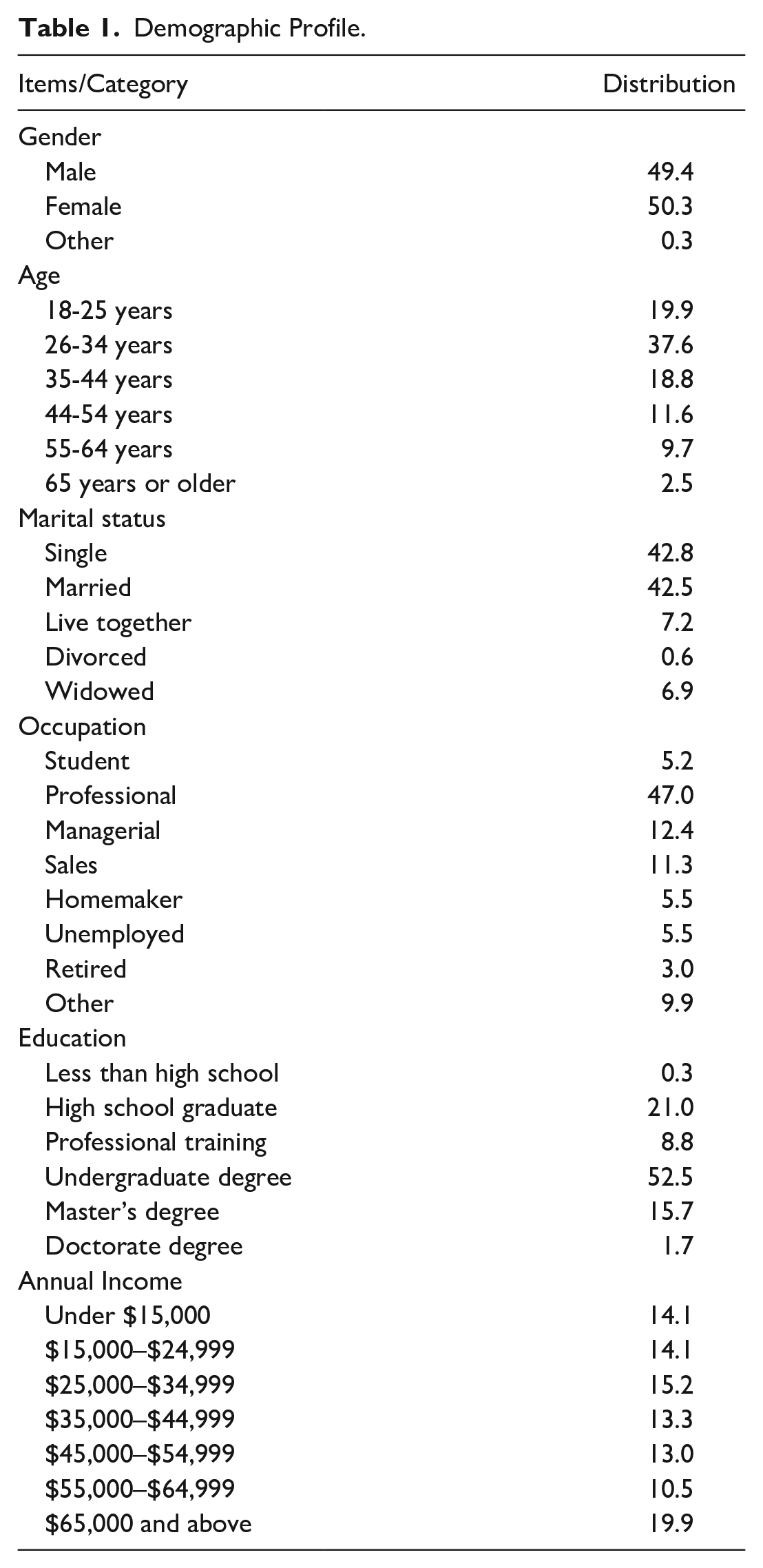
Three hundred sixty-two valid responses were collected and included in the final data set, which is sufficient for a CB-SEM analysis (Kline 2016). The number of female respondents was slightly higher than male respondents (50.3% vs. 49.4%) and the numbers of married and single respondents were very similar (42.5% vs. 42.8%). Most participants were in the age group of 26–34 years (37.6%), had an occupation of a professional job (47%), earned an undergraduate degree, and had an annual income of $65,000 and higher (19.9%). The detailed demographic profile is provided in Table 1.
Demographic Profile.
Measurement Model Evaluation
A reliable measurement model is essential for testing theoretical relationships. Thus, we first assessed the normality of data (Table 2) by checking the skewness and kurtosis values of each item that may influence the analysis of variance and to determine the appropriateness of the covariance matrix for structural equation modeling analysis (Nunkoo et al. 2018). After the normality of the data had been confirmed, we further investigated the internal reliability of measurement items and the construct validity of the instrument. The result (Table 2) revealed that all items were meaningfully and substantially loaded onto their respective factors and the Cronbach’s alphas (α) for all factors were greater than 0.70, providing evidence for the internal consistency of the measurement instrument (Hair et al. 2019). In addition, the average variance extracted (AVE) values of all constructs were all greater than 0.50, providing evidence of convergent validity (Fornell and Larcker 1981). As presented in Table 3, the square root of the AVE score for each construct was higher than its inter-construct correlation, providing support for discriminant validity (Hair et al. 2019). Furthermore, the CFA model exhibited a good fit (χ2 = 1239.21, df = 782, χ2/df = 1.58, CFI = 0.97, TLI = 0.96, RMSEA = 0.040, SRMR = 0.041) (Hu and Bentler 1999), demonstrating the accuracy of the model (Kline 2016; Nunkoo, Ramkissoon, and Gursoy 2013). The battery of test results presented above suggested that the measurement model was adequate to measure the latent constructs included in the study’s structural model.
Descriptive Statistics Measurement Scale Properties.
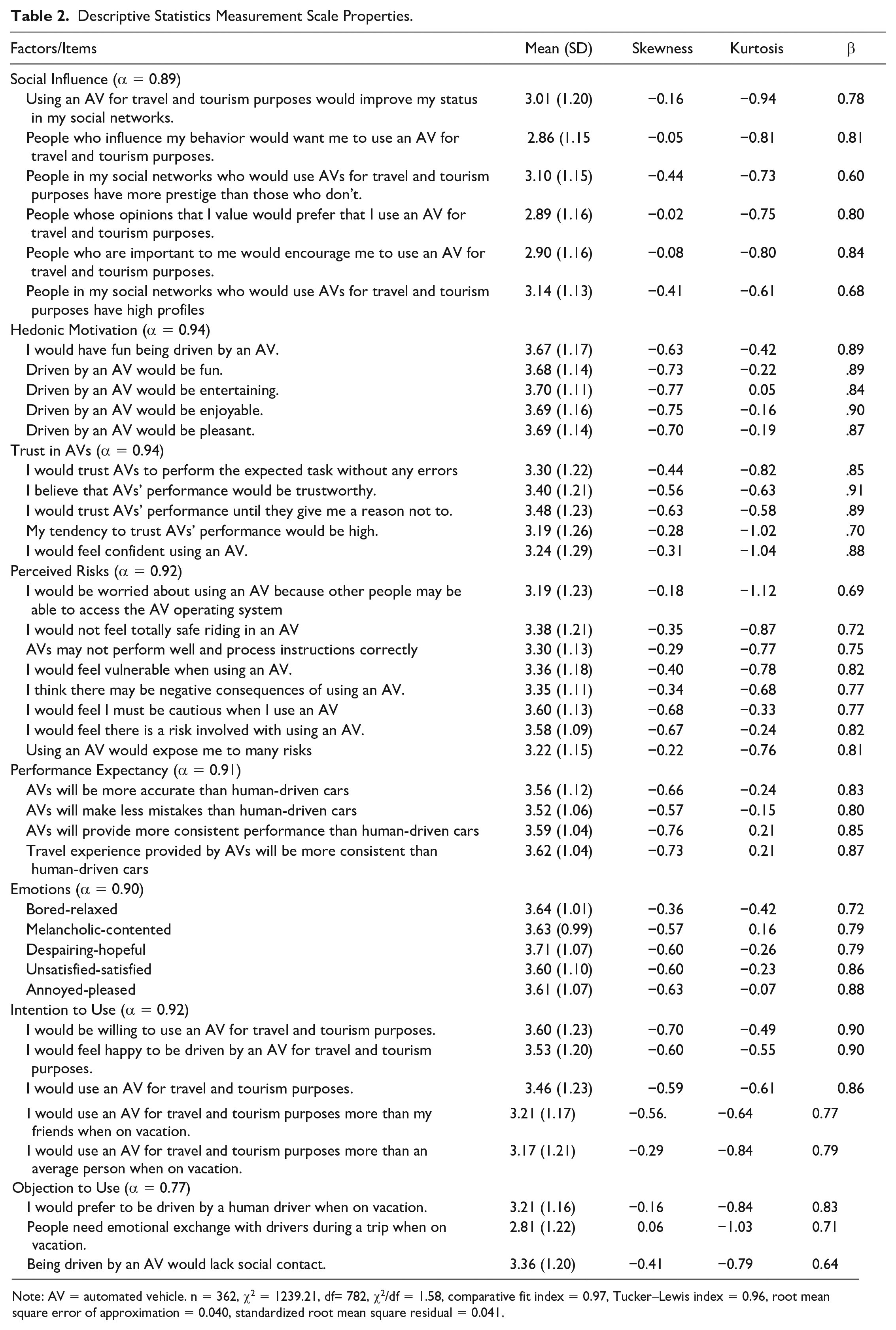
Note: AV = automated vehicle. n = 362, χ2 = 1239.21, df= 782, χ2/df = 1.58, comparative fit index = 0.97, Tucker–Lewis index = 0.96, root mean square error of approximation = 0.040, standardized root mean square residual = 0.041.
Discriminant Validity: Fornell-Larcker Criterion.
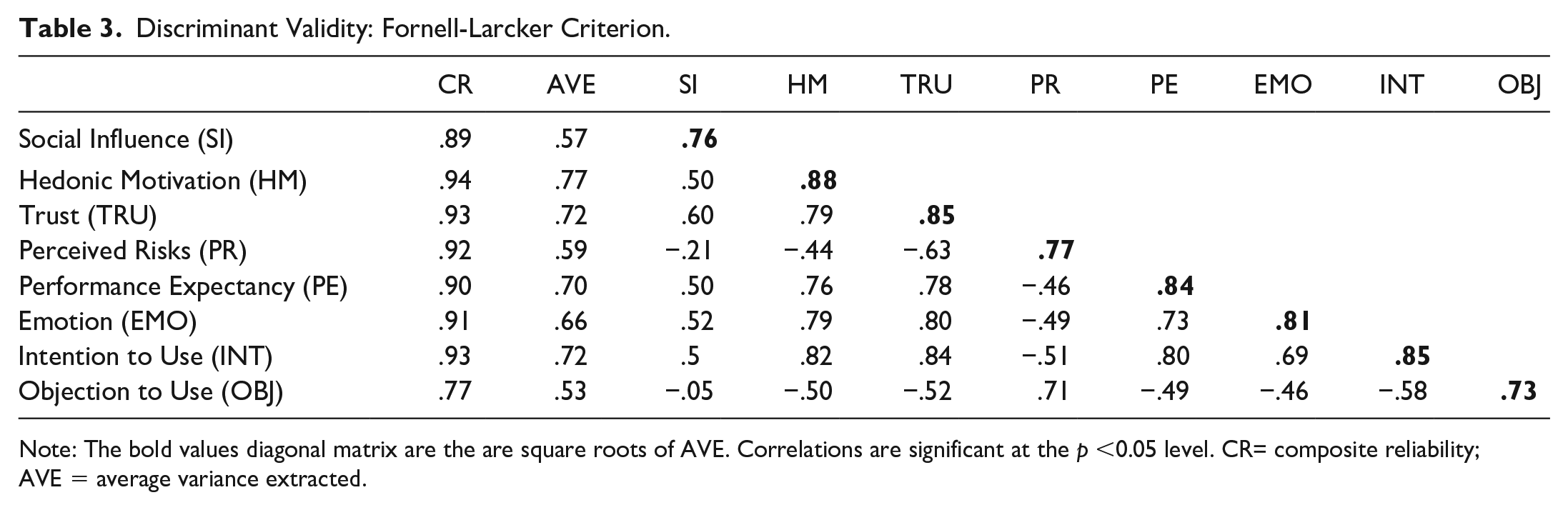
Note: The bold values diagonal matrix are the are square roots of AVE. Correlations are significant at the p <0.05 level. CR= composite reliability; AVE = average variance extracted.
Structural Model Evaluation
Fit indices indicated that the proposed structural model fits the data reasonably well: χ2 = 1362.30, df = 788, χ2/df = 1.73, CFI= 0.96, TLI= 0.95, RMSEA= 0.05, (90% CI [0.041, 0.049]), and SRMR= 0.06. The proposed hypotheses were tested using the results of the SEM.
Figure 2 illustrates the estimated path coefficients of proposed relationships. The results revealed that 10 of 11 hypotheses were supported. More specifically, the SEM results indicated a significant positive relationship between perceived social influence and perceived risks of using AVs for travel and tourism purposes (β = 0.25, p < .001), thus supporting hypothesis 2. Meanwhile, results suggested that higher hedonic motivation yields higher level of perceived performance expectancy (β = 0.32, p < .001), perceived risk (β = 0.22, p < .01), and higher positive emotions (β = 0.55, p < .01), supporting hypotheses 3, 4, and 5, respectively. In addition, trust toward AVs was found to have a significant positive effect on perceived performance expectancy (β = 0.54, p < .001) and a significant negative effect on perceived risks (β = −.97, p < .001), providing support to hypotheses 6 and 7. Next, travelers’ performance expectancy caused a positive impact (β = 0.29, p < .001) on their emotion toward the use of AVs for travel and tourism purposes, whereas the perceived risk lead to a negative effect (β = −0.18, p < .01). Therefore, hypotheses 8 and 9 were supported. Furthermore, the higher level of emotion resulted in a higher level of intention to use (β = 0.87, p < .001) and a lower level of objection to the use of AVs for travel and tourism purposes (β = −0.57, p < .001), lending support to hypotheses 9 and 10. Findings indicated an insignificant positive relationship between perceived social influence and performance expectancy (β = 0.03, p < .53); thus, hypothesis 1 was rejected.
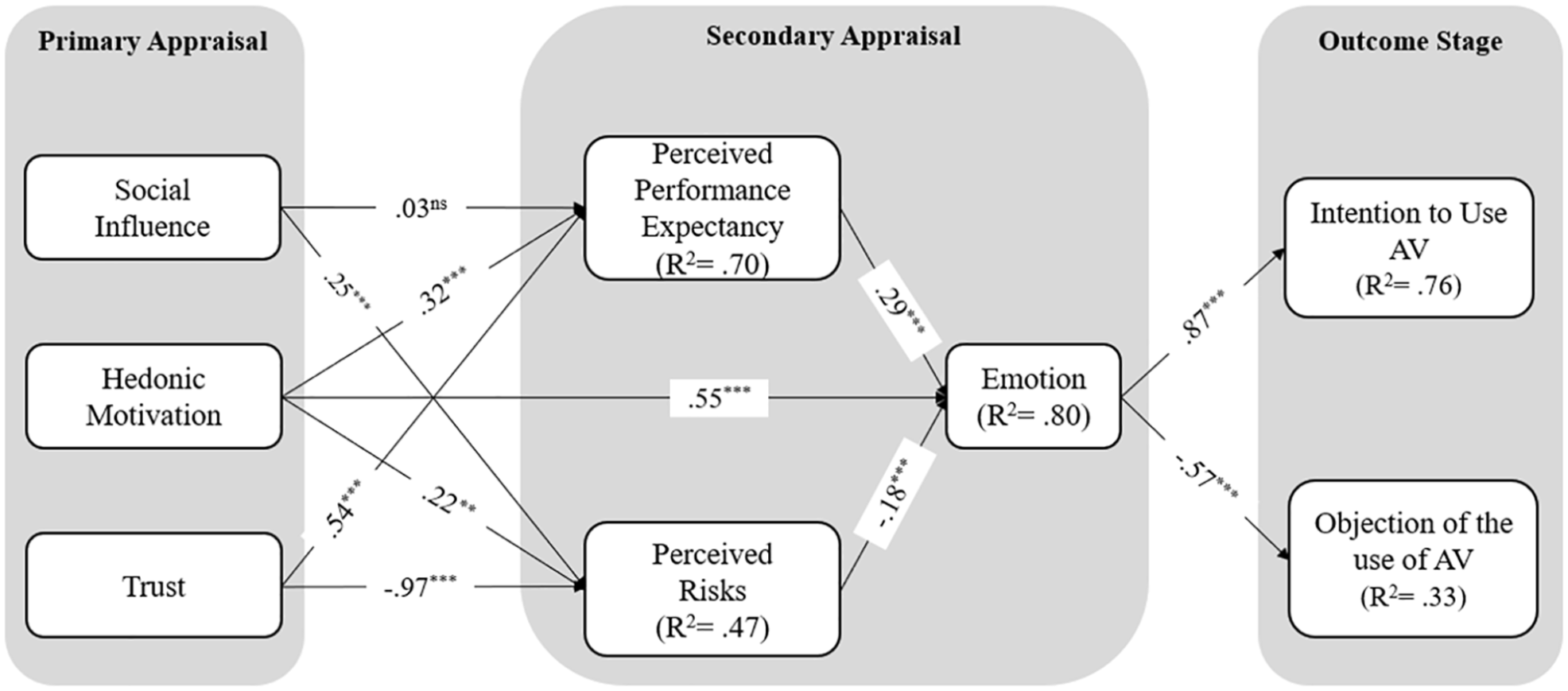
Result of the AVAM CB-SEM.
The proposed structural model also obtained a certain level of predictability (Figure 2). Particularly, the proposed model was able to predict 70% of the total variance of travelers’ perceived performance expectancy (p < .001), 47% of perceived risks (p < .001), 80% of emotions toward the use of AVs for travel and tourism purposes (p < .001), 77% of the intention to use (p < .001), and 33% of the objection to the use of AVs for travel and tourism purposes (p < .001).
To offer more details from our model, a bootstrapping analysis using Mplus 8.4 was used to test the indirect effects of trust, hedonic motivation, and social influence on emotion via performance expectancy and perceived risk; and the indirect effects of perceived risk and performance expectancy on intention to use via emotion were assessed. A bootstrap indirect effect is significant if the confidence intervals (CIs) do not straddle zero. As summarized on Table 4, a bootstrapping analysis finds that the indirect effect of social influence on emotion via performance expectancy (β = 0.010, 95% CI = −0.015, 0.051) was insignificant, but the indirect effect becomes negatively significant via perceived risk (β = −0.041, 95% CI = −0.064, –0.008).
Indirect Effect among Variables.
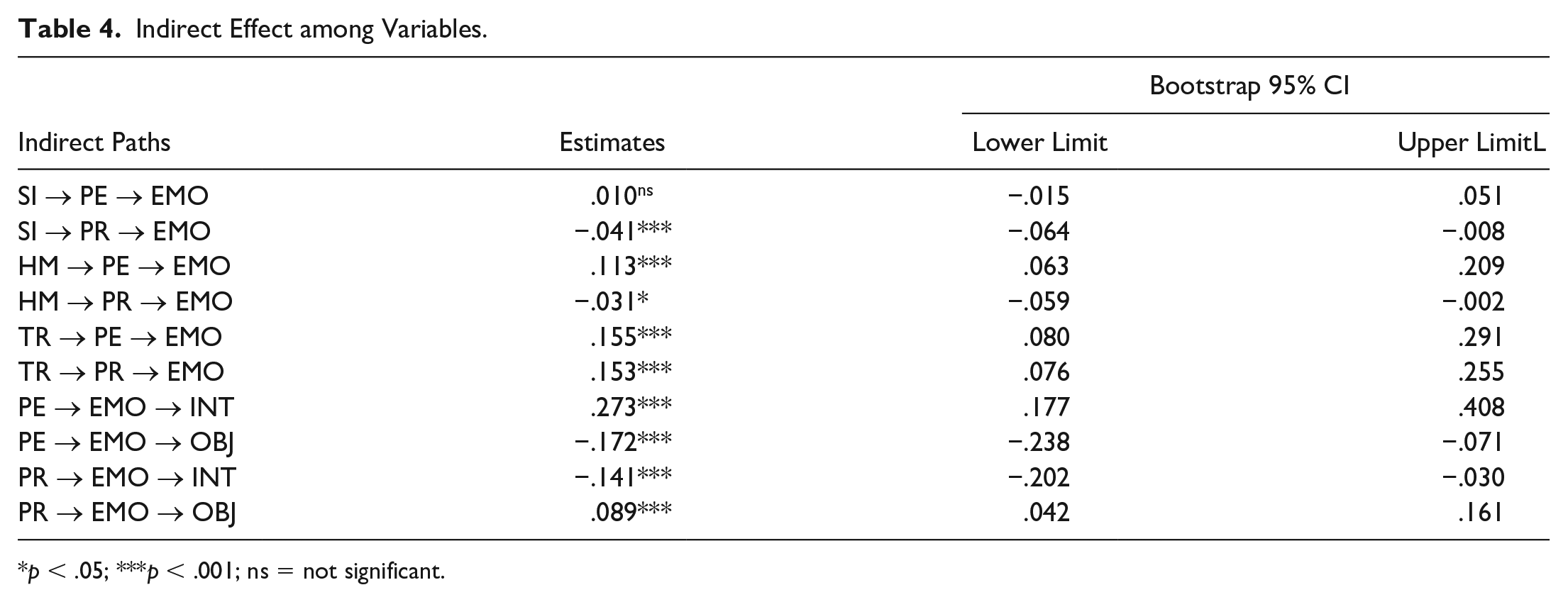
p < .05; ***p < .001; ns = not significant.
The indirect positive effect of hedonic motivation on emotion via performance expectancy (β = 0.113, 95% CI = 0.063, 0.209) and perceived risk (β = −0.031, 95% CI = −0.059, –0.002) were also found to be significant. The indirect effects of trust on emotion mediated by performance expectancy (β = 0.155, 95% CI = 0.080, 0.291) and perceived risk (β = 0.153, 95% CI = 0.076, 0.255) were also significant. Additionally, high expected performance resulted in a significantly higher intention to use AVs for travel and tourism purposes (β = 0.273, 95% CI = 0.177, 0.408) and significantly lower objections through the effect of emotion (β = −0.172, 95% CI = −0.238, –0.071). Furthermore, higher risk perceptions significantly suppressed intentions to use AVs for travel and tourism purposes (β = −0.141, 95% CI = −0.202, –0.030) and resulted in significant increases in objection through the effect of emotion (β = 0.089, 95% CI = 0.042, 0.161).
Discussion and Conclusions
Grounded in the consumer behavior literature, few relationships have been more widely investigated in the last decade than the antecedents of users’ technology acceptance. There is a clear consensus in the literature that trust, hedonic motivation, social influence, risk, and performance expectancy are the critical antecedents of individuals’ acceptance and use of new technologies (Venkatesh et al. 2003; Venkatesh, Thong, and Xu 2012). However, studies on artificially intelligence device use argue that some of the influential constructs (i.e., ease-of-use) included in previous TAM studies may not be appropriate for examining the acceptance of artificially intelligent devices (Gursoy et al. 2019). Variations inherent in AI-powered devices, such as differences in AI robots and AVs powered by AI, also require researchers to develop context-specific conceptual models that can better explain individuals attitudes and behaviors in that specific artificial intelligence context. Thus, drawing on the CAT (Lazarus 1991a, 1991b) and the AIDUA framework (Gursoy et al. 2019), this study developed a conceptual model of travelers’ acceptance of autonomous vehicles for travel and tourism purposes. The model identified hedonic motivation, trust in AVs and social influence as critical components of primary appraisal, performance expectancy, perceived risk and emotions as critical determinants of secondary appraisal, and intentions to use AVs for travel and tourism purposes as the outcome.
The result of this study suggests that social influence has no effect on individuals’ performance expectancy perceptions of AVs. This result contradicts the findings reported in previous studies (Chi, Gursoy, and Chi 2020; Gursoy et al. 2019) that if individuals’ social group (e.g., family and friends) believes that using AI devices is relevant and congruent with group norms, individuals are more likely to assume that the AI device will deliver performance that is up to the individuals’ expectations. However, social influence is found to be a significant determinant of perceived risks associated with using AVs. This result suggests that if individuals’ social group (e.g., family and friends) believes that using AVs during travel and tourism experiences may pose significant risks, individuals are likely to view using AVs during travel and tourism experiences as risky. However, this finding also suggests that if individuals’ social group (e.g., family and friends) believes that using AVs during travel and tourism experiences is safe, individuals are likely to have lower risk perceptions of using AVs during travel and tourism experiences (Chi, Gursoy, and Chi 2020). Furthermore, results indicate that higher hedonic motivation triggers a higher level of perceived performance expectancy, perceived risk, and a higher level of emotion. These results are in line with previous studies that found that customer hedonic motivations are crucial in determining customer acceptance behavior (Lee et al. 2019; Lin et al. 2020; Zhang et al. 2019). These findings reveal that travelers, who believe that using AVs during a tourism experience is fun and essential, are likely to perceive AVs as delivering acceptable performance and having a low level of risk.
Findings of this study also indicate that trust is the most powerful determinant of performance expectancy and crucial to attenuate the risk of using AVs during a tourism experience. This finding is in line with the findings reported in previous studies in the AV context that trust is an important component of initial assessment and a critical determinant of customers’ perceived performance expectancy (M. J. Kim, Lee, and Jung 2020; Pavlou 2003). Furthermore, trust can attenuate customers’ perceived risks of using AVs (Ghazizadeh, Lee, and Boyle 2011; Xu et al. 2018; Zhang et al. 2019).
Findings also reveal that both perceived performance expectancy of AVs and perceived risks of AVs are important factors that travelers use to evaluate the cost and benefits of AV use and act as critical determinants of travelers’ emotions toward their intention to use AVs during a tourism experience. In line with previous studies (i.e., Chi, Gursoy, and Chi 2020; Gursoy, Chi, and Chi 2020; Lin et al. 2020), these findings emphasize the utilitarian nature of travelers’ behavioral intentions. Finally, the present study finds that emotions are the most predominant determinants of travelers’ intention to use AVs during a tourism experience. This result corroborates past studies’ findings that emotions are the most powerful determinant of travelers’ willingness to accept the use of AI devices (Chi, Gursoy, and Chi 2020; Gursoy, Chi, and Chi 2020; Lin et al. 2020; Lu, Cai, and Gursoy 2019). A high level of positive emotions triggers travelers’ willingness to use AVs during a tourism experience, while negative emotions yield a moderate level of objection toward AVs. These findings provide insightful contributions to the knowledge in the field by demonstrating how the evaluation of multistage primary and secondary appraisal elicits emotions and ultimately affects tourists’ intention to use AVs for travel and tourism purposes.
Theoretical Implications
On the theoretical front, the current study makes numerous contributions that extend previous research. First, we advance the literature by developing and empirically testing a conceptual model that theoretically highlights the most critical determinants of travelers’ acceptance of the use of AVs for travel and tourism purposes. This is significant because prior researches have often implicitly assumed that the use of previously developed technology acceptance models such as TAM, UTUAT, etc. might not be the most appropriate to investigating travelers’ intentions to use AVs for travel and tourism purposes because those models mostly concentrate on users’ adoption of functional technologies that are designed to perform repeated tasks (Chan, Okumus, and Chan 2017; Gursoy et al. 2019). This research moves beyond the conventional focus of technology acceptance models by following the recommendations of recent studies on antecedents of individuals’ acceptance of the use of AI devices, which argued that the above-mentioned frameworks do not contain some of the important factors tailored for AVs (Gursoy et al. 2019; Lin et al. 2020; Lu, Cai, and Gursoy 2019; Tussyadiah 2020; Tussyadiah, Zach, and Wang 2020). Consequently, prior models cannot elucidate the intricate multistage and systematic assessment process used by individuals in their decision-making process (Lu, Cai, and Gursoy 2019). Our results demonstrated that some of the most significant factors of technology acceptance used in those previous frameworks are not applicable to the AV setting.
Secondly, current research confirms the applicability of the AIDUA model in a specific AV context. Our findings showed that almost all the AIDUA hypotheses are supported in an AV context, demonstrating the appropriateness of the AIDUA framework to the AV context. Furthermore, this study extended the AIDUA framework by integrating trust in the primary appraisal and perceived risks of using AVs for travel and tourism purposes in the secondary appraisal stages, because recent studies indicated that trust (Choi and Ji 2015; Zhang et al. 2019; Zhang et al. 2020) and perceived risks (Kapser and Abdelrahman 2020; Xu et al. 2018) are essential determinants in shaping behavior in situations where uncertainty and novelty are present (Xu et al. 2018; Zhang et al. 2020) and increase users’ AV acceptance. Our results demonstrated that trust is the most powerful determinant of performance expectancy and essential to decrease the perception of risk toward the use of AVs for travel and tourism purposes. All in all, our findings recommend that to be accepted by users, AVs need to be understood as trustworthy, useful, fun to use, and low risk.
Thirdly, we exposed the discrete psychological states stemming from a multistage appraisal processes, with hedonic motivation and performance expectancy increasing users’ positive emotions toward the use of AVs for travel and tourism purposes. The current study finds that hedonic motivation directly and positively influences travelers’ positive emotions toward the use of AVs for travel and tourism purposes. Next, perceived risks were found to be negatively related to the emotions of using AVs for travel and tourism purposes. The empirical results demonstrated that the proposed model can explain the travelers’ willingness to use AVs in their tourism experiences with a substantial explanatory power. Although both hedonic motivation and performance expectations reproduce a high degree of emotion, they have different valences on the affect circumplex. Performance expectancy is determined primarily by hedonic motivation and trust, since our results showed insignificant effect of social influence on performance expectancy, which contradicts past studies (Chi, Gursoy, and Chi 2020; Gursoy et al. 2019; Lin et al. 2020). Encompassing prior studies on cognitive appraisal process, our results demonstrate that the appraisal process linked with travelers’ acceptance of AVs in tourism experiences includes perceptions of uncertainty, benefits, and costs, which evoke emotions. Based on these findings, this study offers a robust tourism-mobility theoretical framework of AVs’ acceptance for travel and tourism purposes.
Lastly, building on the CAT and the AIDUA framework, we identified positive emotions as a proximal determinant of travelers’ willingness to accept the use of AVs for travel and tourism purposes. This multistage appraisal approach identified the primary psychological pathways to describe the evolution of travelers’ behavioral intentions to use AVs during a tourism experience. In this sense, we found that hedonic motivation and trust are associated with a higher level of emotion through performance expectancy, but when mediated by perceived risks they are associated with a lower level of emotion. These countervailing and multistage appraisal effects would not be exposed through the lens of traditional technology acceptance theories. Additionally, we demonstrated that the secondary appraisal stemming from the assessment of benefits (performance expectancy) and costs (perceived risks) have critical implications for travelers’ willingness to use AVs and objection to use AVs for travel and tourism purposes—an outcome that is vital to technology adoption success hitherto historically lies outside the attention of technology acceptance research. From an appraisal theory perspective, this study has made a strong contribution to the current literature.
Managerial and Policy Implications
Our findings also offer numerous important managerial implications for destinations, AV manufacturers, policy makers, and DMOs. First, to boost AV acceptance, efforts should not only be intended at disseminating its hedonic benefits such as enjoyment, novelty, and fun but also at developing effective strategies to shape customers’ trust by communicating its safety features and its reliability compared to conventional vehicles driven by humans, which can also lower the risk perceptions associated with the use of AVs for travel and tourism purposes. It may also be beneficial to include statements from experts and testimonials from previous and current users about the safety and reliability of AVs powered by artificial intelligence in marketing materials and in other communications with potential users.
As suggested by the findings positive emotions toward AVs are critical in increasing travelers’ use of AVs for travel and tourism purposes while alleviating their objection to the use of AVs. Since both performance expectancy and perceived risks are two important determinants of positive emotions, it is critical to ensure that AVs meet or exceed travelers’ expectations by eliminating functional errors and improving accuracy and competency. Highlighting advantages of using AVs, such as enabling travelers to have additional free time for interactions with their travel party, efficient, reliable, and safe transportation from point A to point B with minimal effort, in marketing communications may increase tourists’ intentions to at least try AVs powered by AI.
The high level of users’ acceptance of AVs for travel and tourism purposes allows AV manufacturers and policy makers to safely promote the benefits of using AVs for travel and tourism purposes, such as (but not limited to) releasing congestion, increasing mobility, safety, and enhanced travel experience, thus igniting tourists’ trust in and awareness of the practicality of AVs. It is also important to remember that AVs can provide significant benefits to society by providing mobility and travel opportunities to individuals who are disadvantaged by their disabilities, age, or health conditions. Adoption of AVs can enable these disadvantaged individuals to participate in travel and tourism activities that would not be possible otherwise. Since participation in travel and tourism can improve tourists’ well-being and quality of life, adoption of AVs for travel and tourism purposes can have a significant impact on these individuals’ well-being and quality of life. Users’ perception of safety and security and risk-free adoption is a critical determinant that will ultimately result in higher willingness to use AVs for travel and tourism purposes, which will not only benefit everyday travelers but also the individuals who would not be able to frequently participate in travel and tourism activities otherwise.
At the onset of the COVID-19 pandemic, customers’ perceptions of risk and health safety issue are extremely high, exceptionally in tourist destination. During this pandemic, intelligent systems have gained significant momentum in helping minimize and manage the spread of the coronavirus in several settings such us airports, hotels, restaurants, recreation areas, transportation systems, and communities. In this sense, DMOs and policy makers should consider working with AV manufacturers to accelerate the production of AVs that may be used in crowded urban destinations. The use of AVs during tourist experience could effectively minimize the spread of the coronavirus by reducing human-to-human contact, which may lessen the perception of health risk associated with traveling and mediate and enhance tourist experience. Moreover, promotion of automated mobility style and resulting changes in habitual travel behaviors due to use of AVs for travel and tourism purposes not only covers the way to a more sustainable future but also enhances the resiliency of urban destinations in restricting human-to-human interaction during contagious disease eruptions such as the COVID-19 pandemic. Thus, tourists’ concern with COVID-19 contagion during a trip may increase tourists’ trust in AVs, and ultimately ensure a high level of physical social distancing.
Limitations and Future Research Directions
Similar to other studies, this one is not free of limitations. These limitations can provide critical insights and directions for further studies. This study utilized data that were gathered from US residents through an online survey. Thus, findings of this study may not be generalized to other populations. Future studies should test this model in different countries and tourism contexts to confirm the validity and applicability of the model. A second potential limitation pertains to the cross-sectional approach of our data, which may limit the ability to detect variations in users’ behavior that is continually changing and difficult to capture, mainly now during and after the COVID-19 pandemic. Future research should take a longitudinal approach that would provide opportunities to capture the changes in the perceived importance of the model constructs over time and might even reveal the importance of the effect of social influence on performance expectancy, which was insignificant in this study. Also, since the data of this study were collected before the outbreak of COVID-19 pandemic, it would be interesting to test this model with data collected after this pandemic to understand whether there is a significant behavioral change regarding the use of AVs for travel and tourism purposes, and whether trust continues to be the most important determinant of performance expectancy and crucial to decrease risk perceptions of the use of AVs during tourism experiences.
The proposed model tested in this study used a small number of variables to examine travelers’ willingness to use AVs in tourism experience. Future studies may consider the inclusion of other variables in the model, such as habits (Venkatesh et al. 2003; Venkatesh et al. 2012), and perceived fear (Heinssen, Glass, and Knight 1987), in order to increase the predictive power of the theoretical model.
Footnotes
Declaration of Conflicting Interests
The author(s) declared no potential conflicts of interest with respect to the research, authorship, and/or publication of this article.
Funding
The author(s) received no financial support for the research, authorship, and/or publication of this article.
