




Abstract
To develop tourism products and campaigns that will not only help the tourism industry to survive, but also revive and sustain it in the future, it is imperative to understand the behavioral intentions of leisure travelers during the coronavirus disease (COVID-19) pandemic. This study aims to explore how Japanese traveler segments are characterized by their attitudes and feelings toward domestic travel during the COVID-19 pandemic. A market research study was conducted on Japanese nationals, using 1353 questionnaires in the analysis. A factor analysis was generated in six attitude dimensions: 1) COVID-19 Anxiety, 2) Government Mistrust, 3) Psychological Impact, 4) Optimistic Outlook, 5) Financial Impact, and 6) Social Anxiety; through K-means cluster analysis, the segmentation produced three distinct tourist segments: Confident Travelers, Anxious Travelers, and Social Travelers. Each segment is clearly described in terms of attitudes, considering distinct socio-demographic characteristics. Practical suggestions on how to manage and target these segments include implementing travel packages with minimal face-to-face contact for anxious travelers, travel subsidies through national campaigns for confident travelers, or conventional marketing campaigns for social travelers.
Keywords
Introduction
The spread of the coronavirus disease (COVID-19) has undisputedly had an unprecedented impact on the global tourism industry; in Japan, tourist activities dramatically decreased in 2020, such that the number of international and domestic travelers arriving in Japan dropped by 87.1% and 53.1%, respectively, as compared to that in 2019 (Japan National Organization, 2021). The domestic figure is especially interesting and significant because Japan never imposed ‘hard lockdowns’ unlike France, Germany, and the United Kingdom but only banned the arrival of international tourists (The Mainichi, 2020). Therefore, Japanese citizens and international residents could travel freely within the country for leisure purposes; in effect theoretically, the national tourism industry still had access to the enormous market of domestic travelers, which constituted 82% of the total number of travelers in 2019 (Japan Travel Bureau Tourism Research & Consulting Co., 2020).
Two factors could have contributed to the drastic drop in domestic travel in Japan during 2019. First, the Japanese government announced an on-off ‘state of emergency’ in several prefectures (In English, "prefecture" is used as the translation for todōfuken (都道府県), which are the main subdivisions of Japan and the Japanese equivalent of an American state or British county) with recommendations for both businesses and individuals. For instance, businesses were asked to follow the pandemic guidelines for their respective industries—to close by 8 p.m. daily, or remain closed completely for a short period of time. People were asked to refrain from unnecessary outings, work from home whenever possible, and avoid traveling to other prefectures. No penalties were imposed for the non-compliance of such guidelines, which usually included only a small number of prefectures; for example, only 11 out of 47 prefectures were listed in the state of emergency declared on January 7, 2021 (Kyodo News, 2021). However, the introduction of a ‘state of emergency’ by the government might have had a similar effect to that of lockdowns due to the presence of important cultural differences, such as a strong sense of obedience to the authorities, enormous social pressure to conform to the behavior of others, and the constant fear of troubling others as a result of an individual’s own behavior. Koichi Nakano, the Professor of Japanese Politics stated that, ‘The Japanese state is powerfully embedded in society and has tremendous power to mold through moral suasion that Western states do not have’ (Sieg, 2020).
Second, the fear of travel may have become so strong that domestic residents decided to cancel all their travel plans in the near future. Some studies indicate that Japanese citizens were showing restraint during the pandemic, such as Parady et al.’s (2020) study on changes in ‘travel behavior.’ Among the various independent variables explored, risk perception increased the probability of staying at home and decreasing trip frequencies for grocery shopping, other types of shopping, eating out, and leisure. Li and Ito’s (2021) study showed a similar result regarding the Japanese. While the perceived risk among study participants in Sapporo, Japan, considerably impacted their intention to travel in the early days of the pandemic (data were collected between April and August 2020), Chinese respondents from Wuhan, China, behaved contrarily. Wuhan residents did not alter their travel intentions, which the authors ascribe to socio-cultural differences. Japan being one of the highest-ranking countries in terms of risk-avoidance, is the opposite of China, which is known to have one of the least risk avoiding cultures. Furthermore, Wuhan respondents seem to have estimated their risk based on their personal experiences on site in contrast to respondents from Sapporo, who assessed travel risk solely through media reports, which did not necessarily reflect reality.
Given that the Japanese tourism industry was found to be vital to the economy in the last two decades by the Japanese government (Ministry of Land Infrastructure Transport and Tourism, 2021), it is important to understand the travel intention inhibitors of the most important tourist segment in Japan—the domestic traveler. Existing studies have covered issues concerning travel fear due to COVID-19 based on demographic attributes such as age and gender (Magano et al., 2021; Sakib et al., 2020; Wakashima et al., 2020) and changes in travel behavior (Guo et al., 2020; Kantor & Kantor, 2020; Wakashima et al., 2020). However, extant literature is scant on addressing the typology of travelers’ behavioral outcomes of fear, which forms the crux of this paper. The typology in this study also incorporates the aspect of government policies and travel advisories being issued during the COVID-19 pandemic, which has also not been extensively covered in literature. Given the Japanese context, the study findings will demonstrate a cultural angle regarding traveling in a time of anxiety and fear. In particular, this study explores Japanese nationals’ behavioral intentions toward domestic travel during the COVID-19 pandemic, using psychographic segmentation.
Segmentation has been extensively used in marketing and consumer research to comprehend consumer behavior, segment the market, and further develop and test product concepts (Kımıloğlu et al., 2010). Specifically, market segmentation analysis is ‘the process of grouping consumers into naturally existing or artificially created segments of consumers who share similar product preferences or characteristics’ (Dolnicar et al., 2018). Moreover, Duncan et al. (2015) found that segmentation analysis boosts the efficiency and effectiveness of a company’s marketing budget; multivariate techniques such as cluster analysis have been identified as methods that can better explain market segments, as compared to descriptive methods (Crawford-Welch, 1990; Tarver, 2021). Segmentation by buyer behavior or characteristics is further one of the most commonly used techniques in tourism research (Andriotis et al., 2008; Boksberger and Laesser, 2009; Pesonen et al., 2011; Ritchie et al., 2017); similarly, segmentation studies may create the basis for targeted campaigns pertaining to tourist worries and safety (Dolnicar, 2005; Lo et al., 2011; Ritchie et al., 2017). The psychographic attributes used for the segmentation analysis in this study were introduced in 1987 by Plog (2002); studies originally explored travel patterns among different personality types (with allocentric and psychocentric travelers at the polar opposites of the classification continuum) but has since expanded into including lifestyles, travel motivation, awareness, satisfaction, and other factors measuring an individual’s mental attitude or psychological make-up (Middleton and Clarke, 2001; Reisinger and Mavondo, 2005).
The results of the present study will help businesses and policymakers better understand their most important target market for tourism services and products and provide a basis for marketing campaigns, incentives, and safety measures. All key players in the industry are keen to revive and sustain the domestic tourism industry in Japan; this is because tourism plays a key role in Japan’s economy, accounting for 2.0% of the gross domestic product and 9.6% of total employment, or 6.5 million employees (Organisation for Economic Co-operation and Development, 2020). Although both international and domestic tourism are relevant to Japan’s tourism industry, the domestic aspect is particularly important as it generated more than 80% of the country’s overall tourism revenue in 2018 (Organisation for Economic Co-operation and Development, 2020). This study’s focus on domestic tourism is based on not only the contribution of domestic tourists to national income and tax revenue, but also the necessity to generate travel demand as soon as possible to help the ailing tourism businesses. The present border control policies by the Japanese government generate uncertainty regarding when international tourism will resume, as until now, the Japanese government has imposed stricter immigration policies than its neighboring countries, not only for leisure tourists, but also for business travelers and students (Koya, 2022; Nakamura, 2022). This closed border policy appears to be very popular among its electorate (Rich and Hida, 2021), and one can expect that the planned increase in daily entries to 7000 daily after April 1, 2022 (The Japan Times, 2022) will first address the more than 100,000 waiting students, the more than 300,000 waiting foreign nationals with residency status, and business travelers, who amounted to more than 1,7 million in 2019 (Japan National Tourism Organization, 2021), before permitting the entry of foreign tourists (Ministry of Foreign Affairs of Japan, 2022).
Literature review
The COVID-19 pandemic has caused a socio-economic crisis and extreme psychological distress worldwide (Serafini et al., 2020). Consequently, individuals have developed psychological disorders, such as anxiety, fear, depression, and helplessness (Ahorsu et al., 2020; Guo et al., 2020; Hacimusalar et al., 2020). Emotions are grouped into three distinct categories: primary, secondary, and tertiary (Shaver et al., 1987). Fear and anxiety are two negative emotions that affect decision-making. Fear emerges at different phases during travel and in different forms (Fennell, 2017). It has been classified as a primary emotion, but it also overlaps with the secondary emotions of nervousness and horror. Panic, fear, fright, and shock are examples of tertiary emotions stemming from horror, while worry, distress, and anxiety are tertiary emotions related to nervousness. Feelings of stress, apprehension, frustration, awkwardness, or uncomfortableness (Hullett and Witte, 2001; McIntyre and Roggenbuck, 1998) have been identified as anxiety; this outcome is seen when an individual is exposed to risk—both actual and potential (Reisinger and Mavondo, 2005). High levels of fear affect the clarity and rationality of thoughts and affect an individual’s reaction to the COVID-19 pandemic (Ahorsu et al., 2020). The fear and anxiety related to COVID-19 has been found to have major implications on people’s daily lives, which is projected to continue long after the COVID-19 pandemic (Guo et al., 2020), especially in the travel (Beck and Hensher, 2020; Wen et al., 2021) and hospitality industries (Nicola et al., 2020).
Travel fear caused by susceptibility and threat severity results in protective travel behaviors and protection motivation as coping mechanisms (Guo et al., 2020; Wakashima et al., 2020). Magano et al. (2021) found that travelers considered the use of hotel facilities as a high COVID-19 risk factor and the high levels of anxiety and fear related to COVID-19 positively correlate to a greater perception of the pandemic’s impact on travel.
Anxiety about being infected with a virus plays a vital role in determining behaviors such as personal hygiene maintenance (Taylor, 2019). It acts as an indicator of risk avoidance (Smith et al., 2016). Risk is a key concern for tourists (Reisinger and Mavondo, 2005); it is usually influenced by news, local tour operators and guides, and social media and causes anxiety Sönmez and Graefe, 1998. Anxiety is observed in individuals when they are scared, experience unpleasant emotions, and exhibit physiological responses (Beck and Emery, 1979). There is a positive relationship between fear and anxiety, whereby their degree increases when a person is exposed to negative news such as increase in the number of COVID-19 cases and fatalities (Ahorsu et al., 2020). Moreover, when anxiety and risk increase, travel intention decreases (Morakabati et al., 2012; Reisinger and Mavondo, 2005; Zhu and Deng, 2020).
In detail, risk in travel and tourism has been defined as an individual’s perception of the ‘probability that an action may expose them to danger that can influence travel decisions if the perceived danger is deemed to be beyond an acceptable level’ (Wolff and Larsen, 2014). In tourism, travelers are primarily concerned about risk (Kozak et al., 2007); under situations of uncertain risks, travel decisions are influenced by safety and security issues (Beirman, 2002). During a global pandemic, a travel decision involves risks resulting from the uncertainty of the situation and the potential negative outcomes pertaining to this decision (Chang, 2009). Reisinger and Mavondo (2005) suggested that perceived risk causes travelers to either continue, cancel, or change their travel plans; change their destination; or obtain further information to continue with their travel plans. Deng and Ritchie (2018) found that travel intention is negatively influenced by perceived risk, unlike the case when risk reduction or protective strategies are adopted.
Crises that proliferate fear and anxiety, as well as increase perceived risk among travelers, essentially trigger an aversion to travel (Çakar, 2021). Calamities such as epidemics and natural disasters influence travel decisions from both emotional and psychological perspectives (Seabra et al., 2013). Infectious diseases and pandemics cause people to feel vulnerable and at risk due to the uncertainty, limited information, and lack of boundaries associated with them (Reznik et al., 2020); this generates feelings of fear and anxiety. In the context of travel and tourism, anxiety and fear are linked to risk, which affects the decisions undertaken by travelers and tourists (Reisinger and Mavondo, 2006). As a negative emotion, fear is manifested by extreme levels of avoidance of specific stimuli(Perin et al., 2015) or the reactive removal of self from an environment that is perceived to exhibit immediate risk (Harper et al., 2020). Perceived travel risk includes fear and anxiety about potential negative vacation experiences due to issues like health threats (Promsivapallop and Kannaovakun, 2018; Sönmez and Graefe, 1998). This in turn negatively affects travel intentions (Deng and Ritchie, 2018) as travelers opt not to travel. Woodside and Lysonski (1989) defined travel intention as the likelihood of a traveler visiting a specific destination within a specific timeframe. Travel intention is influenced by media, which plays a vital role in linking risk perception and travel intention (Neuburger and Egger, 2021). Travel warnings issued by governments have been proven to negatively impact travel intention (Mawby, 2000; Reichel et al., 2007). When media presents the dangers and negative events related to specific locations, travelers have been found to change their travel plans to safer destinations as they opt to avoid perceived risks (Schroeder et al., 2013; Sönmez and Graefe, 1998). Studies have also shown that travelers choose to avoid traveling during a pandemic to specific destinations, when they view those places as being high risk based on whether they would be highly susceptible to getting infected (De Zwart et al., 2007). The media disseminates news of destinations with high infection numbers, which negatively impacts travel intention (Cahyanto et al., 2016). On the other hand, Lepp and Gibson (2008) found that while risk affects travel intention, younger travelers that seek adventure and novelty will still travel despite health risks.
Numerous studies have used psychometric fear scales to examine the fear and anxiety related to COVID-19 and the resulting behaviors exhibited across different demographic groups (Magano et al., 2021; Nguyen et al., 2020; Reznik et al., 2020; Sakib et al., 2020; Wakashima et al., 2020). Older groups showed lesser fear of catching COVID-19, as they had better access to information about the pandemic and preventive measures (Nguyen et al., 2020). In terms of gender, females demonstrated greater levels of fear and anxiety related to COVID-19 when compared with males (Magano et al., 2021; Reznik et al., 2020; Sakib et al., 2020). However, Wakashima et al. (2020) established that social conditions affect fear and anxiety levels; during the state of emergency following the COVID-19 pandemic, there was no significant difference between the fear and anxiety experienced by individuals under various demographic factors such as sex and age. The type of information source has also been found to affect the level of anxiety related to COVID-19; those who focused on the television (TV) as a source of news demonstrated greater anxiety than those who gave more priority to other information sources (Wakashima et al., 2020).
The fear and anxiety related to COVID-19 cause both positive and negative social behaviors. Positive behavioral changes include an increase in preventive or protective behaviors, such as the repeated washing of hands and adherence to rules (Harper et al., 2020; Wakashima et al., 2020; Wise et al., 2020); in contrast, negative social behaviors include bulk buying or stockpiling (Asmundson and Taylor, 2020; Corbett et al., 2020; Wakashima et al., 2020) and conducting unnecessary medical tests (Asmundson and Taylor, 2020). Such protective behavior is also seen among travelers who opt to change their travel plans (Harper et al., 2020). Additionally, personal non-pharmaceutical interventions (PNPIs) adopted by travelers as preventive measures are viewed as effective deterrents against COVID-19 when pharmaceutical remedies are inefficient (Kantor and Kantor, 2020; Lai et al., 2020; World Health Organization, 2019). PNPIs encompass personal hygiene habits, such as wearing masks, social distancing, maintaining hygiene, adhering to self-isolation (Benkouiten et al., 2014; Nicoll, 2006; World Health Organization, 2019), and spreading awareness of the pandemic (Benkouiten et al., 2014). Studies have shown that travelers who view the COVID-19 pandemic as a serious concern but cannot avoid traveling, tend to adopt protective behaviors (Taglioni et al., 2013). Das and Tiwari (2021) found that female and older travelers perceive COVID-19 as more critical and display a higher willingness to adopt PNPIs.
Materials and Methods
Methodology
Survey Design
Although several authors have explored the concept of travel fear (Bianchi, 2006; Dolnicar, 2005; Kim et al., 2017; Luo and Lam, 2020; Quintal et al., 2010a; Sönmez, 1998; Wolff and Larsen, 2014); a clear definition is elusive. It is treated as a separate theory, although sometimes it overlaps or is used interchangeably with terms such as travel anxiety, risk perception, or travel worry. Parady et al. (2020) noted the same, stating that authors used both the expressions ‘risk perception’ and ‘COVID-19 dread’ for the same concept.
Fennell (2017) explored the concept of travel fear through a detailed literature review on constraints, shock, panic, risk, worry, and anxiety and created an extensive model known as the ‘Model on Travel Fear.’ The model used in the present study was inspired from this model that lists two major categories on which fear intensity, strategies to reduce fear, and fear response are based: a) tourists’ characteristics (socio-demographic, health and skill, resources, interest, or responsibility, and fearfulness) and b) fear-inducing factors of a trip (economic, external, personal or psychographic, environmental, sectoral, and social or cultural factors). Several detailed items used in Fennell (2017) can be found in the scales developed by Conway et al. (2020), who answered the call by major journals to study the COVID-19 pandemic from a sociopsychological perspective. They used questionnaires to observe a) the perceived threat of COVID-19, b) government’s response to the COVID-19 pandemic, c) the impact of COVID-19, and d) the experience gained from combating COVID-19. These two sources were discussed in detail among both international and Japanese tourism experts to develop a suitable questionnaire for this study. This was considered important as the relevant concepts were developed exclusively by Western authors; therefore, not every item would make sense in the Japanese context. Accordingly, three items out of six observed in the case of Government Response, namely the Restriction Scale and the Punishment Scale, were excluded due to the following reasons:
A) Japanese politicians are afraid to restrict their citizens from going out or to punish them and implement lockdowns, as elaborated in a quote published by The Associated Press:
Japan’s history of repression under fascist governments before and during World War II has left the public wary of government overreach. The country’s postwar constitution lays out strict protections for civil liberties. Abe’s government was reluctant to risk severe economic repercussions from more severe measures (The Mainichi, 2020).
B) Restricting or punishing the citizens is problematic as there might be claims that it is unconstitutional, even though some sources claim otherwise: ‘Article 41 provides the government with sufficient power to take aggressive action’ and ‘The reason is not legal, but political. Every Japanese politician knows of the widespread fear of excessive power rooted in Japan’s wartime history’ (Repeta, 2020). It was proposed that the prime minister should have the power to declare national emergencies and empower the cabinet to issue orders. However, this attempt was vehemently rejected: ‘The emergency power proposal was vociferously opposed by Japan’s bar associations, constitutional law professors, and news organizations, among others. They rightly feared a serious threat to Japanese democracy.’ (Repeta, 2020)
Two additional items, namely the Research Scale in the case of Government Response and the Resource Scale in the case of Coronavirus Impact were omitted owing to their irrelevance in the travel context. Also, in the case of Coronavirus Experience, the items 1) Personal Diagnosis and 2) Proximity to Others were removed because respondents cannot answer these questions unless they test for COVID-19. In Japan, however, only patients with severe COVID-19 symptoms were able to take a test paid by their health insurance; voluntary testing can cost over 22,000 JPY (more than 200 USD) in a clinic (Kyoto Takeda Hospital, 2021). Therefore, it is quite possible that only a few people test themselves. Moreover, Japan employed a different testing strategy compared to most other countries (Sakamoto, 2020): instead of widespread mass testing, it used limited medical resources for contact tracing and finding clusters around super-spreaders, which it subsequently attempted to contain. This was based on the argument that COVID-19 is characterized by many asymptomatic patients who do not spread the infection. Based on Japan’s Infectious Diseases Act, it is most likely that both the aspects, namely the high testing fee and testing strategy, were aimed at preventing the population from rushing to medical facilities to get tested, possibly getting infected on site, and most importantly, requiring hospitalization after receiving a positive polymerase chain reaction (PCR) test This would have been disastrous, as it would have taken away the much-needed hospital beds for severe cases or that of elderly people with underlying conditions.
Finally, the Japanese are often considered as conformists (Toivonen et al., 2011; Yamaguchi, 2015), and it was important to address this aspect in the questionnaire as well. Conformism can have various definitions. This study defines it as per Toivonen et al. (2011), as follows: ‘…in conformist environments, social structures and practices motivate individuals to adjust the self to the situation (as opposed to influencing it), and maintain social harmony (instead of disrupting it by standing out)’ (p. 1). Further, to analyze whether worrying about being judged by the social environment has a strong impact on travel fear, and thus the intention to travel, we follow (Dunn et al. (2007) Social Anxiety Scale—fear of negative evaluation—which has been modified for the COVID-19 context.
In summary, the survey questionnaire contained a large section—23 items—for measuring the attitude of Japanese people traveling during COVID-19, and seven items asking about their intention to travel in the near future (See Appendix 1). These items were measured based on a 7-point Likert scale from 1 (‘strongly disagree’) to 7 (‘strongly agree’). The scales of Conway et al. (2020) ‘Social Psychological Measurements of COVID-19’ were adapted to fit Japan’s situation and cultural context and contain the short version of the government response questionnaire (stimulus, information contamination, and reactance scale), the coronavirus impact questionnaire (financial and psychological scales), the COVID experience questionnaire (news scale), and finally, the long version of the perceived COVID threat questionnaire . The scale to measure social anxiety was adapted from Dunn et al. (2007) and that for intention to travel from Hsu et al. (2006) as well as Chaulagain et al. (2019). The English version was translated to Japanese using a professional translation service and was pre-tested among a group of 17 undergraduate Japanese students. The market survey was conducted after minor adjustments.
Sampling and Data Collection Method
The data used in this study were obtained from an online survey conducted by the market research company Cross Marketing Inc., headquartered in Tokyo. The market research company was given the following instructions. First, questionnaires were to be administered in Tokyo and Osaka, as both cities exhibit a vast diversity of respondents born and raised in places all over Japan. Although Tokyo does not have available data on its approximately ten million residents’ birth places, it is estimated that two out of five residents are not native to Tokyo (Live Japan, 2021). Further, with an average of 400,000 Japanese moving to Tokyo annually, from 2010 to 2020 (National Statistics Center, 2021), Tokyo represents a varied population of local residents and Japanese from all over Japan, who migrated to the capital for study and work. Similarly, Osaka is representative of western Japan, as Tokyo is of the east Moreover, 91% of Japan’s population resides in urban areas (O’Neill, 2021), and Tokyo and Osaka are the most representative of all cities in Japan.
The second criterion entailed an equal number of male and female respondents, as past research indicates different travel behaviors between genders (Dedeoğlu et al., 2016; Jönsson and Devonish, 2008; Meng and Han, 2018, especially during times of distress (Bottesi et al., 2018; Robichaud et al., 2003; Sweeny et al., 2019). The third criterion entailed a balanced number of responses per age group, as one point of interest is whether attitudes differ between younger and senior travelers. Studies on aging and development by Basevitz et al. (2008) and Wilson et al. (2021) indicate that older individuals exhibit a lower propensity to worry. To ensure sufficient data for assessing differences, a minimum of 200 respondents per age group was requested. The final instruction was to give questionnaires only to people who traveled for leisure at least twice in 2019, including day trips, as responses from interviewees without any past travel behavior would not be useful for this study. The study was conducted in the first week of February 2021, and 1358 valid questionnaires were collected.
Analysis
Before conducting the analysis, we ensured that the collected data were fit for analysis. First, questionnaires showing signs of respondent fatigue such as missing data and straight-line responding (choosing answers down the same column on a page) were not considered in the analyses by the market research company; this resulted in 1358 usable questionnaires. After checking for outliers, five respondents’ data were removed as they gave unrealistic answers. This resulted in a dataset of 1353 questionnaires that were used for the analysis; this far exceeds the minimum required sample size, which for the present study would be 600, considering 100 respondents per segmentation variable for the market segmentation analysis (Dolnicar et al., 2018).
Results
Respondents’ Demographic Profile
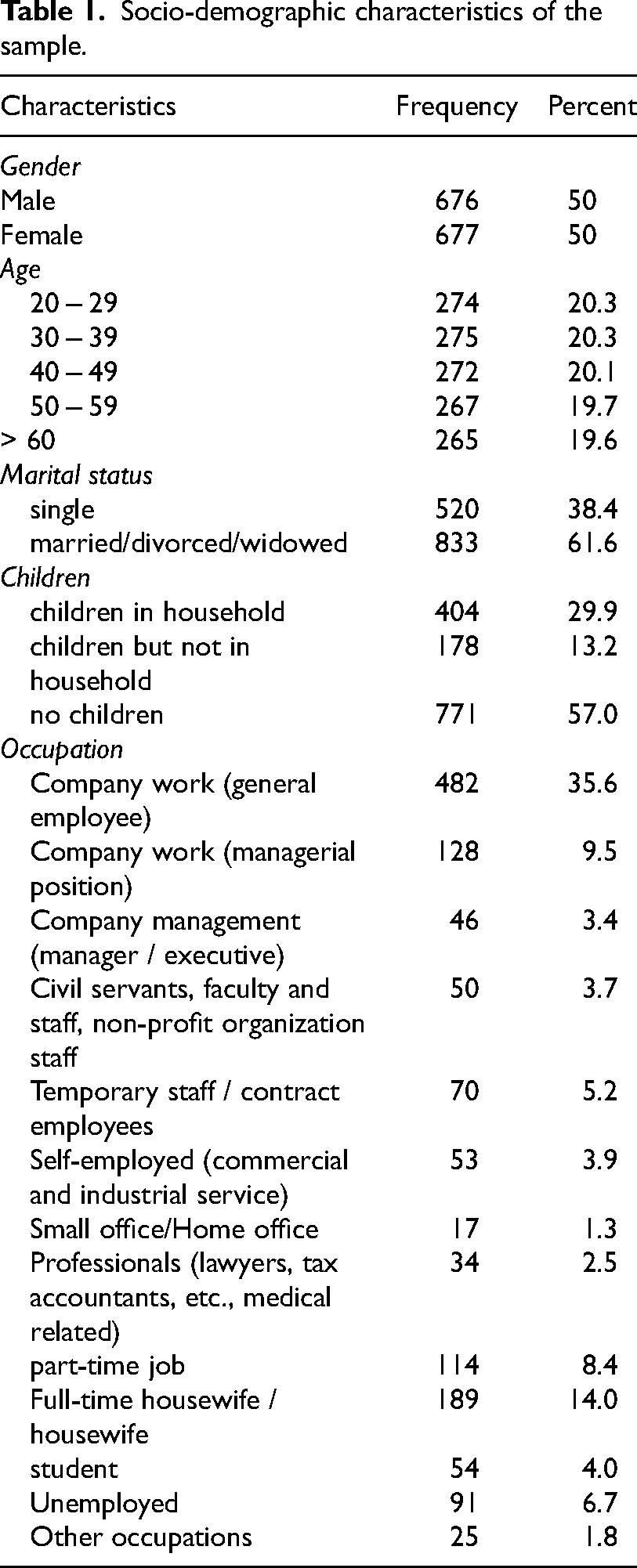
As the researcher was particularly interested in analyzing gender differences in this project, the market research company was instructed to obtain an equal number of male and female respondents. Consequently, 676 respondents were male, and 677 respondents were female. The respondents’ ages ranged from 20 to 92 years, with an average age of 45 years. The majority of respondents were married/divorced/widowed (61.6%), with the remaining 38.4% being single; 29.9% of households had children, but in 13.2% of them, the children were not living in the same household; and 57% of the households did not have children. Among the 13 occupation categories, the top three were company work (general employees) (35.6%), full-time housewives (14%), and part-time jobs (8%). The commonly collected income demographic could not be requested as, according to the market research company, it is considered inappropriate in the Japanese cultural context. Table 1 presents the socio-demographic details of the sample.
Socio-demographic characteristics of the sample.
Factor analysis: Attitude toward traveling during the COVID-19 pandemic
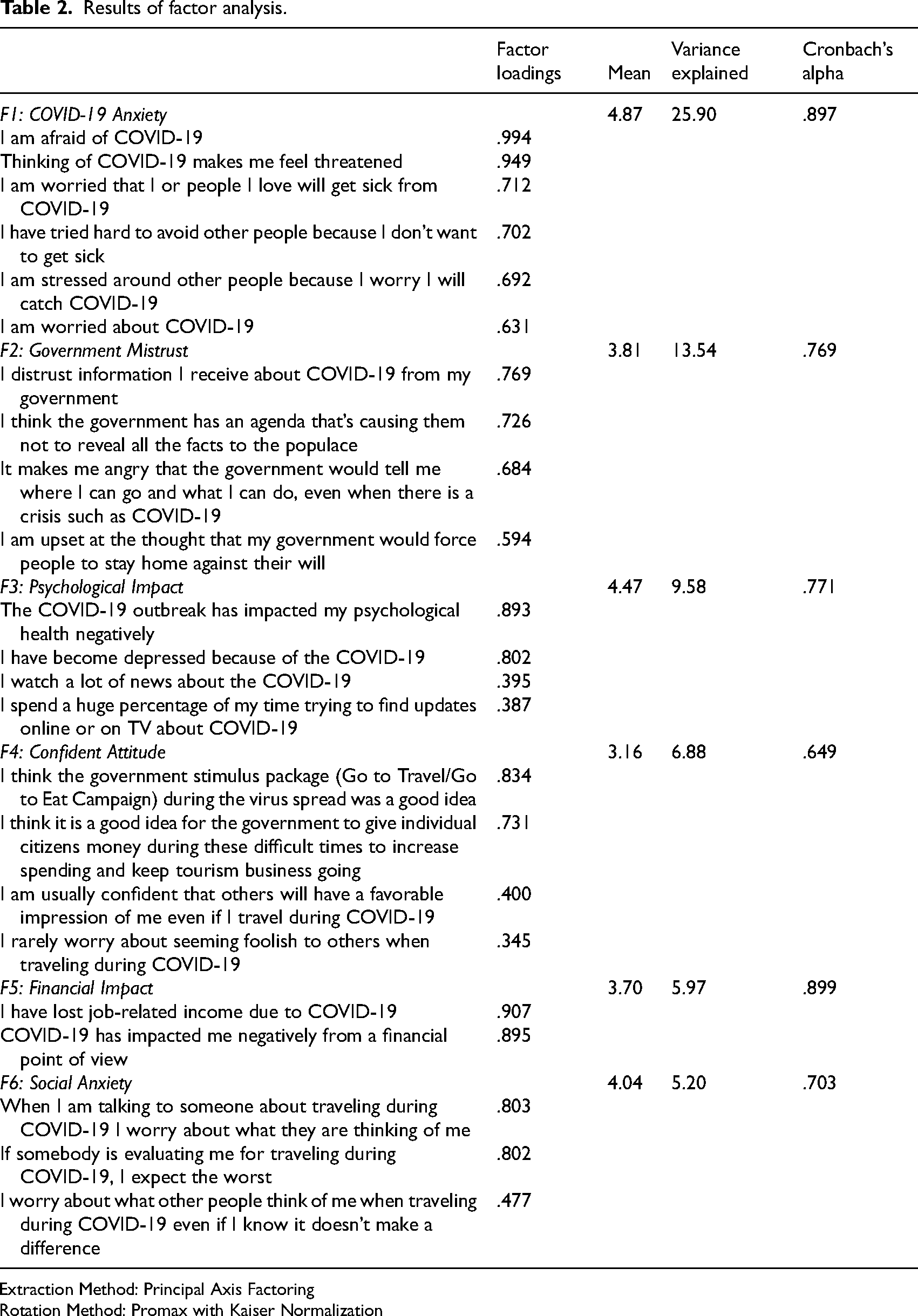
First, Cronbach’s alpha values were used to test the internal consistency of the scales, with values ranging from 0.649 to 0.899. Although the Cronbach’s alpha of factor 4 falls below the often-cited minimum recommended value of 0.70, several authors recommend not strictly following this criterion; for one, the values depend on the number of items in each factor; therefore, the score of 0.649 can be attributed to having only four items on the scale, not to the scale being unreliable. Cortina (1993) illustrates this using an example of two scales with the same α = 0.80: one has three items with an average correlation of 0.57 between items, and the second has ten items and only an inter-item correlation of 0.28. Subsequently, the inter-item correlation, and especially the corrected item-total correlation value, was assessed, and the values ranged from 0.346 to 0.578, which is within the recommended range of 0.30 to 0.70 suggested by Ferketich (1991). Furthermore, Kline (1999), argues that when dealing with psychological constructs, as this study does, values below 0.7 can be expected due to the diversity of the constructs being measured.
Next, an exploratory factory analysis with oblique (promax) rotation was performed. This method assumes that the underlying factors can be related or correlated to each other, which in the case of psychological constructs is likely, and promax rotation is very suitable for large datasets and human subjects (Field, 2013). Table 2 shows the mean values and the standard deviation for each factor, factor loadings, explained variance, and Cronbach’s alpha. No item was excluded due to factor loadings, as all values are above the .164 threshold recommended by (Stevens (2001) for sample sizes with over 1000 respondents, and they meet the recommended minimum of .3, as cited by Zeller (2004). Further, all items’ communalities were over the recommended minimum of .2 (Child, 2006) and thus were included in the analysis.
Results of factor analysis.
Extraction Method: Principal Axis Factoring
Rotation Method: Promax with Kaiser Normalization
As shown in Table 2, factor analysis resulted in six factors, explaining 67.07% of the variance. Each item is allocated to one factor, and the factors were labeled as follows: 1) COVID-19 anxiety, 2) government mistrust, 3) psychological impact, 4) optimistic outlook, 5) financial impact, and 6) social anxiety. Upon further examination, item means indicate a strong agreement between items measuring perceived COVID-19 threat, news scale, and psychological impact. Further, standard deviations indicate a larger range of dispersions for items measuring the financial impact and attitude toward the government response.
Segmentation Analysis
To obtain homogenous segments of the interviewees, a non-hierarchical cluster analysis using the K-means algorithm was performed on the data. The dimensions obtained from the factor analysis were used as segmentation variables, and one- to seven-cluster solutions were analyzed. A three-cluster solution was deemed most appropriate for the following reasons: a) it resulted in the most interpretable cluster profiles (Figure 1), and b) the iteration for the three-cluster solution reached zero changes after 15 iterations, with cluster centers still changing for other solutions.
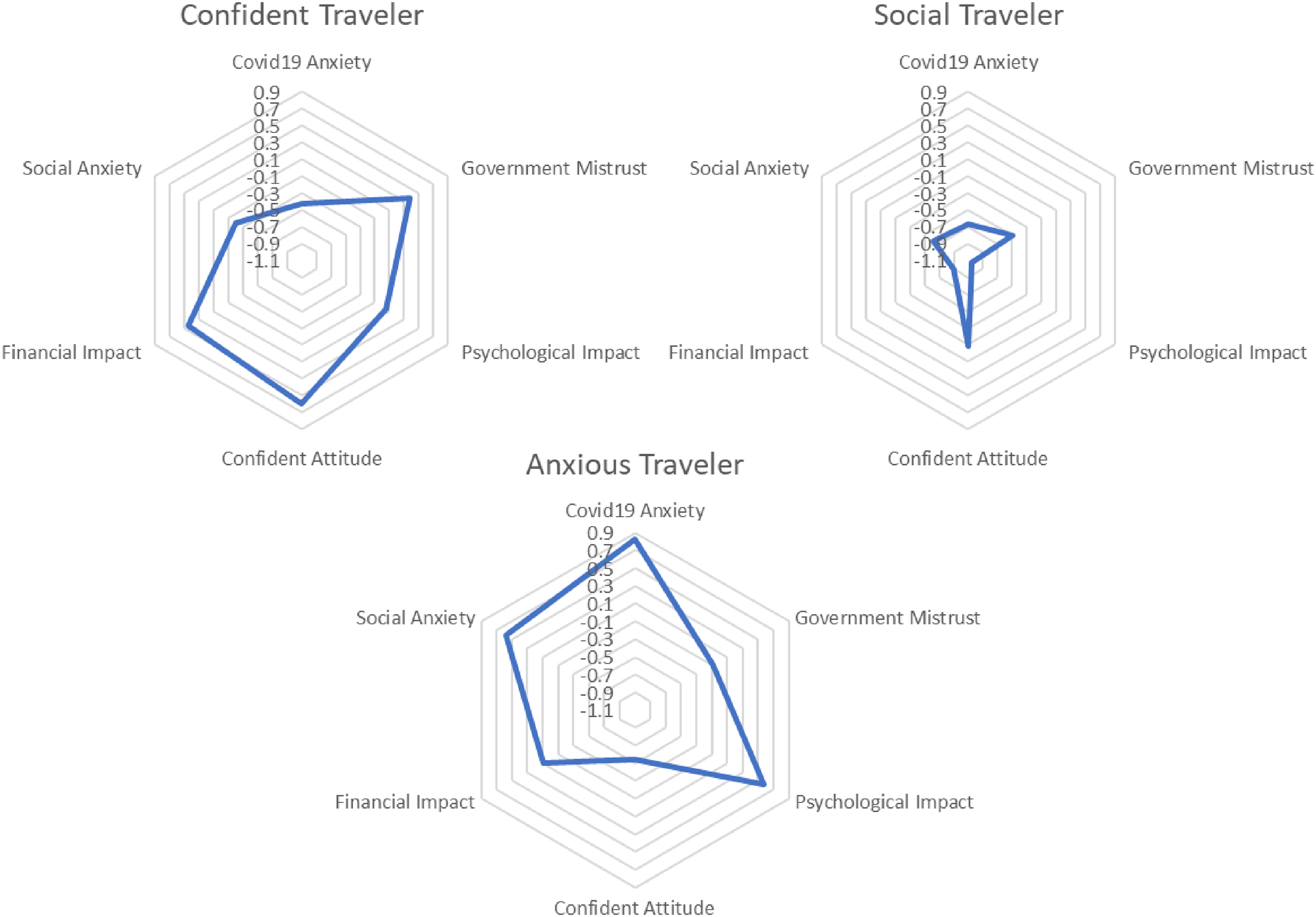
Visualization of cluster membership and factor association.
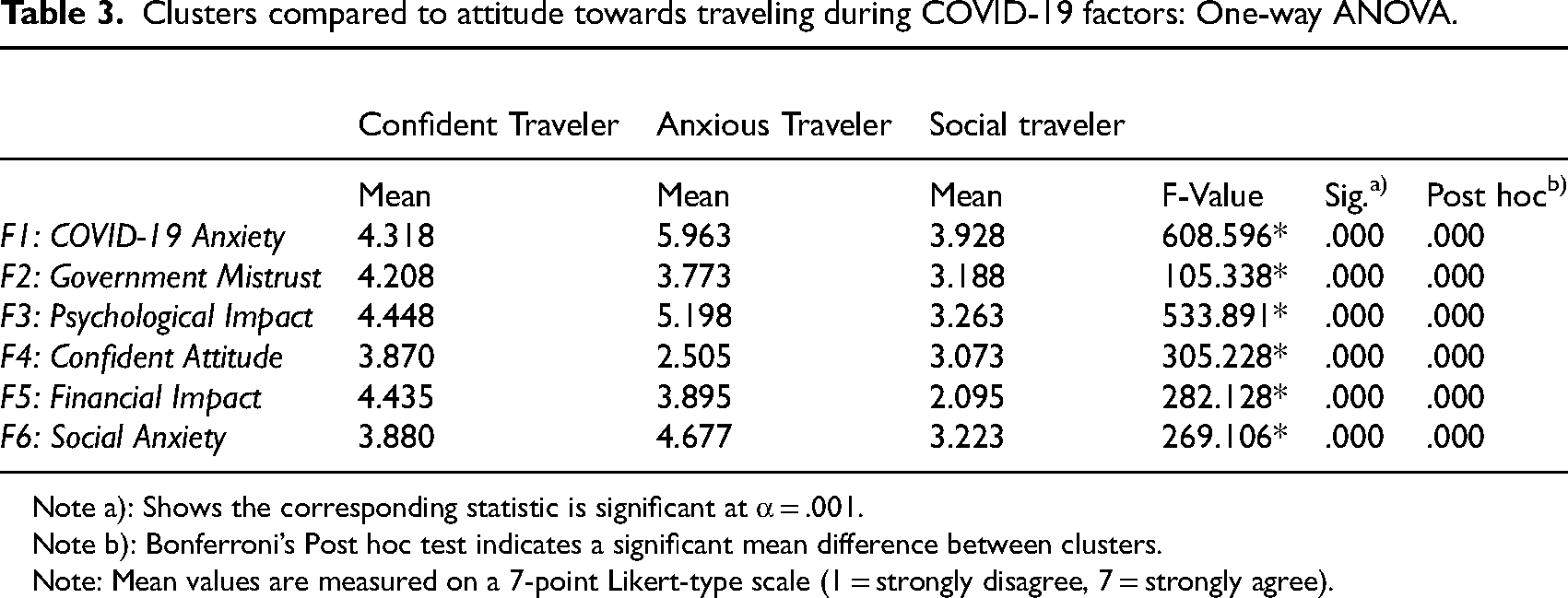
Using the Bonferroni method, the post-hoc difference of means test resulted in all dependent variables being significantly different among clusters with p < 0.001 (Table 3), which was the best result among all solutions.
Clusters compared to attitude towards traveling during COVID-19 factors: One-way ANOVA.
Note a): Shows the corresponding statistic is significant at α = .001.
Note b): Bonferroni’s Post hoc test indicates a significant mean difference between clusters.
Note: Mean values are measured on a 7-point Likert-type scale (1 = strongly disagree, 7 = strongly agree).
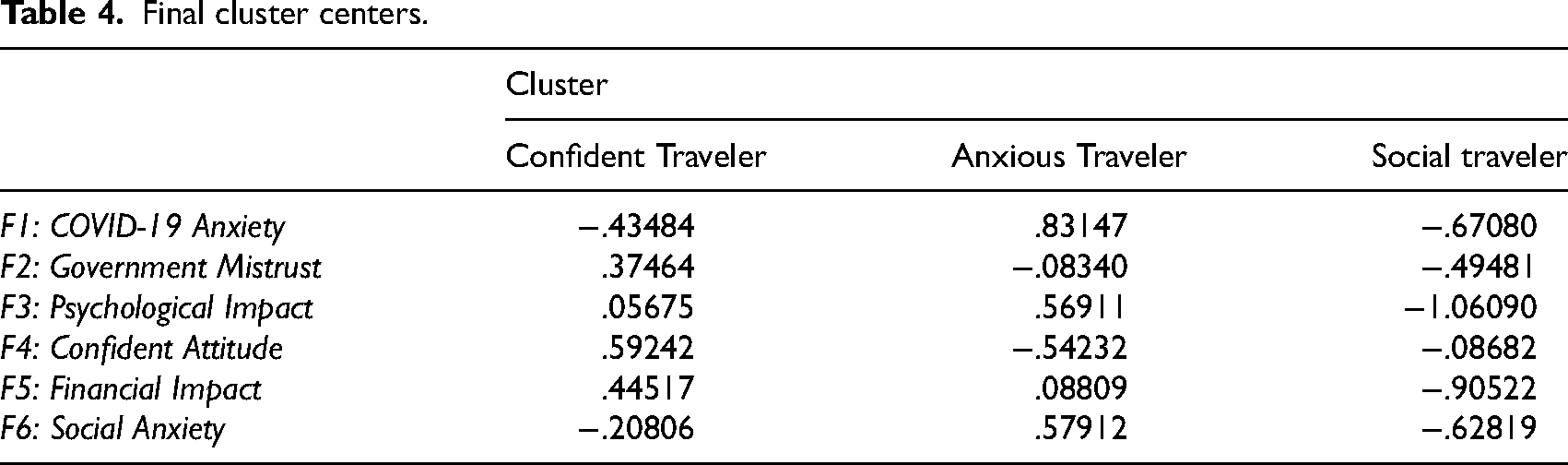
Each cluster was then labeled after interpreting the cluster’s attitude toward travel, checking both the mean and standard deviation of the factors and individual questionnaire items, and checking the final cluster centers; these are listed in Table 4.
Final cluster centers.
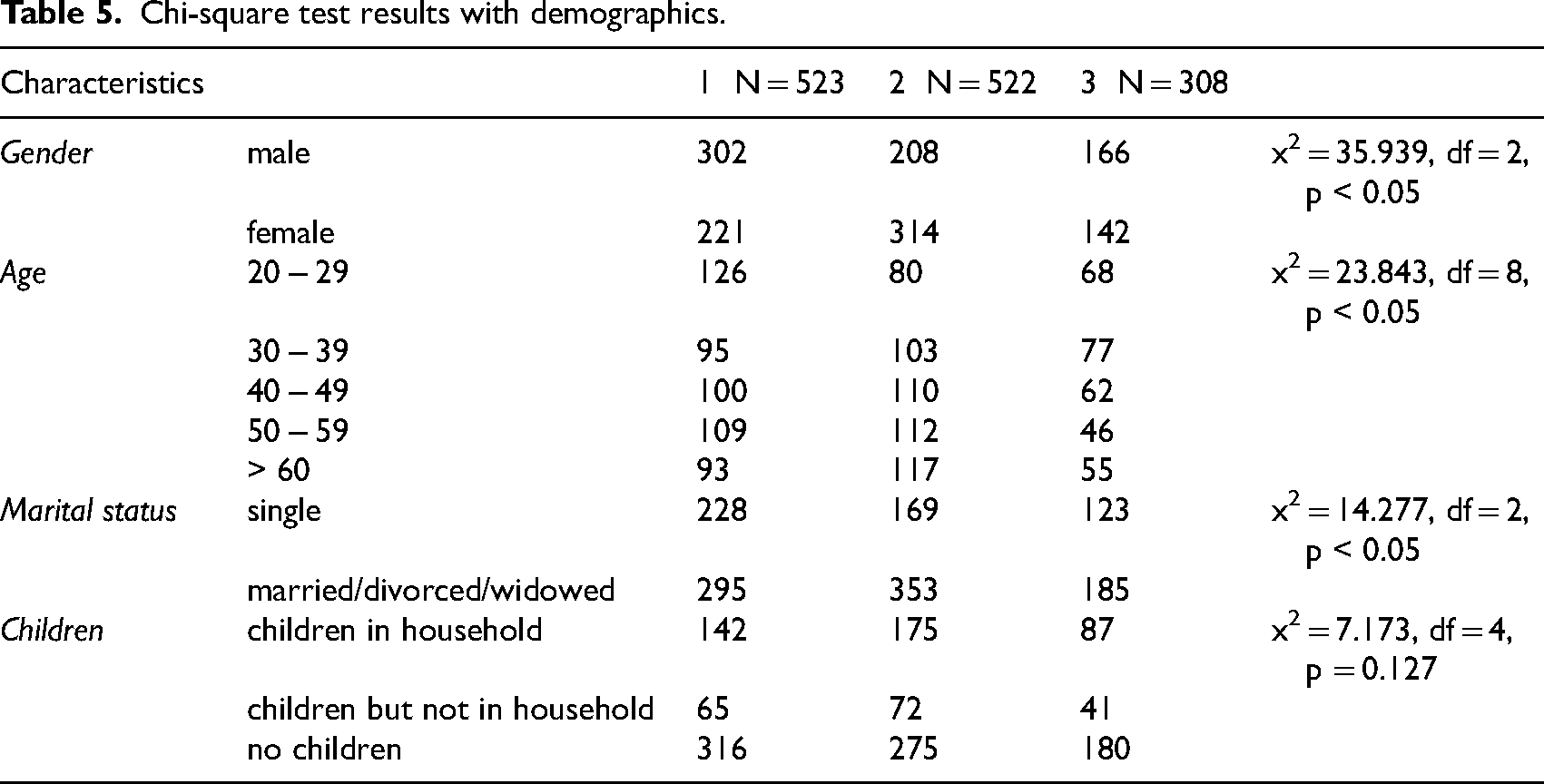
Significant socio-demographic characteristics were assessed through cross-tabulation Chi-square tests, and the results are displayed in Table 5. All categories had counts of five and higher, and the findings indicated that the clusters differed in terms of gender, age, and marital status, but not in terms of whether or not respondents had children in their households.
Chi-square test results with demographics.
Cluster Profiles
The cluster profiles can be described as follows: Cluster 1 is named ‘Confident Traveler’ as, compared to the rest of the clusters, respondents in this group show the highest acceptance of items in factor 4, which include the government stimulus package for national travel (Go to Travel Campaign) and the monetary payouts to citizens for traveling purposes. Moreover, they display the highest confidence when traveling and, compared to the other groups, they worry the least about seeming foolish (factor 2), which is further supported by their low level of COVID-19 anxiety (factor 1). This group is further characterized by the pandemic having had a negative financial impact on their lives (factor 5) and by having strong negative feelings toward government measures, such as asking people to stay at home or preventing them from traveling (Factor 2). From a socio-demographic perspective, this cluster comprises the largest number of males (44.7% within characteristics), the highest number of respondents aged 20–29 (46%) and 50–59 (40.8%), and the highest number of singles (43.8% within characteristics and 43.6% within clusters).
Cluster 2 differs greatly from Cluster 1; it is titled the ‘Anxious Traveler.’ Respondents in this cluster strongly agree with items in factor 1: they are characterized by a strong fear of COVID-19, that is, extreme worry about the disease and that their loved ones may become infected, and they endeavor to avoid other people to prevent infection. Moreover, this group is characterized by having experienced a very strong psychological impact due to the pandemic, and they strongly agree with items in factor 3, which include becoming depressed, experiencing a negative impact on their health, and following news updates on the pandemic frequently. They are further very concerned about the opinions of others if they travel (factor 6) and show low confidence when traveling (factor 4). The socio-demographic characteristics of this group are as follows: It has the highest number of females (46.4% within characteristic, 60.2% within cluster), the lowest number of respondents aged 20–29 (29.2% and 15.3%), and the highest number aged > 60 (44.2% and 22.4%). Further, the cluster has the largest proportion of people having children in the household (43.3%) and not in the household (40.4%), and it is the largest group containing married/divorced/widowed respondents (42.4% and 67.6%).
Finally, Cluster 3 is named the ‘Social Traveler,’ as their main characteristic seems to be their carefree attitude. They are characterized by having the lowest ratings for factor 1 among all clusters, lowest COVID-19 anxiety, and especially low scores for the items a) trying hard to avoid other people and b) being stressed when around other people. They are further characterized by having suffered the least psychologically, compared to the other clusters, spending little time on finding updates on COVID-19 (factor 3), and having suffered the least financially due to the pandemic (factor 5). Finally, respondents in this cluster are also not concerned about being judged by others for traveling (factor 6); however, they are not against the government asking people to stay home (Factor 2). This cluster has a balanced number of male (53.9%) and female (46.1%) respondents, with most people aged between 20 and 49 years (67.2%), and most people were married, divorced, or widowed (60.1%).
Discussion
COVID-19 has not only caused severe international travel restrictions, but also led to massive trip cancelations by tourists. The fear of travel has become evident and also a cause of concern in tourist-related businesses. Therefore, exploring these fears and attitudes toward traveling is imperative in introducing mitigating measures. This study aimed to cluster domestic travelers based on their attitudes and feelings toward domestic travel, thereby providing insights into the Japanese tourism industry in this context. Moreover, this study aimed to explore whether similar factors emerge when the scales developed by (Conway et al. (2020), which were tested on respondents residing in the United States, are applied in a completely different cultural context. To address these research questions, we collected data through a market research company in Japan, focusing on respondents from the cities of Tokyo and Osaka.
The results reveal three distinct tourist clusters, with two large clusters of approximately equal sizes being polar opposites. Respondents in the first cluster are rather unfazed by the pandemic and support stimulus measures to keep the national tourism industry alive, demonstrating intention to travel. The large number of respondents included in this cluster supports the findings of previous studies: male travelers demonstrate less fear of getting infected with COVID-19 as compared to female travelers (Das and Tiwari, 2021; Magano et al., 2021; Reznik et al., 2020; Sakib et al., 2020). Nguyen et al. (2020) found that older travelers experience less fear; however, this study found that younger travelers demonstrate this phenomenon instead, which could be attributed to cultural differences. However, it could also be argued that younger travelers’ level of fear is lower because they feel confident about adopting preventive behaviors and PNPIs (Bavel et al., 2020; Das and Tiwari, 2021). The second cluster is the extreme opposite and is characterized by strong travel fear due to COVID-19-related anxiety and strong social anxiety, which negatively affects travel intention. The demographics of this group support existing evidence that females perceive COVID-19 as more severe and display higher levels of fear and anxiety (Magano et al., 2021; Reznik et al., 2020; Sakib et al., 2020). Therefore, female travelers demonstrate a higher willingness to adopt PNPIs (Das and Tiwari, 2021; Yuki et al., 2020). Further, this group has been significantly psychologically affected, unlike the respondents observed in the other two clusters. The final cluster included the least number of respondents characterized by those demonstrating the minimum effect or least concerns pertaining to the pandemic; these individuals do not avoid any social contact and may display intention to travel.
Considering this study’s results regarding why the Japanese are traveling less than before, the following assumptions can be made. First, approximately 40% of the respondents (Cluster 2) expressed a strong anxiety toward COVID-19; therefore, travel fear can be considered as one reason for canceling travel plans. Further, this group of respondents suffered psychologically; both the factors are supported by Fennell (2017), who lists ‘fearfulness’ and ‘health & skill’ under tourists’ characteristics that influence their fear response (e.g., not traveling or reduced travel). During a global pandemic, travelers are exposed to feelings of fear and anxiety, which make them feel threatened and vulnerable, and in turn, increase their perception of travel risk (Ahorsu et al., 2020; Guo et al., 2020; Hacimusalar et al., 2020; Reznik et al., 2020). This could lead to travelers canceling their travel plans (Reisinger and Mavondo, 2005). Fennell (2017) mentions socio-demographic characteristics as another force that influences travel fear and travel behavior; this study’s findings support this assumption, as Cluster 2 comprises a large proportion of females, the elderly, and households with children. Consistent with prior studies, female travelers perceive COVID-19 as a more serious issue than males, which essentially increases their levels of fear and anxiety (Magano et al., 2021; Reznik et al., 2020). Older travelers’ willingness to adopt PNPIs strategies (Bavel et al., 2020) could also be attributed to an outcome of fear and anxiety. The socio-demographic attribute of income can be the second major reason behind reduced traveling, as observed among Cluster 1 members. A significantly reduced income due to the pandemic might prevent Cluster 1 from traveling, even if it has the confidence to do so. Finally, addressing the assumption that the enormous social pressure to conform to the behavior of others (Fennell, 2017; Toivonen et al., 2011; Yamaguchi, 2015) might have had an impact on travel behavior, the results indicate that this can be the third reason for reduced travel; however, the anxiety related to COVID-19 outweighs this characteristic among the respondents. The state of emergency declared by the Japanese government created a uniform social condition in which travel was discouraged, leading to compliance among travelers by reducing their travel; at the same time, they demonstrated similar levels of fear and anxiety regardless of demographic factors such as age and sex.
The practical implications for tourism operators and policymakers are that they can customize campaigns to target each segment. For example, as travel fear is a dominant characteristic among a large proportion of respondents (Cluster 2), they can be targeted with travel packages that require little or minimal face-to-face contact. Another option is pointed out by (Craig (2020) who found that camping and glamping, which are outdoor activities that do not require individuals to be in close proximity to each other, are gaining popularity in the United States. He stated that travelers, especially those who avoid crowds, are 1.81 times more likely to consider camping; those who have had recent experiences in camping are 4.29 times more likely to consider camping again. In South Korea, support for contactless tourism (e.g., private accommodations, isolated outdoor activities, road trips, etc.) is also on the rise (Bae and Chang, 2021), and the South Korean government has begun to promote such activities (Bae and Chang’s (2021). results further indicate that Korean citizens’ intentions to engage in such activities are still strongly influenced by affective risk perceptions about the pandemic: the more they worry about their safety and that of their family members, the more likely they are to choose contactless tourism activities. Moreover, conventional tourism destinations and accommodations can implement precautionary measures to ensure the safety of their visitors or provide or suggest health services at their destinations in case of infection, and promote them accordingly.
Contrary to respondents in Cluster 2, members of Cluster 1 display little travel fear, are eager to travel but have suffered financially due to the pandemic. As the largest cluster in the present study, it is important to carefully consider measures targeting this group as it has a strong potential to invigorate national travel. It is reasonable to assume that respondents in Cluster 1 will take advantage of any nationwide governmental travel campaign, such as Go to Travel, as it heavily subsidizes trips by covering 35% of the total cost (transport and accommodation) and provides an additional 15% in coupons and vouchers to be used on site for gastronomy or local transport offers. They will, however, not actively seek out travel information due to lack of finances for traveling; therefore, communicating to them via popular travel agent websites, such as Japan Travel Bureau and Rakuten Travel, or providing flyers at local travel offices will have little impact. Communication about the available travel subsidy via social media or TV commercials is suggested.
Lastly, as observed among the respondents in Cluster 3, a group of individuals will continue to travel as in the past, together with other tourists; therefore, using conventional marketing campaigns, marketing channels, and travel products will be sufficient. It is recommended that the members in this cluster are not notified of detailed efforts of accommodation and transport providers, as well as other measures appointed to prevent infection and ensure social distancing. This is because the members in these clusters already put little effort into updating themselves about the COVID-19 situation, and will thus be easily annoyed when reminded of a topic they care little about. They will further be discouraged from buying a tourism product where they are concerned that a socially enjoyable time during the trip is not possible, a point that is very crucial to this segment.
The main limitation of this study is that it was conducted when vaccinations were not yet available; the responses might differ if this study was conducted again at present or after certain intervals of time. Results may further vary between tourists traveling for a short duration versus tourists traveling for a long duration. Also, tourists visiting urban destinations will most likely display different behavior and concerns than when visiting rural areas where there is a significantly lower probability to face. Additionally, this study did not differentiate between periods of peak seasons or off-season, which may be an important influence factor as well. Furthermore, this study’s factors explained 67% of the variance and the addition of other measurement variables can increase this figure in future studies. For instance, past literature on travel risk perception provides several possible candidates for exploring anxiety in more depth. Variables exploring the type of risk, and risk reduction strategies tourists can implement to reduce the perceived risk to a tolerable level (Jahari et al., 2021), can provide more insight. The theory of planned behavior with its construct of ‘subjective norms’ (Quintal et al., 2010a) can help increase the low variance explained by the ‘social anxiety’ and ‘confident attitude’ factors in this study. Naturally, additional constructs which have not been included can be considered. For example, the available means of transport to a certain destination might influence a tourist’s attitude and feelings towards traveling. The possibility of using an individual car can make a difference over having to transfer multiple times when using public transport (a very common occurrence in Japan) before reaching a destination. Sun et al. (2022) provides two more angles that can be explored: the first is the level of trust of potential visitors towards a destinations’ government, local residents, and tourism facilities in terms of risk management and risk minimization. The second is the level of familiarity with a destination through multiple repeat visits in the past, where tourists with high levels of familiarity may display lower levels of travel constraints and disinterest in visiting.
Finally, this study focuses only on domestic travel of Japanese nationals; future studies should examine their intentions to travel internationally, which is equally important to domestic travel companies. Moreover, as soon as borders open for leisure tourism, a similar study should be conducted among inbound tourists from the most important pre-pandemic source markets to Japan, namely China, Hong Kong, South Korea and Taiwan (Japan National Tourism Organization, 2021). This is essential as, although inbound tourists represented less than 20% of the Japanese travel market, they spend significantly more during their trip than their Japanese counterparts (The Japan Times, 2018).
Footnotes
Declaration of conflicting interests
The author(s) declared no potential conflicts of interest with respect to the research, authorship, and/or publication of this article.
Funding
The author(s) disclosed receipt of the following financial support for the research, authorship, and/or publication of this article: This research was funded by Doshisha University All Doshisha Research Model “Urgent Research Related to COVID-19”.
