




Abstract
Drawing on social and psychological well-being literature underpinned by the concept of resilience, this study examines the impact of COVID-19 induced redundancy on the socio-psychological well-being of redundant employees (laid-off or working reduced hours), and its effect on their commitment to work and support recovery in the tourism industry. Utilizing a quantitative-dominant mixed methods design, 457 questionnaires were administered, and 15 interviews conducted with redundant employees in Ghana between May and August 2020. Results from a binary logistic regression analysis of the survey data supported by qualitative interview analysis indicate that marital status, education, status of dependents, and the types of tourism businesses employed in, significantly influenced psychological well-being while marital status, age, education, and rank in the organization influenced the social well-being of respondents. Meanwhile, psychological well-being significantly influenced future work commitment in the industry. Managerial implications for supporting employee resilience, well-being, and future recovery strategies are critically examined.
Keywords
Introduction
Tourism has often suffered setbacks induced by environmental, political, and economic crises (Novelli et al. 2018). In most cases, such crises are localized within countries, or sub-regions and, therefore, require specific destination-based recovery strategies. In contrast to the regionalization of previous crisis’, the current Coronavirus (COVID-19) pandemic has had severe impacts across the entire world. The World Tourism Organization (UNWTO 2020) estimated that the pandemic and global efforts to contain it would cause a 60%–80% decline in international tourist arrivals, translating into losses of USD 910 billion to USD 1.2 trillion in export revenues from tourism in 2020. This has put 100 million to 120 million direct tourism jobs at risk (UNWTO 2020), directly impacting the economic, social, and psychological well-being of those affected (Farzanegan et al. 2021).
The social and psychological burden of the situation triggered by COVID-19 could be more pronounced in the tourism industry in lower-middle and low-income countries, such as Ghana. This is due to a higher prevalence of micro, small, and medium sized enterprises (MSMEs) in such countries (Dayour, Adongo, and Kimbu 2020). These MSMEs are often semi-formal or informal and consist of own account workers with limited job opportunities for additional employees. They also possess low savings and a poor insurance uptake culture and have high dependency rates due to the large family sizes of those leading MSMEs (Dayour, Adongo, and Kimbu 2020). Lower-middle and low-income countries are also more likely to be resource scarce, whereby the demand for social, economic, and environmental resources exceed supply (Yang, Ryan, and Zhang 2013). Resource scarcity also relates to low psychological and social support systems, requiring a heavy reliance on tenuous informal support and risk coping mechanisms (Dayour, Adongo, and Kimbu 2020; Ngoasong and Kimbu 2016), a situation that could further exacerbate and prolong the socio-psychological hardship of COVID-19 induced redundancy. From this context, the study aims to understand the impacts of COVID-19 induced joblessness and loss of earnings on the social and psychological well-being of tourism employees in sub-Saharan Africa (SSA). To achieve this aim, the study explores the following question: What are the impacts of COVID-19 induced joblessness and loss of earnings on the social and psychological well-being of tourism employees in a resource-scarce context in Africa? This question is explored amongst redundant employees in the tourism industry in Ghana—referring to those employees who had been made redundant because of the COVID-19 pandemic, through the adoption of a quantitative-dominant, concurrent embedded/nested mixed methods framed through the concept of resilience.
In answering the above question, this article makes two important contributions to tourism literature on the COVID-19 pandemic. First, it responds to ongoing calls for more research to understand the wider impacts of COVID-19 across different economic sectors and geographic contexts in general, and on “local communities as part of the tourism-subjects at a destination level” in particular (Bausch, Gartner, and Ortanderl 2021, 477). Rogerson and Baum (2020) note that the focus of a good number of recent COVID-19 research (cf. Galvani, Lew, and Perez 2020; Hall, Scott, and Gössling 2020; Ioannides and Gyimóthy 2020; Ribeiro, Gursoy, and Chi 2021) has engaged with “what has to change” in tourism, especially regarding the industry’s sustainability. Whilst a further significant line of research has turned to examine shifts in the consumer behavior of tourists, in response to COVID-19 and its restrictions (cf. El-Said and Aziz 2021; Kim, Bonn, and Hall 2021; Kim et al. 2021a, 2021b; Litvin, Guttentag, and Smith 2021; Williams, Wassler, and Ferdinand 2020). A smaller number of scholars have turned to identify the social dimension of COVID-19, with Qiu et al. (2020) examining the social costs relating to tourism due to the pandemic within the Chinese context and Baum and Thanh Hai (2020) evaluating one’s right to participate in hospitality and tourism, within the context of the COVID-19 pandemic. Yet, despite broad recognition of the social and psychological burden of COVID-19 and the recognized need to shift focus away from tourists and toward local communities and employees (Assaf, Kock, and Tsionas 2021), within tourism research the human resource dimension is almost entirely missing from discussions thus far, with only three studies published. Sönmez et al.’s (2020) study focuses on the impact of COVID-19 on migrant hospitality workers in the USA, while Chen’s (2021) research note is a rapid evaluation of the psychological toll of COVID-19 on industry employees. Ngoc Su et al. (2021) further took focus with organizational resilience in tourism and hospitality businesses in Vietnam, examining how certain human resource strategies were drawn on to sustain businesses during COVID-19. All three studies conclude by calling for more in-depth research examining the impacts of the COVID-19 crisis on the physical and mental health of tourism workers, especially in regions with little or no systematic institutional and societal social and psychological support systems, such as Africa. Examination of this topic within the context of Africa is politically significant because the existing research on the human-resource dimension of COVID-19 has taken focus with Asia, Europe, and North America, omitting experiences from many Global South regions. Tourism knowledge is already colonial (Chambers and Buzinde 2015). If we fail to incorporate perspectives from the Global South regarding the COVID-19 pandemic, we risk universalizing Global North perspectives and constructing narrow understandings of the crisis.
Second, the paper contributes to an understanding of tourism employees’ social and psychological well-being and their readiness to work and/or support recovery strategies in the tourism industry post COVID-19. Beyond the immediate impact of being made redundant, tourism workers become vulnerable and exposed to other life-changing consequences that transcend the period of unemployment (Chen 2021; Wong and Chan 2020). Joblessness is a trigger to life-changing experiences that influence social and psychological health, with long-lasting impacts (Awang-Hashim, Kaur, and Noman 2015; Karsavuran 2021). Furthermore, shock and helplessness could lead to a deterioration of social structures, further heightening the psychological burden and also taking away support mechanisms (Wang et al. 2019). This can cause traumatic disorders and increase mental stress (Huikari and Korhonen 2020) therefore, potentially jeopardizing the recovery strategies of tourism organizations.
Literature Review
Tourism, Pandemics, and Resilience
COVID-19 has exerted a significant impact on the world’s economic, socio-cultural, and political systems (Sigala 2020). The tourism industry has a bi-directional relationship with infectious diseases in that the former is both a contributor and a recipient of the consequences of infectious diseases (Poulos et al. 2018). While travelers exposed to pathogens become ill, they have also become a major conduit for the transmission of COVID-19 during travel or upon return home (WHO 2020; Poulos et al. 2018). The tourism industry is one of the worst hit among all the major economic sectors (Gössling, Scott, and Hall 2020; UNWTO 2020) because global travel and tourism businesses have been immobilized by preventive measures put in place by various governments, including travel bans, social distancing, lockdowns, self, and mandatory quarantines, and “stay at home” campaigns, among others (Gössling, Scott, and Hall 2020).
Whilst the tourism industry has been especially susceptible to COVID-19 preventive measures because they have primarily focused on limiting the international movement of people, the industry is also accustomed to experiencing various environmental, economic, and political crisis (such as, terror attacks, earthquakes, Ebola, Zika Virus, and SARS) and thus has become resilient in recovering from such stressors (Novelli et al. 2018). However, the nature and manner of COVID-19 in terms of its unprecedentedness and impacts on global travel and tourism related businesses is an indication that this crisis is not only unique but will have a severe long-term transformational influence on the industry (Sigala 2020). Impacts may differ among the various sub-sectors of the tourism industry, as well as varying destinations—depending on level of exposure, recovery strategies and, importantly, the resilience of those working in the industry (Gössling, Scott, and Hall, 2020; Sigala, 2020). And yet, despite variations, the COVID-19 pandemic will likely have serious negative psychological and social consequences on the well-being of tourism industry workers and their dependents.
In this paper we utilize the concept of resilience to frame our focus on socio-psychological well-being and joblessness. We borrow from O’Brien and Hope (2010) in understanding resilience as the ability to seek out the opportunities that arise during crisis, so as to emerge stronger and better than before. Taking focus with resilience allows us to assess how individuals and organizations adapt by improvising and utilizing resources to respond to threats in the micro and macro environment (O’Brien and Hope 2010). This adaptive ability could enable tourism industry businesses and workers to withstand the challenges brought about by crisis, such as the COVID-19 pandemic. Importantly, most extant research has utilized the concept of resilience at firm and community levels (cf. Chowdhury et al. 2019; Jiang, Ritchie, and Verreynne 2021; Prayag, Orchiston, and Pennington-Gray 2018), rather than at the level of the individual. This is despite Karatepe and Karadas (2015) identifying resilience as one of the best indicators of psychological capital in their study of work engagement and frontline employees’ satisfaction within the hotel industry. Yet few studies have focused on examining the effects of resilience from the perspective of workers, especially during and/or after a crisis.
Those who have examined resilience within the context of workers (cf. Ngoasong and Kimbu 2016) have argued that owner/managers and workers of micro, small, and medium scale tourism enterprises lack resilience due to unpreparedness and isolated decision-making processes. Consequently, it has been proposed that individuals need to “meticulously prepare for the worst and establish routines enabling them to improvise rapid responses to crises” (Sullivan-Taylor and Wilson 2009, 255). This is unfortunately not the case in many lower-middle- and low-income countries where there tends to be a reliance on informal networks to identify and respond to threats (Dayour, Adongo, and Kimbu 2020; Ngoasong and Kimbu 2016; Ribeiro et al. 2021; Zhang et al. 2020), the outcomes of which are not always successful, thereby negatively impacting the social and psychological well-being of those concerned. In this paper we are thus interested in the way resilience unfolds at the individual level in response to the COVID-19 pandemic for those working in the tourism industry in a low-income country, Ghana. In taking resilience as our framing within this context, we are able to explore the nexus between resilience and psychological and social well-being.
Psychological Well-Being
Psychological well-being is a cumulative concept relating to the happiness or sadness quality of an individual (O’Neill and Davis 2011). The concept focuses on a person’s emotions and concerns an overall subjective evaluation that comprises a persons’ perceptions of high positive emotion and low negative emotion (Wright and Cropanzano 2004). High positive emotions are positive feelings, such as joy, engagement, interest, and affection; while sorrow, dissatisfaction, stress, and anxiety relate to negative emotions (Diener 2007). Psychological well-being is positively correlated with resilience, whereby those with high levels of psychological well-being are thought to possess higher levels of resilience (Sagone and De Caroli 2014).
Psychological well-being has been measured using various scales that center on positive and negative effects (cf. Lin, Chen, and Weng 2019). Uysal et al. (2016) have highlighted the limited number of studies regarding tourism employees’ well-being; with much research in this area having focused on well-being based on either residents’ or tourists’ perspectives (Uysal et al. 2016), and only a small number of studies taking focus with the psychological well-being of tourism employees. For example, Lin, Chen, and Weng (2019) recently turned attention to the psychological well-being of tourism operators, exploring the effect of work-family conflict on psychological well-being (e.g., anxiety, positive well-being, depressed mood, self-control, vitality, and general health), finding that work-family conflict has a negative effect. Witte (1999) found that job insecurity was not only a stressor but reduces the well-being of employees. Alongside the limited research focus on the psychological well-being of tourism employees, there is a further omission regarding the effects of infectious diseases such as COVID-19 on tourism employees, with only two US focused rapid evaluations by Chen (2021) and Sönmez et al. (2020) and another by Ngoc Su et al. (2021) on Vietnam.
Social Well-Being
The concept of social well-being concerns social conditions that engender self-actualization (Baker et al. 2015). When the conditions of social well-being are met, it is thought to be likely that a high capacity for resilience is identified (Armitage et al. 2012). Social well-being is independent of economic well-being. Rather, Keyes (1998) considered social well-being as an evaluation of one’s personal condition and functioning in society, proposing different social encumbrances that constitute possible constructs of social well-being, including: social integration, social acceptance, social contribution, social actualization, and social coherence.
Social integration, following Keyes’ (1998) is the degree to which individuals feel they wield something in common with others in their society based on the quality of their relationship with society, and the extent to which they think they are part of their society. Social acceptance is “the construal of society through the character and qualities of other people as a generalized category” (Keyes 1998, 122). Those who exhibit social acceptance have trust in others, think they can be kind and have the belief that people can be industrious (Wrightsman 1991). Social contribution is a personal assessment of one’s social worth. Accordingly, it involves the belief that one is a pivotal entity in a society with something of value to offer (Keyes 1998). Social actualization relates to the appraisal of prospects and trajectory of society. Healthier individuals are optimistic about the state and future of society, and can also appreciate the prospects of society. Social coherence relates to one’s view of quality, operation of the social world and how it is organized. Not only do healthier people care about the kind of world in which they live, but also feel they can comprehend what is taking place in their immediate surroundings. Informed by Keyes’ (1998) social-well-being constructs, this study seeks to understand the effects of redundancies emanating from the COVID-19 pandemic on the social well-being of tourism employees, and in consequence the effects of this on one’s resilience—an area which remains unexplored in the tourism literature.
Demography, Work Characteristics, and Socio-Psychological Well-Being
Variables such as gender, age, education, income, and living conditions influence well-being and resilience (Khumalo, Temane, and Wissing 2012; Kimbu et al. 2021; Navarro-Carrillo et al. 2021). Vera-Villarroel et al. (2015) also note the positive relationship between socioeconomic and psychological well-being and other health related factors. Meanwhile, Diener, Oishi, and Lucas (2003) recognized that demographic factors including income, marital status and educational background are responsible for a small amount of the variance in well-being. Hence, there are inconsistencies among researchers on the influence of socio-demographics on well-being and whether well-being varies across cultures (Khumalo, Temane, and Wissing 2012). These notwithstanding, in African societies, hierarchical structures, as well as social roles are often determined by age, marital status, and educational attainment level (Sokoya et al. 2005). With these determinants reflecting the types of businesses and jobs African individuals engage in (Keyes 2002).
Hansson et al. (2008) note that people in marriage/cohabitation relationships tend to experience increased socio-psychological well-being and are much happier, while those without such relationships experience increased distress. This implies that the impact of stressful and traumatic circumstances resulting from joblessness, for example, tends to be low among those with partners because of the camaraderie and companionship they share. In Africa, and Ghana specifically, families and spousal partners often become a source of support, refuge, and cushioning in times of difficulty. For example, Dayour, Adongo, and Kimbu (2020), noted that reliance on family members for support in stressful times limited formal insurance uptake by tourism MSMEs. Marriage/cohabitation also enables social integration, and is thus used as a survival and protection mechanism in SSA (Hinks and Gruen 2005).
The nexus between age and psychological well-being remains inconclusive, although important correlations have been identified. For example, Keyes and Waterman (2003) found that subjective well-being tended to increase with age, which was ergo a significant predictor of well-being. However, for Myers and Diener (1995), it was more complicated; with environmental mastery and autonomy tending to increase with age, whilst personal growth and purpose in life decreased with age.
Level of education and employment status are often considered sufficient markers of socio-economic status that ascertain financial circumstances, shaping lifestyle orientation, choices, and decisions. Education is often associated with thriving well-being and resilience (Keyes 2002) due to its ability to generate decent employment opportunities. With Talala et al. (2008) noting less educated, unemployed, and low-income groups experience lower levels of socio-psychological well-being due to stressful conditions associated with poverty and lack of resources.
Relatedly, Briner (2000) identified a variety of factors within the work environment influencing socio-psychological well-being. These include the physical setting (impacting levels of physical interaction between co-workers), aspects of work (such as heat, noise, and lighting) and, workers’ concerns relating to physical safety. The design and organization of jobs (i.e., workload, level of task monotony, etc.) is also thought to be one of the most important influences on psychological well-being. Furthermore, broader organizational features including the structure of the organization and the organizational culture, as well as extra organizational features at the individual (e.g., personal relationships) and local community levels (e.g., local unemployment levels), alongside the (inter)national economic climate could all also significantly influence the psychological well-being of workers (Sauter and Murphy 1995) and thus have consequential effects on one’s levels of resilience.
The above factors are especially pertinent for the tourism sector which faces persistent challenges relating to employee well-being such as low pay, precarious security, poor working conditions, and high labor turnover (Baum and Thanh Hai 2019); elements that have been compounded by the COVID-19 crisis. Consequently, we conjecture that marital status, age, and educational attainment influence redundant employees’ socio-psychological well-being and resilience. We further propose, work characteristics including the type of business, rank in the organization, redundancy status, household member employment, and whether one has dependents or not also hold influence.
Redundancy and Socio-Psychological Well-Being
Redundancy is “a special form of dismissal which happens when an employer needs to reduce the size of its workforce” due to a cessation of business activities or changes in the conditions of operations (CIPD 2020a). It may involve complete lay-off of employees or reducing the number of work hours originally assigned to employees (CIPD 2020a). Even though extant research indicates that the impact of redundancies on psychosocial well-being varies across countries and industries, Anaf et al. (2013) note that the probability of redundancy negatively impacting on the well-being of an individual is very high, whilst there is an omission in extant research regarding the examination of the relationship between redundancy and resilience.
Beyond the proximate effects of getting laid-off due to redundancy, tourism employees become susceptible and exposed to life-changing experiences that transcend the period of redundancy (Wong and Chan 2020). This impacts on their social and psychological health, with long lasting impacts that can change their overall impression of the world and adjustment to working environments after the crisis (Karsavuran 2021). Accordingly, an individual’s identity, self-definition, and self-concept can be negatively impacted by medium to long-term job loss (Patton and Donohue 1998). It is safe to say that these traumatic effects will be heightened through COVID-19 due to its unexpected occurrence, as well as the limited chance of landing remedial jobs (Huikari and Korhonen 2020). This could further lead to the deterioration of social structures among friends, families, and work colleagues (Wang et al. 2019).
As noted above, the social and psychological encumbrances of such unexpected joblessness among tourism industry employees due to COVID-19 will be especially marked in resource-scarce economies (Dayour, Adongo, and Kimbu 2020). Unlike in Europe, where national governments have implemented various targeted financial mechanisms to shore up struggling (tourism) businesses affected by the pandemic (CIPD 2020b), there has been little-to-no targeted government support for the tourism sector in SSA countries. Consequently, across SSA, anecdotal evidence suggests that tourism related redundancies and unemployment rates have skyrocketed, which could lead to serious social and psychological well-being consequences for those affected (as well as to their kin) thereby contributing to long-term mental health problems and their perception of the industry. We thus propose that resilience, as informed through socio-psychological well-being, has an influence on willingness to work in the industry post-COVID-19.
Methodology
Study Setting
The study setting is Accra, Ghana’s political and economic capital. Ghana has a warm tropical climate with sandy beaches that make it attractive for tourists from the temperate regions (mainly Western Europe and North America). The country hosts eco-attractions such as the Kakum National Park and Mole National Park, as well as heritage attractions carved around the remnants of the Trans-Atlantic Slave Trade including the Cape Coast Castle, and Elmina Castle (World Heritage Sites) (Ghana Tourism Authority [GTA] 2019). Ghana’s diverse ethnic cultural systems, including its social and political outlook, make it reflective of most SSA countries. Tourism is the fourth highest foreign exchange earner in Ghana with international tourism receipts of US$ 1.425 billion in 2019 (World Tourism Organization [UNWTO] 2019) and directly employed 682,000 (5.3% of total national employment) in 2017 (Oxford Business Group 2019).
However, total international arrivals in the country dropped by 68% in 2020 as a result of the COVID-19 pandemic (GTA 2020). Similarly, domestic tourist visits to the four most visited attractions experienced a sharp decline from 554,719 in 2019 to 190,697 in 2020. Meanwhile, total tourist expenditure declined by 68.6% during the same period (GTA 2020). Similarly, annual average occupancy rates in the upscale hotel market segment dropped by about 20% in 2020 compared to 74% occupancy in 2019 (GTA 2020). The GTA (2020) estimates that 9.7% of accommodation facilities, 23.9% of food and beverage facilities, and 11.7% of businesses in the general travel trade sectors in Ghana closed down in 2020, causing unprecedented redundancies in the tourism sector. Budget hotels and other micro and small and medium sized enterprises fared even worse with 71.6% closing down (GTA 2020).
Accra, the capital, houses Ghana’s only international airport and is endowed with numerous national monuments and heritage sites that are key touristic attractions. Accordingly, Accra has the highest number of tourism facilities in Ghana (GTA 2019), as well as the countries’ highest number of tourism workers. Accra has over 600 licensed accommodation facilities in different categories, 260 licensed food and beverage facilities, and 236 travel and tour businesses (GTA 2020). As the country’s main commercial hub, it was one of the cities that was shut down in March 2020 to stop the spread of COVID-19 (Quakyi 2020). This, together with the closure of the only international airport led to massive redundancies in the tourism sector. Hotel occupancy in Accra fell to a yearly average of 36% in 2020 compared to 78% for 2019 (GTA 2020), and by April 2020, 800,000 industry-wide jobs had been lost according to the Ghana Tourism Federation (Ghana Web 2020). Across the accommodation, food and beverage, travel and tour, and souvenir trade sectors, Accra recorded about 26.7% of all job losses in the country in 2020 as a result of the COVID-19 pandemic (GTA 2020).
Research Design
In seeking to understand the impacts of COVID-19 induced joblessness and loss of earnings on the social and psychological well-being of tourism employees in a resource-scarce context in Africa, the study adopted a quantitative-dominant, concurrent nested mixed methods design (Figure 1). Mixing methods was necessary to offer a pluralistic understanding of redundant employees’ social and psychological well-being by corroborating quantitative and qualitative findings to increase the generalizability of the conclusions (Dayour, Park, and Kimbu 2019). Here, both quantitative (Study A) and qualitative (Study B) approaches were simultaneously used. That is, both quantitative and qualitative data collection were undertaken simultaneously with no intention of developing the qualitative interview guide based on the analysis of quantitative data as would happen in sequential mixed methods design. Priority was given to the quantitative lens because of the availability of a priori measures on employee’s socio-psychological well-being (Dayour, Park, and Kimbu 2019). That notwithstanding, the peculiarities of the COVID-19 pandemic and that of the study context render value in the incorporation of qualitative insights, which provide more nuanced explanations to the quantitative findings. The quantitative data were collected through a questionnaire survey, while the qualitative data was collected through in-depth interviews.
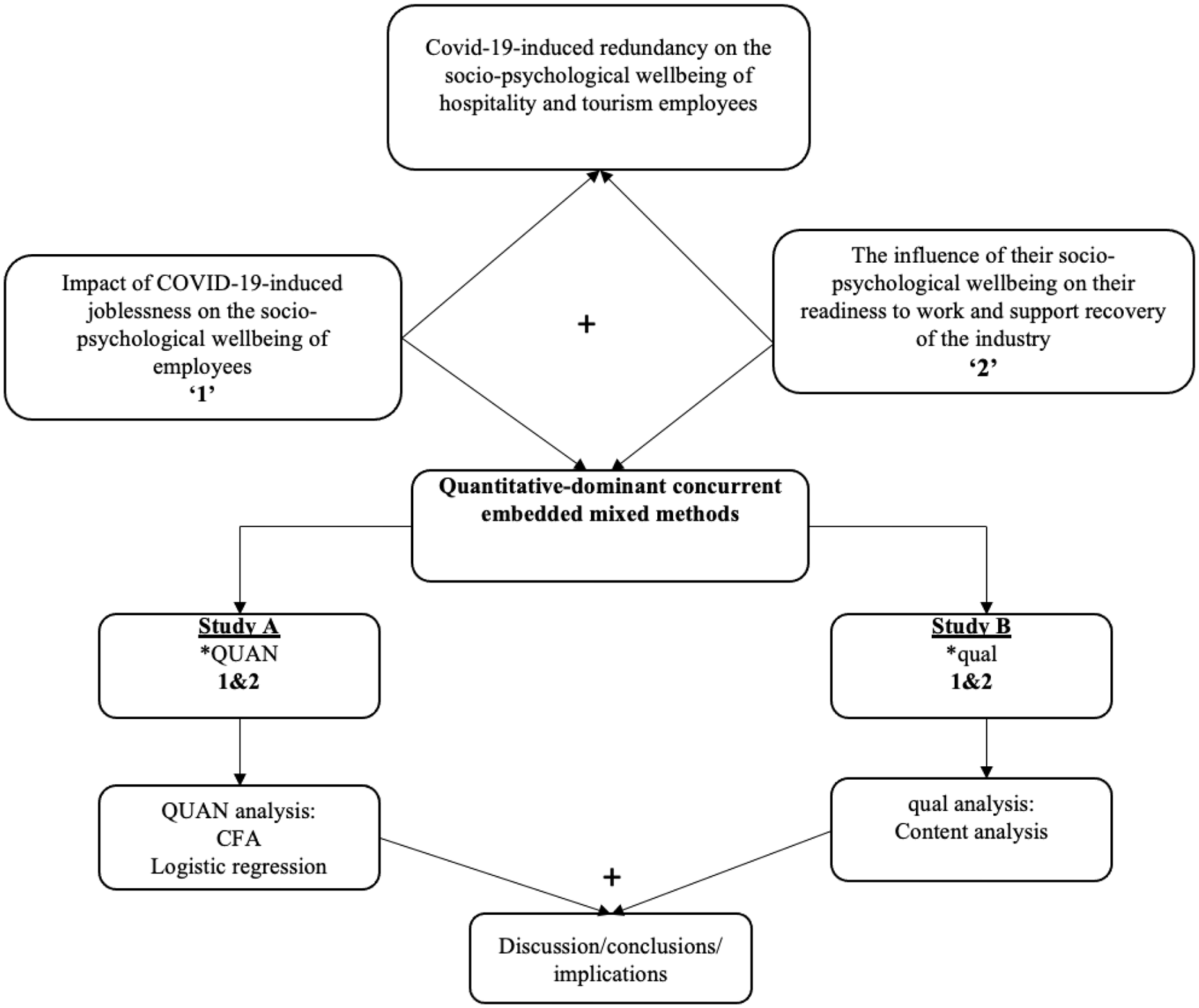
An illustration of mixed methods adopted in the study.
Methods for Study A—Quantitative approach
Measurement items
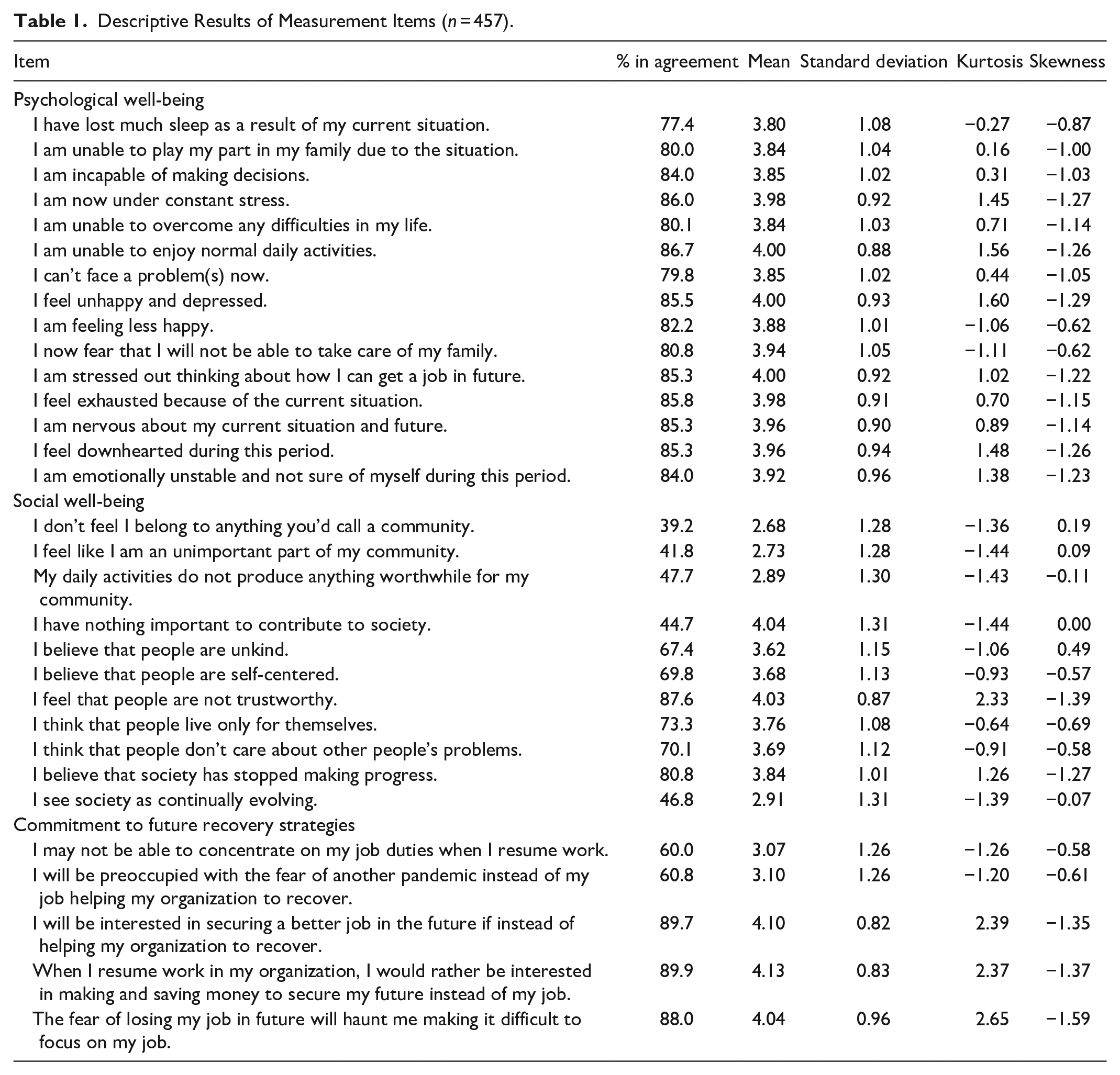
All measurement items were adapted from the literature and captured on a five-point Likert scale ranging from strongly disagree to strongly agree (Table 1). Some of the items, however, were reworded to fit the study context. The first construct, psychological well-being was measured based on the general health questionnaire on psychological well-being (Jackson 2007); a one factor measure of psychological well-being widely used in mental health diagnostics. The social well-being measures were adapted from Keyes (1998) social well-being scale, which measures social acceptance, social coherence, social actualization, and social contribution. Future commitment to work and support tourism organizations post COVID-19 was measured based on items mined from the occupational behavior literature (Kinnie et al. 2005). The last section of the questionnaire measured the demographic and work characteristics of the respondents.
Descriptive Results of Measurement Items (n = 457).
Data collection
Data were collected only from employees in the tourism sector who had been made redundant (either laid-off or were working reduced hours) because of the COVID-19 pandemic. To recruit participants, a list of tourism organizations was obtained from the GTA (the licensing and regulating body of all tourism establishments in Ghana). Utilizing this list, individual organizations were contacted to obtain a record of their employees who had been made redundant directly as a result of the COVID-19 pandemic. Based on the list, the redundant employees were found to be in six tourism sub-sectors; accommodation, food and beverage, entertainment/events, souvenir trade, travel and tour operations, and attractions. Subsequently, a census approach was taken in targeting all the employees in each of the tourism sub-sectors (Charman et al. 2017). This was done to minimize low response rates, which are often experienced in research when data collection is undertaken remotely (such as, via emails) (Wen et al. 2018).
The questionnaire was administered through the Kobo Toolbox, a digital data gathering software developed as a joint initiative between United Nations Office for the Coordination of Humanitarian Affairs, Harvard Humanitarian Initiative and the International Rescue Committee for humanitarian use. It can be deployed both online and offline, making it suitable for the unreliable internet connectivity in many parts of Ghana, including Accra. Overall, a total of 1,654 employees were identified as having been made redundant. The link to the questionnaire was emailed to those who provided their email addresses, while those without emails but with telephones numbers were sent a survey link via WhatsApp. Data collection took place from May to August 2020. Ghana recorded its first COVID-19 case in March 2020. A total of 457 completed questionnaires were returned and deemed useful for analysis (response rate of 27.6%).
Data analysis
The data were first assessed for normality and found to be normally distributed as the values for both skewness and kurtosis were below 3.0 and 7.0 respectively, as indicated in Table 1 (Ribeiro et al. 2018). Next, exploratory and confirmatory factor analyses were performed on the measurement items to explore and confirm their factorial validity. The results of the exploratory factor analysis showed that the measures of psychological and social well-being and future work commitment were all single factor variables (Table 2). However, the number of measurement items under social well-being were reduced as some of the items did not meet the 0.70 threshold (Kline 2016). Based on this, we proceeded to conduct the confirmatory factor analysis. The goodness of fit indices (χ2 = 462.7; df = 1376; ρ < 0.010; GFI = 0.987; CFI = 0.991; RMSEA = 0.043) indicated that the individual measures loaded well onto their respective constructs. This was confirmed by the measures of composite reliability and average variance extracted, which all met the minimum threshold of 0.70 and 0.50 respectively (Kline 2016).
Exploratory and Confirmatory Factor Analyses on Measurement Items (n = 457).
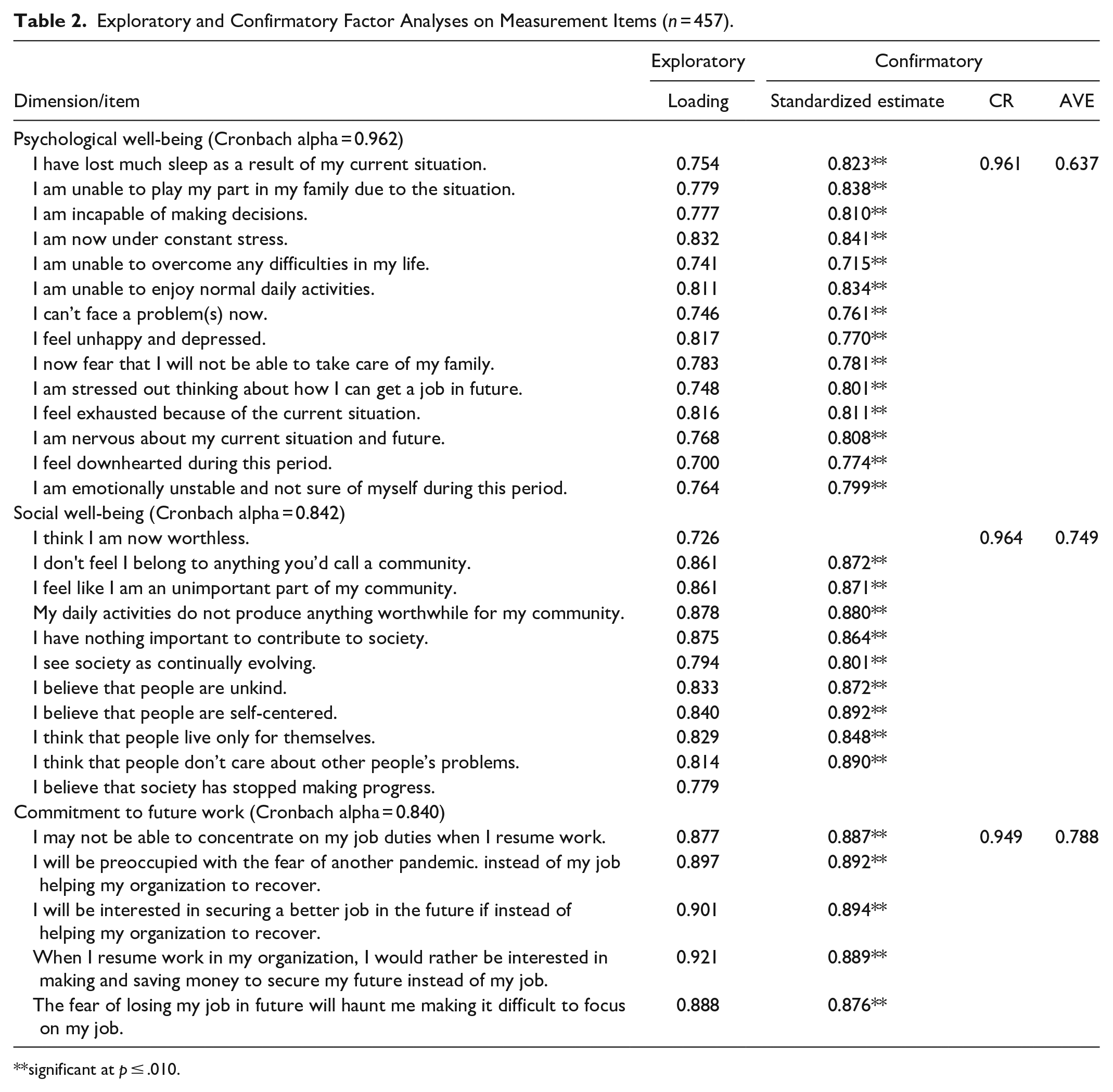
significant at p ≤ .010.
Additionally, we examined the suitability of the data for Common Method Bias (CMB). To enable this method, respondents were earlier assured of their anonymity and confidentiality, whilst it was highlighted that there were no right or wrong answers, during the data collection exercise (Fuller et al. 2016). Further, Harman’s single-factor test was conducted to confirm whether the data were affected by CMB or not (Fuller et al. 2016). The results indicated that all the measurement items loaded onto a single unrotated explanatory factor in the exploratory factor analysis and the highest variance explained by a single factor was 31.2%, therefore confirming that CMB is not a problem in the data.
Finally, binary logistic regression was used to assess the influence of demographic and work characteristics on psychological and social well-being. Before conducting the binary logistic regression, composite variables were generated for both social and psychological well-being and recoded into a binary format. In this regard, “strongly disagree” and “disagree” were recoded as “disagree” (indicating the absence of social or psychological burden associated with the redundancy induced by the pandemic) and assumed the value of zero (0), while “strongly agree” and “agree” were recoded as “agree” (indicating the presence of social and psychological burden associated with redundancy induced by the pandemic) and assumed the value of one (1). All midpoints or cases of uncertainties were redundant to the analysis and not included. In all cases, the proportion of midpoint cases did not exceed 10% of the overall sample of 457, and therefore the retained data were still considered large enough for binary logistic regression (Pallant 2005). The binary logistic regression was used to assess the influence of social and psychological well-being on future commitment to work in the tourism sector after COVID-19. A composite variable on future work commitment was generated and recoded into a binary outcome, with zero (0) indicating the non-commitment to work in future and one (1) being the presence of commitment to work in future.
Methods for Study B—Qualitative Approach
Data collection
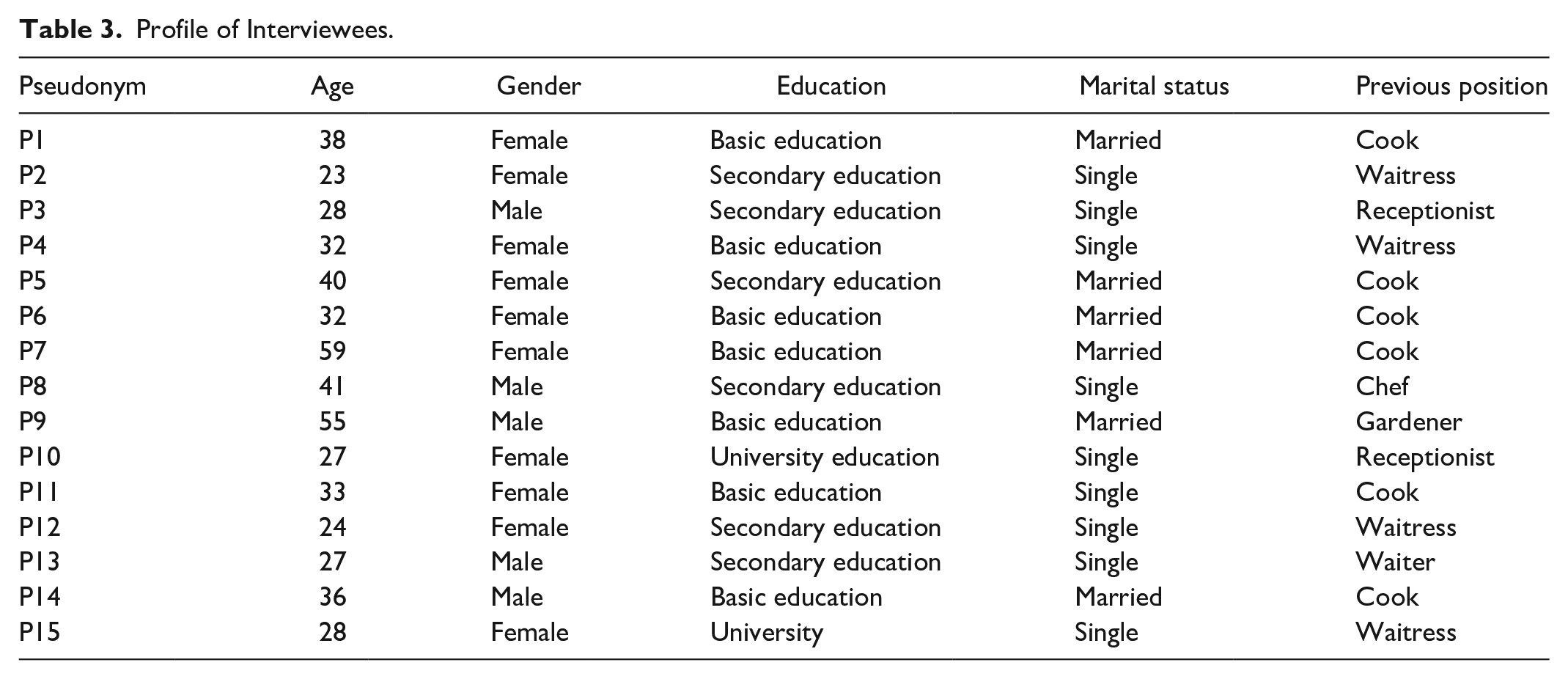
Purposive sampling was used to recruit interviewees (cf. Ngoasong and Kimbu 2016). To reflect the range of respondents captured in the survey, as well as capture the lived experiences of those impacted by COVID-19 induced redundancy, interviewees were selected from all the tourism sub-sectors. We further considered the size of the tourism organization respondents were affiliated with. Based on these parameters and using the list of employees obtained from the various tourism organizations, we purposively selected laid-off employees and those doing reduced hours. Due to the COVID-19 pandemic, all interviews were conducted via telephone, following respondent consent. The telephone numbers were obtained from employers, with subsequent calls made to introduce the researcher and the research, and seek consent. Interviews were then booked with those who agreed to participate. Overall, we interviewed 15 respondents, 10 of whom had been laid-off, with the remainder working reduced hours (see Table 3). Interviews were stopped upon reaching data saturation (Dayour, Park, and Kimbu 2019). Each interview lasted for about 60 minutes and was digitally recorded.
Profile of Interviewees.
Data analysis
To ensure consistency and quality of interviews and transcripts, one researcher conducted all interviews and transcription. Also, each interview was transcribed before conducting the next, to allow for reflection and to inform the next interview (Halcomb and Davidson 2006). Each transcript was then validated by a different member of the research team, which involved comparing the audio with the written transcript (Halcomb and Davidson 2006).
A content analysis of the transcripts was conducted using the analytic inductive technique (Patton 2002). This involved undertaking coding on two levels. The first level being informed by survey findings, while the second level coding involved immersion with the interview data, to identify themes (Hsieh and Shannon 2005). The consistency and validity of the codes were checked through an inter-coding technique (Hsieh and Shannon 2005). Further, the peer debriefing technique was used to assess the credibility and dependability of the findings. This involved providing 7 participants with the codes to determine the relevance of the codes with their lived experience in being made redundant, as a result of the pandemic.
Results
Profile of the Sample
A little over half of the sample (56.7%) were females. About two-thirds of the sample (68.1%) were unmarried. Regarding age, those aged between 25 and 30 years were in the majority (42.9%), followed by those aged 18–24 years. Overall, the age structure shows that the sample is dominated by young people (Table 4) with the modal age being 30 years. About half of the respondents (51.6%) attained secondary (high) school education. Over two-thirds of the respondents (75.3%) had dependents, while most of them worked in the food and beverage sub-sector (40.9%). There were more floor employees (46.0%) than those in supervisory (42.9%) and managerial (11.2%) positions. Meanwhile, over two-thirds (72.0%) of the respondents were doing reduced hours, while 28% of them were laid-off. Most of the respondents (77.7%) had at least one member of their households still employed at the time of data collection.
Demographic and Work Characteristics (n = 457).
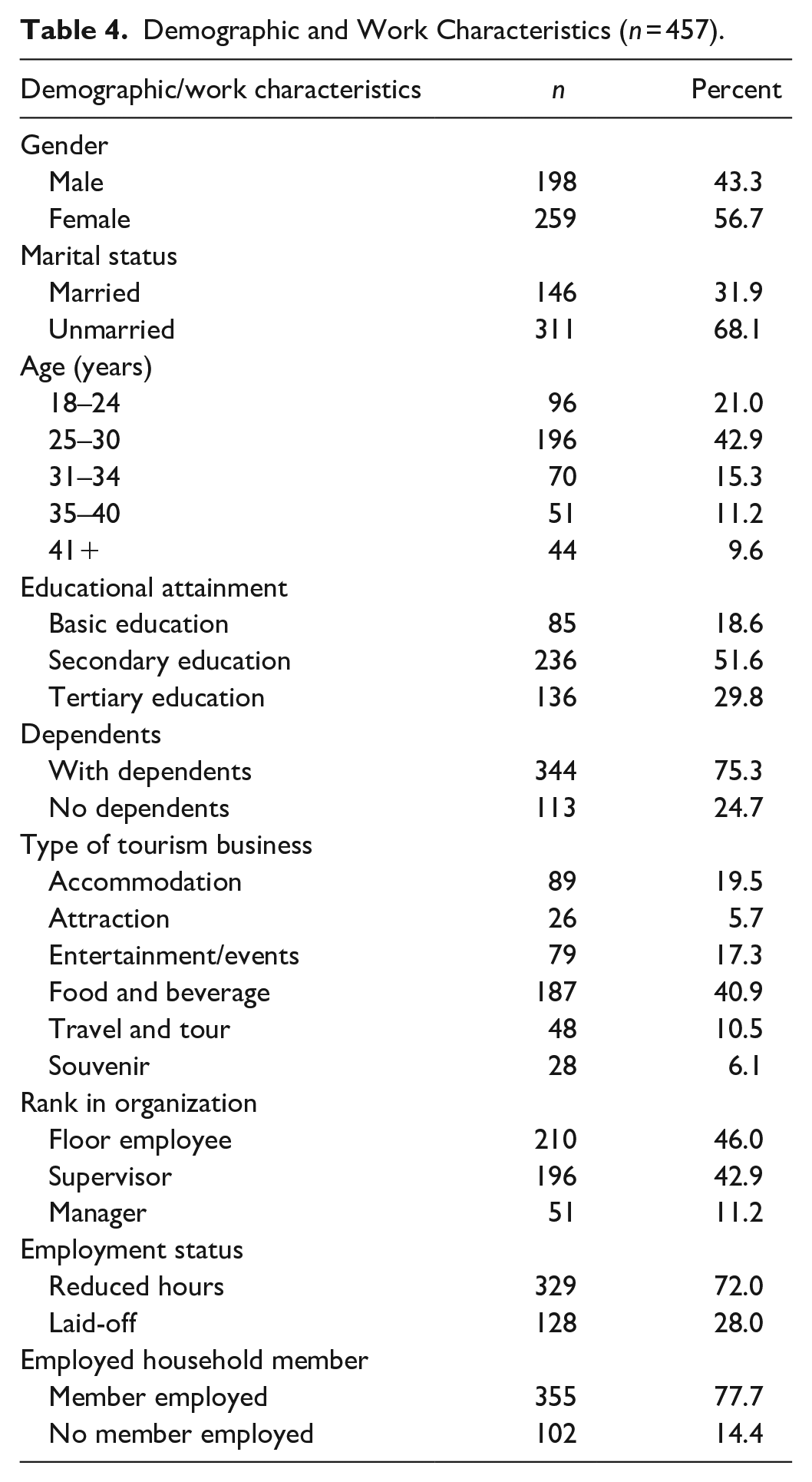
Influence of Demographic and Work Characteristics on Socio-Psychological Well-Being
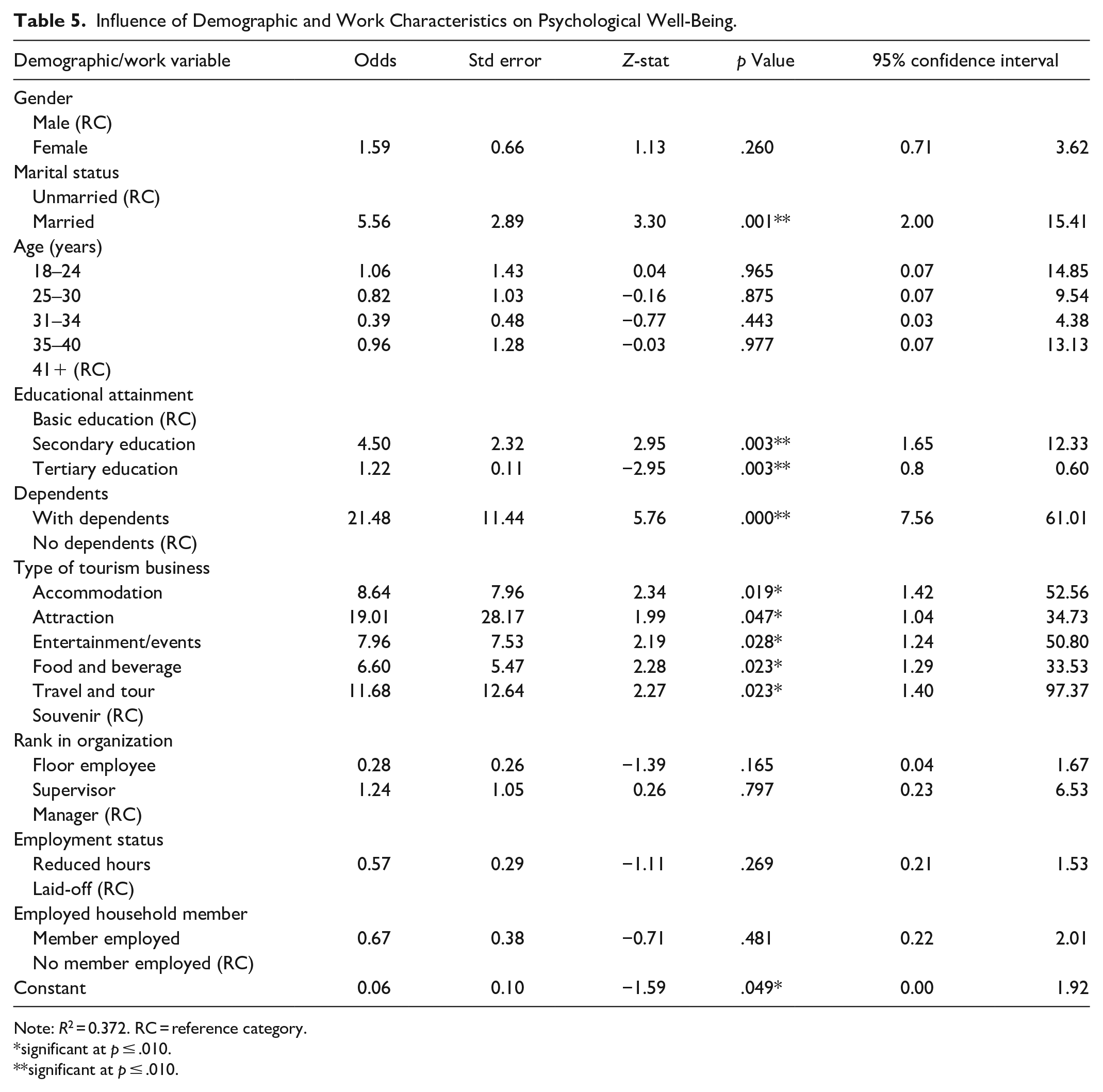
The binary logistic regression performed resulted in two models both of which supported the influence of socio-demographic and work characteristics on the redundant employees’ social (model 1) and psychological (model 2) well-being. Both models were good predictors of their respective outcomes as indicated by the Omnibus Tests of Model Coefficients (χ2(18) = 128.29; p < .001) and the Hosmer and Lemeshow Test (χ2 (8) = 10.93; p = .205) for the model on psychological well-being and Omnibus Tests of Model Coefficients (χ2(18) = 77.16; p < .001) and the Hosmer and Lemeshow Test (χ2 (8) = 24.75; p = .215) for the model on social well-being. The demographic and work characteristics of the respondents predicted 37.2% of the tourism employee’s psychological well-being and 22.8% of their social well-being.
Four predictor variables were found to be significant to the model on psychological well-being (Table 5). Specifically, marital status, formal educational attainment, status of dependents, and type of tourism business the employee worked. For marital status, married people were 5.56 times more likely to experience deterioration in their psychological well-being because of COVID-19 when compared to those who were single/unmarried. This is summed in the following statement by a married redundant employee:
Influence of Demographic and Work Characteristics on Psychological Well-Being.
Note: R2 = 0.372. RC = reference category.
significant at p ≤ .010.
significant at p ≤ .010.
To be frank, I was about to retire and were it not for the pandemic, I would have been able to work for the last two months and still get some salary from the work. I have two of my children who still need some financial support for their education which I have been providing but because of COVID-19, I don’t earn any income and that has affected my finances to some extent. I am really sad as a result because my children cannot go to school, and we cannot also attend church services. I feel worried because I cannot go to work but I have to take care of my children and other orphans. (P7 female)
Regarding formal educational attainment, both secondary (high) school and tertiary education graduates were more likely to experience a decrease in their psychological well-being as a result of COVID-19 compared to those with basic education, even though secondary (high) school graduates have higher odds in remaining in employment (4.50) compared to tertiary leavers (1.22).
Meanwhile, those with dependents were about 21 times more likely to experience a deterioration in their psychological well-being than those without dependents. While those who were employed in the accommodation, attraction, entertainment/events, food and beverage, and travel and tour tourism sub-sectors are all likely to experience deterioration in their psychological well-being as a result their redundancy related to the pandemic. It was those employed in the attraction (odds = 19.01) and travel and tour (odds = 11.68) sub-sectors that have the highest chance in experiencing a deterioration in psychological well-being. This finding was echoed by a participant previously employed in a tour operator enterprise: . . .as you are aware, the borders are closed so no flights come in or go out and because we generate much of our revenue from ticketing and reservations as well as organizing tours, it affected my company badly. The attractions are all closed down and we can’t make any revenue so the manager asked us to go and when things get better, he would call us back. I don’t do any other job apart from this job and this is really stressing, and I keep thinking everyday. . .I hardly step out of the house because I have nothing. Emotionally it is affecting me because every day I think about it, and it is really worrying me. (P14 male)
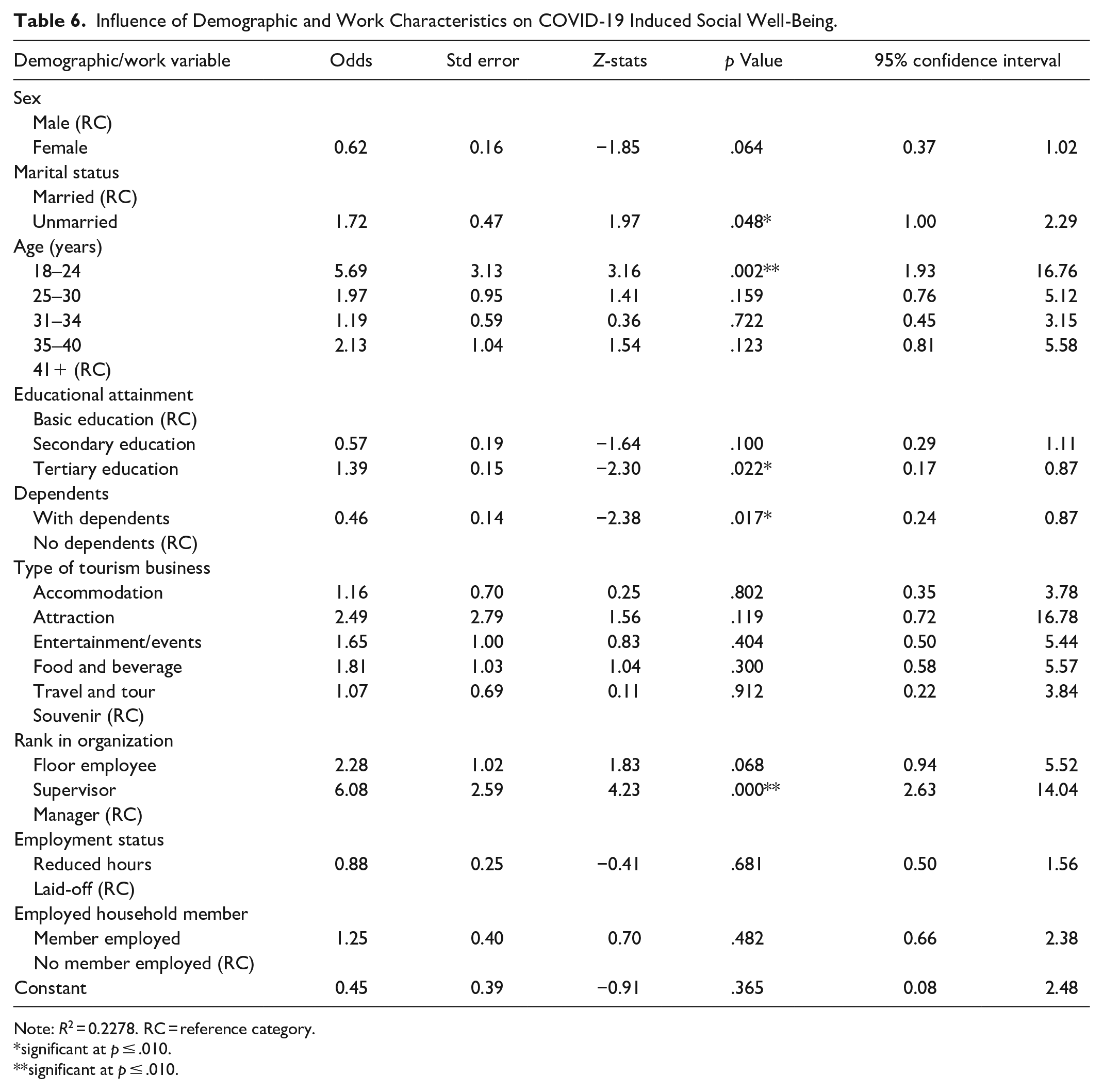
In terms of social well-being, four predictor variables were significant to the model, namely marital status, age, formal education attainment, and rank in organization (Table 6). Those who were unmarried were 1.72 times more likely to experience a decrease in their social well-being compared to those who were married. Also, those aged between 18 and 24 years were 5.69 times more likely to record a decrease in their social well-being when compared to those aged 41 years and above. In terms of formal education, tertiary education graduates were 1.39 times more likely to experience a decrease in their social well-being because of their COVID-induced employment situation than basic education graduates. Those who are in a supervisory role were about six times more likely to experience a decrease in their social well-being because of COVID-19 induced redundancy, as compared to those in top managerial positions. The following quote corroborates these findings:
Influence of Demographic and Work Characteristics on COVID-19 Induced Social Well-Being.
Note: R2 = 0.2278. RC = reference category.
significant at p ≤ .010.
significant at p ≤ .010.
. . .Working and schooling was a very nice experience because I was able to meet a lot of friends and also interacted to the fullest. At that time, even if I don’t have money, I used not to feel bad because my workplace and school was fun. But currently, things are different because it is very difficult to go out with friends and money and also it is not comfortable giving hugs or shaking hands when you meet your friends. It is really a big problem and quite stressful. (P13 male)
Influence of Socio-Psychological Well-Being on Future Commitment to Work
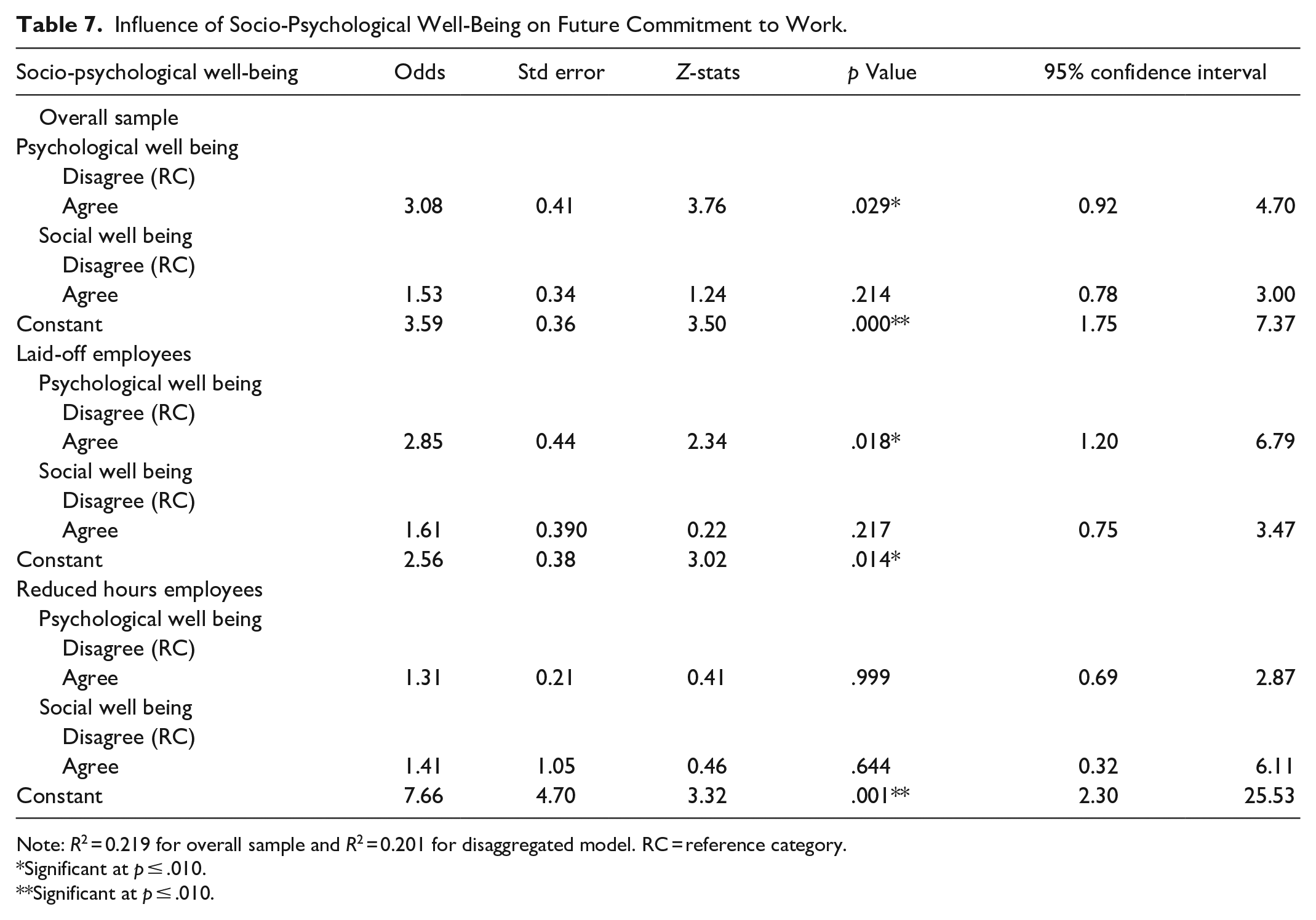
The binary logistic regression conducted to assess the influence of social and psychological well-being (composite scores) on the future commitment of participants to work in tourism yielded a good model (Table 7) as indicated by the Omnibus Tests of Model Coefficients (χ2(15) = 25.91; p = 0.001) and the Hosmer and Lemeshow Test (χ2(8) = 8.69; p = .115). Overall, the model predicted 21.9% future commitment to work in the tourism sector. Of the two predictor variables, psychological well-being is the only significant contributor to the model. Regarding this, those who agreed to having experienced a deterioration in their psychological well-being were 3.08 times more likely to have no future commitment to working in the tourism industry as compared to those who disagreed to having experienced a deterioration in their psychological well-being. The excerpts that follow provide further explanation:
Influence of Socio-Psychological Well-Being on Future Commitment to Work.
Note: R2 = 0.219 for overall sample and R2 = 0.201 for disaggregated model. RC = reference category.
Significant at p ≤ .010.
Significant at p ≤ .010.
I don’t really see myself going back there and the reason is that, when the pandemic is over, I will wrap up with my school because I will need enough time in my final year. Also, I am currently comfortable with the job I have created for myself. I will not consider going back to the hospitality industry even if I am offered a job in another hotel because there is a lot of job insecurity now and I don’t have solid experience with the hospitality industry in relation to my field of study at school which will enable me to progress and earn a decent salary. (P1 female) . . .I would not like to go to the hospitality industry even after the pandemic. This is because, they used to delay our salaries for two months before paying us. For this reason, I will maintain my current personal job that I have created myself. I would not like to work in any hotel because I feel they will treat me the same way. I actually make more money with my personal job. (P5 female)
The results were further desegregated between those who were laid-off and those on reduced hours. The results show that while those who experienced a decrease in their psychological well-being among the laid-off employees were 2.85 times more likely to have no future commitment to working in the tourism industry, this was not significant for their counterparts doing reduced hours.
Discussion
We turn now to highlight our key findings, in turn, starting with psychological well-being. Within the context of psychological well-being, marriage is a lifecycle stage that is associated with commitment, including financial commitment. This is particularly evident in SSA, whereby marital union guarantees financial protection (Hinks and Gruen 2005). Our analysis revealed that redundant employees, who were married, experience increasing difficulties in meeting marital obligations which could result in stress and anxiety. Alternatively, unmarried redundant employees are also likely to feel such mental stress but not in the same magnitude as their married counterparts, likely because they do not have the requirement to ensure the well-being of partners (and children). It, therefore, becomes important for employees to adopt other savings mechanisms which they can rely on in times of emergencies. For example, joint saving schemes such as cooperatives societies, accumulated and rotating savings and credit associations which are prevalent across Ghana and other resources-scarce contexts of Africa (Ngoasong and Kimbu 2016). Some of these societies also offer money and wealth management classes which could further enable individuals’ to better manage resources, even in contexts where financial resources are limited.
On education, our findings indicate that secondary and tertiary school leavers are more likely to experience deterioration in psychological well-being as a result of their COVID-19 induced redundancy, when compared to those with lower levels of education. This finding is contrary to normative thought (cf. Keyes 2002; Talala et al. 2008), which asserts that those with higher levels of education receive higher income levels, and therefore are more resilient in terms of psychological well-being, even when they are made redundant. These findings thus importantly highlight that psychological well-being is not just about educational attainment and higher pay grades. It is possible, rather, that the highly educated might have constructed a certain lifestyle and social positioning that is difficult to maintain following redundancy.
Importantly as well, within resource-scarce contexts, such as Ghana, large family sizes and high dependency rates (Dayour, Adongo, and Kimbu 2020; Ngoasong and Kimbu 2019) place higher financial expectations on individuals with higher levels of education engendering challenges in ensuring resilience (Kimbu et al. 2021; Ngoasong and Kimbu 2016) especially during crisis. Our findings indicate that such individuals are thus more susceptible to experience a deterioration in their psychological well-being as the redundancy associated with the pandemic constructs a context whereby, they are incapable of meeting financial and moral obligations toward their dependents. Those without dependents may be less worried as they may only have their own needs to think about.
The findings further show those previously employed in the attractions, travel, and tour sub-sectors have higher probability of experiencing a deterioration in their psychological well-being compared to those previously employed in other sub-sectors. This finding could be explained by the fact that the attractions, travel, and tour sub-sectors were some of the worst hit in Ghana, as well as globally, while other sub-sectors such as restaurants and to some extent accommodation remained open. There is also the anticipation that sub-sectors such as restaurants and accommodation could more easily bounce back, while it may take a considerably longer period for those in the attractions, travel, and tour sub-sectors to resume operations.
Regarding social well-being, it emerged that four demographic and work characteristics are significant predictors: marital status, age, formal education attainment, and rank in previous organization. First taking focus with marital status, unmarried respondents had a higher probability of experiencing a decrease in social well-being compared to married people. For many, COVID-19 induced redundancy likely reduced social opportunities. However, those who were married were perhaps more likely to have continued social interaction with their spouse, as well as children (if applicable) (Hansson et al. 2008), cushioning the lack of socialization with work colleagues and friends. Conversely, those who were unmarried did not have the company of partners at home, and therefore experienced a greater decrease in social well-being. The marked deterioration in the social well-being of the unmarried participants could have been exacerbated by the COVID-19 induced protocols (WHO 2020), whereby social distancing, lockdowns, and the general fear of meeting and interacting face-to-face may have intensified the isolation experienced by unmarried respondents who were mostly young and lived alone (Ortiz-Ospina 2019).
Overall, the study is dominated by younger participants. This is not surprising, given those under 25 years make up more than half of the population in Ghana (Central Intelligence Agency 2021), whilst it has been consistently identified that COVID-19 induced redundancies disproportionality affect younger individuals employed within tourism (OECD 2020). Our findings also indicate that younger people (18–24 years) were more likely to experience a decline in social well-being compared to older people (aged 41 years and above). This is in line with Keyes and Waterman’s (2003) observation that subjective well-being increases with age. From the perspective of the human lifecycle, younger people generally possess less life experience and therefore may not have the capacity to deal with issues related to their redundancy compared to their older counterparts. This situation could have been worsened by the fact that once laid-off, young people are less likely to have access to savings or credit to support their lifestyle (Chowa et al. 2015). Relatedly, such an outgoing lifestyle that typifies social-well-being could have further been curtailed by the COVID-19 induced protocols that led to the closure of entertainment businesses, social distancing measures and restrictions on movement (Quakyi 2020). Meanwhile, young people are more likely to be attached to social networks of friends and acquaintances beyond the familial home space, and yet were unable to interact in such ways due to the COVID-19 protocols.
It became evident in the study that higher/tertiary education leavers made redundant due to the pandemic stood a higher chance of encountering a decline in social well-being compared to lower educated redundant employees. Within the African context, those with lower levels of education are likely to live in larger family groups and even in some instances, reside in their family homes due mainly to their low levels of remuneration (Dayour, Adongo, and Kimbu 2020). Therefore, they are likely to develop resilience capabilities through the company and support infrastructure of such large family or household sizes. Even though this might increase their levels of poverty (Lyon 2005), they generally experience less reduction in social well-being compared to highly educated redundant employees who have relatively small families or household sizes, and usually reside away from the extended family homes.
This study further revealed that employees in supervisory roles stand a higher chance of experiencing a decline in their social well-being than those in top managerial positions. Within the work environment, supervisors are normally in constant touch with their supervisees, ensuring that the supervisees are performing their duties. While such a relationship is professional, it also occurs within a certain social milieu such that it provides social interaction (Keyes 1998), whereby bonds may be facilitated between supervisors and supervisees. Thus, the supervisor-supervisee relationship, while being professional, does contribute to enhancement in social well-being. For this reason, a supervisor who is made redundant may be likely to miss such social interactions, and hence experience a decline in social well-being compared to top managers who have fewer social interactions with employees. There is ergo need for developing and implementing resilience building measures across organizational levels to ensure that employee well-being is considered for all individuals, irrespective of their position (Karatepe and Karadas 2015).
Our analyses also revealed that the psychological well-being of the COVID-19 induced redundant employees would impact on future work commitment in the tourism industry, thereby confirming Baum et al.’s (2020) assertion that the pandemic magnified decent work challenges in the sector. Specifically, and in response to Chen’s (2021) call to examine the quality and industry of reemployment, the findings illuminate how the psychological well-being of the redundant employees provides a basis for understanding future work commitment within the tourism industry. The findings indicate that commitment to future work in the sector is dependent on the psychological and social well-being experienced during the pandemic. Here, the perilous nature of tourism work (Baum and Thanh Hai 2019) is viewed as not being commensurate nor good enough to allow for savings to secure one’s future from social and psychological burdens in times of crises. For this reason, the redundant employees who experienced a COVID-19 pandemic induced decline in their psychological well-being tended to blame their distress on the tourism industry and do not view the tourism industry as a viable employment avenue that can guarantee their future psychological well-being. At the same time, they viewed the situation as an opportunity to move on to other sectors or to explore self-employment and/or entrepreneurial opportunities (Kimbu and Ngoasong 2016), which were considered more stable and able to better safeguard future psychological well-being.
Ultimately, such employees will not have the desire nor commitment to support any future recovery plans within tourism but will rather focus on ways of securing their individual employment futures. To minimize the impact of such dissonance, tourism organizations irrespective of size will have to actively consider embedding employees into crisis preparedness, management, and recovery plans in flexible and people-centered ways (UNWTO 2020). This will, however, only succeed if there is good communication and better support of all stakeholders, especially micro, small, and medium sized enterprises through public-private-community sector partnerships.
Finally, an additional factor (or discrepancy) that emerged as a determinant of future work commitment was noted. The qualitative findings revealed that alternative entrepreneurial activities were also determinants of future commitment to work in the industry. That is, redundant employees discovered alternative sources of livelihood, including small scale trading and provision of transport services, among others. Most of those found to be running their small-scale enterprises did not show interest of returning to work in the industry in future, largely due low paid jobs, irregular salaries, and stress. This indicates that beyond the social and psychological burden inflicted by redundancies due to COVID-19, the financial cushioning and flexibility associated with other sources of income also influenced their decisions.
Conclusions
This study sought to identify the impacts of COVID-19 induced joblessness and loss of earnings on the social and psychological well-being of tourism employees in a resource-scare context in Africa, utilizing the conceptual framing of resilience in which to do so. It did this in response to the lack of research on the wider impacts of the COVID-19 pandemic across economic sectors and geographical contexts—particularly within the Global South. The paper contributes to understandings of tourism employees’ social and psychological well-being and their readiness to work and/or support recovery strategies in the tourism industry, post crisis.
It was identified that factors relating to an individual’s background and work attributes are by themselves susceptible during certain crises, such as the COVID-19 pandemic, influencing social and psychological well-being. The effects of these background and work characteristics on the social and psychological well-being within the context of pandemic-induced crises has rarely been studied; with the lack of research in this area particularly evident within the context of redundant employees in resource-scarce contexts. In this regard, this study contributes to the literature by highlighting the characteristics associated with predicting the social and psychological states of COVID-19 induced redundant workers in the tourism sector, thereby complementing extant tourism research that has investigated the impacts of COVID-19 crisis on the industry (cf. Bausch, Gartner, and Ortanderl 2021; Chen 2021; Galvani, Lew, and Perez 2020; Ioannides and Gyimóthy 2020; Rogerson and Baum 2020; Sönmez et al. 2020).
Whilst interest in studying the effects of crises on tourism industry workers/employees is not new (cf. Karabulut et al. 2020; Sharma and Nicolau 2020; Yang, Zhang, and Chen 2020), current studies have shed little light on how the background and work characteristics of crises induced redundant employees influence their social and psychological well-being. The current study does not only respond to Bausch, Gartner, and Ortanderl’s (2021) call for the need to investigate the impacts of COVID-19 on tourism subjects at the destination community level but importantly, we also extend Chen’s (2021) study by pointing to a number of socio-demographic and work characteristics that are significant in determining the social and psychological well-being of employees who have been rendered redundant as a result of the COVID-19 pandemic in a resource-scarce context. Specifically, psychological well-being, marital status, formal educational attainment, status of dependents, and type of tourism business were significant predictors, while marital status, age, formal education attainment and rank in organization significantly predicted social well-being.
The study’s quantitative-dominant concurrent nested mixed methods design enabled the unpacking of the social and psychological factors that are affecting tourism industry employees who have been made redundant in Ghana. We thereby complement tourism research investigating the impacts of the COVID-19 crisis on the industry and concomitantly provide a foundation for future tourism research on the social and psychological well-being impacts of (pandemic-induced) crisis on industry workers in under-researched resource-scarce destinations of Africa.
Limitations and Future Research
Despite the scientific parsimonious approach used to carry out this study, there still remain some notable limitations that provide opportunities to future researchers. The mixed method approach used in this study has yielded richer, more insightful, and valid data than a single methodological approach would have yielded. Further qualitative and quantitative studies though could compare the extent to which the interventions designed to mitigate the impacts of redundancy-induced stress on worker’s social and psychological well-being produce (dis)similar outcomes after the pandemic across different tourism sub-sectors and destinations. Additionally, the use of the standard logit model in this study assumed homogeneity in the parameter estimates which may not adequately depict the reality. Despite the valid results yielded by the logits model used in this study, it is possible that there may be some variations in the parameter estimates. Therefore, future researchers can consider the estimation of a random parameter logit model to cater for potential heterogeneity in the parameter estimates and thereby potentially offer deeper insights about the varying effects of the independent variables. Furthermore, considering that women and young people constitute the majority of the tourism workforce, future research needs to understand the impacts of the pandemic on the well-being of these two groups. And finally, this study combined two types of redundant employees (i.e., those unemployed and those doing reduced hours), an approach which could have masked important variations in quality of life across these two groups. Future researchers could consider studying how social and psychological well-being changes between these two groups.
Supplemental Material
sj-docx-1-jtr-10.1177_00472875211054571 – Supplemental material for COVID-19-Induced Redundancy and Socio-Psychological Well-Being of Tourism Employees: Implications for Organizational Recovery in a Resource-Scarce Context
Supplemental material, sj-docx-1-jtr-10.1177_00472875211054571 for COVID-19-Induced Redundancy and Socio-Psychological Well-Being of Tourism Employees: Implications for Organizational Recovery in a Resource-Scarce Context by Albert N. Kimbu, Issahaku Adam, Frederick Dayour and Anna de Jong in Journal of Travel Research
Footnotes
Declaration of Conflicting Interests
The author(s) declared no potential conflicts of interest with respect to the research, authorship, and/or publication of this article.
Funding
The author(s) received no financial support for the research, authorship, and/or publication of this article.

Supplemental Material
Supplemental material for this article is available online.
Appendix 1. Illustrative quotes evidencing socio-psychological impacts of COVID-19 on redundant employee well-being
Author Biographies
References
Supplementary Material
Please find the following supplemental material available below.
For Open Access articles published under a Creative Commons License, all supplemental material carries the same license as the article it is associated with.
For non-Open Access articles published, all supplemental material carries a non-exclusive license, and permission requests for re-use of supplemental material or any part of supplemental material shall be sent directly to the copyright owner as specified in the copyright notice associated with the article.
