



Abstract
Emotion is an important topic in tourism research; however, its complexity has prevented researchers from providing a complete picture. Prior research has covered aspects such as valence and specific emotion, but diversity of emotions (i.e., emodiversity) is missing. Emodiversity becomes particularly important in tourism, considering that people experience more diverse emotions during vacation than when at home. We introduce the concept of emodiversity and demonstrate how and why it is beneficial for tourists’ well-being. The effect of emodiversity is valid for both positive and negative emotions. The findings shed light on a new way to perceive emotions; rather than simply selling positive emotions for the sake of pleasantness, tourism managers should reconceptualize tourism as “emodiversity-seeking” instead of “pleasure-seeking” experiences.
Introduction
Prior research essentially views tourism as a pleasure-seeking activity in which tourists take vacations mainly for hedonic emotional experiences (Gnoth 1997; Goossens 2000; Ma et al. 2013). Thus, inducing positive emotions while reducing negative ones has long been recognized as a major strategy for tourism managers to ensure tourists’ experiences (e.g., Faullant, Matzler, and Mooradian 2011). However, more and more tourism researchers begin challenging this pleasure-seeking view of tourism, mainly out of two reasons. First, tourists are not in a simple search for “pleasure or a state of joy” (Robinson 2012, p. 39), and thus recent researches on tourists’ well-being urge us to take a broader and more comprehensive view of tourist experiences beyond the narrow focus on happiness (i.e., the hedonic view) to explore the meanings and values of tourist experiences (i.e., the eudaemonic view) (Knobloch, Robertson, and Aitken 2017; Rahmani, Gnoth, and Mather 2018). Second, when examining and capturing emotions, researchers have identified that merely focusing on the valence-based approach (i.e., general positive and negative) overlooks the richness of distinct emotions and misses the chance to uncover the significance of diverse emotions (Lin et al. 2014; Prayag et al. 2017). Psychologists have shown that emotions differ, even if they are of the same valence. Lerner and Keltner (2000) specifically investigated anger and fear, the two negative emotions with same valence but differing in appraisals, are related with different ways of risk perception. When evaluating risks, angry people are more optimistic, but fearful people are more pessimistic. To address the above-mentioned issues, this research attempts to offer a further insight into how tourists’ well-being, including both hedonia and eudaemonia, can be influenced by tourists’ emotional experiences, and specifically examine emotions by looking at its diversity.
Closely linked to tourists’ experiences, tourists’ well-being is increasingly attracting tourism scholars’ attention (e.g., Pyke et al. 2016; Rahmani, Gnoth, and Mather 2018; Smith and Diekmann 2017; Uysal et al. 2016). Well-being is generally derived from two principal perspectives: hedonic well-being and eudaemonic well-being. Specifically speaking, hedonic well-being is related with subjective happiness through attaining pleasure while avoiding pain; and eudaemonic well-being is related with meaning in one’s life through self-actualization (R. M. Ryan and Deci 2001). The two perspectives of well-being are not opposites nor mutually exclusive, but complementary. In order to have happy and meaningful experiences, people need both hedonia and eudaemonia to flourish (Huta and Ryan 2010). Therefore, it is essential to include both when examining well-being (R. M. Ryan and Deci 2001), and we followed this suggestion in our research.
When we further look at the two perspectives of well-being individually, equating hedonic enjoyment with well-being has a much longer history; however, this practice has recently been criticized by many tourism researchers (Knobloch, Robertson, and Aitken 2017). The researches on dark tourism, social tourism, and volunteer tourism have revealed the previously neglected benefits of tourism, where tourists travel for the sense of self and meaning in life, beyond the global positive affective feelings (Coghlan 2015; McCabe and Johnson 2013; Morgan, Pritchard, and Sedgley 2015). For example, visiting concentration camps involves specific negative emotions such as disgust, shock, and sadness, but meanwhile, offers catharsis and can further lead to self-development (Nawijn and Fricke 2015; Nawijn et al. 2018). It therefore points to the importance of a broader view of well-being and, moreover, the complexity of emotions in the context of tourism.
The call to investigate the complexity of emotions in the context of tourism becomes especially meaningful when we compare the differences between engaging in routine life at home and enjoying a holiday at a tourist spot. It is not difficult to find that people tend to experience a greater diversity of emotions in holidays compared to at home (Hosany and Gilbert 2010). The diversity of emotions in tourism gives rise to an intriguing question: which groups of people are more likely to feel the best about their vacation—those experiencing only one type of emotion (e.g., three moments of excitement) or those experiencing a mixture of emotions (e.g., one moment of joy, one moment of excitement, and one moment of relaxation)? This example of comparison only focuses on the scenarios with positive emotions, and on the other hand, if we look at the situations when negative emotions dominate: which groups of people are more likely to feel the best about their vacation—those experiencing only one type of emotion (e.g., three moments of fear) or those experiencing a mixture of emotions (e.g., one moment of fear, one moment of guilt, and one moment of sadness)? Prior research has shown that high levels of positive emotion and low levels of negative emotion contribute to individuals’ well-being (Diener et al. 1999; Filep and Laing 2019; Fredrickson 2001). If well-being is the result of simple arithmetic addition, no matter in the first or the second comparison, the two groups of tourists should achieve the same level of well-being because they experience the same amount of positive emotions and negative emotions. However, in this research, we attempt to explore the possibility of a different answer of this question by involving the diversity of emotions and to examine how it works.
Building on emotional complexity research in psychology (Lindquist and Barrett 2008), the diversity of emotions (i.e., emodiversity; Quoidbach et al. 2014) focuses on the number and relative abundance of different emotions that people experience. Different from the focus of extant research (e.g., valence), emodiversity aims to capture the complexity of emotions in tourism, and accounts for people’s ability to experience positive and negative emotions, differentiate among specific emotions, experience a range of emotions, and so on (Benson et al. 2017). The current research introduces emodiversity as an important theoretical aspect that reflects the rich and complex emotional experiences that tourists experience when on vacation. We examine the consequences of emodiversity and why they occur. Specifically, we demonstrate how the diversity of positive and negative emotions that tourists experience can enhance their well-being. Importantly, we provide the first empirical evidence to explain the underlying mechanism of the benefits of tourists’ emodiversity.
This research makes several contributions. First, even prior researches have pointed to the existence of the diversity and complexity of emotions in the context of tourism (Knobloch, Robertson, and Aitken 2017), to our knowledge, our study is the first to examine the notion of emodiversity in tourism, and to provide empirical evidence of its benefits for tourists’ well-being. Second, beyond the narrow focuses on the hedonic enjoyment, the research takes a broader view of tourists’ experience by recognizing the importance of both hedonic and eudaemonic well-being and further enriches the literature on tourists’ well-being by documenting a new contributing factor. Third, even though the pleasure-seeking view of tourism leads to downplaying the role of negative emotions, recent literature on areas such as dark tourism and adventure tourism document some positive impacts of negative emotions (Carnicelli-Filho, Schwartz, and Tahara 2010; Nawijn and Fricke 2015). This research provides additional evidence documenting a positive outcome when people experience negative emotions: even though the mean negative emotions negatively impact tourists’ experience, the diversity of negative emotions results in a positive effect. Finally, we also contribute to the work of emodiversity in general psychology by investigating the underlying mechanisms (Robinson and Clore 2002) to explain why emodiversity is beneficial for tourists, and more details are provided in the next section.
Theoretical Background and Hypotheses Development
Tourists’ Emotion and Emodiversity
Emotion is defined as a complex state of feeling in response to external or internal events of major significance to the organism, which is different from affect or mood (Scherer 2000). Affect is regarded as a globally internal feeling state, whereas mood is a set of diffuse affective states, characterized by low intensity and lack of source identification (Cohen, Pham, and Andrade 2008). Compared to affect and mood, emotion could provide much more specific and richer information so as to do a better job in interpreting and predicting behaviors (Lerner and Keltner 2000). Emotion has been recognized as an important topic by many tourism researchers (Rahmani, Gnoth, and Mather 2019). At the individual level, emotion plays a central role in helping them to create a memorable experience (Knobloch, Robertson, and Aitken 2017). At the macro level, tourists’ emotion has been used as a strategy to enrich destination image and further boost travel industry (Hosany et al. 2015).
Extant research in tourism measures emotion by using valence-based approach, where emotion is categorized into positive and negative. Emotional state is captured by its mean level: simple arithmetic subtractions of negative emotions from positive emotions (Nawijn 2011). For example, a number of researches have shown that tourist satisfaction and destination image, can be predicted by high levels of positive emotions, and low levels of negative emotions (Gnoth and Zins 2008; Prayag et al. 2017). Although tourism scholars favor and have widely applied this valence-based approach, it draws an incomplete picture and overlooks an essential component of emotion: the emotional complexity (e.g., Gao et al. 2019; Knobloch, Robertson, and Aitken 2017; Prayag et al. 2017).
Emotional complexity refers to that people can be aware of their feelings in details beyond the global positive and negative emotions (Grossmann, Huynh, and Ellsworth 2016). Specifically, two aspects have emerged to conceptualize the emotional complexity (Lindquist and Barrett 2008). The first aspect is emotional dialecticism, which reveals that people can experience both positive and negative emotional states at the same time (Chen et al. 2019; Liang, Chen, and Lei 2016). The second aspect is emotional granularity, showing that individuals are capable of capturing specific emotions and labeling their experiences with precise and specific emotion words, rather than merely describing experiences as globally pleasant or unpleasant (Kashdan, Barrett, and McKnight 2015). Drawn on the above two aspects of emotional complexity, researchers recently proposed the construct of emodiversity, and have begun to examine how it shapes and influences people’s behaviors (e.g., Benson et al. 2017; Ong et al. 2018; Quoidbach et al. 2014).
Emodiversity refers to the variety and relative abundance of discrete emotions that people experience, which can be further classified as positive emodiversity and negative emodiversity, accounting for the diversity in positive emotions and negative emotions, respectively (Benson et al. 2017; Quoidbach et al. 2014). Emodiversity serves a variety of functions. First, diverse and specific emotions can provide more accurately informational value than global affective states (Kashdan, Barrett, and McKnight 2015; Ong et al. 2018), which may regulate behaviors to optimally deal with the specific affective situations (Keltner and Gross 1999). Furthermore, according to affective habituation, people’s responses decline after being repeatedly exposed to the same emotional stimuli. Rather, when experiencing a set of diverse emotions, people are presented with varied emotional stimuli, so that the responses are kept active (Leventhal et al. 2007). Last but not the least, experiencing a diversity of emotions may reduce the vulnerability to detrimental events by preventing an overabundance of one specific emotion from dominating people’s emotional life (Benson et al. 2017; Gruber and Bekoff 2017).
Although scholars acknowledge that the research on emodiversity is beneficial and promising, the work on its impact is still in the infancy stage. One stream of research has examined its benefits for people’s physical and mental health, including decreased biomarkers of systemic inflammation (Ong et al. 2018), reduced mental disorder chronicity (Werner-Seidler et al. 2018), lower levels of depression, and fewer doctor visits (Quoidbach et al. 2014). Furthermore, recent work on emodiversity has investigated its positive impact on improving cognitive ability, such as the ability of recognizing and integrating diverse perspectives on a given issue (Grossmann, Oakes, and Santos 2019). Despite the evident insight of emodiversity on individuals’ health and cognitive ability in the psychological domain, no work has been done to examine the impact of emodiversity in tourism, which is a particularly relevant context to study emodiversity (Knobloch, Robertson, and Aitken 2017).
In the context of tourism, experiencing a diverse range of emotions is common for tourists (Hosany and Gilbert 2010), because tourism is an “emotionally charged consumer episode” (Malone, McCabe, and Smith 2014, p. 241). When traveling, people are temporarily away from their daily lives and are surrounded by new places, different activities, and unfamiliar people. Thus, in this process, more diverse emotions can be elicited than when at home. For example, individuals can experience different positive emotions (e.g., anticipation, excitement, thrill) when planning their trips (Kwortnik and Ross 2007). Nawijn et al. (2018) find that tourists who visited a Dutch concentration camp memorial site experienced diverse emotions, including compassion, disgust, shock, sadness, and interest. Therefore, it is necessary to take a broader view of the diversity of emotions in traveling. In summary, although tourism researchers recognize tourists’ emotions as an important topic (Uysal et al. 2016) and identify tourism as a fertile field for exploring the diversity of emotions, scant research has investigated the impact of emodiversity in tourism. To address this gap, we examine the effect of emotional diversity on one essential tourist’s psychological outcome: their well-being.
Well-being in Tourism
More and more tourism researches focus on examining tourists’ well-being from both individual tourist and the macro industry perspectives. Well-being, as a desired outcome that tourists seek when traveling, could further enhance tourists’ experience (Smith and Diekmann 2017). In addition, the benefits of well-being gained from tourism experience could further facilitate tourists’ destination choices, which finally benefits tourism economy (Pyke et al. 2016).
When looking at the conceptualization of well-being, overall, two perspectives exist: hedonic well-being and eudaemonic well-being. Hedonic well-being refers to the experience of enjoyment and happiness (Rahmani, Gnoth, and Mather 2018). In the context of tourism, this view suggests that tourism experience is mainly about pleasure-seeking activities, such as a sun-sea-sand holiday (Smith and Diekmann 2017). However, recent research claims that the aim of tourism is not only to increase hedonic enjoyment, but also serves to create meaningful experiences (Knobloch, Robertson, and Aitken 2017). Distinct from the subjective happiness pursued by hedonic well-being, eudaemonic well-being refers to valuable and meaningful experiences in pursuit of self-perception and self-development (Pearce and Lee 2005). In the context of tourism, the activities such as social tourism, volunteer tourism, or slum tourism are associated with the motives for living a life of virtue or eudaemonia (McCabe and Johnson 2013; Smith and Diekmann 2017).
Despite the distinctions of these two different views of well-being, evidence reveals that well-being is a multidimensional phenomenon and the inclusion of both hedonic and eudaemonic well-being constructs the best conceptualization of well-being (R. M. Ryan and Deci 2001). Tourism researches echo this suggestion and further show that certain types of tourism can achieve a combination of hedonic and eudaemonic well-being (McCabe, Joldersma, and Li 2010). For example, Hall and colleagues (2011) found that in the context of wellness tourism, the hedonic well-being is achieved by having a beauty spa and the eudaemonic well-being is gained from spiritual retreats. More empirical investigations are needed in tourism to demonstrate how hedonic and eudaemonic well-beings could be impacted concurrently (e.g., Smith and Diekmann 2017; Rahmani, Gnoth, and Mather 2018). Based on the above discussion, when investigating the impact of emodiversity on well-being, the current research therefore includes both hedonic and eudaemonic well-being.
Scholars suggest that the context of tourism is particularly relevant to study the relationship of emotion and well-being (Knobloch, Robertson, and Aitken 2017). That is because tourists’ experiences are subjective and emotionally charged (Malone, McCabe, and Smith 2014, p. 241), and well-being, as a desired goal of such experiences, could benefit from emotions (Hosany 2012). As a result, the relationship between emotion and well-being attracts tourism researchers’ attention. For example, research findings show that a high level of positive emotions and a low level of negative emotions are an essential component of tourists’ hedonic well-being (Rahmani, Gnoth, and Mather 2018). Moreover, recent research by Knobloch, Robertson, and Aitken (2017) found that when tourists engage in different tourist activities, the emotions elicited vary and the further impact on eudaemonic well-being are different as well. The latest work by Rahmani, Gnoth, and Mather (2018) points to the existence of diverse emotions induced by destination experiences and provides additional evidence of the impact of emotions in shaping the meaningful experiences. However, we have to admit a lack of knowledge of the diverse emotions (i.e., emodiversity) being an empirical construct, and systematically exploring how and why emodiversity impacts tourists’ well-being. As stated previously, emodiversity is particularly relevant to tourism because of the nature of the tourism experience. The current research aims to explore the effect of emodiversity (including both the positive emodiversity and the negative emodiversity) on tourists’ well-being, and particularly examine whether the proposed underlying mechanism, emotional accessibility, could explain why such an effect exists. Specifically, we posit that the positive emodiversity can boost tourists’ well-being and the effect is driven by the increased accessibility of positive emotions; and the negative emodiversity can enhance tourists’ well-being, which is driven by the reduced accessibility of negative emotions.
The Effect of Emodiversity on Tourists’ Well-being and the Underlying Mechanism
Emotional accessibility is defined as the ease with which one emotional state is available and opens to people. This construct stems from the theory of information accessibility in psychology, which describes how readily the certain information can come to mind from one’s knowledge system (Feldman and Lynch 1988). Psychologists suggest that accessibility plays a vital role in judgments (Rotliman and Schwarz 1998)—it allows source of information to access people’s minds and serves as a proxy for the input, which ultimately forms the perceptions and judgments. Meanwhile, considering that emotions can serve as an informational input and influence how people evaluate their well-being (Barrett 2013), we propose that people will treat the most accessible emotion in the mind as a proxy of input, and will use this input to form judgments about their well-being.
The effect of positive emodiversity
According to hedonic adaptation theory, positive emotions fade in a relatively short time—one of the largest obstacles to raising and sustaining well-being (Lyubomirsky 2011). We propose that emodiversity can serve as a potential means to address this issue by increasing the accessibility of positive emotions. When experiencing one positive emotion, people tend to become insensitive to this stimulus after it occurs repeatedly (Lyubomirsky 2011), thus reducing the accessibility of the positive emotion. By contrast, when experiencing a set of diverse positive emotions, people encounter varied and dynamic pleasurable stimuli, which enable the positive experience to remain fresh and novel (Leventhal et al. 2007), resulting in higher accessibility of positive emotions.
The high accessibility of positive emotion can enhance both hedonic and eudaemonic well-being. Hedonic well-being is highly associated with positive emotions, such as happiness and pleasure (R. M. Ryan and Deci 2001), and the accessibility of positive emotions facilitates positive emotions coming into the mind, which obviously results in greater hedonic well-being. For eudaemonic well-being, the informative values of positive emotions play a central role in explaining the benefits of accessibility of positive emotions. Specifically, positive emotions can reflect some positive aspects of self (Pearce and Lee 2005). When positive emotions are highly accessible in one’s mind, positive information about the self is gathered and meanwhile, self-value is gained, which ultimately leads to the greater eudaemonic well-being. For example, the high accessibility of positive emotions, such as gratefulness, induced by volunteer tourism could serve as a manifestation of social connection and self-esteem (McCabe, Joldersma, and Li 2010), contributing to the eudaemonic well-being. To sum up, positive emodiversity increases the accessibility of positive emotions, and further boosts tourists’ hedonic and eudaemonic well-being. Therefore, we propose the following hypotheses: Hypothesis 1: Compared to low positive emodiversity, high positive emodiversity leads to greater tourists’ well-being. Hypothesis 2: The effect of positive emodiversity on tourists’ well-being is mediated by the increased accessibility of positive emotions.
The Effect of Negative Emodiversity
Relative to positive emotions, the impact of negative emotions is more powerful and longer lasting (Nezlek and Gable 2001). Individuals tend to adapt to negative emotions more slowly, which can result in lower levels of well-being (Lyubomirsky 2011). We propose that compared to being immersed in one dominated negative emotion, being exposed to diverse negative emotions provides a way to accelerate one’s adaptation to negative emotions through the reduced accessibility. Specifically, when experiencing one negative emotion, people’s minds automatically become occupied by this emotion (Lyubomirsky 2011), which makes the negative emotion highly accessible. By contrast, when experiencing a set of diverse negative emotions, people encounter multiple stimuli, and their attention shifts from one stimulus to another. The distraction enables people to keep any of these emotions evenly accessible and to prevent one negative emotion from dominating their whole experience, resulting in relatively low accessibility of negative emotions.
The low accessibility of negative emotions can enhance both hedonic and eudaemonic well-being. For hedonic well-being, the low accessibility of negative emotions naturally makes individuals less likely to be immersed in negative emotional states, which consequently facilitates hedonic well-being (R. M. Ryan and Deci 2001). When we look at the more complex case of the eudaemonic well-being, the meaning and values generated from negative emotions could benefit the effect of low accessibility of negative emotions (Lerner and Keltner 2000). Previous research suggests that, in some situations, negative emotions could bring about some beneficial outcomes to individuals, for example, catharsis or self-realization (Andrade and Cohen 2007). Admittedly, in order to achieve such beneficial outcomes, individuals need to reflect the triggers of the negative emotions in a more positive direction, but in this process, adequate cognitive resources are required to possess (Gross and John 2003). Hence, given that low accessibility enables each negative emotion to leave a “shallower footprint,” individuals will be armed with more cognitive resources in deriving strategies to shift from negative feelings and in reconsidering the potential contribution of this negative emotional experiences to the personal growth, which may finally increase their eudaemonic well-being. Taking an example in tourism, during the skydiving activity, tourists who experience the negative emotions of fear and anxiety can subsequently garner the sense of self-growth by positively interpreting the experiences (Knobloch, Robertson, and Aitken 2017). In conclusion, negative emodiversity decreases the accessibility of negative emotions and further boosts tourists’ hedonic and eudaemonic well-being. Accordingly, we propose the following hypothesis. Hypothesis 3: Compared to low negative emodiversity, high negative emodiversity leads to greater tourists’ well-being. Hypothesis 4: The effect of negative emodiversity on tourists’ well-being is mediated by the reduced accessibility of negative emotions.
Study
Respondents
We offered $0.50 incentive to 304 adult respondents from the United States recruited on Amazon Mechanical Turk, a popular online platform on which survey data can be collected. The platform is a participant pool with more than 500,000 individuals from 190 countries, helping researchers to perform online tasks (Paolacci and Chandler 2014). Amazon Mechanical Turk is widely used in social science research, including psychology, marketing, and tourism (Hwang and Mattila 2018; Mittal and Griskevicius 2014; Wadhwa and Zhang 2014), because it provides more diverse participants compared to university students, and reliable data the same as from any conventional surveys (Mason and Suri 2012). We followed the guidelines of previous studies to ensure the quality of data collected on MTurk platform (Goodman and Paolacci 2017; Wessling, Huber, and Netzer 2017). For example, participants are required to have a high approval rate (i.e., 97%) to be eligible to participate in our task. We required respondents to have a vivid tourism experience in mind to recall the emotions attached to it, which we determined using two screening questions to filter out those who either had no such experience or could not remember. Then, they answered some detailed questions, including the place of visit, start date, length of trip, type of destination (i.e., domestic or overseas), total amount spent, type of trip (i.e., individual trip or package tour), number of companions, and type of companions (i.e., friends, family members, or others). The purpose of these questions was also to help respondents freshen their memory of the experience, so as to better capture their emotions. Finally, a question of the purpose of this research was asked, and none of the respondents knows the real purpose of the survey.
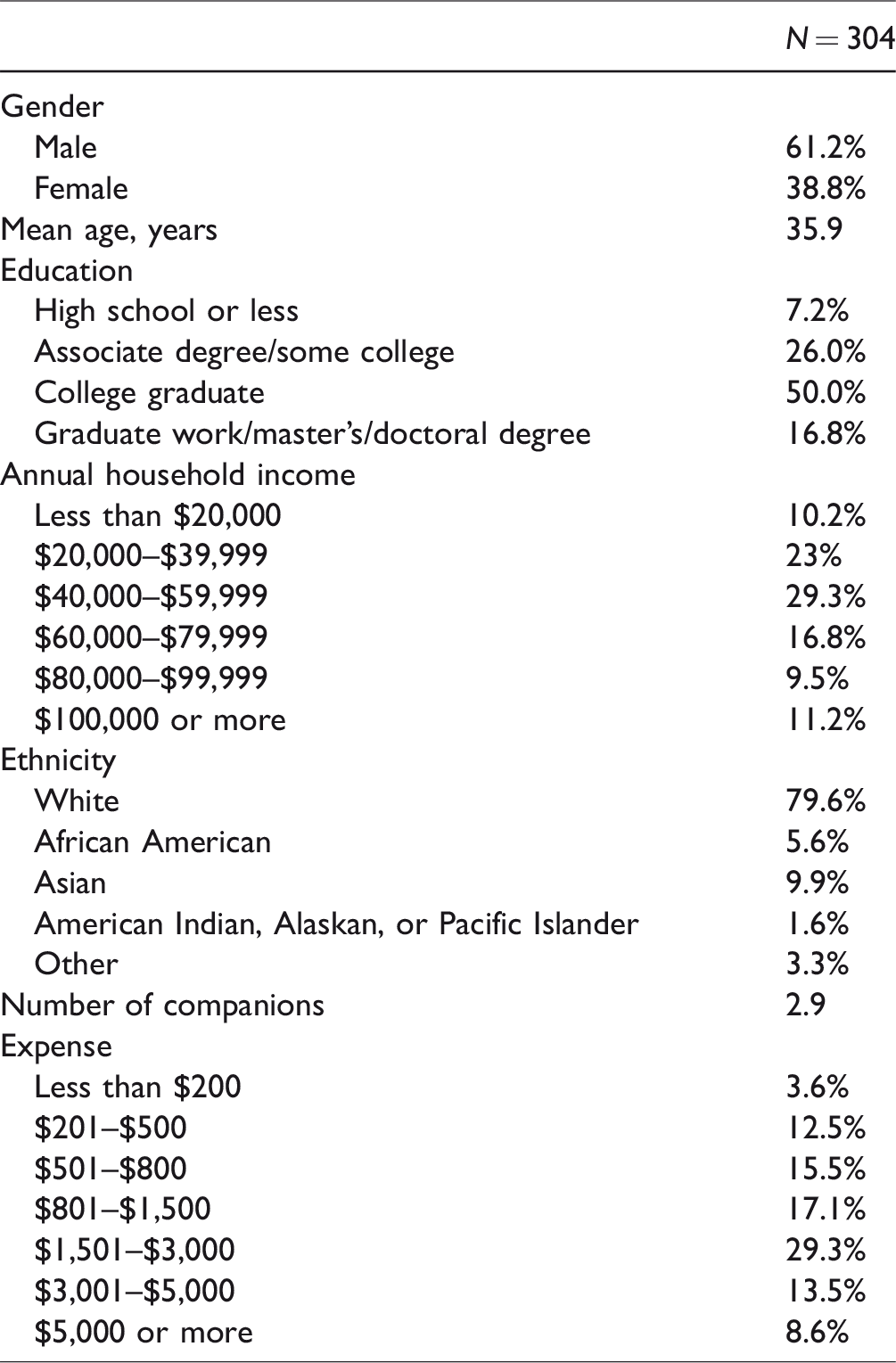
Table 1 lists the respondent profiles. Most were white (79.6%), two-thirds were men (61.2%), and the mean age was 35.9 years. In terms of education level, respondents were well educated, with 50% having a college degree and 16.8% a postgraduate degree. The average traveling time was 9.4 days, and most trips were domestic (70.7%) and individual (89.5%). More than half traveled with family (51.6%), and approximately one-third spent US$1,501–$3,000 on their trips. Finally, more than half claimed a yearly household income between US$40,000 and $99,999.
Respondent Profiles (%).
Procedure and Measures
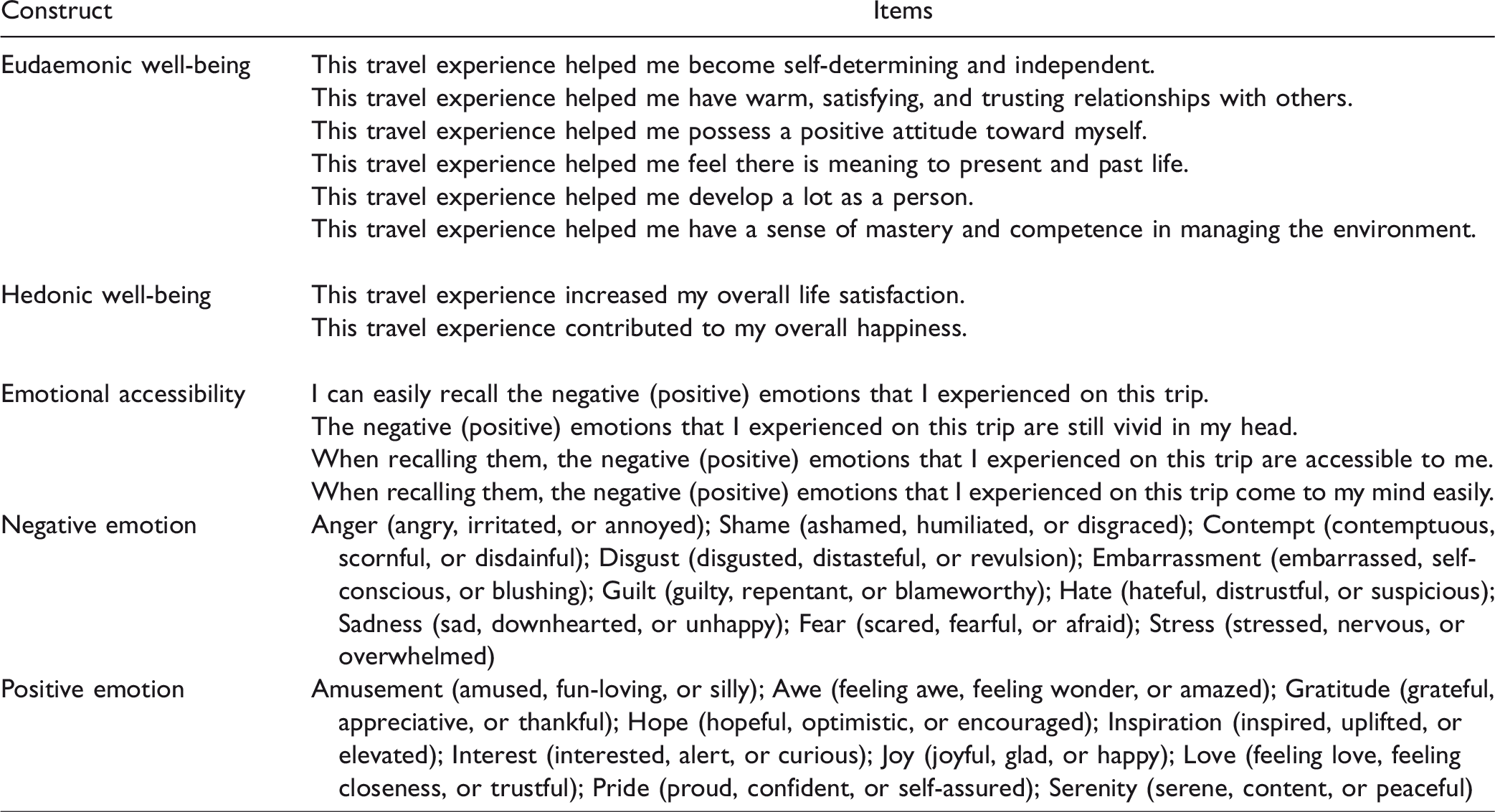
First, qualified respondents answered several basic questions about a particular traveling experience, as described previously. Second, they indicated the sense of well-being that this traveling experience brought to their lives (i.e., travel-based well-being). We used two scales to capture the travel-based well-being to obtain a more holistic understanding. The first is based on the eudaemonic well-being perspective (R. M. Ryan and Deci 2001) and uses Ryff’s (1989) Scale of Psychological Well-Being, which contains six subscales of positive psychological functioning: self-acceptance, positive relations with others, autonomy, environmental mastery, purpose in life, and personal growth (Cronbach’s α = .90; see Table 2). The eudaemonic perspective focuses on the meaningfulness of well-being, viewing life as a process in pursuit of personal growth and self-actualization (R. M. Ryan and Deci 2001). The second scale is based on the hedonic well-being perspective (Van Boven and Gilovich 2003; r = .76), which defines well-being as the presence of positive affect and the absence of negative affect (R. M. Ryan and Deci 2001). Both scales employed a 7-point Likert-type scale ranging from 1 (“strongly disagree”) to 7 (“strongly agree”), and we computed their indices as the means of their corresponding items.
Measurement of Tourists’ Well-Being, Emotional Accessibility and Emotions.
We also assessed respondents’ postvisit behavioral intentions by asking them to indicate the extent to which they agreed with the following statements: “I would like to recommend others to visit the destination,” “I will revisit the destination,” and “I would like to stay more days in the destination” (1 = “strongly disagree,” 7 = “strongly agree”; Cronbach’s α = .90; Um, Chon, and Ro 2006). Given that the pattern and significance are the same as that of well-being, we omitted details here because of space constraints, but they are available on request.
Then, we asked respondents to recall the emotions they experienced during this trip using 20 items based on a modified Differential Emotions Scale (mDES; Fredrickson et al. 2003). The Positive Emotions subscale consists of amusement, awe, gratitude, hope, inspiration, interest, joy, love, pride, and serenity (Cronbach’s α = .91), and the Negative Emotions subscale consists of anger, shame, contempt, disgust, embarrassment, guilt, hate, sadness, fear, and stress (Cronbach’s α = .93). In mDES, each emotion consists of a group of three emotional adjectives (e.g., gratitude = grateful, appreciative, and thankful; see Table 2), and respondents indicated how frequently they experienced each emotion on this trip on a 5-point Likert-type scale ranging from 1 (“never”) to 5 (“most of the time”). Before calculating the emodiversity index, we used confirmatory factor analysis (CFA; calculated using Mplus software) to examine whether two factors (i.e., positive emotion and negative emotion) indeed existed in the emotion scale. The CFA results showed a good fit for the two-factor structure (χ2 = 306.32, df = 169, confirmatory fit index = 0.95, Tucker–Lewis index = 0.94, root mean square error of approximation = 0.0052, standardized root mean square residual = 0.045). Following standard procedures, we then aggregated the 10 positive emotion items and 10 negative emotion items into mean positive and negative emotion scores, respectively.
We used the mDES because the list of emotions was substantially broader and more inclusive than alternative measures (e.g., PANAS; Watson, Clark, and Tellegen 1988) and was the only list that covers a full range of positive and negative emotions (Cohn et al. 2009). In addition, the mDES was designed and validated as a thorough and precise instrument to measure specific emotions (Cohn et al. 2009). Moreover, previous researchers have used and validated this scale in not only emodiversity (e.g., Quoidbach et al. 2014) but also tourism research (Lin et al. 2014). Considering that the sequence of emotions exhibited may influence respondents’ recollection and accessibility of the emotions, we counterbalanced the order of positive and negative emotions; that is, half the respondents indicated their ratings on 10 positive emotions first and the other half responded to the 10 negative emotions first.
To explore the psychological mechanism, we measured emotional accessibility by asking respondents to indicate how easily they could recall these emotions using a method adapted from the measurement of cognitive accessibility (Tybout et al. 2005). We used a 7-point Likert-type scale with four items (e.g., “I can easily recall the negative [positive] emotions that I experienced on this trip”; Cronbach’s α for negative emotions = .95; Cronbach’s α for positive emotions = .94; see Table 2). Finally, we captured demographic information at the end of the questionnaire.
Index of Emodiversity
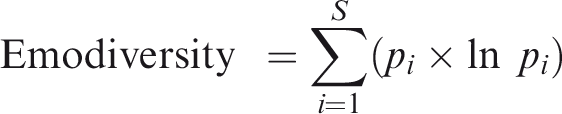
In line with other diversity studies in social psychology (e.g., Koffer et al. 2016; Quoidbach et al. 2014), we computed three emodiversity indices (one for positive emotions, one for negative emotions, and a global one for all 20 emotions) using the following formula derived from Shannon’s (1948) entropy index, which is the most commonly used (e.g., Budescu and Budescu 2012). The diversity of emotions can be described by abundance (the number of emotions experienced by tourists) and evenness (the degree to which a specific emotion is experienced) in the emotional ecosystem:
Example of Computation of Emodiversity with the 10 Positive Emotions.
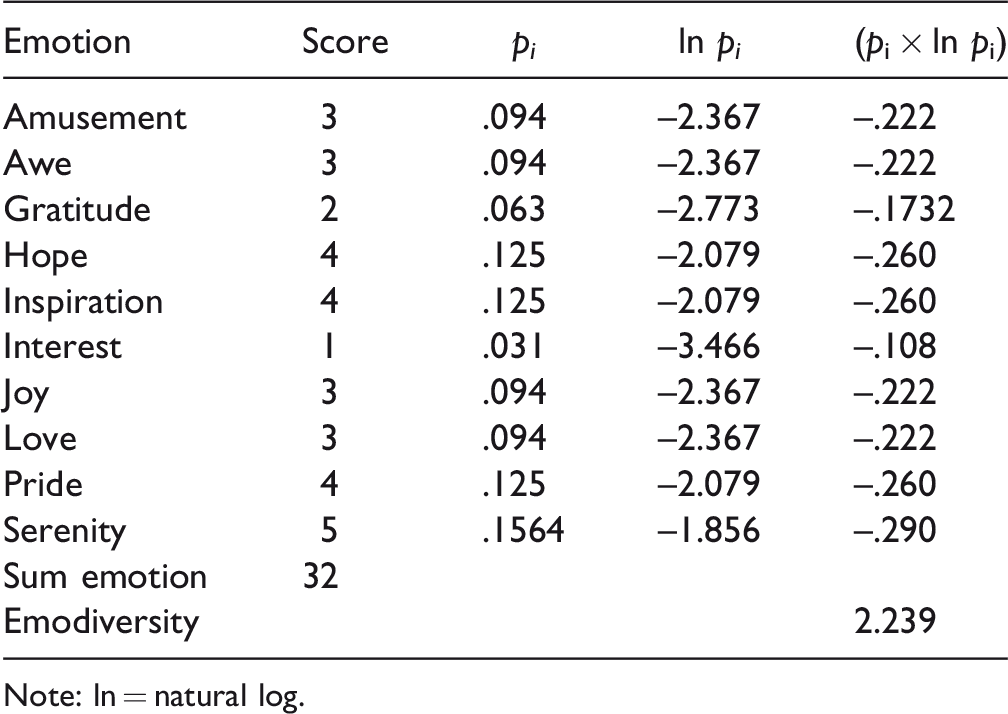
Note: ln = natural log.
For conceptual clarity, we use tourist A and tourist B as examples to illustrate this computation (see Figure 1). Both tourists have identical mean scores of the five positive emotions (M = 2.6), but their emodiversity scores differ greatly: tourist A experiences all five emotions, while tourist B experiences only three emotions; thus, tourist A’s score on emodiversity is higher than that of tourist B.
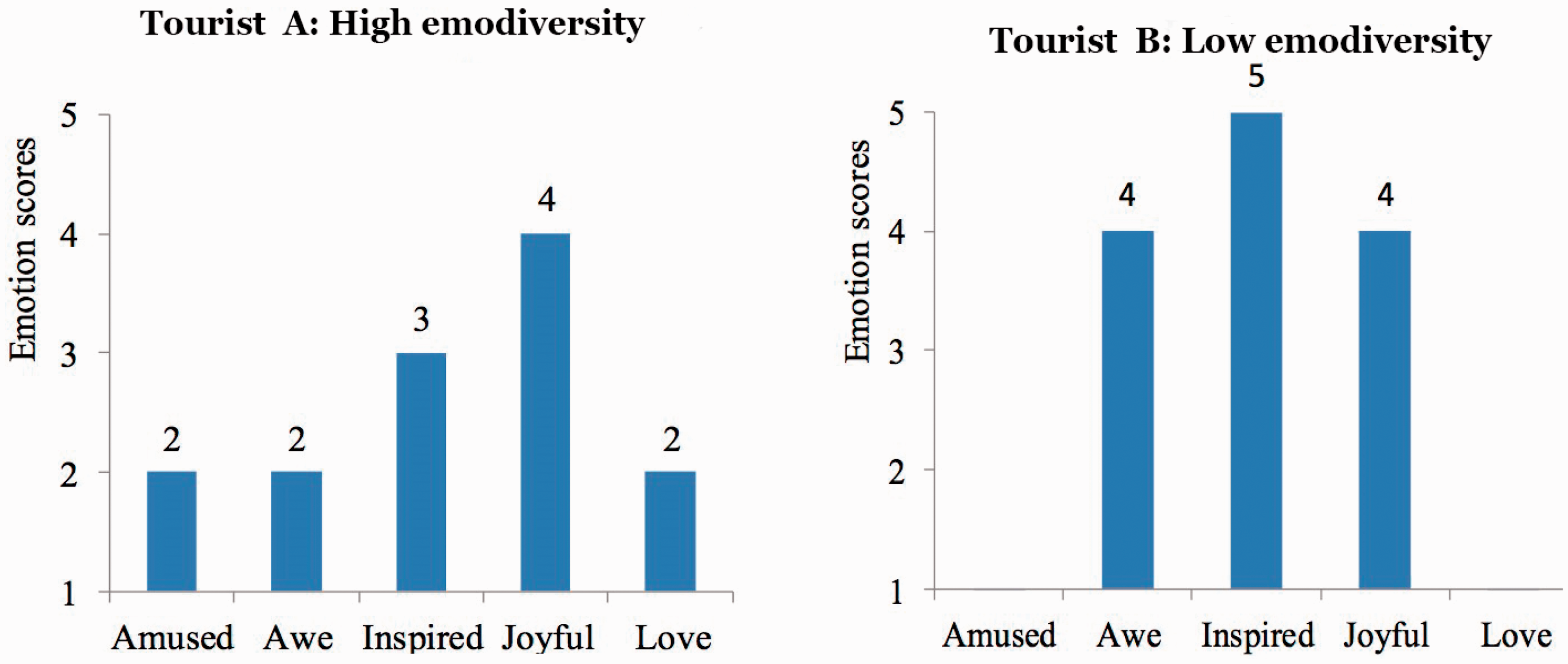
Tourists with identical mean levels but different emodiversity scores.
Analysis and Results
Respondents rated all variables by self-reporting; therefore, the data are susceptible to common method variance (CMV) (Podsakoff et al. 2003). To minimize the potential for CMV, we designed the survey and administration adhering to Podsakoff et al.’s (2003) guidelines. For example, to reduce evaluation apprehension, we ensured anonymity and confidentiality to respondents. Furthermore, we employed different scale formats for the predictor (emotion) and criterion (well-being) variables. In addition, we used the Harman single-factor test to assess CMV, which would be assumed if either a single factor emerges from the data or one general factor explains the majority of the variable’s variance (Podsakoff et al. 2003). Using exploratory factor analysis, we determined the existence of a multifactor structure (eigenvalues > 1), with the first factor accounting for only 18% of the total variance (less than 40% critical value standard). These results suggest that CMV is not a pervasive issue in the data.
Similar to previous studies (e.g., Benson et al. 2017; Ong et al. 2018; Quoidbach et al. 2014), we used the regression analysis to examine the effect of emodiveristy on tourists’ well-being. The reliability and validity tests of latent constructs were run before aggregating the scales (see Table 4). Latent constructs include positive emotions, negative emotions, eudaemonic well-being, hedonic well-being, accessibility of positive emotions and accessibility of negative emotions. The full CFA results showed that all constructs’ composite reliability values exceeded 0.70, demonstrating a high level of internal consistency of the latent variables (Fornell and Larcker 1981). The convergent and discriminant validity were evaluated using the average variance extracted (AVE). All of the constructs’ AVE values exceeded the threshold of 0.50, indicating that this study had adequate levels of convergent validity (Fornell and Larcker 1981). The AVE values range from 0.51 of positive emotions to 0.84 of accessibility of negative emotions. Additionally, Table 4 shows that the square root of the AVE (diagonal values) of each construct is larger than its corresponding correlation coefficients, indicating adequate discriminant validity (Fornell and Larcker 1981).
Validity and Reliability for Constructs.
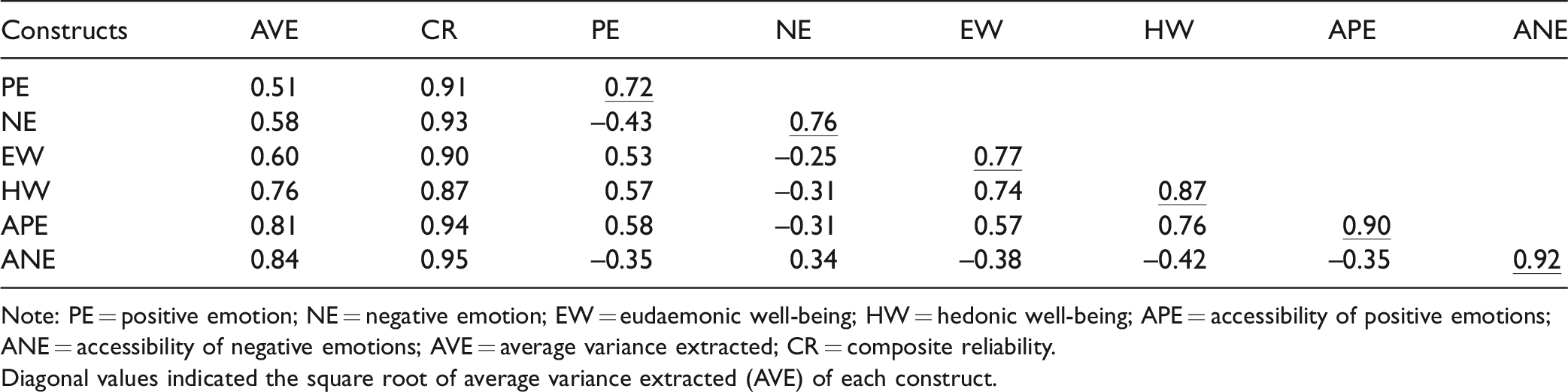
Note: PE = positive emotion; NE = negative emotion; EW = eudaemonic well-being; HW = hedonic well-being; APE = accessibility of positive emotions; ANE = accessibility of negative emotions; AVE = average variance extracted; CR = composite reliability.
Diagonal values indicated the square root of average variance extracted (AVE) of each construct.
Positive emotion
Table 5 reports means, standard deviations, and zero-order correlations among the study variables. We used ordinary least squares (OLS) hierarchical analysis to investigate whether the diversity of positive emotions was positively related to eudaemonic well-being, independent of the mean level of positive emotions, because this method can clearly identify the effect of the target variable (i.e., emodiversity) on the dependent variable. In baseline model 1, we included gender, age, education, annual household income, and expense as control variables because previous studies have shown a relationship between tourist-based well-being and these variables (McCabe and Johnson 2013; Uysal et al. 2016). To isolate the unique contribution of diversity of positive emotions to eudaemonic well-being, we also included the mean positive emotion in model 2 following previous research (Quoidbach et al. 2014). Finally, model 3 contained our target variable of diversity of positive emotion.
Correlations and Descriptive Statistics.
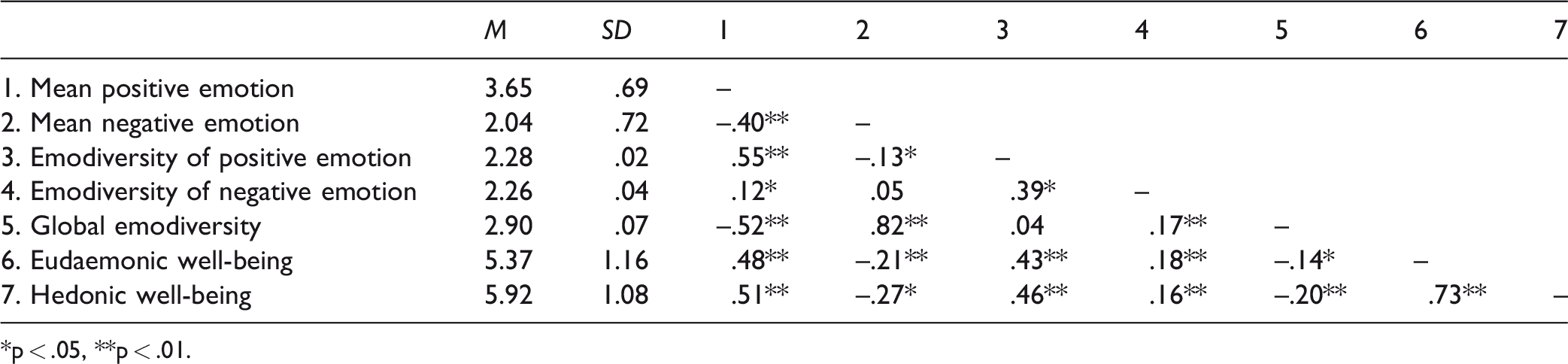
*p < .05, **p < .01.
Before we calculated the regression results, we first checked for potential multicollinearity by calculating variance inflation factors (VIFs) for each independent variable. The VIF values were all below 2, significantly less than the criteria value (10). We conclude that little evidence exists for multicollinearity (Field 2014).
The left half of Table 6 shows the overall regression results for respondents’ eudaemonic well-being. Model 1 indicates that income positively predicts eudaemonic well-being (β = 0.10, t = 2.07, p < .05). When we included mean positive emotion in model 2, we found that it was positively associated with eudaemonic well-being (β = 0.78, t = 8.70, p < .0001) but that the positive effect of income on eudaemonic well-being disappeared (β = 0.06, p > .05), which indicates that mean positive emotion is a more important variable than income in predicting tourist eudaemonic well-being. More important, in model 3, after we controlled the influences from control variables and mean positive emotion (β = 0.56, t = 5.51, p < .0001), the regression results reveal a significant, positive beta coefficient for diversity of positive emotion (β = 11.79, t = 3.99, p < .0001) and significant statistical improvements over model 2 (ΔR2 = .04, ΔF = 15.90, p < .0001). We conclude that consistent with hypothesis 1, diversity of positive emotion is positively related to tourists’ eudaemonic well-being and that this effect occurs independently of the impact of mean positive emotion.
Regression Results for the Emodiversity of Positive Emotions.
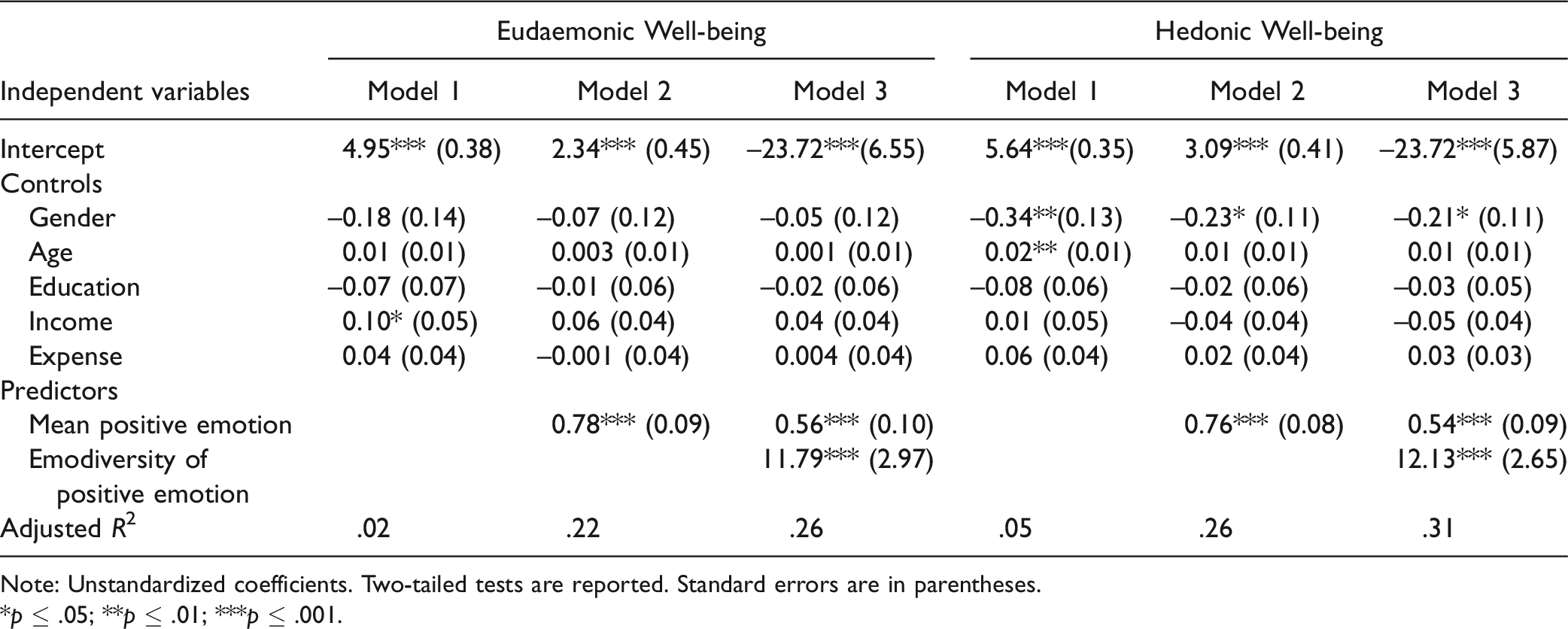
Note: Unstandardized coefficients. Two-tailed tests are reported. Standard errors are in parentheses.
*p ≤ .05; **p ≤ .01; ***p ≤ .001.
We used the same method (i.e., OLS hierarchical regression) to test hedonic well-being (see the right half of Table 6). Model 3 shows that after controlling for the effect of control variables and mean positive emotion (β = 0.54, t = 5.88, p < .0001), the diversity of positive emotion still significantly and positively affects tourists’ hedonic well-being (β = 12.13, t = 4.58, p < .0001). Furthermore, comparing models 2 and 3, adding diversity of positive emotion led to a significant increase of R-square for model 3 (ΔR2 = .05, ΔF = 20.98, p < .0001). Both hedonic and eudaemonic well-being results were consistent, in support of hypothesis 1.
Negative Emotion
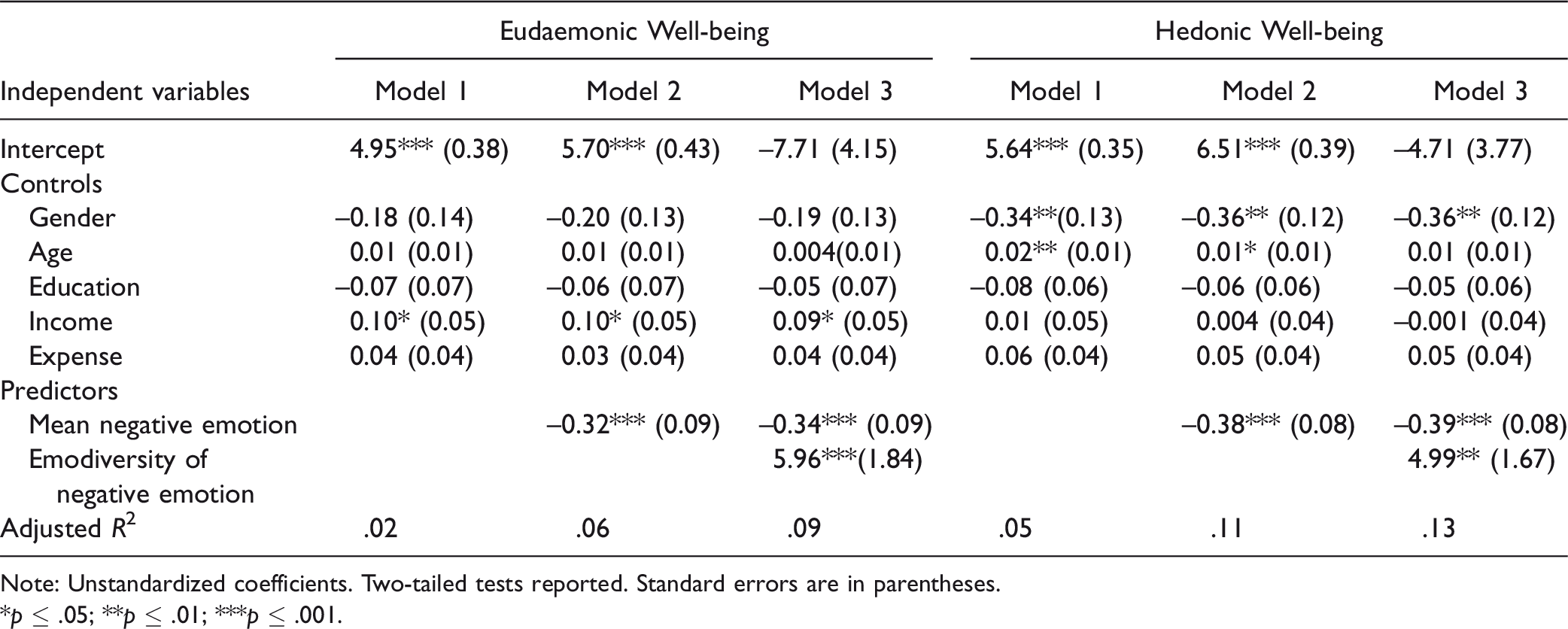
For negative emotions, we used the same method and procedure as positive emotions. Using tourists’ eudaemonic well-being as the dependent variable (see left side of Table 7), we found that after controlling for the effect of control variables and mean negative emotion (β = –0.34, t = –3.81, p < .0001), the diversity of negative emotion still significantly and positively influences tourists’ eudaemonic well-being (β = 5.96, t = 3.24, p = .001). Furthermore, comparing models 2 and 3, the addition of the diversity of negative emotion led to a significant increase of R-square for model 3 (ΔR2 = .03, ΔF = 10.53, p = .001). These results confirm our expectation that mean negative emotion negatively affects tourists’ well-being but the diversity of negative emotion positively affects it.
Regression Results for the Emodiversity of Negative Emotions.
Note: Unstandardized coefficients. Two-tailed tests reported. Standard errors are in parentheses.
*p ≤ .05; **p ≤ .01; ***p ≤ .001.
For tourists’ hedonic well-being (see right side of Table 7), model 3 shows that after controlling for the influence of control variables and mean negative emotion (β = –0.39, t = –4.83, p < .0001), the diversity of negative emotion still significantly and positively affects tourists’ hedonic well-being (β = 4.99, t = 2.99, p < .01). Furthermore, compared with model 2, the addition of the diversity of negative emotion led to a significant increase of R-square for model 3 (ΔR2 = .02, ΔF = 8.94, p < .01), confirming hypothesis 3.
Additional analysis: Global emodiversity
Taken together, the results suggest that greater diversity of either positive or negative emotional experiences is associated with greater tourists’ well-being. We are further interested to know if the effect of emodiversity holds for global emotions, where positive and negative emotions are mixed together. Using the same method and procedure, we next computed the emodiversity index for all 20 emotions and entered this global emodiversity score into a regression predicting tourists’ eudaemonic and hedonic well-being. To isolate the effect of global emodiversity, we also included the mean negative and positive emotions in the model following Quoidbach et al.’s (2014) suggestion.
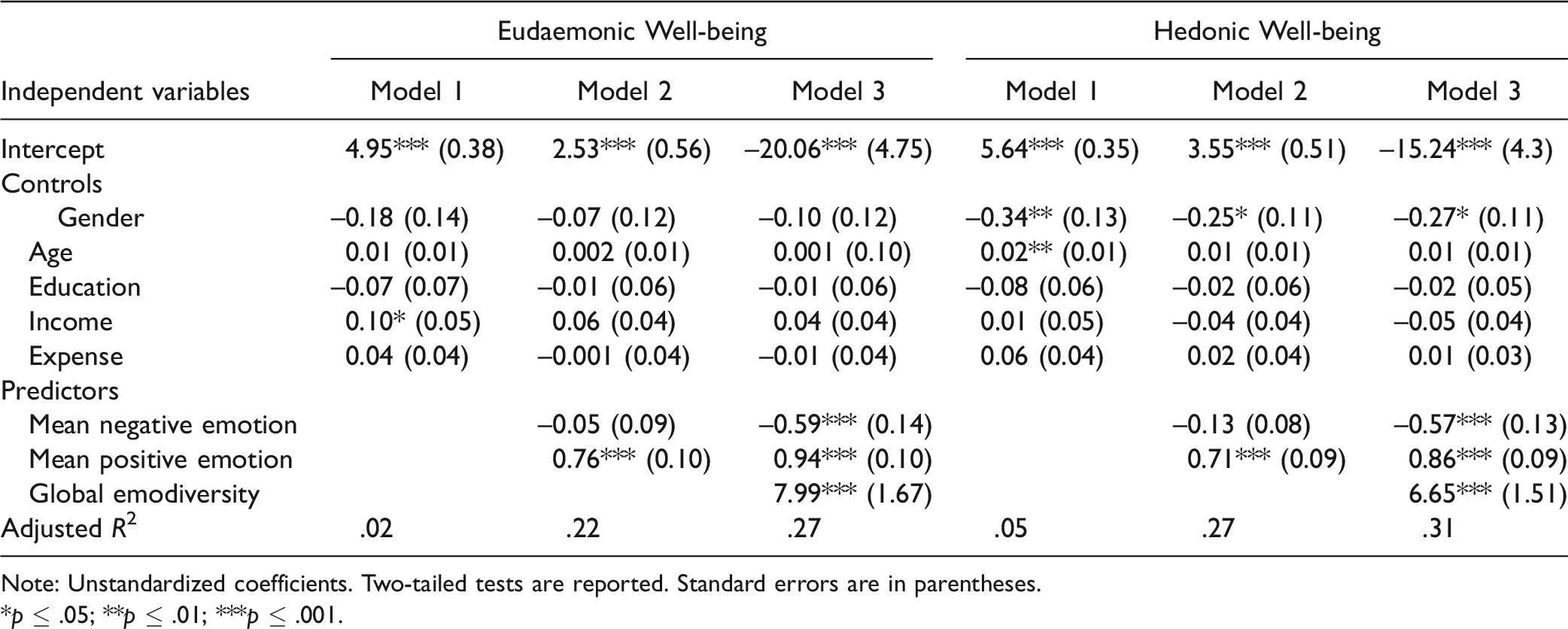
For tourists’ eudaemonic well-being (see left side of Table 8), we found that greater global emodiversity was associated with greater eudaemonic well-being (β = 7.99, t = 4.78, p < .0001) over and above the effect of controlling for mean positive (β = 0.94, t = 9.27, p < .0001) and negative (β = –0.59, t = –4.15, p < .0001) emotion. More important, adding global emodiversity led to a significant R-square increase from model 2 to model 3 (ΔR2 = .05, ΔF = 22.88, p < .0001).
Regression Results for the Global Emodiversity.
Note: Unstandardized coefficients. Two-tailed tests are reported. Standard errors are in parentheses.
*p ≤ .05; **p ≤ .01; ***p ≤ .001.
For tourists’ hedonic well-being, we found that greater global emodiversity was associated with greater hedonic well-being (see right side of Table 8; β = 6.65, t = 4.40, p < .0001) over and above the effect of controlling for mean positive emotion (β = 0.86, t = 9.38, p < .0001) and mean negative emotion (β = –0.57, t = –4.45, p < .0001). Again, adding the global emodiversity led to a significant increase of R-square from model 2 to model 3 (ΔR2 = .04, ΔF = 19.32, p < .0001).
Mediation effect analysis
We used mediation analysis to examine hypotheses 2 and 4. Following Zhao, Lynch, and Chen’s (2010) recommendation, we employed bootstrapping analysis (Hayes 2013; model 4), a commonly used method in marketing (e.g., Liang, Chen, and Lei 2016) and tourism (e.g., Garnes and Mathisen 2014) research. This technique is a rigorous method to test mediation effects (Shrout and Bolger 2002) and allows both parametrical and nonparametrical significance tests. Specifically, bootstrapping is preferable for nonparametric tests because it does not assume normality of the distribution of the indirect effects and thus provides stronger protection against Type II errors. In all the mediation analyses reported here, we specified 10,000 bootstrap resamples.
The results showed that the accessibility of positive emotions mediated the impact of emodiversity of positive emotions on eudaemonic well-being (β = 8.69, 95% confidence interval [CI] = 5.19–13.71; see Figure 2A). Specifically, emodiversity of positive emotions increased the accessibility of positive emotions and further enhanced tourists’ eudaemonic well-being. Analogously, we found that the accessibility of positive emotions mediated the effect of emodiversity on hedonic well-being (β = 12.35, 95% CI = 7.77–18.51; see Figure 2B). In summary, our data provide support for hypothesis 2.
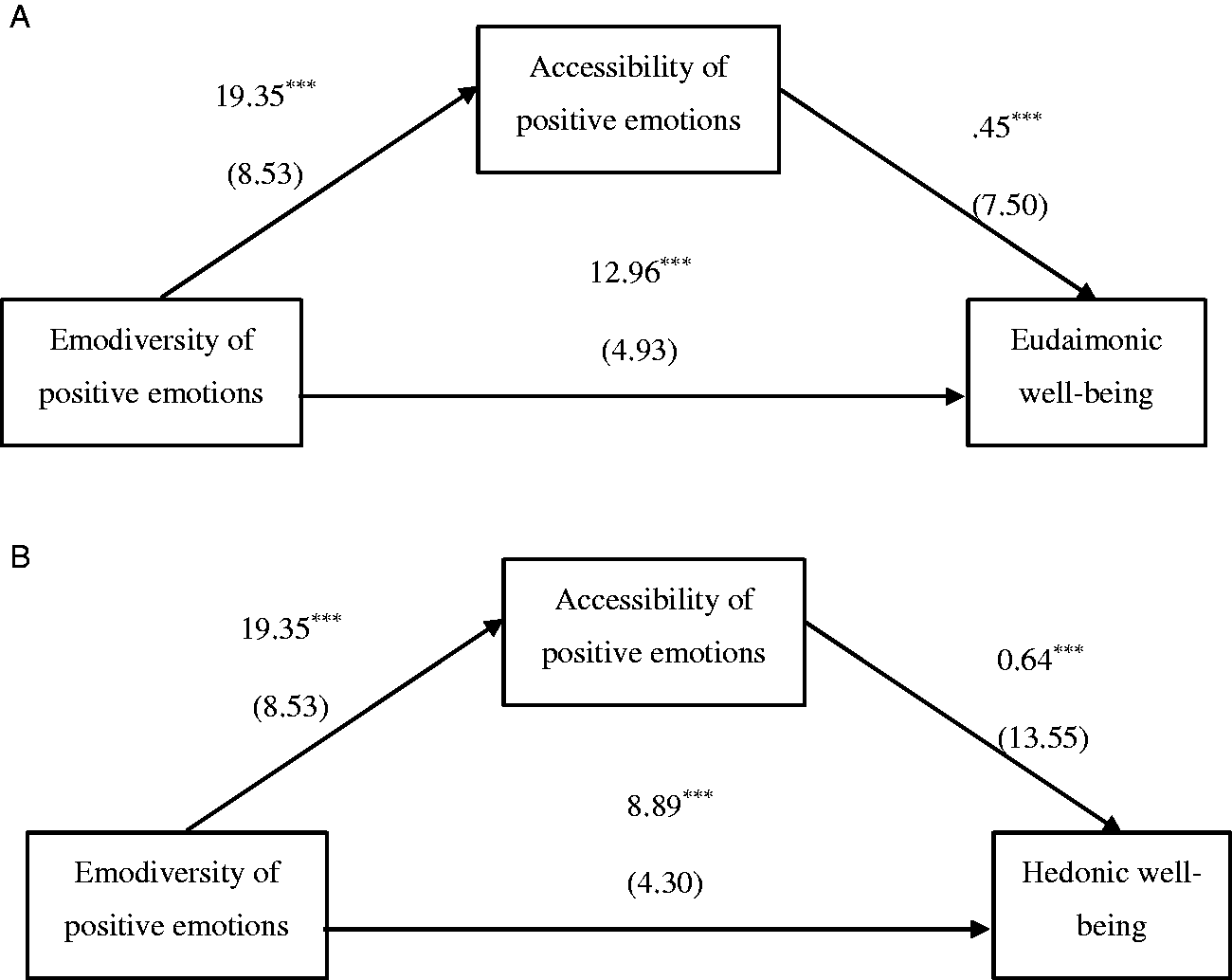
(A) The mediating role of accessibility of positive emotions for eudaemonic well-being. (B) The mediating role of accessibility of positive emotions for hedonic well-being.
We predicted in hypothesis 3 that the accessibility of negative emotions underlies the effect of emodiversity on eudaemonic well-being. That is, the emodiversity of negative emotions may reduce the accessibility of negative emotions, subsequently increasing the sense of tourists’ eudaemonic well-being. Mediation analysis results confirmed this prediction, showing that the accessibility of negative emotions mediated the effect of emodiversity on eudaemonic well-being (β = 1.23, 95% CI = 0.08–2.95; see Figure 3A). Similarly, the accessibility of negative emotions played a mediating role in the impact of emodiversity on tourists’ hedonic well-being (β = 1.33, 95% CI = 0.08–3.17; see Figure 3B). These results provided support for hypothesis 4.
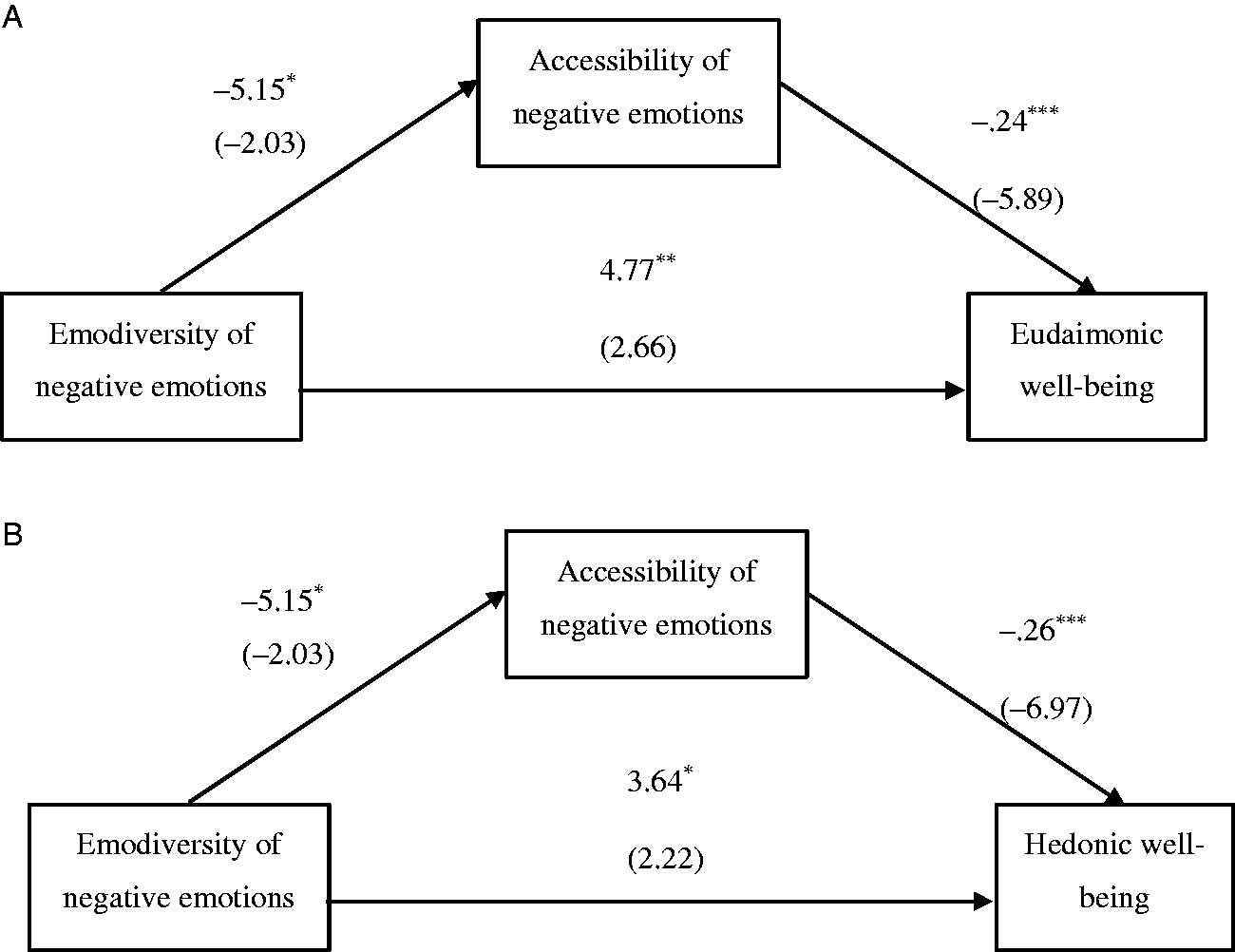
(A) The mediating role of accessibility of negative emotions for eudaemonic well-being. (B) The mediating role of accessibility of negative emotions for hedonic well-being.
Conclusions
Employing research methods of biodiversity of ecosystems in natural sciences, this research serves as first evidence of emodiversity as an empirical construct in tourism, demonstrating that tourists experience diverse and abundant emotions when traveling. We conducted empirical examinations to reveal the existence of emodiversity and its benefits (i.e., well-being). Specifically, emodiversity, regardless of whether it involves positive or negative emotions, was consistently linked to greater well-being, independent of mean levels of positive and negative emotions. In addition, we identified the underlying reason (i.e., emotional accessibility) demonstrating why emodiversity is beneficial for well-being. Finally, the results remained the same after we controlled for demographic variables and travel-related variables.
Theoretical Implications
This research advances current understanding of tourists’ emotional experiences by making several theoretical contributions. First, in terms of emotion, prior tourism research mainly covers valence-based emotion, largely ignoring the diversity of emotions. By contrast, the current study reveals that not just the mean levels but also the diversity of emotions increases tourists’ well-being. In line with research on emotional complexity (Barrett 2013), emodiversity reflects the rich and complex emotional experiences of tourists when traveling. Prior researches have pointed to the existence of the diversity and complexity of emotions in the context of tourism (Knobloch, Robertson, and Aitken 2017; Rahmani, Gnoth, and Mather 2018, 2019). Specifically, the recent researches by Rahmani, Gnoth, and Mather (2018, 2019) used text mining method to link combinations of positive and negative emotions with well-being. We move one step further by treating emodiversity as an empirical construct and provide examination of the relationship between emodiversity and tourists’ hedonic and eudaemonic well-beings. The context of tourism provides a fertile ground for studying emodiversity, and we believe that emodiversity has the potential to provide more implications to understand and predict many other tourists’ behaviors, for example, when they make destination choices or participate in activities. We therefore call for more attention to this topic in tourism research.
Tourism researchers agree that emotion is a complex state of feeling, elicited by a specific referent—a person, an event, or even the environment encountered—that influences tourists’ experience (e.g., Hosany 2012; Nawijn et al. 2018). Because of the natural link between events engaged and emotions experienced by tourists, it seems reasonable to assume that tourists would experience the same amount of diverse emotions when interacting with the same sets of multiple events. In other words, the effect of diverse activities could be deemed equivalent to the effect of diverse emotions. However, experiences are subjective and personal (Knobloch, Robertson, and Aitken 2017; C. Ryan 2002), individuals will have different emotional experiences even if they are engaging with the same activities in the same physical environment (Volo 2009). Beyond that, tourists’ emotions would also change even over the course of the same event (Lin et al. 2014). Participating in diverse activities is therefore unguaranteed to produce diverse emotions and unlikely to elicit the same set of diverse emotions for every individual. While previous research has mainly focused on how holiday or activities impact tourism experiences, this research moves closer to the subjective experiences during their trip and examines how the diversity of emotional responses elicited by the environmental stimuli (i.e., holiday or activities) impact happy and meaningful tourists experiences.
Second, this study also makes a significant contribution to research on tourists’ well-being (e.g., Gilbert and Abdullah 2004; McCabe and Johnson 2013; Uysal et al. 2016). Previous studies suggest that a high level of positive emotions and a low level of negative emotions can benefit tourists’ well-being (e.g., Pearce and Packer 2013). We examined and successfully corroborated the positive effect of emodiversity on tourists’ hedonic well-being. But more importantly, beyond this narrow focus on the hedonic enjoyment, the research takes a broader view of tourists’ experience by recognizing the importance of both hedonic and eudaemonic well-being and further enriches the literature on tourists’ well-being by documenting a new contributing factor, emodiversity, and enriches the understanding of the links between tourists’ emotions and well-being.
Third, previous research emphasizes that positive emotions are the dominant factor of tourists’ well-being (e.g., Li, Scott, and Walters 2015). In response to the call from “dark” tourism and negative emotions (e.g., loneliness) research (e.g., Nawijn et al. 2018; Tamir et al. 2017), our findings are also important in claiming the positive outcomes of negative emotions. We show that the benefits of emodiversity are not confined to positive emotions; in other words, when individuals experience diverse negative emotions, individuals are less likely to be dominated by specific detrimental emotions (e.g., anger, anxiety), and thus they are more likely to possess adequate cognitive resources to offer catharsis and finally achieve self-enhancement. Hence, this research provides additional evidence documenting a positive outcome when people experience negative emotions: even though the mean negative emotions negatively affect tourists’ experience, the diversity of negative emotions contribute a positive effect.
Finally, in addition to contributing to tourism research, this study expands understanding of emodiversity in general psychology by investigating its underlying mechanisms. Although previous researches examine the benefits of emodiversity to individuals’ mental and physical health, they do not investigate the underlying reasons for the positive relationship between emodiversity and physical well-being (Quoidbach et al. 2014; Ong et al. 2018). Beyond merely proposing several plausible possibilities of the underlying mechanism, the current research provides theoretical reasoning of the mediating role of emotional accessibility and, more important, proves it empirically.
Managerial Implications
Our research findings provide concrete suggestions on how to manage tourists’ well-being so as to generate meaningful and valuable tourism experiences. Prior research suggests that managers should ensure that their tourists feel pleasant all the time and work to prevent any other emotions from disturbing this pleasantness (Kim, Ritchie, and Tung 2010). In line with the emerging research on the dark side of excessive pleasure (e.g., Barasch, Levine, and Schweitzer 2016), our results echo Vuillier et al.’s (2018) findings in the social media context: individuals’ well-being benefits more from diverse emotions than positive emotions alone. Thus, rather than simply selling positive emotions for the sake of pleasantness, tourism managers should begin recognizing the importance of creating “emodiversity-seeking experience.”
Tourism managers could employ different approaches to provide visitors with diversified emotional experiences. First, adopting the concept of customer experience journey (Lemon and Verhoef 2016), tourists’ experiences journey documents the full experiences of tourists interacting with destinations through various touch points (Tussyadiah 2014). The touch points could trigger tourists’ emotions and an “emotion map” could be drawn to visualize the complete journey (Kim and Fesenmaier 2015). Thus, tourism managers could redesign the services process or service facilities in the tourists’ experiences journey to provide tourists with the diversified emotional experiences. Many services sectors have realized the importance of emotions and begin to use emotion recognition technology to map and capture passengers’ emotional blueprint, for example, airports (Malvini 2013) and theme parks. New technologies, such as electrodermal activity (EDA) tool, enables tourism companies to capture tourists’ emotions throughout their whole journey (Kim and Fesenmaier 2015). Theme parks, such as Disney has adopted the new technology to read tourists’ emotions and further adjust rides according to emotions (Loughrey 2017). Therefore, besides recognizing the emotions, service providers could move one more step by better managing the diverse emotions to maximize the benefits to their customers in their experiences journey.
Second, although dark tourism research has revealed the positive outcomes brought about by negative emotions (Nawijn and Fricke 2015), these studies usually focus on specific emotions (e.g., fear, disgust, and hardship). Here, we further demonstrate the value of a group of diverse negative emotions, thus generating more nuanced insights for tourism practitioners. Specifically, when providing tourism products with negative emotions (e.g., dark tourism products), a more effective strategy would be to diversify negative emotional experiences, rather than permit tourists to become immersed in one specific negative emotion (e.g., fear). For example, rather than designing a concentration camp memorial site with bloody and inhumane exhibitions (i.e., evoking only fear), tourism managers should design it with scenarios that will elicit various emotions (e.g., feeling fear when watching videos of the holocaust, shock when looking at photos of prisoners’ life in the camp, sadness when hearing stories of prisoners’ journey to either death or liberation).
Furthermore, based on the inverted organizational pyramid, frontline employees are the first contact with their customers, this is especially true for services organizations. Therefore, in order to ensure the best emotional experiences of tourists, tourism managers should use personnel training to equip their employees with the understanding of diversified emotional experiences and the strategies to implement them. For example, while making customers feel happy, service staff can actively create an experience with element of surprise, respect, and so on.
Finally, this research also has practical implications for improving individuals’ well-being. For the individuals who experience low level of well-being (e.g., elderly or disabled individuals), they are more likely to be dominated by less diversified emotional experiences in their daily lives. Our findings highlight the need of experiencing diverse emotions in benefiting well-being. Thus, tourism managers could employ the concept of emodiversity when designing and promoting their tourism products to such segments of tourists. Facilitated by big data technology, people who potentially suffer from a low level of well-being could be easily identified and their psychological needs could be revealed as well. For example, people who complain about their boss or husband in the social media could be segmented as low in well-being. When promoting tourism products to these people, tourism managers could offer a tourism experience embedded with diversified emotions, in order to make their tourism experiences and life ultimately more meaningful.
Limitations and Future Research
Several limitations in this study highlight fruitful avenues for further research. First, similar to other research on tourists’ emotions (e.g., Hosany and Gilbert 2010; Lee and Kyle 2012), respondents self-reported their emotional experience during the trip. Although this self-report approach is a simple and efficient method to capture individuals’ emotions and thus is among the most commonly used to examine emotion in tourism and marketing research (Hosany et al. 2015; Kim and Fesenmaier 2015; Li et al. 2018), recent research has criticized it because, on the one hand, respondents may give socially desirable answers, and on the other hand, they may forget the emotions or not even be aware of the emotions experienced when traveling (Robinson and Clore 2002). We strived to avoid the potential threats of self-reports. For example, we used online questionnaires to avoid the socially desirable impact on respondents induced by the presence of researchers. In addition, we examined the relationships between emotional diversity and well-being, so the impact of the accuracy of recalling emotions on the relationships is relatively weak. However, we must acknowledge the deficiencies of the self-report method in this study and recommend that future research use real-time approaches to measure emodiversity. For example, use of physiological methods to measure real-time emotional outcomes (e.g., eye tracking, electrodermal measurement, heart rate) might prove useful (Li, Scott, and Walters 2015).
Another intriguing direction for research would be to explore individual differences. The current study includes demographic information (i.e., gender, age, education, household income, and ethnic background) as control variables. To provide a more comprehensive examination of the psychological notion of emodiversity, further research could determine groups that have more complex emotional lives and therefore might reap more benefits from emodiversity in their tourism experiences.
Footnotes
Declaration of Conflicting Interests
The author(s) declared no potential conflicts of interest with respect to the research, authorship, and/or publication of this article.
Funding
The author(s) disclosed receipt of the following financial support for the research, authorship, and/or publication of this article: This work was supported by the National Natural Science Foundation of China (71572084, 71802202, 71702081, 71832015, 71832002).
