



Abstract
In this study, the broaden-and-build theory of positive emotions was applied to the spectator sport context. We examined the upward spiral process of positive emotions toward human flourishing, defined as long-term positive functioning in both personal and social life. Three-wave (t1, t2, t3) panel data were collected from 326 baseball fans over two seasons. The results revealed that positive emotions (t1) induced by sport spectatorship were sequentially related to flourishing (t3) first through broadening cognitive (fan learning) and behavioral (fan rituals) repertoires (t1) and then through experiencing social fan well-being (t2) as an enduring social resource. Moreover, the effect of psychological fan well-being (t2), another enduring resource in this study, on flourishing (t3) was contingent on the quality of sport teams (t3). Our theoretical explanations and results provide clarity to guide future research on a bottom-up approach to enhancing future flourishing through spectator sport consumption.
Introduction
Spectator sport is a popular form of entertainment around the world. The consumption of spectator sport allows individuals to interact with a sport competition that is witnessed in an unpredictable manner during an event (Madrigal, 2006; Yoshida, 2017). Spectator sport consumption is important for individuals not only to alleviate work stress and relieve the tedium of everyday life (Funk et al., 2009; Trail & James, 2001), but also to develop a sense of belonging to their favorite teams and gain an understanding of who they are as a sport fan (Beaton et al., 2011; Wann, Hackathorn, & Sherman, 2017).
Over the past decades, scholars have shown that spectator sport consumption acts as a key vehicle for enhancing one's well-being in the pursuit of enjoyable and meaningful experiences (e.g., Delia et al., 2022; Doyle et al., 2016; Wann, Hackathorn, & Sherman, 2017). When sport spectatorship accompanies fans’ psychological and behavioral reactions such as basic psychological need fulfillment (Kim & James, 2019; Kim et al., 2017), team identification (Sato et al., 2023; Wann, Hackathorn, & Sherman, 2017), sport media viewing (Jang et al., 2021), and stadium attendance (Inoue et al., 2017; Yoshida et al., 2023), engaging in spectator sport consumption contributes to individuals’ overall well-being. This perspective is supported by the bottom-up theory of well-being that suggests individuals’ global well-being is summed from their evaluations of key life domain experiences such as social life, family life, work life, and leisure life (Newman et al., 2014). The bottom-up theory is relevant to fan well-being research because it has been applied to the spectator sport context to explain why sport spectatorship as a domain-specific experience contributes to individuals’ overall well-being in life (Oshimi & Kinoshita, 2022; Sato et al., 2023; Sirgy et al., 2000; Yoshida et al., 2024).
Despite progress regarding a bottom-up process of enhancing well-being through sport spectatorship (e.g., Inoue et al., 2017; Kim & James, 2019; Wann, Hackathorn, & Sherman, 2017), at least two concerns emerge from the existing literature. First, understanding the relationship between sport spectatorship and well-being remains grounded mainly in hedonic well-being outcomes such as subjective well-being, happiness, life satisfaction, and positive affect (Inoue et al., 2017; Jang et al., 2021; Kim & James, 2019; Kim et al., 2017; Sato et al., 2023). Viewed broadly, there are three types of well-being: hedonic, eudaimonic, and social (Keyes, 1998; Keyes et al., 2008; Ryan & Deci, 2001). Hedonic well-being is a positive emotional state arising from the temporary experience of pleasure and positive mood in the short term (Ryan & Deci, 2001). Eudaimonic well-being is a healthy mental state arising from living well to pursue self-actualization and human excellence (Keyes et al., 2008; Ryan & Deci, 2001). Social well-being refers to people's perceptions of the quality of their relationships with others in their community (Keyes, 2006).
In the past decades, scholars have integrated eudaimonic and social well-being into the psychosocial concept of flourishing and defined it as a state of positive functioning arising from one's perceived success in both individual and social life (Diener et al., 2010; Keyes, 2002; Seligman, 2011). One conclusion based on the extant literature is scant research has been conducted to establish a bottom-up process of how individuals pursue and achieve the long-lasting aspects of well-being (e.g., personal growth, meaning in life, and flourishing) through sport spectatorship (Cho et al., 2021; Delia et al., 2022; Jang et al., 2021). The failure to relate spectator sport consumption to long-term well-being represents a significant gap in previous research and requires further research. This study attempts to reinforce recent findings on sport fans’ meaning in life (Delia et al., 2022; Jang et al., 2021) and flourishing (Oshimi & Kinoshita, 2022) by demonstrating the predictive effects of fans’ psychological mechanisms and behavior on future flourishing over time.
Second, the psychological mechanisms behind building enduring resources in sport spectatorship requires further examination. In the leisure context, previous research shows that people experience higher levels of subjective well-being by developing enduring resources such as leisure competence (Hu et al., 2021) and a sense of mastery in leisure time (Newman et al., 2014). These findings are consistent with self-determination theory (Ryan & Deci, 2000), in which enduring leisure resources fulfill the basic need for competence (e.g., self-regard) and promote well-being. However, in the spectator sport context, little is known about (a) how sport fans’ enduring resources are developed over time and (b) how fans’ enduring resources contribute not only to short-term subjective well-being, but also to long-term positive functioning in life. Previous findings on fan resources and well-being are limited largely to the relationship between psychological resources (e.g., need fulfillment, emotional support, and sport involvement) and short-term well-being (e.g., positive affect, life satisfaction, and hope) based on the analysis of cross-sectional data (Inoue et al., 2017; Kim & James, 2019; Su et al., 2022). In this respect, it is important to examine time-lagged data to determine the effect of additional fan resources on long-term well-being such as flourishing in this study.
One suitable theoretical approach for this issue is the broaden-and-build theory of positive emotions (Fredrickson, 2001; Fredrickson & Cohn, 2008). This theory proposes an upward spiral model for understanding how experiencing positive emotions in an activity (or event) first broadens individuals’ cognitive and behavioral repertoires. This, in turn, helps them build enduring resources (e.g., knowledge, skills, and social relationships), eventually allowing for good health and well-being. To improve our understanding of sport fans and their long-term well-being, we apply broaden-and-build theory to the spectator sport context and attempt to examine how thought–action repertoires and enduring resources in spectator sport mediate the relationship between team-related positive emotions and flourishing in life.
Given the gaps in previous research, further examination is needed regarding a bottom-up approach to enhancing long-term well-being through sport spectatorship. In this study, we focus on flourishing as a stable psychosocial construct consisting of both psychological and social well-being (Diener et al., 2010). We examine the upward spiral dynamics triggered by positive emotions in spectator sport consumption, an ideal exemplar for inducing positive emotions (Fredrickson, 2001). Thus, this study aims to (a) develop a model of upward spirals toward flourishing through the positive emotions induced by sport spectatorship, and (b) provide evidence for the relationships between the proposed constructs in our model.
We attempt to make three contributions to the sport consumer behavior literature. First, guided by broaden-and-build theory, we develop and examine a multistage upward spiral model toward flourishing among sport fans. This provides an explicit understanding of the bottom-up process to enhance flourishing through spectator sport. The integration of the bottom-up theory of well-being (Newman et al., 2014) and broaden-and-build theory (Fredrickson, 2001) is important because it allows for exploring specific thoughts, actions, and resources needed for facilitating sport fans’ well-being in a bottom-up process. Second, we extend previous flourishing research in the spectator sport context (Cho et al., 2021; Gordon et al., 2025; Oshimi & Kinoshita, 2022; Yoshida et al., 2024). While sport marketing scholars have considered flourishing as an indicator of overall well-being (Cho et al., 2021; Gordon et al., 2025; Yoshida et al., 2024), others interchangeably use flourishing, psychological well-being (Kim et al., 2022), and eudaimonic well-being (Oshimi & Kinoshita, 2022). In the current study, we conceptualize flourishing as an overall psychosocial construct because this view is consistent with Diener et al.'s (2010) conceptualization that integrates psychological and social well-being in a global (single) construct. Therefore, this study contributes to the sport marketing literature by offering conceptual clarity for flourishing based on Diener et al.'s (2010) psychosocial approach. Third, we analyze three-wave panel data to test a more comprehensive model of flourishing that explains its predictor (t1), mediator (t2), and moderator (t3) variables over time. Thus, we reinforce the sequential relationships suggested by broaden-and-build theory in a predictive way. Below, we present our hypotheses based on the broaden-and-build theory.
Hypothesis Development
Broaden-and-Build Theory and Its Application
Figure 1 presents the theoretical framework underlying this research. Broaden-and-build theory explains why people experiencing positive emotions can “broaden-and-build” enduring resources necessary to accomplish their desired goals and ultimately flourish in life (Fredrickson, 2001; Fredrickson & Cohn, 2008). This theory consists of a developmental process of (a) experiencing positive emotions, (b) broadening thought–action (cognitive and behavioral) repertoires, (c) building enduring resources, and (d) achieving enhanced health and well-being (Fredrickson, 2001; Fredrickson & Cohn, 2008; see Figure 1). We use a predictive research design that involves time-lagged data and integrates predictor, mediator, and outcome variables at three different points: Time 1 (t1), Time 2 (t2), and Time 3 (t3). Implementing this predictive design, we control for common method bias among our study constructs (Podsakoff et al., 2000), allowing us to estimate more precise sequential relationships between predictor (t1), mediator (t2), and outcome (t3) variables. In this framework, positive emotions, thought–action repertoires (i.e., fan learning and fan rituals), enduring resources (i.e., domain-specific psychological and social fan well-being), and flourishing are the main focal constructs, which are measured over time. We also include satisfaction with key life domains (e.g., social, leisure, family, and work life; Sato et al., 2017), stadium attendance frequency (Mahony et al., 2002), and sport media viewing frequency (Yoshida et al., 2023) at Time 3 to control for their effects on flourishing. Below, we first develop research hypotheses relating to upward spirals toward flourishing. We then present a moderation hypothesis.
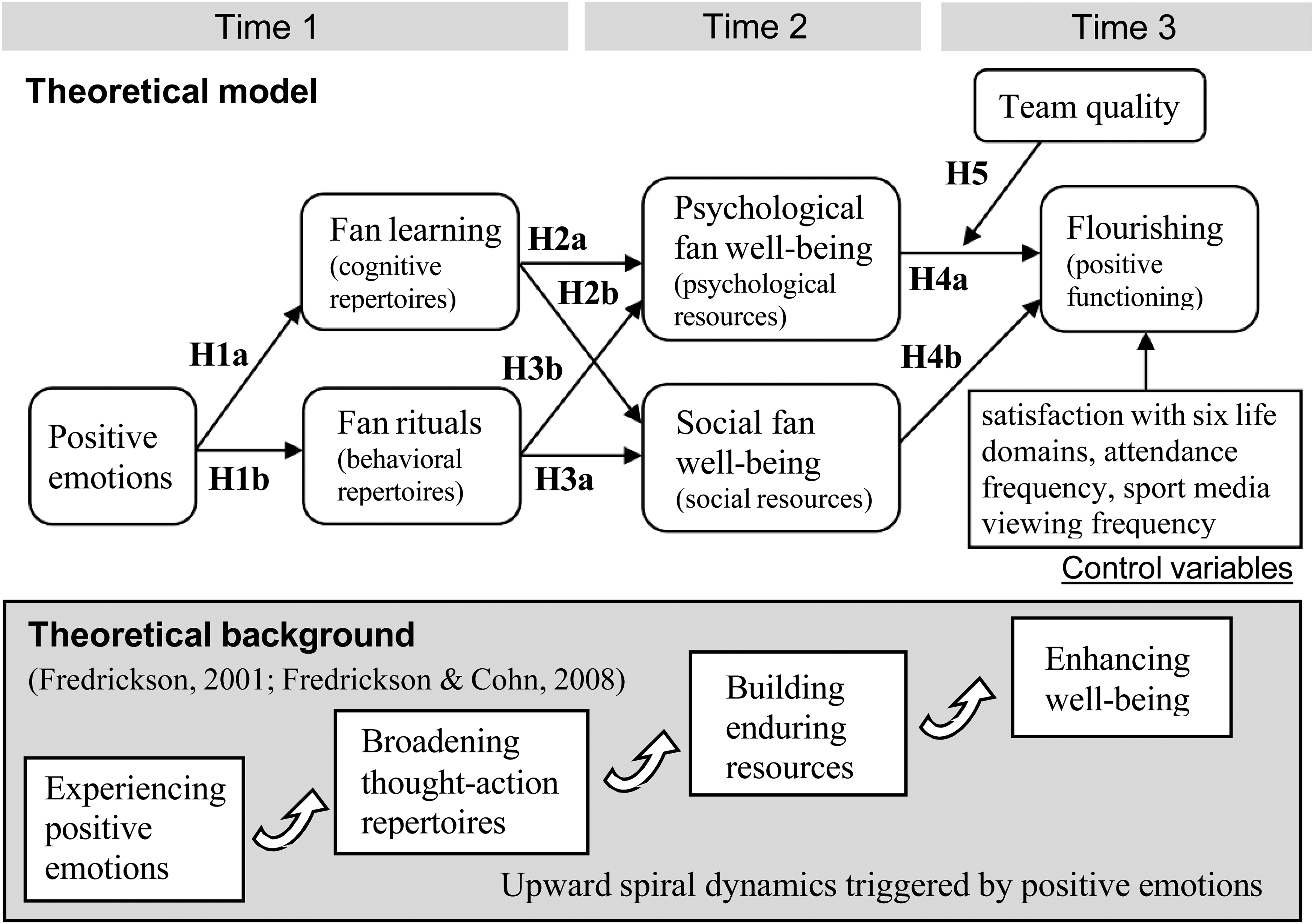
Theoretical Framework and Hypotheses.
Positive Emotions and Thought–Action Repertoires
We develop a hypothesis for the effects of positive emotions on sport fans’ thought–action repertoires. According to broaden-and-build theory (Fredrickson, 2001; Fredrickson & Cohn, 2008), positive emotions trigger upward spirals toward personal growth and initiate creative thinking and behavior with a broad range of thoughts and actions. In spectator sport, out-of-the-ordinary plays performed not only by athletes, but also by event organizers and devoted sport fans induce a variety of positive emotions such as joy, pleasure, excitement, interest, and passion, in spectators (Biscaia et al., 2012; Holt, 1995; Park et al., 2010; Wakefield, 2016).
For example, fans’ interest in developing specialized knowledge and analytical skills will produce a wide range of cognitive thought repertoires. This is because the positive emotion of interest broadens one's cognitive capacity by generating the desire to explore and gain new information (Fredrickson, 2001). Fans’ learning experience is activated specifically by the positive emotion of interest (Fredrickson, 2001) and represents an act of processing information for the acquisition of new knowledge about sports, games, athletes, and teams (Huettermann et al., 2022; Yoshida et al., 2024). In addition, we anticipate that fans’ collective joy when witnessing their favorite team's superior performance and victory in the fan community will widen the range of creative fan behavior. According to broaden-and-build theory, the feeling of joy expands the self by generating the desire to play and engage in creative activities (Fredrickson, 2001). In spectator sport, fan rituals such as wearing their teams’ colors, singing and chanting at stadiums, and participating in a festive celebration that takes place after a goal (or point) is scored, are playful and joyous (Holt, 1995; Wang & Tang, 2018), thereby creatively expanding fans’ action repertoires (Fredrickson, 2001).
Based on these arguments, we propose positive emotions induced by sport competitions broaden fans’ thought–action repertoires and foster their cognitive (fan learning) and behavioral (fan rituals) responses during a season. In other words, positive emotions will positively influence fan learning and rituals at Time 1(t1). Therefore, the following hypothesis is proposed:
Domain-Specific Fan Well-Being as an Enduring Resource
One of the central premises of broaden-and-build theory is that a broadened range of thoughts and actions regulated by feeling positive emotions associated with enjoyable activities over time prompts individuals to build enduring resources (Fredrickson, 2001; Fredrickson & Cohn, 2008). In this study, we expect that sport fans’ cognitive (fan learning) and behavioral (fan rituals) repertoires at Time 1 (t1) will enable them to build enduring psychological and social resources at Time 2 (t2). To operationalize enduring psychological and social resources, we focus on two types of sport-specific well-being: psychological and social fan well-being in spectator sport. A claim has been made that well-being can be an important motivational resource for goal achievement (Haase et al., 2021). This view is consistent with World Health Organization (WHO) communications, which emphasize that well-being “is a resource for daily life and is determined by social, economic and environmental conditions” (WHO, 2024). The bottom-up theory of well-being (Newman et al., 2014) implies that domain-specific well-being (e.g., fan well-being) is not the ultimate goal in human life, but helps individuals build beneficial resources and capacities when engaging in various activities such as work, studies, housework, hobbies, and sport spectatorship.
In this study, we consider psychological and social fan well-being as fans’ unique enduring resources. First, psychological fan well-being is enduring because it is positive psychological functioning in the pursuit of human potential, such as personal growth, meaningful contributions to one's favorite team, and self-actualization as a sport fan (Gordon et al., 2025; Inoue et al., 2020; Kumai et al., 2024). Second, social fan well-being is long-lasting in the sense that it is rooted in stable fan-to-fan social relationships based on the shared beliefs and trust formed among sport fans (Gordon et al., 2025; Inoue et al., 2022; Kumai et al., 2024) who follow the same team over multiple seasons or even generations (Bristow & Sebastian, 2001; Underwood et al., 2001). Following the same team over time and experiencing the social relationships contribute to the satisfaction of fans’ enduring need for belonging (Melnick, 1993). The enduring nature of these well-being constructs suggests both psychological and social fan well-being will act as enduring resources that enable fans to engage in meaningful pursuits, build stable social bonds with others, and eventually flourish in the future.
The results from previous research provide evidence that leisure domain well-being such as leisure domain satisfaction and need fulfillment (competence, affiliation, autonomy, and psychological detachment), represents enduring resources (e.g., personal growth) during leisure time, and is enhanced by leisure experiences (Hu et al., 2021). This explanation allows us to generate a prediction regarding the relationship between fans’ experiential thought-action repertoires (e.g., fan learning and rituals) and enduring resources (e.g., psychological and social fan well-being) in the spectator sport context. Collectively, a broad range of cognitive (fan learning) and behavioral (fan rituals) repertoires in spectator sport are anticipated to predict future domain-specific well-being as a sport fan. In this study, domain-specific fan well-being is defined as a desirable state of existence as a sport fan that stems from the multiple aspects (e.g., psychological, social, and physical aspects) of sport-oriented life (Kumai et al., 2024). Including psychological and social fan well-being, we hypothesize the pathways from fan learning (t1) and fan rituals (t1) to domain-specific fan well-being (t2) as follows:
Domain-Specific Fan Well-Being and Flourishing
We predict psychological fan well-being (t2) and social fan well-being (t2) will have a predictive effect on flourishing (t3). We identify flourishing as an outcome variable because it is a state of positive functioning in the general life area and serves as a superordinate psychosocial well-being outcome (Diener et al., 2010; Duan & Ho, 2018; Rudaz et al., 2023). The bottom-up theory of well-being (Newman et al., 2014) maintains that flourishing accrues from the cumulative experience and evaluation of specific life domains such as family, social life, work, and leisure. In sport marketing research, scholars have shown that enduring resources in spectator sport are relevant to fans’ competence development as a form of domain-specific fan well-being (e.g., psychological and social fan well-being; Kumai et al., 2024), entail stable beliefs about the meaning of sport spectatorship in life (Delia et al., 2022), and enable fans to flourish in everyday life (Doyle et al., 2016).
These findings imply that domain-specific fan well-being is a significant prerequisite for flourishing in a bottom-up process of transforming sport spectatorship into individuals’ psychosocial well-being. In other words, domain-specific fan well-being acts as competence development that allows fans to build the enduring resources necessary to flourish in life. In line with this view, we consider domain-specific fan well-being as an aspect of enduring resources and examine how two types of fan well-being (psychological and social fan well-being) at Time 2 (t2) have predictive effects on future flourishing at Time 3 (t3). Drawing from these arguments, we propose the following hypotheses:
Moderating Effect
According to social identity scholars, people are motivated to identify with a social group that has a positive image (Tajfel & Turner, 1986) and a prestigious reputation (Ashforth & Mael, 1989). In spectator sport, high-quality teams enable fans to derive a positive image from the team–fan relationship (Underwood et al., 2001) and enhance psychological well-being by acquiring well-being benefits (e.g., collective self-esteem) that stem from increased connections with successful teams (Wann, 2006). Thus, a joint examination of sport team quality and psychological fan well-being is important and allows us to discover an additional pathway to greater flourishing.
Researchers suggest that when following sport teams, fans tend to consider high-quality teams as more socially attractive (Yoshida et al., 2013) and personally relevant (Fisher & Wakefield, 1998) than low-quality teams. Sport fans prefer to be viewed by others in a positive light by associating themselves with winning sport teams (Cialdini et al., 1976; Fisher & Wakefield, 1998; Jensen et al., 2016). Following successful teams, fans derive a sense of accomplishment from the teams’ on-field performance (Doyle et al., 2016) and feel proud of glorious achievements through postgame celebrations (Gordon et al., 2021; Mahony et al., 2002). Our point is that high-quality teams provide fans with symbolic benefits that fulfill their psychological needs for self-esteem as fans (Lianopoulos et al., 2020) and meaning in life (Delia et al., 2022). Stated differently, fans are more likely to obtain self-definition benefits (e.g., pride, self-esteem, and meaning) by associating with high-quality teams than by following low-quality teams and use these benefits as enduring psychological resources to boost vitality (Yoshida et al., 2023), enhance mental health (Delia et al., 2022), and flourish in life (Doyle et al., 2016). Around the globe, enthusiastic fans of popular sport teams such as the Boston Red Sox in the United States, FC Barcelona in Spain, and the Hanshin Tigers in Japan, follow their favorite teams as a lifelong endeavor.
Combining these considerations lead us to formulate the moderating effect of team quality on the proposed model. More specifically, if sport teams are perceived as low quality and do not allow fans to gain symbolic benefits (e.g., a feeling of pride), the relationship between psychological fan well-being and flourishing may not be significant. In contrast, the effect of psychological fan well-being on flourishing will be positive and significant if fans perceive high-quality teams’ athletic characteristics to be beneficial in terms of self-definition (psychological fan well-being) and human excellence (flourishing). Simply put, team quality (t3) will strengthen the effect of psychological fan well-being (t2) on flourishing (t3) in our predictive model. The reasoning above prompts the following final hypothesis:
Method
Research Setting
In this study, we select professional team sport (i.e., professional baseball) as a research setting. This context is suitable as spectator sport consumption for the following reasons. First, professional team sport represents the hedonic consumption of live entertainment that induces positive emotions (e.g., joy, pleasure, and excitement) in spectators (Biscaia et al., 2012). Hence, professional team sport is ideal for measuring team-induced positive emotions and empirically testing broaden-and-build theory in this context. Second, professional team sport (e.g., baseball and football) is a popular sport product worldwide. It allows people to watch and follow their favorite sport teams and athletes (Funk & James, 2001; Gantz & Lewis, 2014). Thus, this context underscores the generalizability of our results to diverse countries, where professional team sport attracts a great deal of interest among people.
Data Collection
The context of this study was professional baseball. Our empirical study was conducted during Japanese professional baseball's 2022 and 2023 seasons. 1 Every year, the regular season starts in late March and ends in late October, including 143 games and several playoffs. Over the 2 years, we conducted a predictive study at three points: late June 2022 (t1), early November 2022 (t2 = t1 + 5 months), and early November 2023 (t3 = t2 + 12 months). These time intervals were deemed adequate because a 5- or 6-month interval has been used for implementing predictive research during a season (Sato et al., 2023; Yoshida et al., 2023), while 1-year time-lagged data were collected when analyzing across different seasons (Katz & Heere, 2016; Kunkel et al., 2016). The frequent competition in a sport such as baseball allows for repeated consumption and repeated experience of the positive emotional experiences.
To collect three-wave panel data, we worked with a Japanese internet research agency. We selected this company because it had the largest panel (approximately 1.3 million registrants) in Japan. To account for variation in team performance, we gathered data from sport fans who followed four professional baseball teams: two successful (winning) and two unsuccessful (losing) teams. Also, to conduct a survey with a representative sample of Japanese baseball fans, geographical consideration was given to the selection of franchise areas, resulting in two eastern teams and two western teams.
Figure 2 shows the data collection procedures used in this three-wave study. In late June 2022, three months after the beginning of the season, approximately 40,000 residents in the franchise areas of four baseball teams (Hokkaido, Saitama, Osaka, and Fukuoka) were invited to answer the following questions: (a) “Do you follow one of the four teams?,” (b) “Did you attend at least one game of your favorite team in the past twelve months?,” and (c) “Do you agree to participate not only in the first survey, but also in future surveys?.” This survey was continued until 4,000 individuals met the criteria. We invited these 4,000 respondents to participate in the first data collection and to answer questions about positive emotions, fan learning, and fan rituals. At Time 1, 901 individuals had completed the first questionnaire.
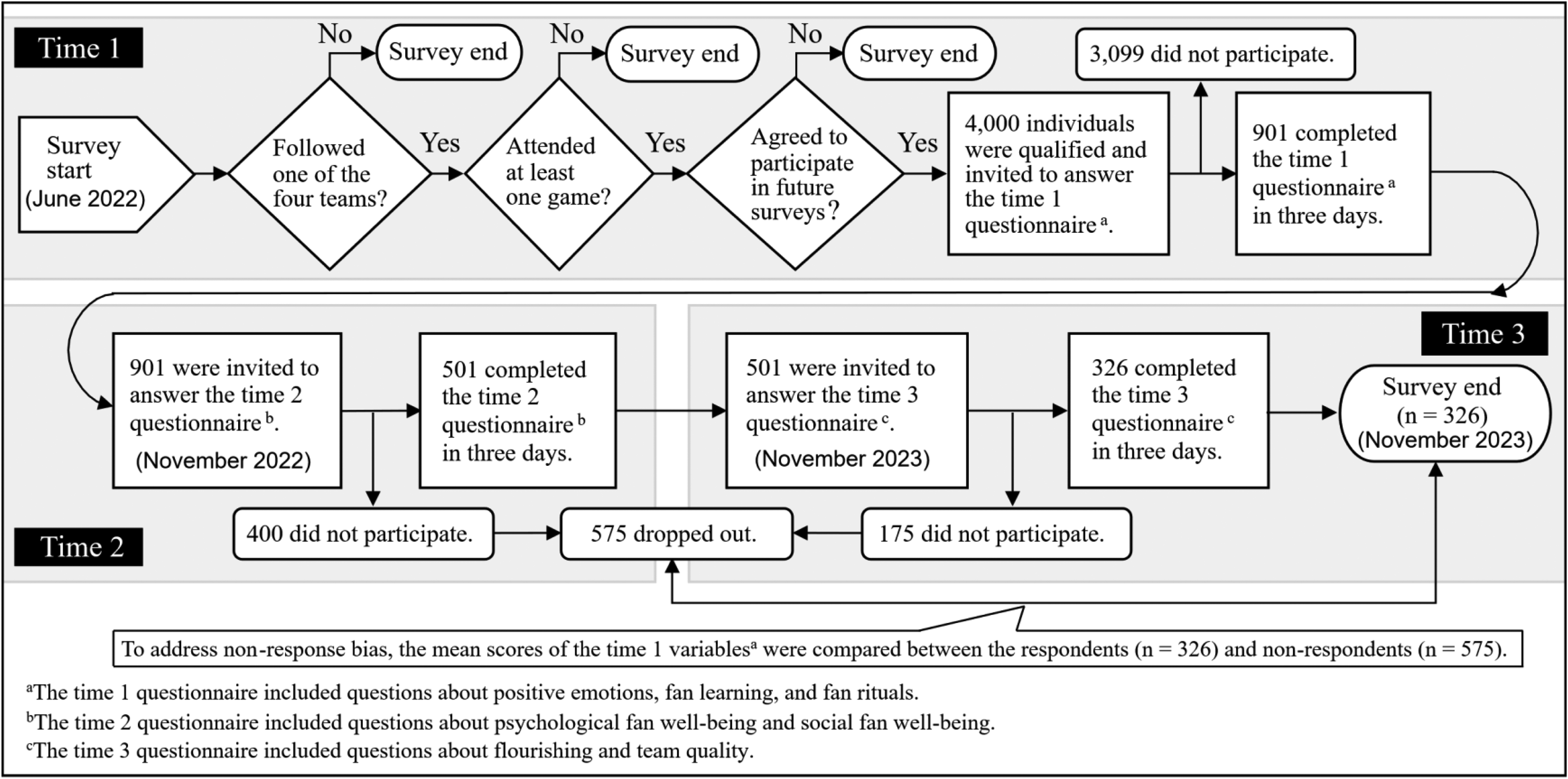
Data Collection Procedures.
Individuals that completed the questionnaire at Time 1 were invited to participate at Time 2, and those doing so were subsequently invited to participate in the Time 3 survey. More specifically, in early November 2022, a week after the end of the 2022 season, we asked the 901 participants in the first survey to rate their context-specific (sport-specific) fan well-being: psychological fan well-being and social fan well-being. At Time 2, 501 respondents had completed the postseason questionnaire. In early November 2023, after the end of the 2023 season, we invited the 501 participants in the second survey to answer questions concerning flourishing, satisfaction with key life domains, and team quality. As a result, a panel of 326 individuals participated in the postseason survey at Time 3. Through these processes, three-wave panel data were obtained from a usable sample of 326 individuals (36.2% of the first survey subjects).
To address the issue of nonresponse bias in our data, mean comparisons between the respondents and nonrespondents were conducted (Miller & Smith 1983). Using a series of independent samples t-tests, we compared the mean scores of the Time 1 variables between our final sample at Time 3 (n = 326) and nonrespondents (n = 575) who did not answer questions at Time 2 and Time 3 (see Figure 2). No significant differences were found on positive emotions (Mrespondents = 4.70 vs. Mnonrespondents = 4.50, t = 1.85, n.s.), fan learning (Mrespondents = 4.31 vs. Mnonrespondents = 4.11, t = 1.79, n.s.), and fan rituals (Mrespondents = 3.73 vs. Mnonrespondents = 3.70, t = 0.29, n.s.) between the respondents and nonrespondents. Thus, these results allowed us to increase confidence that nonresponse bias did not exist in our three-wave data. As with any project, it is not always clear why participants may discontinue; we are encouraged there were positive emotions, fan learning, and participation in fan rituals among those only participating at Time 1. Various constraints may influence individuals to cease participation; regardless there was a suitable sample to test the research hypotheses.
Sample Characteristics
Of our respondents, 69.0% were men and 30.7% were women (0.3% chose not to answer the gender question). Their average age was 49.3 years (standard deviation [SD] = ± 12.7). The sample included individuals aged 20–29 (8.0%), 30–39 (15.3%), 40–49 (24.5%), 50–59 (31.0%), 60–69 (14.7%), and ≥ 70 years (6.4%). Data on household income were obtained from the research agency's database. The distribution of household income among the respondents was as follows: 21.3% (< US$30,000), 43.3% (US$30,000–$59,999), 30.3% (US$60,000–$99,999), 2.7% (US$100,000–$139,999), 2.3% (≥ US$140,000; the exchange rate was US$1 = 145 yen).
The mean scores, along with the SD of stadium attendance frequency in 2022 (t2) and 2023 (t3), were 5.84 ± 11.50 and 7.72 ± 14.14, respectively (the total number of games available to watch at each teams’ home stadium was approximately 70). In addition, the mean values and SDs of sport media viewing frequency in 2022 (t2) and 2023 (t3) were 45.32 ± 44.02 and 46.87 ± 44.64, respectively. Overall, the subjects’ demographic, economic, and behavioral characteristics were supposed to be representative of the profile of Japanese sport spectators because the demographic characteristics (men = 69.0%, women = 30.7%, average age = 49.3 years) of our sample were comparable to those of a large survey that gathered data from 3,000 sport spectators in Japan (men = 56.9%, women = 43.1%, average age = 46.9 years; Sasakawa Sports Foundation, 2016).
Measures
We drew all survey items from previous research (see Table 1). Positive emotions were measured using five items adapted from Butler and Kern (2016) and Keyes et al. (2008). To evaluate fan learning and fan rituals, we adapted the scales developed by Yoshida et al. (2024). These three constructs were administered during the first survey (t1).
CFA Results (n = 326).
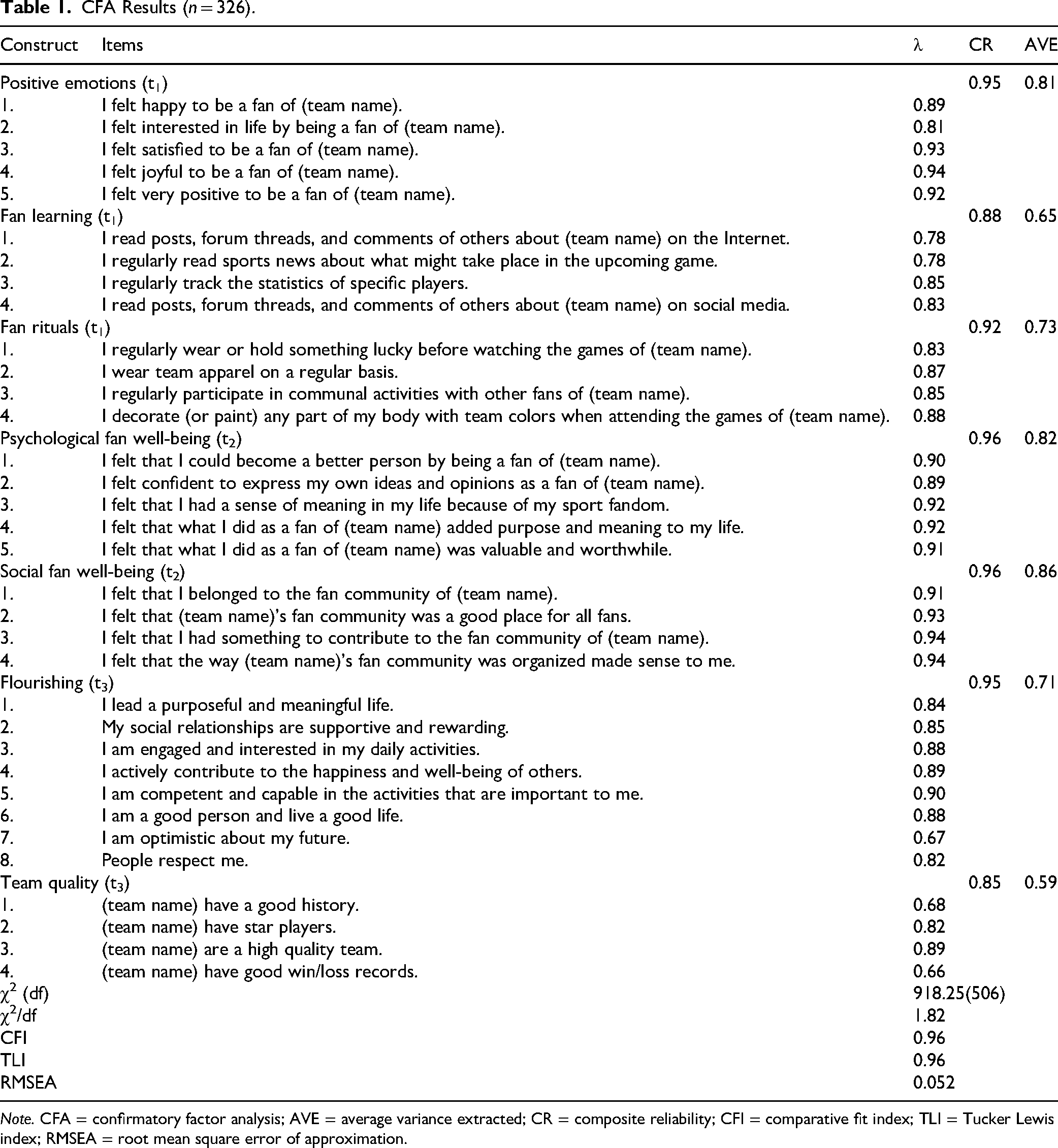
Note. CFA = confirmatory factor analysis; AVE = average variance extracted; CR = composite reliability; CFI = comparative fit index; TLI = Tucker Lewis index; RMSEA = root mean square error of approximation.
In the second survey (t2), we measured two types of context-specific fan well-being and adapted items from previous research: five items for psychological fan well-being (Butler & Kern, 2016; Keyes et al., 2008) and four items for social fan well-being (Keyes et al., 2008). In addition, flourishing, team quality, and control variables were assessed in the third survey (t3). To measure flourishing, we used the Japanese version (Sumi, 2014, α = 0.87) of Diener et al.'s (2010) eight-item scale. Team quality was measured with Yoshida et al.'s (2023) four-item scale. The items to measure the latent constructs were developed on a 7-point Likert-type scale, ranging from strongly disagree (1) to strongly agree (7).
To control for the effects of individuals’ experiences in the general life area on flourishing (t3), we measured life domain satisfaction (t3) by asking the respondents to rate their satisfaction with the following six domains: social life, leisure life, family life, work life, health, and self-actualization (Sato et al., 2017; Yoshida et al., 2024). To measure life domain satisfaction (t3), we used an 11-point scale, ranging from strongly dissatisfied (0) to strongly satisfied (10). Moreover, to control for the effects of stadium attendance frequency (t3) and sport media viewing frequency (t3) on flourishing (t3), we measured (a) the number of games watched on television or the internet and (b) the number of games attended in the 2023 season at Time 3 (Mahony et al., 2002; Yoshida et al., 2023).
We conducted data collection in Japan. Except for the items to measure the Japanese version of the flourishing scale, we generated all items in English. To confirm the equivalence of the English and Japanese versions, we used the back-translation method (Brislin, 1970). First, we translated the English items into Japanese and then asked a professional translator to back-translate the Japanese items into English. Second, one of the authors, who is a native English speaker, compared the original items with the back-translated items. Based on this comparison, we ensured the equivalence of the original and back-translated items.
Results
Measurement Model
To examine the construct validity of our measures, we conducted a confirmatory factor analysis (CFA) using Mplus 7.31 (see Table 1). The goodness-of-fit indices of the CFA indicated an acceptable fit of our measurement model: χ2/df = 1.82, comparative fit index (CFI) = 0.96, Tucker Lewis index (TLI) = 0.96, and root mean square error of approximation (RMSEA) = 0.052 (Hu & Bentler, 1999). Factor loadings (λ) ranged from 0.66 to 0.94. The reliability and convergent validity of all constructs were satisfactory according to their composite reliability (CR ≥ 0.60; Bagozzi & Yi, 1988) and average variance extracted (AVE ≥ 0.50) values (Fornell & Larcker, 1981). In addition, as shown in Table 2, an assessment of the Fornell and Larcker (1981) criterion that compared the AVE values with the squared correlations between pairs of the constructs indicated that none of the squared correlations depicted above the diagonal of the correlation matrix were greater than the AVE values presented on the diagonal. Thus, discriminant validity was established.
Correlations and Descriptive Statistics.
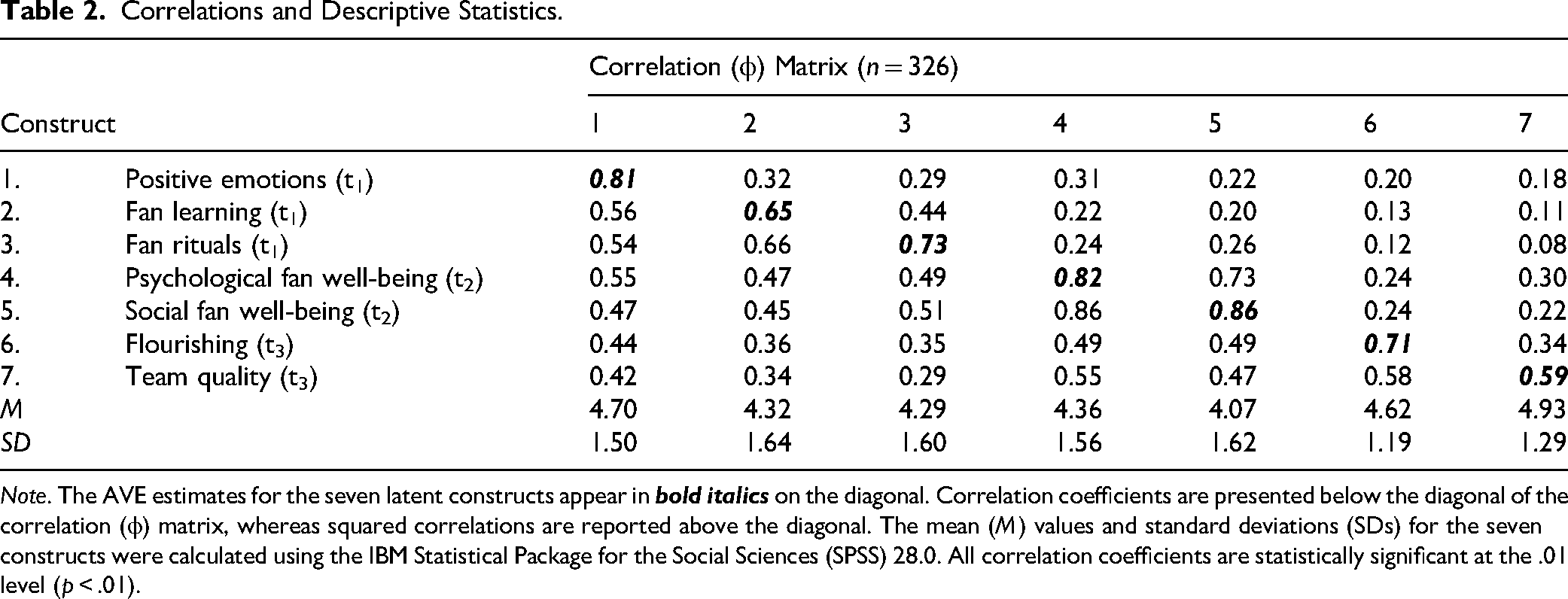
Note. The AVE estimates for the seven latent constructs appear in
Hypothesis Testing
Structural Relationships
Using Mplus 7.31, we next conducted structural equation modeling (SEM) to examine the hypothesized relationships (see Figure 3). The model fit of the hypothesized model was acceptable: χ2/df = 2.45, CFI = 0.91, TLI = 0.90, and RMSEA = 0.069. In hypothesis testing, the results showed the effects of positive emotions (t1) on fan learning (t1: β = 0.59, p < .01) and fan rituals (t1: β = 0.57, p < .01) were positive and significant, in support of H1a and H1b.
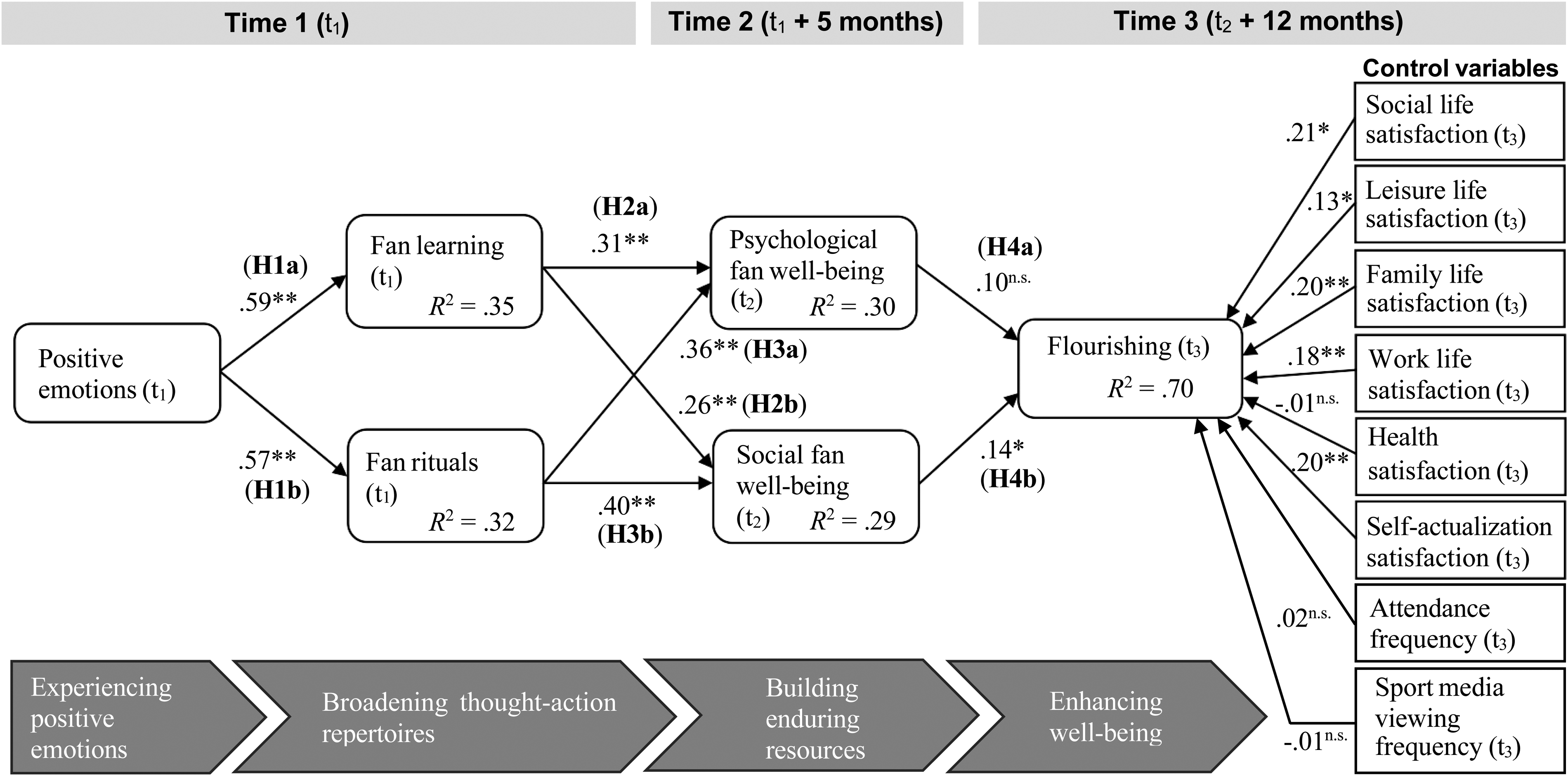
Hypothesis Testing (n = 326).
Moving from Time 1 to Time 2, we found both fan learning (t1) and fan rituals (t1) positively influenced psychological fan well-being (t2: βfan learning = 0.31, p < .01; βfan rituals = 0.36, p < .01) and social fan well-being (t2: βfan learning = 0.26, p < .01; βfan rituals = 0.40, p < .01). Therefore, H2a, H2b, H3a, and H3b were supported. Furthermore, with a time lag of 12 months between Time 2 and Time 3, the effect of social fan well-being (t2) on flourishing (t3) was positive and significant (β = 0.14, p < .05), while the impact of psychological fan well-being (t2) on flourishing (t3) was nonsignificant (β = 0.10, n.s.). Thus, we found support for H4b, but not for H4a.
Moreover, we examined whether including the control variables (six life domain satisfactions, attendance frequency, and sport media viewing frequency) affected flourishing (t3). The results indicated social life (t3: β = 0.21, p < .05), leisure life (t3: β = 0.13, p < .05), family life (t3: β = 0.20, p < .01), work-life (t3: β = 0.18, p < .01), and self-actualization satisfactions (t3: β = 0.20, p < .01) were positively associated with flourishing (t3), whereas the effects of health satisfaction (t3), attendance frequency (t3), and sport media viewing frequency (t3) were not significant. The variations in the endogenous (mediator and outcome) variables were examined by the R2 values. The R2 values for the endogenous variables were 0.35 for fan learning (t1), 0.32 for fan rituals (t1), 0.30 for psychological fan well-being (t2), 0.29 for social fan well-being (t2), and 0.70 for flourishing (t3).
In addition, the hypothesized structural model implies that positive emotions (t1) are indirectly related to flourishing (t3) through several mediating variables. Thus, we tested the sequential relationships using the bootstrapping technique with 5,000 resamples (Preacher & Hayes, 2008; see Table 3). The 95% confidence interval (CI) for the indirect effect of positive emotions (t1) on flourishing (t3) through fan learning (t1) and social fan well-being (t2) did not include zero, suggesting this effect was positive and significant (indirect effect = 0.022, p < .05). Also, significant sequential relationships (indirect effect = 0.032, p < .05) were found between positive emotions (t1), fan rituals (t1), social fan well-being (t2), and flourishing (t3). However, the path from positive emotions (t1) to flourishing (t3) through fan learning (t1) and psychological fan well-being (t2) was not significant. Similarly, the indirect effect of positive emotions (t1) on flourishing (t3) through fan rituals (t1) and psychological fan well-being (t2) did not achieve statistical significance.
Indirect Effects for the Proposed Predictive Model (n = 326).
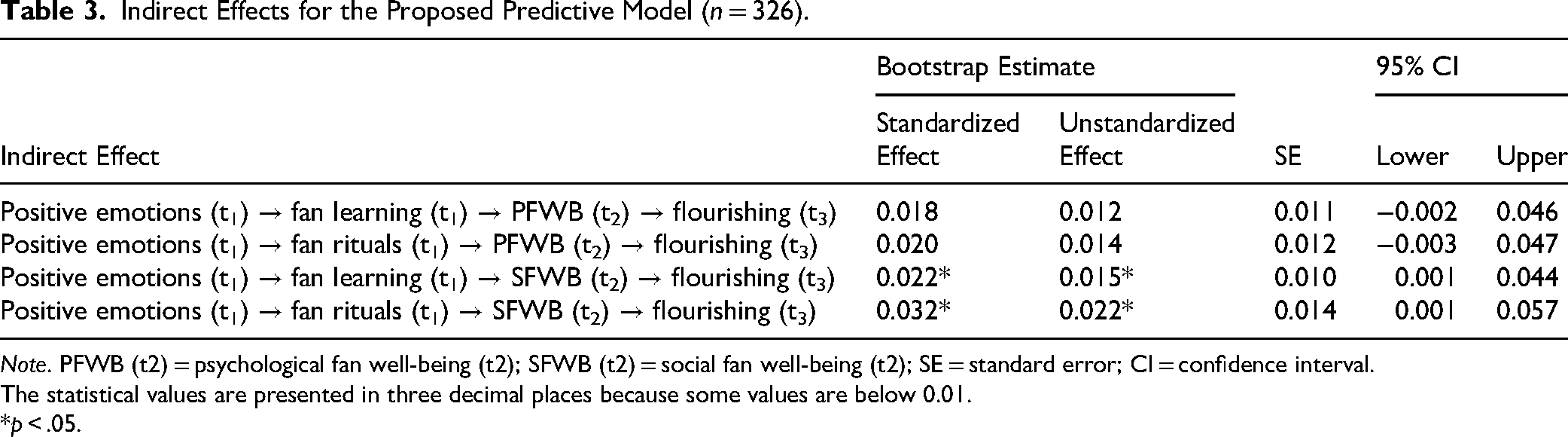
Note. PFWB (t2) = psychological fan well-being (t2); SFWB (t2) = social fan well-being (t2); SE = standard error; CI = confidence interval.
The statistical values are presented in three decimal places because some values are below 0.01.
*p < .05.
Moderating Effect
To test the moderating effect of team quality (t3) on the relationship between psychological fan well-being (t2) and flourishing (t3), we performed a 2 (psychological fan well-being) × 2 (team quality) analysis of variance (ANOVA; see Figure 4). The respondents were classified into low and high levels of psychological fan well-being (t2) and low and high levels of team quality (t3) using a median split (medianpsychological fan well-being = 4.40; medianteam quality = 4.75). A two-way ANOVA revealed that, within the high team quality condition, the respondents with high psychological fan well-being showed higher flourishing (M = 5.43) than those with low psychological fan well-being (M = 4.49; t = 5.48, p < .01). Also, within the low team quality condition, there was a significant difference in flourishing between those who were high (M = 4.36) and low (M = 3.98) in psychological fan well-being (t = 2.25, p < .05; see Figure 4). Most importantly, consistent with H5, the magnitude of increase in flourishing due to psychological fan well-being was greater among those in the high quality condition compared with those in the low quality condition (see Figure 4) because the results demonstrated a significant interaction effect (F[1, 309] = 5.15, p < .05) between psychological fan well-being (t2) and team quality (t3) on flourishing (t3). Overall, we found support for H5.
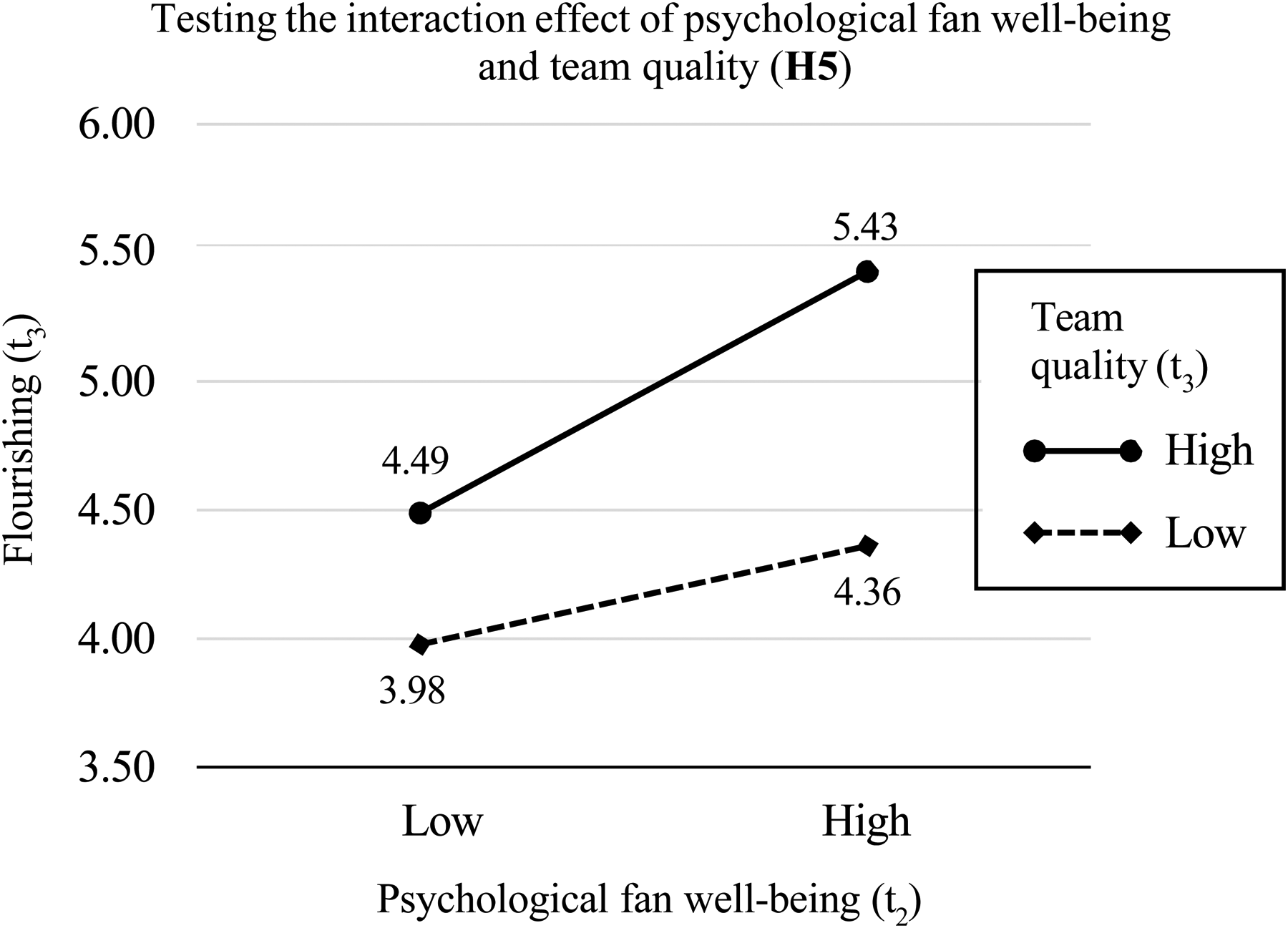
The Moderating Effect of Team Quality on the Relationship Between Psychological Fan Well-Being and Flourishing.
Discussion
Theoretical Implications
We provide several implications that emerge from the findings of this study. First, we advance the bottom-up theory of well-being (Newman et al., 2014) with additional understanding of how sport spectatorship enhances one's flourishing in life. It is well known that spectator sport consumption contributes to a person's well-being through a bottom-up process, from stadium attendance (Inoue et al., 2017), emotional support (Inoue et al., 2017), basic need fulfillment (Kim & James, 2019), sport involvement (Su et al., 2022), and team identification (Oh et al., 2022; Sato et al., 2023) to short-term hedonic well-being outcomes, such as positive affect (Kim & James, 2019), life satisfaction (Inoue et al., 2017; Oh et al., 2022), subjective happiness (Jang et al., 2017; Sato et al., 2023), and hope (Su et al., 2022). However, only a handful of studies have offered evidence for a bottom-up process of sport spectatorship for facilitating long-term positive functioning (Delia et al., 2022; Oshimi & Kinoshita, 2022; Wann, Hackathorn, & Sherman, 2017).
Based on an analysis of three-wave panel data, this predictive study verified a bottom-up process of how positive emotions induced by sport spectatorship were sequentially related to future flourishing over time, first through broadening cognitive (fan learning) and behavioral (fan rituals) repertoires and then through building enduring social resources (social fan well-being). This result is important because it sheds light on the mediating roles of thought–action repertoires and enduring resources. Although scholars have recently applied the bottom-up theory of well-being (Newman et al., 2014) to fan well-being research, evidence has been established by examining the bottom-up effects of team identification (Sato et al., 2023), fan engagement behavior (Yoshida et al., 2024), event impacts (Kinoshita et al., 2024), and sport-specific well-being (Oshimi & Kinoshita, 2022). This study presents a holistic understanding of why (positive emotions) and how (upward spirals) sport spectatorship is linked to the long-term aspect of well-being (flourishing) and identifies the specific conditions (high- versus low-quality team conditions) under which fans flourish through sport spectatorship. From a theoretical standpoint, this study improves the bottom-up theory of well-being (Newman et al., 2014) with two thought–action repertoires namely, fan learning and fan rituals, in the spectator sport context. Our research also advances broaden-and-build theory (Fredrickson, 2001) by adding team quality as a moderating variable in the bottom-up process from context-specific fan well-being to global well-being. Overall, our findings offer more comprehensive insights into a bottom-up approach to flourishing by studying sport-related predictor, mediator, and moderator variables.
Second, we extend previous research (e.g., Delia et al., 2022; Doyle et al., 2016; Oshimi & Kinoshita, 2022; Wann, Hackathorn, & Sherman, 2017) by identifying a specific route for enhancing flourishing through spectator sport consumption. Our results demonstrated that positive emotions were positively associated with fan learning and fan rituals, which had indirect effects on future flourishing through social fan well-being. These findings are consistent with broaden-and-build theory that suggests positive emotions elicited by enjoyable activities trigger upward spirals toward well-being by broadening and building one's thoughts, actions, and resources (Fredrickson, 2001; Fredrickson & Cohn, 2008). This explanation supports the notion that sport spectatorship acts as a happiness-enhancing practice and produces lasting boosts in global well-being because it enables individuals to develop enduring psychological mechanisms, such as mastery, meaning, autonomy, detachment-relaxation, and affiliation (social relationships) in the spectator sport context (Hu et al., 2021; Newman et al., 2014).
Third, while previous studies applied broaden-and-build theory (Fredrickson, 2001) to active sport participation (Roslan & Cho, 2024) and athlete experiences (Thompson et al., 2021), we extend this theory to passive spectator sport consumption by incorporating fan learning and fan rituals as thought–action repertoires relevant to sport fans. Among active sport participants, willingness to explore novel behavior (Roslan & Cho, 2024) and task-oriented coping (Thompson et al., 2021) serve as thought–action repertoires that are positively associated with resilience and well-being. In our hypothesis testing, both fan learning and fan rituals positively predicted the two types of psychological and social fan well-being. Thus, fan learning and fan rituals as thought–action repertoires in passive sport spectatorship are more useful than the existing constructs (e.g., willingness to explore novel behavior and task-oriented coping) in explaining context-specific fan well-being. In addition, our findings further highlight the important mediating role of fans’ social resources (social fan well-being) in the relationship between thought–action repertoires and flourishing in passive spectator sport consumption. Engaging in fan experiences in a short-term period is not enough to produce lasting boosts in flourishing. Social fan well-being as an enduring resource is a significant predictor of future flourishing. Using this implication, researchers can further develop and test a bottom-up process of promoting flourishing through building social resources derived not only from social well-being, but also from social capital (Putnam, 2000), prosocial behavior (Penner et al., 2005), and social support (Norris & Kaniasty, 1996) in spectator sport.
Fourth, this study contributes to fan well-being research by clarifying a specific condition under which individuals are more likely to flourish by consuming spectator sport products. Our moderator analysis showed that the impact of psychological fan well-being on future flourishing was contingent on the athletic quality of sport teams. This indicates the positive effect of psychological fan well-being on flourishing is stronger for those who highly evaluate their team's quality than those who do not. This finding offers a new explanation grounded in social identity theory (Tajfel & Turner, 1986) and the social identity approach to health and well-being (Jetten et al., 2017). According to these theories, individuals who belong to a superior social group are more likely to have higher levels of self-esteem (Tajfel & Turner, 1986) and increase their well-being by tackling collective challenges that facilitate social support among in-group members (Haslam et al., 2009; Jetten et al., 2017).
In spectator sport, successful sport teams attract more fans, providing them with opportunities to give and receive social support in fan communities, such as positively interacting with each other and participating in cheering activities at stadiums (Inoue et al., 2015; Yoshida et al., 2023). Given that team quality represents the collective benefit of sport teams’ athletic characteristics (Greenwell et al., 2002; Yoshida et al., 2023) and facilitates social support among fans (Inoue et al., 2015), it seems reasonable to conclude that team quality strengthens the impact of psychological fan well-being on flourishing. This study is an extension of previous fan well-being research (Delia et al., 2022; Doyle et al., 2016; Inoue et al., 2017; Kim et al., 2017; Oh et al., 2022; Oshimi & Kinoshita, 2022; Wann, Hackathorn, & Sherman, 2017) because, in those studies, the moderating impact of team quality was not examined.
Fifth, this study is unique because it incorporated sport-specific thought–action repertoires and enduring resources in broaden-and-build theory (Fredrickson, 2001). Past studies have used broaden-and-build theory to explain why positive emotions induced by sport spectatorship facilitate fan-to-fan social relationships and promote individuals’ overall well-being (Cho & Chiu, 2024; Kim et al., 2019). The current study reinforces these results by illustrating team-related positive emotions help fans flourish in life first through broadening sport-specific thought–action repertoires (i.e., fan learning and rituals), and then through developing social fan well-being as an enduring resource. In this respect, this study advances broaden-and-build theory in the spectator sport context by generating new theoretical knowledge on the larger picture of how positive emotions induced by spectator sport consumption initiate upward spirals toward flourishing through sport-specific meditator variables.
Finally, although the direct effect of psychological fan well-being (t2) on flourishing (t3) was insignificant, this result was not surprising. One possible explanation is psychological fan well-being is less durable than social fan well-being because some aspects of psychological fan well-being, such as self-esteem and vicarious achievement, align with their favorite teams’ on-field performance (Trail et al., 2012) and fluctuate due to seasonal changes in win/loss records and playoff appearances (Wann, Grieve et al., 2017). Social fan well-being, on the other hand, is more stable than psychological fan well-being because fans feel a strong sense of belonging to their fan community when attending games regardless of their teams’ athletic performance (Koenigstorfer et al., 2010). Therefore, our results and previous findings lead us to believe social fan well-being acts as an enduring resource to enhance fans’ future flourishing, while psychological fan well-being does not serve as a stable psychological resource from season to season, but is useful primarily for those who follow winning sport teams during a successful era.
Managerial Implications
Some managerial implications can be derived from our results. First, this study highlights the importance of positive emotions in broadening fans’ thought–action repertoires. At spectator sport events, event promotions such as music, scoreboard information, mascots, and event announcers’ speech induce positive emotions (e.g., joy, interest, and pleasure) in the attendees and prompt them to engage in fan learning and rituals. In this regard, event promotions are effective not only for increasing fan satisfaction and loyalty, but also for stimulating upward spirals toward resource development (e.g., psychological and social fan well-being) and ultimately toward human flourishing through sport spectatorship. This view allows sport teams to account for how their spectator sport products result in better outcomes for individuals’ lives and contribute to the United Nations’ (2015) Sustainable Development Goal 3: good health and well-being.
This study also underscores the practical significance of fan learning and rituals in facilitating individuals’ well-being. Based on the results, we suggest sport teams should provide fan engagement initiatives to promote fan learning and rituals and eventually to help their fans flourish in life. The key fan engagement initiatives that might be effective are informative and social initiatives (Yoshida et al., 2024). Examples of informative fan engagement initiatives include mobile news content, game statistics, on-field performance monitoring systems, and quizzes projected on digital screens. Social fan engagement initiatives reflect fan-to-fan interactions such as intimate social gathering spaces inside and around stadiums, communal fan practices (e.g., chanting and singing), and fan sharing activities on social media (Yoshida et al., 2024). In particular, the nonsignificant effect of psychological fan well-being on flourishing shed light on the social aspect of fan well-being which was found to be a significant predictor of flourishing. As evidenced by our SEM results, focusing more on building social connections among fans rather than psychological well-being associated with athletic excellence is of paramount importance in promoting human flourishing among those who follow not only successful teams, but also unsuccessful ones. If the goal is to foster future flourishing, practitioners should focus on relationship building among fans versus psychological resource building (e.g., self-esteem, hope, and resilience) among winning and nonwinning teams alike. Our findings reinforce the importance of these initiatives because of their relevance to fans’ cognitive and behavioral repertoires.
Limitations and Future Directions
Several limitations may have affected our results. First, this predictive research was conducted in the professional baseball context. Thus, future research should examine the proposed relationships in other spectator sport contexts. For example, our results and theoretical implications apply to fans of other spectator sport events, such as both men's and women's football, basketball, and individual sport (e.g., tennis and golf). It would be interesting to replicate the findings of this study, including the moderating effect of athletic quality in other spectator sport settings. Also, some subjectivity was involved in our survey items. For instance, several items to measure fan rituals (e.g., I decorate [or paint] any part of my body with team colors) might not be easy to evaluate for those who did not actively participate in symbolic fan activities. Future research should continue to refine the instrument for more common forms of fan rituals by excluding subtle or less overt rituals (e.g., private routines or behaviors occurring outside visible group contexts). Further improvement is warranted to reflect the essential elements of fan rituals and enhance the construct validity of this scale.
Second, we omitted additional factors associated with our predictive model. For instance, although we considered context-specific fan well-being an enduring resource, we did not investigate other forms of resources, such as intellectual, psychological, and social capital (Bontis, 1998; Luthans et al., 2007; Putnam, 2000). Moreover, we did not examine other long-lasting well-being outcomes, such as psychological well-being (Ryff, 1989), eudaimonic well-being (Waterman et al., 2010), and meaning in life (Steger et al., 2006). Thus, future research should include these constructs in an upward spiral process of positive emotions.
Third, although we employed a predictive research design using three-wave panel data, it is important to recognize fans’ sport consumption experiences are cumulative, include their old memories and habits, making it difficult to definitively determine the extent to which recent experiences induce positive emotions and initiate upward spirals. Broaden-and-build theory (Fredrickson, 2001; Fredrickson & Cohn, 2008) illustrates a recursive path from well-being to positive emotions, suggesting the relationships examined in this study will operate in a recursive process. In other words, the upward spirals triggered by positive emotions are seen as a recursive loop that is not a temporary process to produce momentary happiness, but repeatedly generates positive emotions in life and updates personal growth over time. Building from the findings with the three-wave panel data, a suggestion for future work is to conduct longitudinal research that repeatedly measures fans’ positive emotions, thought–action repertoires, enduring resources, and well-being over longer time periods to examine the recursive relationships between these constructs as well as address the chronological order of upward spirals in the spectator sport context.
Fourth, we did not conduct experimental research to establish cause-and-effect relationships. Therefore, we suggest that future research examines how positive emotions trigger upward spirals toward flourishing with or without spectator sport consumption. Future research should also address how thought–action repertoires, enduring resources, and flourishing will change between the pre- and posttests of the experimental (spectator sport consumption) and control groups at each stage of broaden-and-build theory.
Fifth, we operationalized team quality at Time 3. This is because we anticipated the predictive effect of psychological fan well-being at Time 2 on future flourishing at Time 3 might be amplified by end-of-year team quality at Time 3. However, it is also possible both end-of-year team quality and psychological fan well-being at Time 2 jointly predict future flourishing at Time 3. Therefore, the impact of team quality on the upward spiral dynamics needs further analysis to establish a cause-and-effect relationship over time.
Finally, the Time 1 respondents who did not fill out the questionnaire at Times 2 and 3 (n = 575) were not included in our final data set. The retention of these individuals may have led to different results. We could not exclude the possibility that some respondents were not available at Times 2 and 3 because they quit working as research panel members after Time 1. Also, the respondents were asked to complete each of the three surveys in three days (i.e., Friday, Saturday, and Sunday). Specifically, it was unknown whether individuals who were busy in the three-day period at Times 2 and 3 were able to participate in the second and third surveys. Future research may benefit from considering the length of time intervals between longitudinal waves as well as the length of time in each wave of data collection.
Conclusion
This study is one of the first attempts to examine the upward spiral dynamics of broaden-and-build theory using three-wave panel data. In summary, two major findings emerged. First, fan learning and fan rituals (thought–action repertoires) and social fan well-being (social resources) played significant mediating roles in upward spirals toward flourishing. Second, sport team quality moderated the relationship between psychological fan well-being (psychological resources) and flourishing. Our findings suggest that, in addition to the effects of team-related positive emotions, thought–action repertoires, and enduring resources, the joint impact of enduring resources and team quality is crucial for predicting flourishing over time. Our theoretical explanations and empirical results provide clarity to guide future research on a bottom-up approach to enhancing flourishing through sport spectatorship.
Footnotes

Funding
The authors disclosed receipt of the following financial support for the research, authorship, and/or publication of this article: This study was supported bythe Japan Society for the Promotion of Science (Grant No. 20K11371). Also, this paper is an outcome of the 2024 Hosei University Visiting Scholar Program.
Declaration of Conflicting Interests
The authors declared no potential conflicts of interest with respect to the research, authorship, and/or publication of this article.