




Abstract
Studies on place image have predominantly focused on the tourists’ destination image and have given limited attention to other stakeholders’ perspectives. This study aims to address this gap by focusing on the notion of residents’ place image, whereby it reviews existing literature on residents’ place image in terms of whether common attributes can be identified, and examines the role of community-focused attributes in its measurement. Data collected from a sample of 481 Kavala residents (Greece) were subjected to exploratory and confirmatory factor analysis. The study reveals that the existing measurement tools have typically emphasized destination-focused attributes and neglected community-focused attributes. This study contributes to the residents’ place image research by proposing a more holistic measurement, which consisted of four dimensions: physical appearance, community services, social environment, and entertainment opportunities. The study also offers practical insights for developing and promoting a tourist place while simultaneously enhancing its residents’ quality of life.
Introduction
Place marketing has rapidly risen in popularity and is widely practiced today on various scales ranging from the local and neighborhood to the national (Kavaratzis and Ashworth 2008). A pivotal concept underpinning place marketing research is place image (Elliot, Papadopoulos, and Kim 2011), which refers to the mental pictures or perspectives that people hold of a place (Kotler, Haider, and Rein 1993). Place image is pertinent for various reasons, such as attracting tourists and highly skilled employees, encouraging government officials and investors to fund and develop, as well as promoting self-confidence and civic pride among local residents (Bramwell and Rawding 1996; Kavaratzis and Ashworth 2005). In the context of tourism, studies of place image have commonly examined the notion of tourism destination image (e.g., Andrades-Caldito, Sanchez-Rivero, and Pulido-Fernandez 2013; Prayag and Ryan 2012), which has been documented to significantly influence people’s choice, experience, and behavior associated with a tourist place (Chen and Phou 2013; Lin et al. 2007; Qu, Kim, and Im 2011).
As such, tourism studies on place image have typically focused on tourists as the core unit of analysis, that is, examining the images held by tourists (e.g., Stepchenkova and Li 2013; Sun, Ryan, and Pan, 2015). A possible explanation for the main attention being focusing on tourists is that these stakeholders are the ones who generate the livelihood and stimulate other economic activities for a tourist place, and thus their perceptions and experiences are frequently researched to facilitate development and marketing (Goeldner and Ritchie 2009). However, in addition to tourists, other stakeholders vital to the development and preservation of a tourist place exist, and their perspectives are equally insightful for development and marketing activities (Hall 2008; Sautter and Leisen 1999). Yet, the perspectives of these other stakeholders, such as local residents, are underrepresented in the existing literature of place image. Local residents, unlike tourists, are inclined to have a complex interpretation of a tourist place because it serves as more than a holiday destination. It is also a communal or social place where they live and work (Hudson 1988). To its local residents, a tourist place is the “commercial center” where they earn a living, the “nest” where they bring up their family, and the “social hub” where they network or bond with other members of the community. Hence, the local residents’ image of a tourist place can be complex and multifaceted, and an examination of this stakeholder’s image can provide the “local knowledge” that facilitates the development and marketing activities of the tourist place while at the same time sustaining and improving residents’ quality of life (Andereck and Nyaupane 2011; Elliot, Papadopoulos, and Kim 2011).
Moreover, the residents’ support is a key ingredient to the successful development and marketing initiatives of a tourist place (Stylidis and Terzidou 2014; Nunkoo and Gursoy 2012). Thus, since the development of a tourist place has a significant impact on the local residents’ living and working conditions, an examination of this stakeholder’s image can serve as a strategic framework to explore their level of support and/or address any resentment they may have towards any development project (Schroeder 1996; Snaith and Haley 1999). Prompt actions for addressing local residents’ negative images can have many benefits. Such as, for example, mitigating negative feelings and behaviors (e.g., declining civic pride and place attachment), supporting a tourist place’s efforts in preserving its current population (Avraham 2004), and attracting new residents and tourists (Ward 1998). These benefits represent key success factors for an emerging tourist place.
Additionally, understanding residents’ place image is insightful considering their role as destination ambassadors to nonresidents (Hudson and Hawkins 2006; Leisen 2001; Schroeder 1996), influencing tourists’ destination image, travel decision making, and on-site experience (e.g., Gallarza, Saura, and Garcia 2002; Walls, Shani, and Rompf 2008). Local residents, in particular, serve as informants who can recommend attractions and facilities to visiting tourists and/or friends and relatives, because of their level of familiarity with the destination (Gitelson and Kerstetter 1994; Shani and Uriely 2012). They sometimes also act as salespersons who share stories or narratives regarding their hometown’s attractions with other people, during their travels abroad (Schroeder 1996). Campelo et al. (2014), among others, highlighted the importance of incorporating residents’ images into the branding and marketing strategy, because this stakeholder group may have the “local knowledge” on how to enhance tourists’ experience.
Despite the notable contribution of residents in tourism development and marketing discussed above, the vast majority of place image studies hitherto have predominantly focused on examining tourists’ perceptions, without considering the perspectives of other stakeholders such as local residents. Thus far, only a handful of studies have investigated local residents’ place image, and in this attempt they have adopted measurement tools that were principally developed for the tourists (e.g., Henkel et al. 2006; Schroeder 1996; Stylidis, Belhassen, and Shani, 2015). As such, none of these studies has precisely captured the local residents’ perspectives, as will be discussed in the next section. As a result, current knowledge regarding the place image of a tourist destination held by other stakeholders, and especially local residents, remains scarce and thus urgently requires more examination as the measurement of place image hitherto is seemingly incomplete and inconsistent.
This study aims to contribute to the body of research on place image by clarifying the nature and consistency of its inherent dimensions from the local residents’ perspective and in relation to an emerging tourist place. Rather than constructing a new scale, this study builds on the existing measurement of place image by synthesizing community attributes drawn from community satisfaction literature with destination attributes. This synthesis approach captures the local residents’ multifaceted perceptions of a tourist place, that is, as a community where they live and work, as well as a tourist destination where holiday makers patronize (Shani and Wang 2011). This study seeks to advance current theoretical knowledge on place image in relation to tourism marketing and management, and offer practical insights for developing a tourist destination and at the same time enhancing residents’ quality of life.
Literature Review: Resident Place Image
The rationale of this study draws on the stakeholder theory, which recognizes the existence and importance of various stakeholders and their needs in relation to tourism planning and sustainable development (Murphy 1985). Freeman (1984) describes a stakeholder as “any group or individual in an organization who can affect or is affected by the achievement of the organization’s objectives” (p. 46). In the tourism context, key stakeholders include tourists, tourism business operators (e.g., travel agencies), the local council of a tourist destination, as well as local residents (Goeldner and Ritchie 2009; Kotler, Haider, and Rein 1993). Stakeholder theory has been largely adopted in the tourism literature, with studies exploring stakeholders’ attitudes towards tourism development (e.g., Byrd, Bosley, and Dronberger 2009), collaboration in tourism policy and planning (e.g., Bramwell and Sharman 1999), and collaboration in tourism marketing (e.g., D’Angella and Go 2009).
While the stakeholder theory emphasizes the need to consider the perspectives of all stakeholders that are critical for the planning and development of tourism, previous tourism studies have typically focused on tourists’ place image and have given limited attention to the local residents’ image. Consequently, the “destination image” concept appears to dominate the literature with a proliferation of studies investigating tourists’ destination image and its impact on tourist behavior and experience with regard to holiday destinations (e.g., Assaker and Hallak 2013; Chen, Lin, and Petrick 2013; Lee, Lee, and Lee 2014; Papadimitriou, Apostolopoulou, and Kaplanidou, 2015; Prayag and Ryan 2012). On the contrary, only a handful of studies (e.g., Alhemoud and Armstrong 1996; Henkel et al. 2006; Schroeder 1996; Stylidis, Belhassen, and Shani, 2015) have examined the local residents’ image of a tourist place, where they actually live and work. The lack of research attention on this place image domain is surprising as destination managers increasingly realize the significant role that local residents play in the promotion and sustainable development of tourism (Hudson and Ritchie 2002), and thus there are calls for engaging or involving the local residents more in the promotional and development activities of a tourist place (Whitehead 1997).
Among the few available studies, those that have compared the images that local residents and tourists hold of a tourist place revealed different perceptions between these two stakeholder groups. The first study on residents’ place image appears to be by Sternquist-Witter (1985), who compared the destination image of Traverse City, Michigan, between local retailers and tourists. This study indicated that local retailers assessed the destination place more favorably than visitors with regard to six attributes (out of ten). The finding that residents held more positive images of the destination than tourists was explained by the “proud parent syndrome.” In a different study, in the context of Kuwait, Alhemoud and Armstrong (1996) found that Kuwaiti residents and Western visitors held different evaluations of its attractions. The former group, in particular, displayed a more positive evaluation of manufactured attractions (e.g., Kuwait Towers), whereas the latter group showed a greater interest in cultural attractions (e.g., Kuwaiti cultural dance). A possible explanation for this finding is that the cultural attractions were more unique and exciting for the Western visitors, whereas the locals were more familiar and thus less stimulated by them. Similarly, Henkel et al. (2006) reported that Thai residents appreciated different aspects of Thailand (e.g., friendly locals) than the international tourists (e.g., nightlife, exoticism). These results suggest that perceived uniqueness can be an inherent facet of local residents’ place image. The study of Stylidis, Belhassen, and Shani (2015) provides a starting point for examining the place image perspectives of tourists, local residents, and the local tourism sector simultaneously. In the context of Eilat (a resort town in Israel), Stylidis, Belhassen, and Shani (2015) identified that those three stakeholders were not unanimous with regard to their place images, whereby their evaluation significantly varied on 27 out of 30 place image attributes examined.
Instead of comparing the place image between tourists and local residents, other studies opted to examine the role of place image in affecting residents’ behavior. Focusing on local residents only, Schroeder (1996) examined the interrelationships of residents’ image of North Dakota as a tourist destination, with their support for tourism development and their travel behavior. His findings indicated that local residents who displayed a more favorable image of North Dakota demonstrated a higher level of support for tourism (e.g., funding for tourism development and promotion) as well as more positive behaviors, such as the intention to recommend the destination to others and travel within the region. Equally Bigne, Sanchez, and Sanz (2005) reported a positive relationship between residents’ place image and future behavioral intentions (e.g., intention to recommend the place to others). Finally, in the context of place marketing, Bandyopadyay and Morrais (2005) examined the difference between residents’ image of India and the image marketed to tourists and noted that a dissonance between the external representation of the destination and the place image held by the local community can lead to resentment toward the tourism industry.
In brief, these aforementioned studies consistently indicate, first, that place image can significantly influence residents’ attitudes towards tourism and, second, that local residents hold dissimilar mental images of a tourist place as compared with other stakeholder groups, such as tourists. This image incongruity is a key insight to the local council and tourism authorities as, if not addressed promptly, it can lead to conflicts between the two parties and result in a lack of residents’ support for tourism development and/or resentment towards tourists (Bandyopadyay and Morrais 2005; Henkel et al. 2006; Michaelidou et al. 2013; Schroeder 1996).
Measuring Residents’ Place Image
The nature and number of attributes used to measure residents’ place image vary greatly in the body of research on this concept, suggesting not only its complexity but also a lack of consensus on its measurement (see Table 1). Therefore, similar to tourist image research, those previous results are “hard to compare and generalizations are few, as the conceptualization, and operationalization of the construct has been problematic” (Deslandes et al. 2006, p. 144).
Place Attributes Used in the Measurement of Residents’ Place Image.
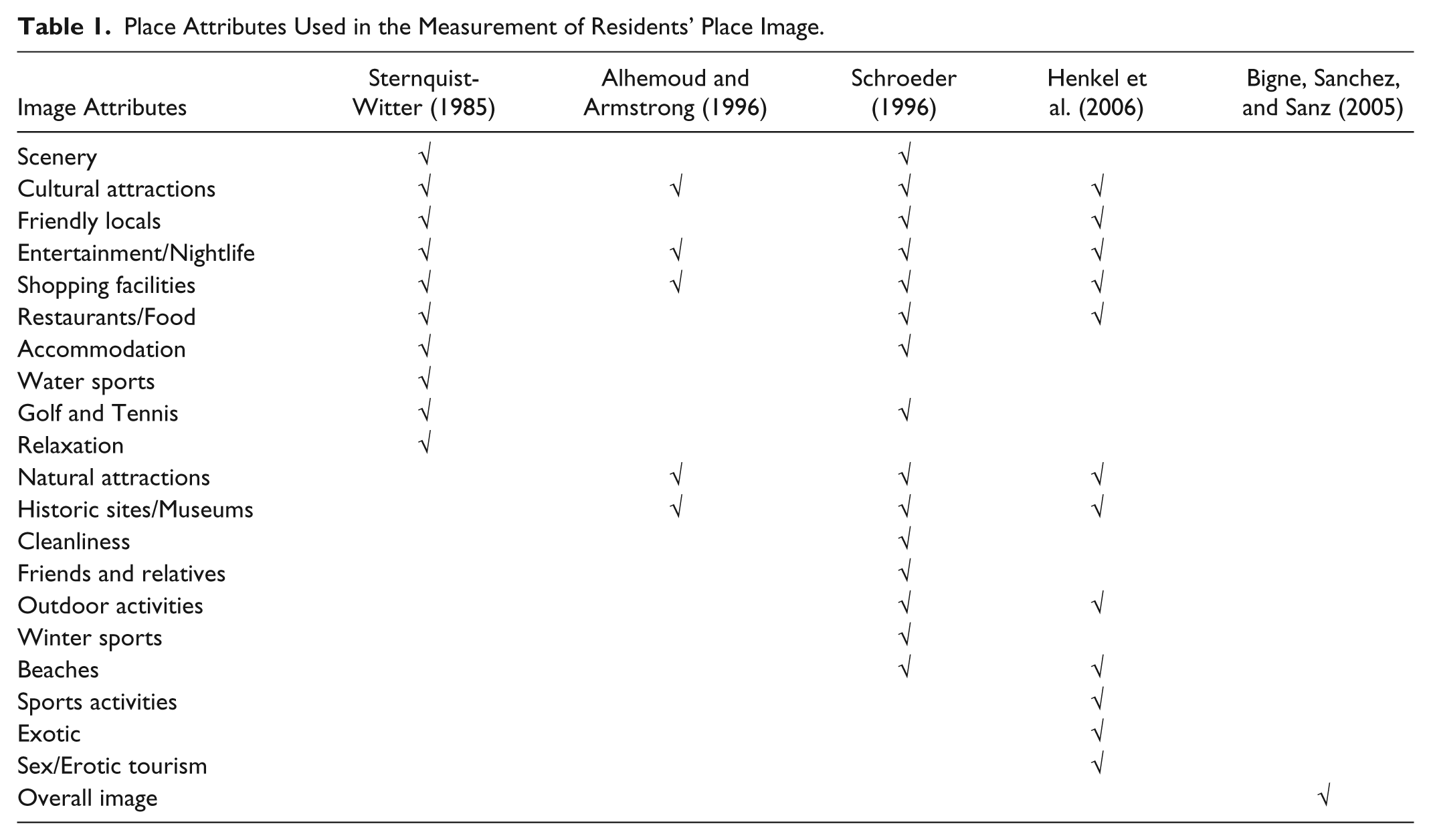
Practically, it is notable that the place attributes utilized across those aforementioned studies are largely identical to those used in tourist destination image research (e.g., Beerli and Martin 2004; Echtner and Ritchie 1991; Prayag 2009). These attributes generally cover two of the four components of a tourist place as described by Cooper et al. (2008, pp. 105-7), namely attractions and amenities, but tend to neglect other aspects, those of access and ancillary services. Previous research on residents’ place image has commonly employed the attributes originally compiled for the tourists, with little modification to reflect the perspectives of the local residents. Sternquist-Witter (1985), for example, adopted Goodrich’s (1978) tourist image scale, and Henkel et al. (2006) used Echtner and Ritchie’s (1991) measurement tool. This straight adoption of the existing measurement of place image developed for tourists overlooks the multifunctional and “daily life world” nature of the place for residents (Green 2005, p. 37), not simply as a tourist place or a holiday destination but also a communal area where they live and work (Hudson 1988). Residents, as such, possess a more complex image that covers the whole spectrum of the place, whereas tourists’ images are unlikely to go beyond generalities (Reiser and Crispin 2009). Hence, the local residents’ image of a tourist place can be more challenging to decipher, as compared with other stakeholders, such as tourists, because of their complex relationships with the place.
The current study will advance the residents’ place image research in two main ways: (1) by addressing the inconsistency in the existing measurement of residents’ place image, particularly in relation to its operational dimensions and attributes, and (2) by verifying the importance of synthesizing both destination/tourism and community attributes to create a more holistic measurement of residents’ place image. The urgency for addressing these knowledge gaps is supported by Mill and Morrison (2009) who assert that tourist places put their uniqueness in danger if they tailor their resources or cater exclusively to tourists’ needs. Similarly, Kotler, Haider, and Rein (1993) advocate that place marketing succeeds not only when it meets the expectations of visitors and investors but also when residents and businesses are pleased with the welfare of their communities.
To capture local residents’ complex perceptions of a tourist place (as a tourist destination as well as a communal setting where they live and work), the community satisfaction literature was reviewed to identify not only destination-specific attributes but also community-specific attributes (see Table 2). Community satisfaction refers to an individual’s satisfaction with the place (i.e., city) in which one resides. In this literature domain, community-related attributes, which associate with Cooper and colleagues’ (2008) access and ancillary services, have been identified as a contributing factor of local residents’ impression or evaluation of their local community (e.g., Grillo, Teixeira, and Wilson 2010; Grzeskowiak, Sirgy, and Widgery 2003; Sirgy, Gao, and Young 2008). These attributes—generally underrepresented in tourists’ image research as they are considered of less significance for the tourists—include the local council and its services (e.g., McCrea, Stimson, and Western 2005; Sofranko and Fliegel 1984), job availability (Sirgy, Gao, and Young 2008; Turkoglu et al. 2006), and transportation (Grzeskowiak, Sirgy, and Widgery 2003; McCrea, Stimson, and Western 2005).
Place Attributes a Used in the Measurement of Residents’ Community Satisfaction.
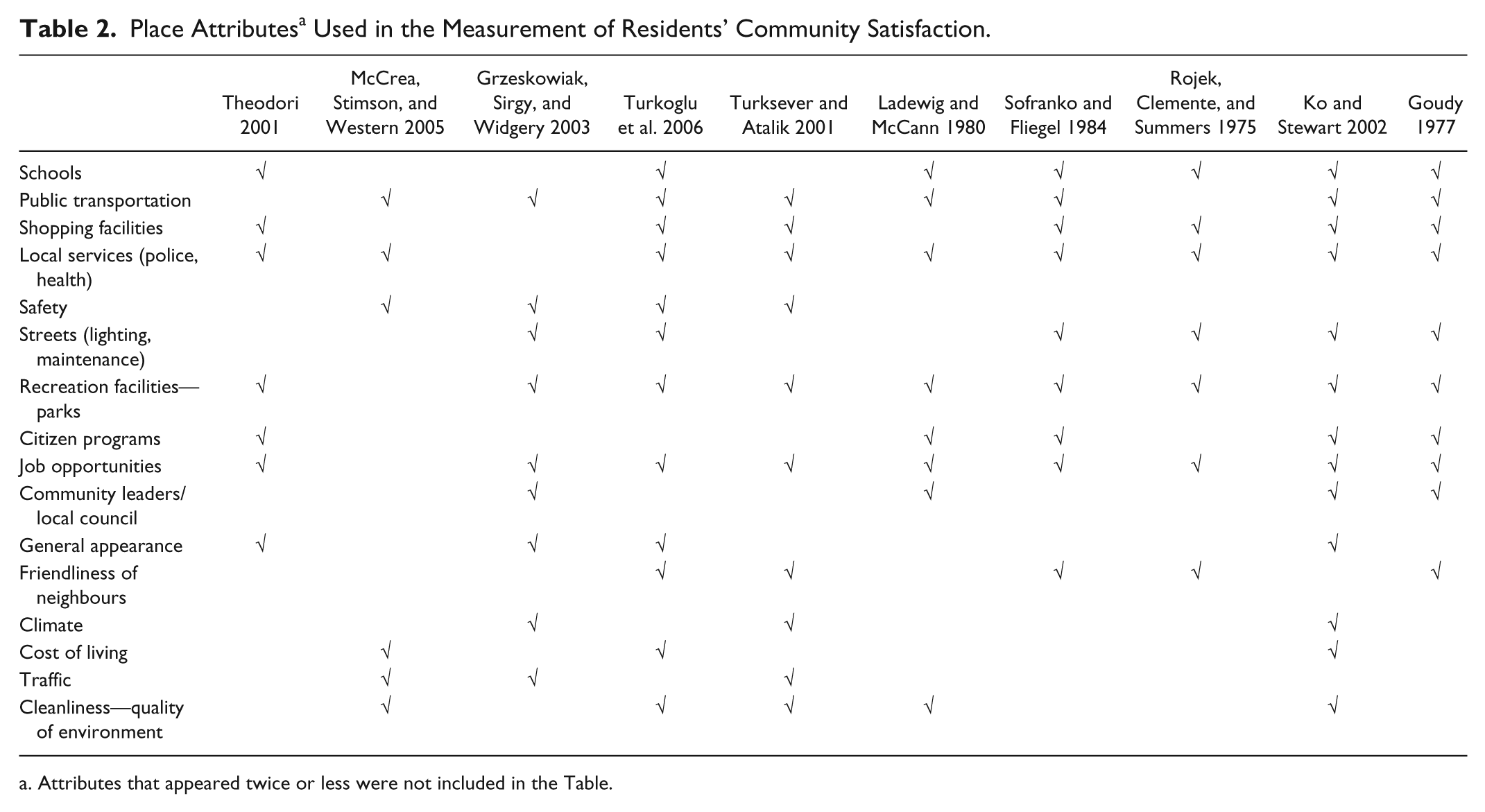
Attributes that appeared twice or less were not included in the Table.
Studies in community satisfaction highlight several factors that are potentially essential for understanding and measuring residents’ place image. Ladewig and McCann (1980), for instance, utilized 20 place attributes and identified three main factors that rural residents applied to evaluate the quality of country life. These factors related to local services, political efficacy (e.g., local government), and accessibility (e.g., transportation, jobs) to represent residents’ community evaluation. Two studies by Sirgy et al. (2000) and Sirgy, Gao, and Young (2008) have consistently identified that local residents place great emphasis on three types of communal services, namely, government services (e.g., transportation, public safety, recreation facilities), leisure services (e.g., retailers, shopping), and nonprofit services (e.g., support services, cultural/recreation services, job availability). In another study, Vogt, Allen, and Cordes (2003) found that the local residents were typically concerned about community amenities, such as retail shopping, local government services, transportation services, and recreational facilities.
To sum up, there has been limited attention on local residents as the unit of analysis among place-image studies as they have predominantly focused on tourists. Those few studies that have examined local residents’ place image propose several attributes that are important for measuring this construct; however, those attributes are varied and somewhat inconsistent. Furthermore, those suggested attributes have usually not included the relevance of community-oriented attributes for measuring place image, which are highly valued by the local residents as their relationships with a tourist place are more complex and multifaceted as compared with tourists. That is, local residents conceive a tourist place more than just a holiday destination, but also a communal and economic hub where they live and work. Therefore, this article aims to contribute to the body of research on place image by incorporating the communal attributes into the existing measurement in order to more holistically capture the local residents’ perceptions of a tourist place. This process will also enable the identification of the common attributes that constitute the residents’ place image and reflect the partial applicability of the existing measurement when community-related attributes are excluded. Community and destination attributes are not mutually exclusive but collectively underpin the measurement of local residents’ image, especially for an emerging tourist destination.
Study Method
Setting and Sample
Kavala, a city in Northern Greece, was the tourist destination of interest in this study. The history of Kavala dates back to the seventh century
The target sample of this study involved Kavala’s permanent residents (more than one year residency) who were aged 18 years and older. Participants were recruited via multistage cluster sampling because (1) a sampling frame detailing the contact details of all permanent residents in Kavala was not readily available, and (2) the recruitment of permanent residents from various suburbs is crucial in providing a balanced representation of the target sample (see McGehee and Andereck 2004; Woosnam and Norman 2010). The process of the multistage cluster sampling commenced with clustering residential addresses by postcodes, based on the post office list. Five clusters of postcodes were developed to represent five key districts of Kavala and to embrace differences in resident characteristics (e.g., higher concentration of older retirees in the historical district) (Lin et al. 2007). In the second stage, a list detailing the street names of the five districts was constructed, and then 10 street names were randomly selected from each district. This process generated a total of 50 (5 × 10) street names. Using the street names list, households were randomly approached and invited to participate in the study (see Woosnam and Norman 2010). The data were collected between October and November of 2009, rotating between morning and evening as well as weekdays and weekends in order to mitigate sampling bias (Bonn, Joseph and Dai 2005).
A self-completed survey was personally delivered by one of the authors, and only one resident at each household was invited to complete the survey to mitigate multiple similar views from the same household (Andriotis 2005). The researcher waited onsite and personally collected the completed survey. A total of 977 houses were visited; 650 households were at home during the visit, and 500 residents agreed and completed the survey. Finally, 481 fully completed questionnaires were retained for data analysis. This resulted in a 74% response rate (counting those who were at home but refused to participate). This favorable response rate can be attributed to the face-to-face invitation during the data collection process (Czaja and Blair 2005).
Research Instrument
The survey used consisted of two sections, wherein the first section measured residents’ place image with multiple attributes; and the second section focused on respondents’ demographic characteristics (e.g., gender, age, and annual income).
The measurement of place image is diverse and complex, because it greatly hinges upon the nature of the tourist place under investigation (Beerli and Martin 2004; Chen, Lin, and Petrick 2013). As a result, the list of attributes operationalizing place image has been wide-ranging and varied in the existing literature (e.g., Andrades-Caldito, Sanchez-Rivero, and Pulido-Fernandez 2013; Chen and Tsai 2007). The sourcing of place image attributes relevant to Kavala began with a thorough review of both the destination image and community satisfaction literature, followed by a face validity exercise with a panel of ten randomly selected Kavala residents (see Echtner and Ritchie 1993; Leisen 2001; Lin et al. 2007). The face validity exercise involved checking each item for clarity, deleting redundant items (e.g., winter sports, exotic destination, golf and tennis), and rewording some questions to better reflect the tourism and community nature of Kavala (see Choi and Sirakaya 2005; Woosnam and Norman 2010). Netemeyer, Bearden, and Sharma (2003) support this practice as it facilitates the achievement of better content and face validity. The final list consisted of ten destination/tourism-specific attributes (e.g., scenery, nightlife, friendly locals) and four community-specific attributes (e.g., local council, local services, transportation, and job opportunities). To further establish the face validity of the 14 operational attributes, four tourism experts consisting of hotel owners in Kavala and tourism academics were purposively recruited to review those attributes, and no validity issue was identified (Choi and Sirakaya 2005; Lin et al. 2007).
A 5-point Likert-type scale was used with those place image attributes, whereby 1 equated “strongly disagree” and 5 equated “strongly agree.” Likert-type scale has been widely used in place image studies within tourism (see Chen and Tsai 2007; Dolnicar and Grun 2013; Schroeder 1996). The questionnaire was originally written in English and translated into Greek by a professional translator and language editor in order to facilitate the ease of completion by the local residents. To further verify the accuracy of the translation, the blind translation-back-translation technique was used (Brislin 1976). A pilot test was conducted with another 65 randomly selected residents of Kavala to check for clarity and grammatical issues in the survey. Only a few trivial phrasing issues were identified and then corrected.
Data Analysis
Drawn on the suggestions of DeVellis (2003) and Hair et al. (2010), exploratory and confirmatory factor analyses were conducted sequentially to examine (1) the extent to which the combination of destination/tourism- and community-specific attributes is valid and reliable for measuring residents’ place image and (2) the consistency/comparability of the residents’ place image measurement in relation to its inherent dimensions. In the first stage, an exploratory factor analysis (EFA) was conducted to identify the dimensions underpinning place image (Chen and Tsai 2007; Chi and Qu 2008). In the second stage, confirmatory factor analysis (CFA) was applied to further validate the factor solution emerged from EFA. However, the practice of subjecting the same data set to both exploratory and confirmatory factor analyses is generally not advisable (Kline 2011). Following the recommendation of Hair et al. (2010), the total sample (N = 481) was randomly split into two subsamples (via SPSS 20), whereby the first subsample (n = 160) served as the calibration or purification sample for EFA, and the second subsample (n = 321) served as the validation sample for CFA (Dyer et al. 2007; Hair et al. 2010). Previous studies (see Woosnam and Norman 2010) have applied this sequential approach involving EFA and CFA in order to decipher the dimensions constituting a latent construct. The smaller sample size for EFA was deemed to be acceptable because of its calibration purpose (Hair et al. 2010). If similar factor patterns are obtained from these two subsamples, this suggests that the residents’ place image measurement is comparable and robust, and thus will provide a fruitful direction for future research (Hair et al. 2010; MacCallum et al. 1999).
Findings
Respondents’ Profile and Descriptive Statistics
In the first subsample, the majority was represented by females (56%) (Table 3). The largest age group of this sample was those aged between 25 and 34 years (24%), and the smallest age group was between 18 and 24 years (11.9%). About half of the respondents had lived in Kavala for over 21 years (45.5%), suggesting that this sample is highly knowledgeable about Kavala. Finally, about one third of the respondents reported earning €10,000-19,999 (ca. US$13,500-26,900) annually, whereas 16.4% stated that they earned more than €40,000 (ca. US$54,000). On the other hand, in the second subsample, the gender distribution was fairly equal (males = 48.4% and females = 51.6%) (see Table 3). Almost a quarter of the respondents were over 65 years (23.7%), whereas respondents aged 18-24 years were in the minority (12.1%). Similarly to the first subsample, more than half of the respondents stated that they had lived in Kavala for over 21 years (51.8%). Lastly, more than one third of the respondents (38.2%) reported earning between €10,000 and 19,999 (ca. US$13,500-26,900) annually, whereas only 7.8% stated that they earned more than €40,000 (ca. US$54,000).
Respondents’ Profile.
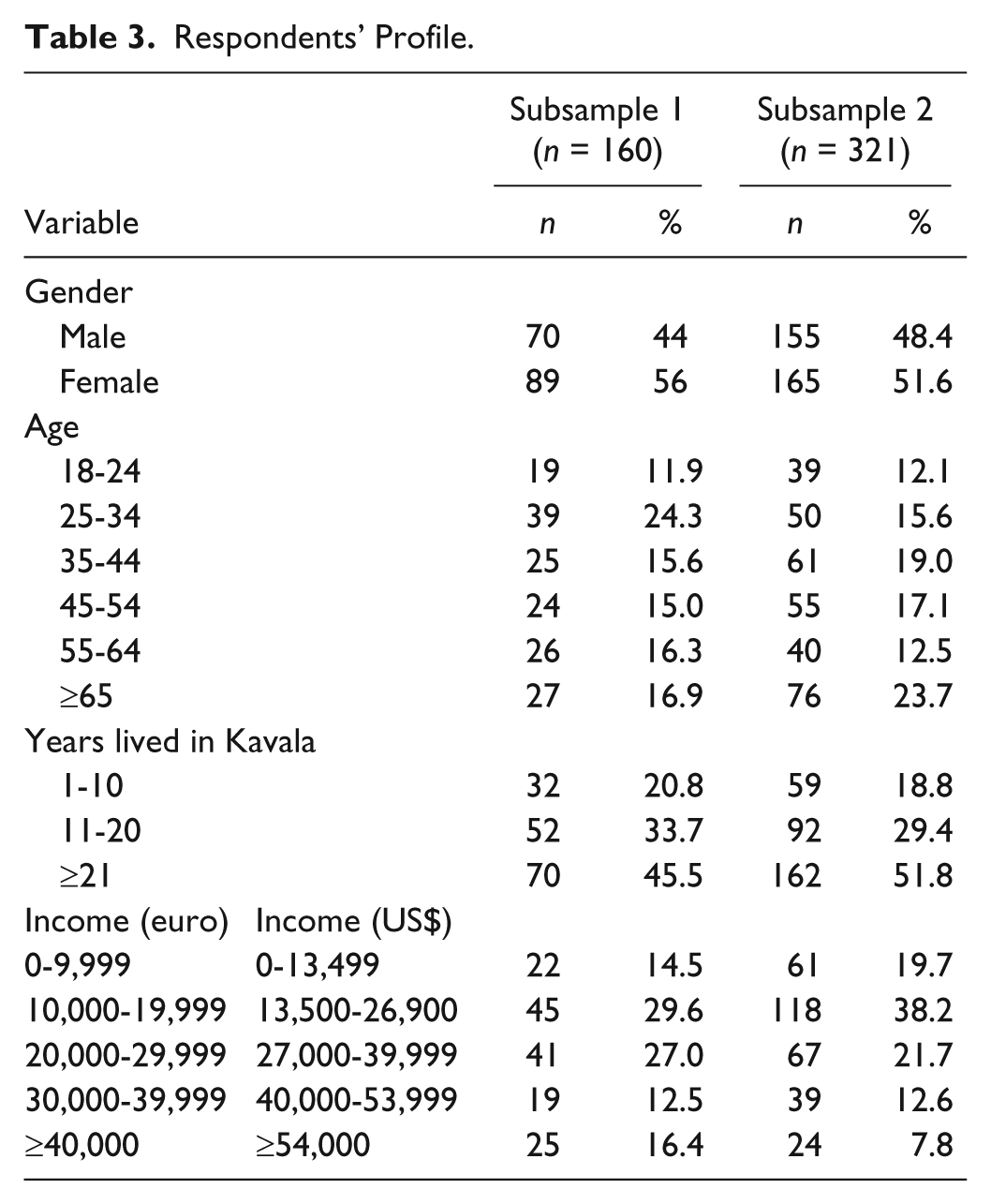
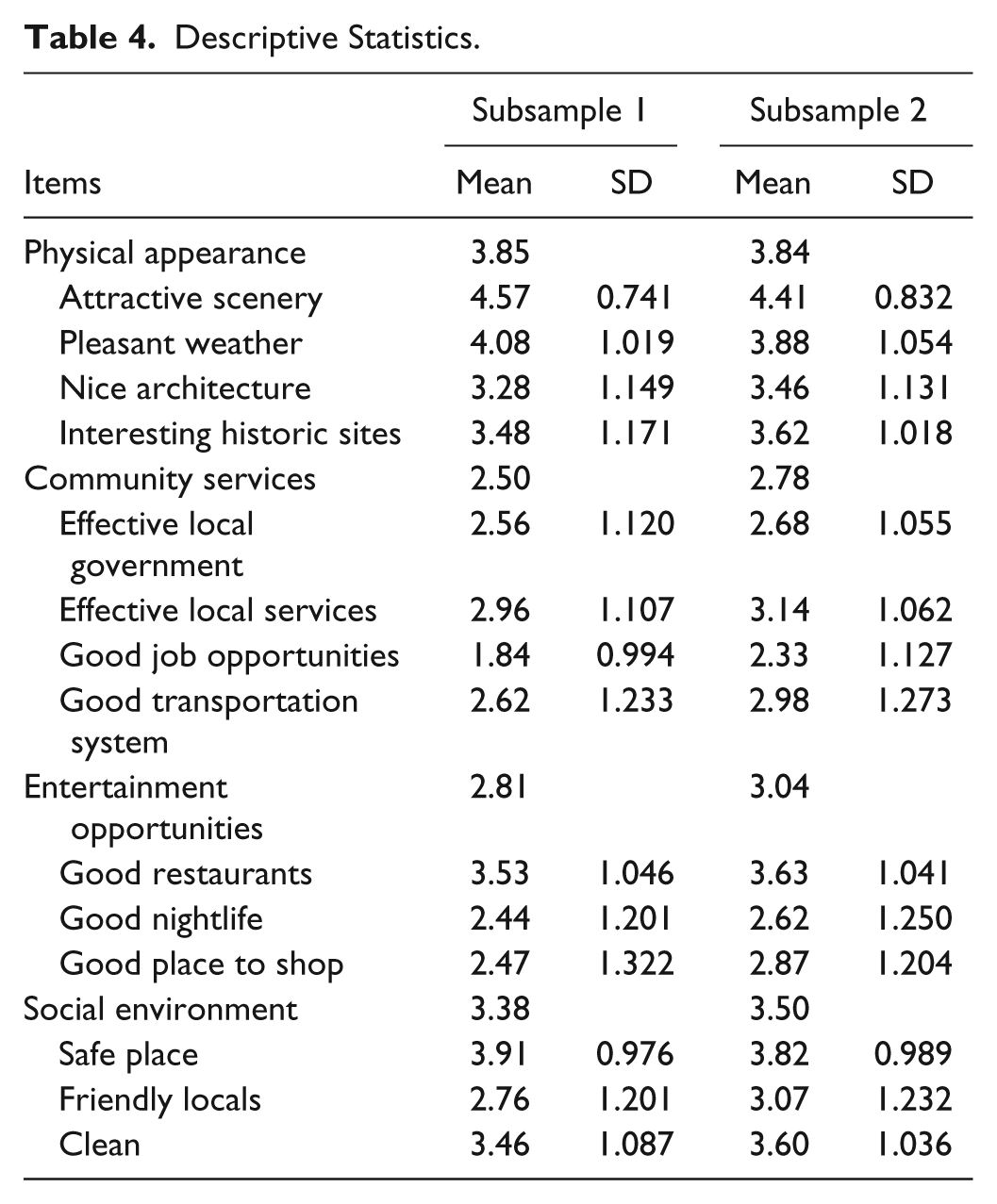
The descriptive statistics (i.e., mean scores) indicated that the respondents of both subsamples regarded Kavala as having favorable attributes such as “attractive scenery,” “pleasant weather,” and “safety” (see Table 4). The respondents also ranked the city relatively high with regard to “good restaurants,” “interesting historical sites,” “nice architecture,” and “cleanliness.” On the other hand, the respondents of both subsamples scored Kavala less favorably on attributes such as “effective local government,” “good job opportunities,” and “good transportation system.” Both subsamples also indicated that Kavala offers limited leisure opportunities, especially in relation to “nightlife” and “shopping facilities.” In comparison to their counterparts in subsample 1, respondents in subsample 2 rated most of the place image attributes examined more favorably, and this can be attributed to the age differences between those two subsamples (see Table 3). Previous studies (e.g., Baloglu and McCleary 1999; Beerli and Martin 2004) have reported the significant relationship between people’s demographics and their image of a tourist place—with older people holding more positive perceptions—and the findings of this study further verify this relationship. In sum, the descriptive findings of both subsamples suggest that the strengths of Kavala as a tourist destination lie in the scenery, weather, architecture, and history, and its weaknesses relate to the local authorities (e.g., local government, local services) and tourist infrastructure services (e.g., transportation, entertainment, and shopping facilities).
Descriptive Statistics.
Exploratory Factor Analysis
The first subsample (n = 160), which served as a calibration sample, was subject to exploratory factor analysis in order to identify the inherent dimensions of residents’ place image. The EFA commenced with the Kaiser–Meyer–Olkin (KMO) measure of sample adequacy, the Bartlett’s test of sphericity, and the anti-image correlation matrix to examine the factorability of the data. The KMO coefficient was 0.77 (recommended benchmark is 0.60), and the Bartlett test was significant (p value < .05), suggesting the sound face validity of the factor solutions (Tabachnick and Fidell 2013). Principal components analysis with oblique rotation (promax) was favored given the likelihood of interdependence among those attributes measuring place image (Chen and Kerstetter 1999). The eligibility of the factor solutions was also supported by eigenvalues greater than 1.0, and the absence of abnormality in the scree plot (Tabachnick and Fidell 2013; Woosnam and Norman 2010).
The EFA revealed four factors with the total variance explained of 58.66%, suggesting a satisfactory factor solution (see Table 5). Three criteria were used to establish the convergent and discriminant validity of these four factors: (1) only items with factor loadings higher than 0.40 were retained (Hair et al. 2010; Tabachnick and Fidell 2013); (2) no item which double-loaded onto multiple factors, with coefficients greater than 0.40 was retained (Woosnam and Norman 2010); and (3) internal consistency was examined. The Cronbach alphas of these factors were above the recommended benchmark (α > 0.60) and thus achieved good reliability (Peterson 1994) (see Table 5). These four factors, further explained in the next section, were labeled Community Services, Physical Appearance, Social Environment, and Entertainment Opportunities.
Exploratory Factor Analysis Residents’ Place Image (Subsample 1).
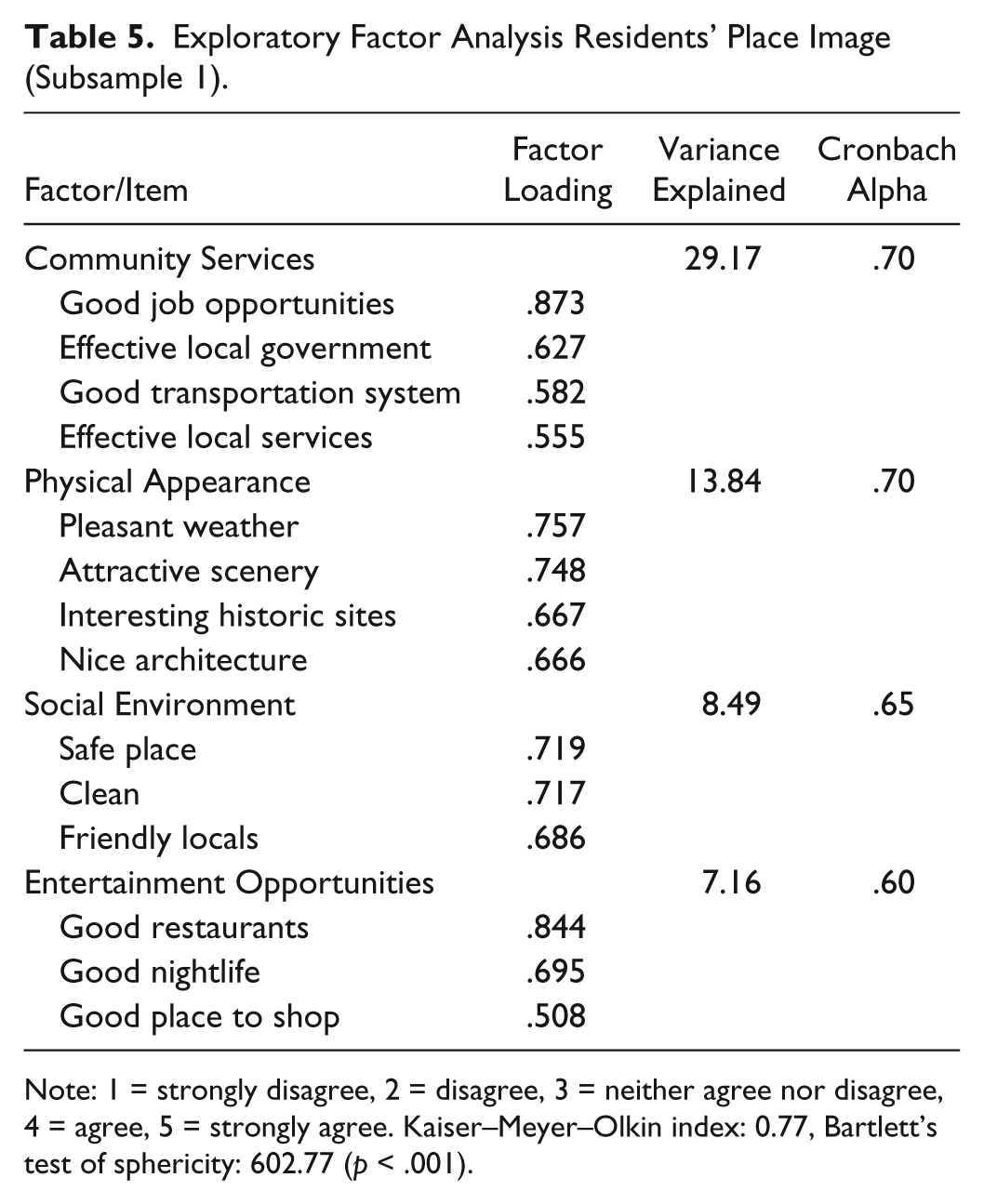
Note: 1 = strongly disagree, 2 = disagree, 3 = neither agree nor disagree, 4 = agree, 5 = strongly agree. Kaiser–Meyer–Olkin index: 0.77, Bartlett’s test of sphericity: 602.77 (p < .001).
Confirmatory Factor Analysis
The second subsample (n = 321) was subject to CFA (using AMOS v.20) in order to validate the four-factor solution presented by EFA. The goodness-of-fit indices (chi-square/degree of freedom [CMIN/DF] = 2.33, goodness-of-fit index [GFI] = 0.934, comparative fit index [CFI] = 0.924, root mean square error of approximation [RMSEA] = 0.064) resonated with the recommended benchmarks and thus indicated that the factor solution was satisfactory. More specifically, CMIN/DF was under 3 (Tabachnick and Fidell 2013), GFI and CFI were over 0.9 (Blunch 2008; Kline 2011), and RMSEA was less than 0.08 (Hair et al. 2010).
The factor solution also exhibited good convergent validity whereby the standardized factor loadings of all operational items were over the proposed minimum level of 0.5, the critical ratios were over 1.96 (Hair et al. 2010), and the construct reliability scores were above 0.70 (Kline 2011; Tabachnick and Fidell 2013), as reported in Table 6. The average variance extracted (AVE) values were close to the recommended benchmark of 0.5 (Hair et al. 2010). Although not ideal, convergent validity was deemed acceptable given the exploratory nature of this study. Furthermore, these four factors exhibited satisfactory convergent validity in EFA (see above). Finally, the four-factor solution also exhibited good discriminant validity (Table 7) whereby the AVE estimates of those four identified factors were greater than their inter-construct squared correlation estimates (Fornell and Larcker 1981).
Confirmatory Factor Analysis Residents’ Place Image (Subsample 2).
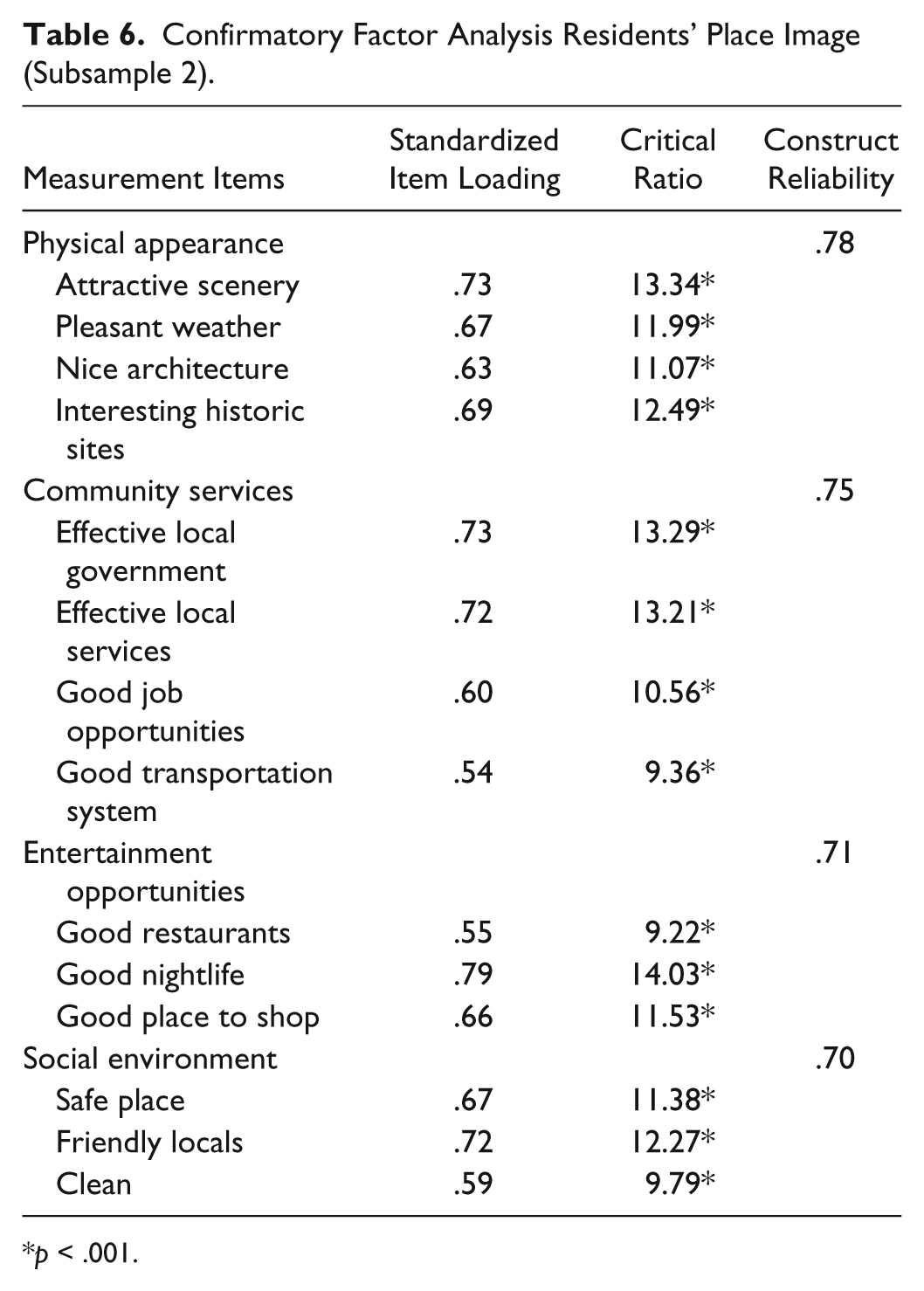
p < .001.
Testing Discriminant Validity.
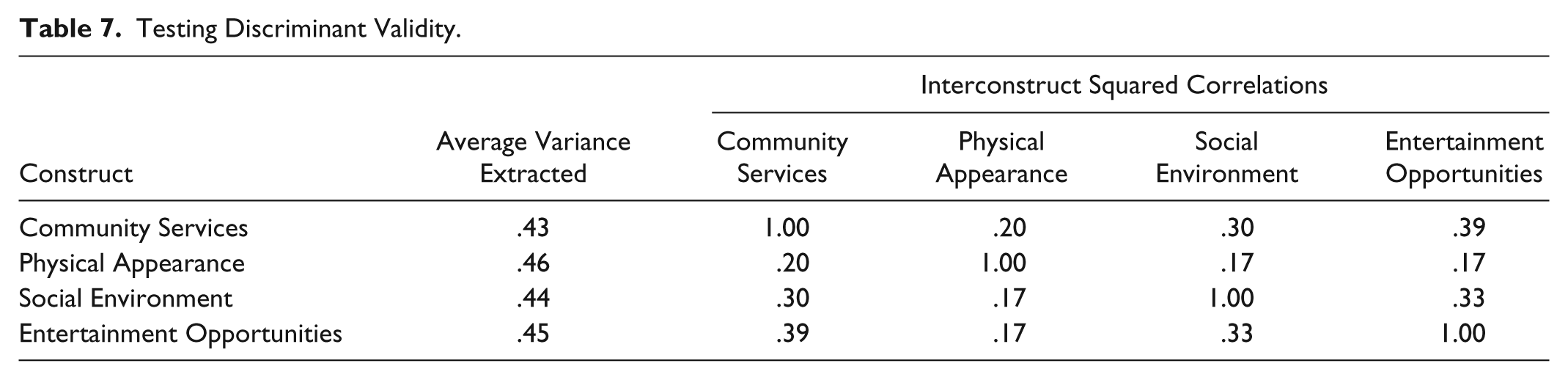
The EFA and CFA on the two subsamples (n = 160 and n = 321 respectively) presented a four-factor solution for residents’ place image that was comparable and robust (MacCallum et al. 1999). These four factors were named according to their composition of items. Factor 1, Community Services, comprises four items (i.e., effective public services, effective local government). Factor 2, Physical Appearance, involves four items (i.e., attractive scenery, nice architecture). Factor 3, Social Environment, consists of three items about safety, friendliness, and cleanliness. Factor 4, Entertainment Opportunities, contains three items (i.e., good restaurants, nightlife). This four-factor solution advances the body of research on place image and serves as a promising framework for future research, which is discussed next.
Discussion
This study aims to address the knowledge gaps in the residents’ place image literature by (1) reviewing the existing literature on residents’ place image in terms of how it has been measured and whether consistent/shared attributes can be identified and (2) examining the role of community-specific attributes in measuring residents’ place image. As such, this study presents a more holistic measurement of residents’ place image that synthesizes destination/tourism- and community-specific attributes. This study empirically verifies that destination/tourist- and community-specific attributes are mutually inclusive in the operationalization of residents’ place image. The results, derived from a two-stage factor analysis (EFA and CFA) with split sample, consistently support a four-factor solution for the measurement of residents’ place image and those four factors, labeled as Physical Appearance, Community Services, Social Environment, and Entertainment Opportunities, constitute a more comprehensive measurement of residents’ place image.
The Community Services dimension achieved the highest mean score and consisted of image attributes such as effective local government, local services, transportation, and job opportunities. Community Services is somewhat akin to the “government services” dimension identified in Sirgy et al. (2000) and Sirgy, Gao, and Young (2008), encapsulating the security, health, and well-being issues emphasized by the local residents of a tourist destination (e.g., Bruin and Cook 1997; Sirgy, Gao, and Young 2008; Sirgy and Cornwell 2002). The identification of this factor and its importance to local residents addresses a gap in the current knowledge of residents’ place image whereby previous studies (e.g., Henkel et al. 2006; Schroeder 1996; Stylidis, Belhassen, and Shani, 2015) have consistently neglected community-specific attributes. In the case of Kavala, the great emphasis on community services may be attributed to the high taxation imposed by the local government to curb the economic recession in Greece, as higher taxation raises residents’ expectations or demand for better community services in return. Alternatively, the strong emphasis on community services may also reflect that Kavala residents are increasingly aware of the impacts that tourism development may have on their local community. Increased numbers of tourists are likely to put a strain on existing services or infrastructure, if no additional resources are allocated, and thus subsequently jeopardize the living conditions of local residents (Dyer et al. 2007).
Another relevant dimension identified here for the measurement of residents’ place image is the physical appearance and appeal of a tourist place (e.g., scenery, weather, architecture). The importance of physical appearance in explaining place image has been well documented in the tourism literature, noting that the physical attributes of a tourist place are valued by both tourists (e.g., Chi and Qu 2008; Lin et al. 2007) and residents (e.g., Schroeder 1996). Lin et al. (2007), for example, reported that “natural characteristics” can significantly influence people’s selection of a tourist destination. In relation to local residents, Schroeder (1996) identified “sightseeing” as a factor underpinning residents’ place image, with the highest percentage of variance explained. Similarly, Glaeser, Kolko, and Saiz (2000) reported that physical attributes such as weather, architectural beauty, and scenery significantly influence the population growth of a city. Consistent with previous studies on tourists’ place image (e.g., Florida, Mellander, and Stolarick 2011; Glaeser, Kolko, and Saiz 2000), the current findings suggest that local residents also value the importance of an aesthetically appealing environment as it fosters their enjoyment of day-to-day activities.
Social environment, another inherent dimension identified by this study to be important for measuring residents’ place image, focuses on the intangible attributes of a tourist place, such as a sense of safety, friendliness of locals, and cleanliness. Social environment being a constituent of place image is consistent with previous place image studies focusing on tourists (e.g., Chen and Tsai 2007; Chi and Qu 2008). The finding suggests that, similarly to their tourist counterparts, local residents also greatly appreciate a safe, friendly, and clean environment. This finding also contributes to the ongoing discussion on the relevance of community and social issues when measuring community satisfaction. Some studies (e.g., Filkins, Allen, and Cordes 2000; Potter and Cantarero 2006) advocate for the greater importance of social environment in shaping residents’ satisfaction than community services; however, the findings of the current study suggest otherwise. Similar to the findings of Grzeskowiak, Sirgy, and Widgery (2003) and Sirgy, Gao, and Young (2008), Kavala residents appear to be more concerned about community services than social environment (e.g., friendliness), and this finding can be attributed to the collectivist culture of Kavala. This current finding echoes previous studies’ results (e.g., Mouritzen 1989; Theodori and Luloff 2000) on the tendency of the residents in a small community to display stronger levels of solidarity and homogeneity than their counterparts in a metropolitan city. As the residents of Kavala usually have strong bonds with their community, they may underemphasize the importance of aspects like the friendliness and safety as the absence of these is not as apparent as in larger cities like Athens, where people tend to feel more alienated and insecure.
Finally, entertainment opportunities relate to the nightlife activities, restaurants, and shopping facilities offered by a tourist place, and this dimension is somewhat akin to the hedonistic aspects of fun and enjoyment discussed by Holbrook and Hirschman (1982). In comparison with the three aforementioned dimensions (community services, physical appearance, and the intangible attributes of the social environment), entertainment opportunities appear to be the least concerning dimension among Kavala residents. This result contradicts previous place image findings (e.g., Chen and Tsai 2007; Tasci and Holecek 2007), which have consistently reported entertainment opportunities as a major dimension of place image and a key factor that influences tourists’ travel decision making (Chen and Tsai 2007; Lin et al. 2007). This current finding further reinforces the notion that tourists and residents do not share the same priorities in relation to all place image dimensions such as entertainment opportunities (see Alhemoud and Armstrong 1996; Sternquist-Witter 1985). Kavala residents, at present, seem to be less interested in entertainment activities, and are more focused on community services and physical appearance, and this can be attributed to the economic crisis, which has affected both their mood as well as the economic outlook. In a study conducted in the United States, Graham, Chattopadhyay, and Picon (2010) noted that the economic crisis had reduced people’s mood and happiness. Additionally, Hurd and Rohwedder (2010) examined the effect of the economic crisis on American households and reported that the vast majority of the respondents reduced spending, including dining out, which declined 33 percent within one year.
This study makes several theoretical contributions to the place image literature: (1) presents a more holistic framework for measuring and understanding residents’ place image; (2) calls for the incorporation of community-related attributes in the measurement of residents’ place image; and (3) stresses the need to consider both functional and psychological community-related attributes. In particular, this study identifies Community Services as a distinctive dimension of residents’ place image and verifies its key role in complementing destination/tourist-specific attributes in the measurement of this latent construct. Community Services captures the basic expectations that residents have in relation to the place they live and work, and it is parallel to the “government services” dimension reported in place marketing and branding studies (Merrilees, Miller, and Herington 2009; Santos, Martins, and Brito 2007). In addition to Community Services, this article identifies three other dimensions collectively relevant for measuring residents’ place image, namely, Physical Appearance, Social Environment, and Entertainment Opportunities. These dimensions highlight the fact that a comprehensive place image study must consider not only the attributes important for tourists but also those attributes valued by other stakeholders such as local residents. A place image that simultaneously takes into consideration the interests and expectations of various stakeholders is likely to be more successful at securing support for the development of a tourist destination (Merrilees, Miller, and Herington 2009; Morgan, Pritchard, and Pride 2004).
Alongside the need to take into consideration both destination/tourist- and community-focused attributes, this article identifies that local residents, similarly to tourists, ascribe both functional (directly observable or measurable) and psychological (cannot be directly measured) characteristics to a tourist place (Echtner and Ritchie 1991). Functional attributes, such as shopping, nightlife, and restaurants are commonly rooted in destination image research (e.g., Castro, Armario, and Ruiz 2007; Chen and Tsai 2007), whereas others, such as public transport and local services, are emphasized by community satisfaction studies (e.g., McCrea, Stimson, and Western 2005; Turksever and Atalik 2001). In a similar manner, Echtner and Ritchie’s (1991) psychological attributes (e.g., friendliness, safety, and cleanliness) were also found to play a role in the formation of residents’ place image. Inspired by Echtner and Ritchie’s (1991) framework, the four dimensions of resident’s place image (physical appearance, community services, social environment, and entertainment opportunities) identified by this study can further be explained on two continua, namely, destination versus community, and functional versus psychological (Figure 1).
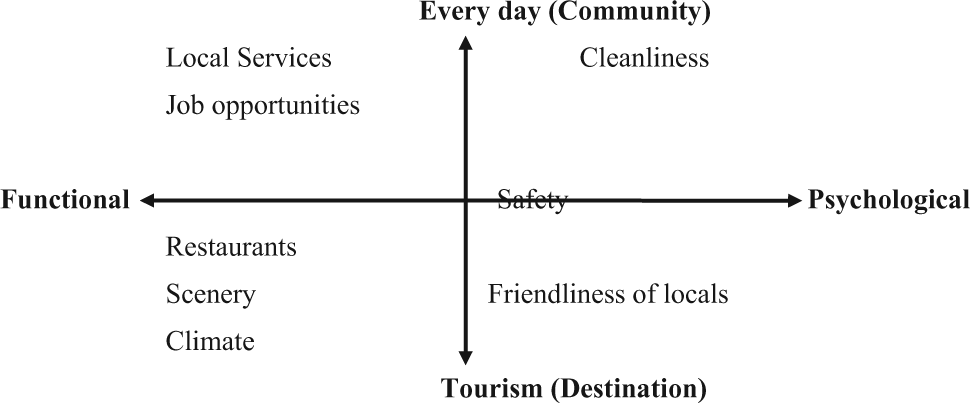
Conceptualization of residents’ place image.
The first continuum distinguishes place attributes that appeal to tourists and the tourism industry from those directly associated with the local residents’ community life. This destination versus community continuum differs from the attributes versus holistic continuum originally adopted by Echtner and Ritchie (1991), which is limited in its capacity for understanding local residents’ complex and multilayered perceptions of a tourist destination where they live and work. The second continuum differentiates place attributes that are functional versus those which are psychological in nature. Thus, residents’ place image can include certain tourism/destination-oriented functional attributes, such as restaurants and scenery, as well as tourism/destination-oriented psychological attributes, such as the friendliness of locals. Similarly, the image of a tourist place is also based on community-oriented, functional attributes (e.g., local services, transportation) and psychological attributes (e.g., cleanliness). While Figure 1 clusters residents’ place image into four distinct dimensions, they are collectively imperative for explaining this latent construct. Echtner and Ritchie (1991) indeed note that the dividing line is not always precise between functional and psychological attributes, and sometimes they intertwine. Safety, for example, may be conceived as a psychological attribute (i.e., the extent to which a person feels safe at a tourist destination), as well as a functional attribute (i.e., whether the tourist destination has safety features in place such as closed-circuit television on the streets). This is also true with regard to the distinction between community and destination attributes. Restaurants, for example, can be valued by both tourists and local residents. Figure 1 contributes to place image scholarship by clarifying the composition and operational/functional meanings of the residents’ place image construct. The identification of residents’ place image as a complex composition of functional and psychological characteristics, as well as destination- and community-focused attributes, directly responds to Ashworth’s (1992) call for (urban) tourism studies to aid in understanding the position of tourism within the local form and function of cities to its various stakeholders.
This study also contributes to the place image literature by suggesting that residents’ perceptions of the tourist place (e.g., community services and social environment in the context of Kavala) may alter or evolve according to its macro-environment conditions (e.g., economic status and collectivist culture of Kavala), akin to tourist destination image dimensions (Govers, Go, and Kumar 2007). Hence, apart from considering the multiple economic and social functions that a tourist place caters to local residents, a longitudinal approach can benefit future research as to better understand the degree to which residents’ place image changes or evolves over time. Finally, this study verifies that place image is not a static but a dynamic mental construct (Kearns and Philo 1993). Hence, drawn on the stakeholder theory, place image is subject to varied interpretations by varied stakeholder groups (Ashworth and Voogd 1990; Cohen 2001; Sack 1992; Stylidis, Belhassen, and Shani, 2015). To fully understand the multifaceted nature of place image in tourism, the current study urge scholars to move beyond the solo-stakeholder approach (examining the attributes important to one stakeholder group or the image held by a particular stakeholder) and opts for the multiple-stakeholder approach (measuring and triangulating the image perspectives of multiple stakeholders).
Managerial Implications
The examination of residents’ place image offers several practical implications. First, in terms of community planning, this study highlights the need to identify and address the various dimensions constituting residents’ place image, in order to achieve the delicate balance between tourism prosperity and community well-being. It thus enables local authorities, planners, and developers to identify attributes that are crucial for the development of a tourist place and simultaneously sustain or enhance residents’ quality of life (Andereck and Nyaupane 2011). Figure 1, in particular, provides a perceptual map to help identify the community-functional attributes that potentially deliver residents’ satisfaction with a tourist place (e.g., the local services). This map also suggests destination-functional attributes (e.g., restaurants) that positively/negatively influence residents’ perception of the tourist place. In the case of Kavala, for example, an investment in a shopping mall will directly benefit the local residents as well as the tourists, as it will increase employment opportunities, improve infrastructure, and offer more recreational activities.
Second, as a person’s behavior is influenced by the mental images of a place (Elliot, Papadopoulos, and Kim 2011; Kearsley 1990), this study provides some insights that may assist politicians and policy makers in gauging possible residents’ reactions in advance of future development activities concerning the place. Specifically, consistent with the social exchange theory (Ap 1992), tourism development studies (e.g., Lee 2013; Stylidis and Terzidou 2014) have indicated that residents are likely to support tourism development if they perceive its benefits to outweigh its potential negative consequences. Similarly, a tourism development project is more likely to gain local support if it is aimed at resolving negatively perceived attributes while at the same time sustaining and enhancing the positive attributes of the tourist place. For instance, a development plan that seeks to improve the transportation facilities of Kavala, such as new bus routes or parking lots, is likely to gain residents’ support.
In terms of marketing, the four dimensions identified by this study can be embedded into a survey instrument to diagnose strengths versus weaknesses or the pluses/pros versus minuses/cons of residents’ place image. The “local knowledge” garnered from such diagnosis can assist place marketers to “localize” their strategies in order to address development and communication activities more effectively. This acquired knowledge can also facilitate place re-imaging (rebranding) or rejuvenation efforts by appealing to the interests and expectations of key stakeholders (Reiser and Crispin 2009), such as local residents and tourists, and in turn can foster civic pride, attachment to the community, or even to what Tuan (1974) describes as “topophilia.” Engaging key stakeholders (e.g., local residents) in place re-imaging or rejuvenation activities is crucial, first because the more realistic the new image promoted for a place, the more likely it is to be accepted by these stakeholders (Bennett and Koudelova 2001), and second because exclusion of any stakeholder may create negativity and even hostility toward the new image, as well as affect the host–visitor relationship (McCarthy 2004).
The perceptual map (Figure 1) proposed in this study can facilitate the development of an image that celebrates a place’s heritage or uniqueness and differentiates it from other competing tourist places. In the case of Kavala, most respondents positively appraise nature and historic elements like the scenery, architecture, and historic sites. Such images could be reinforced by promoting heritage and cultural tourism to Kavala, further highlighting these unique aspects of the city. Overall, by addressing the negative and reinforcing the positive points/aspects of a tourist place, place promoters can strategically build an effective product positioning and a unique brand image, leading to the construction of a seductive “urban idyll” (Hoskins and Tallon 2003). This image assessment process should be ongoing; as cities evolve over time, so is their perceived image (Ward 2007).
Finally, this study aids in shaping internal marketing campaigns to enhance residents’ place image or encourage them to promote the city to others (e.g., Clifford and King 1993; Crick 2003). Previous studies have indicated that a positive image motivates residents to act as ambassadors (Schroeder 1996; Tilson and Stacks 1997) and highlighted their significant role in place marketing. This notion is particularly useful for destinations with limited financial resources for tourism marketing and promotion (Hsu, Wolfe, and Kang 2004), or in times of economic recession and budget cuts (Burgess 1982), as in the case of Kavala and other European destinations. Therefore, Kavala’s local authorities or tourism board should undertake internal marketing campaigns to instill trust in the residents and solicit their support for development activities, by communicating how the local authorities are addressing the negative aspects while sustaining the positive characteristics of place image. To encourage the local residents’ engagement with a development project, place promoters may consider promotional strategies, such as a social media campaign (on Facebook or You tube), that invites local residents to share photos, videos, and comments to convey the uniqueness and attractiveness of their local community as a desirable tourist destination.
Limitations and Future Research Directions
This study, like any research, has some limitations that offer opportunities for future research. First, the measurement of residents’ place image has been developed based on a single tourist place and thus may limit the generalization of the results to other places. While the measurement of residents’ place image presented by this study exhibits sound construct and discriminant validity as well as reliability, it requires further validation with a larger sample and with other tourist places. Second, while the total variance explained by the scale is satisfactory, it also comprises some unexplained variance and thus suggests that the study has not accounted for all attributes essential for measuring residents’ place image. A suggestion for future research is to include additional psychological attributes (e.g., reputation and fame) (Echtner and Ritchie 1991), as well as affective attributes (e.g., relaxing, exciting, pleasant) into the measurement of residents’ place image (Lin et al. 2007). Additionally, the current study indicates that residents’ place image is a multidimensional construct. Corresponding with the established notion that people have attribute-based and overall evaluations of a place’s image, it will be insightful to examine how individual image dimensions affect the overall place image among residents and then their behavioral intentions (e.g., decision to migrate, intention to recommend). Finally, building on the work of Schroeder (1996) and Stylidis, Belhassen, and Shani (2015), it will be prudent to examine if residents’ favorable (or unfavorable) image of a tourist place increases (decreases) their support for tourism development. Such research will be insightful, theoretically and practically, in understanding the relationship between residents’ support and the success of tourism development.
Footnotes
Declaration of Conflicting Interests
The author(s) declared no potential conflicts of interest with respect to the research, authorship, and/or publication of this article.
Funding
The author(s) received no financial support for the research, authorship, and/or publication of this article.