



Abstract
As the United States rolled out COVID-19 vaccinations, state health departments attempted to communicate quickly evolving information about vaccines amid political conflict and misinformation. In October 2021, one state health department shut off comments for their social media to deplatform misinformation. To analyze this health department's Facebook page as a discursive space, our study examines user activity on the page through quantitative analysis of engagement metrics and topical clusters and qualitative analysis of user comments from January to October 2021. Our findings show that the common idea of vaccine proponents valuing data while vaccine skeptics prefer anecdote is not represented; antivaccine comments are pervaded with suspicion toward institutions, while provaccine comments largely use unproductive tactics; the two sides largely showed different sets of concerns; engagement was high during critical moments in the pandemic, and a few top influencers tended to dominate comment threads.
Introduction
Though vaccination has been a successful practice in managing the spread of infectious disease, it has remained deeply controversial throughout its history. Vaccine hesitancy was identified among “10 global health threats” by the World Health Organization in 2019, given the burden of vaccine-preventable diseases and the opening that voluntary nonvaccination gives to new outbreaks (Akbar, 2019). Soon after, the vaccine controversy reached a flashpoint during the COVID-19 pandemic. Despite the widespread scientific consensus about the efficacy and safety of most vaccines, vaccine hesitancy is not simply a matter of poor scientific literacy or ignorance of scientific findings. Instead, vaccine hesitancy represents a complex set of beliefs, anxieties, trust relationships, and other social factors (Lawrence et al., 2014). With that said, though vaccine hesitancy is not primarily an information deficit issue, deliberate disinformation campaigns have played a role in stoking the underlying attitudes behind vaccine hesitancy. Whatever the cause, while vaccine mandates have had some success in raising vaccination rates, there remains a need for dialog and persuasive communication to make progress on such a seemingly intractable public issue.
One of the arenas in which dialogue about COVID-19 vaccination has played out is social media. As the U.S. government rolled out COVID-19 vaccination in early 2021, Americans advanced diverse arguments about vaccination on varied social media platforms, a debate that continued later in the year as children ages 12 and older were authorized to be vaccinated. These contentious debates came on the heels of earlier controversies in the pandemic response, such as face mask mandates and stay-at-home orders. At the same time, state health departments were attempting to communicate the ever-changing availability, accessibility, and eligibility parameters of COVID-19 vaccines while combating mis/disinformation. In the face of these challenges, on October 26, 2021, one state health department turned off the comments on all of its social media accounts, including Facebook. A statement about the change cited a desire to remove a platform for misinformation, though the department reassured followers that they would continue to use their social media accounts to distribute verified information and that private message inboxes were still open. As a government entity, the health department could not keep up with moderating or curating comments. They decided that the discourse on their comment threads was so unproductive and even potentially harmful that it eliminated the platform for that discourse, even if it meant cutting off a potentially useful forum for social listening and public dialogue.
Given that the health department's Facebook comments section was already identified as so toxic it needed to be eliminated, we were left curious to open the box and see what was inside. Our goals in doing so were to capture a snapshot of COVID-19 vaccine discourse in one place at an especially contentious time, assess if social media comments are a useful place to understand public attitudes, beliefs, and intentions about COVID-19 vaccines, and describe how state health department Facebook pages function (productively or not) as deliberative spaces during a public health crisis. Accordingly, we investigated the following research questions about activity on this state health department's Facebook page between January and October 2021:
Question one looks at user engagement (operationalized as followership and follower interaction) over time and maps it to the ups and downs of the pandemic in order to draw attention to the state health department's page at kairotic moments. In contrast, Questions 2 and 3 ask about discourse on comment threads, both among the most active users (or “top influencers,” Question 2) and a larger number of users (Question 3). Before we share the methods and results of our study, we will situate our investigation in the literature on COVID-19 communication, social media and misinformation, and trust relationships in vaccination controversies.
Literature Review
COVID-19 Communication in Technical and Professional Communication (TPC) and Rhetorical Studies
Both Lambrecht (2024) and Graham (2021) have noted the lack of a coherent, centralized response from the federal government, including the CDC, whose engagement with marginalized communities was often imperfect and one-sided (Bishop et al., 2022). This gap was filled by a range of actors, including on social media, as the fracturing of in-person social networks saw people turning online for their information needs more than ever (Campeau, 2022a). Scientists educated the public over social media through “tweetorials,” (Graham, 2021), and celebrities (Bishop et al., 2022) and private companies (Bobomoletc & Lee, 2021) used their platforms to spread useful information and users sharing informative memes with each other (Sparby, 2024). Lambrecht examined how local health departments also filled the gap left by the federal government in various ways by analyzing a corpus of their news articles in the first 2 years of the pandemic. Alongside these efforts, misinformation stoked conspiracy theories, exacerbated in part by an urgency to spread new scientific data digitally before it had been fully vetted (Koerber, 2021). Now-famous “flatten the curve” visualizations spread virally as a “rhetorical anchor” for risk discourse, even as they obscured local differences and repurposed deliberative constructions for epideictic aims (Amidon et al., 2021). Moreover, the needs of rural communities were often left out of official public health messaging that was largely tailored to urban areas (Carlson & Gouge, 2021).
The chaotic communication environment around COVID-19 lent itself to political conflict over mitigation measures. Zemlicka (2023) argues that, in the United States, climate denial fueled by Republican interests and largely nonpartisan vaccine skepticism coalesced substantially for the first time in the backlash to face masking. Conservative politicians and online communities reinforced each other, framing antimasking as resistance to wider cultural dynamics and scientific research and expertise as elitist and socially dangerous. In this way, just as earlier vaccine skepticism helped fuel antimasking sentiment, antimasking, in turn, helped inflame vaccine resistance once COVID-19 vaccines were available. Even for those not firmly embedded in these movements, a general atmosphere of doubt pervaded public communication about COVID-19, impacting public perception of the vaccine rollout. As Bennett (2023) points out, Facebook reported that the most shared article on their platform from January to March 2021 was one questioning vaccine safety. At the same time, media narratives advanced unproductive ideas about vaccine hesitancy, such as deficit thinking (i.e., more people would accept vaccines if they understood the science) and straw men (such as an overfocus on vaccines’ alleged connection to autism as a source of vaccine hesitancy; Joyner & Lawrence, 2023).
Studies of online discourse about COVID-19 vaccines in TPC have been interested in the features of pro- versus antivaccine discourse, whether and when that discourse diverges from expected binaries, and when online discourse can be productive. Campeau (2022a) observes three major patterns in the literature on online vaccine discourse: Antivaccine websites attract more attention than provaccine sites, antivaccine discourse based on personal experience and anecdote, and antivaccine spaces value and make room for experiential and embodied knowledge more than provaccine spaces do. Campeau's case study of a clinical trial participant for a COVID-19 vaccine, Ashley Locke, communicating her experience on TikTok does not neatly fit these patterns. Though vaccine skeptics typically claim experiential knowledge and place it in opposition to medical expertise, this case study exemplifies how the two can be bridged productively. When Locke used a Q&A format with users or documented her trial experiences, users asked genuine questions about their concerns, though when she focused on her frustration with antivaccine comments, the comments section reproduced typical polarization.
In sum, the literature on COVID-19 communication in TPC and rhetorical studies paints a picture of an insufficient federal response to the crisis, leaving varied actors, including state and local health departments, to address the communication gap against the backdrop of existing vaccine hesitancy, inadequate media narratives about that hesitancy, resistance to other COVID-19 mitigation measures, misinformation, and pervasive doubt. This literature also shows a keen interest in the field to understand provaccine views and the extent to which both pro- and antivaccine views fit existing frames. While Gallagher and Lawrence (2020) analyzed pro- and antivaccine tactics and appeals in a pre-COVID set of New York Times user comments, we conducted our analysis in the setting of a state health department page at the height of the COVID-19 vaccine rollout. In doing so, we contribute to conversations about vaccine views and online discourse during a contentious, high stakes crisis.
Social Media and Misinformation
As already discussed, previous research has investigated the positive and negative impacts of social media and online forums on the topic of vaccination. More broadly, online communication enables patients to share strategies and input, validate embodied experiences, and build communities around shared concerns, which has been especially important for marginalized groups (Beemer, 2016). However, these same dynamics empower antivaccination spaces, which can attract participants by valuing people's lived experiences and supporting the rhetoric of personalized health decision-making widely valued in other areas (Campeau, 2022a).
Social media is a breeding ground for misinformation due to several factors. Users can share information—including false information—quickly and often without gatekeeping. Users can create anonymous and fake accounts, which make it difficult to hold misinformation peddlers or malicious actors accountable for their actions. Platforms themselves lack the editorial oversight and fact-checking mechanisms that traditional media outlets have and must abide by (Vosoughi et al., 2018).
Algorithms, a complex set of codes working in platform backgrounds, are designed to prioritize content that is most likely to trigger interaction (e.g., views, likes, shares, and comments) and maximize reach and engagement. Algorithms display personalized content for each user, which can unintentionally promote misinformation that may align or intersect with the users’ interests, social circles, beliefs, and biases, which can lead to filter bubbles and echo chambers (Marwick, 2018). As a result, users often create, share, and like sensational and controversial content, resulting in a symbiotic relationship between algorithms and users (Phillips & Milner, 2021). Our point is that the ways that the users represented in our study would have come across the state health department's posts, adopted the views they expressed, and encountered the outside links some of them shared are the result of a complex set of human–machine relationships. However, it is beyond our scope to track that larger network, and our analysis of user comments does not exclusively focus on misinformation.
Vaccination and Trust
This section discusses the connection between COVID-19 vaccine intention and trust in institutions and information sources. Though our study is not centrally focused on trust, it is a critical part of the context for how Americans argue about COVID-19 vaccination. Antivaccination campaigns rely on populations having complicated trust relationships with government, industry, and institutional biomedicine, which may have been exacerbated by government communication during the COVID-19 pandemic. One such population of interest to our study is rural Americans, given the makeup that the state health department serves. This population's frequent distrust in Congress and the federal government has been attributed to government and corporations taking away rural people's prosperity (Ashwood, 2018) and, in part, immigration issues and perceived racial threats (Hanson et al., 2019). Earned distrust has also been a consistent theme in studies of COVID-19 vaccine sentiment among marginalized populations in rural areas, such as Black and Latinx residents in North Carolina (Doherty et al., 2021) and Black adolescents in rural Alabama (Budhwani et al., 2021). In addition to this general institutional distrust and the previous politicization of prevaccine COVID-19 mitigation, rural residents received both mixed and unintended messages. Both rural communities’ lower incidence and mortality rates in the first COVID-19 wave and an emphasis on “reducing density” may have conveyed the idea that less dense areas are safer (Balog-Way & McComas, 2020), despite rural incidence and mortality rates meeting or exceeding those of urban areas as early as summer 2020. In a review of COVID-19 vaccine hesitancy in rural Tennessee, Alcendor (2021) noted a tendency in these communities to distrust the government and latch on to misinformation and conspiracy theories, though these challenges coincide with vaccine safety concerns and inadequate infrastructure. Trust, however, is a hard thing to pin down, and caution must be observed not to assume a level of trust across the board; for example, national surveys from 2015 and 2017 did not show that rural respondents placed lower trust in government health agencies in general than urban respondents, though rural residents did trust those sources less for information about tobacco and about general health (Peterson et al., 2020). Regardless, the context of encounters with information is at least as important as trust in information sources themselves. In surveys of remote Alaskans about COVID-19 vaccine acceptance and perceptions from November 2020 to September 2021 (Hahn et al., 2022) and follow-up interviews with a subset of survey participants from March to July 2021 (Eichelberger et al., 2022), a notable number of participants with negative or undecided vaccine intention became vaccinated. Interviews showed that, for participants who changed their minds, trust in information sources was important, but so was being able to ask questions of community leaders and health professionals and feeling like their concerns were recognized, their questions were answered, and they had an overall feeling of control or agency in information encounters and their learning process about vaccines.
The context of information encounters, then, not just the information itself or its source, is important for people with both anti- and provaccine positions. The importance of these social dynamics to vaccine sentiment and decisions invites the study of those dynamics on social media. While more research attention has historically focused on better understanding vaccine-hesitant people's decision-making, vaccine adopters also make personalized decisions based on individual risk perceptions (Campeau, 2022b; Eichelberger et al., 2022). However, few studies have examined the argumentation strategies of both pro-vaccine and anti-vaccine comments on social media (Gallagher & Lawrence, 2020). Doing so can not only shed light on the motivations and priorities behind a range of vaccine positions but also reveal how public discursive spaces are functioning or could be made more productive. Our study addresses this need by examining user engagement and discourse about COVID-19 vaccination on a state government Facebook page.
Methods
Our overarching goal was to study how people engage online, including how they argue with each other about a controversy in a time of crisis. We were especially interested in a state health department's social media page, given the department's positioning as a government entity that is more localized than and independent from the federal government. The department's shuttering of the page due to toxicity also motivated us to examine what exactly that discourse—and user engagement more broadly—looked like.
User engagement has often been defined as the various ways people show active participation, interest, and willingness to interact as well as distribute content further (Khandelwal et al., 2023; Zhang et al., 2022). The aspects of user engagement we focused on were followership and follower rates (which, together, we refer to as “engagement metrics”) and user comments. Given our focus on activity on the health department's page itself, further distribution through shares was beyond our scope. We began with a broad look at engagement metrics and ended with a narrow approach to understanding user influence and pro- and antivaccine comments. Collecting engagement metrics (Research question 1) allowed us to see how much attention the health department's Facebook page was receiving and how that engagement rose and fell over the course of our study period, which in turn provides context for our analysis of user comments. Analyzing user comments of top influencers (Question 2) shed light on how the users who drove conversations the most talked about vaccines. Finally, analyzing comments from a broader set of users (Question 3) enabled us to compare pro- and antivaccine tactics and appeals across users. In the following paragraphs, we’ll explain how and why we reduced our initial dataset of 10 months of user comments on a state health department's Facebook page to answer Questions 2 and 3 before sharing our approach to data analysis.
Meltwater, a media intelligence system, was used to extract comments from January 1, 2021, to October 25, 2021. January 2021 was our start date because it aligned with when vaccines became available to healthcare workers and, subsequently, the public. October 25, 2021, was chosen as the end date because this was the last day individuals could publicly comment on the department's Facebook page. We used Boolean search criteria to retrieve the comments. Specifically, we pulled any comment (referred to as a “social connection” in Meltwater) from user accounts that were not made by the health department itself. Our criteria did not limit the users’ location; however, results showed that the majority of commenters were from the department's state or surrounding states. Data were managed on Microsoft Excel and Google Sheets.
Our original data set included both primary comments (new comments made directly to a post) and secondary comments (replies to other users’ comments). We assigned each user (commenter) a number and omitted their names. We then took several steps to narrow our dataset and ensure that only relevant comments were included. First, we omitted the comments attached to posts that did not mention COVID-19 or vaccination. For example, if the department posted about car seat safety, we excluded comments attached to this post. We also excluded comments that showed up in our dataset as solely tagging another user, blank, or “…” Blank and “…” comments can occur if the comment contained only special characters, such as emojis. At this point, we had 37,765 comments. We narrowed down this data set further to answer Research questions 2 and 3, as we will describe shortly. Refer to Figure 1 for the methods overview.
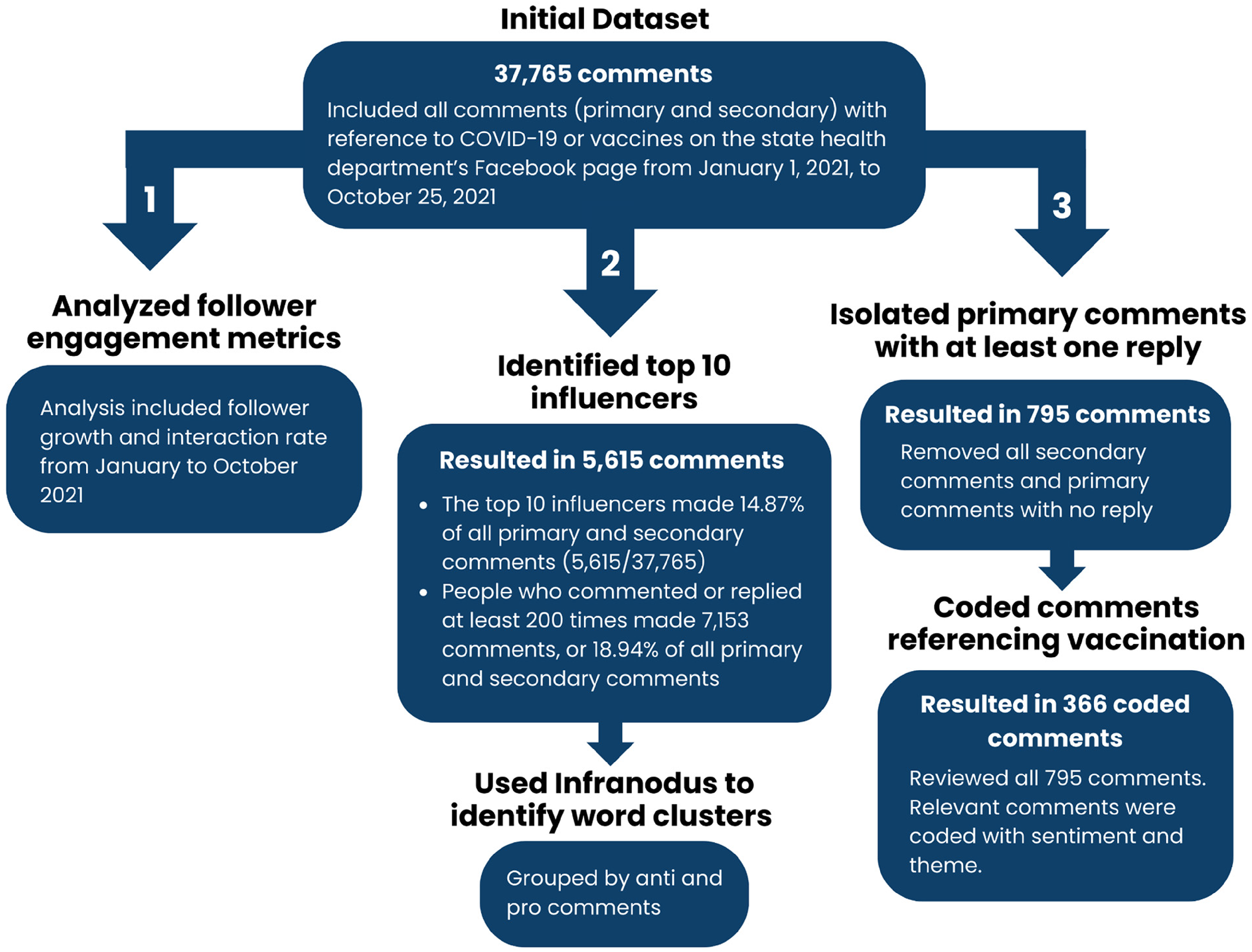
Methods overview.
Engagement Metrics
To help answer our first research question, we used CrowdTangle, a Meta social monitoring platform, to analyze engagement metrics. Using historical data functions, we looked at followership (growth) and follower interaction rate between January 1, 2021, and October 25, 2021. To understand how followership and follower interaction rates aligned with what was happening with COVID-19 in the state, we compared them to positive case rates during this time period. We used data dashboards from the health department's website to gather COVID-19 case rates across time during our study's time period.
Top Influencers
Another way we sought to understand how this comments section functioned as a discursive space was to investigate the frequency of individual engagement and how anti and provaccine users drive the conversation. To do this, we identified the top users—or “top influencers”—who commented the most out of our original dataset of 37,765 comments (which included both primary and secondary comments). We assigned each user a unique numerical code. Using a pivot chart, we totaled the number of times each user commented, both primary and secondary. After identifying the top influencers, we read a sample of their comments and assigned each of these users as generally pro- or antivaccine.
Once the top influencers were identified and classified by general vaccine sentiment, we used top influencer data to identify and compare frequently discussed topics by highly engaged anti- and provaccine users. To do this, we used Infranodus, an artificial intelligence-powered text analysis tool, to identify patterns of common keywords and topics, i.e., “topical clusters,” being discussed by the top influencers. We modeled our use of Infranodus partly after other studies of vaccine sentiment (Dicks et al., 2021; Martin et al., 2020; Martin & Vanderslott, 2022). These topical clusters allowed us to compare and contrast common keywords and topics of top influencers between differing vaccine sentiments.
Qualitative Analysis
For our qualitative analysis of user comments, only primary comments with at least one secondary comment (reply) were included, while all secondary comments were excluded, resulting in 795 comments. This ensured that a wide array of commenters and comments were captured and that the comments under study received at least some engagement from another user. As we coded the data, we left out comments that did not clearly refer to vaccination, leaving us with 366 coded comments.
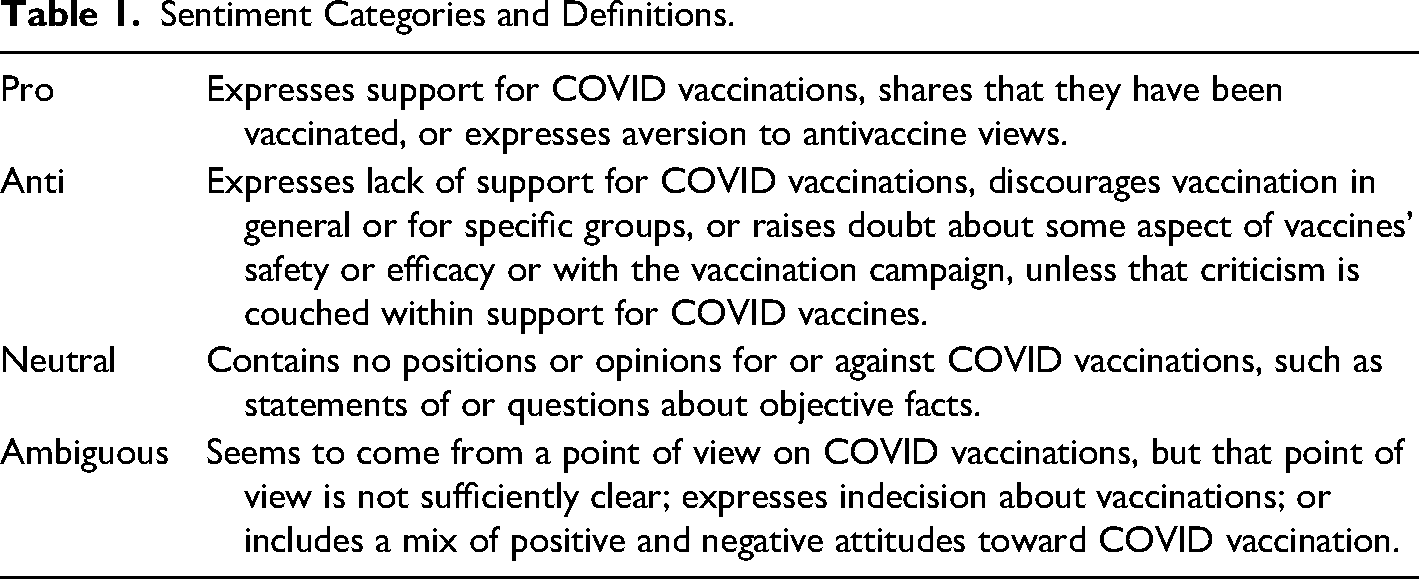
Each comment was coded for one or more tactics and appeals and one of four predetermined sentiment categories: pro, anti, ambiguous, and neutral (see Table 1 for definitions of each sentiment category). We acknowledge that vaccine sentiment exists along a spectrum and that “pro” and “anti” ultimately reinforce an unproductive binary (Lawrence, 2020), but analyzing and comparing comments according to these categories addresses a need to understand provaccine views as well as interrogate the limitations of the binary. Though Gallagher and Lawrence (2020) distinguished tactics from appeals, we retain both terms but lump them together for the sake of simplicity.
Sentiment Categories and Definitions.
Coding was performed in two cycles. Author 1 performed first-cycle coding through a mix of in vivo codes and paraphrases that captured each comment's primary themes, often using more than one code per comment. They also coded each comment with one of the four predetermined sentiment categories. During and after first cycle coding, Author 1 began to develop a codebook and took reflective notes about emerging themes. Using this initial set of codes and definitions, Author 1 and Author 2 each separately performed second-cycle coding on the first 80 comments (representing approximately 10% of the dataset). We then discussed how the codes were working and came to an agreement on appropriate codes in cases of disagreement, revising the codebook by adding or combining codes as needed. We also noted our rate of interrater agreement. Using the revised codebook, we each coded the next 80 comments. Having then achieved a satisfactory interrater agreement of 88.4%, we divided the remaining codes equally and completed second cycle coding. Once coding was complete, we used pivot charts to determine how many comments were attributed to each code. Both authors then grouped comments by code to look for patterns in each code group with our research questions in mind. These patterns became our major qualitative findings (Question 3), for which we then pulled examples from our dataset.
Results
Engagement Metrics
Followership and followership interaction were closely connected (Figures 2 and 3). Followership interaction increased as followership grew. For followership (Figure 2), the x-axis represents each week, and the y-axis represents followership numbers. For followership interaction (Figure 3), the x-axis represents each month, and the y-axis represents the interaction rate by percentage. Followership and followership interaction were closely associated with positive COVID-19 cases in the department's state over time (Figure 4).
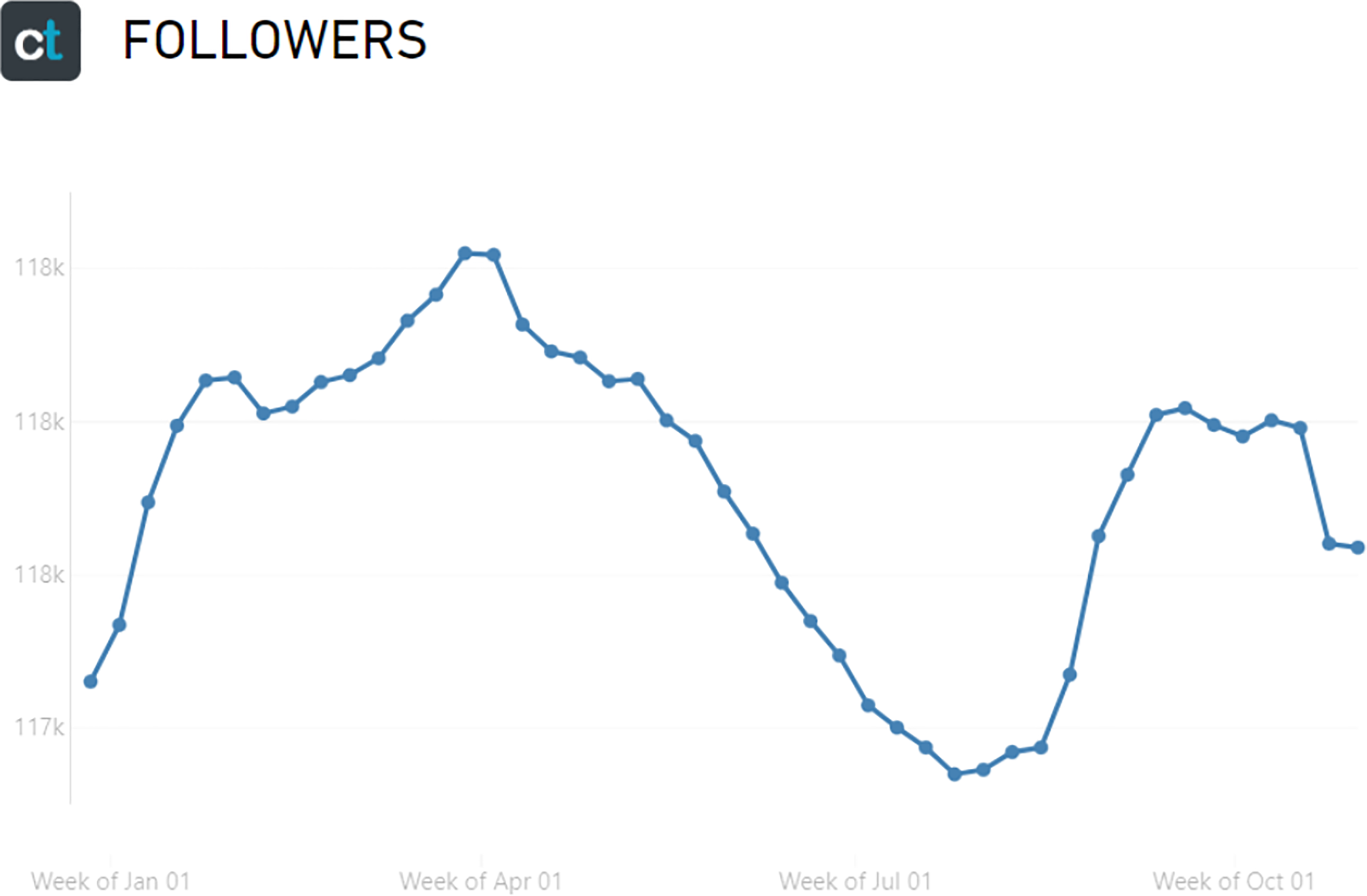
Facebook followership growth from January 1, 2021 to November 1, 2021.
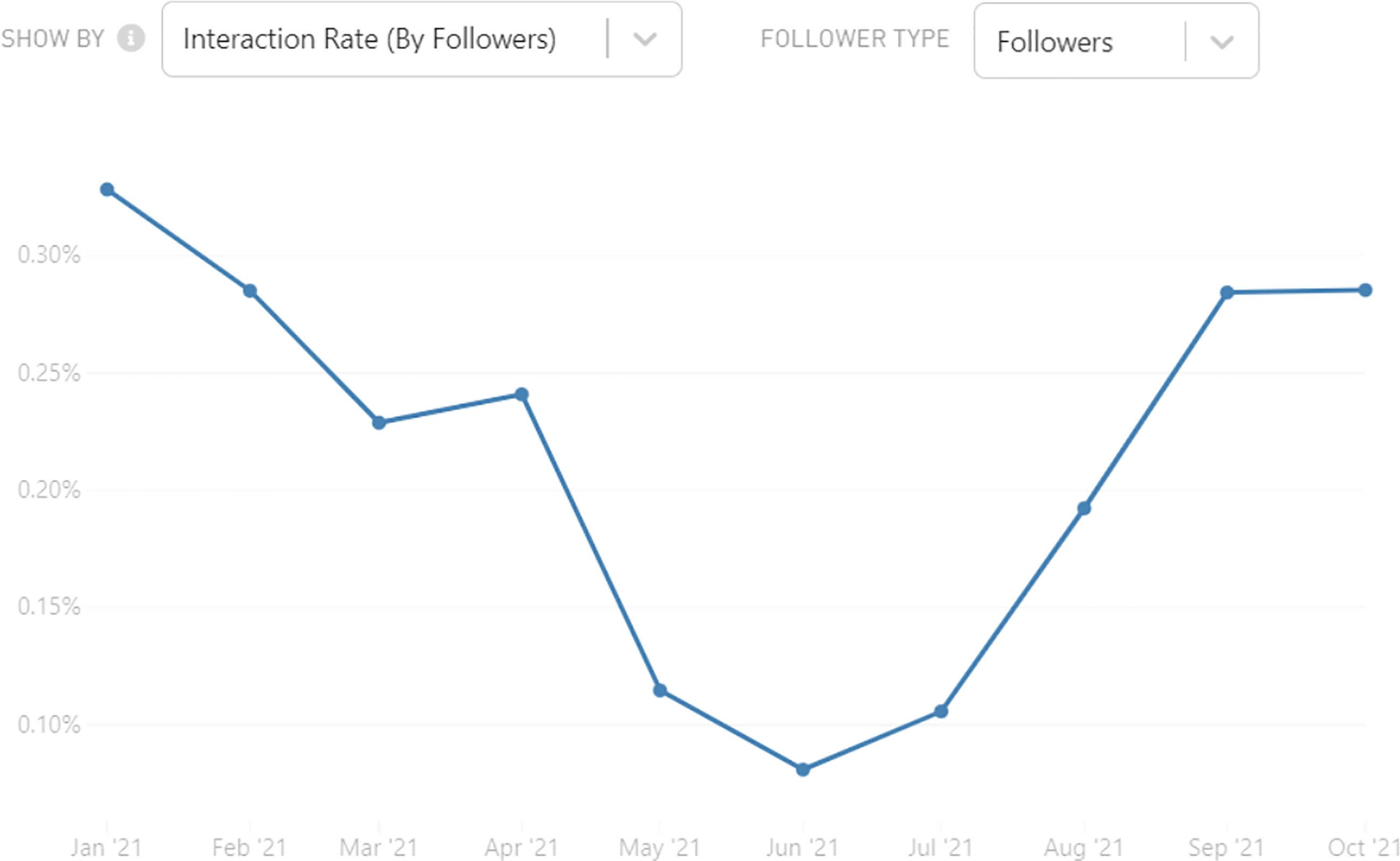
Interaction rate by followers from January 1, 2021 to November 1, 2021.
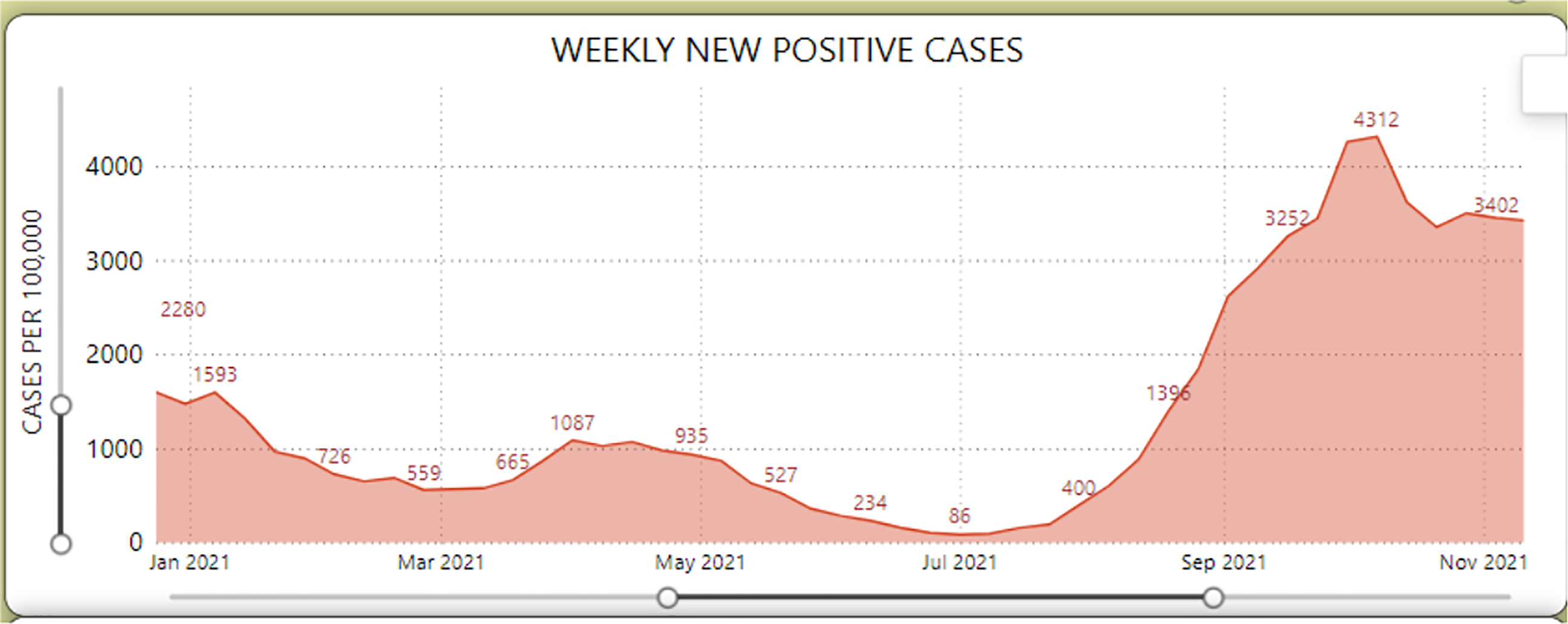
Weekly new positive COVID-19 cases in state from January 1, 2021 through November 1, 2021.
Top Influencers
Out of 5,943 unique commenters, the top ten influencers made 5,615 comments or replies, or 14.87% of all relevant primary and secondary comments (5,615/37,765). People who commented or replied at least 200 times made 7,153 comments or 18.94% of all relevant primary and secondary comments. The maximum number of comments (both primary and secondary) made was 926 (minimum 1). Out of the top 10 influencers, seven were coded as being “provaccine,” and three were coded as “antivaccine.”
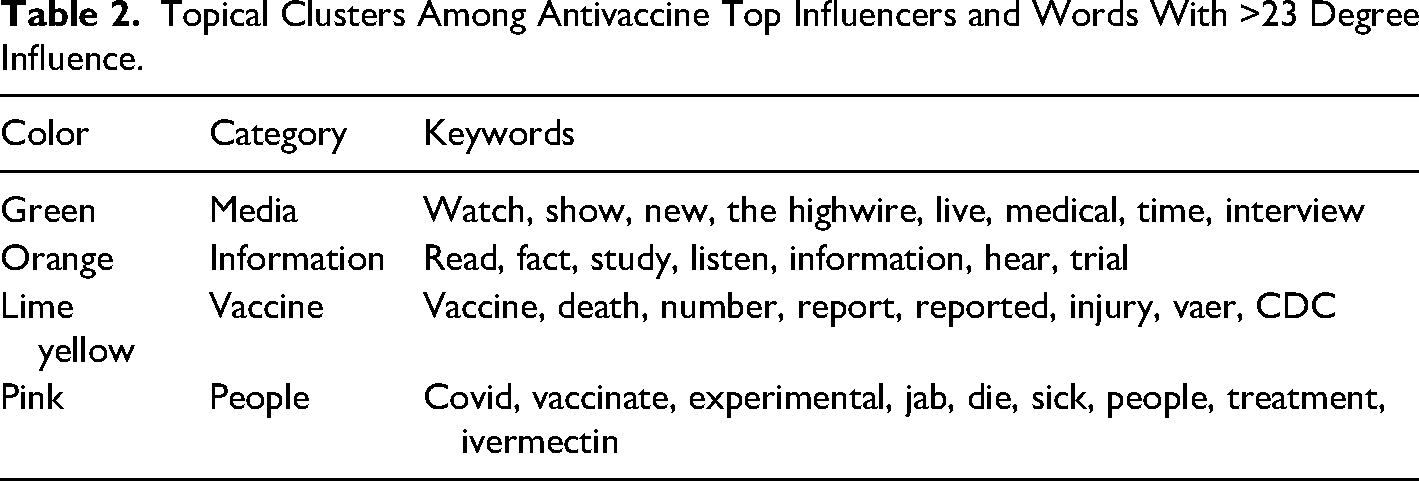
Using Infranodus, we identified themes, keywords, and topics, i.e., “topical clusters,” being discussed by the top influencers. We analyzed 1,890 top anti-influencer comments and 1,890 top proinfluencer comments. Significant differences emerged between the top anti and provaccine influencers. Figures 5 and 6 and Tables 2 and 3 show the topical clusters. Topical clusters are represented by different colors, while the lines show the connections between each word and cluster. Nodes represent each word, and the greater the word frequency and influence on other words, the bigger the node (Dicks et al., 2021).
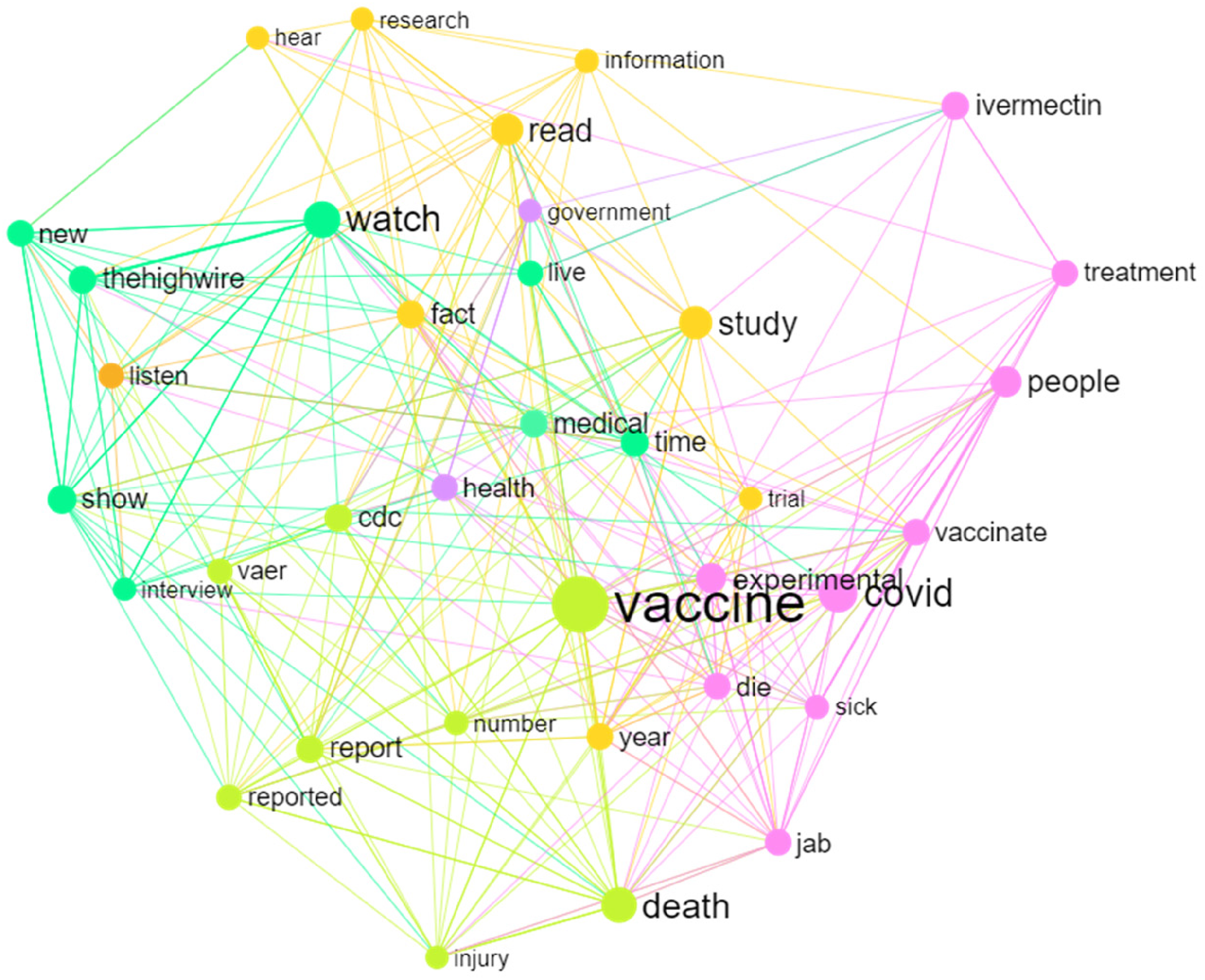
Topical clusters among antivaccine top influencers and words with >23 degree influence.
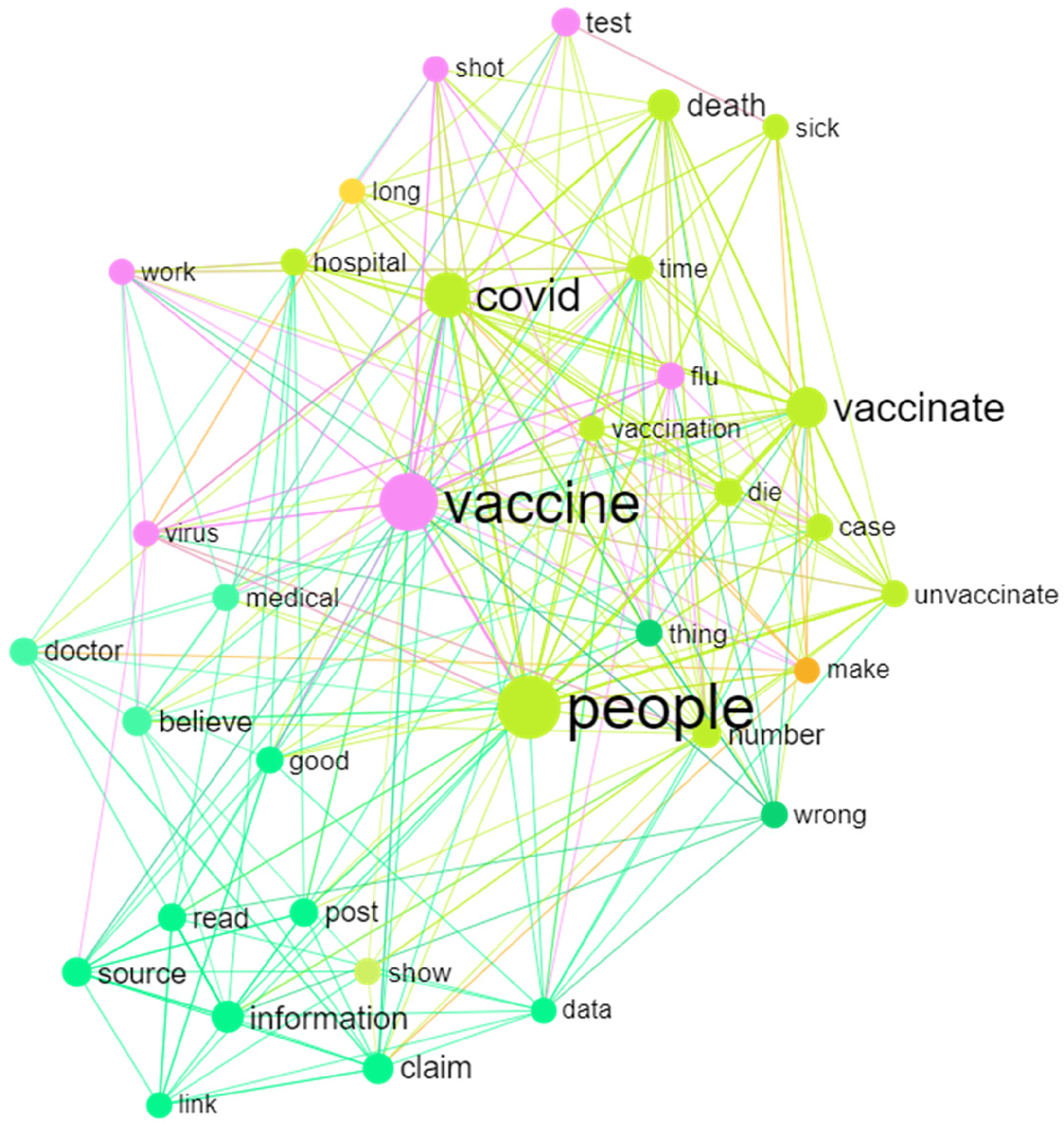
Topical clusters among provaccine top influencers and words with >23 degree influence.
Topical Clusters Among Antivaccine Top Influencers and Words With >23 Degree Influence.
Topical Clusters Among Provaccine Top Influencers and Words With >23 Degree Influence.
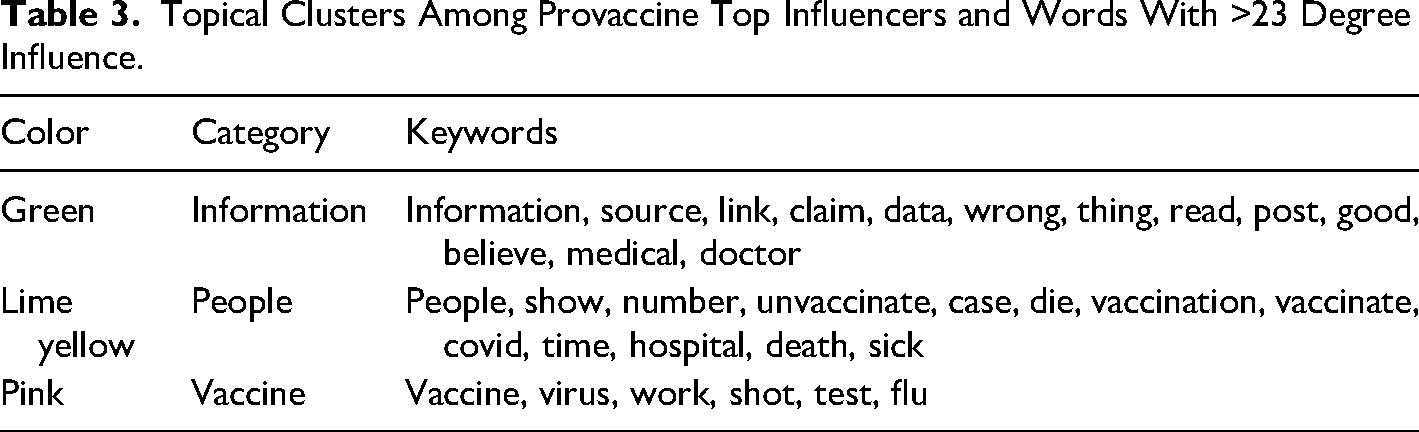
Among antivaccine influencers and nodes with an influence size of greater than 23, four main topical clusters emerged. We used 23 as our minimum degree of influence to eliminate generic words commonly used in sentences to connect ideas. The Green and Orange clusters were closely connected, as were the Lime Yellow and Pink clusters.
Qualitative Analysis
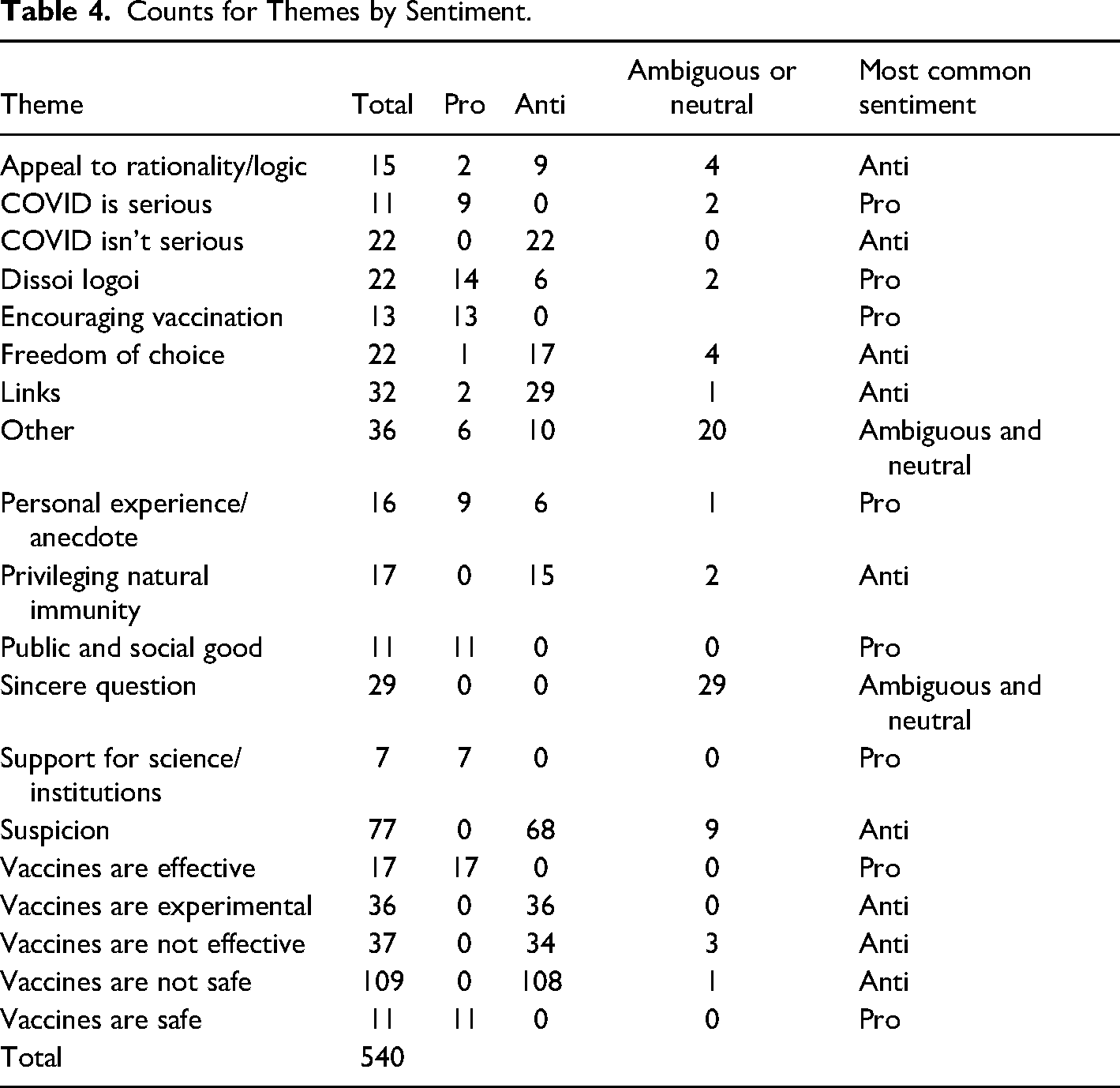
All themes appear in Table 4, with counts for each sentiment category. Many comments were coded with multiple themes.
Counts for Themes by Sentiment.
Discussion
Our study was driven by a desire to see how social media comments, already deemed problematic by the health department that hosted them, functioned as a discursive space for commenters across a range of positions on COVID-19 vaccinations. Our primary findings are:
Engagement metrics show that users engaged more when COVID-19 case rates were high, showing that citizens turn to this state health department in times of greater need. A large number of comments were made by a short list of top influencers, meaning that a small number of people dominate the conversation. Anti- and provaccine comments reflect not only different positions on issues but a largely different set of concerns. The typical association of provaccine positions with valuing empirical data and logical reasoning and antivaccine positions with personal narrative or anecdote is an unrealistic binary not reflected in our data. Suspicion with a range of entities pervades the antivaccine comments and is closely tied to safety concerns. Provaccine comments largely reflect rhetorical tactics unlikely to persuade those with opposing views or lead to productive dialogue. Both pro- and antivaccine comments position COVID-19 vaccines in relation to other vaccines, often by historicizing past successes and failures of vaccines and writing COVID-19 vaccines into that history.
The sections that follow discuss our findings in further detail.
Engagement Metrics
Results from the engagement metrics analysis suggest that people look to the state health department for information on social media when disease rates are high. Followership, follower interaction rate, and COVID-19 positive case rates followed a similar pattern across time, from January 1, 2021, to November 1, 2021 (Figures 2–4). For this reason, state health departments should disseminate more messaging and information when disease rates are high (or during high points in a public health crisis), with the expectation that more people will be looking for information during this time.
Top Influencers
On the state health department's Facebook page across 10 months, approximately 15% of over 37,000 comments (both primary and secondary) were made by 10 people. Nearly 20% of comments were made by people who commented over 200 times. These influencers not only made the most comments but also gained the most secondary comments or replies. This suggests that a small group of people dominated conversations and were generally successful in reaching others through their comments and replies. In some cases, Meta algorithms likely elevated comments as they gained more replies and interactions, which likely fueled impressions (or views) and engagement by other users.
One interesting and perhaps unexpected finding was that the majority of the top ten influencers were provaccine. It must be emphasized that both primary and secondary comments were included in determining the top 10 influencers, unlike our qualitative analysis of comments, which only included primary comments and showed an antivaccine majority. Thus, this finding may suggest that, at least for the top provaccine influencers, provaccine commenters often replied to other commenters versus making a primary comment themselves. In contrast, antivaccine commenters made more primary comments than provaccine commenters. Though we did not code secondary comments (replies), our qualitative analysis of primary comments would have yielded more pro comments if most pro comments were primary. This finding potentially suggests that provaccine commenters are more reactive to conversations and others’ comments, whereas antivaccine commenters more frequently initiate conversations.
Qualitative Analysis
Provaccine Comments
Because the overall number of provaccine comments was lower than that of antivaccine comments, caution should be taken in drawing conclusions from them, and the numbers separating frequent from less frequent themes are small as well. With that said, provaccine comments most frequently showed the following themes: vaccines are effective (n = 13), dissoi logoi (n = 14), encouraging vaccination (n = 13), public and social good (n = 12), and vaccines are safe (n = 11). Comments about efficacy often expressed gratitude for vaccines, in some cases aligning COVID-19 vaccines with earlier ones (e.g., “I am so glad my folks didn’t refuse the polio vaccine and the small pox vaccine!”). As this example shows, writing COVID-19 vaccines into a historical success narrative of other vaccines was a common move for pro comments in general. Other pro comments pointed out how vaccination correlates with lower COVID-19 infection (i.e., unvaccinated people were the ones contracting it the most).
Many pro comments also represented “the other side” through a classical rhetorical appeal called dissoi logoi, or constructing opposing views. While this device can be used to consider both sides of an issue in order to arrive at the truth, it can also lead to distortions of opposing arguments. We coded all comments addressing the “other side” in some way with dissoi logoi. Pro comments using dissoi logoi often blamed or insulted those who refuse vaccination or accused them of “fear mongering” or being stupid. Despite pro comments’ much lower numbers overall, they used dissoi logoi more than anti comments (14 vs. 6). This difference may be for at least two reasons: First, official institutions’ support of COVID-19 vaccines gives anti-vaccine commenters a large, visible target to direct their frustration, rather than vaccinated people themselves. Second, provaccine comments tend to reflect an ideology relying on high participation to achieve herd immunity, in contrast to a more individualistic view that does not rely on others’ behavior beyond wanting to be left to their own choices. For example, one pro comment stated, “Positivity rate will not go down as long as we have so many uninformed idiots refusing vaccination!.”
Our data also discredit a common idea that people with provaccine positions value empirical data while those with antivaccine positions value narrative and anecdote (see Guidry et al., 2015 for a study of vaccine beliefs on social media that relies on this idea). Though personal experience/anecdote was not one of the most frequent themes among pro comments, it is notable that it appeared in more pro comments than anti (9 vs. 6, respectively). This use of personal experience may be a promising appeal, as studies have recommended that pro-vaccine messaging draw on personal experience and narrative (Campeau, 2022a).
Other popular appeals among pro comments included encouraging vaccination and promoting the public and social good, such as by hoping to reach herd immunity or return to “normal,” expressing the belief that case and death numbers will improve with higher vaccination rates or asking others to read credible information about COVID-19 vaccines. These appeals to broader social responsibility may not be as effective as those toward specific communities (Campeau, 2022c). Comments affirming vaccines’ safety often suggested that the risks of COVID-19 were higher than those of the vaccines, shared anecdotes of having no serious side effects after vaccination, or mocked people concerned about vaccine harms as cowardly (e.g., “You big wussy” and “It's just a lil needle”).
Antivaccine Comments
The most common themes in antivaccine comments were, overwhelmingly, suspicion and concerns with vaccine safety. Suspicion's pervasiveness may be due in part to the range of attitudes that fell under this umbrella, including suspicion toward pharmaceutical companies (such as profit motive and accountability concerns), government, and industry, but it also reflects an air of distrust, primarily toward institutions. Specific points include a belief that doctors are being pressured or threatened into supporting vaccines and a sense that the strong “push” to vaccinate is itself suspicious. Some comments connect suspicion about COVID-19 vaccines to other conspiracy theories not related to vaccines, such as a concern about COVID tests being rigged and a belief that ivermectin was being discredited as a COVID-19 treatment to make vaccines seem like the only option. While some may dismiss these views as irrational or those who express them as simple victims of misinformation, suspicion's complexity demands more substantive engagement. In her study of vaccine attitudes in Barbados, Nicole Charles (2022) describes suspicion as an “affective intensity” that people attach to vaccines based on anxieties about emerging biotechnologies, neoliberal policies, and expanding state-industry partnerships, alongside frustration with a biomedical culture indifferent to those anxieties (p. 6). Consequently, vaccine hesitancy, understood as suspicion, should not be seen as something to be overcome or a refusal of care, but instead as a “generative form of care and collectivity” (p. 150).
Suspicion was often coded alongside safety concerns, and the two are closely related. The most common safety concerns included the risk of death and impact on fertility, but other harms of concern included miscarriages and other pregnancy complications, heart issues such as myocarditis, blood clots, SIDS, and alteration of DNA. Many comments with safety concerns cited data from the Vaccine Adverse Event Reporting System (VAERS) to establish the prevalence of vaccine harms, often with the belief that these numbers are underreported in VAERS. In fact, while VAERS is a legitimate database, anyone can submit a report to it. It is meant as an early warning system so that emergent patterns can be investigated further, even if aggregated data are unverified and do not represent reliable numbers of vaccine harms, even as VAERS data are frequently misrepresented (Miller et al., 2015). More broadly, a common belief was that vaccine harms are underreported or covered up.
Another common line of thinking among anti comments was that, because COVID-19 vaccines are so new, it was impossible to predict long-term consequences of taking them, and that claims of long-term safety were, therefore, automatically disingenuous. Less frequent but noteworthy strategies included suggesting that COVID-19 vaccine development was rushed, which could lead to disasters like the Cutter Incident (a 1955 case in which thousands of polio vaccines contained live polio virus because they were not properly inactivated) or ripple effects of vaccine harms (such as vaccinated truck drivers keeling over while behind the wheel). Associated with suspicion and safety concerns was the idea that COVID-19 vaccines are “experimental” or “untested,” including ideas that people are “test subjects” without informed consent or under pressure, that those involved in vaccination are “drug dealers,” and that giving these vaccines to children is “child abuse.” Many of these comments point out that the vaccines do not have full FDA approval or draw attention to the mode of delivery by using “inject” or “injection.”
Other notable themes in antivaccine comments include that COVID-19 vaccines are not effective, hyperlinks, privileging natural immunity, freedom of choice, and appeal to logic. Many comments questioning COVID-19 vaccines’ effectiveness set a high bar for judging that effectiveness by pointing out that they do not provide sterilizing immunity and will not “fix everything.” Links either included an endorsement for the source or appeared by themselves. They often pointed to videos posted on BitChute, Gateway Pundit, or Facebook pages, or websites of known vaccine-resistant organizations such as America's Frontline Doctors or Childrensdefense.org. Comments privileging natural immunity suggest that a vaccine will get in the way of the immune system “doing its job,” that it will “wipe out” or at least not add to immunity from infection, or that natural immunity is superior (i.e., more effective or longer-lasting) to immunity from vaccination. Others simply want natural immunity to be counted alongside vaccination rates when setting targets for herd immunity. Comments asserting freedom of choice push against not only mandates but perceived government overreach and invasion of privacy, at times co-opting prochoice rhetoric (“My body, my family, my choice. Stop pushing.”).
A few other common devices cut across multiple themes. Many antivaccine comments presented or advocated for a certain version of civility. This notion of civility appeared in presenting freedom of choice as a neutral or reasonable middle ground that should be respected without pressure or ridicule, regardless of which choice is made, as well as in expressing a “bothsidesism” view that bodies like the health department should not advocate for or against COVID-19 vaccines and instead give both sides an equal platform to remain credible. Another tactic was to distinguish COVID-19 vaccines from other vaccines, such as by claiming the former are not true vaccines, went through a more rushed research process, have not stood the test of time, do not have the same FDA approval, are more controlled by the government, or treat a less serious disease. This distancing of COVID-19 vaccines from other vaccines is consistent with other studies, in which vaccine skepticisms is expressed as specific to COVID-19 rather than to all vaccines (Campeau, 2022c).
Neutral and Ambiguous Comments
Neutral and ambiguous comments were often coded as “sincere question” (in which the commenter asked for vaccine information without expressing a position) or “other” (which included factual observations, general frustration, and sarcasm). Ambiguous comments demonstrating “suspicion” were similar to anti comments coded with “suspicion” but did not explicitly convey a stance against COVID-19 vaccines.
Conclusion
It is clear that pro- and anticommenters were not concerned with the same issues. Anticomments were overwhelmingly concerned with safety and conveying suspicion, only dismissing vaccines’ efficacy in smaller numbers. In contrast, safety was not nearly as common a topic for pro comments, appearing in the top five pro themes just behind other priorities, such as conveying COVID-19 vaccines’ efficacy and their potential to promote the public and social good. This discrepancy not only in positions on issues but in what the issues even are contrasts with Gallagher and Lawrence's (2020) finding that pro and anti comments in their pre-COVID data from the New York Times exhibited thematically similar tactics and appeals despite opposing positions.
Persuading people who have not been vaccinated for COVID-19 to do so may not be pro commenters’ only or primary goal; some may prefer to mock vaccine skeptics, vent their frustration with them, or simply encourage those already open to vaccination to follow through. However, if persuasion or meaningful dialog are goals, our data show that many provaccine commenters, on the whole, are not reaching far outside their own values and priorities to address anticommenters’ concerns, a finding that is consistent with Gallagher and Lawrence (2020). That is, emphasizing vaccines’ efficacy and encouraging people to prioritize the health of communities and populations are not likely to sway people who are more focused on their suspicion of the institutions promoting vaccination, risks posed by vaccine harms, and violations of freedom of choice. Suspicion, in particular, demands deep and sustained engagement, despite the common framing of vaccine hesitancy as rooted simply in incorrect information, a frame that persists alongside alternative frames (Campeau, 2023). Instead, our data broadly show pro commenters, on the whole, who are quick to mock or complain about vaccine skeptics, who in turn are frustrated with being attacked, being dismissed, or having their concerns not listened to. With that said, pro commenters’ appeals to personal experience may be a promising, though small, beginning toward bridging typical divides.
Perhaps expectedly, therefore, the Facebook comments of this state health department were not, by and large, a space for productive dialog, though state government social media may remain an important channel to broadcast information to the public in times of controversy and crisis, given the engagement the page received at critical times. In addition, hope may remain for productive discourse on the internet in spaces that are more actively moderated and in which users opt in to having meaningful dialogue (Cagle & Herndl, 2019). Future research can study the discourse of such spaces and their impact on users’ vaccine decisions as well as capture social media discourse with larger datasets or at other times and places.
Footnotes
Declaration of Conflicting Interests
The authors declared no potential conflicts of interest with respect to the research, authorship, and/or publication of this article.
Funding
The authors received no financial support for the research, authorship, and/or publication of this article.
