



Abstract
During the early twentieth century, people across Europe were enticed by magic lantern slide shows about a wide range of topics and issues. This contribution examines magic lantern images depicting South Africa and conveyed to Dutch viewers. How did the slides shape an imaginary both of South Africa and of the viewers themselves? My analysis shows that the slides not only transmitted information about South Africa – its built infrastructure, nature, population and economic sectors (in particular, the agricultural sector) – but also conveyed a narrative that established specific social subjects hierarchized on the basis of race, ethnicity and class. A critical engagement with the imaginary carried across by this material heritage helps us to understand how it promoted a colonial, social subjectivity with which potential emigrants could identify: a rights-bearing, European citizen with the right to move to South Africa and establish a new life there. Prior to any actual emigration, then, subjects were inscribed in a history of structural and physical violence, racism, alleged White superiority, social injustices and social inequality.
Introduction
In 2015, while preparing to temporarily relocate the contents of a dusty attic of a stately, seventeenth-century Amsterdam canal house, a collection of fragile, glass lantern slides of photographed images was discovered in one of the darker corners of the attic. The slides, vaguely described as ‘non-unique material’ in an archive inventory, recall earlier functions of the building. By the beginning of the twentieth century, the building housed the office of the Nederlandsch Zuid-Afrikaansche Vereeniging (NZAV), a private Dutch organization founded in 1881 that sought to generate public interest for and connections with South Africa. 1 Today, the building houses a South African cultural institute, the Zuid-Afrikahuis (South Africa House). It owns and manages the largest collection of South African literature outside of South Africa, and a vast archive containing documents related to late-nineteenth- and early-twentieth-century Dutch and South African cultural and economic relations between various companies and institutions in both countries, as well as documents related to Dutch migration to South Africa during that period. The discovery of this collection of visual images depicting early-twentieth-century South Africa prompted its restoration, digitization and incorporation into the existing archives housed by the Zuid-Afrikahuis. This was followed by the publication of a collection of essays by various authors who reflected on what the slides show and hide to ‘(lay) bare the power dynamics implied in the photos or (demonstrate) the processes of mythologizing of historical events’ (Deen, 2022: 30).
The restoration and digitization of the slides sparked a range of questions in my mind. Apart from being intrigued as to what these images show, I was also curious about how the slides worked to convey an (historical) imaginary, and, furthermore, how the slides as material objects convey meaning today as material heritage that connects our present time to a period in European history defined by nationalism and colonialism. The concept of the imaginary (rather than individual imagination) proves an analytic that, following Charles Taylor (2002: 106), allows us to investigate how people imagine their social existence and how they fit together with others. In this contribution, I will look at the content of the slides and their functioning in the discursive context in which they were viewed at the start of the twentieth century. By means of a first, but limited, exploratory case study, not intended as a systematic or complete analysis of the available, digitized lantern slide collection of the NZAV, I will consider the information these slides provided to a Dutch audience potentially interested in migrating to South Africa. Viewers’ potential identification with the imaginary of a specific rights-bearing subject was crucial in the process of establishing the idea of Dutch citizens as European citizens in a colonial space. This status granted them the right of free movement and thus the right to migrate elsewhere in search of economic opportunities. As European migrants such opportunities were available to them in South Africa’s White settler society where they were granted not only the right to enter the country and possess land, but also to claim the privileges afforded to White South Africans. I will argue that the slides were instrumental in shaping an imaginary for the viewers of themselves as a particular kind of citizen, namely, one who holds the right as a European to move to South Africa and establish a new life there.
Patterns of European migration
Since the middle of the nineteenth century, millions of Europeans had migrated to colonial regions such as South Africa, Canada, the United States, Australia, New Zealand and parts of Southern America (Bhambra, 2019: 175). During the late nineteenth century, Dutch migrants to South Africa consisted mainly of lawyers, ministers and teachers, on one hand, and technicians who worked on railway lines in the two so-called Boer republics (South African Republic and Orange Free State), on the other (Kuitenbrouwer, 2012: 23). By the turn of the century, the political situation in South Africa had changed drastically. The Boer Republics no longer existed as a result of the South African War (1899–1902), and in 1910, the Union of South Africa was declared. Under British rule, and during the Union years, emigration from Europe was stimulated to secure South Africa as a ‘White-man’s country’, while legislation prohibited migration of ‘non-Whites’. Immigration of Asian people to South Africa, except for purposes of family reunion, was, for example, legally prohibited at the start of the twentieth century (Klotz, 2013), while migration legislation in the 1930s restricted the migration of European Jews to South Africa (Shain, 2015).
From a European perspective, migration away from Europe was stimulated as a result of the First World War and the ensuing economic and labour crises. Fears of growing unemployment as a result of population growth stimulated European emigration to other parts of the world. The number of Dutch migrants to South Africa during that time was, however, limited in comparison to those who migrated to other parts of the ‘new’ world, chiefly the United States and Canada. Despite many attempts to raise interest among the Dutch public to migrate to South Africa, for instance, only about 200 migrants per year left for South Africa during the period 1913–1935 (Hartland, 1959: 195). 2 In the early twentieth century, Dutch migrants typically came from rural areas, where limited economic prospects encouraged them to seek opportunities elsewhere, mainly in the agricultural sector (Hartland, 1959: 17, 195). The fact that low-skilled White labourers had to compete with cheaper Black labourers in South Africa also explains why migration initiatives stimulated the migration of farmers with (some) financial means (Henkes, 2017: 176). This focus on agricultural migrants changed during the 1930s. Growth in the construction and industrial sectors in South Africa spurred higher demand for skilled European migrants (Hartland, 1959: 32–3). After the Second World War, and particularly after 1948, Dutch migration to South Africa significantly increased, partly due to greater centralized, state involvement in the process, and because of fear of unemployment, overpopulation and angst about a possible Third World War (Bradlow, 1978; Henkes, 2016; Hofstede, 1964).
Private cultural and emigration organizations, such as the NZAV, provided information and (financial) support to potential emigrants (Van Faassen, 2014: 7, 48). After a rebellion of the Boers in South Africa against the British Empire (1880–1881), the organization was founded in the Netherlands to unite a number of pro-Boer action committees generating Dutch support for the Boer cause. Following the South African War, British policies sought to Anglicize South Africa, policies resisted by the Afrikaner population. This prompted the NZAV to shift its support to nationalist Afrikaners by strengthening cultural ties and maintaining the Dutch language – still an official language in South Africa at that time – and Dutch education and cultural heritage in South Africa. It also provided support for the development of Afrikaans and Afrikaans literature (Giliomee, 2003; Kuitenbrouwer, 2012; Schutte, 1986). The NZAV also produced and distributed propaganda material in the form of information brochures about migration to South Africa, screened magic lantern slides and films about the country (these could also be borrowed by other organizations), provided text copy for the organization’s magazines, 3 and organized talks with accompanying visual material for potential migrants (Schrover and Van Faassen, 2010: 22).
The continued Dutch interest in South Africa needs to be related to the colonial and postcolonial politics of South Africa at that time. During the first half of the twentieth century, a period that falls together with the so-called ‘Union’ years of South Africa (1910–1948), the country was caught in a political struggle between being an English colony, and developing into an ostensibly independent settler state marked by three main strands of nationalism: a German-inspired Romantic Volk Afrikaner nationalism (Furlong, 2015); an Anglo-infused South Africanism; and an emergent Black nationalism with the establishment of the African National Congress in 1912 (Dubow, 1997; Foster, 2008). The NZAV’s transnational engagement with South Africa supported the project of Afrikaner nationalism, leading the South African newspaper, Cape Times, to quip in 1921 that the NZAV was perhaps a branch of the Afrikaner-led National Party in the Netherlands (Bradlow, 1978: 521). Driving this ideological support was the incorporation of a colonial history of White settlement in South Africa into a twentieth-century discourse of ethnic and cultural kinship contained in the notion of stamverwantschap (Henkes, 2020; Kuitenbrouwer, 2012; Raben, 2013). Although stamverwantschap literally means tribal affiliation, its meaning ranges from denoting cultural traits (including language and religion) between the Dutch and Afrikaners to genealogical, and racial kinship denoting a transnational, ethnic community (Henkes, 2020: 125–6; Jurg and Kuitenbrouwer, 2021: 168).
European and specifically Dutch–South African migration during the last part of the nineteenth and first part of the twentieth centuries has already been extensively researched. Barbara Henkes (2016, 2020) focusses, in particular, on the Dutch–South African dimension, while Audie Klotz (2013), Sally Peberdy (2009) and Edna Bradlow (1978) discuss a broader range of nationalities migrating from Europe and elsewhere to South Africa during the twentieth century. Dutch migration during the twentieth century has been examined by Hartland (1959), Hofstede (1964) and Van Faassen (2014). This scholarship, though, typically does not specifically address the work of visual media such as these lantern slides within the historical context of migration. Only Henkes incorporates photographs related to Dutch migrants in South Africa, but not as the main focus of her analysis. My research connects to this existing scholarship on Dutch migration to South Africa during the first half of the twentieth century – roughly the period after the First World War until the end of the 1920s – by considering the screening of magic lantern slides as part of the emigration process.
Magic lantern slides
Magic lantern slides form a hybrid, visual medium consisting of images on glass plates that are often accompanied by texts. These texts could be part of the slide, in the form of descriptive labels, 4 or could complement a selection of slides as a lecture or talk. Historically, the screening of magic lantern slides was a public occasion and served a range of purposes stretching from entertainment to education (Dellmann, 2020: 3). Until recently, lantern slides were a relatively forgotten visual medium, though the medium is gaining scholarly attention (see, for example, Dellmann and Kessler, 2020; Jolly and DeCourcy, 2020; and B-Magic: The Magic Lantern and Its Cultural Impact as a Visual Mass Medium in Belgium, a research project running from 2018 to 2022). The objects themselves (the glass slides and the projectors required to view these images) and the diverse practices of screening the slides are part of a long and established history (Menotti and Crisp, 2020). Media scholars consider these glass plates as part of screen culture and its history, not only in Europe and America, but also in other parts of the world, including former European colonies (Jolly, 2020). Magic lantern slides are often seen and treated as the precursor of cinema, but given the specific combination of optical representation and live performance it makes sense to see them as a medium in their own right with their own history (Van Dooren, 2013: 185).
As Dellmann (2016: 341) explains, lantern slides are ubiquitous in museums, archives and library collections, but these collections are often not well documented, registered, catalogued or digitized. This was certainly also the case with the lantern slide collection of the NZAV which, apart from the vague description as ‘non-unique material’, was otherwise uncatalogued and not described when they were discovered in 2015. Today, this collection consists of 506 digitized images (containing many duplicates), of which the original, material artefacts are stored in six wooden trays. 5 The slides of five of the six trays (called series A to E) have been digitized, leaving 95 slides (series X) not yet digitized. A partial description of the slides and references, and in a few cases of their re-use in publications, is provided by Gerrit Schutte (2022). The digitized but undated slides made from photographs taken most likely during the first two decades of the twentieth century, cover a range of topics and categories: maps of the country, industrial landscapes (such as harbours and piers), cityscapes (streets and historical buildings), townscapes, landscapes (including mountain views, mountain passes, seascapes, rivers, dams, lakes and waterfalls), tourist attractions and/or leisure activities (e.g. the cable car at Table Mountain, rivers and dams, beach activities, cave visits, snake park, Kruger Park), agriculture (crops, cattle, sheep, farm buildings, workers conducting various kinds of farm labour), infrastructure (steam trains, railway lines, airplanes, mountain passes), mining activities, fauna and flora, ethnography (representations of Black South Africans in so-called ‘tribal’ settings), built heritage (Cape Dutch architecture), and references to Afrikaner history including images of Boer heroes from the South African War (statues and photographs, monuments) and events commemorating White, Dutch-Afrikaans speaking farmers’ settlement in the South African interior, an important event in the Afrikaans psyche linked to the Groot Trek (great trek) (Fourie, 2022).
Neither the origin of the slides, nor the logic of their arrangement in these six series is known, but one wooden box in which part of the collection is housed, contains a brass plate stating ‘South African Railways’, 6 hinting at the possibility that the slides were somehow acquired or borrowed from the South African railway company for use in the Netherlands. Almost no data exist about when the images were produced or by whom. The archives contain letters about the exchange of slides between the NZAV and the High Commissioner for South Africa in London (ZAH Archives: NZAV, Inv. No. 2508) and a few scant references from the archives indicate that slides were made from photographs taken during visits of individuals to South Africa, or copied from existing photographs in magazines, giving some indication of the images’ circuits and target audiences (Jolly, 2017; Schutte, 2022). In turn, the NZAV archives show that slides from their collections found their way into the catalogues of other slide manufacturers, such as the commercial company Merkelbach, and the Amsterdam Lichtbeelden Vereeniging (Amsterdam Lantern Society) (ZAH Archives: NZAV, Inv. No. 2494), and were reprinted in magazines and booklets. Although there is no indication in the archive of how the slides and the sets relate to one another, the specific relation of the slides to each other within the sets and across the sets is possibly not that important, following Martyn Jolly (2017). According to him, the separate slides constituting a set and their order within the set should not be seen as fixed. It was the lanternist or person giving the lecture who decided on the specific combination of slides to be projected, and slides from various sets were frequently combined together as required per occasion. Some of these images seem to be rather specific to the NZAV collections, while images of commercial activities referring to agriculture, mining and tourism, as well as the ethnographic images correspond to slides listed in commercial and other catalogues of the same period too. This suggests that a visual genre with specific visual imaginary and a specific discourse on ‘South Africa’ publicly existed and circulated at that time.
The NZAV collection of magic lantern slides was used for public events such as organized talks or lectures on South Africa given by academics or students visiting from South Africa, government officials, or professionals of various kinds on lecture tours in Europe – often with the purpose of providing information about South Africa to stimulate emigration to the country. During these talks, visual material, such as maps, lantern slides produced mostly from photographs taken during the first two decades of the twentieth century and/or films were often used to accompany the talks. Very little information could be found concerning the audience. Newspaper reports consulted (discussed below) sometimes mention venues (such as bioscope halls in bigger cities and towns), speakers and, if applicable, the audience to whom the talk was addressed if it concerned the members of a society or organization – in which case it usually concerned an agriculture-related institution. The reports mention that the talks were well attended, that the aim of the talk was to provide potential emigrants with information about South Africa and, in particular, about farming in the country, and that audiences reacted enthusiastically to the talks and screenings.
The NZAV tasked itself with providing interested members of the public a broad range of images of South Africa: the slides were intended to show examples of the country’s:
natural beauty, urban planning, companies, etc. of its mountains, valleys, animals, plants, crops; its trade and industry, its harbours, railroads, and other modes of transport, bridges, etc; its white inhabitants and its k*, their lives (sic) their customs, their homes; the monuments of old-Dutch energy and art, of modern entrepreneurship etc. – having said nothing yet of its history!
7
(Hollandsch Zuid-Afrika, 1913: 6)
In short, the lantern slides were to provide ‘een denkbeeld ( . . . ) van Zuid-Afrika’ (Hollandsch Zuid-Afrika, 1913: 6). This Dutch word, ‘denkbeeld’, can be translated as a mental image and refers to that which is seen with the mind’s eye, but literally refers to an ‘image to think with’. This literal meaning – one that has more of a collective dimension than the implied individual experience of the notion of the ‘mind’s eye’ – is a useful heuristic device to understand how these slides functioned. Conceptually, the notion makes evident that slides and other visual media offered the Dutch public a visual idiom through which to make sense of – to them – unknown world (Good, 2019: 102). More specifically, the concept also alludes to the manner in which image and idea connects in the mind as imaginary: an image as tool to think with. It also brings to mind the German word Vorstellung, understood as both the act of imagining something as a picture in one’s mind, and the concrete enactment or actualization of what has been imagined often used for theatrical performances (Johannessen, 2019: xii). In the case of the lantern slides, this dual semantic dimension helps us to understand that the images worked in two reinforcing ways. As a media tool these images were instrumental in creating social imaginaries (of South Africa in this case), while also concretizing these social imaginaries as visual images.
Methodology
Frank Kessler provides a useful theoretical model, or heuristic tool of the lantern dispositif – that is, the interplay between various aspects constituting the screening of magic lantern slides. In his model, the spectator stands in relation to a text (here understood as the combination of slides and the lecture or talk) and a performance context: the text, he proposes, adopts a specific mode of address to the spectator, while the performance context assigns a role to the spectator in line with an intended outcome. The spectator thus adopts an attitude in accordance with the assigned role and develops expectations with regard to the text as a reply in response to having been addressed according to a certain role (Kessler, 2020: 182–3). If we combine this model with the work done on how publicly circulating texts create publics (see Warner, cited by Hamilton et al., 2020: 43) we are able to investigate, in the first instance, how this visual medium not only instructed, educated and entertained, but also assigned specific roles, or social subject positions with which viewers could identify. Second, this model will allow us to explore how the lantern slides and the newspaper reports on the events during which they were shown proposed ideas or imaginaries relating to specific social subjects to their Dutch viewers and how, in turn, these viewers might have been constituted as a potential public who could identify with the presented social imaginary.
Kessler’s model of the dispositif makes evident the relevance of the discursive practices around the viewing of these images. Similar to what Jolly describes with regard to lantern shows in Australia, these screenings helped form a ‘coherent colonial audience’ as a means to connect the colonial/settler society with their ‘mother country’ (Jolly, 2020: 39). However, this colonial audience was not only formed in the colonial territory ‘elsewhere’, but also ‘back home’ because colonial images were also viewed by citizens in Europe, as Elizabeth Edwards explains. These images of colonial territories and settler societies were the ‘connective tissue of the sense and visualisation of colonial experience’ (Edwards, 2016: 55) that linked the colonial experience to colonial audiences ‘back home’. In the Dutch context, the showing and viewing of the South African-themed lantern slides functioned as this ‘connective tissue’, implicating its viewers in the project of colonial settlement elsewhere by providing its viewers with an imaginary by means of which they could start thinking of themselves as potential migrants.
For the purpose of this discussion, I utilized the digitized sets of slides in possession of the ZAH Archives. An obstacle in the research process was the fact that the archive contains no specific references to how slides and lectures were combined. It does, however, contains (mostly undated) lists in various dated folders describing slides (e.g. ZAH Archives: NZAV Inv. No. 2508, dated 1926), not only indicating the content of slides, but also possibly suggesting the particular order in which slides were shown at specific screenings. The archive folders dated from the 1930s onward also contain various draft typescripts of talks or essays on South Africa. However, the screening of magic lantern slides were, from the late 1920s onwards, gradually combined, overtaken and finally replaced by regular slides and (documentary) films. Given this development, and the fact that these essays or talks contain no references to lantern slides, I did not include them as data in my analysis. In the online newspaper databank, Delpher, however, I found newspaper reports about NZAV-organized lantern screenings and talks. These newspaper reports give some idea of the content of the talks. Because no original lecture texts linked specifically and clearly to any of the slides or slide sets, I combined these newspaper reports with documents from the paper-based archives of the NZAV housed by the Zuid-Afrikahuis to get a sense of the content conveyed during these events. 8
The magic lantern slides of the NZAV
Based on the consulted newspaper reports, the lectures or talks during which these slides were also shown, contained, roughly speaking, a comparable structure and set of themes and subjects. Some of these screenings were given specifically to members of various agricultural societies, while other talks were addressed to more general audiences, even though the aim was still information provision about emigration to South Africa. Because the emigration information provision was specifically targeted to those in the agricultural sector, the talks (according to the newspaper reports and the slides’ content) provided specific information about various types of agriculture practised in South Africa, the country’s climatological conditions, availability (or lack) of water for agriculture and how this was resolved by irrigation. Furthermore, speakers referred to the estimated required amounts of capital necessary to settle in South Africa as a farmer, and informed the audience of the conditions under which such settlement could take place, whether via individual settlement, service-training with an existing South African farmer, or syndication.
Apart from describing the farming-specific opportunities and conditions for potential emigrants during these talks, an underlying narrative also emerges from the archival material. This narrative is complex, and consists of various elements that produce an imaginary of specific and different social subjects. The first element in this narrative, as found in the consulted newspaper reports, is an observation about the population composition of South Africa. The Dutch readers (and by implication the audiences of the talks) are told that South Africa consists of 1.5 million White people and 5 million Black people. This information is not only descriptive, but introduces the theme of racial difference. The implications of this established difference will become clear shortly.
The second element is the establishment of a transnational and ethnic-cultural connection across time between the two countries and, in particular, between the Dutch and the White, Afrikaans-speaking part of the South African population – discussed above already in terms of stamverwantschap. This historical, ethnic relationship between the Dutch and White, Afrikaans-speaking South Africans is anchored in the establishment by the Dutch seventeenth-century trading company, the Vereenigde Oostindische Compagnie (VOC), of a refreshment post at the Cape under Jan van Riebeeck. This reference not only connected the two countries together historically, but also provided the possibility of a sense of generational continuity between the colonial settlers of the VOC period and their progeny – in this case particularly the Afrikaners or Boers – and the potential Dutch migrants at the start of the twentieth century in Europe. In the first instance, this historical connection is established by means of references to Cape Town, also known as the ‘Mother City’ – an enduring linguistic reminder of mythical claims to the origin of civilization brought by European settlement to the country. Figure 1, of Cape Town’s export harbour, recalls this moment of colonial arrival in South Africa. The cultural legacy of European settlement is also recognized through referencing shared heritage, such as that of a famous wine estate’s gabled farmstead built in the so-called ‘Cape Dutch’ style (Figure 2). References such as these emphasized not only the historical but also the cultural connections between the Afrikaners or Boers and the Dutch in the form of Dutch colonial, built heritage.
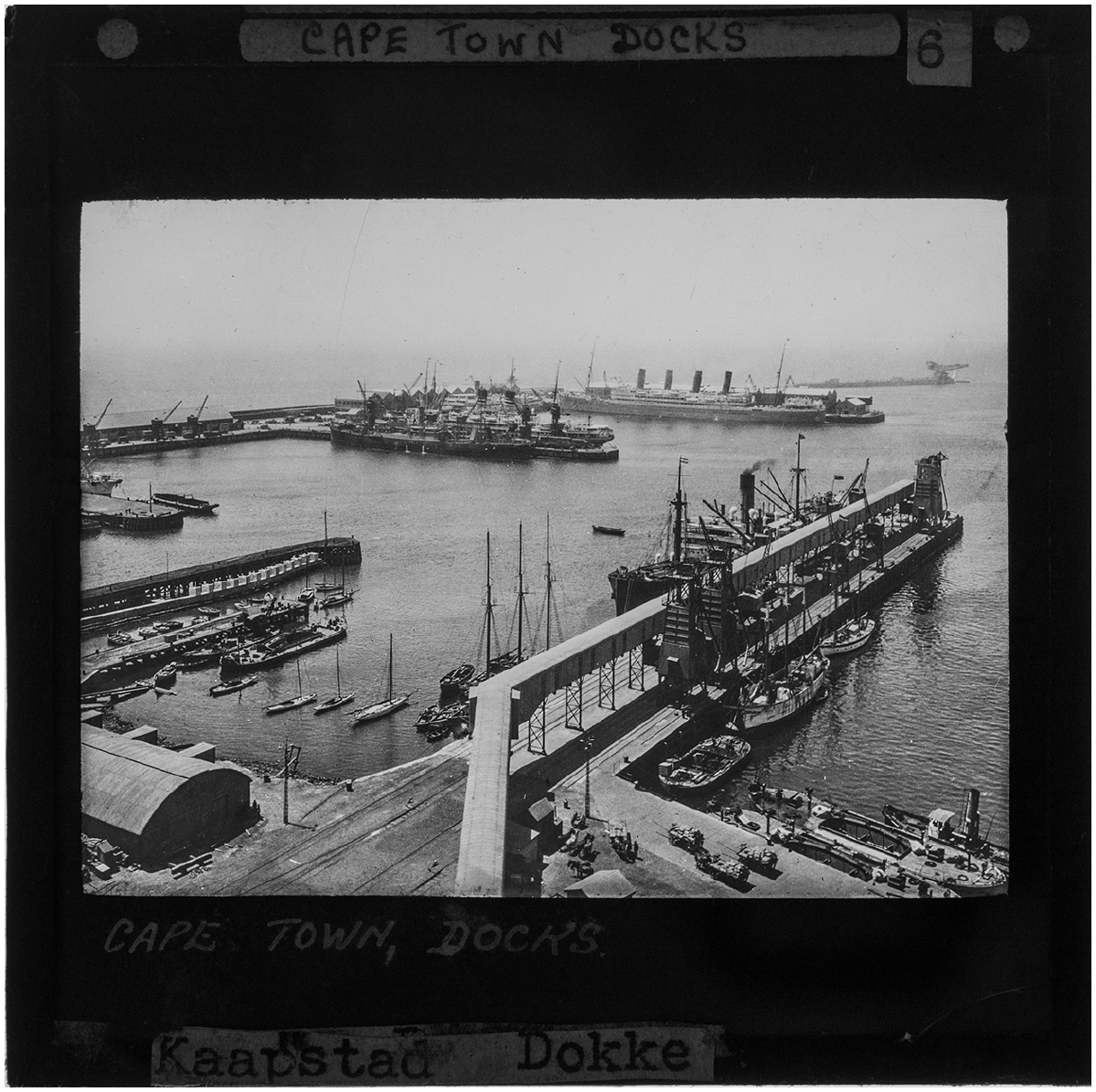
Series AA, labelled ‘Cape Town Docks’, slide number 6 (Image Archive, ZAH).
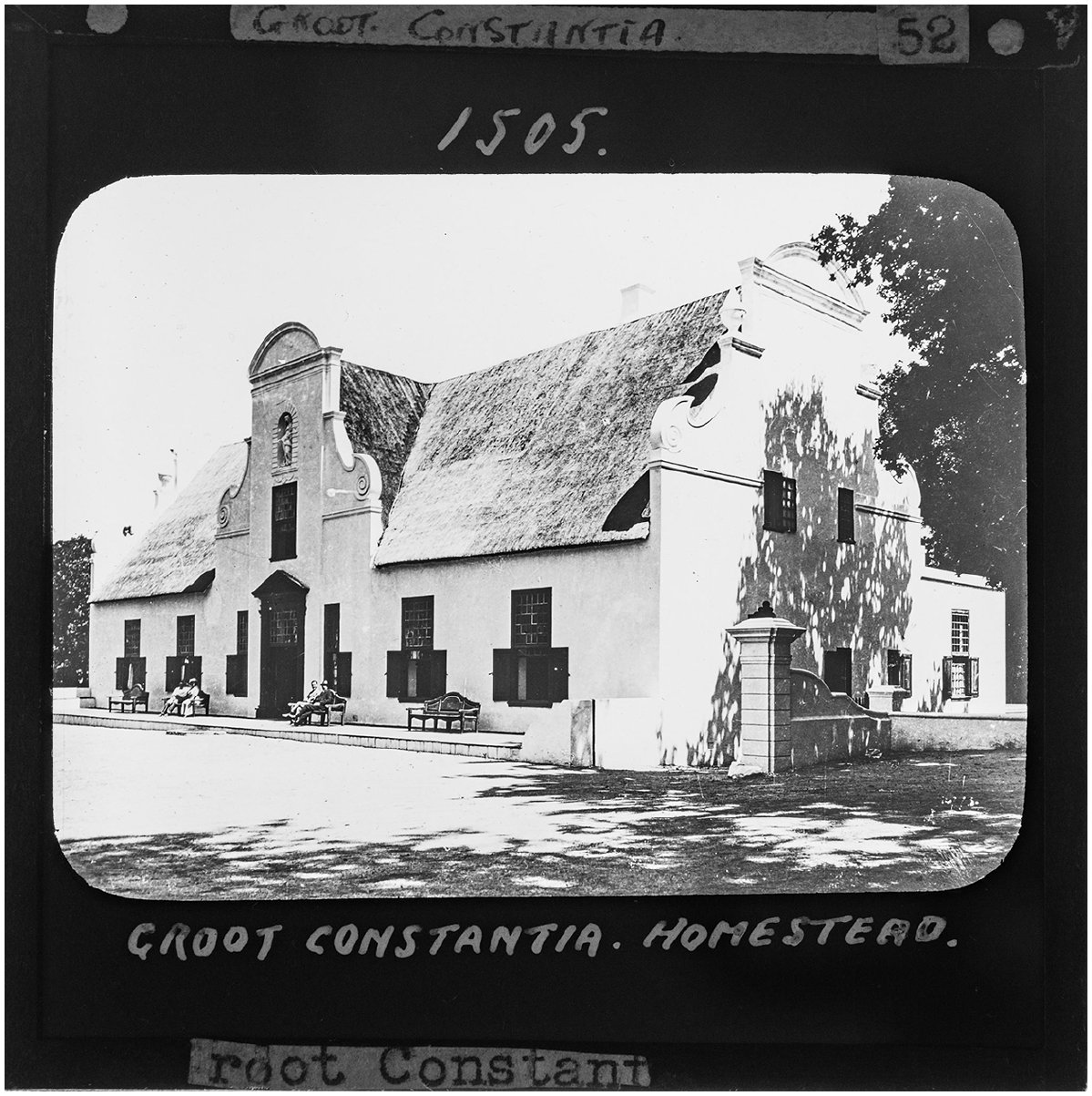
Series AA, labelled ‘Groot Constantia. Homestead.’ Slide number 52 (Image Archive, ZAH).
A third element, closely related to the temporal allusions of the previous, crystallizes around a number of ideas related to the binary between nature and culture and/or technology. Many of the slides showcase South African nature, which takes a central role in national identification with the country. The country’s ‘natural beauty’ does not stand on its own though, and in the talks the combination of references to natural beauty and modernity – referenced as urban planning, infrastructural development, mechanization and so forth – in fact outlined the temporal, modernizing development of the colonial state. This development is not only a development in time, but also as a movement through space, as Keith Breckenridge has so usefully observed elsewhere: from Cape Town’s harbour – the point of arrival for migrants from other continents – to the colonial city, and then following the line of railways, passing by towns and villages to the rural hinterland of the South African farm (Breckenridge, cited in Hofmeyr, 2022: 83). Spatio-temporal movement is suggested too by the slides and slide descriptions of the NZAV collection, and was, most likely, an experience that, if not shared by many Europeans who migrated to the country, at least recognizable from accounts of it by others. For example, J. Forsyth Ingram’s travel guide, The Story of an African Seaport: Being the history of the Port and Borough of Durban, the Seaport of Natal (originally published in 1899) for ‘merchants, businesspeople, and would-be settlers’ (Hofmeyr, 2022: 80) provides an account of a South African journey that starts at a port city, and continues by train past ‘picturesque farmsteads’ on various farms (Hofmeyr, 2022: 82). Along the way the guide provides information about farming, infrastructure, water supply and other economic activities such as mining. Closer scrutiny of Ingram’s text (and perhaps of others too, such as Sargent (1914)) might reveal further overlaps in terms of the circulation of a European social imaginary regarding modernity and the colonial state’s development, but extends beyond the objectives of my contribution to this special issue. In any case, it is clear that as colonial denkbeeld, the magic lantern images indexed White settler society’s avowed modernity (its industry, harbours, infrastructure), heritage and history in juxtaposition to the perceived technological, social and cultural otherness of the country’s indigenous inhabitants, considered as traditional, tribal and timeless.
Additional images function in this way. As an image indexing modernity, Figure 3 presents the urban, built context of Johannesburg as shorthand for urban development, underlined by the motor cars and high-rise buildings. Figure 4, a photograph of a statue of the famous Boer president, Paul Kruger, references once more a historical connection in the form of Boer/Afrikaner memorial heritage. In the Dutch context the reference to Paul Kruger was most likely (still) a familiar historical reference to Dutch audiences given the ecstatic, pro-Boer support among many Dutch during the Boer Republics’ fight against the British at the end of the nineteenth century (Kuitenbrouwer, 2012).
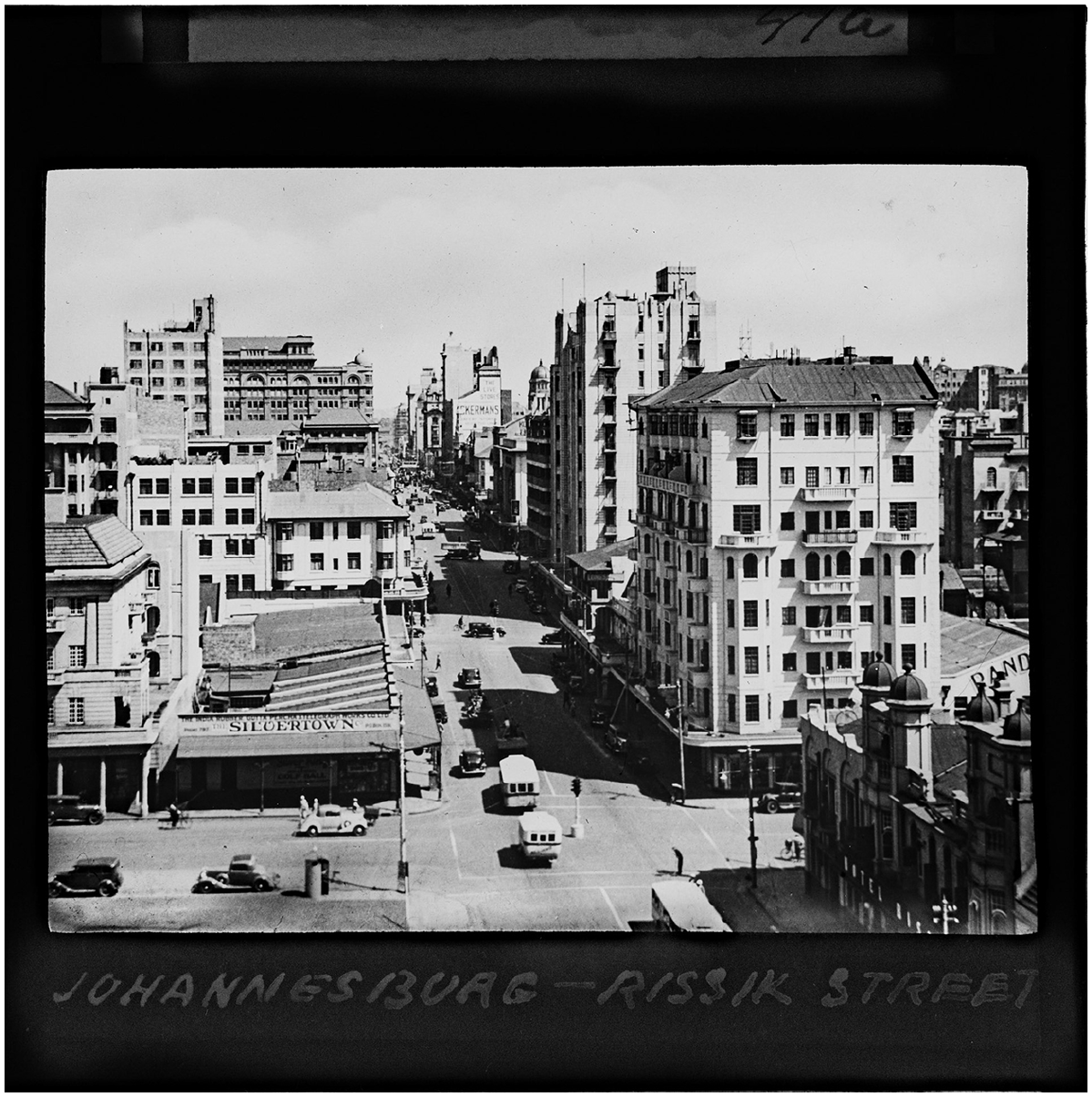
Series BA, labelled ‘Johannesburg – Rissik Street’, slide number 41a (Image Archive, ZAH).
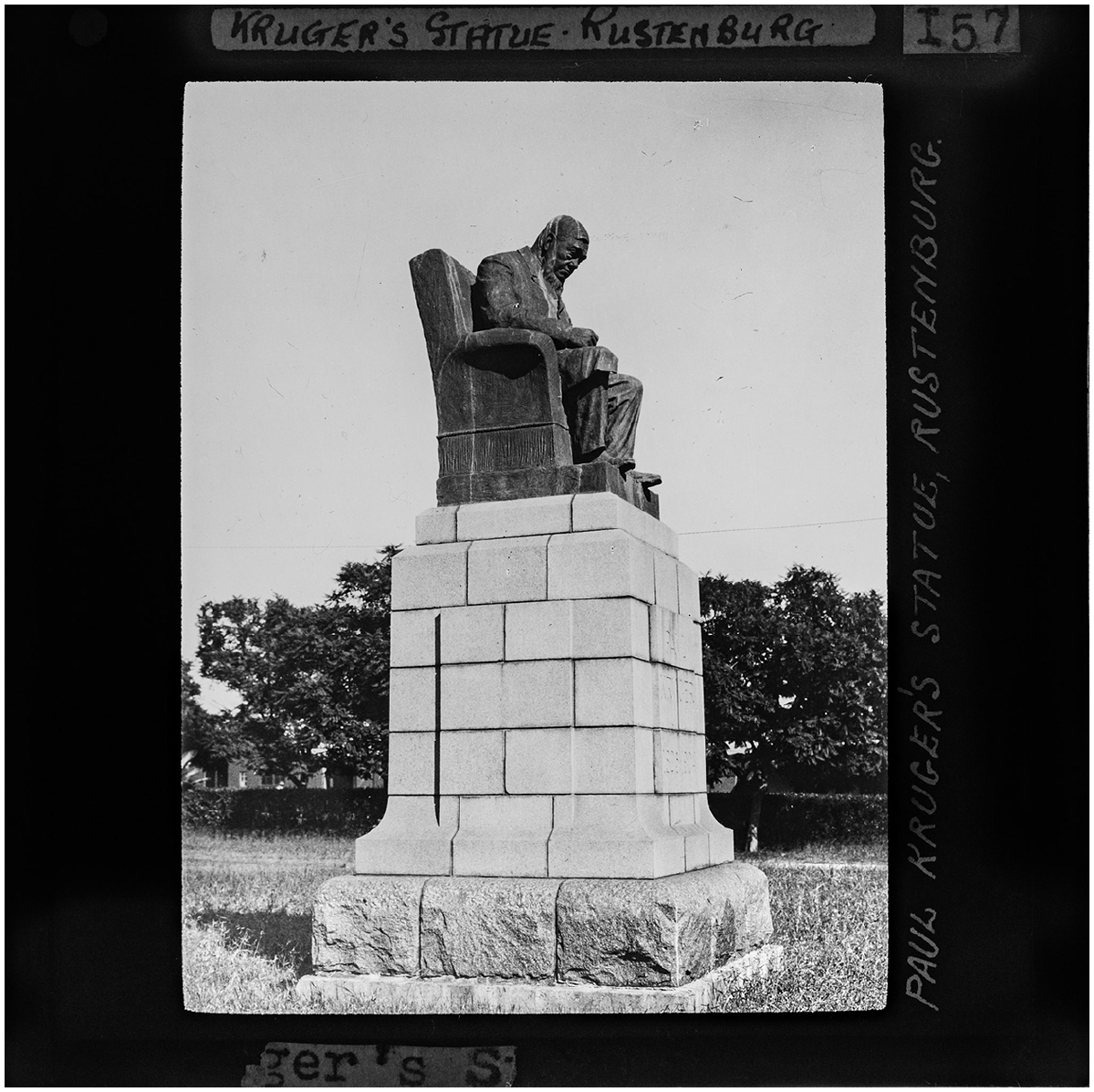
Series AA, labelled ‘Paul Kruger’s Statue, Rustenburg’, slide number 157 (Image Archive, ZAH).
Figures 5 and 6, however, tap into ideas rooted in colonial thinking to represent the country’s indigenous inhabitants in a natural or ‘authentic’ (i.e. not European) context as traditional and timeless by depicting them as ‘tribal’, ‘rural’ and ‘timeless’. Figure 5 shows ‘a native kraal’, that is to say, a depiction of what is understood to be ‘traditional’ housing. Somewhat more specifically, the label of Figure 6 describes the depicted person as a ‘Pondoland Native’. 9 The natural landscape in which he is seated, and the activity he is doing – smoking a traditional pipe – both suggest a sense of timelessness. Such connotations circulated widely at the time. In 1928, the NZAV chair J. W. Pont, in a talk on Dutch–South African relations, referred to Africans living in cities as detribalized in comparison to those who are still tribalized and living in remote, rural areas (Leeuwarder Nieuwsblad, 1928: 3). References to the African population differ in the extent to which they homogenized or did not homogenize Black South Africans as a single group. Some references, indicate a ‘tribal’ imaginary that distinguishes between different Black South Africans: references to ‘Zulus’, for example, or, as is the case with Image Six – ‘Pondoland Native’ – attest to these divisions, which have since been thoroughly critiqued and historicized (Comaroff and Comaroff, 1991; Hamilton and Leibhammer, 2016). Even so, many references that homogenized Black South Africans as a single group were also found in the primary data. It was exactly these kinds of ideological distinctions (White/Black, modern/traditional and historical/timeless) that informed the political claim-making of White nationalism which in turn informed the systematic restrictions enacted on the Black population of South Africa.
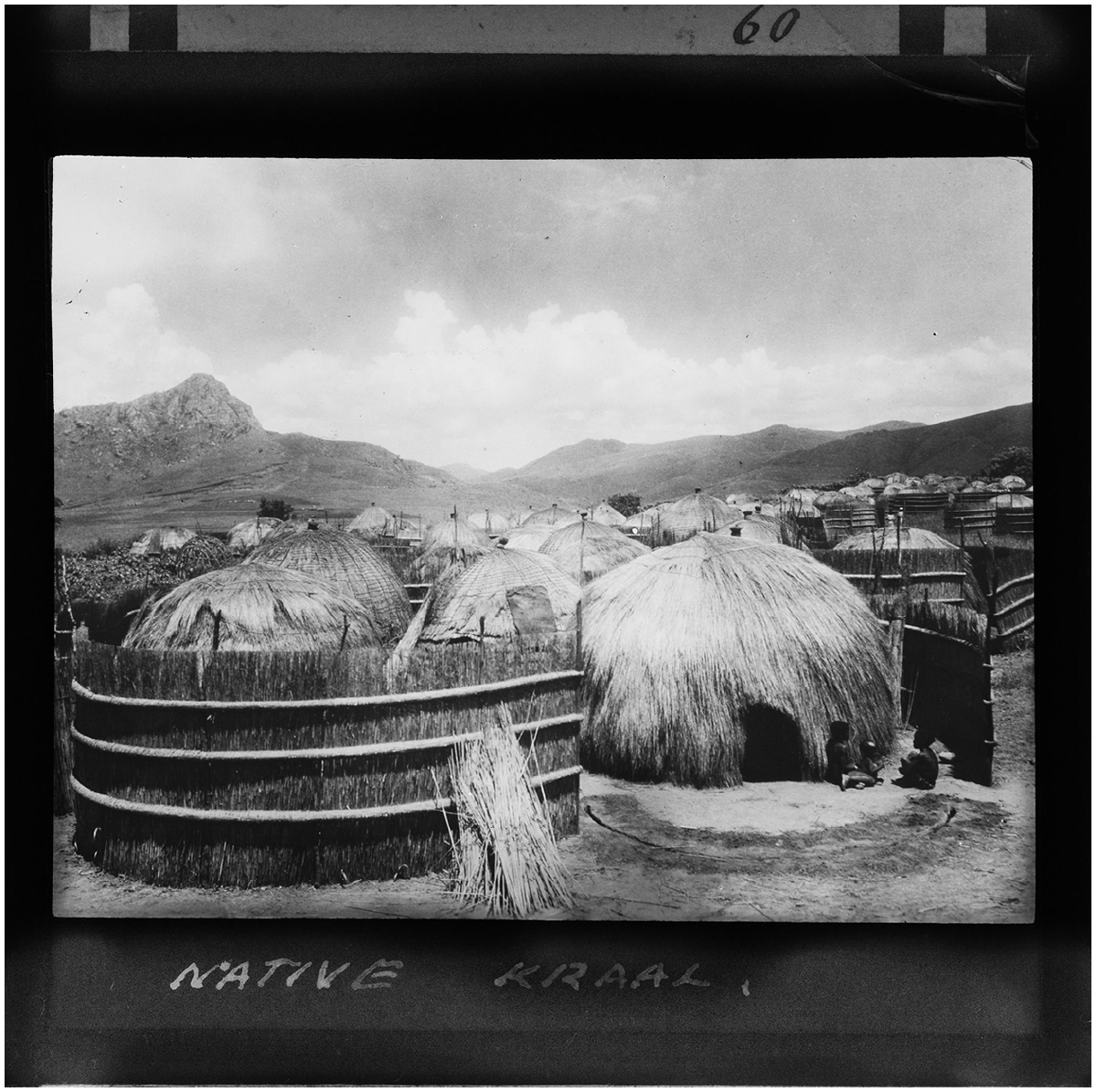
Series BA, labelled ‘Native Kraal’, slide number 60a (Image Archive, ZAH).
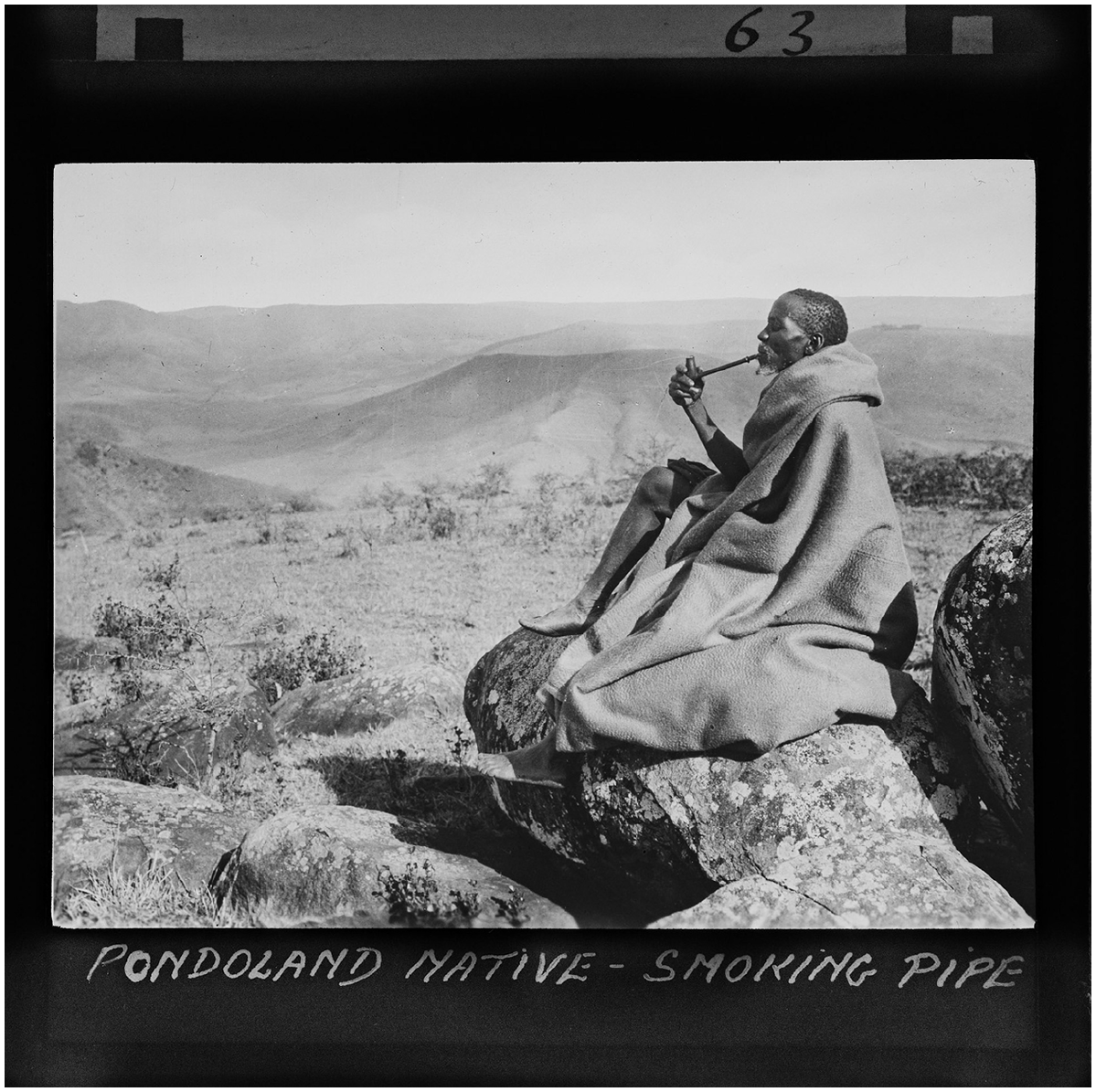
Series BA, labelled ‘Pondoland native–smoking pipe’, slide number 63 (Image Archive, ZAH).
Isabel Hofmeyr, in her critical discussion of travel texts, such as that by Ingram discussed above, also remarks on this colonial representation of Black South Africans and how it in fact reveals an underlying settlement mentality:
Indigenous communities have all but disappeared (in Ingram’s description): massacred, removed, or turned into ethnographic subjects who, like stoic statues, dot the narrative and its illustrations . . . The farm in Ingram’s text is portrayed in terms of cost, climate, and crops . . . Ingram’s depictions operate as a potent narrative instrument of imaginative land possession. (Hofmeyr, 2022: 82)
A more engaged interaction with Ingram’s text is beyond the scope of this enquiry. However, a brief look into Ingram’s text has found at least one image in the NZAV collection that was already published in Ingram’s Natal Colony Handbook in 1895, namely the interior of a ‘native Chieftain’s hut’ (Ingram, 1895: 20) which, in the NZAV collection was demoted to an image of the ‘interior of a native hut’ as the slide description indicates (series BA). 10
These shifting terms and descriptions highlight the issue of the right to possess land as an important characteristic of the theme of racial difference. Along to the binary of modern and traditional, historical and timeless, Black South Africans are, in this narrative, not only associated with tradition and rural contexts, but also situated within a capitalistic system on the farms as available labour for White land owners (Mbembe, 2017). This inscription of Black South Africans as ‘labourers’ – both in terms of the imagery of the slides and in the talks – is a prominent topic in the discourse addressed to the prospective Dutch migrants, as additional images show. These images show how Black South Africans providing menial labour were incorporated in the imaginary of farm life in South Africa.
11
Figure 7 suggests a distinction between manual labour and mental labour that also follows a racial logic: Black men are standing in line to have their bales of cotton weighed and inscribed onto a list by a single, seated White man. In Figure 8, we see a group of African women, seated on the ground in the open, uncovered air, sorting peanuts. Figure 9 presents the grading by hand of tobacco leaves in a shed-like structure by a group of African men, overseen by (it seems) three White men. Black South Africans – the imagery and the talks made clear – are available to conduct the manual work required for successful farming, while White men conduct the mental labour.
12
A hierarchical distinction between White farm owners and/or managers and Black farm workers – restricted in their movement and social mobility, but valuable for their contribution as governed subjects to the economy – formed the bedrock of South Africa’s farming economy. The importance of a certain level of financial independence of potential emigrants was, therefore, also explicitly stressed in the emigration propaganda as condition for a particular standard of living and guarantee of a specific position in South Africa, or as the narrative suggested:
[He] who goes to Africa should be able to make his own ends meet, buy his own little farm, but then great success is also guaranteed. In no other country in the world is one able to earn money so easily and double and increase one’s bit of capital so easily and so quickly.
13
(Het Vaderland, 1922: 1)
Whiteness itself, as comments like these suggest, was not a sufficient criterion to be successful in South Africa, and an additional class element of wealth or access to capital was necessary to mitigate the perceived risk of European migrants ‘falling’ to a level associated with Blackness. 14
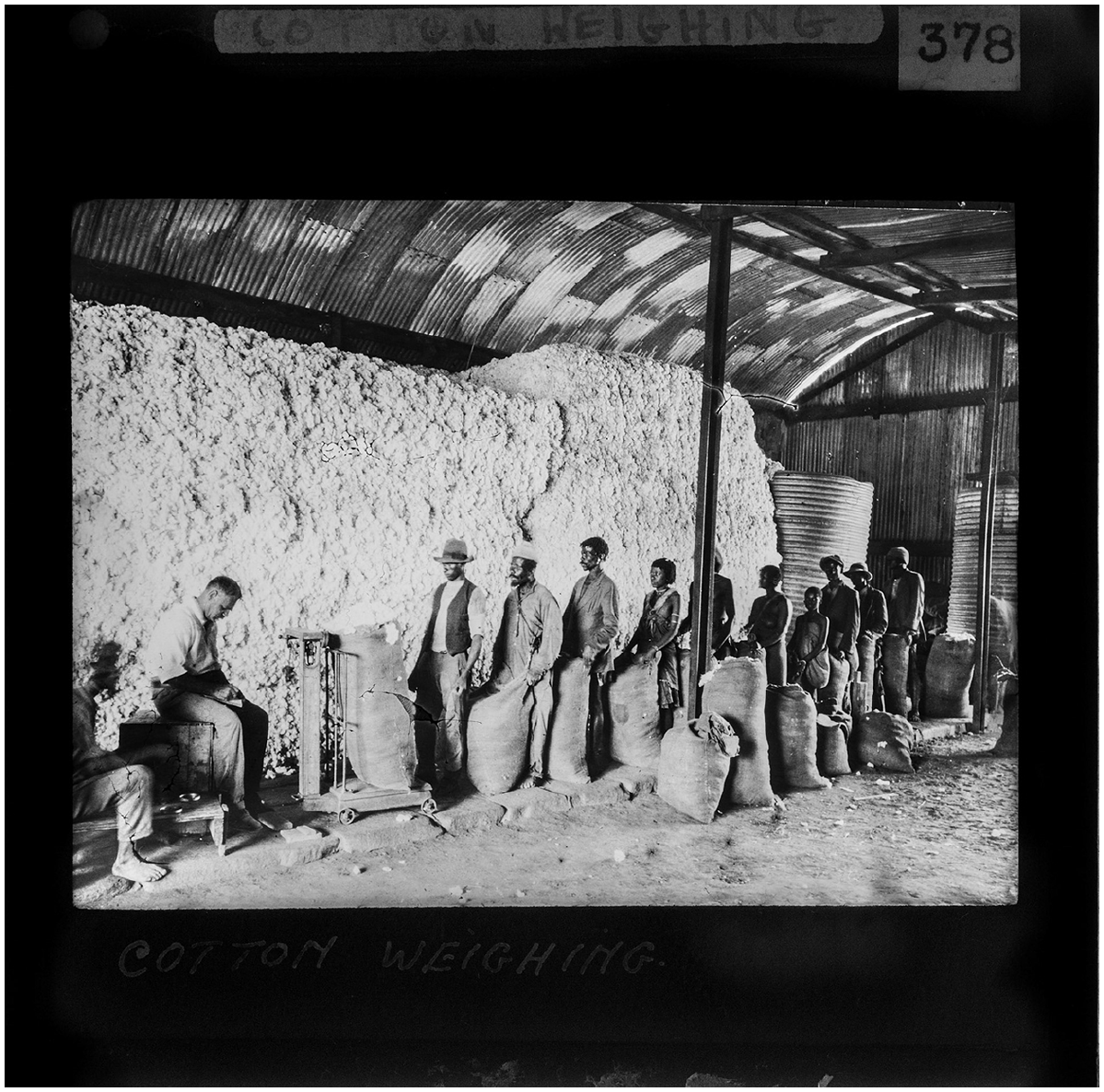
Series AB, labelled ‘Cotton weighing’, slide number 378 (Image Archive, ZAH).
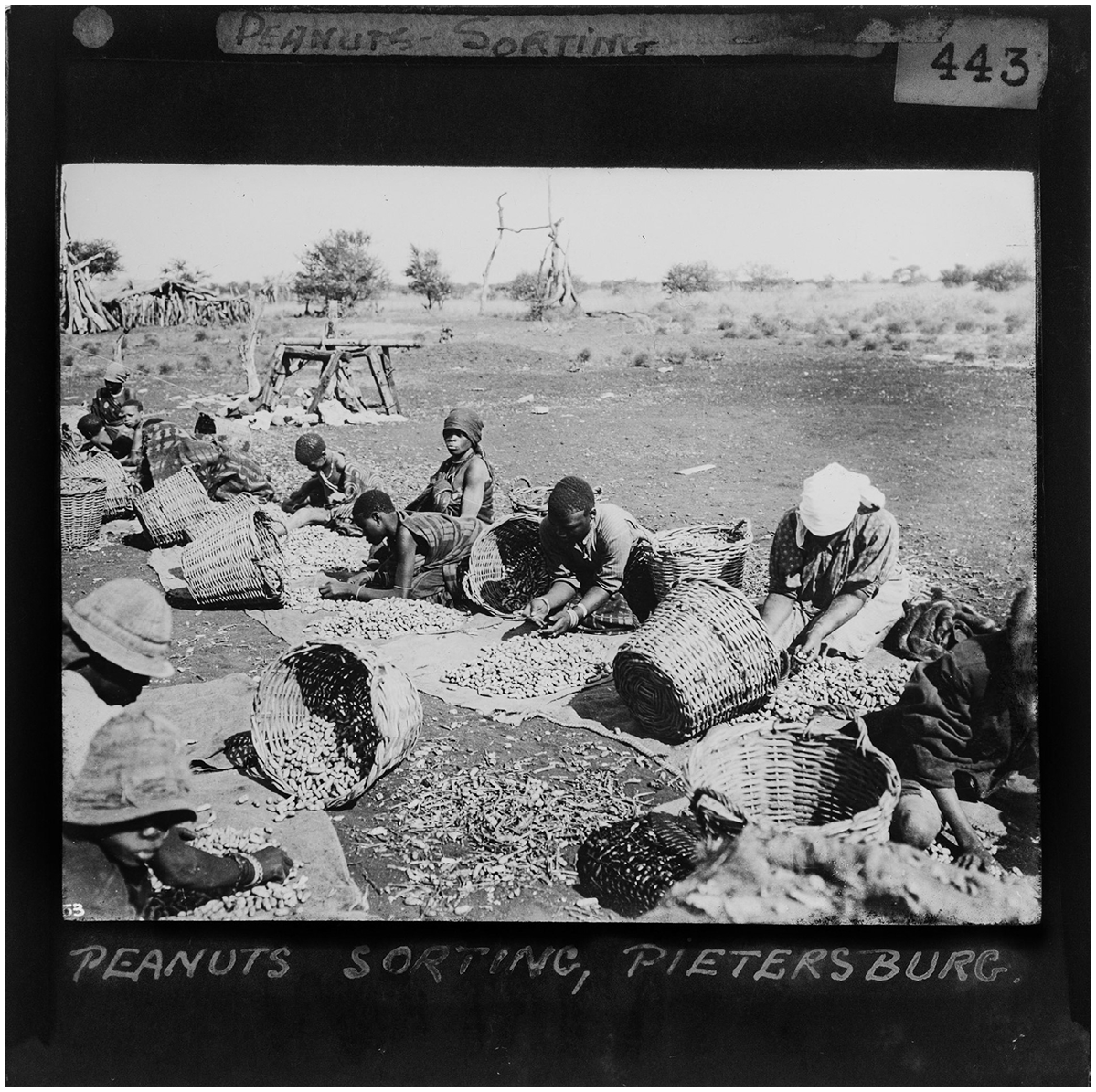
Series AB, labelled ‘Peanuts sorting, Pietersburg’, slide number 443 (Image Archive, ZAH).
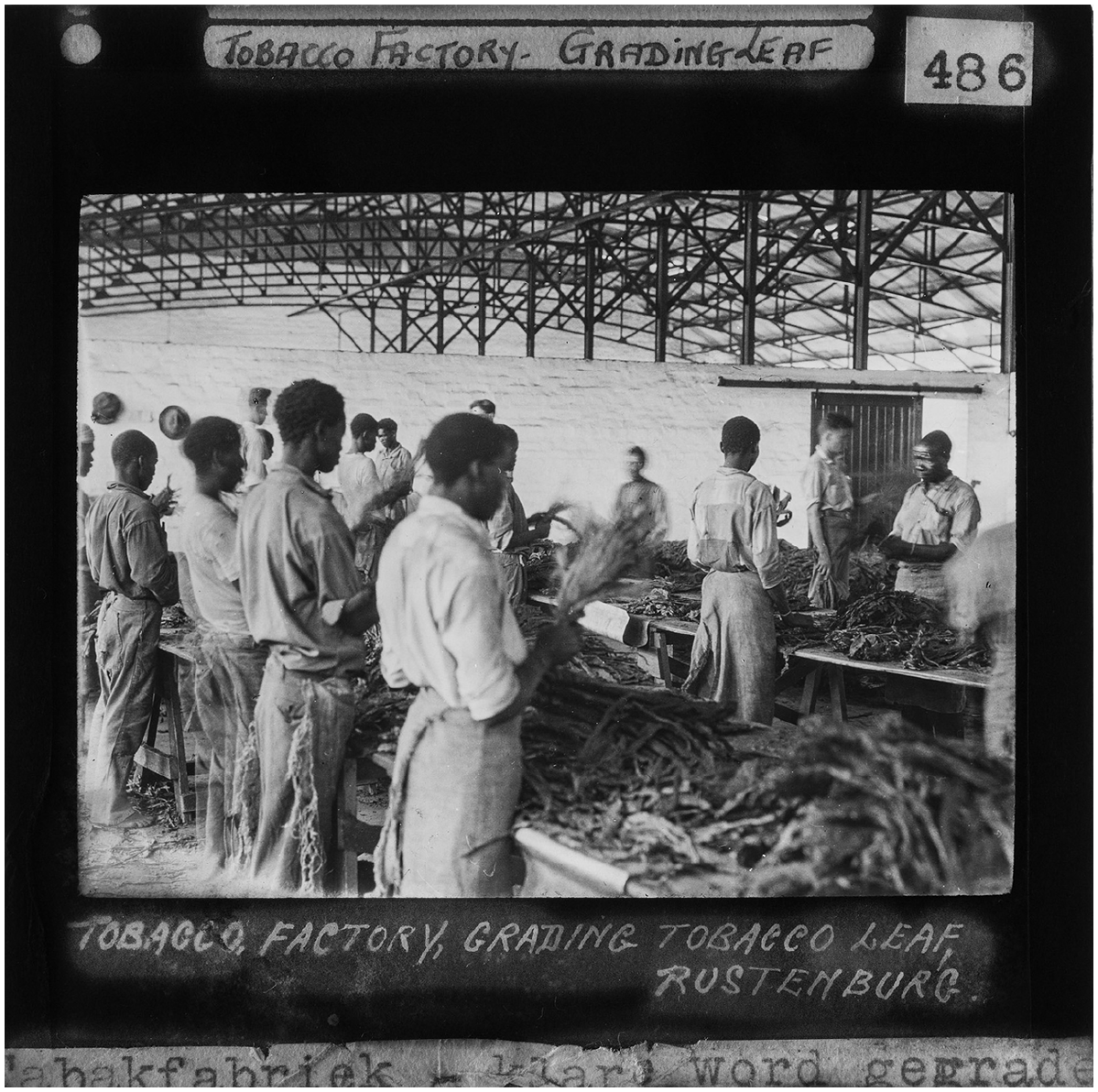
Series AB, labelled ‘Tobacco factory, grading tobacco leaf, Rustenburg’, slide number 486 (Image Archive, ZAH).
Interestingly enough, it was not only financial independence that was stressed as a means to avoid falling into White destitution. Attitude towards work was also stressed: Afrikaner Boers were described as lazy, and as not industrious themselves but, quoting from a talk, ‘only smoking pipes’ (J.H. Memelink quoted in Zutphensche Courant, 1928: 5), while Germans and committed Dutch migrants are mentioned as being hard-working. Their migration to South Africa was said to be preferred by the National Party in South Africa, and their work ethic and agricultural superiority were pitted against English migrants who were deemed to be more ignorant about agriculture than the Dutch. Consequently, Dutch audiences were reassured that Dutch migrants would most likely need a smaller amount of initial capital, according to Dirk Boshoff, a representative of the South African government who extensively toured Britain and Netherlands to inform potential European migrants about their prospects in South Africa (Provinciale Overijsselsche en Zwolsche Courant, 1922: 6). This discourse of ethnic diversity among the White inhabitants and immigrants (such as English-speaking White South Africans from Afrikaans and/or Dutch speaking White South Africans, and German, English and Dutch immigrants to the country) is striking. Not only was a distinction between ‘races’ produced, but a differentiated White identity was posited wherein potential Dutch migrants were positioned both with and against other European, or White identities in the country. By distinguishing Dutchness historically, culturally and ethnically from other European identities such as that of the British or Germans, this Europeanness itself was revealed not to be a homogeneous identity but a compilation of national identities in competition with one another.
Comments about the possibilities and conditions for certain European migrants cannot be considered in isolation from unfolding political processes. At the time, Black South Africans could not continue as farmers during the Union years due to segregationist legislation and restrictive measures that regulated the social subject-position one was assigned to as a migrant to South Africa. Dutch and other European citizens were granted the right to migrate to South Africa by the Immigrants Regulation Act (1913). This right was not available to everyone. Indians, for example, were regarded by the South African Union government as imperial subjects whose entrance into South Africa was dependent on their status as indentured labour. In fact, during the mid-nineteenth century, Indian migrants to South Africa were even considered to be not much more than ‘living cargo’ (Hofmeyr, 2022: 30; see also Klotz, 2013; Peberdy, 2009). Similar to White South Africans, Europeans also had the right to buy and own land if they could afford to do so; a right that was taken from Black South Africans in the Natives Land Act (1913) and subsequent legislation, effectively terminating the existence of (in some cases rather successful) Black farmers in South Africa during the early twentieth century (Giliomee, 2003; Schirmer, 2015; Van Onselen, 1996). As Sabelo Ndlovu-Gatsheni (2021: 13) puts it, a ‘paradigm of difference’ (between White and Black South Africans) constituted ‘a deep fault line enabling the ‘de-nationalization’ of Black indigenous people into ‘right-less subjects’ and ‘nationalization’ of foreign White settlers into ‘citizens’ enjoying civil, political and economic rights’. The emigration information given Dutch audiences and potential Dutch emigrants to South Africa did not only provide potential Dutch migrants with knowledge about farming in South Africa and the requirements necessary to settle there, but also transmitted a narrative about racial difference and the implications of this difference. The imaginary created through the slide imagery and the talks suggested that potential Dutch emigrants, if they were of the right class, that is, possessing access to sufficient funding, and had the required habitus, that is, specific work ethos and knowledge of farming affairs, would be able to take their position as rights-bearing subjects in South Africa.
However, the ongoing political processes of rights distribution in South Africa at that time seems to have been cropped from view in the slides’ imagery. Rosa Deen (2022: 30) helpfully proposes to deal with such omissions in the discourse by reading it ‘against the grain’ in an attempt to get a glimpse of that which is excluded from the slides and to address the ‘absent referents’ in the slides. It is exactly such a reading against the grain that the race-based system of migration regulations, land ownership and land dispossession come into the viewer’s focus. Exploring these absent referents and references that remain outside of the slides’ dark frames in greater detail enables us to consider, as I have traced here, how the slides created a bifurcated imaginary. It contains and constructs not only potential migrants as ‘rights-bearing subjects’ with the right to migrate to South Africa in search of economic opportunities for its audiences in Europe, but also a ‘rights-lacking subject’ whose identity and rights, such as land ownership, humane working conditions, control over historical narratives and agency regarding mobility were increasingly curtailed, confiscated and denied.
Conclusion
The magic lantern slide collection of the NZAV consists of magic lantern slides used during public emigration information talks to instruct, educate and entertain Dutch audiences about South Africa, its history, people, natural environment, and its farming sector. The act of restoring and digitizing these material objects in a colonial archive cast these artefacts as worthy of preservation, and thus, conferred heritage status upon them. The above analysis of the artefacts brings into view their historical function: as part of emigration propaganda these lantern slides, talks and media reports on the talks informed audiences about South Africa, farming and the requirements for Europeans to settle in the country. With the help of Kessler’s model of the dispositif, I identified an underlying narrative that constructed different social subjects on the basis of perceived differences in race, ethnicity and class. In the discourse discussed in this contribution, references to and visual representations of history, heritage, human engagement with the natural environment, and the racialized division of labour appear as identity markers associated with specific social subjects with different sets of rights available to them. The discussion above shows that this discourse, constructing an imaginary of the rights-bearing, settler citizen, was employed in Europe where, being handed this imaginary, European spectators could identify with it as potential migrants. As part of the Dutch and European colonial archive, the magic lantern slide collection of the NZAV, therefore, helps us to understand the dark side of the promoted, colonial social imaginary. Potential emigrants were identified as rights-bearing, European migrant subjects already inscribed in a history of (structural and physical) violence, racism, alleged White superiority, social injustices and social inequality prior to any actual emigration.
As heritage, the magic lantern slides reveals the discordance between the promoted social subjectivity available to Dutch farmers and other Europeans who entered White settler society, and the limited, stereotyped and governed subjectivity of Black South Africans within this settler society. This disparity calls to mind the notion of a ‘dissonant’ heritage, a notion coined by Tunbridge and Ashworth (1996) to refer to the lack of agreement between specific heritage narratives about the past. Such ‘dissonance’ leads us also to ask what the purpose might be of such (transnational) European heritage. To begin with, such heritage has implications for how we think of Europe’s cultural archive: it is also a colonial archive with one-sided and problematic representations of what are, in fact, shared transnational histories located beyond Europe (see also Good, 2019; Short, 2012). This heritage might also help to explore in future research how the imaginary of colonial archive images related to notions of equality and subjectivity in Europe at the time. Future work on the magic lantern slides of the NZAV collection could continue to explore the implications of such transnational histories on current conversations about contemporary memory practices, 15 the politics of heritage-making, and the negotiations of racialized identities and belonging in a contemporary, postcolonial European context. Such enquiries may congeal meaningfully around the notion of ‘communities of implication’ – a concept proposed by Erica Lehrer (2021). One line of enquiry (following Agostinho, 2019; Jeurgens and Karabinos, 2020; Odumosu, 2020) could use this material heritage, for example, to further investigate these transnational politics of belonging among other implicated communities: what do the narratives, for example, of Black South Africans tell about this transnational moment of European emigration to South Africa, and how might such narratives relate to those already in existence? 16
Such future steps would enable us to think about how these (digitized) images and other archival material from European colonial archives could transform existing knowledge infrastructures to include more heterogeneous voices as part of Europeans’ entangled histories with ‘others’ elsewhere in the world, and to remind us that European colonial histories did not only take place elsewhere but right here, in Europe, too.
Footnotes
Acknowledgements
The author would like to thank various readers (in particular, Barbara Henkes and Hanneke Stuit) and the anonymous reviewers who have commented in so many useful and constructive ways on draft versions of this text. Their remarks and comments have been very instrumental in the shaping and sharpening of her argument. Many thanks also goes to Simon Scholte ter Horst for his help to access the NZAV archive and image archive of the ZAH.