




Abstract
A challenge for many academic staff delivering taught provision to undergraduate business students in the United Kingdom (UK) is how to accommodate those learners confronted with numerical subjects not encountered since completing compulsory education. This paper considers the interactive and dynamic nature of the teaching and learning environment through which Video Based Learning resources support first year undergraduate students within the business numeracy subject area. Visualisation and evaluation of the learner/tutor relationship throughout the duration of the curriculum delivery is achieved through the construction of hypothetical models. The Structural Equation Modelling (SEM) method was undertaken to identify influential relationships within the theoretical models. Results indicate that the dynamic learning models developed within this study highlight that the learning process has a number of clearly defined stages. Each stage is both influential in securing an effective learning experience and cumulative in terms of supporting the learner towards both competence and assessment achievement within the study's educational framework.
Keywords
Introduction
Several studies revealed that a significant proportion of first year undergraduate business students across modern business schools within the United Kingdom present limited ability when confronted with problems that require skills in mathematics and or statistics (Cottee et al., 2014; Darlington & Bowyer, 2016; Education committee, 2025). The nature of education with the UK system is that students that enter into higher education programmes including degrees are not in many cases required to study mathematics at a level beyond compulsory education and as such learners face a gap in exposure from age 16–18 where, upon entering higher education, they may be confronted with a curriculum that includes numerical analysis and or statistical theory that is beyond their immediate experience or capacity (Department for Education, 2023; Education Committee, 2025;Lewis et al., 2023). Many students entering a business-based degree may have different academic backgrounds which can result in differential understanding of mathematics and allied numerical disciplines. Academic staff responsible for the teaching and learning experiences are therefore required to deliver an achievement outcome for all students that includes an assurance of all students’ ability in the performance of calculations, a demonstration of problem solving skills and the ability to incorporate and apply concepts in a logical manner when dealing with business concepts (ACME, 2016; Clark-Wilson & Hoyles, 2017;Lewis, 2019; Lewis et al., 2023; Office for Students, 2022; QAA, 2016).
The development of curricula and associated teaching and learning activities within higher education often involves critical analysis, reflective thinking, experimental design, implementation of new ideas, examination of case studies etc. culminating in the learner's demonstration and knowledge of achievement though formal assessment. To maintain momentum amongst learners of all abilities there is a significant emphasis placed upon the creation of a pedagogic environment in which all learners have the opportunity to not only achieve but excel. However, it must be acknowledged that in doing so, those challenged to create learning that both supports and stretches learners are themselves impacted by the characteristics of the learners themselves often arising as a consequence of prior educational experiences.
To encourage engagement, support, development and therefore support learner success, the adaptation and inclusion of learning via technology-based platforms is for many a viable solution to meet learner needs. Indeed, the potential of a range of technology-based approaches within higher education is widely promoted to educators and learners alike as tools that can successfully promote students’ engagement, experiences and finally improve students’ achievements (Department for Education 2019, 2022; Office of Education Technology, 2017).
Current literature including Bates et al. (2016), Gold and Holodynski (2017), Giannakos et al. (2016), Lehmann et al. (2016) and Reeves et al. (2017) whilst acknowledging that video-based learning (VBL) has been used to enhance engagement, observation, and skill acquisition across multiple disciplines is limited in respect of mathematics and statistics education. Those studies, in which the focus is on mathematics education, have centred on the primary and secondary school contexts or small-scale higher education courses (De la Flor López et al., 2016; English et al., 2017; Kinnari-Korpela, 2015). As such there is limited examination of the application of a technology-based teaching approach to multi-disciplinary programmes found in higher education. Furthermore, existing research rarely examines the means by which VBL can systematically support students with varying levels of quantitative confidence and facilitate iterative learning processes that move beyond procedural demonstration. This study addresses these gaps by exploring the potential of VBL to enhance learning engagement, conceptual understanding, and knowledge transfer among large cohorts of business students with diverse mathematical backgrounds.
An evaluation of the effectiveness of a (VBL) approach (Lewis, 2019; Lewis et al., 2023) as a means of improving the teaching and learning experiences of the first-year undergraduate business students undertaking a module in Business Statistics identified that learners that engaged with the VBL demonstrated an enhanced performance in formal assessments. It was further identified that the inclusion of technology-based learner approaches has the greatest impact upon student success when this approach to learning is clearly sign posted within the taught curriculum.
To advance the understanding of the role of technology-based approaches to teaching and learning within business mathematics it is essential to understand the pedagogical approaches that underpin the VBL method. The purposes of undertaking this examination are multifaceted but primarily focus on identifying the means by which technology enhances the learning and teaching environment, the actions needed by educators to include technology that enhances rather than distracts learner experiences and ultimately provides a means of ongoing support in order to enable learners to continuously engage with learning material throughout their programme of study.
This study undertaken as part of a doctoral thesis by Lewis (2019) aims therefore to address a perceived gap in the current research literature by investigating whether, or not, a media-enhanced, Video Based Learning (VBL) approach can successfully support students’ learning process through their formative learning experiences during the first year of their undergraduate degree. It should be noted that the environment in which this research is conducted is based upon curriculum delivered in an iterative manner. The iterative nature of learning within higher education is commonplace with learners engaging with new subject matter via weekly engagements often through a lecture-based format, followed by seminar and laboratory sessions, aimed at developing understanding and skills within the subject area. The researchers fully appreciate that alternative methods of higher education delivery exist such as the “flipped classroom” however for the purposes of this study these delivery methods are outside of current scope.
An initial analysis of data gathered as part of an examination of the impact of the VBL approach upon learner achievement (Lewis, 2019; Lewis et al., 2023) identified that not only is the technology platform important but that the relationships between the learner, the tutor and the learning environment are themselves dynamic. Furthermore, it was identified that the learner may be directly influenced (positively or negatively) towards the subject area through weekly engagements at lectures, tutorials/seminars or laboratory sessions which themselves form an iterative learning structure.
A key focus for this investigation is aimed towards understanding the characteristics of the teaching and learning environment that support students to gain competence in mathematical subjects such as statistics and business calculations irrespective of prior experience. To encourage student engagement, the video lessons used in this study were designed to balance student engagement with instructional depth. While pre-made videos from platforms such as YouTube, BBC, and Khan Academy have demonstrated widespread impact on learning communities (Neumann & Herodotou, 2020), this study's videos (developed as part of a doctoral thesis by Lewis, 2019) were specifically created by the instructor (Lewis, 2019) to align with the learning objectives of the module. Following recommendations from the literature, videos were structured into short, focused segments. Those videos that introduced underpinning, theoretical content were limited to approximately six minutes in duration, while step-by-step instructional demonstrations ranged from ten to fifteen minutes, depending on the complexity of the material (Bakker et al., 2015; Lewis, 2019; Lewis et al., 2023).
Stepwise Practice as a Learning Approach
It is acknowledged that mathematical/statistical formulae and concepts follow an internal logic and when applied across different disciplines can vary in terms of the sequence of actions performed to carry out calculations and the way results are interpreted. Although mathematical/statistical practices often involve the use of software tools, mastering the understanding of each application requires practicing logical steps in the learning process on which it is closely linked to learning through experience.
A number of authors including Kumpulainen and Rajala (2017), Micheel et al. (2017), Sener and Cokcaliskan (2018), Dunn and Dunn (1979), Dunn et al. (1995), Curry (1983, 1987) and Grasha (1994, 1996) have identified and developed a range of models to explore elements of pedagogy, individual learning styles and individual and group learning processes. The Kolb's (1984) model has been thought most appropriate as it presents the process of learning based upon exposure, internalisation and application of newly acquired knowledge and skills. Kolb (1984) also highlights the “cyclical” nature of learning which is reflective of an iterative approach presented by Lewis (2019) as experienced by learners within the experimental environment as learning and application is built upon week after week until a level of achievement is internalised by the learner, ultimately demonstrated under assessment conditions.
Within existing reviews of the impact of learning styles (Arthurs, 2007; Avsec & Szewczyk-Zakrzewska, 2017; Hale, 2016; Vural, 2016) there is little application of models developed within these studies to mathematics and statistics at the higher education level. This in turn creates a gap in current research particularly in respect of the learning and teaching of business mathematics in which both cognitive and psychomotor skills are required. A further limitation of current research within this area is the absence of an examination of the impact of reinforcement within the model constructs. Learners are encouraged throughout their studies to revise their understanding of a subject matter particularly when acquisition of knowledge is accompanied by demonstration of knowledge and understanding through skills-based demonstration or examination.
This research (initially presented by Lewis, 2019) seeks to examine therefore the role(s) fulfilled by reinforcement within an individual's “learning journey” with specific reference to the development of cognitive and psychomotor skills, the relationship with past subject encounters, the initial learning experience within the new learner setting and the impact of learner style preference. This in turn creates an opportunity of investigation and is therefore one which forms a primary focus of the research undertaken.
Although Kolb's experiential learning styles and learning cycle (1984) has been extensively examined and adapted by a number of authors (Ata & Cevik, 2019; Kler & Nitzschner, 2015; Su Bergil, 2017; Sudria et al., 2018) they remain an appropriate “lens” through which to examine the roles adopted by both tutor and learner when classroom-based activities are supplemented with a bespoke Video Based Learning (VBL) platform. Furthermore, the significance of roles adopted by the tutor and learner beyond classroom engagement are considered to be of significant influence and thereby impact upon the design development and inclusion of materials to support learners through periods of “self-study”.
Learning Cycles an Adaptive Approach
Whilst the Kolb (1984) learning cycle is highly relevant within this research, the learning cycle itself does not accurately reflect the inter-relationship between tutor and learner, nor does it recognise the impact upon learning through the introduction of technology mediated engagement. Building upon previous research, this study articulates stages of learner development through an adaptation of Kolb's 1984 experiential learning cycle. These adaptations serve to propose a hypothetical model which, in turn, seeks to highlight the stages of learner development, the iterative nature of the learning process and the inter-relationships between tutor and learner.
These adjustments are themselves reflective of the learning environment in which the research is set and will, throughout the course of this paper, be tested to determine whether the theoretical model construct is robust through the acquisition and analysis of primary data. It is proposed that an examination of the dynamic relationships between stages within the proposed models within this study will support a more holistic approach to curriculum and module development, including opportunities to supplement traditional learning methods with a more technology-based approach.
The initial parameters presented within Kolb's (1984) learning cycle was further developed by Lewis (2019), the visual representation (Figure 1) of learning as experienced by students on the business statistics model is composed of four stages, the characteristics of which are summarised thus:
Recognition: Learners encounter new learning experiences such as:
the introduction of new topics within an ongoing module a new topic within a new module the recognition of completely new learning experiences (practical, simulation etc.) the recognition of the opportunity to engage with VBL materials. Reaction: Learners reflect upon their learning experiences including the impact of VBL resources upon their own learning resource preferences. Replication: Learners created their own logical concepts and understanding through their engagement and experiences of their selected learning resources. Reinterpretation: Learners successfully used their learning experiences (theories, knowledge and skills) as supported by their learning resources preferences. Such application directly relates to decision making and problem-solving activities embedded within the module. Learner success in applying their learning then influences the next stage of recognition stage in which learners are faced with new topics and the opportunity to select (from prior experience) the learning resources which best support their needs.
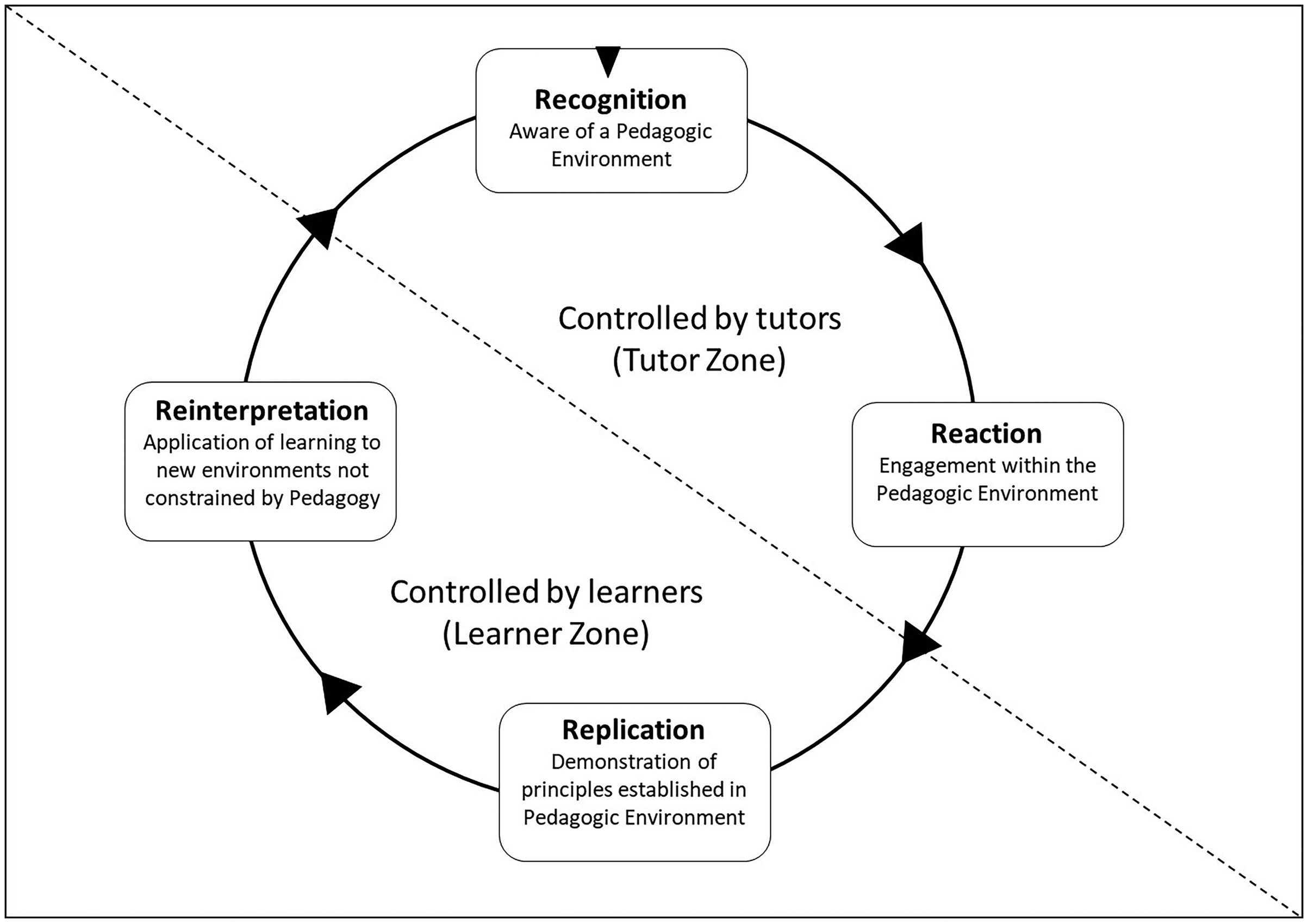
A proposed model demonstrating iterative learning in the context of tutor/learner engagement.
Within this hypothetical model both the recognition and reaction stages are in effect under the control of tutors (tutor zone) who are themselves ultimately responsible for providing and dictating the learning and teaching environment, learning materials, technology platform and software applications. However, as the learner proceeds through the cycle, the stages of replication and reinterpretation are those that are primarily controlled by the individual learner (learner zone). It is within these stages that learners themselves become increasingly autonomous in their learning activities and are tasked with demonstrating their abilities in line with acquired knowledge and skills.
The Role of Repetition and Reinforcement
Previous research identified that repeated practice is important in enhancing learners’ speed and accuracy in motor skills (Donica et al., 2019; Shirinbakhsh et al., 2018). Moreover, Tapp (2022) expresses that many learners achieve their new learning through repetition technique without the understanding of its application to the new situation whilst the reinforcement, which closely align with repetition, promotes the delivery of the same information through multiple formats which then lead to effective learning and greater confidence within the subject area.
It is therefore proposed that the influence of repetition and reinforcement during the learner transition from reaction to replication could make a significant contribution to the dynamic nature of the proposed model (Figure 1). The actions constituting repetition and reinforcement are wholly driven by each individual learner and are themselves independent of the influence of the tutor and as such are located within the learner zone. The enhancement of student achievement under assessment conditions is therefore considered to be a direct outcome of the repetition and reinforcement activities undertaken by individual learners (Qiu & Lo, 2017; Stump et al., 2024). From this proposition it may then be interpreted that as the “learner's speed of task completion”, “accuracy within the task” and “overall confidence” increase, a dynamic within the proposed model results in the transition of the learner from an initial state of reaction to one of replication with repetition and reinforcement presented as a primary driving mechanism.
It further proposed (here) that repeated cycles of repetition and reinforcement are directly related to overall increases in Speed, Accuracy and Confidence (SAC) of the students which are in turn demonstrated by student assessment performance under time constrained conditions. This representation recognises that, while for many students, repetition and reinforcement of acquired knowledge and skills are a necessary part of their learning process, these are not in themselves pre-requisites for progress from one stage of the model to the next. It is further proposed that when a learner's acquired knowledge and skills are refreshed through repetition and reinforcement, such activities will exert a significant and positive influence on the learner's transition from one stage of the model to the next.
The characteristics of repetition and reinforcement in the context of this model are presented thus:
Repetition: Learners continued their engagement in learning through their selected learning preference provided by the tutor through repeated activities. Reinforcement: Learners persistent in their learning therefore strengthen their performance through each repeated activity.
Both repetition and reinforcement are identified within this research as observed variables; their interaction is therefore referred to as the “R&R” cycle. Each completed cycle of R&R increases the ability of the learner to solve statistical problems in respect of their Speed, Accuracy and Confidence (SAC). Both repetition and reinforcement are themselves controlled by learners; as learners themselves control the number of times the cycle is repeated. Therefore, it is proposed that the R&R cycle exists between the reaction and replication stages (Figure 2) and Replication and Reinforcement stages (presented in the second interaction model - Figure 3). It is noted that this research does not include those areas of learning related to the neural sciences therefore, the term “repetition in learning” is used exclusively in the context of the use of Technology Mediated Learning (TML) which in turn is used to promote cognition enabling learners to acquire and retain skills and knowledge. It is however acknowledged that each repeated activity helps learners to strengthen their performance within the subject area which creates and enhances learner confidence and therefore supports the proposed notion of reinforcement. Repetition and reinforcement are considered of mutual importance and as such both contribute to the development of learner understanding within the overall learning process.
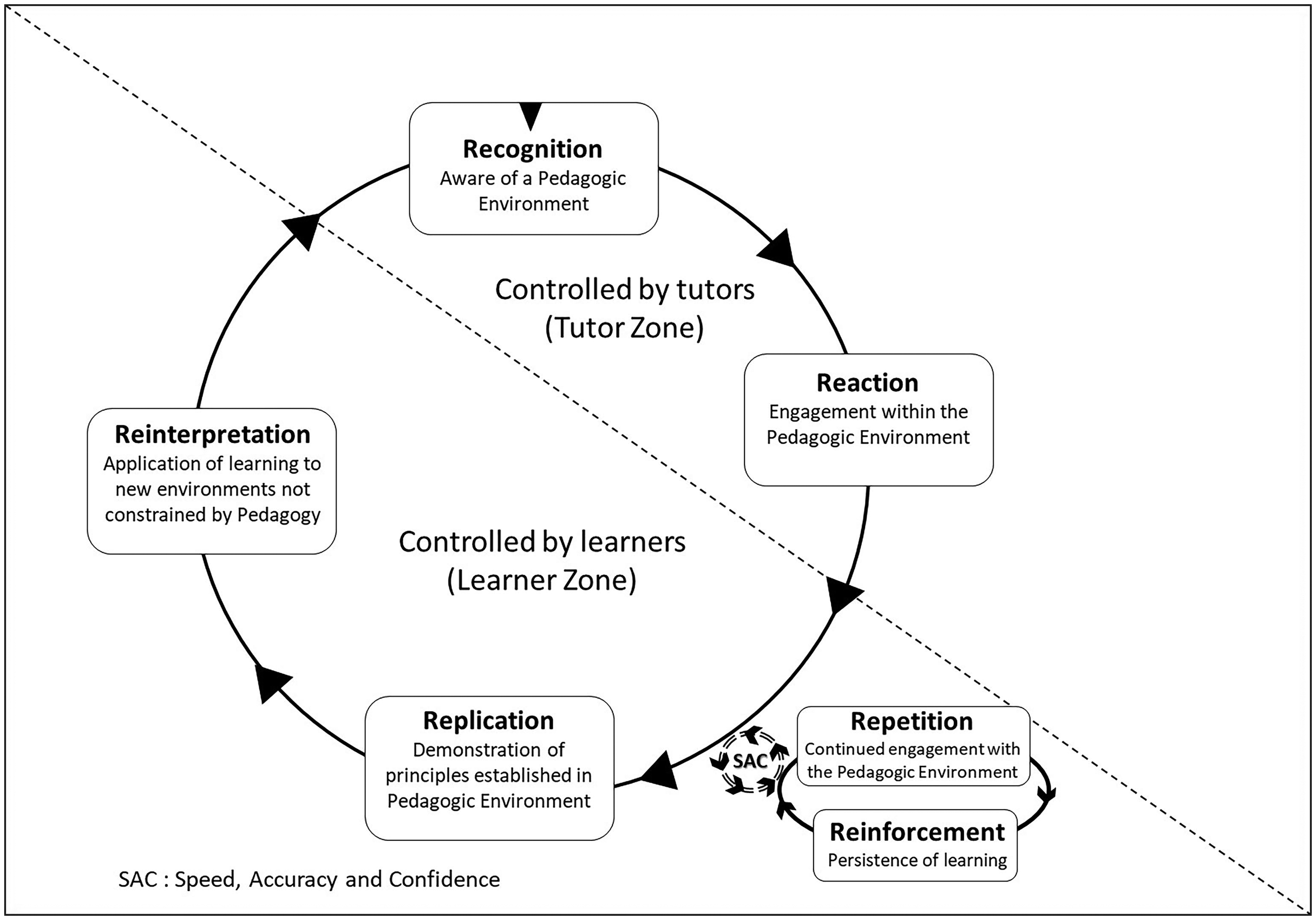
Embedding repetition and reinforcement – the first interaction model.
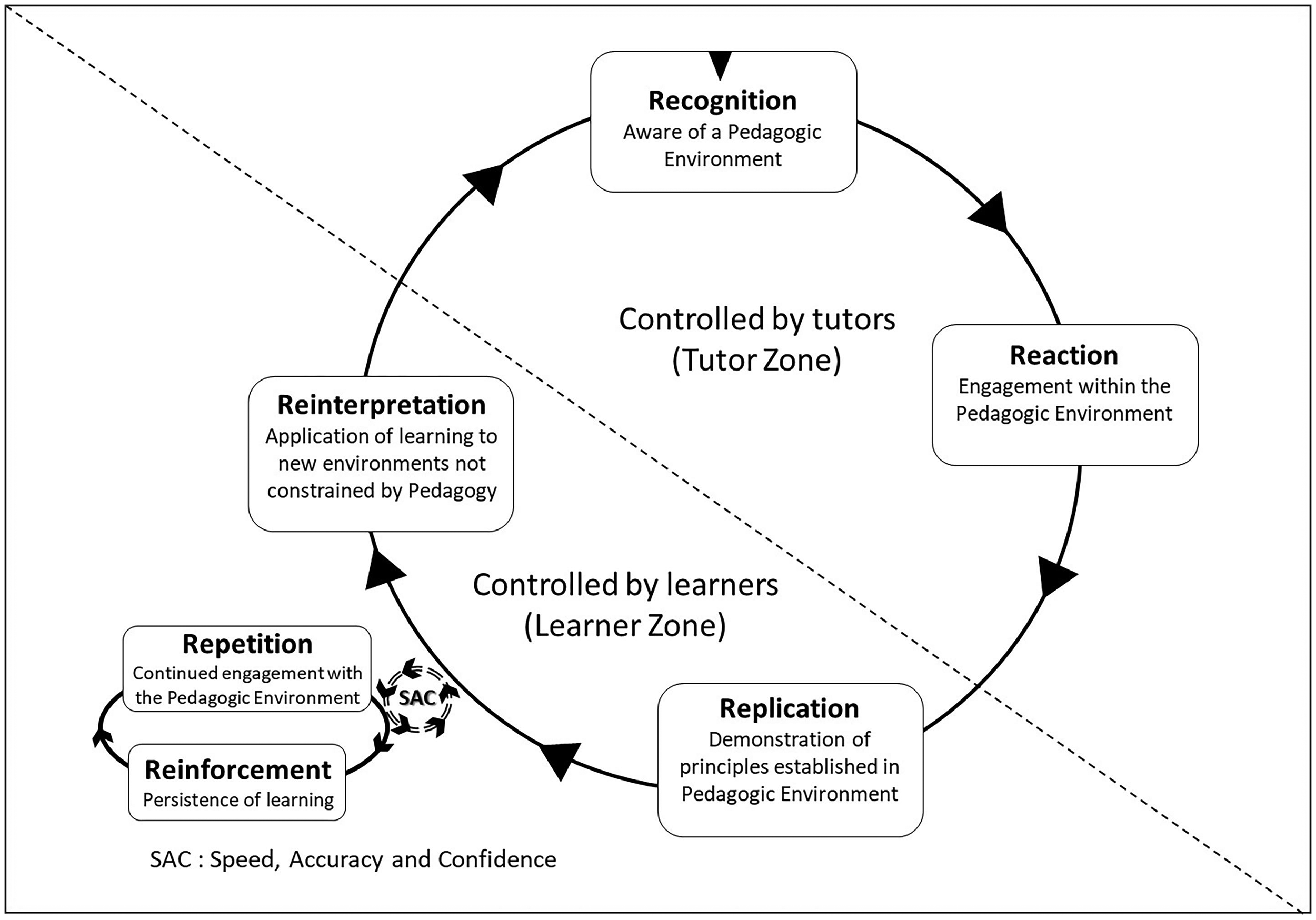
Embedding repetition and reinforcement – the second interaction model.
Methods
This research centres upon first year undergraduate students within a business school of a modern UK university located within the southeast of England. The module examined within this research is business statistics and was identified for inclusion as it is a compulsory module for all first-year undergraduate students on all business-based courses within the business school in which the study is set.
The module is controlled by a single module leader to ensure consistency of classroom structure, learning and teaching materials, examination papers, etc. The structure of the module involves direct, weekly engagement between tutor and student. Each week (total of 12 weeks) includes a 1-h formal lecture, a 1-h seminar (for solving statistical problems using scientific calculators) and a 1-h computer workshop (instruction in Microsoft Excel). Each teaching session was designed to build up subject area knowledge and skills in advance of the next and future sessions. During computer workshops (intended to provide both tuition and practical experience) students were presented with a series of step-by-step instructions and videos (created by the tutor) in order to complete tasks relating to specific syllabus topics.
All learning material including the bespoke video series were included on a Virtual Learning Environment (VLE) platform which is accessible by all students undertaking this module. The assessment for this module comprised of two types of examinations (each weighted 50%) at the end of the module and would contribute to the overall grade awarded for the module; a desk-based examination (MCQ) focused on theoretical understanding supported by the use of a scientific calculator and a computer-based examination (COM) where the proficiency in the use of Microsoft Excel software to resolve statistical problems was tested. At the end of week 12, students were expected to use their knowledge to select statistical methods, perform calculations and interpret results when facing a variety of questions within a formal examination setting. All students received the same classroom instructions and access to learning and teaching materials. Learning resources included a comprehensive series of tutor-developed videos (tailored to suit the tasks of the module).
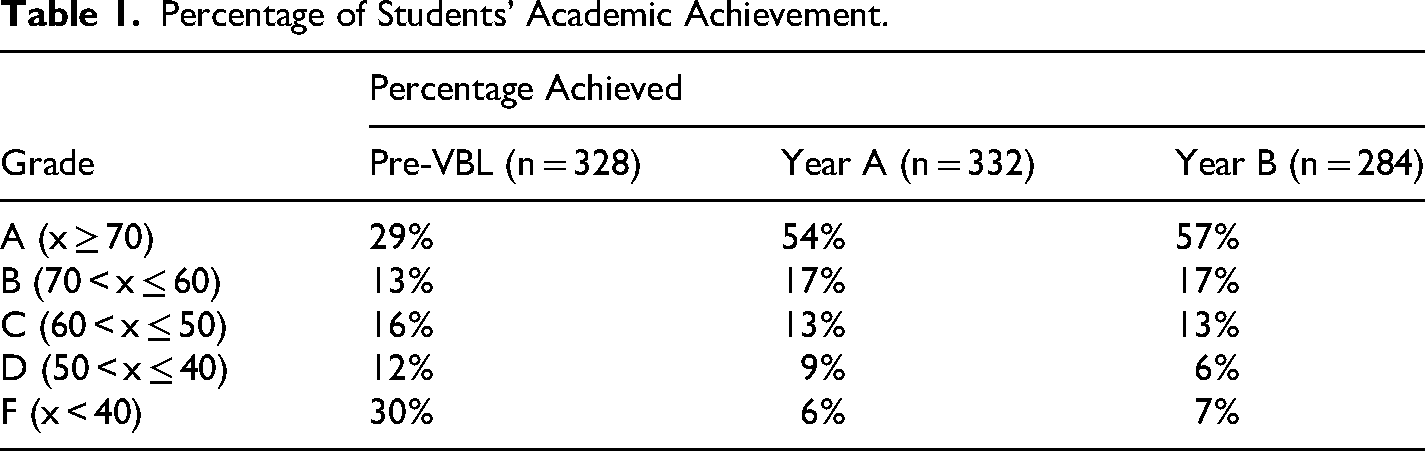
The nonprobability purposive sampling (Edgar & Manz, 2018; Eichhorn, 2022) was utilised where the online questionnaire permitted self-completion (conducted anonymously) and was administered as voluntary-based to all first-year undergraduate students within academic year A and academic year B, all of whom are required to study the business statistics module as a compulsory part of their undergraduate studies to minimise potential of self-selection bias and improve transparency and generalisability of the findings. Each academic year A and academic year B represent two discrete student cohorts; 35% of the population within academic year A responded to the survey (NA = 335, nA = 117) whilst 23% of population within academic year B responded to the survey (NB = 352, nB = 80). The students’ achievement marks in Table 1 below provided a background of students’ profiles and identified the need to establishing pedagogy through technology within mathematics and statistics discipline via the proposed model.
Percentage of Students’ Academic Achievement.
The questionnaire was developed specifically for this study to capture students’ perceptions of VBL and to reflect pedagogical process embedded within this newly hypothetical model (Figures 1–3). The specific questions were designed to examine the potential impact of four identified stages (Recognition, Reaction, Replication and Reinterpretation) and the R&R cycle (Repetition and Reinforcement) with the consideration of the roles of tutor and learner, through an exploration of the VBL characteristics that attract students to this learning approach. This questionnaire consisted of 12 questions, each related directly to the use and experiences of the VBL to support practical learning of statistics using Microsoft Excel. Respondents who used VBL were required to complete answers using a 7-point Likert scale ranging from 1 (strongly disagree) to 7 (strongly agree).
Background of Students’ Achievement of Business Statistics Module
The results in Table 1 focus exclusively on the COM element, as VBL was a contributing factor to this component; the table shows the percentage of the students that achieved each grade before the implementation of VBL (referred as Pre-VBL) and the two consecutive academic years (referred to as Year A and Year B) where VBL were fully integrated within the curriculum and utilised during seminar sessions. The results demonstrated highly the success of VBL where the percentage of the students that failed COM reduced from 30% to 7% and the achievement of first class (equal to and above 70%) increased by 25% in academic year A and increased a further 3% by academic year B.
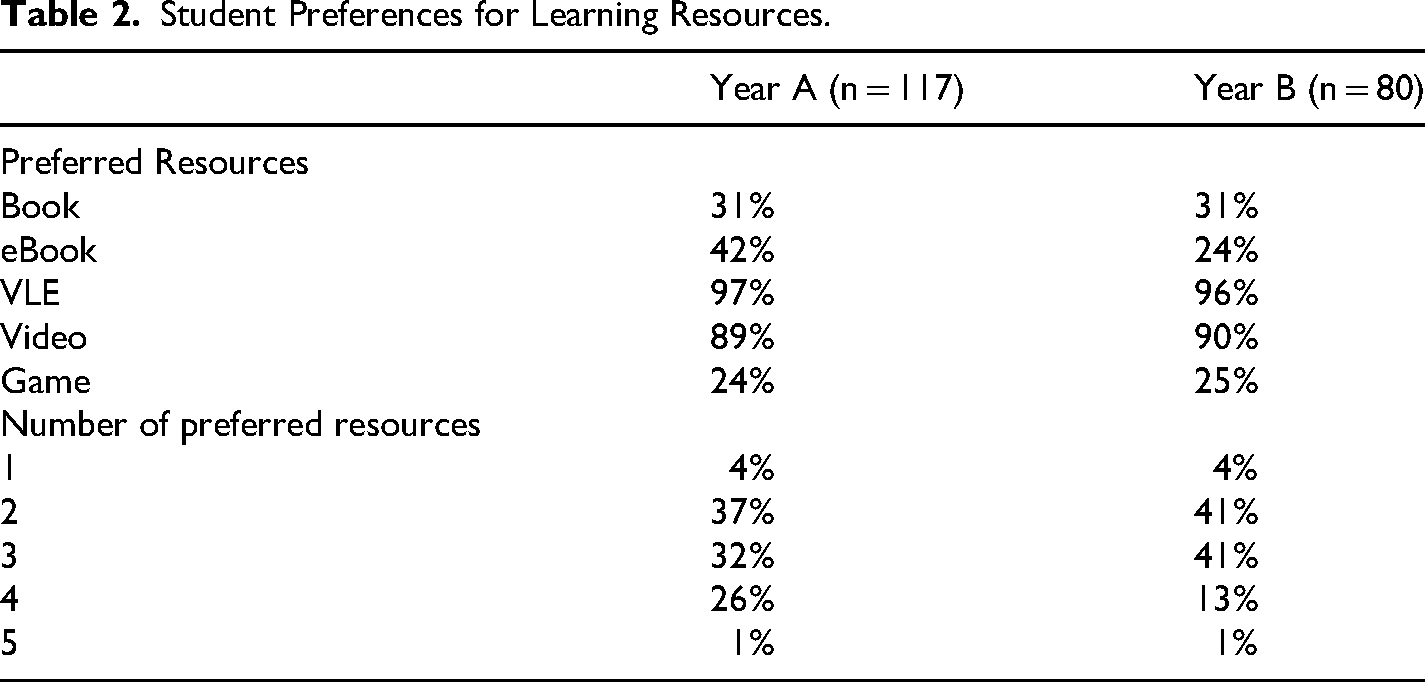
Table 2 demonstrated that 89% of respondents in academic year A confirmed their use of the tutor-developed videos to support their learning, supported by 90% of respondents in academic year B. The majority of respondents utilised 2–3 resources for their learning. Note that access to the VBL content is provided via VLE. The qualitative responses regarding the VBL preferences revealed that students frequently engaged with VBL resources repeated learning from the same video again as part of their ongoing practice.
Student Preferences for Learning Resources.
Exploring the Proposed Iterative Learning Models Through the use of an Online Questionnaire Survey
A mapping exercise linking pedagogical learning theory to the primary quantitative data was undertaken via the application of statistical analysis and data modelling which involved inferential statistics (Mann-Whitney U), test of correlations, Principal Component Analysis (PCA) and Structural Equation Modelling (SEM) through the use of SPSS and SPSS AMOS. The Kaiser-Meyer-Olkin Measure of Sampling Adequacy (KMO) and Bartlett's test of Sphericity were also used to determine whether data would benefit from the application of SEM (Field, 2019; ibm.com, 2018).
Learner responses gathered during both academic years of this study, academic years A and B, are utilised within this study whilst extraneous data which demonstrated nil engagement with the video-based learning was removed from the data (N = 196). Table 2 indicates 11% in Year A which is 13 students and 10% of Year B students which is 7 students. Therefore, the total sample used in SEM is 176 which is considered adequate for SEM to ensure the robustness of the test models (Khine, 2013; Wang & Wang, 2020).
The purpose of SEM within this study is to simultaneously examine complex and multiple relationships whilst being able to evaluate the strength of connections between concepts within cases or conceptual models (Blunch, 2013; Cramer & Howitt, 2004; Everitt, 2002). It enables the evaluation of how different stages within the iterative model proposed in this study influence each other, how individual questionnaire items measure these stages and the direction in which the stages of the model are encountered. This in turn offers the ability to prove the success and failure of the proposed iterative learning models where the null hypothesis for the SEM is that the models achieve the minimum requirements necessary to indicate the success of the models as pictorial representations. While the combination between Principal Component Analysis (PCA) and Test of correlations provides an understanding of the relationships through the strength of correlations, these methods are limited and do not provide directions of the connections for further analysis.
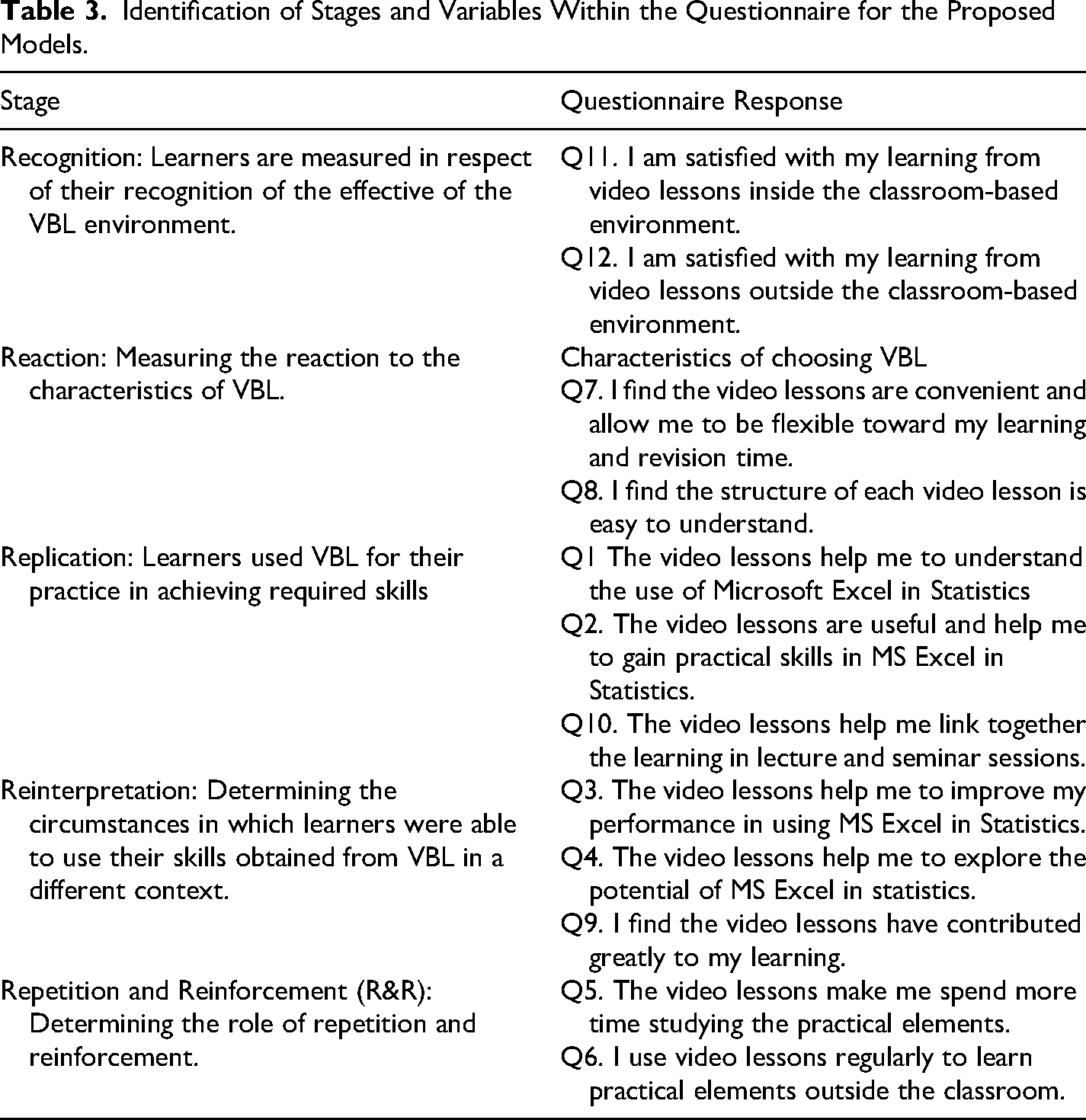
Responses to the online questionnaire questions were mapped against the various stages of learning as proposed in Figures 1–3 and are presented in Table 3.
Identification of Stages and Variables Within the Questionnaire for the Proposed Models.
The SEM method is utilised within this research to evaluate whether models developed in this study are indeed reflective of the data gathered via the student questionnaire survey. Outcomes of the questionnaire are therefore directly related to questionnaire data contained therein (Figures 1–3), the research hypotheses.
The hypotheses Ha1, Ha2, Ha3, and Ha4 are constructed in order to explore the efficacy of the proposed iterative learning model in Figure 1. The hypothesis Ha5 seeks to examine the proposed extension of the Figure 1 model thereby exploring the potential role(s) of Repetition and Reinforcement as represented in the further proposed models (Figures 2 and 3): H01: Student's recognition of a new learning topic (Recognition stage) does not determine their learning resource preferences (Reaction stage) Ha1: Student's recognition of a new learning topic (Recognition stage) significantly determines their learning resource preferences (Reaction stage) H02: Student's preference in utilising VBL for their learning (Reaction stage) does not enhance their understanding of the subject (Replication stage) Ha2: Student's preference in utilising VBL in their learning (Reaction stage) significantly enhances their understanding of the subject (Replication stage) H03: Student's understanding of the subject matter using VBL (Replication stage) does not support their ability to apply the learned subject knowledge to the similar but new assessment scenarios (Reinterpretation Stage) Ha3: Student's understanding of the subject matter using VBL (Replication stage) significantly supports their ability to apply the learned subject knowledge to the similar but new assessment scenarios (Reinterpretation Stage) H04: Student's success in using the VBL method for their learning (Reinterpretation stage) does not promote the use of VBL method in student's recognition of new learning (Recognition Stage) Ha4: Student's success in using the VBL method for their learning (Reinterpretation stage) significantly promotes VBL method in student's recognition of new learning (Recognition Stage) H05: Student's repetition and reinforcement through VBL does not enhance students’ achievements within the module. Ha5: Student's repetition and reinforcement through VBL significantly enhances students’ achievements within the module.
It is proposed that undertaking actions that support repetition and reinforcement are most influential between the stages of reaction (the student is conscious of the nature of the subject area and undergoes a cognitive reaction) and replication (the student has acquired knowledge and skill to undertake re-presentation of subject material). Data gathered from the online questionnaire highlights the degree to which a learner continues to repeat and reinforce their knowledge and skills. This may be interpreted in a number of ways including:
The necessity for students to gain relevant skills to pass the module assessment. The necessity to improve existing skills to gain higher achievement under time constrained conditions.
Individual questions presented within Tables 3 were utilised in order to undertake a mapping exercise during which questions were mapped onto the four different stages of the model which included a dynamic cycle: illustrative of the relationship between Repetition and Reinforcement.
Analysis and Results
Mann-Whitney U is utilised to identify whether there is significant difference between years A and B. The results (Table 4) indicated that there was no difference in student responses between two cohorts (academic year A and B). Therefore, data sets obtained from responses to the questionnaires for academic year A and academic year B were combined (N = 176) when performing SEM in order to prove the robustness of the model.
Students’ Responses Between Academic Year A and B.
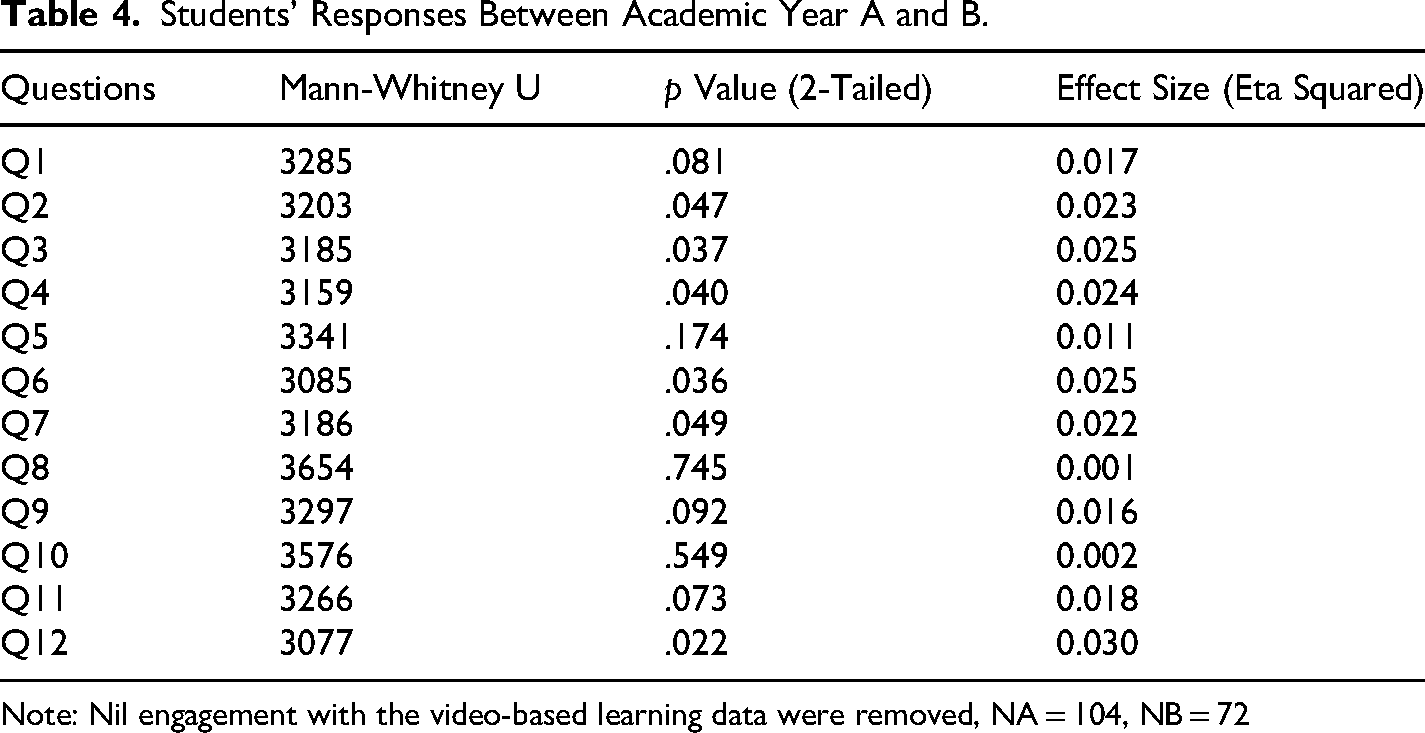
Note: Nil engagement with the video-based learning data were removed, NA = 104, NB = 72
The results achieved from Cronbach's Alpha method described the internal consistency of the questions for each stage as excellent where all alpha values are above 0.76 thereby confirming the internal reliability and validity of the questions within the questionnaire.
Principal Component Analysis (PCA) method is utilised and the results confirmed that all variables (questions) within are useful to the analysis and all variables within each stage are highly correlated (all values are above 0.89). This indicated the validity and reliability of suitable mapping between questions and stages whilst the test of correlations (Table 3) through standardised values generated by PCA method also demonstrated significantly strong, positive correlations between variables (questions) within each stage in respect of the nature of the data which also provided a means of ensuring the reliability and validity of the questionnaire.
Table 5 indicated that stages (replication and reinterpretation) within the learner zone demonstrated the strongest relationships (.885). This in turn indicates that learner acquisition of relevant skills through the use of the VBL (replication) were also able to successfully apply those skills when facing new problems/questions (reinterpretation). The correlation between stages (recognition and reaction) within the tutor zone was found to be the weakest (.728). This result suggests that learner zone is highly influenced within the model cycle and it could be interpreted that students may engaged in a process of “trial and error” in respect of the use of VBL resources.
Correlations Between Stages.
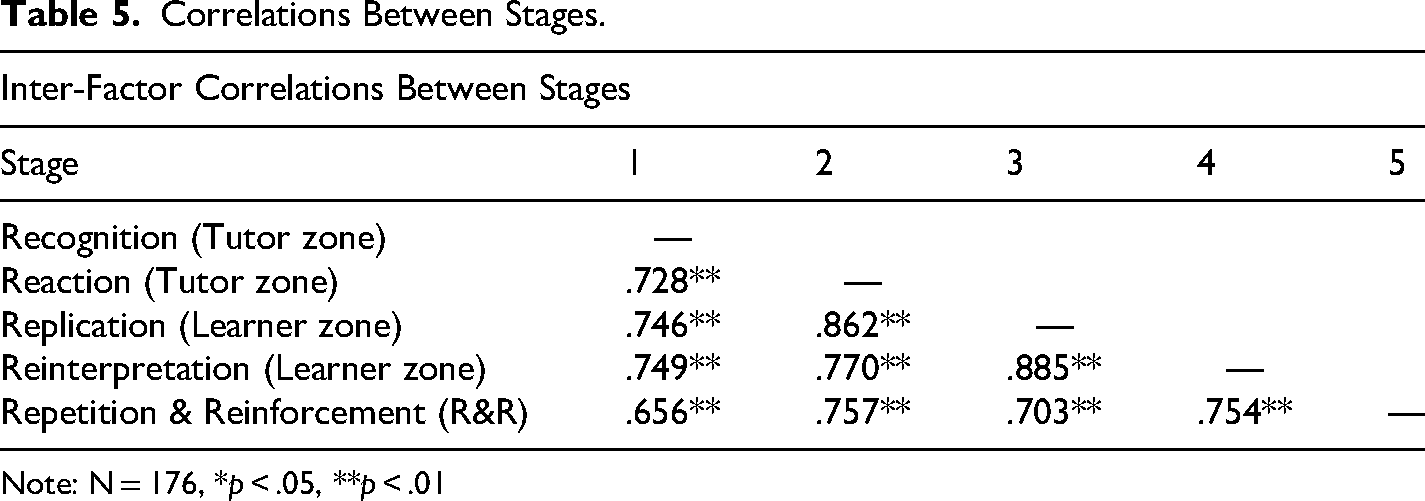
Note: N = 176, *p < .05, **p < .01
The Figure 4 model therefore was developed using SEM to demonstrate the relationships between questionnaire responses (referred as variables) and the relationships among the stages (recognition, reaction, replication and reinterpretation). The Kaiser-Meyer-Olkin Measure of Sampling Adequacy (KMO) and Bartlett's Test of Sphericity confirmed that the SEM method was a useful method to the data (KMO = 0.891, Bartlett's Test probability (
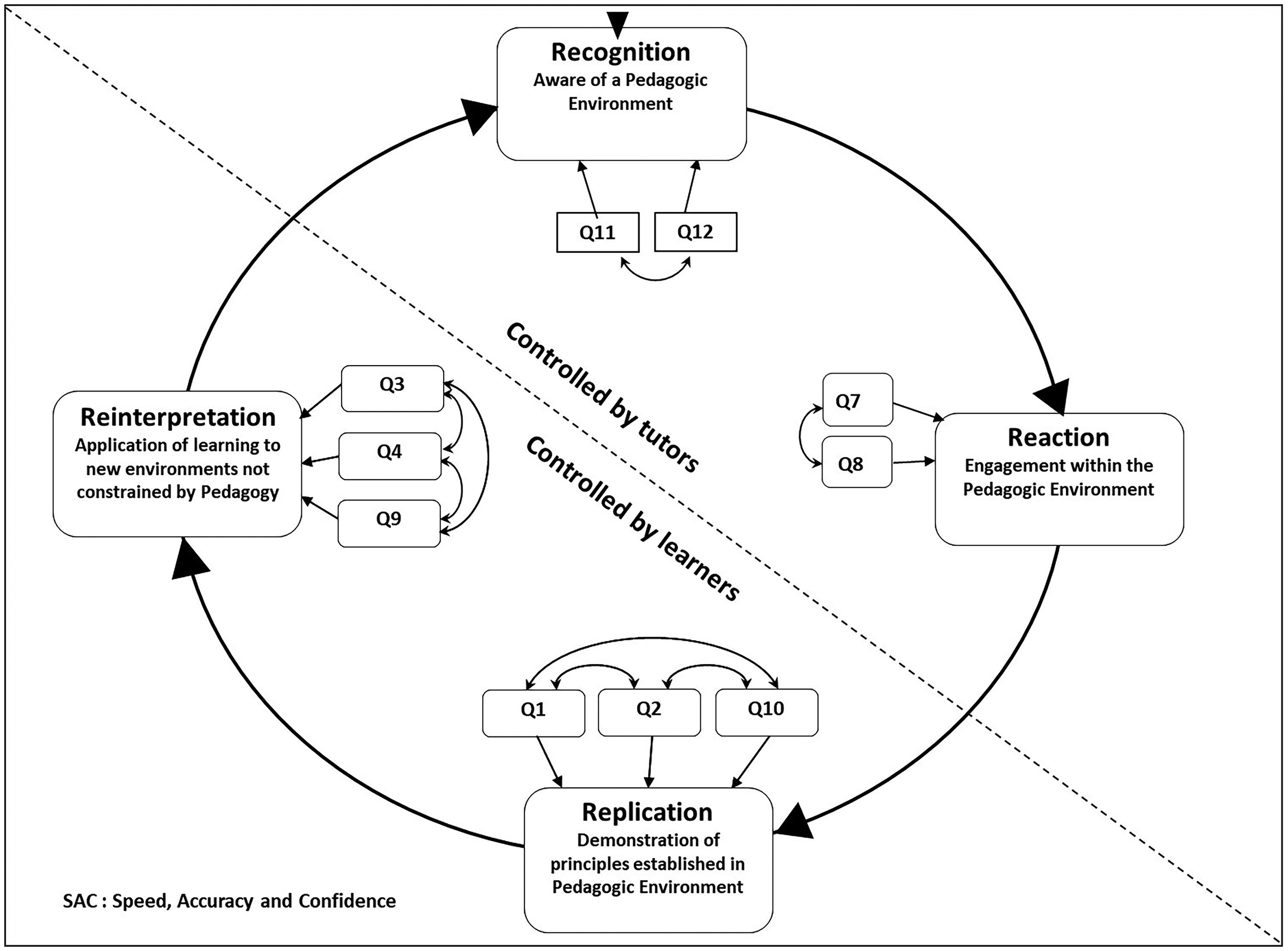
An examination of the proposed iterative learning model using SEM.
The model represented in Figure 4 was developed to examine the proposed iterative learning model (excluding the Repetition & Reinforcement cycle) through the use of SEM. The results achieved from SEM, as produced by SPSS AMOS, indicate that Figure 4 is an accurate representation of questionnaire data obtained within this research (rejection of the Null Hypothesis); the probabilities (P) was greater than 0.05 (P = 0.202), the ratio of Chi-square (
The analysis demonstrates that students’ engagement with video-based learning (VBL) forms a continuous, reinforcing cycle across the stages of learning. When recognising a new topic, the learning resource preferences of individual students will be significantly influenced by their previous exposure to the VBL. This in turn can lead to an enhancement of both learning engagement and understanding of the subject. This understanding then enables students to apply knowledge to new but related assessment scenarios, whilst successful application feeds back to influence the approach taken to learning in subsequent topics. Overall, the results highlight that the iterative and mutually reinforcing nature of learning through VBL as described within the model, demonstrates that each stage is significant, making a direct contribution to subsequent stages within the overall learning process.
The relationship between the Replication and Reinterpretation stages confirmed a demonstrable increase in learner performance in those statistics assessments in which MS Excel was utilised. It was further demonstrated that a VBL approach supports learners to both understand lessons and gain practical use of MS Excel as a Statistics tool. Learners were therefore greatly appreciative of the VBL as they were able to link different learning formats together (lecture, seminar and computer workshop). The outcomes from each individual stage influenced in turn the adjacent stage of the repeated cycle thus:
Learners satisfied with their learning through VBL both inside and outside classroom-based environment. Learners found VBL to be convenient, flexible and easy to understand. Learners found VBL useful and helped them to understand and gain practical skills in statistics and therefore, helped them to link various lessons together. Leaners found VBL improved their performance, explored the potential of the practical skills and therefore contributed greatly to their learning. Further explanation indicated through correlations crossing stages are as follows: Leaners found that the VBL contributed greatly to their learning when videos are themselves utilised within the classroom environment. This therefore results in the formation of a strong, positive and direct relationship between “reinterpretation and recognition” and “recognition and reaction”. Learners believed that VBL helped them to understand and gain the practical skills of the subjects and therefore improved their learning performance.
Such an explanation indicates that when learners recognise the success of the learning approach offered via the VBL within the subject area, learners may develop a preference for a learning approach based upon video engagement in such circumstances in which both knowledge acquisition and psychomotor skills are required. In turn the preference for the learner's individual learning approach may be altered to such an extent that learners select a video-based environment as their primary source of instruction as opposed to more traditional sources of knowledge or instruction. To further extend this model to understand the way of students using VBL, the “repetition and reinforcement” dynamism is significantly correlated to all stages (Table 5) and suggests that students were highly appreciative of the support offered through VBL. Such correlation indicates that students undertake repeated activities in their learning process; however, the weakest of the relationships was found to be within the recognition stage (tutor zone). It is therefore suggested that the R&R is not itself bound to a single stage interface but can in fact exist as an intermediary between different stages within the “learner zone. This dynamic interaction between stages in conjunction with the influences exerted by the R&R cycle consequentially improves the overall student learning process.
A further investigation is undertaken to examine the impact of including the R&R cycle within the proposed iterative learning cycle (Figures 2 and 3). It should be noted that as this investigation focuses on the use of VBL to enhance learner competency during formal assessment conditions. In recognition of this, Q4 within Table 3 captures students’ perceptions of how video-based learning supports the use of digital tools in learning statistical concepts. It does not directly measure students’ ability to transfer or apply their learned knowledge to new learning or assessment scenario. It does, however, reflect students’ exploration of the VBL learning tool rather than supporting the reinterpretation or transfer of conceptual statistical understanding. Q4 therefore will be removed from the next test models where these models are focus in repetition and reinforcement (R&R) cycle. Note that excluding Q4 has no effect on both CR and AVE values.
The model presented in Figure 5 was developed to examine the proposed iterative learning model in which the R&R cycle is located between the stages of reaction and replication. Figure 6 presents the model construct in which the R&R cycle is between the stages of replication and reinterpretation. The results of KMO and Bartlett's Test of Sphericity value when including the repetition and reinforcement variables (11 questions) of both proposed models confirmed that SEM method was a useful method to the data (KMO = 0.94, Bartlett's Test probability (λ^2) < 0.001)) and all the questions within all stages including the R&R cycle should be involved in the analysis of models presented in both Figures 5 and 6. The results from SPSS also suggested that all eleven variables should be involved in the analysis as all extraction value were above 0.88. The focus SEM was to test and determine the suitable location for the R&R cycle within the models as presented in Figures 5 and 6 and whether both models could achieve minimum requirements of the SEM method using SPSS AMOS.
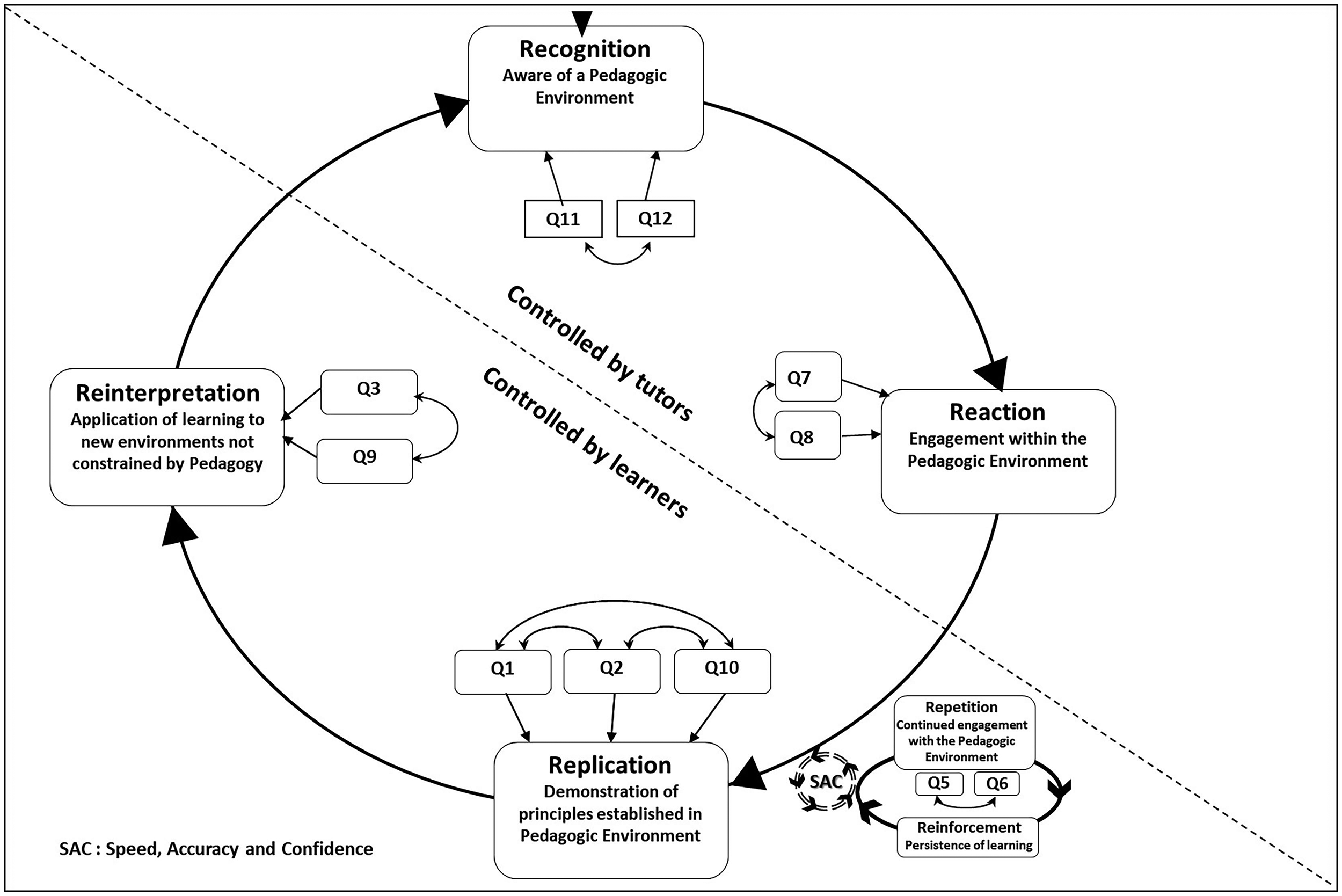
An examination of the proposed iterative learning model in which the R&R cycle is located between the reaction and replication stages via the use of SEM.
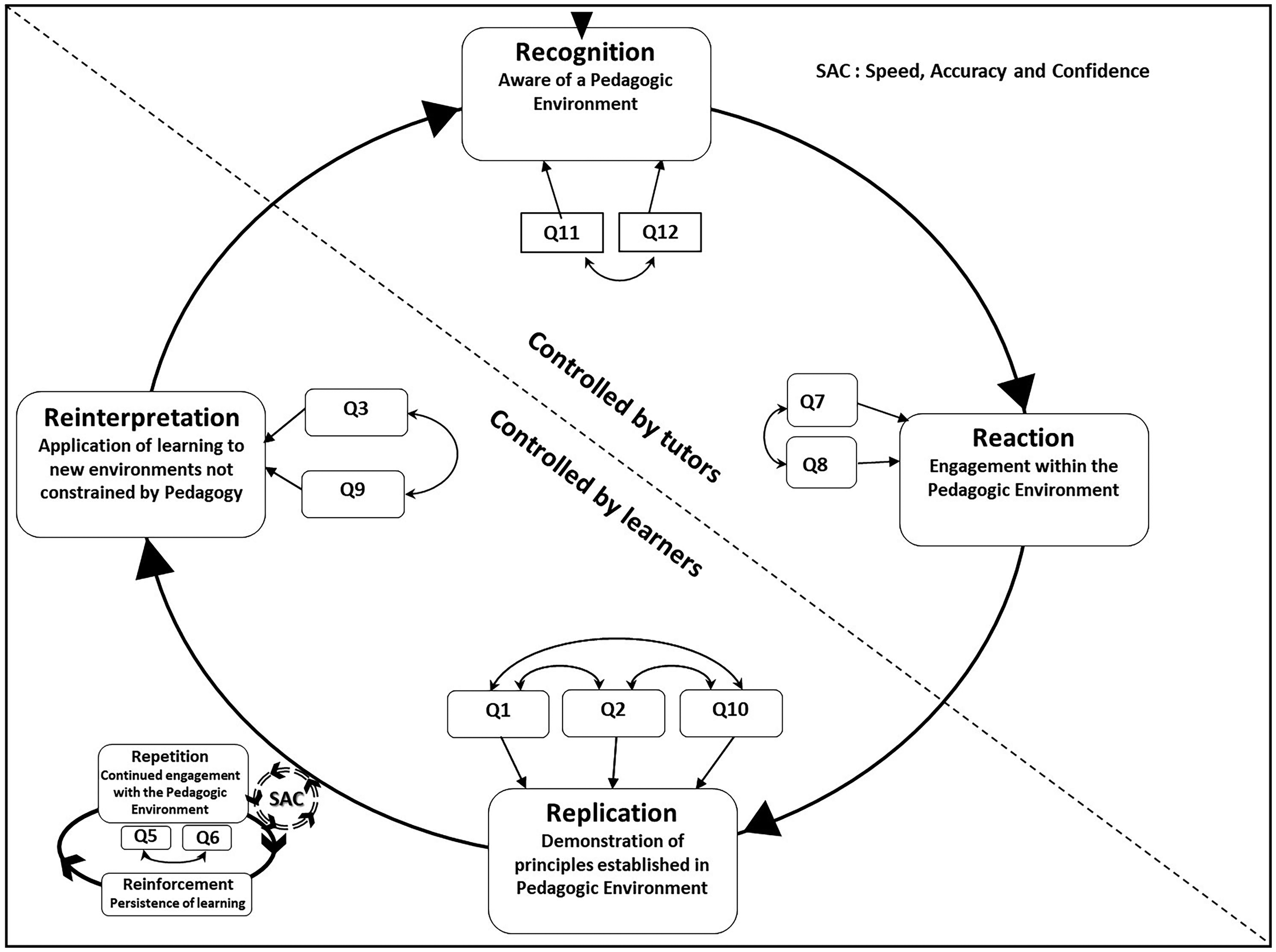
An examination of the proposed iterative learning model in which the R&R cycle is located between the replication and reinterpretation stages via the use of SEM.
The results from Figures 5 and 6 demonstrate a direct relationship (direct effects) through standardised coefficient (β) between Recognition, Reaction, Replication and Reinterpretation in clockwise direction in which the R&R cycle can be located in different points in the cycle thereby permitting ongoing interaction with the different stages contained within the leaner control zone.
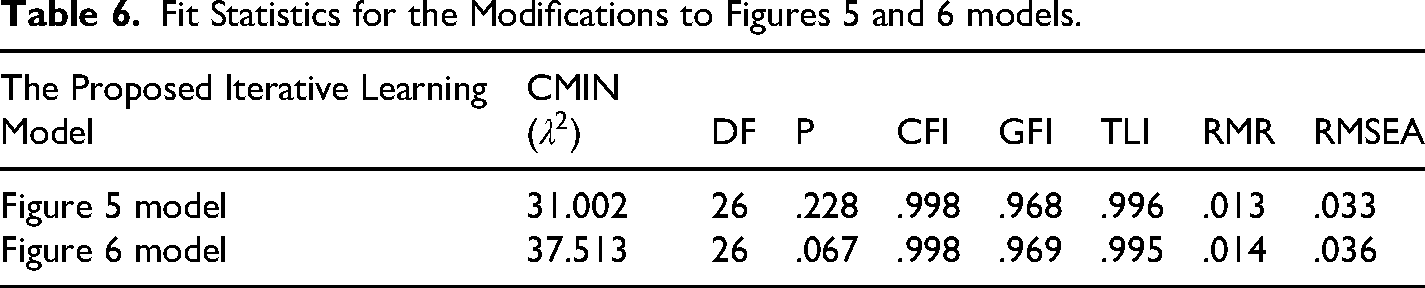
Table 6 represents the summary of the results for both models achieved from SPSS AMOS. The results also demonstrated that both models are accurate representation of questionnaire data obtained within this research (rejection of the Null Hypothesis) and achieved the minimum requirement of SEM method. The results from the table indicate that the probabilities (P) were greater than 0.05 (PFigure5 = .228 and PFigure6 = .067) reject the Null Hypothesis and meet the requirement of “model fit”; the ratio of Chi-square were less than 2 ((CMIN/DF)Figure5 = 1.192, (CMIN/DF)Figure6 = 1.443); CFI, GFI and TLI of both models were ≥ .95; RMSEA values were less than 0.06 and RMR were very small and close to 0, indicate very good fits between the test models and the observed data and as such confirm the suitability of the test models and questionnaire data within this research.
Overall, the results confirmed that repeated activities of the R&R cycle, can occur between reaction and replication and/or replication and reinterpretation stages within the learner zone. Both occurrences of the R&R cycle serve learners in two different ways. Initially it can help learners successfully replicate learning methods (Figure 5) ultimately building up speed, accuracy and confidence (SAC) before moving onto the next stage. Secondly it serves as a mechanism to remind the learner of previous learning and therefore improve outcomes of the next stage (Figure 6). This in turn enhances a learners’ ability (SAC) whilst creating a “bridge” between replication and reinterpretation. All stages including the R&R cycle of both models influence the outcomes within the learning process.
Through the results achieved there is evidence to support the proposition that students’ repetition and reinforcement activities using VBL play a significant role in their learning and understanding of the subject (Ha5). This, therefore, confirmed that a Video Based Learning approach enhances student achievement through opportunities for repetition and reinforcement and as such are integral elements within the proposed models.
During the process of learning where in which the R& R cycle was placed between the Reaction and Reinterpretation stages, learners tended to repeat activities until each individual learner achieved their own satisfaction in speed, accuracy and confidence before moving on to the Replication stage. However, when the R&R cycle was placed between Replication and Reinforcement it is suggested that learners engage with repeating activities to ensure their skills achievement and overall accuracy was achieved prior to application in a different context such as the resolution of previously unencountered problems.
Conclusion
Whilst Lewis et al. (2023) confirmed that tutor-developed VBL significantly enhances educational outcomes, this research supported demonstrating the effectiveness of VBL as an effective pedagogical practice. The findings identified in this research make a contribution to a broader pedagogical framework that not only supports the use of tutor-developed video content but also heightens our understanding of the student learning process. The models help clarify the respective roles and responsibilities of both tutor and learners within the learning dynamic and in turn, emphasise critical moments in which instructional intervention and student engagement intersect. This study advocates for a more intentional and accountable distribution of role and responsibilities within the learning “process” which encourages tutors to act as facilitators while positioning students as agents of their own academic progress. It is proposed therefore that the models developed within this study offer opportunities to further consider how the responsibilities and activities of both tutors and learners can be structured within a VBL learning environment to promote a more coherent and supportive learning experience. The research therefore suggests that a VBL approach when developed in alignment with pedagogical intent, has the potential to successfully improve students’ achievements under assessment conditions.
Through the exploration and adaptation of theories and visual representations within the iterative model learning process, it has been possible to demonstrate the cyclical nature of the learning process as experienced by both tutor and learner. It is recognised that the iterative process of learning is itself repeated as learners and tutors engage with both learning environment and learning materials throughout the lifespan of module. The model construct identifies the initial stages (Recognition and Reaction) as being of key significance. These stages are primarily influenced by the role of the tutor and as such reflect the learning topics, learning sources and materials to support the learner's development. By recognition of the role played by tutor within these initial stages it is possible to determine that the overall success of the model is reliant on proactive engagement by the tutor in setting not only the educational objectives but also the resources and the frameworks that support learner engagement.
The learners themselves are directly influenced by the tutors and commence the learning process at the initial Recognition stage during which they will experience a new topic drawn from the taught curriculum. The taught curriculum is often dissected into weekly topic areas and therefore the learner engages with new learning and learning experiences on a regular and predicted sequence. Learner engagement with the learning support is often accompanied by an individualised process of trial and error which ultimately influences their selection of learning support materials within the stage at the Reaction Stage. A key consideration in terms of the development of an effective learning strategy is to offer the learner sufficient opportunities to engage with a range of learning resources through which the learner may select the best approach based upon individual learner preference.
The learners continue the progress of learning through the cycle in a manner which is primarily self-directing and is typified by student actions centred upon the Replication of theorical understanding through to the Reinterpretation Stage in which newly acquired knowledge and skills are presented. Analysis presented here indicates that where the Video Based Learning approach supports successful subject engagement, learners would preferentially utilise Video Based materials for future learning if such opportunities were presented within the module curriculum. The VBL was therefore identified as having made a positive and significant impact upon the improvement of student achievement. The iterative model itself confirms the following:
Each stage directly influences the next stage in a clockwise direction (Recognition → Reaction → Replication →Reinterpretation →Recognition) It is proposed that both repetition and reinforcement (R&R) has a high impact upon the learning process when positioned between those points of the main cycle identified as “Reaction and Replication” and “Replication and Reinterpretation”. The R&R cycle can itself be included within the model between those stages within learner control zone to support learners to achieve the speed, accuracy and confidence required by individual.
The findings of this research not only reinforce the iterative nature of learning but also highlight those areas in which module design and delivery play a significant part. Key within the outcomes of this research is the inter-relationship between tutor and learner which, although evident throughout the module delivery, is itself dynamic in nature. This dynamism as presented within Figures 5 and 6 are reflective of the learner's transition from a state in which they are initially dependent upon the tutor to one in which they become increasingly self-reliant and self-directing in their learning activities. By recognising the learners’ transitory nature and relationship with the tutor it is necessary, within the process of module development, to give due consideration to the mechanisms by which module content will be introduced and supported throughout the module's lifetime. Furthermore, outcomes of this research highlight that within the construction of the module there is a need to consciously design in opportunities for the learner to repeat past learning experiences as a means of reinforcing both subject meaning and application. Whilst re-engagement with subject material is possible via a number of different sources including textbooks, journal articles, etc the inclusion of video-based material offers a key opportunity to learners and therefore offers a significant impact upon re-engagement as they progress through the module and ultimately assessment.
Limitation of This Study
The anonymised nature of this study presents a primary limitation in as much as it is not possible to determine those students that have previously studied mathematical subjects beyond compulsory education (A level or equivalent). It is acknowledged that those students that have engaged with mathematics at a higher level will have a greater affinity with the subject matter presented within the business statistics module and therefore, may be influenced in the respect of their engagement with learner materials on the basis of past experiences. As it is not possible to determine the identity of individual students participating in this study, it is not therefore possible to identify the frequency with which video materials were viewed by individual students. This is perceived as a limitation as individual viewer frequency may have direct influence upon familiarity with video material and therefore individual learner engagement with the subject matter.
Footnotes
Acknowledgements
The development of this article draws upon a number of background references and source materials, including an extract from my PhD thesis entitled Pedagogy through technology: investigating different technology approaches to the pedagogic environment of undergraduate education (Lewis, 2019) available at [https://aru.figshare.com/articles/thesis/Pedagogy_through_technology_investigating_different_technology_approaches_to_the_pedagogic_environment_of_undergraduate_education/23764671?file=42200388]. by  .
.
Ethical Considerations
This research was originally conducted as part of a doctoral study by Naowarat and received ethical approval from Anglia Ruskin University research ethics committee prior to data collection. The procedures used in this study adhere to the tenets of the Declaration of Helsinki. Participation in the study was voluntary, and all participants were provided with an information sheet outlining the purpose of the research, the nature of their involvement, and their rights as participants. Consent was obtained electronically before participants accessed the online questionnaire through the university's virtual learning environment. Participants were informed that they could withdraw from the study at any stage without consequence. All questionnaire responses were collected anonymously and stored within a secure, password-protected university database. The confidentiality and anonymity of participants were maintained throughout the research process. Data were handled and stored in accordance with the requirements of the Data Protection Act 2018 and the General Data Protection Regulation. All collected data were used solely for research purposes and were securely destroyed upon completion of the study.
Informed Consent
Informed consent was obtained from all participants prior to their involvement in the study. Participants were provided with an information sheet explaining the purpose of the research, the nature of their participation, and how the collected data would be used. Before accessing the online questionnaire through the university's virtual learning environment, participants were required to confirm their consent electronically. Participation in the study was entirely voluntary, and respondents were informed that they could withdraw from the survey at any stage without penalty. All responses were collected anonymously to ensure the confidentiality and privacy of participants.
Consent to Publish
I hereby give my consent for this manuscript to be published. I confirm that all contents of this manuscript are original and that all images included have been created by me. I consent to the publication of this work in its current form.
Funding
The authors received no financial support for the research, authorship, and/or publication of this article.
Declaration of Conflicting Interests
The authors declared no potential conflicts of interest with respect to the research, authorship, and/or publication of this article.
Data Availability Statement
The datasets generated and analysed during this study are not publicly available due to ethical and confidentiality restrictions. All data were collected anonymously and stored securely in accordance with institutional data management policies and the requirements of the Data Protection Act 2018 and the General Data Protection Regulation. In accordance with the approved ethical procedures described above, the data were securely destroyed following completion of the research project.
Artificial Intelligence (AI) Authorship
No Artificial Intelligence (AI) was used in the creation of this manuscript.