




Abstract
Integrating artificial intelligence (AI) stands out as the most dynamic and innovative breakthrough in introducing disruptive paths in the varied domains of education. This bibliometric analysis delved into the trajectory of AI’s evolving landscape within educational settings over two decades, encompassing 324 articles published from 2003 to 2023, sourced from the Scopus database. The study uncovers a substantial surge in publications with a steep increase from 2020, peaking in 2023. Notably, while established nations like China and the US lead in publications, notable contributions from other developing countries, including Saudi Arabia, India, and Malaysia, underscored a global shift. Key terms, including students, machine learning, AI and higher education, underpin the central focus research areas while emerging themes like “generative AI” and chatbots like “chatgpt” mark the evolving trends. Further, the study prompts sustained global partnerships, interdisciplinary collaborations, and continued exploration of emerging AI technologies to catalyze educational advancements.
Keywords
Technology continues to serve as a remarkable catalyst by fostering human connection globally while advancing overall living standards through novel innovation (Radovan, 2013). Embracing a broad spectrum, the technology includes every human-crafted creation (Arstorp, 2021; Säljö, 2010), from pens and chalkboards to the more complex realms of digital devices such as smartphones and supercomputers. This expansive domain fosters socio-economic inventiveness, unveiling new possibilities in the digital landscape (Marvel & Lumpkin, 2007). For a century, Information and Communication Technologies (ICT) have been uniting various disparate elements within the domain of education (Livingstone, 2012), ranging from television, radio, photographs, databases, and games to conventional books and writing. This convergence has gradually transformed the educational landscape, underscoring the profound influence of digital technology on modern learning experiences (Haleem et al., 2022b). Over time, digital technology has begun to substantially transform the field of education through heightened accessibility, personalization, and engagement. Notably, the rise of artificial intelligence (AI) stands out as the most dynamic and innovatory breakthrough in digital technology, introducing disruptive forces and opening up intriguing paths in the advancement of education (OECD Digital Education Outlook, 2021; Timotheou et al., 2023).
The modern-day history of AI is greatly attributed to Alan Turing (Turing, 1950) and the 1956 Dartmouth College conference (Moor, 2006), where John McCarthy formally coined the term “Artificial Intelligence.” The primary goal of this field is to generate intelligent machines that can reason, solve problems, and readily adjust to a new environment in a manner comparable to human intelligence based on the supplied data (Haleem et al., 2022a). The booming transformative wave of AI is beginning to affect most sectors in the present Industry 4.0 (Iyer, 2021; Shandhi & Dunn, 2022; Wakchaure et al., 2023).
Introducing AI has unleashed previously untapped potential in the education landscape by transforming the pre-established traditional learning paradigms and approaches (Holmes et al., 2019). The adaptable features of AI and customizable instructional algorithms are now altering how learners interact with information (Zhang & Aslan, 2021). Now, through AI-fueled platforms, learners can access tailored learning experiences in response to their unique needs, preferences, and pace (Sayed et al., 2023). Furthermore, AI-driven insights provide educators with invaluable information about their learners’ performance, allowing for focused remediation and optimized progress in learning (Guan et al., 2020; Ouyang et al., 2023).
The potential educational benefits of AI go beyond individualized instruction. AI-driven chatbots and virtual assistants assist learners with inquiries, encouraging self-directed learning (Adamopoulou & Moussiades, 2020; Gill et al., 2024). Further, natural language processing (NLP) (Chowdhary, 2020) enhances the overall learning experiences by enabling real-like conversation with the virtual world (Litman, 2016). Moreover, the traditional assessment process is getting expeditated by the emerging AI-based assessment tools, offering educators additional time to hone in on pedagogy while delivering students instant feedback (Srinivasa et al., 2022; Tomić et al., 2023). AI also maximizes recommendation systems and content generation, prioritizing learning resources following student profiles and specific instructional goals (Diwan et al., 2023). In a nutshell, incorporating AI into education is an important milestone that promises greater efficiency and individualized adaptable learning (Ahmad et al., 2021; Kabudi, 2022).
Building upon the transformative impact of AI in education (Ouyang & Jiao, 2021), this study aims to carry out a comprehensive bibliometric analysis focused on publications discussing AI's evolving landscape within the education domain. This analysis encompasses articles published from 2003 to 2023, sourced from the Scopus database. This study enables a data-driven examination of the vast scholarly landscape through bibliometric analysis, aiming to reveal significant insights into the distribution, evolution, and prevalence (Mejia et al., 2021) of AI-related educational research. Concerning the nexus between AI and education, the study thoroughly analyzes the scholarly output during this period, highlighting advancements, elucidating trends, and breakthrough contributions.
To methodically analyze the landscape of AI in education, this study will address the subsequent research questions:
How is the distribution of publications delineated across years and countries? What is the citation status of relevant journals when considering their Q-value and h-Index? Is there any noticeable trend in collaborative authorship among countries, organizations, and authors? What structural insights emerge from analyzing keyword co-occurrences?
The above research questions guide the current bibliometric analysis, facilitating a thorough examination of the AI's educational, scholarly landscape.
Literature Review
ICT have significantly transformed the conventional learning paradigms by supporting significant elements within educational systems (Foutsitzi & Caridakis, 2019; Watson, 2006). Zweekhorst and Maas (2015) noted that using ICT tools has enhanced learners’ engagement while facilitating classroom interactions. Additionally, the expanded access to education has drastically changed how information is acquired, assimilated, and shared in educational settings (Hanaysha et al., 2023; Istenic Starcic & Bagon, 2014; Sanfo, 2023). Here, the remarkable influence of digital technology on contemporary learning cannot be understated. UNESCO's Global Education Monitoring Report 2023: Technology in Education: A Tool on Whose Terms? (2023) further signifies the profound feature of digital technology on modern learning, illuminating its potential to redefine instructional settings. Numerous studies have proved the advantages of integrating digital technology tools into the classroom, including increased student cognitive engagement and optimized learning motivation (Lin et al., 2017; Smeda et al., 2014; Wen, 2021). Further, Uribe et al. (2003), Carvalho and Santos (2022), and Qian and Clark (2016) evaluated the role of digital technology in facilitating collaborative learning and the development of twenty-first-century skills among learners.
Expanding on the lasting impact of ICT and digital technology, the education system continues to evolve by integrating cutting-edge technological innovations. One of the unprecedented breakthroughs in education is the advent of AI, which represents the next frontier in educational technology (Luckin & Cukurova, 2019). AI opens up untapped possibilities for adaptive, customized, and immersive learning experiences (Kabudi, 2022; Zhang & Aslan, 2021) over the foundation of ICT for improved engagement, accessibility, and shared learning. Moreover, a systematic review conducted by Chiu et al. (2023) identified four critical domains of AI applications in education: learning, teaching, administration, and assessment. Within the scope of learning, AI finds diverse utility beyond providing learner-tailored instructions (Zawacki-Richter et al., 2019), where Hirankerd and Kittisunthonphisarn (2020) contributed to this scope by designing an AI-powered learning management platform enhanced with mixed reality technologies. As a bonus, it exemplifies the range of blending AI with AR and VR elements for an immersive and interactive learning experience (Chng et al., 2023; Devagiri et al., 2022; Wang, 2022). Regarding teaching and assessment, Martínez-Comesaña et al. (2023) address AI's potential to automate and predict the learners’ performance at different educational levels. Using convolutional neural networks (Silva et al., 2023) and machine learning (Fahd et al., 2022), and NLP (Zhang et al., 2023) aids the objectivity of the whole evaluation process. Another significant aspect of AI in education is the availability of AI-powered collaborative learning platforms (Ramadevi et al., 2023), which facilitate peer-to-peer learning and cooperation through enhanced group dynamics analytics (Calvo et al., 2011; Diziol et al., 2010). Indeed, different studies focus on spacing students in optimal groups (Elghomary et al., 2022; Kumar & Rosé, 2011) and offer educators specific recommendations on instructional strategies for collaborative learning (Casamayor et al., 2009; Tan et al., 2022). Meanwhile, AI's role in supporting teachers’ professional development (Lampos et al., 2021; Li & Su, 2020) appears to be a promising future avenue.
However, despite these advancements, there are significant challenges to deploying AI in education, including biases in AI-based systems, privacy concerns, and ethical considerations (Murphy, 2019; Stahl & Wright, 2018). Achieving the proper equilibrium between the promise of AI and its ethically, inclusively, and pedagogically effective practices remains an ongoing challenge in tapping the full educational potential of AI. Notwithstanding these challenges, recent advancements, such as EduRobot (Budiharto et al., 2017), predictive AI technologies (Gray & Perkins, 2019), and AI chatbots (Labadze et al., 2023) for student support and performance forecasts, make AI's role in education more appealing. Additionally, the successful verification of AI in predicting and improving learners’ academic achievement (Al-Khafaji & Eryilmaz, 2022; Huang et al., 2023), improving the attention span of autistic learners (Vahabzadeh et al., 2018), proctoring online assessments (Rahman, 2022), and monitoring learners’ mental health (Cai & Tang, 2022) contributes to create more inclusive educational environment (Drigas & Ioannidou, 2013). These advancements highlight AI's dynamic and prosperous potential incorporation in education, besides the challenges raised by biases, privacy issues, and ethical concerns. Hence, this area of research continues to evolve alarmingly, and navigating this broad landscape necessitates a more systematic and comprehensive approach to grasp the evolution, trends, and emerging focal areas within AI's educational applications.
The bibliometric analysis conducted by Song and Wang (2020), covering the period 2000 to 2019 from the Scopus database, revealed a growing interest in educational AI research. Moreover, Li and Wong (2023) showcased growing publications on the reach of AI for personalized learning through the bibliometric analysis of published articles, encompassing the years 2000 to 2022, from both Scopus and Web of Science databases. These bibliometric studies underpin the need for an adequate systematic approach to uncover and understand shifting trends, thematic focal points, significant collaborations, and foundational contributions (Ellegaard, 2018) across this scholarly AI in the educational landscape. Therefore, in AI's broad and advancing landscape in education research, bibliometric analysis constitutes an integral tool that guides scholastic inquiries, offers research frontiers, and promotes informed decision-making for optimal instructional practices.
Methodology
This study undertook a comprehensive bibliometric analysis of the scientific publications on the advancing landscape of AI's utilization within educational settings. Since its introduction in the 1960s, bibliometric analysis techniques have been extensively employed to examine the scientific development of several local and global study topics (Dao et al., 2023; Pritchard, 1969). It uncovers the performance of articles and journals, patterns of collaboration, and the specific domain of emerging literature (Donthu et al., 2021).
Data Collection and Data Management
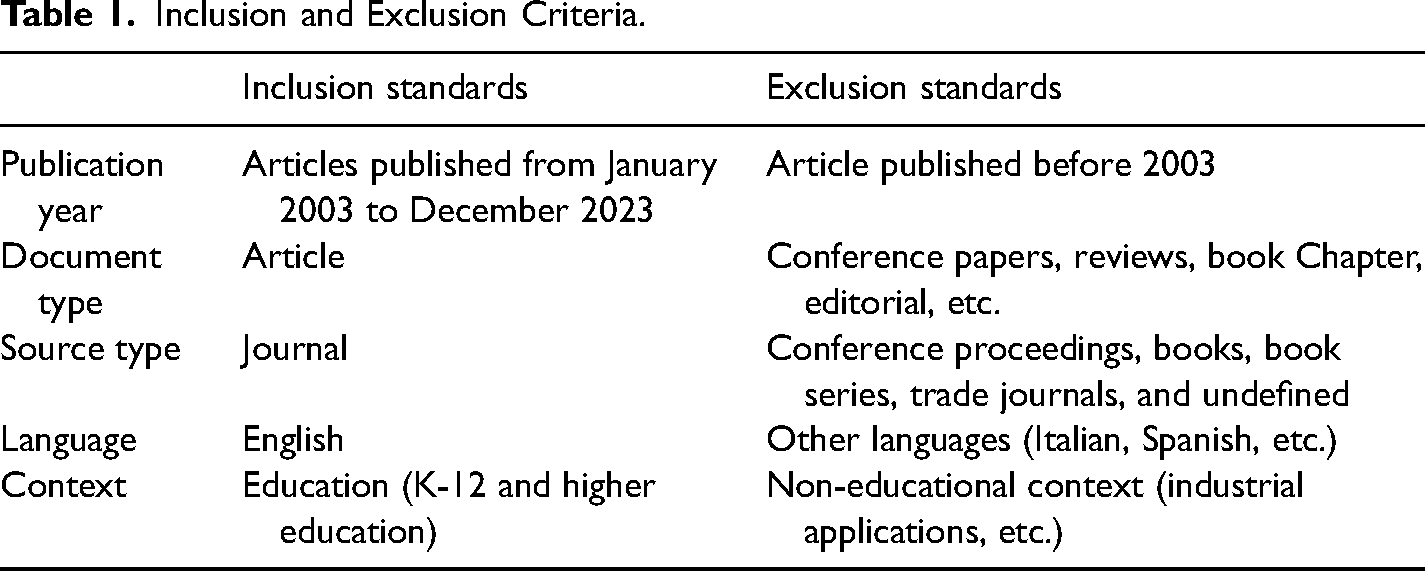
The employed search strategy and article collection process are outlined in Figure 1, following the inclusion and exclusion standards briefed in Table 1. The article search and data collection were carried out from the Scoups database on 10 December 2023, due to its extensive multidisciplinary coverage and recognition as a widely used data repository for bibliometric analysis (Maphosa & Maphosa, 2023; Norris & Oppenheim, 2007). Using the keywords and search string presented in Figure 1, the initial search yielded a significant number of AI subcategories. However, these results were not focused on the specific scope of incorporating AI technologies in the educational landscape. Consequently, the initial results were strictly filtered using the inclusion criteria and the researchers’ manual title and abstract screening. This screening phase resulted in the final data of 324 articles in the including phase. These articles were then downloaded in CSV Excel format from the Scopus database, yielding a significant dataset relevant to the landscape of AI in education.
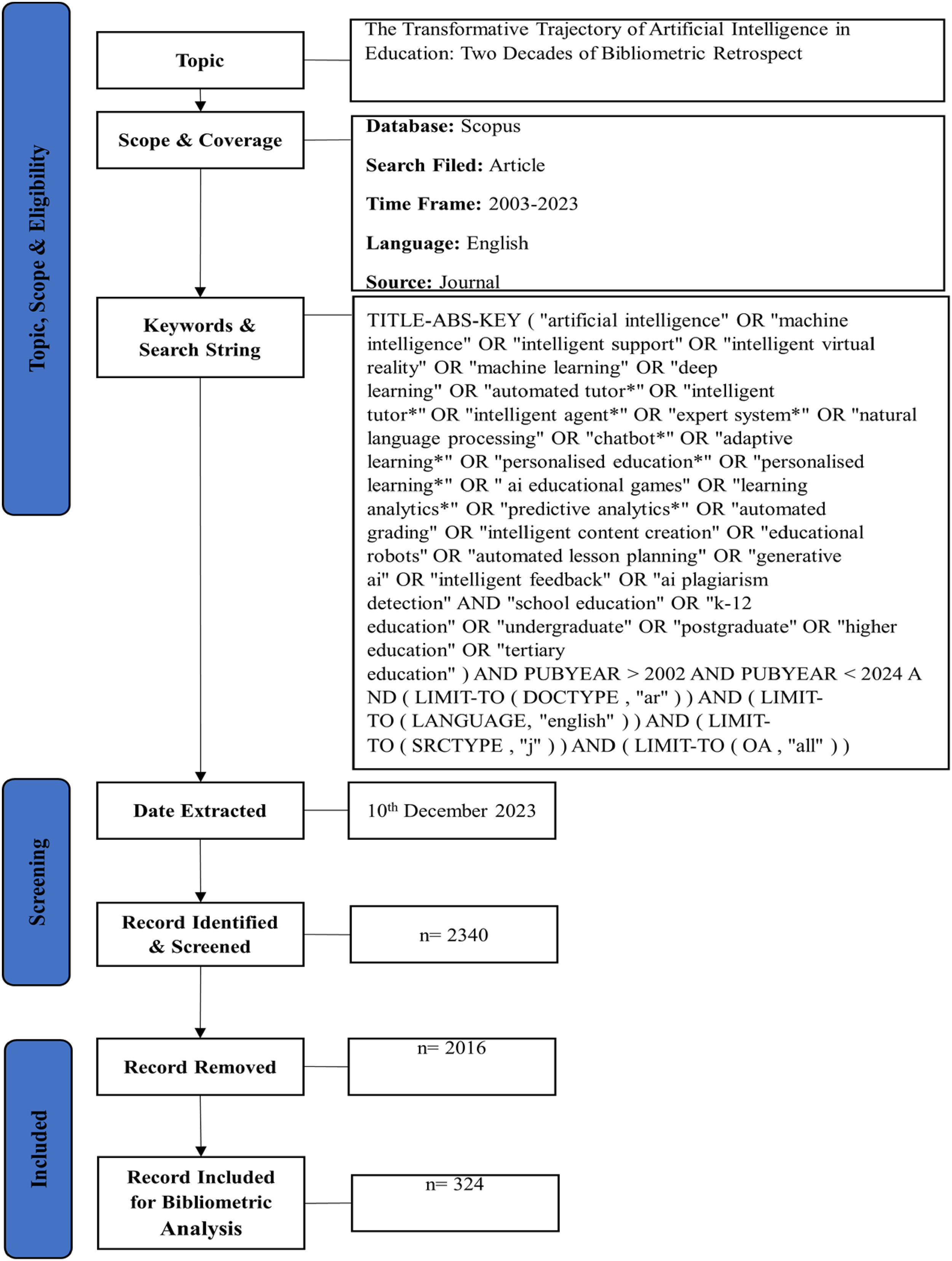
Data collection flowchart (sourced: Zakaria et al. (2021)).
Inclusion and Exclusion Criteria.
Data Analysis
Following the data collection, the data in CSV Excel format was exported into VOSviewer 1.6.20 version and Excel for analysis. VOSviewer is a free software platform for constructing and visualizing bibliometric networks (van Eck & Waltman, 2010). The initial publication's analysis over the years and countries was then subsequentially followed by the general descriptive findings encompassing the journal matrices and publication citation count of the studies, and bibliometric analysis co-authorship patterns, keyword co-occurrence, and co-citation patterns.
Results
The study's findings, following the objectives, are displayed in the following Tables and Figures.
General Descriptive Findings
Year-Wise Publications Trajectory
The evolving trajectory of publications within the landscape of AI in education from 2003 to 2023, as sourced from the Scopus database, is displayed in Figure 2. It is very evident that there has been a notable evolution in the field of study over the years. Though there were either limited or no publications till 2018, 2019 showed a substantial surge, especially reaching a peak of 115 in 2023, with a steep rise in publications from 2020 onwards. The publications’ trajectories here signify the growing scholarly efforts in the evolving landscape of AI in education.
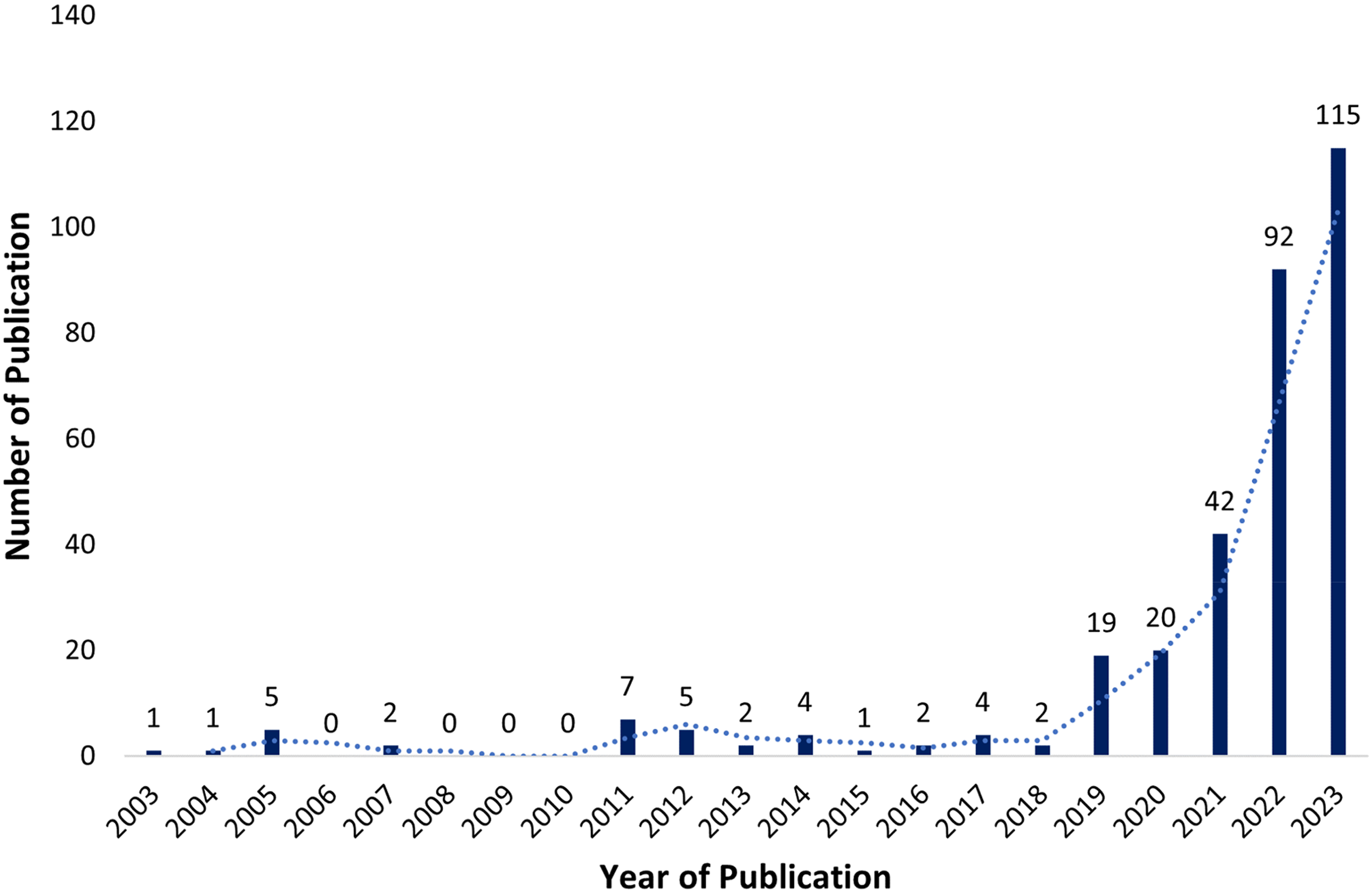
Year-wise publications trajectory.
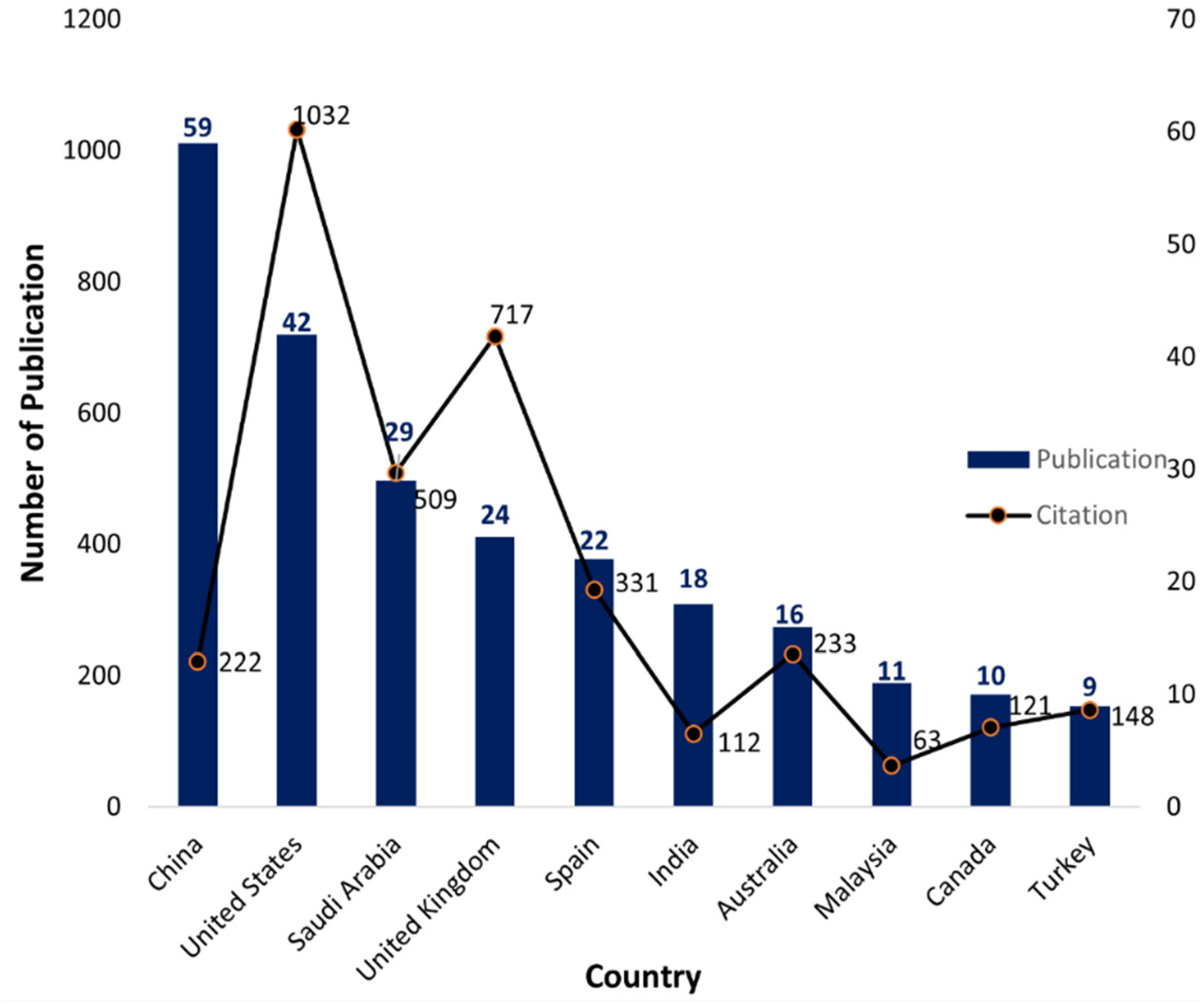
Country-wise publications trajectory.
Country-Wise Publications and Citations Trajectories
The evolving trajectories of publications and citations of the top 10 countries within AI's educational landscape, as sourced from the Scopus database, are illustrated in Figure 3. Of the 74 countries, China was the most influential country with a total of 59 publications, subsequently followed by the United States (US), Saudi Arabia, and the United Kingdom (UK) with 42, 29, and 24 articles, respectively. However, the US topped with 1032 for the citations, followed by the UK and Spain. Though developed countries like the US, UK, and Spain lead in scholarly output due to their access to resources and solid infrastructure, the growing contributions from different developing nations like China, Saudi Arabia, India (18 articles), and Malaysia (11 articles) underscore a shift in the current landscape. The above results indicate a diverse global engagement in integrating AI into the educational landscape.
Top Journals Matrices Analysis
After a thorough publication analysis of the 180 journals sourced from the Scopus database, the final leading ten journals, together with their matrices, are compiled in Table 2.
Most Productive Journals Matrices.
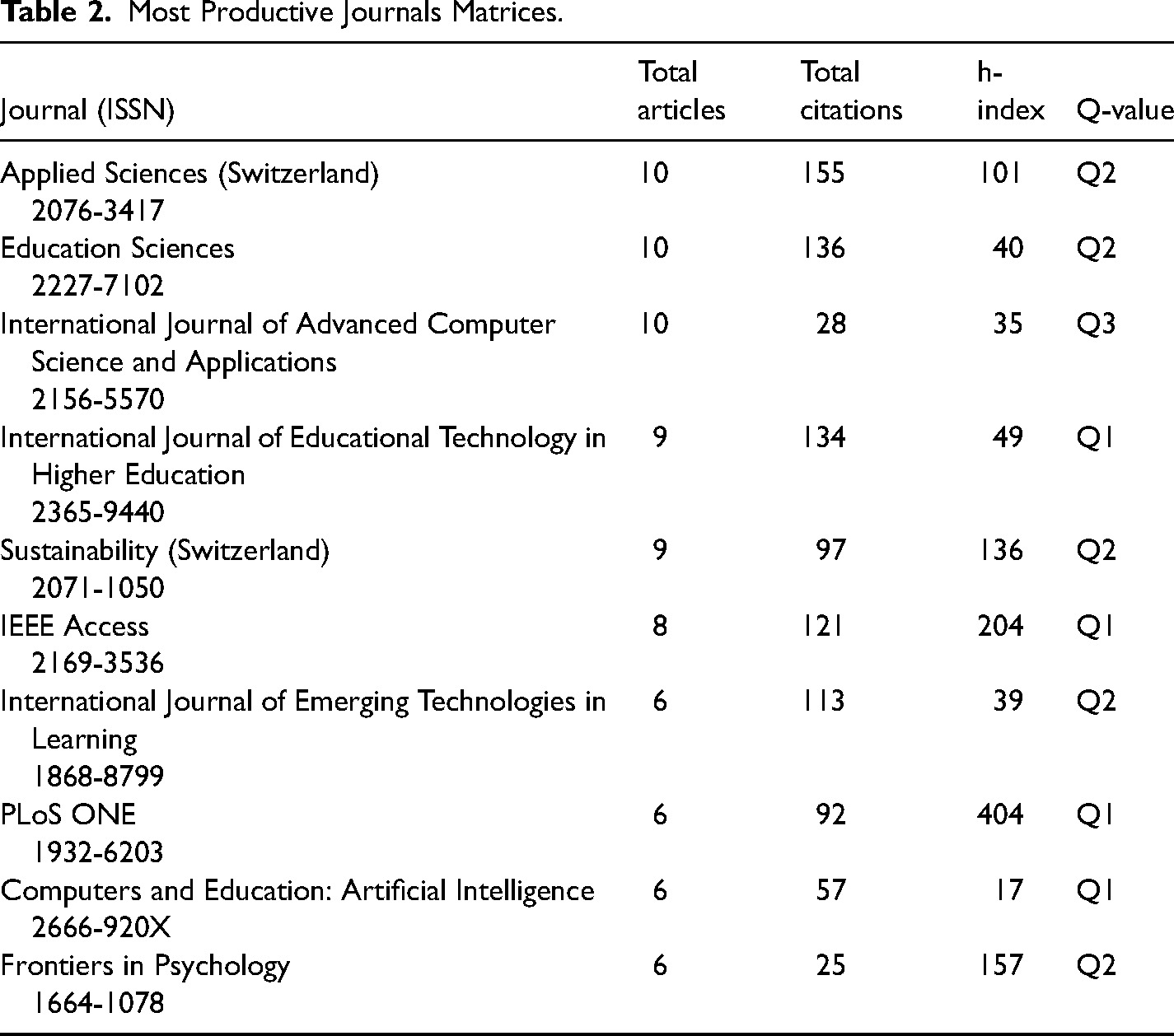
From Table 2, in the landscape of AI in education within the specific period of 2003 to 2023, the journals, “Applied Sciences (Switzerland),” “Education Sciences,” and “ International Journal of Advanced Computer Science and Applications” published the highest number of articles at 10 each, indicating a consistent output. Added to this, Journals including the top published journals “Applied Sciences (Switzerland)” and “Education Sciences,” “International Journal of Educational Technology in Higher Education, “IEEE Access” and “International Journal of Emerging Technologies in Learning” got more than 100 citation counts, suggesting a significant reach in their published content. Furthermore, “PLoS ONE,” with a 404 h-index score, topped each journal's h-index list, considering the number of publications and their citation impact (van Bevern et al., 2016), adding to the total journal productivity. Moreover, the table also included the quartile value (Q-value) (Scimago Journal & Country Rank, n.d.) value, where the journals are ranked regarding impact based on citation performance they received within the landscape of AI in education. The journals with the highest publication count in the focused area, “Applied Sciences (Switzerland),” “Education Sciences,” and “ International Journal of Advanced Computer Science and Applications,” respectively, hold Q2 and Q3 quartile values. The following journals, “International Journal of Educational Technology in Higher Education,” “IEEE Access,” “Computers and Education: Artificial Intelligence,” and “PLoS ONE” stand out from the table by getting placed in Q1 along with notable publications in the focused area. Researchers can use this table as a reference tool in strategically selecting journals that align with their study objectives for producing scholarly output in the landscape of AI in education.
Top-cited Articles
After a thorough citation analysis of the 324 published articles sourced from the Scopus database, the final leading ten articles and their sourced journal, DOI, and author(s) are compiled in Table 3.
Top-cited Articles.
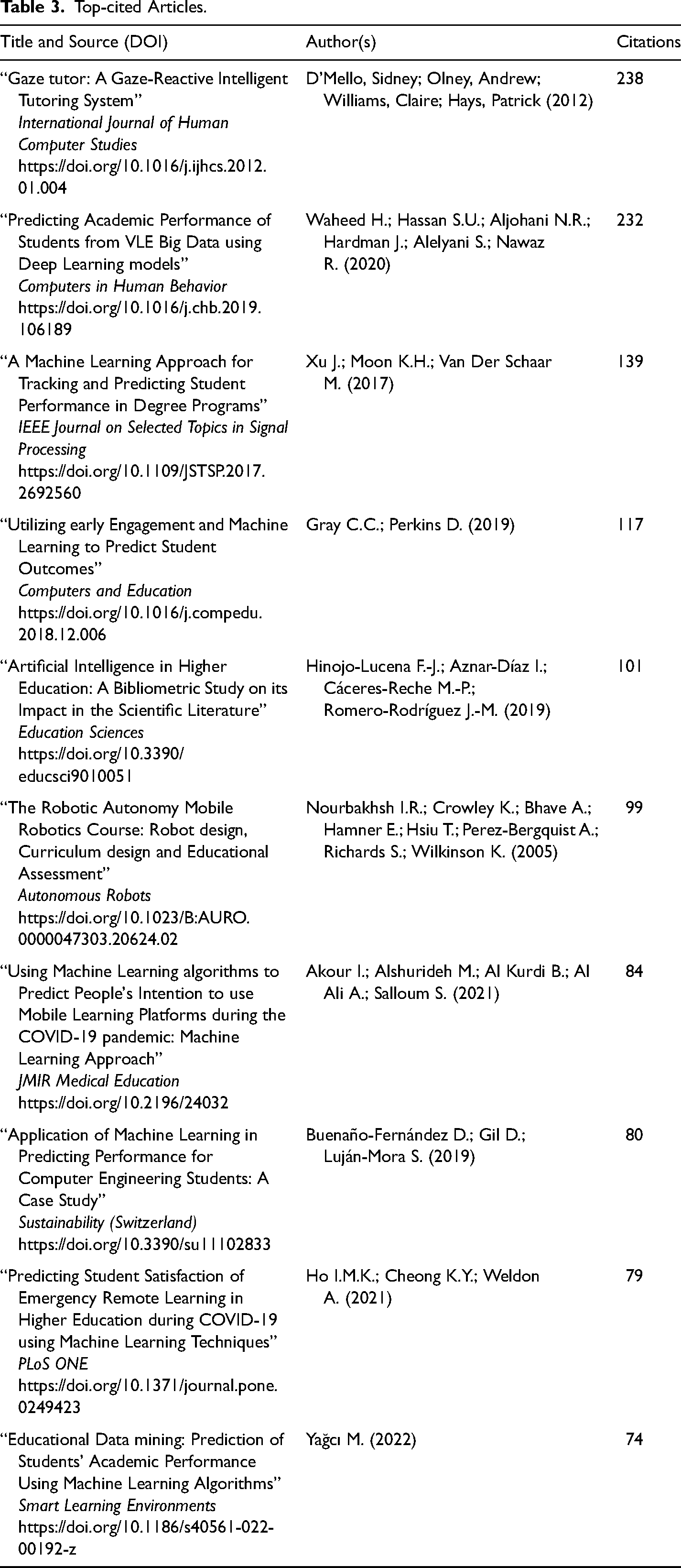
Notably, the article “Gaze tutor: A Gaze-Reactive Intelligent Tutoring System” led the ranking with a total of 238 citations, where Sidney D'Mello, Claire Williams, Andrew Olney and Patrick Hays became the most influential authors. This has been closely followed by “Predicting Academic Performance of Students from VLE Big Data using Deep Learning models” (232 citations) and “A Machine Learning Approach for Tracking and Predicting Student Performance in Degree Programs” (139 citations). Further, four out of the 10 top-cited articles were sourced from the top leading journals “Computers and Education,” “Education Sciences,” “Sustainability (Switzerland),” and “PLoS ONE,” respectively. In summary, these highly cited articles substantiate scholar's growing interest in the education AI landscape.
Bibliometric Findings
The research utilized VOS Viewer version 1.6.20 to examine the network relationships between the various units of analysis to visually represent the bibliographic data supplied in a CSV Excel file from Scopus. The present investigation includes co-authorship (author, organization, and country) analysis, co-occurrence analysis, and co-citation analysis (cited sources). Both the co-authorship and co-citation were analyzed using the full counting method, where each co-authorship and co-citation of a source received a total weight of one while counting them (Perianes-Rodriguez et al., 2016; van Eck & Waltman, 2014).
Visualization of Co-Authorship Networks
Co-authorship is one of the concrete and extensively explored types of scientific collaboration (Li, 2023). In general terms, co-authorship refers to the collaborative efforts of scholars, organizations, and countries in producing a scientific output within a particular field of study. Through the bibliometric techniques for analyzing co-authorship networks, every component of scientific collaboration networks could potentially be accurately visualized (Glänzel & Schubert, 2005).
Visualization of Co-Authorship Analysis – Authors
The network visualization of co-authorship among authors (minimum of two articles and ten citations) is displayed in Figure 4. Out of 1133 authors, 27 were identified to fall under the predetermined limit from 2003 to 2023, forming 13 clusters depicted in distinct colors.
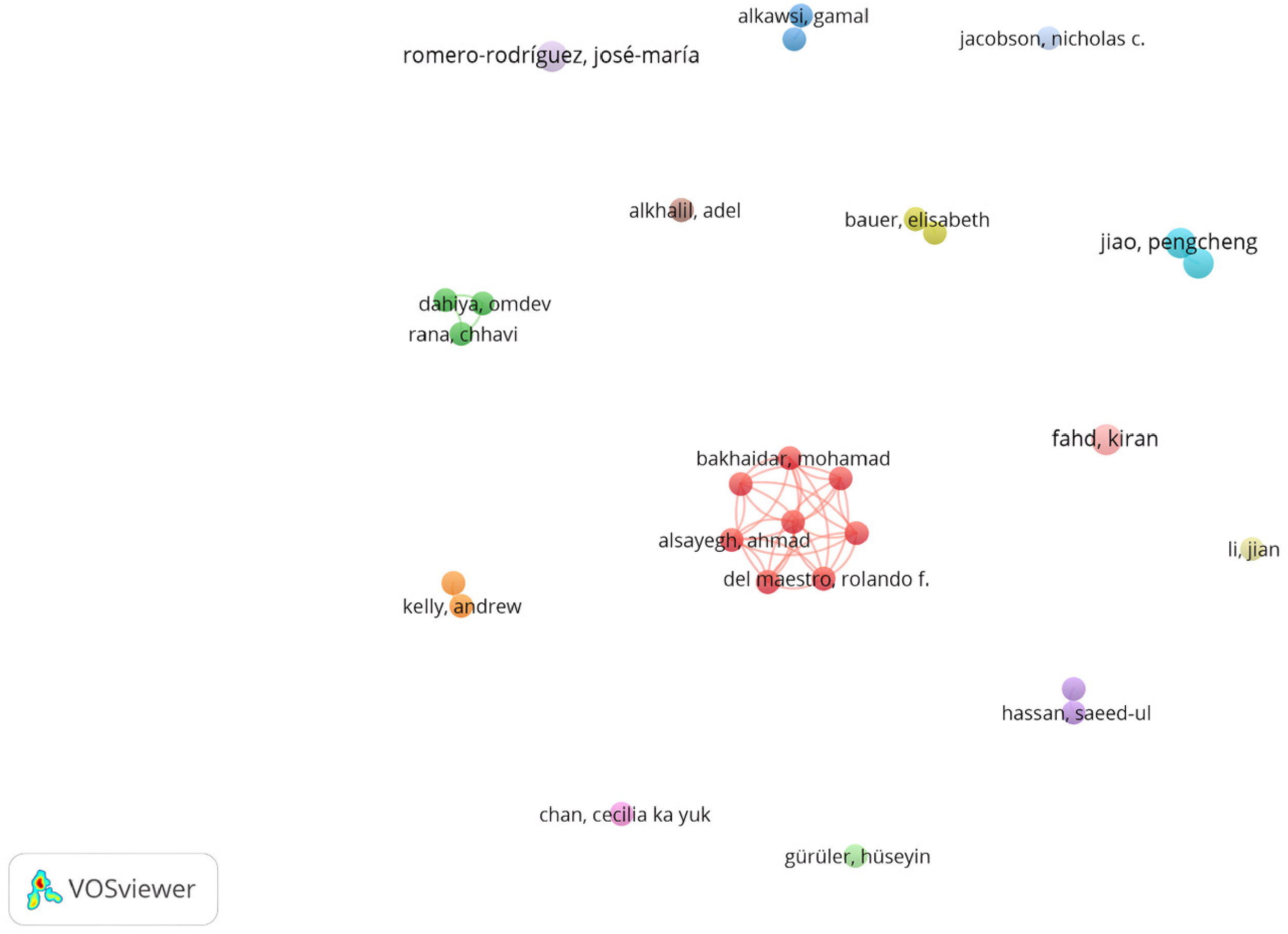
Authors’ co-authorship network visualization.
Jiao, Pengcheng, and Ouyang Fan collaborated most in the landscape of AI in education by co-authoring three articles. Both scholars were from Zhejiang University, China, which appeared to be the top country in the publication domain. Additionally, both scholars specialized in the field of AI in education. This has been followed by Fazlollahi, Ali M.; Winkler-Schwartz, Alexander; Yilmaz, Recai; Ledwos, Nicole; Bakhaidar, Mohamad; Mirchi, Nykan; Alsayegh, Ahmad and Del Maestro, Rolando; Kelly, Andrew and Sullivan, Miriam; Hassan, Saeed-ul and Nawaz, Raheel; Baashar, Yahia and Alkawsi, Gamal; Fischer, Frank and Bauer, Elisabeth with two article co-authorship collobations, respectively.
Visualization of Co-Authorship Analysis – Organizations
The network visualization of co-authorship among organizations (minimum of two articles and 10 citations) is displayed in Figure 5. Out of 760 organizations, seven were identified to fall under the predetermined limit from 2003 to 2023, forming five distinct clusters depicted in different colors.
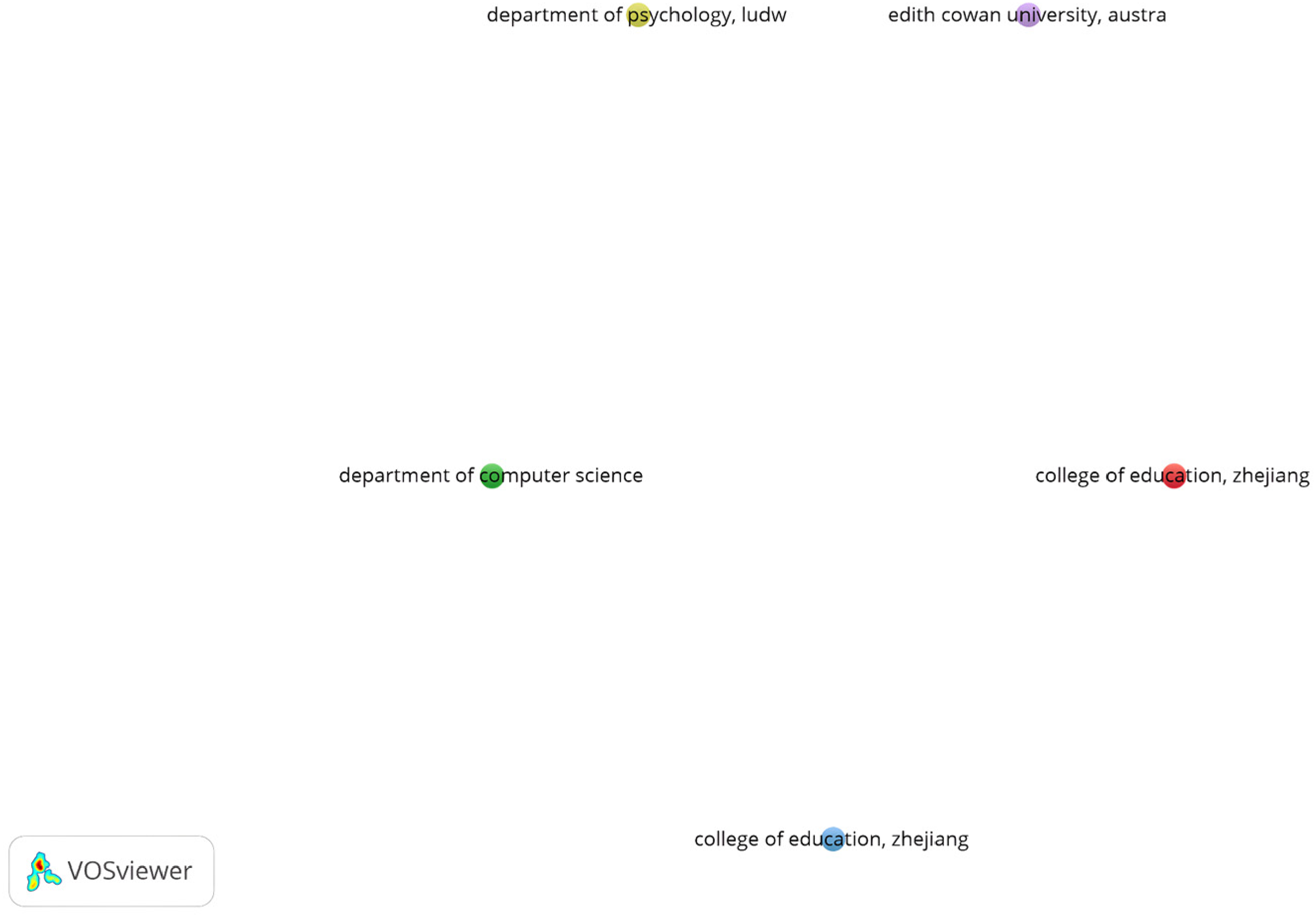
Organizations’ co-authorship network visualization.
The co-authorship network visualization among organizations signifies the limited organizational collaborations in the study field of AI in education. Moreover, each cluster could be a distinct research center with a particular area of focus within AI in education, running independently. However, accomplishing a comprehensive breakthrough in AI in education is only possible through cohesive collaboration or interdisciplinary efforts across worldwide organizations.
Visualization of Co-Authorship Analysis – Countries
The network visualization of co-authorship among countries (minimum of five articles and 10 citations) is displayed in Figure 6. Out of 74 countries, 22 were identified to fall under the predetermined limit from 2003 to 2023, forming five distinct clusters depicted in different colors.
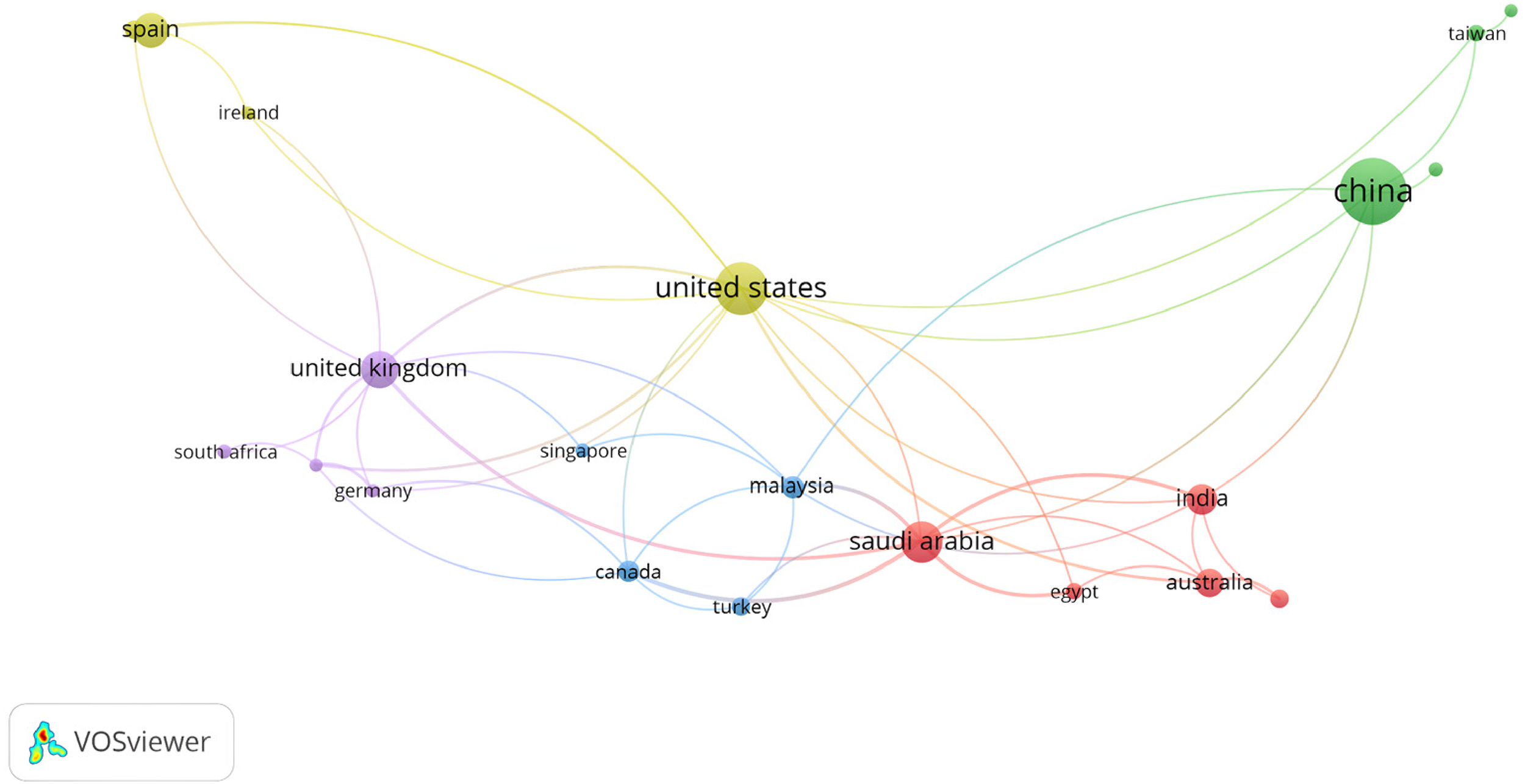
Countries’ co-authorship network visualization.
The United States emerged with the most potent collaboration with 13 countries, closely followed by the United Kingdom and Saudi Arabia with nine countries, respectively. Furthermore, an impressive partnership in the field of AI within educational settings has been disclosed collectively by Saudi Arabia (29 articles, 509 citations) with a compiled link strength of 20, China (59 articles, 222 citations) with a compiled link strength of 6, Malaysia (11 articles, 63 citations) with a compiled link strength of 9, The United States (42 articles, 1032 citations) with a compiled link strength of 16, and United Kingdom (24 articles, 717 citations) with a compiled link strength of 13.
Visualization of Keywords Co-Occurrence Networks
At first, the network and density visualization of the total keywords, including the author's and index keywords, was carried out to outline the research focus areas in the study field. This was followed by the network and overlay visualization of the author's keywords to summarize the overarching flow of knowledge trend that prevails among the researchers in the focus field. In the network visualizations, the size of the keywords, which are depicted as different-colored circles, corresponds to how often the words appear in the title and abstracts of the articles over the selected time frame (Martins et al., 2022). The distance from one another further indicates the strength of the relationship between the nodes. Furthermore, the thickness of the lines indicates the correlation between the two words (van Eck & Waltman, 2010). The density visualization network highlights the depth of the scholarly output, in which the more concentrated the color areas are, the more the research has been accomplished (van Eck & Waltman, 2014).
Network and Density Visualization of Co-Occurrence – All Keywords
The network visualization of the total keywords, including both authors’ and index keywords, is displayed in Figure 7. The keywords were restricted to at least 10 occurrences to develop the visualizations, which yielded a total of 40 keywords out of 2107 total keywords, forming three distinct clusters colored in red, green, and blue. The keywords “students,” “e-learning,” “machine learning,” “high education,” “learning systems,” “online learning,” “educational computing,” “learning analytics,” “forecasting,” “educational data mining,” “decision trees,” “learning algorithms,” “information management,” and “data mining” emerged as the frequently focused keywords forming the largest cluster in red color. This was followed by the second largest cluster in blue color with the keywords “artificial intelligence,” “education,” “higher education,” “chatbot,” “teaching,” “engineering education,” “curricula,” and “educational robots.”
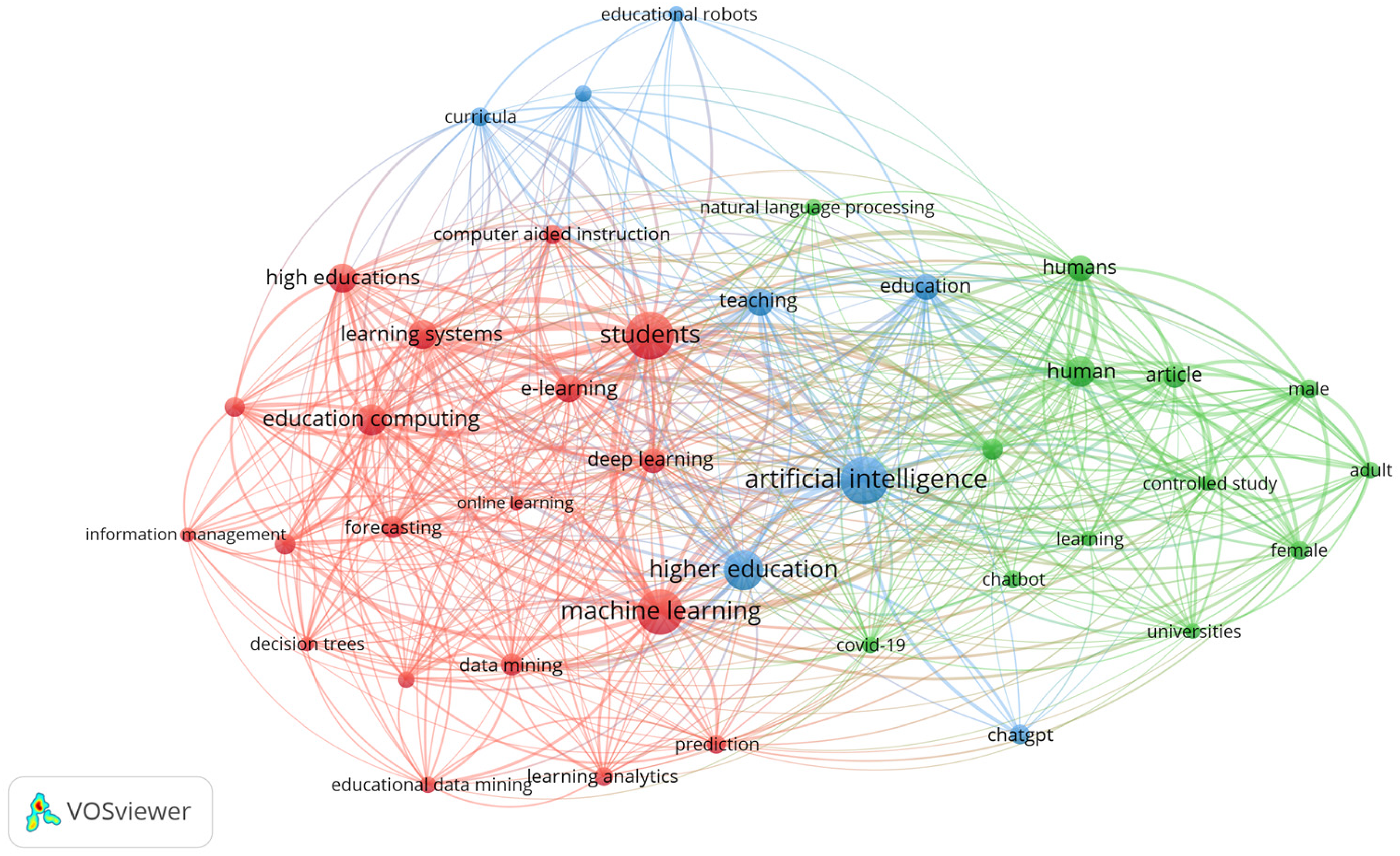
All keywords’ network visualization.
The promising nodes that appeared with high link strength in the context of AI in educational settings were (a) “machine learning” with “students” (32), (b) “artificial intelligence” with “higher education” (27), (c) “artificial intelligence with ‘education’” (16), and (d) “artificial intelligence” with teaching (15).
The item density visualization of the total keywords, including both authors’ and index keywords, is displayed in Figure 8. The keywords were restricted to at least five occurrences to develop the visualizations, which yielded a total of 107 keywords out of 2107 total keywords. In the item density visualization display, the area being researched more frequently, the deeper the yellow regions and the larger the circle's diameter, which corresponds to higher keyword density. Here, the central focus areas with increasing research in the landscape of AI within educational settings for the last two decades were students, machine learning, AI, and higher education.
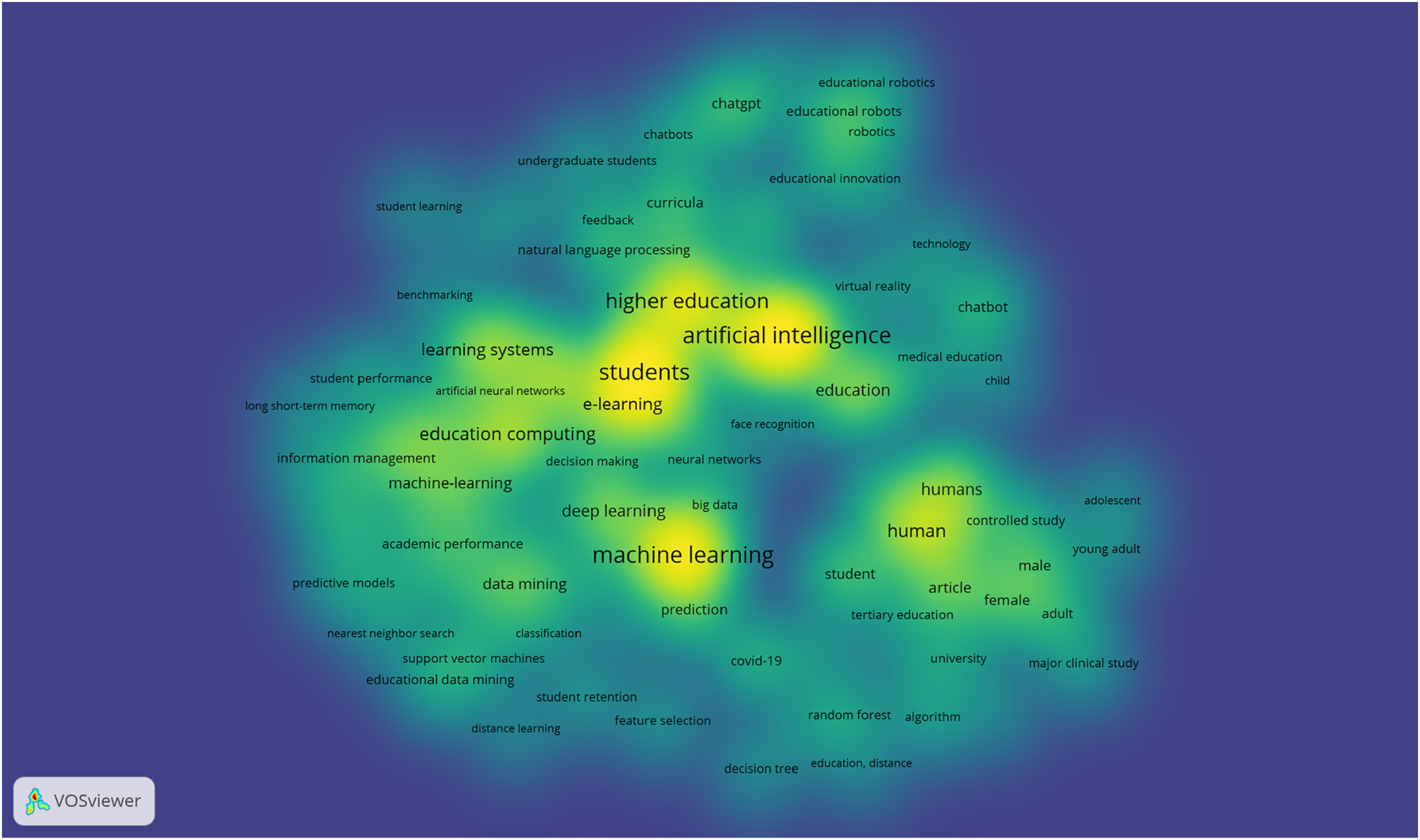
All keywords’ density visualization.
Network and Overlay Visualization of Co-Occurrence – Author Keywords
The network visualization of the 29 authors’ keywords is displayed in Figure 8. The keywords were restricted to at least five occurrences to develop the visualizations, which yielded a total of 29 keywords out of 961 total author keywords from 2003 to 2023, forming six distinct clusters depicted in different colors in Figure 9. The keywords “machine learning,” “learning analytics,” “prediction,” “deep learning,” “feature selection,” “learning management system,” “educational data mining,” “academic performance,” and “data mining” emerged as the frequently focused author keywords forming the largest cluster in red color. In which “machine learning” appeared to be the most frequently occurring authors’ keyword with 67 times of occurrences. This has been followed by the subsequent green- and yellow-colored clusters with the most frequently occurring authors’ key terms “higher education” (60 times occurrences) and “artificial intelligence” (59 times occurrences). Further, the network visualization also highlights the link of the central cluster key term “machine learning” with all other significant cluster key terms comprising “artificial intelligence,” “higher education,” “big data,” “chatbot,” and “random forest.” This substantiates the increasing prevalence of machine learning algorithms within AI's utilization in educational contexts, particularly in higher educational settings.
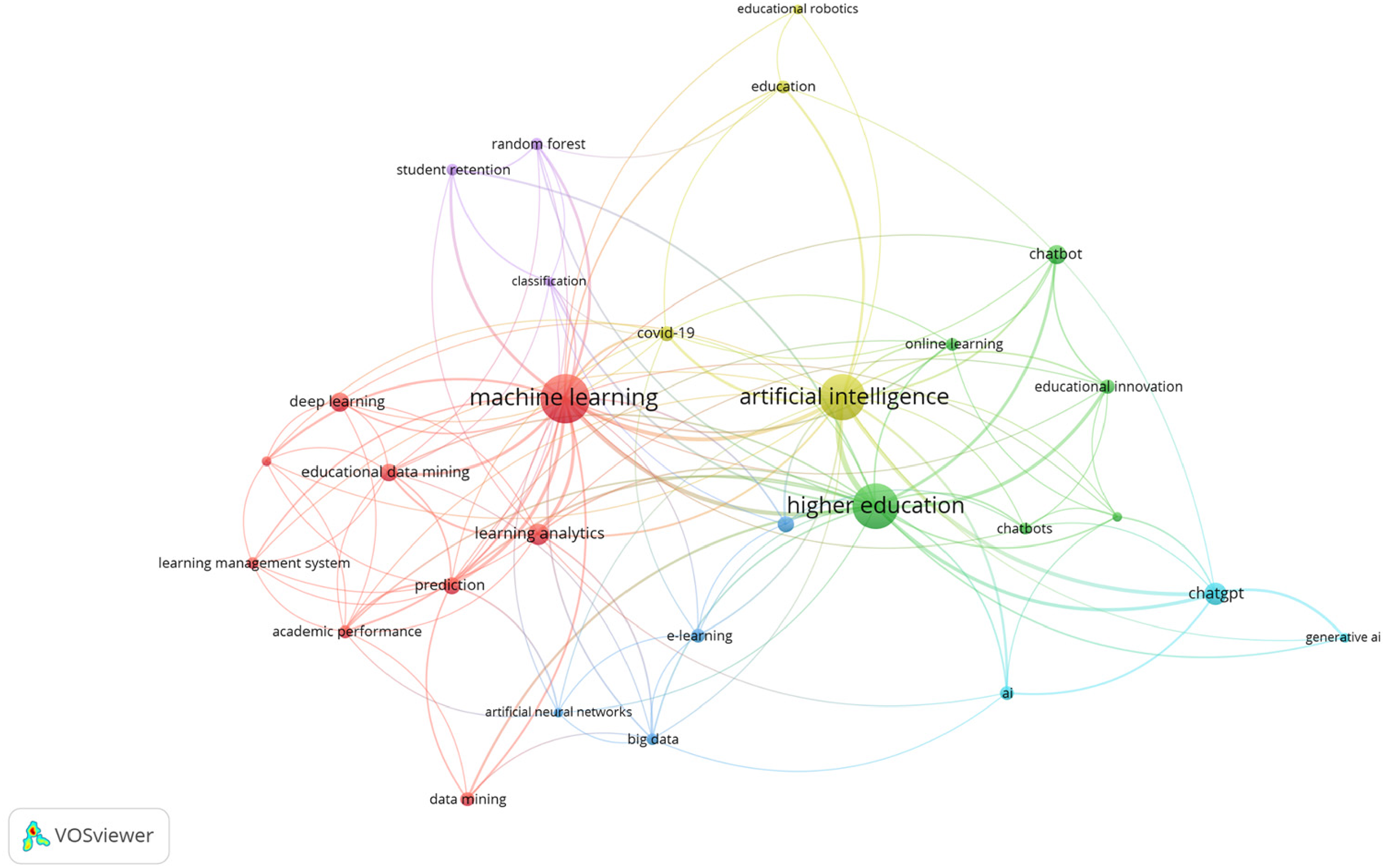
Authors’ keywords co-occurrence—network visualization.
Moreover, here, a distinct sky-blue-colored cluster with the authors’ keywords, “chatgpt” and “generative AI” appears, where the most frequently occurred key term, “chatgpt” compiling 18 times co-occurrences, notably linked with other prominent clusters of “higher education,” “education” and “AI.” This linkage highlights the expanding landscape in which generative AI models, such as “chatgpt,” are integrated within the educational domains, implying potential significant progress in these fields.
This is also evident from the overlay visualization of authors’ keywords displayed in Figure 10, where the yellow-colored regions highlight the key themes of present interest. Additionally, the overlay visualization highlights the development of AI applications in the educational context, from “learning analytics” to presently evolving “generative AI” over 2020 to 2023.
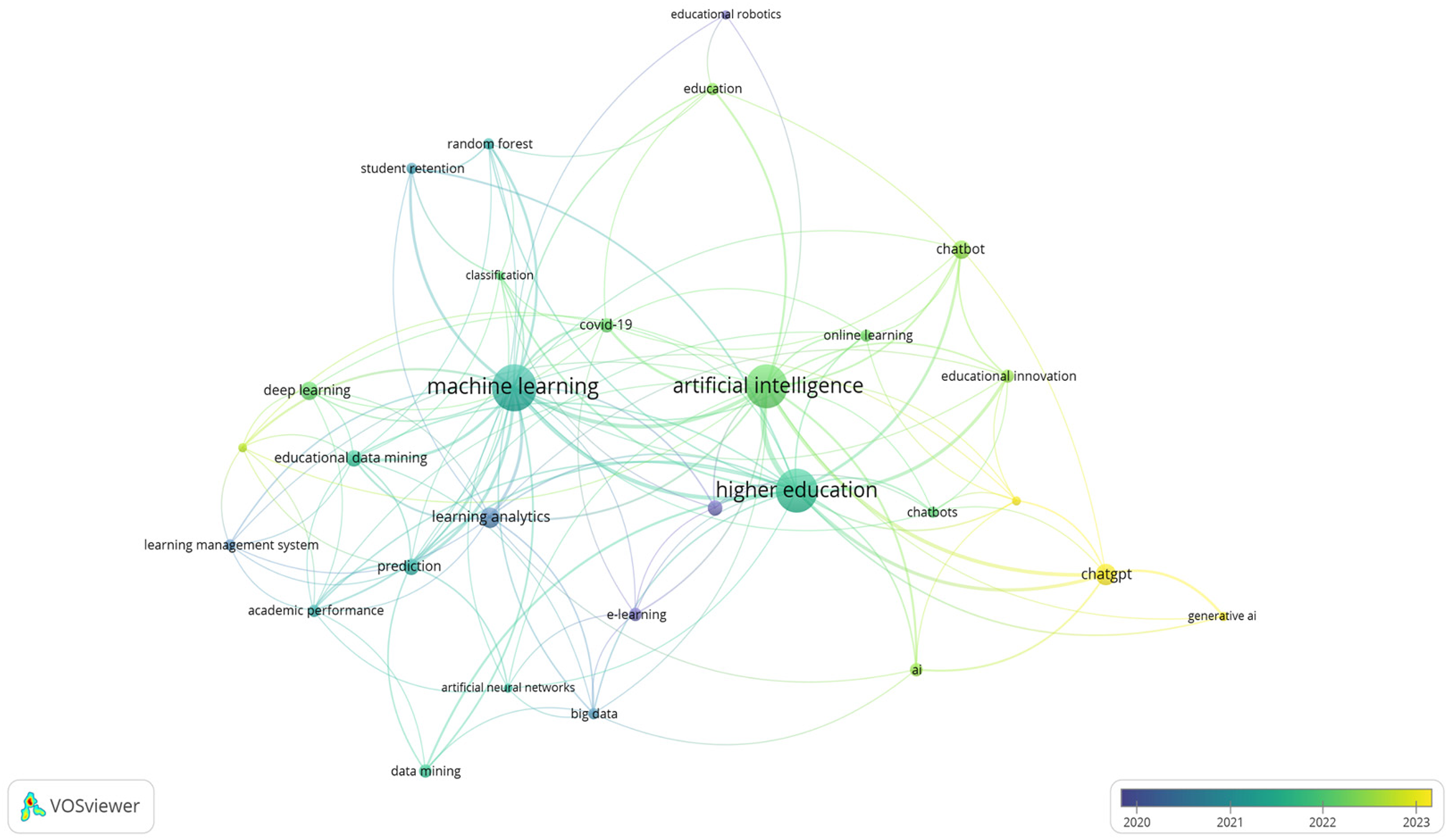
Authors’ keywords co-occurrence—overlay visualization.
Visualization of Journals Co-Occurrence Networks
Co-citations occur when different sources are referred to simultaneously by another source in its reference list (Kumar, 2015). The network visualization of the cited sources was performed under the predetermined limit of a minimum of 40 citations per source, which yielded 10 sources forming three distinct clusters depicted in red, green, and blue in Figure 11.
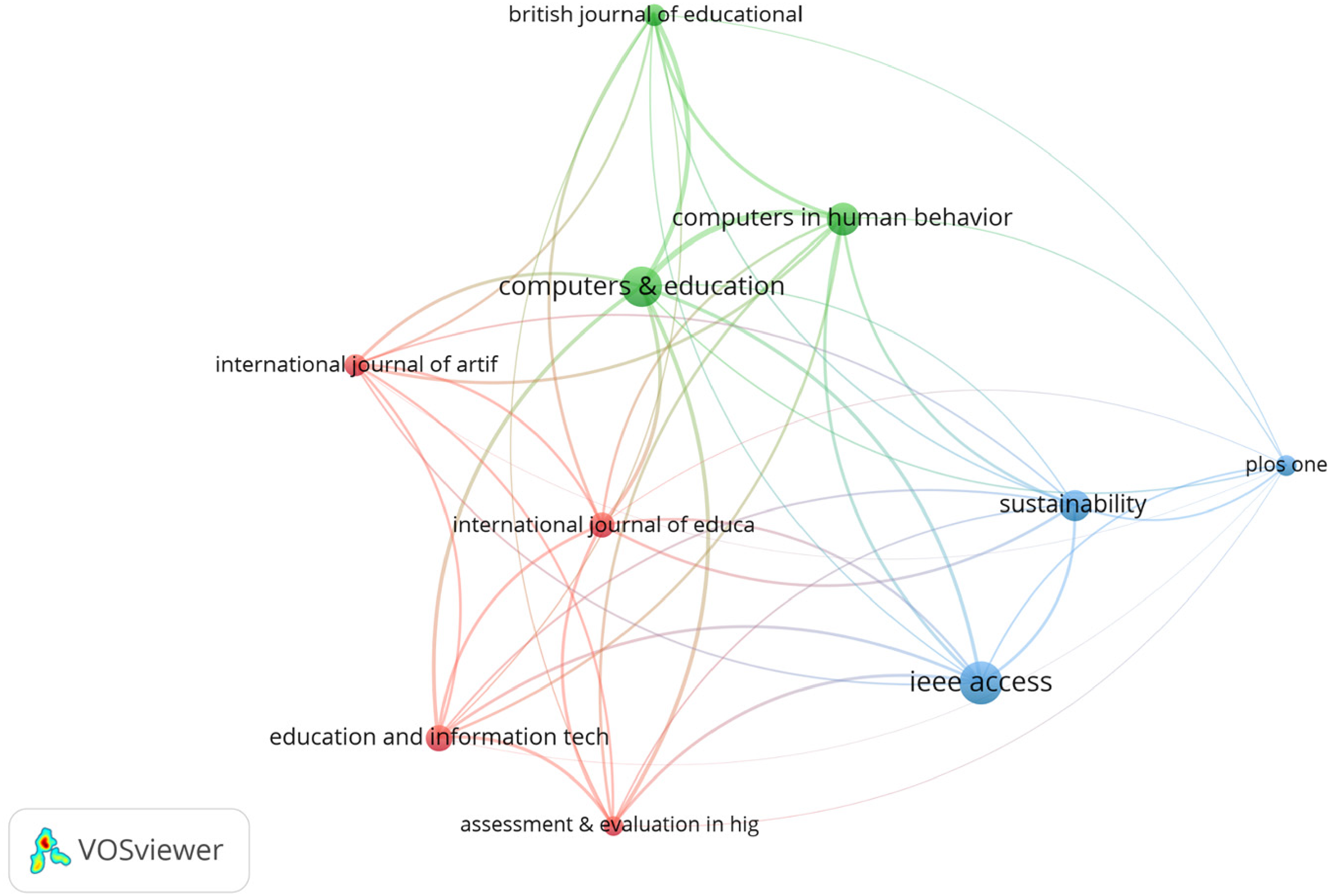
Co-citation network visualization—cited sources.
The red-colored cluster 1 includes the following journals, “International Journal of Educational Technology in Higher Education,” “Education and Information Technologies,” “Assessment and Evaluation in Higher Education,” and “International Journal of Artificial Intelligence in Higher Education.”
The green-colored cluster 2 includes the following journals, “The British Journal of Educational Technology,” “Computers in Human Behavior,” and “Computers and Education.”
The blue-colored cluster 3 includes the following journals, “Sustainability,” “PLoS ONE,” and “IEEE Access.” Further, the journals “Computers and Education” and “IEEE Access” established the highest link strength.
Discussion
This study conducted a comprehensive bibliometric analysis of the publications discussing AI's evolving landscape within the domains of educational settings, encompassing articles published from 2003 to 2023, sourced from the Scopus database. The publications’ trajectories highlighted the growing scholarly efforts in the evolving landscape of AI in education, with a steep rise in publications from 2020 onwards. The expanding accessibility to AI technologies, growing funding for research endeavors across the world, and the pressing desire to modify conventional instructional strategies to an increasingly digital and data-driven era could be important factors contributing to the present surge in scholarly output (Ciolacu et al., 2019; Srinivasa et al., 2022). Additionally, the COVID-19 epidemic possibly accelerated the adoption of AI in education due to the greater focus on distance learning and innovative strategies, as Pantelimon et al. (2021) noted. Though China, followed by the US, emerged as the most prolific country (Savage, 2020), there were notable contributions from other developing nations, including Saudi Arabia, India, and Malaysia, underscoring a growing worldwide contribution to this current landscape (Makridakis, 2017). Further, “Applied Sciences (Switzerland),” “Education Sciences,” and “The International Journal of Advanced Computer Science and Applications” became the top publishing journals. Additionally, “Gaze tutor: A Gaze-Reactive Intelligent Tutoring System” appeared as the top-cited article, with Sidney D’Mello, Claire Williams, Andrew Olney, and Patrick Hays as the most influential authors.
In the co-authorship network visualization among authors Jiao, Pengcheng, and Ouyang, Fan had the most substantial collaboration in the landscape of AI in education by co-authoring three articles, and both scholars were from Zhejiang University, China, which appeared to be the top country in the publication domain. Focussing on the global scale, co-authorship network visualization among countries disclosed an impressive global partnership in the field of AI within educational settings, with the US as the leading country. However, the co-authorship network visualization among organizations highlighted the limited organizational collaborations in the study field, necessitating more interdisciplinary efforts across worldwide organizations. Moreover, strengthening this partnership will foster more innovative advancements and a comprehensive understanding of AI's role in educational settings.
In the co-occurrence network visualization of all the keywords “machine learning” with “students,” the prominent node appeared with high link strength. This has substantiated the promising role of machine learning algorithms in transforming educational settings with more sophisticated instructional strategies (Guo et al., 2021). For instance, Christou et al. (2023) and Yağcı (2022) discussed the role of machine learning in predicting learners’ academic performance. Additionally, Tseng et al. (2023) and Ferreira and Lorena (2023) demonstrated the role of machine learning in facilitating tailored instruction for learners. Another notable link between “artificial intelligence” and “higher education” is highlighting the growing integration of AI into higher educational settings (Crompton & Burke, 2023). Additionally, the profound links that exist among “artificial intelligence” and “education,” as well as “artificial intelligence and teaching,” highlight the broader impact of AI in different educational domains, including predictions, decision-making, diagnosing, and recommending (Hwang et al., 2020), besides assisting teachers with curriculum development, automating administrative task and professional development (Ghamrawi et al., 2023). Further, the network and overlay visualization of authors’ keywords resulted in a distinct cluster of chatbots and generative AI. This indicates the expanding research interest and adoption of conversational AI models like ChatGpt and, generally, the broader category of generative AI applications in reforming education (Dempere et al., 2023; Yu & Guo, 2023).
In the co-citation network, the visualization of sources offers valuable information regarding the interconnections in academic literature. It displays the prominent Q1 ranking journals and thematic groupings that are often referenced together. The journals “Computers and Education” and “IEEE Access” established the highest link here.
Conclusion
This comprehensive bibliometric analysis of the publications discussing AI's evolving landscape within the domains of educational settings highlighted the growing scholarly efforts in this evolving landscape from 2003 to 2023. Notably, the publications across the countries in this landscape underscored a growing worldwide contribution, where, along with China and the US, there were notable contributions from other developing nations, including Saudi Arabia, India, and Malaysia. Moreover, the list of the most productive journal matrices included the top 10 journals with a minimum of five publications and 25 + citations with Q1, Q2, and Q3 rankings. Further, focussing on the global scale, although co-authorship network visualization among countries disclosed an impressive global partnership, the study highlighted the limited organizational collaborations in the field of AI within educational settings. Students, machine learning, AI, and higher education emerged as the central research focus areas with the emerging educational landscape in which generative AI models, such as “chatbots,” are integrated within the educational domains, implying potential significant advancements in this field. This analysis prompts sustained global partnership, interdisciplinary collaborations, and continued exploration of emerging AI technologies as the educational domain continuously evolves with the upcoming digital advancements.
Limitations and Future Recommendations
The present study conducted a comprehensive bibliometric analysis of the publications discussing AI's evolving landscape within the domains of educational settings, encompassing only open-access articles published from 2003 to 2023 in the English language sourced exclusively from the Scopus database till 10 December 2023. The study notably did not include postdates, other language articles, and other publications, including conference papers, reviews, book chapters, editorial books, etc., which provide future research directions. Further, future researchers can incorporate additional databases, including Web of Science and Google Scholar, along with other popular bibliometric analysis software like BibExcel, CiteSpace, and HistCite to conduct a more thorough bibliometric analysis of the publications discussing AI's evolving landscape within the domains of educational settings.
Footnotes
Authors’ Contributions
Both authors have contributed substantially to the conception and design of the article, along with the acquisition and analysis of the dataset for the article. The first draft of the manuscript was written by Ms K. Kavitha, and V. P Joshith commented on previous versions of the manuscript and made necessary grammatical corrections. After the final compilation of the article made by Ms K. Kavitha, V. P. Joshith approved the final manuscript.
Availability of Data and Material
The datasets used during the current study are available from the corresponding author upon reasonable request.
Declaration of Conflicting Interests
The author(s) declared no potential conflicts of interest with respect to the research, authorship, and/or publication of this article.
Funding
The author(s) received no financial support for the research, authorship, and/or publication of this article.
