



Abstract
The coronavirus disease 2019 (COVID-19) pandemic has changed the landscape of higher education. As academic institutions across the world continue to deal with the global health crisis, there is a need to examine different instructional approaches including online, hybrid, and blended learning methods. This descriptive study provide an in-depth review of the history of blended learning, evolution of hybrid model of instruction, preparedness of faculty with minimal or no experience in online teaching, and lessons learned as faculty worked on navigating COVID-19 situation since early 2020. A fish-bone analysis, a visual and structured approach to identify possible causes of problem, has been used to present the problems faced by faculty during the pandemic. A detailed Strength–Weakness–Opportunities–Threat analysis of blended/hybrid learning has been presented. An evidence-based approach on how instructors can combine the best of both traditional and online instruction to offer engaging learning experiences for students has been described. This research provides valuable insights to faculty and administrators who are preparing to teach during a pandemic and making efforts to academically survive it.
Keywords
The highly infectious coronavirus disease 2019 (COVID-19) has had a deep impact on many institutions including higher education, public, and private school systems globally. The pandemic has plagued the system of education, added to the workload of faculty and staff, and forced many colleges, universities, and schools to remain closed or operate with extremely limited resources to minimize risk of infection (Dhawan, 2020; Rapanta et al., 2020). With rising deaths and devastation one has to remain cautious about reopening educational institutions as acting “too soon” may further complicate the situation. There is a growing body of evidence that suggests the pandemic is far from over and COVID-19 appropriate behavior must be adopted to deal with the rapidly surging crisis. Vaccines do offer a ray of hope as they help our body in building important immune responses that would continue to protect against new variants (Powell, 2021). It has been reported that immunity can limit the breakout and spread of infection in the population. While one has to remain hopeful, it must be noted that extreme caution and scenario planning activities need to be undertaken to provide optimal learning experiences to students (Powell, 2021). Hybrid or blended learning offers one such opportunity to provide engaging learning opportunities to students by combining face-to-face medium of instruction with online learning opportunities.
Blended learning as defined by Dziuban et al. (2004), is an instructional method that includes the efficiency and socialization opportunities of the traditional face-to-face classroom with the digitally enhanced learning possibilities of the online mode of delivery. Characteristics of this approach include (a) student centered teaching where each and every student has to be actively involved in the content (b) increased opportunities for interaction between student-faculty, student-student, content-student, and student-additional learning material (c) opportunities to collect formative and summative assessment to improve course offerings (Watson, n.d.). A blended course comprises in-person sessions that are accompanied by online resources and tasks—essentially a combination of both face-to-face and online learning.
A central element of a blended course is that online resources are not used to substitute for in-person class time; rather, they are intended to enhance and build upon the concept discussed in the classroom. Blended and hybrid learning are used interchangeably, however, there is a difference as online components of hybrid courses intend to substitute in-person class time. Online interactions in hybrid medium of instruction can be completed either synchronously using real time meeting sessions or asynchronously where students interact at different times (Siegelman, 2019).
This article focuses on the history of blended learning, evolution of hybrid/blended model of instruction, preparedness of faculty with minimal or no experience in online teaching, and lessons learned as faculty worked on navigating extremely tough COVID-19 situations since early 2020. A fish-bone diagram, a more visual and structured approach to identify possible causes of problems, has been used to present problems faced by faculty as they transitioned from face-to-face to completely online medium of instruction. This is followed by a detailed strength–weakness–opportunities–threat (SWOT) analysis of a blended and hybrid medium of instruction.
Additionally, evidence based approach on how instructors can combine the best of both the traditional and online world to offer engaging learning experiences for students has been presented. Because of more than a decade of experience in different types of teaching formats, authors have also distilled broader guidance for faculty, administration, and students who are interested in either combining face-to-face and online delivery or taking such classes (in case of students) either during pandemic, in the transition phase (post vaccine), and eventually as we come out of the current state of pandemic.
Background
The academic year 2020–2021 was one of the most challenging time for faculty, students, and academic administrators. Despite high vaccination rates, some form of in-person graduations and the ability to return to some face-to-face learning, one cannot deny the challenges posed by the raging pandemic (Dorn et al., 2020).
Prior to the pandemic, the majority of the classes in traditional brick and mortar schools were offered in a completely face-to-face format. There are many benefits of face-to-face format; this teaching modality provides in-person, real time interaction between faculty-students and student-student, which in turn can spark innovative questions and conversations. Students have an opportunity to seek clarification or response to their questions in their classroom (Paul & Jefferson, 2019). Students who value face-to-face instruction, in-person class discussions, and organic bonding between faculty and students may not enjoy online learning (Roval & Jordan, 2004). It will be hard for them to shun face-to-face learning activities and sit in front of computers to complete the work. There is an increasing body of evidence that suggests that in-person learning provides motivation, helps in building a sense of community, and provides much needed encouragement to students. This also allows instructors to pick up on nonverbal cues and make appropriate changes in the content and teaching methodology (Kemp & Grieve, 2014; Paul & Jefferson, 2019).
While there are several benefits of on-campus classes, one cannot ignore how rapidly universities, K-12 school, and other institutions of higher education transitioned to online learning in order to continue instruction during COVID-19 crisis (Singh et al., 2021; Singh & Matthees, 2021). Flexibility, ability to work at your own time and pace, engaging learning experience, self-directed learning, cost effectiveness, and ability to produce in-depth discussions are some of the most widely cited benefits of online learning (Kemp & Grieve, 2014; Singh & Matthees, 2021; Smith & Hardaker, 2000). As COVID-19 cases continue to increase, academia is attempting to increase online learning options for students. Efforts have also been made to include flipped classroom approaches so students can engage in active learning and instructors assume the role of facilitator and provide additional help and scaffolding (Kemp & Grieve, 2014; Singh & Matthees, 2021; Strayer, 2012).
It is safe to assume that the COVID-19 pandemic has changed the face of higher education. Both traditional and online medium of instruction have their pros and cons. Many universities and academic institutions have adopted hybrid or blended medium of instruction. This form of instruction involves both in-person meetings on campus and flexible-schedule online learning. Hybrid and blended instruction allow students to experience both face-to-face and online learning, as well as scheduled and self-paced classwork (Singh, 2017). This form of instruction can be the new norm as it allows instructors to reinvent and revise the content especially in disciplines where instructors struggled to provide engaging learning experience for students in an online medium of instruction (Rodriguez, 2020). In every field, change comes with questions. There is a clear need for conducting studies to demonstrate effectiveness of blended and hybrid instruction and how instructors can work on designing their classes making it a viable option during current times and as we prepare to teach in the post-vaccine and post-pandemic world.
Rationale
There is scarcity of research that demonstrates effectiveness of blended and hybrid learning and how instructors can utilize this approach to provide meaningful learning to students. Much research has been conducted on completely online and face-to-face format where students take classes either in distance learning format or in a traditional in-person classroom setting. While it is important to examine pros and cons of these learning formats, efforts should also be made to understand benefits of hybrid and blended learning and how it can be utilized by instructors to facilitate learning in settings of higher education. It is important to focus on these methods as this may help students and faculty during the pandemic and as we plan to come out of this highly contagious public health crisis. This could also help educational institutions, instructional designers, and administrators as everyone works together by streamlining current practices and including hybrid learning to enhance teaching and learning practices within academic settings.
Significance
Because there is still a paucity of research on hybrid and blended learning, this research has the potential to contribute to the academic knowledge base and have wide practical applications. Dissemination of findings could help undergraduate, graduate, and academic institutions as they work on implementing hybrid learning during a pandemic and once we achieve “some level of normalcy” in the post-vaccine and the post-pandemic world. Inclusion of such courses in academic programs could lead to improvement in students’ time management skills, critical thinking skills, and comprehension skills (Crawford Barker, & Seyam 2014).
Objectives of the Study
The objectives of the study:
Examine history, evolution and development of blended learning. Present models of hybrid learning and different e-Learning models. Conduct and present fishbone analysis to identify problems faced by instructors as they transitioned to a completely online medium of instruction. Conduct SWOT of blended and hybrid medium of instruction. Provide evidence-based practical solutions and recommendations for implementation and success of blended and hybrid models of instruction at academic institutions.
Research Methodology
This descriptive study attempts to examine blended and hybrid learning methods and how instructors can combine best of both face-to-face learning and online instructional methods to enhance learning experiences for students. By using the fishbone diagram, researchers have identified problems faced by faculty/instructors during the pandemic. These problems may continue to exist as we steer our way through tough times and eventually move to a post-pandemic phase. Additionally, SWOT analysis has been completed to understand opportunities and strengths of hybrid learning especially during the COVID-19 crisis and as we plan to come out of this complex situation. SWOT analysis helps in identification and evaluation of strengths, weaknesses and opportunities in current environment. This methodology is appropriate because it helps instructors to identify and understand means/assets, competencies and skill set, advantages they and their organization has, and how they may utilize these resources to enhance effectiveness of classes. On the other hand, thorough analysis of external threats and opportunities allows instructors to carefully plan their approach towards teaching and learning (Anderson & Singh, 2021). A systematic analysis has been completed for the gathered evidence. This evidence included peer-reviewed manuscripts, dissertation projects, government reports, scholarly search engines, and other academic resources publically available to researchers and scholars (Dhawan, 2020).
History of Blended Learning
Technology has changed the face of higher education. Initially, traditional face-to-face learning was the only form of instruction where both instructor and students met physically in a brick and mortar school (Jones, 2019; Nortvig et al., 2018; Schaber et al., 2010). During the 1990s online learning also started gaining popularity, as students were able to complete their course work asynchronously without coming to campus and being physically present in class room (Nortvig et al., 2018; Jones, 2019).
It is also important to note that academic administrators felt that online learning could replace in-person learning, as it was an economically viable option for students. As a result, there was an increased push to increase online course offerings in mid-1990s (Schaber et al., 2010). Despite increased efforts to launch additional courses, online education was not as effective as predicted, as learning was primarily a passive activity (Schaber et al., 2010; Jones, 2019).
Over the years, a third method of teaching commonly known as Blended learning has gained wide acceptance among instructors and researchers. By combining strengths of different technologies, web-based tools, and learning theories, this approach promises the best of both worlds (online and traditional face-to-face system). Research suggests that combination of on-campus and online work is ideal and can prove to be very effective when compared to sole use of one form or the other (Haijian et al., 2011; Jones, 2019). Blended learning has the potential to create additional opportunities as it allows them to be included in in-person instruction on a regular basis (Alijani et al., 2014; Jones, 2019) while giving them much needed flexibility to progress at their own pace.
Evolution and Development of Blended/Hybrid Learning
Prior evidence suggests that students who complete course work using blended/hybrid modality (combination of in-person and online instruction) excel when compared to peers who may have access to only one form of instruction. Blended/hybrid learning offers a creative option to faculty and academic leaders so they can make information available to students even outside of the four walls of the classroom. This helps in optimizing and maximizing productivity of individual students during in-person sessions (Powell et al., 2015).
The history of blended learning dates back to the 1840s when Sir Issac Pitman launched the first distance education course. Shorthand texts were sent to students via postcards and they were required to complete the work and send it back for grading and feedback. It is important to note that feedback and evaluation were extremely important even though mobile devices and computers were not involved (Pappas, 2015). During the 1960s and 1970s, employers were able to deliver training to several employees using computers. This was a ground-breaking revolution because for the first time employees completed their training without traveling or attending face-to-face live sessions (Pappas, 2015) (see Figure 1).
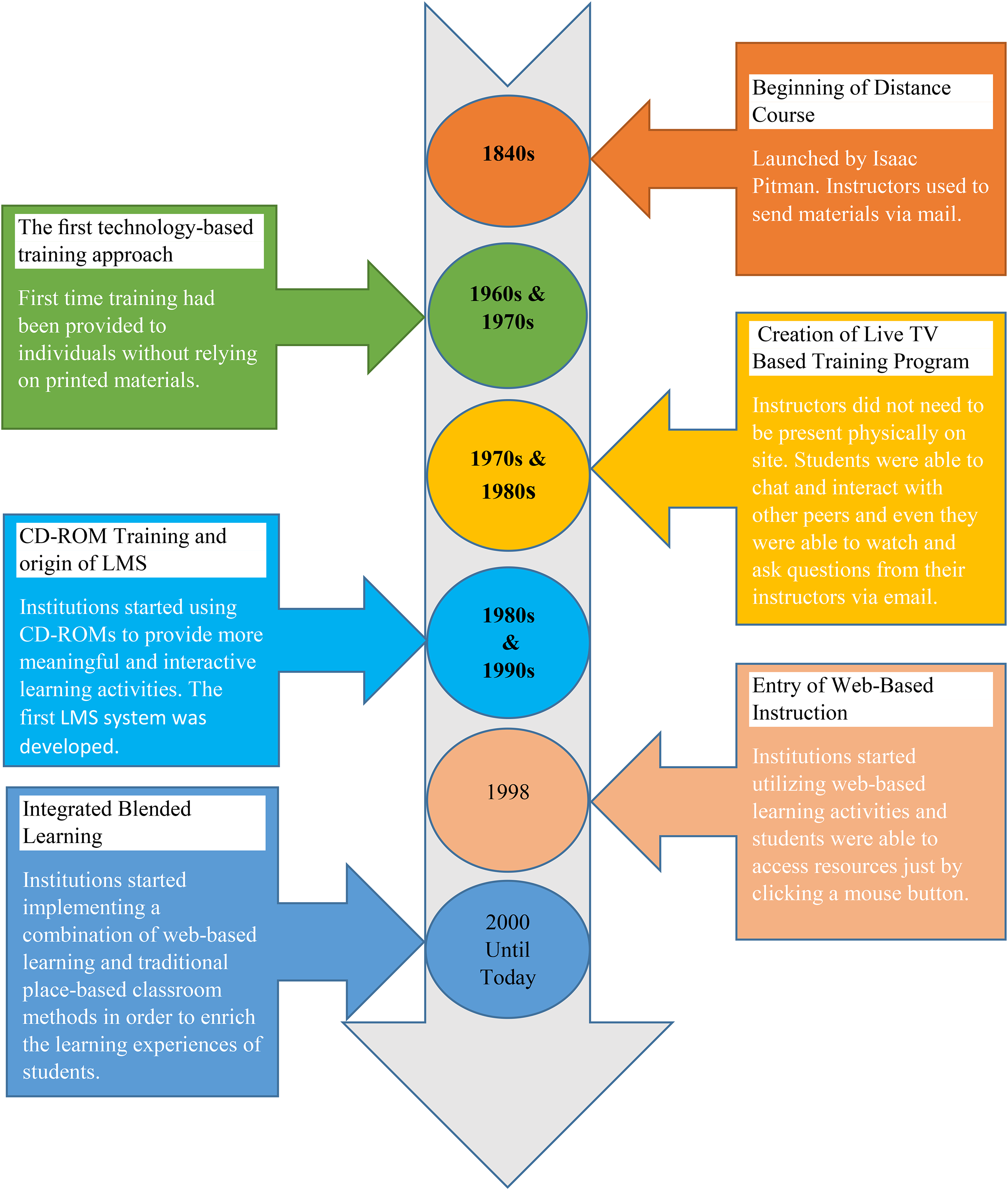
Timeline of blended learning.
During the 1970s and 1980s, multiple organizations adopted a video networking model to provide training to their employees. Learners used technology to communicate, watch training and ask clarifying questions if needed. This allowed instructors to complete different types of training and educational programs without traveling to the work site. This form of training can be considered as a predecessor to video-learning and modern day webinars. Stanford University, one of the early adopters in the world of online education, utilized video network for teaching and learning practices. This enabled faculty to hold classes at several sites without traveling to distant locations. Students were encouraged to submit assignments online rather than using mail or courier (Pappas, 2015) (see Figure 1).
With technology there have been advancements in the field of hybrid learning strategies. Employers and academic organizations started using CD-ROMs that could contain larger amounts of information. Usage of these new devices provided more interactive learning experiences to learners. Additionally, computer-based courses were utilized to deliver “live” in an online environment. First learning management system (LMS) was also introduced at the same time and allowed organizations to track and monitor learners’ progress as they completed the training (Pappas, 2015) (see Figure 1).
In the past two to three decades, online learning, including blended learning, has witnessed significant changes. In early 1998, the world witnessed the first set of internet based instruction. Computers, especially personal computers, were no longer a luxury as more families and employers started purchasing this equipment for higher educational studies, leisure activities, and work-related activities. Organizations started to upload learning material on web-based platforms, which could be accessed from anywhere in the world (even in remote and rural locations). This revolution changed the way organizations conducted their business, and even traditional CD-ROM developers realized that existing online content such as large video files needs to be adapted to meet the needs of learners (Pappas, 2015) (see Figure 1).
As time progressed, we have entered the new era of blended/hybrid learning. This form of content delivery/methodology has a record of combining different forms of instruction and then transforming learning into a more engaging and interactive experience. Because of technology, students have access to vast amounts of resources such as webinars, tutorials, and other tech tools. Instructors have the opportunity to work with changing schedules of their students and offer training opportunities in a more flexible format (Pappas, 2015) (see Figure 1).
Models of Hybrid/Blended Education and E-Learning Models
Christensen et al. (2013) described four models of hybrid (and blended) education, (a) rotation, (b) flex, (c) A La Carte, and (d) enriched virtual, and indicated that most of the hybrid learning falls under one of these four models.
Rotation model includes course work in which students rotate between different learning modalities and at least one of these modalities needs to be in an online medium of instruction. These rotations are either based on instructors’ decisions or on a fixed schedule. Depicted below are the different sub-models included in the rotation model (see Figure 2).
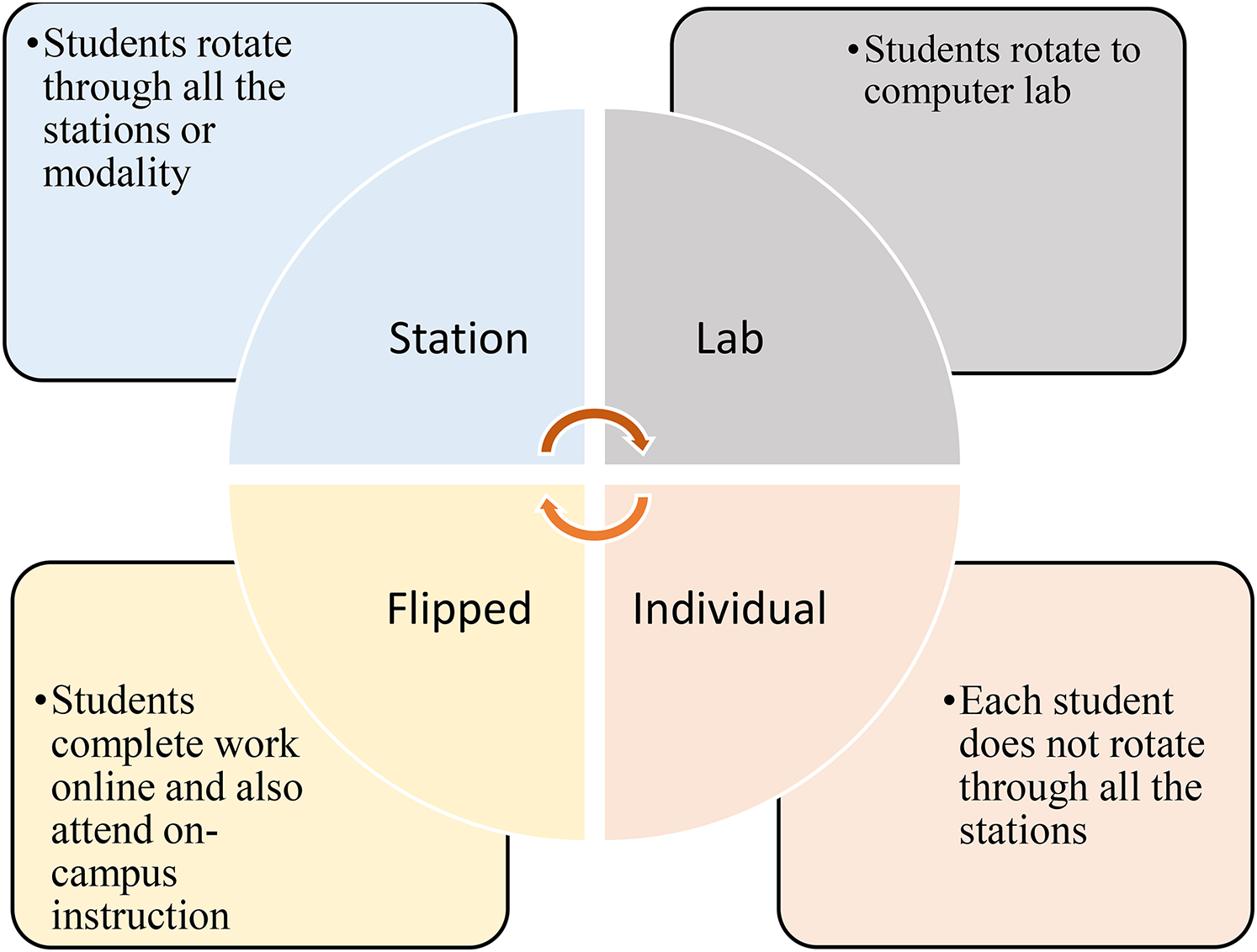
Model of hybrid learning.
Flex model includes courses in which the online component is the key pillar of student learning. There is increased flexibility as students move on an “individually customized, fluid schedule among learning modalities” (Christensen Institute, n.d.). While one form of flex model may have in-person faculty who help students regularly almost on a daily basis, others may have little face-to-face support. Different staffing combinations are needed as students move through the classes per their needs.
Within the A La Carte Model, students have an option of completing their course work either in traditional face-to-face setting or offsite. This differs from full-time, online learning because it is not a full-time, onsite traditional classroom experience. Students complete a few classes in A La Carte and others face-to-face at a traditional campus setting. Enriched virtual model includes courses in which students are required to complete in-person sessions and then complete part of the learning experience in online modality (Christensen Institute, n.d.) (see Figure 2).
E-Learning Models
In the paper entitled “Towards a Personalised, Learning Style Based Collaborative Blended Learning Model with Individual Assessment” Béres et al. (2012) presented four models that aim to enhance the practice of e-learning. These models are: (a) Anderson’s Online Learning Model, (b) Collis & Moonen’s Flexible Learning Approach, (c) Salmon’s Five Stage Model, and (d) McLoughlin’s Inclusive Pedagogical Model.
Anderson’s Online Learning Model includes collaborative, community of inquiry and learning into a single model. This online learning model highlights both students and teachers, and their exchanges/communication with one another and with the content. Learners can interact directly with any content (Anderson, 2008; Béres et al., 2012). Collis & Moonen’s approach identifies several dimensions of flexibility and then discusses methods how organizations can introduce technology to offer enhanced flexibility along a fixed, less flexible and more flexible continuum model. Important flexibility dimensions are time, course content, entry requirements, teaching methods, and resources utilized and delivery (Béres et al., 2012; Collis & Moonen, 2004). Salmon’s model presents a highly methodical five-stage approach where each stage builds on the previous stage. These stages mainly focus on access and motivation, socialization, information exchange, knowledge construction, and development. In addition to these, McLoughlin’s Inclusive Pedagogical Model demonstrates that it is extremely important to combine student involvement with real world tasks and underscores the notion that one cannot obtain knowledge without collaboration and active participation (Béres et al., 2012; McLoughlin, 2007; Jones, 2019).
Fishbone Analysis
A cause and effect diagram, also known as fishbone diagram is a visual way that helps in the identification of potential causes of issues under consideration and then organizing ideas into different categories. This analysis is extremely helpful as it helps the team in looking at potential causes of problems which may not be otherwise considered. The diagram bears a resemblance to the skeleton of a fish. In this diagram, the problem is written on the far right of the diagram. The spine or central line is drawn to the left of the box where the problem is included. Diagonal lines that come out of the central line signify different groups of causation of the problem. The groupings are organized into categories such as person, method, machine, materials, and environment. The fishbone diagram is used when a team seeks to understand possible reasons that contribute to the problem and then consider improvement initiatives on these causes (Harel et al., 2016; Singh, 2021). The fishbone analysis presented below highlights possible causes of problems that instructors encountered as they transitioned from face-to-face to online medium of instruction. It is important to note that these issues continue to impact teaching and learning practices even after 1.5 years (since beginning of the pandemic) (see Figure 3).
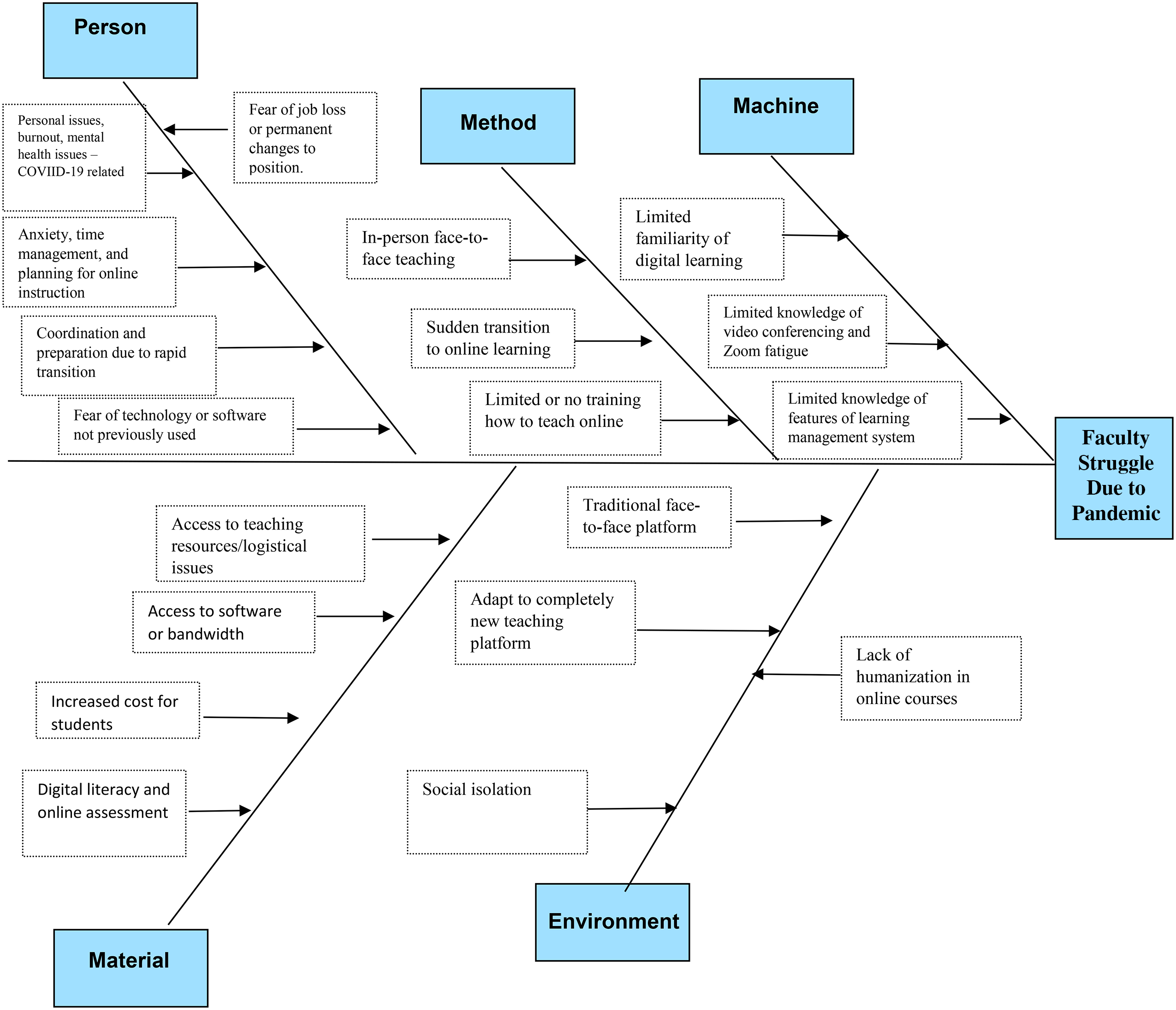
Fishbone analysis.
Person Related Issues
The COVID-19 pandemic took a toll on instructors, students, administrators, and impacted everyone working within academic settings. Fear of technology, limited knowledge of software, time management issues, and feeling of isolation also created ongoing challenges for faculty members as well. Additionally, one must also remember the human side of instruction as both faculty/instructional staff and students were experiencing grief and personal loss resulting from illness, demise, and sudden loss of friends and family (Singh & Matthees, 2021). Declining enrollment and budget cuts as a result of pandemic or related economic issues created another set of concerns for faculty members. Many non-tenure-track, fixed-term, adjunct, and even tenure track jobs were lost due to budget cuts. Furthermore, increased class sizes and other shifts also resulted in unfavorable conditions for faculty who assumed the role of mentors and counsellors for students (Course Hero, 2020; Flaherty, 2020).
Recent studies reported that faculty across institutions had to serve as frontline worker which in turn resulted in mental health issues and chronic stress. Approximately 40% of the study participants considered resigning from their positions due to stress caused by the pandemic. This percentage was even higher (48%) for early career faculty. While instructors had no formal training in counseling, it is noteworthy that instructors naturally assumed the role of frontline therapists or counselors and stepped in to support students navigate thru tough times. This may not only put students at risk but can also create secondary trauma for faculty (Course Hero, 2020; Flaherty, 2020).
Rapid transition to a new form of teaching created significant stress among faculty who had no or minimal experience in working with technology. This was true for both experienced and early stage faculty. More than 52% of the respondents (same study) indicated that increased stress, anxiety, and work during the pandemic led to work related stress. A significant proportion of participants (53%) noted that there has been a significant increase in emotional drain. More than 70% of the faculty reported a decline in or significant reduction in connection with other faculty, colleagues, and students. All of these symptoms clearly indicate that faculty was struggling mentally (burnout occurred) while trying to work and keep up with challenges posed by the surging pandemic (Course Hero, 2020; Flaherty, 2020).
Methods
When the World Health Organization (WHO) declared COVID-19 as a pandemic, university and academic institutions across the globe quickly embraced online and alternative learning approaches to minimize the impact of the crisis on education. In order to control infection, universities and schools were left with no choice but to move to an online medium of instruction (Gewin, 2020). Many educators who had never taught online classes previously had a challenge to adapt to the new norm and move their entire content to an online medium within a very short time period. They were required to find, learn, and start practicing a new extensive set of skills in a very limited timeframe. Courses that required only in-person classroom instruction were either cancelled or other means were found to complete the requirements (Rad et al., 2021). The impact of course cancellation was exacerbated in programs that require experiential education to equip students to work in professional health settings. It is important to note that expertise to teach online cannot be developed in a ten day time period. It takes proper planning, knowledge of pedagogical methods and theoretical background, and adoption of principles of course and instructional design to create an engaging learning experience for students (Ellaway & Masters, 2008). Due to the emergency situation, institutions did not get an opportunity to systematically plan for this transition so they could adapt to the new set of teaching and learning practices. Ideally, any transition or change requires organizations to invest in professional development opportunities, research and data collection, capacity building, and measures to reduce resistance to change initiatives (Rad et al., 2021). Both faculty and students who were habituated with face-to-face learning had to rapidly adapt to online learning. It is also important to note that most of these changes were happening at the same time when students and instructors were worried about their own health and well-being and safety of their near and dear ones. This resulted in increased psychosocial stress, which was further aggravated by loss of human connection as classes were now delivered online (Rad et al., 2021; Saddik et al., 2020).
Machines
As remote courses, online exam and assessment, and remote advising became the new norm, faculty who had limited knowledge of digital tools struggled to provide engaging learning experiences to students. Many academic institutions lacked infrastructure, instructional design, technology staff, and other resources to support growth. Teaching staff of all ages and of all backgrounds had to prepare and deliver classes from home with limited technical training and without appropriate support (Hodges et al., 2020). This was challenging for faculty who lacked pedagogical content knowledge of online teaching and learning methods (Shulman, 1987). More specifically, lack of awareness of basic principles needed to design and facilitate meaningful learning experiences in online format created additional challenges for faculty (Rapanta et al., 2020).
During the pandemic, the term “zooming” has become ubiquitous and is widely used to replace video conferencing. Ability to hold meetings and complete work virtually is definitely an advantage of Zoom, Adobe Connect, MS Teams and similar online meeting platforms. Virtual meetings have significantly increased with hundreds of millions happening regularly and such online platforms allow individuals to maintain/follow social distancing protocols. Faculty who have taught in a completely face-to-face format, may not know different features of Zoom and other platforms. This could create additional work for the faculty who are struggling to keep up with their classes and learn new online teaching methods. While video conferencing is a very successful method to connect with students, one must also not ignore associated health risks and psychological fatigue. Intense close up eye contact, reduction in mobility, and higher cognitive load noises are side effects that need to be considered before engaging in video conferencing for a prolonged period of time (Bailenson, 2021; Ramachandran, 2021).
Faculty attitude toward technology has served as a barrier that affects the adoption of the LMS. Instructors may not consider LMS effective for teaching and instead use traditional strategies to teach students. Lack of technological skills and inability to learn basic features of LMS have led to additional challenges especially during the pandemic (Alenezi, 2018). While faculty scrambled to transfer their content online, students who are used to traditional forms of learning also face difficulties in adoption of newer online systems. Several students believe that face-to-face learning is of higher quality and leads to better interaction between faculty and students (Alshahrani & Ally, 2016). It is important to understand that limited (or no) training, software challenges, and lack of online infrastructure have created additional challenges for instructors.
Material
Limited or no access to appropriate teaching resources such personal computers/tablets, headsets, and printers led to frustration and struggle for faculty during Spring, 2020. Asgari et al. (2021) reported that instructors also had issues with software licenses, internet connection and webcam, a much needed resource to conduct online classes and Zoom meetings. A vast majority of instructors also experienced technical difficulties with online writing tools and accessing on-campus resources. Evidence suggests that students were also found in the similar situation as they have to share their personal devices, software, and other resources with their family members (Asgari et al., 2021).
It is noteworthy that lack of access to computers, adequate software and adequate bandwidth not only creates a digital divide, but also interferes with students’ ability to access online course work and complete assignments (Asgari et al., 2021; Lake & Makori, 2020). This holds true for both university students and K-12 learners. Data suggests that inability to access high speed internet and technological tools is a serious obstacle to implementation of online learning (Hamilton et al., 2020). This is especially true for students who relied on on-campus university resources, library and, computer labs to complete their work.
Recent research reported that several students planned to postpone their graduation due to the pandemic. Many students also pulled out of classes because of pandemic and health-related issues. This not only prolonged their graduation time for students but also resulted in increased financial burden on students. These issues were further exacerbated by increased financial instability, personal loss, and job losses that students may have experienced. The pandemic also left a lasting impact on students’ careers. New graduates expected to earn less when compared to graduating classes in pre-pandemic years. Students who entered university/academic institutions during the time of the pandemic expected that it would be difficult to find jobs upon graduation (Aucejo et al., 2020).
The direct economic impact of the pandemic seems to have been more profound for students who were from lower socio-economic status/background. These students were more likely to have family members or close friends face job loss due to the pandemic. There is an increased likelihood that low-income students expect to delay their graduation and are more likely to take a break from college (Aucejo et al., 2020). All of these issues have been more troubling for faculty, who have worked closely with students to ensure they achieve desired academic outcomes.
In addition to the issues noted above, faculty who primarily taught on-campus classes, struggled to create effective online assessments for students. Creating online assessments and evaluations for online classes require strong digital assessment literacy. Effective online assessments can help in providing personalized learning experiences to students. By using appropriate methods such as relevant case studies and question banks designed for online learning, instructors can enhance both reliability and distinctiveness of the test taking experience. In an ideal scenario, faculty should work as well-informed/experienced specialists who are able to design assignments to meet learning objectives of the course (Eyal, 2012). However, designing effective online assessments require training and skill sets that faculty may not possess. This is especially true for faculty who teach within a traditional, didactic face-to-face format.
Environment
The emergency situation brought by the pandemic has resulted in an unparalleled change in academia at all school levels across the world. To alleviate negative consequences of the pandemic on education, government and health authorities in different countries have made a recommendation to fulfill requirements of academia by providing remote learning opportunities for students. There is no doubt that academic institutions and educators have made efforts to effectively design and deliver online courses (Sumardi & Nugrahani, 2020). But, the methodology of teaching in the emergency situation was different from the well-planned online learning method as it was unexpected and unprecedented for all of them (Naqvi & Zehra, 2021). Instead of re-creating a robust educational ecosystem, the main focus of educators in that circumstance was to provide temporary access to instruction and needed support in a way that could be easily set up or arranged. It is important to note that well-thought-out online education is a complex process, in order to create an engaging learning environment and to provoke student teachers’ engagement and interaction during the class, educators need to carefully plan, design instructional strategies, and incorporate elements of online educational pedagogies. But due to the lack of knowledge in regards to online instructions and sudden shifting from traditional on-campus instruction to emergency remote teaching, many educators ended up implementing instruction strategies that were originally designed for face-to-face instructions that have brought new challenges in front of educators that are important to take into consideration (Sumardi & Nugrahani, 2020). Some of the prominent challenges reported by the educators and students were the lack of a humanized learning environment, lack of sense of community, lack of students’ motivation, and accessibility problems.
The online instructor’s role is very important to the success of online learning. Therefore, online instructors need to learn strategies to humanize the online course and identify effective strategies to engage learners in meaningful learning so that they can bridge the physical distance between the participants.
Additionally, they also need to be aware of multiple online pedagogies, such as how to incorporate social presence, cognitive presence, and teaching presence in their online courses. By having an understanding of these strategies educators not only can foster academic success and social connections, they can also build empathy, personalize learning, and increase student motivation (Martin et al., 2020). A sense of belongingness is one of the fundamental human needs when it comes to social interactions because it increases the likelihood and wellbeing of individuals. Therefore one can assume that feeling connected is an essential component of student satisfaction and participation, especially in the online medium of instruction where students complete most of their learning in an asynchronous form. Failure to incorporate social connectedness can lead students to feel lonely, isolated, and disconnected from their peers, and instructors (Arslan, 2021). When sudden changes were imposed on the education system due to the COVID-19 crisis, many educators were unprepared and had little or no training on how to plan and design effective e-content and incorporate technologies because of this it was challenging for them effectively incorporate elements that enhance the student's motivation, sense of belonging, and satisfaction. Other complications that have been reported by students and caused by the sudden disconnectedness from their peers and instructions are increased mental health concerns, higher levels of anxiety surrounding academic performance, and reduced self-efficacy (Hehir, Zeller, Luckhurst, & Chandler, 2021; Arslan, 2021).
SWOT Analysis of Hybrid and Blended Learning
It has not gone unnoticed had the COVID-19 not occurred globally, expediting online and e-Learning forms of pedagogy options would have not been an immediate panacea. Pandemics within the last century in the United States are presented in Table 1. Many educational institutions would remain in a holding pattern of hesitancy to implement technologically forward online options for students in lieu of a traditional, didactic in-classroom lecture settings. In a recent study, Sim et al. (2020) determined that students were moderately enthusiastic about online learning and they showed an increased interest in progressive online learning approaches as they assumed this may be the new normal going forward due to COVID-19. Additionally, many college students are technologically inclined and savvy where they were quick to embrace an online learning atmosphere (Sim et al., 2020).
Pandemics Within the Last Century in the United States.
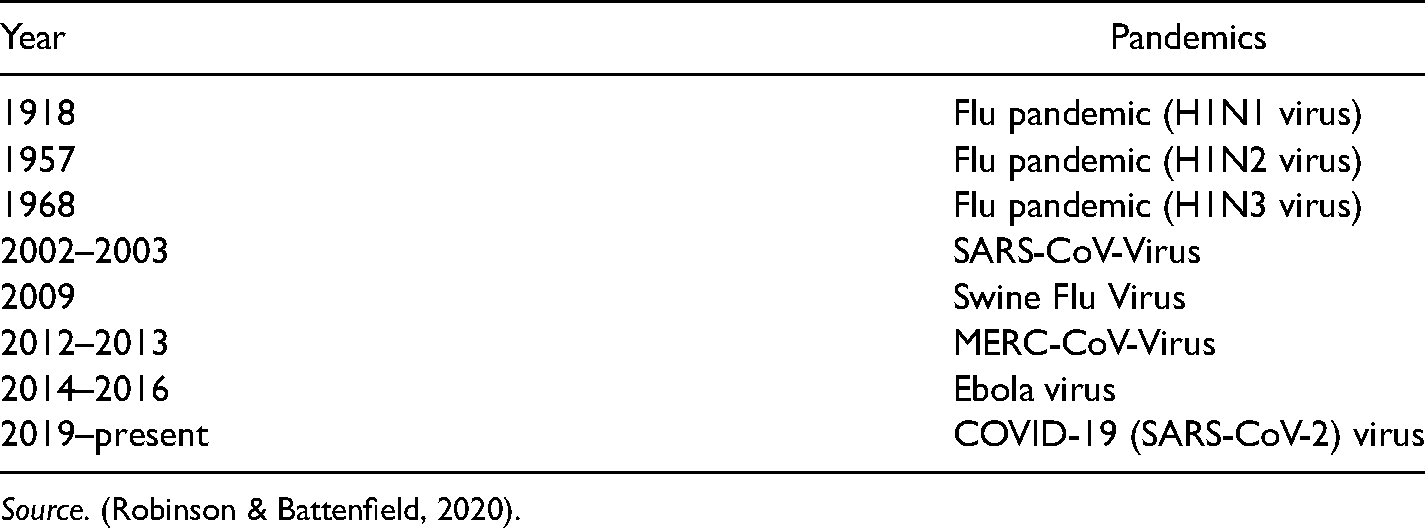
Source. (Robinson & Battenfield, 2020).
Strength–Weakness–Opportunities–Threat
A SWOT analysis shown in Figure 4 was utilized to help determine both benefits and challenges with future implementation of online software platforms for every type of learner. Innovation versus stagnation in regards to online learning can provide a more inclusive and progressive form of learning for students to further complement today’s educational landscape (Pilli et al., 2018). We live in a very connected world, both literally and figuratively, and perhaps connectivism is a progressive approach to transform from traditional methods of teaching to a more sophisticated and innovative way of learning (Pilli et al., 2018).
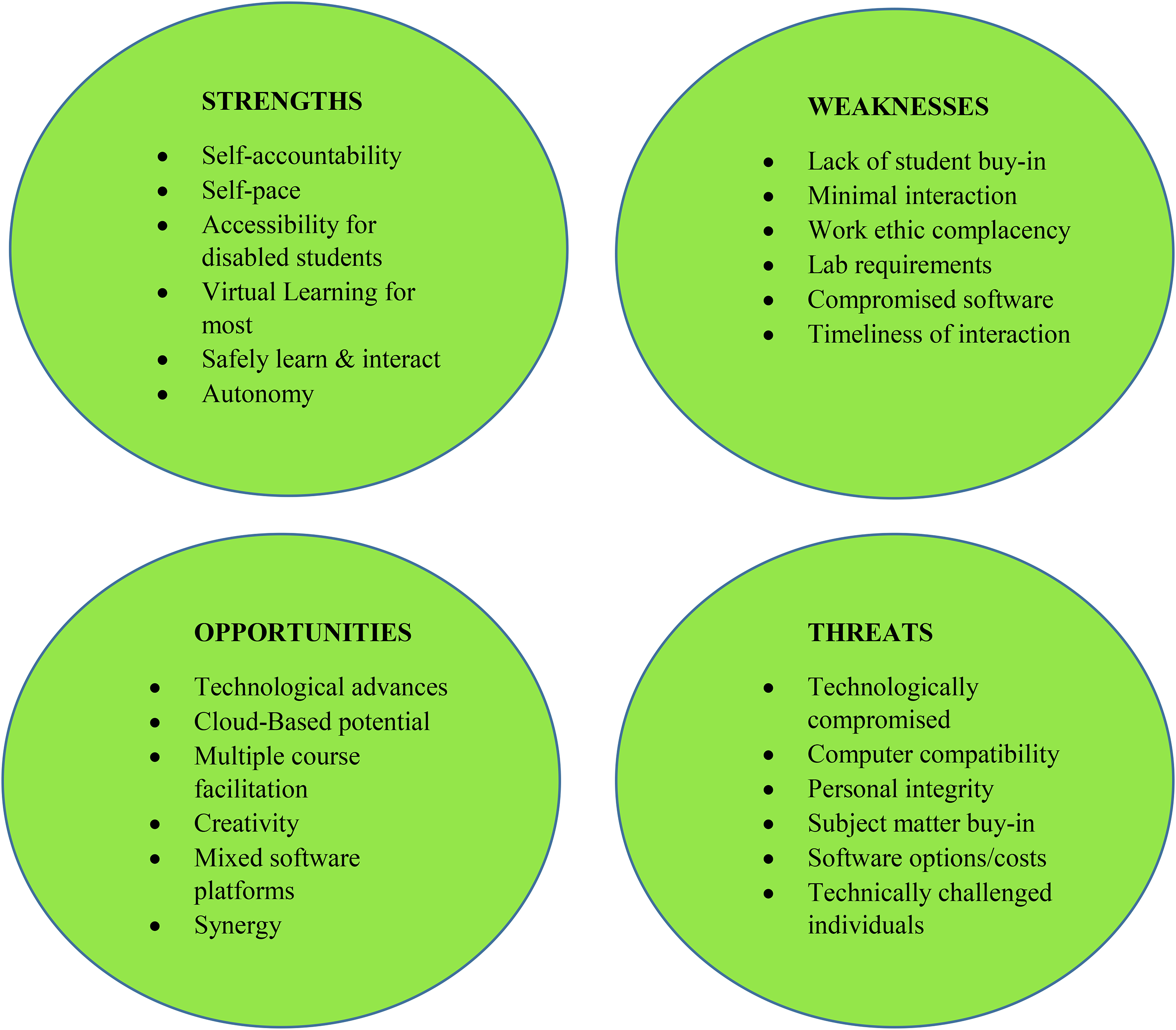
Strengths–weakness–opportunities–threat (SWOT) analysis.
Strengths
There are many appealing attributes when thinking about new delivery systems and approaches to teaching. Students are more aware of self-efficacy, self-awareness, self-paced learning, creating a flexible learning environment, and allowing for an interactive and safe way to learn digitally when reflecting upon hybrid and blended learning. Another strength that should be emphasized is how hybrid and blended learning may increase accessibility for those with physical and mental disabilities, in addition to those who are audibly impaired. Closed-caption options are readily available to accommodate those who are hearing impaired as one example. Crouse et al. (2018) conducted a study and found that the teachers involved in the study provided online instruction to students with disabilities and were able to do so based on their experiences in a traditional classroom settings. One suggestion to improve this strength in this group of students would be to provide consistent, professional development to better serve other faculty members and partner with one another to have enhanced teacher preparedness programs (Crouse et al., 2018).
Weaknesses
Depending upon the professor delivering the content and the student absorbing the content, hybrid and blended learning can pose a potential weakness within an online learning experience. This can also allow for all parties involved to become complacent if the online course is not fully structured or interactive. This global pandemic is still emerging and we have not reached a post pandemic phase yet, however, educators have quickly learned that traditional teaching methods are more a thing of the past than they ever have been (Hampsten, 2021). One positive reveal due to the pandemic is it was able to expose fissures within academia that needed to be swiftly acknowledged more than ever before, according to Hampsten (2021).
When teaching in an online environment another potential weakness is there is no way of gauging body language with students. Perhaps when educating students in an online setting, the new way to gauge students’ interest is by their compliance and adherence to the course itself. Davis et al. (2016) suggest video interactions via Zoom, recording videos for students to playback at their leisure, and incorporating a TedX video does engage the learner and help create a sense of urgency and the desire to learn because it is something presented that is new to the students. Incorporating other software elements within the main online platform further enhances the learning experiences for the student.
Another valid concern is if all collegiate courses can effectively be delivered in an online classroom such as chemistry and more importantly the lab that assists this course. Can a lab or clinical skills be taught via hybrid or blended learning methods? We do know that clinical skills can be taught and learned in a synchronous setting (Wilke et al., 2016), but this could be a generalized assumption depending upon the instructor’s capabilities and more research and software may be needed as there is only so much that can be done online potentially.
Opportunities
Hybrid and blended learning methodologies are becoming more advanced all the time with increased Cloud-Based potential, enhanced synergy, and more creativity by the instructors and students to just name a few examples. In addition to online learning becoming increasingly progressive, it has allowed a safe way to earn an education and also be safe doing so due to the restrictions that COVID-19 introduced to us all globally. Embracing digital citizenship in an online experience has shown to be a positive response to COVID-19 to ensure a safe and flexible learning environment thanks to advanced technology (Akcil & Bastas, 2021).
Storytelling is widely utilized in traditional classrooms to help bridge the gap between an actual life event and the content being taught in the classroom. This same approach can be utilized in an online educational environment as well. Incorporating storytelling with hybrid and blended learning will enhance not only the relationship between the educator and learner by creating a more interactive environment, but will also increase the student knowledge and retention of the content (Baldwin & Ching, 2017).
Threats
There will be threats/challenges in most anything we do in life and finding sensible solutions is a reasonable way to overcome these obstacles. Hybrid and blended learning certainly has its fair share of potential challenges such as: technology could be compromised, computer compatibility (technological and generational), individual learners integrity may be questionable, adjusting from the traditional classroom to an online learning landscape, student buy-in with the subject matter expert, online software options are costly, and so forth.
COVID-19 has taught educators that online learning is more of a commonplace for students than it once was, and if universities seek to grow enrollment for all programs, there may be unexplored markets that once were minimized prior to this global pandemic (Trammell & LaForge, 2017). Maybe this is just what the academic institutions needed in order to fully embrace an online learning presence that would allow them to expand enrollment university wide and not just be department specific depending upon the field of study. Chemistry departments have had to become quickly innovative to transition their science-driven lessons to an online learning experience. Even though the virtual learning environment has challenges, educators and students were able to overcome many of these challenges by finding reasonable solutions to learn in this new normal of online learning (G. & Lipin, 2020).
Conclusion of SWOT
Sim et al. (2020) determined from their study that the majority of students were highly optimistic and showed increased enthusiasm in regards to online learning. There were also many students who felt online learning was lonely and contributed to them feeling lazy versus be on campus for a traditional classroom experience, which evidently created a sense of productivity. This feeling of loneliness could also be due to the abrupt restrictions and forced quarantine that would contribute to that sense of loneliness during the global pandemic as well (Sim et al., 2020).
Discussion and Suggestions for Faculty & Administrators —In COVID-19, Post Vaccine, and Post-COVID-19 World
What have we learned from this public health crisis? Are the lessons worth keeping? Were there advances or gains that we made and how can we continue to build and further improve on those gains? All of us who work at institutions of higher education and academic settings need to think deeply about these questions as we prepare to work in current environment and slowly but steadily move into post-COVID-19 world. As we prepare to teach for 2020 and once the pandemic is over, there are many lessons we can take from our experiences and help in improving our teaching and learning practices. Blended and hybrid learning seem to be the future of higher education and instructors are making efforts to learn, develop, and manage this form of learning during the pandemic and beyond. While instructors have a major role in improving their course content and delivery methods, support from other stakeholders such as students and administrators is needed to provide engaging learning experiences to students.
Paying Attention to Faculty and Student Mental Health
Before we delve into details about recommendations on how to successfully teach hybrid and blended courses (during pandemic and post pandemic), it is important to highlight the need for mental health support for both students and faculty. For several years, academic institutions have focused on mental health support for students. A recent expert insight by the Educational Advisory Board included findings from a research that clearly demonstrated the need to support faculty during the times of pandemic and even when we come out of this crisis. A vast majority (∼70%) of faculty who have mental health concerns are not familiar with resources to meet their mental health needs. It is also important to note that only 13.1% used these resources due to fear of stigma and professional risk (Chawla, 2020; Price et al., 2017). Efforts should be made to enhance awareness about mental health support available at academic settings.
Additional resources should also be made to help faculty cope with challenges as they are first responders to students who need help. Chawla (2020) emphasized the need to build a culture of access, recognition of mental health support, open conversations, collective responsibility, and supportive action to prepare faculty as they prepare for upcoming semesters. Strategies such as transparent communication style, multiple methods of communication, acknowledgement of impact of pandemic, weekly health focused newsletters, virtual support groups, and social media outreach may help both faculty and students. Furthermore, appropriate revisions of policies surrounding tenure and promotion, assistance programs, and on-going performance reviews will help in showing that administration not only cares but is also ready to help/support faculty and staff (Chawla, 2020).
Professional Development for Faculty and Continuous Quality Improvement (CQI)
As COVID-19 unraveled, faculty members who have minimal to no online teaching experiences, were asked to convert their traditional face-to-face classes to online format. Teaching hybrid, blended, or online courses requires knowledge of best practices, online teaching strategies, an understanding of online teaching methods, and expertise in web-based tools. Professional development and raining can ensure success for faculty members who are new to the online teaching modality. Adequate preparation of instructors will help in the course development process and help in creating courses that will eventually lead to a better learning environment for students. Frass et al. (2017) reported a five-step model initially described by Cicco (2013) which could be used during current times and as we navigate our way through pandemic. These steps include “an introduction to navigating through online courses, learning-styles training, online course simulation experiences, review of tools for relationship-building, and finally the launching of an actual online course under the supervision of a mentor.” All these steps are crucial for building a faculty skill set for teaching in an online format.
Evidence based and self-paced online courses along with interactive activities focused on how to effectively teach online should be created and faculty (both new and experienced) must be encouraged to complete these courses before they start teaching online. In addition to courses, online tutorials, videos, welcome templates, and syllabus templates should be made available to the faculty. Once faculty is more comfortable with online teaching, they should be made aware of Quality Matters program, a peer-reviewed quality assurance process that allows faculty to see external evidence and best practices, effective methods of instructional design, and how to implement these practices while designing courses and continuously improve course delivery methods (Olson, 2011).
Humanizing Content
In the post-pandemic era, where completely online, blended and hybrid courses will be the main course offerings, instructors who know how to incorporate an inclusive online learning approach with rich human connections will have a deep and lasting impact on students’ academic experiences. Instructors who make relationships a priority recognize that such relationships can also challenge students to accomplish their full academic potential (Pacansky-Brock et al., 2020). Because of their academic experience in teaching on-campus, online, hybrid, and blended courses, this team of authors/co-authors suggests that faculty should focus on four key factors to humanize classes.
Instructor Presence and Building Social Presence in Hybrid, Blended, & Online Environments
Instructors should strive to structure their online, hybrid, and blended in a well-organized and logical manner so that students are easily able to access different learning units, modules, and assignments. It is important to create a separate online course shell for every class (in learning management system). In order to enhance engagement and a sense of community in classes, instructors should build an inviting course website for all the courses. Faculty should send out welcome letters and emails prior to the beginning of classes and encourage students to complete a detailed introduction post during the first week of classes. Instructors should also post an introduction with personal information on the first day of class and encourage students to respond to introduction posts completed by the instructors and their peers. By including personal information and characteristics in online platforms, instructors can support the trust-building process, and prepare the foundation for cognitive trust needed for open discussions. These initial getting to know one another posts helps in building connections for online communities (Boettcher, n.d.).
It is also important to provide a course syllabus, a list of assignments, the course calendar, assignment due dates, and a grading rubric on the first day of class. Information about relevant educational resources, university policies, online library resources should also be made readily available to students. Availability of relevant information, links and, documents help to create a good impression on students, especially online learners. This not only provides a roadmap for the rest of the semester, but it also helps students to plan their semester, stay organized, and completes their work in a timely fashion. Initial online discussions, getting to know one another introductory posts, inclusion of personal information and showing respect for students’ time builds trust and lays the foundation for teaching and cognitive presence.
Teaching Presence and Instructor–Student Connections
Teaching presence needs to be established both during the course of the semester and prior to beginning of the hybrid, blended, and online class. In an online world, this consists of two major categories: Based on the assumption what students already know and understand; the first category of teaching presence clearly highlights that entire course preparation should occur before beginning of online classes. This includes selection of readings, assignments, and discussions. The second category of teaching presence caters to the particular set of students and helps them learn and grow as the course progresses (Boettcher, n.d.).
By utilizing several technology tools, instructors can work towards achieving an active teaching presence in the classroom. For example, use of announcements, a calendar, a chat feature, and alerts via learning management system, can help to reach out to students when they are not in the classroom, whether online or in person. Weekly discussion questions and blog posts on topics related to the class can help to create a valuable and engaging learning experience in classes. In addition, the use of real-world case studies and videos of live lectures or interviews with guest speakers, who work as professionals in academic disciplines, can help in enhancing engagement in blended and hybrid classes. It is also important to provide comments on all the discussion questions, assignments, and papers in a timely fashion.
Finally, instructors should make efforts to update the gradebook regularly. This allows students to make necessary adjustments in their study methods and work schedule. Students should also be encouraged to reach out to faculty to seek clarification and more information if they have questions about assignments or a grade that has been assigned to them. Students should also be given the right to appeal in case they do not agree with the points and/or grades they receive in the class. By incorporating the approach noted above, instructors can be visibly present in online classes, build connections, demonstrate that they care about students, and can encourage students to think deeply about concepts presented to them.
Student Collaboration and Removal of Sense of Isolation
Instructors can use a variety of strategies in order to engage students in collaborative activities in hybrid, blended, and online classes. These activities include but are not limited to: role-playing exercises, debate sessions on policy changes, brainstorming sessions, pair-share, team-based case study discussions, and problem-based learning exercises. In online presentations, after a discussion of major concepts, instructors can pause for a few minutes and ask the students to summarize the information presented to them. Dividing students into smaller groups via Zoom breakout rooms will also allow students to discuss concepts presented to them and come up with clarifying questions. This can help instructors to make changes in course delivery methods in case there are students who have not understood key concepts. Furthermore, this will also help in removal of a sense of isolation as students will actively work with both faculty and students on their day to day projects and assignments. Finally, this type of activity promotes a sense of collaboration and teamwork, which is common in most career settings.
Building Cognitive Presence
Cognitive presence is defined as the “extent to which the professor and the students are able to construct and confirm meaning through sustained discourse (discussion) in a community of inquiry” (Garrison et al., 2000, p. 89). By getting to know learners, including feedback and comments to help learners, and weekly discussion of core concepts and learning outcomes, faculty can work towards building cognitive presence in online classes. Further efforts should be made to critically examine students’ work and pose challenging questions that require additional analysis as this will allow learners to participate more thoughtfully in discussions (Boettcher, n.d.).
Online Orientation for Students
In order to work with university closures and travel restrictions, online orientations should be included in hybrid and blended courses. Instructors should cover information about course content, books, course design, libraries, and other relevant information needed to succeed in classes. Students should be aware of important details before they set foot on the college campus for on-campus meetings. Asynchronous orientation should also provide information about policies related to academic dishonesty, online etiquettes, and campus policies. Efforts should be made to include personal information about the instructor and make these modules fun and exciting as this will allow students to build connections with instructors. Furthermore, virtual activities should be included in online orientation. This will also allow faculty to connect with faculty. Many platforms such as Zoom and Adobe Connect allow staff to create breakout rooms so students can learn in smaller team-based activities (Moore, 2020).
Closing the Digital Divide
Technology is central to student learning especially during current times and in the post pandemic world. The importance of the internet, digital devices, and Wi-Fi in education and in every aspect of academic life is profound. There is evidence that a digital divide may impede the learning process as students do not have access to the technology they need to succeed in their academic pursuit. Bridging this divide will enhance students’ ability to study, share, work together, and solve problems collaboratively. Efforts should be made to provide adequate resources to both students and instructors as they prepare for coming semesters (Block, 2010). Increasing the bandwidth, creation of open education courses, and the restructuring of tuition/fee model to include laptops, hotspots, and other accessories can help in reducing this digital divide. If a restructuring fee is not a possibility, innovative initiatives such as technology loan programs can be implemented that would allow students to request access to technology and other resources once they register for the class. Upon successful completion of the course and/or program students must return the devices so it could be loaned to other students who need support (Brownlee, 2020).
Guidelines by Health & Government Bodies and Switching Between Hybrid and Blended Medium of Instruction
Academic institutions vary in size of student body, infrastructure, education programs, services, location, and overall structure. Individuals of different age groups, race, culture, ability, and underlying medical conditions work together to provide different services at these institutions. In addition to providing instruction to students who come from different places/states/countries, there are several community outreach, research and cultural events that take place at these institutions. Thus, it is extremely important to exercise caution and follow federal and state guidelines to avoid risk of transmission of disease. While administrators can work on creating policies and procedures to ensure appropriate support structure is in place, instructors can switch between face-to-face, hybrid, or blended based on rapidly changing situations. Usage of limited on-campus sessions will minimize in-person contact, which in turn would lead to better health outcomes in the long run. Risk assessments and proper planning should be included into choices about course offerings. Personal public health practices such as hand hygiene, physical distancing, and avoiding crowded spaces, should be encouraged to adapt to “new normal” to minimize the spread of the virus (Government of Canada, n.d.).
Assessment & Evaluation
Because traditional approaches do not take public health crises such as the COVID-19 pandemic into consideration, proctoring and supervision of exams in an online medium of instruction can be challenging. Use of online proctoring methods that use cameras and other technology enabled features can help prevent cheating in hybrid and blended learning. Services such as Examity and TOP HAT provide solutions as they utilize webcams, screen videos, and other features to closely monitor students’ exams (Li et al., 2021). Respondus is another fully automated assessment tool that is widely used by institutions of higher education. Exams are recorded via webcam and upon completion of exams, flagged events and results of proctoring are made available to faculty for their reviews. These assessment tools lock down testing environments within learning management systems, auto launches from different browsers and guide students through needed checks, integrate with different learning management systems and students and instructors are not required to register with the website (Respondus Monitor n.d.).
Formative assessment methods, such as discussions, team-based activities, group projects, can be effectively used to supplement terminal or summative assessment in blended and hybrid teaching. These assessments offer more flexibility, examine students’ progress throughout the semester, include more hands-on approach, and allow instructors to make timely adjustments to the teaching and learning methods.
Conclusion
Public health disasters such as COVID-19 can encourage innovation and create out-of-the box thinking in educational settings. To be able to provide meaningful and engaging learning experiences to students, instructors and academic administrators have to focus on building appropriate infrastructure to support hybrid and blended learning methods. It is extremely important to focus on capacity building of faculty so they become more familiar with online learning approaches, e-Learning tools, and usage of innovative technology to facilitate teaching and learning. High level of emergency preparedness is also needed so faculty, administrators, and students can quickly adapt to changes that are beyond one’s control. This preparedness will require resource allocation to deal with mental health challenges and additional training in pedagogical methods so teachers can build relationships and work towards enhancing social presence, teaching presence, and cognitive presence even in online medium of instruction. Besides integration of technology in classes, efforts should also be made to include rigorous quality assurance methods (i.e., Quality Matters) and continuous quality improvement as this will allow faculty to think about changes that could be made to further enhance teaching and learning. Thus this study has been undertaken to not only share history, evolution, need, root cause, fishbone analysis, and SWOT analysis of hybrid and blended learning, but it also provides valuable tips and a suitable roadmap that could be adopted by faculty and administrators in current situations as well as in the future.
Footnotes
Author Contributions
Conceptualization, J.S., L.S.; methodology, J.S.; validation, J.S., L.S., K.S.; formal analysis, J.S.; investigation, J.S.; resources, J.S.; data curation, J.S., L.S., K.S.; visualization, J.S.; L.S., K.S.; supervision, J.S.
Declaration of Conflicting Interests
The authors declared no potential conflicts of interest with respect to the research, authorship, and/or publication of this article.
Funding
The authors received no financial support for the research, authorship and/or publication of this article.
