



Abstract
The negative effects of the pandemic caused students to make changes in their career plans and their ability to manage their emotional states. Not only health students in our country, but also students in other countries of the world experienced fear, anxiety, and unwillingness to participate in professional practices and the provision of care for patients with COVID-19 during the COVID-19 pandemic. The study was conducted to determine factors influencing intern healthcare students’ career adaptability and their ability to manage emotions during the COVID-19 pandemic. The sample of this cross-sectional study consisted of 219 intern healthcare students studying at the Faculty of Health Sciences Undergraduate Program of a University in the fall semester of the 2020 to 2021 academic year. The study data were collected online using the Personal Information Form, Career Adapt-Ability Scale (CAAS), and Courtauld Emotional Control Scale (CECS). The data obtained were analyzed by using the independent samples t-test, Analysis of Variance (ANOVA), correlation tests, and the regression model to distinguish variables significantly. Two models explained more than 50% of the variance of CAAS and CECS regarding COVID-19, and 5.1% of the career planning regarding the period during the COVID-19 pandemic (P < .05). As the students’ control over their careers decreased during the COVID-19, their feelings of anxiety and unhappiness increased (P < .05). Of the variables, sex, department, future expectations, the position dreamed of being in after graduation, and attitudes toward patient care with COVID-19 affected their CAAS and CECS scores.
The COVID-19 pandemic revealed potential problems not only in health care but also in mental health. The negative effects caused by the pandemic caused students to make changes in their career plans and their ability to manage their emotional states. Not only health students in our country, but also other students in other countries of the world experienced fear, anxiety, and unwillingness to participate in professional practices and the provision of care for patients with COVID-19 during the COVID-19 pandemic.
The career planning process in our country and in other countries of the world has been suspended during the COVID-19 pandemic. This study may be beneficial to investigate all the effective factors, and to plan the necessary education and career guidance services to support young people, especially in the post-pandemic career planning, decision-making processes, and to eliminate their fear of future.
The results of this study indicated that students should be given training and seminars on the provision of care for patients with COVID-19.
What are our research’s implications for policy?
Within the scope of education programs, educational policies can be developed in order to enhance the hopes of students and to emphasize their emotion control.
One of the policies put into practice for the professional and career development of students in our country is the National Internship Program (NIP). The NIP was initiated by the Presidential Human Resources Office in order to enable young people in our country to benefit from internship opportunities offered by public institutions and private sector organizations within the framework of equality of opportunity and in accordance with the principles of merit. Within the framework of the program, a transparent, traceable, and innovative valuation method was used to increase the employability of our young people, to provide them with equal opportunities in accessing career opportunities, and to expand internship opportunities to all departments, not limited to technical departments requiring compulsory internship. Students applying to the program are evaluated based on their academic/professional, artistic/social, and sportive competency scores by taking into account their performance they have displayed throughout their education life, efforts they have made to improve their skills, and their achievements. Employers, on the other hand, send internship offers to students based on the scores they get in the aforementioned qualification areas without seeing their credentials. Both employers and students can apply for this program online. Undergraduate students enrolled in formal education can register when they are in their second year of education, and associate degree students can register when they in their first year of education. During the COVID-19 pandemic, all internships in our country have been postponed. As soon as the number of COVID-19 cases decreased during the pandemic, the program was reactivated.
Introduction
The SARS-CoV-2 infection turned into an epidemic of unpredictable dimensions due to the lack of information about the rate of its spread, the mechanisms of infection and survival, and the lack of global habits related to social distancing. After the first case was confirmed in March 2020 and the first death from COVID-19 was documented, the general Turkish population started to fear this infection. 1
The COVID-19 epidemic was affected by many economic, social, cultural, legal, and political factors in societies and thus affected the mental health of individuals. 2
Health professionals tried to protect and care for more people in order to reduce the stress and anxiety caused by the physical, psychological, sociological and spiritual problems experienced by individuals during the COVID-19 pandemic. For this reason, the fact that healthcare professionals have longer working hours, work in difficult working conditions, and most importantly, the fear of not being able to protect their own and their families’ health has caused them to experience more emotional distress. Although many sectors were affected by the COVID-19 pandemic, the most affected sector was human resources management in the health field. In their study, 3 reported that under the uncertain conditions caused by COVID-19, it is necessary to manage three elements - human resources, information technology and management - to create safe and reliable conditions in the organization.
Due to such measures as quarantine and isolation situation caused by the COVID-19 epidemic, employees’ anxiety and stress levels, and psychological problems increased; therefore, it is recommended that strategies aimed at improving physical and mental health of employees and mechanisms ensuring communication with employees should be developed. Physical and mental health is considered as the cornerstone of effective performance, service quality, and motivation of employees.3,4
The COVID-19 pandemic revealed potential problems not only in health care but also in mental health. Especially healthcare workers, due to their responsibility to combat the pandemic, are more exposed to contact with infected persons and therefore have a significant mental burden. Among the growing psychological problems of healthcare workers are increased levels of anxiety, depression, insomnia, chronic fatigue, and stress. 1 COVID-19 is a new disease and that little is known about its spread, control, and treatment, which has caused an increase in fear and stress associated with COVID-19 in healthcare students. 4 In studies conducted with health science students, it was determined that the prevalence of displaying COVID-19 prevention behavior ranged between 85% and 94% in the students, and that their perceived risk level was moderate.4,5 These results suggest that the students were concerned about the uncertainties regarding their new roles, which could limit their learning opportunities and their need to reinforce the skills necessary for their learning.6,7 Since the spread of the COVID-19 pandemic in Turkey and in the rest of the world in March 2020, trainings at all levels have been carried out remotely in our country.
Career planning is included in the fourth level of Maslow’s hierarchy of needs. From this point of view, the need for respect means individuals’ having prestige inside or outside the institution and achieving their goals, which reveals the success level or status of the individual. 8 In other words, an individual’s success, trust level, respect, and satisfaction with his or her status in the group to which he belongs are important in meeting his or her need for respect. At this stage, self-esteem can be realized with dignity, success, and recognition by others. In Maslow’s study, in which he investigated individuals with good psychological health, he stated that after the need for respect is met, the next stage for the need is self-actualization, and that the development process of a good life is included in this stage. 8 Therefore, the results of a study conducted with college students revealed that individuals who had a strong belief in internal and emotional control were greatly satisfied with their needs related to their physiology, safety, belonging, esteem, and self-actualization. 8
In their study titled “Prioritization of needs among students of the Iranian University of Medical Sciences” conducted in 2020, during the pandemic, Fattahi et al 9 determined that students had several needs such as being ready to take responsibility under the difficulties and stress of life during their university life, nutrition, accommodation, adaptation to psychological, and social life. Among these needs, the 1 received the highest level of attention from the experts and university officials was the students’ being able to improve their own lives and to display resilience to the stresses they faced. In other words, they were able to move on to the stage of realizing themselves in a healthy way. This means that professional success, respect, and confidence levels of senior students who would provide health care during the COVID-19 pandemic, and the uncertainty of their status in the group they belonged to affected their emotional control and prevented them from reaching the next step, namely self-actualization, in other words, caused them to postpone career planning, or to alienate from their profession. 10
Different methods have been used in health education due to the COVID-19 pandemic in the world. In this process, while the training of intern students was carried out online or with simulation in some countries, it was actively carried out in clinics in some countries where health personnel were needed. In all education methods, students reported that they experienced stress, anxiety, and loneliness.11,12
Uncertainties about when life will return to “normal” increase students’ anxiety. Although institutions make changes in the provision of education and training in different ways, the highest priority should be given to the ensuring of trust in students through active communication.
The negative effects of the pandemic also negatively affected the students’ career plans and ability to manage their emotional states. Not only health students in our country, but also other students in other countries of the world experienced fear, anxiety, and unwillingness to participate in professional practices and the provision of care for patients with COVID-19 during the COVID-19 pandemic.13-16 Determination of the emotions which are expressed in a healthy way, control of the emotions by nursing, midwifery, physiotherapy and rehabilitation, and social work students who are the prospective health professionals to provide health service to the society, and the influencing factors are thought to be important, because all these will affect students’ career plans.17,18
Literature Review
In the literature, it has been reported that social and economic depressions caused by protective measures (such as social distance, isolation, and quarantine) taken during pandemics can cause the emergence of many psychological problems such as, anxiety, depression, and post-traumatic stress disorder. In the literature, it is stated that different groups including health workers and young people in the health sector suffered from mental health problems during the acute phase of the COVID-19 pandemic and thus it is recommended that some measures should be taken to overcome these problems. Increasing access to mental health services, ensuring the ethical use of media, improving mental health literacy, ensuring equality in the health system, and providing telehealth services are among these measures. 19 As stated in the literature, while restrictions were put into effect to control COVID-19 all over the world, the education and training process, social and working life were maintained online.20,21 Online applications played a significant role in maintaining health education, providing health services and meeting the social needs of society. 22 As is stated in the literature, while the whole life went on online and on social media, not being able to graduate and to do practice in the hospital seemed to be the leading concern and fear of intern health care students. The students were also concerned that they would lack knowledge about COVID-19 and that they would take part in the care of COVID-19 patients All these not only made it difficult for students to control their emotions but also prevented them from making plans for their careers.
Aim
The present study was conducted to determine factors influencing intern healthcare students career adaptability, and their ability to manage emotions during the COVID-19 Pandemic. This is the first study in which the relationship between students’ emotional management and career planning was investigated, and the factors that affect the relationship between the emotional management and career planning were questioned. Therefore, we hope that the results of our study would contribute to the literature.
Hypothesis in the Present Study
H1: Healthcare senior students’ career adaptability is adversely affected during the COVID-19 pandemic.
H2: Healthcare senior students’ ability to manage their emotions is adversely affected during the COVID-19 pandemic.
H3: There is negative correlation between healthcare senior students’ career adaptability and their ability to manage their emotions during the COVID-19 pandemic.
H4: Healthcare senior students’ career adaptability and ability to manage their emotions are affected by some of their sociodemographic characteristics during the COVID-19 pandemic.
Methods
Design
This cross-sectional study was conducted to determine factors influencing intern nursing, midwifery, physiotherapy and rehabilitation, and social work healthcare students’ career adaptability and their emotion management ability.
Sampling Procedures and Participants
The study was conducted online in the Faculty of Health Sciences between October 2020 and December 2020. The population of the study consisted of fourth grade intern students attending the Nursing, Midwifery, Physiotherapy and Rehabilitation, Social Work departments of Faculty of Health Sciences (N = 480).
The minimum sample size of the study was calculated as 213 students using the sampling method for known population in the Epi Info statistical package program (margin of error: 5%, confidence interval: 95% and design effect: 1.0). However, 219 students were included in the study considering the possibility of losses during the study.
By using the simple random sampling method, which is one of the probability sampling methods, 219 students who met the inclusion criteria were included in the study. Inclusion criteria were as follows: (1) being ≥18 years old, (2) official registration in Manisa Celal Bayar University Faculty of Health Sciences for the 2019 to 2020 academic year, (3) being a fourth-year undergraduate student, and (4) volunteering to participate in the study. Having not been diagnosed with a psychiatric illness before the study (Figure 1).

The study flow diagram.
Data Collection
The Personal Information Form, Career Adapt-Ability Scale and Courtauld Emotional Control Scale were used to collect the study data.
Personal Information Form: The form consists of 11 items questioning the participants’ sociodemographic characteristics, emotions, and career plans.
Career Adapt-Ability Scale (CAAS): The Career Adapt-Ability Scale developed by Savickas and Porfeli (2012) was used to assess the level of career adaptability. In the study of Savickas and Profeli (2012), a scale called “international career adaptability scale” and created through the collaboration of 18 researchers from 13 countries was used. 23 In the measurement model (Savickas and Profelie: 2012), there are 24 items and the following 4 dimensions: concern (6 statements; α = .83), control (6 statements; α = .74), curiosity (6 statements; α = .79), and confidence (6 statements; α = .85).13,14 The CAAS adapted to Turkish by Kanten (2012) consists of 19 items and the following 4 subscales: concern (3 statements; α = .61), control (5 statements; α = .77), curiosity (5 statements; α = .79), and confidence (6 statements; α = .81). 24 As the score obtained from the scale increases so does the participant’s career adaptability. 25 In the present study, Cronbach’s alpha values for the subscales were as follows: .80 for the concern subscale, .75 for the control subscale, .80 for the curiosity subscale, and .83 for the confidence subscale. The internal consistency of the scale was at a good level.
Courtauld Emotional Control Scale (CECS): The CECS developed by Watson and Greer was adapted to Turkish by Okyavuz. 26 The CECS is a self-assessment scale. It consists of the following 3 subscales: “Anger Control,” “Anxiety Control,” and “Unhappiness Control,” each of which contains 7 items. The Cronbach’s alpha coefficient was .87 for the Turkish version of the overall CECS, 27 .78 for the Anger subscale, .83 for the Anxiety subscale, and .77 for the Unhappiness subscale. 28 The mean scores to be obtained from the scale are calculated separately for the three subscales. The sum of these three mean scores yields the mean score for the overall scale. The higher the score obtained from the scale is the more the person suppresses his or her emotions consciously and hesitates to express his or her feelings. 27 The minimum and maximum possible scores to be obtained from the overall scale and each of its subscales are 21 and 84, and 7 and 28 respectively. In the present study, the Cronbach’s alpha value was .84 for the overall CECS, 0.77 for the Anger subscale, 0.85 for the Anxiety subscale, and 0.88 for the Unhappiness subscale. The internal consistency of the scale was at a good level.
Implementation of the Study
The researchers were included in the social media groups with which the intern students were registered. After the participating students were explained about the purpose and process of the study using the questionnaire sent to them via the online link prepared for the study, they were told that participation in the study was voluntary, and their consent was obtained. The researchers stayed in these groups for 4 weeks, and the research link was shared with the students every week, and they were reminded about the online link. At the end of the 4-week period, the researchers left the groups.
Data Availability
The datasets used and/or analyses performed during the current study are available from the corresponding author on a reasonable request.
Data Analysis
The SPSS for Windows 21.0 (Statistical Package for Social Sciences for Windows) program was used to analyze the study data. Numbers, percentages, arithmetic mean, standard error, minimum, and maximum values were used for the analysis of the descriptive data. The relationship between different independent groups was analyzed by using the independent samples t-test, ANOVA, and correlation tests. For the significance level of the statistical tests, P < .05 was used. The variables included in the multiple regression models were those reporting correlations and those the literature showed as relevant in the analysis.
Ethical Considerations
To conduct the study and to collect the data, permissions were obtained from Manisa Celal Bayar University Faculty of Health Sciences (October 13, 2020-E. /10/2020-E.80433) and the Ethics Committee of Manisa Celal Bayar University Medicine Dean of Health Sciences (October 21, 20.478.486-566). Written informed consent was obtained from all the participants. The study was carried out in accordance with the ethical standards established in the Declaration of Helsinki.
Results
Descriptive Data
The mean age of the participating students was 21.88 ± 1.14 (min: 20, max: 30) years.
Of them, 60.0% were ≥22 years old, 88.6% were women, 37.0% were students in nursing, 21.0% were students in midwifery, 29.2% were students in physiotherapy and rehabilitation, 16.5% were students in social work, 98.2% were single, and 59.4% stated that their income was equal to their expenses. As for the parents’ parenting attitudes, 52.5% displayed a protective parenting attitude, 23.3% displayed a democratic attitude, 14.2% displayed an authoritarian attitude, 6.8% displayed an inconsistent attitude, and 3.2% displayed an indifferent attitude. As for the fathers’ education level, 53.9% were primary school graduates, 26.9% were high school graduates. As for the mothers’ education level, 60.7% were primary school graduates and 19.2% were high school graduates. While 64.4% of the students expected that the future would be better than today, 18.7% stated that it would be worse than today (Table 1).
Sociodemographic Characteristics of the Study Participants (n = 219).

According to the participating students’ statements, 75.8% had good social relationships and 17.8% had very good social relationships, 44.1% wanted to work in the public sector, 26.7% wanted to have postgraduate education, 16.1% wanted to work in the private sector, and 11.1% planned to start their own business (Table 1).
While 73.5% of the participating students answered the question, “Would you be willing to care for patients with COVID-19?” as “yes,” 24.7% said “no.” While 57.1% of them answered the question, “Are you knowledgeable enough about COVID-19?” as “no,” 34.2% said that they were undecided. While 65.8% of the participating students answered the question, “Would you like to receive training on COVID-19?” as yes, 33.8% said that they were undecided (Table 1).
The mean scores the participants obtained from the overall CAAS and its concern, control, curiosity, and confidence subscales were 77.25 (±8.69), 11.33 (±1.94), 20.89 (±2.70), 19.36 (±3.06), and 25.64 (±3.07), respectively (Table 2; Chart 1).
Distribution of the Mean Scores the Participants Obtained From the Career Adapt-Ability Scale (CAAS) and Courtauld Emotion Control Scale (CECS; n = 219).

Note. M = mean; SD = standard deviation; Min = minimum value; max = maximum value; 95% CI = confidence interval at 95%; LL = lower limit; UL = upper limit.

Distribution of the mean scores the participants obtained from the Career Adapt-Ability Scale (CAAS) and Courtauld Emotion Control Scale (CECS; n = 219).
The mean scores the participants obtained from the overall CECS and its Anger Control, Anxiety Control, and Unhappiness Control subscales were 48.87 ± 6.16, 16.25 ± 2.99, 16.17 ± 2.15, and 16.47 ± 2.95 respectively (Table 2; Chart 1).
Sociodemographic Characteristics Affecting Healthcare Senior Students’ Career Adaptability, and Their Ability to Manage Their Emotions
In Table 3, the relationship between the mean scores the participating students obtained from the CAAS and some of their socio-demographic characteristics was demonstrated. As is seen in the table, the mean score obtained from the concern subscale by the female students was statistically significantly higher than was that obtained by the male students (t = 2.595, P = .010). The mean scores the midwifery and social work students obtained from the anxiety subscale were statistically significantly higher than were the mean scores obtained by the nursing and physiotherapy and rehabilitation students (t = 4.174, P = .007).
Relationship Between the Mean Scores the Participating Students Obtained From the Career Adaptability Scale (CAAS) and Some of Their Socio-Demographic Characteristics (n = 219).

The independent samples t-test is significant at P < .01 level.
The ANOVA test is significant at P < .01 level.
The students who expected that the future would be better than today obtained a statistically significantly higher mean score from the overall CAAS (t = 10.042, P = .000) and its anxiety (t = 13.646, P = .000), control (t = 5.551, P = .004), and curiosity (t = 9.611, P = .000) subscales than did the students who expected that the future would be worse than today or would not be different from today (Table 3).
In Table 4, the relationship between the mean scores the participating students obtained from the CECS and some of their socio-demographic characteristics was demonstrated. The mean scores the midwifery and physiotherapy and rehabilitation students obtained from the overall CECS (t = 2.627, P = .048) and its anxiety subscale (t = 2.957, P = .033) were statistically significantly higher than were the scores obtained by the nursing and social work students. The students who expected that the future would be better than today obtained statistically significantly higher scores from the anxiety subscale of the CECS (t = 13,646, P = .000) than did the students who expected that the future would be worse than today or would not be different from today (Table 4). The mean scores the students who expected that the future would not be different from today obtained statistically significantly higher scores from the unhappiness subscale of the CECS (t = 5.551, P = .004) than did the students who expected that the future would be better than today or worse than today (Table 4). The mean scores the students who were willing or very willing to give care to patients with COVID-19 obtained statistically significantly higher scores from the unhappiness subscale of the CECS (χ 2 = 2.837, P = .048) than did the students who were not willing or not willing at all (Table 4). The participating students were willing to give healthcare to patients with COVID-19, but they were also emotionally unhappy with this situation (this adversely affected them and made them unhappy).
Relationship Between the Mean Scores the Participating Students Obtained From the Courtauld Emotion Control Scale (CECS) and Some of Their Socio-Demographic Characteristics (n = 219).
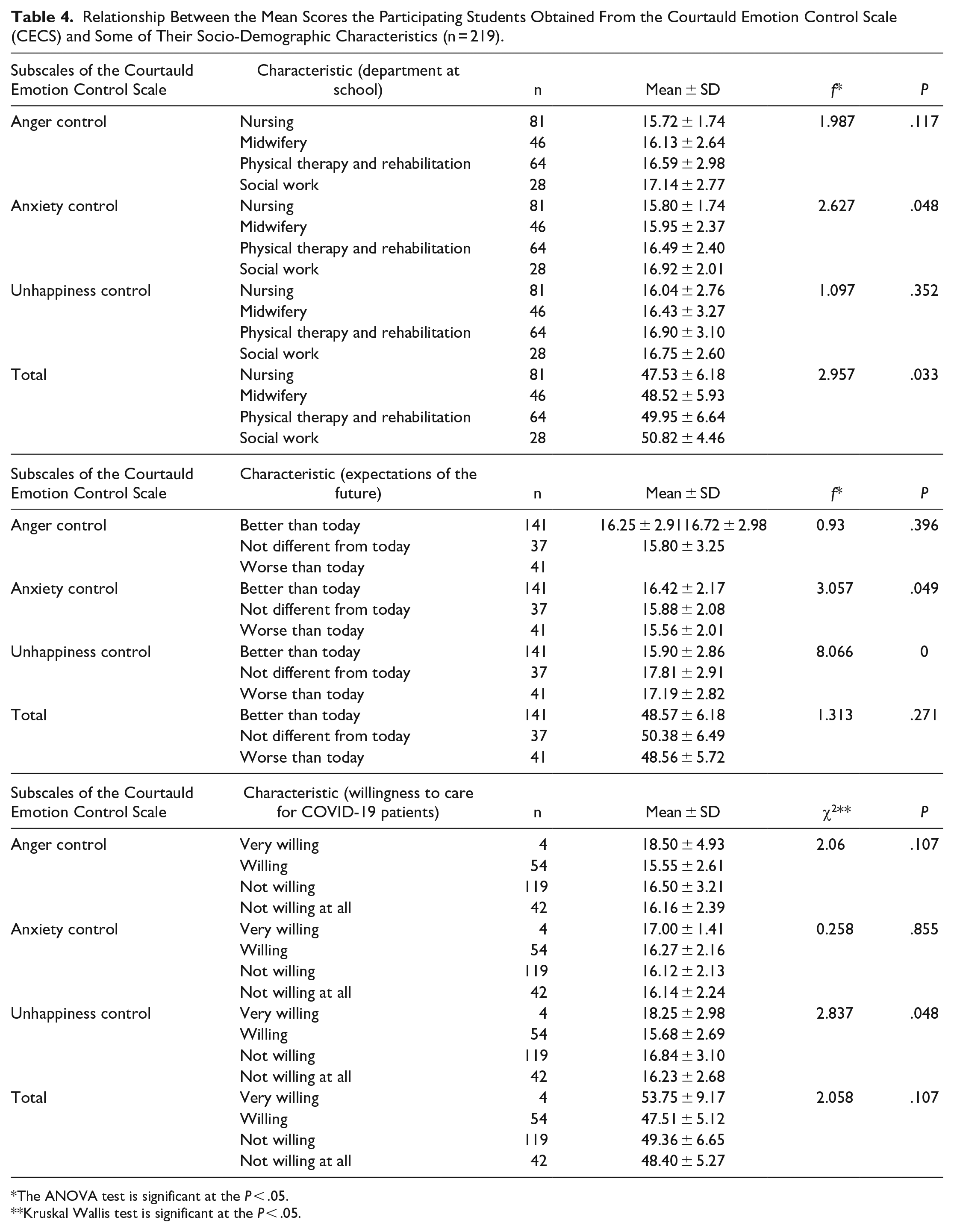
The ANOVA test is significant at the P < .05.
Kruskal Wallis test is significant at the P < .05.
Of the variables, sex, department, future expectations, and attitudes toward caring for patients with COVID-19 affected the scores the students obtained from the anxiety and hopelessness subscales of the career adaptability and ability to manage emotions scales.
Correlation Between Intern Healthcare Students’ Career Adapt-Ability and Emotion Control
There was a statistically significant negative correlation between the control subscale of the CAAS and the anxiety control and unhappiness control subscales of the CECS (P ≤ .05; Table 5). As the students’ control over their careers decreased, their feelings of anxiety and unhappiness increased.
Correlation Between Career Adapt-Ability Scale (CAAS) and Courtauld Emotion Control Scale (CECS) Scores.

The correlation was significant at the P ≤ .01.
Two-model advanced analysis was conducted to determine which variables affected the CAAS and CECS total scores of intern health care students during the COVID-19 process. The CAAS total scores were determined as the predictors of the model, including department, future expectations, post-graduation position, and reluctance to care for patients with COVID-19. It was determined that students’ CECS total scores, department, post-graduation position, and not having enough information about COVID-19 were predictors of the model (Table 6).
Model of Prediction Factors of CAAS and CECS Regarding COVID-19.

Explained more than 50% of the variance of CAAS and CECS regarding COVID-19 and 5.1% of the career planning regarding the period during the COVID-19 pandemic (P < .05). Of the variables, sex, department, future expectations, the position dreamed of being in after graduation, and attitudes toward patient care with COVID-19 affected their CAAS and CECS scores.
Discussion
The aim in this study was to determine the correlation between intern healthcare students’ career adaptability and their ability to manage their emotions during the COVID-19 pandemic. Intern healthcare students not only are confronting diverse educational challenges caused by interrupted studies and modified learning strategies in their training, but also are going through situations related with the pandemic that could affect their mental health due to the presence of stress, fear, and poor knowledge about COVID-19. 5
Was Career Adaptability of Healthcare Senior Students Negatively Affected During the COVID-9 Pandemic?
University students’ knowledge, training, skills, and professional expectations about their profession necessary to achieve their goals help them to raise career awareness.27,28 Students who try to know themselves and their professions in order to improve their career awareness are later faced with factors such as self-confidence which they perceive as barriers to their career development. In the present study, the scores obtained from the CAAS by the participating students were lower than were the scores obtained from the same scale in studies conducted with university students in Turkey before the pandemic,29-32 which confirmed the H1 (Career adaptability of healthcare senior students was negatively affected during the COVID-19 pandemic).
Because their education process coincided with the COVID-19 pandemic, they suffered from anxiety about their future and profession, which affected their career development negatively. In a study conducted by the International Labor Organization 32 involving 112 605 young people from 112 different countries, 65% of the participants stated that they learned less during the pandemic, 51% believed that their studies would be delayed in the future, and 9% feared that they might fail in their education. In Nell et al’s 33 study, the participating students reported that COVID-19 led to changes in their daily routines; therefore, they were less motivated to learn and had global dilemmas in planning their careers. These results demonstrated that the students’ career planning was hindered during the COVID-19 pandemic. Career planning steps are a complex process in which many factors interact. The first step in career planning is young people’s self-recognition and self-evaluation. At this stage, young people think about their previous experiences, and realize what, and which area makes them happy. 34 Our results are consistent with those in the literature.
Concepts such as career planning/career control can be explained as young people paying more attention to their professional future or getting prepared for their professional future, and more willing to explore future scenarios. Career adaptation, on the other hand, can be defined as adapting to difficulties in transitioning to their professional life and achieving their goals of coping with these difficulties. Thus, the first step in career planning is young people’s self-recognition and evaluation. 35 However, during the COVID-19 pandemic, the participating students could not perform self-recognition and self-evaluation steps, as they were not able to make professional practice in their field. The second step is to conduct research on career options. Individuals make research on the job they think is suitable for them. They explore the options in different environments such as immediate circles, websites, and institutions where they can make a career plan. The third step is to acquire skills. They should gain work-related experience during this step. They acquire knowledge and experience about the job, by serving internship in their career or by working in a smaller place for a short time. Communication is the stage in which they improve themselves in subjects such as teamwork. 36 At these steps, due to the measures taken to prevent people from the virus, all social interactions and students’ practices and internship activities were suspended in our country, Turkey.
Is There Negative Correlation Between Healthcare Senior Students’ Career Adaptability and Their Ability to Manage Their Emotions During the COVID-19 Pandemic?
In the present study, the mean scores the students obtained from the anger control, anxiety control, and unhappiness control subscales were a little above the middle level, which suggests that the students tended to suppress their feelings of anger, anxiety, and unhappiness consciously and hesitated to express them. The mean score the students obtained from the CECS (48.87 ± 6.16) suggests that the students often tended to suppress their emotions consciously and avoided expressing their emotions, which confirmed H2. (Healthcare senior students’ ability to manage their emotions is adversely affected during the COVID-19 pandemic.) For individuals to understand the emotions of others, they should be able to recognize their own feelings and thoughts, to control and manage them. Therefore, they should have a high level of emotional control. In the present study, anxiety and unhappiness were the predictors of emotions regarding COVID-19; these results were consistent with those obtained by Bakioglu et al 37 and Begum. 38 In studies conducted with health students during the first and second wave of the COVID-19 pandemic in the world, it was determined that the majority of the participants experienced psychological problems such as fear, anxiety, insomnia, and insecurity,12-16 which confirmed H3. (There is negative correlation between healthcare senior students’ career adaptability and their ability to manage their emotions during the COVID-9 pandemic.) The results of our study and other studies in the literature demonstrated that young adults were more worried about their careers, which adversely affected their future career plans.39-41
Were Healthcare Senior Students’ Career Adaptability and Ability to Manage Their Emotions Affected by Some of Their Sociodemographic Characteristics During the COVID-9 Pandemic?
It is thought that senior students in the health field can control their worries about their future and career plans as long as they can control their emotions. Thus, it will be possible for them to fulfill the self-actualization step stated in Maslow’s hierarchy of needs by getting rid of their worries and using their skills such as problem solving and planning. 42
In the present study, of the variables, sex, department, future expectations, the position dreamed of after graduation, and attitudes toward patient care with COVID-19 affected the participating students’ scores for the CAAS and CECS, which confirmed H4. (Healthcare senior students’ career adaptability and ability to manage their emotions are affected by some of their sociodemographic characteristics during the COVID-19 pandemic.)
In studies conducted with health workers and students during the COVID-19 pandemic, they thought that they were anxious, feared, and unwilling to give healthcare to patients with COVID-19 and that they did not have job security due to the unknowns of COVID-19.14,43,44 More than half of the students were hopeful about the future, and their career adaptability was positive. Studies indicate that meaningful life, optimism, hope, resilience, and well-being are positively associated with career adaptability.45-49
In another study, career adaptability levels of high school students who thought about their future and had dreams about the 10th year of their career were high. 50 The results of these studies are consistent with those of the present study. Due to the recent pandemic in our country and in the other countries of the world, the need for healthcare professionals has increased, which has made them important people and members of a profession needed, which encouraged the students to perform their tasks and increased their hope.
The career planning process in our country and all over the world was suspended during the COVID-19 pandemic. Considering the importance of career guidance for young people, more studies are needed in this field. It may be beneficial to investigate all the effective factors, and to plan the necessary education and career guidance services to support young people, especially in the post-pandemic career planning and decision-making processes.
Conclusion
Unlike other studies in the literature, this study is the first study in which the relationship between students’ emotional management and career planning was investigated, and the effects of their sociodemographic characteristics on the relationship between the emotional management and career planning were questioned.
The results of our study demonstrated that intern health care students’ career planning was negatively affected during the COVID-19 pandemic and therefore they had difficulty in managing their emotions. The results also demonstrated that the fear and anxiety experienced by the students during the COVID-19 pandemic, their future expectations, the position they imagined they would be in after graduation, the department they would graduate from and their gender-based roles affected both their career adaptability and their ability to manage their emotions.
Conducting a large number of qualitative and quantitative studies will help healthcare students become aware of their emotions and career planning. In addition, working with larger student groups will contribute to the development of education policies. We also recommend that students should be given training and seminars on the provision of care for patients with COVID-19. Lastly, we recommend that students’ hope should be promoted, that their motivations should be enhanced, and that emotion control should be emphasized more in education programs.
Because of the fear, anxiety, and uncertainty they experienced during the COVID-19 Pandemic, the students only tried to adapt to this process and unfortunately could not take any initiative to plan their careers.
Limitations
The study data were collected only from the students enrolled in 1 health sciences faculty during the COVID-19 pandemic when restrictions prevailed, which was one of the limitations of the study. The other limitation was that we had to keep the sample size at a minimum (219 students) due to the online collection of the data because the students had no or limited internet connection. Since the study was designed in cross-sectional type, it was not possible to determine the causality relationship.
Footnotes
Acknowledgements
We would like to thank all of the students who participated in this study for their support.
Author Contributions
NGT: Conceptualization, Formal analysis, Writing—original draft, the conception and design of the study, Contact with the participants, Collection of the data, Analysis of the data, Drafting the article or revising it critically for important intellectual content, Final approval, Receiving permission from the ethics committee to conduct the study. SN: Conceptualization, Formal analysis, Writing—original draft, the conception and design of the study, Contact with the participants, Collection of the data, Analysis of the data, Drafting the article or revising it critically for important intellectual content, Final approval, Receiving permission from the ethics committee to conduct the study.
Declaration of Conflicting Interests
The author(s) declared no potential conflicts of interest with respect to the research, authorship, and/or publication of this article.
Funding
The author(s) received no financial support for the research, authorship, and/or publication of this article.
Availability of Data and Materials
The datasets used and/or analyses performed during the current study are available from the corresponding author on a reasonable request. The datasets are stored and maintained by the responsible author. If requested, the data connection link can be shared.
Data Collection Forms
Personal Information Form
1. Age: . . .. . .. . .. . .. . .. . .
2. Sex:
( ) 1. Woman ( ) 2. Man
3. Marital status: ( ) 1. Married ( ) 2. Single
4. Income status
( ) Income less than expenses ( ) Income more than expenses ( ) Income equal to expenses
5. When you perceive your parents in terms of their feelings and thoughts about, and behaviors toward you? How would you evaluate their parenting attitudes?
( ) 1. Authoritarian ( ) 2. Indifferent ( ) 3. Democratic ( ) 4. Protective ( ) 5. Inconsistent
6. Father’s education level:
( ) Not educated ( ) Primary school ( ) High school ( ) University ( ) Postgraduate ( ) Doctorate
7. Mother’s education level:
( ) Not educated ( ) Primary school ( ) High school ( ) University ( ) Postgraduate ( ) Doctorate
8. Which one(s) of the choices below affected your choice of the department where you study?
( ) Professional advantages ( ) Economic advantages ( ) Familial factors ( ) Academic advantages
( ) Guidance by the counsellor ( ) Nothing ( ) Other(s) Please state: . . .. . . . . .. . ...
9. Which of the choices below corresponds to your expectation for the future?
( ) 1. It will be better than today. ( ) 2. It will not be different from today. ( ) 3. It will be worse than today.
10. How do you perceive your social relations?
( ) 1. Very bad ( ) 2. Bad ( ) 3. Good ( ) 4. Very good
11. What position do you envision yourself in after graduation?
( ) Having postgraduate education ( ) Starting my own business ( ) working in the private sector ( ) working in the public sector

| Items | Strongly disagree | Disagree | Undecided | Agree | Strongly disagree |
|---|---|---|---|---|---|
| 1. I am getting prepared for my future. | |||||
| 2. I am planning how to achieve my goals. | |||||
| 3. I am interested in activities that will contribute to my career. | |||||
| 4. I myself make my own decisions. | |||||
| 5. I assume the responsibility of the decisions I make. | |||||
| 6. I defend the values I believe in. | |||||
| 7. I count on myself. | |||||
| 8. I do what is right for me. | |||||
| 9. I research everything related to my career (industry, businesses, jobs, and skills needed). | |||||
| 10. I look for opportunities (internship, course, congress, and training) that will contribute to my personal development. | |||||
| 11. I explore options before I make a decision. | |||||
| 12. I try to explore different ways of doing something. | |||||
| 13. I deeply explore the questions in my mind. | |||||
| 14. I properly fulfill the duties assigned to me. | |||||
| 15. I pay attention to do the best. | |||||
| 16. I can learn new skills. | |||||
| 17. I can improve my skills. | |||||
| 18. I can overcome obstacles. | |||||
| 19. Problemlerimi çözebilirim |

| When I am angry | Almost never | Sometimes | Generally | Almost always |
| A—I keep quiet | ||||
| B—I do not argue or say anything | ||||
| C—I endure in silence | ||||
| D—I say whatever I feel | ||||
| E—I avoid making a scene | ||||
| F—I suppress my feelings. | ||||
| G—I hide my anger | ||||
| When I am anxious or worried | ||||
| H—I let other people see how I feel. | ||||
| I—I keep quiet | ||||
| J—I do not say a word about the topic. | ||||
| K—I pour my heart out to others | ||||
| L—I say whatever (how) I feel | ||||
| M—I endure in silence | ||||
| N—I suppress my feelings | ||||
| When I am unhappy or sad | ||||
| O—I do not say a word about the topic. | ||||
| P—I hide my unhappiness. | ||||
| Q—I put on a bold face. | ||||
| R—I keep quiet) | ||||
| S—I let other people see how I feel. | ||||
| T—I suppress my feelings | ||||
| U—I endure in silence | ||||
