



Abstract
Healthcare-associated infection is one of the most common and severe threats to patients’ health and remains a significant challenge for healthcare providers. Among healthcare-associated infections, urinary tract infection (UTI) is one of the most common infections. This study aimed to determine the global incidence of UTI among patients. The Preferred Reporting Items for Systematic Reviews and Meta-Analysis (PRISMA) guideline was used to perform this systematic review and meta-analysis. The articles were searched from April 4 to August 5, 2022, from electronic databases (Scopus, PubMed, Web of Science, Google Scholar, DOAJ, and MedNar) using Boolean logic operators, MeSH terms, and keywords. The quality of the study was assessed using the JBI Critical Assessment tool. One thousand nine ninety three articles were retrieved from the electronic databases, of which 38 articles conducted on 981 221 patients were included in the current study. The study found the global pooled incidence of UTI accounted for 1.6%. Based on the subgroup analysis by survey period and WHO region, the highest incidence of UTI was reported in the African Region [3.6%] and among studies conducted between 1996 and 2001 [3.7%]. This study revealed the overall pooled incidence of UTI was 1.6%. The highest incidence of UTI (3.6%) was reported in the African region. This indicates that there is a need to implement safety measures.
Keywords
• Urinary Tract Infection (UTI) is one of the most common infections in healthcare facilities.
• It remains a major cause of morbidity and mortality globally and is one of the most common infections in healthcare facilities.
• Until the current study was conducted, there was no study that provided a global and WHO’s region incidence of UTI.
• This study revealed that the overall pooled incidence of UTI was 1.6%.
• Based on the world health organizations’ region, UTI incidence estimates was high in African region [3.6%].
• The finding of the current study can be used by national and international concerned agencies or organizations to take appropriate prevention measures and for planning and implementing effective UTI prevention and control programs, as well as other nosocomial infections which can contribute to better health service provision across the world.
Introduction
Healthcare-associated infections (HAI) pose one of the most severe threats to patients’ health and remain a major challenge for healthcare service providers globally.1,2 These infections are mainly caused by antimicrobial-resistant microorganisms. 3 HAI is the major cause of morbidity and mortality.4 -6 which is associated with clinical, diagnostic, and therapeutic procedures.7,8
Despite the fact that there is no accurate data available, it is estimated that hundreds of millions of patients are affected by HAIs each year. Not only does this result in significant mortality, but it also results in service or financial losses for healthcare systems. Currently, there are no countries free from the HAI burden and antimicrobial resistance. 3
Furthermore, approximately 3 million healthcare professionals around the world are affected by HAI every year. 9 Among HAI, Urinary tract infection (UTI) is the most commonly encountered hospital-acquired infection and the major risk factor is urinary catheterization. 10 UTI is one of the most common bacterial infections and also it may be an emerging problem in patient in different parts of the world with high medical costs.11,12 Bacterial adherence to uroepithelial cells is essential for the initiation of infection in UTI. Pathogenic Escherichia coli is regarded as the main cause of nosocomial infections, including UTIs. 13 UTI account for more than 30% of HAIs reported by acute care hospitals. 14 UTI is considered the most common HAI, 15 accounting for up to 36% of all HAIs. 16
Similarly, among UTI, catheter-associated urinary tract infections (CA-UTIs) represent the majority of UTI accounting for up to 67% of UTIs in all hospital inpatients. 17 It is the most common nosocomial infection, accounting for up to 10% to 70% of all nosocomial infections.18,19 It is caused by instrumentation of the urinary tract with 80% traced to the use of indwelling urinary catheters. 20 CA-UTI is a serious health condition, which is associated with reduced quality of life, increased risk of hospitalization, and increased mortality. 21
Besides these problems, there is limited evidence regarding the global incidence of UTI. Some of the previous systematic reviews and meta-analysis conducted on lower urinary tract symptoms suggestive of benign prostatic hyperplasia, 22 factor associated with UTI,23,24 region specific, 25 and pathogenic and ward specific.26,27
Therefore, the aim of this systematic review and meta-analysis was to assess and estimate the regional and global incidence of UTI among patients. It can be used by both national and international concerned agencies or organizations to take appropriate prevention measures and for planning and implementing effective UTI prevention and control programs, which can contribute to better health service provision across the world.
Protocol
The Preferred Reporting Items for Systematic Reviews and Meta-Analysis (PRISMA) guideline was used to perform this systematic review and meta-analysis. 28
Eligibility Criteria
Inclusion criteria
The studies that met the following inclusion criteria were included in the systematic review and meta-analysis:-
Exclusion criteria
The study did not report quantitative outcomes, case series, review articles, reports, conference abstracts, opinions, articles written in non-English, high risk of bias articles, and articles not available in full text were excluded from the current study.
Information Sources and Search Strategy
The articles were searched from SCOPUS, PubMed, Web of Science, Google Scholar, DOAJ, and MedNar, from April 4 to August 5, 2022. A combination of Boolean logic operators (AND, OR, and NOT), Medical Subject Headings (MeSH), and keywords (healthcare facility, nosocomial infection, urinary tract infection, patients, hospital acquired infection, healthcare associated infection) were used to retrieve the articles from the identified databases. The main keywords and index terms were checked across the included databases. Finally, references within eligible articles were further screened for additional articles.
The following search term was used in the initial searching of the articles from PubMed:- “incidence” [Mesh Terms] OR “incidence” [All Fields]) OR “Incidence” [Mesh Terms] OR “Incidence” [All Fields]) OR “Proportion” [Mesh Terms] OR “Proportion” [All Fields]) AND ((“Nosocomial” [Mesh Terms] OR “Nosocomial” [All Fields], OR “Hospital Acquired” [All Fields] OR “Hospital Acquired” [Mesh]) OR ((“Health Facility” [Mesh Terms] OR “Health Facility” [All Fields], OR “Healthcare Facility” [All Fields] OR “Healthcare Facility” [Mesh]) OR “ urinary tract infection” [All Fields] OR “Urinary tract Infection” AND ((“Infection” [Mesh Terms]] OR (“Disease” [All Fields] OR “Problems” [All Fields] OR “Hazards” [Mesh]) AND “Patient” [All Fields]) [Mesh]) OR “Patients” [All Fields]) OR “Service Users” [All Fields]) AND (“Developing Country” [Mesh Terms] OR “Developing Countries” [All Fields]) OR “Developed Countries” [Mesh Terms] OR (“Developed” [All Fields] AND “Countries” [All Fields]) OR “Developed Countries”[All Fields])).
Study Selection Process
The study selection process was performed using the PRISMA flow chart, indicating the number of articles included in the study and excluded from the study with the reasons of exclusion. Following the search for articles through the included electronic databases, duplicate articles were removed using the ENDNOTE software version X5 (Thomson Reuters, USA).
After duplicated articles were removed, the authors (DAM, AA, AA, AM, BM, and FA) independently screened the articles based on their titles and abstracts to determine their eligibility for the current study by applying the inclusion criteria. The authors (DAM, AA, AA, AM, BM, and FA) further evaluated the full texts of the relevant articles independently. Any disagreements made with respect to the inclusion of studies were resolved by consensus after discussion. Finally, studies that met the inclusion criteria were included in the current study.
Data Extraction Process
All authors (DAM, AA, AA, AM, BM, and FA) independently extracted the relevant data required for the current study from the included or eligible articles. To extract the data, a predetermined Microsoft Excel format consisting of study characteristics, including publication year, survey year or study period, country where the study was conducted, sample size, and primary outcomes, such as incidence of UTI among the patients. Any disagreement made regarding the data extraction was resolved through discussion.
Quality Assessment
The included articles were subjected to quality assessment by the authors (DAM, AA, AA, AM, BM, and FA) using Joanna Briggs Institute Critical Assessment Tools (JBI) for the incidence studies. 29 Then, they were evaluated by the authors (DAM, AA, AA, AM, BM, and FA) to confirm their relevance or eligibility to the current study.
The JBI critical appraisal tools have 9 evaluation criteria: (1) appropriate sampling frame; (2) proper sampling technique; (3) adequate sample size; (4) description of the study subject and setting description; (5) sufficient data analysis; (6) use of valid methods for the identified conditions; (7) valid measurement for all participants; (8) use of appropriate statistical analysis; and (9) adequate response rate. Then, each parameter was assigned a value 1 if “Yes” and 0 if “No.” Based on the total score, each article was graded as high quality (85% and above), moderate (60%-85% score), or low quality (60% score). Finally, the articles having a moderate and high quality were included in the study.
Disagreement was made between the authors, regarding the quality assessment was solved by discussion after repeating the same procedures.
Statistical Procedures and Data Analysis
A systematic review and meta-analysis were used to summarize data on UTI by pooling together the findings of studies reporting the incidence of UTI globally. The pooled incidence of UTI among patients was determined using Comprehensive Meta-Analysis version 3.0 statistical software. The pooled incidence of UTI among patients in the healthcare facility was visualized using a forest plot and a random-effects model.
The I-squared test (I2 statistics) was used to evaluate the heterogeneity between the included articles. The level of heterogeneity was then classified as no heterogeneity (0%), low (25%-50%), moderate (50%-75%), and high heterogeneity (>75%). 30 A random-effects model was used to analyze and report the data. Furthermore, subgroup analysis was conducted based on survey period, WHO region, and study areas/regions.
A sensitivity analysis was done to determine differences in pooled effects by dropping studies that were found to influence the summary estimates.
Results
Study Selection
A total of 1993 articles were retrieved from the included electronic databases and manual searches from Google. Then, 980 duplicate articles were excluded. Out of 1013 articles, 360 were excluded after the evaluation was made based on titles and abstracts. Furthermore, 653 full-text studies were further assessed to determine their eligibility, of which 299 studies were excluded. Furthermore, 554 were evaluated based on the objective, methods, and outcome of interest by reading all contents of the articles. Finally, a total of 38 articles were included in the systematic review and meta-analysis (Figure 1).

Study selection process of included articles for systematic review and meta-analysis, 2022.
Study Characteristics
This systematic review and meta-analysis included a total of 38 studies conducted on 981,221 patients (ranging from 105 31 to 633 990 32 study participants). Among the included studies, 7 were conducted in China,32 -38 2 in each Switzerland,39,40 USA,41,42 Turkey,43,44 Iran,45,46 Italy,47,48 and Poland.49,50 However, one articles were selected from each Benin, 51 France, 52 Cuba, 53 Thailand, 54 Albania, 55 Malawi, 31 Saudi Arabia, 56 Ghana, 57 Argentina, 58 Ethiopia, 59 Tunisia, 60 Belgium, 61 Nepal, 62 Kuwait, 63 Germany, 64 Australia, 65 Herzegovina, 66 India, 67 Cameroon 68 (Table 1).
Overall Characteristics of the Articles Included in the Systematic Review and Meta-Analysis, 2022.
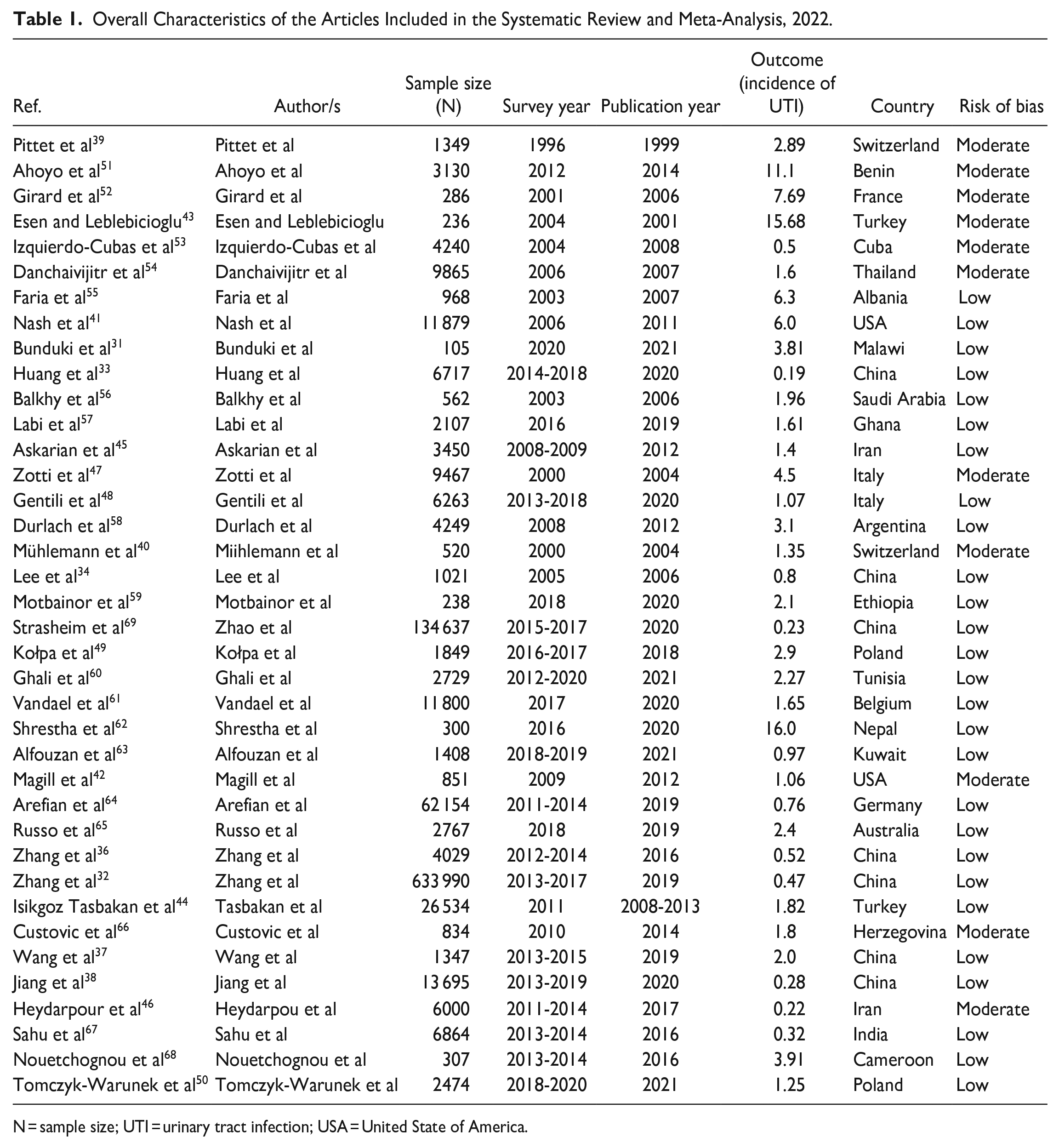
N = sample size; UTI = urinary tract infection; USA = United State of America.
Based on the region, the majority of the studies were conducted in developing countries. In general, the included articles were conducted in 26 countries around the world. The yellow color on the map indicated the countries where the included articles were conducted (Figure 2).

Countries of the world where the included articles were conducted.
Incidence of Urinary Tract Infections
The worldwide incidence of UTI among patients was found to be 1.6% (95% CI: 1.0, 2.4) with a p-value of <.001; I2 = 79.02 (Figure 3).
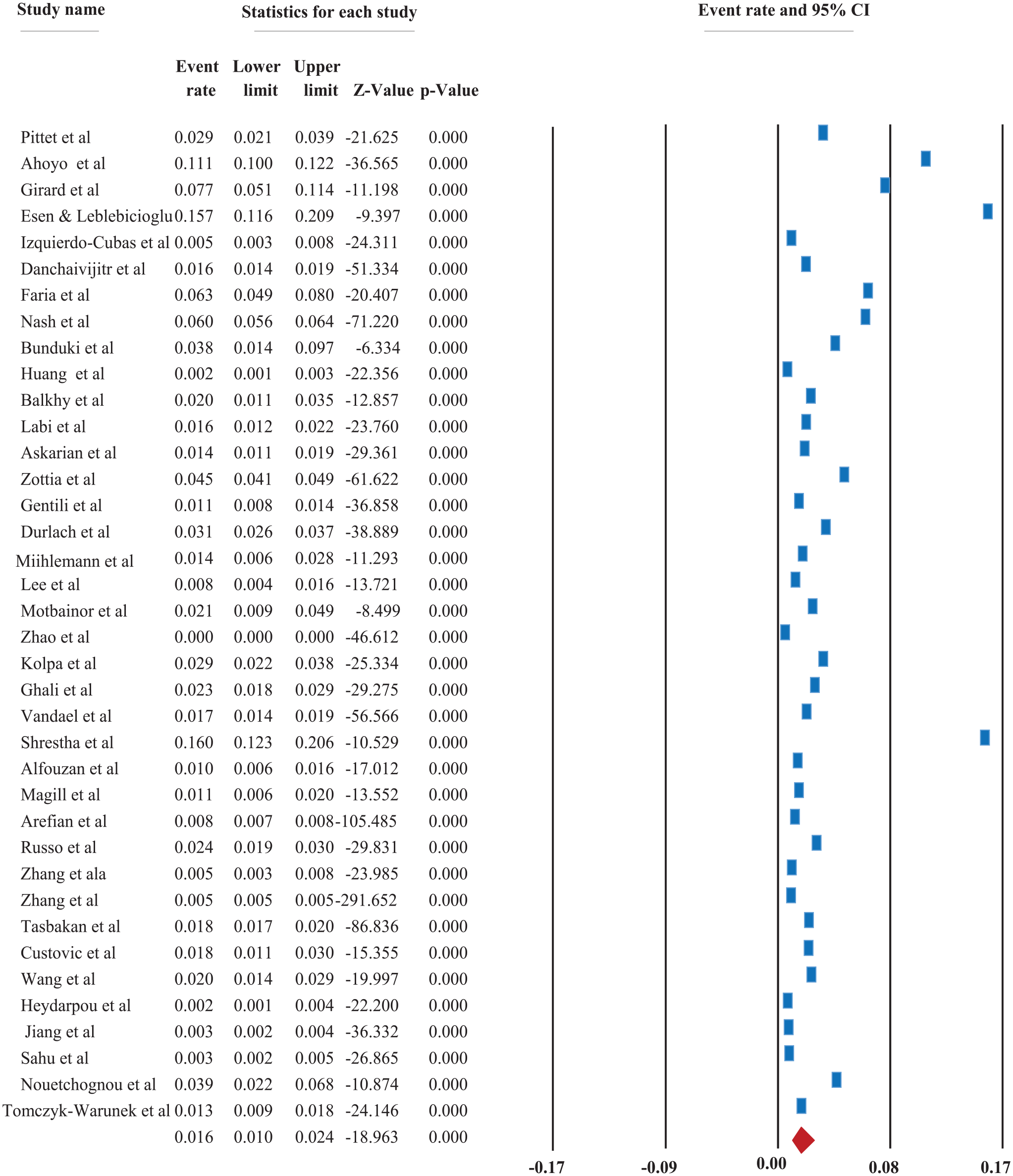
The forest plot shows an overall pooled incidence of urinary tract infections among patients, 2022.
Based on subgroup analysis by survey year, studies conducted between 2014 and 218 had the lowest incidence of UTI among patients [1.1% (95% CI: 0.5, 2.1)], while studies conducted between 1996 and 2001 had the highest [3.7% (95% CI: 2.3, 5.8)]. The results of the current finding indicated that the incidence of UTI was declining from 3.7% (1996-2001) to 1.4% (2019-2022) (Figure 4).

The forest plot shows the subgroup analysis of the pooled incidence of urinary tract infections among patients based on the survey period, 2022.
Based on the World Health Organization Region, the overall pooled incidence of UTI was 1.8% [95% CI: 1.3, 2.4] that was slightly lower than the pooled prevalence before subgroup analysis (1.6%).
The highest incidence of UTI was reported in the African Region, which accounted for 3.6% [95% CI: 1.2, 10.3], whereas the lowest incidence was reported in the Western Pacific Region, at 0.4% [95% CI: 0.2, 1.0] followed by Eastern Mediterranean Region and American region accounted for 1.1% [95% CI: 0.5, 2.5] and 1.9% [95% CI: 0.8, 4.3], respectively (Figure 5).
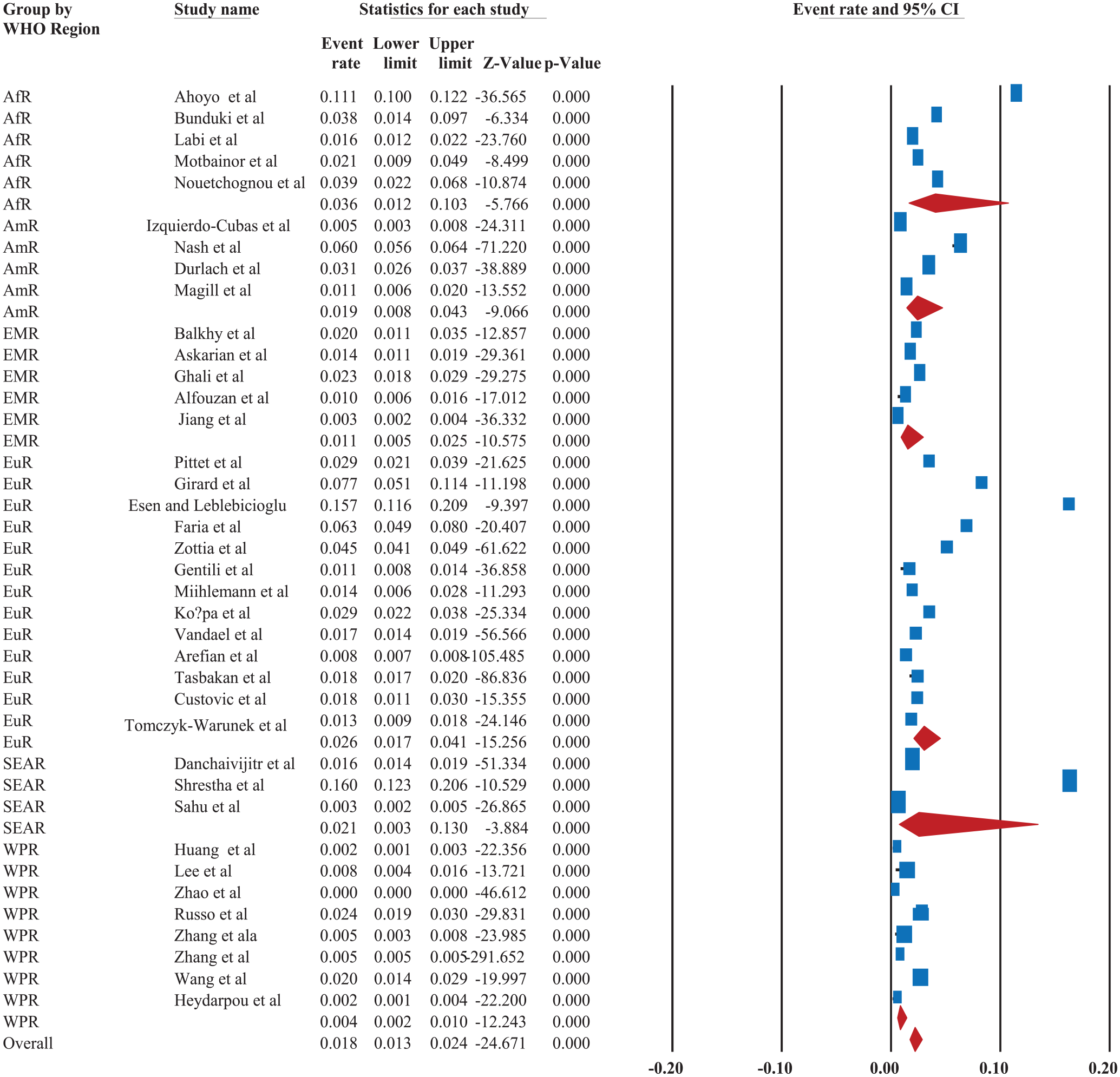
The forest plot shows the subgroup analysis of the pooled incidence of urinary tract infections among patients based on World Health Organization’s Region of the world, 2022. ArR = African Region; AmR = American Region; EMR = Eastern Mediterranean Region; SEAR = South East Asian Region; WPR = Western Pacific Region; EuR = European Region.
Sensitivity Analysis Results
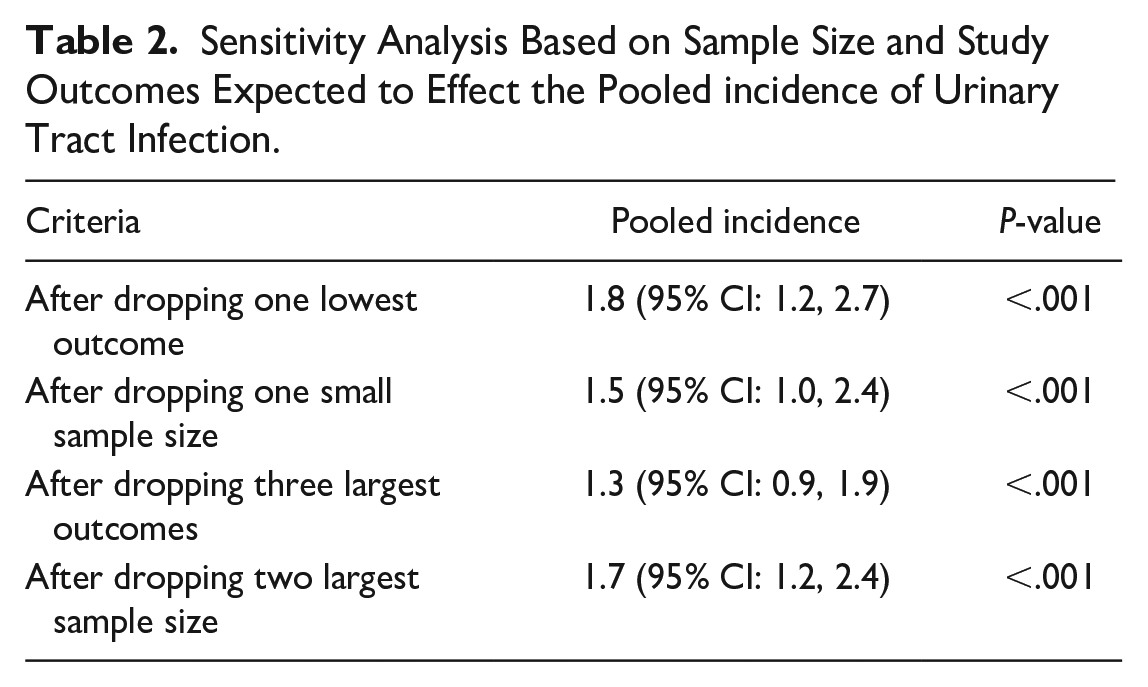
The sensitivity analysis was conducted by dropping the outcomes of samples expected to influence the pooled incidence of urinary tract infection. However, no substantial difference was observed in the incidence of urinary tract infection among patients (Table 2).
Sensitivity Analysis Based on Sample Size and Study Outcomes Expected to Effect the Pooled incidence of Urinary Tract Infection.
Discussion
Urinary tract infection were considered the most common healthcare-associated infection, 15 accounting for up to 36% of healthcare-associated infections. 16 Urinary tract infection is a serious health condition, which is associated with reduced quality of life, increased risk of hospitalization and increased mortality. 21 To determine the pooled incidence of urinary tract infection, the current study included 38 articles conducted on 981 221 patients (ranged from 105 31 to 633 990 32 study participants).
According to the current finding, the worldwide incidence of urinary tract infection among patients was found to be 1.6% (95% CI: 1.0, 2.4). The current study found a lower incidence of urinary tract infection compared to another study reporting a incidence rate of 9.33%. 24 The variation may be attributed to the scope of the study, the number of included articles, and study participants involved. Because, the latter study included 10 articles with a total of 8785 study participants with or without urinary tract infection.
Based on the subgroup analysis of the findings based on the survey period, the results of the current finding indicated that the incidence of urinary tract infection was declining from 3.7% (1996-2001) to 1.4% (2019-2022) (Figure 4).
After the findings were analyzed based on the survey year or period, the incidence of urinary tract infection was declined from 3.7% (1996-2001) to 1.1% (2014-2018). However, it was slightly increased from 1.1% (1996-2001) to 1.4% (2019-2022). The variation may be attributed to the number of studies included. Because, only 3 studies conducted from 2019 to 2022 in a few countries and met the eligible criteria were included in this study. Similarly, it may be related to the application of safety measures, including training and appropriate interventions or programs.
Furthermore, to compare the findings based on the World Health Organization regions’ of the world and determine the difference in outcomes, the highest incidence [3.6% (95% CI: 1.2, 10.3)] of urinary tract infection was reported in the African Region. This can be attributed to the fact that there is poor implementation of patient’s safety measures, including adequate interventions, training, precautions, or policy in developing countries, including African Regions. This indicates that the appropriate action should be taken by prioritizing the problems to improve the safety and service provision.
Furthermore, the study revealed that the lowest incidence of urinary tract infection was observed in Western Pacific Region accounted for 0.4%, followed by Eastern Mediterranean Region and American region accounted for 1.1% [95% CI: 0.5, 2.5] and 1.9% [95% CI: 0.8, 4.3]. The variation may be related to the variation in the scope of the studies, the infection reporting system, or surveillance system of the included countries as well as variations in the implementation of safety practices in the health facilities.
In general, the current study revealed that there is a variation incidence of urinary tract infection across the world, with the highest incidence reported in African regions. The finding indicates that there is a need to implement safety measures, particularly in low and middle-income countries such as the African Region, to maintain the health and safety of patients. Furthermore, strengthening the healthcare systems and of the countries in the World Health Organization’s African region is of paramount importance and can be achieved by educating and providing training to healthcare providers to enhance their skills. 70
Strength and Limitations
The current study employed multiple search strategies and standard tools for quality assessment and evaluation tools to reduce bias. This study included studies conducted at any time and all over the world. Furthermore, this study was conducted based on the PRISMA protocol.
However, there was an unequal distribution of the studies across the world as a result of limited articles. Furthermore, the incidence of urinary tract infection in many countries of the world were not included because of the lack of studies that met the eligibility criteria. The differences in the surveillance systems may lead to variation in incidence of UTI. As a result of variation in the unit of measurement employed, the authors could not able to determine the risk factors associated with the incidence of urinary tract infection. Furthermore, as a result of limited studies (systematic review and meta-analysis) conducted on the incidence of urinary tract infection, we can’t able to compare the current findings with other findings adequately.
Conclusions
This study revealed the overall pooled incidence of urinary tract infection was 1.6%. Urinary tract infection estimates varied among the WHO’s region of the world. However, the highest incidence was observed in African regions, which accounted for 3.7%. This indicates that there is a need to implement safety measures, including interventions for urinary tract infection to reduce the health affect posed by urinary tract infection and to improve patient safety.
Footnotes
Authors’ Contributions
DAM conceived the idea and had a major role in the review, extraction, and analysis of the data, writing, drafting, and editing of the manuscript. AA, AA, AM, BM, and FA have contributed to data extraction, analysis, and editing. Finally, the authors (DAM, AA, AA, AM, BM, and FA) read and approved the final version of the manuscript to be published and agreed on all aspects of this work.
Declaration of Conflicting Interests
The author(s) declared no potential conflicts of interest with respect to the research, authorship, and/or publication of this article.
Funding
The author(s) received no financial support for the research, authorship, and/or publication of this article.
Ethics Approval and Consent to Participate
Not applicable.
Consent for Publication
Not applicable.
Data Availability
Almost all data are included in this study. However, some data may be available from the corresponding authors on reasonable request.
