




Abstract
The COVID-19 pandemic affected college students’ overall health. The aims of this qualitative inquiry were to provide a more comprehensive understanding of the effectiveness of the mind-body physical activity (MBPA) intervention and to explore the MBPA intervention experiences through the use of journals and photographs (photovoice) of a purposeful sample of 21 college students during the COVID-19 pandemic. An inductive qualitative process was used to explore the data that emerged from photovoice images and journals. Students’ experiences were encapsulated in 6 key themes: (1) holistic individual well-being; (2) physical activity as a matter of necessity; (3) mind-body physical activity intervention impacts; (4) broadening strategies for adapting and reacting; (5) systemic effect of stress management changes; and (6) perceiving causes of stress. Participants reflected collective intellectual, physical, and emotional fatigue as obstacles and perceived stress. The quality of COVID-19 related perspectives and stressful experiences are defined from traumatic and overwhelming to higher than normal. Findings from this study contribute to our understanding of the distinctive factors of the COVID-19 era among college students. Health educators should consider the implementation of multilevel and multicomponent MBPA interventions, and our findings highlight the utility of supporting higher education students in a meaningful way.
Keywords
During COVID-19, college life suddenly changed, and students’ stress, depression, and anxiety levels increased.
Findings from this study contribute to our understanding of the distinctive factors of the COVID-19 era among college students. This qualitative inquiry contributes to the field by exploring personal experiences and critical factors that impact the development of an effective MBPA intervention to reduce stress and improve well-being using photovoice and journals among young adults.
Students indicated they want to learn strategies to alleviate stress, improve their health, and conquer their profound challenges on personal and institutional levels; they need time to manage overall health and processes for self-care. Our findings revealed that students want to learn more about stress alleviating strategies and MBPA intervention to support personal growth.
Introduction
COVID-19 stunned the world as it rippled through every country at the beginning of 2020; affecting all sectors of society, college life suddenly changed, and stress levels among students increased.1,2 In addition to the severe consequences, students’ depression, anxiety, and worries about health increased, and healthy behaviors such as physical activity (PA) decreased. 3 More than 64% of students reported life stress about personal health problems, and 74.8% experienced difficulties related to their loved ones, which interferes with mental health, and can be mitigated by a higher sense of well-being induced by regular PA.4,5
Mind-body physical activity (MBPA) combines ancient techniques.6,7 MBPA described as “yoga, tai chi, qigong, mindful walking, walking meditation, and physical practice, were developed in Eastern culture, in other words, with origins that lie outside of the Western culture” 7 (p. 2). Evidence shows that MBPA ameliorates stress. 8 College students believe that ancient practices are credible in affecting physiological and mental processes and improving overall health.9-11 Brief practices, such as 5 and 10 min (e.g., walking meditation vs sitting) and single sessions, have anxiolytic benefits and decrease stress. 12 Also, when experiencing psychosocial stress, a single 30-min laughter yoga session may protect the stress response as decreased salivary cortisol compared to a reading group.13,14 Additionally, one 60 min yoga session revealed a significant decrease in stress among college women when exposed to power and stretch yoga. 15 A 5-minute breathing exercise substantially reduced stress levels in the veterinary student while performing surgery on a live animal. 16 Further, a single-session loving-kindness meditation was more effective in inducing positive emotions in students who had no experience in meditative practices than compassion meditation and control conditions. 17
To manage stress, sensing physiological changes is vital. Life stresses are associated with mental disorders; thus, developing effective strategies to support mental health is critical. 4 College years are demanding, and the transition to young adulthood is a critical developmental phase that affects the community and society. 18 Lived experiences, narratives, and how college students describe stress during the COVID-19 are essential sources in developing effective interventions.
A qualitative inquiry that explores personal experiences can provide a more enhanced understanding of MBPA interventions. What is still needed is information about key factors that impact the development of an effective MBPA intervention to reduce stress and improve well-being. This study aimed to learn about students’ experiences using photovoice, journals, and a qualitative process to explore data by answering 3 research questions.
What are the lived experiences and key factors in the development of an effective, 10-min MBPA intervention to improve well-being and reduce stress among students during COVID-19?
What are the key themes arising from qualitative inquiries using photovoice and journals of an individual’s experience?
How do college students describe stress during COVID-19, and in what ways, if any, was the MBPA intervention helpful to young adults during stressful experiences?
Methods
Study Design
A qualitative action research method, photovoice methodology, and reflective journals were used in this study.19-22 Action research is closely associated with reflective practice, which can be used at a personal, professional, and organizational level; and it enables both researchers and participants to collaborate and ask vital questions of self and identity within and the organization.19-21 As such, qualitative action research is a “unique approach that focuses on practical problem-solving within a local context” including photo analysis and journals “to inform practice at the local level” 20 (p. 9). Photographs and reflective journals are frequently used approaches to collect data among qualitative action researchers in health education and PA.20,22,23 Photovoice as an innovative and interactive qualitative methodology, prompts participant-driven themes and allows participants to serve as “experts” on their “issues” and use the language of photos to express their needs and experiences.22,24
Journaling is an appropriate creative approach to encouraging reflection.21,25 The use of reflective journals is an educational method aimed at fostering student’s capacity to reflect on self-knowledge and feelings and perceived as a resource for exploring both participants and instructors alike.25,26 Journals allow participants to reflect on their individual lived experiences, explore potential growth, and gain an understanding of themself as college students during COVID-19. Therefore, qualitative action research using photovoice and reflective journals were well suited to explore students’ unique experiences, needs, and voices.
This project obtained approval from the University’s Institutional Review Board and written informed consent from the participants prior to the study initiation.
Participants
A purposeful sample (N = 21) of students enrolled in college classes for credits toward their graduation was recruited from a southwestern university in the United States. Due to the pandemic, online interactions were encouraged during the 2021 spring semester. Therefore, recruitment, time commitment, and the MBPA intervention were described to potential volunteers via emails and during initial online class meetings across campus. The inclusion as a participant in the study was based upon full time undergraduate or graduate student status. Overall, 25 students volunteered. Two participants asked the researcher to withdraw them from the study after accepting the MBPA Canvas class invitation due to contribution to other research projects in their program of study. Twenty-three participants completed the pre-intervention phase journals and the first module intervention activities. However, since some participants became unwell, only 21 were able to complete the study. The 21 students had a mean (SD) age = 21 (2.23) years, 24.52 (4.57) BMI, and 81% were female. The majority, 81% of the participants, were white, 9% Hispanic or Latino, and 5% Black or African American and Asian/Pacific Islander. Participants from all academic levels were well represented; 28% of the students were juniors, 24% were freshmen and seniors, 19% were sophomores, and 5% were of graduate/professional status (Supplemental Table 1). It was anticipated that the recruited sample provide the depth of data via journals and photovoice, and adequate experiences to achieve data saturation. 27
Intervention
To explore real-life connections as participants reflect upon their experiences, we have implemented a tailored MBPA course. The researcher, a certified instructor with over 35 years of experience, created the online class based on best practices using the asynchronous model. Participants had access to the pre-designed MBPA activities at any time and completed them at their own pace following the outlined 4 modules. 28 The intervention was delivered for 8 weeks, 3 times weekly via Canvas. The 24 sessions were conducted in 4 modules using core components rooted in ancient practices of traditional deep, diaphragm mindful breathing activities, yoga poses (asanas), breathing techniques (pranayama), qigong, martial art movements, walking activities, and loving-kindness walking meditation with present moment awareness.
The learning materials (videos, audio recordings) were built on each other, and participants submitted their narratives in sequence. The first module’s objective was to be aware of each breath and tailor the practice of the sensations of deep breathing while stimulating the diaphragm. The second module’s objective was to be continuously aware of each movement, using qigong, asanas, and martial arts, and tailor the sensations and feelings as we move. The third module’s objective was to be aware of each step and tailor each sensation leading to loving-kindness. The 4th module was built on ancient practices of loving-kindness, such as kind wishes toward self and others. In weeks 7 and 8, participants started to apply the content learned in previous sessions and practiced MBPA. Participants chose the environment for their practice in which they felt safe and chose when they sensed the intervention might alleviate stress.
Qualitative Data Collection and Instruments
Data were collected online through assignments in the Canvas modules (Supplemental Table 2). A photovoice template was used to collect photographs and related reflections. A template for reflective journals was used to collect textual data. Previous investigators have found both to be an effective research tool: “Photovoice is a method by which people can identify, represent, and enhance their community” 22 (p. 369). Photovoice is a flexible photographic method using pictures to collect visual data in harmony with textual data. 22 Photographs are precise records for collecting data in a systematic way. 24 Data collection followed 5 phases (Figure 1). 29

The visual synopsis of the data collection procedure.
Participants completed the pre-intervention journals to collect the first textual dataset. Identifying potential problems or ethical questions, such as including other people in the photograph, were addressed in phase 2. 22 Participants used their phones to complete their photovoice without taking pictures of other people in phases 3 and 4. In phase 5, students completed the final reflective journals. The online platform provided participants time, flexibility, and privacy to reflect on their experiences during the pandemic. Therefore, participants could choose a comfortable environment and space to write, take photos, and practice the intervention. 30
Data Analysis
Data analysis followed a thematic analysis approach to explore college students’ lived experiences through textual and visual documents (Figure 2). 31 Given that the purpose of photovoice is to prompt participant-driven themes and have participants serve as the “experts on their ‘issues’, everyone used individual electronic journals to talk about their photos.” 22 Therefore, individual journaling contextualized the photographs. 32 Thematic analysis is a reflective qualitative analytic approach extensively used in health science.23,33 To answer the research questions and comprehend the experiences of each participant, the researcher used a general “data driven” inductive approach with an essentialist/realist epistemology. 34

The visual synopsis of the data analysis procedure.
To examine and identify developing common themes and subthemes, researchers used line-by-line coding and constant comparison to keep the data of photos and related journal entries rooted in the participants’ language, narratives, and experiences. Triangulation of the coding and themes by a second researcher was tested using NVivo Pro (QSR International) for the coding and theme development to improve validity.
Results
To use photovoice authentically, participants described the significance of their photographs. Participants added 50 photographs across 2 photovoice journals of the environment where they chose to carry out the MBPA activities and completed over 1300 journal prompts. Examining students’ experiences blending reflective journals with photovoice while living during COVID-19 presents rich data resulting in 6 themes (Table 1).
Summary of the Results, Briefing the Key Themes, Subthemes, and Frequency Numbers.

Note. Numbers in Italics represent frequencies for each of the subthemes.
Holistic Individual Well-being
College students’ well-being is the keystone to success and focusing on the whole student is critical. To succeed in college and beyond depends on each student’s ability to nurture their mental and physical well-being.
The participants narrated how the intervention affected their well-being and reported feeling more grounded and focused. They reported understanding the impact of daily movement and connecting their new intervention with the lessons of their childhood as a form of personal growth. Students also reported a desire to implement intervention techniques post-study to increase well-being.
Further, photos allowed students to reflect on their experiences in a personal way, revealing their community and interests. Students did not always practice alone. The different environments affected the students’ paths, visual experiences, and emotional revelations; a supporting journal narrative is the participant’s voice (P15) represented by a journal entry with photograph in Figure 3.

Photovoice pictures by P15, P3, and P10.
These individual experiences revealed the complexity of the effects of COVID-19 on this student population in their personal and educational lives. For example, students reporting stress also reported muscle tension, physical discomfort, pain, and agitation. Stuck in an ongoing cycle of stress, students reported pains, weight gain, bloating, exhaustion, and agitation.
Further, some who practiced outdoors, reported becoming more compassionate toward [themselves], and found “hope of good being out in the world” (P8). Students tried to capture their feelings in photographs, as reflected in Figure 3 by P3 and P10.
PA as a Matter of Necessity
The participants noted the benefits of regular PA. Students reported that physical PA was important, but it was difficult to maintain optimal activity levels with normal levels of collegiate responsibility, and with the added burdens of the pandemic, any previous dedication to movement had declined precipitously. Intervention activities were a straightforward and natural path to increased PA. Students reported elevated energy and serenity. One student (P9) used an image of a bike trail at sunset to emphasize their written thoughts (Figure 4). Others related the essential importance of PA even as children (Figure 4 by P1). Their feelings weren’t simply directed inward: students’ (P9 and P5) photovoice reveal that the intervention helped them reflect toward others (Figure 4).
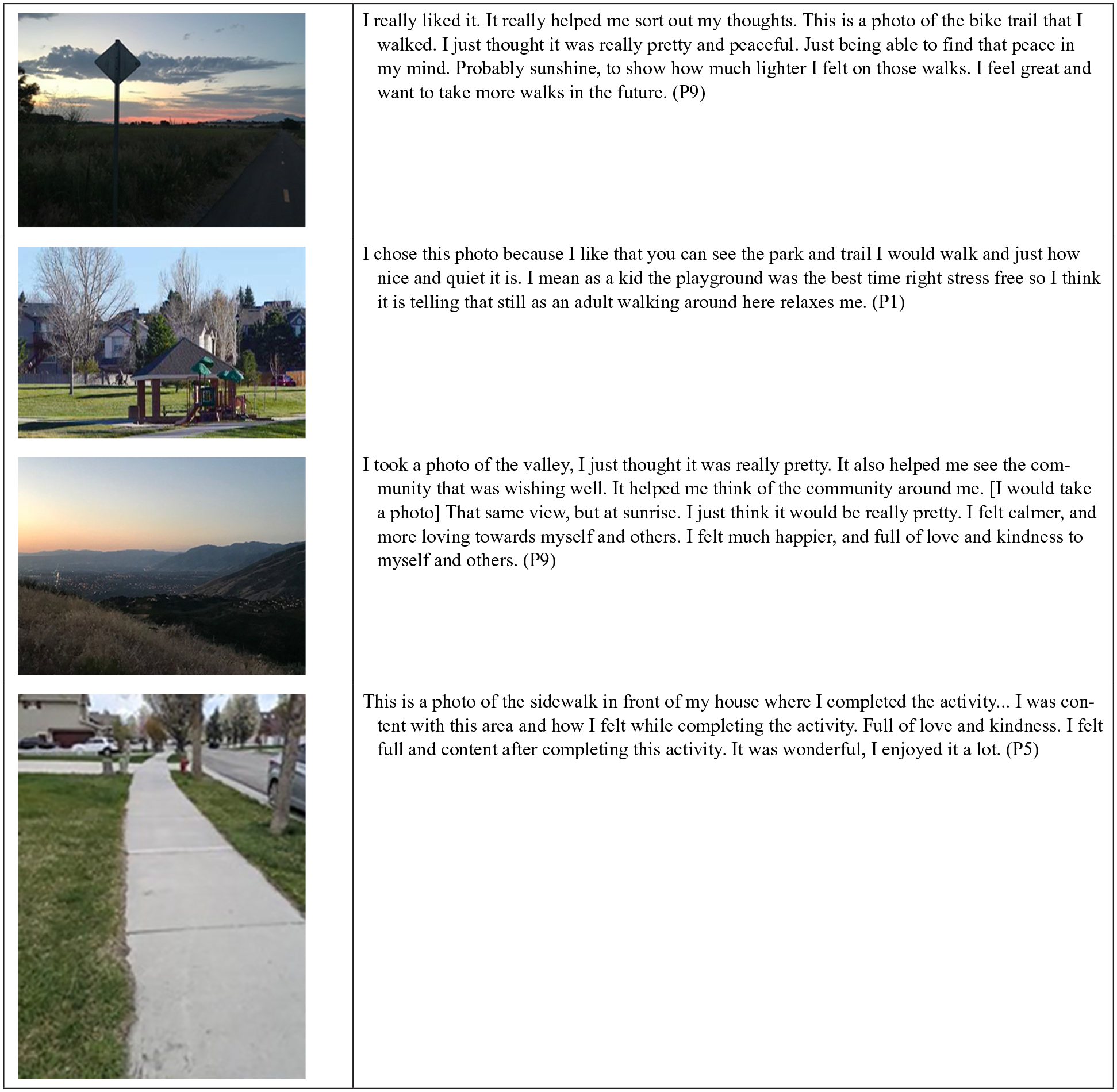
Photovoice pictures by P9, P1, and P5.
MBPA Intervention Impacts
Participants wrote unique narratives and took photos that reflected the meaningful positive impacts and contextual experiences, self-observed changes, sleep-hygiene, and course commentary as they completed the intervention. Some were ecstatic and energized about the intervention outcomes stating that they had never experienced this kind of relaxation before or had not had the tools before to cope with stress so successfully.
I am just grateful that I did this intervention. I am happy that I was introduced to these ways of coping with stress. (P11)
The authors of the photographs in Figure 4 reflect while completing the loving-kindness walking activities.
Broadening Strategies for Adapting and Reacting
Participants reflected on their thoughts, summarized their reactions to stressful situations, and identified specific coping strategies, such as focusing on breathing to stay calm, implementing a brief MBPA to transition between activities, refocus, or unwind: “I will just close my eyes and focus on my breathing until I am able to continue on with my day. YES!” (P5). In their own idioms: “I was able to get out of my head.” (P12). The activity also helped some participants to discern what activities they really liked and why.
Systemic Effect of Stress Management Changes
Many students reflected on how the intervention affected their life systemically and how much they appreciated being part of the project, which lowered the stress of being in college during the pandemic. They were proud of developing healthy habits and especially liked the loving-kindness module.
It made the stress of college, along with the pandemic, a lot easier to deal with [. . .] I have developed some healthy habits that I will try to stick with for the rest of my life. (P20)
Perceiving Causes of Stress
Finally, we discuss further how students perceived their causes of stress during COVID-19.
Discussion
This study set out, as a qualitative inquiry, to provide a more comprehensive understanding of the MBPA intervention’s effectiveness and explore the experiences of college students during COVID-19. We used a qualitative process to identify key themes and participants’ perceived stress. To the authors’ knowledge, no previous studies have examined MBPA using these methodologies. The discussion centers on our 3 research questions.
Lived Experiences and Key Factors
Students expressed that they gained strategies to enhance their well-being in a holistic way where short breaks for self-care and time for PA are necessary. Practicing the intervention helped students cope with the ripple effects of COVID, such as fear of infection, remote learning, isolation, fear of income loss, and suffering from trauma. Participants reflected on difficulties related to loved ones and anxiety about school, job interviews, and health conditions. Many worked in settings where they were often shorthanded. College students also experience challenges related to transitioning from parental care and high school, resulting in increased anxiety, stress, and depression. 1 Similarly, as participants described, they worried about school, health, jobs, and loved ones. Students reported trials and extenuated stress about health problems and finances. 4
The intervention helped participants build skills to cope with challenges by connecting with themselves, their loved ones, and their environments. As they chose familiar surroundings and companions, the intervention initiated an empowering experience, and a feeling of control, productivity, gratitude, and interconnectedness. These conclusions are consistent with other findings where a sense of connectedness and interconnectedness have vital benefits to enhancing well-being and academic performance. 35
Inactivity, work, schoolwork, and COVID-19 were most challenging, and the activities’ applicability and brevity helped students relax, sleep, and overcome stress. Although participants noted they value PA, they were unable to take care of themselves. Students reflected on how components of the MBPA (breathing, ancient movement, walking, and loving-kindness) promoted stress alleviating and coping strategies.
Having learned new techniques, participants experienced positive impacts that reduced anxiety, improved patience, positive emotions, focus, and sleep. Likewise, they voiced the importance of self-care, deep breaths, and frequent movement. Our findings reinforce that all 4 key components of MBPA are valuable in coping with students’ profound challenges. They learned strategies to recognize habitual internal trends and to respond appropriately.
Breathing techniques are considered core components of ancient practices. When people feel stressed, they breathe in a dysfunctional pattern. 36 Mastering how to breathe efficiently results in efficient oxygen metabolism. Learning deep, diaphragmatic, and 4-7-8 breathing can enhance breath awareness and adaptive strategies. 37 In our study, students learned new breathwork and narrated being more energized and less stressed. In the 4-7-8 activity after having COVID, students described improved breathing, which enhanced body awareness and evoked positive emotions. It also reduced depression and anxiety, and a 5-min breathing exercise substantially reduced stress. 16 Overall, students found it was necessary to use breathing techniques to reduce stress, enhance well-being, and promote relaxation.
Students described improved flexibility, reduced muscle tension, lower heart rate, and feeling strong as systemic health benefits. The walking and loving-kindness activities induced positive emotions, such as happiness, love, and gratitude toward self and others. Participants voiced they engaged in these activities longer and took breaks as needed more frequently. Similarly, photographs reflected an appreciation of the beauty of nature. Participants’ photos showed how companions and safe walks made them feel clear-headed and relaxed. Correspondingly, loving-kindness meditation has a meaningful impact on anxiety; however, the matched control group experienced increased anxiety. 38 Similarly, loving-kindness and PA revealed a substantial decrease in depression, stress, anxiety, and higher PA levels indicated better mood on the same and following days. 39 Participants described preventive plans to improve well-being; suggested teaching it to all incoming students as “[. . .] a free 1 credit course you should sign up for where you meet up and do these activities with other people.” (P10) and “I think practices like this could be taught to incoming freshmen to help handle stress.” (P16). The intervention can be both a mental and physical relief and a preventive opportunity to enhance productivity, connect, and reduce stress and distraction. Therefore, setting up areas across campuses where community members can practice and take necessary frequent short activity breaks as needed is recommended.
Key Themes Identified
The findings of 6 themes revealed the importance of PA and how the MBPA intervention impacted them. Participants reflected in their journals and photos on broadening strategies for adapting and reacting, the systemic effect of stress management changes, and how they perceived causes of stress. Themes connect through the paramount importance of a physically active lifestyle. All participants described that regular PA is a matter of necessity for well-being. However, due to time constraints, students can’t maintain their desired activity levels after starting college, and opportunities to be regularly physically active diminished. These observations are consistent with research that described structured, regular PA opportunities to maintain well-being diminish as young adults transition from high school to college as substantial physiological and psychological changes occur in this life stage. 6 Furthermore, inactivity increased during the pandemic worldwide while PA levels decreased. 40
Participants voiced that the activities were imperative to reduce stress. The frequent short activity breaks induced positive emotions, such as feeling healthy, connected to self and others, vigor, engagement, and loving-kindness. 41
As the participants progressed, their contextual experiences reflected the new techniques that decreased stress and found ways to deal with physical, emotional, and academic challenges. Therefore, the brevity, variety, sequence, and range of MBPA intervention activities contributed to the students’ experience, and they enjoyed trying new ones. Although participants reported overwhelming stress levels before they started the intervention, the perceived causes of stress were the least common theme. As they completed the 4 modules, they described enhancing well-being as the most common theme. Since students found strategies to deal with their profound encounters, they stayed engaged. From the MBPA perspective, walking can be quickly built into students’ schedules, and loving-kindness activities promote well-being. 12 Although loving-kindness education is generally explored as a single meditative intervention, researchers found that it promotes psychological health and decreases anxiety, stress, and depression while evoking positive emotions.17,38,41 Similarly, our participants reflected that the activities made them less stressed, and the environment played a vital role in their MBPA engagement.
Researchers discovered that the environment shapes PA, and natural spaces contribute substantially to well-being. 42 Likewise, students in this research appreciated the quality of their experience practicing the intervention freely. Safety and familiarity were the essential contributors regardless of being indoors or outdoors. Students reflected that natural green and blue spaces contributed to stress reduction in addition to the MBPA activity. The link between environment and PA, such as walking without harmful effects, is well established. 43 Further, participants freely chose their partners for the activity. They described that those relationships are essential channels for feeling comforted, supported, and having a sense of belonging as positive emotions which enhance productivity.
Perceived Stress During COVID-19
Academic pressure substantially contributes to psychological health as the brain is still developing well into the 30s.6,43 Our findings are meaningful, given that transition to young adulthood and college is critical and COVID-19 affects this developmental phase.
Our exploration of the perspective of students’ lived experiences is an opportunity to enhance well-being in college. Academic and social stressors contribute to mental health.44-46 In this study, 62% of the students were working, and some were working in the hospital, where they were often shorthanded. Our results reflected collective intellectual, physical, and emotional fatigue.
Contracting the virus, worrying, and caring for loved ones resulted in substantial stressors. Participants noted that distance learning presented physical, emotional, and academic challenges, such as time constraints, discomfort from being sedentary, and feeling isolated and overwhelmed, although online interventions support students through the pandemic. 47 Stress manifests itself as muscle tightness that can affect nutritional habits, leading to fatigue, pain, agitation, and physical and emotional discomfort. Our intervention provided personal resources to take short breaks to move, relax, slow down, and breathe.
Students wrote about the newfound skills and personal resources they learned (e.g., managing aches and pain, gaining confidence, and feeling empowered) and strategies (e.g., moving gently, relaxing, and breathing) as they progressed. In turn, these experiences enhanced holistic well-being. In our study, students investigated internal bodily sensations, such as feeling bloated, weight gain, muscle tension, and reduced heart rate. And they were connecting with natural sources, such as feeling the sun and wind on the skin. Therefore, students were externally and internally self-aware to identify these sensations and regulate these interoceptive signals. Furthermore, these perceptions of personal resources evoked positive emotions.
It is an individual and institutional responsibility to learn about strategies to sustain well-being and enhance professional and personal growth within the community. 48 Young adults need to learn strategies they can apply to balance their well-being to reap the benefits of college and self-manage life stressors with personalized education. 43 Furthermore, our findings suggest that the COVID-19 crisis caused trauma that affected everyone differently.
Young adults want to study strategies to alleviate stress, improve their health, and conquer their profound challenges on personal and institutional levels. 49 Participants responded that they need time to manage physical health and strategies for self-care, such as breaks, PA, and sleep hygiene.44,46 Our findings revealed that students want to learn more about stress alleviating strategies and MBPA intervention to support personal growth.
Physical activity-based multicomponent, multidisciplinary, and personalized interventions, where participants gain tools for managing stressors and regulating well-being by optimal stress reduction, are of societal importance. 18 Students voiced that MBPA activities should be taught to incoming first-year students and be included in all syllabi to decrease stress.
Strengths and Limitations
Several limitations warrant further discussion. First, students wrote about their photos instead of discussing them in interviews. However, writing about the photographs may promote deeper reflection. Second, photovoice is generally used as a participatory method, with students discussing their photos in focus groups; however, this was difficult to do during COVID-19. Given that time constraints were reported, being flexible may encourage richer expressions. Third, the asynchronous online design of the intervention provided an online modality of learning, and some participants may have desired in-person interaction. Furthermore, it is imperative to take the small sample size from one institution into consideration as a limitation to the study.
Conclusion
This study examined the importance of holistic individual well-being, PA’s necessity, how college students perceived stress, and the impact of the intervention. Overall, students described their lived experiences in Spring 2021 while practicing intervention 3 times weekly using journals and photovoice. Research findings have established the need for multilevel and multicomponent interventions that alleviate stress and enhance the well-being of the whole student.
Participants learned to alleviate stress and manage their challenges. Students shared that the MBPA activities helped them manage emergent challenges and recover. Therefore, we conclude that MBPA engagement is vital. These findings are novel in the literature though more research is needed.
Supplemental Material
sj-docx-1-inq-10.1177_00469580221126307 – Supplemental material for “I Felt Grounded and Clear-Headed”: Qualitative Exploration of a Mind-Body Physical Activity Intervention on Stress Among College Students During COVID-19
Supplemental material, sj-docx-1-inq-10.1177_00469580221126307 for “I Felt Grounded and Clear-Headed”: Qualitative Exploration of a Mind-Body Physical Activity Intervention on Stress Among College Students During COVID-19 by Ildiko Strehli, Donna H. Ziegenfuss, Martin E. Block, Ryan D. Burns, Yang Bai and Timothy A. Brusseau in INQUIRY: The Journal of Health Care Organization, Provision, and Financing
Supplemental Material
sj-docx-2-inq-10.1177_00469580221126307 – Supplemental material for “I Felt Grounded and Clear-Headed”: Qualitative Exploration of a Mind-Body Physical Activity Intervention on Stress Among College Students During COVID-19
Supplemental material, sj-docx-2-inq-10.1177_00469580221126307 for “I Felt Grounded and Clear-Headed”: Qualitative Exploration of a Mind-Body Physical Activity Intervention on Stress Among College Students During COVID-19 by Ildiko Strehli, Donna H. Ziegenfuss, Martin E. Block, Ryan D. Burns, Yang Bai and Timothy A. Brusseau in INQUIRY: The Journal of Health Care Organization, Provision, and Financing
Footnotes
Acknowledgements
The authors would like to thank the students who participated in the study and all assistants who supported the data collection process.
Author contributions
Conceptualization, investigation, I.S, D.H.Z., M.E.B., R.D.B., Y.B., and T.A.B.; methodology, I.S. and D.H.Z.; formal analysis, I.S. and D.H.Z.; writing—original draft preparation, I.S.; writing—review and editing, I.S., D.H.Z., M.E.B., R.D.B., Y.B., and T.A.B.; project administration, I.S., R.D.B., and T.A.B. All authors have read and agreed to the published version of the manuscript.
Authors Declaration
The study obtained written informed consent from the subjects and was approved by the Institutional Review Board prior to study initiation.
Declaration of Conflicting Interests
The author(s) declared no potential conflicts of interest with respect to the research, authorship, and/or publication of this article.
Funding
The author(s) received no financial support for the research, authorship, and/or publication of this article.
Institutional Review Board Statement
The study was conducted according to the guidelines of the Declaration of Helsinki and approved by the Institutional Review Board at University of Utah (protocol code: IRB # 139427).

Supplemental Material
Supplemental material for this article is available online.
References
Supplementary Material
Please find the following supplemental material available below.
For Open Access articles published under a Creative Commons License, all supplemental material carries the same license as the article it is associated with.
For non-Open Access articles published, all supplemental material carries a non-exclusive license, and permission requests for re-use of supplemental material or any part of supplemental material shall be sent directly to the copyright owner as specified in the copyright notice associated with the article.
