




Abstract
Background
Acceptance of the COVID-19 vaccine by health professionals highly influences the communities’ decision to receive the vaccine, because health professionals are perceived to be a reliable source of health information. Hence, this study aimed at assessing COVID-19 vaccine acceptance and associated factors among health professionals in two tertiary hospitals in southwest Ethiopia.
Methods
A cross-sectional study was conducted among 319 health professionals working in Jimma University Medical Center and Mizan-Tepi university teaching hospital, southwest Ethiopia, from June 30, 2021 to July 30, 2021. Data were collected by a structured self-administered questionnaire and analyzed by SPSS version 23. A multivariate logistic regression model was used to identify independent factors associated with health professionals’ covid-19 vaccine acceptance. Variables with P-value < .25 on univariate analysis were candidates for multivariate logistic regression. Then, variables with P-value < .05 at 95% CI in multivariate logistics regression were considered statistically significant.
Results
Of the total participants, 232 (72.73%) received COVID-19 vaccines. Among non-vaccinated health care professionals, 82 (94.3%) of them stated, worries about the safety and side effects of the vaccines, as the reason for non-acceptance. Factors such as, friends or families diagnosed with COVID-19 (AOR = .086; CI: 95%, .041–.18; P = .001), and attitudes and beliefs about COVID-19 and its vaccine (AOR = .129; CI: 95%, .037–.449; P = .001), were significantly associated with the acceptance of COVID-19 vaccine.
Conclusion
More than one-fourth of health professionals who did not accept COVID-19 vaccines require immediate intervention through awareness creation on the safety and adverse effects of the vaccine by the government and other stakeholders. Otherwise, the community may in large reject the vaccine as they trust health professionals.
Keywords
• ○ Health care workers’ acceptance of Covid-19 highly influences the acceptance of the vaccine by general population. • ○ This study identified actual acceptance of Covid-19 vaccine by health professionals, reasons for covid-19 vaccine rejection, and factors affecting vaccine acceptance. • ○ Assess the covid-19 vaccine acceptance level with the probable factors that prevent health care professionals’ vaccination. Health care professionals’ vaccine acceptance may boost community vaccine acceptance as they are the most trusted source of information for general populations.
Introduction
Novel-coronavirus disease-2019 (COVID-19) pandemic remain public health emergency of the globe since January, 2020. It had an enormous economic burden and caused a substantial increment of unemployment. On the other hand, one amongst the utmost public health attainments within the 20th century in vaccination against infectious diseases is development of COVID-19 vaccine in very short period of time. Vaccine is the foremost active and cost-effective health strategies for preventing COVID-19, and currently the most ongoing intervention besides minimizing transmission through physical distance, wearing face masks, and hand washing. However, the development of Covid-19 vaccine within few months increased doubt about vaccine efficacy and safety, which in turn, can reduce its acceptance.1-5
With the worldwide implementation of the COVID-19 vaccines, there’s evolving evidence that it decreased the severity of the infection and avert deaths. 6 However, any vaccination program’s success is primarily reliant on high vaccine coverage, which assures direct protection for those who have been vaccinated as well as indirect protection for the rest of the community. The role of health professionals in pandemic control became more significant during the COVID-19 pandemic because they are the most reliable social resource for encouraging vaccination among the general public.2,7
Additionally, giving direct immunity and stopping disease among vaccinated individuals, also protect unvaccinated individuals.6,8 Vaccine efficacy and safety, as well as acceptance among the general population and health staff, determine its effectiveness in controlling COVID-19. World Health Organization identified vaccine unacceptability as one of the top ten worldwide intimidations to public health in 2019, before COVID-19 pandemic. Because vaccine acceptance and demand are complicated, context-dependent, vary throughout time, place, and professed characteristics of population.7,9
The willingness to be vaccinated against a given infective agent, recognized as a significant issue affecting the success of vaccination programs. Studies identified; probability of exposure to infection, low perception of infection risk, lack of confidence in vaccine safety, susceptibility to and severity of an infection, and misinformation about vaccine are significantly related to vaccine acceptance.10-14 The reception of COVID-19 vaccines differs in several parts of the world. For instance, vaccine acceptance was between 55% and 93.3% among China, the USA, Indonesia, Russia and Japan.11,15,16
According to a report by the Ethiopian Public Health institute, a total of 280 024 total cases, 12 480 active cases and 4385 died of corona virus by the end of July 2021. Astra Zeneca, Johnson & Johnson and Sinopharm Covid-19 vaccines were available in the Ethiopia during the study period. The Ethiopian Ministry of Health officially kicked off the COVID-19 vaccine at Eka Kotebe COVID-19 Hospital on March 13, 2021, during which the leading health workers were vaccinated to begin the vaccination process. Health professionals, the elderly, patients with chronic disease over the age of 55 are the group prioritized for the COVID-19 vaccination. At the end of July 2021, less than 4.2 million doses of the COVID-19 vaccine were available in Ethiopia which was insufficient for 110 million people due to this shortage Ethiopia plans to vaccinate only 20% of the population by the end of 2021.17,18
In southwestern Ethiopia, there are two tertiary hospitals providing service to a larger catchment population including patients referred from the primary and secondary health care facilities. Hence, these environments are places where patients are overcrowded and are a potential area for the virus to spread, necessitating the vaccination of healthcare workers. Despite this, as far as our knowledge is concerned, there are limited studies globally and none conducted in southwest Ethiopia on health professionals' COVID-19 vaccine acceptance. Therefore, this study aimed to assess the prevalence of vaccine acceptance among health professionals and associated factors. Without understanding health professionals’ COVID-19 vaccine acceptance status and associated factors, it is difficult to mobilize the community to demand the vaccine because health professionals are trusted sources of information for the community. Again, this study can be a baseline data for future studies and notifies concerned government and non-governmental bodies’ areas that require improvement early.
Methods
Study settings, design, and period: A facility based descriptive cross-sectional study was conducted in two tertiary hospitals, Jimma Medical Center (JMC) and Mizan-Tepi University Teaching Hospital (MTUTH), from June 30, 2021 to July 30, 2021. JMC is a largest tertiary hospital in the South-west Ethiopia. It provides service to 15 million people in the catchment area with 950 health care professionals. MTUTH is another teaching hospital in south-west part of Ethiopia, located at about 583 Km south-west of Addis Ababa, the capital of Ethiopia. It provides service for about 7 million in the catchment area with 223 health professionals.
Study Population
All health care workers at JMC and MTUTH were considered as source population, and all health professionals volunteer to participate in the study and available during the data collection period were the study populations. The sample size for the study was calculated using a single population proportion formula.

Since the number of population is less than 10, 000, the sample size was adjusted. Therefore, the corrected sample size was calculated as follows
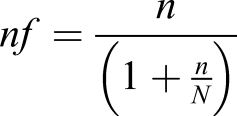
A stratified sampling technique was used to select the study participants. The study populations were stratified by profession to nurses, pharmacy, medical laboratory, midwives, psychiatry, anesthesiology, health officers, medical doctors, and medical radiology. The samples were then taken from each stratum proportionally. To select individual participants from each stratum (profession), we used a lottery method.
Data Collection Procedures
Structured self-administered questionnaires were adapted by reviewing different kinds of literatures,5,15,19-21 which, were classified into five parts to collect the required data. The first part contained socio-demographic characteristics (age, religion, marital status, profession, educational level, and year of experience) of study participants assessed with seven items. The second part is about the risks of contacting COVID-19 pandemic and test profile of study participants and assessed by six questions such as the number of tests for covid-19, the result of tests, families or friends covid-19 infection history, covid-19 protection mechanism of health care professionals used and vaccine acceptance.
The third section looked at why health care professionals get vaccinated or not, and sixteen questions were utilized, eight of which were regarding vaccination acceptance and the rest were on non-acceptance. The fourth part is about the sources of information for covid-19 and its vaccine which contained four options. The fifth part, regarding health care professionals’ attitudes and beliefs about COVID-19 and its vaccination measured by 14 items on a 5-point Likert-type scale from (1, strongly disagree–5, strongly agree). The average score was used to divide the responses into two categories: positive and negative attitudes and beliefs.
Data Quality Assurance and Analysis
To maintain the quality of the data, a pretest was done on 32 (10%) health workers at Shenen Gibe hospital found in Jimma city, South-West Ethiopia. The necessary modifications were made including, wordings on the questionnaire before it was applied to the study population. Data were collected by pharmacists who had a bachelor’s degree in pharmacy and trained on the study goal and data collection instruments. The completed questionnaires were checked for completeness, accuracy, and clarity of data by the investigators, and required corrections were made immediately.
Then, data were coded and entered into Epi data version 4.0.2 and then exported to SPSS version 23.0 for analysis. Descriptive statistics such as frequency and percentage were computed then results were presented using tables, figures, and statements as desired. In addition, the multivariate logistic regression model was used to identify independent factors associated with health professionals' covid-19 vaccine acceptance. Variables with P-value < .25 on univariate analysis were considered as a candidate for multivariate logistic regression. Finally the variables with a P-value < .05 were considered statistically significant.
Limitation of the study: We did not compare Covid-19 vaccine acceptance among different professions due to limited sample size.
Operational Definition
Covid-19 vaccine acceptance: Refer health care professionals who took full dose of covid-19 vaccine
Health care professionals: Includes Medical doctor, Pharmacy, Medical laboratory, Nurse, Midwife, Anesthesia, psychiatry, medical radiology and Health officer
Items: Refers the number of question asked
Tertiary hospital: Refers to tertiary referral center, tertiary care center where health care obtained from specialists in a large hospital after referral from the providers of primary care and secondary care.
Results
Socio-Demographic Characteristics of Study Participants
Demographic characteristics of study participants at JMC and MTUTH, 2021 (n = 319).

aWekefata and non-religious followers.
JMC: Jimma medical center, MTUTH: Mizan-Tepi university teaching hospital
Risk of Contacting Covid-19 Pandemic and Test Profile of Study Participants
Risk of contacting Covid-19 pandemic and test profile of study participants at JMC and MTUTH, 2021 (n = 319).

Acceptance of COVID-19 Vaccines and Reasons for Vaccination or Non-vaccination
Reasons for acceptance of COVID-19 Vaccines and hesitancy by health professionals at JUMC and MTUTH, 2021 (n = 319).

Trusted Source of Information for COVID-19 and its Vaccine by Health Professionals
The study results showed that all (100%) study participants use and trust health institutions directions and guidelines as sources of information for COVID-19 and its vaccine. The majority 94% of study respondents relied on and trust TV and radio. However, only about 7% of health professionals trust and use friends and stakeholders as a source of information. Similarly, 37% of health professionals trust and use social media as a source of information for COVID-19 and its vaccine (Figure 1). Source of information for COVID-19 and its vaccine for health professionals at JMC and MTUTH, 2021 (n = 319).
Health Professionals’ Attitudes and Beliefs About COVID-19 and its Vaccination
More than half, 202 (63.3%) of the study participants strongly agreed that COVID-19 is a serious illness and needs vaccination, and 172 (53.9%) of the participants agreed that they are at risk of catching the COVID-19 and need the vaccine. Similarly, 145 (45.5%) of the study participants agreed that they can receive the vaccine, if others around them get vaccinated and 213 (66.8%) strongly agreed that they believed vaccines are useful. However, 184 (57.7%) of the respondents agreed that they have fears about the side effects of the COVID-19 vaccine. In addition, 185 (58%) strongly agreed that receiving the COVID-19 vaccination not only saves them, but their patients, 206 (64.6%) strongly agreed that vaccination against COVID-19 is suggested for all health professionals (Supplementary file 1).
Factors Associated With the Acceptance of COVID-19 Vaccine Among Health Professionals
Regarding factors associated with the acceptance of COVID-19 vaccines amid the health professionals, At the bivariate step level; sex, friends or families of health professionals diagnosed with COVID-19, Test for COVID-19, number of tests for COVID-19, the result of the test for COVID-19, and attitude and belief of health professionals for the COVID-19 vaccine were significantly associated with acceptance of the COVID-19 vaccine. In multivariable logistic regression analysis, health professionals whose friends or families have not been diagnosed with COVID-19 were 93% less likely to accept the COVID-19 vaccine (AOR = .086; CI: 95%, .041–.18; P = .001). Similarly, health professionals who had negative attitudes and beliefs about COVID-19 and its vaccine is about 87% less likely to accept COVID-19 vaccine (AOR = .129; CI: 95%, .037–.449; P = .001) (Supplementary file 2).
Discussion
This study assessed the acceptance of COVID-19 vaccine by health professionals in JMC and MTUTH. COVID-19 vaccination lessens the burden of the pandemic and priority area to end its overwhelming impact. However, the success of this approach highly depends on health professionals’ acceptance of the immunization. 7
The current findings revealed that about 73% of health professionals in the study area received a complete dose of COVID-19 vaccines. This is similar to a studies conducted by Lazarus, et al, Harapan, et al, Verger, et al, and Bongomin, et al where COVID-19 vaccine acceptance, were between 67–71.93%.11,22-24 However, it is lower than the percentage acceptance of 80–93% in African countries including Burkina Faso, Kenya, Mali, Niger, and Sudan.24,25 Our study finding is higher compared to other studies among health workers by Kabamba, et al, Agyekum et al, Wang et al, and Elharake, et al where acceptance were 27.7%, 39.3%, 40.0%, and 64.9%, respectively.26-29 The probable reasons for the difference might be the number of infected and death by COVID-19 in the study area, guidelines and restrictions for COVID-19, level of professionalism of study population in the health-related area, and government influences. The hesitance of the COVID-19 vaccine among health professionals may have an undesirable influence on the overall population. Their recommendations play a prominent part in their patients’ vaccination activities as they are an indispensable source of information for the broad public, and their consultation also a key element in patients’ decision to be vaccinated or not. Health professionals mostly function primary ambassadors for vaccine taking within the universal population. 30 However, our studies found over 27% of them were reluctant to receive the COVID-19 vaccine. This is often a huge and prerequisite for addressing concerns and improves awareness to extend chances for higher acceptance of a COVID-19 vaccine. Otherwise, there’s an additional chance of more rejection of the COVID-19 vaccine within the general community when a vaccine administered for the full population.
The study also showed that concern about the proven safety and effectiveness of the COVID-19 vaccine, and the side effects of the vaccine were the main reasons why health professionals were unwilling to accept the COVID-19 vaccines. This finding is comparable with other studies conducted in the Russia where worries about the vaccine’s effectiveness and safety (65.1%) and the side effects (59.8%), and in the Kingdom of Saudi Arabia revealed that of the 35.1% who said they would not accept a COVID-19 vaccine, 58.5% reported fear of potential side effects of vaccines as the main reasons for reluctance.15,27,29
In the present study, factors associated with COVID-19 vaccine acceptances were sex, friends, or families have been diagnosed with COVID-19, test for COVID-19, the number of tests, attitudes and beliefs about COVID-19 and its vaccination, and result of the test of health professionals in JMC and MTUTH. In multivariable logistic regression analysis, health professionals whose friends or families have not been diagnosed with COVID-19 are 93% less likely to accept the COVID-19 vaccine (AOR = .069; CI: 95%, .02–.245; P = .001). This finding was supported by the study conducted in Ghana, Libya and Ethiopia.27,31,32 Similarly, health professionals who had negative attitudes and beliefs about COVID-19 and its vaccine are about 87% less likely to accept the COVID-19 vaccine (AOR = .129; CI: 95%, .037–.449; P = .001). This finding is comparable with the study conducted in the Democratic Republic of the Congo, New York, and Southwest Ethiopia.26,33,34
In present study, religion had no significant association with covid-19 acceptance. This result disagrees with study conducted in China, where covid-19 vaccine acceptance was lower in Muslims, due to concerns about the halal status of the vaccine. 35 The difference could be because of the difference in the study setting. The previous study was conducted on ethnic minority, whereas the current study focused on health professionals working in hospitals.
Despite widespread acknowledgment that COVID-19 could be a dangerous issue to all or any people, many persist unwilling to be vaccinated. The trusted source of information could be a key issue for COVID-19 vaccine acceptance. Most study finding indicates social media is least reliable and trusted source of data. Media unreliable and inaccurate information can cause health care workers and public uncertainties about disease spread, prevention, mortality, and vaccine safety and may promote mistrust of the government, policymakers, and pharmaceutical companies.7,31,36 Within the current study finding the foremost trusted source of data for COVID-19 and its vaccination for health professionals were health institutions directions and guidelines (100%), TV and radio (94%), and least trusted was social media and website 37%. This can be comparable the similar study conducted within the Kingdom of Saudi Arabia where the foremost trusted and reliable source of data for health care workers were the Ministry of health and WHO institution guideline 92.6% and 69.5%, respectively. 29
Conclusion
The majority of health professionals who were not vaccinated have concerns about the protection and side effects of COVID-19 vaccines. The study proves that interventions to uphold vaccination of COVID-19 among health professionals in JMC and MTUTH should consider health professionals’ attitudes and beliefs about COVID-19 and its vaccine. This needs immediate intervention by the government and other stakeholders to handle health professional’s concerns about the security and adverse side effects of COVID-19 vaccines, as this could increase vaccine acceptance. If not, the community may hesitate to require the vaccine because the general population used health professionals as a source of knowledge, and that they trust them to simply accept the COVID-19 vaccine.
Supplemental Material
sj-pdf-1-inq-10.1177_00469580221083181 – Supplemental Material for Health Professionals’ COVID-19 Vaccine Acceptance and Associated Factors in Tertiary Hospitals of South-West Ethiopia: A Multi-Center Cross- Sectional Study
Supplement Material, sj-pdf-1-inq-10.1177_00469580221083181 for Health Professionals’ COVID-19 Vaccine Acceptance and Associated Factors in Tertiary Hospitals of South-West Ethiopia: A Multi-Center Cross- Sectional Study by Bekele A. Boche, Oliyad Kebede, Mekonnen Damessa, Tadesse Gudeta and Diriba Wakjira in INQUIRY: The Journal of Health Care Organization, Provision, and Financing
Footnotes
Acknowledgments
We would like to thank Mizan-Tepi University for facilitating the study and covering stationery materials. We would also like to acknowledge all data collectors, supervisors, and respondents without whom this research would not have been realized
Author Contributions
All authors made a contribution to the work reported, whether that is in the conception, study design, execution, acquisition of data, analysis and interpretation, or in all these parts; took role in drafting, revising or critically reviewing the article; contributed final approval of the version to be published; have agreed on the journal to which the article has been submitted; and agree to be responsible for all features of the work.
Declaration of Conflicting Interests
The author(s) declared no potential conflicts of interest with respect to the research, authorship, and/or publication of this article.
Funding
The author(s) received no financial support for the research, authorship, and/or publication of this article.
Ethics Approval and Consent to Participate
The study was conducted in accordance with the declaration of Helsinki. Accordingly, a formal letter was written from Mizan-Tepi University, College of Medicine and health Sciences, school of Pharmacy ethical review committee to Jimma university medical center and Mizan-Tepi University teaching hospital. Data were collected after obtaining written consent from all participants. We assured respondents regarding the confidentiality of the information and the personal identifiers were not presented in the study.
Informed Consent
Participants were provided an explanation on the study aims and were included in the study after they provided verbal consent. The confidentiality of the study participants was maintained by assigning unique study identifiers during data collection and analysis.
Data Availability Statement
The datasets are available from the corresponding author upon reasonable request.

Supplemental Material
Supplemental material for this article is available online.
References
Supplementary Material
Please find the following supplemental material available below.
For Open Access articles published under a Creative Commons License, all supplemental material carries the same license as the article it is associated with.
For non-Open Access articles published, all supplemental material carries a non-exclusive license, and permission requests for re-use of supplemental material or any part of supplemental material shall be sent directly to the copyright owner as specified in the copyright notice associated with the article.
