



Abstract
This study explored young Australian mothers’ (aged 16–24) perinatal mental health and wellbeing using Participatory Action Research. Co-design workshops with 80 young mothers revealed three themes: (1) The Emotional Tides of Young Motherhood, capturing dialectical experiences of joy alongside anxiety, judgement, and isolation; (2) Rising Strong, highlighting resilience in navigating stigma and hardships while pursuing growth; and (3) The Strength in Support, emphasising the critical role of non-judgemental networks, accessible resources, and self-care. Findings underscore heightened mental health risks exacerbated by societal stigma yet also showcase their resilience when empowered by community and supportive interventions. The study concludes that addressing systemic biases, fostering trauma-informed care, and co-designing resources are essential. It advocates for policies that validate experiences, reduce stigma, and strengthen protective factors for maternal and child wellbeing.
Plain Language Summary
This Australian study explored the experiences of young mothers aged 16 to 24 during pregnancy and early motherhood. Through workshops designed and led by young mothers themselves, the research uncovered both the struggles and strengths of becoming a parent at a young age. Young mothers described a mix of emotions: excitement about their babies alongside feelings of anxiety, loneliness, and being judged. Many reported facing harsh criticism from healthcare providers, family members, and even strangers, which made their journey into motherhood more difficult. Some shared painful experiences of feeling dismissed or belittled when seeking medical care. Despite these challenges, the young mothers showed remarkable resilience. They spoke about their determination to build positive lives for their children, often continuing their education or pursuing careers while parenting. Many rejected negative stereotypes, proving that being a young parent does not mean being a bad parent. The research highlighted how crucial support systems are for young mothers. Having understanding family members, supportive friends, or connections with other young mothers made a significant difference. Participants emphasised the need for more and better resources that provide parenting information in a non-judgemental way. The study calls for changes in how society supports young mothers. This includes more respectful healthcare services, mental health resources designed with young mothers’ input, and communities that offer practical help rather than judgement. By listening to young mothers’ experiences and learning from their strength, we can co-create better support systems that help both mothers and children thrive.
Introduction
Mothering is an important and transformative part of women’s lives (Kurz et al., 2022; Leinweber et al., 2022), but transitioning to becoming a mother can be a time when women experience a strong sense of being vulnerable (Sheeran et al., 2016). Studies have shown that when this transition occurs in adolescence the weight of responsibility and, therefore, vulnerability, is magnified (Erfina et al., 2019). Young mothers (under the age of 25) are in a unique position in life where they are transitioning from girl to woman while simultaneously transitioning to motherhood.
The transition to motherhood is particularly challenging for young mothers due to several factors. Firstly, mental health vulnerabilities: adolescents with internalising mental health symptoms have been shown to be more likely to have an unplanned pregnancy (Brown et al., 2012; Moore & Florsheim, 2001; Schlack et al., 2021), with this cohort of young mothers also identified to be at a higher risk for psychological distress than their non-parenting peers (Lucas et al., 2019). Studies have also shown that among mothers who give birth under 20 years of age, postpartum depression symptoms are prevalent in twice as many women compared to older mothers (Agnafors et al., 2019). Van Lieshout et al. (2020) found that young mothers aged 20 years or younger were two to four times more likely to experience an anxiety disorder than a mother over 21 years old. Furthermore, almost 40% of the young mothers they assessed were experiencing symptoms that met criteria for more than one psychiatric disorder.
Social media is another source of mental health vulnerability for young mothers. The social context of young mothering impacts their mental health (Jones, 2022) and, consequently, their transition to motherhood. In today’s world, social media is a significant aspect of young mothers’ social and environmental context that comes with benefits but also has potential for harm. Research has shown that some mothers perceive social media as safe guidance providing a reliable source of advice and information, helping them resolve parenting challenges and manage stress (Henton & Swanson, 2023). Social media has also been associated with providing mothers with peer solidarity by offering a sense of community and validation (Henton & Swanson, 2023). Other mothers experience it as escape from parenting, with platforms offering a distraction from the monotony and stress of parenting, providing a mental break and much needed social interaction (Henton & Swanson, 2023). However, Archer and Kao’s research warns against assuming that social platforms are wholly supportive (Archer & Kao, 2018). They highlight that all consumers of social media can be negatively affected by “Fear of Missing Out” (FOMO) when not monitoring their social media feeds, have potential addiction issues, fall prey to superficial posts, and be triggered by feelings of inadequacy by comparison (Archer & Kao, 2018). For young mothers, dominant discourses of the “good mother” (Goodwin & Huppatz, 2010) on social media can also be very damaging. Social media is littered with images of what a mother “should” look like, behave like, and how they “should” raise their child (Taylor & Bloch, 2018). Research has shown that dominant narratives on social networking sites often reproduce traditional ideals of intensive mothering and reinforce gendered power dynamics (Astudillo-Mendoza & Cifuentes-Zunino, 2022). Young mothers experience policing and self-policing based on these ideals, conceptualising “good motherhood” through mainstream accepted qualities, that are often unhelpful in supporting their own individual journeys (Varadi et al., 2024).
Studies have attributed this increased vulnerability to socioeconomic disadvantages (Cone et al., 2021), educational disruption (Kalucza et al., 2022), social isolation (Hoffmann et al., 2021), family conflicts (Molina, 2021), stigma and judgement (Hoffmann et al., 2024), developmental challenges (Diabelková et al., 2023), higher risk of violence (Cheung & Huang, 2023) and insufficient preparation (Martin, 2021). These multifaceted challenges can make the transition to motherhood particularly difficult for young women, requiring comprehensive support systems and interventions to improve outcomes for both mother and child.
There are, however, known protective factors that can alter the trajectory of mental health vulnerabilities and counter the impact of early adverse experiences for young mothers, including support from family, friends, and partners, along with some young mothers’ determination to create a positive life for themselves that will benefit their children (Lucas et al., 2019; Menon et al., 2020). In fact, research has demonstrated that a positive transition is most likely to occur when social supports are in place and the young mother develops a positive identity within her new mothering role (Erfina et al., 2019). Social support, which can encompass informal support from family and friends and formal support from programmes such as home visiting, information about child development, strategies to cope with parenting stress, provision of material supports, along with linkages to community resources, have been shown to help (Bedaso et al., 2021; Menon et al., 2020). Additionally, romantic relationship quality, when supportive and stable, has been shown to reduce parenting stress by providing emotional and practical support (Menon et al., 2020). McDonald and colleagues also found that when there is investment in supporting mothers achieve a work-life balance this can provide a protective buffer for increased stress associated with motherhood (McDonald et al., 2016).
Extending our understanding of protective factors with a focus on the context of supporting young mothers’ mental health has important ramifications for the development of the child and family. Through an iterative co-design process, the study presented in this paper explores the mental health and wellbeing experiences of young mothers as they transition into motherhood, including key challenges faced and factors that promote mental health and wellbeing for mother and family that can be incorporated into support programmes/resources.
Methods
Study Design
This study is part of a bigger project, titled Young Well Beings, that aims to co-design a digital learning resource to support the mental health literacy of young mothers. This entailed capturing the insight and input from those with lived experience of being a young mother in contemporary times. The objective of Young Well Beings was to have young mothers lead the research process, communicating with academics and health professionals in the research team throughout the process and enabling an open dialogue with how they wanted the resource to look and “say” to young mothers who would use the resource to support their mental health and wellbeing. This is in line with Participatory Action Research tenets, reflecting transformative research that is carried out within an activity with the aim of improving and creating change that involves and benefits participants (Chevalier, 2019). Young Well Beings, therefore, involved young mothers as co-leads and co-researchers during all stages, including as advisors in the project’s Steering Committee, team members in the Co-Design Taskforce, co-authors in research outputs such as this one and participants in co-design workshops. Working in collaboration with young mothers enabled researchers to capture insights of their journey of co-creating the online resource.
This paper draws on data collected during two pilot workshops with young mothers from the core team, followed by nine co-design workshops with young mothers from the wider community. The pilot workshops served a dual purpose: refining the activities with the core team and collaboratively co-designing materials for the later community workshops. Each of the nine subsequent workshops was facilitated by at least one young mother from the core team with support from a senior researcher. The core team of young mothers changed and evolved over time with some young mothers having to leave the team due to other commitments and other young mothers joining the team after participating in some of our co-design workshops or other engagement activities. It has always, however, been comprised of at least 7 to 12 active young mothers.
Setting and Sample
Participants were mothers or expectant mothers aged 16 to 24 years residing in Australia. Participants were invited to take part in one half-day workshop where they worked together to co-design the various elements of a digital learning resource focusing on mental health literacy for young mothers. Workshops were available both online and face-to-face, with the latter being offered in urban and regional areas of New South Wales and the Australian Capital Territory, Australia.
Participants were recruited using printed and online material (including posters, flyers and social media posts) distributed through community-based organisations that provide services to young mothers. Promotion packs were provided to these organisations containing the promotion materials along with a recruitment script describing the purpose of the study and distribution suggestions. A snowball approach was also used, with recruitment posts being shareable on social media platforms used by the community-based organisations.
Potential participants registered their contact information with the research team via an online registration form. Participants were then contacted and provided with detailed information about the project and the upcoming workshop. Participants received the equivalent of AU$50/hour in a gift voucher for their participation.
Ethics approval was obtained prior to commencement of the study through the relevant Human Research Ethics Committee (approval number H14658). All participants provided written (including digital) informed consent to participate in the study.
Data Collection
A detailed workshop programme guide was developed by the project team, with significant input from the young mothers in the team, for each workshop. The guide included pre-workshop preparation details, workshop activities, including a welcome, project overview, and icebreaker activity, four different “data collection” activities and a feedback session. The guide was developed to be used by any project team member as facilitator, including any of the young mothers, all of whom were trained prior to workshop facilitation.
To evaluate the workshop format and refine activities, we conducted pilot sessions both in person and online with young mothers from our team. These sessions ensured that the structure fostered a safe and engaging environment while addressing key questions essential for developing the digital learning resource. The pilots also provided an opportunity for the young mothers to refine and adapt activities to better meet their needs.
Trauma-informed principles were applied to all activities, with the main goal of creating an environment conducive to participants feeling safe to share. Consequently, all workshops were held in community spaces that were welcoming to children while maintaining privacy. Free on-site childcare was provided, though mothers could also choose to keep their children with them during sessions.
The workshops involved activities designed to explore relevant topics and issues for young mothers to allow us to better understand what content would be found relevant and useful to be included in the mental health literacy resource. Activities were all interactive and involved a range of stimuli and resources, including images, mobile apps, quick interactive surveys, drawing, group discussions, and sticky notes on butcher’s paper. For the online group, activities were adapted to the online environment but were essentially the same using online collaborative platforms such as Miro, Jamboard, Mentimeter, Qualtrics and Zoom features. Open-ended surveys were conducted at the beginning of each workshop to collect basic demographic information as well as participants’ motivation to attend.
Data Analysis
All workshop responses were tabulated verbatim in an Excel spreadsheet. Given participants completed workshop activities in groups, excerpts were not attributed to individual participants. Responses were coded qualitatively using a deductive thematic analysis approach (Braun & Clark, 2022). Themes and interpretation of the data were reviewed and discussed at regular research team meetings, which included young mothers as well as academic researchers in the team.
Given the Participatory Action Research nature of this study, and the experiential method of data collection and analysis, particularly through the experience of young mothers with lived experience in our team, we feel it is important to highlight researchers’ personal connection with both the participants and the shared environment they inhabit. Our approach is rooted in continuous self-reflection regarding our various roles in the project and our influence within the study. Our existence in the world and the experiences we share with participants inevitably inform our perspectives, interpretations, and the way we present our findings. It is crucial to clarify that this does not imply an uncritical or biased portrayal of the realities being examined. Rather, it involves a rigorous process of critical and continuous self-reflection to ensure that the narratives constructed and communicated are grounded in solid theoretical foundations. At the same time, it is essential to recognise the researchers’ positionality—the unique lens through which they engage with the participants and the broader context of the research (Lumsden, 2019).
The research team comprised of a diverse group of women, ranging in age from 18 (at the start of the project) to 67 as we write this manuscript. All are mothers, although not all were mothers at a young age. The academics in the team are all from health-related backgrounds, with considerable diversity in terms of areas of expertise. Cultural or ethnic backgrounds are also very diverse, with more than 10 cultural backgrounds represented in the team. Many team members have lived experience of significant mental health challenges during and outside of the perinatal period. All team members have made significant contributions to this project and this paper would not have been possible without any of the members.
Results
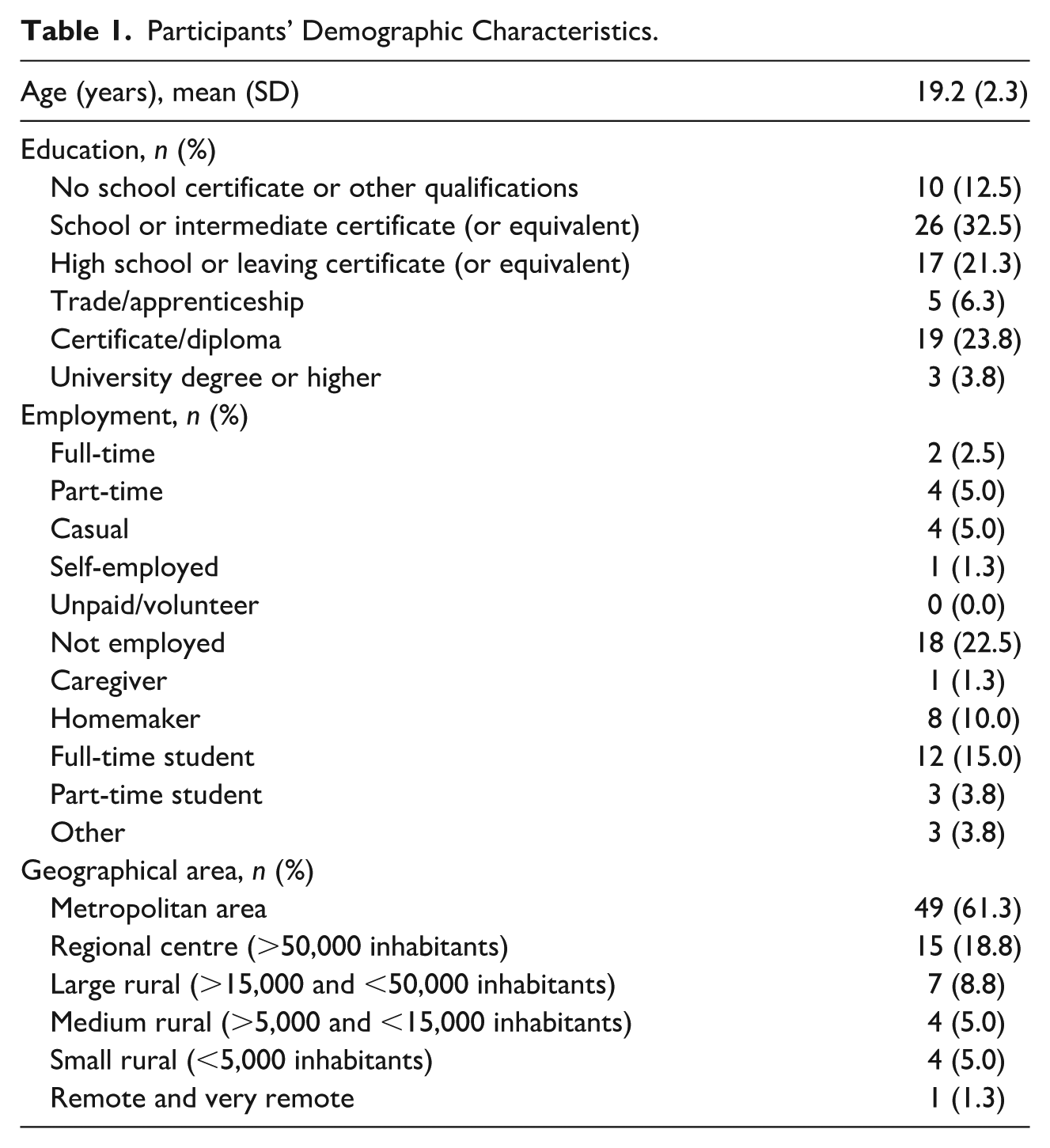
A total of 80 young women participated in 11 workshops, eight face-to-face and three online. Table 1 provides a summary of participants’ characteristics. The mean age of participants was 19.2 years. Education levels varied widely, but the majority of participants held up to a high school certificate. Employment statuses were diverse, with a notable proportion unemployed, and others studying either part-time or full-time. Geographically, the majority of participants resided in metropolitan areas, with smaller percentages living in regional centres and rural areas.
Participants’ Demographic Characteristics.
Workshop data are presented below under three key themes: The Emotional Tides of Young Motherhood: Navigating Joy, Pain, and Growth; Rising Strong: The Resilience of Young Mothers; and The Strength in Support. These themes capture the multifaceted experiences of young motherhood, from the emotional highs and lows that come with increased responsibility, to the resilience required to navigate challenges and the vital role of support networks.
The Emotional Tides of Young Motherhood: Navigating Joy, Pain, and Growth
During pregnancy, young mothers in the workshops expressed excitement about impending motherhood but also frequently described various challenges. Statements such as “Excited to meet my babies,” “The birth of my baby girl is bringing joy and lightness into my life,” and “Pregnant and thinking of all the wonderful creative things I’ll do with my kids” were often interwoven with expressions of struggle, including “Relieved that pregnancy and birth are over,” “Not enjoying pregnancy,” “Scared,” and “Feeling incapable of doing anything.” The Word Cloud generated from a sticky note activity (Figure 1) highlights the contradictory feelings of happiness, confidence and excitement with feelings of anxiety, depression, pain and exhaustion.
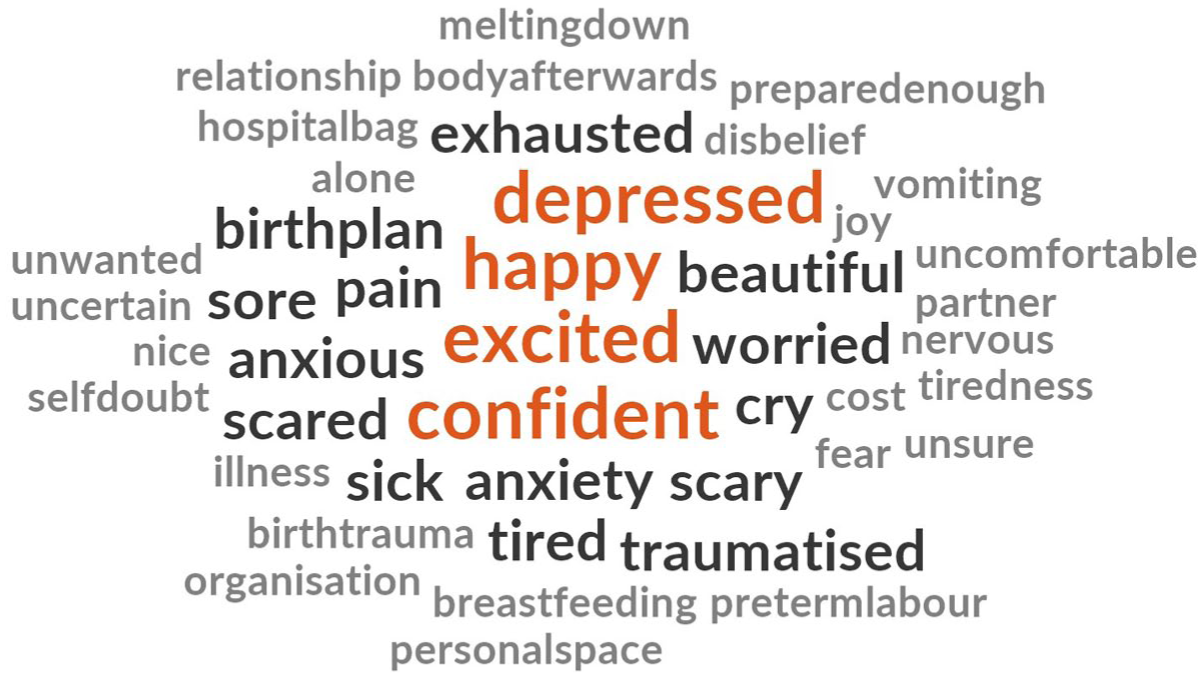
Feelings related to pregnancy and birth.
While some mothers felt prepared and confident about childbirth and parenting, many described feeling a heavy burden and the pressure to mature quickly. They spoke of “uncertainty for the future” and the weight of newfound responsibility, with one young mother emphasising, “I had to grow up and be an adult really quick.”
Mothers in the workshops also reflected on how their young age shaped their interactions and experiences in social and professional settings. Many reported receiving unsolicited advice during pregnancy and facing prejudice and stigma from healthcare providers, family members, friends, and the wider community. “Lots of judgement and unwanted advice,” one mother shared, and another wrote on a sticky note: “Friends & others don’t understand.” Others feared how they would be perceived by those closest to them: “Fear of judgement from family and friends.” Judgement and assumptions about their capabilities often extended across their pregnancy, birth, and early parenting journeys. For many, the experience of birth and immediate postnatal care in the hospital further intensified these challenges. They frequently described their treatment as inappropriate, frightening, and belittling, with some considering it overall suboptimal. As one mother shared, “Birth was a little traumatising,” while another reflected, “I feel like I was discriminated against in the hospital. . .” But the judgement did not end there. “Made to feel inadequate compared to older, more established mothers,” one participant noted. Others struggled with contradictory parenting advice: “As mothers, the noise often gets busy, internally and externally. Internally, we deal with our own self-criticism. Externally, we deal with the criticisms and judgements from others.” Another participant included the following statement on a “post-it” note: “Could do without so much parenting advice/contradicting my discipline choices.”
Despite these pressures, young mothers rejected the notion that age determined parenting ability. As one mother powerfully stated: “Parenting shouldn’t be about age. It shouldn’t be about being a good or bad mum because of how old you are. It should be about how you parent. How you love your kids. It should be about how the kids are.”
Across different stages of motherhood, young mothers in the workshops described their feelings and experiences as ever evolving, shifting through different emotional stages and priorities as their children grew. At all stages, they expressed feelings of uncertainty and exhaustion. In the first 3 months following the birth of their children, worry and exhaustion from sleepless nights were constant companions, often exacerbated by breastfeeding concerns. One mother confessed, “I worried I wasn’t doing enough for my baby.” Another described the experience as “anxious about everything.” The Word Cloud below (Figure 2) highlights the most prominent feelings reported by participants regarding the first 3 months following the birth of their first child:
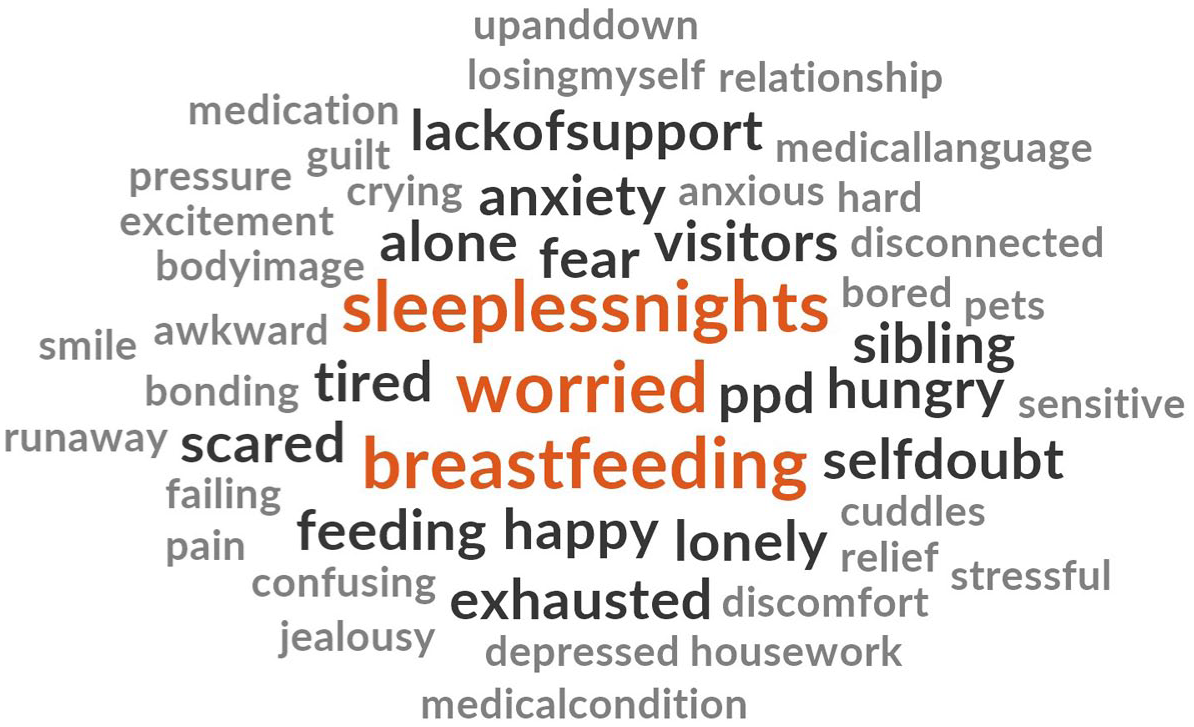
Feelings related to the first 3 months following birth.
As the Word Cloud highlights, breastfeeding concerns were prevalent. Young mothers were asking themselves: “Will I produce enough milk for baby?” and “Am I eating the right food for milk?”. They also highlighted how “awkward and confusing” it was, and that they were generally worried about breastfeeding, as one young mother stated: “Worried about feeding: too much? Too little?”. This phase was, therefore, filled with uncertainty about the “rights and wrongs” of motherhood, leading to feelings of anxiety and, often, depression.
Between 4- and 12-months post-partum, some mothers reported a feeling of stability and sense of things becoming easier to adjust to. Fewer mothers reported feelings of sadness; however, a large proportion felt stress and worry. “How overwhelming and stressful parenting is sometimes,” one mother admitted. As their babies became toddlers, mothers expressed excitement about the milestones and transitions they were going through. Some mothers were challenged by their children’s behavioural development, others felt that this time was a wonderful stage for bonding. “Looking forward to having more fun with my son,” one mother shared. Another reflected on the duality of exhaustion and fulfillment: “I see my tiredness from caring for my babies, but I wouldn’t change a thing.”
Motherhood brought joy and fulfillment, but it also came with uncertainty, worry, and emotional turbulence. Uncertainty was felt by many. “At first, I didn’t know what to do with my tiny potato,” one young mother confessed. Another described the experience as “a rollercoaster,” filled with highs and lows. The worry was constant: “Am I doing enough for my baby?,” “Am I doing a good job as a mum?.” The intensity of emotions was overwhelming: “Sensitive, up and down emotions” and “some days you feel like you are failing.” One mother captured the emotional impact of the experience poignantly: “It was a big shock how many emotions I was going to feel and how intensely I felt them. . . It can become quite overwhelming sometimes.”
Amid the chaos of parenting, a quieter struggle took hold: loneliness. For many young mothers, friendships faded, and social circles shrank. “Feeling lonely, always at home,” one mother admitted. Another described the isolation of postpartum depression: “Being alone and tackling depression while trying to be the best mum.” The disconnection from their usual social worlds was palpable. One mother reflected on how motherhood altered friendships: “When you become a mum, your friendships change.”
For some, the loneliness was compounded by societal expectations. One mother shared the frustration of being seen as someone who should have “moved on” from motherhood: “Young mums get judged once they turn 18, like they’re supposed to just ‘not be a mum’ anymore. Like everyone doesn’t need to party to be cool.”
The voices of young mothers paint a complex picture of early motherhood: one filled with joy and deep connection but also anxiety, judgement, and isolation. Excitement and joy were often accompanied by anxiety, physical discomfort, and a sense of unpreparedness. The emotional highs and lows were undeniable. For some, it was a “rollercoaster of emotions,” while others simply put it as “worrying if I’m doing a good job as a mum.” Additionally, negative hospital experiences and the sudden expectation of maturity added to the emotional and psychological strain faced by many young mothers in the perinatal period.
Despite the struggles, one thing was clear: young mothers were deeply committed to their children, navigating a path filled with love, learning, and resilience, which brings us to the next theme.
Rising Strong: The Resilience of Young Mothers
In this theme we found that young mothers are industrious, resilient, and attuned to the needs of their children. Participants expressed that young mothers are loving, capable and good mothers, and are strong in the face of judgement from others. Motherhood came early for them, but youth was not a barrier to “good” mothering. The young mothers in these workshops spoke with unwavering conviction: their children did not hold them back, they propelled them forward: “Just because you have children and have become a young parent, that doesn’t hold you back in any way. You continue to follow your big dreams or even create new ones.”
Although for many the journey was not easy, participants maintained a sense of purpose and striving. As one young mother put it: “Need to stay positive despite the challenges,” and another: “Being a mum, young or not, it’s a big physical and emotional journey but it’s worth it.” There were struggles: the weight of responsibility arrived overnight; some had to move forward without support, others had to rebuild their lives from hardship. But one thing remained clear: they would not stop striving for themselves and their children: “It may take me longer, but I will still reach my goals.” and “Dream big. My child gives me a sense of purpose. I want to give a better life for my kids and dream bigger for myself.”
Many pursued further education, determined to shape a future for their families. One mother proudly shared, “Not giving up even when times get hard. Getting my Year 12 certificate while raising a baby and wanting to go to uni.” Another saw her studies as a stepping stone: “Studying now to become a social worker. Moving forward with life.”
But the stories of these young mothers were not just about perseverance, they were about transformation: “We learn to be resilient. We have so much strength. It’s rewarding. We have so much love to give to others, to our kids. We’re powerful, brave, friendly. It is a testing time of our life, but we’re patient, and we’re warriors.” In every challenge, these mothers found a way to keep going, finding resilience: “Having to be strong even when feeling alone,” “Reminding yourself that you are good enough. You are raising a little human who thinks the world of you,” “This reminds me of Tupac’s saying: ‘Be the rose that grew from the cracks in concrete.’ We are all resilient and have endured some level of trauma. We deserve for our hardships to be recognised.”
Frequently, young mothers reported finding resilience from relationships. For some, the experience strengthened their romantic relationships, bringing them closer to their partners: “The strong connection and love between my partner and I since having a baby,” one mother reflected. Others found a newfound appreciation for family and community, realising the importance of support networks. One young mother wrote in a sticky note: “[It] ‘Takes a village’ - friends, family, community.” Amid the demands of motherhood, young mothers also found resilience in the natural world. Many described a deep love for the outdoors, a place where they could breathe, recharge, and reconnect with themselves. “Love nature, traveling, being outdoors.,” “Love the beach.”
For these young mothers, resilience was not just about surviving, it was about thriving. They were not simply pushing through hardship; they were creating something beautiful from it. They were not just dreaming; they were building. Each sacrifice, each struggle, and each small victory shaped them into the strong, determined mothers they were becoming: “We deserve to be seen. We are not just young mums. We are warriors, dreamers, and builders of the future.” This strength shines through in our final theme.
The Strength in Support
The mothers in the workshops spoke candidly about the importance of support networks, whether family, friends, or other young mothers. Some reflected on the shifting nature of their relationships, losing some connections while gaining others. Through it all, they expressed deep gratitude for those who stood by them: “Losing and gaining relationships. Grateful for those who support me and make me feel good,” “It’s important to have a good support network and group of friends.” But for young mothers, the weight of responsibility is heavy, and without the right support, it can feel overwhelming: “You need a break. Feels like the responsibility is all on you. Give yourself a breather, stop overthinking.”
But support is not just about emotional encouragement. Many young mothers shared that access to the relevant information at the right time could have eased their journey: “Having knowledge to access services for support and advice would have been huge.” Much of the advice they encountered was either outdated, judgemental, or simply not designed for young parents: “Little access to tailored support services,” “Inadequate support from social services,” “[I wish the mental health support worker was] understanding, empathetic; instead he was condescending most of the time.” They emphasised the need for resources that are non-judgemental, inclusive, and easy to understand. Resources that recognise the unique challenges of young motherhood and provide practical guidance in a respectful and empowering way. Some of the key words they highlighted in this regard included: Reassurance its ok, Encouragement, Feeling of belonging, No judgement, Validation of feelings, Empathy and understanding, Making women feel heard.
Support took many forms for these young mothers. Some found it in community groups and online mother’s circles, such as “baby focused social media” and “Facebook pregnancy support groups,” where they could hear real stories from others in their shoes. Others sought comfort in places that felt familiar and safe: the park, the beach, their parents’ home, even the hospital. And then there was self-care, the piece that often got lost in the daily demands of raising a child. For some, self-care meant making time for outdoor activities with their children. For others, it meant focusing on nutrition, fitness, or simply trusting their decisions rather than being consumed by overwhelming advice. The young mothers reflected on how small acts of care made a difference: “Try to move your body and nourish it,” “Rest when you can,” “Take a little time for yourself,” “Surround yourself with like-minded, positive people,” “It’s okay to get help.”
The young mothers were not looking for a way out of the responsibilities; they had already embraced them. What the mothers needed was understanding, guidance, and a village that did not judge but uplifted them. The mothers identified they needed support that was not conditional, advice that was not condescending, rest without guilt, and, most importantly, the reassurance that they were doing just fine.
The Young Mother “Persona”
Overall, from workshop activity data, three key themes emerged describing the experiences, needs, and expectations of young mothers as detailed above. Figure 3 is an attempt to bring these themes together and visually represent the perinatal journey of a young mother, with the inner circle representing the initial transition of roles, then moving outwards to her experience of being perceived by others, building resilience, and growing in empowerment and attunement as a young mother. A young mother will shift across these stages at various points in their motherhood journey, as they encounter new hurdles and build on their inner parenting values, and as each new child arrives into the family.
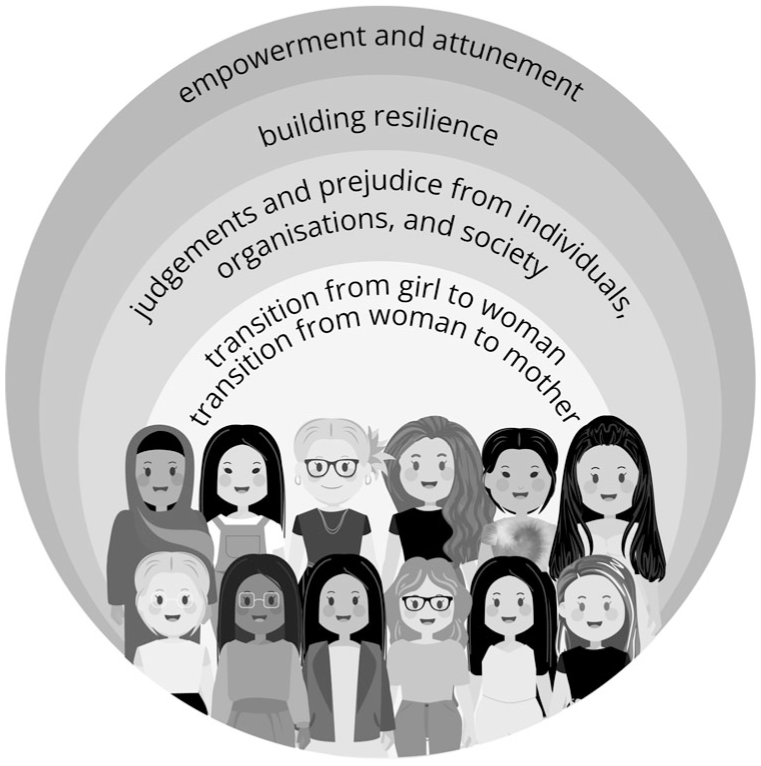
Layers of the “young mother persona.”
Discussion
A young mother’s identity is dynamic, continually shaped by their experiences and transitions. Identity itself is not a single, fixed construct (Branje, 2022). It is made up of multiple, sometimes overlapping, layers that can include: Personal identity (i.e., core values, beliefs, and personality traits); social identity (i.e., roles within family, work, community, and culture); relational identity (i.e., how one sees oneself in relation to others); and aspirational identity (i.e., hopes, dreams, and future-oriented self-concepts; Hwang et al., 2022). For a young mother, these layers often intersect and sometimes conflict, creating a rich, complex sense of self (Couvrette et al., 2026). For example, the moment they learn of their pregnancy their identity is in conflict between prioritising their own goals and that of a caregiver. A large part of this shift requires that a young mother balances cultural or familial expectations of traditional patriarchal “motherhood” with their own personal ambitions. A young mother will also be re-evaluating a wide range of relationships including friendships with non-mothering peers, their intimate partner relationship, and responsibilities within their family of origin may shift. Another shift in identity will arise from having to redefine their self-worth that they are likely to have derived externally from school performance, their social life and career expectations to internal fulfilment as a parent (Berger et al., 2022).
Our study fundamentally advances the understanding of young mothering by demonstrating how external judgement becomes inextricably entangled with a young mother’s identity, compelling her to forge a resilient and empowered “young mum persona.” While previous research has established that the transition to motherhood is influenced by factors like financial support, perinatal care and social support (Bedaso et al., 2021; Harrison et al., 2017), and that young mothers experience societal judgement (Hargreaves et al., 2025) our data reveal a critical subsequent step. We argue that this judgement is not merely an external stressor but is internalised, becoming a catalyst for identity formation. Confronted by prejudices from family, health professionals, and society at large regarding their perceived incapacity to mother, the young women in our study were propelled to “prove them wrong.” This process of overcoming challenges directly helped shape a self-described identity of strength and resilience, supporting earlier findings of a positive transformation of self (Ford, 2014). Furthermore, with the right support, this “persona” incorporated a profound sense of empowerment, creating a shared identity that uniquely binds young mothers together. This was clearly manifested in our study as participants reported feeling safe, connected, and united with one another during the project workshops.
It is important to note that we are not arguing that the judgement received by young mothers positively pushes them forward. These judgements are harmful and have significant negative impacts on young mothers’ mental health and wellbeing. Indeed, our participants reported anxiety, depression, and emotional turbulence during the perinatal period, exacerbated by societal judgement and isolation. Many described feelings of inadequacy (e.g., “Am I doing enough for my baby?”) and trauma from negative healthcare experiences. These experiences can lead to reduced help-seeking behaviour (Jack et al., 2022), further exacerbating the risks for mental health conditions to develop. In our study, young mothers reported experiencing judgement from healthcare providers, family, and peers (e.g., “Made to feel inadequate compared to older mothers”). They highlighted dismissive hospital care and contradictory parenting advice. It is well known that stigma disproportionally affects marginalised youth, reducing access to care (Sapiro & Ward, 2020). Research has also shown that discriminatory care during childbirth worsens mental health outcomes (Larrabee Sonderlund et al., 2021) and that trauma-informed approaches to young mothers’ care are critical (Ashby et al., 2019; Champine et al., 2022). Research also shows that young mothers experience significantly higher rates of mental health conditions, with 2 to 7 times greater risk of depression and anxiety compared to older mothers and non-mothers of the same age (Estrin et al., 2019; Kim et al., 2014; Van Lieshout et al., 2020). The solution is, therefore, not to continue judgement and let young mothers rise above it. The solution is support, which is exponentially more effective when it is provided with empathy and unconditional positive regard.
The period following birth has been described as a “settling in period,” which is when social supports can have the greatest impact in the development of a positive identity in young mothers. It is clear from previous research that lack of support affects young mothers adversely. Minimal postnatal support has been associated with a roughly fivefold increase in the likelihood of postpartum depression (Kim et al., 2014). Other studies have found that living alone and lack of support were associated with higher rates of common mental disorders and postpartum depression among young mothers (Agnafors et al., 2019; Estrin et al., 2019). While our study did not measure such markers, our participants often described harmful impacts of lack of support, or the wrong kind of support.
Despite challenges, participants demonstrated resilience in developing a positive self-identity (e.g., “We are warriors, dreamers, and builders of the future”), with education, supportive relationships, and self-care being key buffers mentioned by young mothers in our study. Mothers have described this period as one of growth in self-determination, self-confidence, and competency (Finlayson et al., 2020), and the young mothers in our study confirmed this experience. This period has also been found to be characterised by re-negotiating all social relationships in addition to physical and psychological recovery from the birthing process for mothers themselves and their babies (McGregor & Arditti, 2023; Toomey et al., 2013). This is particularly acute for young mothers, who in our study described how much their friends did not really understand what they were going through and how they, consequently, had to establish new and supportive relationships, often with other young mothers, to compensate. It is clear from the young mothers’ testimonies that support has been key in helping them develop self-compassion and achieve an empowered sense of self.
However, support can come from many places, and, in the case of young mothers, it is particularly relevant that systems are in place to create a safe and supportive perinatal journey. Participants advocated for non-judgemental, accessible resources co-designed by young mothers (“Having knowledge to access services would have been huge”). Young parents in previous studies have suggested also access to trustworthy online resources, which can compensate for structural threats to their agency and resilience (Young et al., 2022). In addition, previous research has confirmed that participatory methods empower youth and that resources designed with and by youth are more likely to be successful in achieving their intended outcomes (Freire et al., 2022). Many participants highlighted concerted efforts to seek resources to help them navigate the weight of responsibility and doubts that come with young motherhood. Acknowledging that the plethora of information available online, from health professionals (Spiby et al., 2022) and via unsolicited advice can lead to overwhelm, the desire to receive reassurance and validation in being a “good enough” parent is a key enabler for young mothers to thrive and, in turn, better support their family in thriving (Bain & Harris, 2024). Shea et al. (2016) also highlights how service providers can strengthen young mothers’ resilience further by facilitating their sense of empowerment (Asheer et al., 2020) and attunement (Riva Crugnola et al., 2021) with their child.
Overall, young mothers build resilient identities through complex personal growth into simultaneous adulthood and motherhood, often in response to the judgements they face. Our findings underscore the intersectionality of adolescent development and perinatal challenges (Hoang & Wong, 2022; Parker et al., 2025). Participants expressed that being a young mother is a perpetual learning process that is not linear but, rather, involves transitioning between different layers of responsibility and self-attunement to build the resilience needed to care for your child and for yourself (Bornstein, 2022). The world around young mothers, that still imposes upon them unnecessary and unhelpful judgement and stigma (Shrimpton et al., 2024) almost forces them to create an identity that is anchored in resilience to overcome these judgements and achieve the required strength to be the mothers they wish to be.
Limitations
This study is not, however, without limitations. First, the sample, although diverse in socioeconomic, cultural, and geographical backgrounds, was largely self-selected through community organisations and services. This recruitment strategy may over-represent individuals who are already somewhat engaged with support systems, potentially overlooking the experiences of more isolated, hard-to-reach, or highly marginalised young mothers who are not connected to any services. Their perspectives, which might include more severe experiences of stigma, isolation, or mental health challenges, are potentially not the predominant in our data. Nonetheless, the study used proactive outreach strategies to intentionally include the voices of these more isolated young mothers, including partnering with schools, housing services, and mental health crisis centres. Future studies may be able to focus on more remote regions or focus on particular vulnerabilities experienced by young mothers.
Second, the participatory and workshop-based design, while a strength for generating collaborative and empowering dialogue, may have introduced social desirability bias. Participants working in groups and in a space explicitly framed as supportive and non-judgemental may have been inclined to emphasise narratives of resilience and strength, potentially downplaying more negative or socially complex feelings like resentment, ambivalence, or profound hopelessness. This could partially explain the powerful emergence of the “warrior” identity. While this does not invalidate the genuine resilience reported, it suggests that the full spectrum of emotional experience may be nuanced. To address this, future studies could complement group workshops with confidential, one-on-one interviews or anonymous digital diaries to capture more private and potentially stigmatised feelings without the influence of a group dynamic.
Third, our data were collected at a single point in time through workshop activities. This cross-sectional snapshot precludes any longitudinal analysis of how a young mother’s identity, mental health, and support needs evolve. The “young mother persona” model presented in Figure 3 is conceptualised as dynamic, but our data cannot trace how an individual moves through these layers over months or years, with the arrival of subsequent children, changes in relationships, or shifting life circumstances. This is not a fatal flaw for identifying core themes and experiences, but it limits our understanding of the developmental trajectory of young motherhood. A future longitudinal study, following a cohort of young mothers from pregnancy through early childhood, would be invaluable for mapping these identity shifts and examining the long-term impact of specific support interventions.
Conclusion
This study makes a significant contribution by demonstrating that the pervasive external judgement young mothers face is not merely a social stressor but becomes fundamentally entangled with their identity formation, compelling them to forge a resilient and empowered “young mum persona.” Through a participatory approach, the research illuminated the dialectical emotional tides of joy and profound challenge, the remarkable resilience young mothers exhibit in rising above stigma and hardship, and the critical strength derived from non-judgemental support. Ultimately, the findings advocate for a paradigm shift in perinatal support, underscoring the necessity of co-designing trauma-informed resources and policies with young mothers to directly address systemic stigma, validate their experiences, and bolster protective factors for their mental health and wellbeing.
Footnotes
Acknowledgements
We thank all of the young mothers who contributed to this research.

Ethical Considerations
This study was approved by the Western Sydney University’s Human Research Ethics Committee, with approval number H14658.
Funding
The authors disclosed receipt of the following financial support for the research, authorship, and/or publication of this article: This study was funded by the Australian Government Department of Health and Aged Care through the Perinatal Mental Health and Wellbeing Program.
Declaration of Conflicting Interests
The authors declared no potential conflicts of interest with respect to the research, authorship, and/or publication of this article.
Data Availability Statement
The datasets generated during and/or analysed during the current study are available from the corresponding author on reasonable request.*