




Abstract
During adolescence, socialization of gender role attitudes (GRA) shifts from parents to peers, friends, and classmates; thus, it takes place primarily in the school context. Accordingly, previous studies identified school-related factors associated to adolescents’ GRA. However, little is known about the relative importance of these factors as well as about the factors’ differences between females’ and males’ GRA. This study investigates the relevance of several school factors on adolescents’ GRA and gender differences. Using data from the German National Educational Panel Study (N = 10,866), the results show that attending a higher educational school type, higher classmates’ socio-economic background, lower proportion of female classmates, and more egalitarian classmates’ GRA are related to more individual egalitarian GRA. Furthermore, the relation between classmates’ GRA and individual GRA is more pronounced for males than females. The study further discusses starting points for possible interventions.
Introduction
Profound changes in individual identity accompany the phase of adolescence, which also includes the development of individual attitudes toward gender-related issues (Hurrelmann & Quenzel, 2018). Adolescents try to find their place in society with attitudes and behaviors that characterize their worldview (Erikson, 1968). As gender inequalities still exist (e.g., working hours, payment, and family responsibilities; overview in Dotti Sani & Quaranta, 2017), it is crucial to study gender role attitudes (GRA) of adolescents—the next generation that can actively advocate gender equality.
Next to familial influences, gender role socialization (Bem, 1983; Bussey & Bandura, 1999; Heyder & Kessels, 2013) occurs within the school context because schools are not only places for teaching knowledge but also for learning socially accepted norms and values (Hurrelmann & Quenzel, 2016). During puberty, adolescents detach themselves from their parents, and peers (e.g., friends and classmates) become important role models for attitudes and behaviors (Bussey & Bandura, 1999). Empirical evidence indicates that male adolescents are more receptive to peer influence (Widman et al., 2016) and experience more peer pressure to endorse gender-typical norms than female adolescents (Halimi et al., 2021). Therefore, some scholars propose gender-specific socialization mechanisms of GRA (e.g., Kågesten et al., 2016), with male adolescents being more strongly affected in their GRA by school factors than females.
So far, a large body of research has been conducted on the association between adolescents’ GRA and various familial characteristics (e.g., parents’ GRA, mothers’ employment, division of household tasks; Farré & Vella, 2013; Tenenbaum & Leaper, 2002; van de Vijver, 2007). However, studies on the school context are comparatively scarce (see Kågesten et al., 2016). The available empirical evidence points to several factors of the school context as related to adolescents’ GRA, for instance, school type (Ehrtmann & Wolter, 2018), socio-economic background of the school’s neighborhood (Erarslan & Rankin, 2013), class gender composition (e.g., Chan et al., 2022), and the average GRA of the classmates (Sánchez Guerrero & Schober, 2021).
The present study extends this research by investigating the relative associations between these school context factors and adolescents’ GRA and examining how these relations differ between males and females, considering relevant parental and individual background characteristics. To examine these relations, we conducted multiple regression analyses based on a sample of 10,866 adolescents from the German National Educational Panel Study (NEPS).
Gender Roles: Attitudes and Socialization
Gender roles refer to socially accepted gender-typical expectations and characteristics (Wolter et al., 2015). GRA indicate the extent to which a person has internalized the social norm about the gender-typical division of tasks in the family and employment (Athenstaedt & Alfermann, 2011; Davis & Greenstein, 2009). Thus, individuals’ GRA reveal their opinion about the appropriateness of gender roles (Becher & El-Menouar, 2014; Krampen, 1979). In line with other scholars (Athenstaedt, 2000; Kulik, 2002b; Wolter et al., 2015), we conceptualize GRA as a one-dimensional continuum differentiating traditional and egalitarian views. Individuals with traditional GRA distinguish between typically female and typically male behaviors. Women are expected to be responsible for household duties and raising children (“homemaker,” Davis, 1984, p. 403), whereas men should be accountable for the financial security of the family (“breadwinner”). Individuals with egalitarian GRA, in contrast, believe that both partners should share the homemaker and breadwinner roles equally, or they reject the assignment of typical roles to individuals depending on their biological gender.
An intensive confrontation with gender roles begins at the latest with the onset of puberty (Hurrelmann & Quenzel, 2018). According to Bandura (1969), gender role socialization occurs through social learning, which is recognized as one of the most powerful processes of adopting values, attitudes, and roles from other individuals (Rosenthal & Zimmerman, 1978). The social cognitive theory of gender development (Bandura, 1977, 1986; Bussey & Bandura, 1999) assumes that peers’ influence increases while parental influence decreases during adolescence (e.g., Furman & Buhrmester, 1992). Some authors explain this change in social role models with adolescents’ increasing attention to individuals they perceive to be relevant (Eccles et al., 1993; Frank et al., 2008; Kanfer et al., 1971). Empirical research supports this argument as peers and siblings are more similar in their GRA than children and parents (Ittel et al., 2006; Kulik, 2000). Based on the definition of peers, that is, individuals of the same age, classmates are also considered to be peers (e.g., Weichold & Silbereisen, 2012) and thus serve as role models for adolescents’ GRA. Adolescents typically have intensive contact with their classmates, leading to the exposition to a variety of opinions in different situations and constellations. Because of the large number of different personalities and the relatively long time children spend together at school (OECD, 2013, 2021), the influence of classmates is considered stronger in adolescence than that of teachers or parents (Hurrelmann & Bauer, 2015).
Socialization of GRA Within the School Context
According to Hurrelmann and Bauer (2015), the school is a place of social learning—a “social microcosm of reality” (p. 254), where teachers and students take on specific social roles. Through a net of relationships between teacher and individual student, teacher and student body, and among students embedded in a particular institutional environment, the school conveys social manners typical for a society (Hurrelmann & Bauer, 2015; Hurrelmann & Quenzel, 2016). These socialization processes shape adolescents’ identity development and familiarize adolescents with prevailing cultural norms, values, and expectations, such as gender roles and gender role attitudes (e.g., Fend, 2008; Hummrich & Kramer, 2017). Huyge et al. (2015) speak of a gender role culture among secondary education students based on their findings that students attending the same school share similar GRA.
Based on gender role socialization theories (Bem, 1983; Heyder & Kessels, 2013), gender role socialization processes vary with regard to diverse aspects, including those shaping the school context. One of these aspects is the type of school. Although not specifically investigated, many studies show that adolescents who attend a school type leading to an upper secondary education level express more egalitarian GRA than those attending lower-level school types (Bolzendahl & Myers, 2004; Carlson & Knoester, 2011; Davis, 2007; Fan & Marini, 2000; Farré & Vella, 2013). Studies conducted within the German multipartite secondary education system also found this relation (Ehrtmann & Wolter, 2018; Valtin & Wagner, 2004).
Another school aspect relevant for GRA is the student composition. Already in the 1960s, Coleman et al. (1966, p. 325) argued that “the social composition of the student body is more highly related to achievement [. . .] than is any school factor.” Based on the finding that individuals with higher socio-economic status (SES) tend to have more egalitarian attitudes (Ittel et al., 2006; Lackey, 1989), it is reasonable to assume, from a social learning perspective, that adolescents surrounded by classmates with higher SES have more egalitarian GRA than adolescents surrounded by classmates with lower SES. In line with this assumption, Erarslan and Rankin (2013) observed that adolescents attending schools in high SES neighborhoods report more egalitarian GRA than those attending schools in lower SES neighborhoods. However, the direct association between SES of the student body and individual GRA has not been studied yet.
Besides the socio-economic composition of the student body, gender composition might also play a role in shaping individual adolescents’ GRA. However, research on gender composition is inconclusive as it reports different results in relation to various outcome variables and has not been conducted yet in relation to GRA. Some studies did not find an effect of gender composition in class on, for example, individual knowledge acquisition and the acceptance and changes of peer relationships within 2 years (e.g., Bell et al., 2011; Lubbers et al., 2011). Other studies show gender-differentiated effects of gender composition on various aspects (Brutsaert & Van Houtte, 2002, 2004; Chan et al., 2022; Ewing Lee & Troop-Gordon, 2011; Van Houtte & Vantieghem, 2020). In their studies, Chan et al. (2022) and Van Houtte and Vantieghem (2020) found (higher) benefits for male adolescents with a higher proportion of female adolescents in class or school with regard to the acquisition of helpful skills and knowledge for healthy and stable romantic relationships in the context of youth relationship education classes as well as the individual sense of academic futility compared to female adolescents. Conversely, Inzlicht and Ben-Zeev (2000) found that female undergraduate students performed worse in problem-solving tasks—a stereotypical male domain—in predominantly male groups. Brutsaert and Van Houtte (2002, 2004) identified lower levels of belonging and stress for female adolescents in schools with a higher proportion of females, whereas the gender composition did not play a role for male adolescents’ belonging and stress levels. In contrast, Huyge et al. (2015) did not find any relation between the school’s gender composition and students individual sense of school belonging. Ewing Lee and Troop-Gordon (2011) studied the relation between gender composition of friends within the class and gender atypical behavior with elementary school students. They report a relation between a higher proportion of opposite-sex friends in class and more frequent gender-atypical behavior. That is, girls who nominated more boys than girls as their friends more often exhibited behaviors considered atypical for girls, according to their teacher, and boys who nominated more girls than boys as their friends more often showed behaviors that are considered untypical for boys. To our knowledge, the relation between class gender composition and adolescents’ GRA has not been studied yet.
One specific mechanism of socialization is peer pressure—groups exerting pressure on their members to adapt to the group’s norm thereby signaling that nonconformity is not tolerated and will be penalized—which plays an important role for the gender role student culture (e.g., Van Houtte & Vantieghem, 2020). Specifically, pressure from classmates to conform to their opinion and behaviors on sensitive topics such as gender roles may substantially impact adolescents’ GRA. Adolescents have several options to respond to peer pressure, for example, by accepting it and conforming to the peers’ norms and expectations, or by confronting the norms (e.g., Lotar-Rihtaric & Kamenov, 2013). Sánchez Guerrero and Schober (2021) confirmed this influence process, most likely as a result of peer pressure, as they observed a direct effect of classmates’ GRA on adolescents’ GRA. Adolescents had more egalitarian GRA, the more egalitarian GRA their classmates reported.
In sum, adolescents’ socialization of GRA is associated with several aspects of the school context identified in previous separate studies. School type, average class SES, as well as presumably gender composition and GRA of the student body belong to these school context factors.
Socialization Differences Between Female and Male Adolescents’ GRA
Within the school context, it is plausible to assume gender-specific socialization processes of adolescents’ GRA (see Kågesten et al., 2016). Males are more receptive to peer influence than females for non-academic topics, such as risky and sexual behavior (Lotar-Rihtaric & Kamenov, 2013; Widman et al., 2016). Moreover, they experience more peer pressure to conform to traditional gender norms than female adolescents (Bos et al., 2012; Halimi et al., 2021). Compared to females, male adolescents tend to exert powerful negative consequences toward male peers for gender-nonconforming behaviors or expressions, such as, the exclusion from the peer group (Bos et al., 2012; Heinze & Horn, 2014). This difference of peer pressure to the detriment of male adolescents is most likely based on a rigid concept of male gender roles and masculinity compared to a broader conception of female gender roles and femininity (Galambos, 2004; Mandel & Shakeshaft, 2000). While the role of females has expanded from the domestic sphere of childcare and housework to the public area of employment and political sphere, the role of males has not changed to the same extent (see, e.g., Knight & Brinton, 2017). For example, despite dual-earner arrangements of couples, males’ participation in household tasks is still lower than females’ (e.g., Hook, 2010). Pepin and Cotter (2018) suggest that more egalitarian attitudes in the public domain might not necessarily align with more egalitarian attitudes in the domestic domain. Social disapproval toward working males involved in household and childcare duties (Peitz, 2006) is possibly linked to more peer pressure toward male adolescents than female adolescents to conform to traditional gender roles.
To summarize, socialization of GRA seems to differ between males and females, leading to less flexible male behavior and, hence, more pressure for male adolescents to demonstrate typical male gender roles and express more traditional GRA. Put differently; these school context factors are likely to affect female and male adolescents’ GRA differently.
The Current Study
This study examines adolescents’ GRA embedded in the school context because it is a primary place of social learning of societal norms (Hurrelmann & Quenzel, 2016). Additionally, peers are more important than parents in gender role socialization during adolescence (Bussey & Bandura, 1999). Although the school is recognized as one of the major socialization places in the literature (Coleman et al., 1966; Halimi et al., 2016), research on adolescents’ GRA within the school context is scarce or focused on particular variables. Therefore, our study investigates the following central research questions: How are the GRA-relevant aspects of the school context associated with adolescents’ individual GRA? Are these school factors differently associated with females’ and males’ GRA?
We address the first research question by focusing on four factors within the school context: (1) school type, (2) classmates’ social background, (3) class gender composition, and (4) classmates’ GRA. (1) Empirical research shows that adolescents at a secondary school type leading to an upper educational level report more egalitarian GRA than those attending lower secondary school types (Davis, 2007; Valtin & Wagner, 2004). Therefore, we assume that adolescents attending a school type of upper educational level have more egalitarian GRA than those attending school types of lower educational level (Hypothesis 1). (2) The relation between the socio-economic background of the classmates and adolescents’ GRA has not been studied yet. Based on the social learning perspective and the result of a study showing that higher SES in the school neighborhood is related to more egalitarian GRA (Erarslan & Rankin, 2013), we expect that a higher socio-economic background of the classmates is related to more egalitarian GRA of individual adolescents (Hypothesis 2). (3) Research on class gender composition reports inconsistent results in relation to various outcome variables, including no effects (e.g., Lubbers et al., 2011), gender-differentiated effects (e.g., Chan et al., 2022), and advantages for both males and females with a higher proportion of females (e.g., Van Houtte & Vantieghem, 2020). Further, the relation between class gender composition and adolescents’ GRA has not been studied yet. Based on the available research results and the social learning perspective, we assume that a higher proportion of female classmates is related to more egalitarian GRA of individual adolescents (Hypothesis 3). (4) First evidence suggests that more egalitarian GRA of classmates relate to more egalitarian GRA of the other adolescents in class (Sánchez Guerrero & Schober, 2021). Similarly, we hypothesize that more egalitarian classmates’ GRA and more individual egalitarian GRA are related (Hypothesis 4).
The second research question derives from two aspects: (a) male adolescents being more receptive to peer pressure than female adolescents (e.g., Halimi et al., 2021), and (b) a broader concept of gender roles for females that has been socially accepted in recent years (e.g., Knight & Brinton, 2017). It is, therefore, plausible to assume that male adolescents’ GRA are more strongly affected by school factors than females’ GRA (Hypothesis4).
Data and Methods
Sample and Procedure
The analyses are based on data from the National Educational Panel Study (NEPS; see Blossfeld & Roßbach, 2019) conducted in Germany. Before data collection, the NEPS obtained approval from the Ministries of Education of the Länder (federal states) and signed participation consent from all adolescents or their legal guardians. The current study sample uses data from the Starting Cohort Grade 9 (School and Vocational Training—Education Pathways of Students in Grade 9 and Higher), with 16,425 students in total (NEPS Network, 2021). The analytic sample included 10,866 adolescents from 949 classes. These adolescents attended grade 10 at a secondary school in 2012 and had at least one valid item response on the GRA scale. They were, on average, 16.44 years old (SD = 0.59); half of them were female (51.26%).
Measures
Gender Role Attitudes
Adolescents answered a six-item scale addressing gender division in the areas of education, household, employment, and politics, with answers ranging from completely disagree (1) to completely agree (4) (Athenstaedt, 2000; Weidacher et al., 2001). A sample item was “Boys and girls should have the same duties at home.” We recoded items describing a traditional view so that a higher score indicates egalitarian GRA. A principal component factor analysis suggested a one-dimensional structure with an eigenvalue >3.07, factor loadings >0.60, and an explained variance of 51%. The reliability for this scale was α = .81. The adolescents’ mean GRA was M = 2.97, SD = 0.63.
School Type
Within Germany’s stratified secondary education system, we distinguished adolescents who attended the Gymnasium (highest academic track; 42.46%) and adolescents who attended other secondary school types leading to a lower educational level, using a dichotomous variable (Gymnasium = 1, other school types = 0).
Classmates’ Social Background
As an indicator of the social background of the class, we calculated the mean of classmates’ HISEI (parents’ highest International Socio-Economic Index of Occupational Status; M = 52.07, SD = 11.32).
Gender Composition in Class
The classroom teachers indicated the percentage of female students in their class, which we used for gender composition in class, empirically ranging from 0.00% to 100.00% with M = 49.35, SD = 14.96.
Classmates’ GRA
We calculated the mean of classmates’ responses to the six-item scale describing traditional and egalitarian views toward gender roles, M = 2.97, SD = 0.25.
Control Variables
Besides the school context, the family remains an important social agent for adolescents’ GRA (Hurrelmann & Quenzel, 2016). Research shows a positive association between higher parental education and egalitarian GRA of their children (Dotti Sani & Quaranta, 2017; Fan & Marini, 2000; Kulik, 2002a). We used parents’ years of schooling as an indicator of parents’ educational level. Based on the CASMIN classification (i.e., qualification level of secondary education; König et al., 1988), we transformed the educational levels into years of schooling. First, we did so for each parent separately. Then, we used the schooling years of the parent with longer education.
Furthermore, individual characteristics such as age and biological gender are related to GRA. Adolescents’ GRA seems to become more egalitarian as they age (Antill et al., 2003). We calculated their age in years and months. Gender differences in GRA are well-documented, with males expressing more traditional GRA and females more egalitarian GRA (Dotti Sani & Quaranta, 2017; Hadjar et al., 2012; Ittel et al., 2006; for an overview, see Halimi et al., 2016). Adolescents’ (self-reported) biological gender (female = 1, male = 0) also served as a control variable.
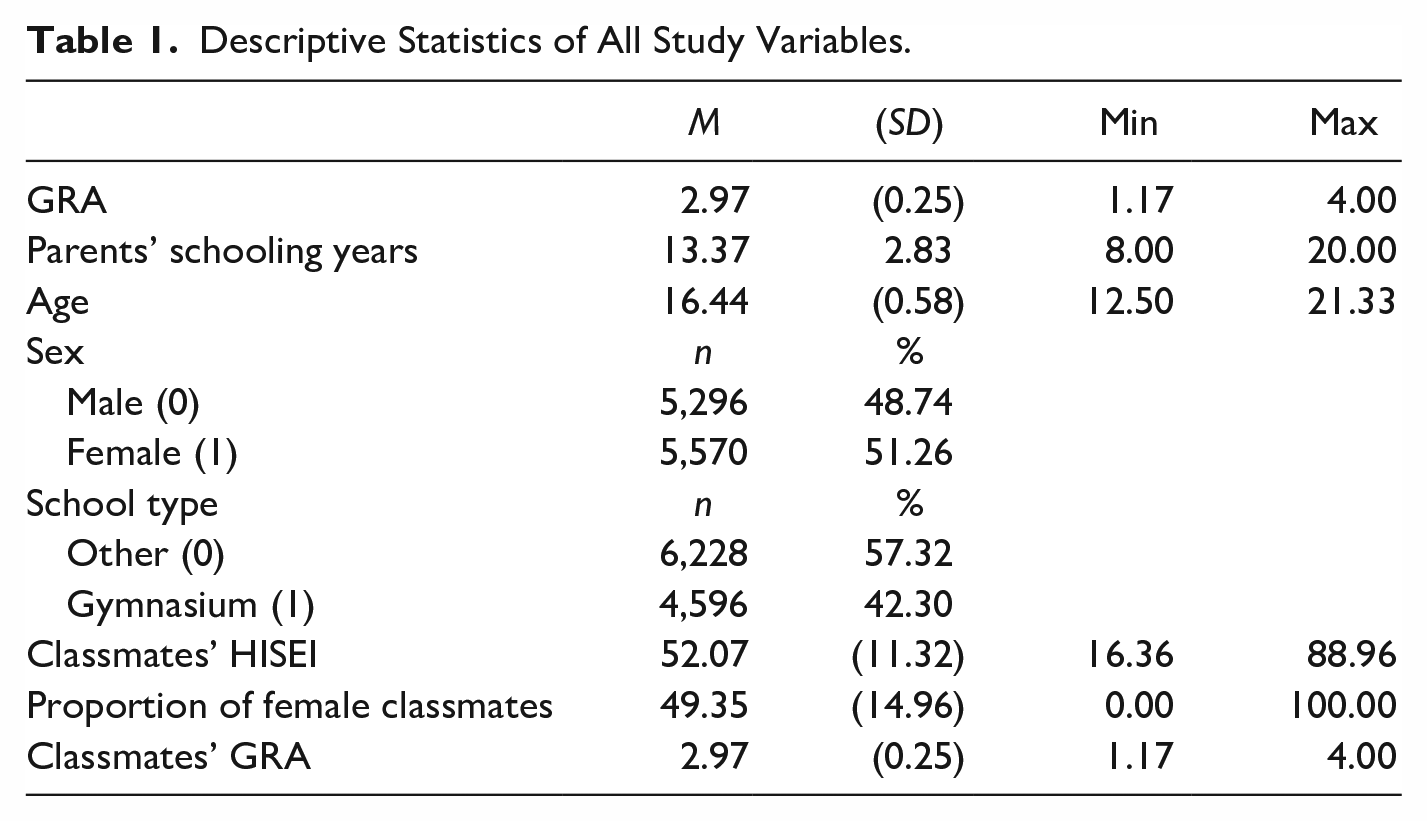
Table 1 summarizes the descriptive statistics of the variables; Table 2 illustrates pairwise correlations between the variables.
Descriptive Statistics of All Study Variables.
Pairwise Correlations Between All Variables in the Study.
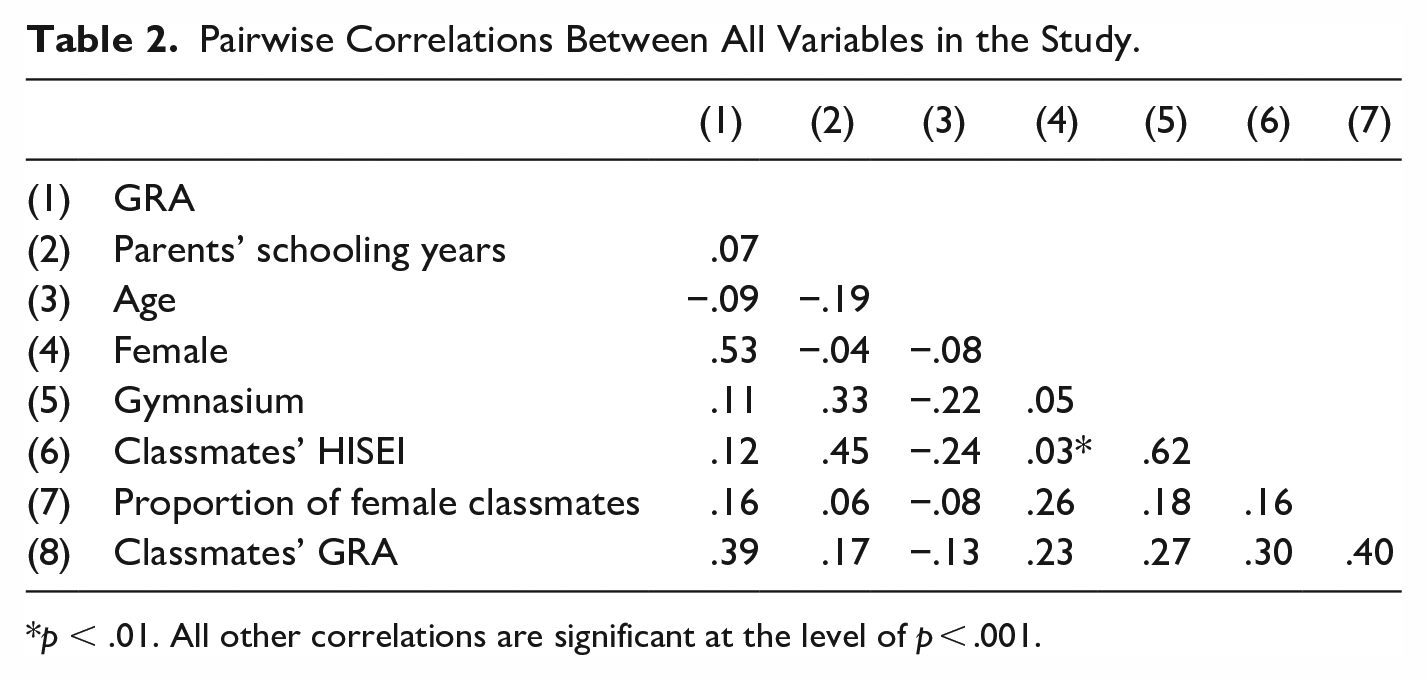
p < .01. All other correlations are significant at the level of p < .001.
Analyses
We conducted generalized structural equation modeling (GSEM) to address our hypotheses with cluster-robust standard errors to account for the multilevel data structure with adolescents clustered in classes (Dollmann, 2010; Huber, 1967; Rogers, 1994; White, 1982). Adolescents’ individual GRA were modeled as a latent construct; the other variables were manifest. The metric variables parents’ schooling years, age, classmates’ HISEI, the proportion of female classmates, and classmates’ GRA were standardized, with M = 0 and SD = 1. Thus, direct comparisons between the β-coefficients are possible and can be interpreted as a small (β = .10), medium (β = .30), or large effect size (β = .50; Cohen, 1992). We calculated the Akaike Information Criterion (AIC; Akaike, 1974) and the Bayesian Information Criterion (BIC; Schwarz, 1978; prevents overparameterization of the models by taking into account the number of estimated parameters) to evaluate the models’ goodness of fit. Smaller AIC and BIC values indicate a better model fit (Raftery, 1995).
To address adolescents’ item nonresponse, we applied a two-step approach. First, if available, we replaced missing values (a) with information from the adolescents from previous surveys within the NEPS, (b) with information that parents provided about their participating adolescents, or (c) with information from the student tracking list. Second, we used FIML (full information maximum likelihood) estimation, an adequate handling strategy to deal with missing data (Allison, 2009). For data preparation and analyses, we used Stata 18 (StataCorp, 2023).
Results
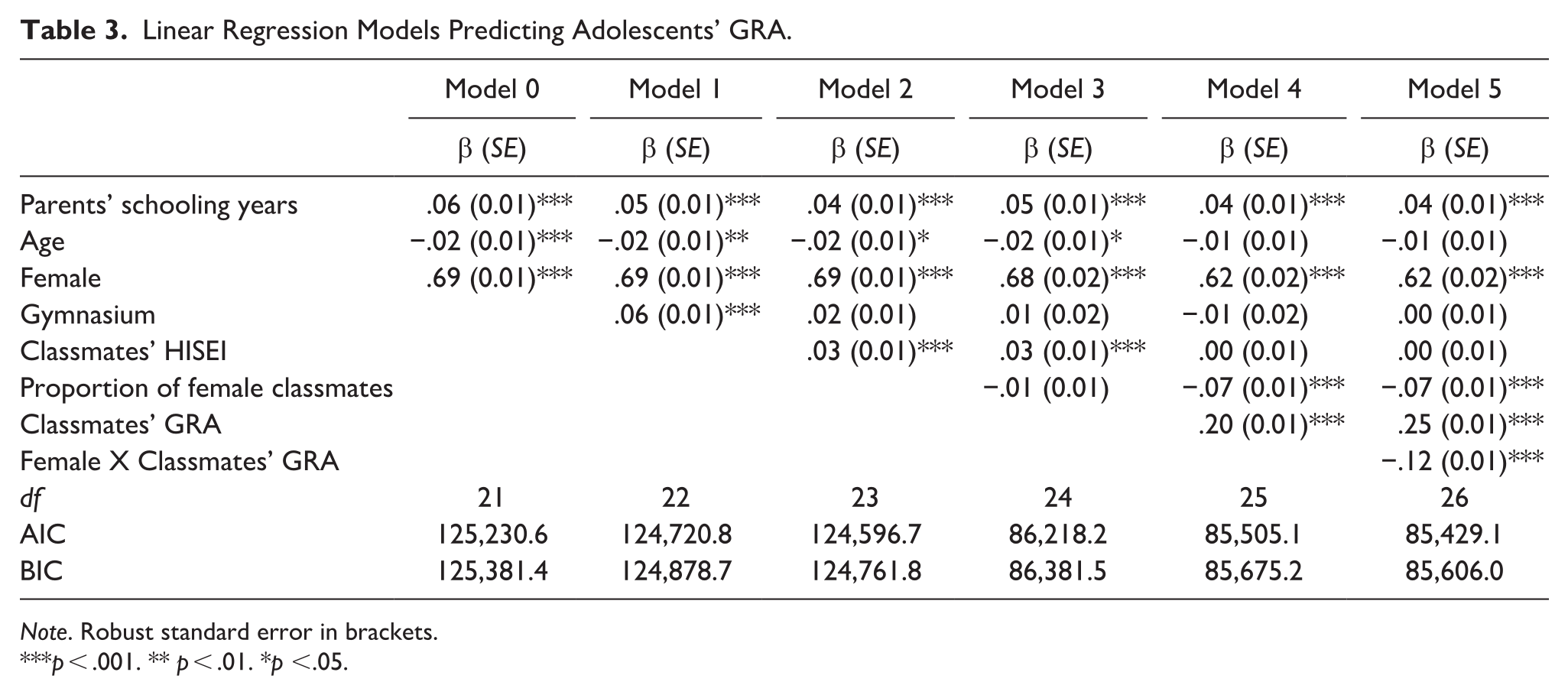
We estimated a series of models to test our hypotheses by adding the predictor variables stepwise (Table 3). The baseline model (Model 0) included only the control variables. All three control variables are significantly associated with adolescents’ GRA. The higher parents’ schooling years, the more egalitarian their adolescent children’s GRA; resulting in a very small effect size (β = .02). Older adolescents reported to have less egalitarian GRA, yielding a very small effect size (β = .02). Female adolescents expressed more egalitarian GRA than male adolescents, yielding a very large effect size (β = .69).
Linear Regression Models Predicting Adolescents’ GRA.
Note. Robust standard error in brackets.
p < .001. ** p < .01. *p <.05.
In Model 1, we tested the relation between adolescents’ attended school type and their GRA, controlling for the background variables. We found a statistically significant yet very small effect (β = .06) between school type and GRA. Adolescents who attended a Gymnasium had more egalitarian GRA than adolescents who were in other secondary school types. This result is in line with Hypothesis 1.
We added classmates’ HISEI in Model 2, which was significantly related to GRA. As assumed in Hypothesis 2, the higher the average classmates’ social background, the more egalitarian the individual GRA. However, this effect was very small (β = .03). Moreover, classmates’ HISEI explained the “Gymnasium effect” as the coefficient of Gymnasium was not significant in Model 2 compared to Model 1.
To test the relation between gender composition in class and GRA, we added the proportion of female students in class in Model 3. We did not find a statistically significant effect between these two variables. This result is not in line with Hypothesis 3.
In Model 4, we tested Hypothesis 4, which expected that the more egalitarian classmates’ average GRA, the more egalitarian the individual GRA. Our results confirm this assumed significant positive relation, yielding a small effect size (β = .20). Adolescents expressed more egalitarian GRA whose classmates also have more egalitarian GRA. Classmates’ GRA, moreover, explained the effect of classmates’ HISEI and adolescents’ age because the coefficients of these predictors were statistically significant in the previous model(s) but not in Model 4. Adding, classmates’ GRA revealed, however, a negative relation between gender composition and individual GRA: The more females in class, the more traditional adolescents’ individual GRA (β = −.07), yielding a very small effect size.
To test our assumption that male adolescents’ GRA are more affected by school context factors than female adolescents’ GRA, we added an interaction term between adolescents’ gender and the most powerful school factor in Model 5, which we identified in previous models: classmates’ GRA. The relation between gender and classmates’ GRA was significant, supporting Hypothesis 5. For each 1-unit increase in classmates’ GRA, male adolescents scored 0.23 scale points higher in GRA, that is, more egalitarian, while female adolescents scored 0.11 scale points higher, yielding a small effect size (β = .12). Figure 1 illustrates this interaction effect. Although males and females reported more egalitarian GRA when their classmates had more egalitarian GRA, males’ GRA was more strongly affected. Post-hoc analyses further showed that the more egalitarian classmates’ GRA, the smaller the difference between female and male adolescents’ GRA. The difference between male and female adolescents was significant at p < .001 for the chosen values of classmates’ GRA = 1, 2, and 3, and at p < .01 for classmates’ GRA = 4. In this full model, gender composition of the class was a significant predictor of GRA, yielding a small effect size (β = .25), as expected in Hypothesis 3. The higher the proportion of female classmates was, the more egalitarian individuals’ GRA.
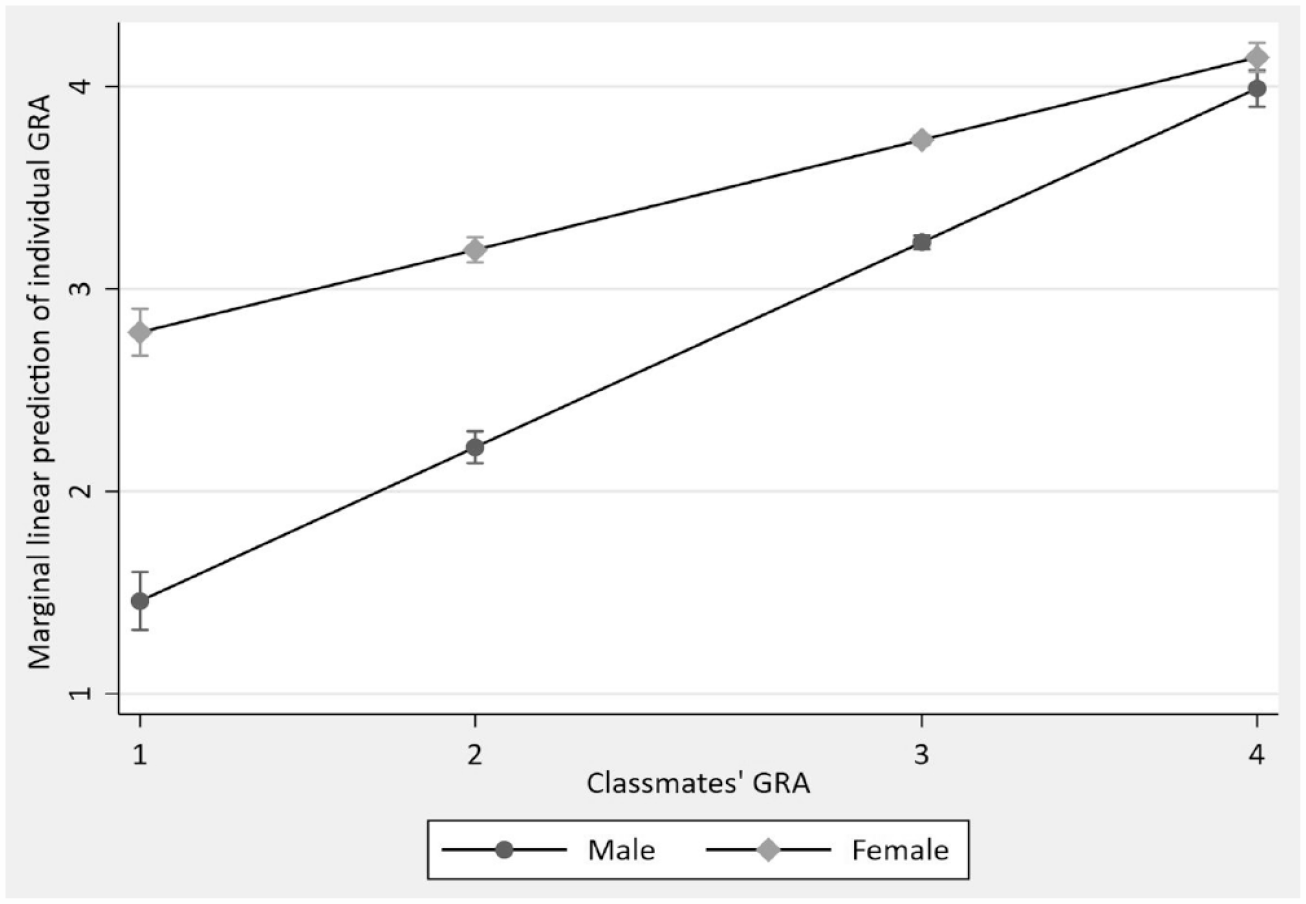
Interaction effect between sex and classmates’ GRA on adolescents’ GRA.
Discussion
This study used data from the National Educational Panel Study (NEPS) to investigate which of the school context factors—school type, social background of the classmates, and classmates’ GRA—are related to adolescents’ GRA and if these relations differ between male and female adolescents, considering relevant familial and individual background information. This study is novel by integrating more than one factor of the school context, examining differences between females and males, and considering background characteristics.
We found all four school factors to be associated with GRA. In line with previous evidence (e.g., Farré & Vella, 2013; Valtin & Wagner, 2004), adolescents attending a secondary school type of upper educational level express more egalitarian GRA than adolescents at lower educational school types. Further, we found a positive relation between higher classmates’ socio-economic background and individual egalitarian GRA. This new finding is along the argumentation lines of Coleman et al. (1966) that the social background of the student body is a vital school factor. It also expands on similar studies on the relation between GRA and the social background of schools’ neighborhoods (Erarslan & Rankin, 2013) or the individual social background (e.g., Ittel et al., 2006). Although class gender composition was at first not significantly related to GRA, it turned into a significant school factor of very small effect size negatively related to adolescents’ individual GRA when considering classmates’ GRA. A similar finding was reported by Huyge et al. (2015) who observed that the gender composition of the school was not associated with adolescents’ individual feeling of school belonging but turned into a significant negative predictor of school belonging when taking into account peers’ GRA at the school: The higher the proportion of female students at school, the lower adolescents’ individual feeling of school belonging. Our findings resemble the results by Huyge et al. (2015). The higher the proportion of female students within class, the less egalitarian adolescents’ individual GRA. Huyge et al. (2015) explain this unpredicted finding with a neutralizing effect for female adolescents. Applied to our results, the relation between a higher proportion of female adolescents in class and adolescents’ individual less egalitarian GRA is nullified by the complementary positive relation between females’ egalitarian GRA in class and adolescents’ individual more egalitarian GRA.
Finally, similarly to the findings of Sánchez Guerrero and Schober (2021), also in our study, adolescents’ individual GRA were more egalitarian the more egalitarian their classmates were.
It seems plausible to interpret these results as a chain of top-down mediation effects. First, classmates’ average socio-economic background mediated the relation between school type and GRA. Specifically, classmates’ HISEI was higher in upper-level school types than in lower-level schools; a finding that has been shown in several studies for the German secondary educational system (Lenz et al., 2019; Relikowski, 2012; Schipolowski et al., 2019). Then, classmates’ GRA mediated the relation between classmates’ socio-economic background and GRA, irrespective of the gender composition in class. That means, classmates’ higher HISEI and more egalitarian GRA were related, which is in line with previous research (e.g., Fan & Marini, 2000; Kulik, 2002a). Finally, classmates’ GRA and individual GRA were related, whereas the effects of most school factors on GRA were negligible, except for class gender composition. Looking at female and male adolescents’ GRA in detail, a higher proportion of female classmates turns out to be related to more egalitarian GRA for both male and female adolescents but more so for male adolescents’ GRA. Thus, gender composition within the class seems more relevant for male adolescents’ individual GRA then for female adolescents’ individual GRA. These findings confirm gender-specific socialization processes of GRA within the school context, which might be due to a higher male sensitivity to peer influence, more substantial peer pressure toward male adolescents, and a less flexible concept of male gender roles (Galambos, 2004; Halimi et al., 2021; Widman et al., 2016). It is, however, also possible that we found a ceiling effect for female adolescents. Being more egalitarian in their GRA than males, not big of a change was possible for females.
Limitations and Future Research Directions
The present study has some limitations that should be addressed in future research. Due to the nature of secondary analyses, we used items measuring adolescents’ GRA that possibly need an update given recent developments in the construct of gender roles. Moreover, gender roles seem to change at different rates for males and females, with those for females changing faster than males’, leading to socially accepted new gender roles for females but not males (Valentova, 2012). Newly developed instruments allow for the differentiation of more than one typical female and male gender role (overviews in Halimi et al., 2017; Klocke & Lamberty, 2016) or include new gender roles for males (see Constantin & Voicu, 2015), which should be used to replicate our findings.
Another limitation of the present study is the lack of teachers’ GRA and gendered class practices as an additional relevant factor in the school context. Even if peers exert more influence on adolescents than teachers (Hurrelmann & Bauer, 2015), teachers represent specific role models, so that their attitudes and behaviors also play a role in adolescents’ GRA. The effect of teachers’ GRA on students’ performance has been studied for younger students (Wolter et al., 2015); however, not yet for adolescents. Hence, future studies should investigate teachers’ GRA—especially those who teach subjects considered to be stereotypically male (e.g., mathematics) or female (e.g., languages; see Wolter et al., 2011)—as another school context factor for adolescents’ GRA (Halimi et al., 2016).
Furthermore, we cannot draw causal inferences due to the cross-sectional nature of our data. Thus, longitudinal studies are needed to understand the underlying influencing mechanisms for adolescents’ GRA and the development of adolescents’ GRA. Halimi et al. (2016) investigated the development of adolescents’ GRA regarding various characteristics of peer influence; however, without peers’ GRA.
Finally, future studies could investigate gender-specific processes of peer influence in more depth to get a more accurate picture of the role that group gender composition plays in adolescents’ GRA and other gender-related factors as well as to better understand why males exert more peer pressure to conform to norms toward males than females (for a review of peer influence processes, see Brechwald & Prinstein, 2011). For example, Zander and Wolter (2016) examined the relation between class gender composition and adolescents’ performance aspirations in a stereotypical female and stereotypical male domain. The authors argue that this relation depends on adolescents’ gender centrality, that is, the degree of importance of one’s own gender. As assumed, their results show that gender composition only plays a role for adolescents’ aspiration with low gender centrality (i.e., with a lower degree of gender importance) because they are more susceptible to school context factors such as gender composition. Specifically, these adolescents benefited from a higher proportion of female classmates: Both, female and male students with low gender centrality reported less stereotypical performance aspirations and thus considered math and the language domain similarly important. Applied to adolescents’ GRA, gender composition and peers’ GRA might only play a role for those who consider their gender as an important facet of their self-identity because these adolescents are more prone to gender stereotypes and thus more traditional GRA. With regard to peer pressure, first evidence shows that intense peer pressure is related to socio-emotional distress for males but not females. In the study of Smith et al. (2018), male adolescents not conforming to typical male gender roles reported higher levels of loneliness and depressed mood at schools with high negative peer pressure than similar males attending schools with lower peer pressure. In contrast, female adolescents did not experience penalties from peers for not behaving like typical females. Another study indicates a relation between peer pressure toward gender-typical behavior and the ratio of male and female friends. Ewing Lee and Troop-Gordon (2011) found children to behave typically for their biological gender when they had many male friends. Additionally, the authors found boys not to act typically male when they had many female friends but few male friends. Thus, appropriate interventions could be developed and implemented to understand how and why male adolescents conform to their male peers.
Conclusion
The results of this study highlight the importance of classmates’ GRA for individual adolescents’ GRA in general and demonstrate a difference in the effects of classmates’ GRA for female and male adolescents’ GRA specifically. Male adolescents’ GRA are more affected by their classmates’ GRA than female adolescents’ GRA. If the German society aims at gender equality as demanded by policymakers (e.g., Council of Europe, 2014), egalitarian values should be supported among adolescents in schools. As gender equality can only be reached if both males and females support this goal, for example, through egalitarian GRA, it seems essential to encourage male adolescents to adopt more egalitarian GRA. Interventions aimed explicitly at male adolescents (e.g., Dotti Sani & Quaranta, 2017) could be a possible means.
Footnotes
Acknowledgements
We would like to thank the reviewer and editor for their constructive and straightforward feedback.
Correction (May 2024):
In table 3, the two coefficients were mistakenly swapped. This is now corrected.
Author Contributions
All authors contributed to the study conception and design. Tatjana Taraszow conceived of the study, developed the conception and design of the study, drafted the manuscript, and performed the statistical analysis. Cornelia Gresch participated in the design of the study, helped to draft the manuscript, and supported with the statistical analysis. Sebastian Kempert participated in the design of the study and helped to draft the manuscript. All authors read and approved the final manuscript.
Availability of Data and Material
This article uses data from the National Educational Panel Study (NEPS): Starting Cohort 4-9th grade; doi:10.5157/NEPS:SC4:11.0.0. From 2008 to 2013, NEPS data was collected as part of the Framework Program for the Promotion of Empirical Educational Research funded by the German Federal Ministry of Education and Research (BMBF). As of 2014, NEPS is carried out by the Leibniz Institute for Educational Trajectories (LIfBi) at the University of Bamberg in cooperation with a nationwide network.
Code Availability
The codes written and used for the analyses are available upon request.
Declaration of Conflicting Interests
The author(s) declared no potential conflicts of interest with respect to the research, authorship, and/or publication of this article.
Funding
The author(s) disclosed receipt of the following financial support for the research, authorship, and/or publication of this article: This work was supported by the Bavarian State Ministry for Education and Cultural Affairs (StMBW) (Grant number IX.3-F2232.0/5/19) awarded to the Leibniz Institute for Educational Trajectories (LIfBi) and subsequently awarded (Grant number ZuV_03_13_0517) to the Humboldt-Universität zu Berlin, Germany.
