




Abstract
This article invites more substantial attention to the renaissance of employee housing. At a time when a wide range of people struggle to find affordable and adequate housing in urban areas close to their places of work and learning, the housing question is no longer only an individual challenge but threatens to undermine the functioning of intricate urban economies and social ecologies. The lack of affordable housing has thus reached a point where employees have to search for housing in remote locations and deal with long commutes and, simultaneously, employers struggle to find skilled workers in urban areas. Here, employee housing could offer a forward-thinking solution. While the concept itself is not new, it has been overlooked for decades, leaving municipalities unprepared for the demand from employers and companies for housing as they try to attract skilled workers by offering a job with housing. We argue that these dynamics are not only timely in providing affordable housing in central locations and ensuring economic and social stability in urban areas, but also in possibly tackling questions of sustainability by reducing commuting and car traffic while strengthening walking, cycling, and public transport in cities. By integrating residential and business zones, employee housing could become a tool in tackling questions of social, economic, and ecological resilience. The goal of this article is thus to start a debate about the potential and risks of employee housing in the 21st century and invite fellow researchers to join.
Rethinking employee housing
In cities today, an increasing number of households are struggling to find affordable and adequate housing. The lack of suitable housing options due to rising rents and property prices has reached a point where, on the one hand, employees have to deal with long commutes on a daily basis and, on the other hand, demand for labour is high and employers have difficulty finding skilled workers for jobs in urban areas (Müller et al., 2017; pwc, 2022a, 2022b, 2022c). The question of housing is therefore not just an individual and emotional challenge for many people but is also starting to undermine the functioning of cities as well as their economic and social systems (Madden and Marcuse, 2016; Soederberg, 2021; Stein, 2019).
This article aims to demonstrate the interconnectedness of rising housing costs, particularly in growing urban areas, extended commutes and a workforce shortage. This is not only important in terms of securing social and economic stability in urban areas but also in terms of planning for environmentally sustainable cities (Benner and Karner, 2016; Blumenberg and Wander, 2023). We therefore want to start a debate about the possibilities that the concept of employee housing offers in tackling the complex intersection of climate change, housing crisis, mobility transition and skilled labour shortage, while also considering questions about the access to urban space and the right to the city. In doing so, we advocate for enhancing research on modern forms of employee housing in order to develop comprehensive approaches equipped for present day challenges.
We use the term employee housing 1 referring to the provision of housing for employees by their employer, that is, the employer acts as a stakeholder in the housing market. Its main purpose is to attract and retain employees by ensuring access to (affordable) housing close to the workplace. This is particularly important in regions with a tight labour and housing market, where employees struggle to find suitable residential options close to their place of work. As we will demonstrate in the section on forms of employee housing today, employee housing can vary greatly depending on the size, workforce and location of a company, as well as its social responsibility and economic strategy. We aim to show that companies are an interesting player in housing markets as they often have the financial resources and land needed to invest in housing, even at a time where new development is becoming increasingly expensive. A good example is the “Mitarbeiterwohnen Stadtwerke München.” 2 The Munich municipal utilities provider offers over 1000 flats for employees, seeking to increase the number in the next years to 3000. They use pieces of land they already own and convert them into housing for their employees, many of which work in low-paying service jobs and would otherwise struggle to find housing in one of the most expensive cities in Germany and Europe. As this example illustrates, employee housing opens new opportunities for urban planning and society. It enables people to live in the city, which enhances the quality and sustainability of urban areas as places of living, working, learning and leisure (Kadereit, 2017).
Employee housing has a long history in urban planning and, after falling out of favour post-WWII, has regained importance in recent decades. Since the 2000s, it has become relevant again in industrialising countries like China and India (Sanchez, 2012; Teh, 2012) and in high-tech regions such as Silicon Valley (English-Lueck, 2000; Nguyen, 2024). In Germany, municipalities and federal institutions have recently rediscovered its potential as well (see e.g., BMWSB, 2024; IHK München und Oberbayern, 2023; IHK Region Stuttgart, 2024), yet research on the topic remains limited. Our work emphasizes the need for renewed academic attention. While we believe that employee housing offers opportunities to deal with some of today’s urban challenges, the concept comes with risks that need to be explored, such as employees’ dependency on their employer or the emergence of socially exclusive company towns. Drawing on research in Germany—a leading industrial economy now facing skilled labour shortages, demographic shifts and economic stagnating (Mueller, 2022)—we argue that employee housing could be a strategic response to these mounting pressures. Germany’s experience, shaped by its industrial structure and urban dynamics, can provide lessons for other developed nations confronting similar issues, especially in growing urban regions.
With this paper, we aim to outline first steps towards a more comprehensive study of employee housing as a tool for urban planning and development. We do so, first, by briefly recapping the history of employee housing in Germany (second section), and, then, by situating employee housing in current debates in urban and housing studies (third section). We then discuss forms of employee housing that we deem useful for urban planning today and that are of interest for urban studies scholarship (fourth section). Our article finally presents a SWOT analysis of employee housing, specifically focusing on the aspects of housing, economy, and mobility (fifth section). Lastly, we conclude with a short reflection and outlook at possible future research avenues (final section).
A brief history of employee housing in Germany
Historical urban research emphasises the socially innovative power of employee housing in urban development during the 19th and early 20th centuries, when it was highly significant (Honhart, 1990; Sachse, 1994). While the paternalistic claims and mindset of early forms of employee housing, in which the rich industrialist became a benefactor to his otherwise exploited labourers, is naturally outdated, we believe that we can still learn from historical examples for urban planning today.
With the rapid urbanisation due to the industrialisation in the 19th century in Western Europe and North America, housing provision reached a new level of urgency as many arrived in the city from rural regions to partake in the economic upswing. Some companies thus began to provide housing for their employees. Initially intended as a purely infrastructural measure, employee housing developed into a scheme to bind workers to the factory locations, ensure the constant availability of labour, and prevent migration to competitors (Krämer, 2012). One of the first German examples is the “Weberhäuser” in Potsdam (built around 1750) to attract weavers from Bohemia (Jung, 1997). More company owners followed in the 19th century—among the most famous was the industrialist Alfred Krupp, building the “Krupp–Siedlungen” in Essen, Germany (Bolz, 2011; Köstner, 2017; Krämer, 2012). In the early years of German industrialisation, the focus was on senior employees; later, ordinary workers and their families also benefited from the construction of employee housing (Sachse, 1994; von Bodelschwingh et al., 2016). Housing was also provided, specifically outside of urban areas, when there was a “difficulty of attracting sufficient labour without it” (Ashworth, 1951: 380).
Yet, even back in the day, employee housing had a flip side. In particular, it was criticised for giving companies and their owners too much power over workers and urban areas (Pollard, 1964). Engels argued accordingly in his work on British cities that factory owners: sought to stifle all revolutionary spirit in their workers by selling them small dwellings to be paid for in annual instalments, and at the same time to chain the workers by this property to the factory once they worked in it. (Engels, 1872/73: 28)
After WW II, industrial production and urbanisation changed dramatically in Western Europe and North America. As social prosperity rose quickly in the post-war years, a large part of the population strove for individualised motorisation and single-family, detached homes (Häußermann, 2011; Hesse, 2018). Suburban living and commuting became the norm for many “urban” dwellers (Siedentop, 2024). In urban planning, living and working were seen as spatially separate realms, and car-centric cities almost inevitably emerged. This was partly due to the Athens Charter and the functional zoning it proclaimed (Leggewie, 2015). Despite these developments, in 1970, Germany had as many as 450,000 company-owned housing units (Deutscher Gewerkschaftsbund, 2024). 3 This changed dramatically when company investments in employee housing were cut. This was primarily a result of high administrative costs and increasing pressure on the core business, resulting in the sale of housing units owned by companies like Thyssen Krupp or Bayer (Kitzmann et al., 2021). Additionally, with the privatisation of formerly public companies, a large proportion of employee housing units were either sold or privatised together with their companies. At the time this seemed harmless as there was no noticeable shortage of housing or workers (Kadereit, 2017). The number of company-owned units has thus since decreased to 100,000 (Deutscher Gewerkschaftsbund, 2024). To compare, in 1931, the number of employee housing units in the German Ruhr region alone was at 164,596 (Sachse, 1994).
Situating employee housing in urban studies
In recent years, we have witnessed an increased interest in employee housing in Germany (Kadereit, 2017; Kitzmann et al., 2021). While we advocate for a holistic approach to employee housing, we see two main driving forces behind this resurgence. On the one hand, a shortage of skilled labour is pushing employers to compete over employees, and housing is one way of making a job offer more attractive. On the other hand, the housing shortage and affordability crisis in urban areas has pushed employers as well as urban policy makers to think about how housing can be provided to those working in the city, and more crucially, to those who cannot work remotely and whose jobs are vital to the functioning of urban life.
The latter issue has received much attention in recent years. The housing affordability crisis has become a topic of global relevance, as current research shows (e.g., Coupe, 2021; Rogers and Koh, 2017; Rolnik, 2019; Soederberg, 2021; Wetzstein, 2017). A persistent shortage of housing, especially in metropolitan regions, is causing prices to rise continuously and leads to an ever-increasing cost burden for residents. Consequently, more and more people, especially those with middle and lower incomes, struggle to find adequate and affordable homes in German cities. Particularly in prosperous regions, surging housing prices driven by population influx due to increased job opportunities have led to greater housing insecurity (Bernt and Holm, 2025; Schipper, 2025). This crisis of housing affordability has been thoroughly assessed in empirical studies (see e.g., Airgood-Obrycki, Hermann and Wedeen, 2022; Arundel and Hochstenbach, 2020; Myers et al., 2023). Additionally, studies show that a lack of affordable housing in urban centres can affect a city’s social life (Gerhard and Keller, 2023; Winke, 2020).
The increasing level of urbanisation and the growth of cities and metropolises intensifies the challenge of housing affordability. Although public debate emphasises new construction and faster permitting of housing, interdisciplinary research in Germany highlights the controversy around these solutions. Proposed solutions focus on changing tenancy laws (Arendt et al., 2023; Schipper, 2023), establishing non-profit landlords (Hölzl et al., 2025), exploring other forms of housing organisations, such as cooperatives (Holm and Laimer, 2021) and utilising the existing housing stock (differently), for example, home swaps or the conversion of vacant properties (Kitzmann, 2022, 2023). It is somewhat surprising that debates on housing affordability rarely engage with earlier works on employee housing, especially in light of a shortage of 550,000 housing units in Germany in 2025 (Pestel-Institut, 2025).
Similarly, in urban and housing scholarship, employee housing receives little to no attention. There are few articles on the topic in pertinent journals (Afshar, 2006; Kadereit, 2017; Kitzmann et al., 2021; Lazarovic et al., 2016; Zhang and Luo, 2024). These discuss the resurgence of employee housing (Kadereit, 2017; Kitzmann et al., 2021) as well as various present-day forms of employee housing (Lazarovic et al., 2016; Zhang and Luo, 2024). Additionally, we found a few, rather dated, mentions of employee housing with regards to accommodation for service personnel near affluent families (Grätz and Mennecke, 1979; Pirie, 1988). In more recent publications, there has been some research on “mining towns,” informal settlements that emerge near mining and open-cast mining sites (Gough et al., 2018; Rubbers, 2019), housing for farm workers (Villarejo, 2011) or housing for rural-urban migrants provided by employers (Li and Duda, 2010). Another related area of interest is company towns (Borges and Torres, 2012; Moonesirust and Brown, 2019; Nguyen, 2024). Nguyen (2024), for instance, gives a rather comprehensive overview of company towns throughout the last 200 years and their spatial, financial and moral control over workers, linking these findings to modern company towns in globalised production chains. Furthermore, critical geography and migration studies discuss the topic of dormitories and camps for labourers in Asian cities and the Gulf states, revealing the gendered and racialised dimension of exploitative work regimes (Bruslé, 2012; Goodburn and Mishra, 2023; Jatrana and Sangwan, 2004; Pun, 2007; Smith and Pun, 2006). This critical dependency between employee and employer is also mirrored in more recent engagements with corporate abandonment (Highsmith, 2013) and a lack of corporate responsibility in the case of racially and ethnically exclusive company towns (Guillemette, 2025).
Building on this plethora of housing research, this article argues that employee housing addresses more than just the shortage of (affordable) housing—although we deem it especially helpful in that regard. Framing employee housing more holistically, we also draw upon the literature on job-housing balance. This debate highlights that a well-balanced relationship between employment opportunities and housing within a region can significantly reduce commuting, promote sustainable urban development, and improve quality of life (e.g., Blumenberg and Siddiq, 2023; Peng 1997). It specifically discusses what policy measures are needed to achieve this goal. The concept commonly referred to as the ‘co-location hypothesis’ posits that achieving a balance between jobs and housing would contribute to a reduction in regional commuting times, particularly within the context of ongoing suburbanisation (e.g., Gordon et al., 1989) .Cervero (1989), analysing 40 suburban centres in the US, shows that improving the balance between jobs and housing can lead to lower commuter demand. There is also evidence that a balance between jobs and housing significantly reduces commuting in later studies (Cervero and Duncan, 2006), although there are clear regional and socio-spatial differences. Still, housing affordability is a factor and increases the pressure to move (Arundel and Lennartz, 2020; Blumenberg and Wander, 2023). Therefore job-housing balance alone is not sufficient in solving the matter. We follow the thesis that employee housing could offer an organisational link between housing and jobs and therefore help to shorten commutes.
Although the question of job-housing balance has only become more pressing, new approaches to the subject are rare and there is no mention of employee housing. Research on the US even reveals that some positive trends from the end of the 20th century have been reversed, reinforcing urban sprawl with all its consequences for housing and labour markets, commuting times and greenhouse gas emissions (Blumenberg and King, 2021; Hou, 2016; Islam and Saphores, 2022).Lee et al. (2024) suggest that due to the lack of affordable housing in US cities, younger generations are moving to the suburbs again, although they would prefer more central locations. Similarly, the research on gentrification and residential displacement has sufficiently demonstrated that many working-class urban residents have been displaced from their neighbourhoods (Atkinson, 2020; Chapple, 2017) and are now living further away from their places of work, either struggling with long commute times or looking for jobs at the outskirts of the city. Internationally, this trend has been linked to the suburbanisation of poverty (Hochstenbach and Musterd, 2017; Howell and Timberlake, 2014).
While the income inequalities in Germany are less pronounced than in the US, the developments are similar (e.g., Trüby, 2021). Numbers reveal that commute distances are getting longer (Dauth and Haller, 2018; Guth et al. 2012). Even with increased home-office possibilities, the number of people commuting to work is rising in Germany as well as the distances they travel, especially in larger cities like Munich, Frankfurt or Hamburg (BBSR, 2022) where an over-heated housing market often forces people to find housing in the outskirts of the city (Münter et al., 2025). While there are employment opportunities in urban and rural areas, data for Germany shows, that 82% of people who live in a metropolitan city are also working there, while this is true for only 40% in smaller towns (Nobis et al., 2024). This rise in work-related mobility in recent years is not matched by mobility for leisure activities. While in 2002 more kilometres were travelled for leisure activities than for work, this flipped during the past 20 years (Follmer, 2025). Further, data for the German case exposes that 50% of employees travel more than 10 km to work, and 20% travel more than 25 km one way (Statistisches Bundesamt, 2022). Crucially, almost 70% commute by car (Statistisches Bundesamt, 2022). Even if employees are able to balance the negative impacts of commuting on their health and social lives against broader benefits—such as access to employment, income, and housing—it can still be argued that shorter commutes contribute positively to everyday life (Clark et al. 2020;Sandow, 2013) as longer commutes negatively impact the overall happiness of people (Pfaff, 2013). For example, almost half of the employees surveyed in a study in the German Rhine-Neckar region stated that the length of the commute or affordable rents were the deciding factor for them when moving for work reasons (pwc 2022a); surveys in the Rhine–Main and Berlin regions showed similar results (pwc 2022b, 2022c). While we show in the following section that employee housing could be applied in a variety of contexts, we highlight that it is of particular value for both employers and employees in professions with few or no options for remote work. In addition, many employees have returned to on-site work or a combination of on-site and remote arrangements, and many companies are encouraging a return to the office (Rosgaard et al., 2025).
These debates reveal that the functional separation promoted by the Athens Charter still largely persists. Although recent planning agendas, such as New Urbanism and the 15-Minute City, aim to reintegrate living, working and leisure, their impact remains limited due to fragmented workspaces, inadequate public transport and overheated housing markets (Klanten and Schmitt, 2019; Leeser, 2021). Additionally, institutional hurdles hinder a successful cooperation between various sectors of urban planning and housing market dynamics that all too often escape the control of municipal and city governments (Trüby, 2021).
Employee housing, as we suggest, could be a tool to achieve a lively functional mix in urban space. While employee housing itself is rarely explicitly mentioned in the research literature, there is strong evidence to support the integration of living and working, as mentioned in the Leipzig Charter for European cities (BMUB, 2007), in order to achieve more sustainable urban structures and improve quality of life (Baobeid et al., 2021; Gerhard and Marquardt, 2015; Islam and Saphores, 2022; Liang et al., 2022; Strambach and Kohl, 2015). When sustainability considerations are also taken into account, the advantages of locating employee housing near workplaces, or at least within central urban areas, become even more significant (Stein et al., 2022). Furthermore, it is crucial to highlight the potential for companies who could access an attractive pool of skilled workers (Müller et al., 2017). Benner and Karner (2016) therefore call on planners to designate areas in the city that could provide housing for skilled workers and service employees close to their places of work. While these proposed solutions are interesting for our endeavour, we aim to show that we require integrated planning tools in order for mixed use zones to be effective and accepted by residents. The diversity and geographically dispersed nature of service jobs call for a range of flexible employee housing solutions, as we are going to outline in the next section.
Forms of employee housing in urban planning today
The brief history of employee housing above illustrates how employers’ engagement in housing has changed over time. Whereas entrepreneurs originally functioned as investors, developers, builders and owners of housing on their company’s premises, nowadays we see pluralistic ways of support for employees. On the one hand, employers collaborate with a broad network of public and private stakeholders; on the other hand, there are new organisations entering the field of employee housing provision such as housing associations or financial organisations. This trend results in a more diverse range of support strategies involving “the establishment of subsidiary real estate companies, the creation of housing purchase boards involving representatives from both employers and employees, the delegation of community functions, the promotion of self-governance within communities, and engagement in joint partnerships with diverse stakeholders” (Zhang and Luo, 2024: 828).
These changes in strategies result from a diversification of needs among employees. While employers in Europe in the 19th century tended to provide housing for workers who were expected to stay with the company for the long term, such a linear approach is not representative of today’s dynamic labour markets. Additionally, the needs and mobility patterns of employees have changed, and therefore their definition of adequate housing has too.
In order to find appropriate strategies and forms of employee housing, it is necessary to consider different groups demanding housing, their characteristics and consequently their diverse needs and requirements. First, there is a need for short-term, temporary accommodation. This applies to globalised elites, for instance, in academia or international companies. In such contexts, employees usually stay for a defined period of time, ranging from a couple of months to a few years. Similar short-term or seasonal accommodation is also required for low-income workers with fixed-term contracts, among others, in the agricultural sector, the meat industry or in tourism. The requirements, amenities and geographic location need to be designed accordingly. Also, in many of these cases, it might make sense to be particularly close to places of work, for example, on high-tech or university campuses or at touristic sites. In the German context, we also find housing for apprentices and trainees, who stay with a company short- or medium-term to study and learn a profession (see e.g., “Ausbildungshaus” Heidelberg). 4
Second, many tenured employees and workers with permanent employment contracts are in search of long-term accommodation. Proximity is less important here, if one’s place of residence and place of work are well connected via public transport or in walkable/bikeable distance. Additionally, those looking for long-term housing might also take the distances to places of leisure and education into consideration and need to balance them with the proximity to the workplace. Here, different investments and contractual models apply. Long-term accommodation, which is often intended for families, must be designed to accommodate various household sizes and lifecycles. The goal is to enable employees to establish lasting homes.
Other aspects that need to be considered in the provision of employee housing are differences in skills and wages, household composition, job stability and mobility patterns. There are well-paid and highly skilled employees, which in large parts overlap with the international and mobile elites. These are, among others, businesspeople, managers and researchers as well as those working in international relations in politics or in NGOs. While these groups of employees can afford housing, they often require support since they are moving more frequently and might not be able to search for housing from abroad. This group of prospective tenants might also be looking for different amenities in a home, for instance, specific security standards.
Conversely, many essential yet low-paid, lower-skill workers are especially reliant on housing support and affordable opportunities in proximity to their places of work. Examples for Munich and Heidelberg in Germany show that small furnished apartments are essential here to help especially migrant workers with few or no language skills to get the proverbial foot in the door of the housing market, but it is also possible to stay in these apartments long-term depending on personal preferences (see e.g., “Fachkräfte Haus” Heidelberg 5 or “Mitarbeiterwohnen Stadtwerke München”).
Effective employee housing must therefore account for these diverse socio-economic conditions to create inclusive and functional living solutions. Figure 1 illustrates the range of employee housing models. The x-axis shows the degree to which the employer gets involved in the housing market. This ranges from mere financial support or consultation to investing in housing on the premises of their company or business. The y-axis illustrates the spectrum of employees who might need assistance accessing suitable housing, ranging from low-skilled workers on minimum wage to highly skilled and well-paid employees. Additionally, the colour code distinguishes between long-term and short-term forms of employee housing. The examples given in Figure 1 are illustrative rather than exhaustive and present the diverse needs that a resurgence of employee housing could address, and consequently the various shapes and governance structures it could take. This framework acknowledges that employee housing could impact the housing situation of a wide range of employees, each with different motives and needs. As shown in Figure 1, this article focuses on the various ways employers act as stakeholders in the housing market and take on direct responsibility. As such, the employer provides and coordinates housing either on their own or in cooperation with other stakeholders, meaning that units do not have to be owned by the employer but that they could also acquire occupancy rights or rent a specific number of units to then sublet to employees. Thus, employee housing is distinguished from mere offers of support or externalized accommodation services that partner with various companies. The potentials and challenges discussed in the following section therefore only consider forms of employee housing that involve the employer as well as possible cooperation partners in real estate, urban planning or regional economic development.
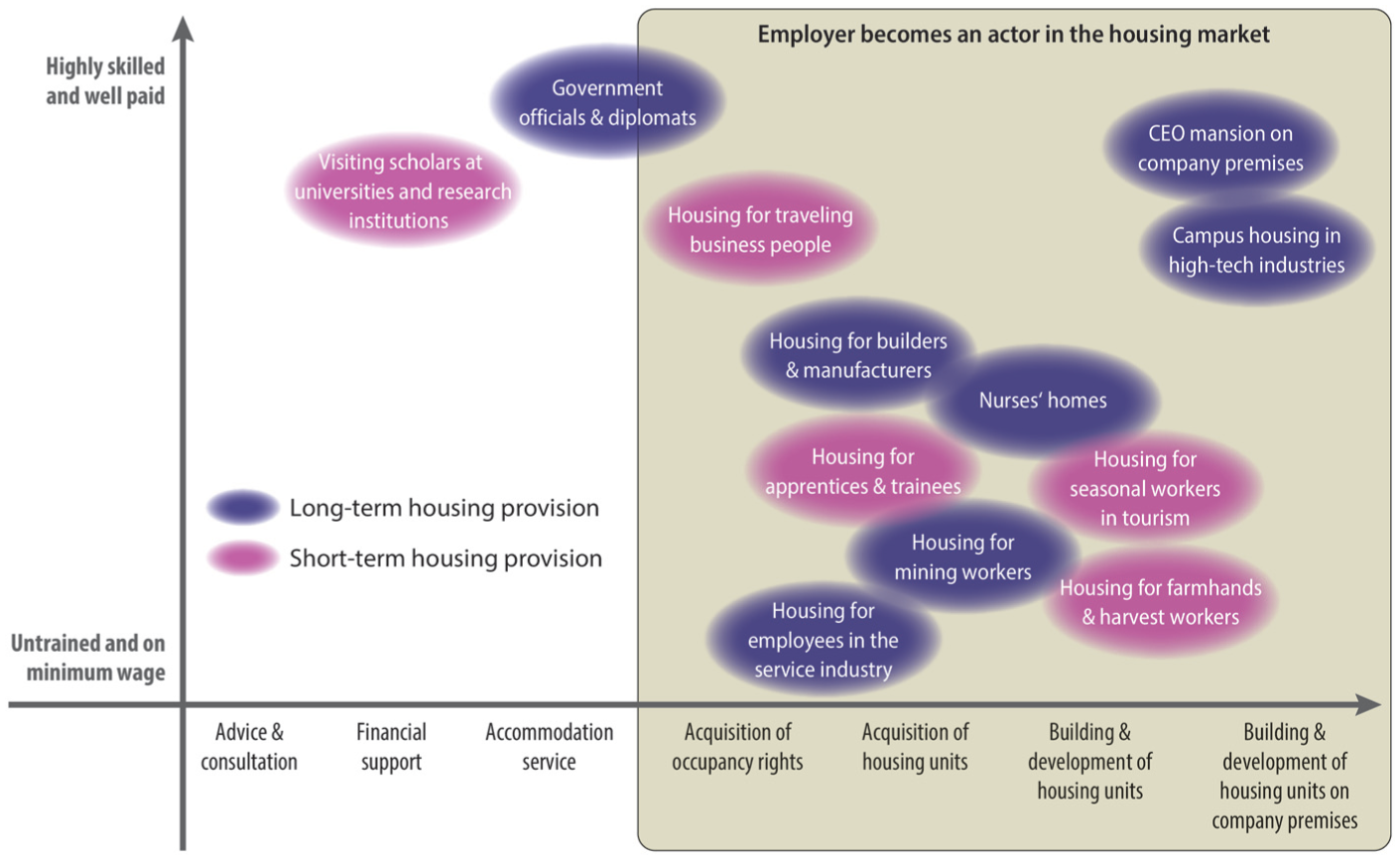
Common forms of employee housing in the 21st century (Conceptualised by the authors; Illustrated by Volker Schniepp).
SWOT analysis: Identifying the potentials and risks of employee housing
The following analysis is based on initial exploratory studies conducted by a team of geographers and urban planners at Heidelberg University. A first assessment of employee housing in Heidelberg shows that it holds great potential for the city in terms of sustainable urban development (Heptig and Morlock, 2024). To substantiate these arguments, we conducted a SWOT analysis (see e.g., Benzaghta et al. 2021), which involves a careful assessment of strengths and weaknesses, opportunities and threats of employee housing. The SWOT analysis was chosen because it allows an in-depth engagement with the various complex dimensions of employee housing. By categorising factors as Strengths, Weaknesses, Opportunities or Threats, the complexity is reduced and becomes manageable (Wollny and Paul, 2015). Therefore, it can be used not only for decision-making and strategic interventions, but also in research for exploration, mediation or design purposes (Wollny and Paul, 2015).
We use this method to list the potential benefits of employee housing and to identify any potential dangers or disadvantages for all stakeholders, including employees and housing recipients. Rather than focusing on single case studies (like the Munich employee housing initiative), the chosen method provides a broader picture, allowing for contesting theses to stand side by side and to explore the topic of employee housing in full.
The initial round of our analysis was based on a literature review and our professional experience in the field. While gathering information on employee housing, we discovered that they could be loosely grouped into three areas of interest: housing, economy, and mobility, and which might also be most relevant for future research on the topic. This does, however, not mean that they are mutually exclusive nor that there could not be other topics of interest.
As the aim of our analysis is to support effective research in the field of employee housing and to inform urban and economic development on the ground, we additionally conducted a stakeholder workshop in Heidelberg, co-designed by the city administration. The goal was to identify gaps or false assumptions in our SWOT-Analysis and to discuss our theses with practitioners. As we could not find sufficient academic literature, this workshop allowed us to our theses against the backdrop of the reality experienced by participants in the day-to-day. The workshop was held in April 2025 with more than 50 participants from urban planning, economic development and real estate, as well as some of the largest employers in Heidelberg (including the city administration and the university hospital) who are looking to invest in employee housing. After presenting the SWOT-Analysis, the three strands of the analysis were discussed during dialogue sessions. This was the most crucial phase as we could double-check our initial results. Interestingly, none of our assumptions were dismissed, neither were points added. Yet, the stakeholders varied on how they prioritised the various topics in the discussion. From that, we developed a synthesis of the workshop discussions, which was also shared with all participants. The following analysis is thus the result of a mediation between academic and applied knowledge, which we see as a starting point to develop further questions and empirical investigations into employee housing.
Housing dimension
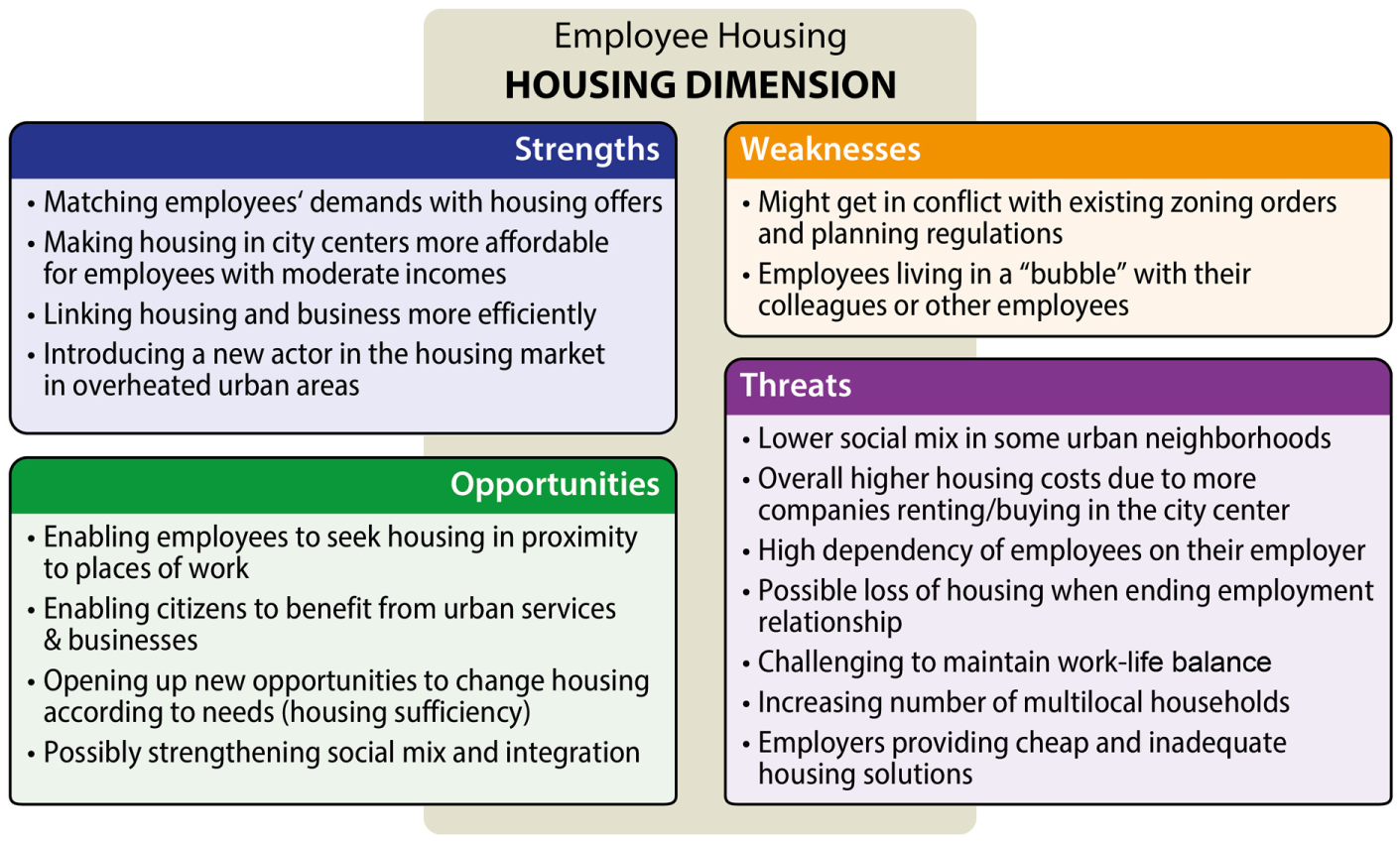
To begin with, we are going to focus on housing, as displayed in Figure 2. Employee housing provides workers with easy access to the housing market, offering affordable and suitable accommodation. To develop effective, tailor-made solutions, it is, however, essential to account for the diversity of employee needs and circumstances—including income levels, household composition, job stability, and mobility patterns. By doing so, housing demand and supply can be better aligned with employee’s specific requirements. As confirmed during the stakeholder workshop, achieving this alignment also necessitates the involvement of an intermediate “match-maker” to facilitate appropriate connections between housing providers and employees. Further, by linking business and housing more effectively, a higher degree of functional mix could be achieved and bring different aspects of urban life closer together, benefiting residents as well as a city’s local economy and improving the overall quality of life in cities. This will be possible due to new actors in the urban housing market, which counteract monopolies and diversify the supply of housing.
SWOT analysis with regards to the dimension of housing (Conceptualised by the authors; Illustrated by Volker Schniepp).
Yet, there are also a number of weaknesses within the housing dimension. Most prevalent for urban planning are specific zoning orders and planning regulations that might stand in the way of realising employee housing particularly in industrial and business zones. This aspect was also discussed during the stakeholder workshop, where business owners called for more flexible zoning regulations or the possibility to put aside land for employee housing in the conception of new quarters. In many cities, zoning orders would need to be changed to allow employers to build housing units on their company premises or nearby—but that can be a lengthy bureaucratic process. This might also extend to legal (e.g., building and planning law), financial (e.g., subsidies or financial commitments) and organisational (e.g., property management and dealing with tenants) hurdles that would have to be addressed. From the perspective of employees, employee housing could result in a very homogeneous group of tenants and may reduce social interaction with other residents. So, while the social mix of urban centres might increase overall, there is a danger of employees of specific businesses living in “bubbles” of their own.
While these weaknesses must be taken into consideration, new actors and potentially new designated building areas and construction would increase the number of available housing units in urban centres. This could not only put a cap on rising housing prices, but also increase the pool of affordable units in proximity to places of work that employees can choose from. This would also increase the range of services and amenities of urban life that they can access. In times of demographic change, particularly in many European countries, including Germany, we also see employee housing as an opportunity to allow residents to adjust their housing needs more flexibly. In line with discussions of housing sufficiency, the end of a work relationship might also challenge people to move and rethink their housing needs. This is mostly applicable to former employees retiring from their jobs and then moving to a place that fits their decreasing family size and that is more suited to their needs as they age. Finally, by reducing barriers for low-paid workers to enter the (urban) housing market, we believe that social mix and integration could be strengthened and thereby counteract trends such as gentrification, the suburbanisation of poverty as well as transport poverty.
At the same time, we were able to identify several threats when it comes to urban housing markets. We see a threat in the supply side argument. Research shows that merely increasing the supply of housing in urban areas does not necessarily increase affordability if no rent caps or vacancy taxes are implemented (Anenberg and Kung, 2020). It could thus be possible that employee housing could lead to overall higher costs as more actors are competing in the market, driving up prices. From the employee’s perspective, it could also be risky to enter such a close relationship with their employer and to depend on the employer for housing. Particularly once an employment relationship ends, it could be challenging for employees to find housing on the for-profit market. Job loss could, in the worst-case, result in homelessness. To protect employees, transitional arrangements would need to be included in policy frameworks. Here, we can learn from the large body of literature on place attachment and home, which highlights that housing is about more than providing shelter (see e.g., Anton and Lawrence, 2014; Sharp, 2018). Where one lives has a significant impact on local engagement, community participation, and attachment. If work and housing are tightly integrated, employees might struggle to maintain a healthy work-life balance or to seek distraction outside of work. While we see this as a potential issue with campus living or employee housing units on company premises, it may not apply to employee housing where the employer holds occupancy rights in various conveniently located places throughout the city. Although we argue that employee housing could reduce commuting, it could also increase the number of multilocal households that go back and forth between a small functional unit for work purposes and a house in the suburbs or countryside. Lastly, many international examples show that building standards would need to be introduced to prevent employers from providing cheap, inadequate units as an easy solution to avoid additional expenses. Research on worker camps and dormitories shows that this kind of employee housing comes with severe health and safety risks (Bruslé, 2012; Jatrana and Sangwan, 2004) and is not the kind of housing we vouch for in this article.
Economic dimension
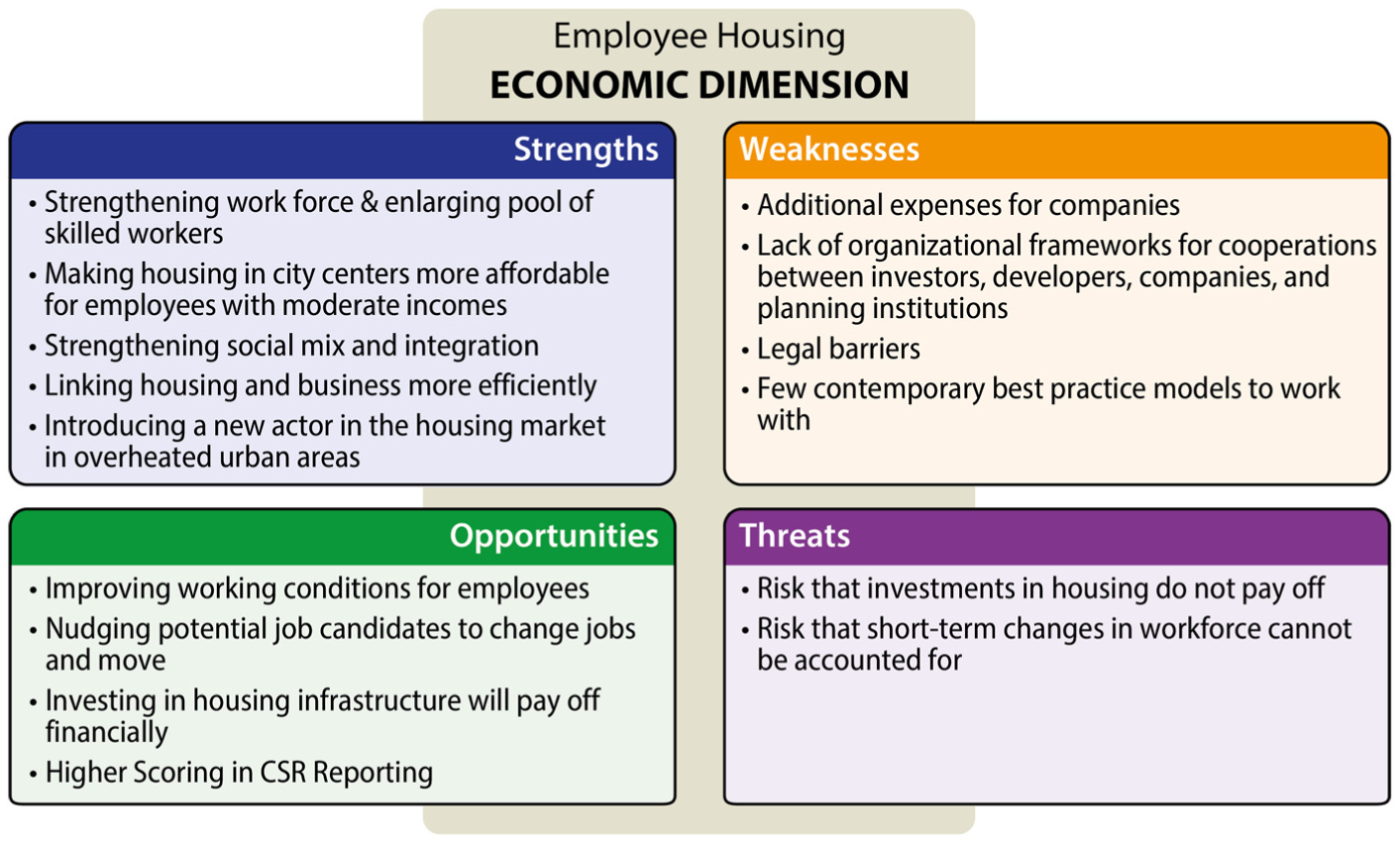
Secondly, we are focusing on economic aspects related to employee housing (see Figure 3), and we find numerous advantages for strengthening the urban economy. Employee housing could help to address the shortage of skilled workers, one of the most pressing issues currently impeding Western economies, specifically regions experiencing economic growth and tight labour markets. To facilitate economic growth and advancement in urban areas, it is a promising strategy to offer adequate and accessible housing options. This was also a main concern discussed during the stakeholder workshop. Successful companies are often situated in regions with a tight housing market which makes it difficult for new employees to move in. Here, the provision of new accommodation opportunities has the potential to facilitate the relocation of qualified employees from other regions and countries. Therefore, housing benefits can be a significant draw for top talent and help retain employees in the long run. An interesting fact coming out of the workshop was that this is even true for unskilled workers as training of new staff is always a costly affair and many workers who finished training left the city due to house prices in the city centres as other employers in more rural regions with affordable rents also offered job opportunities. This was mentioned in the workshop as being particularly evident when employees started thinking about having a family or when international workers sought to bring their families to live with them after completing their job training. Housing programmes could foster a sense of community and belonging among employees, strengthening the overall company culture which also helps to strengthen the bond between employer and employee. Other strengths lie in enhancing locational advantages—such as improving infrastructure and ensuring access to a skilled workforce—which makes an area more attractive to new businesses. When a location offers clear benefits like housing opportunities, it becomes a more compelling choice for companies looking to expand or relocate in this area. Another strength falls to the city. When businesses invest in the local housing market, this might result in increased property and land taxes which provides the city with additional funds that could be reinvested in critical infrastructure such as roads, schools and public services.
SWOT analysis with regards to the dimension of economy (Conceptualised by the authors; Illustrated by Volker Schniepp).
At the same time, several weaknesses could be identified. Depending on the organisational model they choose, companies will face new costs for the supply of living space. Furthermore, building and renting flats is an ambitious task for businesses, especially since many do not have the expertise in-house. Legal barriers and the lack of organisational frameworks for co-operations between investors, developers, companies, and planning institutions can thwart the engagement of companies in the housing market. For instance, in Germany, bureaucracy in the building sector is extensive and challenging for all stakeholders. There are few role models that can show how to meet all those requirements. During the stakeholder workshop, we learned that many companies are interested in employee housing as it would give them a competitive advantage. However, they would prefer to share the investment costs and responsibilities. Workshop participants thus clearly called for more best-practice examples and suggested platforms on which interested developers and companies could find each other and cooperate on providing employee housing.
Nevertheless, the substantial economic potential of employee housing is also apparent as it presents a range of promising opportunities. Improved working and living conditions for employees have been demonstrated to positively influence work efficiency. The availability of suitable housing can be a significant determining factor for persons exploring career and relocation opportunities (compare e.g., for Indiana, Coers, 2024). Over time, the investment in housing should pay off, particularly in markets where prices are high. Additionally, businesses might benefit from a higher score in Corporate Social Responsibility (CSR) reports.
Within the economic dimension of employee housing, only a few potential threats can be identified. The primary risk for companies lies in the possibility that such investments might not be profitable. Although this scenario is less likely in the current highly constrained housing market, especially in economically robust metropolitan regions, it cannot be entirely ruled out in the long term. Another risk concerns the limited flexibility of the building sector, which tends to respond slowly to shifting labour demands. As a result, rapid changes in workforce size or composition may not be adequately accommodated by existing or planned housing infrastructure.
Mobility dimension
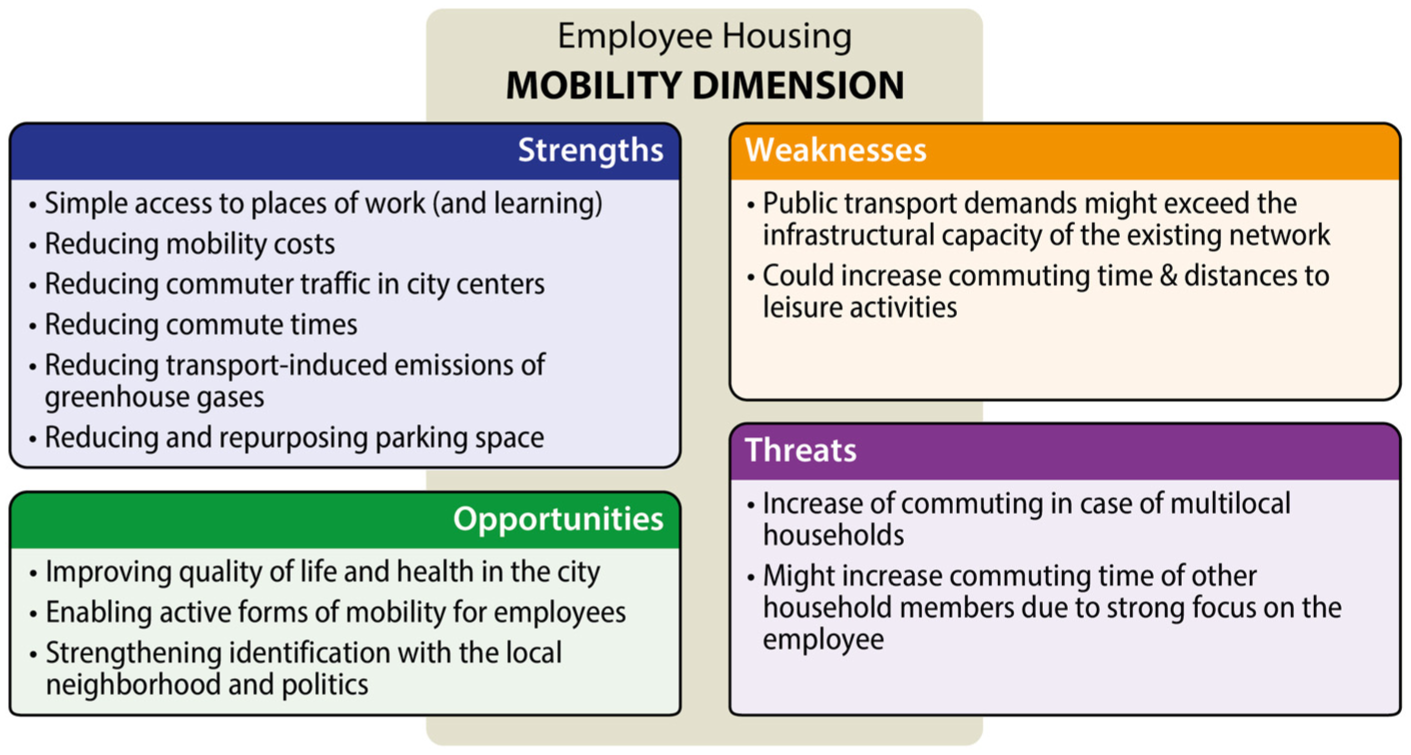
In a third step, we analysed the mobility dimension (see Figure 4). This dimension differs from the former two, as we see mainly positive impacts on the mobility of urban residents. Not only have employees the possibility to enjoy a reduction of commute times to their workplace, saving time, money and energy. The trips are likely to be shorter and, depending on the infrastructure and distance, they can be taken by public transport, cycling or walking reducing traffic-induced greenhouse gas emissions. This could save parking space at their workplace and allow people to have less or even no cars in their household. Furthermore, residents have the advantage to live in urban neighbourhoods closer to other amenities, such as childcare, cultural offerings or shopping and leisure facilities—saving trips and time spent in traffic when organising their private life. Additional benefits could be livelier streets and a stronger sense of community when meeting neighbours and colleagues outside. Employee housing could also lead to a stronger identification of citizens with their own city or urban area. Energy and time that is spent commuting could be channelled into the city’s social life, enhance engagement with local organisations, and allow for a stronger say in local politics when living and working in the same place (Anton and Lawrence, 2014).
SWOT analysis with regards to the dimension of mobility (Conceptualised by the authors; Illustrated by Volker Schniepp).
Those benefits, however, depend on the infrastructure surrounding the workplace and the residential area. Lack of public transport or bike lanes could lead to more inner-city car traffic, even when the distances are short. Additionally, if child-care and educational facilities are lacking in the city or if leisure activities can only be carried out in other parts of the city or suburban areas, employee housing near the workplace might reduce commuting time for work—but it can increase overall time spent in traffic as household members travel to meet other daily needs—a point reinforced by the workshop, which confirmed that proximity was a highly relevant factor. This can also be true for a double-income household—shortening the commute for one might lead to longer commutes for the other party. A strong public transport link between housing and workplace was therefore seen as more important than short distances. This aligns with findings that longer distances do not equal longer commuting times necessarily (Van Ommeren and Rietveld, 2005). These regional transport entanglements were also underlined during the stakeholder workshop, in which many argued that issues with mobility could not be solved by the city alone. But overall, the SWOT analysis for the mobility dimension highlights many strong positive aspects associated with employee housing.
Finally, the analysis demonstrates that, in certain instances, it is challenging to draw a definite line between the disparate aspects that have been broadly classified under the categories of housing, economy and mobility. While we see high potential for all areas of urban life, we have also identified many risks that might particularly affect urban residents with fewer means. For instance, introducing companies as actors in the housing market could run the risk of outpricing “ordinary” residents. Therefore, the impact on social stability and affordability in the urban housing market could prove to be a double-edged sword. Reversely, we see great potential in employee housing offering employees working in low-hanging service jobs the opportunity to partake in the urban housing market and to relieve them of long commutes and high mobility costs. This could strengthen social mix and the economy of the city. Hence, when it comes to supporting employee housing in a city or metropolitan region, a reflexive approach is needed, in which specific needs are carefully identified and the weaknesses and threats are taken seriously.
Conclusion: Employee housing as an emerging field of research
The SWOT analysis, in combination with the stakeholder workshop, helped to flesh out the potential for, as well as the complexities of, employee housing. Although there are many challenges associated with employee housing, and it is certainly not the only solution to the manifold problems cities face today, the analysis reveals a wealth of strengths and opportunities if implemented correctly. By bringing the literature on housing affordability and job-housing-balance into conversation, employee housing, a seemingly outdated planning tool, becomes increasingly relevant again. We argue that employee housing can specifically address the challenges urban centres are facing in the 21st century. Particularly in Western, industrialised states, urban centres are struggling to stay economically competitive considering changing labour conditions, an aging workforce and often strict ecological standards when it comes to production and mobility. These issues are compounded by a crisis of housing affordability, which has made housing markets exclusive to those with higher incomes, hindering many essential workers from accessing housing near their places of work. While we identify employee housing as a possible tool to jointly address these challenges rather than thinking in silos, there are also many critical questions that will need to be substantiated further.
Yet, there are limits to the applicability of employee housing. In some professions, it might not make sense to offer employee housing, while in other contexts new technologies and remote-work options might be more sensible. Also, the availability of employee housing alone would not solve the shortage of skilled workers in countries such as Germany, which face a severe demographic shift. It offers options for employers and companies to attract workers, not only nationally but also internationally, but as we have shown, new insights are crucial to facilitate planning and legal frameworks. Employee housing, as envisioned in this article, can only work if lessons are learnt from past mistakes. To give one example: Employee housing could lead to exclusive housing zones (Guillemette, 2025) or even oppressive forms of social control as described in dystopian novels such as Dave Egger’s The Circle. It is thus crucial to think of employee housing with critical urban studies literature in mind. For instance, as cautioned in the literature on the right to the city, access to urban space and a right to dwell in the city should not be bound to whether a person is deemed a productive and loyal worker (Mitchell, 2003). On the other hand, access to housing in the city is also seen as a prerequisite for making use of one’s right to the city (Muñoz, 2018). Employee housing is thus not necessarily a tool that further commodifies urban space and disenfranchises workers, as Engels warned, but could also help to strengthen place attachment and further local engagement.
These complexities make further engagement with employee housing a worthwhile topic in urban studies. The SWOT-analysis and our research so far identified a lack of projects, research and evidence around the effectiveness of employee housing. We thus see an interdisciplinary research field emerge that offers a variety of timely research questions and the possibility to work on practice-oriented projects or real-life labs. The SWOT analysis and the stakeholder workshop were only the first steps. Following from these, possible research questions could include: Under what circumstances does employee housing foster social stability (identification of residents with an area, social mixture, risk of excluding not-work related housing etc.)? What forms of employee housing are more likely to destabilise a community or have negative impacts on individuals (e.g., potential loss of housing when leaving a job)? How are place attachment and feelings of home negotiated in temporary employee housing arrangements? How does employee housing correspond with the right to the city? Answering these questions can lead to the development of instruments that shape planning and funding schemes as well as public programmes such as the provision of information on employee housing by the local authorities. Whether instruments are creating the desired outcomes (e.g., affordability for low-wage workers in urban areas or shorter commutes, economic development), could also be a field for further longitudinal studies or a comparison between various municipal programmes.
We believe that with an interdisciplinary and integrative approach to the topic and more knowledge about employee housing, its risks and benefits, this old tool from the industrial age could be revamped and used to tackle the challenges ahead. While planners and policymakers are increasingly convinced by its potential, such political advances are not supported by data and in-depth research. Therefore, we would like to invite more substantial attention to the renaissance of employee housing and urge urban studies scholars to consider it a viable field of research at a time where the housing question, with all its economic and ecological layers, is an ever-present burden on urban life.
Footnotes
Acknowledgements
We are thankful for the constructive and stimulating feedback from our colleagues Ulrike Gerhard, Anne Morlock and Caroline Walter, who read an earlier version of this article. Further, we would like to acknowledge the City of Heidelberg for their openness in collaborating on this project and for enabling a fruitful exchange between city and university. Special thanks also to the FRU for supporting the stakeholder workshop.

Author contributions
All authors contributed equally to all steps in the production of this article, including the acquisition of funding, the organisation of the stakeholder workshop, as well as the conceptualisation, writing and editing of this article.
Funding
The authors received no financial support for the research, authorship, and/or publication of this article.
Declaration of conflicting interests
The authors declared no potential conflicts of interest with respect to the research, authorship, and/or publication of this article.
Data availability statement
No data set associated with this submission is available.