




Abstract
The global phenomenon of liberal cities opposing reactionary nation-states has garnered increasing attention in recent years, with cities such as Istanbul, Warsaw and Tel Aviv–Jaffa serving as prominent examples. While the existing literature has explored various elements of this trend, it has largely overlooked the perspectives of ordinary city dwellers on this process. This study explores city residents’ perceptions of the municipality’s role in promoting liberal policy agendas traditionally associated with the national level. Using an original survey conducted in Tel Aviv–Jaffa, Israel, we propose a novel typology that classifies residents as ‘Liberals’, ‘Municipalists’ or ‘Conservatives’ based on their local policy preferences. Our findings reveal a significant liberal group (28%) that prioritises municipal involvement in ‘big’ liberal issues over traditional municipal functions. This diverse group, which is pessimistic about the country’s future, supports progressive policies at the local level. The study also profiles the three groups in terms of socio-demographic variables and examines the factors influencing their attitudes. This research contributes to understanding the role that progressive municipalities assume in times of growing urban-national polarisation, offering insights and tools that might be applicable to other cities worldwide facing similar challenges.
Introduction
In the last two decades, many countries (e.g. Turkey, Hungary, India, Poland, Israel, the United States and Italy) have experienced an illiberal, populist or neo-nationalist turn (Eger and Valdez, 2018; Zhou and Cn, 2022), evident in the rise of leaders who promote the supremacy of specific racial, religious or territorial identities and loyalties. Yet whereas increasing numbers of countries are governed by illiberal coalitions, some major cities therein thrive as liberal and progressive ‘islands’ (Akçali and Korkut, 2015; Barak and Mualam, 2022; Bustikova and Guasti, 2017). Indeed, major cities now demand a say in ‘big’ policy agendas, such as immigration, civil rights, social inequality and environmental sustainability, all traditionally considered the domain of the nation-state (hereafter state). Global and regional municipal networks such as C40, Fearless Cities and the Pact of Free Cities highlight the expansion of municipal agendas into these policy areas, as well as the resulting tensions between illiberal states and major cities therein (Aksztejn et al., 2024; Avni, 2024).
To understand the growing divergence between liberal cities and illiberal states, a considerable amount of literature has explored various strategic, economic, political or cultural aspects of this phenomenon (Brown and Enos, 2021; Martin and Webster, 2020; Rodden, 2019). For example, scholars have examined municipal movements such as New Municipalism, exploring how coalitions of leftist social movements and politicians attempt to claim more urban autonomy in fostering progressive urban regimes (Arpini et al., 2022; Béal et al., 2023; Sareen and Waagsaether, 2023). However, scholars have largely overlooked the perspectives of ordinary city dwellers in support of or in opposition to liberal progressive municipal policies. Understanding residents’ expectations and support of the local government is critical in assessing the legitimacy of policy making and, ultimately, how the public embraces it. Patterson (2023: 69) demonstrates that a lack of support among different stakeholders can lead to backlash, ‘An abrupt and forceful negative reaction by a significant number of actors within a political community’. This may result in the abolition of progressive policy, as was the case in the Yellow Vests protests in France in 2018–2019. As municipalities increasingly step into new arenas of influence and action, understanding public legitimacy over contested issues becomes more important. To bridge this theoretical gap, we ask how city residents perceive the municipality’s role in promoting ‘big’ liberal policy agendas that are commonly attributed to the national level compared to classic municipal functions. We examine this question through an original survey (N = 426) that we designed and implemented in Tel Aviv–Jaffa, Israel, which, as elaborated further in the section ‘Tel Aviv–Jaffa: A liberal alternative to a nationalist state?’, exemplifies the global trend of liberal cities opposing illiberal states.
Similar to other countries experiencing an illiberal turn, Israel’s national government has become increasingly right wing. Indeed, since early 2023 it has been attempting to implement a judicial overhaul resembling processes that took place in Hungary and Poland. Yet the increasingly nationalist and religious trajectory of the country was evident even prior to this (Peled and Peled, 2019). Within this context, the tensions between the processes underway in some municipalities, like Tel Aviv–Jaffa, and those unfolding on the national scale have become yet more pronounced. We focus on Tel Aviv–Jaffa as our case study for three main reasons. First, it has a legacy of liberal-orientated municipal initiatives that openly confront central government policies, including the introduction of public transportation on the Jewish Sabbath, advocating LGBTQ+ rights and supporting work migrants and asylum seekers. Second, due to its strong economic foundations, Tel Aviv–Jaffa is relatively autonomous compared to other municipalities in Israel’s highly centralised political system. This autonomy affords the municipality the ability to implement policies that might run counter to national ones. Third, Tel Aviv–Jaffa’s constituency is predominantly centre or left wing in terms of voting in the national elections, an important indicator of urban-national polarisation. Thus, Tel Aviv–Jaffa is a suitable case study for examining residents’ views of and expectations from the municipality during turbulent political times.
We hypothesise that a large number of city dwellers prioritise liberal policies at the local level, particularly regarding ‘big’ policy topics traditionally considered the domain of the state. Following political developments at the national level, this population finds itself alienated from the national government’s agendas and interests. Consequently, they expect the municipality to pursue policies that mirror their values. In particular, this study aims to achieve three primary objectives: (1) to test the existence of a significant constituency of liberal residents who expect the municipality to take a stand on liberal-progressive issues; (2) to profile the liberal segment of residents in terms of income level, typical location and other sociodemographic variables; and (3) to examine the factors affecting liberal attitudes among these residents, focusing on their perception of the national government and the state. Based on the findings, we propose a typology classifying city residents based on their positions vis-á-vis ‘big’ versus ‘classic’ policy agendas – as Liberals, Municipalists and Conservatives.
Our findings reveal a significant liberal group (28%) that prioritises the municipality’s involvement in ‘big’ liberal issues over traditional municipal functions. This group, more diverse ethnically, spatially and socio-economically than expected, feels threatened by national trends and pessimistic about Israel’s future. The largest segment, however, comprises Municipalists (53%), who value liberal topics but emphasise core municipal responsibilities. The smallest group (18%), the Conservatives, ranks liberal topics very low. Notable differences emerge among the groups. Around half of Liberals and Municipalists are Ashkenazi Jews (of European descent), compared to only 29% of Conservatives. While 96% of Liberals and 81% of Municipalists identify as secular, only 47% of Conservatives do. Income disparities are less pronounced: 46% of Liberals, 43% of Municipalists and 39% of Conservatives belong to higher income brackets. Residential patterns also differ. Most Liberals (68%) and Municipalists (68%) live in the affluent centre or northern Tel Aviv, compared to 59% of Conservatives. In contrast, more Conservatives (41%) reside in less advantaged East or South Tel Aviv compared to Liberals (33%) and Municipalists (33%). Regarding outlook, pessimism about Israel’s future is highest among Liberals (79%), followed by Municipalists (60%) and Conservatives (23%).
Our typology, while centring on Tel Aviv–Jaffa, can be applied to many cities worldwide; indeed, it offers an innovative framework for examining residents’ preferences at the municipal level and raises relevant questions concerning the role of local governments in an age of growing expectations among their constituencies. Examining the distribution of residents’ support for liberal-progressive agendas establishes a foundation for future research into the broader dynamics of local policy making and the distinctive role that urban residents play within it. Our study situates itself within contemporary debates on the justifications for local government as decentralised, autonomous units that aim to foster a stronger alignment between residents’ demands and public policy (Bulkeley et al., 2018; Golan-Nadir et al., 2024; Kaufmann et al., 2024). While substantial scholarship has explored the different values and political agendas across the urban–rural divide, to the best of our knowledge our study is novel in documenting residents’ preferences at the municipal level in the context of growing urban-national polarisation. It also offers new insights into the potential implications of residents’ preferences for local governance.
The article has six main sections. The following section outlines the theoretical framework pertaining to local autonomy and residents’ policy preferences. The third offers a concise overview of the city of Tel Aviv–Jaffa, encompassing the diverse expressions of local autonomy that have surfaced in recent years. The fourth section presents the research methodology. Subsequently, the fifth analyses the survey results, classifying city dwellers into three main groups based on the proposed typology. Finally, we discuss the research findings and draw conclusions about the implications of the presence of a significant group of liberal-orientated residents for urban autonomy at the local level.
Literature review: Liberal autonomous urban regimes
In recent decades, many countries have experienced a significant shift in intergovernmental relations, moving from a hierarchical political system to models of multi-level governance (Bache et al., 2016). At the local level, major municipalities worldwide have increasingly expanded their mandate beyond providing services such as water, sewers, roads and parks (Slack, 2004) to include broader progressive issues such as immigration, civil rights, social inequality and environmental sustainability, areas traditionally within the state’s domain.
Urban agendas that openly confront state-level policies are evident in many locales in Europe, North America, Latin America and beyond. In the USA, Sanctuary Cities restricted their cooperation with federal immigration authorities to accommodate illegal migrants and refugees in their communities (Bauder, 2017). Another prominent example is ‘New Municipalism’ (Arpini et al., 2022; Béal et al., 2023; Sareen and Waagsaether, 2023). Between 2015 and 2019, many Spanish municipalities, including Madrid and Barcelona, were governed by coalitions originating in anti-austerity social movements that embraced the local level as a means to instigate large-scale social change (Janoschka and Mota, 2020; Russell, 2019; Sareen and Waagsaether, 2023).
The rise of local autonomy is also evident on a larger scale, reflecting a more collaborative approach in which municipalities establish regional and international collaborations, exemplified by initiatives such as C40, a global network of nearly 100 mayors seeking to tackle the climate crisis. Another compelling example is the Pact of Free Cities between Prague, Budapest, Bratislava and Warsaw, designed to channel EU funding to the municipal level, share best practices to tackle urban problems and protect and promote freedom, democracy and equality.
Various bodies of scholarship offer explanations as to why cities worldwide are increasingly assuming new roles and responsibilities, positioning themselves as a progressive alternative to the nation-state. For example, Ljungkvist (2016) argues that global cities’ engagement with international affairs, such as counterterrorism and climate change mitigation, is often rationalised as contributing to the city’s economic growth. Acuto (2013: 13) suggests that the participation of global cities in transnational networks underpins their direct political influence on global governance, particularly in tackling contemporary global challenges such as climate change, terrorism and pandemics. According to Tavares (2016: 40–47), the engagement of subnational governments in paradiplomacy is influenced by various motivations, such as seizing global opportunities, enhancing citizen services, pursuing electoral opportunism and addressing local claims. While these and other studies frequently focus on the strategic, economic, political or cultural factors driving the rise of local autonomy (Goldsmith, 1995; Ladner et al., 2016), they devote less consideration to the policy preferences and expectations of local communities and how these interact with agenda setting at the local level.
Studies directly examining residents’ attitudes vis-á-vis urban policies typically concentrate on municipalities’ conventional functions and services (Cheng and Urpelainen, 2015; Tran and Dollery, 2020) rather than the ‘big’ policy functions that municipalities have increasingly assumed as part of their progressive transformation (e.g. LGBTQ+ rights and climate change mitigation). Furthermore, the evaluation of residents’ attitudes is often based on their satisfaction with ongoing local policies rather than their preferences and expectations regarding potential policies. Measuring satisfaction with pre-existing policies overlooks the importance that residents might attribute to different policy alternatives – thus, the very existence of a particular policy, or the lack of another, is not challenged (for a notable exception, see Kaufmann et al., 2024). Other studies examining the role of urban residents in cities’ progressive autonomous shift tend to focus on urban social movements and activism (Thompson, 2020); however, the role of ‘ordinary’ non-activist residents remains largely unexplored.
Local governments’ responsiveness to their residents’ policy preferences is significant not only for electoral reasons – to secure the re-election of local politicians (Balaguer-Coll et al., 2015; Lerusse and Van de Walle, 2022) – but also to legitimise municipal intervention in new policy fields. Patterson (2023) demonstrates how strict climate policies can trigger ‘backlash’ from a wide range of stakeholders, including the policy recipients, potentially leading to policy regression and raising concerns about the likelihood of future initiatives. Hence, municipal initiatives are more likely to be consensual, sustainable and shielded from criticism when they garner broad public support.
Our study seeks to bridge the theoretical gap concerning city residents’ preferences vis-á-vis progressive policy agendas and how these are reflected in their expectations from the municipality. We also examine the relationship between residents’ policy preferences and their broader political outlook at the national level to further unpack the relationship between the local and the national levels during a period of growing political polarisation. Before turning to the research design and the typology of residents’ groups we developed (see the section ‘Research design’), a brief presentation of Tel Aviv–Jaffa, which lies at the core of this study, is in order.
Tel Aviv–Jaffa: A liberal alternative to a nationalist state?
Israel is a highly centralised state, where the formal autonomy of local governments is significantly constrained. Many municipalities are dependent on national subsidies and grants, which restricts their ability to act independently. However, Tel Aviv–Jaffa, the largest metropolis in Israel and the country’s financial and cultural centre, stands out as an exception for its relative autonomy, largely attributed to its strong fiscal position. Although only 5% of Israel’s residents live in Tel Aviv–Jaffa, it concentrates 11% of the country’s employees and more than 11% of Israel’s GDP (Tel Aviv–Jaffa Municipality, 2017). The city is also an innovation hotspot: in 2018, 255 startups opened in the municipal area, compared to 135 in the metropolis and fewer than 50 elsewhere in Israel (Levi, 2019). While Jerusalem, the capital, is heavily shaped by national interests and dependent on national budgets, Tel Aviv–Jaffa exhibits considerably more municipal and financial autonomy within Israel’s highly centralised system (Alfasi and Fenster, 2005; Barak and Mualam, 2022). Likewise, the municipality is considered Israel’s most progressive, liberal, secular and global city, an ethos that has developed since its establishment in 1909 as the ‘First Hebrew City’. Tel Aviv–Jaffa is popularly referred to as the ‘Tel Aviv state’ (Azaryahu, 2008), reflecting its distinguished and independent character as well as its unique status in Israel.
Tel Aviv–Jaffa concentrates a significant number of Israel’s post-hegemonic, founding elite, which sociologist Kimmerling (2001) coined Achusalim – an acronym for Ashkenazi, Secular, Veteran, Socialist and Nationalist. Tel Aviv–Jaffa is distinct from other Israeli cities in terms of residents’ income and voting patterns in national elections. The average gross wage in Tel Aviv–Jaffa is 40% higher than in the rest of Israel, and 25% of employees in the high-tech services sector work in Tel Aviv–Jaffa. Voting data indicate that the three Centre-to-Left Zionist parties (Yesh Atid, Ha’avoda and Meretz) received 53% of the vote in Tel Aviv–Jaffa in 2022, as opposed to 25% at the national level (Blanero, 2022). These electoral differences are not unique to the last elections. While significant differences exist between the city’s wealthiest areas and the marginalised ones, also manifesting geographically across north and south (Margalit and Vertes, 2015), the city as a whole is considered leftist. Tel Aviv–Jaffa is also home to the largest LGBTQ+ community in Israel (Misgav, 2019).
Like other cities around the world facing similar circumstances, in recent decades Tel Aviv–Jaffa’s secular and liberal ethos has stood in opposition to Israel’s right-wing, nationalist government (Avni, 2024). The main areas of friction are immigration, religion versus secularity (e.g. public transportation and businesses on the Sabbath, civil marriages), LGBTQ+ rights and, more recently, the Israeli government’s 2023 judicial overhaul attempt. The municipality, headed by Mayor Huldai since 1998, has made significant strides towards achieving greater urban autonomy in recent decades, openly confronting state policies on many occasions and presenting different alternatives in areas such as transportation, services and civil rights. For example, in 1998, the municipality inaugurated the first pride parade in Israel, which has since become one of the largest in the world. In 1999, the municipality founded Mesila, a municipal agency that provides welfare, health and education support for the city’s 33,500 asylum seekers and work immigrants – in opposition to national policy. The municipality has also provided free public transit on Saturday (Shabbat) since 2019, bypassing national law. These are merely a few prominent examples of municipal services that are provided in lieu of, or directly counter to, national-level policies. Tel Aviv–Jaffa’s various progressive municipal policies have also been critiqued on the grounds that liberal issues are utilised for marketing and PR purposes, that is ‘pinkwashing’, while the municipality does little to address substantial inequality issues. Nonetheless, the municipality remains a stronghold of liberal-progressive values and agendas.
These circumstances make Tel Aviv–Jaffa a case in point to examine the extent and variability of residents’ support – or lack thereof – for the municipality’s liberal orientation. Understanding the distribution of public support across different groups is the first step towards better theorising the relationship between public legitimacy and local governments’ positioning vis-á-vis the national level.
Research design
This study aims to categorise Tel Aviv–Jaffa’s residents’ priorities regarding municipal policies, specifically determining the scope and characteristics of a group that prioritises ‘big’ liberal issues over classic municipal functions. In addition, we seek to examine the relationship between this prioritisation and the broader political outlook at the national level.
Specifically, we predicted that a more pessimistic and threatened group of residents, those who feel that the national government’s direction and agenda are misguided, will be more supportive of the municipality’s involvement in a ‘big’ liberal agenda. This hypothesis is based on our assessment that, in the Israeli context, the emergence of the municipality as a political entity attempting to address broader political goals is also a form of withdrawal and, in some ways, an insurance policy against the state. Accordingly, citizens, fearing that political upheavals at the national level might jeopardise their values and interests, turn to the municipality to enhance its political agenda and scope. Indeed, they wish to transfer political power to the local level, where their liberal majority is sound, as a mechanism to balance the rightward drift of the national government. In addition, we predicted that the desired shift of political power to the local level is also an act of reclaiming efficacy by citizens who find themselves unable to influence the national government.
Our main hypotheses are:
H1: Residents’ outlook on Israel significantly influences their support for the municipality’s role in advancing a liberal agenda, with those holding a negative view more likely to support it, while those with a positive view are more likely to oppose it.
H2: Residents with a lower perceived influence on national government are more likely to support the municipality’s efforts to promote a liberal agenda, while those who feel they have more influence on the national level tend to oppose the municipality’s involvement in this area.
To examine these hypotheses, we designed an original survey that was conducted among Tel Aviv–Jaffa residents in May 2023 by iPanel, Israel’s largest internet panel service. The questionnaire collected information concerning demographics, political outlook, viewpoints and priorities regarding various policy issues at the municipal level. Invitations to panellists were issued with the aim of replicating as closely as possible the known age and sex distribution of the adult population of Tel Aviv–Jaffa. A total of 473 residents participated in the survey. After excluding respondents who answered inconsistently, the effective sample size was 426.
To construct the independent variable regarding the outlook on Israel, we combined three questions taken from Israel’s annual Democracy Index, which was created by the Israel Democracy Institute (Tamar, 2022). Respondents were asked to assess Israel’s status in general using a five-point scale (ranging from very good to very bad), in addition noting whether they are pessimistic or optimistic about its future (ranging from very optimistic to very pessimistic) and whether they are concerned that it will be harder to maintain their way of life due to the rising dominance of other groups in Israeli society (ranging from extremely concerned to not concerned at all). We then used Principal Component Analysis (Fabian et al., 2011; Pearson, 1901) to combine the answers to these three questions into a single continuous scale. To assess the second hypothesis, regarding the ability to influence Israel at the national level, we asked respondents another question taken from Israel’s Democracy Index –‘To what extent can you and your friends influence the Israeli government’s policy?’– with answers ranging from ‘to a very large extent’ to ‘not at all’.
The dependent variable in our hypothesis is the degree of support for and prioritisation of liberal policies concerning ‘big’ policy issues at the local level. Respondents were therefore asked about the importance they attribute to six different policy areas: three statutory ‘core’ municipal functions in Israeli cities and three that relate more to national policies, regarding which municipal involvement is relatively recent and more contested. The three ‘core’ issues were creating and maintaining green spaces, managing urban mobility in streets and public spaces (walkability, parking and bike lanes) and organising and funding cultural and recreational institutions and activities. The three ‘liberal’ issues were promoting public services on Shabbat, the Jewish day of rest (including opening businesses and operating public transit), nurturing good relationships and mitigating inequalities between Jews and Arabs and supporting the city’s LBGTQ+ community, including running a citywide centre for the community and sponsoring the yearly pride parade.
To measure residents’ priorities, we adopted the approach used by Häusermann et al. (2022) to assess priorities regarding social policies and reforms in Western Europe. In so doing, we aimed to measure the relative importance that residents attribute to municipal issues given that municipal abilities are not without limits. If survey respondents state their unconstrained preferences, without considering the need to prioritise policies, this might lead to over-simplified answers. Such unconstrained preferences do not reflect the reality of a limited budget and political capital.
The need to allow for prioritisation and better depiction of respondents’ preferences led us to create three sets of questions concerning the six policy topics. The first was a simple 1–10 Likert scale documenting the importance of each topic (with the option of also indicating an objection to the municipality’s involvement in this domain altogether). The second set was a budget-constrained question regarding the six topics. Respondents were asked to assume that not all topics could be addressed and budgeted by the municipality with the same level of urgency. They were therefore asked to distribute a 100-point ‘budget’ to the six topics according to the priority and importance they attribute to each one. The third set of questions entailed three vignettes describing a hypothetical race for the city’s mayoral office. Two new candidates, fairly similar, differed on one major issue: one wished to allocate budgets and attention to one of the three ‘liberal’ topics, while the other candidate focused on one of the three ‘core’ topics. The respondents had five potential answers for each vignette, ranging from ‘definitely’ choosing to not choosing a candidate. Each respondent answered three vignettes with three different combinations of core-liberal topics. The pairings were changed and randomly assigned to respondents in order to prevent bias of especially ‘strong’ or ‘weak’ topics.
Notably, some respondents answered the prioritisation questions inconsistently – for instance, they accorded more budget points to topic A over topic B, while later choosing a candidate who promoted topic B over a candidate promoting topic A. A combined consistency test, taking into account the answers to the three indicators (Likert, budget and vignettes) was created, and the top 10% of inconsistent respondents were removed. The guiding principle was to endeavour to remove inconsistencies that likely stem from not paying close attention to the survey, leaving minor inconsistencies that may reflect candid answers which are not perfectly consistent in the strict sense (for instance, awarding equal budget points to topics A and B and later ‘probably’ choosing a candidate promoting policy B over a candidate promoting policy A).
Having excluded the inconsistent respondents, the resulting three importance and priority indicators were combined into a single score using Principal Component Analysis and used to create three groups of respondents. As presented in Figure 1, at one end of the scale some respondents ranked liberal topics very low, with some objecting to the very involvement of local government in these issues. This group was labelled Conservative. At the other end of the scale, some respondents prioritised ‘big’ progressive topics over core topics at the local level and were labelled Liberals. In between, many residents ranked liberal topics as important, while still prioritising core municipal issues; accordingly, they were labelled Municipalists. Figure 2 presents a representation of the three groups according to the three indicators (Likert, budget and vignettes) that served as the building blocks for their grouping. According to this distribution, 119 respondents (about 28% of the respondents) were Liberals, 229 Municipalists (about 53%) and 78 Conservatives (about 18%).
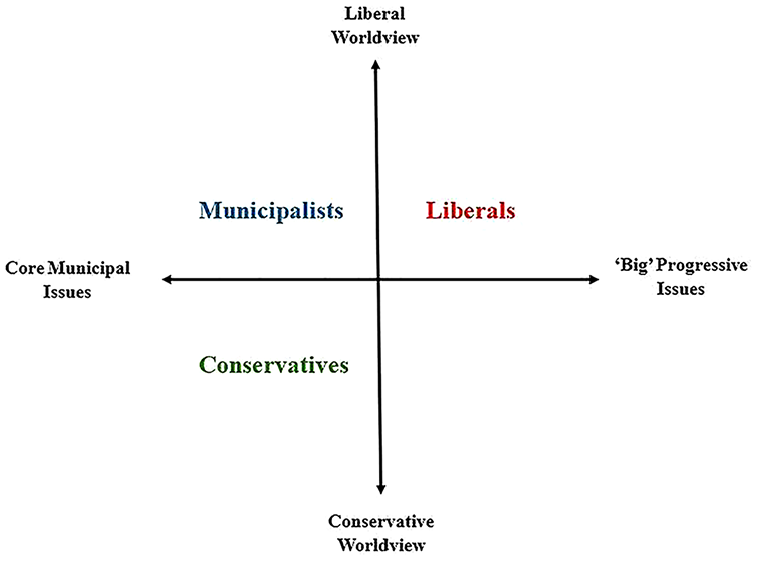
A new typology of city dwellers according to worldview and municipal policy preferences.
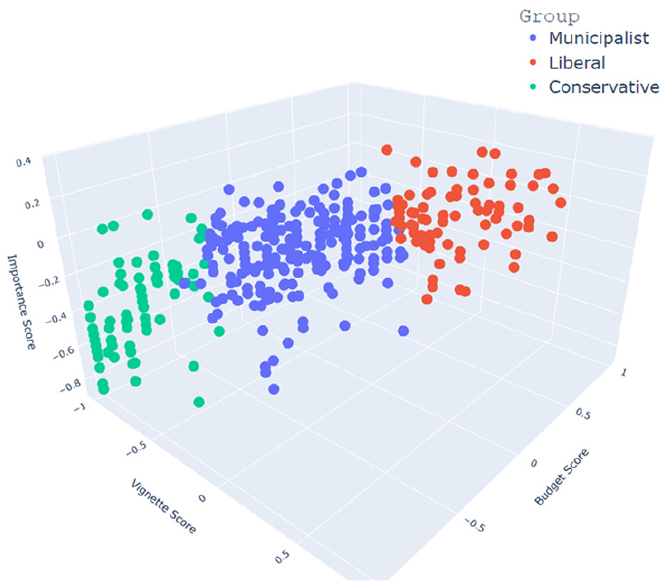
A representation of the three groups (Liberals in red, Municipalists in blue and Conservatives in green) according to their score on the three indicators (Likert, budget and vignettes).
A few caveats should be noted. First, this research is based on an original survey that partly builds on new variables and typologies. Second, the survey was conducted during a volatile political period in Israel, while a major political protest was underway regarding the judicial overhaul promoted by the country’s far-right government. Considering that this protest likely influenced respondents’ views of the relevant issues, from outlook on national politics to the role of local government, examining the results over time seems essential.
Findings
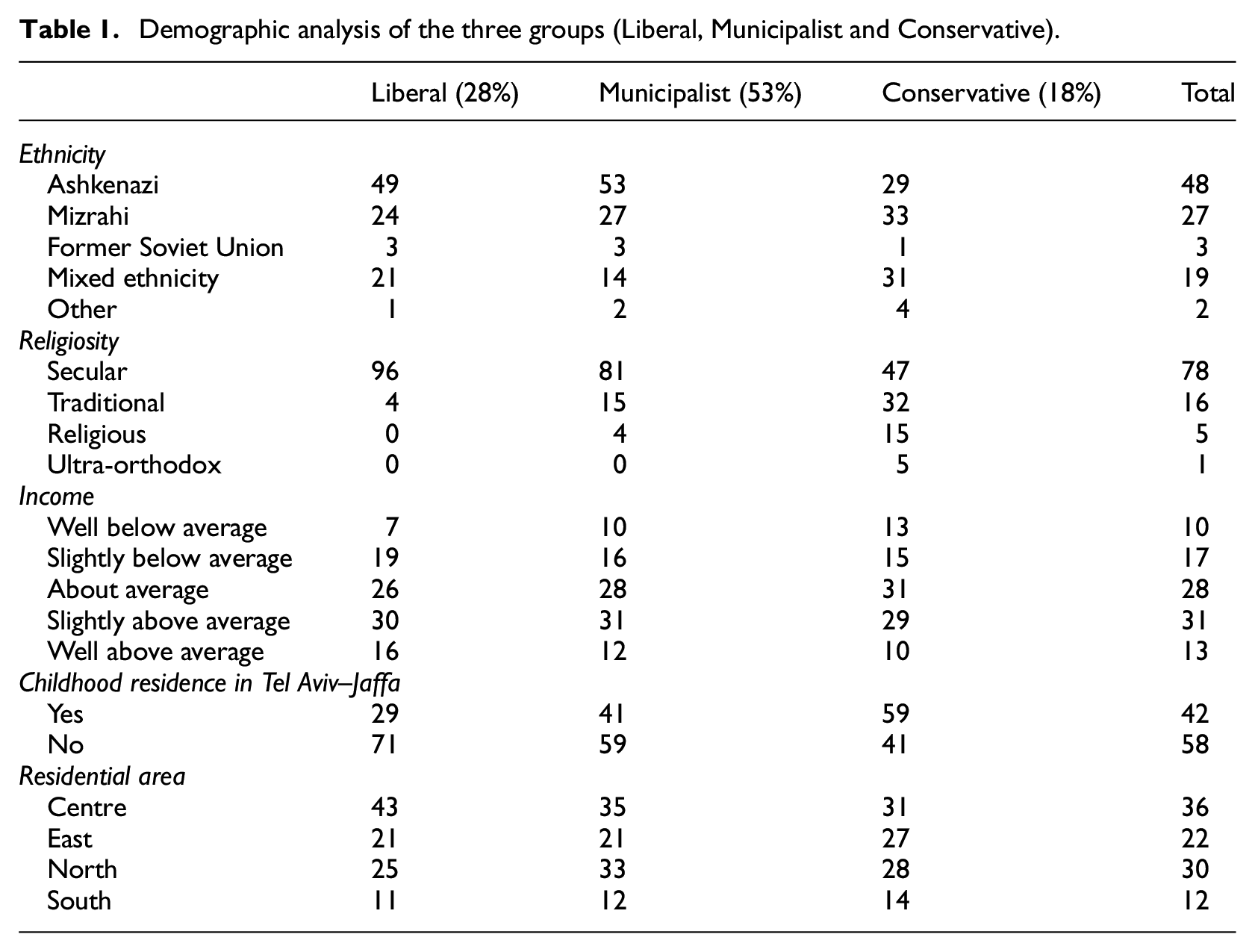
The initial groupings indicate that the liberal character of Tel Aviv–Jaffa’s municipality is very popular among the city’s residents. About 80% of respondents supported Liberal policies, and almost 30% of respondents, labelled Liberals, even prioritised liberal policies over core, everyday municipal functions. After establishing the existence of a large portion of residents supporting liberal policies at the local level, our first goal was to depict the characteristics of the three groups (Table 1), specifically the Liberal group on which we focus. The percentage points in Tables 1 and 2 refer to the distribution of each group (Liberal, Municipalist or Conservative) vis-á-vis each variable. Therefore, the sum total is for the group and not for the variable.
Demographic analysis of the three groups (Liberal, Municipalist and Conservative).
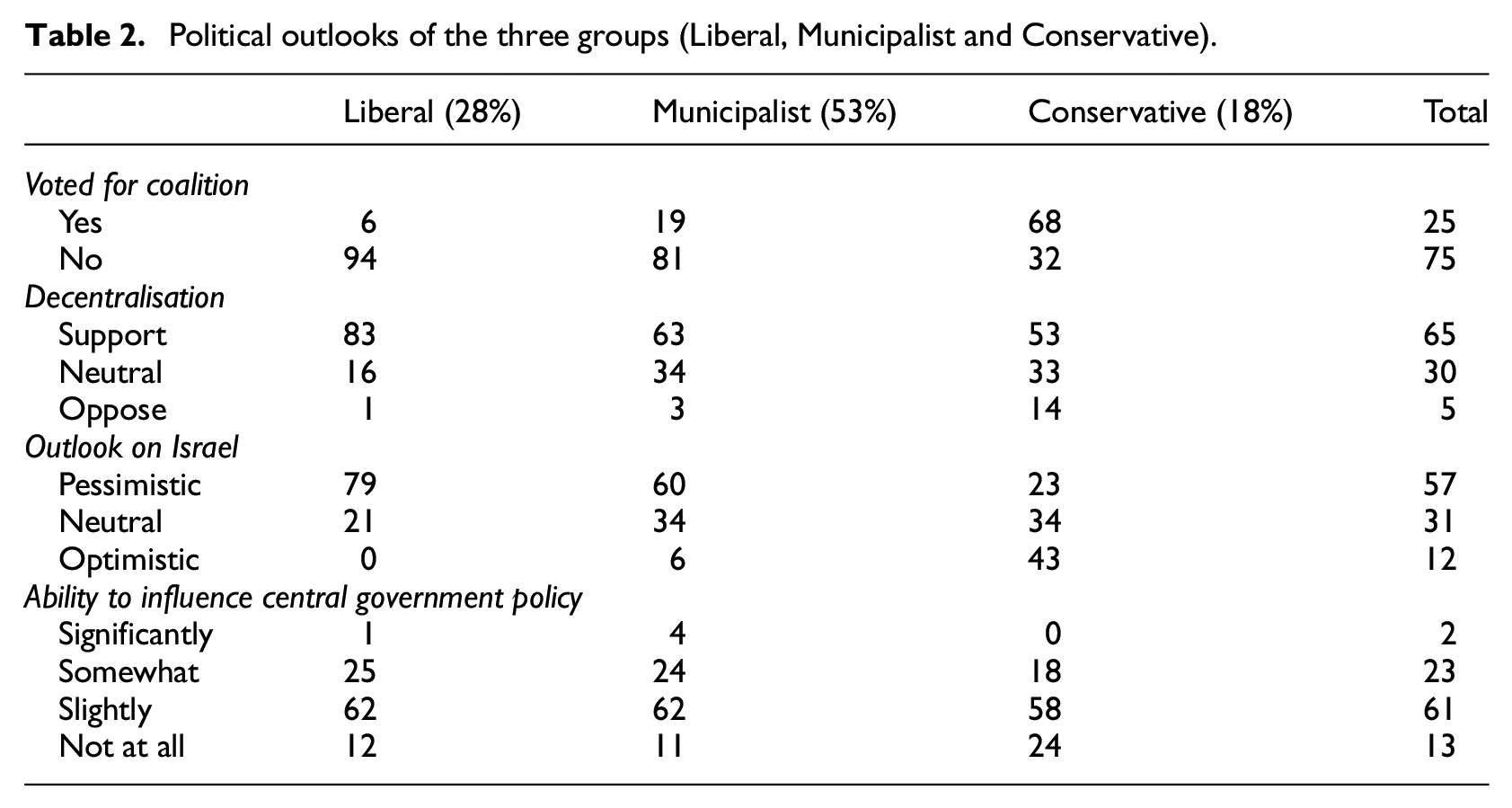
Political outlooks of the three groups (Liberal, Municipalist and Conservative).
Regarding ethnicity, among Jewish respondents (who account for over 95% of Tel Aviv–Jaffa’s residents), approximately half of the Liberal and Municipalist residents are Ashkenazi Jews (of European descent), as opposed to 29% of Conservatives. Although Mizrachi Jews (Middle East and North Africa descendants) are over-represented in the Conservative group, in general the three groups are fairly ethnically diverse: 24% of Liberals are Mizrachi and 21% are of mixed ethnicity.
The same cannot be said regarding religiosity: Municipalists and even more so Liberals tend to be overwhelmingly secular. Indeed, 96% of Liberals are secular, as opposed to only 47% of Conservatives. Not a single respondent categorised as Liberal identified as religious or ultra-orthodox, which may indicate that a religious lifestyle is incompatible with a liberal outlook. Conservatives were the most religiously diverse group, with representation of all four religiosity segments.
As for Income, respondents were asked to specify their income compared with the average income per household, ranging from well below average to well above average. Although all three groups are represented in each income segment, in general Liberals tend to be over-represented in the high-income groups relative to Conservatives, and vice versa – only 7% of Liberals have incomes well below average, as opposed to 13% of Conservatives. A total of 16% of Liberals have incomes well above average, as opposed to 10% of Conservatives.
Among the respondents, 42% were born and raised in Tel Aviv–Jaffa. Among Liberals, only 29% grew up in the city, as opposed to 59% of Conservatives. This might seem counterintuitive to the liberal image of the city, but this data can reflect common trends regarding the economic and political ‘sorting’ of well-educated liberals into cities. This might reflect the liberal aura of Tel Aviv–Jaffa, which attracts residents with liberal tendencies to reside there. It can also reflect the demographic changes of recent decades, which transformed the city into an economic powerhouse and sought-after location among affluent Israelis, in contrast to the situation a few decades previously.
However, the preferences regarding the municipality’s role are not strongly evident according to respondents’ living area: 43% of Liberals reside in the city centre as opposed to 31% of Conservatives. Furthermore, 21% of Liberals reside in East Tel Aviv–Jaffa as opposed to 27% of Conservatives. Despite the common notion of a Liberal ‘bubble’ in the central part of the city, regarding the municipal sphere Liberals are spread throughout the city.
As Table 2 demonstrates, regarding party politics there is a huge gap between Liberals, Municipalists and Conservatives. Only 6% of Liberals voted for Israel’s right-wing coalition, as opposed to 68% of Conservatives (and 19% of Municipalists). The political cleavage is apparent when analysing the parties supported by Liberals: 21% of Liberals supported the Zionist left party Meretz, which did not pass the electoral threshold (3.25%) in the last election and did not enter the parliament. Only 4% of Liberals supported Halikud, Israel’s largest party, as opposed to 42% of Conservatives. Yesh Atid, the centrist party and leader of the opposition, was supported by 45% of Liberals and 15% of Conservatives. Consumption of news media sources does not differ significantly between the groups, with the exception of re-stating the political cleavage; indeed, Liberals are twice as likely to read the left-leaning Haaretz – The Marker (6% to Conservatives’ 3%) and do not watch the right-wing television channel 14 (0% to Conservatives’ 10%).
The respondents’ views regarding decentralisation were especially interesting. As expected, a vast majority of Liberals (83%) support the devolution of powers to the local level. Yet even among Conservatives, 53% support decentralisation and only 14% oppose it. Therefore, it is reasonable to deduce that their objection to the absorption of liberal issues by the municipality expresses opposition to the liberal agenda itself and not to the fact that the municipality takes power from the national government or shifts its focus away from important local areas.
The outlook on Israel variable indicates staggering gaps between the groups. Liberals are overwhelmingly pessimistic about the present and future of Israel and sense a growing threat from other groups in Israeli society. Indeed, 79% of Liberals have a pessimistic outlook on Israel, and none have a positive outlook. This pessimism is shared by Municipalists: 60% are pessimistic and only 6% optimistic about Israel. The Conservatives are the only diverse group regarding their outlook on Israel: indeed, 23% are pessimistic and 43% are optimistic about its prospects.
Finally, the results regarding the ability to influence the national government policy were surprising given the clear political identification of the three groups. Indeed, 25% of Liberals, as opposed to 18% of Conservatives, reported that they can ‘somewhat’ influence the government’s policy. Furthermore, 62% of Liberals responded that they can ‘slightly’ influence government policy, and only 12% felt that they have no influence whatsoever, as opposed to 24% of Conservatives who felt that they have no influence on the national government’s policy.
Turning to the multivariate analysis, we hypothesised that two variables measuring residents’ perceptions of the national level – outlook on Israel and the ability to influence national government policy – will correlate negatively with Liberal views at the municipal level. To take advantage of the internal variance in each group, we created a single scale for Liberal–Conservative positions regarding local government. The analysis included political view, religiosity, ethnicity and income.
As for the first hypothesis – those with a more pessimistic view of Israel’s current situation and its future will tend to expect more from the local authority regarding ‘big’ normative questions – the data shows a significant correlation between supporting the prioritisation of liberal issues and a more pessimistic approach to Israel’s outlook. A Liberal perspective also correlates negatively with voting for the coalition parties, and with non-secular (traditional, religious and ultra-orthodox) religious beliefs. Income and ethnicity do not significantly correlate with the Liberal–Conservative spectrum after controlling for the rest of the variables. In contrast, the data for the second variable showed no significant correlation. As Figure 3 shows, no position regarding the ability to influence national government correlates significantly with prioritising core or liberal issues.
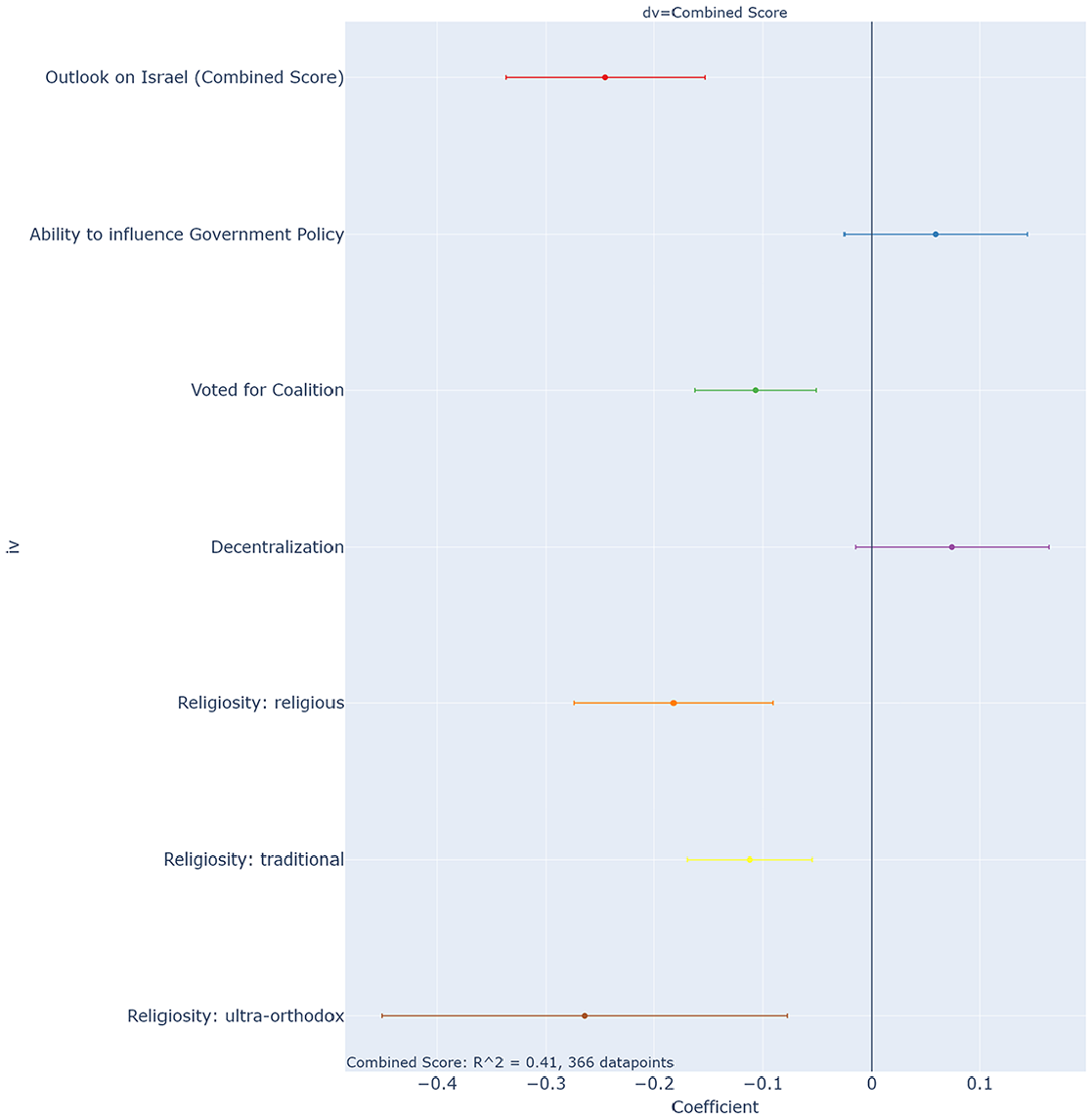
A multivariate analysis controlling for political view, religiosity, ethnicity and income.
Discussion and conclusion
Now, my expectations … from Tel Aviv–Jaffa’s elected politicians are clear: to make Tel Aviv–Jaffa a beacon for the entire country and a fortress of human rights, freedom and pluralism, without any compromises. We want to see our elected officials fight … against [Netanyahu’s] government … We want to promote registration for civil marriages in the municipality, to support former orthodox Jews with municipal budgets … Anyone who thinks that Tel Aviv–Jaffa Municipality should focus only on local and urban issues does not understand what ‘Tel Aviv–Jaffa’ is. (Kra Oz, 2024)
In this article, we developed a novel typology for residents’ preferences regarding the municipality’s promotion of liberal issues, traditionally considered the domain of the state. One group of residents attributes little or no value to progressive issues and is labelled Conservatives. Two groups value progressive issues but differ in terms of prioritisation: Municipalists value progressive issues but prioritise classic municipal responsibilities, while Liberals prioritise progressive issues over classic municipal responsibilities. To the best of our knowledge, this is the first article to empirically explore residents’ expectations from the municipality in the context of growing urban-national polarisation in Israel, and possibly globally.
Our sample indicates that while the majority of Tel Aviv–Jaffa residents (~80%) support municipal involvement in ‘big’ policy issues, more than half of the city’s population (53%) prioritises classic municipal responsibilities over such initiatives. This distribution highlights a notable gap between residents’ broader liberal-leaning worldviews and their practical preferences for municipal action. By addressing this group (which we termed Municipalists) distinctly, our proposed typology refines the traditional liberal–conservative distinction, thereby contributing to a better theorisation of the relationship between public support and local policy making.
The widespread public support for liberal agendas, particularly the fact that approximately 30% of Tel Aviv–Jaffa residents prioritise liberal policies over classic issues at the core of the municipal role, exemplifies the growing blending of local and national agendas and residents’ increasing expectations vis-á-vis the municipal role in shaping the political decision-making process. The Liberal group was more diverse than expected, both in terms of geographic dispersal and ethnicity, challenging the common perception of Tel Aviv–Jaffa’s ‘progressive bubble’. Unlike Kimmerling’s (2001) description of Israel’s founding Ashkenazi, secular, socialist and national elite, our survey reveals that while the Liberal group is overwhelmingly secular, it is neither exclusively Ashkenazi nor socialist in its views.
The predominantly Liberal and Municipalist constituency suggests that a ‘backlash’ response (Patterson, 2023) to the municipality’s progressive agenda is unlikely under these circumstances. The high percentage of Liberal residents prioritising progressive values over core services can be interpreted in two distinct ways: first, as an indirect endorsement of the current, adequate state of the city and the municipality of Tel Aviv–Jaffa; this suggests that if the municipality’s performance were perceived as inadequate, the prioritisation of progressive issues might decline. Indeed, studies indicate that progressive thinking is more prevalent when citizens’ material needs are met (Luca et al., 2023). Another possible interpretation, as implied by the quotation opening this section, is to consider the existence of residents who prioritise progressive values over classic municipal functions at face value: this would mean that excelling at core municipal functionings in a post-materialist framing is no longer a prerequisite for adopting a progressive agenda but rather a substitutive one. If the second interpretation holds true, it has significant implications for urban governments and their policy orientations towards their residents. Instead of prioritising basic infrastructure, municipalities might instead shift their focus to a broader progressive agenda, potentially clashing with the national government that is unpopular among most city residents.
This particular shift is, in many ways, an inversion of much of the normative thinking concerning the governance of cities in a post-nationalist age in which national governments have supposedly weakened. Barber (2013) opens his classic book If Mayors Ruled the World by quoting Teddy Kollek, Jerusalem’s legendary mayor: ‘Spare me your sermons, and I will fix your sewers’. Today, with the apparent upscaling of local politics to the national level, he might be able to join the sermons, forget about the sewers and still be re-elected. As local politics increasingly involve national and international issues, they may come to resemble national politics in their broader, and sometimes tribal, focus, leaving less room for the day-to-day politics often characteristic of the local context. This could be conceived of as a ‘dark’ and under-discussed aspect of local autonomy.
The political significance of progressive values for local elections, and the trickling of national agendas to the municipal level, is exemplified in Tel Aviv–Jaffa. In 2023, the local leadership faced a political crisis due to problems that are considered core municipal issues, such as soaring housing prices, over-development and huge problems in the interface of transportation and public spaces. With the unfolding of the judicial overhaul promoted by the far-right national government, the local leadership managed to regain support, with many residents standing by their longtime mayor, Huldai, who is identified with liberal values and considered an outspoken and powerful political rival of Israel’s current government. As one of his close allies told the press: 1 ‘[Nathanyahu] is doing the heavy lifting for [Huldai], there’s no doubt about it’ (Shimoni, 2023).
Another important finding relates to the relationship between urban autonomy and liberalism, which are sometimes linked in cities across the globe, and in the academic literature, suggesting that cities claim more autonomy to promote more progressive agendas. Interestingly, the devolution of powers to the local level is in itself quite popular, even when these powers do not support progressive local agendas or when residents oppose liberal policies at the local level. 2 The findings do not explain this, although we can hypothesise that support for decentralisation may be related to the merit of street-level bureaucracy (Lipsky, 1969), where autonomous units closer to citizens are more responsive to their demands, consequently producing greater congruence between those demands and public policy (Golan-Nadir et al., 2024; Goldsmith, 1995). The observation that local autonomy is more consensual than urban progressivism is noteworthy, and the thorny political implications of this insight deserve further analysis.
In conclusion, the typology suggested herein can be tested and adapted in cities facing similar circumstances, with adjustments to reflect each city’s specific policy issues and challenges (e.g. religion, immigration, civic rights and sustainability). Understanding urban residents’ policy preferences and expectations of their municipality is important today, more than ever before, considering the growing importance of municipalities in setting agendas on a national and global scale, as well as the power that urban residents wield to legitimise or challenge municipal actions. The legitimacy and success of local progressive agendas can only be sustained with a sufficient amount of popular support.
Footnotes
Acknowledgements
We are very grateful for the valuable comments received from Sharon Gilad, Noam Brenner and Dan Miodownik. We also wish to thank Or Kroyzer from the Hebrew University’s Center for Interdisciplinary Data Science Research (CIDR) for his contribution in analysing the survey’s results.
Declaration of conflicting interests
The author(s) declared no potential conflicts of interest with respect to the research, authorship, and/or publication of this article.
Funding
The author(s) disclosed receipt of the following financial support for the research, authorship, and/or publication of this article: This project has received funding from Israel Science Foundation, Grant No. 2164/22.
