




Abstract
Using the case of Pakistan, this article explores the distribution and politics of public goods provision in urban slums. Across slums, we find that public goods are mainly provided to households located in central slums rather than those in the urban periphery. Within slums, we find politicians target spending towards wealthy households but do not go through brokers, unlike the more-studied case of India. Overall, the article shows how electoral incentives in Pakistan are biased against programmatic public goods provision for the urban poor. Our results then point to variation in patronage politics among slums in the Global South.
Introduction
Today most urban growth is taking place in the Global South, particularly in East Asia, South Asia, and Africa (Arku and Marais, 2021; Randolph and Storper, 2023). The nature and scale of this growth is unprecedented (Randolph and Storper, 2023), with key infrastructure, including housing and amenities, unable to keep pace. As a result, 1.6 billion people live in inadequate housing globally, with a billion residing in slums and informal settlements (UN-Habitat, 2022). The close-quarters, insecure tenancy and inadequate public goods provisioning typically found in slums perpetuate poverty and are associated with a range of public health and environmental risks (Murillo et al., 2021).
While previously it was believed that the illegality of these settlements was driving poor public infrastructure and services provision (Beall and Fox, 2009; Guha-Khasnobis et al., 2010), empirical evidence increasingly shows that this is not the case. Wide variations in levels and quality of public goods provisioning across different settlements are a function of a variety of factors ranging from the settlements’ connections, party networks, the presence of community organisations and the role of slum intermediaries, as well as state-level characteristics (see e.g. Auerbach, 2019; Hicken, 2011; Keefer, 2007; Rains and Wibbels, 2023; Stokes et al., 2013). Using the under-studied case of Pakistan, this paper explores the role of electoral incentives for the distribution of public goods provision in urban slums.
In young democracies and countries with poor state capacity, electoral incentives often divert resources away from general public goods provision and towards more targeted patronage spending (Keefer, 2007; Weitz-Shapiro, 2012). Here, politicians leverage the absence of state level public goods provisioning for their own political advantage (Baken and Linden, 1992; Murillo et al., 2021). Pakistan is a case in point with high levels of poverty and inequality, low state capacity and a political system that has oscillated between dictatorships and elected governments over the last 75 years (Khan, 2015; Majid, 2022; Shah, 2019). Yet, there is limited scholarship assessing the implications of these patterns for the large and growing urban slums in the country. This is in contrast with the more studied cases of India (see e.g. Auerbach, 2019; Das et al., 2017; Rains and Wibbels, 2023), South Africa (see e.g. Beresford, 2015; Dawson, 2014; Turok and Borel-Saladin, 2018), Brazil (see e.g. Fix and Arantes, 2022; Koster and Eiró, 2022; Nichter, 2021), and Argentina (see e.g. Auyero, 2000; Weitz-Shapiro, 2012).
Using household level data from Lahore, we find that there is non-random variation in public goods levels both across and within slums in Pakistan. Politicians provide targeted public goods to slums but focus mainly on settlements situated in the centre of the city. Within those slums, in turn, wealthier and more connected households are able to leverage their political connections to obtain more public goods than the poor slum residents. Living in the centre and household wealth are, thus, the two main factors which determine whether a slum dweller will receive public goods or not. In addition, and in contrast to the case of India, we show that politicians target provision directly to slum dwellers, rather than going through brokers inside the slum. We suggest this is because Pakistan is a younger and less established democracy, where political parties have been less able to rely on, and institutionalise, informal clientelist networks within slums. Our study therefore provides new evidence on the politics of public goods provisioning to slums in Pakistan, and points to important variation in patronage politics in urban slums in the Global South.
Background
Slums are pervasive within the urban landscape of the Global South and home to some of their most vulnerable populations (see e.g. Auerbach, 2019; Dawson, 2014; Rains and Wibbels, 2023; UN-Habitat, 2022). Aside from poverty, slum residents suffer additional vulnerabilities due to their insecurity of tenure, low provision of public amenities and higher environmental risks. Combined, these factors make them worse off than the urban poor residing outside of slums (Murillo et al., 2021). In many countries, there has been a concerted push at the policy and community levels to improve housing and living conditions within slums (Nakamura, 2014; UN-Habitat, 2022).
The precarity of slum residents’ living conditions makes provision of the public goods ripe for patronage politics (Das et al., 2017; Nakamura, 2014). Even in places where resources are available, slum residents are unlikely to have access to continuous programmatic provision, and instead rely on politicians to dole out ad hoc public goods using their discretionary funds (Auyero, 2000; Zarazaga, 2014). While such non-programmatic provision allows politicians to target slums beyond those that are recognised as legal settlements (Das et al., 2017; Edelman and Mitra, 2006), patronage politics reduces the incentive to allocate resources to those most in need of them (Keefer, 2007; Kitschelt and Wilkinson, 2007; Robinson and Verdier, 2013). The question then is: what determines whether a slum dweller will receive public goods?
The literature extends several plausible answers ranging from the efficacy of intermediaries (Auerbach, 2019; Björkman, 2015; Das and Walton, 2015; Krishna, 2011), to competition between political parties and their networks (Auerbach, 2019), to the role of community-based networks (Auerbach, 2017; Krishna, 2002; Paniagua, 2022). Despite the differences in explanations, the common thread amongst all these studies is their focus on countries that are established democracies, where broker-run local clientelist networks have a long history of interaction with politicians. In India, for instance, Auerbach (2019) finds that high performing brokers are brought into the party fold, thereby making them party operatives. This effectively institutionalises informal clientelist networks and guarantees their loyalty to the party. Provision, then, is a function of the efficacy of clientelist networks. But what about countries where political parties have not been able to institutionalise links to grassroots level clientelist networks?
In young and weak democracies, the often fragile and unstable political party structures are less able to integrate local brokers into their political machinery (Shami, 2023). This is bound to be important for slum politics. Without being able to tap into local clientelist networks within slums, politicians have to target their provision directly, which in turn should have implications for the distribution of public goods between and within slums. First, given the scarcity of resources, politicians need to decide who to target for provision. One basis for this decision could be geography, as slums tend to be situated in both the centre and periphery of large cities. Geographical targeting would result in variation in public goods provision across slums. It is difficult to predict a priori where politicians might focus their attention. Prioritising central slums could have efficiency advantages as they tend to have better connections to existing infrastructure, such as sewage, transportation, and electricity. The greater access of these settlements to denser hubs of population in the centre of the city may also make it easier for politicians to interact with central slums. Political bias towards the centre may also stem from these settlements being in close proximity to a higher concentration of local businesses and/or non-poor communities when compared to the periphery of the city. Under-provision of basic public goods would extend negative externalities onto these non-slum communities, thereby incentivising politicians to provide them with basic infrastructure. For instance, Xu (2023) finds that in areas where different income groups co-exist, there is a strong preference amongst non-poor households for the provision of public goods that reduce negative externalities. Conversely, there might also be merits to targeting the periphery over the centre. Eckstein (1990) argues that peripheral slums are ‘slums of despair’ due to their limited access to economic and social opportunities. The low starting point of these settlements means that returns would be higher at the margin, thus allowing politicians to get higher returns per dollar spent. Besides, peripheral slums are also likely to be newer settlements when compared to those in the centre. Hence, those in the centre are likely to have more entrenched networks and political affiliations, leaving greater numbers of vote banks up for grab in the peripheral slums. Indeed, Gazdar and Bux Mallah (2011) and Anwar (2013) found that politicians in Karachi chose to target slums in the periphery as the opposition lacked a hold on these settlements.
The need for politicians to directly target slum residents rather than going through brokers could also have a second effect: variation in provision to residents within slums. Slum residents are not a homogenous group (Zulu et al., 2011), and variation across residents can make some groups more vulnerable than others (see Koter, 2013; Nathan, 2016; Stokes et al., 2013 for a discussion on voter targeting). The socio-economic and political status of households has been known to afford them different levels of access (Auerbach, 2019; Rains and Wibbels, 2023). For instance, households perceived as socially upper class have been found to have improved access to state resources (Krishna, 2002; Rains and Krishna, 2020). Also, within clientelist networks, politicians are more likely to target their supporters, meaning the political leaning of the household would matter (Rains and Wibbels, 2023; Stokes, 2009). Moreover, wealthier households may be able to use their influence to lobby directly to the politician for higher levels of provision (Cheema and Mohmand, 2008; Shami, 2019). While the effects of these characteristics have been studied in isolation, Anwar et al. (2020) and Mollett and Faria (2013) highlight how they can overlap, thereby creating an intersectionality of vulnerability, therefore requiring that they be looked at together.
To test these arguments, we now turn to our case study: Pakistan, a country of over 231 million people with between 30% and 50% of them living in urban areas (UN-Habitat, 2018).
The politics of informality in Pakistan
High rates of poverty combined with an ineffective housing policy has meant that a substantial portion of Pakistan’s urban population lives in slums with inadequate space and infrastructure (Pasha and Lodhi, 1994). These slums offer poor residents affordable housing so that they can take advantage of the opportunities the city has to offer (Anwar, 2013). Yet life in these communities is marred by violence and scarcity (Ahmed et al., 2024; Dowall and Ellis, 2009; Gazdar and Bux Mallah, 2011). Even in the capital, Islamabad, where the state is known to be more responsive, residents of slums are unable to gain access to basic services such as electricity (Naqvi, 2018; see also Waheed, 2023 for details on slums in Islamabad).
While under-provision can partly be explained by the illegality of squatter communities, the 1985 Slum Registration Act allowed these settlements to achieve legal status and thus made them eligible for state provision (Malik et al., 2020). Provided that the community had at least 40 households and existed prior to 23rd March 1985, it would be granted legal status (Dowall and Ellis, 2009; Naqvi, 2018; Report from Katchi Abadis Directorate). To further improve the welfare of slum dwellers, the Katchi-Abadis 1 (the Urdu word for informal/unplanned settlement) Directorate was established 2 to register slums, grant household property rights, 3 and facilitate public goods provision.
The bureaucracy is not the only provider of public goods to slums, however. Non-state actors like the UN or NGOs 4 can be particularly important in rural areas or outer urban peripheries, where the state has limited reach (Anwar, 2013; Gazdar and Bux Mallah, 2011). In addition, and central to this paper, are the politicians themselves. As also found in neighbouring India (Das et al., 2017; Edelman and Mitra, 2006), slum settlements in Pakistan are regularly provided with ad hoc public goods through politicians’ discretionary funds (see for instance Baken and Linden, 1992; Cheema et al., 2017). 5 Such ‘politicised’ public goods provision is not only limited to registered settlements but is also made to unregistered ones, where the state is not legally mandated to provide public goods. As it is at the discretion of politicians, this part of slum dwellers’ public goods provision is highly clientelist, aimed mainly at capturing voters.
The incentives of politicians when targeting slum dwellers are, in turn, shaped by the broader institutional context for electoral politics in Pakistan. Here, the army has been instrumental since it has strategically limited politics along ideological lines, and undermined party structures (Mufti et al., 2020). 6 This, in turn, has placed elite patronage at the centre of electoral politics (Akhtar, 2017), and incentivised politicians to expend energy towards building a loyal base for themselves rather than the party (Liaqat et al., 2020). Interestingly, weak party structure, in turn, also affects the functioning of clientelism itself. Since local-level operatives are not brought into the party fold, their loyalty remains suspect (Mufti et al., 2020). Still, political parties and the poor continue to matter for politics in Pakistan. The political battle ground has traditionally centred on the two largest urban centres, Lahore and Karachi (Budhani et al., 2010), and work on the case of Karachi has documented how intense competition between the Pakistan’s Peoples Party (PPP) and Muttahida Qaumi Movement (MQM) has made slums important political constituencies (Gazdar and Bux Mallah, 2011). 7 This, in turn, had knock-on effects on public goods provision with MQM offering ad-hoc public goods to slums in the urban centre – their political stronghold – while PPP used public goods provision to win political support in urban peripheries (Gazdar and Bux Mallah, 2011).
We build on this work to study the role of public goods provision in electoral politics in Lahore, the provincial capital of Punjab and home to almost 14 million people, where work on electorally motivated public goods provisioning is more limited.
Methods
Data
We conducted surveys in 12 slums in Lahore which varied based on geography and state registration. Lahore is home to one of the major political parties in the country – Pakistan Muslim League – Nawaz (PML-N). 8 PML-N’s political stronghold in Lahore has meant that unlike in Karachi where PPP and MQM are in direct political competition, electoral competition within Lahore is fairly limited. Within Lahore, 30% of inhabited spaces are slums (Khan, 2015) and they house 50% of the city’s population (UN-Habitat, 2018). While these slums initially arose following decolonisation in 1947, rapid migration from poorer towns and villages over the years has further contributed to their growth. 9
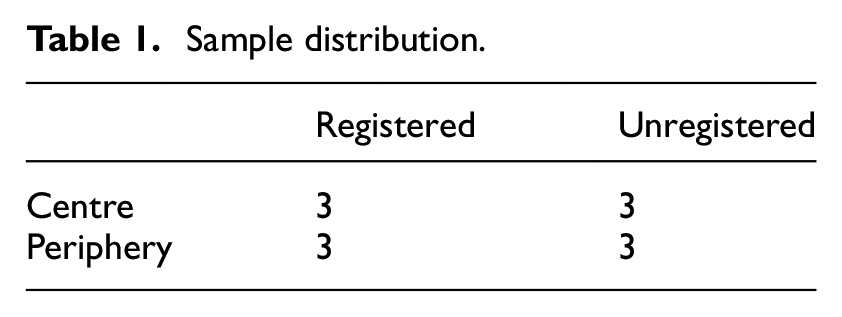
Slums were defined using the Katchi-Abadis directorate’s official definition: ‘Katchi Abadi is a cluster of houses built unauthorised on government land’ (Mustafa, N.D.). The Katchi-Abadis directorate, which is responsible for registering slums as legal settlements, follows this definition to first list all slums and then to categorise which settlements are eligible for registration. Therefore, given our interest in analysing the effects of state registration on slums’ chances of receiving public goods, we base our definition on the official one. 10 A list of all slums in Lahore along with their population, location and registration status was obtained from the Katchi-Abadis Directorate. 11 This list was narrowed down to settlements which existed prior to 1970 so as to focus on older slums which were more likely to have entrenched patronage networks. 12 From this shortened list, a stratified random sample of 12 slums was drawn. Stratification was based on location and registration status. As mentioned above, slum registration grants the community a legal right to live on the land, and also makes them eligible for public goods provision (Gazdar and Bux Mallah, 2011; Naqvi, 2018). Slums also varied based on their location. While half were situated in the centre of the city, the other half were on the periphery (see Figure 1). At the time of the survey, there was no agreed working definition of Lahore’s centre – as the city has witnessed unplanned, exponential expansion over the years. Therefore, we used the definition adopted by the Katchi Abadis Directorate detailing the Lahore locales that constitute the centre. 13 This is based on population density and the extent of buildings. This was also the definition used by a local NGO (Muawin) – which worked on providing sewage facilities to slums. 14 While the centre was densely populated and extensively built, the periphery was sparce on both indicators. 15 Using these definitions, we were able to map out the boundaries of the centre as depicted by the circle in Figure 1. This variation resulted in four types of settlements (Table 1).
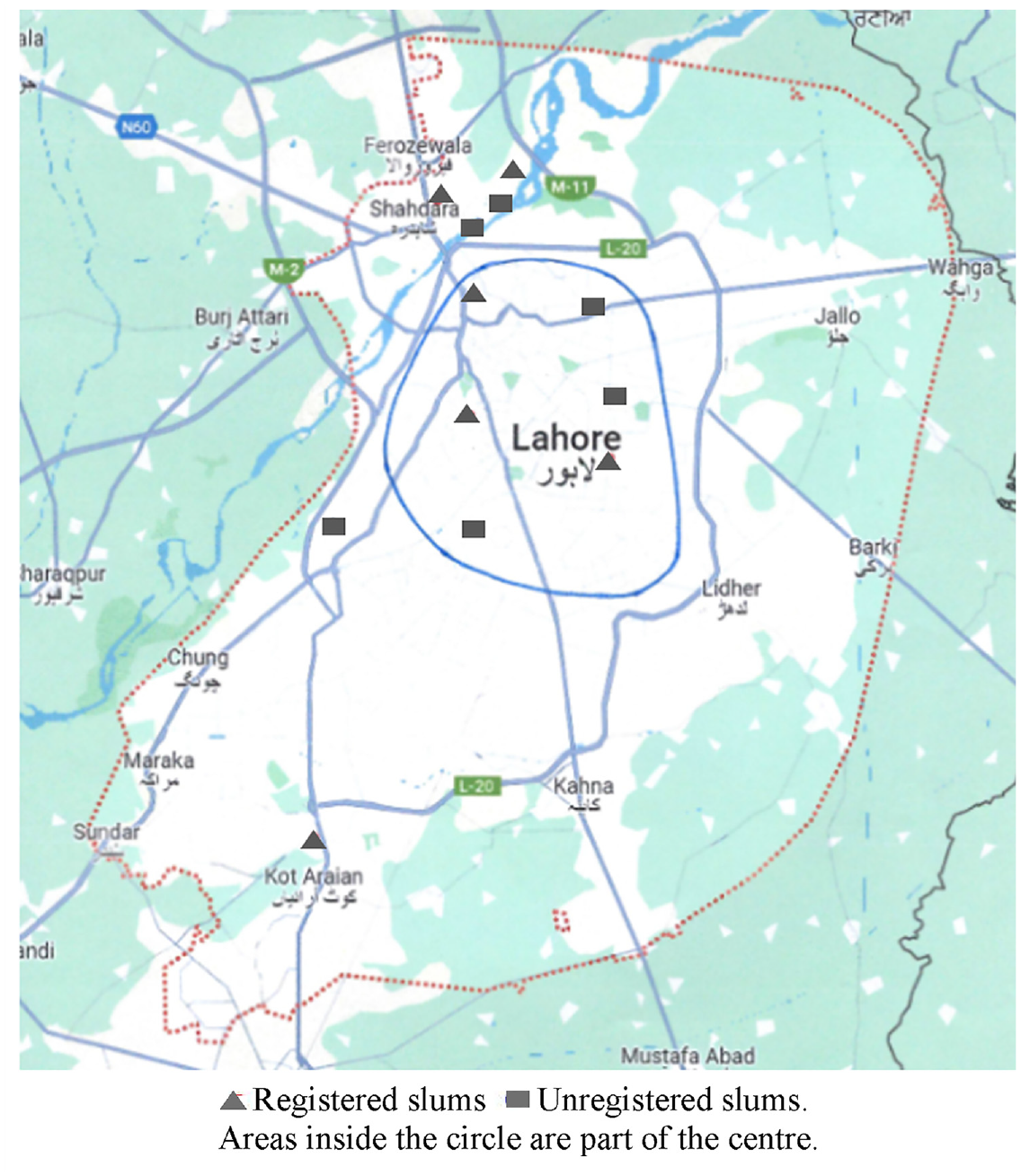
Map of Lahore with sampled slums.
Sample distribution.
At the time of our survey, there were no official maps of these settlements. Moreover, online satellite-based maps (such as Google Earth or OpenStreetMaps) were not detailed enough to be usable. The absence of official maps presents a challenge for surveying slums (Murillo et al., 2021). Therefore, our first step was to walk the entire settlement and draw detailed maps of each slum. This map noted (and numbered) the locations of all households within the settlement. Figure 2 illustrates a sample map.
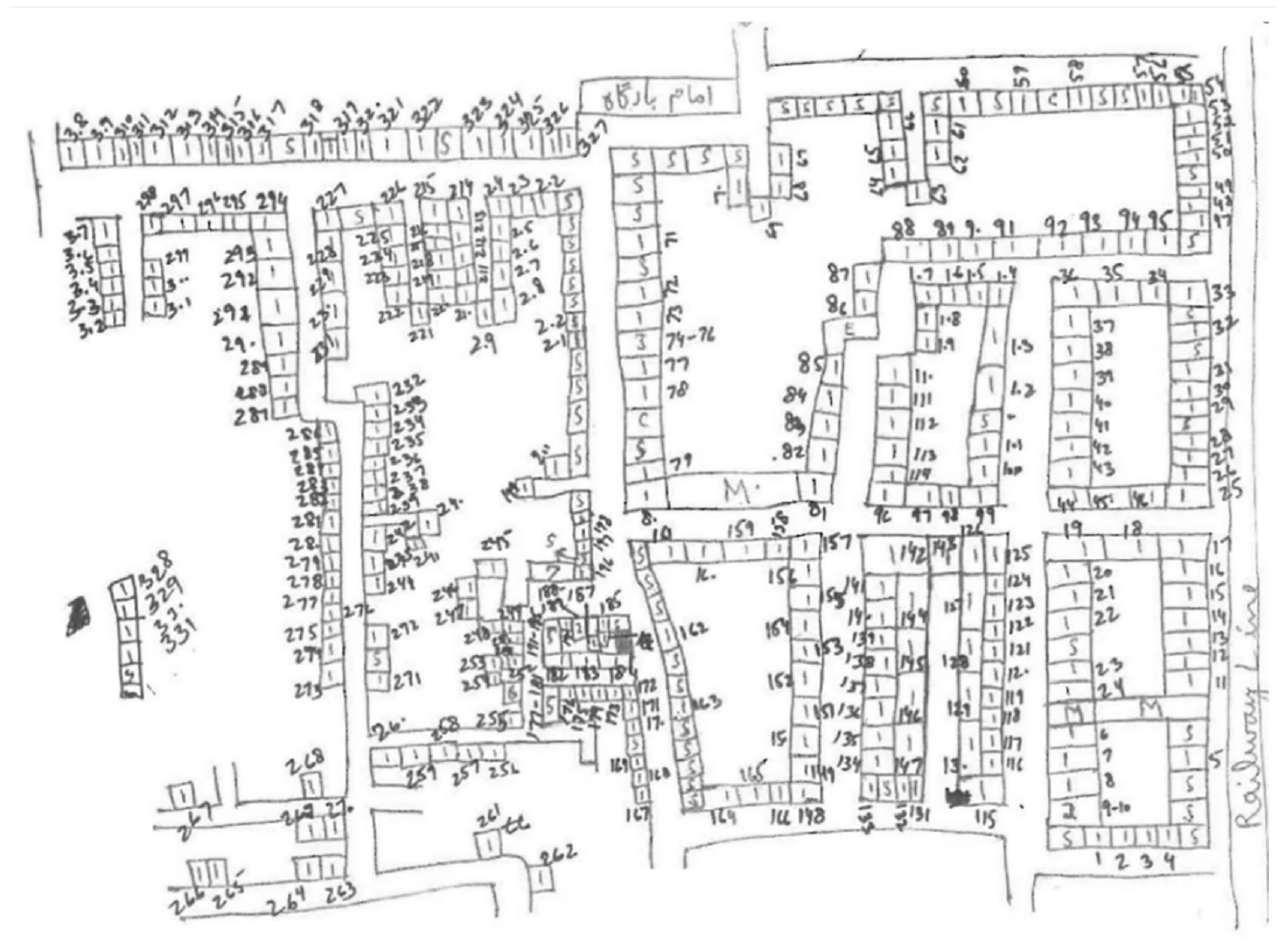
Map from one of the sampled slums.
These maps were then used to generate a random sample of 20% of households. The survey was conducted in 2013, soon after Pakistan had its second round of democratic elections, making this the first ever successful democratic transition from one elected government to the next. After obtaining consent, sampled households were surveyed orally to cater for the interviewee being illiterate. The surveys asked both closed- and open-ended questions to give us a holistic understanding of the political economy of these settlements. A total of 667 surveys were successfully completed.
Our empirical analysis focuses on the provision of two public goods: drains and paved streets. These goods were chosen because of the impact they have on hygiene and the complementary effect of the two on commuting/mobility considerations: in the absence of drains, household waste flows directly onto the street while unpaved streets become muddy and especially unpassable when it rains. 16 Das et al. (2017), looking at house prices in Indian slums, found that sewage provision had a significant impact on house prices. 17 Furthermore, households in our sample place considerable importance on having these goods. This can be seen from Table 2 which collates households’ three major needs. Most households that lacked streets and drains named them as a priority. This holds for most households apart from those located in central slums. 18
Households’ top three needs (for households not having access to drains or paved streets).
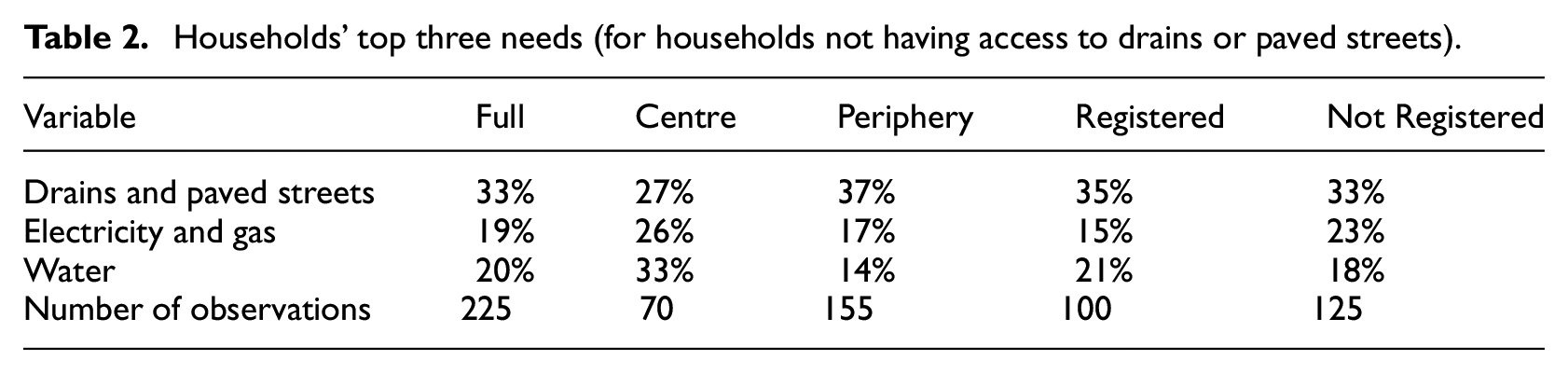
Figure 3 presents the average provision levels of these two goods for households across the four types of settlements. As can be seen, provision levels are significantly higher for households in settlements in the city centre as compared to those on the periphery. 19 These differences, however, disappear when we consider registered versus unregistered slums in each location. Amongst central slums, households residing in unregistered communities have significantly lower levels of paved streets, 20 but just as high drainage provision when compared to those living in registered slums. In the case of peripheral slums, while households in unregistered slums receive slightly higher levels of drains, the difference is statistically insignificant.
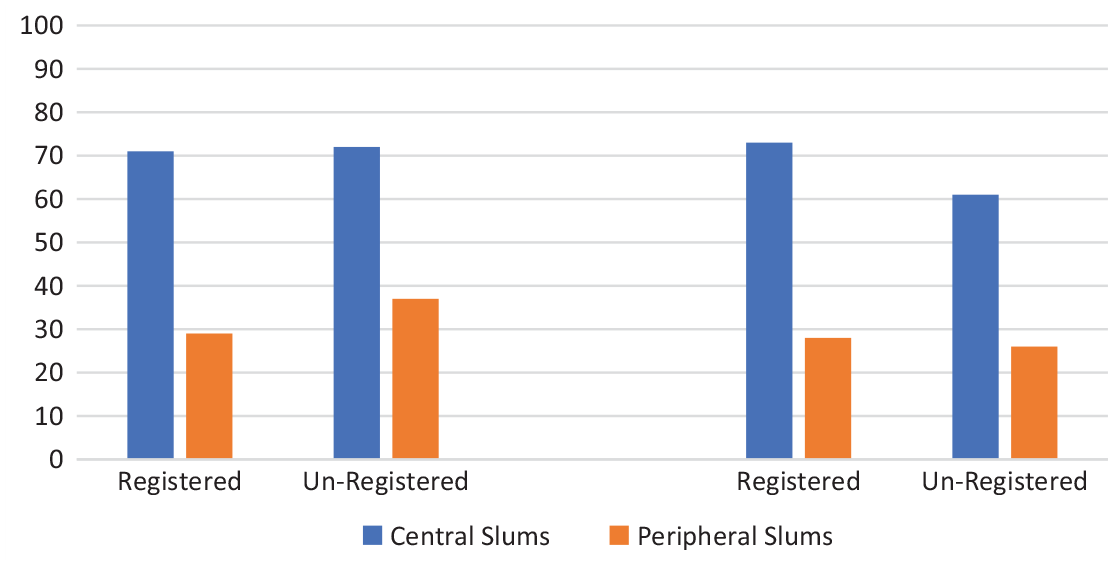
Provision of drains and paved streets.
Empirical estimation
To test whether the findings in Figure 3 hold after including additional controls, we run the following logistic regression model:
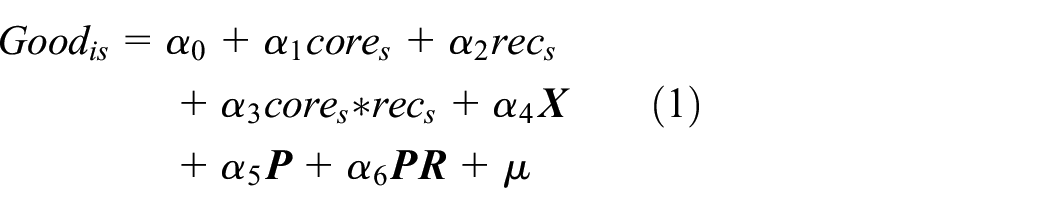
where good is takes a value of one if household i in slum s has access to either drains or paved streets and is zero otherwise, core s takes a value of one if the household resides in a settlement in the centre of the city and is zero if it is on the periphery, and rec s is one if the household resides in a government recognised settlement. We also include an interaction term between rec s and core s on the expectation that the likelihood of provision will vary within the central (periphery) group based on state registration. In our sample, 61% of households live in settlements located in the centre, while 51% live in registered slums.
Finally, the vector
We also include a control for the length of the household’s stay in the settlement to explore whether older households are better able to secure provision. We use a dummy to represent length of stay in the settlement, which takes a value of one if the household reports that they have been residents of the slum for more than 40 years. It is worth noting here that, according to the Katchi Abadis Directorate records, there were 112 slums in Lahore in 1970. This number had increased to 433 by 2017, meaning 26% of all settlements are over 40 years old (report from Katchi Abadis Directorate). Therefore, we argue that settlements which are over 40 years old are not outliers in Lahore. Based on empirical work on rural clientelism (see e.g. Cheema and Mohmand, 2008; Shami, 2012), our expectation is that two generations is a long enough timeframe for the household to be firmly established in the community, and to build a strong social network of influence, thereby allowing it to bargain for provision more effectively.
Table 3 provides details on means and standard deviations (in parentheses) of all the control variables discussed above. It also disaggregates the variables based on settlement type. A combined analysis of Figure 3 and Table 3 shows that households that reside in settlements which have lower average provision levels also do worse in terms of socio-economic characteristics. For example, the highest proportion of ‘poor’ inhabitants, and those engaged in low valued occupations reside in slums on the periphery and also have the lowest provision levels on average. Similarly, the lowest levels of households approaching formal institutions without broker support are seen where the households reside in peripheral or in unregistered slums. Finally, nearly 64% of households have resided in slums for 40 years or more. It is worth noting here that residential stay in slums located on the periphery and non-registered slums were typically of a shorter duration when compared to households who live in central and in recognised slums. This highlights the highly stable and non-transitory nature of these slums.
Summary statistics.
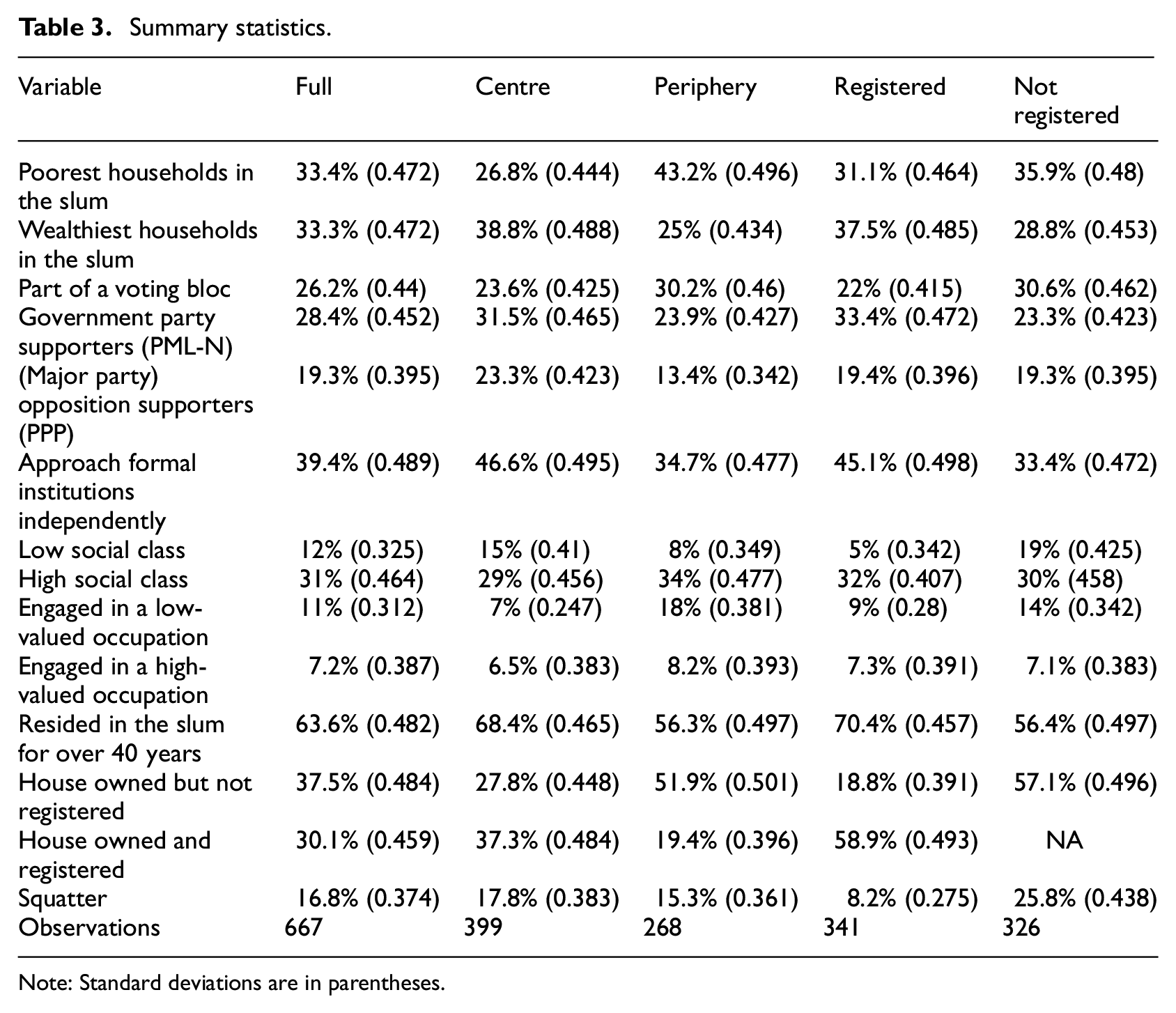
Note: Standard deviations are in parentheses.
Results and discussion
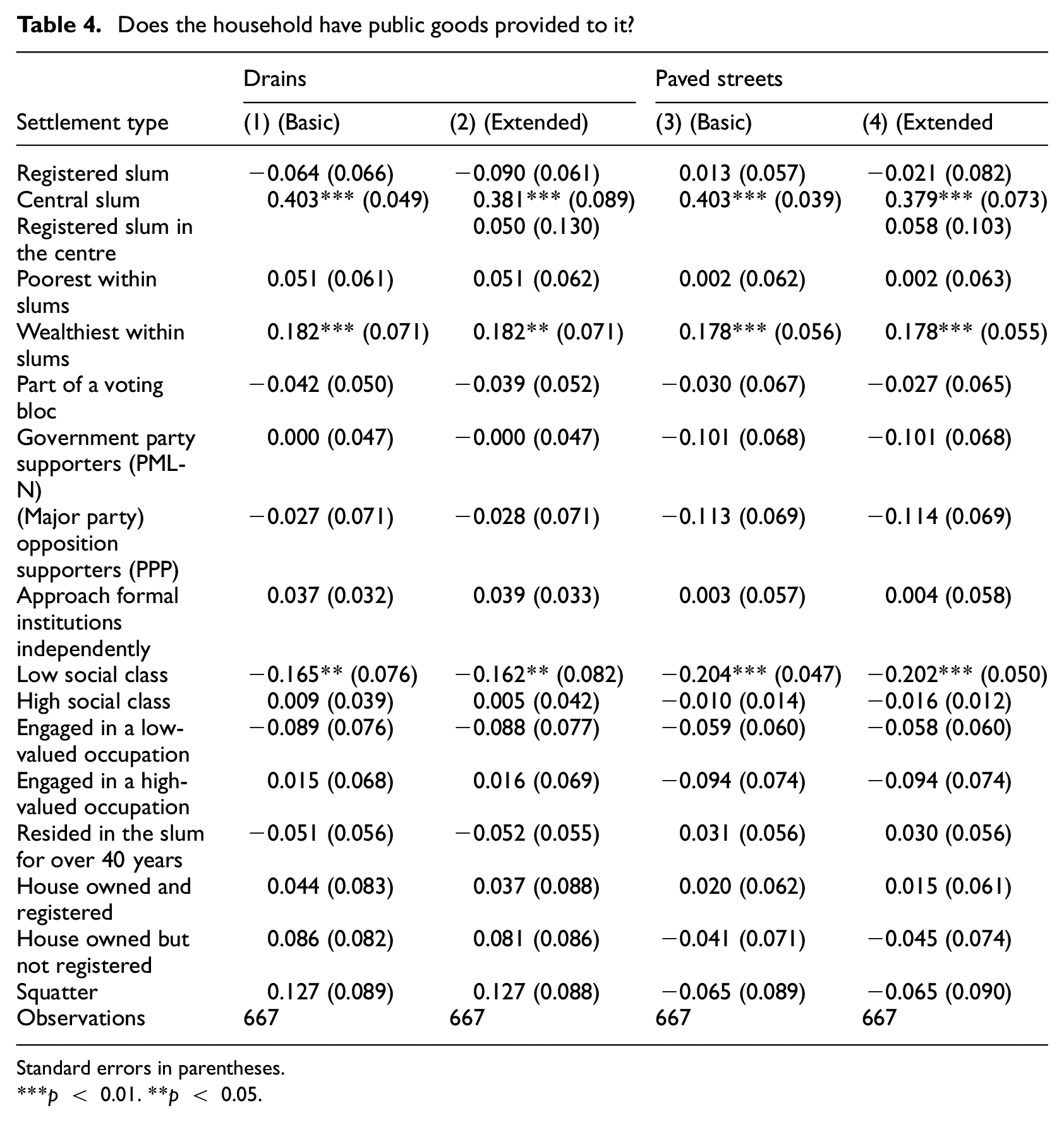
Table 4 lays out the marginal effects of our logit estimations. The dependent variable is whether the household has been provided with drains (Columns 1 and 2) or paved streets (Columns 3 and 4). Columns 1 and 3 are the basic model, as they omit the interaction term, while Columns 2 and 4 report the full model. The results of our basic model show that state registration has no significant effect on the likelihood of public goods provision to a household. In contrast, slum location matters: households situated in central slums are significantly more likely to have public goods provided to them as compared to those living in the periphery. The findings provide support for our conjecture that politicians choose to target certain slums over others. As mentioned in the previous section, there could be a host of explanations for this, ranging from ease of access from a provisioning perspective to central slums, to politicians themselves finding it easier to travel to such slums, to politicians wishing to mitigate the negative externalities that slums impose on surrounding businesses and non-poor communities. Columns 2 and 4 explore the interplay of location and state recognition through the introduction of an interaction term. The effects of the interaction term are shown in Table 5.
Does the household have public goods provided to it?
Standard errors in parentheses.
p < 0.01. **p < 0.05.
Differential impact of location and state registration.
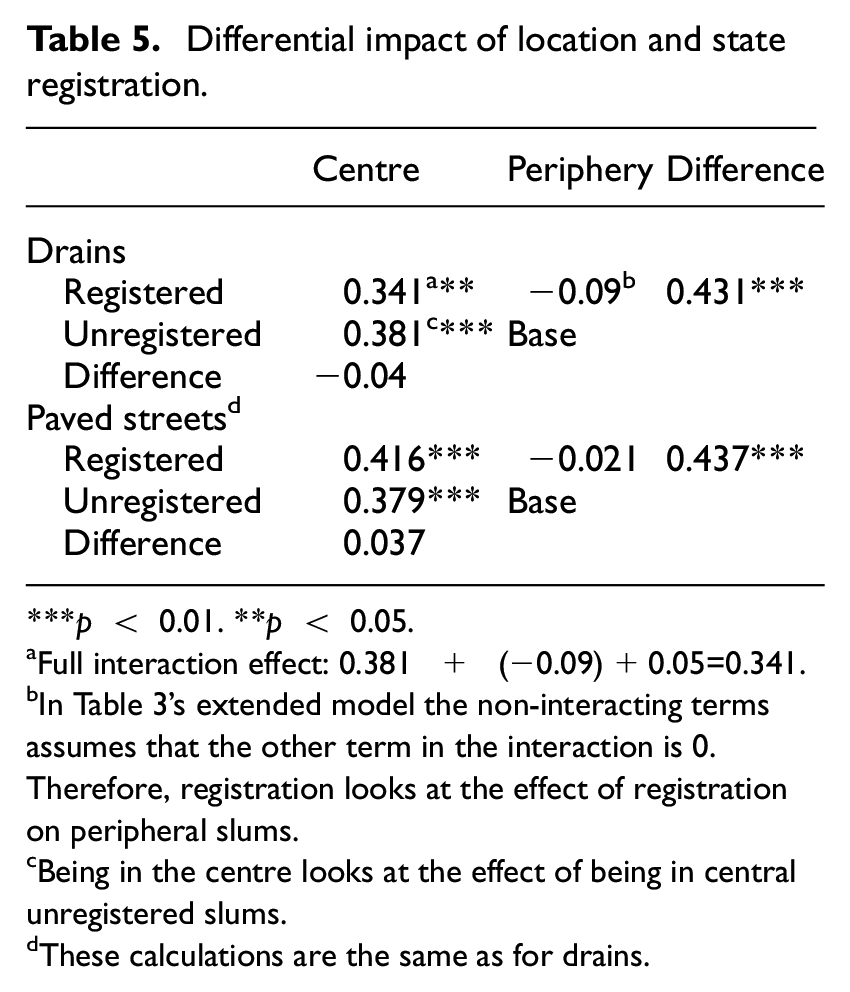
p < 0.01. **p < 0.05.
Full interaction effect: 0.381 + (−0.09)+0.05=0.341.
In Table 3’s extended model the non-interacting terms assumes that the other term in the interaction is 0. Therefore, registration looks at the effect of registration on peripheral slums.
Being in the centre looks at the effect of being in central unregistered slums.
These calculations are the same as for drains.
Table 5 finds that households living in registered slums situated in the centre are 34% more likely to receive drainage provision and 42% more likely to receive paved streets when compared to households residing in unregistered settlements in the periphery. But are these households seeing better provisioning by virtue of living in state-recognised slums or because they are situated in central slums? The differences across location and state registration shown in Table 5 help answer this. We find that there is no significant difference in provision levels for households that live in registered versus unregistered slums. This result holds regardless of whether the slums are situated in the centre or the periphery of the city. In contrast, we observe significant differences in provision levels across households in central versus peripheral slums. This holds for both registered and unregistered slums. Hence, our results show that it is location rather than slum registration that determines whether households located in a settlement will receive public goods.
Within the slums, the only significant variables are those pertaining to wealth and social status. While wealthy households are significantly more likely to receive public goods, those belonging to lower social classes are systematically ignored. These effects hold after controlling for households’ voting for the incumbent, their occupation status as well as property rights. There are two possible explanations for this. One may lie in households’ level of engagement: 32.2% of households in our wealthiest bracket state that they went to political rallies while only 16.4% of the poorest households report doing the same. While attending rallies does not necessarily entail long-term or deep political engagement, it could possibly signal households’ commitment to the politician. Another explanation may lie in richer households being able to pay bribes in order to secure access to politicians’ discretionary funds. 29 Over 70% of households in our sample claimed that corruption amongst state actors – bureaucrats, civil servants and politicians – was the biggest hurdle when accessing the state and its resources as it required the use of connections and paying bribes to get anything done.
Interestingly, being part of a voting bloc has no significant impact on a household’s chances of receiving public goods. This corroborates our claim that where local level clientelist networks have not been institutionalised, politicians provide visible public goods directly to slum residents and not through leaders of voting blocs (who are the local brokers). This was further confirmed by households when we asked them who provided them with the public good. The majority of households were clear that the politician – and not the broker – provided them with these goods, as the politician, or someone from his team, came during the construction of the good to claim responsibility for provision. Moreover, households also pointed out how most provisioning occurred close to elections. However, this blatant reliance on patronage did not put households off voting for local politicians. Many saw this as a fair exchange for their political support.
The ad hoc nature of this provision is also highlighted by the fact that these are not high-quality public goods, like those provided to non-slum communities. The drains provided are not always underground, rather they included cemented overground drains as are found in rural Pakistan. Similarly, the streets were not paved streets like in other parts of the city, instead they were made of bricks and cement, again as is found in rural Pakistan. Moreover, since this was provided through politicians’ discretionary funds and not the state bureaucracy, there was seldom any plan in place regarding maintenance. As a result, in the periphery, 62% of households were unhappy with their drainage system and 53% felt the same about their streets. In central slums, on the other hand, 21% were unhappy with their streets and drainage system.
Conclusion
Since the 1970s, policy makers have been aware that slums are by no means transitory. Rather than being staging grounds for urban migrants, these communities have tended to be permanent, with many families residing within them for multiple generations. In order to accommodate this permanency, the 1970s saw a shift in policy focus away from benign neglect to one of increased provision (Beall and Fox, 2009). In the case of Pakistan, the state attempted this through a process of slum recognition that registered the existence of these communities in state records. This registration took away the threat of eviction and made the settlement eligible for state provision.
Nonetheless, despite pro-poor policy initiatives, most slum dwellers continue to live with gross under-provision, making Pakistan the norm rather than the exception in the developing world. Our findings show that residing in a state recognised slum has no significant impact on households’ chances of receiving public goods. Instead, what matters for provision is the location of the slum within the city: households situated in the centre are found to have significantly higher chances of enjoying public investment, irrespective of whether the community is recognised by the state or not. We conjecture that public goods provisioning in these central slums allows politicians to satisfy not only slum residents, but also the non-poor living and working in close proximity to such slums. While the former benefit due to increased provision, the latter benefit due to a reduction in the negative externalities extended by the slums.
From a pure policy perspective, as the city size increases and evolves so that what are currently peripheral slums become more central, our analysis suggests that the provisioning within these slums will likely rise. However, from a citizen welfare perspective, this is a bleak picture as it is dependent on the city growing in a manner that makes peripheral areas central, which may not necessarily be the case. Moreover, the benefits afforded through location are not uniformly spread across households within the community. As we saw above, wealthy households are significantly more likely to benefit from increased provision, while those of low social status are ignored. In order to address these inequalities both within and across slums, perhaps it is important to consider alternative models of provisioning that go beyond clientelism and state actors working alone. One such model is that offered by the Orangi Pilot Project where negotiations between state and non-state actors, and community-based provisioning of the types of public goods considered in this article, have seen remarkable success (Anwar, 2014). Future research could explore the effects this interaction of state and non-state actors has on an underperforming state and its responsibility towards its citizens.
Overall, our results show that clientelist politics in Pakistan work differently from that which researchers have found in strong and established democracies. While in established democracies, politicians are found to provide for slums residents through a local broker – who in turn is a loyal party supporter – in Pakistan, politicians are found to provide directly to these settlements. Clearly then, the political context matters. This points to the need for engaging in similar methods of inquiry in other cities to get a more nuanced understanding of how the broader socio-economic, political, and even historical circumstances might affect clientelist networks and provisioning mechanisms.
The direct provisioning by the politician may be construed as a positive outcome as it suggests political engagement between the citizen and the politician. Yet, our analysis also shows that this provisioning is ad hoc, politically motivated and lacks accountability as it is still based on clientelist relations resulting in cadres of haves and have-nots. The reliability of this provision, thus, remains questionable.
Footnotes
Acknowledgements
We would like to thank Lauge Poulsen for reading drafts of the paper and giving comments. We are grateful to participants at an American Political Science Association panel for providing feedback. Moreover, we would like to thank our anonymous reviewers for their insightful comments.
Declaration of conflicting interests
The author(s) declared no potential conflicts of interest with respect to the research, authorship, and/or publication of this article.
Funding
The authors disclosed receipt of the following financial support for the research, authorship, and/or publication of this article: This study was funded by the International Growth Centre.
