




Abstract
This research investigates whether gentrification restricts housing markets for low-income households by focussing on the New York and San Francisco metropolitan areas from 2013 to 2019. We investigate whether gentrification correlates with increased out-migration and decreased in-migration of low-income residents in affected neighbourhoods, and how it shapes where out-movers relocate. We leverage a unique longitudinal dataset to compare two extreme regional contexts characterised by significant affordability challenges and intense housing regulations. By doing so, this study aims to provide a more refined understanding of gentrification and residential mobility dynamics, avoiding broad generalisations or a narrow focus on single metropolitan contexts. The findings indicate that in both regions, low-income households are indeed more likely to leave gentrifying neighbourhoods compared to non-gentrifying ones and less likely to enter them compared to higher-income households. The study also finds mixed results regarding the subsequent residential situations of these low-income movers. Based on these findings, we provide implications for research and policies oriented towards improving housing and neighbourhood access for low-income households in rapidly changing urban areas.
Introduction
Urban neighbourhoods are central to academic discussions and policy deliberations due to their likely impact on residents’ access to opportunities and consequential life outcomes (Galster et al., 1999; Wilson, 1987). Planners and policymakers frequently target socio-economically disadvantaged areas for revitalisation, employing a mix of market strategies and direct public interventions. However, many also question the fundamental rationale behind such strategies, suggesting that low-income residents may be excluded from the benefits of expected improvements (Lees, 2008).
The prevailing empirical narrative examines the issue through the lens of gentrification, evaluating whether vulnerable residents face displacement in neighbourhoods ascending in socio-economic status (SES). A related line of inquiry probes the destinations of those departing from gentrifying areas: do they relocate to more distressed areas, or do they ascend the neighbourhood socio-economic ladder? Yet another often overlooked question concerns whether low-income households find gentrifying areas increasingly inaccessible. Despite substantial efforts to clarify the nexus between gentrification and residential mobility, findings remain varied, leading to persistent gaps in our understanding. One explanation for these divergent research findings is the heterogeneous nature of gentrification and mobility dynamics across different spatial and temporal contexts (Lee and Perkins, 2023). Nevertheless, studies often draw overarching conclusions across diverse settings which may contradict on-the-ground perspectives due to lack of adequate data for analysing residential mobility (Easton et al., 2020). While a few recent studies have focussed on a single metropolitan context, their narrow scope poses challenges in extrapolating and contrasting outcomes.
This study investigates whether gentrification restricts housing markets for low-income households by asking these three questions in two emblematic, yet distinct, metropolitan regions: New York and San Francisco. By juxtaposing the experiences of two extensively studied regions, we avoid an exclusive focus on one area or broad national generalisations, allowing for a more nuanced understanding. Both regions, characterised by heated housing markets and pressing affordability concerns, present extreme cases for our analysis. We also focus on 2013–2019, a short yet pivotal period marked by intensified debates on gentrification and displacement in these regions. Other studies measure gentrification and analyse mobility during a longer period spanning the 2000s, which overlaps with economic shocks such as the Dot-com bubble burst and the 2008 financial crisis. Our approach benefits from a unique longitudinal dataset, enabling an in-depth examination of residential migration patterns. This allows for a detailed exploration of residential mobility patterns, ensuring a comprehensive understanding of household trajectories while retaining the necessary statistical precision.
The subsequent section provides an overview of the relevant literature, setting the stage for our hypothesised relationships. This is followed by our empirical analysis, where we explore the relationship between gentrification and shifts in household residential mobility patterns according to income levels, both in- and out-movement. We also study the broader spatial implications of gentrification by studying relocation patterns of households from gentrifying areas. We conclude by reflecting on our findings, offering insights for both further research and policy considerations.
Gentrification and residential mobility: What do we know and what are the gaps?
Gentrification, despite its sustained prominence in both public discourse and academic research, remains an elusive and fuzzy concept (Rose, 1984). Over three decades ago, Zukin (1987) posited that research on gentrification had hit an ‘empirical stalemate’ owing to persistent disagreements over its defining characteristics and underlying mechanisms. However, amidst this conceptual muddle, a consensus emerges on one facet of gentrification – the significant influx of a distinct gentrifier demographic into previously disinvested neighbourhoods, as the term’s roots suggest (Zapatka and Beck, 2020). Relying on this core conceptualisation, quantitative studies have generally separated the migratory behaviours of low-income households from gentrification, examining whether they are more prone to leave gentrifying neighbourhoods as opposed to non-gentrifying ones (Chapple and Zuk, 2016; Easton et al., 2020).
Some academic and policy discourses downplay the selective exit of low-income households in gentrifying areas. They emphasise that gentrification can facilitate social mixing, improve housing conditions, and expand the local tax base through the influx of middle-class, white, and younger households in previously disinvested areas (Freeman, 2009; Freeman and Braconi, 2004; McKinnish et al., 2010). Others believe that gentrification, particularly when prompted by market forces, can magnify polarisation and inequality by displacing low-income residents from the benefits of improvement (Lees, 2008; Marcuse, 1985). Although studies have mainly approached displacement via the neighbourhood out-migration of low-income households, gentrifying neighbourhoods may also become inaccessible to outsiders through increased housing unaffordability and transformations of neighbourhood characteristics. Lastly, critiques also underscore that displacement may also result in ‘moving down’ the neighbourhood SES ladder, having implications for inequality not only at the scale of the neighbourhood but also at the wider urban and regional scales.
Despite varied outcomes, quantitative studies have failed to find compelling evidence suggesting that gentrifying neighbourhoods see a surge in out-migration among low-income households (Ellen and O’Regan, 2011; Freeman, 2005; Freeman and Braconi, 2004; McKinnish et al., 2010). More recently, Freeman et al. (2024) analyse the longitudinal Panel Study of Income Dynamics (PSID) data spanning from 2001 to 2017, reaffirming that households in gentrifying areas, irrespective of their income quartiles, did not exhibit a higher likelihood of moving out, even in cases where mobility was deemed involuntary. They also find that low-income households who moved out from gentrifying neighbourhoods did not experience a decline in neighbourhood SES (measured through poverty rates and median household income of the tracts) relative to their counterparts from non-gentrifying neighbourhoods. However, due to the difficulties of acquiring adequate data, these studies resort to utilising national samples, at most including metropolitan fixed effects in modelling, which risks obfuscating unique metropolitan-specific dynamics through generalisation.
As such, recent research is delving deeper into the metropolitan heterogeneity in gentrification and residential mobility dynamics using novel data and methodological approaches. For example, Ding et al. (2016) analyse household-level residential mobility patterns in Philadelphia using the 2002–2014 longitudinal Federal Reserve Bank Credit Panel/Equifax data. Using credit scores to measure household SES, they find a slightly higher propensity for moving out for households living in gentrifying tracts to non-gentrifying ones; yet the study concludes that households with low credit scores and without mortgages were no more likely to exit than their counterparts. The study also finds evidence that households moving out from gentrifying tracts are also more likely to move to lower-income tracts, finding evidence for downward neighbourhood trajectory. Analysing the same dataset in San Francisco Bay Area during 2009–2018, Hwang and Shrimali (2021) find that low-score residents of gentrifying neighbourhoods were less likely to leave their neighbourhoods compared with low-score residents of non-gentrifying neighbourhoods; higher-score residents of gentrifying neighbourhoods, however, had higher residential mobility rates compared with higher-score residents of non-gentrifying neighbourhoods. Similarly, Dragan et al. (2020) analyse Medicaid-enrolled, low-income children born in New York City between 2006 and 2008, again finding no evidence that gentrification is associated with meaningful changes in mobility rates for poor children and their families during 2009–2015, although they also find slightly longer distance moves for those who leave the area.
These studies suggest that using novel datasets to focus on a metropolitan context may reveal significantly different results compared to national samples. This point is further advanced by Lee and Perkins (2023) who conduct a cluster analysis on a pooled dataset of geocoded 2011–2019 American Community Survey (ACS) microdata national samples to categorise different types of metropolitan areas. The study finds a positive significant relationship between gentrification and the household’s likelihood of neighbourhood out-migration; the study also finds that out-movers from gentrifying neighbourhoods were more likely to move to neighbourhoods with higher poverty rates and lower median incomes relative to their origin neighbourhoods. More importantly, these relationships were also greater in large coastal metropolitan areas. However, Lee and Perkins analyse one-year mobility outcomes cross-sectionally; they also do not examine how mobility patterns vary depending on household income levels.
Therefore, we identify the following gaps in the literature. First, we need to better understand how the interplay between gentrification and residential mobility varies by spatial and temporal contexts. While some studies have concentrated on individual cities (Ding et al., 2016; Dragan et al., 2020; Hwang and Shrimali, 2021) or explored interaction effects across distinct areas (Lee and Perkins, 2023), we see merit in employing a consistent analytical strategy across comparable contexts. Such an approach not only bolsters the validation of proposed relationships but also provides a more holistic insight, circumventing oversimplified generalisations across metropolitan areas. Equally important is the temporal dimension: much of the current literature anchors its analysis in decade-long intervals, or by contrasting data from the year 2000 with figures from the subsequent decade. The literature can be enriched by studying intense shorter-term neighbourhood change and the attendant migration patterns.
Second, research can benefit from asking whether gentrification makes neighbourhoods more exclusive through a more comprehensive lens. Much of the current analytical emphasis is placed on contrasting the out-migration patterns of low-income households between gentrifying and non-gentrifying areas; more research is also examining the out-migration trajectories of movers. Yet, to discern the exclusivity brought about by gentrification, studies should also investigate whether and how entry into gentrifying neighbourhoods are structured by household SES. Although some studies examine in-mover characteristics using national samples (Ellen and O’Regan, 2011; McKinnish et al., 2010), a household-level modelling focussing on specific metropolitan contexts can help further understand how gentrification impacts housing and neighbourhood access for low-income families.
Data and methods
Empirical strategy and data
We answer our research questions by analysing data at the level of households, modelling their propensity to move into and out of different types of neighbourhoods controlling for household characteristics. We limit our scope to NYMA (defined as New York–Newark–Jersey City, NY–NJ–PA Metropolitan Statistical Area) and SFBA (the nine-county definition of San Francisco Bay Area). We choose these two regions as singular cases that may reveal distinct patterns and help build new theories (Patton, 2002). NYMA and SFBA are high-cost regions characterised by intense land use and housing regulations, as well as a continual influx of high-skilled labour, yet they represent two distinct metropolitan areas with different histories of urban development (Chapple and Zuk, 2015; Chen, 2020; Lauermann, 2022). Thus, we hypothesise that exclusionary mobility patterns for low-income households could be more discernible in these regions.
We set the temporal scope of the analysis from 2013 to 2019, focussing on gentrification defined over a relatively short time period compared to most other studies that examine change over decade(s). The period coincides with an era during which home values and rents have increased rapidly in many American cities due to a combination of aggressive fiscal expansion programmes, low mortgage rates, and economic recovery after the 2008 financial crisis, which allows us to observe drastic neighbourhood change in a relatively short time compared to other periods. The period also echoed with heightened public consciousness about gentrification, as evidenced by the surge in related search queries on platforms like Google. Lastly, the period allows us to utilise the earliest year when census tract level data is available for ACS while isolating the impacts of the COVID-19 pandemic.
We define a neighbourhood as a census tract, excluding tracts with a population of less than 200 during the study period from our analysis. To ensure geographical consistency over time, we standardise tract and regional boundaries to 2010 census geographical delineations; principal cities adhere to 2020 definitions to capture newly urbanised areas. We use five-year ACS estimates data spanning 2009–2013 to 2015–2019 to measure neighbourhood characteristics; the five-year period estimates allow our gentrification measurement to capture multi-year trends that reflect housing market and neighbourhood dynamics in the recession and its aftermath on the one hand and the fast market recovery afterwards on the other.
For household data, we use the Data Axle (also known as the US Consumer Index or Infogroup) dataset, generated by proprietary processes that compile information generated by consumers across different sources such as real estate, tax assessments, voter registrations, utility connections, and public records, and mailing address changes. The dataset is useful for analysing household mobility patterns because it contains the residential location and selected sociodemographic characteristics of households with unique identification codes for each year, which can be used to track their movements across the country over time. Prior work finds that 80% of Data Axle household counts fall within 20% of the ACS estimates at the tract level nationally during the 2010s (Acolin et al., 2022, 2023). As such, the data is increasingly used in residential mobility research due to its granularity (Acolin et al., 2022; Greenlee, 2019; Pan et al., 2020). We follow the approach of these empirical studies, using covariate adjustments to improve precision. We extract all households that have been recorded as living in NYMA or SFBA from 2009 to 2019 from the dataset and their sociodemographic information and location for each year during the period, with 2009–2012 data excised after measuring neighbourhood average migration rates for 2010–2012 and in-migration in 2013. The household data is then matched with ACS data by the end year of the estimates.
We model household residential mobility following Greenlee’s (2019) approach, which summarises household variables measured across different years into one observation per household. This approach avoids overrepresenting the characteristics of more mobile households by not treating multiple residential moves for each household separately. Whereas Greenlee (2019) takes the average values of household characteristics during the entire study period, we measure household characteristics by obtaining the mode of the values (for ties, the last value is chosen) during which they lived in a neighbourhood before their first move-out (move-out and relocation models) and move-in (move-in models). In addition to presenting our model results, we plot the modelled predicted probabilities and values for easier interpretation, setting control variables as base categories and mean averages (Freeman et al., 2024).
Research questions and methods
We answer three sets of research questions comparing residential mobility patterns across gentrifying and non-gentrifying neighbourhoods based on prior research. First, we test the out-migration hypothesis using binomial logistic models: are low-income households more likely to move out of gentrifying neighbourhoods compared to non-gentrifying neighbourhoods? Although quantitative studies generally do not find increased residential mobility or displacement for low-income households in gentrifying neighbourhoods, focussing on extreme contexts may yield more significant results. Another possibility is that household characteristics that influence residential mobility were not adequately controlled for.
Second, we ask if entry into gentrifying neighbourhoods, compared to non-gentrifying neighbourhoods, is structured by income by analysing binomial logistic models. Although gentrification is primarily associated with an elevated influx of the middle class, it does not necessarily imply that the low-income households are sidelined – gentrifying neighbourhoods may attract a diverse range of income groups. Nevertheless, gentrification might discourage low-income households from entering due to increased housing costs and other shifts in the neighbourhood dynamic. Building on studies that analyse national datasets (Ellen and O’Regan, 2011; McKinnish et al., 2010), we investigate whether, compared to non-gentrifying neighbourhoods, gentrifying neighbourhoods are less accessible to low-income households than they are to those with higher incomes.
Lastly, we investigate the destinations of households that have moved out: are low-income households moving out of gentrifying neighbourhoods more likely to ‘move up’ or ‘move down’ the neighbourhood SES spectrum? Gentrification is often associated with the involuntary out-migration of lower-income households, which scholars also refer to as displacement. However, out-movers from gentrifying neighbourhoods do not necessarily have to move down the neighbourhood ladder – their relocation may reflect a better adjustment to their life cycle, job accessibility, and better housing opportunities (Brazil and Clark, 2019; Rossi, 1955). We analyse the neighbourhoods that households move into, observing whether destinations are mediated by the household’s origin neighbourhood and income levels. We analyse binomial logistic models to examine whether low-income movers are more likely to move out of their city and less likely to move into other gentrifying neighbourhoods in the region. We then analyse linear regression models to investigate whether changes in the destination neighbourhood poverty rates and median household income vary depending on the out-movers’ origin neighbourhoods.
The binomial logistic models are estimated using the equation:

Where
Variables
The descriptive statistics for the data used in the move-out and move-in analyses are provided in Table 1.
Descriptive statistics.
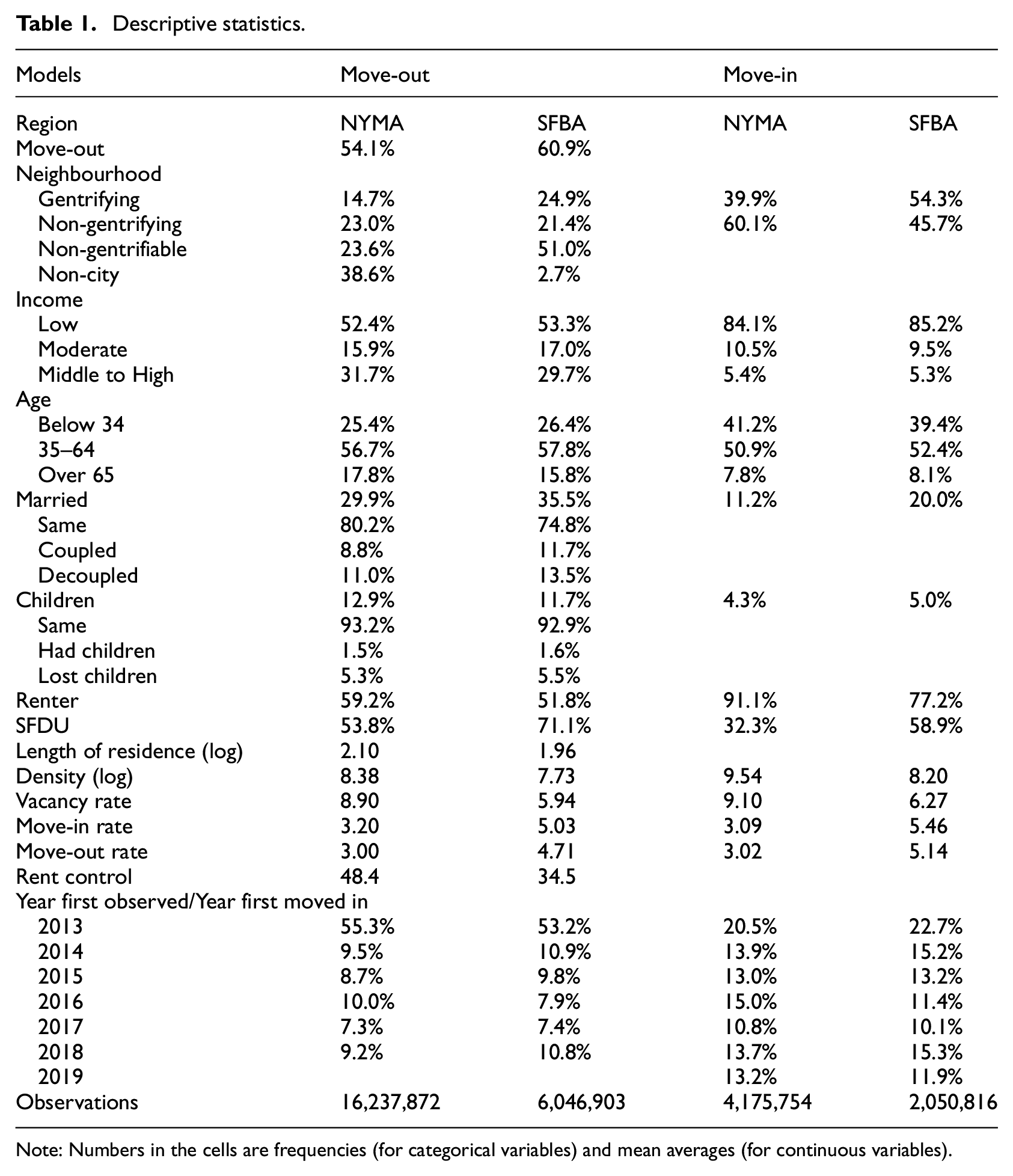
Note: Numbers in the cells are frequencies (for categorical variables) and mean averages (for continuous variables).
Gentrification
We measure neighbourhood gentrification based on Freeman et al.’s (2024) definition to allow comparison with recent research on this topic. 1 Freeman et al. (2024) focus on census tracts in the central city of a metropolitan area; they then categorise tracts that have median household income below the metropolitan area median household income and a share of housing built within the last 20 years below the metropolitan area median share in the baseline year as gentrifiable. Of these gentrifiable tracts, gentrifying tracts need to meet two criteria – they should exhibit a change in the share of college-educated residents greater than the median change in the metropolitan-level change and experience any increase in the real median housing value. 2 We diverge from the original definition slightly by considering gentrifiable tracts within all census-defined cities, as opposed to only the central city, to account for the pervasiveness of gentrification dynamics in these regions. We also measure new-built housing based on the share of housing units built after 1990, the closest year we can categorise data for the reference year of 2013.
Residential mobility and household variables
We define a household as having moved out from a neighbourhood if the household moved to a different census tract from the one in which it was first observed in the region during the study period. If the household moved out of the neighbourhood and then returned during the period, we do not code it as having moved. For the move-out and relocation models, we measure the mode of household characteristics during the years the household was observed in the neighbourhood it moved out from. If there is more than a single mode value, we choose the value that appears later for the first time. These characteristics include homeownership status, single-family dwelling unit, and householder’s age, marital status, and whether they have children. We also control for the household’s length of residence (using the natural log) in its current home in the first year it is observed in the neighbourhood. For households that had moved out, we also measure and control for whether the household experienced a change in marital status (coupled, decoupled, same) and children (had, lost, same) before their move to account for the life cycle theory (Brazil and Clark, 2019; Rossi, 1955). Lastly, we include the year of the initial year the household was observed in the origin neighbourhood as dummy variables.
We define a household as having moved into a neighbourhood if the household, either from within-region or outside-region, moved into a new neighbourhood in the region. As with the move-out models, we measure the mode of household characteristics in the neighbourhood it lived in before the move-in; we do not account for length of residence or change in household characteristics. We also control for the year of the move-in.
Household income
We measure household income in four groups (low, moderate, middle, and high-income). This approach smooths out the yearly fluctuations in the continuous income variable while allowing a more intuitive interpretation of the results. Each household–year combination is assigned an income category based on the metropolitan statistical area’s median household income (AMI) in the ACS 1-year estimates – low (below 80% AMI), moderate (80%–120% AMI), middle (120%–150% AMI), and high (above 150% AMI). After assigning these income categories for every year, we measure household income based on the category that the household belonged to the most (a higher income category for a tie) while it was observed in the pre-move neighbourhood. Lastly, we combine the middle- and high-income households into a single category (Middle to High) to adjust for their small size in the gentrifiable neighbourhoods.
Other neighbourhood characteristics
For the relocation models, we subtract the poverty rate (multiplied by 100) and median household income (in $1000) provided by the 2015–2019 ACS estimates of the origin tract from the destination tract for each household to measure the change in their neighbourhood quality. Although we do not control for neighbourhood SES variables to avoid endogeneity with gentrification, we include population density (natural log of population size per 1 km2) and vacancy rates of the origin neighbourhood (move-out and relocation models) and the destination neighbourhood (move-in models) using ACS data to capture neighbourhood growth trajectories. For the move-out and move-in models, we control for the neighbourhood mobility prior to our study period by including the neighbourhood average out-migration and in-migration rates for 2010–2012 using the Data Axle dataset. 3 For the move-out and relocation models, we also include a dummy variable indicating whether the city that the neighbourhood belongs to had rent control in a given year.
Results
Are low-income households more likely to move out of gentrifying neighbourhoods?
The binomial logistic regression model results explaining household move-out patterns are presented in odds ratio in the left-hand columns of Table 2. We observe a statistically significant positive interaction term between low-income households and gentrifying neighbourhoods, which implies that there is an additional increased chance of moving out for low-income households who are living in gentrifying neighbourhoods compared to their counterparts living in non-gentrifying neighbourhoods. Compared to a non-gentrifying neighbourhood, a low-income household was nearly 7.5% more likely to have moved out in NYMA and 1.6% more in SFBA. Yet we also see some divergence; the association was much weaker in SFBA to an extent where the hypothetical low-income household’s predicted chances of moving out was not significantly higher than its counterpart in non-gentrifying neighbourhood (Figure 1). Furthermore, within gentrifying neighbourhoods, low-income households had the highest likelihood of moving out in NYMA whereas middle- and high-income households were the most likely to exit in SFBA.
Residential mobility analysis results.
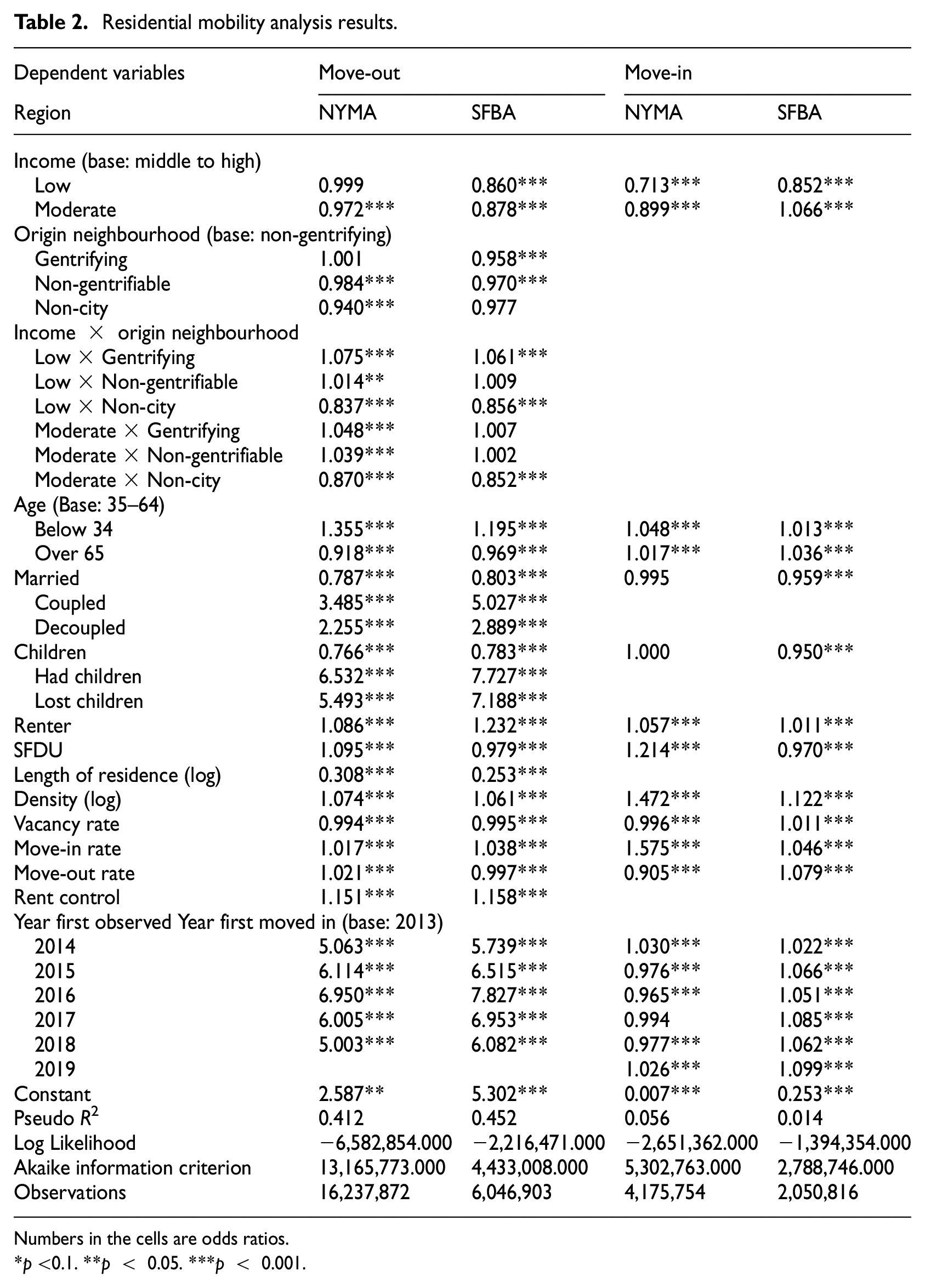
Numbers in the cells are odds ratios.
p <0.1. **p < 0.05. ***p < 0.001.
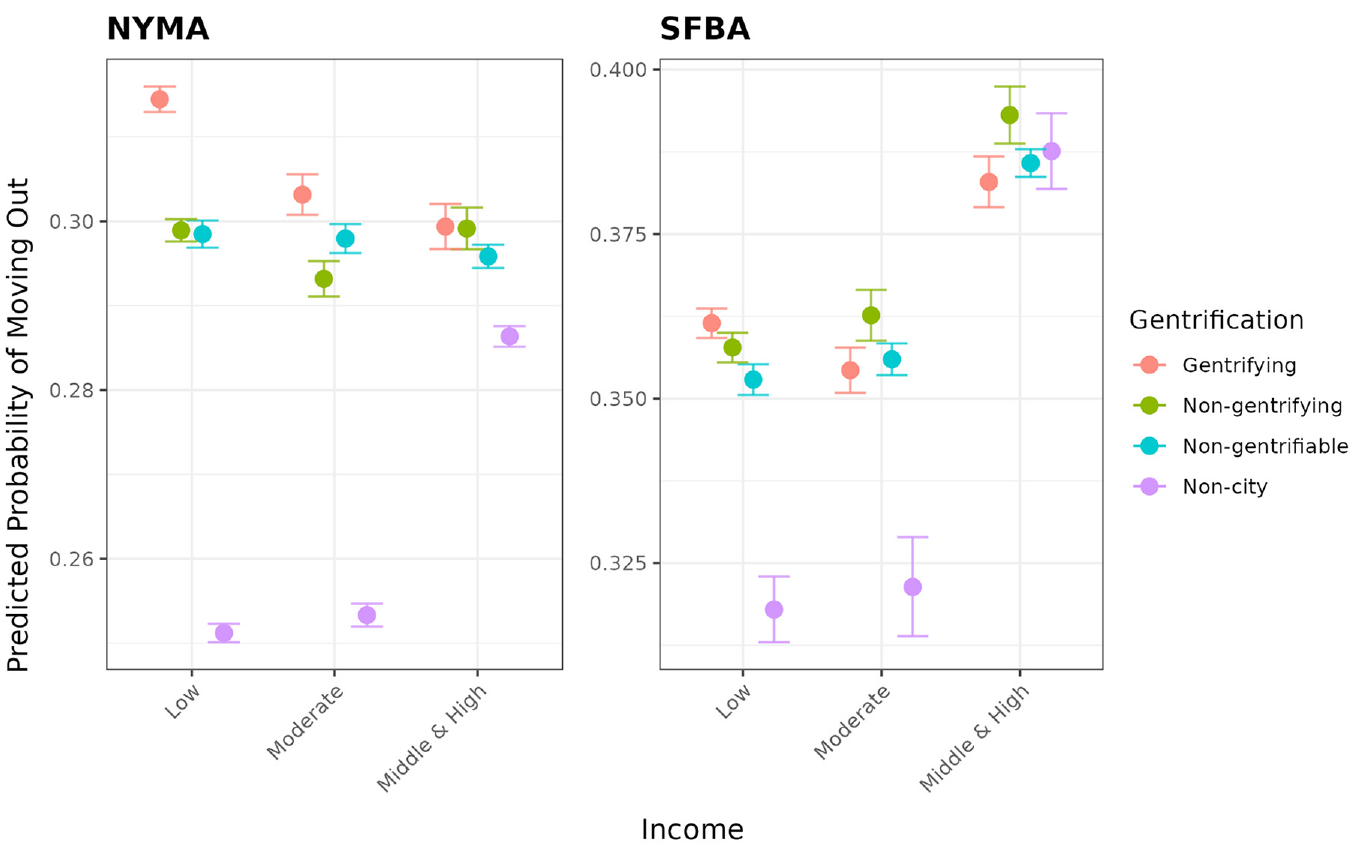
Predicted probability of moving out (income × origin neighbourhood).
Are low-income households less likely to move into gentrifying neighbourhoods?
The move-in model results are presented in the right-hand columns of Table 2. Interpreting the odds ratio, we find that low-income households were significantly less likely to move into a gentrifying neighbourhood over a non-gentrifying neighbourhood compared to middle- and high-income households (NYMA: 40.3%, SFBA: 17.4%) controlling for other factors. Yet, we also find that entry is not strictly correlated with income in SFBA – moderate-income households had a slightly higher likelihood of moving into gentrifying areas compared to their middle- and high-income counterparts.
Which neighbourhoods do movers relocate to?
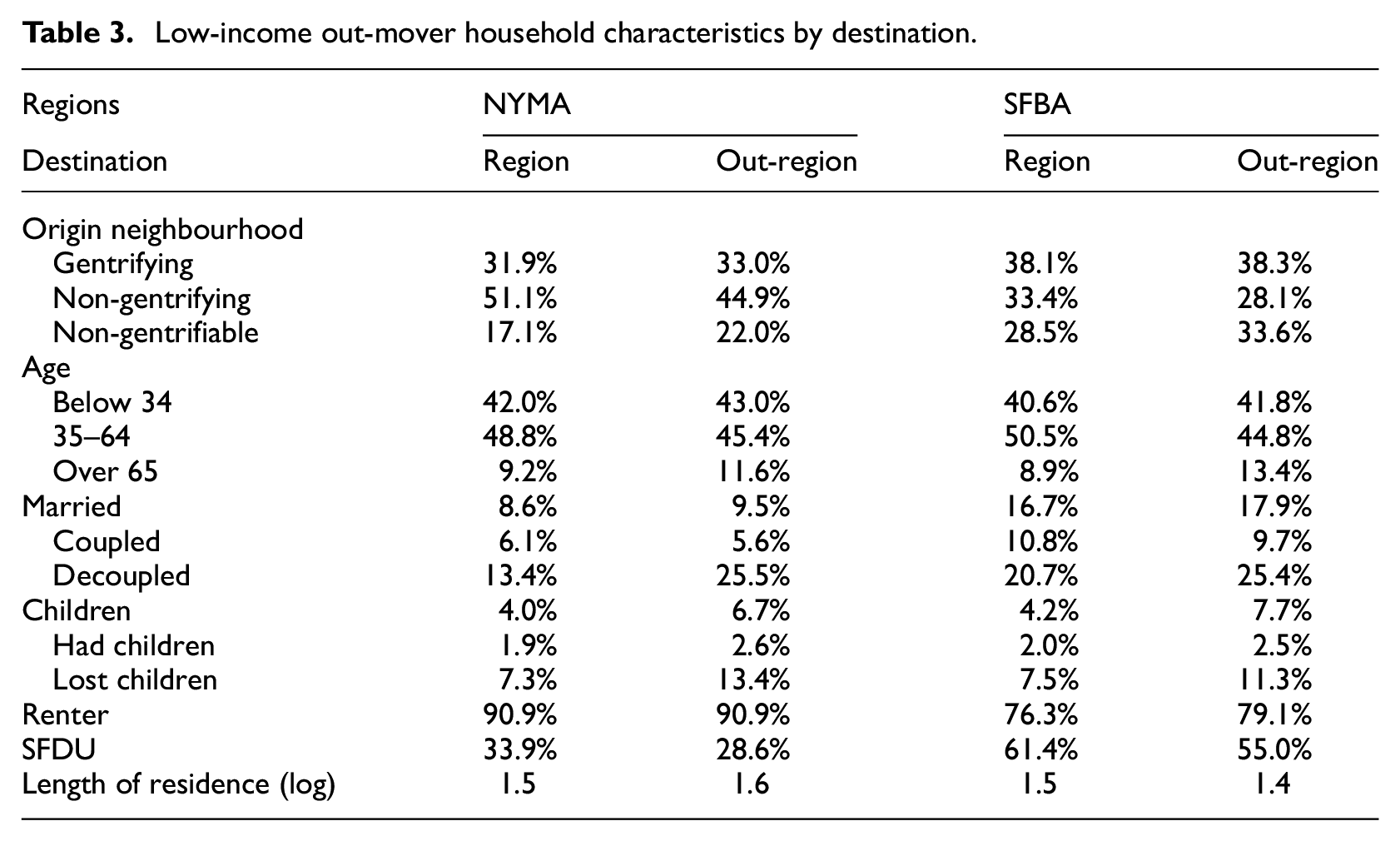
Before we analyse statistical models, we first briefly note the characteristics of low-income movers who moved out of the region. We find that the share of out-region movers was the smallest in low-income households (NYMA: 4.7%, SFBA: 7.8%) compared to moderate-income (NYMA: 6.0%, SFBA: 9.3%) and middle to high-income households (NYMA: 7.2%, SFBA: 10.6%). Comparing low-income out-mover households by whether they moved within the region or out of the region (Table 3), we find that most characteristics were similar between the two groups in both regions. Most notably, most low-income out-movers were renter households yet out-regional movers were not associated with a significantly higher share of renter households. However, there were more significant variations in household structure characteristics; out-region movers had higher shares of households that were decoupled or lost children, presumably due to their moving out of the family. These findings suggest that differences in within- and between-regional moves are probably attributable to changes in household life cycle.
Low-income out-mover household characteristics by destination.
Having noted that most low-income movers stay within the region, we next analyse models explaining their destination (Table 4). First, we find that low-income movers were more likely to migrate outside of their city in NYMA (1.6% increase) when moving out from gentrifying neighbourhoods rather than non-gentrifying neighbourhoods; however, the relationship was the opposite for SFBA (0.1% decrease). However, these differences were small in size and statistically insignificant when other factors were considered (Figure 2). Second, we find that low-income movers were much more likely to end up in other gentrifying neighbourhoods than non-gentrifying ones (NYMA: 208.2%, SFBA: 152.0%) when moving out of gentrifying neighbourhoods (Figure 3).
Destination neighbourhood analysis results.
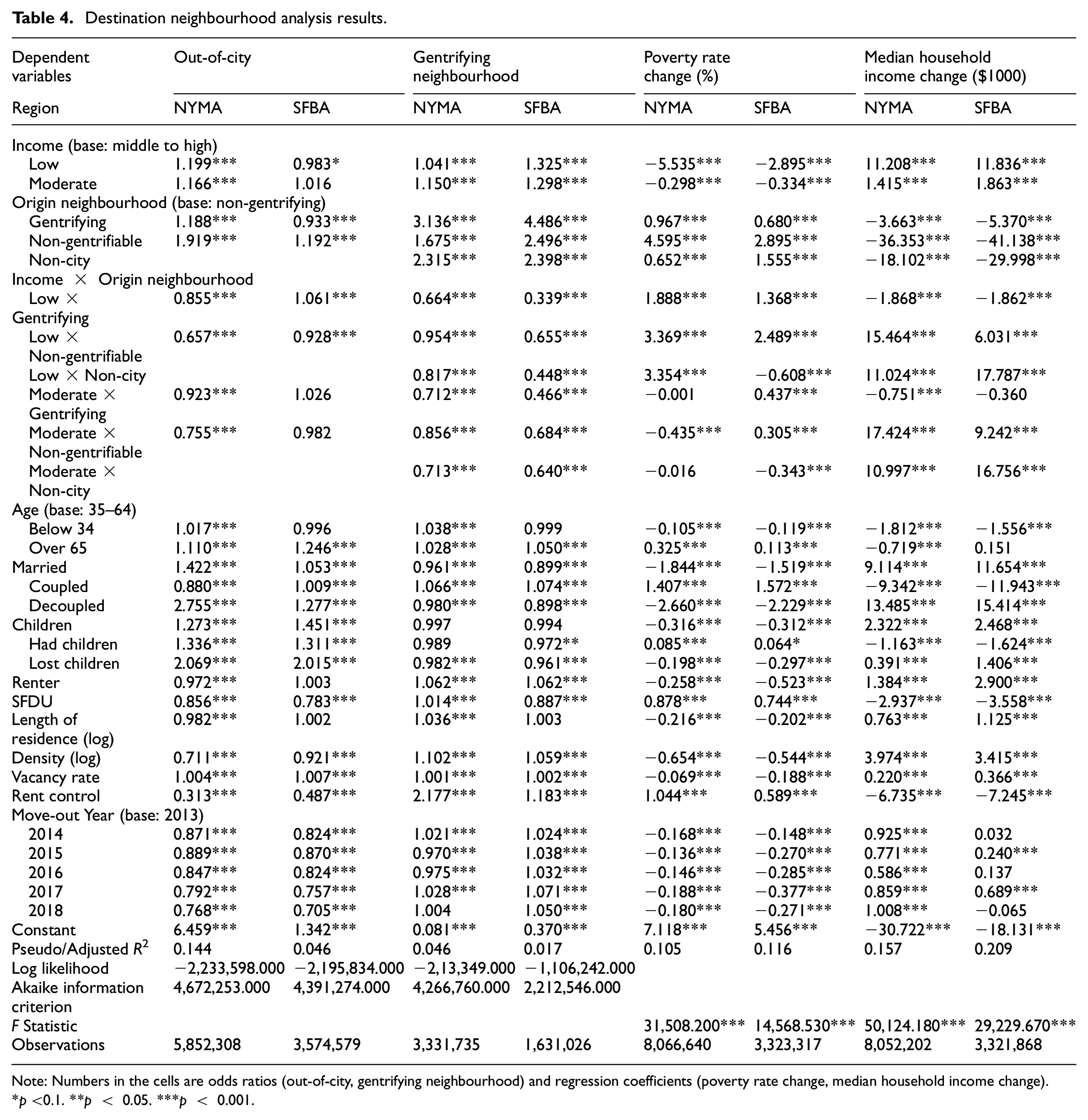
Note: Numbers in the cells are odds ratios (out-of-city, gentrifying neighbourhood) and regression coefficients (poverty rate change, median household income change).
p <0.1. **p < 0.05. ***p < 0.001.
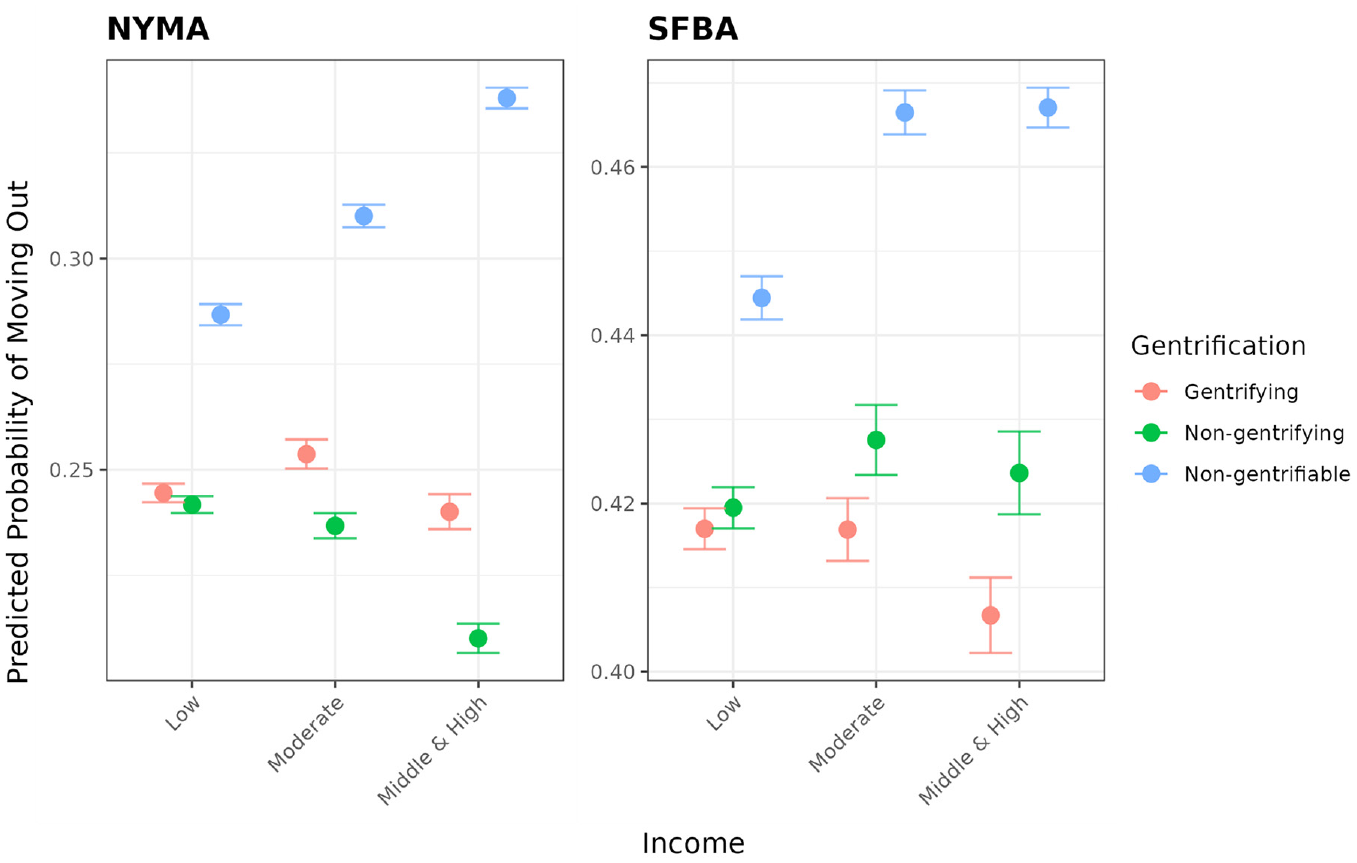
Predicted probability of moving out of the city (income × origin neighbourhood).
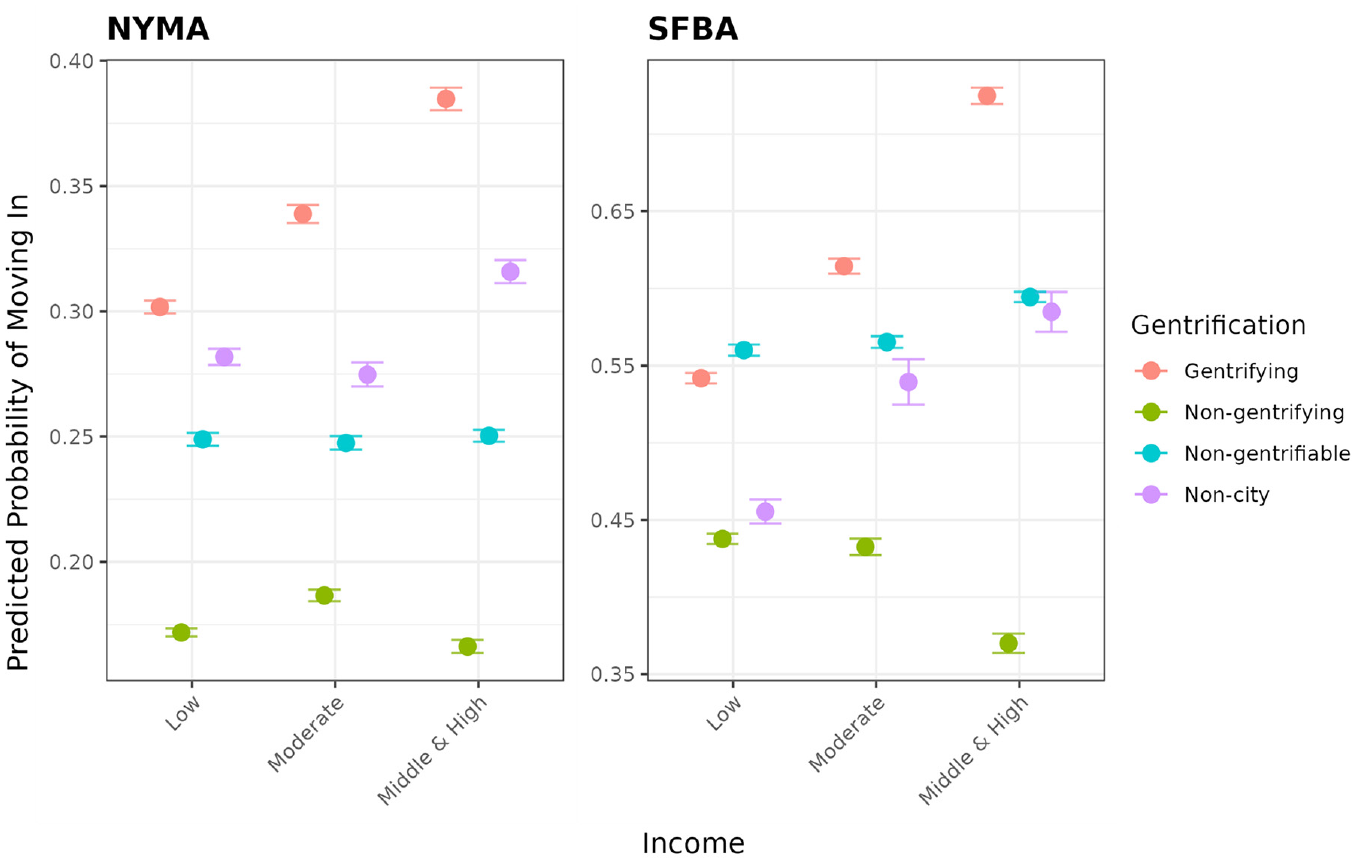
Predicted probability of out-movers’ moving into gentrifying neighbourhoods (income × origin neighbourhood).
Lastly, we examine the movers’ changes in neighbourhood poverty rates and median household income. Descriptively comparing the 2015–2019 ACS estimates for origin and destination neighbourhoods using mean averages, we find that low-income households from gentrifying neighbourhoods saw a decline in neighbourhood poverty rates (NYMA: 2.51 percentage points, SFBA: 1.95 percentage points) and an increase in median household income (NYMA: $12,986, SFBA: $19,015) overall. However, these improvements could reflect the fact that many low-income households already live in already low-SES neighbourhoods (Lee and Perkins, 2023).
Indeed, our modelling results in Table 4 suggest that these improvements are significantly smaller than their counterparts from non-gentrifying neighbourhoods. More specifically, low-income out-movers from gentrifying neighbourhoods experienced greater increases in poverty rates (NYMA: 2.86 percentage points, SFBA: 2.05 percentage points) and smaller increases in median household income (NYMA: $5,531 dollars, SFBA: $7,232 dollars). These relationships are captured in the predicted scores plot (Figures 4 and 5), where a hypothetical low-income household moving out from a gentrifying neighbourhood with base categories and mean characteristics would see neighbourhood improvement from relocation but with smaller magnitude compared to its counterpart from a non-gentrifying neighbourhood.
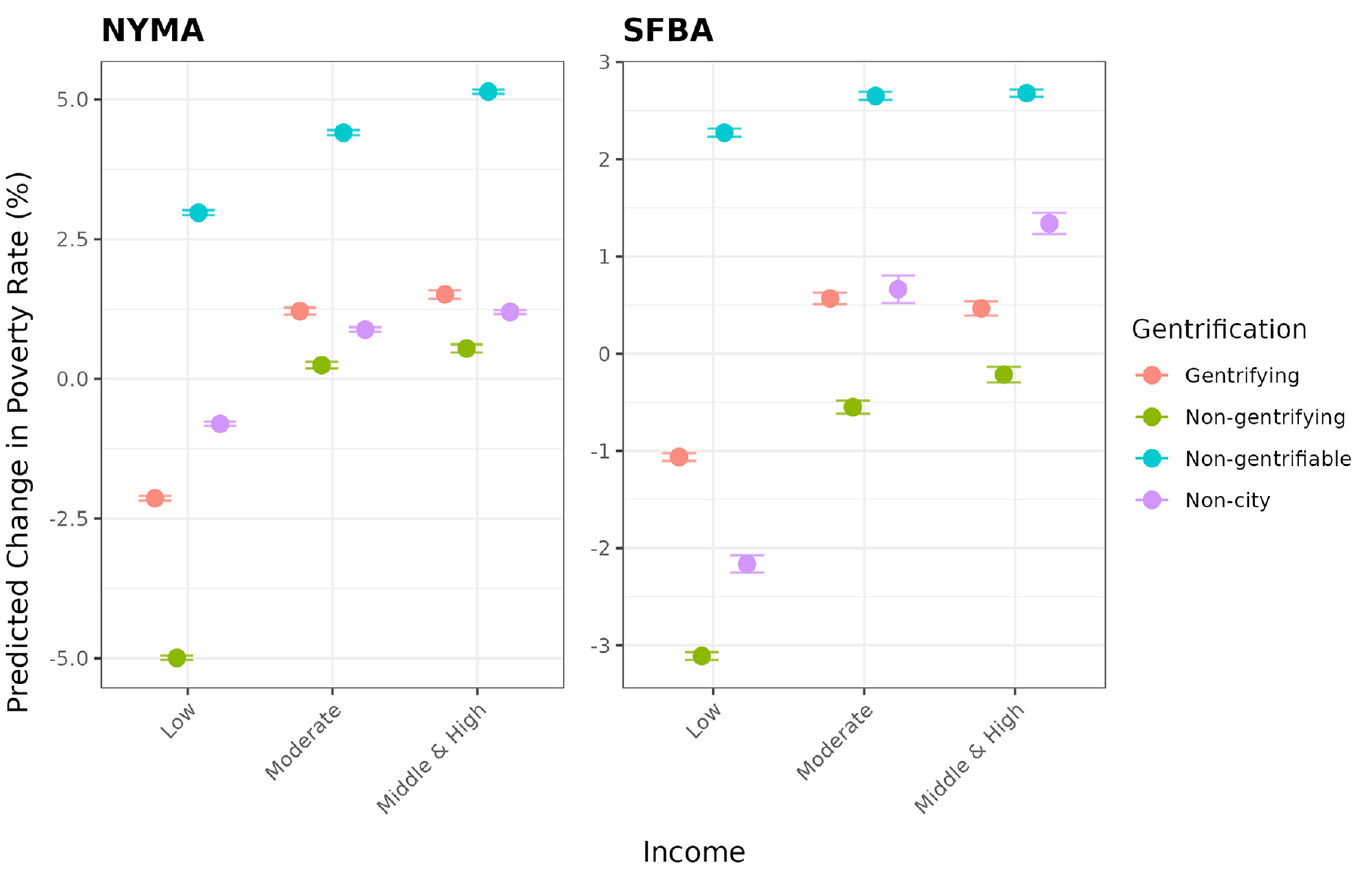
Predicted change in neighbourhood poverty rate of out-movers (income × origin neighbourhood).
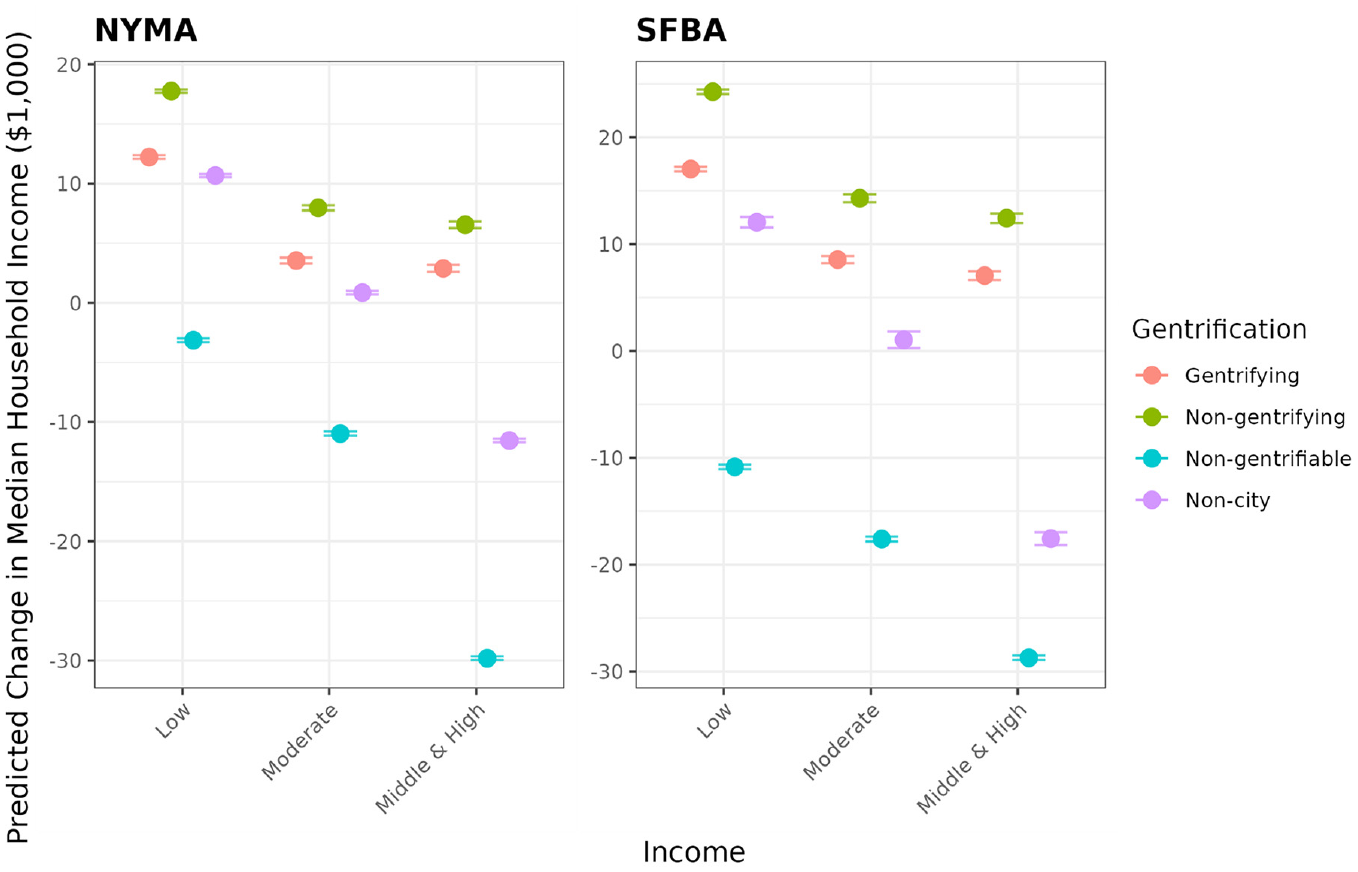
Predicted change in neighbourhood median household income of out-movers (income × origin neighbourhood).
Discussion
Despite the distinct characteristics of the two regions, we find surprisingly similar mobility patterns for low-income households in our results, which implies that gentrification in high-cost coastal metros may share highly similar dynamics. We find evidence that low-income households were more likely to move out of the neighbourhood compared to their counterparts in non-gentrifying neighbourhoods and less likely to move into gentrifying neighbourhoods compared to higher-income households in both regions. While we also find that low-income households that leave gentrifying neighbourhoods are more likely to end up in other gentrifying neighbourhoods, neighbourhood improvement from relocation was significantly smaller for movers from gentrifying neighbourhoods. These findings echo what many on the ground in the two regions have argued about gentrification – that it spurs exclusionary dynamics for low-income families. We attribute these findings to the significant increases in housing costs facilitated by gentrification in NYMA and SFBA during the 2010s that have probably limited housing options of low-income households. Nevertheless, our findings also suggest that low-income households may strategically relocate to their own advantage and continue to benefit from neighbourhood improvement (Coulton et al., 2012). However, they also point to greater challenges imposed on low-income out-movers of gentrifying neighbourhoods in neighbourhood attainment compared to those moving from non-gentrifying neighbourhoods.
Despite many similarities between the two contexts, we also find the exclusionary impacts of gentrification are more pronounced in NYMA compared to SFBA. In NYMA, gentrification is associated with a higher likelihood of low-income households exiting their neighbourhoods and a lower chance of entering them, compared to SFBA. Additionally, in NYMA, those relocating from gentrifying neighbourhoods are more likely to move out of the city compared to the movers from non-gentrifying neighbourhoods, in contrast to SFBA, where the opposite trend is observed despite small effect sizes. These differences may be attributed to the greater affordability gaps between gentrifying and non-gentrifying neighbourhoods in NYMA than in SFBA. For example, the median average of median rent increases during 2013–2019 in gentrifying tracts was 1.40 times higher than non-gentrifying tracts in NYMA compared to 1.19 times in SFBA. Relatedly, these affordability gaps between neighbourhoods may also be linked to the different geographic distributions of subsidised housing and rent stabilisation, which significantly influence housing market outcomes for low-income families amid gentrification-induced displacement and exclusion (Chapple et al., 2023). As such, our findings suggest that the exclusionary impact of gentrification may be greater when it is accompanied by intense unaffordability pressures. These insights underscore the importance of further research on gentrification through a comparative lens, considering differing regional housing market conditions and policies that may contribute to disparate outcomes.
Finally, our results contradict the general finding among the literature that gentrification does not increase levels of out-migration for low-income households. On one hand, we suggest that patterns we identified may occur primarily in extreme cases like NYMA and SFBA. Yet our findings on neighbourhood exit also contradict past studies on our study areas (Dragan et al., 2020; Hwang and Shrimali, 2021). We believe that this discrepancy may stem from our choice of data, analytical approach, and the study period. In addition to modelling at the household level using a new comprehensive dataset, we also compress this longitudinal dataset so that we do not include the same household as multiple cases in our analysis. Furthermore, we focus on a shorter period characterised by strong gentrification and displacement pressures. Altogether, these considerations point to the fact that the relationship between gentrification and residential mobility is not as straightforward as one might suggest – we need empirical investigations with different scopes and perspectives to understand it.
Conclusion
This article examines whether gentrification creates housing market challenges for low-income households: are they more likely to move out, less likely to move in, and more likely to ‘move down’ the neighbourhood socio-economic hierarchy? Focussing on two extreme contexts, we find empirical support for the exclusionary potential of gentrification in both accounts, confirming qualitative accounts of gentrification. In contrast to most existing studies, we find that low-income households are more likely to move out from gentrifying neighbourhoods, at least in the short period of intense gentrification pressures in the coastal hot market regions studied. We also find that low-income households are less likely to move into gentrifying neighbourhoods than higher-income households. At the same time, we find evidence that the low-income households that leave gentrifying neighbourhoods do not necessarily end up moving to more disadvantaged environments but nevertheless achieve less neighbourhood improvement compared to those moving out from non-gentrifying neighbourhoods.
Our study has limits that could be addressed in future research. Although we rely on granular household-level data to measure residential mobility, we still cannot measure the actual motives behind residential moves. Despite controlling rent control at the city-level, we were unable to measure coverage at the level of the unit or the neighbourhood and other displacement prevention policies such as eviction control. Perhaps most importantly, our study does not consider race due to the high number of missing cases for the variable in the Data Axle dataset. Studies have shown that race is a significant component of neighbourhood change particularly in the context of the United States (Rucks-Ahidiana, 2021).
This research has policy implications for urban policymakers, planners, and activists working either to mitigate the negative impacts of gentrification or to ensure access to opportunity for residents of disadvantaged neighbourhoods. By finding evidence that gentrification may constrain housing market experiences of low-income households but that the magnitudes of these relationships are perhaps not as strong as one might expect, our findings suggest that anti-displacement policies may help low-income residents stay in place effectively (Chapple et al., 2023). Furthermore, our findings on the neighbourhood trajectories of out-movers from gentrifying neighbourhoods suggest that policymakers should also ensure that there are opportunities to move into other neighbourhoods on the upswing.
Footnotes
Declaration of conflicting interests
The author(s) declared no potential conflicts of interest with respect to the research, authorship, and/or publication of this article.
Funding
The author(s) received no financial support for the research, authorship, and/or publication of this article.
