




Abstract
Over the last two decades the Hong Kong government has made considerable investments to develop the city into a regional education hub, with ‘diversification’ as a key aim. The vision is, however, delinked from the tens of thousands of young children residing in Shenzhen who commute to Hong Kong for school daily. These children embody differences that are considered undesired and their social exclusion has been widely reported. Taking a spatial perspective, this paper deepens our understanding of the in/exclusion processes impacting these children. Drawing on our policy analysis, interviews, observations in physical spaces and digital media, this paper analyses the role that intermediary spaces play in (re)producing differences and social relationships. Specifically, we examine the power geometries of the children’s school journey and school-related digital space, which are arenas where social differences are played out and in/exclusion is practiced and negotiated. We analyse the network of state and non-state actors at work in these intermediary spaces, showing the complex ways in which separation and integration, exclusion and inclusion intersect and constitute each other mutually. Our paper also gives some first insights into the impact of COVID-19 on the school children within this education mobility field.
Introduction
Over the past two decades, Hong Kong has been branded by the government as ‘Asia’s World City’. The label is meant to reflect the core values, attributes and vision of the city. Within these marketing narratives, diversity is highlighted as an important virtue. One of the policy foci is the development of a ‘Regional Education and Training Hub’, which entails developing ‘world-class universities’, ‘professional bodies’ and ‘international schools’ that should be meeting ‘global standards of excellence’ (Hong Kong SAR Government, 2020). In aspiring to build ‘a regional education hub to nurture talents for the region’ (Hong Kong SAR Government, 2018: n.p.), diversification is aimed for. The government pledges to ‘welcome overseas students to study, to conduct academic research, and to take part in educational exchange activities in Hong Kong’ (Hong Kong SAR Government, 2018: n.p.). Surfing the ‘pandemic wave’, universities in Hong Kong have recently launched initiatives to retain local students who might otherwise have headed to foreign shores and to attract international students who are potentially hindered from studying in other countries (in the West) (Lau, 2020).
Similar to other (aspiring) education hubs such as Singapore, Malaysia, China, India or Dubai, the Hong Kong vision almost exclusively targets higher education. At pre-tertiary levels, only international schools catering for children of the global elite are considered part of this neoliberal world city project. Education is positioned here as a means to enhance competitiveness and economic growth. Diversification is pinned at higher (education) and global (or at least regional) spatial levels.
Yet, another process of diversification has taken place at pre-tertiary levels in the Hong Kong education system in the past two decades. This has, however, found no place in the ‘world city’ and ‘education hub’ narrative. 1 Since early 2000s, tens of thousands of children holding residency in Hong Kong – nevertheless considered migrants in the public narrative – but living in Shenzhen commute daily to attend kindergartens or schools in Hong Kong. This group of cross-border students (CBS), 2 who are predominantly from lower-middle class backgrounds, are represented in policy and media discourses in starkly different ways compared to the international students to be lured by the envisioned ‘Hong Kong education hub’. Rather than human resources and embodiments of welcomed diversity, CBS are first and foremost being reported by policy-makers, social service organisations and the media as victims of the long commute and the hardships of systemic and daily discrimination in Hong Kong. From a policy perspective, they are also seen as a challenge to the provision of quality education, social cohesion and the social welfare system in Hong Kong (for an example of discussion among politicians on the phenomenon, see Hong Kong Legislative Council, 2016).
Contrary to the diversity-embracing image propagated by the ‘Hong Kong welcomes international students’ slogan bannered on the Regional Education Hub website, the Hong Kong public school system 3 adopts an assimilationist approach to non-Cantonese-speaking children (Yuen, 2010). The ideologies underpinning education policies and support programmes for newcomers who cannot afford international schools are geared towards dissolving differences and the adoption of local culture (Yuen, 2011). Since the rise of the cross-border schooling phenomenon, policy-makers, social service organisations and academics have highlighted issues of social inequalities and exclusion faced by CBS and their families. Previous research (Burrow, 2017; Chan and Kabir, 2014; Chee, 2012; Chiu and Choi, 2019; Li, 2016; Yuen, 2011) has concluded that the main challenges faced by these school children are language barriers among those who are not proficient in Cantonese and English, low participation in after-school extra-curricular activities due to their long commute and, as a result, a weak network with local peers, as well as common prejudice against them because of their Mainland and lower-income background. Contradicting the narrative of Hong Kong, as ‘Asia’s world city’ and ‘an open, tolerant and pluralistic community’, CBS and their families are seen as embodiments of undesired diversity.
In this paper, we take a spatial perspective to deepen our understanding of the processes of in/exclusion in this mobility field. Specifically, we examine how differences are (re)produced and contested, and how in/exclusion is being played out in intermediary spaces that link the students’ homes and their schools. We conceptualise border control areas, school gates and also digital spaces as intermediary spaces – these are dynamic areas connecting people, institutions and places that are often seen in separation (Brooks and Waters, 2017). This spatial perspective allows us to go beyond thinking about inclusion and exclusion as binary opposites. Rather, we map out these processes in place and space, as relational and fluid.
The rest of this paper is divided into six further sections. The first section briefly reviews the concept of intermediary space and the ways it has been used in research on migration and education studies. The second and third sections present our research context and methodology. The subsequent two sections focus on exemplary intermediary spaces where differences are being played out and contested and social relationships are constituted, namely the school journey commuting space and the digital space. The outbreak of COVID-19 has disrupted this education mobility field that depends on daily border-crossings. We will provide some first insights into the impact of the pandemic on the young commuters from the perspectives of in/exclusion. Finally, the last section offers our concluding remarks.
In/exclusion in intermediary space
In this paper, we go beyond the emphasis on the school, which arguably is the first place to look at when educational inclusion is considered (Leung et al., 2021). Rather, we focus here on intermediary spaces, that is the series of connecting places and spaces between home and school traversed by mobile students, their families and other players in this education mobility field. Furthermore, we bring forth lived processes in these spaces through which differences are negotiated and in/exclusion is (re)produced in order to decentre attention paid to numerical indicators, such as the number of students, test scores and other such indicators, which are often taken as objective proxies of in/exclusion in education. Instead, as indictors of in/exclusion, we focus here on the power of social boundaries and differentiated sense of belonging among CBS and their families as related to the host society.
Our focus on the role of intermediary spaces in mediating in/exclusion also complements research on intermediary institutions and organisations in facilitating mobilities. In our conceptualisation, intermediary spaces comprise physical, digital, functional, social and discursive spaces connecting places, actors and institutions, and across domains. As in-between spaces, intermediary spaces can blur the distinctions between (seemingly) binary categories (such as school and home, Shenzhen and Hong Kong in our case), and through which they shape the actors, institutions and social fields they link.
Our thinking about intermediary spaces is inspired by related notions of in-between spaces. In particular, we draw on Bhabha’s (1994) concepts of ‘liminal space’ and ‘third space’ where cultural differences are articulated and imagined cultural identities are constructed and negotiated. Furthermore, we refer to Pratt’s (1992) idea of ‘contact zones’ to denote the space for co-presence between individuals and social groups that were previously separated by geographic and historical disjuncture – in her work this is specifically colonial encounters. Through contacts, encountering subjects are constituted in and by their relations to each other, often embedded in power relationships that are radically uneven. Building on these lines of thinking, we consider intermediary space as fluid, emergent and power-laden. It is a space of transit, but also a space in transit. Intermediary space exhibits and constitutes power geometries (Massey, 1999).
Here in particular we draw on previous work that engages with the notion of intermediary space in migration and education studies. In migration studies, intermediary space along migration routes has captured the interest of scholars. This body of work contributes to theorisation of ‘the middle’, which has been advocated as a way to shift from binary thinking in migration studies (Mignolo, 2011; Raghuram, 2020). A special focus, especially since the advent of the ‘migration crisis’, has been put on border spaces. These spaces are conceptualised as transit, in-between, intermediary spaces where (im)mobilities are intensively practiced and unevenly assigned.
Taking a Marxian perspective, Mezzadra and Neilson (2013) argue that European borders, as spaces of transit, exist not to seal off Europe from migrants from Africa but rather to include and exclude migrants selectively. The processes of in/exclusion along these borders produce the category of ‘irregular migrants’ on whom the flexibility of capital is dependent. These transit zones are hence filtering spaces of ‘differential inclusion’ that reproduces the capitalist mode of accumulation. To exercise differential inclusion, borderlands are highly controlled spaces. Securitisation of the transit zones is hence a main focus in the research on these intermediary spaces in migration studies. We have learned about the changing and intensifying state efforts in controlling migration in Europe (İçduygu and Yükseker, 2012; Stock, 2012) and Asia (Datta, 2018; Kim, 2012). The role of other actors and institutions in controlling migration transit zones has also been documented. Beurskens et al. (2016), for instance, illustrate civil engagement in securitisation of internal EU borderlands ‘from below’. Offering an alternative reading of intermediary spaces (i.e., not as restrictive spaces), Basu and Asci (2020) highlight cities such as Istanbul, Accra and Kolkata as ‘intermediary cities of refuge’, providing displaced people with the opportunity for new livelihoods while ‘in transit’.
Basu and Asci’s emphasis on the generative nature of intermediary spaces echoes writing in education studies, to which our research also links. Noam and Tillinger (2004), for example, analyse the opportunities and challenges of after-school time-space as, among other things, inclusive intermediary spaces, with special attention given to the role of partnership among public and private institutions. Leaving the schoolground, Ross (2007) follows children on their school journeys in Scotland and documents children’s active and imaginative engagements in and with their physical and social environments in this intermediary space of commuting. Also focussing on bus journeys to school taken by rural children in England, Gristy (2019) provides a detailed study of this ‘neglected space’. She concludes that the school bus is an uneven intermediary space, available to some but not others, experienced in positive ways among some but not others. Focussing on different school-related spaces, these pieces of research examine their importance in shaping school children’s overall social – that is beyond educational – experiences. Our paper connects and extends this small body of work in examining how in/exclusion is played out and contested on school journeys.
Furthermore, we shed light on the digital space in our analysis. As researchers of digital geographies have argued, physical offline spaces and digital online spaces exhibit their own specificities and heterogeneities (Jackson and Valentine, 2014), yet, they are interwoven in diverse, dynamic and contextualised ways. Research has noted, among other things, how digital and physical spaces share a symbiotic relationship (Kitchin, 1998: 403) converge (Imken, 1999) and/or co-create (Massey, 2005) each other. Coining the concept of ‘cON/FFlating situational spaces and places’Bork-Hüffer and Yeoh (2017) underline the entangled, interdependent and often conflating online and offline spaces of encounters among migrants and locals. Here, we examine the role of the digital space, intersecting with the physical space, in producing and contesting social differences and belonging.
As shown above, intermediary spaces are dynamic, in-between spaces where meanings, values, identities and relationship are produced and contested. They are sites of accumulation and dispossession, inclusion and exclusion, mobility and immobility. They are, and bridge, physical, digital and social spaces, and transcend scales from the macro to the micro. Yet they do not only connect, but also divide. Through the entanglements of materialities, social relationships and discursive practices, intermediary spaces are particularly intriguing and important, yet are often side-lined as peripheral areas of study.
In our research on Shenzhen-Hong Kong cross-border schooling, we link and develop the above reviewed bodies of work in border, migration and education studies. We examine the dynamics in a series of physical and digital spaces between the children’s home and school as exemplary intermediary spaces. These mediation points are where people (children, but also their parents, guardians, and other service providers), tangible materials (e.g., buses, books, documents) and intangibles (e.g., knowledge, ideas, representations and emotions) move through. We will show how they are spaces of politics where control of diverse nature is being exercised and contested. As contact zones where differences, identities and social relationships are played out, (re)produced and contested, these intermediary spaces are dynamic, complex and always in the making.
Research context: The Shenzhen-Hong Kong border
When Hong Kong was returned to China by the British in 1997, it was given the status of a Special Administrative Region. The return of sovereignty was arranged with the principle of ‘One Country, Two Systems’. Under this framework, Hong Kong was given semi-sovereignty for 50 years after the handover and guaranteed a high degree of autonomy, including retaining its capitalist system, independent judiciary and rule of law, free trade and freedom of speech. As part of this legal construct, Hong Kong residency and Chinese citizenship, and in turn the duties and rights that come with this status, are regulated in two separated (but increasingly linked) regimes. The peculiar and innovative legal construct required a clear boundary between the two territories within one country. This explains the continuation of the Shenzhen-Hong Kong border after 1997. Today, the border functions similarly to an international, hard border. It is used to control flows of goods, services, capital and people. Immigration and custom regulations have, however, changed over time. Concerning human movements, the control is highly uneven. Mainlanders are much more restricted entering Hong Kong than the other way around.
The Shenzhen-Hong Kong border marks the line between two different but highly interlinked political, social and economic systems. Differences in the education systems and their respective links to the broader international education field have stimulated education mobility in both directions, though in varying volumes, from kindergarten to university levels. Here, we focus on the tens of thousands (27,000 as of May 2020, according to the Hong Kong Education Bureau, cited in Radio Television Hong Kong, 2020) of CBS who live on Mainland China and cross the border daily to go to school in Hong Kong.
CBS are mostly children of cross-border marriages between Mainland Chinese women and Hong Kong men. Mainland wives of Hong Kong men have to apply for immigration and wait for four to eight years before receiving a one-way permit to reunite with their spouse in Hong Kong. At the moment, nearly 100,000 cross-border families live in such situation (Society for Community Organization, 2019). While some families move to Hong Kong after the mother has obtained Hong Kong residency, some cross-border families remain in Mainland China for reasons that include lower cost of living, more affordable housing and social relations in place. Other than children of cross-border marriages, some CBS are born to Hong Kong residents living in China and, last but not least, there is a large group of children whose parents are both Mainland Chinese residents. Many of these families have given birth in Hong Kong to circumvent the One Child Policy. The number of children born to Mainland parents in Hong Kong took a big jump after a ruling by the Court of Final Appeal in Hong Kong in 2001. According to the court decision, all children born in the city would be entitled to permanent Hong Kong residency, irrespective of their parents’ residency status, and that comes with access to Hong Kong public schools. This is of high importance because individuals cannot simultaneously possess Hong Kong right-of-abode and a hukou (household registration) in Mainland China. Since children born in Hong Kong do not have hukou on the Mainland, they do not have access to social benefits, including state-funded education, in China. Access to Hong Kong public education is therefore crucial. Most CBS families are of lower-middle class background. Many of them have paid much of their savings to give birth in Hong Kong. This explains their inability to afford the high tuition fees charged by private schools in Shenzhen, or to pay a hefty fine to the Chinese authorities to gain access to Mainland welfare provision. Consequently, numerous cross-border families live or are ‘trapped’ in the current of mobilities as Chee (2017) concludes.
Methodology
This paper draws on a larger, mixed-method qualitative research project that takes an ethnographic approach to examine the Shenzhen-Hong Kong cross-border schooling phenomenon. We were particularly interested in mapping out the materialities of CBS education mobility whilst building a broader picture of their experiences. Hence, the border and the children’s commuting journeys were identified as the spatial focus of our research. In addition to a detailed review of existing research, relevant policies (e.g., those regarding immigration and education) and news and (social) media reports, 4 ethnographic fieldwork in Shenzhen, Hong Kong and at the border was conducted in 2018 and 2019. Our field data derived largely from on/offline interviews and observation with ‘key’ individuals: in keeping with our ethnographic approach, we were not concerned with ‘sampling’ a specific population and generating representative data. In order to create a rich picture of a cross-border social field, we sought to speak to as wide a range of individuals involved in some way with CBS as possible, as well as studying in depth the experiences of a dozen families. We approached potential parent interviewees through WeChat, the Chinese messaging, social media and mobile payment app. In total, we interviewed 17 CBS mothers and fathers. The families we talked to, reflecting the overall cross-border family population, come from a mix of socio-economic background. Most are, however, from the middle or lower-middle class. As we spent time in the ‘field’, we also spoke to a grandfather of CBS at the border while he was waiting for his grandchild. Going beyond our original focus on parents’ perspectives, we also interviewed/spoke more casually to four CBS of different age – a university student in his early 20s, a 16 year-old high-school student and two 6th-grade 12 years-olds. In order to gather views from the schools, we reached out through our personal contacts and interviewed a former school principal, five teachers and a school social worker. Finally, we also interviewed a staff member at a tutoring centre near one of the main border crossings and a government officer working at Shenzhen Customs. 5
Interviews were largely face-to-face, although some of the conversations were conducted over WeChat or by phone. Face-to-face interviews took place mostly in public places such as canteens, restaurants, coffee shops or fast-food outlets. Two families were interviewed in their homes. We were also invited to accompany one of the families on the journey from the port to their home together with their children. In addition to observation conducted at the Shenzhen-Hong Kong border crossings, we also followed along the school journeys of these children and visited related social service centres. The interviews were conducted in Mandarin or Cantonese Chinese as our interviewees preferred and a small number of interviews were conducted in English. All interviews were fully transcribed in Chinese and translated into English. The transcripts were then examined through an iterative process, that is first using pre-set and then modified themes, codes and categories. Relations between and among themes, codes and categories are then mapped out and analysed.
In addition, we followed the discussion on two major WeChat groups dedicated to cross-border families. One of the groups was founded by a social service organisation Shenzhen-Hong Kong Family Service and the other one was initiated by a parent. Each of the groups had around 400 members at the time we conducted our research. These members are predominantly parents of CBS whose children are of all ages, but mostly attending kindergarten and primary school. In these chatgroups, most members communicated in anonymous way, therefore, it not possible for us to know precisely who they are. From our observations, most are from working-class and (lower) middle-class backgrounds, who are ‘trapped in mobility’ (Chee, 2017) as more well-off and elite families can afford to live in Hong Kong to avoid the daily commute. The online groups were very useful for gaining insights into parents’ perceptions, concerns and experiences. Members share a wider range of information, discuss all kinds of problems and topics. In spite of the different initiators, we observed more similarities than differences between the two groups in the discussion among peer parents. As expected, social workers are active in the group initiated by Shenzhen-Hong Kong Family Service. They share information on support services and social activities provided by their organisation, and those by both Shenzhen and Hong Kong governments.
After the completion of our on-site fieldwork, we continued with our policy and (social) media analysis to keep track of any changes currently happening. In addition, we conducted follow-up interviews with one of the teacher interviewees to gather insights into the effects of the COVID-19 pandemic.
School journey as in/exclusive space
In this section, we will travel through the physical home-school space traversed daily by commuting school children. As we move along, we illustrate a network of actors, institutions and materialities that constitute and play a role in regulating the intermediary space, which in turn mediate differences and the experiences of in/exclusion.
As explained previously, mobility of people and goods across the Shenzhen-Hong Kong border is strictly controlled. Subsumed under this broad regulatory system, the home-school journey is long and complicated for CBS, some of whom are as young as three-year-old kindergarteners. These children need to pass through two layers of securitised borders, that is four control moments daily to exit Shenzhen and enter Hong Kong, to get to school in the morning and return in the afternoon. Most commute through six land Boundary Control Points (Figure 1) which are located in Control Areas where access is highly restricted. The vast majority of CBS attend schools in the districts close to the border.
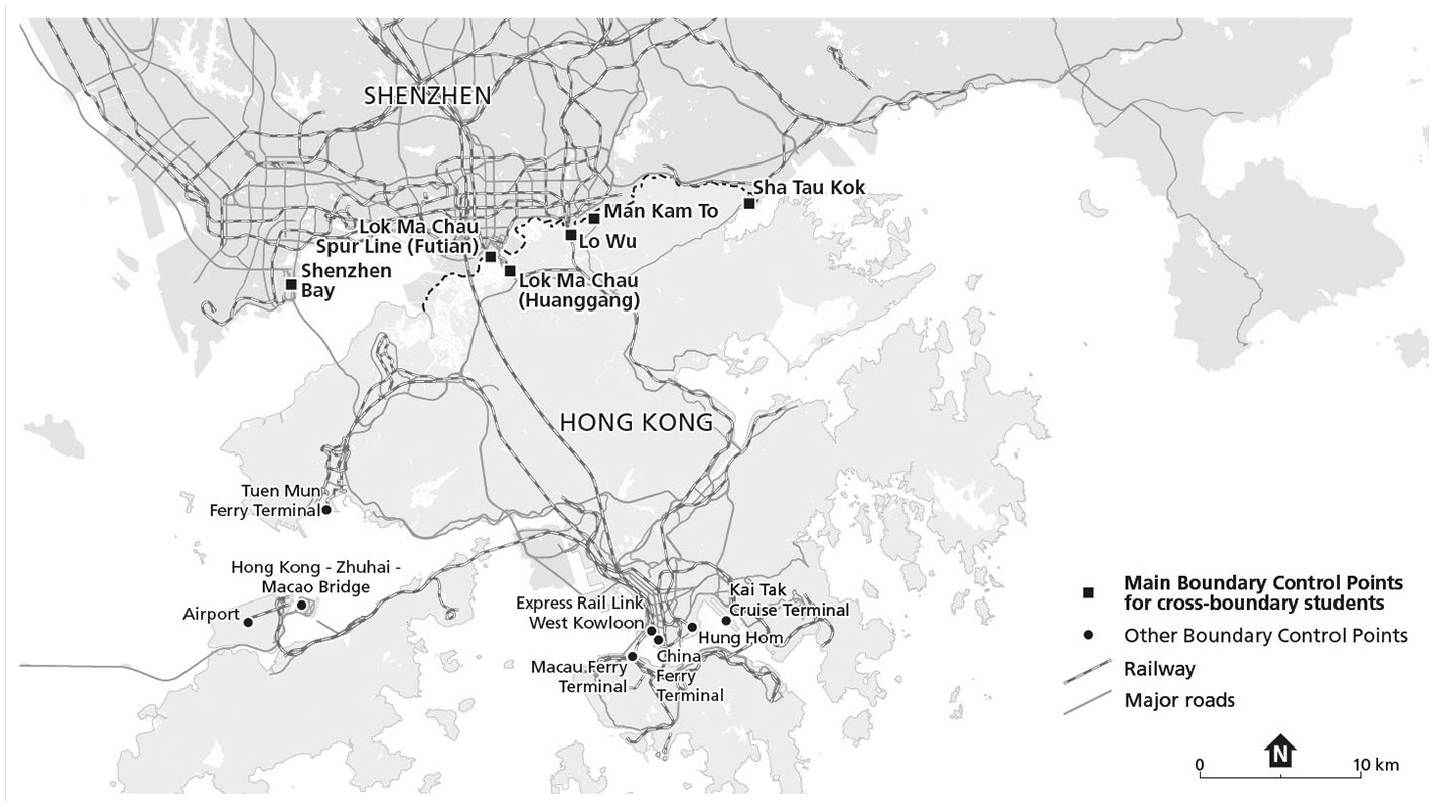
Map of the Shenzhen–Hong Kong boundary and ports.
The mundane daily commute can last up to four hours for some CBS. This leaves these children with little leisure and rest time, or spare time and energy to pursue extracurricular activities (which are seen increasingly as a necessity in Hong Kong). Previous research has repeatedly underlined the long and exhausting journeys as the biggest challenge CBS face (e.g., Chiu and Choi, 2019; Yuen, 2011; Zhu, 2020). Crafting an exceptional space, a fast-track way through the securitised border for CBS has been a priority in the inclusive policies targeting these children.
To this end, immigration procedures have been modified and simplified over the years, reducing the time CBS need to pass through the borders. Designated waiting areas, control counters and e-channels have been set up for them both on the Shenzhen and Hong Kong sides of the border at the major control points (Figure 2a–d). For those who travel through the border by cross-boundary school buses, an on-board clearance service is also offered on both sides of the border (Figure 3). The buses with special permission have designated special channels to reduce the time needed to pass immigration and custom control. Buses that are not permitted to cross the border are assigned specific boarding areas to smoothen the mobility flows. These special arrangements and services, provided through strict separation of the CBS from other travellers, have been approved and welcomed by both societies in Shenzhen and Hong Kong. They are interpreted as inclusive policies and practices of care for the ‘poor children’ who need to make big sacrifices for their education.
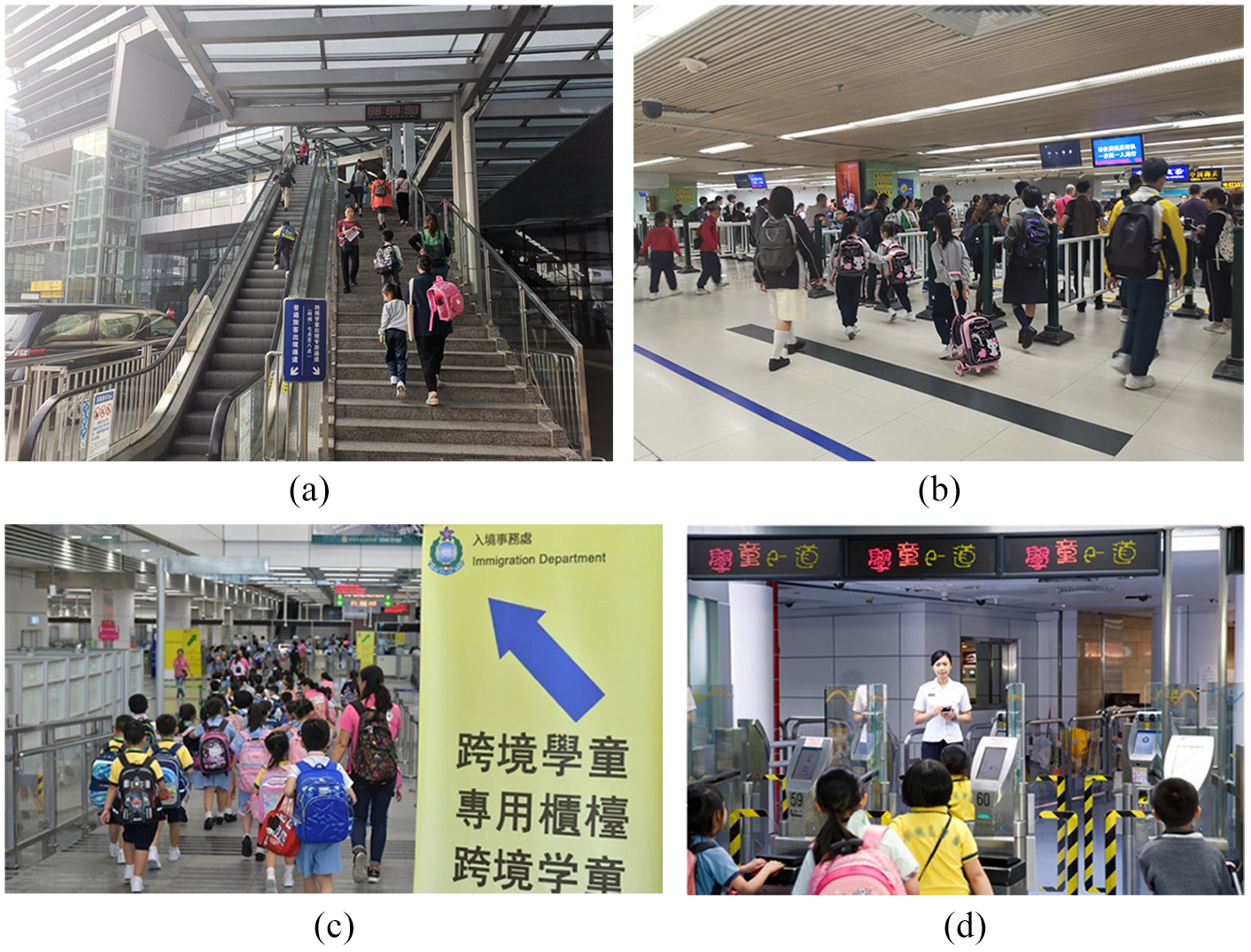
(a) Special channel for CBS on Shenzhen side – right of the signage, designated from 7 am to 8am on school days (Source: Zhu, 2020). (b) CBS at designated control counters on the Shenzhen side (Source: Zhu, 2020). (c) School children approaching designated control counters on the Hong Kong side (Source: The Hong Kong SAR Government, Information Service Department). (d) School children approaching designated e-channels on the Hong Kong side (Source: The Hong Kong SAR Government, Immigration Department, https://www.immd.gov.hk/publications/a_report_2013/en/ch2/index.html).
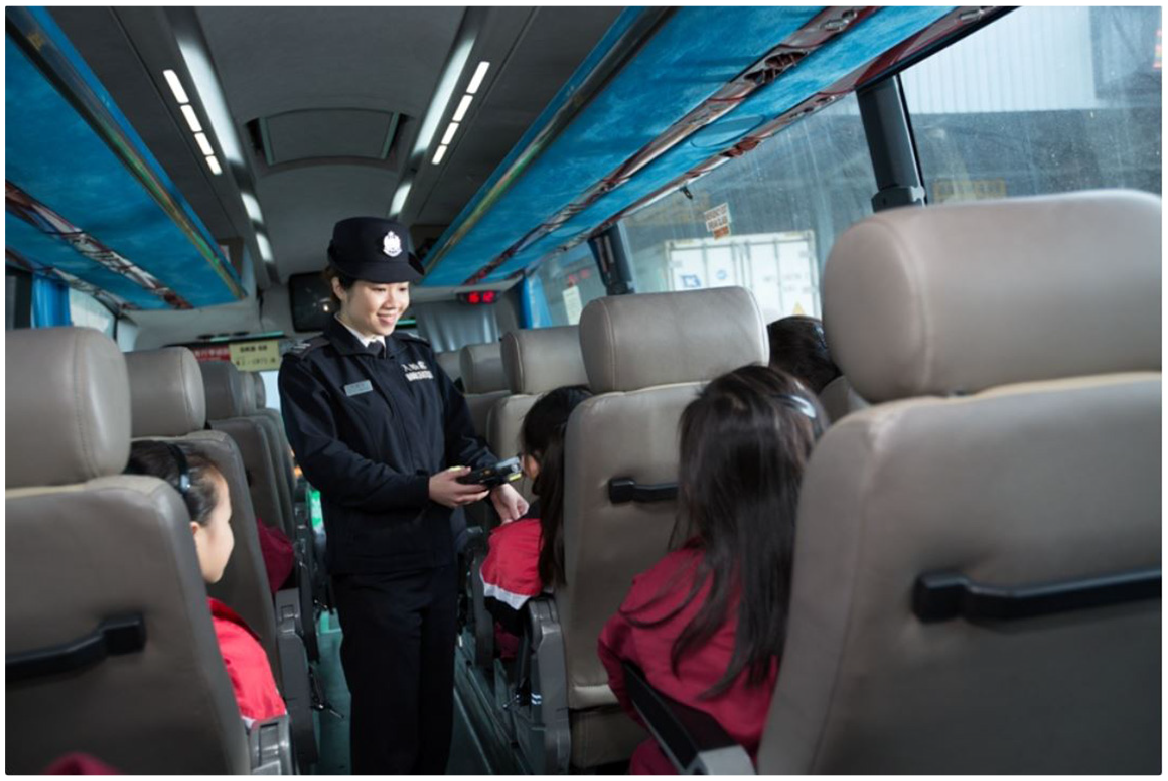
On-board clearance service.
This friction-reducing (Cresswell, 2010) infrastructure broke down early on during the COVID-19 pandemic when the Hong Kong-Shenzhen border was closed. CBS were much more affected by the lockdown than their local peers as cross-border mobilities were more severely restricted than mobility within Hong Kong. A CBS father shared his frustration with a news reporter when the border was first closed (Chan and Siu, 2020): ‘It’s impossible for us to bring our child to Hong Kong and stay [in Hong Kong]’, he said. ‘First, there is no place for us to stay. Plus, both of us have to work in Shenzhen. Should we all head to Hong Kong and lose our jobs here? … You [the Hong Kong government] are excluding us and not letting our kids go back to school’, he complained.
As commonly practiced worldwide, a quarantine requirement was installed during the lockdown. At the initial stage, all border-crossers, including CBS, were required to quarantine after crossing the border. This made daily commute impossible. Understandably, CBS parents were upset. The demand to make exceptions and re-open the border crossings for CBS followed quickly. CBS were identified as one of the prioritised groups to be allowed to cross the Hong Kong-Shenzhen border at limited control points, around mid-June 2020. Selected classes, starting with those preparing for public examination, were permitted to resume. The already highly controlled home-school intermediary space was consequently further securitised with hygiene and health-safety measures. In order to reduce social contact with other people and reduce the risk of COVID-19 infection, school buses were arranged and students were subjected to health checks, including temperature screening and submission of health declaration forms, both in Hong Kong and Shenzhen. These students were, in principle, exempted from the compulsory quarantine in Hong Kong and centralised quarantine in Shenzhen, which was enforced on other travellers. These exemptions were generally accepted by the Hong Kong public. Yet, grievances were subsequently expressed, especially when the infection cases rose again after the border was opened, albeit in this selected way.
Even with this special inclusive treatment, many CBS were still stuck in limbo. A survey conducted by the International Social Service Hong Kong Branch (2020) reports that the majority of CBS needed to spend extra time commuting, for many an additional hour or more, in order to cross the border at the few checkpoints first selected for the exemption. In addition, they also found that many CBS’s travel documents had expired, in most cases because their parents themselves had no effective visas to visit Hong Kong for the necessary procedures. Many of these parents did not have a place to stay in Hong Kong and had financial difficulties, making them unable to help their children renew their documents while the 14-day compulsory quarantine was in place. Together with a number of other advocacy bodies, International Social Service Hong Kong Branch (ISS-HK) pushed for more measures to be made to assist CBS, such as the opening of more border checkpoints, speedier resumption of other class levels and provision of more online learning support, so that they would not be left further behind.
Social service organisations such as the ISS-HK have been active in smoothing the school journey space, also in the pre-COVID times. They serve as sources of information and support to CBS and their families and advocate for their rights. In addition to these social service providers, there is an active network of business involved in facilitating cross-border schooling (Leung and Waters, 2021). As such, they also play an important role in shaping the geographies of in/exclusion in this intermediary space.
The school buses play an essential role in this cross-border mobility field. Bus companies with permission from the government(s) work with the schools to shuttle the CBS either directly from Shenzhen to Hong Kong (with on-board immigration, custom and health clearance since 2012 at increasing number of control points), or from the border after the children have passed through. Like the designated immigration lane, the buses keep the children in a separate space, shielding them from the hustle and bustle that characterises the Shenzhen-Hong Kong border.
Escorts (or ‘nannies’) are hired by school bus companies to accompany children on their journeys. Depending on the permission their bus companies have, the nannies guide the school children on and off buses, across busy streets (with traffic running in opposite directions on the two sides of the border), through the immigration halls and across the border control points (Figure 4). Regardless of the exact journey, the nannies’ most important job is to make sure that the children stay in a safe bubble, and are not distracted so that they lose their way. The nannies are mostly middle-aged women residing either in Hong Kong or Shenzhen. They move along with the young children through the intermediary spaces from home to school. CBS parents, whom we have talked to, commented frequently on nannies’ strict, even ‘fierce’ disciplinary practices. While not always agreeing with their style, parents need the nannies to take over the important social reproductive, parenting role and ‘keep the kids under control’ in their absence. As such, the nannies are intermediary agents, serving as go-betweens linking the schools and teachers on the one hand, to the parents on the other hand who do not come into frequent face-to-face contact with the teachers. The nannies’ role as social mediators was even more important before the advent of WeChat and the common practice of children having their own mobile phones or GPS-equipped watches. In a media interview, a former nanny recalled that once she managed three mobile phones at the same time and received over a hundred calls daily from parents. Parents called not only for information regarding the journey, but also for other information from the school (Tang, 2017). As such, these nannies’ role in enacting inclusion in cross-border education, therefore, extends beyond physically keeping the children in the safe and ordered bubble on the school journey as they also mediate the flows of information, contacts, values and expectations that are key elements for the socialisation of the transborder children.
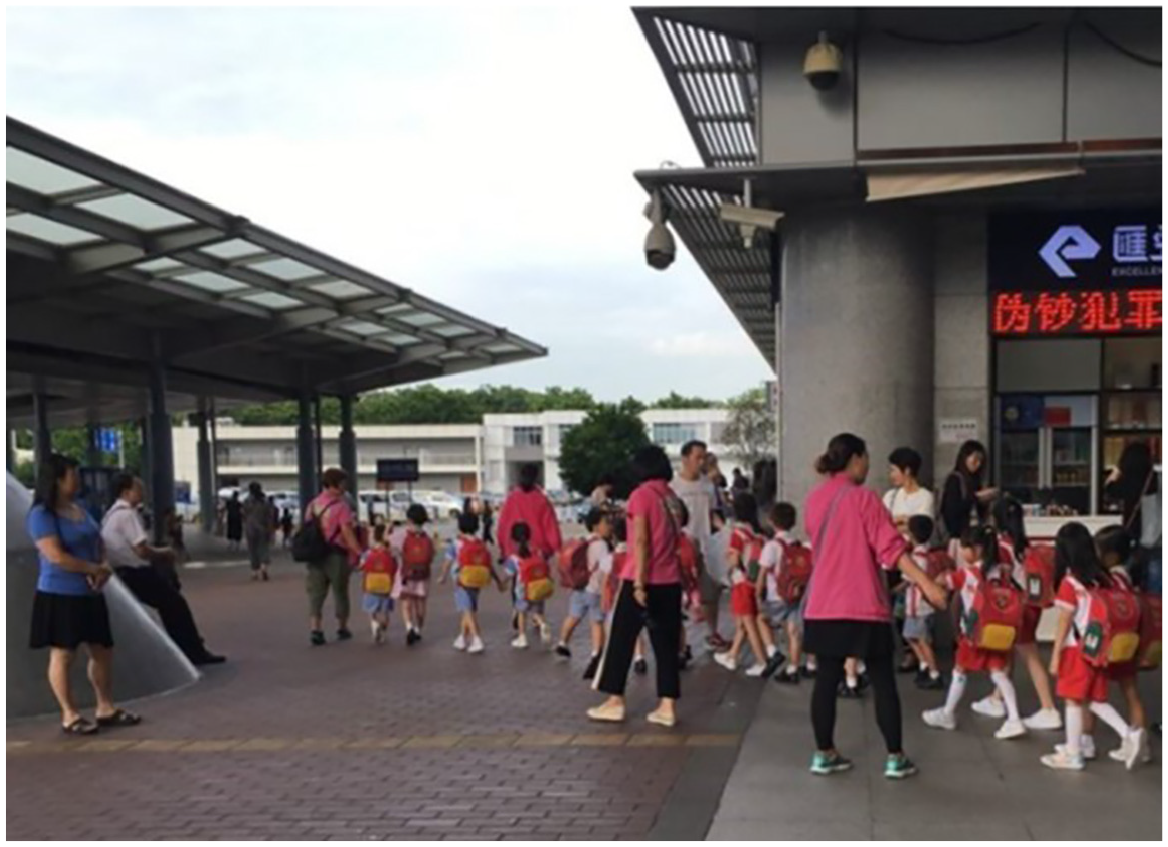
‘Nannies’ at work herding CBS to board the school bus on the Shenzhen side of the border.
Older children generally commute on their own. After passing through the reserved CBS fast track at the border crossings, they leave the sheltered space and continue their journey by public transport. Encounters between the CBS and Hong Kong ‘locals’ along the home-school journey have become commonplace in the northern districts in Hong Kong in the past decade. As is often the case with public transport, we have observed that children chat with their friends, play with their phones, study sometimes, take a nap at other times. Others on the bus and trains also carry on their routines. This ‘throwntogetherness’ in the context of diversity (Aitken, 2010; Bork-Hüffer and Yeoh, 2017) exemplifies moments of co-existences that cannot be considered encounters at all, and at other times they are ‘fleeting’ or unintended encounters (Valentine, 2014; Ye, 2016a) where people ‘rub along together as a consequence of accidental proximity’ (Mayblin et al., 2016: 213). Hence, the shared travelling spaces play an ambivalent role in mediating the (re)construction and contestations of social relations. As Wilson (2011) concludes in her ethnographic study on bus passengering in Birmingham, ‘intercultural relations are continuously developed, destroyed, and remade in the practice of everyday bus travel’ (p. 634). During our fieldwork, we noticed an array of throwntogetherness among the different ‘others’ whose paths intersect on the trains and buses, on the streets, in supermarkets, stationary stores and other public spaces. Adults and children recognise each other’s presence and differences, smile to each other, make way for each other, give seats to each other. As such, we also detected what Ye (2016b) describes as ‘breathable sort of diversity in shared space’ and ‘low-stakes inclusion’, where interactions with strangers do not require long-term or big efforts. Yet, there is no guarantee that sharing a physical space would automatically cultivate even low-stakes inclusion. Micro-politics are enacted when the local social norms, as Ye (2019) defines the ‘micro-tones of place-based, locally-contingent modes of civility and codes of conduct’ (p. 485) are violated. Occasionally, ‘misconduct’ among CBS, such as eating (which is not allowed on public transport), being too loud or playing ‘too wildly’ in a public space are greeted by reactions by locals that range from raised eyebrows, and avoiding them with expression of disapproval to ‘teaching’ them how to behave properly. When asked about experiences of discrimination, one of the Mainlander CBS mothers we spoke to said: I speak Cantonese well, so they might think I am a Hongkonger, and I have not encountered much discrimination. But I have heard some stories from my friends, about (Hong Kong) bus drivers having different attitudes [toward CBS]. I have had such experience. In the mornings, after we cross the port, we need to take a local bus to school. The bus drivers, their attitudes……. Perhaps because the whole bus is full of CBS kids. Sometimes the children are naughty and noisy, the bus driver loses his temper, asking the kids to be quiet, etc. I have seen this before.
A CBS mother shared her traumatising experience on the bus: Sometimes we were slow getting off the bus, some passengers, Hong Kong people, well, I am not sure they are Hong Kong people or not complained about us being slow. One day, my son cried loudly on the bus; he didn’t sleep well, and a man scolded me, questioning me why I didn’t teach my son to behave. I had a heavy fight with him, he drove me crazy and I cried. … The worst for us was that, I could not speak Cantonese. I felt excluded by the locals.
Occasionally, video clips of ‘misfit’ Mainlanders (including CBS, cross-border traders and tourists) go viral in the social media and tabloid news. Such coverage of ‘those misbehaving Mainlanders’ are typically heavy in language of othering and prejudice, such as calling cross-border shoppers ‘locusts’ (Chow, 2012). These discourses and practices are condoned, as they reinforce the ‘general negative social ethos of Hong Kong [people] against Mainlanders’ as concluded by a recent study funded by the Hong Kong Equal Opportunities Commission (Department of Education Studies, Hong Kong Baptist University, 2019).
Though physical encounters between CBS and local parents are not common, the home-school intermediary space is where such throwntogetherness takes place. Echoing the findings of previous studies, some of the CBS parents that we interviewed had experience of being stigmatised by their Hong Kong counterparts because of their Mainland background, especially among those who do not have a Hong Kong spouse or speak ‘good’ Cantonese.
6
A CBS mother, who regularly accompanies her child to school across the border, shared her feeling of being out of place: I bring my son to school. There are always other [local Hong Kong] parents at the school entrance, but I don’t talk to them. We smile at each other, but that’s it. I don’t feel like I belong. … Even on the school chatrooms, we talk about different things. We are just different.
Here, the area outside the school gate provides a shared space for short-lived but repeated encounters among parents and guardians – such as grandparents and migrant domestic workers mainly from the Philippines and Indonesia who are common care-takers in the Hong Kong context. Standing next to each other, waiting together and practicing socially accepted forms of public civility (smiling to each other) does not necessarily contribute to redrawing of social boundaries, building or unsetting social hierarchies. Rather, in a quiet and even courteous manner, differences and sense of belonging (or lack thereof) are being reproduced in co-presence.
Just as the occasional, short-lived but viral spreading of videos about ‘naughty Mainland children’ in the social media, the experience of this CBS mother also points to the importance of the digital space in mediating social differences and relations. As most social domains in our contemporary time, this cross-border education mobility space also has an important digital dimension. The mother’s experience of social exclusion in physical space echoes and mutually constitutes her lack of belonging experienced in the school chatroom. This illustrates the conflating nature of physical and digital spaces (Bork-Hüffer and Yeoh, 2017). In the following section, we examine in more depth the role of the digital space in mediating in/exclusion.
Digital space in mediating differences and in/exclusion
Discourses, practices and daily politics in physical space (e.g., on the train, at the school gate) and in the digital space conflate to mediate social differences. Through our digital fieldwork, we observed the postings and communications among CBS parents on the two key WeChat groups. These spaces resemble the mostly secluded digital social networks among fellow migrants in other research contexts (e.g., Lim et al., 2016; Oiarzabal, 2012), in which users’ shared identities and positionalities vis-à-vis the host society, and related challenges constitute the core of their communication. Yet, it cannot be assumed that members of the CBS parent WeChat group are a homogenous group. A Mainlander CBS mother, for instance, shared her opinion: I am in a WeChat group with mothers of my son’s classmates. Many mothers, Mainland mothers, they always complain, for instance, complain about the cross-border buses, etc. I don’t talk in the group. To be frank, there are indeed some problems as they say, for instance, the attitude of bus nannies. The fact is that, one nanny takes care of so many kids, it is hard for her to always be nice and patient.
The way encounters (or lack thereof) in physical and digital spaces intersect, conflate or mutually constitute each other is highly context-specific. In our follow-up research conducted at the initial stages of the COVID-19 pandemic when the outbreak was more serious on the Mainland than in Hong Kong, we noticed new discriminative narratives targeting CBS. 7 Parents and social workers showed concerns about stigmatisation against students from Mainland China, especially when they were allowed, with special permission, to return to school (Chan, 2020b). In our media analysis, we also came across a report on a CBS university student who encountered such offences. The student shared that some of her Hong Kong peers had written messages in a real-time chat telling her not to come back after having learned that she was following the course online from Wuhan, the epicentre of the pandemic at that time. The discomfort pushed her to drop that course (Chan and Siu, 2020).
Furthermore, there are also systemic dimensions of in/exclusion related to the uneven socio-digital geographies of this cross-border education field. Children in Hong Kong are exposed to digital learning early, even in public schools. Most primary schools, and even kindergarten, especially as a result of the COVID-19 pandemic, carry out parts of their teaching activities over the internet. Under the internet censorship policy in Mainland China (but not in Hong Kong and Macau), many domain names are heavily controlled or often blocked.
8
These include popular websites and apps commonly used by teachers in Hong Kong schools such as Google, YouTube, Wikipedia, WhatsApp and Zoom. This disjuncture between the two digital spaces across the Hong Kong-Shenzhen border is a stress factor for many CBS, their parents and teachers. One of the teachers we interviewed during the lockdown in Hong Kong in May 2020 explained and gave us an update of internet-related challenges faced by the CBS: Yes, the internet has always been an issue. Sometimes our CBS students and their parents cannot access the school homepage and hence are not informed. Depending on the schools and class levels, there is also homework to be done that requires the internet. Websites that we use in Hong Kong commonly like Google is not accessible. That is a problem. … Now with the lockdown -since late January 2020- when we put everything online makes it even more problematic. Some CBS have been completely out of touch even since the border was closed. It is a big problem.
Not being able to go to school during the lockdown and the difficulty in accessing learning materials caused high levels of stress among CBS and their parents. Complaints about exclusion and worries were common in parents’ chatrooms.
In addition to information blockades stemming from the Chinese state control of the internet, typical class-based inequality poses another challenge. Even though access to digital technology has widened rapidly, digital divides are still evident globally. Factors such as socio-economic status, gender, age and geographic location do not only shape access, but also the ability to use and create with information and communication technology (ICT) technology (Lembani et al., 2020; Milakovich and Wise, 2019; Ritzhaupt et al., 2020). The COVID-19 pandemic has exacerbated such digital inequalities worldwide (Azubuike et al., 2020; Lai and Widmar, 2021). This is also observable in our case. CBS, as well as local Hong Kong students, from lower-income backgrounds are often hindered because of the lack of access to necessary infrastructure, such as hardware and high-speed internet, and the inability of the parents or guardians to provide technical and other learning support. Social workers, teachers and advocacy bodies have shown concern about the emerging ‘tsunami-scale’ (Chan, 2020a) digital divide (Cheung, 2020). As in many other contexts in the world, the digital domain space has become more and more important as a space where in/exclusion is mediated and in turn social mobility is regulated.
Conclusions
Shifting away from the ‘international’, ‘global’ and ‘higher education’ emphasis, we have examined how diversities are played out and (re)produced in socio-spatialities that are side-lined in the ‘Hong Kong education hub’ narrative. Focussing on the intermediary spaces traversed by the tens of thousands of children and youth who cross the Shenzhen-Hong Kong border daily to school, we offer new insights into the socio-geographies of education mobility and related diversification. Rather than being considered as diversity to be celebrated and cultivated, these school children are seen as undesired or even misfits in the Hong Kong education and social system. Integrating them into the Hong Kong system is the ultimate goal, from the perspectives of the Hong Kong government, schools, teachers and CBS parents. Through our research, we uncover how the inclusion of these children in education entails intersecting processes of recognising and (re)producing differences, which are played out in a network of places and spaces. Often in paradoxical ways, inclusion necessitates separation from the ‘others’. The importance of such safe space is shown in the case of the fast tracks through immigration and the commuting ‘bubble’ created and regulated by the Shenzhen and Hong Kong states, bus companies and the nannies. Exiting these bubbles to do things like the locals, such as children taking public transport to schools, or when CBS parents stand side-by-side with the Hong Kong parents at the school gate, gives rise to encounters that often accentuate differences and boundaries. The physical and digital intermediary spaces that we have examined are fluid liminal spaces (Bhabha, 1994), made up of a range of secluded spaces, contact zones (Pratt, 1992) where throwntogetherness ranging from fleeting encounters, low-stakes inclusion (Ye, 2016b) to contestations of identities take place. Our findings also underline the complex ways seemingly dichotomous notions such as separation and integration, exclusion and inclusion intersect and constitute each other mutually.
We have illustrated how the home-school commuting space and digital space simultaneously connect and divide the Shenzhen and Hong Kong communities in this social field. These spaces are neither coherent nor neutral. As in-between space and contact zones, these intermediary spaces mediate people, materials, social fields and discourses. Because of their mediating role, these spaces are arguably particularly dynamic and always in the making. These spaces are created, controlled, regulated and contested by many players with diverse agenda and power. In our paper, we have mapped out processes of in/exclusion beyond inter-relational (i.e., between people and social groups) levels. We have paid attention to systemic factors that produce or lessen differences. Among other things, we have illustrated here that state control of the border space and digital space has a tremendous, though different, impact on the CBS’s ability to participate more fully in the Hong Kong education system. Yet in different ways, other players such as the bus companies and nannies convert these intermediary spaces into commercial space. In shuttling the children between home and school, these intermediary actors actively organise and give meanings to the landscape of urban diversities, and in turn contribute their part in in/exclusion.
We updated our research as COVID-19 advanced in the region. In addition to providing some first insights into the impact of the pandemic on the intermediary spaces in the education mobility field, our efforts also help illustrate how this cross-border mobility field articulates broader social, political, economic and natural (if the pandemic can be considered as such) processes, and is continuously in transformation.
Footnotes
Acknowledgements
We would like to thank Yunyun Qin and and Ki Yutin for their contribution as research assistants on this project. We are grateful for the support of all our interviewees who took part in this project willingly. We also thank the guest editors and anonymous referees for their useful comments on earlier drafts of this paper.
Declaration of conflicting interests
The authors declared no potential conflicts of interest with respect to the research, authorship, and/or publication of this article.
Funding
The authors disclosed receipt of the following financial support for the research, authorship, and/or publication of this article: This research was funded by University of Oxford (Fell Fund) and Utrecht University (Department of Human Geography and Spatial Planning – Strategic Research Fund).

Notes
References
 ) in Singapore