




Abstract
Focusing on Toxteth – a distinct and ethnically diverse locality in Liverpool, UK – this article explores the (un)making and re-making of diasporic space in different guises by urban diverse communities and the material aspects or fallouts of this for place and identity. Based on extensive ethnographic research, it shows how a series of localised developments – a history of external marginalisation, an urban trauma of rioting, a protracted experience of eviction, various programmes of regeneration and localised responses to all these – are all inscribed in the physical, as well as cognitive, landscape of the area, both co-creating the boundaries of place, as well as periodically resisting them. The article suggests that this focus on the physical – the material infrastructures of the area – is especially important in understanding how marginalised urban communities are affected by, and galvanise in response to, change.
Introduction
On a summer’s day, the first set of recently refurbished houses in a high profile regeneration scheme are being launched in the Welsh Streets area in Toxteth. Standing alongside these newly renovated houses’ dilapidated counterparts, the company office is having a visitors’ day in the show units where interested prospective tenants can sign up for a rental. Some are previous inhabitants of the area; an elderly couple are admiring the high spec kitchen, while looking out the window towards a boarded-up building across the back garden. ‘That’s where we used to live’, they point. ‘We were the last to leave; we didn’t want to go. We also had a dog, and where we were told to go, we could not keep him as it was a flat … We are thinking of coming back; let’s see.’ (Field observation, 12 August 2017, Voelas Street, Liverpool) Later that week, the local press covered the regeneration of the Welsh Streets under the headline ‘The Welsh Streets residents who can never return home’, referring to the high rental prices and a sense of alienation brought on by gentrification of the area. (Confidentials, 2017)
This article focuses on this context of historical and contemporary human and spatial developments in Toxteth, exploring the making and unmaking of an urban diasporic space and its interconnections with the materiality and physicality of the local urban environment. This foregrounding of the local allows for the study of everyday life in marginalised areas where diasporic people live, not just focusing on the diasporic experience, but also incorporating local non-migrants as stakeholders in the making of diasporic space (Brah, 1996; Wacquant, 2008). A people’s history of Toxteth would largely be one of a legacy of various flows of international (historical and contemporary) migration into one of the UK’s largest port cities (Frost, 1999). The area has a strong identity based on a sense of a tightly-knit community (Heneghan and Wailey, 2015), consolidated in different ways by a series of events and developments which have transformed its physical environment, from high profile riots, to state-led regeneration projects (Jones and Evans, 2008), and, more recently, different kinds of grassroots regeneration activities (Thompson, 2017).
The impact of these urban transformations has not been uncontested. Liverpool 8 (L8) – the inner city neighbourhood that became known as Toxteth following the media coverage of the riots in the area in 1981 – has been subjected to ‘regeneration’ for over 30 years, a process long-term residents have called ‘degeneration’ due to its negative impact on the local area (Frost and Phillips, 2011). This is echoed in our participants’ narratives, which suggest that contemporary local belongingness is closely linked to the history of migration into the area, the transformation of the physical environment, the unravelling of home and the dismantling of the community.
This article concentrates on the symbolic importance attached to this history of displacement for some of the local inhabitants, experiences of evictability for others in the framework of state-led regeneration programmes and the significance that these have for locals’ sense of place identity and local mobilisation. As Sassen (2014: 222) maintains, the ‘spaces of the expelled’ require conceptual scrutiny, best realised by engaging with the political dynamics of ‘what is at stake materially’ (Tolia-Kelly, 2013: 154). Its findings explore how belongingness, displacement and political engagement with the physical and the material are contingent upon, and further strengthened by, intra-state politics of bordering and place (un)making (Brickell et al., 2017; Van Baar, 2016).
Whilst there has been considerable interest in marginalised urban areas and their evolving dynamics over time (e.g. Wacquant, 2008), the different ways diasporic urban inhabitants engage with the physical environments in everyday life and the role landscapes play in maintaining and contesting boundaries in the context of mobilisation and solidarity are still underexplored (Brickell et al., 2017). In our participants’ narrations of the displacement of their local community, the concept of diaspora is powerfully deployed to signify the emotional and affective responses to eviction, which appear closely linked with subjectivities and the material dynamics of belongingness, displacement and mobilisation in place. This article therefore argues that, whilst acknowledging the inherent openness and instability of places (Massey, 1994) and the state’s role in the advanced marginality of diverse urban areas (Wacquant, 2008), historical accounts and local specificities of the physical environment and material aspects of urban displacement need to be taken seriously.
Diasporic space and urban marginality: Materialities of belongingness, displacement and mobilisation
The concepts of diaspora and diasporic space have generated vast scholarly interest. Yet, research in this area remains focused on specific ethnic groups scattered from a particular nation state and their national belongingness even when their focus is on the local (Cohen and Fischer, 2018). Brah (1996: 181) elaborated the concept of diasporic space as distinct from that of diaspora, emphasising the role of local configurations and that of non-migrant inhabitants. However, the dynamics of diasporic space have not been discussed from a material and physical point of view, even though a focus on the capacity of diasporic groups to enact geographies of displacement has long been advocated (Vertovec and Cohen, 1999).
The now well established body of work on diasporic people’s relationship to urban space focuses on themes such as place-making in superdiverse neighbourhoods (Pemberton and Phillimore, 2018), the cognitive aspects of belongingness (Antonsich, 2010), the role of memory in connecting migrants to new spaces (Rishbeth and Powell, 2013) and that of public institutions in creating and maintaining marginality and displacement (Çağlar and Glick Schiller, 2018; Wacquant, 2008). Neal et al. (2015), however, note that there is still scope within the field to explore further the physical and material dynamics of these spaces. Research could still look more closely at the ‘… effects of physical environments and material phenomena […] how they condition, constrain and create opportunities for social and spatial relationships’ (Hall, 2013: 12–13).
This turn to the physical in ethnic and migration studies is relatively recent but has been important in cementing ideas about place which take in the physical and material features of the landscape, and underlining the sensorial aspects of belongingness and place identity (see Darling, 2010; Gustafson, 2001). As Hedetoft (2004: 24) maintains, ‘belonging is rooted in place rather than space, in familiarity, sensual experience, human interaction and local knowledge’.
Part of this delayed focus on the physical and the material is, Trudeau (2006) argues, linked to a reluctance to highlight or perpetuate any boundedness in understandings of migration and sense of place, and the significance of social constructionism in the study of ethnic boundaries. Wimmer (2013) suggests that the latter sometimes obscures the sharpness of boundaries and high degrees of social closure that can exist. Other issues are at risk of being neglected too, such as the role of the physical and the material in the politics of intra-state bordering practices (Van Baar, 2016) and in evictions and displacement (Brickell et al., 2017).
Furthermore, whilst understandings of the production of place and landscape – the latter especially defined by its materiality and aesthetics (Cresswell, in Merriman et al., 2008) – linked to the boundedness of urban localities (Trudeau, 2006) are well developed, less is known about the impact of more formal processes, such as urban planning, on urban displacement and dispersal of marginalised communities and their bottom-up responses (Atkinson, 2003). Research into urban space and its transformation tends not to be very inclusive of racial minorities and immigrant-origin communities (Blokland, 2009; Wacquant, 2008), ignoring thus their subjectivities and their political and cognitive links with the material space and the physical environment (Tolia-Kelly, 2013).
Thus, in studies of local diverse communities, a detachment of the everydayness from the symbolic and the political – or the personal and intimate aspects of belonging and the politics of belonging (Antonsich, 2010) – is still observable (Cahill, 2008; Tolia-Kelly, 2013), even though Trudeau (2006: 423) maintains that, ultimately, ‘belonging necessarily entails bounded classifications of characteristics associated with membership in a polity’.
These cross-cutting theoretical ideas have particular relevance to regenerating urban areas. Regeneration has often been used to address issues such as unemployment, discrimination, poor skills, lower incomes, poor housing and bad health, leading to social exclusion (Social Exclusion Unit, 2000). At the same time, regeneration attempts have often also been accompanied by more cautionary tales of initiatives having limited success in serving the needs of disadvantaged local communities (Pemberton, 2006). In the context of diverse local urban areas that undergo regeneration, then, three aspects of place-making are important: first, the extent of territoriality and boundedness as a factor, and result, of external categorisation and local mobilisation (Trudeau, 2006); second, a precarious process of home (un)making which significantly impacts the material and/or the imaginary components of home (Baxter and Brickell, 2014: 134); and third, the political dynamics of local inhabitants’ belongingness and engagement with the transformation of their localities (Brickell et al., 2017; Cahill, 2008).
The first dimension of boundedness has been highlighted by scholarship on diaspora space that emphasises ghettoisation and marginality and practices of intra-state bordering and mobilities of marginalised groups as a result of evictions and removal. Wacquant (2008) analyses historically the non-coincidental formation of the communal ghetto in the mid-20th century and its transformation into a hyperghetto in the conditions of withdrawal of the welfare state in the late 20th century. Van Baar (2016: 214) stresses the ‘securitising, racialising and (often) neoliberal logic’ which shapes more recent policies and practices on the ground, and especially in the housing market, resulting in certain (BAME) people being left in a vulnerable state of ‘evictability’, at risk of removal ‘from a sheltering place’. In her investigation of London housing clearances, Perera (2019) underlines the enduring racialised nature and social engineering ambitions of housing policy. The degree and significance of such impacts vary across cases, but as the findings of this research show, there is a cognitive, emotional and political element to these, which is little talked about (Brickell et al., 2017).
Similarly, studies of post-migratory groups and postcolonial culture see memory as constitutive of landscape and materialities, as ‘… points of resistance to exclusive dominant cultures as well as offering points of engagement to an enfranchising idyll located in the past’ (Tolia-Kelly, 2004: 290). Studies of regeneration, however, lack a strong focus on historicity, and the impact on population movement and dispersal is not paid sufficient attention (Van Baar, 2016).
Indeed, a temporal dimension of the wounds that evictions cause is largely missing in the literature, whilst it is recently recognised that their effects ‘hurt, haunt and linger before, during and after their eventuality’ (Brickell et al., 2017: 11). Incorporating time arguably enables the researchers to analyse the process of domestic injustice, resistance and subversion in the context of forced evictions and home unmaking (Baxter and Brickell, 2014). The stakes are higher in the local transformation of marginalised communities because of the threat of displacement (Çağlar and Glick Schiller, 2018), and the inevitable loss of vital rich networks of social capital (Cahill, 2008). But marginality has also been found to have desolidarising effects on local communities and local social structures in research that stresses the role of ‘racially skewed and market-oriented state policies’ (Wacquant, 2008: 4).
This article argues that more could still be understood about the dynamics of diasporic space and processes of mobilisation and resistance from the perspective of the local inhabitants, by focusing on their engagement with materialities and the physical environment. Housing and regeneration constitute highly materialised – visible and tangible – issues and processes in the local landscape. The literature on home is useful here for thinking about the multi-scalar implications of these processes such as marginalisation and regeneration, especially those which lead to uprooting people from their homes. Baxter and Brickell (2014: 134) write about home unmaking – ‘a precarious process by which material and/or imaginary components of home are unintentionally or deliberately, temporarily or permanently, divested, damaged or even destroyed’. It is this idea of unmaking and remaking which is particularly relevant for our study here, a population which used its heterogeneous diasporic roots to help forge a sense of home within the city, only to face a new kind of displacement or evictability decades later.
Toxteth: A distinct locality embedded in a city
Historical accounts point to Liverpool’s status as a global city until the early 20th century; Belchem (2006: 14) maintains that the ‘gateway to the empire and the new world, Victorian Liverpool was what historical geographers term a “diaspora space”, a contact zone between different ethnic groups with differing needs and intentions as transients, sojourners and settlers’. Its demographic makeup was furthermore shaped by particular migratory flows, primarily small continuous drips which contrasted with other migrations that presented themselves as significant waves (Frost, 1999).
However, the city’s diversity and its management were not apolitical; indeed, early 20th century Liverpool is exemplary of the origins of migration management and its politicisation in the UK, alongside strong local politics of difference that led to segregation of visible minorities. The local policies of housing were instrumental in concentrating and ‘containing’ the black population in L8, which led to their distinct segregation, even when compared with other black communities in the UK (Murden, 2006: 443).
L8 has historically consisted of the most diverse area of the city, with racial minority communities dating back more than two and a half centuries, being the oldest in Britain (Costello, 2001). Storytelling in the area indicates how L8 had a distinct history of community and defence organisations (Ackah and Christian, 1997), whilst an important characteristic of local life was the strong street identity, due to the material and sensorial particularities, with Granby Triangle representing the historical focus of the black community (Brown, 2005; Heneghan and Wailey, 2015: 1).
Early 20th century developments diminished the importance of Liverpool in the global trade, and by the 1960s the city embodied the issues related to post-industrialisation in Britain. The 1970s exposed the major discrimination that the black community faced; racial prejudice was particularly stark and was further exacerbated by the media and the repressive police action in the area, and segregating policies of housing were reflected in the poor social provision and lack of employment opportunities for local inhabitants (Frost and Phillips, 2011; Murden, 2006). But despite the area being described as a melting pot, the resistance against discrimination and segregation there was inspired by an identification with the Civil Rights and ‘Black Power’ movements (Brown, 2005; Heneghan and Wailey, 2015: 8).
The significant economic and social problems in the 1970s–1980s caused by de-industrialisation were felt particularly by the minority communities across the UK, culminating with the 1981 riots in Brixton, Chapeltown, Moss Side and particularly in Liverpool. From a community stance, these uprisings were more than an outburst of the black population as they mobilised local whites and marginalised city dwellers who revolted against authority. Belchem (2006: 53) refers to the riots as ‘… an indictment of exclusion, deprivation and discrimination’ and maintains that the riots were at the basis of a shift of political concern towards urban regeneration, leading to more concerted ‘intervention’ in the area.
Indeed, historical analyses of regeneration in Toxteth speak about a market- and property-oriented policy led by Urban Development Corporations under Thatcher’s government, which cut out the local authorities. The 1980 Local Government, Planning and Land Act allowed for a centralised process, which targeted derelict properties, aiming for a commercial provision of social facilities and housing (Murden, 2006).
In the contemporary era, Toxteth remains characterised by the marginalisation of ethnic minorities, particularly in terms of employment and urban and social mobility. The local population is highly diverse, bringing together white and mixed-heritage inhabitants with long established roots of primarily working-class background, black minorities, postcolonial migrants, new migrants, dispersed asylum seekers and students (Office for National Statistics, 2011; Macpherson, 2014).
Methodology
This article is based on the project `Bringing the aesthetics in: Migrants' relationship with urban space in Toxteth, Liverpool', funded by the British Academy. Visual ethnographic research took place in Toxteth, Liverpool, in May–October 2015. Qualitative approaches were chosen, since inside perspectives on ‘the everyday reality of the marginal city dweller’ (Wacquant, 2008: 9) and on regeneration (Cahill, 2008) are still limited in the literature. Furthermore, ethnography has a particular value in informing policy on the role of the physical environment and design in ethnic mixing and convivial urban lives (Rishbeth et al., 2018).
Residents from the area were interviewed in order to understand their construction of place identity and the role of the physical environment in their feelings of belongingness. Forty interviews were conducted in Toxteth with 18 British-born inhabitants, 14 first-generation migrants of various socio-economic and ethnic backgrounds and legal status, and eight key informants. Eight out of 18 of the British-born subsample were White British; the rest included Black, Arab, Pakistani and mixed-raced participants. Migrants held 12 different nationalities, with four of them having naturalised as British, and were equally divided between male and female. The key informants included local authority officials working on urban space issues, migrant community leaders and charities working on spatial issues in Toxteth.
Despite the heuristic value of the categories we employed for sampling purposes, our research revealed the very limitations of narrow terminologies such as ‘migrant’, ‘non-migrant’ and ‘first-generation migrant’, not least because of the rich historical context of migration into the area. Sampling targets and strategies were aimed at including migrant and non-migrant inhabitants, as well as participants with different positionality towards the area, although the findings are non-representative due to the small scale of this research. The study thus makes a double effort to distance itself from ‘methodological nationalism’ (Wimmer and Glick Schiller, 2002), first by intersectionally sampling local inhabitants who are otherwise ‘taxonomically separated by means of the categories of migrants, religious or ethnic minorities, the (working) poor, and “ordinary” citizens’, and second by taking a local approach and a ‘de-nationalising’ stance to urban displacement (Van Baar, 2016: 226) and the concept of diaspora. A wide array of perspectives from authors from visible minority backgrounds, originating from the area and beyond, were also included in the overall article conceptualisation and data analysis, addressing recent concerns and action to decolonise scholarship and the curriculum.
Research was conducted by two female researchers – one White British and one White European – who lived in the area at the time of the fieldwork. Whilst the researchers’ whiteness inevitably shaped the unfolding of the research in different ways, their different positions on the insider–outsider continuum helped with fieldwork and data analysis, especially in understanding the fluidity as well as the boundedness of the area. The triangulation of the researchers’ perspectives was one aspect of the continuous effort to strike a balance between structural violence and the way it was experienced by our participants, whilst the historical approach to the research made up somewhat for what we lost as relative outsiders. ‘Hybrid’ interviews with key informants, who were also local residents, added to a more nuanced consideration of the impact that racism has had on the formation and transformation of the area.
The project employed a multi-method approach, including interviews, group discussions, mental maps, (participant) observations and visual methods. All interviews and focus group discussions were audio recorded, except for a few cases in which participants objected to this and therefore handwritten notes were taken.
Interviews were conducted in different settings, including homes, cafes, venues of organisations and parks. Most interviews consisted of sitting and walking interviews through which participants were invited to take a walk in Toxteth. Walking interviews are increasingly used in research focusing on dwelling and inhabitation of urban space (Myers, 2008); they have also been successfully employed in research conducted with migrants (Rishbeth and Powell, 2013). Interviews also involved the drawing of mental maps of participants’ daily environment and discussions on the role that physical space plays in their everyday life and feelings of belongingness.
The integration of visual methods responds to the ‘neo-visual’ turn in social sciences, which aims at ‘producing research markings that are meaningful as they operate against, beyond and more than text’ and are particularly praised for their potential in research on ethnic minorities and landscape (Tolia-Kelly, 2012: 137). Photography involved participants directly as they were asked to take pictures of meaningful places whilst the walking interview was taking place.
Furthermore, observations took place in community centres, in ethnic enterprises (e.g. ethnic food shops) and in the premises of any event that involved the inhabitants of Toxteth, such as Granby Four Streets Market. Interactions with the inhabitants of the area aimed at gaining intimate familiarity with them and insights from these interactions were recorded in the fieldwork diary. Thematic and visual ethnography methods were employed in the data analysis process, which, whilst facilitated through NVivo, was mostly carried out through means of hard copy transcripts, electronic photos and hard and digital copies of mental maps.
Making diasporic space: Urban place-making and belongingness within the physical environment
… walking up from the docks it’s one of the first places that you would arrive to, so you’ve got St James’ Church that was the black church where many, many lives of people in the African diaspora, their births, deaths and marriages, their movement was documented in the church archive there, so I know black Americans come over to this day to find family through St James’ Church … (Esme, 50, local and community activist)
Our interviews revealed a long history of the making of a strong sense of diasporic space in Toxteth, manifested in different ways. The storytelling which emerged painted a picture of a place proud of its global roots, with a community life which enlivened the public spaces in the neighbourhood. In various tellings, Toxteth appears as the homeland of diasporans of various origins, colonial and postcolonial, embodying a distinct racial diversity which works as a common and unifying feature for the creation of a strong local community and identity (Wacquant, 2008), reinforced by discrimination that Toxteth residents experienced from the white mainstream (Brown, 2005). Some recollections were nostalgic in their narration of local history; a 70-year-old postman, for example, talked about Granby Street in particular: ‘Everything was happening on the street. And you cannot match those memories. It used to take us 30 mins to say hello to all the customers … There was always something going on; in 1971 there were 100 different nationalities in Toxteth’ (fieldnotes from Bluecoat, 2015). The framing of the past is closely linked to a sense of ownership and openness of place as key to community life in Toxteth pre-riots, reflected and enhanced by the independent local amenities on Granby Street, which facilitated the self-contained nature of the area. An informal sense of local autonomy is clear, along with a blurred distinction between the public and the private in people’s accounts. There is almost the feeling too that the state’s ‘abandonment’ of the area, along with its external marginalisation, created a sense of social freedom as well as self-containment. Tegan (22, British of Caribbean descent) talked about community life in Toxteth pre-riots: ‘Like … my dad tells me when he was younger, they used to just go out onto their front step … Like, his mum, like, in the evening they’d just sit on the front step and they’d all chat to each other …’.
Indeed, cognitive borders clearly existed around Toxteth; participants in a community event spoke of how in the 1970s people living in Toxteth would not leave the area as it was not safe, and similarly, people from other places would not come into Toxteth (fieldnotes from Bluecoat, 2015). Importantly, the area was physically marked, by territorial boundaries and landmarks, defined externally by marginalisation and racial violence, and internally through a shared difference, everyday informalities and the bonding that characterised the area … the Toxteth sign at the top of Lodge Lane, where the Boundary Pub is and strangely enough, not by definition, but that Boundary Pub used to be the boundary where black people could only go up to and … The story is that if they went past there, I mean, you were in trouble.
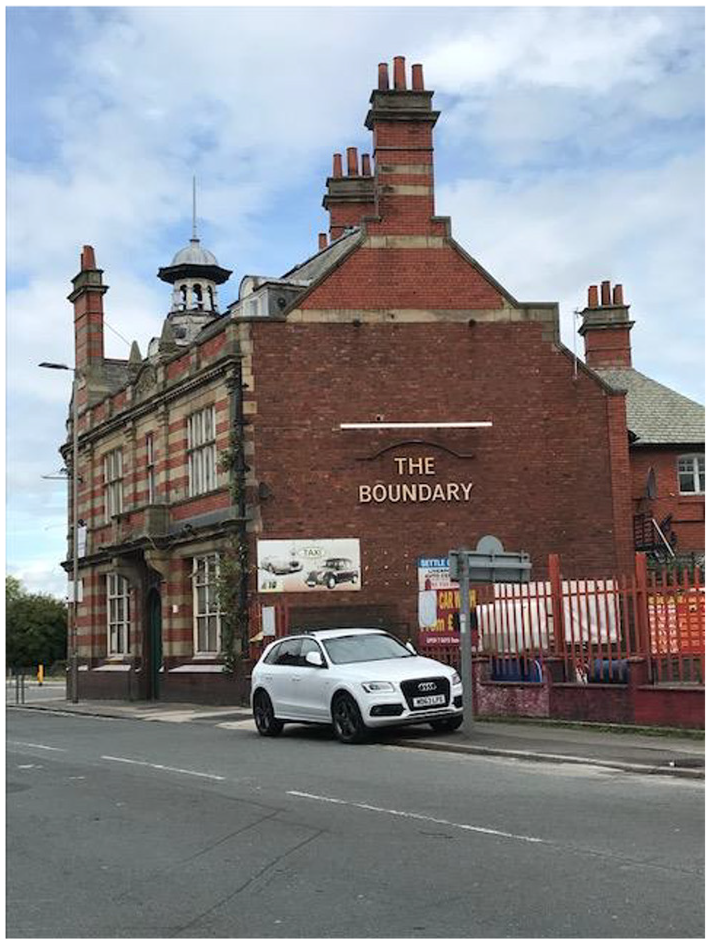
The Boundary Pub: Landmark of boundedness.
Esme (50) stated:
… black people weren’t allowed into the clubs in town […] all of that socialising in this area started because it had to start, because there was nowhere else for them to go where they would be let in which does, again, hark back to those sort of … racism being on the statute, to all being part of the culture of the place in a really invidious way.
Participants said they felt like they were in their own town, as if it was walled, paralleling a kind of ‘neighbourhood nationalism’ attributed to other diverse localities in the UK (Back, 1996: 49–72). These quotes show clearly that place identity unfolds not just as an attachment to a social community, but simultaneously as a connection with the materiality of the infrastructure of the area (Burrell, 2016) – the places where childhood memories were made, where games were played and where nicknames were coined, specific sites which are remembered even after they have disappeared. A community activist, for example, drew the key landmarks on Granby Street when asked to prepare a mental map of his everyday environment and places of significance in Toxteth, including buildings long gone. As Nora (1989: 9) maintains, ‘memory is rooted in the concrete, in spaces, gestures, images and objects’.
Unmaking diasporic space: ‘Riots’ and regeneration
It was clear in our research that a rich sense of belonging had been built up in the Toxteth area, forming a physical space which people from different backgrounds could invest in. It was also clear, though, that the integrity of this space had been challenged over time, and rendered vulnerable to processes of home unmaking (Baxter and Brickell, 2014) in various ways. One such force was the riots of 1981, which were recalled as a watershed moment for the area. As some elderly inhabitants shared, ‘the riots destroyed the area, many trees disappeared. Police blocked Catharine Street just as if they were saying “we are not leaving you to the city centre; destroy your own area”’. New boundaries were drawn again as the aftermath unfolded. ‘People identified Toxteth as the place of riots, as a place where Blacks were shooting Whites’ (fieldnotes from Bluecoat, 2015).
This ‘own area’ was further reinforced by the arrival of a new post-riot infrastructure of bollards; Hughes (2015) describes the area’s ‘bollard heritage’, surrounding the ‘riot hill’ corresponding with the heart of Toxteth, whilst recollecting the presentation of bollards as an anti-riot measure post 1981. These narratives presented the riots as an urban genocide, as the catastrophe that further contested and re-enforced Toxteth’s strong local identity. Local identity – or the claim of being from Toxteth and a real Scouser – from then on became more directly linked to ‘having been there for that’ (the riots – Clare, 37), as enshrined in local poetry: ‘A powerful idea came down the line/ it landed in Granby/ shared history was mine./ That’s why I was there/ At that point, at that time’ (O’Reilly, 2015: 23). The riots, however, were also seen as the ‘beginning’ of a grassroots local movement. Transmitted intergenerationally, this collective urban trauma transformed into an attempt to form a more unifying emblem of mobilisation in the face of further upheaval manifested in new post-riot regeneration efforts. Like the riots, the push for regeneration brought physical change; unsettling, unmaking and remaking the diasporic space again. It was deemed so disruptive that it was talked about as a ‘displacement’, and even as a stealth bordering practice.
Local writings on the area refer to the riots and the ensuing regeneration programmes as state-led action, dismantling a sense of home and changing the materiality of the area. In particular in the Granby Street and the Granby Triangle, compulsory orders uprooted the black community in an ethnic cleansing fashion (Heneghan and Wailey, 2015: 9), which Lane (1997) compares with that of Highland clearances of several 100 years ago. Many communities were dispersed from Toxteth when houses were pulled down due to the government’s desire to build a circle road in the middle of the city (see Figure 2). Travel infrastructure appears here as integral to a paradoxical agenda for the regeneration and improvement of interconnectivity and accessibility, which legitimised the eviction and dispersal of marginalised diverse communities (Atkinson, 2003). In the case of the Granby area in Toxteth, these measures were further materialised as a distinct top-down bordering practice, with the closure of the southern entrance of the main shopping street until 1993, cutting this route and its communication with the rest of the city centre (Thompson, 2017).
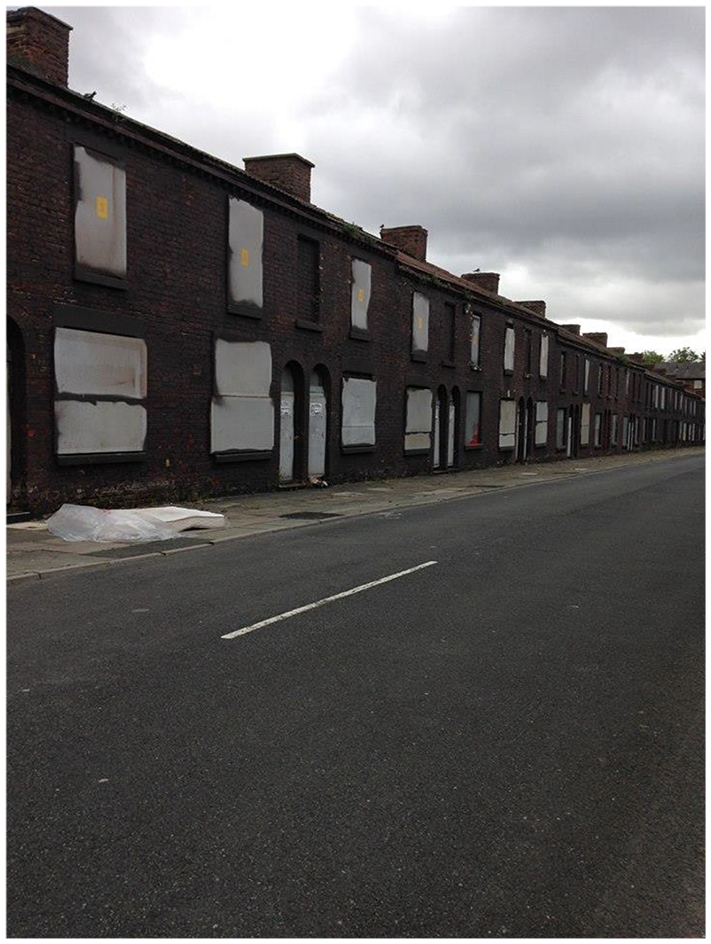
The Welsh Streets.
Esme (50) talked about this in her interview:
… the effective displacement of the population who used to live here who were just so upset, because they saw houses they bought, paid for, cared for, looked after and they were forced to leave. They felt they couldn’t object to it and then watched them fall to bits over a fourteen year period – then watched public money being spent on renting the tin sheet to seal up the properties and they can’t get back in. […] The thing is loss of the neighbourhood and how it was when they lived amongst people they all knew.
Angry local narratives spoke explicitly about a programme of social engineering, emphasising the state-led regeneration programmes’ lack of consideration of human-spatial relations (see Perera, 2019) andemotional identification with the material landscape. Regeneration is juxtaposed with ‘redlining’ practices that accentuated further community marginalisation, through neglect or cuts in public services such as lighting, cleaning and rubbish collection. In turn, this strong resistance has been a major factor in the stagnation of some of the regeneration plans in the area, as Clara (34), a local and community activist, stated:
… there’s streets and streets and streets of this and it’s been left … And some people would say, you know, was this part of …? There was lots of social engineering kind of 70s and 80s, people got moved out to places like Skelmersdale: horrific. Sorry, some people might not agree with me but, and some people would say that this really is the tail end of part of that social engineering … The council wants this area to be gentrified, but because they’ve got such a strong community in the area, they haven’t been able to get on with gentrifying it.
Indeed, one of the prevailing narratives of local activism and nostalgia in the area is this explicit reference to a diaspora when talking about the people of Granby and of other streets that were boarded up and whose inhabitants were asked to move away. As Figure 3 illustrates, the absence-presence of those uprooted and dispersed is materialised in these sites, and is something historical inhabitants are significantly invested in.
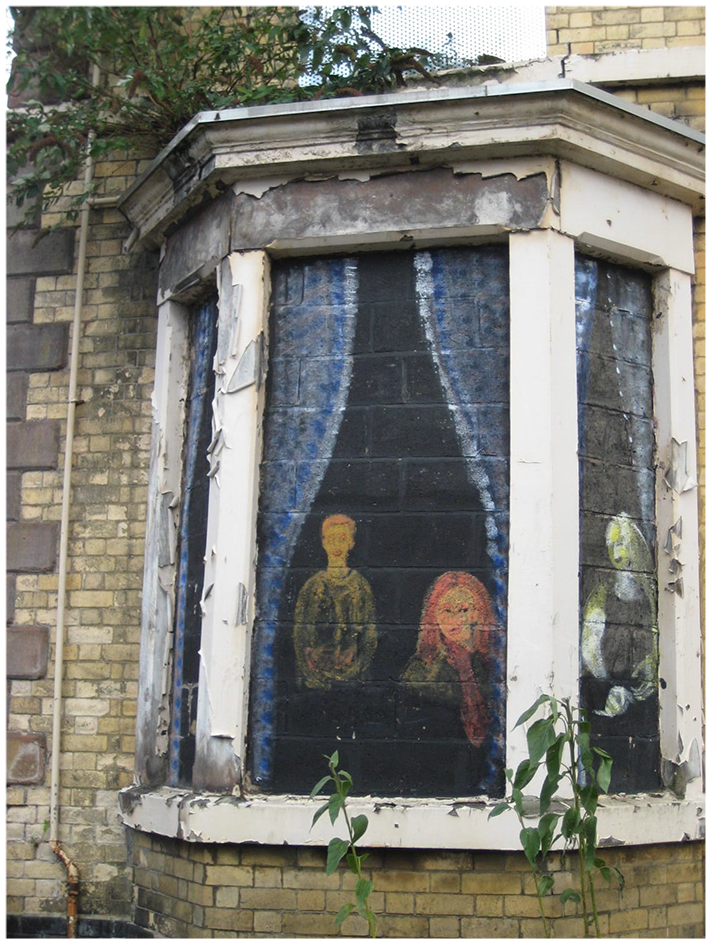
‘For all those that are gone’: Graffiti on Ducie Street.
Regeneration here, then, can be understood as a particular kind of ‘regime[s] of dispossession’ (Brickell et al., 2017: 5) more usually associated with more violent forms of forced evictions. Whilst not as extreme as the eviction practices endured by the Roma in different European states (Van Baar, 2016), or as stigmatised as the most marginalised urban areas in the US and France (Wacquant, 2008), a process of securitisation was clearly at work, forcefully moving those who were ultimately deemed to be evictable away from their homes, a practice Van Baar (2016: 226) describes as ‘anchored in processes of neoliberalisation’, and which ironically created a new urban diaspora population, and physical environment, in the process.
Different inhabitants have reacted differently to these changes over time. Local spatial wounds legitimate a claim for belongingness, which is seen as exclusive to the inhabitants who have experienced loss of homes, or were battered by the state policies of housing and regeneration but decided to stay put, solidifying a sense of local solidarity. By contrast, young and highly mobile inhabitants in the area who do not share the memories of riots and the spirit of activism relate to the boarded up areas differently, thinking more about the aesthetics than the history, and showing that belongingness to urban space is closely linked to participants’ positionality:
I really like them … Just because there is no one there. It is stuff like, because there is no one there but you have stuff like, it feels like there are still people saying stuff, and everything has beauty on it. (Paul, 23)
As Wimmer (2013: 13) puts it, ‘the social closure generated by categorical and network boundaries is often the basic consensus among old timers in urban diverse localities’, but our participants also stressed the relevance of the physical and the material in this social closure. In particular, contested sites such as the Welsh Streets appear to have created sharper boundaries. Nina Edge, the leader of the Welsh Streets Group (www.welshstreets.co.uk) living in the area, explained that in the period of 2004–2015 the area had been under the threat of demolition of 480 houses, but consistent lobbying and campaigning from the local residents forced the change of that decision into another that allowed for repair of the houses to take place. These, however, are only tiny pockets of successful resistance compared with what has been lost in terms of community, wellbeing and housing resources.
State-led regeneration interventions have been widely critiqued for not fully recognising the complexity of socio-spatial processes and the contribution that residents make in constructing place as a site of meaning (Pemberton, 2006) – and regeneration in Toxteth is a significant example of that. Jane (54), who moved to Liverpool from London in the 1980s, links state-led regeneration with a perceived aversion by the state towards social and ethnic diversity, which the area distinctly represents:
… ethnic and social cleansing by the city council, which has been going on for 30 years … They want to get rid of the poor people and the ethnic minorities […] That is just criminal vandalism you could call it; civic vandalism.
Thus, a sense of ‘raced’ neoliberalism is part of the key informants’ recollection of the transformation of the area, which, on the one hand, served to depoliticise the broader issues of marginalisation of the minorities and localities that hosted diverse communities, and on the other, aimed to securitise and manage their urban presence, testifying to complex material geographies of evictions and displacements (Brickell et al., 2017). Articulated as ethnic and social cleansing, expressed through state-led regeneration programmes that led to the emptying and dilapidation of whole streets, this awareness permeates the notion of the collective and the process of place (re)making in the area.
Re-making diasporic space: Mobilisation, grassroots regeneration, and transformation of the physical environment
The same emphasis on the built environment offers a forum for resistance and grassroots activism that focuses on the physical surroundings and connects people with them. Insider perspectives indeed offer a narrative of resistance as based on memory and as rooted in the landscape. Long-term residents appear to have been in a state of dwelling, grieving and yet recollecting past and present. Meanwhile, the huge scar in their life history which materialised in the abandoned and boarded up streets and lifeless homes does heal.
Community activists see the places that have been left to go derelict as an everyday communication of (lack of) public regard towards the area, or as ‘managed decline’. Poetry read out at community events 1 refers to the ‘weak floorboards’ that strengthened people’s belongingness to Toxteth and Granby. The state of the physical environment and housing appear as a major cause for a collective sense of suspicion (Brickell et al., 2017), but also as a major cause to unite against ‘those who know the best way for us to live …’, as ‘community is one thing they [politicians] cannot take from us’ (Hazel Tilly, in Heneghan and Wailey, 2015). Similarly to Gidley (2013: 364), therefore, urban affective geographies appear to have ‘the physical landscape as a ground for belonging’.
As Thompson (2015: 1024) has revealed, the community’s mobilisation led to the creation of the Granby Community Land Trust (CLT) – a local political institution that emerged as the culmination of distinct grassroots activism and practices of ‘commoning’. The CLT manages some of the local activities that impact on the physical environment and works collaboratively with Assemble (n.d.) on the regeneration of Granby Triangle. Memories of loss of community life appear at the basis of everyday local politics (Blokland, 2009) and underpin the purposeful human–material interaction in the area, as pinpointed in the interview with the Assemble representative:
… it’s devastating when you think about it properly, like, what’s gone on … So yeah, just to be mindful of that fact because it’s all very hopeful and it’s positive what’s happening now, but there’s been a huge and terrible loss to so many people and I think it’s important to respect that. […] There’s these spaces that can act as reminders of the history of what has happened so that it’s not, you know, it’s not just plaster boarding up everything, but it’s trying to inhabit the spaces that are created by what has happened …
In Toxteth, therefore, these landscapes are both the sites and outcomes of the community’s activism, as well as the backdrop of the longed-for home of the urban diaspora. As the representative of Assemble showed, one of the former dilapidated houses is to be kept as it is, now as part of remembrance of spatial wounds imposed on the community. This house is only minimally renovated to serve as a community-owned winter garden (see Figure 4) 2 – for the locals and also for tourists wishing to visit the area. Thus, landscape in the area appears ‘… as a contrived scene, provides a powerful means for bounding places and enforcing particular ideas about belonging to a polity and its embodied spaces’ (Trudeau, 2006: 422).
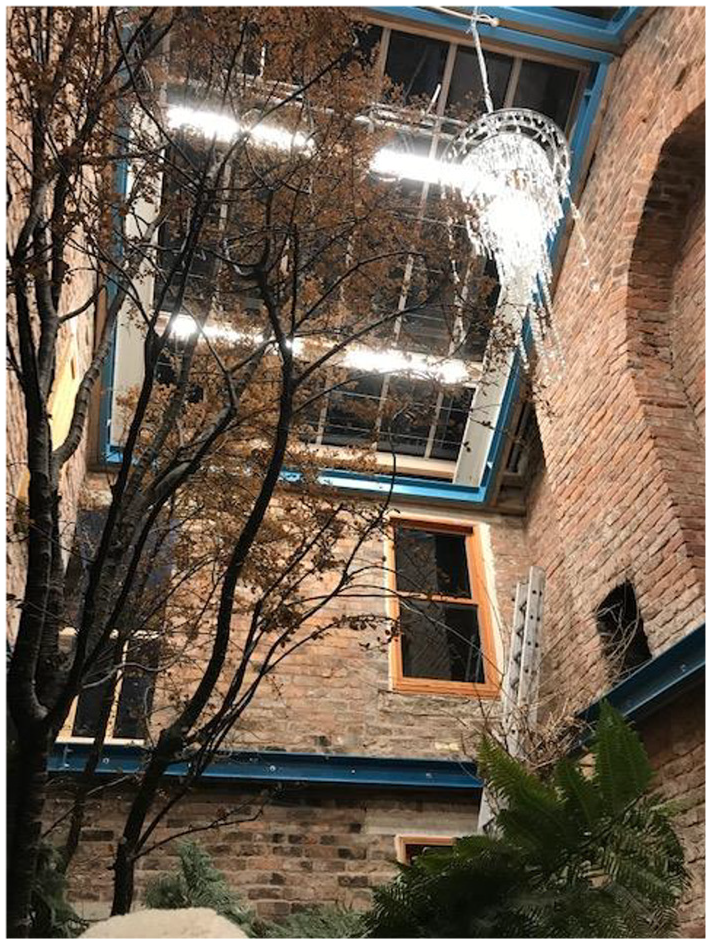
The winter garden: Symbol of remembrance and continuation.
Apart from the intergenerational transmission of threads of local narratives, community history and personal biographies are also part of a consciousness among migrants that have moved into the area. A certain order of priority of belongingness and stake in the housing market based on this personal connection is endorsed by them as ‘outsiders’. As Stevan (39), who moved to Liverpool from Slovakia eight years ago and lives in Toxteth with his British partner, shared:
Recently I met someone who was born in Granby, and now he lives in L17 and he would like to move back to Beaconsfield Street … he was on the housing association, but he got replied that he wasn’t eligible, he’s not a priority, a housing priority, which is a shame because … there should be certain houses that should be given to people who used to live there.
Nostalgia, therefore, is interwoven with dynamics of mobilisation (Blokland, 2009), on the one hand calling upon a physical and social past that is no more, and on the other entangled in today’s concerns of equality, social distribution and urban change (Brickell et al., 2017). Grassroots regeneration action and its direct engagement with the physical environment and materialities appear to ensure some continuation in this fragmented human-spatial scenario, through moving on from the breakdown of the community after the riots and the onset of state-led regeneration. In the words of Chris (22, local community activist), ‘This is what I feel like L8 is. It’s all about changing the tides about what Toxteth, what happened in Toxteth all those years ago, and there are so many people really trying hard to get away from it.’ The Blooming Triangle is one example of this (see Figure 5); Victoria (60) narrated how eight local women resisted the threat of demolition together, by cleaning and beautifying the space. Belongingness to the local area after the riots was indeed a territorialised politics of belonging in response to the state-led regeneration adversities at grassroots level (Trudeau, 2006: 421). As Yvonne (community activist) put it, ‘Battling dereliction and demolition made the community stronger. We saved the streets. People are coming back now.’
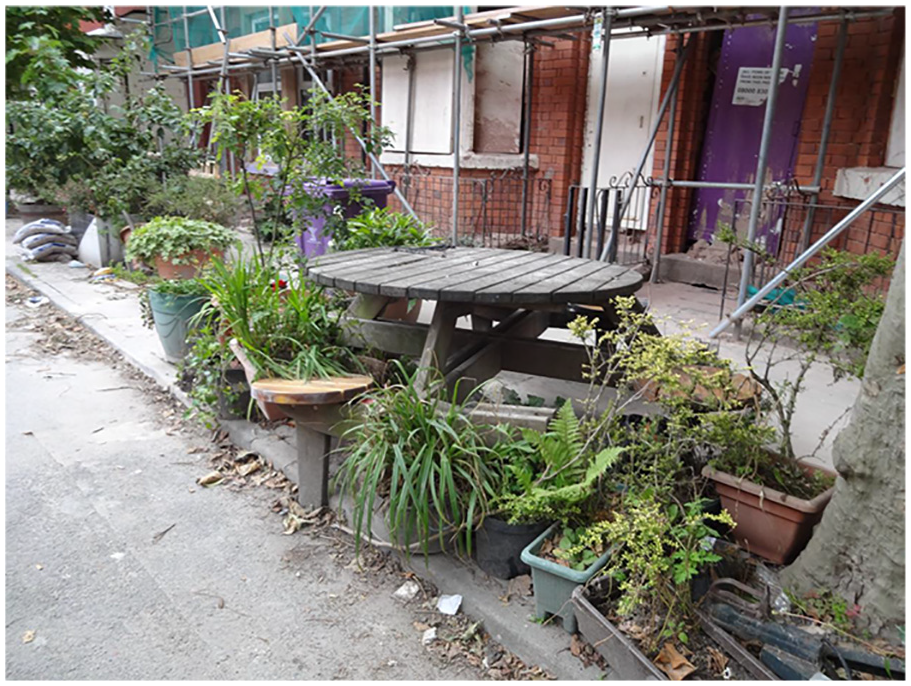
Granby Four Streets planting project: Resistance and regeneration from below.
However, some hierarchies and fractures are noticeable in the community, in the form of polarisation from below (Wacquant, 2008), with different lobbies branding certain parts of the area and competing with others on their approaches and legitimacy of their actions (Brickell et al., 2017). Whilst the long-term inhabitants relate to the landscape through nostalgia for times past and the wounded physical environment as a site of resistance, the newer residents see the inhabitation of run-down houses as a pathway to better social housing, suggesting ‘opposing ethical perspectives on rights to place’ (Thompson, 2015: 1036). As Yvette (48) commented, in relation to the impact of the Pathfinder Scheme of Regeneration that was applied in the area:
Well, there was this government idea that in the North there were all these rows of terraced houses, that nobody wanted them anymore so they were all going to go. And then you get situations like the Welsh Streets where it is so divided; there are those people who are fighting tooth and nail to keep them, and then the others who are saying ‘no, give me a new house with a nice garden, please’.
Therefore, the grassroots practices and the inevitable human power relations they entail instigate and result in intersecting boundary making. However, the narratives that serve to maintain the community and define criteria for belongingness, the alienation of some of the newer inhabitants and the lack of engagement of others reflect more broadly the effects of disinvestment and a sense of disenfranchisement as a result of it (Cahill, 2008; Wacquant, 2008).
Discussion and conclusions
Our analysis parallels writings on marginalised areas that change their makeup and dynamics over time alongside institutional ethno-racial control and withdrawal of the welfare state (Wacquant, 2008). However, evidence of mobilisation and re-making of diasporic space and the role of the material and physical environment are more in line with recent writings on the links between ‘bodies, spaces and livelihoods’ in the context of marginalisation and resistance (Brickell et al., 2017). Within the framework of the limited studies of the material geographies of diverse urban localities, the study speaks to the material as not ethnically appropriated, but indeed linked to the long histories of pluralised mobility that characterised the area (McFarlane, 2011: 666). In contrast with research that has emphasised the negative impact of the state’s market-oriented policies and its abandonment and lack of appropriation of the physical environment in marginalised areas, and the territorial stigmatisation and dispersal of the urban poor (Sassen, 2014; Wacquant, 2008), our research demonstrates that the very same has propelled local mobilisation and the re-making of diasporic space in Toxteth.
Venn (2006: 44–45) maintains that in order to study the new forms of diasporic cosmopolitan socialities in urban areas, we need a shift ‘onto the importance of spatiality and temporality, […] the imbrication of memory and history in the objects and environments that constitute the lifeworlds of people and the investments that one makes in the material world’. The findings show that in this case study it is place itself, and all its symbolic and sensorial characteristics, which frames its boundedness in the individual and collective cognition of the inhabitants of the area, rather than ethnicity.
However, boundary making and bordering are also processes that marginalised communities are invested and engaged in; in opposing external marginalisation pre-riots and practices of displacement employed at national and city levels, the internal narratives of community and resistance are a translation of belongingness and threat as a result of disadvantage and disinvestment into a unifying emblem of mobilisation. Mobilisation and resistance can thus be interpreted as an important form of political boundary making and bordering in the face of evictability, whether that be from marginalised communities themselves, or the different space-making actors and lobby groups in these areas who have emerged as stakeholders and agents within the framework of neoliberal urban policies. It is, then, not only possible, but important, to consider the space of evictions ‘as an embodied site of care, resistance and subversion’ (Brickell et al., 2017: 3).
Forms of community-based regeneration also offer important examples of an urban politics of resistance and the re-making of diasporic space against the effect of top-down homogenisation of regeneration, despite scepticism expressed by different lobbies (Thompson, 2017). The findings thus concur with recent writings on agency and mobilisation in the context of urban marginality (Çağlar and Glick Schiller, 2018; Hall, 2018) which has been missing in analyses of marginality and urban ghettos (Wacquant, 2008). In all of these cases, the infrastructures of place-making appear both as key to the processes of intra-state bordering perpetuated by the state, and as a meaningful anchoring point for the locals’ engagement with and mobilisation in the making of diasporic urban space.
