




Abstract
Urban regeneration projects involve complex contractual deals between public- and private-sector actors. Critics contend that contracts hamper opportunities for flexibility and change in these projects due to strict provisions that are incorporated in legal agreements. This article offers contrary empirical insights based on a study of contractual arrangements for urban regeneration projects in the Netherlands, including an analysis of interviews and confidential documents. It zooms in on provisions on safeguarding and adaptation, finding that urban regeneration projects remain receptive to flexibility and change. Public-sector actors use their room to manoeuvre while operating contracts, seeking to secure social relations and keep projects going. This article taps into data sources that are difficult to access, addressing what is included in contracts and how they are used by practitioners, and presents questions for future research on contracts in the urban built environment.
Introduction
The increasingly entrepreneurial nature of multi-actor governance influences the implementation of urban regeneration projects, accommodating new ways of making policies and plans (Tasan-Kok, 2010) by stimulating the use of private-law agreements between public- and private-sector actors to formalise ambitions and coordinate actions. Against this backdrop, the planning literature often refers to the rigidities of governmental power which form a ‘machine bureaucracy’ (Mintzberg, 1983) with strict, categorical constraints, including contractual deals that lack or hamper innovation (Raco, 2013). Raco (2013) further argues that this rigidity discourages expenditure on the part of the public sector to accommodate changing needs or community priorities. Contrary to these ideas, we argue that despite their formalised nature, contractual arrangements are still receptive to change and flexibility in entrepreneurial governance. Entrepreneurial governance is a widespread form of spatial governance that is based on the externalisation of the state functions through outsourcing, privatisation and decentralisation (Tasan-Kok, 2010). It contains mixed characteristics of managerial, pro-growth and welfarist public administration models (Pierre, 1999), following the implementation of the New Public Management (NPM) paradigm. In this form of spatial governance, contracts are key in regulating the actions of actors involved in urban regeneration projects (Tasan-Kok et al., 2019). Based on an analysis of contractual arrangements for urban regeneration projects in the Netherlands, we show that public parties do not always follow through on what is accommodated in contracts. Instead, they apply written rules flexibly, using room to manoeuvre. Through analyses of development contracts, and interviews with practitioners, we find that contracts do not set the rules-in-use as much as their reputation suggests. Contractual partners seek and use room for interpretation for the sake of protecting and sustaining their relations and project achievements.
Scholars have criticised contractual forms of urban development for creating unclear boundaries for responsibilities, excluding citizens from the planning process and diminishing public accountability (see, for instance, Nappi-Choulet, 2006). However, the planning literature remains quiet on what is actually written in contracts. This article addresses how practitioners deal with contractual arrangements for urban regeneration, presenting an analysis of what is included in contracts and how the actors involved navigate within contractual arrangements. We present a number of general practices and discuss their implications to open up new avenues for research within the Dutch entrepreneurial governance and planning context.
The article is structured as follows. First, we provide a brief introduction to Dutch planning policy and practice, tie the field of planning together with conceptions of contracting, and address a literature gap. Second, we focus on two particular functions of contracts – protection and flexibility – and discuss potential patterns of action relative to these functions within the context of Dutch urban regeneration projects. Third, we describe the methods we used to uncover the general practices in contractual arrangements for urban regeneration in the Netherlands. Fourth, we discuss the empirical results and, finally, we conclude and discuss the potential of these findings for further research.
Shifts in Dutch planning policy and practice
The Dutch national government has traditionally been involved in making policies for urban development (Bontje, 2003), following a plan-led model in which diverse actors seek consensus through an open negotiation process within the framework of centrally defined priorities. Accordingly, the Netherlands has long had a central strategy on the development of housing, primarily in regard to greenfield areas, supported by strategies of active land development which enabled municipalities to prepare land for development by the private sector. The past decades have demonstrated a departure from that approach, though. First, greenfield development has been restricted. In order to relieve the pressure on rural areas, new dwellings are to be built within urbanised areas (Dutch National Government, 2006). In light of this shift toward creating compact cities, interest in redeveloping areas such as degenerated or derelict industrial estates and other brownfields has been increasing. Second, municipalities have increasingly had to look after themselves after a series of decentralisation policies, which shifted planning tasks to the lower tiers of government. As such, we have noticed processes of rescaling and fragmentation in the administrative organisation of Dutch planning (Özdemir and Tasan-Kok, 2019). Third, in recent years flexibility and adaptivity in planning have been codified in legislation and policy. In order to speed up decision-making processes by shortening the formal procedures for the benefit of continuing market activity in times of crisis, the Dutch Parliament enacted the Crisis and Recovery Act in 2010. Furthermore, the Environment and Planning Act is scheduled for implementation in 2021, integrating 20 existing acts into one key act for the sake of simplicity and flexibility – promoting development rather than restricting it.
In the wake of the aforementioned shifts in planning policy and practice, the top-down approach, with its influential role for the national government in formulating integrated, long-term-oriented, comprehensive strategic plans, has been abandoned (Roodbol-Mekkes et al., 2012). The traditional, restrictive, plan-led system has lost popularity in the setting of increased uncertainty that emerged during the global financial crisis and has persisted in its aftermath. Instead, a more flexible, fragmented and tolerant development-led system has been gaining traction (Buitelaar et al., 2011). Tasan-Kok (2010) observes an evolution toward urban regeneration that essentially involves project-led redevelopments that take place independently. The 1980s showed early signs of this evolution as municipalities then started experimenting with self-management, contract management and related forms of business-like practices (Hendriks and Tops, 2002). This trend continued throughout the 1990s and 2000s, which was reflected in an increased use of public–private partnership models aimed at revitalising cities and the emerging presence of new commercial actors in the property market (Van der Krabben and Jacobs, 2013).
Entrepreneurial urban governance and the use of contracts
The aforementioned shift in Dutch urban governance and planning came with instrumental reforms that replaced traditionally centralised organisational structures with decentralised organisational devices (Van Helden and Jansen, 2003). Moreover, it reflected a tendency of planning practice to drop its policy-driven nature and embrace a more opportunity-driven rationale instead. These developments have not exclusively occurred in the Netherlands but have been part of a global phenomenon. Entrepreneurial governance has come up in urban development and regeneration (Swyngedouw et al., 2002), an overarching transformation that is characterised by ‘less democratic and more elite-driven priorities’ with more involvement of private-sector actors in urban development via coalitions, partnerships or informal dynamics of property-led development (Tasan-Kok, 2010). The trend corresponds to a widely resonating policy paradigm of deregulating state control and privatising public services and assets (Peck et al., 2009).
Under the umbrella of entrepreneurial governance, urban regeneration projects have increasingly been organised through contractual arrangements where the responsibilities do not rest merely with public-sector agencies (Peel et al., 2009). Non-governmental actors have assumed a different role relative to urban regeneration, increasingly acting as commissioners of property development or taking on more responsibilities. Public-sector agencies have been moving toward roles as facilitators of developments rather than as builders or master planners. While municipalities still use public regulations such as zoning, land-use plans and environmental permits to steer development, public–private agreements have grown popular and they are typically set in a series of contracts: voluntary, but legally binding agreements between at least two parties. In this setting, public actors retain their ability to manage public interests but they have to negotiate with the private sector for planning permissions. Cooper (2003: 49) argues that there has been ‘a move from authority to contract in which the emphasis has more and more been placed on negotiated operations that are formally or informally in the nature of contracts’.
What do contracts do?
Contracts for urban regeneration allocate tasks and responsibilities and generally assign private-sector actors a significant share of the total responsibility for a project (Van der Veen and Korthals Altes, 2012). Contracts thus help coordinate relationships (Faems et al., 2008). The deals closed between public- and private-sector partners come in different forms and sizes and they have different complexities and specificities but the bottom line is always the same: the key agreements and requirements between the actors involved are laid down in a private-law document – not, or not only, in a public-law tool such as a land-use plan or on the basis of the authority and sanctions of government. A contract, rather than any type of public regulation, thus serves as the primary means by which authorities engage in planning (Van der Veen and Korthals Altes, 2012: 1054); it lays down the rules for a public–private partnership. Focusing on the increasing role of contracts in the Netherlands, the USA and the UK, Van der Veen and Korthals Altes (2011: 310) and Raco (2014: 193) show that urban regeneration projects increasingly depict practices that can be qualified as ‘planning by contract’, respectively ‘governance through contract’.
Where there are no or fewer hierarchical relationships between government actors and other actors, contracts are important accountability instruments. As elaborated elsewhere (Tasan-Kok et al., 2019), they include control mechanisms that aim to increase ‘administrative performance, enhance integrity of public governance, and render perceptions of trustworthiness and transparency with citizens’ (Bouwman et al., 2018: 38). Bovens (2007) and other scholars (Dubnick, 2005; Romzek et al., 2012) characterise accountability as a ‘social relationship’: in it, an accountor feels an obligation to explain and to justify its conducts to an accountee (Bovens, 2007). Contracts are the legal tools to define the rules of this relationship. Faems et al. (2008: 1054) explain that contracts can first and foremost be considered ‘safeguarding devices that mitigate the perceived risk of opportunistic behavior’. Contracts typically include provisions that define the penalties that can be inflicted for inappropriate behaviour (Girth, 2014; Vincent-Jones, 1994). Performance-based pay and sanction clauses in contracts help ensure that the delivery of a promised service is up to standard. However, Lamothe and Lamothe (2012) address the way it remains up to contract managers to use penalties or not: while formal contracting implies rigid contract management, relational contracting leaves room for interpretation. Second, Schepker et al. add that contracts ‘are likely to serve as adaptation mechanisms when there is uncertainty’ (2014: 212). Some contracts define exactly what should be done when crises arise, whereas others leave considerable room for flexibility for when unexpected events happen (see also Malatesta and Smith, 2014). In any case, even though making a contract implies making current decisions about future aspects of a contractual relationship (Macneil, 1980), the agreement will be incomplete as human beings are not rational, nor do they have full information about the future (Williamson, 1985).
Contrary to the accountability potential of contracts, there are worries that small groups of public officials and private-sector investors and developers make key decisions behind a curtain of commercial confidentiality (Siemiatycki, 2007) and that the deals resulting from these decisions (i.e. rigid contracts) are set in stone (Savini, 2016), putting accountability at stake (Kort and Klijn, 2013). Other scholars have addressed important physical (Van den Hurk and Siemiatycki, 2018) and democratic impacts (Raco, 2013) related to public–private deals and contractual structures.
All in all, the content and use of contractual arrangements for urban development and regeneration have received attention from scholars but only to a limited depth – often not addressing the actual content of agreements or the ways in which they are used (Janssen-Jansen and Van der Veen, 2017; Van der Veen and Korthals Altes, 2011, 2012). Furthermore, many studies of urban regeneration have focused on policies and practices in Anglo-Saxon countries, particularly the UK and the USA (Guy et al., 2002; McCarthy, 2016), which has had implications for the external validity of the published research. In addition, as for Dutch research on urban regeneration projects, most empirical reports have been based on small-n databases or national projects and projects in larger cities (Savini, 2016; Spaans et al., 2013; Van der Veen and Korthals Altes, 2009). With some exceptions – such as Kort and Klijn (2013) and Nijkamp et al. (2002)– scholars have not used the vast amount of data related to the project contracts between municipalities and private-sector actors. These lacunas leave much to be explained about Dutch experiences with urban regeneration and contractual arrangements in general, particularly in light of the ever-increasing use of contractual arrangements, the increasing amount of private-sector money at stake and the subsequent rise in the complexity of deals. In other scientific disciplines – for instance, public administration (Brown et al., 2013) and business administration (Schepker et al., 2014) – the value of studies on contracts has been proven. By zooming in on the Dutch planning model, we create an opportunity to enhance the understanding of contractual issues in the field of planning.
Contract-based governance in the Netherlands: An introduction
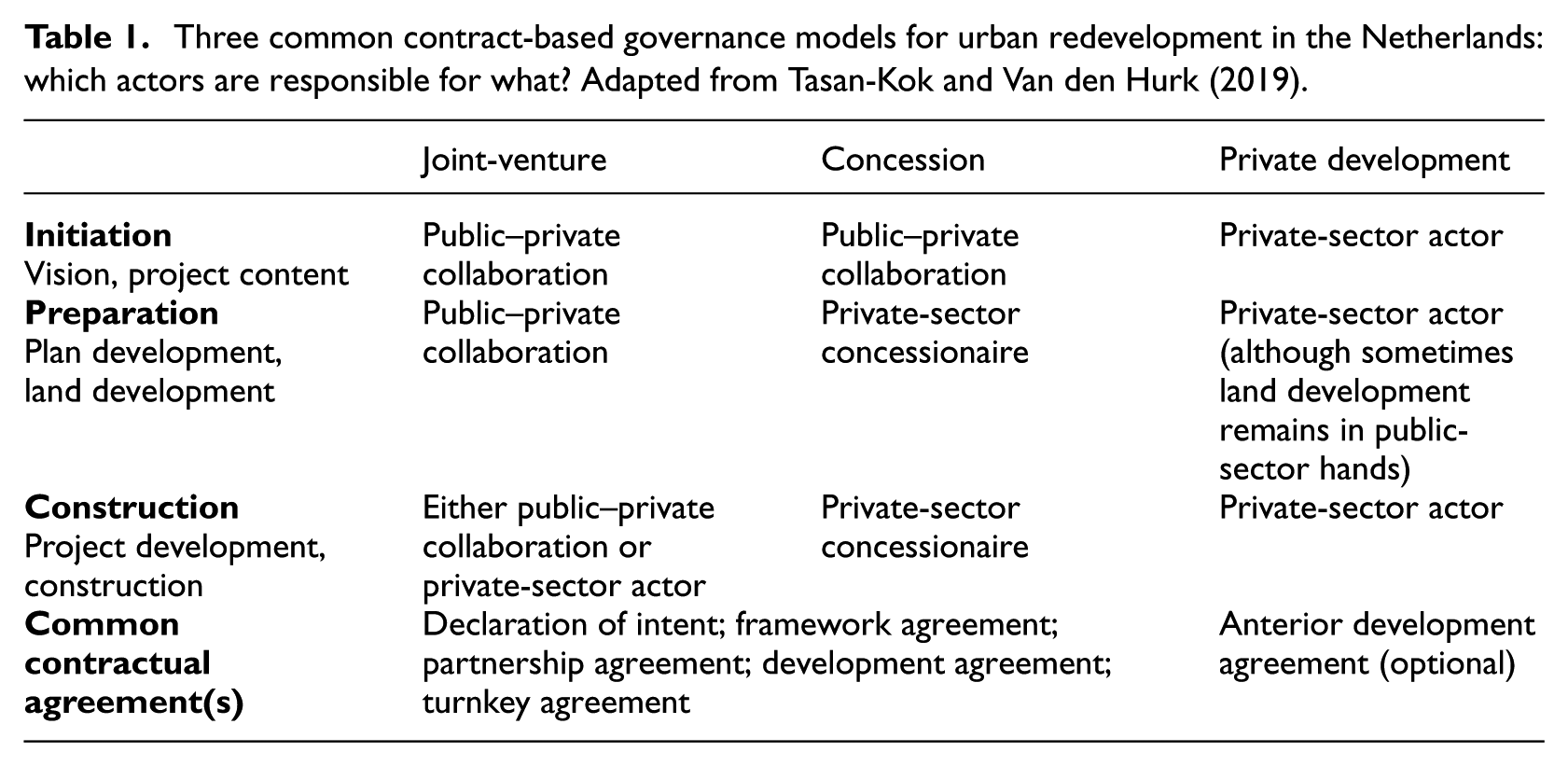
Before we proceed to some theory-inspired expectations and considerations on contractual arrangements in the Netherlands, we give an impression of Dutch urban regeneration projects by discussing three contract-based governance models that have been shaping urban regeneration over the past two decades. First, joint-ventures used to be popular in urban regeneration projects in the late-1990s and early-2000s. In a joint-venture, both public and private parties own land in a plan area and they establish a private vehicle that gathers plots and takes care of site preparation. The shareholders typically bring in an equal amount of financial resources and bear a proportionate share of risk. After site preparation, the land is sold to the initial owners to enter the development phase. Second, in the early-2000s, concessions became popular as development models. In a concession, both land development and plan development are tendered to a (consortium of) private-sector actor(s). A municipality will only set some requirements and bear responsibility for the public part of the planning process, such as approving land-use plans and granting permits. Sometimes the concessionaire takes care of the maintenance and operation of an area.
Both joint-ventures and concessions generally come with a series of contractual agreements. It often starts with a declaration of intent in which the partners-to-be express their interest in and intention of exploring the feasibility of a usually premature plan. A declaration can also set conditions for further research toward a (master) plan, for instance by scheduling market research on the project area, setting the stage for establishing a project-dedicated organisation and offering a framework for negotiations toward possible future agreements. Examples of these are framework agreements, partnership agreements – both of which include to some extent the rules of the game for contractual relationships between project partners – as well as development agreements and turnkey agreements – which deal with plan design, public-sector support for plan making, the design of construction plans, the assessment and approval of designs, and project delivery. The latter two tend to be more detailed documents in that they typically also address project decision-making procedures and project risk and how it is allocated.
A third relevant contract-based governance model is private development, which gained momentum after the 2008 global financial crisis. Compared with the former two governance models, private initiatives are generally affiliated to projects that cover smaller project areas, thereby demonstrating a step-by-step, piecemeal regeneration approach that reflects higher risk awareness – or even averseness – among project shareholders. These initiatives do not require public–private contractual arrangements per se, because the land is fully owned by private initiators who want to develop it at their own risk and expense. However, it has become increasingly common that before any such development happens, private initiators sign contractual agreements with municipalities to sort out arrangements on land development. These anterior development agreements oblige private initiators to financially compensate municipalities for time and money spent and effort exerted on rendering the development possible – such as the construction of roads and public facilities and the amendments to existing land-use plans. These agreements can also include arrangements on the delivery of green space, leisure facilities and water retention areas, as well as questions of accessibility and housing numbers and tenures. Table 1 provides an overview of these three contract-based governance models (adapted from Tasan-Kok and Van den Hurk, 2019).
Three common contract-based governance models for urban redevelopment in the Netherlands: which actors are responsible for what? Adapted from Tasan-Kok and Van den Hurk (2019).
Some expectations and considerations
In the remainder of this article we seek to disentangle how practitioners in both public and private sectors work with contracts: what do they put in a contract, and how do they use it? Our focus is on two key functions of contracts, as discussed by Schepker et al. (2014
Second, the adaptability of a project is partly defined by the extent to which contingency provisions are included in a contract. The adaptability of an urban redevelopment plan is key to achieving project goals:
If the plans do not offer sufficient flexibility, the social and environmental goals will be sacrificed: either nothing gets built, so they cannot be met, or the most costly parts of their realization are subtracted from the plans since the alternative is that nothing will get built. (Van der Veen and Korthals Altes, 2012: 1054)
In theory, contingency provisions contribute to contractual adaptability. However, the actual adaptability of a contract cannot be measured until an unexpected event occurs or new relevant project knowledge is acquired: that is when contingency mechanisms are supposed to come into play and when their real value can be assessed. Flexibility may involve situations in which the partners put aside the contract and reach a new agreement. However, the question of whether such solutions are formally incorporated in extensions to existing contracts remains unanswered.
Methods
Our empirical findings are based on a qualitative analysis of project data. Qualitative research is generally considered appropriate and useful for studying a relatively under-investigated phenomenon (Flyvbjerg, 2006). In order to provide a representative image of the Dutch landscape of urban regeneration, we followed three steps in terms of case selection and analysis, starting with building a database of 60 projects as background. Although these are not all the urban regeneration projects that have been constructed during the past years, they likely provide a reliable perspective on the general situation as the Netherlands is a small country. We selected these cases on the basis of a number of requirements. First, private-sector actors had to be involved as project investors or financiers. Also, as we focused on impactful projects, the project had to cover at least 5 ha; involve a mix of economic, social and environmental objectives; and affect both existing and adjacent residents. For practical reasons such as data availability and reliability, we omitted projects whose physical development had not begun and projects that were completed before 2000.
We drew our data from different sources. First, we created our database on the basis of publicly available project-specific material, including project websites, websites of municipalities and developers, master plans, newspaper articles and press releases. Additionally, we gathered secondary data from three online sources that have published breakdowns of projects over the past few years: Platform31 and Kennisbank Herbestemming – two online platforms that have long delivered information on redevelopment in the Netherlands – as well as the website of the Association of Dutch Property Developers. We collected information on aspects including (but not limited to) timing, previous function of the land, project-area size, municipality size, actor constellation and type of contract used.
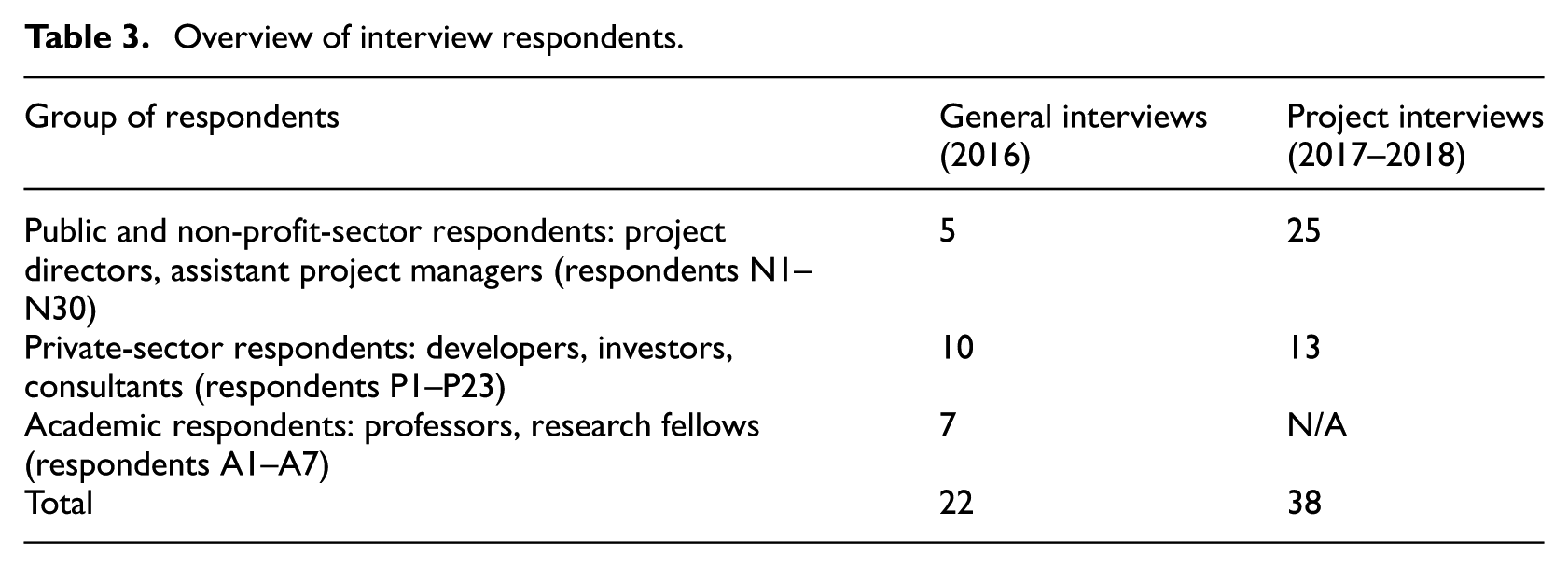
Second, between mid-2016 and early 2018, we conducted two series of semi-structured interviews with 60 respondents in total. These interviews covered 25 projects of the general database and varied in terms of location, area size, city size and the previous function of the land (see Table 2). The first interview series took place in 2016 and included expert interviews at an abstract level. The respondents either had been directly involved in urban regeneration projects as project managers or were able to reflect on Dutch urban regeneration in general because of relevant knowledge that they had built elsewhere. The first series of interviews helped us put our early observations into perspective and unravel the whys and hows of the Dutch landscape of urban regeneration. In 2017 and early 2018, we conducted a second round of interviews, this time with informants who had been directly involved in projects as project managers, in either the public or private sector. In these interviews, we focused on the content and use of contractual agreements, focusing on the safeguarding and adaptation functions of the documents: which penalty provisions were incorporated and how strictly were they applied, and how complete or incomplete were clauses for contingency, both de jure and de facto?
Three aggregated overviews of the 25 projects incorporated in this study.
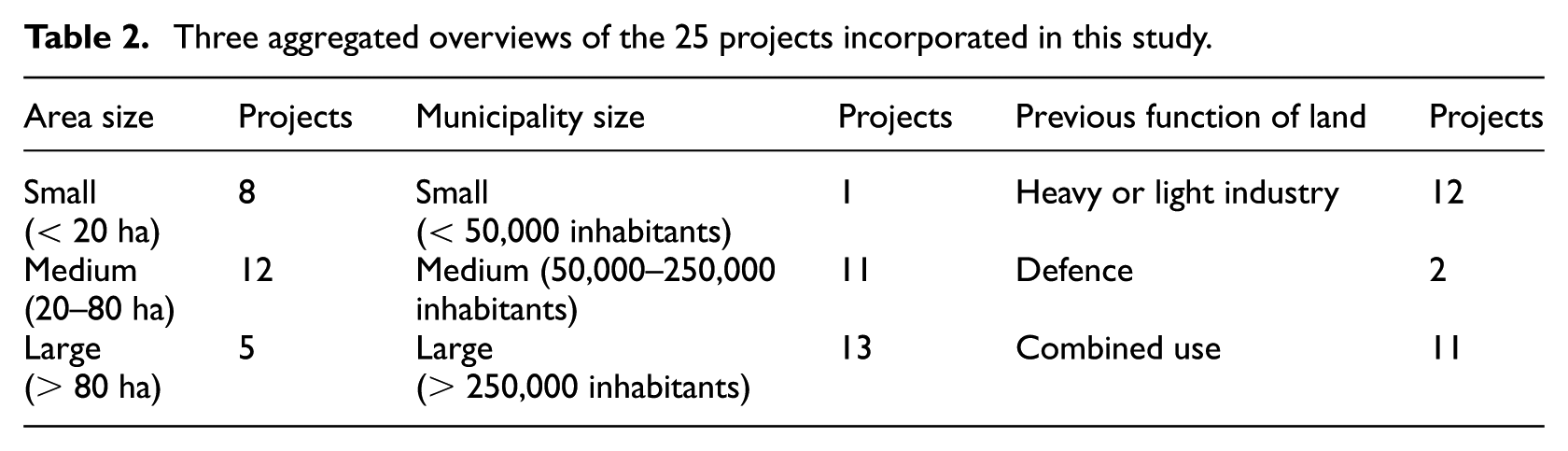
Table 3 provides an overview of the respondents’ backgrounds. The interviews took 65 minutes on average. The topics that were discussed during the interviews ranged from general observations about Dutch urban regeneration practice to project-specific particularities, including contractual provisions. We recorded and transcribed the interviews and subjected them to a content analysis in which we arranged large amounts of data by labelling the statements of the interviewees on the basis of both predefined codes (deductive coding) and empirical data (inductive coding). We measured the safeguarding function of contractual arrangements by asking the interviewees about relevant contractual provisions that were supposed to serve the objective of mutual protection – and how the interviewees used them. Typical provisions of this type would be clauses on liabilities and indemnities, penalties and sanctions, termination, transition of rights and duties, and warranty. We based this operationalisation on the contributions of Ariño et al. (2014), Girth (2014, 2017), Lewis and Bajari (2011), Marques and Berg (2011) and Schepker et al. (2014). As for the adaptation function of contracts (i.e. on contingency), we would ask the interviewees about clauses on variations or adjustments, relief events, early termination, legislative changes, renegotiation, and unforeseen circumstances. The work of Cruz and Marques (2013), Faems et al. (2008), Luo (2002) and Van den Hurk (2016) helped us identify these clauses as measures of the adaptation function. The operationalisation of variables into codes is also shown in Table 4. We conducted a systematic coding process using qualitative data analysis software: QSR International NVivo 11. After that, we looked for specific coding patterns, including co-occurrences of themes and recurring issues, in order to interpret the collected views.
Overview of interview respondents.
Operationalisation of two key functions of contracts: mutual protection against opportunistic behaviour (safeguarding function) and contingency and flexibility (adaptation function).
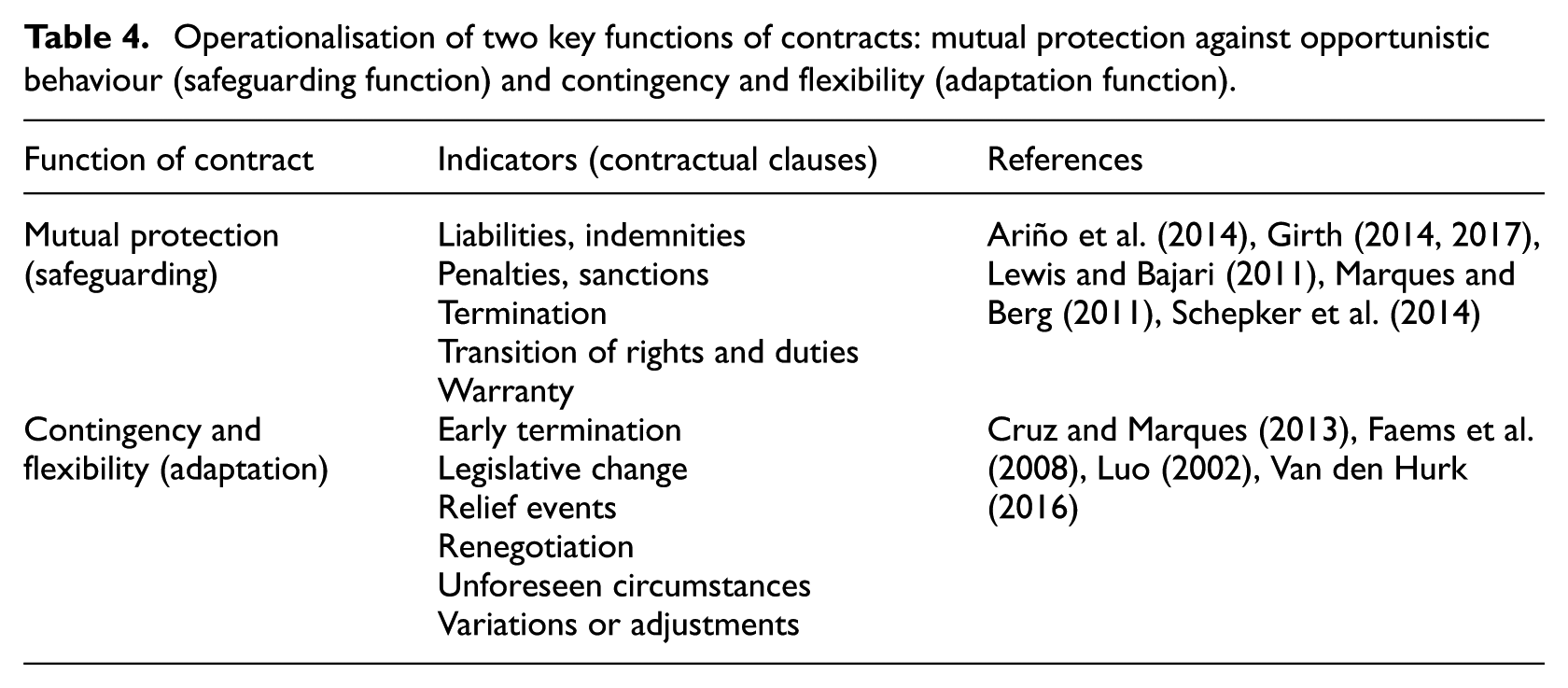
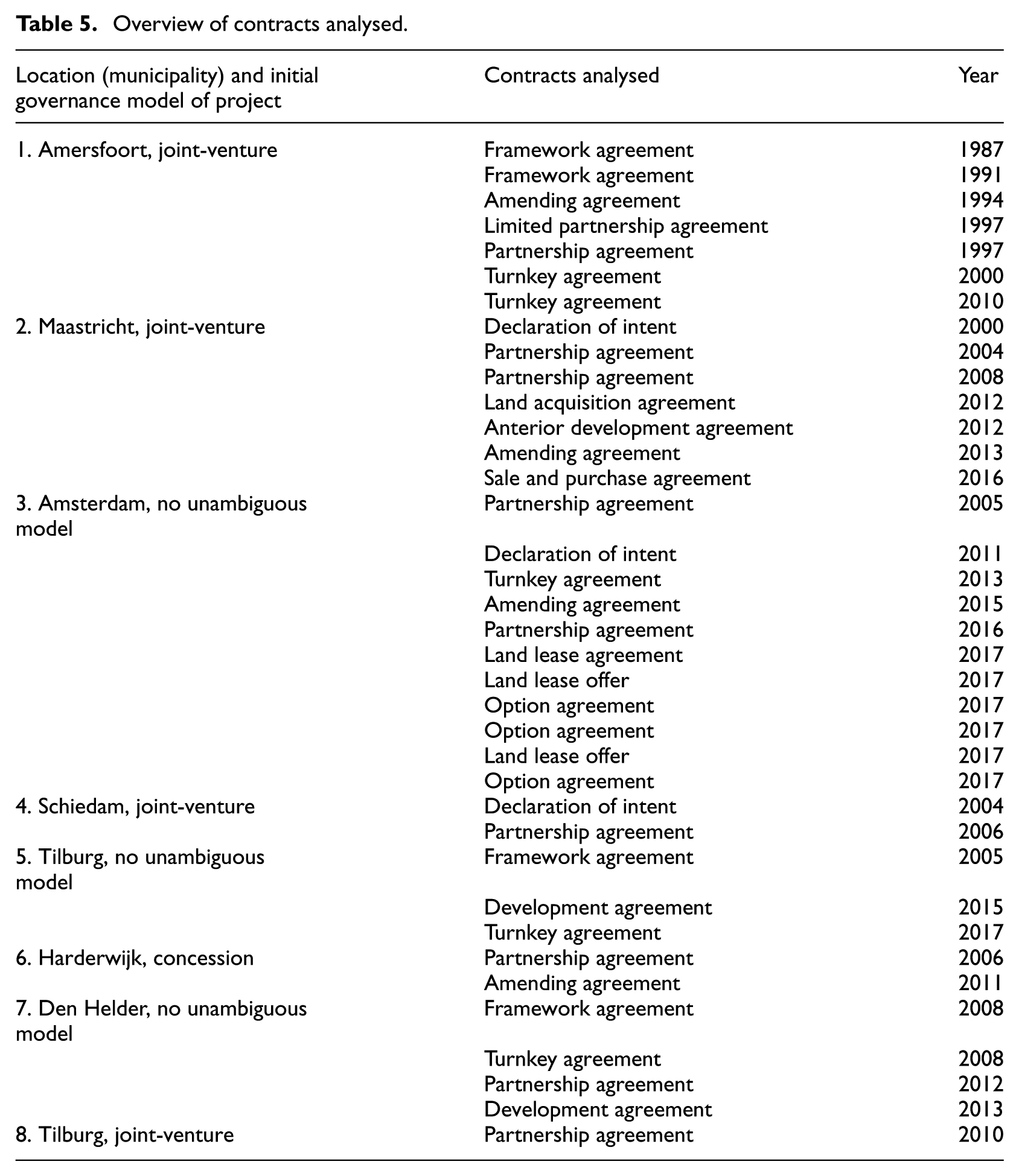
Third, we collected additional in-depth insights by analysing 37 contractual documents spread across eight projects. Three of these eight projects received specific attention as each of them was particularly representative of a predominant governance model in its time, together spanning a period of 30 years in total. The names of the projects have been precluded for confidentiality reasons but relevant information is available in Table 5. The agreements that we analysed varied in a number of ways, including the nature of the overarching contractual arrangements (e.g. joint-ventures, concessions), the type of contract it concerned (e.g. framework agreements, partnership agreements, turnkey agreements) and the date of signing (between 1987 and 2017). Furthermore, some agreements covered an entire project area whereas others covered only a subproject within a wider project context. However, they were all agreements between a public-sector actor and a private-sector actor and were considered key documents. We built an inventory of the content of the contracts and carefully studied them, focusing on provisions on mechanisms for mutual protection and adaptation. Here, too, we coded the data on the basis of the operationalisation shown in Table 4, and we used QSR International NVivo 11 to arrange and aggregate the data before conducting a thematic analysis.
Overview of contracts analysed.
Flexibility and leeway in contractual arrangements: Findings
The analysis draws attention to two common practices in Dutch urban regeneration projects. First, we show that local authorities tend to avoid confrontation and conflict with their contractual partners. Second, although contingency provisions are designed to render adaptability and facilitate the redefinition of task allocations between the public- and private-sector parties, we demonstrate that actors find other ways of changing the original arrangements. In this section, we explain how Dutch urban regeneration practice includes an informalisation of formal regeneration schemes.
Ambiguous design and use of safeguarding provisions
Our analysis of the contract function of mutual protection against opportunistic behaviour exposes diverse patterns in the design and use of safeguarding provisions. The type and severity of these provisions varied across our database. Our data indicate the existence of a continuum between no provisions of this kind on the one hand and a few provisions on the other. When asked about the incorporation of penalty provisions in contracts, interviewees often responded that they knew hardly any clauses of this kind. Our contract analysis confirmed their views, as only a couple of the 37 contractual documents included explicitly formulated penalties. ‘I do not think we ever included any penalties’, said respondent N23, echoing the trend we noticed across our sample of respondents; respondents N22, P13 and P23 even used the same words. Furthermore, respondents were generally sceptical about the use of penalty provisions. The following comment aptly illustrates that general feeling:
This world of penalizing, of having people pay for things, that is not how you develop urban areas … We should not be willing to capture urban development, which is a very complicated societal process, in contracts with time schedules and money payments. (Respondent N3)
Some respondents explained that they deliberately decided not to include penalty provisions because such provisions often generate endless discussions between contractual partners in the event that one of them wants to charge a fine. Another common reason for not including such provisions relates to the period of high economic growth in which many projects commenced. Respondent P18 described this time: ‘Everyone was optimistic, like “this is going to be successful anyhow”.’
In several projects and contracts, the mutual-protection function appeared in the form of a provision that defined the dates before which the private-sector partner needed to achieve particular project milestones. If the private-sector partner failed to deliver what had been promised, the public-sector actor had the right to extend the deadline against a fee (a ‘land-reservation fee’, as respondents N3 and N20 called it) or terminate the agreement, which generally meant that the development rights on a piece of land were transferred back to the municipality (respondents called this an ‘option clause’). ‘Within a predefined period, something has to happen, and if it does not, you [the private-sector partner] lose the right’, indicated respondent N17.
The actual use of option clauses has been limited. In several projects, the municipality did not have proper backup plans, such as an alternative strategy with another developer or investor who could redevelop the designated area. In one of the projects, it appeared that only one concessionaire could take the job, even after a European tender call had been organised (respondent N17). In several other projects, concessionaires owned significant parts of the land in the project areas, leaving the municipality with not much choice but to cooperate and extend the original deadline – which was a cheaper and more constructive decision than a buyout (respondents P13 and N23). Furthermore, respondent N8 mentioned a case in which a municipality used the option clause and charged a land-reservation fee, only to learn that the concessionaire refused to pay or stalled payment – the excuse being the financial-economic crisis, which was considered an unforeseeable external perturbation of the market. One of the municipalities in our sample went to court to test the validity of this excuse. The judge denied the validity of the excuse and said that the land-reservation fee had to be paid, as the economic crisis was considered an insufficient reason for not paying the fee; hence, the private-sector partner had to respond to the municipality’s request and pay a land-reservation fee.
We also found that provisions on profit sharing have a safeguarding function. Regarding profit sharing, several contracts dictated that, if the private-sector partner’s profit exceeds a certain percentage (‘excess profit’), that partner must share that surplus with the public-sector partner. The use of provisions on excess profit sharing has sparked debate as well. In one of the cases, five years after project completion contractual partners were still discussing the use of this provision. The (informal) talks took that long because, contrary to the agreements made, the concessionaire was hesitant to share the surplus; the municipality was reluctant to drop the discussions, as one to two million euros were at stake (respondent N8).
Provisions on (the prohibition of) the transfer of development rights from one contractual partner to a third party were particularly common safeguarding clauses. These provisions were designed to prevent a contractual partner from transferring any development rights or project duties without informing the other contractual partner. The fines on such actions varied; some of them went as high as several million euros. All in all, the contracts analysed included a limited number of safeguarding provisions, which primarily concerned development rights (option clauses) and deadlines, profit sharing, and transfers of rights.
The de facto use of provisions on mutual protection has also been limited. The most common reason for not penalising contract partners, or penalising them lightly rather than strictly and firmly, involved the contractual partners’ general preference to maintain existing relationships for the sake of progress. Public-sector respondents repeatedly stated that by officially sanctioning a concessionaire or going to court with an issue, municipalities are formalising a relationship rather than harmonising it. ‘You cannot avoid some level of flexibility if you want to make a contractual relation work in the longer term’, said respondent A7. Many other respondents backed this comment: ‘We would rather complete a project in good harmony and with good quality than to charge a fine’ (respondent P12) – even when fines would be appropriate. It was generally considered wiser to maintain an extant relationship than to test it with formal requests of any kind. Penalties were considered instruments of last resort; the respondents indicated that lengthy informal talks on looming problems or conflicts were preferred over formalised penalty procedures or litigation. Finally, respondents argued that charging fines or any other form of penalisation should not be taken lightly and the question of how harsh a penalty should be must be closely considered. Respondent N13, who works in the public sector, addressed it as follows:
The question is: ‘How much should a fine be? ’… You have to be very careful about that … If you charge fines [as a public-sector actor], there is a real possibility that you undermine the [private-sector actor’s] profit margin … Sooner or later they will try to get that up again. (Respondent N13)
When questioned about what role or value penalty provisions have if they are hardly exercised in practice, respondents generally viewed such a provision as a ‘threat for leverage’ (respondents N13 and N16), a ‘big stick’ (respondent N17), or a means to offer the municipality a good ‘negotiation position’ (respondent N15).
Low contingency in design, high flexibility in use: Adaptation in action
The average size of the contracts included in our sample was relatively small; most of them consisted of 10–30 pages, appendices excluded. This indicates that parties have not been aiming to write complete contracts. They preferred to leave room for pragmatic solutions, should eventualities occur. In the contracts and interviews, we came across a few contingency provisions. A common provision of this type stated that the contractual partners would consult with one another in the event of an unforeseen problem or risk. Sometimes these provisions delineated which events qualified for such consultation. For instance, ‘if changing market conditions give reason to change the [urban development] plan, parties will consult on this matter’ (respondent P13). Furthermore, respondent P16 said, ‘We do not discuss particular risks until they appear. I cannot think of any at this point.’ The majority of the 37 agreements that we analysed contained a provision of this kind but, generally, this was the only consideration for contingencies within a contractual document. Therefore, we sought to observe the projects’ flexibility outside the formal agreements, that is, in the de facto operation of project preparation and construction. We were interested in comparing what happened in practice with the limited amount of contingency as codified in the contract.
The practice of urban regeneration projects showed a great deal of flexibility, which was reflected in a largely flexible way of applying contractual provisions related to contingency, but also to other themes. Illustrating the views of many respondents, respondent P16 said: ‘When push comes to shove, we have it on paper. But all the rest is a matter of human interaction and trying to accommodate each other, which finally leads to the product that we make together.’ Respondent P19 commented further with a hint of sarcasm: ‘Years have passed since I last read the development agreement. It is that important’ (emphasis added). Thus, although one could argue that contingency was hardly codified in our sample of contracts, the tendency has been to apply contractual provisions loosely rather than to meticulously follow what is defined in the legal agreement. Respondent N20 said: ‘Actually, the contracts themselves were not that flexible. We were just looking for practical solutions. Making sure that things happen.’
Across the projects we analysed, we observed a strong diversity in terms of the ways contractual partners dealt with contingencies as they came up, how they made decisions and undertook actions to resolve these contingencies, and how they documented decisions and actions. The respondents gave a range of examples of how contractual partners changed a project’s programme – including raising or lowering numbers of dwellings, incorporating a different share of social housing compared with the rest of the planned housing stock, and amending the timeline for project development. These changes were applied for various reasons, which had not always been explicitly defined in the contractual agreement as grounds for change. In some cases, the contract was extended to register these amendments but in others no formal report was made. On a reflective note, respondent N21 referred to repeated contract extensions ‘that are not even put on paper, as far as I am concerned. A little more formality would be alright every now and then.’ His take was that when new agreements are not incorporated into a contract extension, project practice increasingly distances itself from formal arrangements without a trace.
Some public planners in our sample had a mandate that granted them leeway in making project decisions without the need to report to municipal executive councillors or ask the municipal council for permission (respondents N10 and N20). This discretionary power proved to be important in dealing flexibly with contracts, particularly with regard to organisational structures and project procedures. Some respondents said that responsibilities and tasks that had originally been contracted to the concessionaire were transferred back to the public-sector agency. For instance, although concession models are deemed to transfer practically all project responsibility and risk to the concessionaire, it appeared in some cases that particular tasks were better taken care of by the municipality. Respondents N21, N22 and N23 brought up an issue in a particular project: although this project’s contract provided a clear demarcation between the roles and responsibilities of the partners, a number of deviations took place in practice. The concessionaire had agreed to take care of both political and commercial communication tasks but the political communication was sub-par: while referring to a case in which a thunderstorm hit a construction site, respondent N23 said: ‘A developer is not able or willing to communicate to the public in the event of particular incidents.’ Although a municipality as an organisation is designed to communicate to citizens and inform them during such events – no matter how and when they occur – a developer is not equipped to do so, particularly not during weekends.
On the one hand, the example above indicates that municipalities retain a crucial position in urban regeneration projects. On the other hand, although contractual deviations such as this example were significant, they were not always fully incorporated as extensions to contracts or reported. Moreover, as these deviations can occur gradually and extend over a period of time, they can become difficult to notice, let alone formally report: ‘At some point you look back and see … that you are doing just everything that you used to do [in traditional projects] in the past’ argued respondent N23 when he reflected on a project that had started as a concession in which the municipality passed many tasks to a private-sector partner. When the government steps in with the intention of taking over certain tasks, without formally changing the contractual arrangements, it becomes difficult to retrospectively analyse under what regime, why and how project decisions were made, as well as who is to be held responsible and accountable for these changes.
Discussion and conclusions
Designing, establishing and operating mutually agreed contractual arrangements have become popular in refurbishing and regenerating derelict or obsolete urban areas. The increased use of contracts in urban regeneration marks a shift in planning policy and practice toward entrepreneurial forms of governance. The aim of this article has been to shed light on the content and use of contracts in urban regeneration projects in the Netherlands. Our focus has been on two key functions of contracts: mutual protection against opportunistic behaviour and facilitation of adaptability. As for the safeguarding function of contracts, project partners sparingly incorporated penalty provisions in the written agreements. Furthermore, they did not quite always apply these clauses accordingly, even if the agreement written and behaviour displayed justified penalising. As for contingency measures, the contracts analysed showed a few relevant provisions, depicting the incomplete nature of the deals made. Many respondents mentioned that contractual arrangements were adaptive because of the actors’ informal and flexible way of addressing unforeseen situations. In addition, changes in governance were not always documented and, despite the formal increase in the responsibilities borne by private-sector actors, municipalities have remained involved in urban regeneration.
This article advances the understanding of the micro-dynamics of contracting, a research area that was championed by Lumineau et al. (2011) and Ariño et al. (2014), among others. What distinguishes this study from earlier work is its connection to scholarship on urban governance and entrepreneurial governance in particular. What we observed in this research on Dutch urban regeneration projects is that contracts, which are generally assumed to be rigid legal arrangements, provide guided flexibility (Tasan-Kok, 2008) to both public and private parties by acting as accountability mechanisms. Moreover, this study links to pertinent questions of flexibility in urban planning. Despite the rich literature on the increasing need for flexibility in entrepreneurial urban development to accommodate increasing private-sector involvement by providing comfortable conditions for market-dependent urban planning (Jessop, 1998; Moulaert, 2005; Tasan-Kok, 2010), the mechanisms and instruments of this form of planning have remained under-studied. This is likely to be the result of the difficulty of accessing sensitive information that is stored in contracts: public-sector actors need to provide certain degrees of flexibility and leeway in this form of planning to render private-sector commitment possible, and a level of legal certainty – through confidentiality – is demanded by the latter to mitigate risk. This article provides a new approach to understanding the difficult checks and balances of entrepreneurial governance by studying (1) what is actually included in the contracts, and (2) how they are used by practitioners.
Theoretically, in the Dutch urban regeneration projects analysed in this study, we have recognised practices of relational and incomplete contracting rather than formal and complete contracting. This finding offsets our results against the notion of Peel et al. (2009: 417), who argue that contractual arrangements trigger a ‘more formalized approach to partnership working’. Our study feeds into Needham’s (2014) argument that the achievements of Dutch planning are often the result of informally using the formal planning system; that contracts are used to sustain relationships. We bring this argument to a new level by showing that, in spite of their being written, ‘formalised’ agreements, contractual arrangements remain receptive to change and flexibility. The parties have room to manoeuvre and so – despite the claims made by Raco (2013) and Savini (2016)– contractual deals are not set in stone. Our analysis brought to the fore that both public and private actors prefer to seek solutions rather than strictly follow a contract.
Informal contracting brings risks relative to the functioning of accountability mechanisms. First, by avoiding conflict and thus not penalising inappropriate behaviour, contractual partners may give rise to a moral hazard (cf. Girth, 2014). Also, dealing flexibly with penalty provisions creates uncertainty regarding responsibilities and is likely to lead to vagueness about who is bearing what risk, thereby blurring the distinction between public and private responsibilities. Second, by not keeping track of mistakes made and promises broken by either of the parties – or not doing so systematically – parties are technically reducing the opportunity to keep each other accountable and affecting the ability of others to do so. Third, contractual relationships being informal and therefore hospitable to flexibility, creating ‘formalized structure[s] of retaining knowledge’ (Van der Veen and Korthals Altes, 2012: 1070) is likely not the agenda for the actors involved. If solutions turn informal and unreported, as we have seen in several cases, they negatively affect the opportunity for contractual learning and the ability of future project managers, councillors or other actors to track down the reasons for past decisions (Van den Hurk, 2016; Van der Veen and Korthals Altes, 2012). To conclude, these are risks that invite us to put the actual role of contractual agreements into perspective, and to raise questions about how responsively contractual partners come to agreements and enforce them. Moreover, these questions extend to discussions on who gains most from the flexibility exercised and leeway used within public–private contractual arrangements, and eventually into a debate on social and spatial justice (see, for instance, Hearne, 2011). Therefore, we advocate research that digs deeper into the meanings of these arrangements, the motivations behind their use and their consequences for city building – both physically and socially.
