




Abstract
With about 12 million inhabitants, São Paulo, Brazil, is the largest city in South America. As in many other major southern hemisphere cities, this extreme concentration of people imposes a number of mobility and security challenges. The objective of this article was to investigate the space-time patterns of mobility and violent victimisation in São Paulo’s metro stations from a gender perspective. The methodology combines use of a Geographical Information System (GIS), statistical analysis through negative binomial regression modelling and hypothesis testing. Results indicate that mobility and the level of victimisation are gender dependent. Women are at higher risk of victimisation than men in São Paulo’s central metro station, while men run higher risk of violence at end stations – both notably during late night periods. The presence of employees reduces the risk of violence, except during the mornings. The article suggests that crime prevention initiatives need to be gender informed and sensitive to the particular spatial and temporal features of rapid transit environments.
Introduction
Public transportation is responsible for promoting the mobility of human capital. It has assumed a crucial role in the maintenance of efficient large city operations; however, this role cannot be fulfilled if security concerns make the public avoid public transit environments (Ceccato et al., 2015; Paes-Machado and Levenstein, 2002; Paes-Machado and Viodres-Inoue, 2015). Although the amount of literature addressing the causes and consequences of crime in transit systems is increasing (Brantingham and Brantingham, 1995; Ceccato et al., 2013; La Vigne, 1996, 1997; Loukaitou-Sideris et al., 2002; Newton et al., 2014; Priks, 2015; Webb and Laycock, 1992), the analysis of victimisation by gender and type of transit mode remains unexplored, mainly because data disaggregated by gender are scarce (World Bank, 2015). The dearth of this type of data is even more evident in regards to southern hemisphere countries, even though significant shares of these countries’ populations are regarded as ‘transit captive’ since they do not have other viable options that meet their transportation needs.
The aim of this article was to assess gender differences in victimisation due to violent crime (sexual assault and other forms of physical aggression) in the São Paulo metro system, one of the largest and busiest Latin American metro transit systems. The study makes use of a geographical information system (GIS) and negative binomial regression models to (i) identify mobility and victimisation patterns by gender and temporality; (ii) access the impact of a metro station’s characteristics and its demographic context on violence in these transport nodes; and (iii) offer suggestions to improve metro passenger safety.
Data for the study came from three sources: crime records from the city of São Paulo’s police official crime statistics; land use data from an analysis of Google Street View images gathered by Ceccato and Paz (2017); and socioeconomic data for a station’s neighbourhood from census tracts (IBGE [Instituto Brasileiro de Geografia e Estatística], 2010).
This study builds on earlier work addressing the São Paulo metro system through use of more appropriate modelling strategies, as well as an updated, more complete data set (from 2010 to 2017) that includes additional types of crimes and distinguishes victims by gender. The original study by Ceccato and Paz (2017) did not differentiate victims by gender. Along with addressing a more extensive list of violent crimes, our study also provides a more thorough analysis of the temporal patterns of these crimes’ commission (weekly and daily patterns) in the metro station environment and the influence of local socioeconomic and land use factors on their incidence.
The improvement of all mobility-related systems’ efficiency in densely populated metropolitan areas depends on the perception that public transit is reliable, effective and safe. This study of transit victimisation from a gender perspective is intended to assist policy makers when planning and implementing measures to improve all transit users’ safety.
The article is structured as follows: the second section presents the study’s theoretical background and underlying hypotheses; the third section details the study area, the data used and the statistical methods employed; the fourth section reports the results; the fifth section discusses these results; and the final section contains our main conclusions and recommendations.
Theoretical background
Gendered mobility and safety in urban environments
Mobility is not gender neutral (FIA Foundation, 2016; Hamilton and Jenkins, 2000; World Bank, 2015) since women and men have different sets of routine activities (assuming only gender binary identities). Generally speaking, women execute a more diverse set of transit-related activities than men. Women’s daily chores include not only work obligations but family- and household-related maintenance (Ericksen, 1977; Gomes, 2005; Gomide et al., 2006; Hanson and Hanson, 1981; Uteng, 2012). Women spend more time taking care of the home and children than men (Chapple, 2001; Hamilton and Jenkins, 2000; Uteng, 2012), especially in low- and middle-income countries (World Bank, 2015).
From a compilation of various studies carried out in India, Bangladesh and numerous southern hemisphere countries, Peters (2001) found that women are more dependent on public transportation and have less access to private transport. Uteng (2012) also notes these gender-related mobility differences, highlighting the fact that women take more short trips then men and are more occupied with non-work-related travel, such as grocery shopping and caring for their children’s educational and health care needs.
The greater use of public transit by women in comparison with men in many of the world’s cities (Gender Innovations, 2015; Metro, 2012) implies that women are relatively more exposed to the risks of victimisation in the public transportation environment than men. Even when controlling for the proportion of public transit users by gender, women are at greater risk of violence, sexual harassment and sexual assault than men (Law, 1999; World Bank, 2015) and are more likely to report feelings of insecurity (Cox, 2013; Pain, 1997; Valentine, 1989; Yavuz and Welch, 2010). Additionally, Meyer (2012) has shown not only that gendered violence differs between men and women, but also the intersectional features among members of the LGBT community.
Space-time patterns of violence and the characteristics of transit environments
From a crime standpoint, metro stations are regarded as risky facilities (Clarke and Eck, 2007), acting as focal points for crime and disorder in a particular locale. They attract criminals in search of suitable victims (‘crime attractors’) and provide a space for opportunistic criminal activities (‘crime generators’) (Brantingham and Brantingham, 1995; Newton et al., 2014; Smith and Clarke, 2000; Smith and Cornish, 2012). Busy trains and overcrowded stations are fertile territories for irritation, leading to aggressive behaviour and, consequently, the occurrence of violence and other types of abuse, such as sexual harassment and assault (Ceccato and Paz, 2017; Gekoski et al., 2017; Loukaitou-Sideris, 2005; Smith et al., 2010).
As with other high-risk facilities, levels of violence in the transit environment vary over time and space due to particular station characteristics and the ebb and flow of users. A busy metro station provides the necessary conditions for crime to happen because, according to routine activity theory (Cohen and Felson, 1979), crimes are more likely to occur when there is a convergence in space and time of motivated offenders, suitable targets and the absence of capable guardians. Although stations concentrate many people in one place, few people are ready to intervene if something happens (Ceccato and Haining, 2004).
Current literature shows evidence regarding crime’s spatiotemporal variation in rapid transit facilities. On one hand, off-peak hours allow an offender to commit a violent act, such as robbery, in relative anonymity. On the other hand, crowded environments in most central metro stations during rush hours promote undesirable contact that can be considered sexual harassment or assault (Ceccato and Paz, 2017; Uittenbogaard and Ceccato, 2012). Newton’s (2014) study of the London Underground also found evidence of spatiotemporal variation. The fact that women and men have different routine activities implies that the spatiotemporal path of violence in metro stations is most likely to be non-gender neutral.
According to Ceccato’s (2013) theoretical model, the occurrence of crime in metro stations is influenced by multi-scale conditions that act at various levels in an urban environment, from micro-features within the station to the neighbourhood environment and city contexts. International studies relying heavily on situational crime prevention principles (Clarke, 1997) have shown how a station’s internal characteristics affect the risk of victimisation. Findings have indicated the influence of police surveillance (La Vigne, 1997; Loukaitou-Sideris, 1999; Newton and Bowers, 2007); the presence of closed-circuit television (CCTV) (Priks, 2015; Webb and Laycock, 1992); and the architectural design of the station itself, such as the provision of open lines of sight and adequate lighting (La Vigne, 1996; Loukaitou-Sideris, 1999; Newton et al., 2014), on the control of violent behaviour.
An offender’s perception and knowledge of a transit environment plays an important role when they balance the costs and benefits accruing from the commission of a criminal act (Becker, 2000). This cost–benefit analysis is affected by the environment’s space-time conditions, victim characteristics and the risk of being apprehended. A criminal will likely consider an area that contains many possible targets and offers relative anonymity an optimum choice for the commission of many types of crime, as it provides them with more potential benefits and fewer potential costs (apprehension). Using this rationale, perpetrators will favour busy regional hub metro stations over peripheral stations, with the hub stations containing a greater number of targets (higher return) and offering more relative anonymity (lower risk) than peripheral stations.
There are also indications that the level of crime in a metro station’s neighbourhood affects safety conditions within the station. Levels of neighbourhood crime are often determined by the types of mixed land use in the locale and its demographic and socioeconomic composition (Ceccato et al., 2013). According to social disorganisation theory (Shaw and McKay, 1942), weak social controls in neighbourhoods provide an environment rife with violence and delinquency which can generate negative externalities for the transit environment.
Loukaitou-Sideris (1999), for example, found that the presence of bars, shopping malls and vacant lots tends to attract shiftless and gang-related youths and to encourage anti-social behaviour at nearby bus stops. Internationally, evidence shows that violence in stations is higher in areas with a younger population, a majority of low-income residents and specific facilities, such as bars and ATMs (Ceccato et al., 2013; Loukaitou-Sideris, 2011; Loukaitou-Sideris et al., 2002; Newton et al., 2014). Not only do the areas surrounding a station influence the risk of violence, but this risk is expected to be allocated in a gender-dependent manner (Law, 1999; Uteng, 2012).
Conceptual framework and hypotheses
Previous studies support the hypothesis that neither mobility nor criminal victimisation is gender neutral (FIA Foundation, 2016; Peters, 2001; Savard, 2018; Uteng, 2012). This hypothesis should also be valid in transit environments, since the daily and weekly patterns of each gender’s routine activities tend to be different (Cresswel and Uteng, 2008). Space-time patterns of victimisation in São Paulo’s metro stations are therefore expected to vary depending on an individual’s characteristics, especially gender (see, for instance, Mena and Gragnani, 2015). Furthermore, the characteristics of a station’s environment (e.g. Ceccato and Paz, 2017; Loukaitou-Sideris, 1999, 2011) should also influence patterns of victimisation at particular times for different types of crimes, especially gender-specific crimes.
Since gender affects many of the attributes of each individual in a household, it is also expected that it will affect individuals’ daily routine activities, such as type of transportation mode, frequency of use and destinations. So, the first hypothesis of this study is that:
(i) Women and men adopt different patterns of movement in the performance of their routine activities in the city of São Paulo (for studies carried out in other countries, see Ericksen, 1977; Hanson and Hanson, 1981; Metro, 2012; Peters, 2001; Uteng, 2012).
If hypothesis (i) is not rejected, hypothesis (ii) is then posited:
(ii) If mobility is gender differentiated, violent offences in the São Paulo metro will follow gender-specific differentiated spatial and temporal patterns, varying by time of movement, both hour and day (for different victimisation patterns by gender, see Ceccato and Paz, 2017; Savard, 2018). This hypothesis is illustrated in Figure 1 – Box 3.1.
Characteristics of the stations and the stations’ vicinities can affect violence against women and men differently, since routine activities are not gender neutral. This consideration leads to our final hypothesis:
(iii) Different environments have a distinct effect on the risk of women and men being victimised within metro stations (Law, 1999; Uteng, 2012), with environment being a function of the station’s characteristics and of the context in which stations are embedded (for the effect of environmental characteristics on the risk of victimisation from a gender perspective, see Savard, 2018; Savard et al., 2017).
Hypothesis (iii) is represented in Figure 1 – Box 3.2.
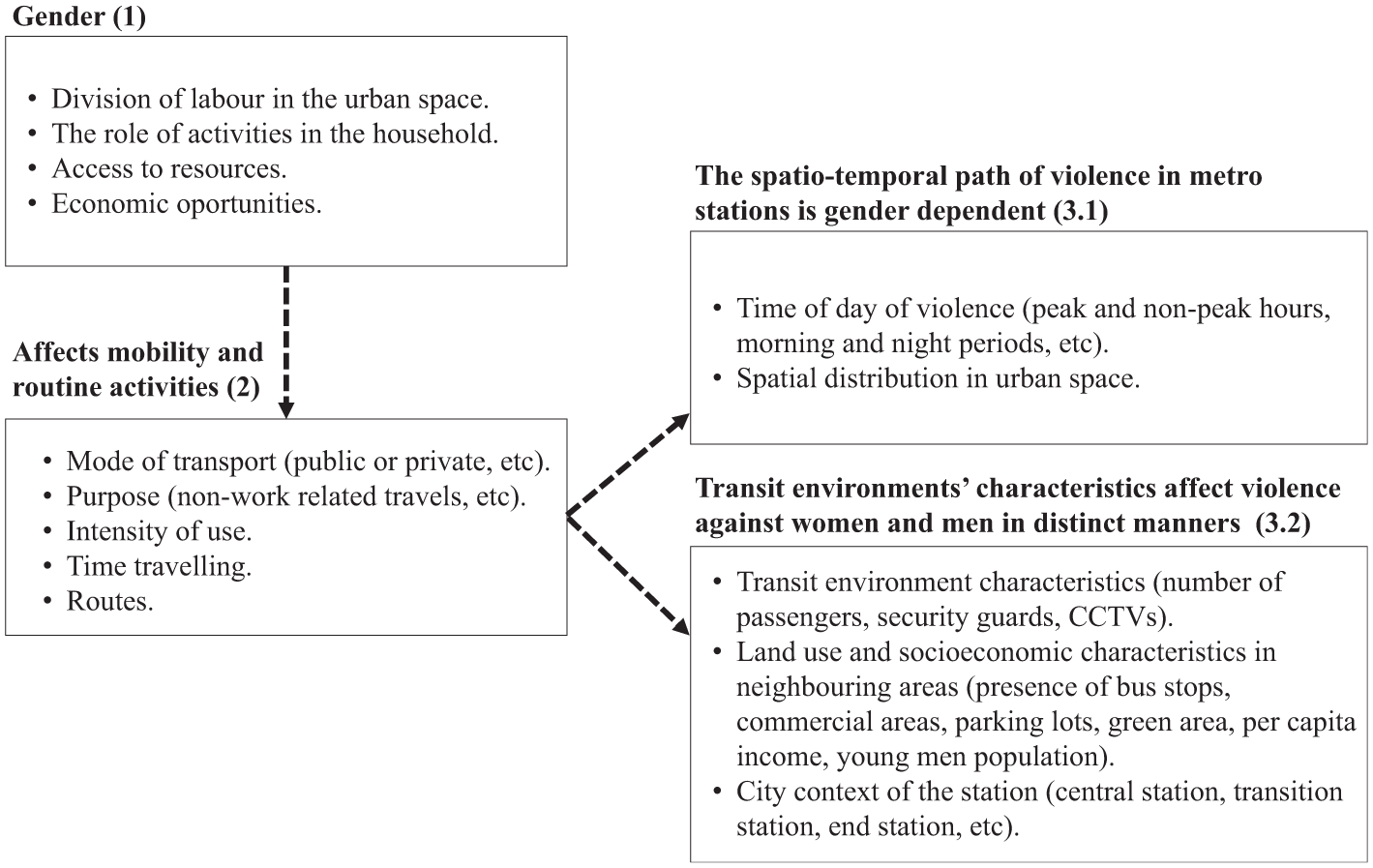
Conceptual framework used to assess violent victimisation by gender in metro stations.
The case study
The study area
The metro rapid transit system under study is located in São Paulo, Brazil, the largest municipality in South America, with about 12 million inhabitants. The metro was inaugurated in the 1970s with the Blue line (north–south line), and currently has six lines, 79 stations and 89.8 km of track (Figure 2).
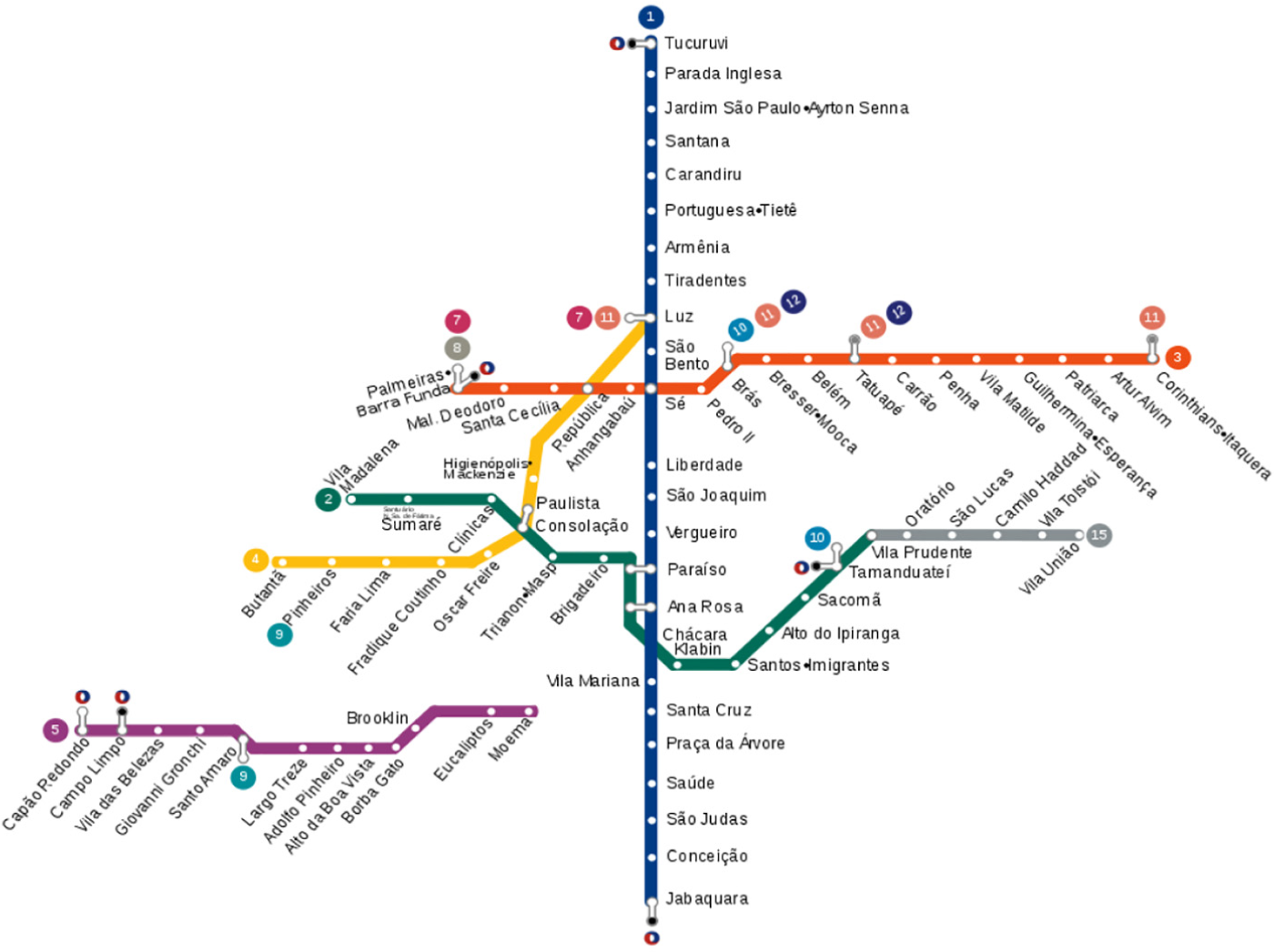
São Paulo’s metro system, 2018.
Metropolitan São Paulo, comprised of 39 neighbouring municipalities, has historically been Brazil’s most economically dynamic area, accounting for about 11% of the country’s gross domestic product (GDP). The region’s annual average per capita income is approximately US$15,000, but the range of incomes is extreme (0.65 Gini index) (Ministry of Health, 2014). Although the region was one of the most violent in the world in the late 1990s, with an annual homicide rate of 57 per 100,000 inhabitants, that rate has fallen dramatically to about six per 100,000; however, crimes against property have increased incrementally (Justus et al., 2018).
Operating between 4:30 am and midnight, the São Paulo metro system transported more than four million individuals every business day of 2018. The system’s busiest line is the Red line (Palmeiras-Barra Funda ↔ Corinthians-Itaquera), which averages one million users per day and connects the central region with the eastern region.
The busiest station is Sé (the central station), which serves as a transfer point for the Blue and Red lines and has an average circulation of more than 500,000 people per day. In general, the metro’s utilisation density mainly comprises those living in the low-income eastern region and the high-income central region. This research’s study area includes 74 stations. Five stations on the Grey line (Vila Prudente ↔ Vila União) were excluded because a complete data set is not available for these stations; the line was inaugurated in 2014, while the data set for this study begins in 2010.
Data and methods
Addressing patterns of mobility and space-temporal violence by gender
In order to identify general patterns of mobility by gender, we used data from the São Paulo Metropolitan Company’s 2012 Origin–Destination Survey (Metro, 2012). In regard to total transits, almost 44 million daily trips are made in São Paulo’s metropolitan area, 68% of which are conducted using motorised vehicles: motorcycles, taxis, buses, trains and the metro.
We used registered sexual assault and other forms of aggression data from the State of São Paulo’s Public Security Secretariat (SSP-SP) for the analysis of space-time patterns of victimisation variation by gender. The definition of aggression is based on article 129 of Brazil’s criminal code, ‘Offending the bodily integrity or health of others’; sexual assault is defined by article 213 as being to ‘Embarrass someone by violence or serious threat, to have carnal conjunction or to practice or allow another libidinous act to be practiced.’
This database contains criminal records covering the period from 1 January 2010 to 31 January 2017, and includes spatiotemporal information about the violent act itself and the victim’s characteristics. During this period, 2524 observations were classified as occurrences of violence within a metro station. It should be noted that due to the small number of observations regarding sexual violence (n=37), it was not possible to carry out a specific empirical analysis for this type of violence; therefore, physical and sexual violence data were combined.
Graphic analysis was used to represent the distribution of violence at specific times (hourly periods and days of the week). In addition to a visual analysis, a two-sample Kolmogorov–Smirnov test was applied to analyse whether the distribution of crimes is the same for both sexes. In order to avoid spurious conclusions in the spatiotemporal and regression analyses (e.g. more crimes will occur proportionally more frequently at specific hours and days and in crowded stations), it is important to note that a risk of violence measure was created, which is defined as follows for all analyses:

in which
To identify gender-specific spatial variation in the occurrence of violence, a visual analysis was made from estimation of a Kernel density function that consists of a smoothed and non-parametric form to estimate the probability density function of the crimes (see Greene, 2003: 881). The spatial analysis follows the same procedure used by Ceccato et al. (2013) for Stockholm and Ceccato and Paz (2017) for São Paulo. In their São Paulo study, the authors used São Paulo’s central station (Sé station) as the initial geographical point of analysis and the other metro stations were defined as a function of their geographic distance from the central station. Besides the visual analysis, our study applied a two-sample Kolmogorov–Smirnov test to determine if the spatial distribution of violence is the same for both sexes.
Modelling the variability of violence within the São Paulo metro by gender
As noted earlier, this study considers that violence that occurs in a metro station is dependent on conditions within the station and on multi-scale conditions that exist at various levels in its urban environment. In addition, the study adds the condition that violence is not solely dependent on spatial characteristics, but also on times (daily and weekly variations) and the victim’s gender. Thus, for the empirical modelling, consider the following simplified counting model:

in which

Variables used in the empirical model to explain the variability of violence within the São Paulo metro by gender (N = 74).
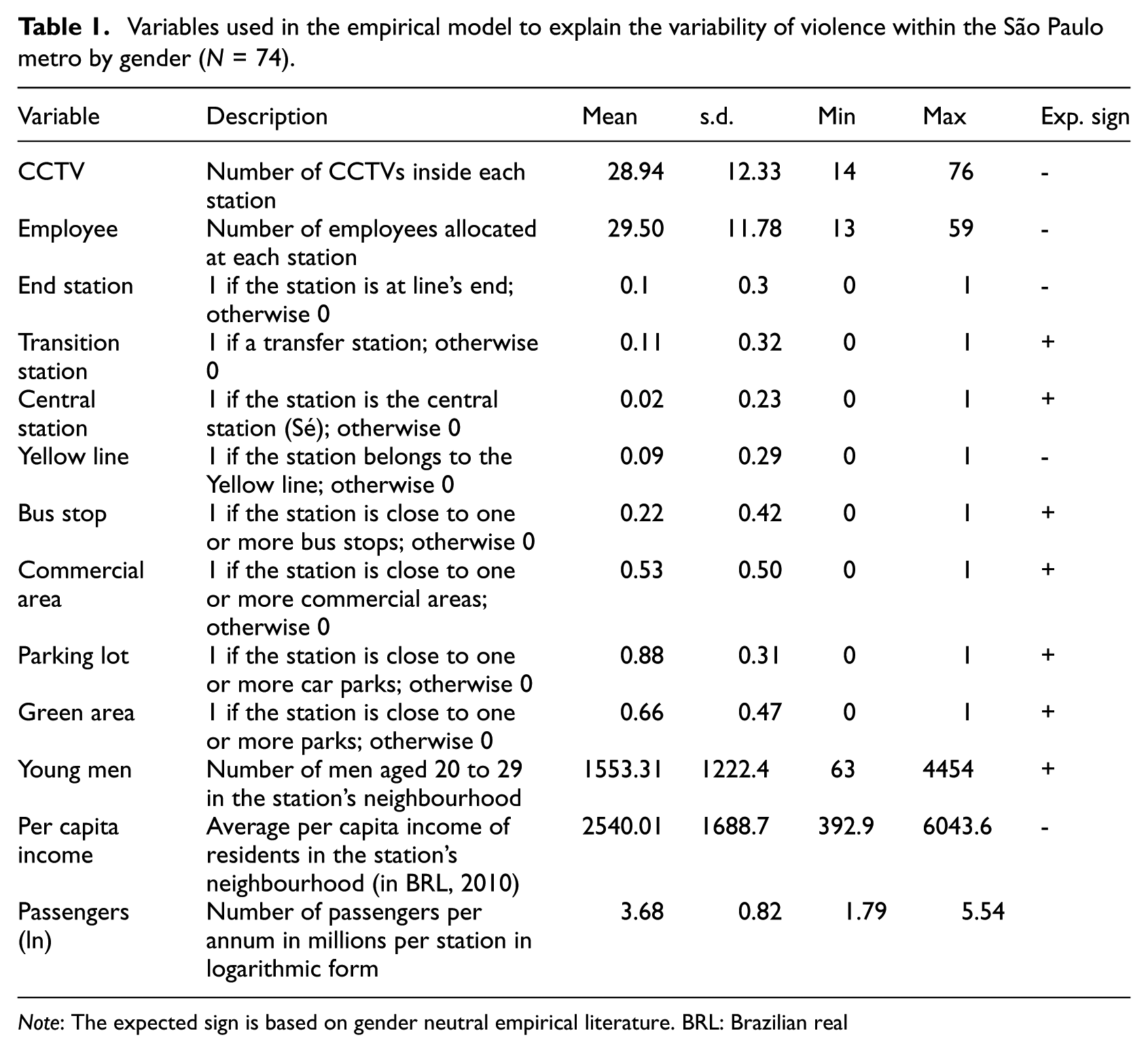
Note: The expected sign is based on gender neutral empirical literature. BRL: Brazilian real
Since counting models represented by the Poisson distribution often do not fit counting data due to overdispersion, we use binomial negative models, which are more suitable for treating data with a variance higher than the conditional mean when using a gamma distribution (for details on this methodology, see Cameron and Trivedi, 2005; Greene, 2003).
To explain the factors that affect violence within each station by gender, variables selected for empirical modelling were based on the original Ceccato (2013) conceptual model mentioned above. Since the great majority of empirical data used to explain violence at each station come from the year 2010, the number of occurrences of violent crime in each metro station applied in the empirical models (n = 74) are merged with that year. Table 1 shows the control variables used in our empirical model, these variables’ descriptive statistics and the expected sign for their coefficients based on the empirical literature presented above.
To assign a relative position to the stations in São Paulo’s metro, binary variables were added to indicate if the station corresponds to an endpoint (End station) or a hub connecting with other lines (Transition station), or if it is the central Sé station (Central station). Additionally, a binary for the Yellow line was added because this line is not publicly administered like the other lines, it has been operated by a private company since 2006.
Land use characteristics for January 2010 were manually collected using the Google Street View tool, following the same pro-cedure used by Ceccato and Paz (2017). We identified commercial establishments (Commercial area), squares and parks (Green area), parking areas (Car parks) and bus stops (Bus stops) within 150 m of each station.
To characterise each station’s internal environment, we used information provided by the Metropolitan Train Company – CPTM – which administers the São Paulo metro and reports the number of CCTVs and the number of employees and security guards (Employee) at each station in 2010. Data from the 2010 Demographic Census provided by the Brazilian Institute of Geography and Statistics (IBGE, 2010) were used to provide the average per capita income (Per capita income) and number of male residents between 20 and 29 years of age (Young men) in each station’s locale.
Results
General patterns of mobility by gender
Women travel more using public transportation (bus, train and metro) than men do (
Women travel more by metro than men (53%), (
Space-time patterns of violence in transport nodes by gender
Women are at greater risk of suffering violence at metro stations at almost all times of the day, the exception being between 10 pm and the metro’s midnight closure (Figure 3). In addition to the visual inspection, the Kolmogorov–Smirnov test (K–S test) indicated a rejection of the null hypothesis that hourly distributions of violence are equal by gender (p = 0.000). For daily variations (Figure 3, right-hand side), there is a greater proportion of violence against men at weekends, with almost 35% of the violent acts against men occurring on Sunday, while women are proportionately more victimised on weekdays.
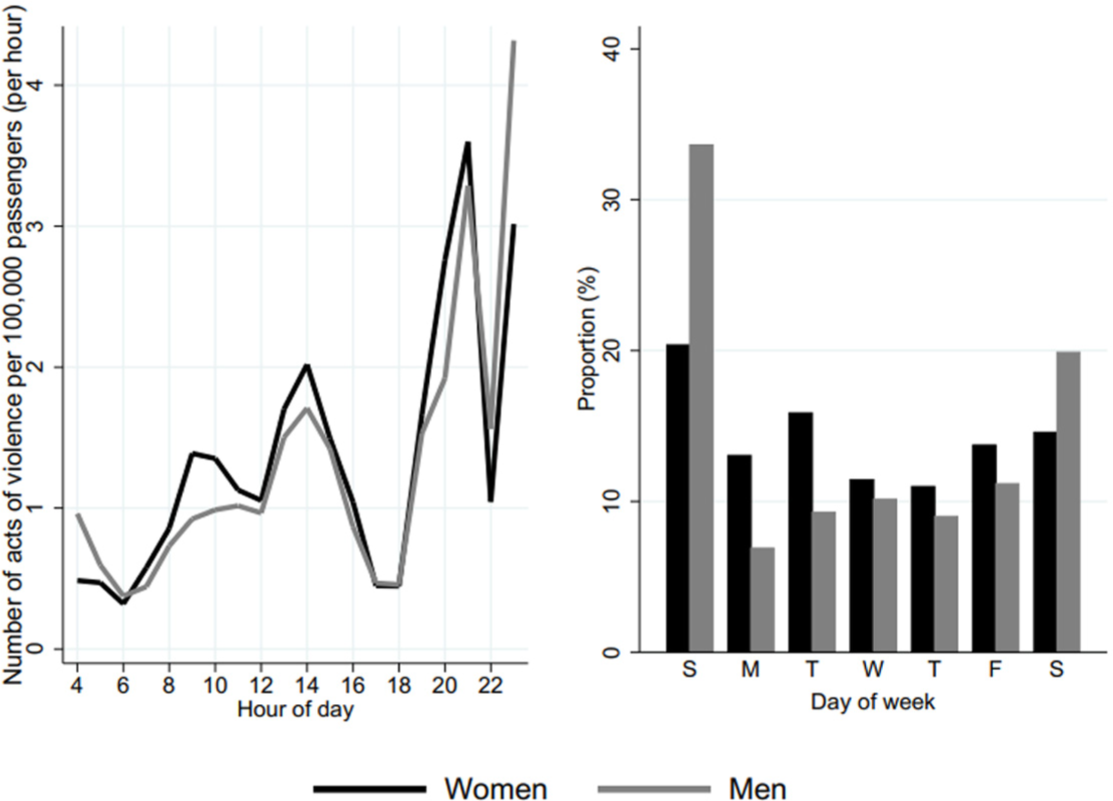
Violence rates by hour and proportion of violence by day of the week in the São Paulo metro between January 2010 and January 2017.
Figure 4 shows the spatial distribution of violence weighted by average passenger flow (women and men) at each station. Violence is more concentrated for both men and women at stations closer to the central station, with more than 40% of the metro violence concentrated at stations within 2 km of the central station. Stations within that radius are the busiest in the city and are located in environments consisting of a densely packed variety of land use types, such as bars, shopping areas, schools, hospitals and offices.
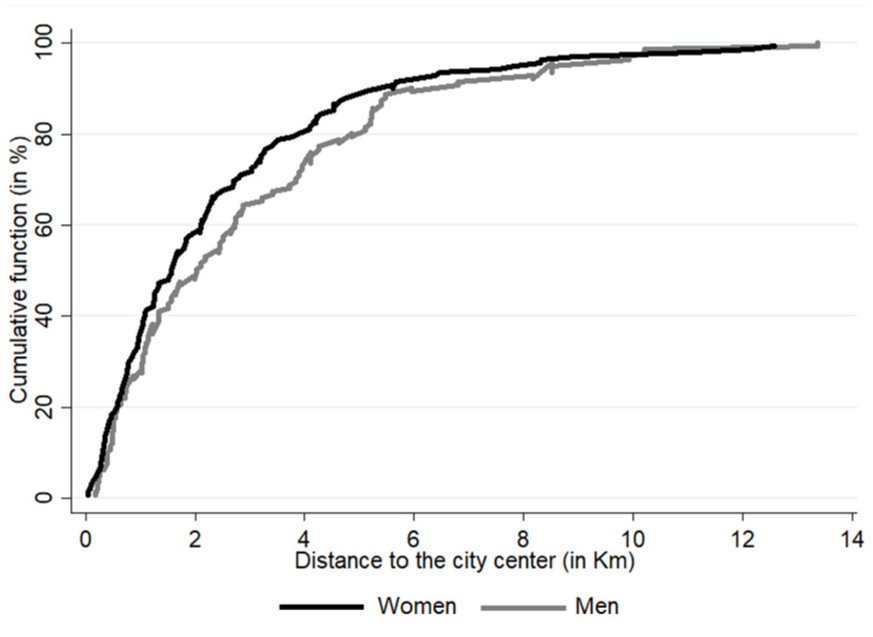
Spatial distribution of violence in the São Paulo metro – starting point: Central station (Sé station) from January 2010 to January 2017.
Similarly to the hourly patterns, Figure 4 shows that violence follows different spatial patterns for women and men, which was confirmed by the K–S test by gender (p = 0.000). The highest incidence of violence against women occurs mainly within 6 km of the central station, which is also where most women who use the metro are concentrated (Origin–Destination Survey, Metro, 2012). Metro (2012) data also show that 68% of the women who live at distances > 6 km from the centre use buses instead of the metro as their main means of transportation.
Modelling results
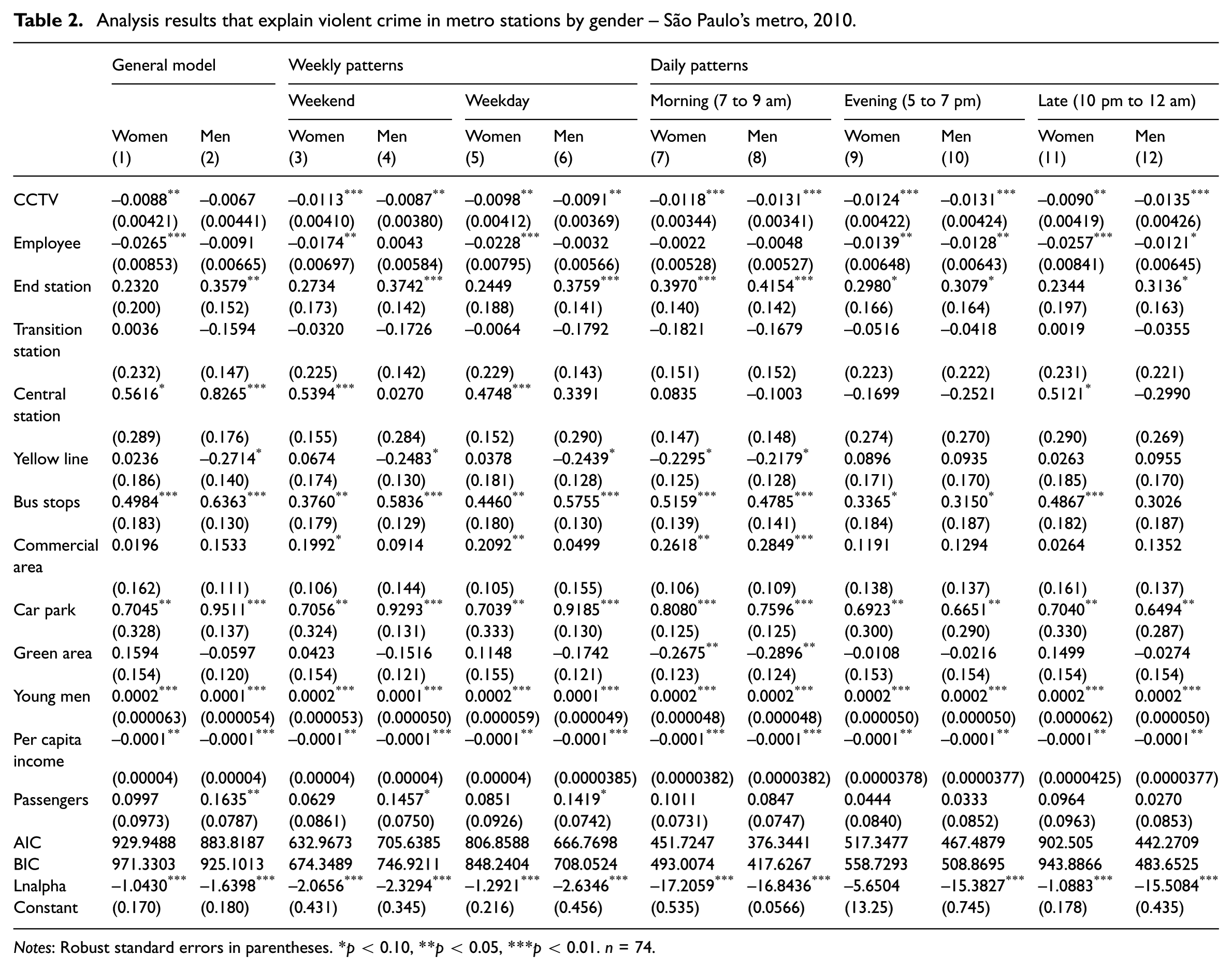
Table 2 presents the results of violence modelled by gender for all days and times combined (General pattern), for weekly patterns (Weekend and Weekday) and for daily patterns (Morning, Evening, Late).
Analysis results that explain violent crime in metro stations by gender – São Paulo’s metro, 2010.
Notes: Robust standard errors in parentheses. *p < 0.10, **p < 0.05, ***p < 0.01. n = 74.
For the general pattern of victimisation (Table 2, columns 1 and 2), the stations which show the greatest risk of violence to metro users are the central station, stations that are in close proximity to bus stops and car parks and those that have a greater proportion of young people living in the neighbourhood. In addition, an inverse relationship between the risk of violence and the average per capita income of a metro station’s neighbourhood was observed; in other words, there was more violence in economically disadvantaged peripheral neighbourhoods. The effect of CCTV and the number of metro employees was to reduce violence against women. Interestingly, these two variables have no such effect on the victimisation of men.
Men are at risk of suffering violence at a metro line’s end station, an effect that is not observed for women. This may be explained by the fact that men drive cars more often than women on a daily basis and therefore may be at higher risk of crime in car parks and other environments at end stations. According to our model, these relatively desolate car parks are themselves places targeted for violence. To a lesser extent than hub stations, end stations are nonetheless crime generators, where perpetrators and targets are brought into contact (Brantingham and Brantingham, 1995; Ceccato et al., 2013).
Differences in victimisation by gender are observed when the general pattern model is split into the weekly patterns (Weekends and Weekdays, Table 2, columns 3–6). For example, the central station and stations located near commercial areas are clearly hotspots for violence against women, while the presence of CCTVs in a station decreases cases of violence involving either gender, indicating a deterring effect of such technology. The remaining variables show similar daily behaviour to that found when evaluating the general pattern for both men and women, and they have the expected signals indicated in the literature: the presence of bus stops and car parks near metro stations increases the risk of violence; the higher the percentage of young men living near metro stations, the higher the risk of victimisation; and stations located in regions with low per capita income are more prone to violence.
The daily and weekly patterns show similarities. In agreement with the more aggregated weekly patterns, all daily patterns show that the presence of CCTV leads to reduced violence; that having more young males living in the area surrounding a station somewhat increases the risk of metro station violence; and that the higher the per capita income in a station’s neighbourhood, the lower the risk of violence. However, when the weekly patterns are disaggregated into the daily patterns, some divergence becomes evident. Following the weekly pattern, the number of employees at each station affects violence in the evening and late night periods, but the patterns differ in that it has no effect on violence against either gender in the morning (columns 7 and 8); and while the weekly patterns show that end stations are hotspots for violence against both sexes, particularly against men, the daily patterns show notably elevated risk for men only during the late night period.
The daily variation of violence against a particular gender is a function of differences in routine activity between the genders, the station’s location and the criminogenic conditions at particular times. Central station is a hotspot for violence against women late at night (column 11). During this time, relatively desolate bus stops and car parks surrounding most stations (more prevalent near the central station) are propitious places for attacks against women, especially sexual violence. Rape and robbery, for example, demand anonymity (Ceccato et al., 2018).
The daily patterns show that the type of land use around a station has a varied effect on violence. The presence of bus stops continues to create clear hotspots for violence against both sexes, with the only observed gender difference being in the late period (columns 11 and 12), when women are more at risk of violence than men. The presence of commercial areas is also an important factor raising the risk of violence during the morning period for both sexes.
Finally, contrary to what was expected, both sexes run a lower risk of being victimised at stations near green areas during the morning period (columns 7 and 8). This might be explained by the fact that our data capture all types of violence in the entire station and not just in a train carriage, where sexual violence dominates. It could also be because the transit system is more populated during the morning period, which would promote more guardianship than during other periods, or it might be just that transit users do not frequent or pass through parks in the morning.
Discussion of the results
In São Paulo, women travel by public transportation more frequently than men to carry out daily activities and for longer times, often expressing trip-chaining behaviour. For this reason, the settings in space and time where women are victimised by violence are not the same as for men. International literature analysing violent and property crimes in urban transit systems broken down by gender shows a pattern similar to our Brazilian study (Loukaitou-Sideris, 2005; Savard, 2018). As noted by Savard et al. (2017), the existence of ‘gendered spaces’ implies that women, for example, are more exposed to victimisation in settings that are more prevalent in a woman’s routine than a man’s, such as shopping centres and grocery stores.
Violence in São Paulo’s metro is highly concentrated in space, with more than 40% of the violent encounters occurring in those stations situated within 2 km of the central station; this concentration remains even after controlling for passenger flow. This is due to the fact that there is a major working population inflow at these stations on a daily basis, attracted by a high concentration of offices and jobs. Ceccato and Paz (2017) pointed out this spatial concentration of violence when they assessed the distribution of sexual violence against women in the São Paulo metro using a data source different from the one used in this study. Additional empirical evidence of crime concentration in transit environments can be found in studies of metro systems in the United States and the United Kingdom (Loukaitou-Sideris et al., 2002; Newton and Bowers, 2007; Smith and Clarke, 2000) and in Scandinavia (Uittenbogaard and Ceccato, 2012).
It is not a surprise that crime and violence take place in risky facilities (Clarke and Eck, 2003, 2007) and the areas that surround them, which include metro stations and establishments located near metro stations. Stations, in particular, are both crime attractors and crime generators (Brantingham and Brantingham, 1995). Even within a risky facility, crime does not happen randomly. The results of our modelling show that different spatial characteristics (e.g. regional hubs and the presence of commercial areas and car parks near metro stations) affect the daily and weekly patterns of violence against women and men because different local situational conditions for crime vary over time and by crime type.
Among gender differences in violence, we noticed a number of weekly patterns. The presence of employees at the station reduces the risk of victimisation for women much more than for men, which confirms the importance of formal social control in the stations. The central station is a clear hotspot for violence against women (also noted by Ceccato and Paz, 2017), while men are more at risk at end stations. The presence of commercial areas near the station increases the risk of violence against women, most likely because women carry out more routine activities than men in these areas. São Paulo’s Yellow line offers less risk of violence against men than women, perhaps due to the fact that this line is relatively new.
There were also a number of clear daily patterns. End stations and stations adjacent to bus stops and car parks were hotspots for violent crime against both sexes at all times. Although end stations were hotspots for both genders, men were found to be more susceptible to victimisation at these stations, with the gender differential being most notable during the late period. This change from the more customary relationship between gender and metro violence may be because men living in the economically vulnerable periphery, where most end stations are located, engage in more night-time leisure activities than women living in the same area. While the presence of bus stops and car parks creates hotspot stations for both genders, the effect is clearer for women, especially during the late period. This gender difference in victimisation may be a result of the fact that women perform more activities related to education than men and are therefore more likely than men to attend night classes and use the metro to return home. The central station is a hotspot for violence against women during the late period, a fact also likely linked to women’s educational activities.
Many of the overall daily and weekly occurrences of gender differentiated violent victimisation are functions of the differences between men’s and women’s routine activities. The effect that other individual characteristics, such as age, ethnic background and educational level, have on the occurrence of victimisation while using public transit merits further investigation.
As previously noted in international literature, both external surroundings and internal station characteristics are important to the explanation of crime occurrences in the transit system environment (see, for instance, Ceccato et al., 2013; Hart and Miethe, 2014; Loukaitou-Sideris et al., 2002; Newton, 2014). In particular, our study found that stations’ internal environmental features, such as the presence of CCTV and security guards, deter crime through formal social control. These situational crime prevention mechanisms (Clarke, 1997) improve surveillance, thereby eliminating the conditions that lead to crime. See, for example, Ariel et al. (2018) and Piza et al. (2019) for recent evidence on the importance of CCTV and body worn cameras (BWC) to prevent crime in transit and/or public places.
Conclusions and recommendations
The objective of this study was to investigate space-time trends related to mobility and violent victimisation in the São Paulo metro from a gender perspective. Hypothesis testing and negative binomial modelling were used to test differences in the pattern of mobility between men and women using the metro system and, moreover, to assess how different spatial and temporal factors affect the occurrence of violence against women and men in the metro’s environs.
Modelling results show that São Paulo’s central metro station is a clear hotspot for female victimisation, more notably during late night periods. The extreme disparity in the level of late night gender-specific violence at the central station is likely due to the fact that women perform more combined activities than men, such as travelling to their day job in the city’s centre and then returning home from night classes. It was also found that metro stations adjacent to bus stops show increased risk of violence, also during late night periods, and that end stations were violence hotspots, more so for men than women, especially late at night. The discrepancy between the level of violence against men and against women at end stations during the late night period can be explained by the fact that men living in peripheral areas are more likely than women to use the metro to engage in night-time leisure-related activities. The presence of CCTV cameras in metro stations reduces the risk of violence during all time periods. The presence of metro employees also reduces the risk of station violence; although this is not evident during the morning period, probably due to data imprecision. The times that employees change shifts and move between stations are not included in our data set, so it is impossible to precisely determine the number of station employees present during a particular time period.
Study results provide insight into metro station security needs that must be addressed in particular spaces and at particular times to reduce the risk of crime arising from the convergence of suitable targets and potential criminals in the absence of capable guardians; which, according to routine activity theory, are the three conditions needed for the commission of crime.
One limitation of this study, similar to limitations faced by other studies analysing violence using data recorded by the police, is that criminal records tend to be biased due to underreporting (e.g. Solymosi et al., 2018). Although São Paulo’s metro authorities began a campaign to encourage users to report violence in 2015, and the number of reports has increased (see Ceccato and Paz, 2017), statistics are certainly still affected by underreporting (see Moreira et al., 2018). Moreover, as mentioned, the times that employees change shifts and move between stations are not included in our data. Data permitting, future research should focus on the role of security guards and other employees in preventing violence in transit environments, in particular against women. An interesting question is whether the gender of these employees affects whether women report violence.
Another issue is that the results obtained in the empirical model have to be analysed with caution. This is because the model has a potential endogeneity bias that makes it difficult to detect the direction of the relationship between the dependent variable (violence) and certain independent variables, such as CCTV and Employee. For the variable CCTV, for example, using our model it is not possible to determine if the metro stations have less violence because they have more CCTVs, or if it is concern about increased violence at these stations that leads to them having more CCTVs. Additional studies should further investigate the use of instrumental variables in the attempt to solve this problem.
Beyond the man–woman dichotomy focused on in our study, future studies should address the specific security needs of other groups to promote a safe journey for every urban public transit user. The LGBTQI community is one example of a group vulnerable to violence worldwide (e.g. Meyer, 2012; UOL, 2014) but whose particular security needs are largely ignored. Most transit systems apply gender neutral safety policies that are doomed to fail because they underestimate the distinct mobility patterns of different types of individuals. A more holistic comprehensive approach to transit safety is needed, one that addresses differences in victimisation not only by gender and gender status (LGBTQI), but also by age, ethnicity, cultural stigmatisation and physical condition. Moreover, since the characteristics of a station’s neighbourhood are correlated with the incidence of violence within the station, strategies that link authorities, businesses, residents, non-governmental organisations and the metro security staff in a joint collaborative safety initiative would be highly desirable.
Despite these limitations, this study brings new evidence that women and men have distinct security needs in a transit environment. Safety programmes that seek to address these needs should be designed to minimise a set of differentiated spatial, temporal and gender-related security risks.
Footnotes
Declaration of conflicting interests
The author(s) declared no potential conflicts of interest with respect to the research, authorship, and/or publication of this article.
Funding
The author(s) received no financial support for the research. The Open Access publication was sponsored by KTH Royal Institute of Technology.
