




Abstract
Systematic, explicit instruction aligned with the science of reading (SoR) has been shown to improve literacy outcomes. However, critiques highlight how racism and whiteness embedded in the SoR limit its effectiveness, particularly for African American students in urban contexts who face systemic inequities and linguistic marginalization. This article advances a culturally relevant SoR framework by centering African American English and racial identity development. Evidence-based, culturally relevant practices and implications for instruction, policy, and research to ensure literacy approaches affirm and build upon the cultural and linguistic strengths of African American students are discussed.
Keywords
The science of reading (SoR) reflects decades of interdisciplinary research from cognitive science, psychology, linguistics, neuroscience, education, and communication studies (The Reading League, 2022). Reading instruction grounded in the SoR often includes the National Reading Panel's (2000) five pillars: phonemic awareness, systematic phonics, fluency, vocabulary, and comprehension. While these components are critical, narrowing the definition to only these five components risk overlooking research that suggests reading is a multifaceted process (Goodwin et al., 2021). On the other hand, reading must also be understood as a socially situated practice shaped by cultural, linguistic, and historical contexts (Compton-Lilly et al., 2023; Moje, 2015). Effective teaching requires knowing what students already know and can do to determine what they need next (Moje, 2015). Additionally, students’ identities, experiences, and language practices mediate how they approach and make meaning from texts (Compton-Lilly et al., 2023). These perspectives suggest that the definition of the SoR must be broadened by illustrating that literacy development involves both cognitive processes (e.g., decoding, comprehension) and sociocultural dimensions (e.g., language, identity).
In contrast to research associated with the SoR, which shows that reading must be explicitly and systematically taught, Goodman's (1967) whole language perspective suggests that reading develops naturally, akin to oral language acquisition. Reading, however, requires explicit, systematic instruction (National Reading Panel, 2000; Pittman et al., 2014; Shaywitz, 2020). While Goodman's (1986) theory does not align with current reading science, he suggests that students’ cultural and linguistic identities, including their home language, should be recognized as assets rather than deficits.
Students’ cultural and linguistic identities are often overlooked in literacy research. This recognition brings into focus a broader omission within the SoR discourse, in which we argue that the SoR research lacks attention to the language African American students bring to the classroom. While discourse around the SoR is gaining momentum, it often fails to recognize proficiency in the language many African American students speak, African American English (AAE), as a linguistic asset. The SoR often reflects Anglocentric, Eurocentric, and alphabetic biases (Share, 2021). To counter this, educators must disrupt the racism and whiteness embedded in reading research (Milner, 2020).
Language, Race, and Reading
To deepen our understanding of the SoR, we must research and incorporate the diverse identities of students, especially their racial and linguistic identities. Additionally, it is critical to examine how these factors influence literacy acquisition and development. The impact of racial identity on literacy acquisition and development is important because it can influence students’ motivation and achievement, as well as their level of access to meaningful literacy opportunities within a Eurocentric educational context that often privileges White, middle-class language norms and cultural knowledge. Such unequal access can perpetuate opportunity gaps in reading outcomes, reinforcing systemic inequities that disadvantage students of color, particularly African American students, in both academic achievement and long-term educational attainment (Ladson-Billings, 2006). A critical understanding can enhance the recognition of the diverse knowledge and experiences that African American students bring to the classroom when educators employ equity-based approaches to literacy.
Historically, educational practices have rarely reflected marginalized groups’ literacy activities, especially those in an urban context (Kirkland, 2021). This disconnect is particularly evident in the education of African American students, where traditional literacy instruction often fails to acknowledge the significance of the linguistic, cultural, and experiential knowledge they bring to the classroom (Gay, 2021). One of the most overlooked aspects of this knowledge is AAE, a rule-governed linguistic system with deep historical and cultural roots. Despite decades of linguistic research affirming AAE as a legitimate language, it continues to be stigmatized in schools, often viewed as a linguistic deficit rather than an asset (Pittman, Piper et al., 2024b). In urban schools, where diverse English varieties are prevalent, identities are negotiated through language (Bucholtz & Hall, 2005). Therefore, how students use language, especially AAE, becomes critical, as it serves as a means of self-expression, cultural connection, and identity assertion (Metz, 2021).
AAE
AAE is a linguistic code that is distinct from GAE across the five linguistic domains—phonology, morphology, syntax, semantics, and pragmatics (Green, 2002). Each of these domains plays a role in literacy acquisition, shaping how AAE-speaking students interact with reading instruction. In classrooms where dominant language ideology is reified, the use of distinct linguistic codes can lead to an instructional mismatch that, in the absence of informed instruction, students must identify and overcome independently (Pittman, Rice et al., 2023b). The distinctions across domains potentially impact instruction in myriad ways and much of this goes unnoticed for educators who are unaware of the legitimacy of AAE. For instance, distinct phonological rules of AAE may change the pronunciation of words during oral reading tasks. This change, which reflects a unique phonological system, may be misinterpreted as underdeveloped decoding skills (Green 2002; Pittman, Rice et al., 2023b). Similarly, morphological differences between the AAE and GAE may lead educators who are unfamiliar with AAE rules to suspect imperfect learning (Fasold, 1972). Reading GAE text without a full understanding of GAE syntax can reduce the predictability of the text and, in turn, reduce comprehension for AAE-speaking students. Semantic differences between the linguistic codes may impact comprehension and can also render tests of vocabulary knowledge more difficult for AAE-speaking students who often use common terms in novel ways in their primary language. Finally, pragmatic skills shape the student's understanding of the purpose of stories and can even influence how stories are told or retold.
Culture, Language, and Reading
Cultural influences shape how students interact with, form, and demonstrate knowledge. Since culture and language are inextricably intertwined, it is vital that an examination of literacy instruction and an introduction of culturally responsive practices include an exploration of how diverse linguistic codes are positioned within literacy instruction. Having culturally responsive literacy practices in an urban context is imperative for urban school students (Gay, 2021). However, many urban literacy classrooms operate under carceral logics, ideologies and practices that surveil, label, and criminalize young children's literacy behaviors, particularly along racial, linguistic, and ability lines (Beneke et al., 2024). These logics perpetuate deficit-based perceptions of students’ reading practices, portraying them as abnormal. A key example of this is the policing of AAE in classrooms, where African American students are often penalized for speaking in their first language rather than being supported in developing bidialectal fluency (i.e., the ability to navigate both AAE and GAE without feeling that their language is “wrong” or “uneducated”). Rigid literacy curricula, for instance, frequently emphasize remediation, compliance, and assessment criteria more than culturally sustaining education, which restricts the meaningful ways African American children can engage with reading (Beneke et al., 2024). Similarly, Milner (2020) critiques how the dominant discourse surrounding the SoR often marginalizes African American students by framing literacy as an apolitical, neutral process while ignoring systemic racism and linguicism embedded in knowledge production. If the SoR ignores the literacy strengths already possessed by African American students (e.g., rhetorical, syntactic, and storytelling features of AAE), it could deepen racial disparities rather than dismantle them (Milner, 2020).
While the SoR offers valuable insights into effective literacy instruction, its implementation must be examined critically within the broader sociopolitical context of urban schooling. Without intentional efforts to integrate the cultural heritage of African American students, including AAE, oral storytelling, call-and-response, and multimodal literacies, reading instruction risks perpetuating the marginalization of learners rather than fostering meaningful engagement and achievement. Therefore, it is necessary that liberatory literacy pedagogies prioritize the agency of African American students by framing literacy as a means of empowerment and self-expression rather than a tool of control (Beneke et al., 2024). In this context, the rejection of AAE in classrooms functions as a mechanism of linguistic oppression by reinforcing White middle-class norms while delegitimizing African American linguistic identity (Baker-Bell, 2020; Rivera & Marshall, 2024). Therefore, educators must challenge the whiteness embedded in literacy research and instruction and endorse methods that affirm the literacies of African American students rather than viewing them as deficient (Milner, 2020). In urban educational contexts, systemic inequities often influence students’ access to quality instruction, making it essential to connect research-based reading practices with culturally sustaining pedagogy (Gay, 2021). Recognizing African American students’ cultural and linguistic richness, especially their use of AAE, and integrating these assets into literacy instruction can empower students, affirm their identities, and enhance equitable educational outcomes (Pittman, Piper et al., 2024b). A literacy curriculum that honors AAE would move toward a more inclusive, empowering approach that values the full range of African American students’ linguistic repertoires.
Although there are few studies on the linguistic features of AAE and the alignment with the SoR, there are similarly fewer studies that emphasize the sociocultural processes involved in reading acquisition and development within the SoR. It is important to consider the linguistic, cultural, and individual differences among students to create a more inclusive and effective approach to reading education (Aukerman & Chambers Schuldt, 2021).
Our goals, therefore, are to critically evaluate the SoR and its focus on GAE and introduce a framework for literacy research and teaching that includes AAE. This framework draws on African American students’ language and identity to enhance literacy development. In creating a culturally relevant SoR (CRSoR) framework that centers AAE, we aim to:
Define and critique the language bias within the SoR, which predominantly centers on GAE, while neglecting the language and identity of African American students, particularly those who speak AAE. Review existing theories and propose a framework for the SoR that includes AAE and identity to develop a CRSoR framework.
Definitions
Throughout the article, we use African American students to specifically refer to U.S.-born descendants of enslaved Africans whose cultural and linguistic heritage is grounded in the African American experience. This distinction provides clarity in a U.S. educational context, where Black students can encompass a broader, more global population that includes individuals from the African diaspora within and outside the United States, as African American students are also Black students, but Black students may not be African American.
Therefore, we use the term AAE to refer to the U.S.-based language with distinct phonological, syntactic, and lexical features that have been extensively documented in sociolinguistic research (Rickford, 1999; Wolfram & Schilling, 2016). While we use AAE in this article, we also acknowledge the term Black Language, used by many scholars and community members (Baker-Bell, 2020; Smitherman, 1977).
When discussing urban education, the emphasis is not on location but on a set of conditions. Urban education is influenced by systemic racism, economic disinvestment, and cultural marginalization. These injustices are not accidental; they are embedded in the structure of schooling (Ladson-Billings, 1995, 2006, 2017). Milner (2012, 2020) encourages us to look beyond surface-level definitions and explore how race, place, and power intersect within urban educational settings. Urban literacy spaces are frequently governed by carceral logics, which are systems that criminalize Black children's language and literacies instead of supporting and affirming them (Kirkland, 2021).
When discussing urban, this article refers to the educational spaces where African American students navigate structural barriers (Keith, 2023) every day. These spaces are often defined by deficit ideologies, rigid curricula, and assessments that do not reflect students’ lived experiences. But they are also full of brilliance. Urban communities possess rich cultural and linguistic resources, which Yosso (2005) refers to as community cultural capital. This article joins the conversation in urban education that seeks to center that wealth, challenge deficit thinking, and reclaim literacy as a space for freedom. This article joins that conversation by advocating for a CRSoR framework that affirms African American students’ language and identity as central to literacy development.
The SoR
The SoR is a multidisciplinary field grounded in decades of experimental and quasi-experimental research from various disciplines. Its intended goal is to understand the cognitive, linguistic, and sociocultural processes involved in learning to read and to identify effective teaching strategies (Goodwin et al., 2021). For cognitive, the most researched model is the simple view of reading (SVR; Gough & Tunmer, 1986), which posits that decoding × language comprehension = reading comprehension. In the SoR discourse, Scarborough's Rope (SR; Scarborough, 2001) is prevalent. SR expands decoding by including components such as phonological awareness, decoding, and sight recognition, while language comprehension includes background knowledge, verbal reasoning, and language structures. Mainstream cultural-linguistic practices, however, are still centered. Though not a model, the NRP's (2000) five components of reading significantly influence the SoR discourse, as many literacy policies and practices have been developed based on the committee's report. The SVR, SR, and the NRP's components focus on teaching students to read in GAE only. We believe cognitive skills outlined in the SVR, SR, and the NRP are important to learning to read; however, these represent only one facet of reading development, and a more expansive view is needed (Afflerbach, 2022).
The Component Model (Joshi & Aaron, 2000) builds upon the SVR, incorporating not only cognitive elements but also psychological factors (e.g., motivation, interests, teacher expectations) and ecological factors (e.g., home environment, linguistic differences). A more recent model, the Active View of Reading (Duke & Cartwright, 2021), has emerged. The Active View of Reading extends the SVR by linking decoding and language comprehension with additional skills such as print concepts, reading fluency, vocabulary, and morphological knowledge. It also emphasizes the importance of active self-regulation, which involves motivation, engagement, and executive function skills (Duke & Cartwright, 2021). Reading comprehension and literacy development are shaped by the reader's goals, social and cultural contexts, and interactions with the text (Afflerbach, 2022). Therefore, integrating critical elements such as metacognition, motivation, engagement, self-efficacy, and social-emotional learning is essential for effectively enhancing literacy education (Afflerbach, 2022).
These broader model approaches seek to account for the diverse factors influencing students’ reading progress and achievement. By expanding the scope of the SoR to include these diverse elements, educators can move beyond a narrow skills-based approach to one that acknowledges the full range of influences, including cultural and linguistic factors, on reading success (Milner, 2020). In doing so, we adopt a more inclusive framework that centers the unique identities, languages, and experiences of African American readers. Our framework, CRSoR expands the SoR discourse by addressing the central role of language in identity formation and how students’ linguistic identities shape their engagement with literacy tasks (see Figure 1).
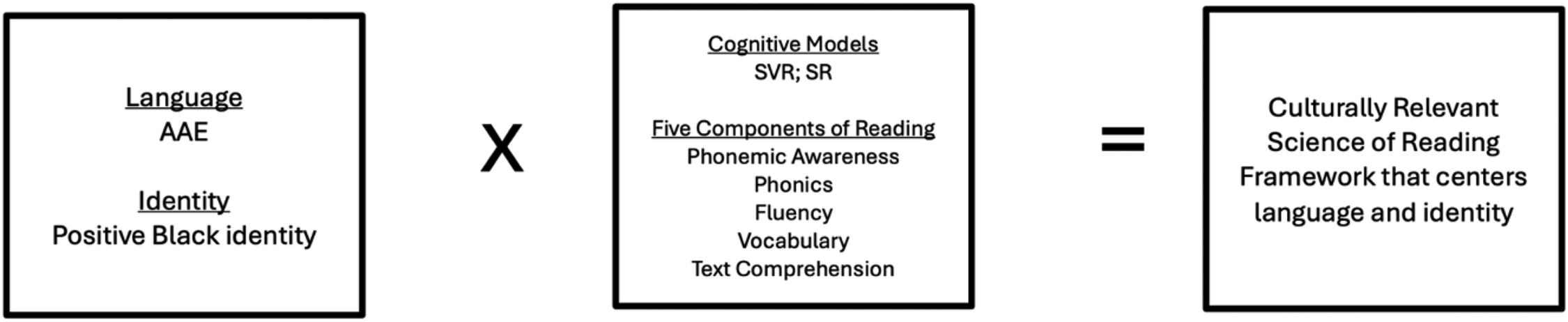
CRSoR Framework.
Expanding the SoR Beyond Cognitive Skills: Critiques of the SoR
The linguistic aspect of reading for African American students
Traditionally, the SoR has primarily focused on GAE's linguistic characteristics; however, Share (2021) asked, “Is the science of reading just the science of reading English?” The centering of GAE is grounded in the assumption that students arrive in school, not only fluent in, but prepared to rely solely upon GAE for learning purposes, yet another iteration of dominant language ideology (Metz, 2018). Building foundational literacy skills upon an assumed fluency in GAE is problematic and further marginalizes students whose home languages differ. AAE and other linguistic codes do not receive equal attention in the SoR discourse, thus AAE-speaking students must navigate this linguistic mismatch with minimal support. Teachers’ lack of knowledge of the linguistic repertoires of AAE-speaking students places many African American students at a significant disadvantage from the start (Pittman, Chang et al., 2023a). Our framework places significant emphasis on knowledge of AAE, as oral language is a crucial precursor to reading and writing instruction (National Center for Family Literacy, 2009). Since oral language forms the foundation of literacy, and since AAE is grounded in strong oral tradition, we aim to highlight the importance of AAE in helping African American students succeed across all reading components.
Moreover, survey research has shown that even with just focusing on the SVR, teachers, teacher educators—those responsible for teaching teachers— and preservice teachers are not adequately prepared to teach the components of reading outlined in the SVR, SR, and the NRP (Binks-Cantrell et al., 2012; Pittman et al., 2020). The surveys assessed teachers’ knowledge of the structure of GAE (e.g., counting phonemes, morphemes, etc.), which implies that teachers should be familiar exclusively with GAE. Only assessing knowledge of GAE and its features, reinforces the dominant language ideology, which insists that there is only “one correct form of English and all other varieties of English are deficient and subordinate” (Metz, 2018, p. 463). It is plausible to reason that if teachers struggle to grasp the structure of GAE, they will likely face even greater challenges demonstrating understanding of AAE. If most research contributing to the SoR centers on GAE's linguistic features, what are the implications for students who speak other languages? And more specifically, what does this mean for African American students who speak AAE?
Notably, many teachers and teacher educators are not familiar with the linguistic features of AAE (Pittman et al., 2022; Pittman, Chang et al., 2023a). Participants in these studies reported that their educator preparation programs did not properly prepare them to teach reading to AAE-speakers. However, it is important for teachers to recognize that when students, especially African American students, are encouraged to use their own language, it promotes “linguistic justice” (Baker-Bell, 2020). It creates equitable language experiences in the classroom. In fact, African American students should have a “free license to communicate” (Lee, 2022).
Like teachers, 76% of school-based speech-language pathologists (SLPs) receive limited exposure to AAE in postsecondary programs. Those SLPs who reported limited exposure to training also harbored more negative perspectives about AAE and AAE-speaking communities (Latimer-Hearn, 2019). Teachers’ and SLPs’ combined paucity of exposure to AAE is optimal breeding ground for the pathologization of AAE. The compound effect of limited training is particularly detrimental for typically developing AAE-speaking students who suffer higher referral rates for remediation by teachers and are subsequently subjected to GAE-centered language assessments by SLPs. This systematic pathologization of AAE potentially eclipses the educational and professional trajectories of many African American students. However, in cases where remedial supports are warranted due to legitimate language or literacy impairments, informed services that incorporate oral skills from students’ home language would be most effective. Such services can only be provided if SLPs and other support professionals are well-versed in the linguistic features of AAE.
The importance of incorporating students’ linguistic repertoires into literacy instruction cannot be overstated. Students would benefit from universal language screening to examine the foundational language skills upon which literacy is built (Adlof & Hogan, 2019). To successfully implement such practices, SLPs would need consistent training on AAE in both postsecondary programs of study and in ongoing professional development (PD). To holistically support AAE-speaking students, other school-based professionals such as literacy specialists, psychologists, and so on would also need a solid understanding of AAE as a language system (Adlof & Hogan, 2019).
Once teachers and other school-based professionals increase their knowledge of AAE, it is possible for them to incorporate AAE linguistic features in alignment with the SoR in the general education setting and beyond. For example, Lawson (2024) used cognitive, linguistic, and sociocultural aspects of reading to support word recognition skills for students of color by incorporating their own linguistic features into the books. This is important because such texts frequently fail to reflect the oral speech patterns of these students. Students coauthored decodable texts by creating words, phrases, and sentences in their home language, which were then combined with the targeted phonics skill. The coauthored text served as a tool to enhance their word reading proficiency (Lawson, 2024). This approach aligns with culturally relevant pedagogy (CRP; Ladson-Billings, 1995) by recognizing the rich experiences and language that students bring from their cultural backgrounds, utilizing their linguistic capital to increase success in cognitive tasks such as decoding.
The sociocultural aspects of reading: Linking language and identity
In developing our framework, it is essential to define satisfactory literacy in the context of how it interacts with learners’ real lives, languages, and identities. Language functions both within and across social and cultural groups (Duke & Cartwright, 2021). Although historically and culturally determined elements of literacy enable a group of individuals to linguistically function within a specific community or geographic area, modes of language and racial identity do not exist in isolation from one another (Freebody & Luke, 1990). Furthermore, a critical approach to literacy emphasizes integration of racial positioning for meaning making by offering the possibility of increased agency for students to bring their everyday literacies and self-identities into classrooms in ways that are significant for learning and demonstration of knowledge (Ajayi, 2015; López, 2019). As both the means and necessity of language expand and develop, so must understandings of identity.
Further, race-reimaging seeks to fundamentally transform educational practices by recognizing race as a socially constructed force that shapes students’ experiences, opportunities, and outcomes in learning (DeCuir-Gunby & Schutz, 2014, 2024 ). Traditional educational frameworks often fail to recognize how this socially constructed force intersects with students’ lived experiences and leads to the perpetuation of inequalities through the reinforcement of Eurocentric norms (Braden et al., 2025). Race-reimaging challenges these norms by integrating a deeper understanding of racial dynamics into academic and instructional practices, ultimately supporting a more equitable and inclusive educational environment. If a student has low self-efficacy in language due to AAE being seen as a subordinate code, the student might avoid sharing ideas in classroom discussions.
Therefore, representation and racial identity can serve as mediators for African American students’ interest, awareness and motivation in literacy (Usher, 2018). As students are able to build their self-efficacy through their own AAE usage as a form of activism or an asset (Matthews & López, 2019), they reflectively envision themselves as literate while seeing (Bishop, 1990) and “hearing” (Pittman, O’Neal et al., 2024a) themselves in books, thus, they can be intrinsically motivated to enjoy and use their autonomy to identify what kinds of books they have interest in or be inherently satisfied by a specific task (Spear et al., 2023). By using CRP and developing cultural understanding, we can educate teachers, so they become advocates for African American students, instead of stripping students of their cultures, languages and funds of knowledge (Gonzalez, 2005; Hertzog, 2011; Moll, 1992), to promote a narrower definition of success that is grounded in dominant language ideology. By understanding the importance of culture and community connections, educators can readily build literacy upon these students’ existing knowledge.
Though the SoR is supported by scientific evidence, our goal is to ensure that this evidence encompasses all learners, particularly considering their language and racial identities. In this article, we focus on African American students, as national and state assessments often suggest that these students perform poorly in reading. However, it is important to recognize that many of these measures can be biased, particularly in terms of language, against African American students (Ladson-Billings, 2017). As researchers, we wish to illuminate the use of culturally relevant and sustaining pedagogy, as well as draw on theoretical approaches such as DeCuir-Gunby and Schutz (2014, 2024) race-focused and race-reimaging to infuse race as a socially constructed force into current educational literary theories that do not center the perspectives and needs of African American students. Broader scholarship shows that affirming practices can positively impact African American students to challenge social injustice in their own lives, especially when educational spaces are engaged in critical consciousness. Curriculum restrictions that are guided by racism limit understanding and only exacerbate bias, opportunities, and the contributions of those that are often marginalized across communities (Milner, 2020).
Positionality as a Guide
Eighty percent of researchers who research Black students are non-Black researchers (Milner, 2020). We provide our positionality as Black scholars as a guide to the importance of including African American students’ language and identity in the SoR. We draw upon the work of others who have centered African American students and their literacy acquisition and development, as well (e.g., Hammond, Muhammad, Tatum, etc.). The first author comes to this work as a Black academic scholar and former classroom teacher to many African American students who spoke AAE. As a former teacher, who was initially trained in whole language during teacher certification, the first author acknowledges the difficulty she had in teaching students to read in GAE until obtaining graduate degrees in explicit and systematic reading instruction. AAE, however, is a strong indicator of racial identity for the author. The author is a proponent of the SoR and teaches courses, gives PDs, and researches elements of the SoR. The author understands that African American students are at a disadvantage if teachers are unaware of AAE. Lastly, the author's aim is to increase educators’ knowledge of AAE with the hope that African American students’ language will be promoted within the SoR.
The second author identifies as a Black woman scholar and former classroom teacher who speaks AAE and utilized AAE and GAE in the classroom. While the author has always spoken AAE, throughout their educational matriculation, style shifting was used to navigate White hegemonic educational spaces. As a former Kindergarten teacher who taught the foundations of literacy, the author has seen how not seeing AAE as a form of cultural wealth limits outcomes for African American students. Additionally in school as a K-12 student, the author struggled to build racial identity through literacy due to many books being slavery themed. The author also teaches courses related to the SoR and believes that her language and identity deeply impact how she communicates and exists in educational spaces.
The third author is a public scholar, multilingual SLP, and researcher of AAE who has worked in several states and countries. The author grew up speaking both AAE and GAE and is a social and linguistic justice advocate. She is the founder of the Respect the Dialect online community which raises awareness and understanding of AAE. She consults and provides PD on topics pertaining to AAE, literacy, and issues of race and class equity for organizations internationally.
The fourth author, a Black academic scholar and former early childhood educator, grew up speaking AAE. They recognize the importance of validating and embracing AAE and African American students’ identity in the classroom. The author has always aimed to create an inclusive, culturally relevant learning environment that empowers all students, especially African American students. They maintain their cultural identity while promoting inclusive educational practices that value and embrace all linguistic backgrounds and identities.
The fifth author is a former secondary educator who grew up speaking AAE at home and with close friends but was very adept at style shifting to navigate White-dominated education spaces. Currently as a Black academic at a Historically Black College/University, they realize the AAE is a value-added asset that can be used in the classroom setting to enhance learning and community. The author is leading the Elementary Education program at this university that uses the SoR in several courses.
Theoretical Perspectives
In developing the CRSoR Framework, we relied on existing research, frameworks, and models to develop a framework that honored African American students’ language and identity, while aligning with the SoR. Each of the research, models, and framework are essential to understanding how best to support the acquisition and development of the reading skills needed for reading proficiency. For cognitive, we chose to focus on the NRP's components as many standards, policies, and curricula are based on these components. Additionally, these cognitive components can be modified to benefit African American students’ literacy development. Knowledge of cognitive, linguistic, and sociocultural skills is needed to effectively teach students to read. With increased reading proficiency, students will have the capacity to advocate within their communities and change their overall life trajectory.
Therefore, in this section, we first address the foundational role of oral language as a prerequisite for early reading instruction (National Center for Family Literacy, 2009), as many African American children initially acquire AAE in their home environments. We then introduce each component of the CRSoR framework (see Figure 1). We begin by examining the cognitive processes required for students to develop as strategic readers. Although these processes are typically taught using features of GAE, they do not consistently align with the linguistic structures of AAE, thereby, creating potential challenges for reading development and assessment. We, therefore, describe how these cognitive components can be effectively integrated with AAE to support students’ learning. Following this, we discuss Black identity development and illustrate how the interaction of cognitive and sociocultural factors forms the basis of a CRSoR. The final paragraphs synthesize these elements to present the complete framework.
Oral Language Development and Early Reading for AAE Speakers
To begin, oral language is a prerequisite to reading and writing instruction (Chall, 1983). For young AAE speakers, oral language development is central to literacy learning and must be recognized as an asset rather than a deficit. AAE is deeply derived from African American cultural traditions of storytelling, call-and-response, signifying, and rhetorical play (Smitherman, 2000). These oral practices cultivate advanced narrative structures, rhythmic fluency, and creative language use that form a strong foundation for literacy. Research demonstrates that children's oral language competence directly supports early reading by strengthening phonological awareness, vocabulary, and comprehension (Craig & Washington, 2006). When teachers cultivate AAE in classrooms, instead of suppressing it, they create bridges between students’ home language and school literacy expectations.
Building on these linguistic strengths, Muhammad's (2020) framework highlights the historical and cultural traditions of Black literacy, emphasizing identity, intellect, skills, criticality, and joy. Literacy development in Black communities has always been deeply connected to oral traditions (e.g., sermons, speeches, poetry, and everyday talk) which situates skills within a cultural context rather than in isolation (Muhammad, 2020). This perspective challenges Eurocentric models that privilege print-based, decontextualized skills divorced from culture, demonstrating instead that oral traditions are not only legitimate but necessary for jumpstarting literacy growth in African American students.
Further, children who enter school fluent in AAE are not linguistically deficient but bring a wealth of language knowledge that, when acknowledged, can accelerate decoding and comprehension (Rickford, 1999). Instructional practices that validate AAE while explicitly teaching reading skills help children connect their oral strengths to print-based reading (Craig et al., 2014). In this way, integrating Muhammad's focus on identity and cultural traditions with psycholinguistic and sociocultural research reframes AAE as a vital resource for literacy development. Such approaches resist deficit narratives (Keith, 2023) and instead affirm students’ full humanity, showing that oral language traditions not only shape literacy but also sustain identity, agency, and joy in learning.
Cognitive: NRP's Components of Reading
Although oral traditions provide the cultural and linguistic foundation for AAE speakers, policy and research framed by the National Reading Panel (2000) have often treated these traditions as unrelated to literacy development. A more expansive view therefore recognizes that cognitive skills and oral traditions are not competing domains but interdependent resources; explicit instruction in phonemic awareness, phonics, fluency, vocabulary, and comprehension becomes most powerful when engrained in the oral and cultural practices that African American students bring from their communities.
From a cognitive, skill-based perspective, the National Reading Panel (2000) review of reading instruction identified the five key components essential for effective reading instruction. The National Reading Panel based their findings on previous quasi-experimental and experimental research studies conducted in reading education. We focus our framework on these findings because this report significantly advocated for evidence-based approaches to teaching reading and emphasized the integration of these key components into a comprehensive reading program. While additional skills like writing and motivation are extremely important, the five key components identified by the National Reading Panel predominantly shape classroom instruction. Examination of state standards aligned with the SoR reveals these five components are consistently integrated throughout the K-12 curriculum, with phonemic awareness and phonics emphasized mainly in the early grades and fluency, vocabulary, and text comprehension integrated throughout all grades. Despite their significant presence in policies and state standards, our framework highlights a critical oversight: the language and identity of African American students are not sufficiently considered; thus, classroom instruction may not be culturally relevant to all students.
Cognitive and Linguistic: Five Components of Reading and African American Students
To fully understand how instruction based in the SoR might hinder African American students, one must fully understand that there is a difference between GAE and AAE. In the United States, GAE has been the language of privilege and power (Lippi-Green, 2012). It has separated individuals by those who can speak it “well” and those who cannot. GAE is the acceptable language variety of English that schools require students to use when learning to read and write (Washington & Seidenberg, 2021). Evidence-based reading practices suggest that one must be able to use GAE in American schools to be a proficient reader. To be a proficient reader requires students to be able to comprehend beyond the basic level while reading a text. To understand the structure of GAE is one the most critical principles of the SoR (Moats, 2020), as word recognition relies on skills such as decoding. For students who speak AAE, learning to read solely using the structure of GAE may pose some problems. Based on the five components outlined by the National Reading Panel (2000), the framework addresses each component with consideration for AAE.
Phonemic awareness
Phonemic awareness is the ability to hear and detect individual sounds (phonemes) in words. It is knowing that the word bed, shut, and through are all composed of three phonemes. Phonemes can be manipulated in various ways to achieve new words or simply to assess whether a student can hear the sounds in a word. For AAE speakers, these sounds differ from those in GAE. Scholars such as Green (2002), Rickford (1999), and Baker-Bell (2020) have outlined the AAE sensitive phonological and morphosyntactic features. The GAE alternate production is listed in parentheses. The most universal phonological features include:
Final consonant blend variation—ben /bɛn/ (bend); Unvoiced TH—birf /bɜrf/ (birth) Voiced TH-dose /doʊz/ (those); breave /briv/ (breathe) Variation of the final “r” and “l”—guitah /ɡɪˈtɑə/ (guitar); spia /spɪə/ (spill) Variation of final “g”—racin’ /ˈreɪsɪn/ (racing) Three letter initial consonant blend “str”—skraight /skreɪt/ (straight).
A problem exists, however, when differences in AAE and GAE phonology are not included in the SoR discourse because educators who do not understand AAE (Pittman, Chang et al., 2023a) may assess students and determine that this language difference is a deficit in the pronunciation of the phoneme, thus deducting points from the student. On a phonemic awareness task, such as counting phonemes, an AAE speaker might state that there are three phonemes in death /d/ /e/ /th/ pronounced as /d/ /e/ /f/, of which there are three phonemes. The final sound, however, is different. Educators must know that this is a phonological difference between the two structures of languages and def may appear in the students’ oral and written language (Pittman, Rice et al., 2023b).
Phonics
Phonics is the instructional approach to teaching letter-sound correspondence. The sound part is the phoneme that is matched to a letter or letters (sh, eigh) to decode and spell. Phonemes with similar characteristics include phonemes that are voiced sounds (vocal cords vibrate) and phonemes that are unvoiced sounds (vocal cords do not vibrate). The voiced /th/ in bathe is different from the unvoiced /th/ in bath. For many AAE speakers, a voiced /th/ is pronounced as /v/; therefore, bathe is pronounced as bave. The unvoiced /th/ is pronounced as /f/ in medial and final positions; therefore, bath is pronounced as baf.
The impact of not including AAE phonics-knowledge in the SoR can lead to teachers believing that students cannot proficiently decode or spell. According to Read (1971), we spell based on the sounds we hear in words; therefore, it is possible for AAE to influence the spellings of GAE words (Horton et al., 2010; Pittman et al., 2014). Research on how individuals are judged based on their spelling often highlights the broader implications of spelling “errors” on perceptions of intelligence, competence, and professionalism, thereby emphasizing how language use influences social perceptions and biases Lee et al., 2022).
Fluency
For a student to fluently read a text, the student must be able to decode words with accuracy, rate, and proper expression. Research aligned with the SoR indicates that phonemic awareness and phonics are vital to decoding with accuracy (National Reading Panel, 2000). Students should not guess at the pronunciation of words. For students who do not have a grasp of phonemic awareness and phonics, decoding might be labored, meaning the student does not read the word at the appropriate rate. Reading at a very slow rate can compromise comprehension of the text (LaBerge et al., 1974). If a reader must pause and think about how to decode a word, their working memory may struggle to retain the context of what was being read (Nation et al., 2004). Lastly, expression characterized by appropriate intonation, stress, and phrasing enhances the clarity of meaning and structure in the text (Schwanenflugel et al., 2015). These prosodic features assist listeners or readers in navigating the syntactic and semantic aspects of sentences, thereby facilitating comprehension. Moreover, this style of reading mirrors natural speech patterns, lending coherence and depth to the text. By promoting a natural flow, expressive reading reduces cognitive load, enabling readers to concentrate more effectively on understanding the content (Nation et al., 2004). It should be noted that fluency could be impacted by predictability of the text, thus syntactic features that differ between AAE and GAE might impact this aspect of literacy development. Researchers (e.g., Charity et al., 2004: Labov, 1995) have questioned whether AAE is a source for reading failure; however, it should be noted that we believe it is the lack of teachers’ knowledge about AAE that can be a source of reading failure for students (Pittman et al., 2022; Pittman, Chang et al., 2023a).
Vocabulary
Vocabulary, a subcomponent of comprehension (NRP, 2000), refers to understanding the meanings of words. If a student can decode words accurately and with automaticity but does not know the meanings of the words, the student's comprehension will be compromised. Importantly, AAE-speakers use vocabulary that can differ from GAE. Vocabulary, such as kitchen (hair at the nape of the neck), yelluh, high yelluh (very light complexioned Black person) have crossed generations and are not considered slang, which are short-term words that are generally used by teenagers (Rickford & Rickford, 2000). Additionally, vocabulary means understanding the relationships of words.
The impact of not including considerations for AAE-speakers’ vocabulary can lead to miscommunication and misinterpretation by non-AAE speakers including teachers. Due to the pronunciation of some words, AAE speakers might pronounce words that might appear to be homophones. For example, if the final /r/ was reduced from the word four, it would be pronounced as foe, thus making it appear that four (the number) and foe (an enemy) are homophones. Additionally, it appears that four (foe) rhymes with toe (phonological awareness skill). Acknowledging and appreciating AAE vocabulary, such as distinctive lexical items (e.g., kitchen), semantic shifts (the word bad meaning good), embodying cultural influences, and enriching expressive language, fosters linguistic inclusivity and enhances communication efficacy within diverse linguistic communities (Blake, 2017; Green, 2002, Smitherman, 2000).
Text comprehension
According to the NRP (2000), text comprehension is vital because it represents the ultimate goal of reading. Comprehension involves extracting and constructing meaning from written text, which is essential for learning, enjoyment, and everyday functioning. It enables readers to understand and engage with the text, allowing them to acquire new information, think critically, and apply knowledge in various contexts.
The failure to consider AAE in text comprehension means that students are often engaging with curricula and books that do not reflect their own experiences or identities (Bishop, 1990). Certainly, students should not only see themselves represented in books but also hear their own language within the text (Pittman, O’Neal et al., 2024a). Allowing students to read sentences in their own language can enhance their comprehension. Examples of AAE sensitive morphosyntactic features that could be incorporated into texts include:
“Be” verb variation: He happy. (He is happy.) Habitual be: I be happy (I am always happy.) Modal perfect: Skylar should’a been sleep (Skylar should have been sleep.) Ain’t—She ain’t do her chores. (She did not do her chores.) Gonna-future tense marker: They gonna go to school. (They are going to go to school.)
BIN—tense marker and stressed: Gabe should’a been finished his homework. (Gabe should have finished his homework a long time ago.) Dən—tense marker and unstressed: Kadence done bought a new car (Kadence has bought a new car) Negative Concord—Don't nobody order from the menu (Imperative: Don’t order from the menu.; Declaritive: Nobody orders from the menu) Agreement patterns/regularization of verb forms: Absence of plural s: She walk fast (She walks fast.) Possessive s variation: Camden apartment (Camden's apartment)
Reading proficiency involves more than basic comprehension; it requires mastering skills like phonological awareness, decoding, and sight recognition. In the absence of linguistically informed instruction, these cognitive skills can present challenges for AAE speakers. The framework for teaching reading must address these differences, considering AAE within the SoR 's components.
Integrating Race-Reimaging, Linguistics, and Sociocultural Aspects into SoR: Black Identity Development
Literacy should challenge the systemic racism and the normalization of whiteness since this ideology has led to forced assimilation or, in the absence thereof, to marginalization, erasure, and oppression of African American students. Thus, literacy should focus on sociocultural aspects of African American students’ personal identities, their perceptions of communication and speech, and their perceptions of their own community. Racial identity refers to an individual's sense of connection to a particular heritage, shaped by attributes and feelings that develop through interactions with family, peers, school, and media (Sellers et al., 1998). This construct is crucial for understanding how race as a socially constructed force influences African American students’ perceptions of literacy. Education plays a significant role in shaping racial identity and its impact on academic outcomes (DeCuir-Gunby, 2009). Educators’ ability to support African American students by incorporating their racial identity into the classroom is pivotal. Socialization factors, such as family and peer interactions outside of school, also contribute to identity development, while stereotypes and intersecting identities further emphasize the need for educators to understand and incorporate these complexities into their teaching practices. Therefore, new interventions are necessary to challenge hegemonic literacy and educational systems, while affirming and celebrating Black identity within academic spaces.
Culturally Relevant Pedagogy and the SoR
Educators are continuously challenged with providing curricula that are not only academically rigorous but also inclusive and relevant to the cultural backgrounds of their students. CRP emerges as an approach that addresses this challenge by recognizing the cultural identities, the shared characteristics and norms amongst a group of people, and experiences of students as valuable assets to the learning process (Ladson-Billings, 1995).
CRP is grounded in three foundational principles that guide its application in educational settings. These key tenets include (a) academic achievement; student learning from the result of pedagogical interactions with expert teachers, (b) cultural competence; the recognition that one's cultural practices are beneficial to a learning environment for all, and (c) sociopolitical consciousness; the awareness and pedagogical connectedness of sociopolitical issues locally and beyond (Ladson-Billings, 2006). The incorporation of CRP into education offers numerous benefits. By validating students’ cultural identities and experiences, CRP contributes to increased student engagement (Howard, 2003). Students are more likely to feel motivated to learn when they see their own cultures reflected in the curriculum. Additionally, CRP helps bridge the inequities in educational success by addressing the diverse learning styles and strengths of students, leading to improved academic outcomes (Villegas & Lucas, 2002).
To address the first tenet, academic achievement to increase students’ reading proficiency, they must have expert teachers. It is important that the SoR has been elevated to help address inadequate reading instruction. Hansford's (2018) article and later podcast, Sold a Story (Hansford, 2022), helped to increase the interest in the SoR. Little has been done, however, to develop culturally relevant literacy practices that align with the SoR. To address the second tenet, cultural competence, teachers must recognize the language that African American students bring to the classroom and use it as linguistic wealth rather than linguistic deficit (Keith, 2023).
Furthermore, students who have strong, racial identity typically have higher achievement in academic settings which may then lead to better psychosocial outcomes (Rivas-Drake et al., 2014). Thus, acknowledging racial identity is not just essential in school settings, it fosters better life outcomes for students over time. For the third tenet, Rickford and King (2016) posit that language and linguistics were on trial in the case of Trayvon Martin. Rachel Jeantel, Martin's friend, used AAE in her testimony. This was viewed negatively by many people. Yet, AAE is proliferated in media and other public outlets by Black and especially non-Black people (Pittman, O’Neal et al., 2024a). Unfortunately, at present, African American students must be sociopolitically conscious of how they may be viewed by their teachers and society for being their authentic selves. Therefore, models (e.g., Figure 1) should exist that center African American students in culturally relevant ways.
Implementing a CRSoR Framework into the Classroom
To implement CRSoR effectively, educators must understand and integrate students’ language and identity into literacy instruction while also possessing knowledge of the cognitive components of reading. We emphasize AAE for two reasons: (a) oral language (i.e., AAE) serves as the foundation for reading and writing instruction for many African American students, and (b) AAE has too often been dismissed as a dialect rather than recognized as a legitimate linguistic system with its own rules and structures. As a valid form of communication, AAE warrants inclusion in educational settings to affirm both the learning and identities of African American students (Perry & Delpit, 1998). By integrating the cognitive components of literacy with recognition of students’ linguistic systems, CRSoR advances a culturally relevant framework that centers language and identity in the teaching of reading.
To begin, educators must recognize the full range of AAE features. While the cognitive components of reading identified by the National Reading Panel (2000) are essential, oral language and discourse features are equally critical. Without knowledge of these features, teachers may mistakenly assume that students are not adhering to the “norms” of language (i.e., GAE) when, in fact, students are drawing on systematic, rule-governed patterns of AAE. Because oral language has historically been central in African American communities, the CRSoR framework begins with oral language as the foundation for reading and writing instruction.
Pragmatics refer to how language operates in social contexts, that is what can be said, how, when, and to whom (Boutte, 2015). These social rules are acquired naturally as children learn their home language. In classrooms, this may surface when African American students engage in overlapping talk or group narration, both of which are common in AAE (Smitherman, 1986). For example, during a literature circle, multiple students might contribute at once to build on a peer's idea, rather than waiting to speak in sequence as GAE norms suggest. Within a CRSoR framework, teachers should view this overlapping talk as collaborative engagement rather than “interruptions.”
Narrative structures in AAE often emphasize personal connection and may follow circular or topic-associating paths rather than strictly linear ones. A student retelling an event might say, “We went to the basketball game Friday night, and the band was so loud. My cousin spilled popcorn everywhere. Then after the game we went to my aunt's house, and she made banana pudding.” In the classroom, teachers should accept these retellings as legitimate forms of narrative organization and then scaffold how to adapt them into linear written formats.
Signifying is another discourse feature, involving witty verbal play (Baker-Bell, 2020; Smitherman, 1986). For example, one student might say, “Your shoes look like they’ve been through three recesses already,” and another might respond, “At least they move faster than you on the football field!” In a CRSoR classroom, this kind of verbal exchange can be recognized as a rhetorical skill rather than as teasing to be discouraged. Teachers might use signifying as an entry point into figurative language lessons, persuasive writing, or exploring the role of humor in communication.
Additionally, for call-and-response, a teacher might say, “She opened the door and saw the big, bad wolf standing there,” and the student might respond, “Uh, oh she in trouble now.” These types of spontaneous contributions not only reflect students’ cultural discourse patterns but also promote comprehension skills such as prediction, inference, and cause-and-effect reasoning. Teachers can then guide students to connect their verbal responses to text evidence (e.g., “What makes you think she's in trouble?”), bridging cultural call-and-response traditions with cognitive reading strategies.
By acknowledging these discourse and pragmatic features within the CRSoR framework, educators shift from deficit-based interpretations to affirming practices that integrate students’ linguistic strengths into literacy instruction. Importantly, these features connect directly to the cognitive components of reading: overlapping talk supports comprehension, narrative structures build sequencing and story grammar knowledge, and signifying develops vocabulary, figurative language, and rhetorical skills.
Once teachers have a full understanding of AAE and how students may engage in discourse and pronounce various sounds, the five components of reading should be taught with consideration for African American students. In the CRSoR framework, the discourse and pragmatic features of AAE are not only culturally meaningful but also align directly with the cognitive components of reading. For example, with phonemic awareness and phonics, overlapping talk and group narration provide opportunities for students to hear, distinguish, and manipulate sounds in dynamic settings. Teachers can build on these exchanges by drawing attention to sound patterns across AAE and GAE during word study. Moreover, with fluency, call-and-response routines mirror choral reading practices, reinforcing rhythm, pacing, and prosody. Students’ natural responsiveness can be utilized to improve fluency through interactive reading. Additionally, with vocabulary, signifying expands students’ word knowledge by introducing figurative meanings, idioms, and creative wordplay. With examples like “do the most (to exaggerate or go overboard)” and “throw shade (subtly criticize someone),” teachers can connect these verbal exchanges to lessons on synonyms, multiple meanings, and idiomatic expressions. Finally, with comprehension, narrative structures highlight how students connect events and ideas. Teachers can validate these oral retellings while guiding students to map them into linear story structures to support comprehension monitoring and retell tasks.
It is important to note that morphosyntactic features in AAE carry distinct meanings, not simply direct translations into GAE. For example, “She been finished” does not mean “She is finished,” but rather “She finished a long time ago.” Another example is the use of “dən” in sentences such as “She done ate her food.” In GAE, this might translate as “She has eaten her food,” but depending on context, it could also imply “She ate her food even though she was told not to do so.” These examples illustrate the systematic and rule-governed nature of AAE by showing that it involves more than shifting style or substituting words. As a result, students’ oral and written discourse may legitimately include such features, which should be understood as part of their linguistic repertoire rather than as errors.
By intentionally linking AAE features to these components and skills, CRSoR reinforces that students’ oral language practices are not barriers to literacy, but powerful foundations for developing advanced reading skills.
Furthermore, language is tied to a person's identity. Therefore, CRSoR acknowledges positive Black identity development. Affirming positive Black identity in literacy instruction requires drawing from students’ home and community language practices. Incorporating family storytelling traditions supports comprehension and oral language by validating students’ narrative structures and encouraging retellings that draw from cultural histories. Community-based projects, such as interviewing elders or documenting neighborhood events, expand vocabulary and deepen comprehension as students connect literacy tasks to meaningful cultural contexts. Home–school partnerships further strengthen oral language development by bridging caregivers’ linguistic practices with classroom instruction (Ezikwelu, 2022; Smitherman, 2021a). Together, these practices affirm African American students’ identities and position their linguistic resources as essential assets for literacy growth within a CRSoR framework.
In sum, CRSoR emerges when the cognitive components of literacy are intentionally integrated with AAE and identity-affirming approaches. CRSoR positions language as inseparable from identity. This framework not only equips students with essential reading skills but also affirms their cultural and linguistic heritage by creating equitable pathways for both academic achievement and positive Black identity development.
How CRSoR Extends Previous Research, Theories, and Models
Like Muhammad's (2020) HILL model, which centers African American students, our framework also prioritizes African American students by incorporating their identities into reading instruction. Though Muhammad suggests that new frameworks should extend beyond skills, we highlight skills because when centering African American students’ language, too few educators are familiar with AAE, which has led to negative consequences for students (e.g., low expectations from teachers, misinterpretation of assessment results, etc.). Thus, within our framework, we extend this approach by emphasizing the SoR and its implications for African American students. Before formal reading instruction begins, students develop oral language and listening comprehension skills that reflect the language used in their homes and communities. It is, therefore, crucial to integrate their language into literacy instruction to support their reading acquisition and development effectively.
The National Reading Panel's (2000) five components have been validated in numerous studies for their impact on students’ reading abilities. Although the NRP studies included learners from various races and ethnicities, our framework endorses these cognitive components and integrates them into our approach. We propose enhancing the five components by focusing on teaching them in the context of the students’ home languages and transferring the students’ knowledge of their language into successful reading in GAE. In GAE-only schools, some African American students may face difficulty with tasks such as phonemic awareness, phonics, and even spelling (Patton-Terry, 2010). Students should be able to use their own language, and the inability to do so highlights the issues with these hegemonic processes. This is why we aim to change the educational climate by introducing this framework and educating teachers and other school-based professionals. It is our intent that our educational systems will one day value AAE, and that AAE will be seen as socially acceptable and valued. It should be seen not just as a means of survival within communities but to thrive in educational spaces, just as other languages are respected.
Implications
Language is impacted by race and many studies in the field rarely highlight the voices of minoritized people (Kumar et al., 2023). Cultural aspects of learning must be embedded in the field. There are various implications for research, practice, and policy as we continue uplifting African American students’ literary freedom.
Research
Because we are not knowledgeable of any evidence-based, previous studies that have incorporated all the concepts of the framework, researchers should implement the CRSoR framework with school age students to continue to build upon the theory that African American students will thrive with instruction focused on the SoR that is culturally relevant. In developing such studies, researchers should use a variety of methods to corroborate findings.
To advance research on the CRSoR framework, we provide multiple complementary methods that can be employed to capture both instructional effects and the linguistic and sociocultural experiences of African American students. First, design-based research can serve as an initial approach by allowing researchers and teachers to collaboratively design, implement, and iteratively refine CRSoR-informed instructional practices within authentic classroom contexts. Secondly, to evaluate the impact of these practices, mixed-methods designs can integrate quantitative measures of reading growth with qualitative analyses of students’ language use and identity development, thus providing a more complete understanding of how CRSoR supports literacy learning. Further, as implementation scales across classrooms or schools, quasi-experimental studies can compare outcomes between CRSoR classrooms and those using traditional curricula to determine whether CRSoR offers measurable benefits in real-world settings. Finally, research–practice partnerships can sustain this work over time by fostering ongoing collaboration among researchers, educators, and district leaders (Penuel et al., 2017). This ensures that findings inform practice, policy, and professional learning as the framework evolves. Currently, no curriculum fully implements CRSoR with students. These methods will help make research translational to classroom practice (Solari et al., 2020).
Practical
To increase the effectiveness of the CRSoR framework for practical implications, educators must receive PD on the CRSoR framework. PD includes understanding the: (a) cultural and linguistic wealth African American students bring to the classroom; (b) differences between AAE and GAE and how this difference can impede AAE-speakers GAE literacy development; and (c) the intersection between the SoR and culturally relevant pedagogy.
Similarly to bilingual and multilingual education, teachers should promote translanguaging in the classroom. Translanguaging is the process by which multilingual speakers use their entire linguistic repertoire to communicate and make meaning (Garcia, 2009), thus language is a resource. García emphasizes that language should be fluid, allowing students to move between different languages to enhance their learning. This approach challenges the dominant language ideology (Metz, 2018) and supports the linguistic rights of minoritized speakers. To implement CRSoR, teachers must create spaces for student discourse in the classroom by allowing the use of AAE or any language students feel comfortable speaking. Additionally, students should be encouraged to write and think in all their languages. The CRSoR Framework advances translanguaging, specifically for African American students, within reading instruction.
Further, the proposed CRSoR framework builds on the strengths of the SoR while extending beyond the more prescriptive approaches found in some packaged programs. By grounding instruction in both the cognitive components of reading and students’ cultural and linguistic resources, which allows teachers to respond to the needs of diverse learners. In this way, the framework affirms the evidence base of the SoR while ensuring that instruction remains accessible, inclusive, and equity oriented.
Additionally, teachers should integrate AAE into classroom instruction by incorporating positive representations of African American language in texts and fostering student discourse. Neglecting to recognize AAE can breed linguistic insecurity, where students feel marginalized and disconnected from their cultural identity (Charity et al., 2020). This insecurity may erode trust in educators and lead to disengagement from the dominant English school environment. Some African American students may not conform excessively to GAE, fearing judgment of “acting White,” which complicates their educational journey. Research highlights the challenge of balancing academic success with cultural authenticity (Charity et al., 2022/2023). Therefore, teachers must foster an inclusive environment where AAE (Baker-Bell, 2020) and all languages in students’ linguistic repertoires are affirmed (García, 2009). In all, teachers should value African American students and set high expectations for them.
Policy
Since 2013, 39 states and the District of Columbia have implemented laws and policies related to research-based literacy practices (Schwartz, 2024). As of November 2025, more than half of the states require instruction based on the SoR (Schwartz, 2024). Each state should ensure they incorporate the tenets of the CRSoR framework.
State education agencies should set standards for educator preparation programs to implement with preservice teachers. For instance, these standards should address the differences between AAE and GAE and how to design effective, CRSoR instruction. For classroom teachers, agencies should develop PK-12 standards that incorporate the CRSoR framework. To support research, state and federal agencies should develop policies that fund research promoting the CRSoR framework, as it provides equitable literacy opportunities for African American students. Additionally, policies should affirm the value of AAE in educational settings and ensure that assessment policies do not penalize students for using AAE.
Policies should also involve caregivers and the community in the educational process, recognizing their role in supporting the use of AAE. Schools should establish partnerships with community organizations and engage parents in discussions about language use in education. Furthermore, policies should support ongoing research and evaluation of programs and practices that incorporate AAE to identify effective strategies and inform policy adjustments. Finally, policies should include measures to prevent and address discrimination or bias against students who use AAE, creating a safe and supportive environment for all linguistic backgrounds.
Conclusion
The SoR displays structural inequities in urban education within the integration and consideration of race as well as other educational and psychological factors that influence literacy development. Traditional literacy models often disregard the diverse linguistic realities of an urban classroom. Despite this, the use of culturally relevant pedagogy challenges educators to make community connections, thus increasing cultural understanding. Implications suggest that developing a culturally relevant framework for the SoR can challenge systemic racism and the normalization of whiteness in literacy spaces. For too long, evidence-based research has been ignored. Now that the SoR discourse is at the forefront of the literacy and educational field, we must promote a culturally relevant literacy framework that dismantles linguistic oppression and promotes literacy as a tool for empowerment rather than exclusion.
Footnotes
Ethical Considerations
There are no human participants in this article and informed consent is not required.
Funding
The authors received no financial support for the research, authorship, and/or publication of this article.
Declaration of Conflicting Interests
The authors declared no potential conflicts of interest with respect to the research, authorship, and/or publication of this article.
